

Mutational landscape and significance across 12 major cancer types
Open accessThe DOI matches its Crossref record; 39 of the 40 references it cites were found in a registry or an index.
Abstract
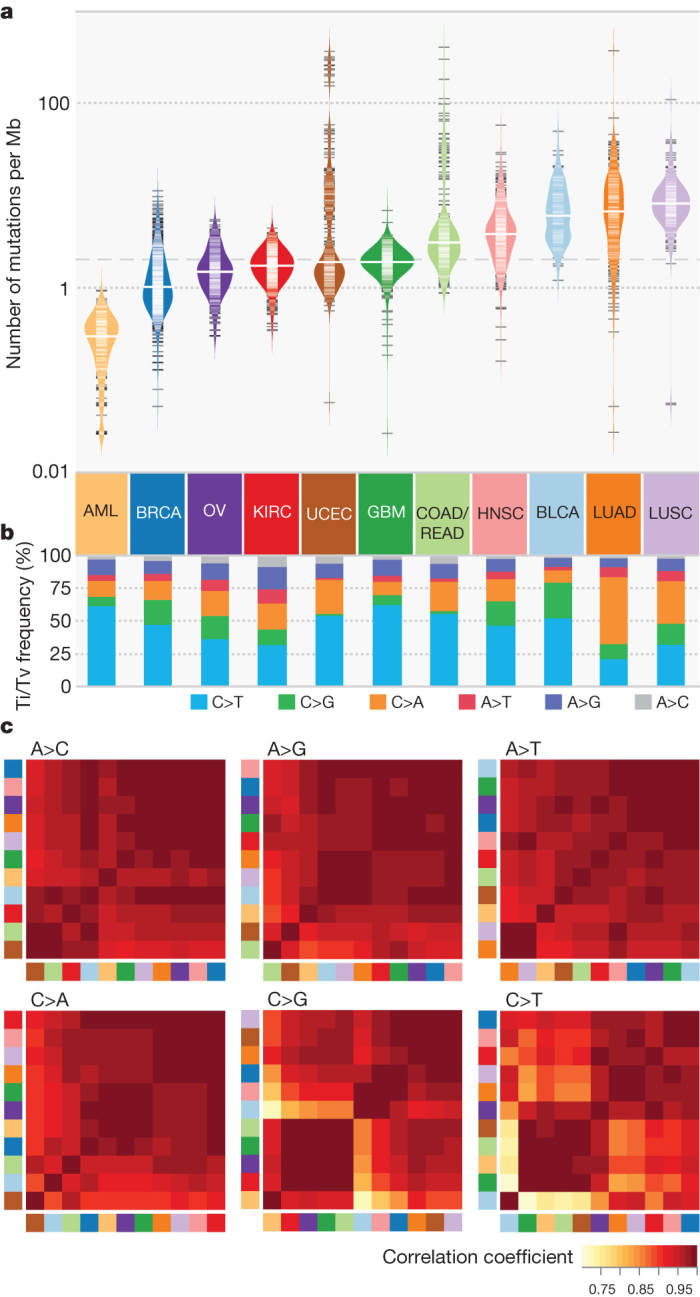
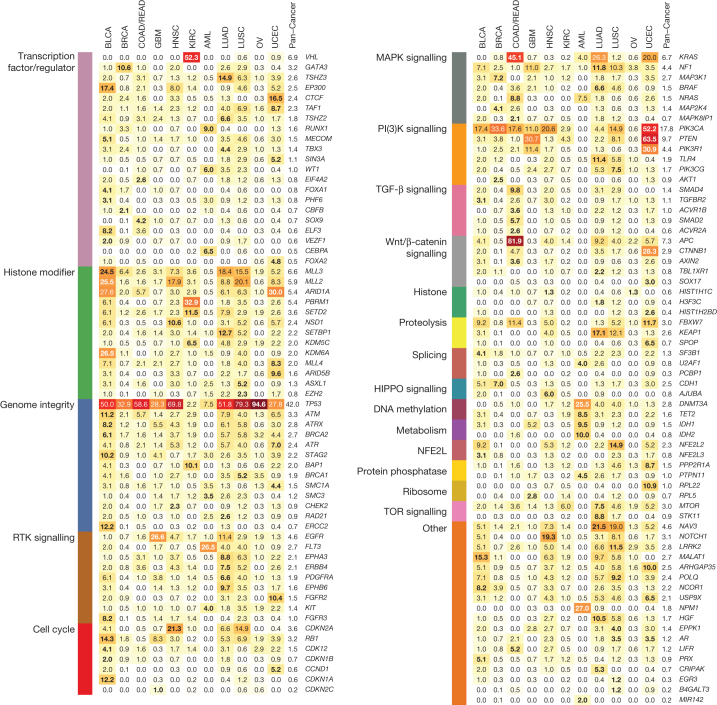
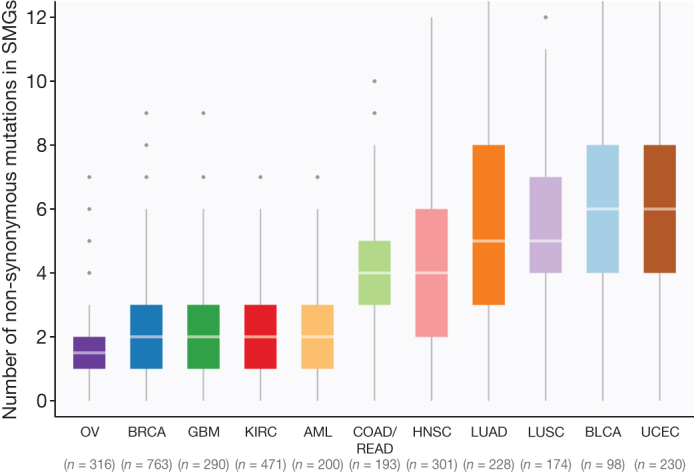
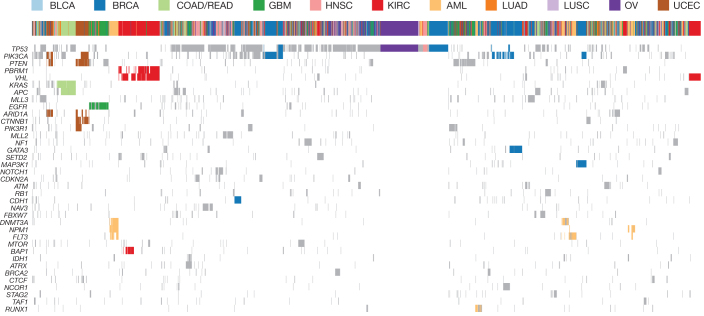
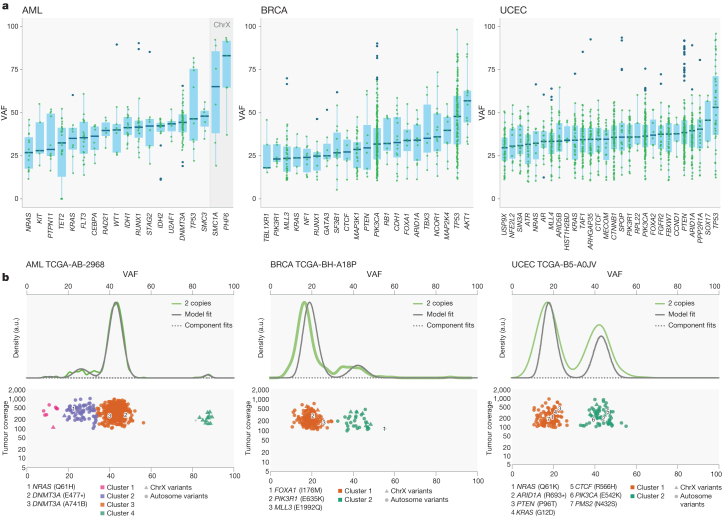
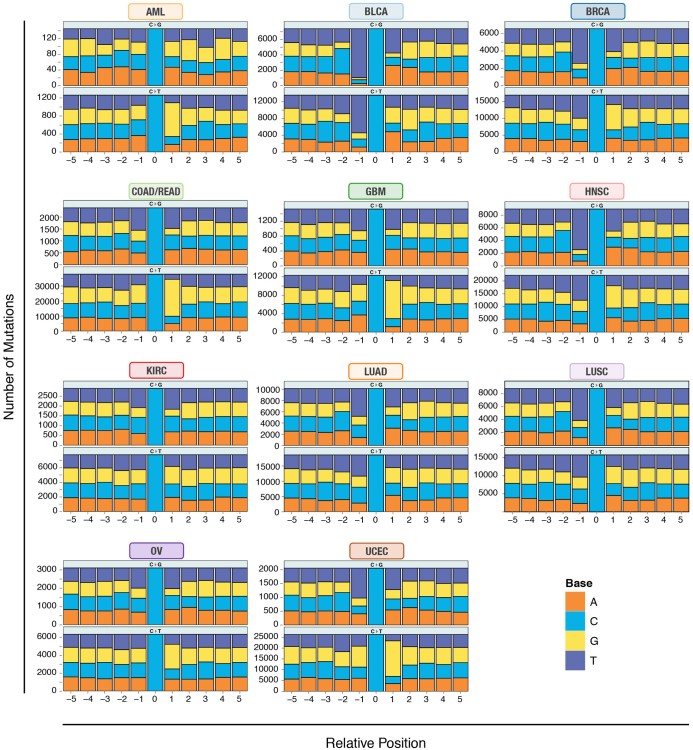
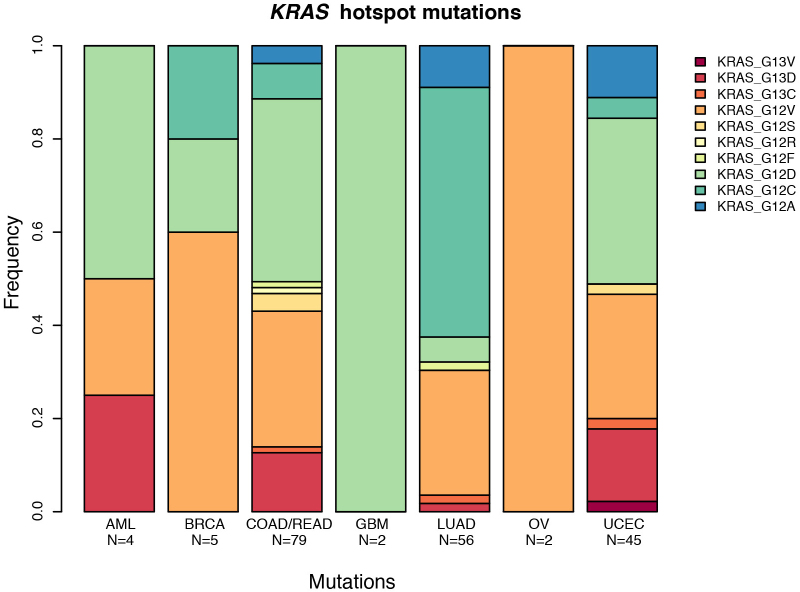
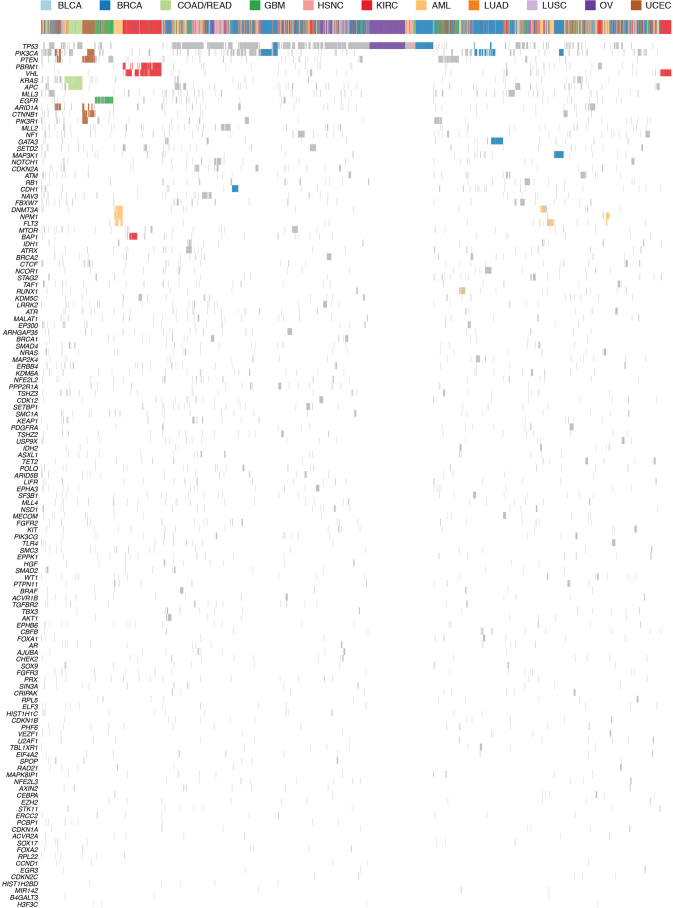
The Cancer Genome Atlas (TCGA) has used the latest sequencing and analysis methods to identify somatic variants across thousands of tumours. Here we present data and analytical results for point mutations and small insertions/deletions from 3,281 tumours across 12 tumour types as part of the TCGA Pan-Cancer effort. We illustrate the distributions of mutation frequencies, types and contexts across tumour types, and establish their links to tissues of origin, environmental/carcinogen influences, and DNA repair defects. Using the integrated data sets, we identified 127 significantly mutated genes from well-known (for example, mitogen-activated protein kinase, phosphatidylinositol-3-OH kinase, Wnt/β-catenin and receptor tyrosine kinase signalling pathways, and cell cycle control) and emerging (for example, histone, histone modification, splicing, metabolism and proteolysis) cellular processes in cancer. The average number of mutations in these significantly mutated genes varies across tumour types; most tumours have two to six, indicating that the number of driver mutations required during oncogenesis is relatively small. Mutations in transcriptional factors/regulators show tissue specificity, whereas histone modifiers are often mutated across several cancer types. Clinical association analysis identifies genes having a significant effect on survival, and investigations of mutations with respect to clonal/subclonal architecture delineate their temporal orders during tumorigenesis. Taken together, these results lay the groundwork for developing new diagnostics and individualizing cancer treatment. As part of The Cancer Genome Atlas Pan-Cancer effort, data analysis for point mutations and small indels from 3,281 tumours and 12 tumour types is presented; among the findings are 127 significantly mutated genes from cellular processes with both established and emerging links in cancer, and an indication that the number of driver mutations required for oncogenesis is relatively small. As part of The Cancer Genome Atlas Pan-Cancer project, these authors present data analysis for point mutations and small indels from more than 3,000 tumours representing 12 tumour types. Among the findings are 127 significantly mutated genes from cellular processes with both established and emerging links to cancer, and an indication that the number of driver mutations required for oncogenesis is relatively small. Additional analyses also identify genes with significant impact on survival and a likely temporal order of mutational events during tumorigenesis.
Overview
The claims and statistics of this paper haven’t been checked yet.
Free: it reads the open-access text and checks the first 5 claims that cite a source we can check. Create a free account to check every claim.
Integrity signals
Registry
Cites
Statistics
Figures
Verification
Claims the paper makes
The claims and statistics of this paper haven’t been checked yet.
Free: it reads the open-access text and checks the first 5 claims that cite a source we can check. Create a free account to check every claim.
Claims other papers make about this one
Each is checked against this paper’s own text: does it say what the citing paper says it does?
The source backs part of the claim, not all of it — or backs it for a different population, condition or comparison.
In the citing paper
“However, TP53 is inactivated in a major fraction of human tumors, mainly by missense mutations in the DNA-binding core domain of p533,4, leading to loss of DNA binding and p53-dependent transactivation of target genes such as p21, Bax and Puma.”
From Inhibition of the glutaredoxin and thioredoxin systems and ribonucleotide reductase by mutant p53-targeting compound APR-246 (2018) · cites this paper as [3]
Experimental — accuracy not yet measuredThe check wasn’t confident either way, so it gives no verdict — never disputed.
In the citing paper
“Current next-generation sequencing (NGS) technology is limited in the detection of rare variant alleles due to an intrinsic sequencing error rate of ~ 0.1%19.”
From Role of TP53 mutations in the origin and evolution of therapy-related acute myeloid leukaemia (2015) · cites this paper as [19]
Experimental — accuracy not yet measuredThe check wasn’t confident either way, so it gives no verdict — never disputed.
In the citing paper
“Yet, these mutations occur significantly more often in human disease than transversion mutations (62% transition vs 38% transversion29,63).”
From One-step generation of tumor models by base editor multiplexing in adult stem cell-derived organoids (2023) · cites this paper as [63]
Experimental — accuracy not yet measuredIn the citing paper
“Mutations in TP53 are thought to occur in more than 50% of all human malignancies.6,7”
From p53: from understanding its structure to advances in therapeutic targeting (2026) · cites this paper as [6]
In the citing paper
“Among somatically mutated genes, TP53 mutations are the most common.6”
From p53: from understanding its structure to advances in therapeutic targeting (2026) · cites this paper as [6]
Self-check
Percentages, sums and reported differences re-computed from the paper’s own numbers.
The self-check needs the paper’s full text.
Citations
Cites
Hanahan, D., & Weinberg, R. A. (2000) · Cell · doi:10.1016/s0092-8674(00)81683-9 · Cited by 29,219
Comprehensive molecular portraits of human breast tumours
The Cancer Genome Atlas Network (2012) · Nature · doi:10.1038/nature11412 · Cited by 12,129
Comprehensive molecular characterization of human colon and rectal cancer
The Cancer Genome Atlas Network (2012) · Nature · doi:10.1038/nature11252 · Cited by 8,499
Integrated genomic analyses of ovarian carcinoma
Perou, C. M. (2019) · Carolina Digital Repository (University of North Carolina at Chapel Hill) · doi:10.17615/hvp3-wg08 · Cited by 7,925
Vogelstein, B., Papadopoulos, N., Velculescu, V. E., Zhou, S., Diaz, L. A., & Kinzler, K. W. (2013) · Science · doi:10.1126/science.1235122 · Cited by 7,863
Comprehensive genomic characterization defines human glioblastoma genes and core pathways
The Cancer Genome Atlas Research Network (2008) · Nature · doi:10.1038/nature07385 · Cited by 7,735
Self-citationAn Integrated Genomic Analysis of Human Glioblastoma Multiforme
Parsons, D. W., Jones, S., Zhang, X., Lin, J. C.-H., Leary, R. J., Angenendt, P., Mankoo, P., Carter, H., Siu, I.-M., Gallia, G. L., et al. (2008) · Science · doi:10.1126/science.1164382 · Cited by 5,857
Integrated genomic characterization of endometrial carcinoma
The Cancer Genome Atlas Research Network, & Levine, D. A. (2013) · Nature · doi:10.1038/nature12113 · Cited by 5,784
Mutational heterogeneity in cancer and the search for new cancer-associated genes
Lawrence, M. S., Stojanov, P., Polak, P., Kryukov, G. V., Cibulskis, K., Sivachenko, A., Carter, S. L., Stewart, C., Mermel, C. H., Roberts, S. A., et al. (2013) · Nature · doi:10.1038/nature12213 · Cited by 5,461
Genomic and Epigenomic Landscapes of Adult De Novo Acute Myeloid Leukemia
The Cancer Genome Atlas Research Network (2013) · New England Journal of Medicine · doi:10.1056/nejmoa1301689 · Cited by 5,078
Cited by
Items 201–300 of 1,028
Double PIK3CA mutations in cis increase oncogenicity and sensitivity to PI3Kα inhibitors
Vasan, N., Razavi, P., Johnson, J. L., Shao, H., Shah, H., Antoine, A., Ladewig, E., Gorelick, A., Lin, T.-Y., Toska, E., et al. (2019) · Science · doi:10.1126/science.aaw9032 · Cited by 283
Nakayama, M., & Oshima, M. (2019) · Journal of Molecular Cell Biology · doi:10.1093/jmcb/mjy075 · Cited by 282
Dissecting the clonal origins of childhood acute lymphoblastic leukemia by single-cell genomics
Gawad, C., Koh, W., & Quake, S. R. (2014) · Proceedings of the National Academy of Sciences · doi:10.1073/pnas.1420822111 · Cited by 281
Temozolomide and Other Alkylating Agents in Glioblastoma Therapy
Strobel, H., Baisch, T., Fitzel, R., Schilberg, K., Siegelin, M. D., Karpel-Massler, G., Debatin, K.-M., & Westhoff, M.-A. (2019) · Biomedicines · doi:10.3390/biomedicines7030069 · Cited by 279
“Unusual for such an aggressive tumor, GB exhibits a low to moderate mutational burden [99,100], i.”
BackgroundThe genomic landscape of breast cancer and its interaction with host immunity
Luen, S., Virassamy, B., Savas, P., Salgado, R., & Loi, S. (2016) · The Breast · doi:10.1016/j.breast.2016.07.015 · Cited by 277
Cancer-Associated PIK3CA Mutations in Overgrowth Disorders
Madsen, R. R., Vanhaesebroeck, B., & Semple, R. K. (2018) · Trends in Molecular Medicine · doi:10.1016/j.molmed.2018.08.003 · Cited by 276
Painter, C. A., Jain, E., Tomson, B. N., Dunphy, M., Stoddard, R. E., Thomas, B. S., Damon, A. L., Shah, S., Kim, D., Gómez Tejeda Zañudo, J., et al. (2020) · Nature Medicine · doi:10.1038/s41591-019-0749-z · Cited by 276
NRF2 addiction in cancer cells
Kitamura, H., & Motohashi, H. (2018) · Cancer Science · doi:10.1111/cas.13537 · Cited by 275
Drilon, A., Wang, L., Arcila, M. E., Balasubramanian, S., Greenbowe, J. R., Ross, J. S., Stephens, P., Lipson, D., Miller, V. A., Kris, M. G., et al. (2015) · Clinical Cancer Research · doi:10.1158/1078-0432.ccr-14-2683 · Cited by 274
AKT in cancer: new molecular insights and advances in drug development
Mundi, P. S., Sachdev, J., McCourt, C., & Kalinsky, K. (2016) · British Journal of Clinical Pharmacology · doi:10.1111/bcp.13021 · Cited by 272
Tumor Mutation Burden as a Biomarker in Resected Non–Small-Cell Lung Cancer
Devarakonda, S., Rotolo, F., Tsao, M.-S., Lanc, I., Brambilla, E., Masood, A., Olaussen, K. A., Fulton, R., Sakashita, S., McLeer-Florin, A., et al. (2018) · Journal of Clinical Oncology · doi:10.1200/jco.2018.78.1963 · Cited by 272
Pouyan, A., Ghorbanlo, M., Eslami, M., Jahanshahi, M., Ziaei, E., Salami, A., Mokhtari, K., Shahpasand, K., Farahani, N., Meybodi, T. E., et al. (2025) · Molecular Cancer · doi:10.1186/s12943-025-02267-0 · Cited by 271
Clinical Implications of Genomic Discoveries in Lung Cancer
Swanton, C., & Govindan, R. (2016) · New England Journal of Medicine · doi:10.1056/nejmra1504688 · Cited by 269
Vennin, C., Mélénec, P., Rouet, R., Nobis, M., Cazet, A. S., Murphy, K. J., Herrmann, D., Reed, D. A., Lucas, M. C., Warren, S. C., et al. (2019) · Nature Communications · doi:10.1038/s41467-019-10968-6 · Cited by 268
Verduci, L., Ferraiuolo, M., Sacconi, A., Ganci, F., Vitale, J., Colombo, T., Paci, P., Strano, S., Macino, G., Rajewsky, N., et al. (2017) · Genome Biology · doi:10.1186/s13059-017-1368-y · Cited by 267
The Role of mTOR Signaling as a Therapeutic Target in Cancer
Popova, N. V., & Jücker, M. (2021) · International Journal of Molecular Sciences · doi:10.3390/ijms22041743 · Cited by 267
Zaenker, P., Gray, E. S., & Ziman, M. R. (2016) · Autoimmunity Reviews · doi:10.1016/j.autrev.2016.01.017 · Cited by 267
SHP2 inhibition diminishes KRASG12C cycling and promotes tumor microenvironment remodeling
Fedele, C., Li, S., Teng, K. W., Foster, C. J. R., Peng, D., Ran, H., Mita, P., Geer, M. J., Hattori, T., Koide, A., et al. (2021) · Journal of Experimental Medicine · doi:10.1084/jem.20201414 · Cited by 265
The kinome 'at large' in cancer
Fleuren, E. D. G., Zhang, L., Wu, J., & Daly, R. J. (2016) · Nature Reviews Cancer · doi:10.1038/nrc.2015.18 · Cited by 264
TRIM24 Is an Oncogenic Transcriptional Activator in Prostate Cancer
Groner, A. C., Cato, L., de Tribolet-Hardy, J., Bernasocchi, T., Janouskova, H., Melchers, D., Houtman, R., Cato, A. C. B., Tschopp, P., Gu, L., et al. (2016) · Cancer Cell · doi:10.1016/j.ccell.2016.04.012 · Cited by 263
Schultheis, A. M., Ng, C. K. Y., De Filippo, M. R., Piscuoglio, S., Macedo, G. S., Gatius, S., Perez Mies, B., Soslow, R. A., Lim, R. S., Viale, A., et al. (2015) · Journal of the National Cancer Institute · doi:10.1093/jnci/djv427 · Cited by 262
Tumor mutational burden is a determinant of immune-mediated survival in breast cancer
Thomas, A., Routh, E. D., Pullikuth, A., Jin, G., Su, J., Chou, J. W., Hoadley, K. A., Print, C., Knowlton, N., Black, M. A., et al. (2018) · OncoImmunology · doi:10.1080/2162402x.2018.1490854 · Cited by 262
APR-246 reactivates mutant p53 by targeting cysteines 124 and 277
Zhang, Q., Bykov, V. J. N., Wiman, K. G., & Zawacka-Pankau, J. (2018) · Cell Death & Disease · doi:10.1038/s41419-018-0463-7 · Cited by 261
Self-citationAbseq: Ultrahigh-throughput single cell protein profiling with droplet microfluidic barcoding
Shahi, P., Kim, S. C., Haliburton, J. R., Gartner, Z. J., & Abate, A. R. (2017) · Scientific Reports · doi:10.1038/srep44447 · Cited by 259
Integrated Analysis of Genetic Ancestry and Genomic Alterations across Cancers
Yuan, J., Hu, Z., Mahal, B. A., Zhao, S. D., Kensler, K. H., Pi, J., Hu, X., Zhang, Y., Wang, Y., Jiang, J., et al. (2018) · Cancer Cell · doi:10.1016/j.ccell.2018.08.019 · Cited by 259
Tisato, V., Voltan, R., Gonelli, A., Secchiero, P., & Zauli, G. (2017) · Journal of Hematology & Oncology · doi:10.1186/s13045-017-0500-5 · Cited by 256
Diederichs, S., Bartsch, L., Berkmann, J. C., Fröse, K., Heitmann, J., Hoppe, C., Iggena, D., Jazmati, D., Karschnia, P., Linsenmeier, M., et al. (2016) · EMBO Molecular Medicine · doi:10.15252/emmm.201506055 · Cited by 253
Barutcu, A. R., Lajoie, B. R., McCord, R. P., Tye, C. E., Hong, D., Messier, T. L., Browne, G., van Wijnen, A. J., Lian, J. B., Stein, J. L., et al. (2015) · Genome Biology · doi:10.1186/s13059-015-0768-0 · Cited by 250
A Pan-cancer Transcriptome Analysis Reveals Pervasive Regulation through Alternative Promoters
Demircioğlu, D., Cukuroglu, E., Kindermans, M., Nandi, T., Calabrese, C., Fonseca, N. A., Kahles, A., Lehmann, K.-V., Stegle, O., Brazma, A., et al. (2019) · Cell · doi:10.1016/j.cell.2019.08.018 · Cited by 250
Dual inhibition of MDMX and MDM2 as a therapeutic strategy in leukemia
Carvajal, L. A., Neriah, D. B., Senecal, A., Benard, L., Thiruthuvanathan, V., Yatsenko, T., Narayanagari, S.-R., Wheat, J. C., Todorova, T. I., Mitchell, K., et al. (2018) · Science Translational Medicine · doi:10.1126/scitranslmed.aao3003 · Cited by 249
The Role of MDM2 Amplification and Overexpression in Tumorigenesis
Oliner, J. D., Saiki, A. Y., & Caenepeel, S. (2016) · Cold Spring Harbor Perspectives in Medicine · doi:10.1101/cshperspect.a026336 · Cited by 246
“Genetic inactivation of this tumor suppressor and transcription factor occurs in nearly half of all human tumors (Kandoth et al. 2013), serving as a testament to the strong selective growth advantage that this molecular event provides.”
BackgroundRoss, J. S., Wang, K., Gay, L., Otto, G. A., White, E., Iwanik, K., Palmer, G., Yelensky, R., Lipson, D. M., Chmielecki, J., et al. (2015) · JAMA Oncology · doi:10.1001/jamaoncol.2014.216 · Cited by 244
KMT2D Deficiency Impairs Super-Enhancers to Confer a Glycolytic Vulnerability in Lung Cancer
Alam, H., Tang, M., Maitituoheti, M., Dhar, S. S., Kumar, M., Han, C. Y., Ambati, C. R., Amin, S. B., Gu, B., Chen, T.-Y., et al. (2020) · Cancer Cell · doi:10.1016/j.ccell.2020.03.005 · Cited by 243
“Notably, histonemethylationmodifiers and other epigenetic modifiers are often mutated in lung tumors, including lung adenocarcinoma (LUAD) and lung squamous cell carcinoma (LUSC), which comprise 40%–50% and 25%– 30% of lung cancer, respectively (Campbell et al., 2016; Cancer Genome Atlas Research Network, 2012, 2014;…”
BackgroundArsenic Trioxide Rescues Structural p53 Mutations through a Cryptic Allosteric Site
Chen, S., Wu, J.-L., Liang, Y., Tang, Y.-G., Song, H.-X., Wu, L.-L., Xing, Y.-F., Yan, N., Li, Y.-T., Wang, Z.-Y., et al. (2021) · Cancer Cell · doi:10.1016/j.ccell.2020.11.013 · Cited by 241
AAV-mediated direct in vivo CRISPR screen identifies functional suppressors in glioblastoma
Chow, R. D., Guzman, C. D., Wang, G., Schmidt, F., Youngblood, M. W., Ye, L., Errami, Y., Dong, M. B., Martinez, M. A., Zhang, S., et al. (2017) · Nature Neuroscience · doi:10.1038/nn.4620 · Cited by 241
Walerych, D., Lisek, K., Sommaggio, R., Piazza, S., Ciani, Y., Dalla, E., Rajkowska, K., Gaweda-Walerych, K., Ingallina, E., Tonelli, C., et al. (2016) · Nature Cell Biology · doi:10.1038/ncb3380 · Cited by 239
Systematic Analysis of Splice-Site-Creating Mutations in Cancer
Jayasinghe, R. G., Cao, S., Gao, Q., Wendl, M. C., Vo, N. S., Reynolds, S. M., Zhao, Y., Climente-González, H., Chai, S., Wang, F., et al. (2018) · Cell Reports · doi:10.1016/j.celrep.2018.03.052 · Cited by 239
“…such as The Cancer Genome Atlas (TCGA) project, haveworked to address the functional consequences of genomic mutations in tumors (Dees et al., 2012; Kandoth et al., 2013; Lawrence et al., 2013; Niu et al., 2016), with the larger goal of determining the underlying mechanisms of cancer initiation…”
Self-citationGenomic Alterations in Liquid Biopsies from Patients with Bladder Cancer
Birkenkamp-Demtröder, K., Nordentoft, I., Christensen, E., Høyer, S., Reinert, T., Vang, S., Borre, M., Agerbæk, M., Jensen, J. B., Ørntoft, T. F., et al. (2016) · European Urology · doi:10.1016/j.eururo.2016.01.007 · Cited by 236
Mutant p53 in breast cancer: potential as a therapeutic target and biomarker
Duffy, M. J., Synnott, N. C., & Crown, J. (2018) · Breast Cancer Research and Treatment · doi:10.1007/s10549-018-4753-7 · Cited by 235
Lopez-Chavez, A., Thomas, A., Rajan, A., Raffeld, M., Morrow, B., Kelly, R., Carter, C. A., Guha, U., Killian, K., Lau, C. C., et al. (2015) · Journal of Clinical Oncology · doi:10.1200/jco.2014.58.2007 · Cited by 233
“However, analyses of genomic alterations in multiple tumor types have led to the following two fundamental observations: tumors originating in the same organ or tissue are genetically heterogeneous,(3) and similar patterns of genomic alterations may be observed in tumors from different tissues of origin.(4,5) Furtherm…”
BackgroundPreclinical and clinical development of neoantigen vaccines
Li, L., Goedegebuure, S. P., & Gillanders, W. E. (2017) · Annals of Oncology · doi:10.1093/annonc/mdx681 · Cited by 232
Combining DNA damaging therapeutics with immunotherapy: more haste, less speed
Brown, J. S., Sundar, R., & Lopez, J. (2018) · British Journal of Cancer · doi:10.1038/bjc.2017.376 · Cited by 231
Stover, D. G., Parsons, H. A., Ha, G., Freeman, S. S., Barry, W. T., Guo, H., Choudhury, A. D., Gydush, G., Reed, S. C., Rhoades, J., et al. (2018) · Journal of Clinical Oncology · doi:10.1200/jco.2017.76.0033 · Cited by 231
the Oesophageal Cancer Clinical and Molecular Stratification (OCCAMS) Consortium, Frankell, A. M., Jammula, S., Li, X., Contino, G., Killcoyne, S., Abbas, S., Perner, J., Bower, L., Devonshire, G., et al. (2019) · Nature Genetics · doi:10.1038/s41588-018-0331-5 · Cited by 231
Chong, W., Shang, L., Liu, J., Fang, Z., Du, F., Wu, H., Liu, Y., Wang, Z., Chen, Y., Jia, S., et al. (2021) · Theranostics · doi:10.7150/thno.52717 · Cited by 229
p53 as a target for the treatment of cancer
Duffy, M. J., Synnott, N. C., McGowan, P. M., Crown, J., O’Connor, D., & Gallagher, W. M. (2014) · Cancer Treatment Reviews · doi:10.1016/j.ctrv.2014.10.004 · Cited by 229
Chang, S., Yim, S., & Park, H. (2019) · Experimental & Molecular Medicine · doi:10.1038/s12276-019-0230-6 · Cited by 228
The genetic landscape of endometrial clear cell carcinomas
DeLair, D. F., Burke, K. A., Selenica, P., Lim, R. S., Scott, S. N., Middha, S., Mohanty, A. S., Cheng, D. T., Berger, M. F., Soslow, R. A., et al. (2017) · The Journal of Pathology · doi:10.1002/path.4947 · Cited by 227
Wangen, J. R., & Green, R. (2020) · eLife · doi:10.7554/elife.52611 · Cited by 226
Immune targets and neoantigens for cancer immunotherapy and precision medicine
Wang, R.-F., & Wang, H. Y. (2017) · Cell Research · doi:10.1038/cr.2016.155 · Cited by 225
BAP1/ASXL1 recruitment and activation for H2A deubiquitination
Sahtoe, D. D., van Dijk, W. J., Ekkebus, R., Ovaa, H., & Sixma, T. K. (2016) · Nature Communications · doi:10.1038/ncomms10292 · Cited by 225
Roles of Nrf2 in cell proliferation and differentiation
Murakami, S., & Motohashi, H. (2015) · Free Radical Biology and Medicine · doi:10.1016/j.freeradbiomed.2015.06.030 · Cited by 225
Transcriptome sequencing reveals altered long intergenic non-coding RNAs in lung cancer
White, N. M., Cabanski, C. R., Silva-Fisher, J. M., Dang, H. X., Govindan, R., & Maher, C. A. (2014) · Genome Biology · doi:10.1186/preaccept-8565849481270705 · Cited by 225
Hoang, M. L., Kinde, I., Tomasetti, C., McMahon, K. W., Rosenquist, T. A., Grollman, A. P., Kinzler, K. W., Vogelstein, B., & Papadopoulos, N. (2016) · Proceedings of the National Academy of Sciences · doi:10.1073/pnas.1607794113 · Cited by 224
Multiple Targets of the Canonical WNT/β-Catenin Signaling in Cancers
Lecarpentier, Y., Schussler, O., Hébert, J.-L., & Vallée, A. (2019) · Frontiers in Oncology · doi:10.3389/fonc.2019.01248 · Cited by 224
SOX4: The unappreciated oncogene
Moreno, C. S. (2020) · Seminars in Cancer Biology · doi:10.1016/j.semcancer.2019.08.027 · Cited by 224
Wang, Y., Li, L., Cohen, J. D., Kinde, I., Ptak, J., Popoli, M., Schaefer, J., Silliman, N., Dobbyn, L., Tie, J., et al. (2019) · JAMA Oncology · doi:10.1001/jamaoncol.2019.0512 · Cited by 224
Phosphoproteome Integration Reveals Patient-Specific Networks in Prostate Cancer
Drake, J. M., Paull, E. O., Graham, N. A., Lee, J. K., Smith, B. A., Titz, B., Stoyanova, T., Faltermeier, C. M., Uzunangelov, V., Carlin, D. E., et al. (2016) · Cell · doi:10.1016/j.cell.2016.07.007 · Cited by 224
A comprehensive genomic pan-cancer classification using The Cancer Genome Atlas gene expression data
Li, Y., Kang, K., Krahn, J. M., Croutwater, N., Lee, K., Umbach, D. M., & Li, L. (2017) · BMC Genomics · doi:10.1186/s12864-017-3906-0 · Cited by 223
Hiley, C., de Bruin, E. C., McGranahan, N., & Swanton, C. (2014) · Genome Biology · doi:10.1186/s13059-014-0453-8 · Cited by 223
Long noncoding RNAs: Re-writing dogmas of RNA processing and stability
Wilusz, J. E. (2016) · Biochimica et Biophysica Acta (BBA) - Gene Regulatory Mechanisms · doi:10.1016/j.bbagrm.2015.06.003 · Cited by 222
Li, Z., Ivanov, A. A., Su, R., Gonzalez-Pecchi, V., Qi, Q., Liu, S., Webber, P., McMillan, E., Rusnak, L., Pham, C., et al. (2017) · Nature Communications · doi:10.1038/ncomms14356 · Cited by 219
Raphael, B. J., Dobson, J. R., Oesper, L., & Vandin, F. (2014) · Genome Medicine · doi:10.1186/gm524 · Cited by 218
Self-citationMutant p53 in Cancer Progression and Targeted Therapies
Zhu, G., Pan, C., Bei, J.-X., Li, B., Liang, C., Xu, Y., & Fu, X. (2020) · Frontiers in Oncology · doi:10.3389/fonc.2020.595187 · Cited by 218
“Mutations in TP53 are found in over half of human cancers, thus is known as the most commonly mutated gene in human cancers (3, 4).”
BackgroundJiao, W., Atwal, G., Polak, P., Karlic, R., Cuppen, E., PCAWG Tumor Subtypes and Clinical Translation Working Group, Al-Shahrour, F., Atwal, G., Bailey, P. J., Biankin, A. V., et al. (2020) · Nature Communications · doi:10.1038/s41467-019-13825-8 · Cited by 217
Even Cancer Cells Watch Their Cholesterol!
Riscal, R., Skuli, N., & Simon, M. C. (2019) · Molecular Cell · doi:10.1016/j.molcel.2019.09.008 · Cited by 217
Molecular targets of curcumin for cancer therapy: an updated review
Kasi, P. D., Tamilselvam, R., Skalicka-Woźniak, K., Nabavi, S. F., Daglia, M., Bishayee, A., Pazoki-toroudi, H., & Nabavi, S. M. (2016) · Tumor Biology · doi:10.1007/s13277-016-5183-y · Cited by 216
Eckert, M. A., Pan, S., Hernandez, K. M., Loth, R. M., Andrade, J., Volchenboum, S. L., Faber, P., Montag, A., Lastra, R., Peter, M. E., et al. (2016) · Cancer Discovery · doi:10.1158/2159-8290.cd-16-0607 · Cited by 216
Yossef, R., Tran, E., Deniger, D. C., Gros, A., Pasetto, A., Parkhurst, M. R., Gartner, J. J., Prickett, T. D., Cafri, G., Robbins, P. F., et al. (2018) · JCI Insight · doi:10.1172/jci.insight.122467 · Cited by 214
Defective control of pre–messenger RNA splicing in human disease
Chabot, B., & Shkreta, L. (2016) · Journal of Cell Biology · doi:10.1083/jcb.201510032 · Cited by 213
Katoh, M. (2018) · International Journal of Molecular Medicine · doi:10.3892/ijmm.2018.3689 · Cited by 211
(2023) · International Journal of Gynecological Cancer · doi:10.1136/ijgc-2022-004039 · Cited by 210
Profiling of somatic mutations in acute myeloid leukemia with FLT3-ITD at diagnosis and relapse
Garg, M., Nagata, Y., Kanojia, D., Mayakonda, A., Yoshida, K., Haridas Keloth, S., Zang, Z. J., Okuno, Y., Shiraishi, Y., Chiba, K., et al. (2015) · Blood · doi:10.1182/blood-2015-05-646240 · Cited by 210
Self-citationCancer gene mutation frequencies for the U.S. population
Mendiratta, G., Ke, E., Aziz, M., Liarakos, D., Tong, M., & Stites, E. C. (2021) · Nature Communications · doi:10.1038/s41467-021-26213-y · Cited by 208
Cole, A. J., Dwight, T., Gill, A. J., Dickson, K.-A., Zhu, Y., Clarkson, A., Gard, G. B., Maidens, J., Valmadre, S., Clifton-Bligh, R., et al. (2016) · Scientific Reports · doi:10.1038/srep26191 · Cited by 208
Comprehensive comparison of molecular portraits between cell lines and tumors in breast cancer
Jiang, G., Zhang, S., Yazdanparast, A., Li, M., Pawar, A. V., Liu, Y., Inavolu, S. M., & Cheng, L. (2016) · BMC Genomics · doi:10.1186/s12864-016-2911-z · Cited by 208
Chromatin regulatory mechanisms and therapeutic opportunities in cancer
Valencia, A. M., & Kadoch, C. (2019) · Nature Cell Biology · doi:10.1038/s41556-018-0258-1 · Cited by 208
Pareja, F., Geyer, F. C., Marchiò, C., Burke, K. A., Weigelt, B., & Reis-Filho, J. S. (2016) · npj Breast Cancer · doi:10.1038/npjbcancer.2016.36 · Cited by 206
Powles, T., Huddart, R. A., Elliott, T., Sarker, S.-J., Ackerman, C., Jones, R., Hussain, S., Crabb, S., Jagdev, S., Chester, J., et al. (2017) · Journal of Clinical Oncology · doi:10.1200/jco.2015.66.3468 · Cited by 206
Comprehensive Genomic Characterization of RNA-Binding Proteins across Human Cancers
Wang, Z.-L., Li, B., Luo, Y.-X., Lin, Q., Liu, S.-R., Zhang, X.-Q., Zhou, H., Yang, J.-H., & Qu, L.-H. (2018) · Cell Reports · doi:10.1016/j.celrep.2017.12.035 · Cited by 204
Cancer Genomics: Diversity and Disparity Across Ethnicity and Geography
Tan, D. S. W., Mok, T. S. K., & Rebbeck, T. R. (2016) · Journal of Clinical Oncology · doi:10.1200/jco.2015.62.0096 · Cited by 202
Immune Checkpoint Inhibitors in Triple Negative Breast Cancer Treatment: Promising Future Prospects
Thomas, R., Al-Khadairi, G., & Decock, J. (2021) · Frontiers in Oncology · doi:10.3389/fonc.2020.600573 · Cited by 202
SETD2 Restricts Prostate Cancer Metastasis by Integrating EZH2 and AMPK Signaling Pathways
Yuan, H., Han, Y., Wang, X., Li, N., Liu, Q., Yin, Y., Wang, H., Pan, L., Li, L., Song, K., et al. (2020) · Cancer Cell · doi:10.1016/j.ccell.2020.05.022 · Cited by 202
New therapeutic strategies to treat human cancers expressing mutant p53 proteins
Blandino, G., & Di Agostino, S. (2018) · Journal of Experimental & Clinical Cancer Research · doi:10.1186/s13046-018-0705-7 · Cited by 201
Prion-like aggregation of mutant p53 in cancer
Silva, J. L., Gallo, C. V. D. M., Costa, D. C. F., & Rangel, L. P. (2014) · Trends in Biochemical Sciences · doi:10.1016/j.tibs.2014.04.001 · Cited by 201
Molecular heterogeneity in lung cancer: from mechanisms of origin to clinical implications
Marino, F. Z., Bianco, R., Accardo, M., Ronchi, A., Cozzolino, I., Morgillo, F., Rossi, G., & Franco, R. (2019) · International Journal of Medical Sciences · doi:10.7150/ijms.34739 · Cited by 200
Mutated nucleophosmin 1 as immunotherapy target in acute myeloid leukemia
van der Lee, D. I., Reijmers, R. M., Honders, M. W., Hagedoorn, R. S., de Jong, R. C. M., Kester, M. G. D., van der Steen, D. M., de Ru, A. H., Kweekel, C., Bijen, H. M., et al. (2019) · Journal of Clinical Investigation · doi:10.1172/jci97482 · Cited by 200
CDK7 inhibitors as anticancer drugs
Sava, G. P., Fan, H., Coombes, R. C., Buluwela, L., & Ali, S. (2020) · Cancer and Metastasis Reviews · doi:10.1007/s10555-020-09885-8 · Cited by 200
Universal Patterns of Selection in Cancer and Somatic Tissues
Martincorena, I., Raine, K. M., Gerstung, M., Dawson, K. J., Haase, K., Van Loo, P., Davies, H., Stratton, M. R., & Campbell, P. J. (2018) · Cell · doi:10.1016/j.cell.2018.06.001 · Cited by 199
Nattestad, M., Goodwin, S., Ng, K., Baslan, T., Sedlazeck, F. J., Rescheneder, P., Garvin, T., Fang, H., Gurtowski, J., Hutton, E., et al. (2018) · Genome Research · doi:10.1101/gr.231100.117 · Cited by 199
First FDA Authorization for Next-Generation Sequencer
Collins, F. S., & Hamburg, M. A. (2013) · New England Journal of Medicine · doi:10.1056/nejmp1314561 · Cited by 199
Comprehensive characterization of lncRNA-mRNA related ceRNA network across 12 major cancers
Zhang, Y., Xu, Y., Feng, L., Li, F., Sun, Z., Wu, T., Shi, X., Li, J., & Li, X. (2016) · Oncotarget · doi:10.18632/oncotarget.11637 · Cited by 198
Inferring regulatory element landscapes and transcription factor networks from cancer methylomes
Yao, L., Shen, H., Laird, P. W., Farnham, P. J., & Berman, B. P. (2015) · Genome Biology · doi:10.1186/s13059-015-0668-3 · Cited by 198
Nath, A., & Chan, C. (2016) · Scientific Reports · doi:10.1038/srep18669 · Cited by 197
Association of MUC16 Mutation With Tumor Mutation Load and Outcomes in Patients With Gastric Cancer
Li, X., Pasche, B., Zhang, W., & Chen, K. (2018) · JAMA Oncology · doi:10.1001/jamaoncol.2018.2805 · Cited by 195
Clinical implications of germline mutations in breast cancer: TP53
Schon, K. R., & Tischkowitz, M. D. (2017) · Breast Cancer Research and Treatment · doi:10.1007/s10549-017-4531-y · Cited by 196
The noncoding RNAs SNORD50A and SNORD50B bind K-Ras and are recurrently deleted in human cancer
Siprashvili, Z., Webster, D. E., Johnston, D., Shenoy, R. M., Ungewickell, A. J., Bhaduri, A., Flockhart, R., Zarnegar, B. J., Che, Y., Meschi, F., et al. (2016) · Nature Genetics · doi:10.1038/ng.3452 · Cited by 194
Wnt/Beta-Catenin Signaling Regulation and a Role for Biomolecular Condensates
Schaefer, K. N., & Peifer, M. (2019) · Developmental Cell · doi:10.1016/j.devcel.2019.01.025 · Cited by 194
EGFR Mutation Promotes Glioblastoma through Epigenome and Transcription Factor Network Remodeling
Liu, F., Hon, G. C., Villa, G. R., Turner, K. M., Ikegami, S., Yang, H., Ye, Z., Li, B., Kuan, S., Lee, A. Y., et al. (2015) · Molecular Cell · doi:10.1016/j.molcel.2015.09.002 · Cited by 193
A DNA methylation‐based definition of biologically distinct breast cancer subtypes
Stefansson, O. A., Moran, S., Gomez, A., Sayols, S., Arribas-Jorba, C., Sandoval, J., Hilmarsdottir, H., Olafsdottir, E., Tryggvadottir, L., Jonasson, J. G., et al. (2015) · Molecular Oncology · doi:10.1016/j.molonc.2014.10.012 · Cited by 192
Metadata
- Authors
- Kandoth, C., McLellan, M. D., Vandin, F., Ye, K., Niu, B., Lu, C., Xie, M., Zhang, Q., McMichael, J. F., Wyczalkowski, M. A., Leiserson, M. D. M., Miller, C. A., Welch, J. S., Walter, M. J., Wendl, M. C., Ley, T. J., Wilson, R. K., Raphael, B. J., & Ding, L.
- Affiliations
- Washington University in St. Louis (US)
- Brown University (US)
- Corresponding author
- Ding, Li
- ORCID
- Venue
- Nature
- Published
- 2013-10-16
- Volume
- 502
- Issue
- 7471
- Pages
- 333-339
- ISSN
- 0028-0836 (ISSN-L)
- 1476-4687
- PMC
- PMC3927368
- OpenAlex
- W2022495797
- Cited by
- 4,419
- References
- 40
- Citations by year
- 2026: 162 · 2025: 243 · 2024: 311 · 2023: 324 · 2022: 380 · 2021: 395 · 2020: 417 · 2019: 377 · 2018: 410 · 2017: 414 · 2016: 407 · 2015: 327 · 2014: 237 · 2013: 8
- FWCI
- 114.79
- Type
- journal article
- Language
- en
- Open access
- hybrid
- doi.org
- Licence
- cc-by-nc-sa
- creativecommons.org/licenses/by-nc-sa/3.0/ (tdm)
- creativecommons.org/licenses/by-nc-sa/3.0/ (vor)
- Locations
- Nature (publishedVersion, cc-by-nc-sa)
- PubMed Central (publishedVersion, cc-by-nc-sa)
- PubMed (publishedVersion)
- Europe PMC (PubMed Central) (acceptedVersion, cc-by-nc-sa)
- Padua Research Archive (University of Padova) (submittedVersion, cc-by-nc-sa)
- RePEc: Research Papers in Economics (submittedVersion)
- Funders
- National Science Foundation (1016648)
- National Human Genome Research Institute (U01HG006517, U54HG003079, R01HG005690)
- National Cancer Institute (PO1CA101937, R01CA180006, P01CA101937)
- Topics
- Life Sciences › Biochemistry, Genetics and Molecular Biology › Cancer Research › Cancer Genomics and Diagnostics
- Life Sciences › Biochemistry, Genetics and Molecular Biology › Molecular Biology › Chromatin Remodeling and Cancer
- Life Sciences › Biochemistry, Genetics and Molecular Biology › Genetics › Genomics and Rare Diseases
- Keywords
- somatic mutations, point mutations, small insertions and deletions, significantly mutated genes, driver mutations, pan-cancer analysis, histone modifiers, transcription factors, histone modifications, splicing, carcinogenesis, clonal architecture, subclonal evolution, tissue specificity, DNA repair deficiency, carcinogens, cancer pathways, cancer metabolism
- MeSH terms
- Cell Cycle, Clone Cells, DNA Repair, Humans, Models, Genetic, Mutation, Neoplasms, Oncogenes, Time Factors, Cohort Studies, Survival Analysis, Point Mutation, Phosphatidylinositol 3-Kinases, Receptor Protein-Tyrosine Kinases, Mitogen-Activated Protein Kinases, INDEL Mutation, Carcinogenesis
About these checks
Registry, retraction, Cites and statistics results are computed, not judged, with one exception: a printed reference that no index lists is read once by a model before it counts as a citation error. Claims are extracted by a model and kept only when their quote appears verbatim in the text; each cited source is then checked, with a model’s help, for whether it says what the claim relies on. Those verdicts can be wrong — read the claim’s quote and the cited source before relying on one.
Statistics and arithmetic are recomputed, not judged.
Confidence bands are shown only for fields calibrated on our annotated test set. None is calibrated yet, so no band is shown.
What counts as a claim ›How we measure confidence ›How we check this ›
Are you an author, or do you see a problem with this page? Request a review
Data sources
Bibliographic data: Semantic Scholar, OpenAlex, Crossref.
Contains information from the Semantic Scholar Academic Graph Datasets, made available under the ODC Attribution License (ODC-BY 1.0).
Semantic Scholar’s data is described in: Kinney, R., et al. (2023). The Semantic Scholar Open Data Platform. arXiv:2301.10140.
