

Mutational landscape and significance across 12 major cancer types
Open accessThe DOI matches its Crossref record; 39 of the 40 references it cites were found in a registry or an index.
Abstract
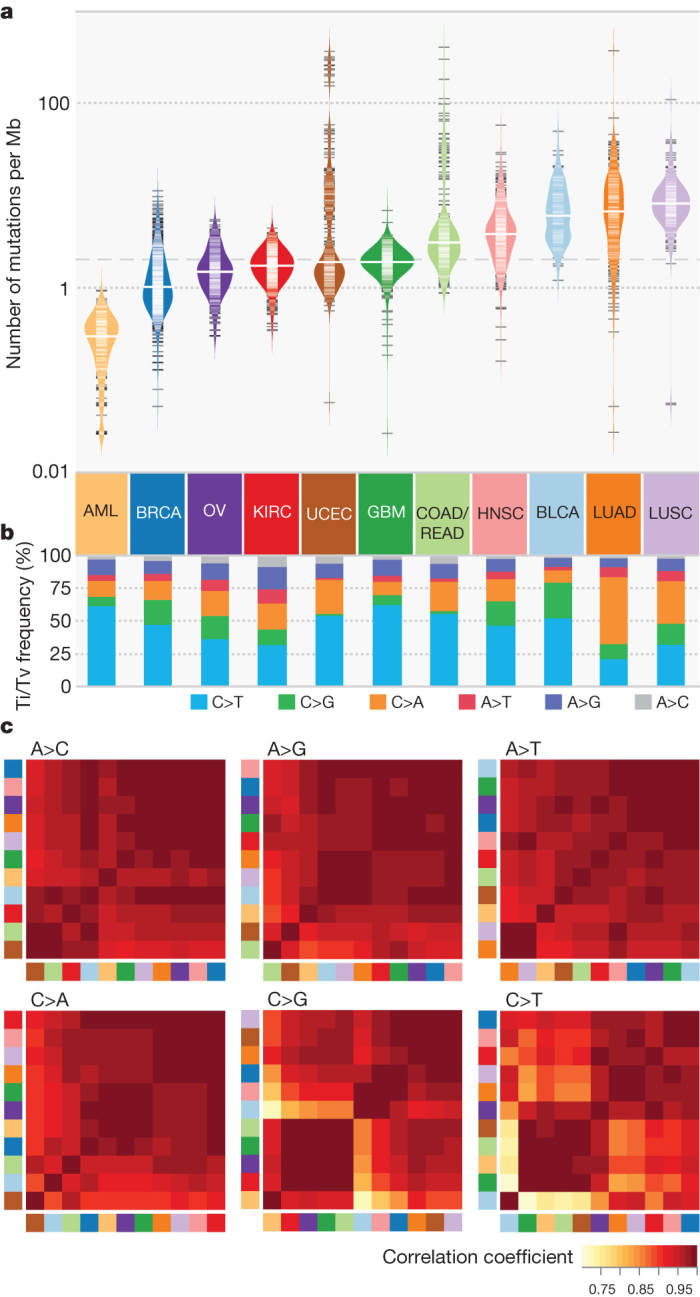
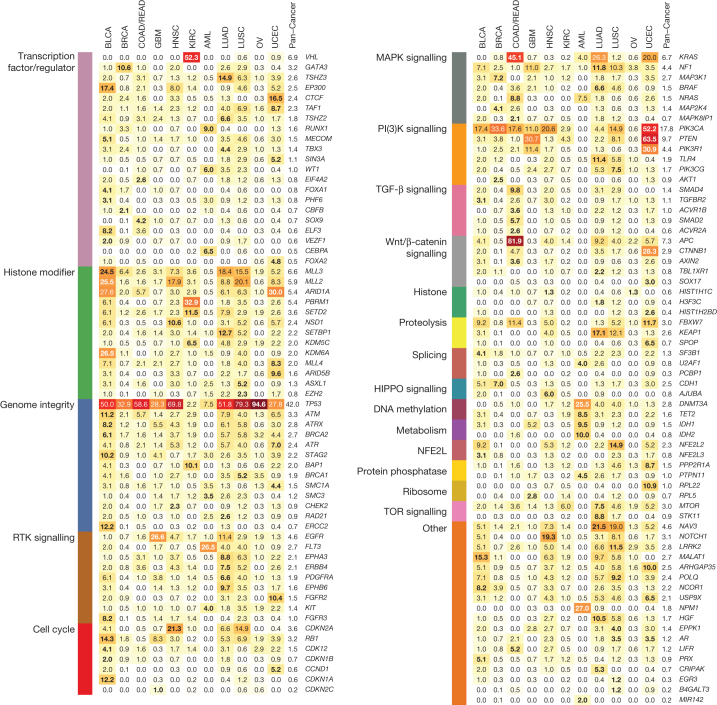
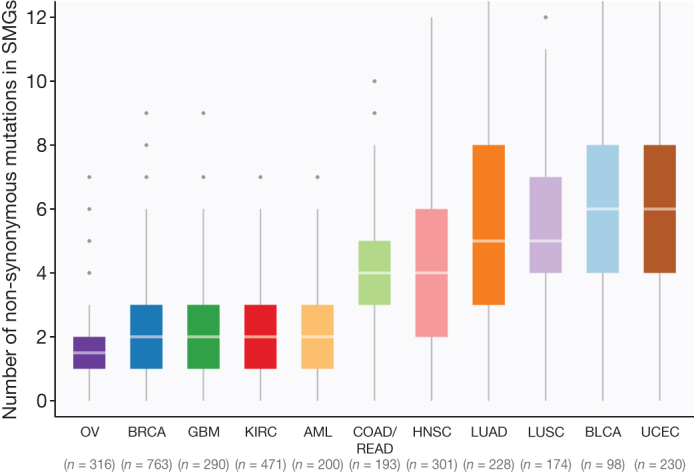
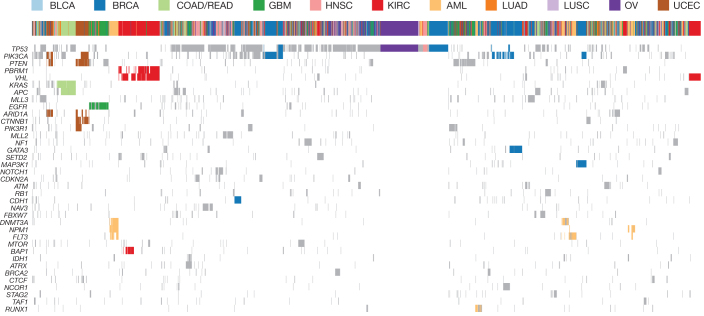
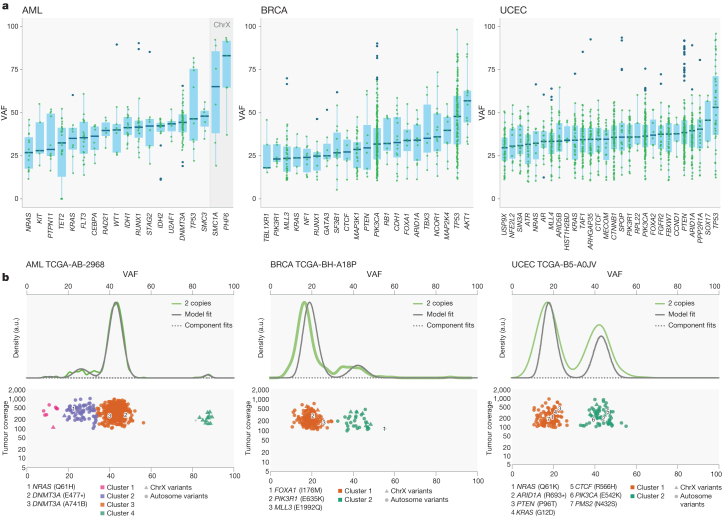
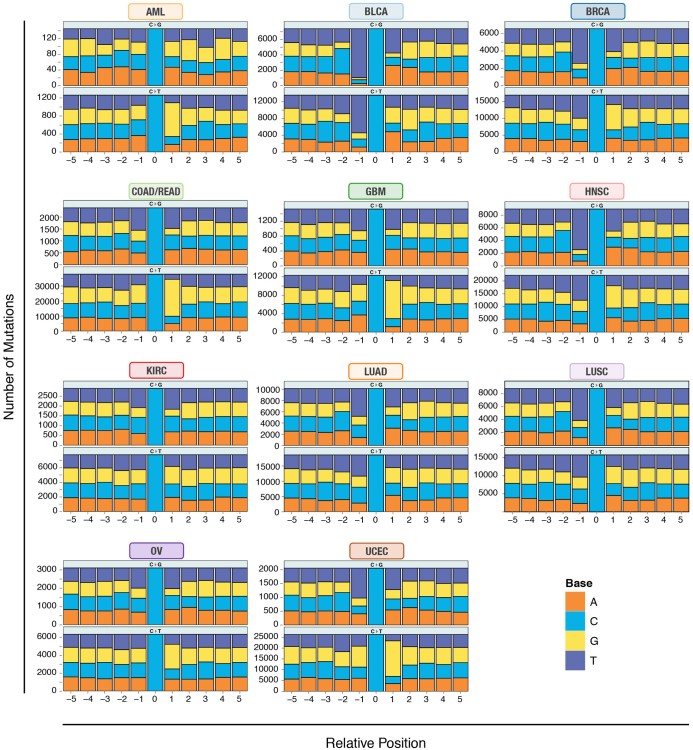
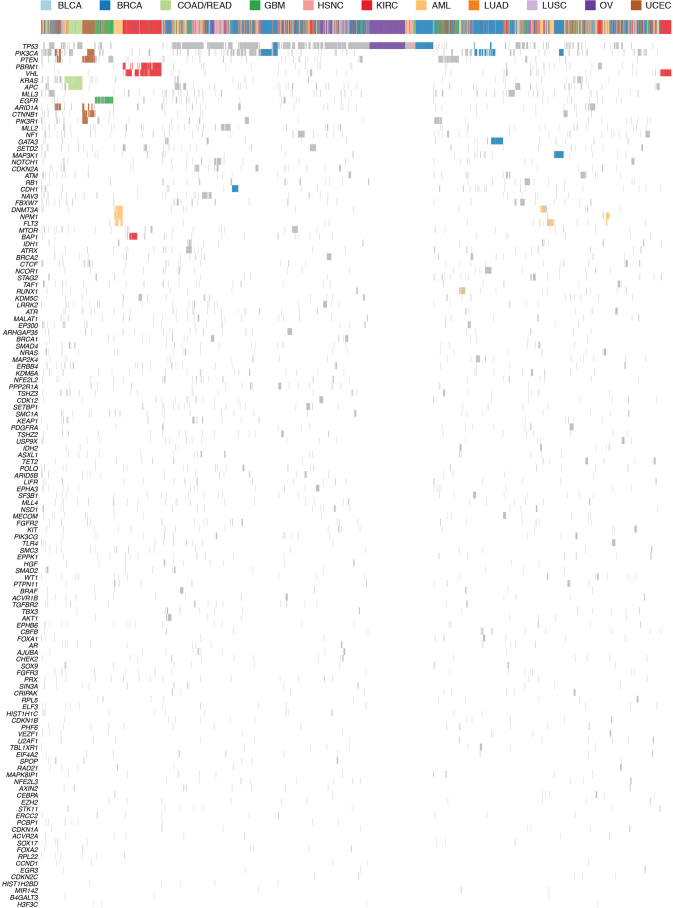
The Cancer Genome Atlas (TCGA) has used the latest sequencing and analysis methods to identify somatic variants across thousands of tumours. Here we present data and analytical results for point mutations and small insertions/deletions from 3,281 tumours across 12 tumour types as part of the TCGA Pan-Cancer effort. We illustrate the distributions of mutation frequencies, types and contexts across tumour types, and establish their links to tissues of origin, environmental/carcinogen influences, and DNA repair defects. Using the integrated data sets, we identified 127 significantly mutated genes from well-known (for example, mitogen-activated protein kinase, phosphatidylinositol-3-OH kinase, Wnt/β-catenin and receptor tyrosine kinase signalling pathways, and cell cycle control) and emerging (for example, histone, histone modification, splicing, metabolism and proteolysis) cellular processes in cancer. The average number of mutations in these significantly mutated genes varies across tumour types; most tumours have two to six, indicating that the number of driver mutations required during oncogenesis is relatively small. Mutations in transcriptional factors/regulators show tissue specificity, whereas histone modifiers are often mutated across several cancer types. Clinical association analysis identifies genes having a significant effect on survival, and investigations of mutations with respect to clonal/subclonal architecture delineate their temporal orders during tumorigenesis. Taken together, these results lay the groundwork for developing new diagnostics and individualizing cancer treatment. As part of The Cancer Genome Atlas Pan-Cancer effort, data analysis for point mutations and small indels from 3,281 tumours and 12 tumour types is presented; among the findings are 127 significantly mutated genes from cellular processes with both established and emerging links in cancer, and an indication that the number of driver mutations required for oncogenesis is relatively small. As part of The Cancer Genome Atlas Pan-Cancer project, these authors present data analysis for point mutations and small indels from more than 3,000 tumours representing 12 tumour types. Among the findings are 127 significantly mutated genes from cellular processes with both established and emerging links to cancer, and an indication that the number of driver mutations required for oncogenesis is relatively small. Additional analyses also identify genes with significant impact on survival and a likely temporal order of mutational events during tumorigenesis.
Overview
The claims and statistics of this paper haven’t been checked yet.
Free: it reads the open-access text and checks the first 5 claims that cite a source we can check. Create a free account to check every claim.
Integrity signals
Registry
Cites
Statistics
Figures
Verification
Claims the paper makes
The claims and statistics of this paper haven’t been checked yet.
Free: it reads the open-access text and checks the first 5 claims that cite a source we can check. Create a free account to check every claim.
Claims other papers make about this one
Each is checked against this paper’s own text: does it say what the citing paper says it does?
The source backs part of the claim, not all of it — or backs it for a different population, condition or comparison.
In the citing paper
“However, TP53 is inactivated in a major fraction of human tumors, mainly by missense mutations in the DNA-binding core domain of p533,4, leading to loss of DNA binding and p53-dependent transactivation of target genes such as p21, Bax and Puma.”
From Inhibition of the glutaredoxin and thioredoxin systems and ribonucleotide reductase by mutant p53-targeting compound APR-246 (2018) · cites this paper as [3]
Experimental — accuracy not yet measuredThe check wasn’t confident either way, so it gives no verdict — never disputed.
In the citing paper
“Current next-generation sequencing (NGS) technology is limited in the detection of rare variant alleles due to an intrinsic sequencing error rate of ~ 0.1%19.”
From Role of TP53 mutations in the origin and evolution of therapy-related acute myeloid leukaemia (2015) · cites this paper as [19]
Experimental — accuracy not yet measuredThe check wasn’t confident either way, so it gives no verdict — never disputed.
In the citing paper
“Yet, these mutations occur significantly more often in human disease than transversion mutations (62% transition vs 38% transversion29,63).”
From One-step generation of tumor models by base editor multiplexing in adult stem cell-derived organoids (2023) · cites this paper as [63]
Experimental — accuracy not yet measuredIn the citing paper
“Mutations in TP53 are thought to occur in more than 50% of all human malignancies.6,7”
From p53: from understanding its structure to advances in therapeutic targeting (2026) · cites this paper as [6]
In the citing paper
“Among somatically mutated genes, TP53 mutations are the most common.6”
From p53: from understanding its structure to advances in therapeutic targeting (2026) · cites this paper as [6]
Self-check
Percentages, sums and reported differences re-computed from the paper’s own numbers.
The self-check needs the paper’s full text.
Citations
Cites
Hanahan, D., & Weinberg, R. A. (2000) · Cell · doi:10.1016/s0092-8674(00)81683-9 · Cited by 29,219
Comprehensive molecular portraits of human breast tumours
The Cancer Genome Atlas Network (2012) · Nature · doi:10.1038/nature11412 · Cited by 12,129
Comprehensive molecular characterization of human colon and rectal cancer
The Cancer Genome Atlas Network (2012) · Nature · doi:10.1038/nature11252 · Cited by 8,499
Integrated genomic analyses of ovarian carcinoma
Perou, C. M. (2019) · Carolina Digital Repository (University of North Carolina at Chapel Hill) · doi:10.17615/hvp3-wg08 · Cited by 7,925
Vogelstein, B., Papadopoulos, N., Velculescu, V. E., Zhou, S., Diaz, L. A., & Kinzler, K. W. (2013) · Science · doi:10.1126/science.1235122 · Cited by 7,863
Comprehensive genomic characterization defines human glioblastoma genes and core pathways
The Cancer Genome Atlas Research Network (2008) · Nature · doi:10.1038/nature07385 · Cited by 7,735
Self-citationAn Integrated Genomic Analysis of Human Glioblastoma Multiforme
Parsons, D. W., Jones, S., Zhang, X., Lin, J. C.-H., Leary, R. J., Angenendt, P., Mankoo, P., Carter, H., Siu, I.-M., Gallia, G. L., et al. (2008) · Science · doi:10.1126/science.1164382 · Cited by 5,857
Integrated genomic characterization of endometrial carcinoma
The Cancer Genome Atlas Research Network, & Levine, D. A. (2013) · Nature · doi:10.1038/nature12113 · Cited by 5,784
Mutational heterogeneity in cancer and the search for new cancer-associated genes
Lawrence, M. S., Stojanov, P., Polak, P., Kryukov, G. V., Cibulskis, K., Sivachenko, A., Carter, S. L., Stewart, C., Mermel, C. H., Roberts, S. A., et al. (2013) · Nature · doi:10.1038/nature12213 · Cited by 5,461
Genomic and Epigenomic Landscapes of Adult De Novo Acute Myeloid Leukemia
The Cancer Genome Atlas Research Network (2013) · New England Journal of Medicine · doi:10.1056/nejmoa1301689 · Cited by 5,078
Cited by
Items 101–200 of 1,028
Cancer Genome Interpreter annotates the biological and clinical relevance of tumor alterations
Tamborero, D., Rubio-Perez, C., Deu-Pons, J., Schroeder, M. P., Vivancos, A., Rovira, A., Tusquets, I., Albanell, J., Rodon, J., Tabernero, J., et al. (2018) · Genome Medicine · doi:10.1186/s13073-018-0531-8 · Cited by 519
lncRNAs and microRNAs with a role in cancer development
Liz, J., & Esteller, M. (2016) · Biochimica et Biophysica Acta (BBA) - Gene Regulatory Mechanisms · doi:10.1016/j.bbagrm.2015.06.015 · Cited by 512
Evaluation of the use of therapeutic peptides for cancer treatment
Marqus, S., Pirogova, E., & Piva, T. J. (2017) · Journal of Biomedical Science · doi:10.1186/s12929-017-0328-x · Cited by 512
DNMT3A in haematological malignancies
Yang, L., Rau, R., & Goodell, M. A. (2015) · Nature Reviews Cancer · doi:10.1038/nrc3895 · Cited by 509
Genomic landscape of lung adenocarcinoma in East Asians
Chen, J., Yang, H., Teo, A. S. M., Amer, L. B., Sherbaf, F. G., Tan, C. Q., Alvarez, J. J. S., Lu, B., Lim, J. Q., Takano, A., et al. (2020) · Nature Genetics · doi:10.1038/s41588-019-0569-6 · Cited by 509
Loss of the FAT1 Tumor Suppressor Promotes Resistance to CDK4/6 Inhibitors via the Hippo Pathway
Li, Z., Razavi, P., Li, Q., Toy, W., Liu, B., Ping, C., Hsieh, W., Sanchez-Vega, F., Brown, D. N., Da Cruz Paula, A. F., et al. (2018) · Cancer Cell · doi:10.1016/j.ccell.2018.11.006 · Cited by 508
Implementing Genome-Driven Oncology
Hyman, D. M., Taylor, B. S., & Baselga, J. (2017) · Cell · doi:10.1016/j.cell.2016.12.015 · Cited by 503
The long noncoding RNA Malat1: Its physiological and pathophysiological functions
Zhang, X., Hamblin, M. H., & Yin, K.-J. (2017) · RNA Biology · doi:10.1080/15476286.2017.1358347 · Cited by 482
Sorafenib induces ferroptosis in human cancer cell lines originating from different solid tumors.
Lachaier, E., Louandre, C., Godin, C., Saidak, Z., Baert, M., Diouf, M., Chauffert, B., & Galmiche, A. (2014) · PubMed · Cited by 477
Organoid Models of Human Liver Cancers Derived from Tumor Needle Biopsies
Nuciforo, S., Fofana, I., Matter, M. S., Blumer, T., Calabrese, D., Boldanova, T., Piscuoglio, S., Wieland, S., Ringnalda, F., Schwank, G., et al. (2018) · Cell Reports · doi:10.1016/j.celrep.2018.07.001 · Cited by 473
“The dashed line imoto et al., 2016; Kandoth et al., 2013; Lawrence et al., 2014; Cancer Genome rding to the legend, with hotspots (Chang et al., 2016; Gao et al., 2017) colored n asterisk.”
BackgroundAberrant RNA splicing in cancer; expression changes and driver mutations of splicing factor genes
Sveen, A., Kilpinen, S., Ruusulehto, A., Lothe, R. A., & Skotheim, R. I. (2016) · Oncogene · doi:10.1038/onc.2015.318 · Cited by 470
Role of non-coding sequence variants in cancer
Khurana, E., Fu, Y., Chakravarty, D., Demichelis, F., Rubin, M. A., & Gerstein, M. (2016) · Nature Reviews Genetics · doi:10.1038/nrg.2015.17 · Cited by 468
Molecular Biomarkers in Cancer
Sarhadi, V. K., & Armengol, G. (2022) · Biomolecules · doi:10.3390/biom12081021 · Cited by 467
DNA methylation markers for diagnosis and prognosis of common cancers
Hao, X., Luo, H., Krawczyk, M., Wei, W., Wang, W., Wang, J., Flagg, K., Hou, J., Zhang, H., Yi, S., et al. (2017) · Proceedings of the National Academy of Sciences · doi:10.1073/pnas.1703577114 · Cited by 458
PARP Inhibitor Resistance: A Tug-of-War in BRCA-Mutated Cells
Noordermeer, S. M., & van Attikum, H. (2019) · Trends in Cell Biology · doi:10.1016/j.tcb.2019.07.008 · Cited by 456
Challenges and Opportunities in Cancer Drug Resistance
Ward, R. A., Fawell, S., Floc’h, N., Flemington, V., McKerrecher, D., & Smith, P. D. (2021) · Chemical Reviews · doi:10.1021/acs.chemrev.0c00383 · Cited by 445
MYC Deregulation in Primary Human Cancers
Kalkat, M., De Melo, J., Hickman, K., Lourenco, C., Redel, C., Resetca, D., Tamachi, A., Tu, W., & Penn, L. (2017) · Genes · doi:10.3390/genes8060151 · Cited by 443
The linear quadratic model: usage, interpretation and challenges
McMahon, S. J. (2018) · Physics in Medicine & Biology · doi:10.1088/1361-6560/aaf26a · Cited by 440
The circ RNA–micro RNA code: emerging implications for cancer diagnosis and treatment
Verduci, L., Strano, S., Yarden, Y., & Blandino, G. (2019) · Molecular Oncology · doi:10.1002/1878-0261.12468 · Cited by 438
Luo, H., Zhao, Q., Wei, W., Zheng, L., Yi, S., Li, G., Wang, W., Sheng, H., Pu, H., Mo, H., et al. (2020) · Science Translational Medicine · doi:10.1126/scitranslmed.aax7533 · Cited by 437
Multiplex assessment of protein variant abundance by massively parallel sequencing
Matreyek, K. A., Starita, L. M., Stephany, J. J., Martin, B., Chiasson, M. A., Gray, V. E., Kircher, M., Khechaduri, A., Dines, J. N., Hause, R. J., et al. (2018) · Nature Genetics · doi:10.1038/s41588-018-0122-z · Cited by 436
Ribosomopathies: There’s strength in numbers
Mills, E. W., & Green, R. (2017) · Science · doi:10.1126/science.aan2755 · Cited by 430
Genomic landscape of cutaneous T cell lymphoma
Choi, J., Goh, G., Walradt, T., Hong, B. S., Bunick, C. G., Chen, K., Bjornson, R. D., Maman, Y., Wang, T., Tordoff, J., et al. (2015) · Nature Genetics · doi:10.1038/ng.3356 · Cited by 428
DGIdb 2.0: mining clinically relevant drug–gene interactions
Wagner, A. H., Coffman, A. C., Ainscough, B. J., Spies, N. C., Skidmore, Z. L., Campbell, K. M., Krysiak, K., Pan, D., McMichael, J. F., Eldred, J. M., et al. (2016) · Nucleic Acids Research · doi:10.1093/nar/gkv1165 · Cited by 413
Self-citationTP53 Mutations in Human Cancer: Database Reassessment and Prospects for the Next Decade
Leroy, B., Anderson, M., & Soussi, T. (2014) · Human Mutation · doi:10.1002/humu.22552 · Cited by 408
Weischenfeldt, J., Dubash, T., Drainas, A. P., Mardin, B. R., Chen, Y., Stütz, A. M., Waszak, S. M., Bosco, G., Halvorsen, A. R., Raeder, B., et al. (2017) · Nature Genetics · doi:10.1038/ng.3722 · Cited by 404
Genomic alterations in lung adenocarcinoma
Devarakonda, S., Morgensztern, D., & Govindan, R. (2015) · The Lancet Oncology · doi:10.1016/s1470-2045(15)00077-7 · Cited by 404
Perspective on Oncogenic Processes at the End of the Beginning of Cancer Genomics
Ding, L., Bailey, M. H., Porta-Pardo, E., Thorsson, V., Colaprico, A., Bertrand, D., Gibbs, D. L., Weerasinghe, A., Huang, K.-L., Tokheim, C., et al. (2018) · Cell · doi:10.1016/j.cell.2018.03.033 · Cited by 399
Self-citationEfficient Test and Visualization of Multi-Set Intersections
Wang, M., Zhao, Y., & Zhang, B. (2015) · Scientific Reports · doi:10.1038/srep16923 · Cited by 395
Hu, J., Yu, A., Othmane, B., Qiu, D., Li, H., Li, C., Liu, P., Ren, W., Chen, M., Gong, G., et al. (2021) · Theranostics · doi:10.7150/thno.53649 · Cited by 387
Goh, G., Walradt, T., Markarov, V., Blom, A., Riaz, N., Doumani, R., Stafstrom, K., Moshiri, A., Yelistratova, L., Levinsohn, J., et al. (2016) · Oncotarget · doi:10.18632/oncotarget.6494 · Cited by 387
Distinct evolution and dynamics of epigenetic and genetic heterogeneity in acute myeloid leukemia
Li, S., Garrett-Bakelman, F. E., Chung, S. S., Sanders, M. A., Hricik, T., Rapaport, F., Patel, J., Dillon, R., Vijay, P., Brown, A. L., et al. (2016) · Nature Medicine · doi:10.1038/nm.4125 · Cited by 387
Recurrent glioma clinical trial, CheckMate-143: the game is not over yet
Filley, A. C., Henriquez, M., & Dey, M. (2017) · Oncotarget · doi:10.18632/oncotarget.21586 · Cited by 386
The expanding landscape of ‘oncohistone’ mutations in human cancers
Nacev, B. A., Feng, L., Bagert, J. D., Lemiesz, A. E., Gao, J., Soshnev, A. A., Kundra, R., Schultz, N., Muir, T. W., & Allis, C. D. (2019) · Nature · doi:10.1038/s41586-019-1038-1 · Cited by 384
Genomic Analysis of Smoothened Inhibitor Resistance in Basal Cell Carcinoma
Sharpe, H. J., Pau, G., Dijkgraaf, G. J., Basset-Seguin, N., Modrusan, Z., Januario, T., Tsui, V., Durham, A. B., Dlugosz, A. A., Haverty, P. M., et al. (2015) · Cancer Cell · doi:10.1016/j.ccell.2015.02.001 · Cited by 382
Development and validation of a TP53-associated immune prognostic model for hepatocellular carcinoma
Long, J., Wang, A., Bai, Y., Lin, J., Yang, X., Wang, D., Yang, X., Jiang, Y., & Zhao, H. (2019) · EBioMedicine · doi:10.1016/j.ebiom.2019.03.022 · Cited by 380
Weren, R. D. A., Ligtenberg, M. J. L., Kets, C. M., de Voer, R. M., Verwiel, E. T. P., Spruijt, L., van Zelst-Stams, W. A. G., Jongmans, M. C., Gilissen, C., Hehir-Kwa, J. Y., et al. (2015) · Nature Genetics · doi:10.1038/ng.3287 · Cited by 378
Critical roles of non-histone protein lysine methylation in human tumorigenesis
Hamamoto, R., Saloura, V., & Nakamura, Y. (2015) · Nature Reviews Cancer · doi:10.1038/nrc3884 · Cited by 376
Therapeutic Implications of Cellular Heterogeneity and Plasticity in Breast Cancer
Brooks, M. D., Burness, M. L., & Wicha, M. S. (2015) · Cell Stem Cell · doi:10.1016/j.stem.2015.08.014 · Cited by 374
Isolation of neoantigen-specific T cells from tumor and peripheral lymphocytes
Cohen, C. J., Gartner, J. J., Horovitz-Fried, M., Shamalov, K., Trebska-McGowan, K., Bliskovsky, V. V., Parkhurst, M. R., Ankri, C., Prickett, T. D., Crystal, J. S., et al. (2015) · Journal of Clinical Investigation · doi:10.1172/jci82416 · Cited by 374
Modes of Regulated Cell Death in Cancer
Koren, E., & Fuchs, Y. (2021) · Cancer Discovery · doi:10.1158/2159-8290.cd-20-0789 · Cited by 371
The first five years of single-cell cancer genomics and beyond
Navin, N. E. (2015) · Genome Research · doi:10.1101/gr.191098.115 · Cited by 371
p53 mutations in colorectal cancer- molecular pathogenesis and pharmacological reactivation
Li, X.-L. (2015) · World Journal of Gastroenterology · doi:10.3748/wjg.v21.i1.84 · Cited by 367
Mutant p53 as a target for cancer treatment
Duffy, M. J., Synnott, N. C., & Crown, J. (2017) · European Journal of Cancer · doi:10.1016/j.ejca.2017.06.023 · Cited by 364
Driver and Passenger Mutations in Cancer
Pon, J. R., & Marra, M. A. (2015) · Annual Review of Pathology: Mechanisms of Disease · doi:10.1146/annurev-pathol-012414-040312 · Cited by 355
Recent advances in triple negative breast cancer: the immunotherapy era
Marra, A., Viale, G., & Curigliano, G. (2019) · BMC Medicine · doi:10.1186/s12916-019-1326-5 · Cited by 355
Ling, S., Hu, Z., Yang, Z., Yang, F., Li, Y., Lin, P., Chen, K., Dong, L., Cao, L., Tao, Y., et al. (2015) · Proceedings of the National Academy of Sciences · doi:10.1073/pnas.1519556112 · Cited by 352
An inhibitor of KDM5 demethylases reduces survival of drug-tolerant cancer cells
Vinogradova, M., Gehling, V. S., Gustafson, A., Arora, S., Tindell, C. A., Wilson, C., Williamson, K. E., Guler, G. D., Gangurde, P., Manieri, W., et al. (2016) · Nature Chemical Biology · doi:10.1038/nchembio.2085 · Cited by 351
Targeting p53 for the treatment of cancer
Duffy, M. J., Synnott, N. C., O’Grady, S., & Crown, J. (2022) · Seminars in Cancer Biology · doi:10.1016/j.semcancer.2020.07.005 · Cited by 349
The PI3K-Akt-mTOR Signaling Pathway in Human Acute Myeloid Leukemia (AML) Cells
Nepstad, I., Hatfield, K. J., Grønningsæter, I. S., & Reikvam, H. (2020) · International Journal of Molecular Sciences · doi:10.3390/ijms21082907 · Cited by 348
Targeting Mutant BRAF in Relapsed or Refractory Hairy-Cell Leukemia
Tiacci, E., Park, J. H., De Carolis, L., Chung, S. S., Broccoli, A., Scott, S., Zaja, F., Devlin, S., Pulsoni, A., Chung, Y. R., et al. (2015) · New England Journal of Medicine · doi:10.1056/nejmoa1506583 · Cited by 348
Goodell, M. A., & Rando, T. A. (2015) · Science · doi:10.1126/science.aab3388 · Cited by 347
Implementing TMB measurement in clinical practice: considerations on assay requirements
Büttner, R., Longshore, J. W., López-Ríos, F., Merkelbach-Bruse, S., Normanno, N., Rouleau, E., & Penault-Llorca, F. (2019) · ESMO Open · doi:10.1136/esmoopen-2018-000442 · Cited by 345
Tumor suppression by the Fbw7 ubiquitin ligase: mechanisms and opportunities
Davis, R. J., Welcker, M., & Clurman, B. E. (2014) · Cancer Cell · doi:10.1016/j.ccell.2014.09.013 · Cited by 343
“Genome instability is a critical consequence of constitutive cyclin E-CDK2 activity during the cell cycle caused by its impaired degradation (Ekholm-Reed et al., 2004; Keck et al., 2007; Loeb et al., 2005; Minella et al., 2002, 2007; Rajagopalan et al., 2004; Spruck et al., 1999).”
Lässig, M., Mustonen, V., & Walczak, A. M. (2017) · Nature Ecology & Evolution · doi:10.1038/s41559-017-0077 · Cited by 343
The dynamic control of signal transduction networks in cancer cells
Kolch, W., Halasz, M., Granovskaya, M., & Kholodenko, B. N. (2015) · Nature Reviews Cancer · doi:10.1038/nrc3983 · Cited by 339
Intron retention is a widespread mechanism of tumor-suppressor inactivation
Jung, H., Lee, D., Lee, J., Park, D., Kim, Y. J., Park, W.-Y., Hong, D., Park, P. J., & Lee, E. (2015) · Nature Genetics · doi:10.1038/ng.3414 · Cited by 339
Mechanisms and impact of altered tumour mechanics
Mohammadi, H., & Sahai, E. (2018) · Nature Cell Biology · doi:10.1038/s41556-018-0131-2 · Cited by 336
Systematic Functional Annotation of Somatic Mutations in Cancer
Ng, P. K.-S., Li, J., Jeong, K. J., Shao, S., Chen, H., Tsang, Y. H., Sengupta, S., Wang, Z., Bhavana, V. H., Tran, R., et al. (2018) · Cancer Cell · doi:10.1016/j.ccell.2018.01.021 · Cited by 335
Self-citationOnco-Multi-OMICS Approach: A New Frontier in Cancer Research
Chakraborty, S., Hosen, M. I., Ahmed, M., & Shekhar, H. U. (2018) · BioMed Research International · doi:10.1155/2018/9836256 · Cited by 335
Individualized Medicine from Prewomb to Tomb
Topol, E. J. (2014) · Cell · doi:10.1016/j.cell.2014.02.012 · Cited by 333
Regulation of disease-associated gene expression in the 3D genome
Krijger, P. H. L., & de Laat, W. (2016) · Nature Reviews Molecular Cell Biology · doi:10.1038/nrm.2016.138 · Cited by 329
A systematic analysis of FDA-approved anticancer drugs
Sun, J., Wei, Q., Zhou, Y., Wang, J., Liu, Q., & Xu, H. (2017) · BMC Systems Biology · doi:10.1186/s12918-017-0464-7 · Cited by 322
Machine learning in plant science and plant breeding
van Dijk, A. D. J., Kootstra, G., Kruijer, W., & de Ridder, D. (2021) · iScience · doi:10.1016/j.isci.2020.101890 · Cited by 320
Cancer genomics: one cell at a time
Navin, N. E. (2014) · Genome Biology · doi:10.1186/s13059-014-0452-9 · Cited by 318
Intra-tumor heterogeneity of cancer cells and its implications for cancer treatment
Sun, X.-X., & Yu, Q. (2015) · Acta Pharmacologica Sinica · doi:10.1038/aps.2015.92 · Cited by 318
Biomarkers of response to PD-1/PD-L1 inhibition
Maleki Vareki, S., Garrigós, C., & Duran, I. (2017) · Critical Reviews in Oncology/Hematology · doi:10.1016/j.critrevonc.2017.06.001 · Cited by 318
The Role of p53 Signaling in Colorectal Cancer
Liebl, M. C., & Hofmann, T. G. (2021) · Cancers · doi:10.3390/cancers13092125 · Cited by 318
Marra, A., Trapani, D., Viale, G., Criscitiello, C., & Curigliano, G. (2020) · npj Breast Cancer · doi:10.1038/s41523-020-00197-2 · Cited by 317
p53 and Tumor Suppression: It Takes a Network
Boutelle, A. M., & Attardi, L. D. (2021) · Trends in Cell Biology · doi:10.1016/j.tcb.2020.12.011 · Cited by 317
Precision medicine for metastatic breast cancer—limitations and solutions
Arnedos, M., Vicier, C., Loi, S., Lefebvre, C., Michiels, S., Bonnefoi, H., & Andre, F. (2015) · Nature Reviews Clinical Oncology · doi:10.1038/nrclinonc.2015.123 · Cited by 317
SHP2 inhibition prevents adaptive resistance to MEK inhibitors in multiple cancer models
Fedele, C., Ran, H., Diskin, B., Wei, W., Jen, J., Geer, M. J., Araki, K., Ozerdem, U., Simeone, D. M., Miller, G., et al. (2018) · Cancer Discovery · doi:10.1158/2159-8290.cd-18-0444 · Cited by 315
Landscape of Phosphatidylinositol-3-Kinase Pathway Alterations Across 19 784 Diverse Solid Tumors
Millis, S. Z., Ikeda, S., Reddy, S., Gatalica, Z., & Kurzrock, R. (2016) · JAMA Oncology · doi:10.1001/jamaoncol.2016.0891 · Cited by 315
Daly, M. B., Pal, T., Maxwell, K. N., Churpek, J., Kohlmann, W., AlHilli, Z., Arun, B., Buys, S. S., Cheng, H., Domchek, S. M., et al. (2023) · Journal of the National Comprehensive Cancer Network · doi:10.6004/jnccn.2023.0051 · Cited by 315
Recurrent activating mutations of G-protein-coupled receptor CYSLTR2 in uveal melanoma
Moore, A. R., Ceraudo, E., Sher, J. J., Guan, Y., Shoushtari, A. N., Chang, M. T., Zhang, J. Q., Walczak, E. G., Kazmi, M. A., Taylor, B. S., et al. (2016) · Nature Genetics · doi:10.1038/ng.3549 · Cited by 314
MLL3 Is a Haploinsufficient 7q Tumor Suppressor in Acute Myeloid Leukemia
Chen, C., Liu, Y., Rappaport, A. R., Kitzing, T., Schultz, N., Zhao, Z., Shroff, A. S., Dickins, R. A., Vakoc, C. R., Bradner, J. E., et al. (2014) · Cancer Cell · doi:10.1016/j.ccr.2014.03.016 · Cited by 311
Emerging biomarkers in head and neck cancer in the era of genomics
Kang, H., Kiess, A., & Chung, C. H. (2015) · Nature Reviews Clinical Oncology · doi:10.1038/nrclinonc.2014.192 · Cited by 310
SigProfilerMatrixGenerator: a tool for visualizing and exploring patterns of small mutational events
Bergstrom, E. N., Huang, M. N., Mahto, U., Barnes, M., Stratton, M. R., Rozen, S. G., & Alexandrov, L. B. (2019) · BMC Genomics · doi:10.1186/s12864-019-6041-2 · Cited by 308
The role of alternative splicing in cancer: From oncogenesis to drug resistance
Sciarrillo, R., Wojtuszkiewicz, A., Assaraf, Y. G., Jansen, G., Kaspers, G. J. L., Giovannetti, E., & Cloos, J. (2020) · Drug Resistance Updates · doi:10.1016/j.drup.2020.100728 · Cited by 307
A comprehensive assessment of somatic mutation detection in cancer using whole-genome sequencing
Alioto, T. S., Buchhalter, I., Derdak, S., Hutter, B., Eldridge, M. D., Hovig, E., Heisler, L. E., Beck, T. A., Simpson, J. T., Tonon, L., et al. (2015) · Nature Communications · doi:10.1038/ncomms10001 · Cited by 306
Self-citationSoussi, T., & Wiman, K. G. (2015) · Cell Death & Differentiation · doi:10.1038/cdd.2015.53 · Cited by 305
Rodriguez-Meira, A., Buck, G., Clark, S.-A., Povinelli, B. J., Alcolea, V., Louka, E., McGowan, S., Hamblin, A., Sousos, N., Barkas, N., et al. (2019) · Molecular Cell · doi:10.1016/j.molcel.2019.01.009 · Cited by 305
“…it allows analysis of alternative splicing patterns; this is of importance in cancer biology (David and Manley, 2010), as well as in many other diseases (Cooper et al., 2009), particularly because components of the spliceosome machinery are recurrently mutated in cancer (Kandoth et al., 2013).”
BackgroundMolecular Genetics of Endometrial Carcinoma
Bell, D. W., & Ellenson, L. H. (2019) · Annual Review of Pathology: Mechanisms of Disease · doi:10.1146/annurev-pathol-020117-043609 · Cited by 304
The NF1 somatic mutational landscape in sporadic human cancers
Philpott, C., Tovell, H., Frayling, I. M., Cooper, D. N., & Upadhyaya, M. (2017) · Human Genomics · doi:10.1186/s40246-017-0109-3 · Cited by 303
HER2 Activating Mutations Are Targets for Colorectal Cancer Treatment
Kavuri, S. M., Jain, N., Galimi, F., Cottino, F., Leto, S. M., Migliardi, G., Searleman, A. C., Shen, W., Monsey, J., Trusolino, L., et al. (2015) · Cancer Discovery · doi:10.1158/2159-8290.cd-14-1211 · Cited by 302
Translational Control in Cancer
Robichaud, N., Sonenberg, N., Ruggero, D., & Schneider, R. J. (2019) · Cold Spring Harbor Perspectives in Biology · doi:10.1101/cshperspect.a032896 · Cited by 302
Genomics and evolution of protein phosphatases
Chen, M. J., Dixon, J. E., & Manning, G. (2017) · Science Signaling · doi:10.1126/scisignal.aag1796 · Cited by 300
Pan-cancer circulating tumor DNA detection in over 10,000 Chinese patients
Zhang, Y., Yao, Y., Xu, Y., Li, L., Gong, Y., Zhang, K., Zhang, M., Guan, Y., Chang, L., Xia, X., et al. (2021) · Nature Communications · doi:10.1038/s41467-020-20162-8 · Cited by 300
Histone H3 lysine 4 methyltransferase KMT2D
Froimchuk, E., Jang, Y., & Ge, K. (2017) · Gene · doi:10.1016/j.gene.2017.06.056 · Cited by 299
Rubio-Perez, C., Tamborero, D., Schroeder, M. P., Antolín, A. A., Deu-Pons, J., Perez-Llamas, C., Mestres, J., Gonzalez-Perez, A., & Lopez-Bigas, N. (2015) · Cancer Cell · doi:10.1016/j.ccell.2015.02.007 · Cited by 296
Integrated analysis of germline and somatic variants in ovarian cancer
Kanchi, K. L., Johnson, K. J., Lu, C., McLellan, M. D., Leiserson, M. D. M., Wendl, M. C., Zhang, Q., Koboldt, D. C., Xie, M., Kandoth, C., et al. (2014) · Nature Communications · doi:10.1038/ncomms4156 · Cited by 296
Self-citationPatterns and functional implications of rare germline variants across 12 cancer types
Lu, C., Xie, M., Wendl, M. C., Wang, J., McLellan, M. D., Leiserson, M. D. M., Huang, K.-L., Wyczalkowski, M. A., Jayasinghe, R., Banerjee, T., et al. (2015) · Nature Communications · doi:10.1038/ncomms10086 · Cited by 296
Self-citationThe 2021 Updated European Association of Urology Guidelines on Metastatic Urothelial Carcinoma
Cathomas, R., Lorch, A., Bruins, H. M., Compérat, E. M., Cowan, N. C., Efstathiou, J. A., Fietkau, R., Gakis, G., Hernández, V., Espinós, E. L., et al. (2022) · European Urology · doi:10.1016/j.eururo.2021.09.026 · Cited by 295
WSISA: Making Survival Prediction from Whole Slide Histopathological Images
Zhu, X., Yao, J., Zhu, F., & Huang, J. (2017) · 2017 IEEE Conference on Computer Vision and Pattern Recognition (CVPR) · doi:10.1109/cvpr.2017.725 · Cited by 292
Crosstalk between DNA Damage and Inflammation in the Multiple Steps of Carcinogenesis
Kawanishi, S., Ohnishi, S., Ma, N., Hiraku, Y., & Murata, M. (2017) · International Journal of Molecular Sciences · doi:10.3390/ijms18081808 · Cited by 288
Mutant U2AF1 Expression Alters Hematopoiesis and Pre-mRNA Splicing In Vivo
Shirai, C. L., Ley, J. N., White, B. S., Kim, S., Tibbitts, J., Shao, J., Ndonwi, M., Wadugu, B., Duncavage, E. J., Okeyo-Owuor, T., et al. (2015) · Cancer Cell · doi:10.1016/j.ccell.2015.04.008 · Cited by 287
“…across major cancer types, including AML, lung adenocarcinoma, head and neck squamous cell carcinoma, uterine corpus endometrial carcinoma, bladder urothelial carcinoma, breast adenocarcinoma, and colorectal carcinoma, further implicating U2AF1 broadly in cancer pathogenesis (Kandoth et al., 2013).”
Self-citationComputational pan-genomics: status, promises and challenges
(2016) · Briefings in Bioinformatics · doi:10.1093/bib/bbw089 · Cited by 287
Self-citationGenomics in acute lymphoblastic leukaemia: insights and treatment implications
Roberts, K. G., & Mullighan, C. G. (2015) · Nature Reviews Clinical Oncology · doi:10.1038/nrclinonc.2015.38 · Cited by 287
Kotler, E., Shani, O., Goldfeld, G., Lotan-Pompan, M., Tarcic, O., Gershoni, A., Hopf, T. A., Marks, D. S., Oren, M., & Segal, E. (2018) · Molecular Cell · doi:10.1016/j.molcel.2018.06.012 · Cited by 285
Mismatch Repair Deficiency and Response to Immune Checkpoint Blockade
Lee, V., Murphy, A., Le, D. T., & Diaz, L. A. (2016) · The Oncologist · doi:10.1634/theoncologist.2016-0046 · Cited by 283
Metadata
- Authors
- Kandoth, C., McLellan, M. D., Vandin, F., Ye, K., Niu, B., Lu, C., Xie, M., Zhang, Q., McMichael, J. F., Wyczalkowski, M. A., Leiserson, M. D. M., Miller, C. A., Welch, J. S., Walter, M. J., Wendl, M. C., Ley, T. J., Wilson, R. K., Raphael, B. J., & Ding, L.
- Affiliations
- Washington University in St. Louis (US)
- Brown University (US)
- Corresponding author
- Ding, Li
- ORCID
- Venue
- Nature
- Published
- 2013-10-16
- Volume
- 502
- Issue
- 7471
- Pages
- 333-339
- ISSN
- 0028-0836 (ISSN-L)
- 1476-4687
- PMC
- PMC3927368
- OpenAlex
- W2022495797
- Cited by
- 4,419
- References
- 40
- Citations by year
- 2026: 162 · 2025: 243 · 2024: 311 · 2023: 324 · 2022: 380 · 2021: 395 · 2020: 417 · 2019: 377 · 2018: 410 · 2017: 414 · 2016: 407 · 2015: 327 · 2014: 237 · 2013: 8
- FWCI
- 114.79
- Type
- journal article
- Language
- en
- Open access
- hybrid
- doi.org
- Licence
- cc-by-nc-sa
- creativecommons.org/licenses/by-nc-sa/3.0/ (tdm)
- creativecommons.org/licenses/by-nc-sa/3.0/ (vor)
- Locations
- Nature (publishedVersion, cc-by-nc-sa)
- PubMed Central (publishedVersion, cc-by-nc-sa)
- PubMed (publishedVersion)
- Europe PMC (PubMed Central) (acceptedVersion, cc-by-nc-sa)
- Padua Research Archive (University of Padova) (submittedVersion, cc-by-nc-sa)
- RePEc: Research Papers in Economics (submittedVersion)
- Funders
- National Science Foundation (1016648)
- National Human Genome Research Institute (U01HG006517, U54HG003079, R01HG005690)
- National Cancer Institute (PO1CA101937, R01CA180006, P01CA101937)
- Topics
- Life Sciences › Biochemistry, Genetics and Molecular Biology › Cancer Research › Cancer Genomics and Diagnostics
- Life Sciences › Biochemistry, Genetics and Molecular Biology › Molecular Biology › Chromatin Remodeling and Cancer
- Life Sciences › Biochemistry, Genetics and Molecular Biology › Genetics › Genomics and Rare Diseases
- Keywords
- somatic mutations, point mutations, small insertions and deletions, significantly mutated genes, driver mutations, pan-cancer analysis, histone modifiers, transcription factors, histone modifications, splicing, carcinogenesis, clonal architecture, subclonal evolution, tissue specificity, DNA repair deficiency, carcinogens, cancer pathways, cancer metabolism
- MeSH terms
- Cell Cycle, Clone Cells, DNA Repair, Humans, Models, Genetic, Mutation, Neoplasms, Oncogenes, Time Factors, Cohort Studies, Survival Analysis, Point Mutation, Phosphatidylinositol 3-Kinases, Receptor Protein-Tyrosine Kinases, Mitogen-Activated Protein Kinases, INDEL Mutation, Carcinogenesis
About these checks
Registry, retraction, Cites and statistics results are computed, not judged, with one exception: a printed reference that no index lists is read once by a model before it counts as a citation error. Claims are extracted by a model and kept only when their quote appears verbatim in the text; each cited source is then checked, with a model’s help, for whether it says what the claim relies on. Those verdicts can be wrong — read the claim’s quote and the cited source before relying on one.
Statistics and arithmetic are recomputed, not judged.
Confidence bands are shown only for fields calibrated on our annotated test set. None is calibrated yet, so no band is shown.
What counts as a claim ›How we measure confidence ›How we check this ›
Are you an author, or do you see a problem with this page? Request a review
Data sources
Bibliographic data: Semantic Scholar, OpenAlex, Crossref.
Contains information from the Semantic Scholar Academic Graph Datasets, made available under the ODC Attribution License (ODC-BY 1.0).
Semantic Scholar’s data is described in: Kinney, R., et al. (2023). The Semantic Scholar Open Data Platform. arXiv:2301.10140.
