

Mutational landscape and significance across 12 major cancer types
Open accessThe DOI matches its Crossref record; 39 of the 40 references it cites were found in a registry or an index.
Abstract
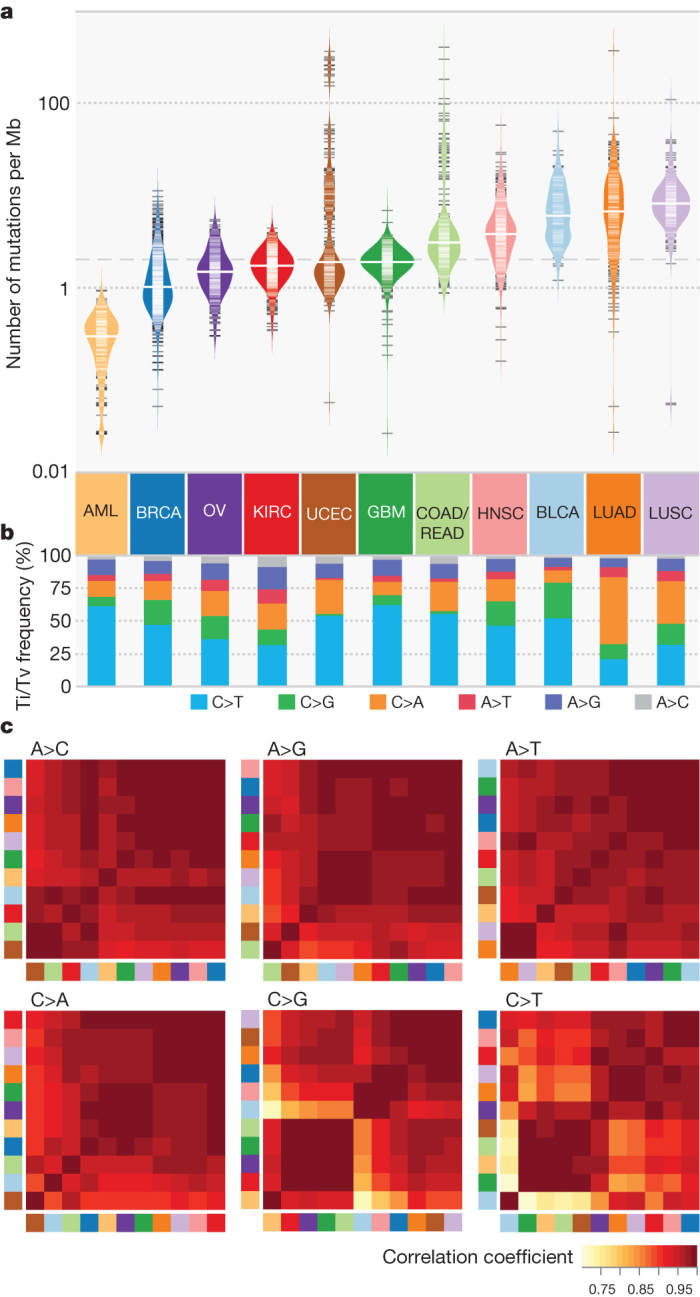
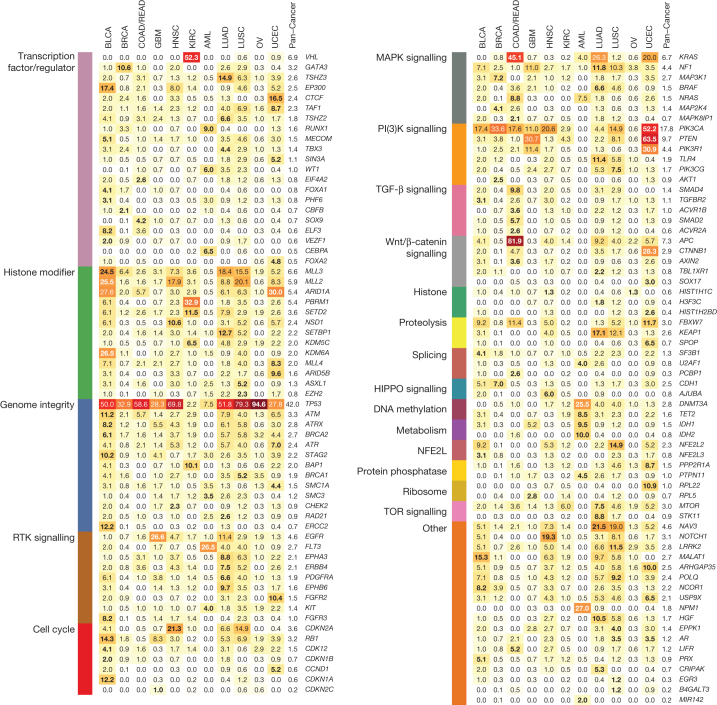
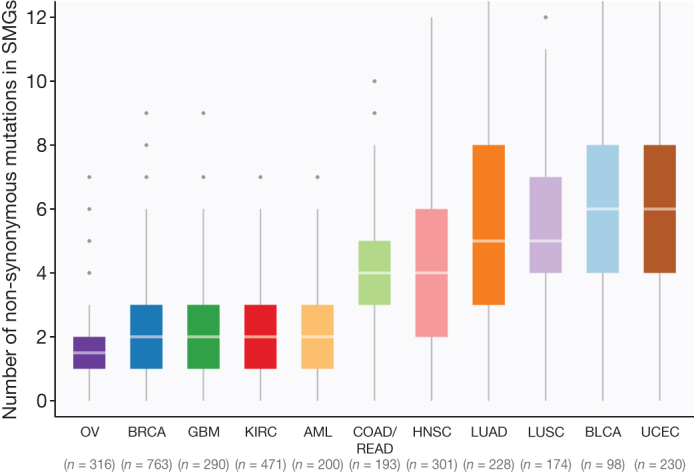
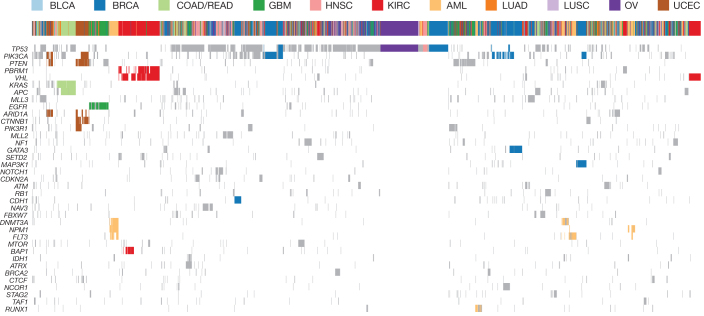
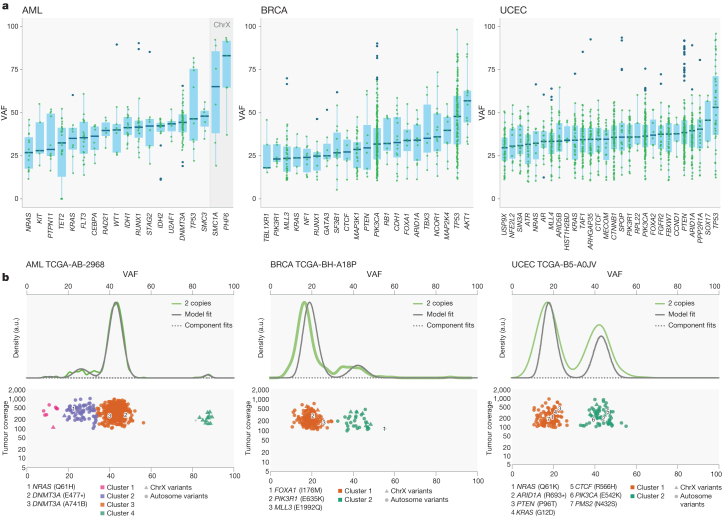
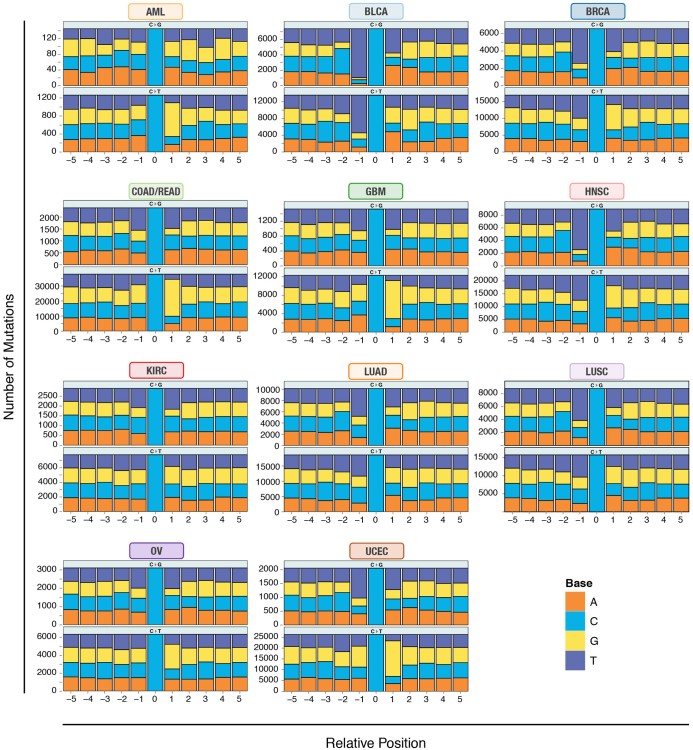
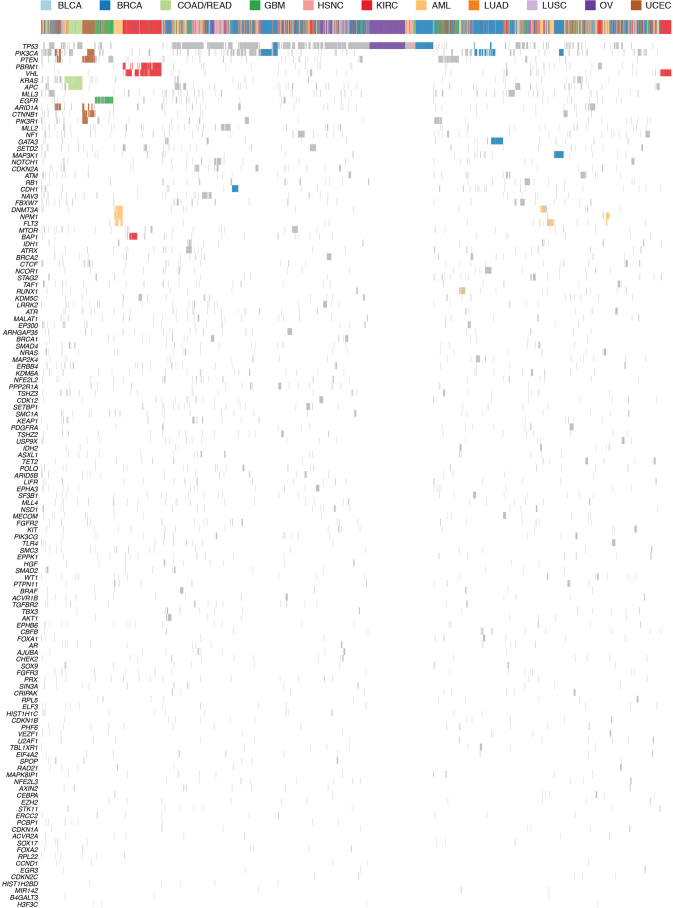
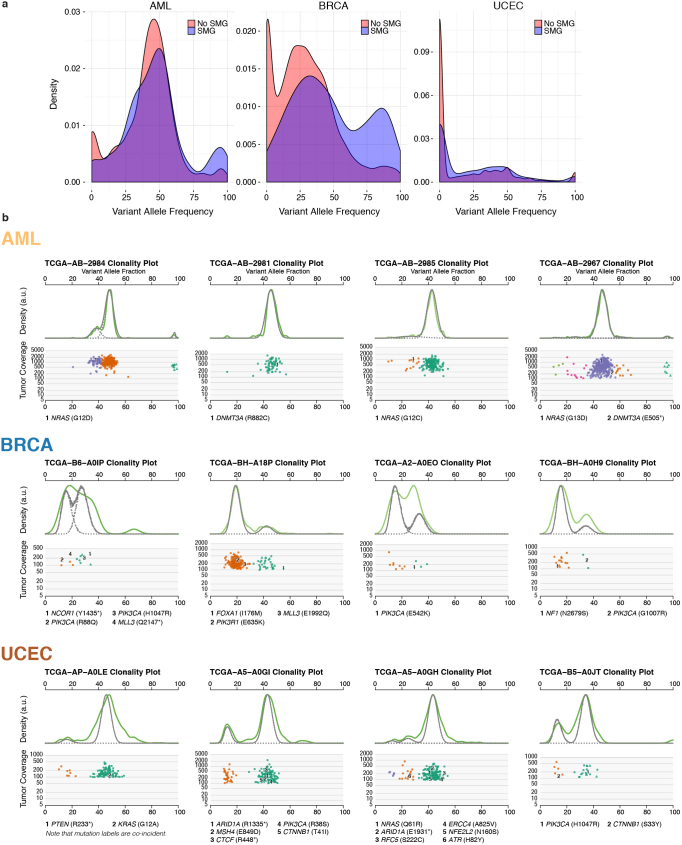
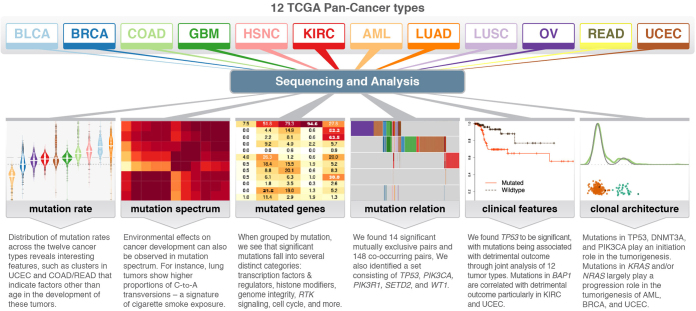
The Cancer Genome Atlas (TCGA) has used the latest sequencing and analysis methods to identify somatic variants across thousands of tumours. Here we present data and analytical results for point mutations and small insertions/deletions from 3,281 tumours across 12 tumour types as part of the TCGA Pan-Cancer effort. We illustrate the distributions of mutation frequencies, types and contexts across tumour types, and establish their links to tissues of origin, environmental/carcinogen influences, and DNA repair defects. Using the integrated data sets, we identified 127 significantly mutated genes from well-known (for example, mitogen-activated protein kinase, phosphatidylinositol-3-OH kinase, Wnt/β-catenin and receptor tyrosine kinase signalling pathways, and cell cycle control) and emerging (for example, histone, histone modification, splicing, metabolism and proteolysis) cellular processes in cancer. The average number of mutations in these significantly mutated genes varies across tumour types; most tumours have two to six, indicating that the number of driver mutations required during oncogenesis is relatively small. Mutations in transcriptional factors/regulators show tissue specificity, whereas histone modifiers are often mutated across several cancer types. Clinical association analysis identifies genes having a significant effect on survival, and investigations of mutations with respect to clonal/subclonal architecture delineate their temporal orders during tumorigenesis. Taken together, these results lay the groundwork for developing new diagnostics and individualizing cancer treatment. As part of The Cancer Genome Atlas Pan-Cancer effort, data analysis for point mutations and small indels from 3,281 tumours and 12 tumour types is presented; among the findings are 127 significantly mutated genes from cellular processes with both established and emerging links in cancer, and an indication that the number of driver mutations required for oncogenesis is relatively small. As part of The Cancer Genome Atlas Pan-Cancer project, these authors present data analysis for point mutations and small indels from more than 3,000 tumours representing 12 tumour types. Among the findings are 127 significantly mutated genes from cellular processes with both established and emerging links to cancer, and an indication that the number of driver mutations required for oncogenesis is relatively small. Additional analyses also identify genes with significant impact on survival and a likely temporal order of mutational events during tumorigenesis.
Overview
The claims and statistics of this paper haven’t been checked yet.
Free: it reads the open-access text and checks the first 5 claims that cite a source we can check. Create a free account to check every claim.
Integrity signals
Registry
Cites
Statistics
Figures
Verification
Claims the paper makes
The claims and statistics of this paper haven’t been checked yet.
Free: it reads the open-access text and checks the first 5 claims that cite a source we can check. Create a free account to check every claim.
Claims other papers make about this one
Each is checked against this paper’s own text: does it say what the citing paper says it does?
The source backs part of the claim, not all of it — or backs it for a different population, condition or comparison.
In the citing paper
“However, TP53 is inactivated in a major fraction of human tumors, mainly by missense mutations in the DNA-binding core domain of p533,4, leading to loss of DNA binding and p53-dependent transactivation of target genes such as p21, Bax and Puma.”
From Inhibition of the glutaredoxin and thioredoxin systems and ribonucleotide reductase by mutant p53-targeting compound APR-246 (2018) · cites this paper as [3]
Experimental — accuracy not yet measuredThe check wasn’t confident either way, so it gives no verdict — never disputed.
In the citing paper
“Current next-generation sequencing (NGS) technology is limited in the detection of rare variant alleles due to an intrinsic sequencing error rate of ~ 0.1%19.”
From Role of TP53 mutations in the origin and evolution of therapy-related acute myeloid leukaemia (2015) · cites this paper as [19]
Experimental — accuracy not yet measuredThe check wasn’t confident either way, so it gives no verdict — never disputed.
In the citing paper
“Yet, these mutations occur significantly more often in human disease than transversion mutations (62% transition vs 38% transversion29,63).”
From One-step generation of tumor models by base editor multiplexing in adult stem cell-derived organoids (2023) · cites this paper as [63]
Experimental — accuracy not yet measuredIn the citing paper
“Mutations in TP53 are thought to occur in more than 50% of all human malignancies.6,7”
From p53: from understanding its structure to advances in therapeutic targeting (2026) · cites this paper as [6]
In the citing paper
“Among somatically mutated genes, TP53 mutations are the most common.6”
From p53: from understanding its structure to advances in therapeutic targeting (2026) · cites this paper as [6]
Self-check
Percentages, sums and reported differences re-computed from the paper’s own numbers.
The self-check needs the paper’s full text.
Citations
Cites
Hanahan, D., & Weinberg, R. A. (2000) · Cell · doi:10.1016/s0092-8674(00)81683-9 · Cited by 29,219
Comprehensive molecular portraits of human breast tumours
The Cancer Genome Atlas Network (2012) · Nature · doi:10.1038/nature11412 · Cited by 12,129
Comprehensive molecular characterization of human colon and rectal cancer
The Cancer Genome Atlas Network (2012) · Nature · doi:10.1038/nature11252 · Cited by 8,499
Integrated genomic analyses of ovarian carcinoma
Perou, C. M. (2019) · Carolina Digital Repository (University of North Carolina at Chapel Hill) · doi:10.17615/hvp3-wg08 · Cited by 7,925
Vogelstein, B., Papadopoulos, N., Velculescu, V. E., Zhou, S., Diaz, L. A., & Kinzler, K. W. (2013) · Science · doi:10.1126/science.1235122 · Cited by 7,863
Comprehensive genomic characterization defines human glioblastoma genes and core pathways
The Cancer Genome Atlas Research Network (2008) · Nature · doi:10.1038/nature07385 · Cited by 7,735
Self-citationAn Integrated Genomic Analysis of Human Glioblastoma Multiforme
Parsons, D. W., Jones, S., Zhang, X., Lin, J. C.-H., Leary, R. J., Angenendt, P., Mankoo, P., Carter, H., Siu, I.-M., Gallia, G. L., et al. (2008) · Science · doi:10.1126/science.1164382 · Cited by 5,857
Integrated genomic characterization of endometrial carcinoma
The Cancer Genome Atlas Research Network, & Levine, D. A. (2013) · Nature · doi:10.1038/nature12113 · Cited by 5,784
Mutational heterogeneity in cancer and the search for new cancer-associated genes
Lawrence, M. S., Stojanov, P., Polak, P., Kryukov, G. V., Cibulskis, K., Sivachenko, A., Carter, S. L., Stewart, C., Mermel, C. H., Roberts, S. A., et al. (2013) · Nature · doi:10.1038/nature12213 · Cited by 5,461
Genomic and Epigenomic Landscapes of Adult De Novo Acute Myeloid Leukemia
The Cancer Genome Atlas Research Network (2013) · New England Journal of Medicine · doi:10.1056/nejmoa1301689 · Cited by 5,078
Cited by
Items 301–400 of 1,028
Web-TCGA: an online platform for integrated analysis of molecular cancer data sets
Deng, M., Brägelmann, J., Schultze, J. L., & Perner, S. (2016) · BMC Bioinformatics · doi:10.1186/s12859-016-0917-9 · Cited by 192
Dangerous liaisons: interplay between SWI/SNF, NuRD, and Polycomb in chromatin regulation and cancer
Bracken, A. P., Brien, G. L., & Verrijzer, C. P. (2019) · Genes & Development · doi:10.1101/gad.326066.119 · Cited by 192
“Its function is primarily lost due to truncatingmutations as has been reported inmultiple cancers, including bladder cancer (Gui et al. 2011), uterine endometrial carcinoma (Kandoth et al. 2013), and neuroblastoma (Sausen et al. 2013).”
BackgroundThe mRNA related ceRNA–ceRNA landscape and significance across 20 major cancer types
Xu, J., Li, Y., Lu, J., Pan, T., Ding, N., Wang, Z., Shao, T., Zhang, J., Wang, L., & Li, X. (2015) · Nucleic Acids Research · doi:10.1093/nar/gkv853 · Cited by 192
Targeting Wnt/β-Catenin Signaling for Cancer Immunotherapy
Wang, B., Tian, T., Kalland, K.-H., Ke, X., & Qu, Y. (2018) · Trends in Pharmacological Sciences · doi:10.1016/j.tips.2018.03.008 · Cited by 192
Epigenetic driver mutations in ARID1A shape cancer immune phenotype and immunotherapy
Li, J., Wang, W., Zhang, Y., Cieślik, M., Guo, J., Tan, M., Green, M. D., Wang, W., Lin, H., Li, W., et al. (2020) · Journal of Clinical Investigation · doi:10.1172/jci134402 · Cited by 191
Classification of adult‐type diffuse gliomas: Impact of the World Health Organization 2021 update
Whitfield, B. T., & Huse, J. T. (2022) · Brain Pathology · doi:10.1111/bpa.13062 · Cited by 192
Unni, A. M., Lockwood, W. W., Zejnullahu, K., Lee-Lin, S.-Q., & Varmus, H. (2015) · eLife · doi:10.7554/elife.06907 · Cited by 190
“…2013), in the Wnt signaling pathway in colorectal carcinoma (Cancer Genome Atlas Network, 2012), and, more broadly, in the growth factor receptor-RAS-PIK3CA or–AKT pathways in a variety of cancers including lung adenocarcinoma (Kandoth et al., 2013; Cancer Genome Atlas Research Network, 2014).”
BackgroundMethodInfluentialSong, B., Cha, Y., Ko, S., Jeon, J., Lee, N., Seo, H., Park, K.-J., Lee, I.-H., Lopes, C., Feitosa, M., et al. (2020) · Journal of Clinical Investigation · doi:10.1172/jci130767 · Cited by 189
“We investigated mutations in 127 genes reported as frequently mutated across multiple cancer types (27).”
BackgroundZhao, Y., Yang, F., Fang, Y., Liu, H., Zhou, N., Zhang, J., Sun, J., Yang, S., Menze, B., Fan, X., et al. (2020) · 2020 IEEE/CVF Conference on Computer Vision and Pattern Recognition (CVPR) · doi:10.1109/cvpr42600.2020.00489 · Cited by 188
Clinical update on cancer: molecular oncology of head and neck cancer
Suh, Y., Amelio, I., Guerrero Urbano, T., & Tavassoli, M. (2014) · Cell Death & Disease · doi:10.1038/cddis.2013.548 · Cited by 188
Li, B., Jiang, J., Assaraf, Y. G., Xiao, H., Chen, Z.-S., & Huang, C. (2020) · Drug Resistance Updates · doi:10.1016/j.drup.2020.100720 · Cited by 188
Individual response to ionizing radiation
Foray, N., Bourguignon, M., & Hamada, N. (2016) · Mutation Research/Reviews in Mutation Research · doi:10.1016/j.mrrev.2016.09.001 · Cited by 187
Proto-Oncogenic Role of Mutant IDH2 in Leukemia Initiation and Maintenance
Kats, L. M., Reschke, M., Taulli, R., Pozdnyakova, O., Burgess, K., Bhargava, P., Straley, K., Karnik, R., Meissner, A., Small, D., et al. (2014) · Cell Stem Cell · doi:10.1016/j.stem.2013.12.016 · Cited by 187
A stemness-related ZEB1–MSRB3 axis governs cellular pliancy and breast cancer genome stability
Morel, A.-P., Ginestier, C., Pommier, R. M., Cabaud, O., Ruiz, E., Wicinski, J., Devouassoux-Shisheboran, M., Combaret, V., Finetti, P., Chassot, C., et al. (2017) · Nature Medicine · doi:10.1038/nm.4323 · Cited by 186
Targeting histone lysine methylation in cancer
McGrath, J., & Trojer, P. (2015) · Pharmacology & Therapeutics · doi:10.1016/j.pharmthera.2015.01.002 · Cited by 186
Activin A more prominently regulates muscle mass in primates than does GDF8
Latres, E., Mastaitis, J., Fury, W., Miloscio, L., Trejos, J., Pangilinan, J., Okamoto, H., Cavino, K., Na, E., Papatheodorou, A., et al. (2017) · Nature Communications · doi:10.1038/ncomms15153 · Cited by 185
Expanding the computational toolbox for mining cancer genomes
Ding, L., Wendl, M. C., McMichael, J. F., & Raphael, B. J. (2014) · Nature Reviews Genetics · doi:10.1038/nrg3767 · Cited by 185
“For example, a comparison of the mutation profiles across 12 common cancer types reveals that lung tumours contain higher proportions of C → A transversions 131 , which are classic signatures of exposure to cigarette smoke.”
BackgroundMethodSelf-citationResetting the epigenetic balance of Polycomb and COMPASS function at enhancers for cancer therapy
Wang, L., Zhao, Z., Ozark, P. A., Fantini, D., Marshall, S. A., Rendleman, E. J., Cozzolino, K. A., Louis, N., He, X., Morgan, M. A., et al. (2018) · Nature Medicine · doi:10.1038/s41591-018-0034-6 · Cited by 185
Exploring the multiple roles of guardian of the genome: P53
Feroz, W., & Sheikh, A. M. A. (2020) · Egyptian Journal of Medical Human Genetics · doi:10.1186/s43042-020-00089-x · Cited by 186
NRF2 Activation in Cancer: From DNA to Protein
Cloer, E. W., Goldfarb, D., Schrank, T. P., Weissman, B. E., & Major, M. B. (2019) · Cancer Research · doi:10.1158/0008-5472.can-18-2723 · Cited by 184
Novel delivery approaches for cancer therapeutics
Mitra, A. K., Agrahari, V., Mandal, A., Cholkar, K., Natarajan, C., Shah, S., Joseph, M., Trinh, H. M., Vaishya, R., Yang, X., et al. (2015) · Journal of Controlled Release · doi:10.1016/j.jconrel.2015.09.067 · Cited by 183
Aberrant RNA Splicing in Cancer and Drug Resistance
Wang, B.-D., & Lee, N. (2018) · Cancers · doi:10.3390/cancers10110458 · Cited by 182
Ogiwara, H., Sasaki, M., Mitachi, T., Oike, T., Higuchi, S., Tominaga, Y., & Kohno, T. (2016) · Cancer Discovery · doi:10.1158/2159-8290.cd-15-0754 · Cited by 182
Epigenetic Control of Stem Cell Potential during Homeostasis, Aging, and Disease
Beerman, I., & Rossi, D. J. (2015) · Cell Stem Cell · doi:10.1016/j.stem.2015.05.009 · Cited by 182
The Role of the Core Non-Homologous End Joining Factors in Carcinogenesis and Cancer
Sishc, B., & Davis, A. (2017) · Cancers · doi:10.3390/cancers9070081 · Cited by 181
Alexa, M., Hasenburg, A., & Battista, M. J. (2021) · Cancers · doi:10.3390/cancers13061478 · Cited by 180
Yin, K., Wang, D., Zhang, Y., Lu, H., Wang, Y., & Xing, M. (2023) · Journal of Advanced Research · doi:10.1016/j.jare.2022.10.015 · Cited by 180
Long, J., Chen, P., Lin, J., Bai, Y., Yang, X., Bian, J., Lin, Y., Wang, D., Yang, X., Zheng, Y., et al. (2019) · Theranostics · doi:10.7150/thno.31155 · Cited by 187
Dysregulated haematopoietic stem cell behaviour in myeloid leukaemogenesis
Yamashita, M., Dellorusso, P. V., Olson, O. C., & Passegué, E. (2020) · Nature Reviews Cancer · doi:10.1038/s41568-020-0260-3 · Cited by 179
MYCN Function in Neuroblastoma Development
Otte, J., Dyberg, C., Pepich, A., & Johnsen, J. I. (2021) · Frontiers in Oncology · doi:10.3389/fonc.2020.624079 · Cited by 179
Molecular Analysis for Therapy Choice: NCI MATCH
Conley, B. A., & Doroshow, J. H. (2014) · Seminars in Oncology · doi:10.1053/j.seminoncol.2014.05.002 · Cited by 179
Integrating next-generation sequencing into clinical oncology: strategies, promises and pitfalls
Horak, P., Fröhling, S., & Glimm, H. (2016) · ESMO Open · doi:10.1136/esmoopen-2016-000094 · Cited by 181
Ganapathy, V., Manyanga, J., Brame, L., McGuire, D., Sadhasivam, B., Floyd, E., Rubenstein, D. A., Ramachandran, I., Wagener, T., & Queimado, L. (2017) · PLOS ONE · doi:10.1371/journal.pone.0177780 · Cited by 178
Association Between Genomic Metrics and Immune Infiltration in Triple-Negative Breast Cancer
Karn, T., Jiang, T., Hatzis, C., Sänger, N., El‐Balat, A., Rody, A., Holtrich, U., Becker, S., Bianchini, G., & Pusztai, L. (2017) · JAMA Oncology · doi:10.1001/jamaoncol.2017.2140 · Cited by 177
Zhou, Z., Cheng, Y., Jiang, Y., Liu, S., Zhang, M., Liu, J., & Zhao, Q. (2018) · International Journal of Biological Sciences · doi:10.7150/ijbs.22619 · Cited by 176
Transcription Regulation of the Human Telomerase Reverse Transcriptase (hTERT) Gene
Ramlee, M. K., Wang, J., Toh, W. H., & Li, S. (2016) · Genes · doi:10.3390/genes7080050 · Cited by 177
Syngeneic animal models of tobacco-associated oral cancer reveal the activity of in situ anti-CTLA-4
Wang, Z., Wu, V. H., Allevato, M. M., Gilardi, M., He, Y., Luis Callejas-Valera, J., Vitale-Cross, L., Martin, D., Amornphimoltham, P., Mcdermott, J., et al. (2019) · Nature Communications · doi:10.1038/s41467-019-13471-0 · Cited by 174
Nahar, R., Zhai, W., Zhang, T., Takano, A., Khng, A. J., Lee, Y. Y., Liu, X., Lim, C. H., Koh, T. P. T., Aung, Z. W., et al. (2018) · Nature Communications · doi:10.1038/s41467-017-02584-z · Cited by 173
An integrative ENCODE resource for cancer genomics
Zhang, J., Lee, D., Dhiman, V., Jiang, P., Xu, J., McGillivray, P., Yang, H., Liu, J., Meyerson, W., Clarke, D., et al. (2020) · Nature Communications · doi:10.1038/s41467-020-14743-w · Cited by 172
Nanotechnology in the diagnosis and treatment of lung cancer
Cryer, A. M., & Thorley, A. J. (2019) · Pharmacology & Therapeutics · doi:10.1016/j.pharmthera.2019.02.010 · Cited by 172
Gong, X., Smith, J., Swanson, H., & Rubin, L. (2018) · Molecules · doi:10.3390/molecules23040905 · Cited by 172
The Genomic Landscape of Male Breast Cancers
Piscuoglio, S., Ng, C. K. Y., Murray, M. P., Guerini‐Rocco, E., Martelotto, L. G., Geyer, F. C., Bidard, F., Berman, S., Fusco, N., Sakr, R. A., et al. (2016) · Clinical Cancer Research · doi:10.1158/1078-0432.ccr-15-2840 · Cited by 172
Fang, H., Knezevic, B., Burnham, K. L., & Knight, J. C. (2016) · Genome Medicine · doi:10.1186/s13073-016-0384-y · Cited by 172
The Immunology of Hormone Receptor Positive Breast Cancer
Goldberg, J., Pastorello, R. G., Vallius, T., Davis, J., Cui, Y. X., Agudo, J., Waks, A. G., Keenan, T., McAllister, S. S., Tolaney, S. M., et al. (2021) · Frontiers in Immunology · doi:10.3389/fimmu.2021.674192 · Cited by 171
p53 and metabolism: from mechanism to therapeutics
Simabuco, F. M., Morale, M. G., Pavan, I. C. B., Morelli, A. P., Silva, F. R., & Tamura, R. E. (2018) · Oncotarget · doi:10.18632/oncotarget.25267 · Cited by 176
Altered cancer metabolism in mechanisms of immunotherapy resistance
Ramapriyan, R., Caetano, M. S., Barsoumian, H. B., Mafra, A. C. P., Zambalde, E. P., Menon, H., Tsouko, E., Welsh, J. W., & Cortez, M. A. (2019) · Pharmacology & Therapeutics · doi:10.1016/j.pharmthera.2018.11.004 · Cited by 170
Park, J. H., Ahn, J. H., & Kim, S. (2018) · ESMO Open · doi:10.1136/esmoopen-2018-000357 · Cited by 172
HIF-1-Independent Mechanisms Regulating Metabolic Adaptation in Hypoxic Cancer Cells
Lee, S.-H., Golinska, M., & Griffiths, J. R. (2021) · Cells · doi:10.3390/cells10092371 · Cited by 169
Canisius, S., Martens, J. W. M., & Wessels, L. F. A. (2016) · Genome Biology · doi:10.1186/s13059-016-1114-x · Cited by 169
Pleasance, E., Titmuss, E., Williamson, L., Kwan, H., Culibrk, L., Zhao, E. Y., Dixon, K., Fan, K., Bowlby, R., Jones, M. R., et al. (2020) · Nature Cancer · doi:10.1038/s43018-020-0050-6 · Cited by 169
Gulati, S., Martinez, P., Joshi, T., Birkbak, N. J., Santos, C. R., Rowan, A. J., Pickering, L., Gore, M., Larkin, J., Szallasi, Z., et al. (2014) · European Urology · doi:10.1016/j.eururo.2014.06.053 · Cited by 169
Huang, J., Chen, L., Wu, J., Ai, D., Zhang, J., Chen, T., & Wang, L. (2022) · Journal of Medicinal Chemistry · doi:10.1021/acs.jmedchem.2c01070 · Cited by 170
Is β-Catenin a Druggable Target for Cancer Therapy?
Cui, C., Zhou, X., Zhang, W., Qu, Y., & Ke, X. (2018) · Trends in Biochemical Sciences · doi:10.1016/j.tibs.2018.06.003 · Cited by 168
Epigenetics of hematopoiesis and hematological malignancies
Hu, D., & Shilatifard, A. (2016) · Genes & Development · doi:10.1101/gad.284109.116 · Cited by 168
“MLL4 (GeneID 8085) mutations are prevalent in NHL (Morin et al. 2011; Pasqualucci et al. 2011; Lohr et al. 2012; Green et al. 2015), ALL (Mar et al. 2012; Lindqvist et al. 2015; Neumann et al. 2015), and AML (Kandoth et al. 2013).”
BackgroundThe relationship between the nucleolus and cancer: Current evidence and emerging paradigms
Orsolic, I., Jurada, D., Pullen, N., Oren, M., Eliopoulos, A. G., & Volarevic, S. (2016) · Seminars in Cancer Biology · doi:10.1016/j.semcancer.2015.12.004 · Cited by 168
Lysine Demethylase KDM6A in Differentiation, Development, and Cancer
Tran, N., Broun, A., & Ge, K. (2020) · Molecular and Cellular Biology · doi:10.1128/mcb.00341-20 · Cited by 168
Identification of Variant-Specific Functions of PIK3CA by Rapid Phenotyping of Rare Mutations
Dogruluk, T., Tsang, Y. H., Espitia, M., Chen, F., Chen, T., Chong, Z., Appadurai, V., Dogruluk, A., Eterovic, A. K., Bonnen, P. E., et al. (2015) · Cancer Research · doi:10.1158/0008-5472.can-15-1654 · Cited by 168
Mutant p53 on the Path to Metastasis
Tang, Q., Su, Z., Gu, W., & Rustgi, A. K. (2020) · Trends in Cancer · doi:10.1016/j.trecan.2019.11.004 · Cited by 152
Haskins, J. W., Nguyen, D. X., & Stern, D. F. (2014) · Science Signaling · doi:10.1126/scisignal.2005770 · Cited by 167
Development and Validation of a Novel Radiosensitivity Signature in Human Breast Cancer
Speers, C., Zhao, S., Liu, M., Bartelink, H., Pierce, L. J., & Feng, F. Y. (2015) · Clinical Cancer Research · doi:10.1158/1078-0432.ccr-14-2898 · Cited by 167
Frank, R., Scheffler, M., Merkelbach-Bruse, S., Ihle, M. A., Kron, A., Rauer, M., Ueckeroth, F., König, K., Michels, S., Fischer, R., et al. (2018) · Clinical Cancer Research · doi:10.1158/1078-0432.ccr-17-3416 · Cited by 167
Genomic landscape of adenoid cystic carcinoma of the breast
Martelotto, L. G., Filippo, M. R. D., Ng, C. K. Y., Natrajan, R., Fuhrmann, L., Cyrta, J., Piscuoglio, S., Wen, H., Lim, R. S., Shen, R., et al. (2015) · The Journal of Pathology · doi:10.1002/path.4573 · Cited by 167
Jeon, J., Nim, S., Teyra, J., Datti, A., Wrana, J. L., Sidhu, S. S., Moffat, J., & Kim, P. M. (2014) · Genome Medicine · doi:10.1186/preaccept-8096551512514564 · Cited by 166
Enhancer Malfunction in Cancer
Herz, H.-M., Hu, D., & Shilatifard, A. (2014) · Molecular Cell · doi:10.1016/j.molcel.2014.02.033 · Cited by 166
Halofuginone enhances the chemo-sensitivity of cancer cells by suppressing NRF2 accumulation
Tsuchida, K., Tsujita, T., Hayashi, M., Ojima, A., Keleku-Lukwete, N., Katsuoka, F., Otsuki, A., Kikuchi, H., Oshima, Y., Suzuki, M., et al. (2017) · Free Radical Biology and Medicine · doi:10.1016/j.freeradbiomed.2016.12.041 · Cited by 166
Cancer’s Fuel Choice: New Flavors for a Picky Eater
DeNicola, G. M., & Cantley, L. C. (2015) · Molecular Cell · doi:10.1016/j.molcel.2015.10.018 · Cited by 146
Sensitization of Drug Resistant Cancer Cells: A Matter of Combination Therapy
Leary, M., Heerboth, S., Lapinska, K., & Sarkar, S. (2018) · Cancers · doi:10.3390/cancers10120483 · Cited by 165
Cancer-associated DDX3X mutations drive stress granule assembly and impair global translation
Valentin-Vega, Y. A., Wang, Y.-D., Parker, M., Patmore, D. M., Kanagaraj, A., Moore, J., Rusch, M., Finkelstein, D., Ellison, D. W., Gilbertson, R. J., et al. (2016) · Scientific Reports · doi:10.1038/srep25996 · Cited by 165
The Landscape of Somatic Genetic Alterations in Metaplastic Breast Carcinomas
Ng, C. K. Y., Piscuoglio, S., Geyer, F. C., Burke, K. A., Pareja, F., Eberle, C. A., Lim, R. S., Natrajan, R., Riaz, N., Mariani, O., et al. (2017) · Clinical Cancer Research · doi:10.1158/1078-0432.ccr-16-2857 · Cited by 165
Double agents: genes with both oncogenic and tumor-suppressor functions
Shen, L., Shi, Q., & Wang, W. (2018) · Oncogenesis · doi:10.1038/s41389-018-0034-x · Cited by 165
Zhang, C., Li, Z., Qi, F., Hu, X., & Luo, J. (2019) · Annals of Translational Medicine · doi:10.21037/atm.2019.10.84 · Cited by 165
Shouval, R., Tomas, A. A., Fein, J. A., Flynn, J. R., Markovits, E., Mayer, S., Afuye, A. O., Alperovich, A., Anagnostou, T., Besser, M. J., et al. (2021) · Journal of Clinical Oncology · doi:10.1200/jco.21.02143 · Cited by 166
MLL3/MLL4/COMPASS Family on Epigenetic Regulation of Enhancer Function and Cancer
Sze, C. C., & Shilatifard, A. (2016) · Cold Spring Harbor Perspectives in Medicine · doi:10.1101/cshperspect.a026427 · Cited by 164
“Interestingly, one such subunit, ubiquitously transcribed tetratricopeptide repeat on chromosome X (UTX), has also been documented to be frequently mutated in cancer (Kandoth et al. 2013; Lawrence et al. 2014).”
BackgroundWang, L., & Shilatifard, A. (2019) · Cancer Cell · doi:10.1016/j.ccell.2019.01.001 · Cited by 164
Systematic morphological profiling of human gene and allele function via Cell Painting
Rohban, M. H., Singh, S., Wu, X., Berthet, J. B., Bray, M.-A., Shrestha, Y., Varelas, X., Boehm, J. S., & Carpenter, A. E. (2017) · eLife · doi:10.7554/elife.24060 · Cited by 164
Tumor infiltrating lymphocytes in early breast cancer
Pruneri, G., Vingiani, A., & Denkert, C. (2017) · The Breast · doi:10.1016/j.breast.2017.03.010 · Cited by 164
Graph CNN for Survival Analysis on Whole Slide Pathological Images
Li, R., Yao, J., Zhu, X., Li, Y., & Huang, J. (2018) · Lecture Notes in Computer Science · doi:10.1007/978-3-030-00934-2_20 · Cited by 163
Zheng, S., Wang, W., Shen, L., Yao, Y., Xia, W., & Ni, C. (2024) · Experimental Hematology & Oncology · doi:10.1186/s40164-024-00543-1 · Cited by 163
Wang, Q., Li, M., Yang, M., Yang, Y., Song, F., Zhang, W., Li, X., & Chen, K. (2020) · Aging · doi:10.18632/aging.102814 · Cited by 163
CDK12 regulates alternative last exon mRNA splicing and promotes breast cancer cell invasion
Tien, J. F., Mazloomian, A., Cheng, S.-W. G., Hughes, C. S., Chow, C. C. T., Canapi, L. T., Oloumi, A., Trigo-Gonzalez, G., Bashashati, A., Xu, J., et al. (2017) · Nucleic Acids Research · doi:10.1093/nar/gkx187 · Cited by 163
“Alterations in CDK12 have been described in numerous tumor types, including breast, ovarian, uterine, prostate, gastric and bladder cancers (29,30,35,47,49,61).”
BackgroundAberrant phase separation and nucleolar dysfunction in rare genetic diseases
Mensah, M. A., Niskanen, H., Magalhaes, A. P., Basu, S., Kircher, M., Sczakiel, H. L., Reiter, A. M. V., Elsner, J., Meinecke, P., Biskup, S., et al. (2023) · Nature · doi:10.1038/s41586-022-05682-1 · Cited by 163
Adapt and conquer: Metabolic flexibility in cancer growth, invasion and evasion
Kreuzaler, P., Panina, Y., Segal, J., & Yuneva, M. (2020) · Molecular Metabolism · doi:10.1016/j.molmet.2019.08.021 · Cited by 163
Deubiquitinases and the new therapeutic opportunities offered to cancer
Pfoh, R., Lacdao, I. K., & Saridakis, V. (2015) · Endocrine Related Cancer · doi:10.1530/erc-14-0516 · Cited by 165
A narrative review of tumor heterogeneity and challenges to tumor drug therapy
Zhu, L., Jiang, M., Wang, H., Sun, H., Zhu, J., Zhao, W., Fang, Q., Yu, J., Chen, P., Wu, S., et al. (2021) · Annals of Translational Medicine · doi:10.21037/atm-21-1948 · Cited by 162
The cancer COMPASS: navigating the functions of MLL complexes in cancer
Ford, D. J., & Dingwall, A. K. (2015) · Cancer Genetics · doi:10.1016/j.cancergen.2015.01.005 · Cited by 162
Pickering, C. R., Zhang, J., Neskey, D. M., Zhao, M., Jasser, S. A., Wang, J., Ward, A., Tsai, C. J., Ortega Alves, M. V., Zhou, J. H., et al. (2014) · Clinical Cancer Research · doi:10.1158/1078-0432.ccr-14-0565 · Cited by 140
Jarantow, S. W., Pisors, E. D., & Chiu, M. L. (2023) · Current Protocols · doi:10.1002/cpz1.801 · Cited by 162
Helicobacter pylori Infection Causes Characteristic DNA Damage Patterns in Human Cells
Koeppel, M., Garcia-Alcalde, F., Glowinski, F., Schlaermann, P., & Meyer, T. F. (2015) · Cell Reports · doi:10.1016/j.celrep.2015.05.030 · Cited by 148
The H3K27me3 demethylase UTX in normal development and disease
der Meulen, J. V., Speleman, F., & Vlierberghe, P. V. (2014) · Epigenetics · doi:10.4161/epi.28298 · Cited by 165
Advances in Deubiquitinating Enzyme Inhibition and Applications in Cancer Therapeutics
Antao, A. M., Tyagi, A., Kim, K.-S., & Ramakrishna, S. (2020) · Cancers · doi:10.3390/cancers12061579 · Cited by 161
The role of DNA damage responses in p53 biology
Speidel, D. (2015) · Archives of Toxicology · doi:10.1007/s00204-015-1459-z · Cited by 160
Crystal structure of a BRAF kinase domain monomer explains basis for allosteric regulation
Thevakumaran, N., Lavoie, H., Critton, D. A., Tebben, A., Marinier, A., Sicheri, F., & Therrien, M. (2015) · Nature Structural & Molecular Biology · doi:10.1038/nsmb.2924 · Cited by 160
Modelling bladder cancer in mice: opportunities and challenges
Kobayashi, T., Owczarek, T. B., McKiernan, J. M., & Abate-Shen, C. (2015) · Nature Reviews Cancer · doi:10.1038/nrc3858 · Cited by 160
Molecular Subtype Not Immune Response Drives Outcomes in Endometrial Carcinoma
Talhouk, A., Derocher, H., Schmidt, P., Leung, S., Milne, K., Gilks, C. B., Anglesio, M. S., Nelson, B. H., & McAlpine, J. N. (2019) · Clinical Cancer Research · doi:10.1158/1078-0432.ccr-18-3241 · Cited by 160
Mutational Context and Diverse Clonal Development in Early and Late Bladder Cancer
Nordentoft, I., Lamy, P., Birkenkamp‐Demtröder, K., Shumansky, K., Vang, S., Hornshøj, H., Juul, M., Villesen, P., Hedegaard, J., Roth, A. J. L., et al. (2014) · Cell Reports · doi:10.1016/j.celrep.2014.04.038 · Cited by 163
The Conundrum of Genetic “Drivers” in Benign Conditions
Kato, S., Lippman, S. M., Flaherty, K. T., & Kurzrock, R. (2016) · Journal of the National Cancer Institute · doi:10.1093/jnci/djw036 · Cited by 146
Interactome INSIDER: a structural interactome browser for genomic studies
Meyer, M. J., Beltrán, J. F., Liang, S., Fragoza, R., Rumack, A., Liang, J., Wei, X., & Yu, H. (2018) · Nature Methods · doi:10.1038/nmeth.4540 · Cited by 159
Systematic identification of genes with a cancer-testis expression pattern in 19 cancer types
Wang, C., Gu, Y., Zhang, K., Xie, K., Zhu, M., Dai, N., Jiang, Y., Guo, X., Liu, M., Dai, J., et al. (2016) · Nature Communications · doi:10.1038/ncomms10499 · Cited by 158
Evaluating the molecule-based prediction of clinical drug responses in cancer
Ding, Z., Zu, S., & Gu, J. (2016) · Bioinformatics · doi:10.1093/bioinformatics/btw344 · Cited by 158
Role of the Keap1–Nrf2 Pathway in Cancer
(2014) · Advances in Cancer Research · doi:10.1016/b978-0-12-420117-0.00008-6 · Cited by 158
Metadata
- Authors
- Kandoth, C., McLellan, M. D., Vandin, F., Ye, K., Niu, B., Lu, C., Xie, M., Zhang, Q., McMichael, J. F., Wyczalkowski, M. A., Leiserson, M. D. M., Miller, C. A., Welch, J. S., Walter, M. J., Wendl, M. C., Ley, T. J., Wilson, R. K., Raphael, B. J., & Ding, L.
- Affiliations
- Washington University in St. Louis (US)
- Brown University (US)
- Corresponding author
- Ding, Li
- ORCID
- Venue
- Nature
- Published
- 2013-10-16
- Volume
- 502
- Issue
- 7471
- Pages
- 333-339
- ISSN
- 0028-0836 (ISSN-L)
- 1476-4687
- PMC
- PMC3927368
- OpenAlex
- W2022495797
- Cited by
- 4,419
- References
- 40
- Citations by year
- 2026: 162 · 2025: 243 · 2024: 311 · 2023: 324 · 2022: 380 · 2021: 395 · 2020: 417 · 2019: 377 · 2018: 410 · 2017: 414 · 2016: 407 · 2015: 327 · 2014: 237 · 2013: 8
- FWCI
- 114.79
- Type
- journal article
- Language
- en
- Open access
- hybrid
- doi.org
- Licence
- cc-by-nc-sa
- creativecommons.org/licenses/by-nc-sa/3.0/ (tdm)
- creativecommons.org/licenses/by-nc-sa/3.0/ (vor)
- Locations
- Nature (publishedVersion, cc-by-nc-sa)
- PubMed Central (publishedVersion, cc-by-nc-sa)
- PubMed (publishedVersion)
- Europe PMC (PubMed Central) (acceptedVersion, cc-by-nc-sa)
- Padua Research Archive (University of Padova) (submittedVersion, cc-by-nc-sa)
- RePEc: Research Papers in Economics (submittedVersion)
- Funders
- National Science Foundation (1016648)
- National Human Genome Research Institute (U01HG006517, U54HG003079, R01HG005690)
- National Cancer Institute (PO1CA101937, R01CA180006, P01CA101937)
- Topics
- Life Sciences › Biochemistry, Genetics and Molecular Biology › Cancer Research › Cancer Genomics and Diagnostics
- Life Sciences › Biochemistry, Genetics and Molecular Biology › Molecular Biology › Chromatin Remodeling and Cancer
- Life Sciences › Biochemistry, Genetics and Molecular Biology › Genetics › Genomics and Rare Diseases
- Keywords
- somatic mutations, point mutations, small insertions and deletions, significantly mutated genes, driver mutations, pan-cancer analysis, histone modifiers, transcription factors, histone modifications, splicing, carcinogenesis, clonal architecture, subclonal evolution, tissue specificity, DNA repair deficiency, carcinogens, cancer pathways, cancer metabolism
- MeSH terms
- Cell Cycle, Clone Cells, DNA Repair, Humans, Models, Genetic, Mutation, Neoplasms, Oncogenes, Time Factors, Cohort Studies, Survival Analysis, Point Mutation, Phosphatidylinositol 3-Kinases, Receptor Protein-Tyrosine Kinases, Mitogen-Activated Protein Kinases, INDEL Mutation, Carcinogenesis
About these checks
Registry, retraction, Cites and statistics results are computed, not judged, with one exception: a printed reference that no index lists is read once by a model before it counts as a citation error. Claims are extracted by a model and kept only when their quote appears verbatim in the text; each cited source is then checked, with a model’s help, for whether it says what the claim relies on. Those verdicts can be wrong — read the claim’s quote and the cited source before relying on one.
Statistics and arithmetic are recomputed, not judged.
Confidence bands are shown only for fields calibrated on our annotated test set. None is calibrated yet, so no band is shown.
What counts as a claim ›How we measure confidence ›How we check this ›
Are you an author, or do you see a problem with this page? Request a review
Data sources
Bibliographic data: Semantic Scholar, OpenAlex, Crossref.
Contains information from the Semantic Scholar Academic Graph Datasets, made available under the ODC Attribution License (ODC-BY 1.0).
Semantic Scholar’s data is described in: Kinney, R., et al. (2023). The Semantic Scholar Open Data Platform. arXiv:2301.10140.
