

Mutational landscape and significance across 12 major cancer types
Open accessThe DOI matches its Crossref record; 39 of the 40 references it cites were found in a registry or an index.
Abstract
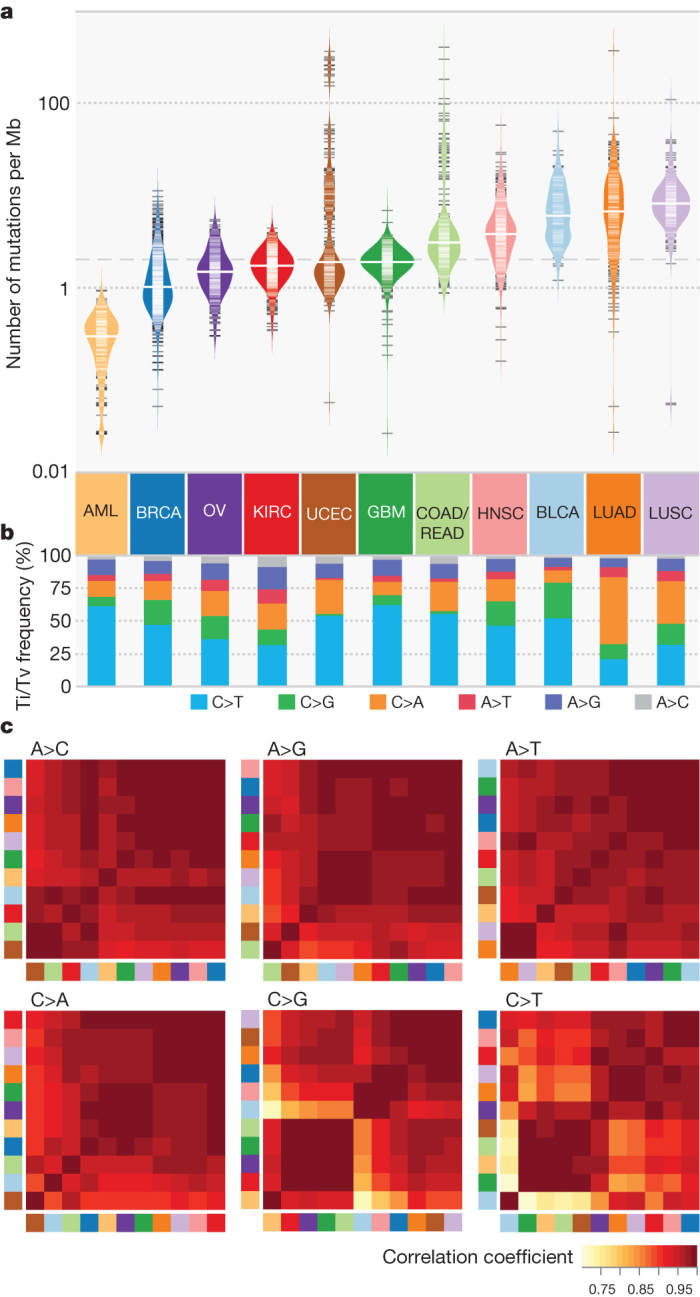
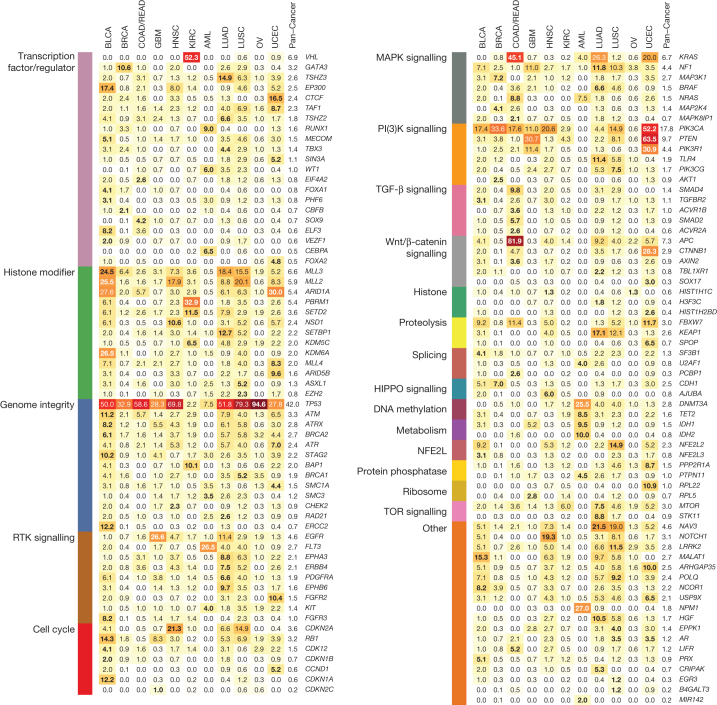
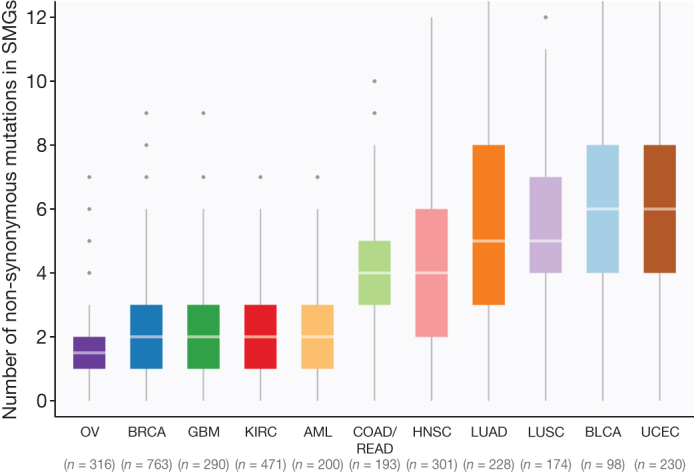
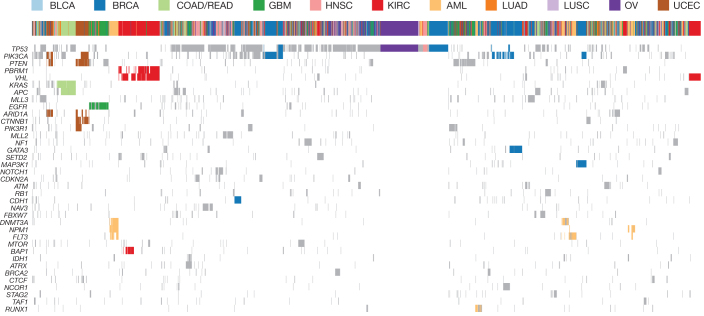
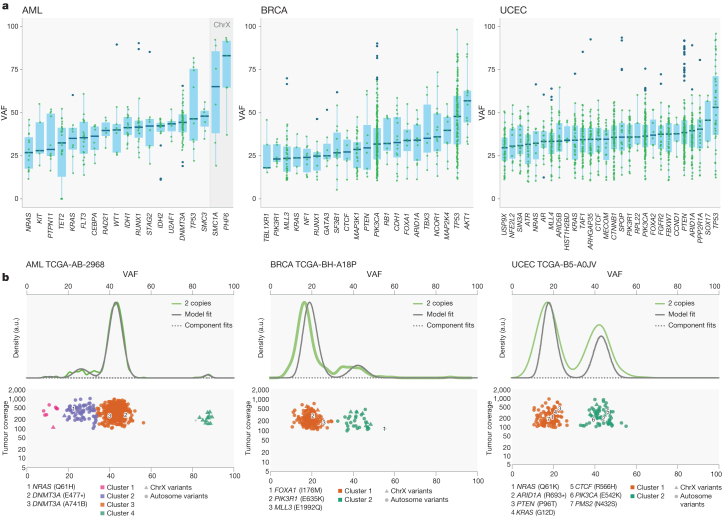
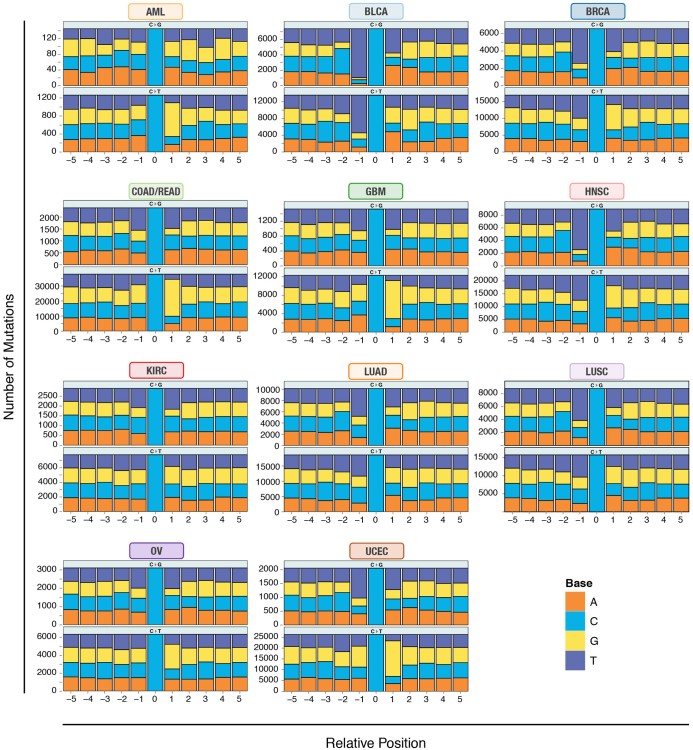
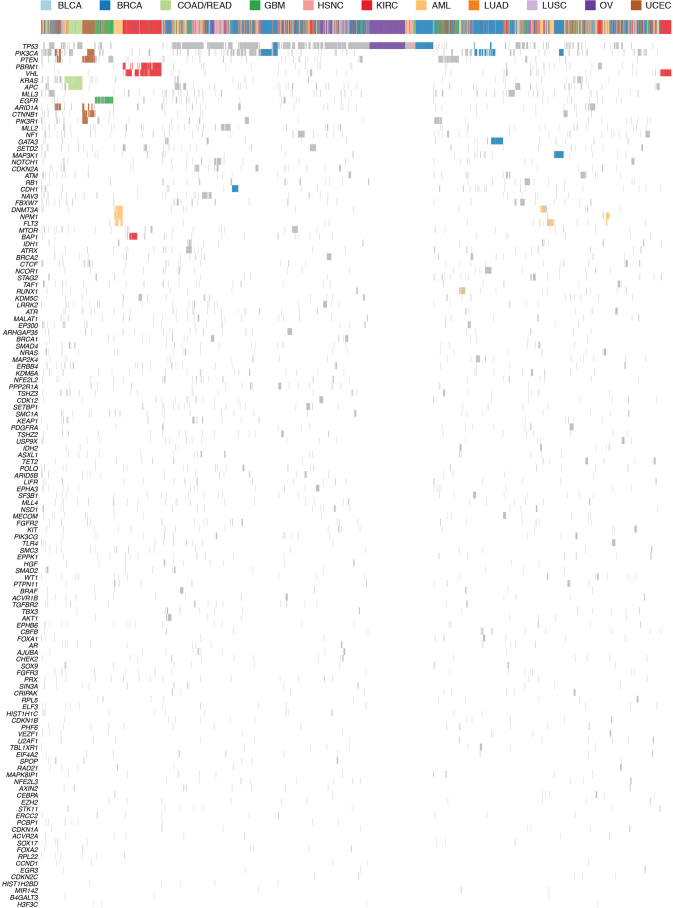
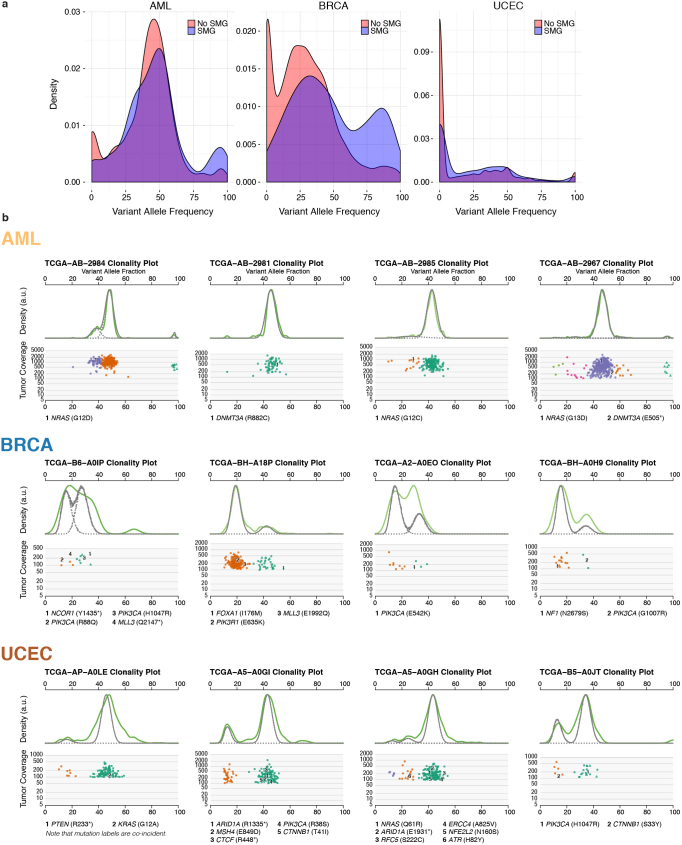
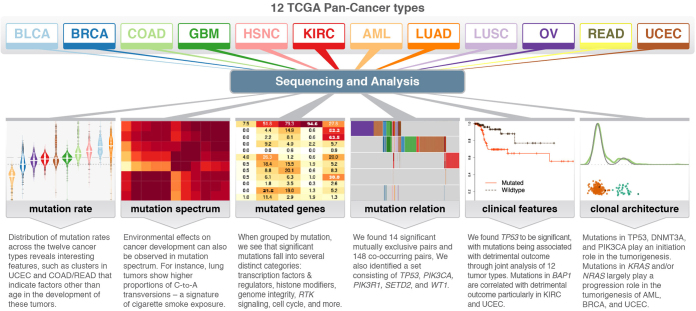
The Cancer Genome Atlas (TCGA) has used the latest sequencing and analysis methods to identify somatic variants across thousands of tumours. Here we present data and analytical results for point mutations and small insertions/deletions from 3,281 tumours across 12 tumour types as part of the TCGA Pan-Cancer effort. We illustrate the distributions of mutation frequencies, types and contexts across tumour types, and establish their links to tissues of origin, environmental/carcinogen influences, and DNA repair defects. Using the integrated data sets, we identified 127 significantly mutated genes from well-known (for example, mitogen-activated protein kinase, phosphatidylinositol-3-OH kinase, Wnt/β-catenin and receptor tyrosine kinase signalling pathways, and cell cycle control) and emerging (for example, histone, histone modification, splicing, metabolism and proteolysis) cellular processes in cancer. The average number of mutations in these significantly mutated genes varies across tumour types; most tumours have two to six, indicating that the number of driver mutations required during oncogenesis is relatively small. Mutations in transcriptional factors/regulators show tissue specificity, whereas histone modifiers are often mutated across several cancer types. Clinical association analysis identifies genes having a significant effect on survival, and investigations of mutations with respect to clonal/subclonal architecture delineate their temporal orders during tumorigenesis. Taken together, these results lay the groundwork for developing new diagnostics and individualizing cancer treatment. As part of The Cancer Genome Atlas Pan-Cancer effort, data analysis for point mutations and small indels from 3,281 tumours and 12 tumour types is presented; among the findings are 127 significantly mutated genes from cellular processes with both established and emerging links in cancer, and an indication that the number of driver mutations required for oncogenesis is relatively small. As part of The Cancer Genome Atlas Pan-Cancer project, these authors present data analysis for point mutations and small indels from more than 3,000 tumours representing 12 tumour types. Among the findings are 127 significantly mutated genes from cellular processes with both established and emerging links to cancer, and an indication that the number of driver mutations required for oncogenesis is relatively small. Additional analyses also identify genes with significant impact on survival and a likely temporal order of mutational events during tumorigenesis.
Overview
The claims and statistics of this paper haven’t been checked yet.
Free: it reads the open-access text and checks the first 5 claims that cite a source we can check. Create a free account to check every claim.
Integrity signals
Registry
Cites
Statistics
Figures
Verification
Claims the paper makes
The claims and statistics of this paper haven’t been checked yet.
Free: it reads the open-access text and checks the first 5 claims that cite a source we can check. Create a free account to check every claim.
Claims other papers make about this one
Each is checked against this paper’s own text: does it say what the citing paper says it does?
The source backs part of the claim, not all of it — or backs it for a different population, condition or comparison.
In the citing paper
“However, TP53 is inactivated in a major fraction of human tumors, mainly by missense mutations in the DNA-binding core domain of p533,4, leading to loss of DNA binding and p53-dependent transactivation of target genes such as p21, Bax and Puma.”
From Inhibition of the glutaredoxin and thioredoxin systems and ribonucleotide reductase by mutant p53-targeting compound APR-246 (2018) · cites this paper as [3]
Experimental — accuracy not yet measuredThe check wasn’t confident either way, so it gives no verdict — never disputed.
In the citing paper
“Current next-generation sequencing (NGS) technology is limited in the detection of rare variant alleles due to an intrinsic sequencing error rate of ~ 0.1%19.”
From Role of TP53 mutations in the origin and evolution of therapy-related acute myeloid leukaemia (2015) · cites this paper as [19]
Experimental — accuracy not yet measuredThe check wasn’t confident either way, so it gives no verdict — never disputed.
In the citing paper
“Yet, these mutations occur significantly more often in human disease than transversion mutations (62% transition vs 38% transversion29,63).”
From One-step generation of tumor models by base editor multiplexing in adult stem cell-derived organoids (2023) · cites this paper as [63]
Experimental — accuracy not yet measuredIn the citing paper
“Mutations in TP53 are thought to occur in more than 50% of all human malignancies.6,7”
From p53: from understanding its structure to advances in therapeutic targeting (2026) · cites this paper as [6]
In the citing paper
“Among somatically mutated genes, TP53 mutations are the most common.6”
From p53: from understanding its structure to advances in therapeutic targeting (2026) · cites this paper as [6]
Self-check
Percentages, sums and reported differences re-computed from the paper’s own numbers.
The self-check needs the paper’s full text.
Citations
Cites
Hanahan, D., & Weinberg, R. A. (2000) · Cell · doi:10.1016/s0092-8674(00)81683-9 · Cited by 29,219
Comprehensive molecular portraits of human breast tumours
The Cancer Genome Atlas Network (2012) · Nature · doi:10.1038/nature11412 · Cited by 12,129
Comprehensive molecular characterization of human colon and rectal cancer
The Cancer Genome Atlas Network (2012) · Nature · doi:10.1038/nature11252 · Cited by 8,499
Integrated genomic analyses of ovarian carcinoma
Perou, C. M. (2019) · Carolina Digital Repository (University of North Carolina at Chapel Hill) · doi:10.17615/hvp3-wg08 · Cited by 7,925
Vogelstein, B., Papadopoulos, N., Velculescu, V. E., Zhou, S., Diaz, L. A., & Kinzler, K. W. (2013) · Science · doi:10.1126/science.1235122 · Cited by 7,863
Comprehensive genomic characterization defines human glioblastoma genes and core pathways
The Cancer Genome Atlas Research Network (2008) · Nature · doi:10.1038/nature07385 · Cited by 7,735
Self-citationAn Integrated Genomic Analysis of Human Glioblastoma Multiforme
Parsons, D. W., Jones, S., Zhang, X., Lin, J. C.-H., Leary, R. J., Angenendt, P., Mankoo, P., Carter, H., Siu, I.-M., Gallia, G. L., et al. (2008) · Science · doi:10.1126/science.1164382 · Cited by 5,857
Integrated genomic characterization of endometrial carcinoma
The Cancer Genome Atlas Research Network, & Levine, D. A. (2013) · Nature · doi:10.1038/nature12113 · Cited by 5,784
Mutational heterogeneity in cancer and the search for new cancer-associated genes
Lawrence, M. S., Stojanov, P., Polak, P., Kryukov, G. V., Cibulskis, K., Sivachenko, A., Carter, S. L., Stewart, C., Mermel, C. H., Roberts, S. A., et al. (2013) · Nature · doi:10.1038/nature12213 · Cited by 5,461
Genomic and Epigenomic Landscapes of Adult De Novo Acute Myeloid Leukemia
The Cancer Genome Atlas Research Network (2013) · New England Journal of Medicine · doi:10.1056/nejmoa1301689 · Cited by 5,078
Cited by
Items 501–600 of 1,028
Recent Progress of Nanocarrier-Based Therapy for Solid Malignancies
Wei, Q.-Y., Xu, Y., & Lau, A. T. Y. (2020) · Cancers · doi:10.3390/cancers12102783 · Cited by 129
Peters, S., Dziadziuszko, R., Morabito, A., Felip, E., Gadgeel, S. M., Cheema, P. K., Cobo, M., Andric, Z. G., Barrios, C. H., Yamaguchi, M., et al. (2022) · Nature Medicine · doi:10.1038/s41591-022-01933-w · Cited by 131
Uterine adenosarcomas are mesenchymal neoplasms
Piscuoglio, S., Burke, K. A., Ng, C. K. Y., Papanastasiou, A. D., Geyer, F. C., Macedo, G. S., Martelotto, L. G., de Bruijn, I., Filippo, M. R. D., Schultheis, A. M., et al. (2015) · The Journal of Pathology · doi:10.1002/path.4675 · Cited by 129
LB100, a small molecule inhibitor of PP2A with potent chemo- and radio-sensitizing potential
Hong, C. S., Ho, W., Zhang, C., Yang, C., Elder, J. B., & Zhuang, Z. (2015) · Cancer Biology & Therapy · doi:10.1080/15384047.2015.1040961 · Cited by 119
Concurrent Alterations in TERT , KDM6A , and the BRCA Pathway in Bladder Cancer
Nickerson, M. L., Dancik, G. M., Im, K. M., Edwards, M. G., Turan, S., Brown, J., Ruiz-Rodriguez, C., Owens, C. R., Costello, J. C., Guo, G., et al. (2014) · Clinical Cancer Research · doi:10.1158/1078-0432.ccr-14-0330 · Cited by 130
Genomic analysis of liver cancer unveils novel driver genes and distinct prognostic features
Li, X., Xu, W., Kang, W., Wong, S. H., Wang, M., Zhou, Y., Fang, X., Zhang, X., Yang, H., Wong, C. H., et al. (2018) · Theranostics · doi:10.7150/thno.22010 · Cited by 130
YAP and TAZ in Lung Cancer: Oncogenic Role and Clinical Targeting
Sardo, F. L., Strano, S., & Blandino, G. (2018) · Cancers · doi:10.3390/cancers10050137 · Cited by 131
Progress in refining the clinical management of cancer of unknown primary in the molecular era
Rassy, E., & Pavlidis, N. A. (2020) · Nature Reviews Clinical Oncology · doi:10.1038/s41571-020-0359-1 · Cited by 128
Non-coding RNAs, epigenetics, and cancer: tying it all together
Ferreira, H. J., & Esteller, M. (2018) · Cancer and Metastasis Reviews · doi:10.1007/s10555-017-9715-8 · Cited by 128
Gatalica, Z., Xiu, J., Swensen, J. J., & Vranić, S. (2018) · European Journal of Cancer · doi:10.1016/j.ejca.2018.02.021 · Cited by 127
Suzuki, A., Makinoshima, H., Wakaguri, H., Esumi, H., Sugano, S., Kohno, T., Tsuchihara, K., & Suzuki, Y. (2014) · Nucleic Acids Research · doi:10.1093/nar/gku885 · Cited by 130
Ribosomopathies and the paradox of cellular hypo- to hyperproliferation
Keersmaecker, K. D., Sulima, S. O., & Dinman, J. D. (2015) · Blood · doi:10.1182/blood-2014-10-569616 · Cited by 126
Piva, F., Santoni, M., Matrana, M. R., Satti, S., Giulietti, M., Occhipinti, G., Massari, F., Cheng, L., López-Beltrán, A., Scarpelli, M., et al. (2015) · Expert Review of Molecular Diagnostics · doi:10.1586/14737159.2015.1068122 · Cited by 125
STAT3 and STAT5 Activation in Solid Cancers
Igelmann, S., Neubauer, H. A., & Ferbeyre, G. (2019) · Cancers · doi:10.3390/cancers11101428 · Cited by 126
Tundo, G. R., Sbardella, D., Santoro, A. M., Coletta, A., Oddone, F., Grasso, G., Milardi, D., Lacal, P. M., Marini, S., Purrello, R., et al. (2020) · Pharmacology & Therapeutics · doi:10.1016/j.pharmthera.2020.107579 · Cited by 126
Pan-cancer analysis of whole genomes
Campbell, P. J., Getz, G., Stuart, J. M., Korbel, J. O., & Stein, L. D. (2017) · bioRxiv (Cold Spring Harbor Laboratory) · doi:10.1101/162784 · Cited by 114
CHASMplus Reveals the Scope of Somatic Missense Mutations Driving Human Cancers
Tokheim, C., & Karchin, R. (2019) · Cell Systems · doi:10.1016/j.cels.2019.05.005 · Cited by 124
Recent progress in mapping the emerging landscape of the small-cell lung cancer genome
Kim, K.-B., Dunn, C. T., & Park, K.-S. (2019) · Experimental & Molecular Medicine · doi:10.1038/s12276-019-0349-5 · Cited by 124
Deep Correlational Learning for Survival Prediction from Multi-modality Data
Yao, J., Zhu, X., Zhu, F., & Huang, J. (2017) · Lecture notes in computer science · doi:10.1007/978-3-319-66185-8_46 · Cited by 124
Mutant p53 gain of function underlies high expression levels of colorectal cancer stem cells markers
Solomon, H., Dinowitz, N., Pateras, I. S., Cooks, T., Shetzer, Y., Molchadsky, A., Charni‐Natan, M., Rabani, S., Koifman, G., Tarcic, O., et al. (2018) · Oncogene · doi:10.1038/s41388-017-0060-8 · Cited by 125
Li, X., Wang, M., Yang, M., Dai, H., Zhang, B., Wang, W., Chu, X. L., Wang, X., Zheng, H., Niu, R., et al. (2018) · Annals of Oncology · doi:10.1093/annonc/mdy011 · Cited by 124
The Role of Curcumin in Cancer: A Focus on the PI3K/Akt Pathway
Zoi, V., Kyritsis, A. P., Galani, V., Lazari, D. M., Sioka, C., Voulgaris, S., & Alexiou, G. Α. (2024) · Cancers · doi:10.3390/cancers16081554 · Cited by 125
Oncolytic Viruses: Exploiting Cancer's Deal with the Devil
Pikor, L. A., Bell, J. C., & Diallo, J. (2015) · Trends in cancer · doi:10.1016/j.trecan.2015.10.004 · Cited by 125
p53 as a hub in cellular redox regulation and therapeutic target in cancer
Eriksson, S. E., Ceder, S., Bykov, V. J. N., & Wiman, K. G. (2019) · Journal of Molecular Cell Biology · doi:10.1093/jmcb/mjz005 · Cited by 123
Hajirasouliha, I., Mahmoody, A., & Raphael, B. J. (2014) · Bioinformatics · doi:10.1093/bioinformatics/btu284 · Cited by 124
Self-citationComprehensive Characterization of Oncogenic Drivers in Asian Lung Adenocarcinoma
Li, S., Choi, Y., Gong, Z., Liu, X., Lira, M. E., Kan, Z., Oh, E., Wang, J., Ting, J. C., Ye, X. S., et al. (2016) · Journal of Thoracic Oncology · doi:10.1016/j.jtho.2016.08.142 · Cited by 125
DNA copy number changes define spatial patterns of heterogeneity in colorectal cancer
Mamlouk, S., Childs, L. H., Aust, D., Heim, D., Melching, F., Oliveira, C., Wolf, T., Durek, P., Schumacher, D., Bläker, H., et al. (2017) · Nature Communications · doi:10.1038/ncomms14093 · Cited by 110
Piñeiro-Yáñez, E., Reboiro‐Jato, M., Goméz-López, G., Perales-Patón, J., Troulé, K., Rodríguez, J. M., Tejero, H., Shimamura, T., Lopez-Casas, P. P., Carretero, J., et al. (2018) · Genome Medicine · doi:10.1186/s13073-018-0546-1 · Cited by 123
Qin, J.-J., Li, X., Hunt, C., Wang, W., Wang, H., & Zhang, R. (2018) · Genes & Diseases · doi:10.1016/j.gendis.2018.07.002 · Cited by 108
Unni, A. M., Harbourne, B., Oh, M. H., Wild, S. A., Ferrarone, J. R., Lockwood, W. W., & VARMUS, H. E. (2018) · eLife · doi:10.7554/elife.33718 · Cited by 123
Pirollo, K. F., Nemunaitis, J., Leung, P. K., Nunan, R., Adams, J., & Chang, E. H. (2016) · Molecular Therapy · doi:10.1038/mt.2016.135 · Cited by 118
Drosophila Lung Cancer Models Identify Trametinib plus Statin as Candidate Therapeutic
Levine, B. D., & Cagan, R. L. (2016) · Cell Reports · doi:10.1016/j.celrep.2015.12.105 · Cited by 123
Mountzios, G., Rampias, T. N., & Psyrri, A. K. (2014) · Annals of Oncology · doi:10.1093/annonc/mdu143 · Cited by 122
Genetic Heterogeneity in Therapy-Naïve Synchronous Primary Breast Cancers and Their Metastases
Ng, C. K. Y., Bidard, F., Piscuoglio, S., Geyer, F. C., Lim, R. S., de Bruijn, I., Shen, R., Pareja, F. G., Berman, S., Wang, L., et al. (2017) · Clinical Cancer Research · doi:10.1158/1078-0432.ccr-16-3115 · Cited by 122
A cloud-based workflow to quantify transcript-expression levels in public cancer compendia
Tatlow, P., & Piccolo, S. R. (2016) · Scientific Reports · doi:10.1038/srep39259 · Cited by 101
Alqahtani, A., Ayesh, H., & Halawani, H. (2019) · Cancers · doi:10.3390/cancers12010093 · Cited by 121
Global mapping of cancers: The Cancer Genome Atlas and beyond
Ganini, C., Amelio, I., Bertolo, R. G., Bove, P., Buonomo, O. C., Candi, E., Cipriani, C., Daniele, N. D., Juhl, H. H., Mauriello, A., et al. (2021) · Molecular Oncology · doi:10.1002/1878-0261.13056 · Cited by 121
Containers for computational reproducibility
Moreau, D., Wiebels, K., & Boettiger, C. (2023) · Nature Reviews Methods Primers · doi:10.1038/s43586-023-00236-9 · Cited by 124
Unraveling the molecular genetics of head and neck cancer through genome-wide approaches
Riaz, N., Morris, L. G. T., Lee, W., & Chan, T. A.-T. (2014) · Genes & Diseases · doi:10.1016/j.gendis.2014.07.002 · Cited by 121
Next-generation sequencing: recent applications to the analysis of colorectal cancer
Vecchio, F. D., Mastroiaco, V., Marco, A. D., Compagnoni, C., Capece, D., Zazzeroni, F., Capalbo, C., Alesse, E., & Tessitore, A. (2017) · Journal of Translational Medicine · doi:10.1186/s12967-017-1353-y · Cited by 121
Tongue carcinoma in young adults: a review of the literature
Paderno, A., MORELLO, R., & Piazza, C. (2018) · Acta Otorhinolaryngologica Italica · doi:10.14639/0392-100x-1932 · Cited by 120
Role of p53 in the Regulation of the Inflammatory Tumor Microenvironment and Tumor Suppression
Uehara, I., & Tanaka, N. (2018) · Cancers · doi:10.3390/cancers10070219 · Cited by 115
PI3K/AKT Signaling Regulates H3K4 Methylation in Breast Cancer
Spangle, J. M., Dreijerink, K. M. A., Groner, A. C., Cheng, H.-L. M., Ohlson, C. E., Reyes, J. M., Lin, C. Y., Bradner, J. E., Zhao, J. J., Roberts, T. M., et al. (2016) · Cell Reports · doi:10.1016/j.celrep.2016.05.046 · Cited by 121
Petr, M. A., Tulika, T., Carmona-Marin, L. M., & Scheibye-Knudsen, M. (2020) · Trends in Cell Biology · doi:10.1016/j.tcb.2019.12.001 · Cited by 119
Unraveling the ECM-Immune Cell Crosstalk in Skin Diseases
Bhattacharjee, O., Ayyangar, U., Kurbet, A. S., Ashok, D., & Raghavan, S. (2019) · Frontiers in Cell and Developmental Biology · doi:10.3389/fcell.2019.00068 · Cited by 119
Tumor Evolutionary Principles: How Intratumor Heterogeneity Influences Cancer Treatment and Outcome
Venkatesan, S., & Swanton, C. (2016) · American Society of Clinical Oncology Educational Book · doi:10.1200/edbk_158930 · Cited by 121
Mutant p53 tunes the NRF2-dependent antioxidant response to support survival of cancer cells
Lisek, K., Campaner, E., Ciani, Y., Walerych, D., & Del Sal, G. (2018) · Oncotarget · doi:10.18632/oncotarget.24974 · Cited by 118
Genomic and transcriptomic heterogeneity in metaplastic carcinomas of the breast
Piscuoglio, S., Ng, C. K. Y., Geyer, F. C., Burke, K. A., Cowell, C. F., Martelotto, L. G., Natrajan, R., Popova, T. G., Maher, C. A., Lim, R. S., et al. (2017) · npj Breast Cancer · doi:10.1038/s41523-017-0048-0 · Cited by 118
Epigenetic Regulation of Genomic Stability by Vitamin C
Brabson, J. P., Leesang, T. E., Mohammad, S., & Cimmino, L. (2021) · Frontiers in Genetics · doi:10.3389/fgene.2021.675780 · Cited by 119
Kumari, S., & Singh, P. P. (2023) · Computers in Biology and Medicine · doi:10.1016/j.compbiomed.2023.107912 · Cited by 122
Systematic discovery of complex insertions and deletions in human cancers
Ye, K., Wang, J., Jayasinghe, R., Lameijer, E.-W., McMichael, J. F., Ning, J., McLellan, M. D., Xie, M., Cao, S., Yellapantula, V., et al. (2016) · Nature Medicine · doi:10.1038/nm.4002 · Cited by 117
Self-citationCirculating Cell-Free Tumour DNA in the Management of Cancer
Francis, G. D., & Stein, S. R. (2015) · International Journal of Molecular Sciences · doi:10.3390/ijms160614122 · Cited by 120
Perspectives of long non-coding RNAs in cancer
Rao, A. K. D. M., Rajkumar, T., & Mani, S. (2017) · Molecular Biology Reports · doi:10.1007/s11033-017-4103-6 · Cited by 117
Genomic instability in mutant p53 cancer cells upon entotic engulfment
Mackay, H. L., Moore, D. A., Hall, C., Birkbak, N. J., Jamal‐Hanjani, M., Karim, S. A., Phatak, V. M., Piñon, L., Morton, J. P., Swanton, C., et al. (2018) · Nature Communications · doi:10.1038/s41467-018-05368-1 · Cited by 117
Zmat3 Is a Key Splicing Regulator in the p53 Tumor Suppression Program
Bieging-Rolett, K. T., Kaiser, A. M., Morgens, D. W., Boutelle, A. M., Seoane, J. A., Nostrand, E. L. V., Zhu, C., Houlihan, S. L., Mello, S. S., Yee, B. A., et al. (2020) · Molecular Cell · doi:10.1016/j.molcel.2020.10.022 · Cited by 118
McGrath, J. P., Williamson, K. E., Balasubramanian, S., Odate, S., Arora, S., Hatton, C., Edwards, T. M., O’Brien, T., Magnuson, S. R., Stokoe, D., et al. (2016) · Cancer Research · doi:10.1158/0008-5472.can-15-2333 · Cited by 120
The Ecology and Evolution of Cancer: The Ultra-Microevolutionary Process
Wu, C., Wang, H., Ling, S., & Lu, X. (2016) · Annual Review of Genetics · doi:10.1146/annurev-genet-112414-054842 · Cited by 118
Candidate driver genes involved in genome maintenance and DNA repair in Sézary syndrome
Woollard, W. J., Pullabhatla, V., Lorenc, A., Patel, V. M., Butler, R. M., Bayega, A., Begum, N., Bakr, F. S., Dedhia, K., Fisher, J. N. B., et al. (2016) · Blood · doi:10.1182/blood-2016-02-699843 · Cited by 115
Viral factors in influenza pandemic risk assessment
Lipsitch, M., Barclay, W., Raman, R., Russell, C. J., Belser, J. A., Cobey, S., Kasson, P. M., Lloyd-Smith, J. O., Maurer-Stroh, S., Riley, S., et al. (2016) · eLife · doi:10.7554/elife.18491 · Cited by 101
The immune response‐related mutational signatures and driver genes in non‐small‐cell lung cancer
Chen, H., Chong, W., Teng, C., Yao, Y., Wang, X., & Li, X. (2019) · Cancer Science · doi:10.1111/cas.14113 · Cited by 116
Rethinking pre-training on medical imaging
Wen, Y., Chen, L., Deng, Y., & Zhou, C. (2021) · Journal of Visual Communication and Image Representation · doi:10.1016/j.jvcir.2021.103145 · Cited by 115
Moving pan-cancer studies from basic research toward the clinic
Chen, F., Wendl, M. C., Wyczalkowski, M. A., Bailey, M. H., Li, Y., & Ding, L. (2021) · Nature Cancer · doi:10.1038/s43018-021-00250-4 · Cited by 116
Self-citationPereira, B., Chin, S., Rueda, O. M., Vollan, H. K. M., Provenzano, E., Bardwell, H. A., Pugh, M., Jones, L., Russell, R. R., Sammut, S., et al. (2016) · Nature Communications · doi:10.1038/ncomms11908 · Cited by 115
An, Ö., Dall’Olio, G. M., Mourikis, T. P., & Ciccarelli, F. D. (2015) · Nucleic Acids Research · doi:10.1093/nar/gkv1123 · Cited by 114
The Role of Hepatocyte Growth Factor (HGF) in Insulin Resistance and Diabetes
Oliveira, A. G., Araújo, T. G., Carvalho, B. D. M., Rocha, G. Z., Santos, A., & Saad, M. J. A. (2018) · Frontiers in Endocrinology · doi:10.3389/fendo.2018.00503 · Cited by 115
Targeting DNA repair in cancer: current state and novel approaches
Klinakis, A., Karagiannis, D., & Rampias, T. N. (2019) · Cellular and Molecular Life Sciences · doi:10.1007/s00018-019-03299-8 · Cited by 114
Qu, L., Liu, S., Liu, X., Wang, M., & Song, Z. (2022) · Physics in Medicine and Biology · doi:10.1088/1361-6560/ac910a · Cited by 114
Systematic analysis of somatic mutations impacting gene expression in 12 tumour types
Ding, J., McConechy, M. K., Horlings, H. M., Ha, G., Chan, F. C., Funnell, T., Mullaly, S. C., Reimand, J., Bashashati, A., Bader, G. D., et al. (2015) · Nature Communications · doi:10.1038/ncomms9554 · Cited by 117
Molecular analysis of urothelial cancer cell lines for modeling tumor biology and drug response
Nickerson, M., Witte, N., Im, K. M., Turan, S., Owens, C. R., Misner, K., Tsang, S. X., Cai, Z., Wu, S., Dean, M. C., et al. (2016) · Oncogene · doi:10.1038/onc.2016.172 · Cited by 114
Zafar, H., Navin, N., Chen, K., & Nakhleh, L. (2019) · Genome Research · doi:10.1101/gr.243121.118 · Cited by 113
RNA Editing in Pathogenesis of Cancer
Baysal, B. E., Sharma, S., Hashemikhabir, S., & Janga, S. C. (2017) · Cancer Research · doi:10.1158/0008-5472.can-17-0520 · Cited by 113
Temko, D., van Gool, I. C., Rayner, E., Glaire, M. A., Makino, S., Brown, M., Chegwidden, L., Palles, C., Depreeuw, J., Beggs, A. D., et al. (2018) · The Journal of Pathology · doi:10.1002/path.5081 · Cited by 114
Wu, Y., Yu, D., Jun, Z., Duan, Y., Weiwei, W., Xu, M., Ju, X., & Wu, X. (2018) · Cell Death and Disease · doi:10.1038/s41419-018-0908-z · Cited by 113
Molecular crosstalk between cancer and neurodegenerative diseases
Seo, J., & Park, M. (2019) · Cellular and Molecular Life Sciences · doi:10.1007/s00018-019-03428-3 · Cited by 114
The `dnet¿ approach promotes emerging research on cancer patient survival
Fang, H., & Gough, J. (2014) · Genome Medicine · doi:10.1186/preaccept-1248435140128963 · Cited by 96
Pronobis, M. I., Rusan, N. M., & Peifer, M. (2015) · eLife · doi:10.7554/elife.08022 · Cited by 112
Breast Cancer Genomics From Microarrays to Massively Parallel Sequencing: Paradigms and New Insights
Ng, C. K. Y., Schultheis, A. M., Bidard, F., Weigelt, B., & Reis-Filho, J. S. (2015) · JNCI Journal of the National Cancer Institute · doi:10.1093/jnci/djv015 · Cited by 113
Ma, Y., Huang, T., Zhong, X., Zhang, H., Cong, X., Xu, H. W., Lu, G., Yu, F., Xue, S., Lv, Z., et al. (2018) · Molecular Cancer · doi:10.1186/s12943-018-0890-1 · Cited by 112
SOX17 regulates uterine epithelial–stromal cross-talk acting via a distal enhancer upstream of Ihh
Wang, X., Li, X., Wang, T., Wu, S., Jeong, J., Kim, T. H., Young, S. L., Lessey, B. A., Lanz, R. B., Lydon, J. P., et al. (2018) · Nature Communications · doi:10.1038/s41467-018-06652-w · Cited by 112
Cheteh, E. H., Sarne, V., Ceder, S., Bianchi, J., Augsten, M., Rundqvist, H., Egevad, L., Östman, A., & Wiman, K. G. (2020) · Cell Death Discovery · doi:10.1038/s41420-020-0272-5 · Cited by 104
Non-genomic mechanisms of protein phosphatase 2A (PP2A) regulation in cancer
Kauko, O., & Westermarck, J. (2018) · The International Journal of Biochemistry & Cell Biology · doi:10.1016/j.biocel.2018.01.005 · Cited by 111
Clinical benefit of a precision medicine based approach for guiding treatment of refractory cancers
Radovich, M., Kiel, P. J., Nance, S. M., Niland, E. E., Parsley, M. E., Ferguson, M. E., Jiang, G., Ammakkanavar, N. R., Einhorn, L. H., Cheng, L., et al. (2016) · Oncotarget · doi:10.18632/oncotarget.10606 · Cited by 111
Enhancer deregulation in cancer and other diseases
Herz, H. (2016) · BioEssays · doi:10.1002/bies.201600106 · Cited by 111
Moncunill, V., González, S., Beà, S., Andrieux, L. O., Salaverría, I., Royo, C., Martinez, L., Puiggròs, M., Segura‐Wang, M., Stütz, A. M., et al. (2014) · Nature Biotechnology · doi:10.1038/nbt.3027 · Cited by 111
Acquired genetic changes in human pluripotent stem cells: origins and consequences
Halliwell, J. A., Barbaric, I., & Andrews, P. W. (2020) · Nature Reviews Molecular Cell Biology · doi:10.1038/s41580-020-00292-z · Cited by 112
Adjuvant and Neoadjuvant Treatment of Triple-Negative Breast Cancer With Chemotherapy
Marra, A., & Curigliano, G. (2021) · The Cancer Journal · doi:10.1097/ppo.0000000000000498 · Cited by 112
Huang, X. L., Khan, M. I., Wang, J., Ali, R., Ali, S. W., Zahra, Q. U. A., Kazmi, A., Lolai, A., Huang, Y., Hussain, A., et al. (2021) · International Journal of Biological Macromolecules · doi:10.1016/j.ijbiomac.2021.03.075 · Cited by 111
G1/S Inhibitors and the SWI/SNF Complex Control Cell-Cycle Exit during Muscle Differentiation
Ruijtenberg, S., & van den Heuvel, S. (2015) · Cell · doi:10.1016/j.cell.2015.06.013 · Cited by 110
STAT3/p53 pathway activation disrupts IFN-β–induced dormancy in tumor-repopulating cells
Liu, Y., Lv, J., Liu, J., Liang, X., Jin, X., Xie, J., Zhang, L., Chen, D., Fiskesund, R., Tang, K., et al. (2018) · Journal of Clinical Investigation · doi:10.1172/jci96329 · Cited by 110
Shibata, H., Saito, S., & Uppaluri, R. (2021) · Frontiers in Oncology · doi:10.3389/fonc.2021.727433 · Cited by 112
LEDGF/p75 interacts with mRNA splicing factors and targets HIV-1 integration to highly spliced genes
Singh, P. K., Plumb, M. R., Ferris, A. L., Iben, J. R., Wu, X., Fadel, H. J., Luke, B. T., Esnault, C., Poeschla, E. M., Hughes, S. H., et al. (2015) · Genes & Development · doi:10.1101/gad.267609.115 · Cited by 109
NAT10 is upregulated in hepatocellular carcinoma and enhances mutant p53 activity
Li, Q., Liu, X., Jin, K., Lu, M., Zhang, C., Du, X., & Xing, B. (2017) · BMC Cancer · doi:10.1186/s12885-017-3570-4 · Cited by 109
Usher, N. T., Chang, S., Howard, R. S., Martinez, A., Harrison, L. H., Santosham, M., & Aronson, N. (2019) · JAMA Network Open · doi:10.1001/jamanetworkopen.2019.12014 · Cited by 110
Glutamatergic Mechanisms in Glioblastoma and Tumor-Associated Epilepsy
Lange, F., Hörnschemeyer, M. F., & Kirschstein, T. (2021) · Cells · doi:10.3390/cells10051226 · Cited by 109
Arimura, Y., Ikura, M., Fujita, R., Noda, M., Kobayashi, W., Horikoshi, N., Sun, J., Shi, L., Kusakabe, M., Harata, M., et al. (2018) · Nucleic Acids Research · doi:10.1093/nar/gky661 · Cited by 96
Joseph, C., Mangani, A. S., Gupta, V. B., Chitranshi, N., Shen, T., Dheer, Y., Devaraj, K. B., Mirzaei, M., You, Y., Graham, S. L., et al. (2020) · Aging and Disease · doi:10.14336/ad.2019.0923 · Cited by 108
Zhang, H., Xu, J., Long, Y., Maimaitijiang, A., Su, Z., Li, W., & Li, J. (2024) · International Journal of Molecular Sciences · doi:10.3390/ijms252312928 · Cited by 112
KMT2D regulates p63 target enhancers to coordinate epithelial homeostasis
Lin-Shiao, E., Lan, Y., Coradin, M., Anderson, A., Donahue, G., Simpson, C. L., Sen, P., Saffie, R., Busino, L., Garcia, B. A., et al. (2018) · Genes & Development · doi:10.1101/gad.306241.117 · Cited by 108
Hassin, O., Nataraj, N. B., Shreberk-Shaked, M., Aylon, Y., Yaeger, R., Fontemaggi, G., Mukherjee, S., Maddalena, M., Avioz, A., Iancu, O., et al. (2022) · Nature Communications · doi:10.1038/s41467-022-30481-7 · Cited by 107
Comprehensive nucleosome interactome screen establishes fundamental principles of nucleosome binding
Skrajna, A., Goldfarb, D., Kedziora, K. M., Cousins, E. M., Grant, G. D., Spangler, C. J., Barbour, E. H., Yan, X., Hathaway, N. A., Brown, N. G., et al. (2020) · Nucleic Acids Research · doi:10.1093/nar/gkaa544 · Cited by 107
Metadata
- Authors
- Kandoth, C., McLellan, M. D., Vandin, F., Ye, K., Niu, B., Lu, C., Xie, M., Zhang, Q., McMichael, J. F., Wyczalkowski, M. A., Leiserson, M. D. M., Miller, C. A., Welch, J. S., Walter, M. J., Wendl, M. C., Ley, T. J., Wilson, R. K., Raphael, B. J., & Ding, L.
- Affiliations
- Washington University in St. Louis (US)
- Brown University (US)
- Corresponding author
- Ding, Li
- ORCID
- Venue
- Nature
- Published
- 2013-10-16
- Volume
- 502
- Issue
- 7471
- Pages
- 333-339
- ISSN
- 0028-0836 (ISSN-L)
- 1476-4687
- PMC
- PMC3927368
- OpenAlex
- W2022495797
- Cited by
- 4,419
- References
- 40
- Citations by year
- 2026: 162 · 2025: 243 · 2024: 311 · 2023: 324 · 2022: 380 · 2021: 395 · 2020: 417 · 2019: 377 · 2018: 410 · 2017: 414 · 2016: 407 · 2015: 327 · 2014: 237 · 2013: 8
- FWCI
- 114.79
- Type
- journal article
- Language
- en
- Open access
- hybrid
- doi.org
- Licence
- cc-by-nc-sa
- creativecommons.org/licenses/by-nc-sa/3.0/ (tdm)
- creativecommons.org/licenses/by-nc-sa/3.0/ (vor)
- Locations
- Nature (publishedVersion, cc-by-nc-sa)
- PubMed Central (publishedVersion, cc-by-nc-sa)
- PubMed (publishedVersion)
- Europe PMC (PubMed Central) (acceptedVersion, cc-by-nc-sa)
- Padua Research Archive (University of Padova) (submittedVersion, cc-by-nc-sa)
- RePEc: Research Papers in Economics (submittedVersion)
- Funders
- National Science Foundation (1016648)
- National Human Genome Research Institute (U01HG006517, U54HG003079, R01HG005690)
- National Cancer Institute (PO1CA101937, R01CA180006, P01CA101937)
- Topics
- Life Sciences › Biochemistry, Genetics and Molecular Biology › Cancer Research › Cancer Genomics and Diagnostics
- Life Sciences › Biochemistry, Genetics and Molecular Biology › Molecular Biology › Chromatin Remodeling and Cancer
- Life Sciences › Biochemistry, Genetics and Molecular Biology › Genetics › Genomics and Rare Diseases
- Keywords
- somatic mutations, point mutations, small insertions and deletions, significantly mutated genes, driver mutations, pan-cancer analysis, histone modifiers, transcription factors, histone modifications, splicing, carcinogenesis, clonal architecture, subclonal evolution, tissue specificity, DNA repair deficiency, carcinogens, cancer pathways, cancer metabolism
- MeSH terms
- Cell Cycle, Clone Cells, DNA Repair, Humans, Models, Genetic, Mutation, Neoplasms, Oncogenes, Time Factors, Cohort Studies, Survival Analysis, Point Mutation, Phosphatidylinositol 3-Kinases, Receptor Protein-Tyrosine Kinases, Mitogen-Activated Protein Kinases, INDEL Mutation, Carcinogenesis
About these checks
Registry, retraction, Cites and statistics results are computed, not judged, with one exception: a printed reference that no index lists is read once by a model before it counts as a citation error. Claims are extracted by a model and kept only when their quote appears verbatim in the text; each cited source is then checked, with a model’s help, for whether it says what the claim relies on. Those verdicts can be wrong — read the claim’s quote and the cited source before relying on one.
Statistics and arithmetic are recomputed, not judged.
Confidence bands are shown only for fields calibrated on our annotated test set. None is calibrated yet, so no band is shown.
What counts as a claim ›How we measure confidence ›How we check this ›
Are you an author, or do you see a problem with this page? Request a review
Data sources
Bibliographic data: Semantic Scholar, OpenAlex, Crossref.
Contains information from the Semantic Scholar Academic Graph Datasets, made available under the ODC Attribution License (ODC-BY 1.0).
Semantic Scholar’s data is described in: Kinney, R., et al. (2023). The Semantic Scholar Open Data Platform. arXiv:2301.10140.
