

Live biotherapeutic products: the importance of a defined regulatory framework
Open accessThe DOI matches its Crossref record; 30 of the 30 references it cites were found in a registry or an index.
Abstract
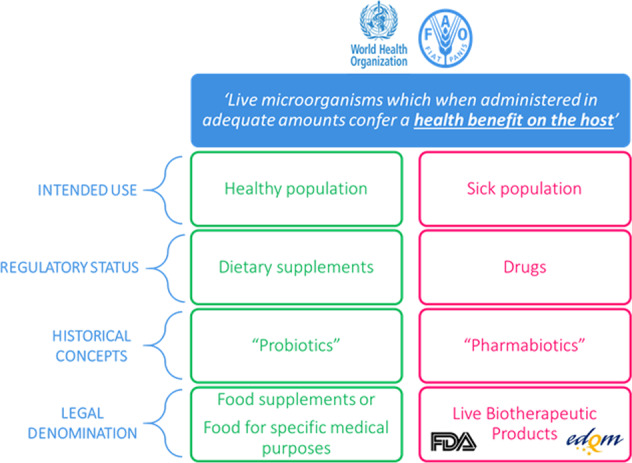
Probiotics have been defined as “Live microorganisms that when administered in adequate amounts confer a health benefit on the host”. This definition covers a wide range of applications, target populations and (combinations of) microorganisms. Improved knowledge on the importance of the microbiota in terms of health and disease has further diversified the potential scope of a probiotic intervention, whether intended to reach the market as a food, a food supplement or a drug, depending on the intended use. However, the increased interest in the clinical application of probiotics may require specific attention given their administration in a diseased population. In addition to safety, the impact of the type of product, in terms of quality, production method and, e.g., the acceptance of side effects, is now part of the current regulatory constraints for developers. In the European Union, foods are regulated by the European Food Safety Authority and drugs by the European Medicines Agency; in the United States, the Food and Drug Administration (FDA) deals with both categories. More recently, the FDA has defined a new “live biotherapeutic products” (LBP) category, clarifying pharmaceutical expectations. Since 2019, the quality requirements for this category of drug products have also been clarified by the European Pharmacopoeia (Ph. Eur.). Similar to all products intended to prevent or treat diseases, LBPs will have to be registered as medicinal products to reach the market in the US and in Europe. In this area, regulatory authorities and the pharmaceutical industry will routinely use guidelines of the “International Council for Harmonization of Technical Requirements for Pharmaceuticals for Human Use” (ICH). Although ICH guidelines are not legally binding, they provide very important recommendations, recognized by almost all drug authorities in the world. In this review, we discuss some aspects of this regulatory framework, especially focusing on products with an intended use in a diseased or vulnerable target population.
Overview
The claims and statistics of this paper haven’t been checked yet.
Free: it reads the open-access text and checks the first 5 claims that cite a source we can check. Create a free account to check every claim.
Integrity signals
Registry
Cites
Statistics
Figures
Verification
Claims the paper makes
The claims and statistics of this paper haven’t been checked yet.
Free: it reads the open-access text and checks the first 5 claims that cite a source we can check. Create a free account to check every claim.
Claims other papers make about this one
Each is checked against this paper’s own text: does it say what the citing paper says it does?
The source backs part of the claim, not all of it — or backs it for a different population, condition or comparison.
In the citing paper
“Probiotics marketed as foods or dietary supplements are subject to food and consumer product safety legislation. In contrast, live biotherapeutic products, intended to treat or prevent diseases, are regulated as biological medicinal products. This means that they must undergo rigorous safety, efficacy, and quality testing similar to that applied to pharmaceuticals [29,30].”
From Current Concepts in Probiotic Safety and Efficacy (2026) · cites this paper as [30]
Experimental — accuracy not yet measured
Self-check
Percentages, sums and reported differences re-computed from the paper’s own numbers.
The self-check needs the paper’s full text.
Citations
Cites
1 retracted
Badehnoosh, B., Karamali, M., Zarrati, M., Jamilian, M., Bahmani, F., Tajabadi-Ebrahimi, M., Jafari, P., Rahmani, E., & Asemi, Z. (2018) · The Journal of Maternal-Fetal & Neonatal Medicine · doi:10.1080/14767058.2017.1310193 · Cited by 130
RetractedAbraham, J. (2010) · Handbook of Transnational Economic Governance Regimes · doi:10.1163/ej.9789004163300.i-1081.897 · Cited by 2,582
The impact of diet and lifestyle on gut microbiota and human health
Conlon, M., & Bird, A. (2014) · Nutrients · doi:10.3390/nu7010017 · Cited by 1,567
Diet and the evolution of human amylase gene copy number variation
Perry, G. H., Dominy, N. J., Claw, K. G., Lee, A. S., Fiegler, H., Redon, R., Werner, J., Villanea, F. A., Mountain, J. L., Misra, R., et al. (2007) · Nature Genetics · doi:10.1038/ng2123 · Cited by 1,465
The Human Gut Microbiome: From Association to Modulation
Schmidt, T. S. B., Raes, J., & Bork, P. (2018) · Cell · doi:10.1016/j.cell.2018.02.044 · Cited by 845
Baber, N. (1994) · British Journal of Clinical Pharmacology · doi:10.1111/j.1365-2125.1994.tb05705.x · Cited by 759
The human gut microbiome: ecology and recent evolutionary changes
Walter, J., & Ley, R. (2011) · Annual Review of Microbiology · doi:10.1146/annurev-micro-090110-102830 · Cited by 720
Our gut microbiome: The evolving inner self
Kundu, P., Blacher, E., Elinav, E., & Pettersson, S. (2017) · Cell · doi:10.1016/j.cell.2017.11.024 · Cited by 633
Towards a better understanding of Lactobacillus rhamnosus GG - host interactions
Segers, M. E., & Lebeer, S. (2014) · Microbial Cell Factories · doi:10.1186/1475-2859-13-s1-s7 · Cited by 500
(EFSA), E. F. S. A. (2007) · EFSA Journal · doi:10.2903/j.efsa.2007.587 · Cited by 479
Research works printed but not linked: 4
- ICH. Guideline M3(R2) International Conference on Harmonisation of Technical Requirements for Registration of Pharmaceuticals For Human Use. 10.1163/ej.9789004163300.i-1081.897 (ICH, 2010). · DOI · Paper page
- ICH. Guideline Q11 International Conference on Harmonisation of Technical Requirements for Registration of Pharmaceuticals For Human Use. 10.1163/ej.9789004163300.i-1081.897 (ICH, 2010). · DOI · Paper page
- ICH. Guideline Q8 (R2) International Conference on Harmonisation of Technical Requirements for Registration of Pharmaceuticals for Human Use. 10.1163/ej.9789004163300.i-1081.897 (ICH, 2010). · DOI · Paper page
- ICH. Guideline S6(R1)International Conference on Harmonisation of Technical Requirements for Registration of Pharmaceuticals for Human Use. 10.1163/ej.9789004163300.i-1081.897 (ICH, 2010). · DOI · Paper page
Cited by
Items 101–200 of 330
Rea, K., Colom, J., Simon, E. A., Khokhlova, E. V., Mazhar, S., Barrena, M., Enrique, M., Martorell, P., Pérez, B., Tortajada, M., et al. (2023) · Beneficial Microbes · doi:10.3920/bm2022.0117 · Cited by 17
Oh, S., & Li, R. W. (2024) · Advanced Science · doi:10.1002/advs.202400458 · Cited by 15
Xiao, Y., Gong, B., Li, J., & Xu, N. (2025) · Frontiers in Immunology · doi:10.3389/fimmu.2025.1640904 · Cited by 25
“Regulatory bodies like the U.S. FDA have established frameworks for Live Biotherapeutic Products (LBPs), and several microbiome-based therapeutics have already received approval for other conditions (e.g., Rebyota ™ , VOWST ™ ) (122, 123).”
Centeno, A., Atanasova, K., Ebert, M. P., Thomann, A., & Reindl, W. (2025) · Seminars in Immunopathology · doi:10.1007/s00281-025-01066-5 · Cited by 25
Clinical research with probiotics as an indicator of global valorization since the year 2000
Wiegers, C., van Beek, E. H. T., & Larsen, O. F. A. (2023) · Frontiers in Microbiology · doi:10.3389/fmicb.2023.1323920 · Cited by 15
Reens, A. L., Cosetta, C. M., Saur, R., Trofimuk, O., Brooker, S. L., Lee, M. L., Sun, A. K., McKenzie, G. J., & Button, J. E. (2024) · Gut Microbes · doi:10.1080/19490976.2024.2304160 · Cited by 15
Herman, K. E., Brough, H. A., Pier, J., Venter, C., & Järvinen, K. M. (2024) · The Journal of Allergy and Clinical Immunology In Practice · doi:10.1016/j.jaip.2024.04.029 · Cited by 17
Slijkerman, R. W. N., van Dijk, R., Mohieddin, N., Ciarlante, I., de Jong, A., & Schuler, M. M. (2025) · Frontiers in Microbiomes · doi:10.3389/frmbi.2025.1569348 · Cited by 19
Maftei, N.-M., Ambrose, L., Elena, D., Raileanu, C. R., Mierlan, O. L., Amariței, O., Ramos-Villarroel, A. Y., Verga, G. I., Gurau, T. V., & Gurău, G. (2026) · International Journal of Molecular Sciences · doi:10.3390/ijms27052218 · Cited by 20
“Given the growing interest in the clinical application of probiotics, the Food and Drug Administration (FDA) has defined a new category of “live biotherapeutic products (LBPs)” with the aim of clarifying the regulatory status and pharmaceutical expectations [162,163].”
Fukushima, K., Kudo, H., Oka, K., Hayashi, A., Onizuka, M., Kusakabe, S., Hino, A., Takahashi, M., Takeda, K., Mori, M., et al. (2024) · Bone Marrow Transplantation · doi:10.1038/s41409-024-02250-1 · Cited by 16
Genome editing of probiotic bacteria: present status and future prospects
Sundararaman, A., & Halami, P. M. (2022) · Biologia · doi:10.1007/s11756-022-01049-z · Cited by 17
“The efforts for the development of innovative biotherapeutic product and their use are limited by high cost and restricted market availability (Cordaillat-Simmons et al. 2020).”
BackgroundThe Role of Intestinal Microbiota and Immune System Interactions in Autoimmune Diseases
Yurtseven, B., Aydemir, E., & Ayaz, F. (2025) · ImmunoTargets and Therapy · doi:10.2147/itt.s569016 · Cited by 26
“148,149 Therefore, an urgent necessity exists to develop international standards to consolidate donor screening, production methods, strain characterization, quality assessment, and clinical results.”
El‐Saadony, M. T., Saad, A. M., Sitohy, M. Z., Alkafaas, S. S., Dladla, M., Ghosh, S., Mohammed, D. M., Ibrahim, E. H., Fahmy, M. A., Elkelish, A., et al. (2026) · Frontiers in Immunology · doi:10.3389/fimmu.2025.1713426 · Cited by 23
Concepts and criteria defining emerging microbiome applications
Kostić, T., Schloter, M., Arruda, P., Berg, G., Charles, T. C., Cotter, P. D., Kiran, G. S., Lange, L., Maguin, E., Meisner, A., et al. (2024) · Microbial Biotechnology · doi:10.1111/1751-7915.14550 · Cited by 15
“Even though regulatory organisations have recognised the need to include microbiomes in the regulatory scientific assessment of risks and benefits (Cordaillat-Simmons et al., 2020; Merten et al., 2020; Trivedi et al., 2021), the development of regulatory guidelines for assessing the risk and…”
BackgroundSeo, H., Kim, S., Beck, S., & Song, H. (2024) · Cells · doi:10.3390/cells13232003 · Cited by 18
Barbosa, J. C., Machado, D., Almeida, D., Andrade, J. C., Brandelli, A., Gomes, A., & Freitas, A. C. (2022) · Elsevier eBooks · doi:10.1016/b978-0-323-85170-1.00012-9 · Cited by 22
Exploring novel microbial metabolites and drugs for inhibiting Clostridioides difficile
Abouelkhair, A. A., & Seleem, M. N. (2024) · mSphere · doi:10.1128/msphere.00273-24 · Cited by 11
“Currently, two live biotherapeutic products (LBPs) are approved by the FDA: Ferring’s Rebyota and Seres' Vowst (28, 29).”
BackgroundMicrobiological insights and dermatological applications of live biotherapeutic products
Locker, J., Serrage, H. J., Ledder, R. G., Deshmukh, S., O’Neill, C. A., & McBain, A. J. (2024) · Journal of Applied Microbiology · doi:10.1093/jambio/lxae181 · Cited by 13
“Eur) in 2019, with stricter safety and efficacy guidelines that aim to legitimise and medicalise these treatments (Cordaillat-Simmons et al. , 2020).”
BackgroundCan polymeric nanofibers effectively preserve and deliver live therapeutic bacteria?
Grilc, N. K., Kristl, J., & Zupančič, Š. (2024) · Colloids and Surfaces B Biointerfaces · doi:10.1016/j.colsurfb.2024.114329 · Cited by 16
Yuan, S., Yang, X., Bremmer, A., Wang, Y., Li, S., Chen, Y., You, Y., & Hu, Q. (2025) · Proceedings of the National Academy of Sciences · doi:10.1073/pnas.2507711122 · Cited by 13
Chin, J. D., Zhao, L., Mayberry, T. G., Cowan, B. C., Wakefield, M. R., & Fang, Y. (2023) · Pharmaceutics · doi:10.3390/pharmaceutics15061721 · Cited by 17
Neu, J., del Moral, T., Guthrie, S. O., Hudak, M. L., Indrio, F., Kim, J. H., Kronström, A., Martin, C. R., Modi, N., Rastad, J., et al. (2026) · Pediatric Research · doi:10.1038/s41390-026-04826-7 · Cited by 11
Clinical application of live biotherapeutic products in infectious diseases
Navalkele, B. D., & Chopra, T. (2024) · Frontiers in Microbiomes · doi:10.3389/frmbi.2024.1415083 · Cited by 14
Pagac, M. P., Gempeler, M., & Campiche, R. (2024) · Microorganisms · doi:10.3390/microorganisms12081711 · Cited by 15
“Special attention is to be given to probiotics as live biotherapeutic products with the aim to prevent or treat a disease through targeted modulation of the microbiome and a defined regulatory framework is required to include microbe-based medicines [129].”
BackgroundRegulatory Considerations for Microbiome-Based Therapeutics
Waheed, R., Farooq, A. Z., & Asma, L. (2024) · Springer eBooks · doi:10.1007/978-981-97-3790-1_21 · Cited by 26
Steegmans, A., Plitzko, M., Luy, B., Lebeer, S., & Kiekens, F. (2025) · European Journal of Pharmaceutics and Biopharmaceutics · doi:10.1016/j.ejpb.2025.114748 · Cited by 11
Ecological management of the microbiota in patients with cancer
Xavier, J. B. (2025) · Nature Reviews Clinical Oncology · doi:10.1038/s41571-025-01049-3 · Cited by 18
“Instead, live biotherapeutic products is a more-precise term for microbiota-based therapies 110 .”
Compositional Quality and Possible Gastrointestinal Performance of Marketed Probiotic Supplements
Aziz, G., Zaidi, A., & Tariq, M. (2022) · Probiotics and Antimicrobial Proteins · doi:10.1007/s12602-022-09931-7 · Cited by 13
Gut-oriented disease modifying therapy for Parkinson's disease
Lin, C., Lai, H., & Wu, M. (2022) · Journal of the Formosan Medical Association · doi:10.1016/j.jfma.2022.09.010 · Cited by 12
Murphy, C. K., Donnell, M. M. O., Hegarty, J. W., Schulz, S., Hill, C., Ross, R. P., Rea, M. C., Farquhar, R., & Chesnel, L. (2023) · World Journal of Gastrointestinal Pathophysiology · doi:10.4291/wjgp.v14.i4.71 · Cited by 10
Nutraceuticals in the management of autonomic function and related disorders: A comprehensive review
da Costa, P. C. T., Freire, M. O. D. L., Coutinho, D. D. O., Godet, M., Magnani, M., Antunes, V. R., de Souza, E. L., Vidal, H., & Alves, J. L. D. B. (2024) · Pharmacological Research · doi:10.1016/j.phrs.2024.107368 · Cited by 12
Unlocking the secrets of the hair microbiome: From scalp health to therapeutic advances
Paul, J. K., Azmal, M., Talukder, O. F., Haque, A. S. N. B., Meem, M., & Ghosh, A. (2025) · The Microbe · doi:10.1016/j.microb.2025.100353 · Cited by 17
Enhanced Storage of Anaerobic Bacteria through Polymeric Encapsulation
Qiu, K., & Anselmo, A. C. (2021) · ACS Applied Materials & Interfaces · doi:10.1021/acsami.1c11785 · Cited by 11
Luo, M., Luo, D., Liu, J., Wang, H., Liu, X., Yang, M., Tian, F., Qin, S., & Li, Y. (2022) · International Immunopharmacology · doi:10.1016/j.intimp.2022.109255 · Cited by 10
Special issue on the human microbiome: from symbiosis to therapy
Sharma, A., & Im, S. (2020) · Experimental & Molecular Medicine · doi:10.1038/s12276-020-00488-5 · Cited by 10
Microbiological quality of probiotic products
Zavišić, G., Ristić, S., Petković, B., Živkov-Šaponja, D., Jojić, N., & Janković, D. (2023) · Arhiv za farmaciju · doi:10.5937/arhfarm73-42160 · Cited by 9
Singh, S., Kachhawaha, K., & Singh, S. K. (2024) · Biochemical Pharmacology · doi:10.1016/j.bcp.2024.116303 · Cited by 13
Targeting gut microbiota as a therapeutic approach for neurodegenerative diseases
Olajide, T. S., & Ijomone, O. M. (2025) · Neuroprotection/Neuroprotection (Chichester, England. Print) · doi:10.1002/nep3.70000 · Cited by 11
“Although it is known that the NSCs remain dormant for a long time after the embryonic stage, 89 in the adult brain, NSCs are now known to be present in the ventricular ‐ subventricular zone lining the lateral ventricles, where they produce olfactory bulb neurons, oligodendrocytes, and astrocytes.”
Gao, W., Hernández‐García, L., Castagnini, J. M., Pallarés, N., Barba, F. J., & Martínez‐Culebras, P. V. (2025) · International Journal of Food Microbiology · doi:10.1016/j.ijfoodmicro.2025.111436 · Cited by 12
Gut Microbiome as a Source of Probiotic Drugs for Parkinson’s Disease
Poluektova, E. U., Stavrovskaya, A. V., Pavlova, A. K., Yunes, R. А., Марсова, М. В., Koshenko, T. A., Illarioshkin, S. N., & Даниленко, В. Н. (2025) · International Journal of Molecular Sciences · doi:10.3390/ijms26199290 · Cited by 17
Design and application of synthetic human gut microbial communities
Kim, M. S., & Bisanz, J. E. (2025) · Gut Microbes · doi:10.1080/19490976.2025.2575923 · Cited by 10
“122 These requirements are put in place by regulators to ensure safety and efficacy, but they also create significant barriers to entry and increased cost of LBP development.”
Modulating Oral Delivery and Gastrointestinal Kinetics of Recombinant Proteins via Engineered Fungi
Heavey, M. K., & Anselmo, A. C. (2021) · The AAPS Journal · doi:10.1208/s12248-021-00606-9 · Cited by 10
“reported but are essential to meeting regulatory and safety standards (54,55) and for having a thorough understanding of dose-response relationships in vivo.”
BackgroundAdvance in oral delivery of living material
Liu, H., Fan, Y., Zhong, J. P., Malkoch, M., Cai, Z., & Wang, Z. (2023) · Biomedical Technology · doi:10.1016/j.bmt.2022.12.003 · Cited by 9
Bircher, L., Sourabié, A. M., Paurevic, M., Hochuli, J., Geirnaert, A., Navas, C., Drogue, B., & Lacroix, C. (2023) · Microbial Biotechnology · doi:10.1111/1751-7915.14374 · Cited by 10
“Besides considering nutritional aspects, a culture medium compliant with current Good Manufacturing Practice (cGMP) and free of animal and allergenic ingredients must be developed for Faecalibacterium spp. ( Cordaillat-Simmons et al., 2020).”
MethodTarrant, I., & Finlay, B. B. (2024) · Frontiers in Microbiomes · doi:10.3389/frmbi.2024.1418633 · Cited by 9
Pagnini, M., Visciglia, A., Deusebio, G., Pane, M., Celi, A., Amoruso, A., & Neri, T. (2025) · Nutrients · doi:10.3390/nu17152504 · Cited by 8
“In 2001, an expert consultation by FAO and WHO defined probiotics as “live microorganisms which, when administered in adequate amounts, confer a health benefit on the host” [8].”
Mafe, A. N., Obumneme, O. S., Edo, G. I., Akpoghelie, P. O., Gaaz, T. S., Yousif, E., Isoje, E. F., Igbuku, U. A., Ismael, S. A., Essaghah, A. E. A., et al. (2025) · Probiotics and Antimicrobial Proteins · doi:10.1007/s12602-025-10756-3 · Cited by 14
Wang, L., Ren, S., Behan, A. A., Buzdar, J. A., Arain, M. A., & Li, Y. (2025) · Probiotics and Antimicrobial Proteins · doi:10.1007/s12602-025-10883-x · Cited by 16
Li, X., Fan, Y., Li, J., Yan, C., Wang, P., & Jia, C. (2026) · Frontiers in Cellular and Infection Microbiology · doi:10.3389/fcimb.2026.1769669 · Cited by 13
“(Cordaillat-Simmons et al., 2020; Charbonneau et al., 2020; Rouanet et al., 2020) Moreover, preserving probiotic viability and bioactivity within hydrogel matrices proves technically dif fi cult, as bacterial strains may die or lose functionality over time, hampering the feasibility of long-term…”
Current and future microbiome-based therapies in inflammatory bowel disease
Montrose, J. A., Kurada, S. V., & Fischer, M. (2024) · Current Opinion in Gastroenterology · doi:10.1097/mog.0000000000001027 · Cited by 9
Probiotics: current regulatory aspects of probiotics for use in different disease conditions
Pogačar, M. Š., Mičetić‐Turk, D., & Fijan, S. (2021) · Elsevier eBooks · doi:10.1016/b978-0-12-823733-5.00021-0 · Cited by 10
Poluektova, E. U., Мавлетова, Д. А., Odorskaya, M. V., Марсова, М. В., Klimina, K. M., Koshenko, T. A., Yunes, R. А., & Даниленко, В. Н. (2022) · Russian Journal of Genetics · doi:10.1134/s1022795422090125 · Cited by 10
Emerging Noninfectious Indications for Live Biotherapeutic Products in Gastroenterology
Newman, K. L., & Allegretti, J. R. (2023) · The American Journal of Gastroenterology · doi:10.14309/ajg.0000000000002584 · Cited by 10
Abouelkhair, A. A., Abutaleb, N. S., & Seleem, M. N. (2025) · International Journal of Antimicrobial Agents · doi:10.1016/j.ijantimicag.2025.107649 · Cited by 7
Etter, E. L., Thormann, S., Venkatraman, S., Potluru, S. S., & Nguyen, J. (2026) · RSC Pharmaceutics · doi:10.1039/d5pm00304k · Cited by 11
Goals in Nutrition Science 2025–2030
Berry, E. M., Cardoso, B. R. L., Cash, S. B., Cifuentes, A., Collado, M. C., le Coutre, J., German, J. B., Ibáñez, E., Lawrence, M. A., Nieman, D. C., et al. (2026) · Frontiers in Nutrition · doi:10.3389/fnut.2026.1784021 · Cited by 12
“All these will guide targeted microbiome-modulating strategies, including targeted fibers and prebiotics, probiotics, and other biotics (synbiotics and postbiotics), fermented foods, and live biotherapeutics (152).”
Dillen, J., Dricot, C. E. M. K., Croatti, V., & Lebeer, S. (2026) · Cell Host & Microbe · doi:10.1016/j.chom.2026.03.015 · Cited by 11
Jang, J. Y., Seo, J. H., Choi, J., Ryu, H. J., Yun, H., Ha, D. M., & Yang, J. (2025) · International Journal of Molecular Medicine · doi:10.3892/ijmm.2025.5560 · Cited by 9
“LBPs are administered in sufficient quantities to provide health benefits to the host (24,75).”
Probiotics, Microbiome and the Concept of Cross-Feeding
Torres-Miranda, A., Vega, M. A., & Garrido, D. A. (2021) · Elsevier eBooks · doi:10.1016/b978-0-12-819265-8.00055-3 · Cited by 8
Yoon, J., Lee, Y., Kim, M., Park, J. Y., & Jang, J. (2025) · Advanced Healthcare Materials · doi:10.1002/adhm.202403118 · Cited by 7
Microbiome-Based Therapeutics for Salt-Sensitive Hypertension: A Scoping Review
Msdi, A. S., Haghparast, A., Garey, K. W., & Wang, E. M. (2025) · Nutrients · doi:10.3390/nu17050825 · Cited by 7
“…of colonic bacteria), probiotics (microorganisms that confer a health benefit when given in the appropriate amount), postbiotics (bioactive compounds produced by gut microorganisms), or live biotherapeutic products (biologic medicinal products with live microorganisms as active substances) [16–18].”
Woźniak, A., Dorotkiewicz‐Jach, A., & Brzychczy‐Włoch, M. (2025) · Postępy Mikrobiologii - Advancements of Microbiology · doi:10.2478/am-2025-0013 · Cited by 12
Miller, A. F., Potluru, S. S., Thormann, S., Wang, Y., & Nguyen, J. (2025) · Advanced Drug Delivery Reviews · doi:10.1016/j.addr.2025.115722 · Cited by 7
Systems biology and microbiome innovations for personalized diabetic retinopathy management
Aminian-Dehkordi, J., Montazeri, F., Tamadon, A., & Mofrad, M. R. K. (2025) · npj Systems Biology and Applications · doi:10.1038/s41540-025-00607-w · Cited by 8
Küçükgöz, K., Venema, K., & Trząskowska, M. (2024) · Food and Bioproducts Processing · doi:10.1016/j.fbp.2024.10.004 · Cited by 7
Lv, C., Kong, Q., Yu, Z., Feng, W., Zhao, K., & Sun, Z. (2025) · Microbial Pathogenesis · doi:10.1016/j.micpath.2025.107599 · Cited by 5
Liu, S., Chen, Q., Gu, Y., Lei, H., Li, B., & Qin, Q. (2025) · Clinical Reviews in Allergy & Immunology · doi:10.1007/s12016-025-09112-8 · Cited by 7
Targeting vaginal dysbiosis: prospects for the application of live biotherapeutics products
Zhang, Q., Zhao, X., Chen, Z., Chen, R., Lin, X., Zhang, L., Li, K., Wang, M., Liu, Y., Zhou, H., et al. (2026) · Frontiers in Microbiology · doi:10.3389/fmicb.2026.1749581 · Cited by 10
Zheng, Y., Fang, X., & Gao, J. (2026) · Drug Delivery · doi:10.1080/10717544.2026.2624192 · Cited by 8
Probiotics lessens pathological changes in rabbits infected with hepatic coccidiosis
Jameel, M. S., & Kalef, D. A. (2024) · One Health Bulletin · doi:10.4103/ohbl.ohbl_16_24 · Cited by 5
Mills, K., Tan, J., Guneratne, T., Keir, L. S., Goldstein, M., Ventola, C., Makama, M., Ammerdorffer, A., Gülmezoglu, A. M., Vogel, J. P., et al. (2025) · PLoS ONE · doi:10.1371/journal.pone.0321543 · Cited by 7
“Probiotics may be regulated in two ways – as supplements for general health benefits or as drugs to treat a specific condition or disease [19].”
Key factors for the survival of Lactiplantibacillus plantarum IDCC 3501 in manufacturing and storage
Kim, Y.-H., Choi, Y.-K., Kim, M., Seo, H. S., Park, S., & Lee, S. H. (2023) · Applied Microbiology and Biotechnology · doi:10.1007/s00253-023-12854-0 · Cited by 6
“As mentioned above, microbial production results on a laboratory scale could differ from those on an industrial scale (Cordaillat-Simmons et al. 2020).”
Timmis, J. K., Roussilhon, D. F., & van de Burgwal, L. (2022) · Beneficial Microbes · doi:10.3920/bm2021.0050 · Cited by 5
Biofilms in dairy products: safety hazard or beneficial asset?
Marković, K. G., Grujović, M. Ž., & Stefanović, O. D. (2025) · International Dairy Journal · doi:10.1016/j.idairyj.2025.106381 · Cited by 4
Alam, A., Kumar, A., Jiji, S., Akhila, K., & Khandelwal, M. (2025) · Materials Today · doi:10.1016/j.mattod.2025.08.015 · Cited by 7
Rahmati, F. (2026) · Bioscience Nanotechnology · doi:10.1186/s44331-026-00017-7 · Cited by 6
“Live biotherapeutic classification applies to unmodified microbes, while LBP refers to engineered or formulated prod-ucts—nanocarrier hybrids often qualify as LBPs due to enhanced stability and targeting [188].”
Shapovalov, V., Шаповалова, В., Осинцева, А., & Шаповалов, В. В. (2026) · Drugs and Drug Candidates · doi:10.3390/ddc5030037 · Cited by 7
Boeck, I. D., Spacova, I., Cauwenberghs, E., Eilers, T., Gehrmann, T., den Bossche, K. V., Martens, K., Condori-Catachura, S., Michiels, K., Winter, F. D., et al. (2025) · Microbiology Spectrum · doi:10.1128/spectrum.00773-25 · Cited by 7
“However, direct nasal applications with live probiotics have to follow the guidelines for live biotherapeutic products (LBPs), which is a new and yet unclear regulatory path for drugs with live microorganisms such as probiotics (15).”
BackgroundStolz, B. J., Abouelkhair, A. A., Abutaleb, N. S., & Seleem, M. N. (2026) · PLoS ONE · doi:10.1371/journal.pone.0341857 · Cited by 5
Strategizing the human microbiome for small molecules: Approaches and perspectives
Hussain, A., Patwekar, U., Mongad, D., & Shouche, Y. S. (2022) · Drug Discovery Today · doi:10.1016/j.drudis.2022.103459 · Cited by 6
den Berghe, L. V., Masschelein, J., & Pinheiro, V. B. (2024) · Frontiers in Bioengineering and Biotechnology · doi:10.3389/fbioe.2024.1447176 · Cited by 5
Raeisi, H., Leeflang, J., Hasan, S., & Woods, S. L. (2024) · Probiotics and Antimicrobial Proteins · doi:10.1007/s12602-024-10398-x · Cited by 4
Nano-bacteria hybrid materials for inflammatory bowel disease therapy
Jiang, J., Zhang, L., Guo, S., & Zhu, W. (2025) · Cell Reports Physical Science · doi:10.1016/j.xcrp.2025.102652 · Cited by 11
Alsalemi, W., Chik, Z., & Alshawsh, M. A. (2025) · PLoS ONE · doi:10.1371/journal.pone.0324926 · Cited by 5
Batch Culture Formulation of Live Biotherapeutic Products
Qiu, K., & Anselmo, A. C. (2020) · Advanced Therapeutics · doi:10.1002/adtp.202000226 · Cited by 5
Secondary metabolites: Regulatory, safety, ethical, and sustainability perspectives
Bhasin, A., Kaur, M., & Morya, S. (2025) · Elsevier eBooks · doi:10.1016/b978-0-443-40529-7.00002-0 · Cited by 5
Intra-tumoral microbiota: Key modulators of tumor immunity and therapeutic potential
He, J., Tan, H. Z., Qiu, Y., Dan, Y., Wan, Q., Li, L., Wu, J., Song, Q., Chen, H., & Xu, B. (2025) · Genes & Diseases · doi:10.1016/j.gendis.2025.101963 · Cited by 5
“220,221 This creates uncertainty regarding manufacturing requirements ( e.g. , ensuring the genetic stability of engineered plasmids), quality control, and clinical trial design.”
The microbiome: regulating anti-tumor immunity
Tao, Y.-L., Wu, X.-X., Wang, J.-R., Liu, M., Liu, Y.-N., Lian, Y.-Q., Liang, Z., & Zhu, S.-F. (2026) · Frontiers in Immunology · doi:10.3389/fimmu.2026.1781872 · Cited by 5
“Safety needs to be strictly controlled (82), and technical barriers need to be overcome to break through genetic modi fi cation to regulate bacterial growth, ensure treatment safety, and establish a standardized detection and data analysis processes.”
Genetically Engineered Probiotics: Design, Therapeutics, and Clinical Translation
Boogari, M., Mohebbi, M., & Hadidi, N. (2025) · Iranian Biomedical Journal · doi:10.66224/ibj.5197 · Cited by 4
Bomba, A., & Haranta, M. (2024) · IntechOpen eBooks · doi:10.5772/intechopen.110046 · Cited by 4
van Prehn, J., van Werkhoven, C. H., Skinner, A. M., Guery, B. P., Dubberke, E. R., & Kuijper, E. J. (2023) · Clinical Microbiology and Infection · doi:10.1016/j.cmi.2023.08.023 · Cited by 3
Cuív, P. Ó., Ljungberg, J. K., Zhou, J., Nissen, M. D., Krueger, A., Boyd, J. A., Bongers, M., Jeimy, J. L., Vivian, C., Reich, E., et al. (2025) · medRxiv · doi:10.1101/2025.04.18.25325957 · Cited by 3
“…therapeutics offer notable advantages over the significant challenges associated with commercial-scale production of microbial consortia 78 , including simplified manufacturing and quality control, improved stability and safety, and simplified regulatory and commercial complexity 79,80 .”
Han, K. S., Lee, K. Y., Kim, S. H., & Lee, H. G. (2025) · Food Science and Biotechnology · doi:10.1007/s10068-025-01819-w · Cited by 2
“Generally, the accepted definition of probiotics is “live microorganisms that, when administered in adequate amounts, confer a health benefit on the host” (Cordaillat-Simmons et al., 2020).”
Kragsnæs, M. S., Gilbert, B. T. P., Sofíudóttir, B. K., Rooney, C. M., Hansen, S. M.-B., Mauro, D., Mullish, B. H., Bergot, A., Mankia, K. S., Goel, N., et al. (2025) · BMJ Open · doi:10.1136/bmjopen-2025-101593 · Cited by 3
“81 While antibiotics are well-defined drug classes, microbial-based therapies lack standardisation due to regulatory and manufacturing variations, 64 82–84 which may limit direct comparisons across trials.”
Jo, J., Cho, S., Lee, K., Ahn, B., & Kim, H. (2025) · LWT · doi:10.1016/j.lwt.2025.118934 · Cited by 2
Immunomodulatory Effects of Microbiome-Derived Therapies
Ghosh, K., & Sands, D. I. (2025) · Interdisciplinary biotechnological advances · doi:10.1007/978-981-95-2104-3_4 · Cited by 4
The Role of Gut Microbiota and Mucin Barrier in the Pathogenesis of Colorectal Cancer
Chen, Y., Xu, Y., Li, X., Wu, S., 龙红, Fu, G., & Xiao, S. (2025) · Current Issues in Molecular Biology · doi:10.3390/cimb48010016 · Cited by 2
“Since gut microbiota are dependent on diet, it makes sense to alter the microbial community by favoring the beneficial bacteria over the harmful bacteria for the purpose of CRC prevention [111].”
Ye, F., & Zheng, H. (2025) · Health engineering. · doi:10.26599/he.2025.9460011 · Cited by 2
Recombinant live biotherapeutics and synthetic biology: Recent advancement and perspective
Murjani, K., Solanki, D., & Singh, V. (2026) · Progress in molecular biology and translational science · doi:10.1016/bs.pmbts.2026.01.004 · Cited by 2
Mitrea, L., Martău, G. A., Călinoiu, L. F., & Vodnar, D. C. (2026) · Advances in food and nutrition research · doi:10.1016/bs.afnr.2026.02.001 · Cited by 3
Metadata
- Authors
- Cordaillat-Simmons, M., Rouanet, A., & Pot, B.
- Affiliations
- Vrije Universiteit Brussel (BE)
- Corresponding author
- Pot, Bruno
- Venue
- Experimental & Molecular Medicine
- Published
- 2020-09
- Volume
- 52
- Issue
- 9
- Pages
- 1397-1406
- ISSN
- 1226-3613 (ISSN-L)
- 2092-6413
- PMC
- PMC8080583
- OpenAlex
- W3083900288
- Semantic Scholar
- ea22382a319b860c1acf2487f6d82958fd3cad33
- Cited by
- 328
- References
- 29
- Citations by year
- 2026: 99 · 2025: 85 · 2024: 53 · 2023: 36 · 2022: 32 · 2021: 20 · 2020: 3
- FWCI
- 1.92
- Type
- journal article
- Language
- en
- Open access
- gold
- doi.org
- Licence
- cc-by
- creativecommons.org/licenses/by/4.0 (tdm)
- creativecommons.org/licenses/by/4.0 (vor, 9 d)
- Locations
- Experimental & Molecular Medicine (publishedVersion, cc-by)
- PubMed Central (publishedVersion, cc-by)
- PubMed (publishedVersion)
- DOAJ (DOAJ: Directory of Open Access Journals) (submittedVersion, cc-by-sa)
- Topics
- Life Sciences › Agricultural and Biological Sciences › Food Science › Probiotics and Fermented Foods
- Health Sciences › Medicine › Public Health, Environmental and Occupational Health › Healthcare Regulation
- Health Sciences › Nursing › Issues, ethics and legal aspects › Biomedical Ethics and Regulation
- Keywords
- live biotherapeutic products, probiotics, regulatory framework, ICH guidelines, non-functional requirements, European Pharmacopoeia, FDA, European Medicines Agency, EFSA, microbiota, drug registration, vulnerable populations
- MeSH terms
- Drug Development, Animals, Biological Products, Biological Therapy, Humans, Legislation, Drug, Guidelines as Topic, Probiotics
About these checks
Registry, retraction, Cites and statistics results are computed, not judged, with one exception: a printed reference that no index lists is read once by a model before it counts as a citation error. Claims are extracted by a model and kept only when their quote appears verbatim in the text; each cited source is then checked, with a model’s help, for whether it says what the claim relies on. Those verdicts can be wrong — read the claim’s quote and the cited source before relying on one.
Statistics and arithmetic are recomputed, not judged.
Confidence bands are shown only for fields calibrated on our annotated test set. None is calibrated yet, so no band is shown.
What counts as a claim ›How we measure confidence ›How we check this ›
Are you an author, or do you see a problem with this page? Request a review
Data sources
Bibliographic data: Semantic Scholar, OpenAlex, Crossref.
Contains information from the Semantic Scholar Academic Graph Datasets, made available under the ODC Attribution License (ODC-BY 1.0).
Semantic Scholar’s data is described in: Kinney, R., et al. (2023). The Semantic Scholar Open Data Platform. arXiv:2301.10140.
