

Live biotherapeutic products: the importance of a defined regulatory framework
Open accessThe DOI matches its Crossref record; 30 of the 30 references it cites were found in a registry or an index.
Abstract
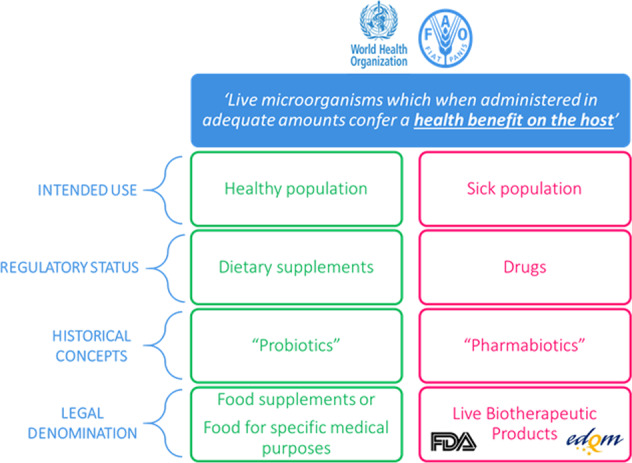
Probiotics have been defined as “Live microorganisms that when administered in adequate amounts confer a health benefit on the host”. This definition covers a wide range of applications, target populations and (combinations of) microorganisms. Improved knowledge on the importance of the microbiota in terms of health and disease has further diversified the potential scope of a probiotic intervention, whether intended to reach the market as a food, a food supplement or a drug, depending on the intended use. However, the increased interest in the clinical application of probiotics may require specific attention given their administration in a diseased population. In addition to safety, the impact of the type of product, in terms of quality, production method and, e.g., the acceptance of side effects, is now part of the current regulatory constraints for developers. In the European Union, foods are regulated by the European Food Safety Authority and drugs by the European Medicines Agency; in the United States, the Food and Drug Administration (FDA) deals with both categories. More recently, the FDA has defined a new “live biotherapeutic products” (LBP) category, clarifying pharmaceutical expectations. Since 2019, the quality requirements for this category of drug products have also been clarified by the European Pharmacopoeia (Ph. Eur.). Similar to all products intended to prevent or treat diseases, LBPs will have to be registered as medicinal products to reach the market in the US and in Europe. In this area, regulatory authorities and the pharmaceutical industry will routinely use guidelines of the “International Council for Harmonization of Technical Requirements for Pharmaceuticals for Human Use” (ICH). Although ICH guidelines are not legally binding, they provide very important recommendations, recognized by almost all drug authorities in the world. In this review, we discuss some aspects of this regulatory framework, especially focusing on products with an intended use in a diseased or vulnerable target population.
Overview
The claims and statistics of this paper haven’t been checked yet.
Free: it reads the open-access text and checks the first 5 claims that cite a source we can check. Create a free account to check every claim.
Integrity signals
Registry
Cites
Statistics
Figures
Verification
Claims the paper makes
The claims and statistics of this paper haven’t been checked yet.
Free: it reads the open-access text and checks the first 5 claims that cite a source we can check. Create a free account to check every claim.
Claims other papers make about this one
Each is checked against this paper’s own text: does it say what the citing paper says it does?
The source backs part of the claim, not all of it — or backs it for a different population, condition or comparison.
In the citing paper
“Probiotics marketed as foods or dietary supplements are subject to food and consumer product safety legislation. In contrast, live biotherapeutic products, intended to treat or prevent diseases, are regulated as biological medicinal products. This means that they must undergo rigorous safety, efficacy, and quality testing similar to that applied to pharmaceuticals [29,30].”
From Current Concepts in Probiotic Safety and Efficacy (2026) · cites this paper as [30]
Experimental — accuracy not yet measured
Self-check
Percentages, sums and reported differences re-computed from the paper’s own numbers.
The self-check needs the paper’s full text.
Citations
Cites
1 retracted
Badehnoosh, B., Karamali, M., Zarrati, M., Jamilian, M., Bahmani, F., Tajabadi-Ebrahimi, M., Jafari, P., Rahmani, E., & Asemi, Z. (2018) · The Journal of Maternal-Fetal & Neonatal Medicine · doi:10.1080/14767058.2017.1310193 · Cited by 130
RetractedAbraham, J. (2010) · Handbook of Transnational Economic Governance Regimes · doi:10.1163/ej.9789004163300.i-1081.897 · Cited by 2,582
The impact of diet and lifestyle on gut microbiota and human health
Conlon, M., & Bird, A. (2014) · Nutrients · doi:10.3390/nu7010017 · Cited by 1,567
Diet and the evolution of human amylase gene copy number variation
Perry, G. H., Dominy, N. J., Claw, K. G., Lee, A. S., Fiegler, H., Redon, R., Werner, J., Villanea, F. A., Mountain, J. L., Misra, R., et al. (2007) · Nature Genetics · doi:10.1038/ng2123 · Cited by 1,465
The Human Gut Microbiome: From Association to Modulation
Schmidt, T. S. B., Raes, J., & Bork, P. (2018) · Cell · doi:10.1016/j.cell.2018.02.044 · Cited by 845
Baber, N. (1994) · British Journal of Clinical Pharmacology · doi:10.1111/j.1365-2125.1994.tb05705.x · Cited by 759
The human gut microbiome: ecology and recent evolutionary changes
Walter, J., & Ley, R. (2011) · Annual Review of Microbiology · doi:10.1146/annurev-micro-090110-102830 · Cited by 720
Our gut microbiome: The evolving inner self
Kundu, P., Blacher, E., Elinav, E., & Pettersson, S. (2017) · Cell · doi:10.1016/j.cell.2017.11.024 · Cited by 633
Towards a better understanding of Lactobacillus rhamnosus GG - host interactions
Segers, M. E., & Lebeer, S. (2014) · Microbial Cell Factories · doi:10.1186/1475-2859-13-s1-s7 · Cited by 500
(EFSA), E. F. S. A. (2007) · EFSA Journal · doi:10.2903/j.efsa.2007.587 · Cited by 479
Research works printed but not linked: 4
- ICH. Guideline M3(R2) International Conference on Harmonisation of Technical Requirements for Registration of Pharmaceuticals For Human Use. 10.1163/ej.9789004163300.i-1081.897 (ICH, 2010). · DOI · Paper page
- ICH. Guideline Q11 International Conference on Harmonisation of Technical Requirements for Registration of Pharmaceuticals For Human Use. 10.1163/ej.9789004163300.i-1081.897 (ICH, 2010). · DOI · Paper page
- ICH. Guideline Q8 (R2) International Conference on Harmonisation of Technical Requirements for Registration of Pharmaceuticals for Human Use. 10.1163/ej.9789004163300.i-1081.897 (ICH, 2010). · DOI · Paper page
- ICH. Guideline S6(R1)International Conference on Harmonisation of Technical Requirements for Registration of Pharmaceuticals for Human Use. 10.1163/ej.9789004163300.i-1081.897 (ICH, 2010). · DOI · Paper page
Cited by
Akkermansia muciniphila: paradigm for next-generation beneficial microorganisms
Cani, P. D., Depommier, C., Derrien, M., Everard, A., & de Vos, W. M. (2022) · Nature Reviews Gastroenterology & Hepatology · doi:10.1038/s41575-022-00631-9 · Cited by 1,192
Engineered living biomaterials
Rodrigo-Navarro, A., Sankaran, S., Dalby, M. J., del Campo, A., & Salmeron-Sanchez, M. (2021) · Nature Reviews Materials · doi:10.1038/s41578-021-00350-8 · Cited by 494
A core microbiome signature as an indicator of health
Wu, G., Xu, T., Zhao, N., Lam, Y. Y., Ding, X., Wei, D., Fan, J., Shi, Y., Li, X., Li, M., et al. (2024) · Cell · doi:10.1016/j.cell.2024.09.019 · Cited by 250
Abouelela, M. E., & Helmy, Y. A. (2024) · Microorganisms · doi:10.3390/microorganisms12030430 · Cited by 238
“Probiotics are typically marketed, after receiving FDA institutional approval, as dietary food supplements after its evaluation to ensure the safety [16].”
BackgroundChakrabarti, A., Geurts, L., Hoyles, L., Iozzo, P., Kraneveld, A. D., La Fata, G., Miani, M., Patterson, E., Pot, B., Shortt, C., et al. (2022) · Cellular and Molecular Life Sciences · doi:10.1007/s00018-021-04060-w · Cited by 237
“Such work could lead to novel therapeutic strategies, fuelled by so-called microbiotic medicinal products (MMPs) [63].”
BackgroundSelf-citationExploiting bacteria for cancer immunotherapy
Kwon, S.-Y., Thi-Thu Ngo, H., Son, J., Hong, Y., & Min, J.-J. (2024) · Nature Reviews Clinical Oncology · doi:10.1038/s41571-024-00908-9 · Cited by 201
Baral, K. C., Bajracharya, R., Lee, S. H., & Han, H.-K. (2021) · International Journal of Nanomedicine · doi:10.2147/ijn.s337427 · Cited by 167
“increased interest in the clinical application of probiotics, the Food and Drug Administration (FDA) has defined a new “live biotherapeutic products (LBP)” category, to clarify the regulatory status and pharmaceutical expectations.(9,10) Probiotics can be regulated differently depending on their intended use (dietary…”
BackgroundBella, S. D., Sanson, G., Monticelli, J., Zerbato, V., Principe, L., Giuffrè, M., Pipitone, G., & Luzzati, R. (2024) · Clinical Microbiology Reviews · doi:10.1128/cmr.00135-23 · Cited by 230
Wang, L. L., Janes, M. E., Kumbhojkar, N., Kapate, N., Clegg, J. R., Prakash, S., Heavey, M. K., Zhao, Z., Anselmo, A. C., & Mitragotri, S. (2021) · Bioengineering & Translational Medicine · doi:10.1002/btm2.10214 · Cited by 162
“Unlike consortia-based therapies, single strains offer more controlled and defined pathways for the discovery of specific pharmacological mechanisms of action, genetic engineering, formulation development, and consistent manufacturing, thereby reducing complexities for key regulatory considerations.(104) Single, donor…”
BackgroundCircadian rhythms and the gut microbiome synchronize the host’s metabolic response to diet
Gutierrez Lopez, D. E., Lashinger, L. M., Weinstock, G. M., & Bray, M. S. (2021) · Cell Metabolism · doi:10.1016/j.cmet.2021.03.015 · Cited by 156
Spacova, I., Binda, S., ter Haar, J. A., Henoud, S., Legrain-Raspaud, S., Dekker, J., Espadaler-Mazo, J., Langella, P., Martín, R., Pane, M., et al. (2023) · Frontiers in Microbiology · doi:10.3389/fmicb.2023.1272754 · Cited by 129
Scientists’ call to action: Microbes, planetary health, and the Sustainable Development Goals
Crowther, T. W., Rappuoli, R., Corinaldesi, C., Danovaro, R., Donohue, T. J., Huisman, J., Stein, L. Y., Timmis, K. N., Timmis, K. N., Anderson, M. Z., et al. (2024) · Cell · doi:10.1016/j.cell.2024.07.051 · Cited by 148
Schnabl, B., Damman, C. J., & Carr, R. M. (2025) · Journal of Clinical Investigation · doi:10.1172/jci186423 · Cited by 142
Kumari, M., Singh, P., Nataraj, B. H., Kokkiligadda, A., Naithani, H., Azmal Ali, S., Behare, P. V., & Nagpal, R. (2021) · Food Research International · doi:10.1016/j.foodres.2021.110716 · Cited by 107
Exploitation of microbial activities at low pH to enhance planetary health
Atasoy, M., Álvarez‐Ordóñez, A., Cenian, A., Djukić‐Vuković, A., Lund, P. A., Özoğul, F., Trček, J., Ziv, C., & Biase, D. D. (2023) · FEMS Microbiology Reviews · doi:10.1093/femsre/fuad062 · Cited by 124
“In recognition of the need for wider application and exploitation of microbial products as probiotics , synbiotics , and so on, a new category of live biotherapeutic products was recently in-tr oduced in Eur opean and earlier in US legislation (Cordaillat-Simmons et al. 2020 ).”
BackgroundElkrief, A., Pidgeon, R., Vareki, S. M., Messaoudene, M., Castagner, B., & Routy, B. (2025) · Nature Reviews Drug Discovery · doi:10.1038/s41573-025-01211-7 · Cited by 109
“By contrast, live biotherapeutic products (LBPs) are defined as biological products that contain live organisms that are specifically intended for the prevention, treatment or cure of a disease or condition 89 .”
InfluentialAğagündüz, D., Bingöl, F. G., Çelik, E., Cemali, Ö., Özenir, Ç., Özoğul, F., & Capasso, R. (2022) · Journal of Translational Medicine · doi:10.1186/s12967-022-03609-y · Cited by 82
“However, the microbiome and microbiota play a significant role in the ethology of diseases that continue to be associated to stress in the modern world and age day by day [12].”
BackgroundSkin Microbiota in Atopic Dermatitis
Hrestak, D., Matijašić, M., Čipčić Paljetak, H., Ledić Drvar, D., Ljubojević Hadžavdić, S., & Perić, M. (2022) · International Journal of Molecular Sciences · doi:10.3390/ijms23073503 · Cited by 72
Yang, S., Qiao, J., Zhang, M., Kwok, L. Y., Matijašić, B. B., Zhang, H., & Zhang, W. (2024) · Journal of Advanced Research · doi:10.1016/j.jare.2024.06.006 · Cited by 84
Gonzales-Luna, A. J., Carlson, T. J., & Garey, K. W. (2023) · Gut Microbes · doi:10.1080/19490976.2023.2223345 · Cited by 71
“class of CDI therapeutics that overcome many of these issues by undergoing various processing and purification steps and completing rigorous clinical trials.(81,109) Two products, fecal microbiota, livejslm (formerly RBX2660) and fecal microbiota spores, live-brpk (formerly SER−109) are now FDA-approved.”
BackgroundFu, Y., Dou, Q., Smalla, K., Wang, Y., Johnson, T. A., Brandt, K. K., Mei, Z., Liao, M., Hashsham, S. A., Schäffer, A., et al. (2023) · mLife · doi:10.1002/mlf2.12101 · Cited by 65
Drugs and Bugs: The Gut-Brain Axis and Substance Use Disorders
Simpson, S., Mclellan, R., Wellmeyer, E., Matalon, F., & George, O. (2021) · Journal of Neuroimmune Pharmacology · doi:10.1007/s11481-021-10022-7 · Cited by 70
Microbiome Therapeutics Innovation Group, & Barberio, D. (2024) · Frontiers in Microbiomes · doi:10.3389/frmbi.2024.1441290 · Cited by 82
Antibiotic Resistance and Probiotics: Knowledge Gaps, Market Overview and Preliminary Screening
Zavišić, G., Popović, M. B., Stojkov, S., Medić, D., Gusman, V., Lješković, N. J., & Galović, A. J. (2023) · Antibiotics · doi:10.3390/antibiotics12081281 · Cited by 75
The Use of Probiotics for Management and Improvement of Reproductive Eubiosis and Function
Hashem, N. M., & Gonzalez‐Bulnes, A. (2022) · Nutrients · doi:10.3390/nu14040902 · Cited by 65
“As an advanced step towards the commercialization of probiotic-based products, the FDA has included such products under a new “live biotherapeutic products” (LBP) category, which helps guarantee the quality, safety, and efficacy of new LBP products through following the FDA regulations [96].”
BackgroundQuality Management of Probiotics: Ensuring Safety and Maximizing Health Benefits
Ahire, J. J., Rohilla, A., Kumar, V., & Tiwari, A. (2023) · Current Microbiology · doi:10.1007/s00284-023-03526-3 · Cited by 67
Microbiological Testing of Probiotic Preparations
Zawistowska-Rojek, A., Zaręba, T., & Tyski, S. S. (2022) · International Journal of Environmental Research and Public Health · doi:10.3390/ijerph19095701 · Cited by 66
“It refers to biotherapeutic products containing live microorganisms, the purpose of which is to prevent or cure diseases, unlike probiotics, which are dietary supplements or food for special medical purposes and whose target group of recipients is healthy people [9].”
BackgroundLactic acid bacteria as probiotics for the nose?
Boeck, I. D., Spacova, I., Vanderveken, O. M., & Lebeer, S. (2021) · Microbial Biotechnology · doi:10.1111/1751-7915.13759 · Cited by 55
“Overall, for next-generation probiotics, such as the more recently suggested D. pigrum, the safety profile is less well-known and animal studies are thus of more interest to evaluate the safety before clinical studies are performed (Cordaillat-Simmons et al., 2020; Rouanet et al., 2020).”
BackgroundVinderola, G., Druart, C., Gosálbez, L., Salminen, S., Vinot, N., & Lebeer, S. (2023) · Frontiers in Pharmacology · doi:10.3389/fphar.2023.1239745 · Cited by 52
“Unlike probiotics developed as medicinal products, known as Live Biotherapeutic Products (LBPs) (Cordaillat-Simmons et al., 2020), where there is very often no systemic absorption and no translocation, in the case of postbiotics, depending on the manufacturing processes and the content of the…”
BackgroundBeneficial Bacteria Isolated from Food in Relation to the Next Generation of Probiotics
Sionek, B., Szydłowska, A., Zielińska, D., Neffe‐Skocińska, K., & Kołożyn‐Krajewska, D. (2023) · Microorganisms · doi:10.3390/microorganisms11071714 · Cited by 63
Human Gut Microbiota for Diagnosis and Treatment of Depression
Averina, O. V., Poluektova, E. U., Zorkina, Y., Kovtun, A. S., & Даниленко, В. Н. (2024) · International Journal of Molecular Sciences · doi:10.3390/ijms25115782 · Cited by 59
“To identify probiotics that are specifically drugs, the term Live Biotherapeutic Products (LBPs) was proposed [165,166].”
BackgroundThe role of probiotics in personalized therapeutics: Advances in gut microbe-driven interventions
Manan, M. A. (2025) · The Microbe · doi:10.1016/j.microb.2025.100497 · Cited by 68
Ağagündüz, D., Çelik, E., Cemali, Ö., Bingöl, F. G., Özenir, Ç., Özoğul, F., & Capasso, R. (2023) · Probiotics and Antimicrobial Proteins · doi:10.1007/s12602-023-10092-4 · Cited by 50
Advancing Insights into Probiotics during Vegetable Fermentation
Yuan, Y., Yang, Y., Xiao, L., Qu, L., Zhang, X., & Wei, Y. (2023) · Foods · doi:10.3390/foods12203789 · Cited by 61
Tseng, C., Wong, S. H., Yu, J. Q., Lee, Y. Y., Terauchi, J., Lai, H., Luo, J., Kao, C., Yu, S., Liou, J., et al. (2025) · Gut · doi:10.1136/gutjnl-2024-334501 · Cited by 54
“17 22 Recent progress in the development of Akkermansia muciniphila as an LBP makes it a promising example of research- to-market transition.”
Diet and Microbiome-Directed Therapy 2.0 for IBD
Ananthakrishnan, A. N., Whelan, K., Allegretti, J. R., & Sokol, H. (2024) · Clinical Gastroenterology and Hepatology · doi:10.1016/j.cgh.2024.05.049 · Cited by 52
Vaginal dysbiosis and the potential of vaginal microbiome-directed therapeutics
Valeriano, V. D., Lahtinen, E., Hwang, I., Zhang, Y., Du, J., & Schuppe‐Koistinen, I. (2024) · Frontiers in Microbiomes · doi:10.3389/frmbi.2024.1363089 · Cited by 59
Human microbiome acquisition and transmission
Heidrich, V., Valles‐Colomer, M., & Segata, N. (2025) · Nature Reviews Microbiology · doi:10.1038/s41579-025-01166-x · Cited by 56
“Next-generation probiotics also conform to the definition of live bio-therapeutic products (biological products that (1) contain live organisms, such as bacteria; (2) are applicable to the prevention, treatment or cure of a disease or condition of humans; and (3) are not a vaccine 131 ).”
Probiotic Development Strategy Centered on Stability and Regulatory Considerations
Kim, H., Haque, M. A., Razzak, M. A., Jang, M. J., Song, S., & Ku, S. (2026) · Comprehensive Reviews in Food Science and Food Safety · doi:10.1111/1541-4337.70320 · Cited by 43
Zhang, Y., Tan, W., Sultonova, R. D., Nguyen, D.-H., Zheng, J. H., You, S.-H., Rhee, J. H., Kim, S.-Y., Khim, K., Hong, Y., et al. (2023) · Biomaterials · doi:10.1016/j.biomaterials.2023.122135 · Cited by 47
Quigley, E. M. M., Markinson, L., Stevenson, A., Treasure, P., & Lacy, B. E. (2022) · Alimentary Pharmacology & Therapeutics · doi:10.1111/apt.17310 · Cited by 46
The role of Bifidobacterium in longevity and the future of probiotics
Ku, S., Haque, M. A., Jang, M. J., Ahn, J., Choe, D., Jeon, J. I., & Park, M. S. (2024) · Food Science and Biotechnology · doi:10.1007/s10068-024-01631-y · Cited by 50
“Consumers must be able to choose probiotic products that best suit their health needs, but this requires access to accurate information and consultations (Cordaillat-Simmons et al., 2020).”
Backgroundvan Rijn, T., & Timmis, J. K. (2023) · Microbial Biotechnology · doi:10.1111/1751-7915.14201 · Cited by 40
Waitzberg, D. L., Guarner, F., Hojsak, I., Ianiro, G., Polk, D. B., & Sokol, H. (2024) · Advances in Therapy · doi:10.1007/s12325-024-02783-3 · Cited by 56
van den Akker, C. H. P., Embleton, N. D., Lapillonne, A., Mihatsch, W., Salvatore, S., Canani, R. B., Dinleyici, E. Ç., Domellöf, M., Guarino, A., Gutiérrez‐Castrellón, P., et al. (2024) · Journal of Pediatric Gastroenterology and Nutrition · doi:10.1002/jpn3.12204 · Cited by 45
A decade of advances in human gut microbiome-derived biotherapeutics
Pribyl, A. L., Hugenholtz, P., & Cooper, M. A. (2025) · Nature Microbiology · doi:10.1038/s41564-024-01896-3 · Cited by 52
“…include minimizing oxygen exposure for strictly anaerobic strains, identifying optimal growth media and physiological parameters for scaled-up production, minimizing genetic drift, developing quality assurance assays and preserving the viability and long-term stability of bacterial cells 93,94 .”
Past, present, and future of microbiome-based therapies
Manrique, P., Montero, I., Fernández-Gosende, M., Martínez, N., Hidalgo-Cantabrana, C., & Ríos-Covián, D. (2024) · Microbiome Research Reports · doi:10.20517/mrr.2023.80 · Cited by 51
Mruk-Mazurkiewicz, H., Kulaszyńska, M., Czarnecka, W., Podkówka, A., Ekstedt, N., Zawodny, P., Wierzbicka-Woś, A., Marlicz, W. M., Skupin, B., Stachowska, E., et al. (2024) · Nutrients · doi:10.3390/nu16111695 · Cited by 43
“At last, the use of live microorganisms in therapeutics is subject to stringent regulatory requirements [21].”
BackgroundMicrobial Contamination of Food: Probiotics and Postbiotics as Potential Biopreservatives
Zavišić, G., Ristić, S., Petricevic, S. M., Janković, D. L., & Petković, B. B. (2024) · Foods · doi:10.3390/foods13162487 · Cited by 57
Probiotic lactobacilli in formulas and hygiene products for the health of the urogenital tract
Nader-Macías, M. E., Gregorio, P. R. D., & Silva, J. A. (2021) · Pharmacology Research & Perspectives · doi:10.1002/prp2.787 · Cited by 46
Lactobacilli: Legal Regulation and Prospects for New Generation Drugs
Yunes, R. А., Poluektova, E. U., Белкина, Т. В., & Даниленко, В. Н. (2022) · Applied Biochemistry and Microbiology · doi:10.1134/s0003683822050179 · Cited by 42
Precision Microbiome: A New Era of Targeted Therapy with Core Probiotics
Fang, X., Wang, Y., Wei, H., & Huang, Y. (2025) · Research · doi:10.34133/research.0658 · Cited by 43
“Finally, clinical research should be accompanied by proactive engagement with drug regulatory authorities to produce LBP products that target disease under the premise of meeting clinical application standards [ 35 ].”
Emerging Options for the Prevention and Management of Clostridioides difficile Infection
Gonzales-Luna, A. J., Carlson, T. J., & Garey, K. W. (2023) · Drugs · doi:10.1007/s40265-022-01832-x · Cited by 37
“Live biotherapeutic products are, by definition, FDA-regulated as drugs and therefore their contents must be highly standardized and produced using good manufacturing practices [21].”
BackgroundInfluentialMicrobial metabolites: cause or consequence in gastrointestinal disease?
Fobofou, S. A. T., & Savidge, T. (2022) · American Journal of Physiology-Gastrointestinal and Liver Physiology · doi:10.1152/ajpgi.00008.2022 · Cited by 37
Wortelboer, K., Koopen, A. M., Herrema, H., de Vos, W. M., Nieuwdorp, M., & Kemper, E. M. (2022) · Frontiers in Medicine · doi:10.3389/fmed.2022.1077275 · Cited by 38
Bioinspired approaches to encapsulate and deliver bacterial live biotherapeutic products
Brittain, N. Y., & Finbloom, J. A. (2025) · Advanced Drug Delivery Reviews · doi:10.1016/j.addr.2025.115663 · Cited by 37
Next Generation Probiotics for Neutralizing Obesogenic Effects: Taxa Culturing Searching Strategies
López‐Moreno, A., Acuña, I., Torres-Sánchez, A., Ruiz-Moreno, Á., Cerk, K., Rivas, A., Suárez, A., Monteoliva‐Sánchez, M., & Aguilera, J. (2021) · Nutrients · doi:10.3390/nu13051617 · Cited by 38
Compliance and Regulatory Challenges in Cloud Computing: A Sector-Wise Analysis
Seth, D. K., Najana, M., & Ranjan, P. (2024) · International Journal of Global Innovations and Solutions (IJGIS) · doi:10.21428/e90189c8.68b5dea5 · Cited by 44
“Similarly, technological advancement is usually faster than adopting the laws and regulations, so enforcement becomes even more challenging [3].”
Mu, R., Yuan, J., Huang, Y., Meissen, J. K., Mou, S., Liang, M., & Rosenbaum, A. I. (2022) · BioDrugs · doi:10.1007/s40259-022-00518-w · Cited by 38
“Biotherapeutics have been defined to date as a class of drugs that are derived from a living organism and utilized for the treatment, prevention, or cure of disease in humans, but emerging technologies may require an updated definition [1, 2].”
BackgroundTranslational strategies for oral delivery of faecal microbiota transplantation
Kamath, S., Bryant, R. V., Costello, S. P., Day, A. S., Forbes, B., Haifer, C., Hold, G. L., Kelly, C. R., Li, A., Pakuwal, E., et al. (2025) · Gut · doi:10.1136/gutjnl-2025-335077 · Cited by 38
Zaman, W., Amin, A., Khalil, A. A. K., Akhtar, M. S., & Ali, S. (2025) · Horticulturae · doi:10.3390/horticulturae11070732 · Cited by 37
Wounds and the Microbiota: The Healing Interplay Between Host and Microbial Communities
Al-Taweel, R., Hammad, A. S., Tajammul, A., Crovella, S., & Al‐Asmakh, M. (2025) · International Journal of Molecular Sciences · doi:10.3390/ijms262311365 · Cited by 43
“…evolve to encompass microbe-based medicines such as live biotherapeutic products (LBPs), which, unlike conventional probiotics, are designed to treat or prevent disease but pose unique regulatory challenges related to quality, safety, stability, and patient-specific microbiome variability [333].”
Live Biotherapeutic Products and Probiotics for the Skin
Vargason, A. M., & Anselmo, A. C. (2021) · Advanced NanoBiomed Research · doi:10.1002/anbr.202100118 · Cited by 31
Engineering Saccharomyces cerevisiae for medical applications
Maneira, C., Chamas, A., & Lackner, G. (2025) · Microbial Cell Factories · doi:10.1186/s12934-024-02625-5 · Cited by 35
“The establishment of a defined and specific regulatory framework for such endeavors is primordial to push forward the application of both wild-type and genetically engineered LBPs [293].”
Probiotics and Paraprobiotics—New Proposal for Functional Food
Sionek, B., & Gantner, M. (2025) · Applied Sciences · doi:10.3390/app15010366 · Cited by 30
Microbiome-Based Products: Therapeutic Potential for Inflammatory Skin Diseases
Rušanac, A., Škibola, Z., Matijašić, M., Paljetak, H. Č., & Perić, M. (2025) · International Journal of Molecular Sciences · doi:10.3390/ijms26146745 · Cited by 32
“There are many definitions and classifications of products containing microorganisms or their components, which can provide health benefits or be used as therapeutic agents [110].”
Current clinical translation of microbiome medicines
McCoubrey, L. E., Elbadawi, M., & Basit, A. W. (2022) · Trends in Pharmacological Sciences · doi:10.1016/j.tips.2022.02.001 · Cited by 29
Kim, J., Hlaing, S. P., Lee, J., Kwak, D., Kim, H., Saparbayeva, A., Yoon, I., Im, E., Jung, Y., & Yoo, J. (2023) · Bioengineering & Translational Medicine · doi:10.1002/btm2.10527 · Cited by 25
“The United States Food and Drug Administration (FDA) has created a category for live biotherapeutic products, which includes live microorganisms that can be used to prevent, treat, and cure disease.(4) In 2021, therapy for Clostridium difficile infection, using live firmicutes spores, passed FDA phase-3 approval.”
BackgroundHow can the gut microbiome be targeted to fight multidrug-resistant organisms?
Davido, B., Merrick, B., Kuijper, E. J., Benech, N., Biehl, L. M., & Corcione, S. (2025) · The Lancet Microbe · doi:10.1016/j.lanmic.2024.101063 · Cited by 29
Leeflang, J., Wright, J. A., Worthley, D. L., Din, M. O., & Woods, S. L. (2025) · npj Biofilms and Microbiomes · doi:10.1038/s41522-025-00734-6 · Cited by 29
From Microbial Switches to Metabolic Sensors: Rewiring the Gut–Brain Kynurenine Circuit
Tanaka, M., & Vécsei, L. (2025) · Biomedicines · doi:10.3390/biomedicines13082020 · Cited by 23
“Regulatory frameworks struggle to keep pace with live live biotherapeutic products (LBPs) that blur the line between drugs and devices [34].”
Probiotics and live biotherapeutic products aiming at cancer mitigation and patient recover
Schemczssen-Graeff, Z., & Pileggi, M. (2022) · Frontiers in Genetics · doi:10.3389/fgene.2022.921972 · Cited by 30
“The Food and Drug Administration of US Government has defined the category of “live biotherapeutic products” and constituting objectives and regulations for pharmaceutical uses and quality requirements, so these products could reach the market and registered as medicinal products (Cordaillat-Simmons et al., 2020).”
BackgroundFrom Microbial Switches to Metabolic Sensors: Rewiring the Gut–Brain Kynurenine Circuit
Tanaka, M., & Vécsei, L. (2025) · doi:10.20944/preprints202506.0880.v1 · Cited by 24
Current Concepts in Probiotic Safety and Efficacy
Churin, A. A., Sokolyanskaya, L. O., Lukina, A. P., & Karnachuk, O. V. (2026) · Nutrients · doi:10.3390/nu18040696 · Cited by 31
Li, S., & Zhang, Y.-X. (2023) · Critical Reviews in Microbiology · doi:10.1080/1040841x.2023.2202237 · Cited by 26
“Live biotherapeutic product (LBP), an emerging kind of therapeutic preparation based on live cells, is prospective for a preventive or therapeutic effect on disease (Cordaillat-Simmons et al. 2020; Huang et al. 2021; Qiu and Anselmo 2021; Heavey et al. 2022).”
BackgroundYang, X., Lei, L., Shi, W., Li, X., Huang, X., Lan, L., Lin, J., Liang, Q., Wei, L., & Yang, J. (2024) · Frontiers in Medicine · doi:10.3389/fmed.2024.1379333 · Cited by 32
“Probiotics are presently defined as “live microorganisms that, when administered in adequate amounts, confer a health benefit on the host” (12).”
BackgroundShokr, M. M., Eladawy, R. M., Azar, Y. O., & Raish, S. M. A. (2025) · Foods · doi:10.3390/foods14172926 · Cited by 29
“LBPs are subject to rigorous regulatory evaluation for safety, efficacy, and manufacturing standards under agencies such as the FDA and EMA [220].”
Probiotic‐Based Materials as Living Therapeutics
Sabio, L., Day, G. J., & Salmerón‐Sánchez, M. (2025) · Advanced Materials · doi:10.1002/adma.202508500 · Cited by 37
Surface-functionalized bacteria: Frontier explorations in next-generation live biotherapeutics
Jiang, J.-N., Kong, F., Lei, Q., & Zhang, X. (2024) · Biomaterials · doi:10.1016/j.biomaterials.2024.123029 · Cited by 26
Lee, Y. Q., Choi, Y.-M., Park, S., Kim, S.-K., Lee, M., Kim, D., Koduru, L., Lakshmanan, M., Jung, S., Kim, M.-J., et al. (2025) · npj Systems Biology and Applications · doi:10.1038/s41540-025-00555-5 · Cited by 31
Cerk, K., & Aguilera, J. (2022) · EFSA Journal · doi:10.2903/j.efsa.2022.e200404 · Cited by 24
Xu, Z., Zhang, J., Wu, J., Yang, S., Li, Y., Wu, Y., Li, S., Zhang, X., Zuo, W., Lian, X., et al. (2022) · Frontiers in Neuroscience · doi:10.3389/fnins.2022.976358 · Cited by 22
“Probiotics are live microorganisms, which render healthy and beneficial effects on animals or humans when administered in adequate amounts (Jäger et al., 2019; Cordaillat-Simmons et al., 2020).”
BackgroundCauwenberghs, E., Boeck, I. D., Spacova, I., Tente, I. V., Bastiaenssen, J., Lammertyn, E. J., Verhulst, S. L., Hoorenbeeck, K. V., & Lebeer, S. (2024) · Cell Reports Medicine · doi:10.1016/j.xcrm.2023.101371 · Cited by 24
Lorbeg, P. M., Golob, M., Kramer, M., Treven, P., & Matijašić, B. B. (2021) · Frontiers in Microbiology · doi:10.3389/fmicb.2021.700138 · Cited by 26
Pharmacomicrobiomics of Antidepressants in Depression: A Systematic Review
Brown, L. C., Bobo, W. V., Gall, C. A., Müller, D. J., & Bousman, C. (2023) · Journal of Personalized Medicine · doi:10.3390/jpm13071086 · Cited by 27
“As the PMx space continues to grow, considerations will need to be taken concerning the role of “probiotics” and government drug regulation of live biotherapeutic products in efficacy and safety in humans [72].”
BackgroundMin, H., Choi, K.-S., Yun, S., & Jang, S. (2025) · Journal of Microbiology and Biotechnology · doi:10.4014/jmb.2410.10054 · Cited by 28
“Once all requirements are satisfied, LBPs can be approved for market release [92].”
Engineering bacteria to modulate host metabolism
Ciocan, D. M., & Elinav, E. (2023) · Acta Physiologica · doi:10.1111/apha.14001 · Cited by 22
Probiotics in Health Care: A Critical Appraisal
Quigley, E. M. M., & Shanahan, F. (2024) · Annual Review of Medicine · doi:10.1146/annurev-med-042423-042315 · Cited by 20
Jennings, S. A. V., & Clavel, T. (2023) · Annual Review of Animal Biosciences · doi:10.1146/annurev-animal-021022-025552 · Cited by 27
Roslan, M. A. M., Omar, M. N., Sharif, N. A. M., Raston, N. H. A., Arzmi, M. H., Neoh, H., & Ramzi, A. B. (2023) · npj Biofilms and Microbiomes · doi:10.1038/s41522-023-00463-8 · Cited by 25
Current Regulatory Issues for the Use of Probiotics
Szajewska, H., & Vinderola, G. (2024) · Advances in experimental medicine and biology · doi:10.1007/978-3-031-58572-2_12 · Cited by 34
Chairside live biotherapeutic hydrogel for comprehensive periodontitis therapy
Li, K., Li, B., Li, J., Wu, X., Zhao, Y., Yu, J. L., Guo, J., & Huang, C. (2024) · Trends in biotechnology · doi:10.1016/j.tibtech.2024.10.001 · Cited by 23
Microbial Pathogens Linked to Vaginal Microbiome Dysbiosis and Therapeutic Tools for Their Treatment
Borrego-Ruiz, A., & Borrego, J. J. (2025) · Acta Microbiologica Hellenica · doi:10.3390/amh70020019 · Cited by 31
Robinson, C. M., Short, N. E., & Riglar, D. T. (2022) · Frontiers in Bioengineering and Biotechnology · doi:10.3389/fbioe.2022.959441 · Cited by 17
“The next decade is likely to include critical milestones in this space, and regulatory approval of the first products for clinical use will provide frameworks for addressing these challenges (Cordaillat-Simmons et al., 2020).”
BackgroundGervason, S., Méleine, M., Lolignier, S., Meynier, M., Daugey, V., Birer, A., Aissouni, Y., Berthon, J., Ardid, D., Filaire, E., et al. (2023) · Pain · doi:10.1097/j.pain.0000000000003075 · Cited by 21
Gut microbiota and immunotherapy of renal cell carcinoma
Bibbò, S., Porcari, S., Vecchio, L. E. D., Severino, A., Mullish, B. H., Ianiro, G., Gasbarrini, A., & Cammarota, G. (2023) · Human Vaccines & Immunotherapeutics · doi:10.1080/21645515.2023.2268982 · Cited by 20
“79 Furthermore, the same author demonstrated that the efficacy of first-line chemo-immunotherapy is not reduced by previous antibiotic exposure, in contrast with data reported for single ICIs.”
ResultControl points for design of taxonomic composition in synthetic human gut communities
Connors, B., Thompson, J. C., Sarah, E., Clark, R. L., Pfleger, B. F., & Venturelli, O. S. (2023) · Cell Systems · doi:10.1016/j.cels.2023.11.007 · Cited by 24
Kiplimo, D., Mwirichia, R., Wicaksono, W. A., Berg, G., & Abdelfattah, A. (2025) · Journal of Sustainable Agriculture and Environment · doi:10.1002/sae2.70049 · Cited by 21
Kennedy, M. S., & Chang, E. B. (2025) · Journal of Clinical Investigation · doi:10.1172/jci193969 · Cited by 18
““Live biotherapeutic products” is a new term developed by the US Food and Drug Administration to categorize products containing live organisms like bacteria that have proven clinical efficacy in treating disease, and they are regulated as drugs (143).”
Probiotics and urogenital health
Nader-Macías, M. E., & Gregorio, P. R. D. (2022) · Elsevier eBooks · doi:10.1016/b978-0-323-85170-1.00016-6 · Cited by 17
Metadata
- Authors
- Cordaillat-Simmons, M., Rouanet, A., & Pot, B.
- Affiliations
- Vrije Universiteit Brussel (BE)
- Corresponding author
- Pot, Bruno
- Venue
- Experimental & Molecular Medicine
- Published
- 2020-09
- Volume
- 52
- Issue
- 9
- Pages
- 1397-1406
- ISSN
- 1226-3613 (ISSN-L)
- 2092-6413
- PMC
- PMC8080583
- OpenAlex
- W3083900288
- Semantic Scholar
- ea22382a319b860c1acf2487f6d82958fd3cad33
- Cited by
- 328
- References
- 29
- Citations by year
- 2026: 99 · 2025: 85 · 2024: 53 · 2023: 36 · 2022: 32 · 2021: 20 · 2020: 3
- FWCI
- 1.92
- Type
- journal article
- Language
- en
- Open access
- gold
- doi.org
- Licence
- cc-by
- creativecommons.org/licenses/by/4.0 (tdm)
- creativecommons.org/licenses/by/4.0 (vor, 9 d)
- Locations
- Experimental & Molecular Medicine (publishedVersion, cc-by)
- PubMed Central (publishedVersion, cc-by)
- PubMed (publishedVersion)
- DOAJ (DOAJ: Directory of Open Access Journals) (submittedVersion, cc-by-sa)
- Topics
- Life Sciences › Agricultural and Biological Sciences › Food Science › Probiotics and Fermented Foods
- Health Sciences › Medicine › Public Health, Environmental and Occupational Health › Healthcare Regulation
- Health Sciences › Nursing › Issues, ethics and legal aspects › Biomedical Ethics and Regulation
- Keywords
- live biotherapeutic products, probiotics, regulatory framework, ICH guidelines, non-functional requirements, European Pharmacopoeia, FDA, European Medicines Agency, EFSA, microbiota, drug registration, vulnerable populations
- MeSH terms
- Drug Development, Animals, Biological Products, Biological Therapy, Humans, Legislation, Drug, Guidelines as Topic, Probiotics
About these checks
Registry, retraction, Cites and statistics results are computed, not judged, with one exception: a printed reference that no index lists is read once by a model before it counts as a citation error. Claims are extracted by a model and kept only when their quote appears verbatim in the text; each cited source is then checked, with a model’s help, for whether it says what the claim relies on. Those verdicts can be wrong — read the claim’s quote and the cited source before relying on one.
Statistics and arithmetic are recomputed, not judged.
Confidence bands are shown only for fields calibrated on our annotated test set. None is calibrated yet, so no band is shown.
What counts as a claim ›How we measure confidence ›How we check this ›
Are you an author, or do you see a problem with this page? Request a review
Data sources
Bibliographic data: Semantic Scholar, OpenAlex, Crossref.
Contains information from the Semantic Scholar Academic Graph Datasets, made available under the ODC Attribution License (ODC-BY 1.0).
Semantic Scholar’s data is described in: Kinney, R., et al. (2023). The Semantic Scholar Open Data Platform. arXiv:2301.10140.
