

The DOI matches its Crossref record; 63 of the 65 references it cites were found in a registry or an index.
Neuronal activity increases translocator protein (TSPO) levels
Open accessAbstract
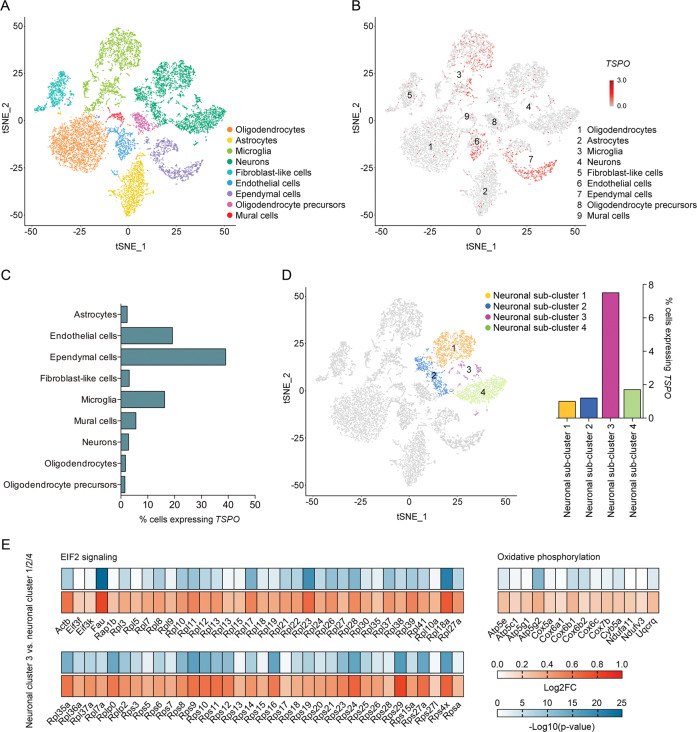
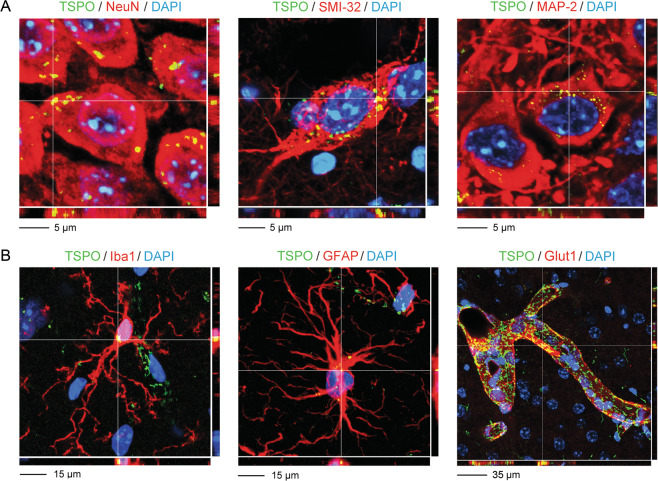
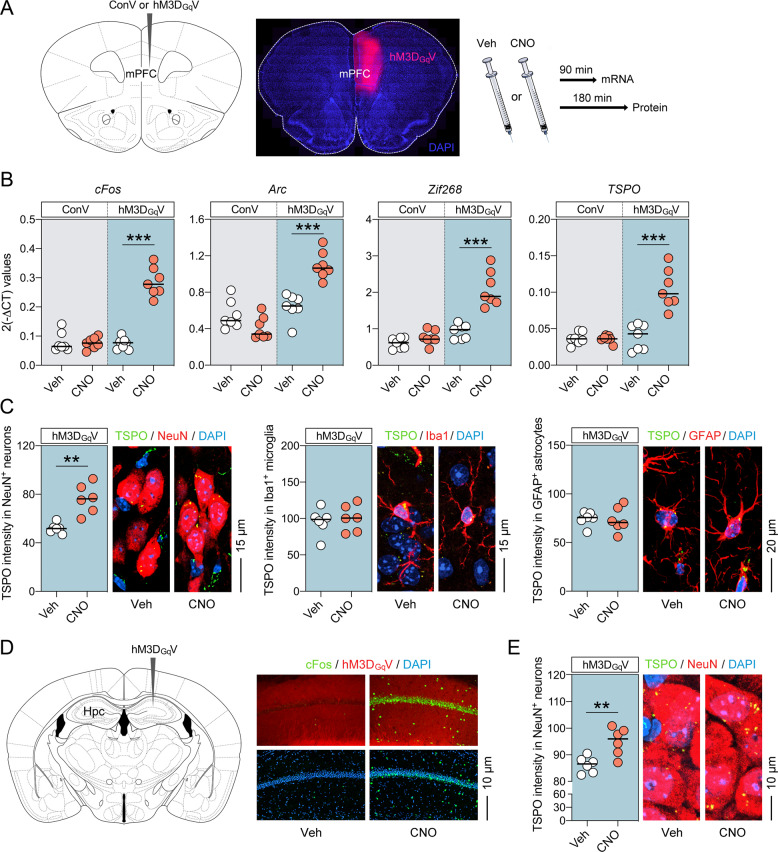
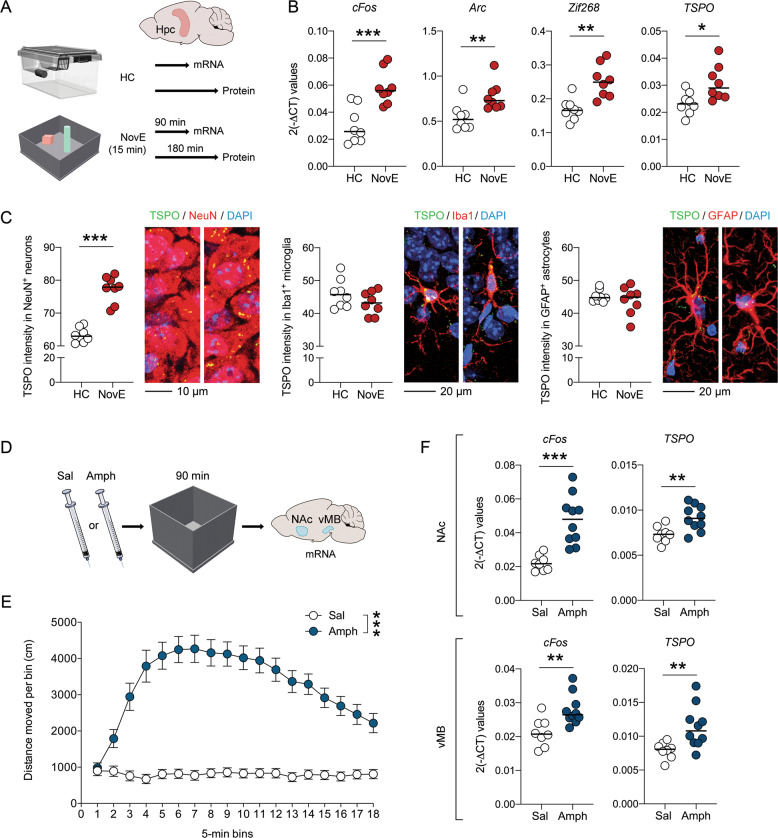
The mitochondrial protein, translocator protein (TSPO), is a widely used biomarker of neuroinflammation, but its non-selective cellular expression pattern implies roles beyond inflammatory processes. In the present study, we investigated whether neuronal activity modifies TSPO levels in the adult central nervous system. First, we used single-cell RNA sequencing to generate a cellular landscape of basal TSPO gene expression in the hippocampus of adult (12 weeks old) C57BL6/N mice, followed by confocal laser scanning microscopy to verify TSPO protein in neuronal and non-neuronal cell populations. We then quantified TSPO mRNA and protein levels after stimulating neuronal activity with distinct stimuli, including designer receptors exclusively activated by designer drugs (DREADDs), exposure to a novel environment and acute treatment with the psychostimulant drug, amphetamine. Single-cell RNA sequencing demonstrated a non-selective and multi-cellular gene expression pattern of TSPO at basal conditions in the adult mouse hippocampus. Confocal laser scanning microscopy confirmed that TSPO protein is present in neuronal and non-neuronal (astrocytes, microglia, vascular endothelial cells) cells of cortical (medial prefrontal cortex) and subcortical (hippocampus) brain regions. Stimulating neuronal activity through chemogenetic (DREADDs), physiological (novel environment exposure) or psychopharmacological (amphetamine treatment) approaches led to consistent increases in TSPO gene and protein levels in neurons, but not in microglia or astrocytes. Taken together, our findings show that neuronal activity has the potential to modify TSPO levels in the adult central nervous system. These findings challenge the general assumption that altered TSPO expression or binding unequivocally mirrors ongoing neuroinflammation and emphasize the need to consider non-inflammatory interpretations in some physiological or pathological contexts.
Overview
The claims and statistics of this paper haven’t been checked yet.
Run the check — free, no account needed. It reads the open-access text and checks the sources it cites.
Integrity signals
Registry
Cites
Statistics
Figures
Verification
Claims the paper makes
The claims and statistics of this paper haven’t been checked yet.
Run the check — free, no account needed. It reads the open-access text and checks the sources it cites.
Claims other papers make about this one
Each is checked against this paper’s own text: does it say what the citing paper says it does?
The cited source says what the claim attributes to it.
In the citing paper
“Given that more recent evidence confirms TSPO expression in neurons [44]”
From Pharmacological modulation of TSPO in microglia/macrophages and neurons in a chronic neurodegenerative model of prion disease (2023) · cites this paper as [44]
Self-check
Percentages, sums and reported differences re-computed from the paper’s own numbers.
The self-check needs the paper’s full text.
Citations
Cites
Analysis of Relative Gene Expression Data Using Real-Time Quantitative PCR and the 2−ΔΔCT Method
Livak, K. J., & Schmittgen, T. D. (2001) · Methods · doi:10.1006/meth.2001.1262 · Cited by 180,860
Comprehensive Integration of Single-Cell Data
Stuart, T., Butler, A., Hoffman, P., Hafemeister, C., Papalexi, E., Mauck, W. M., Hao, Y., Stoeckius, M., Smibert, P., & Satija, R. (2019) · Cell · doi:10.1016/j.cell.2019.05.031 · Cited by 15,453
Gene Expression Omnibus: NCBI gene expression and hybridization array data repository
Edgar, R. (2002) · Nucleic Acids Research · doi:10.1093/nar/30.1.207 · Cited by 13,288
Integrating single-cell transcriptomic data across different conditions, technologies, and species
Butler, A., Hoffman, P., Smibert, P., Papalexi, E., & Satija, R. (2018) · Nature Biotechnology · doi:10.1038/nbt.4096 · Cited by 13,174
Zhang, Y., Chen, K., Sloan, S. A., Bennett, M. L., Scholze, A. R., O'Keeffe, S., Phatnani, H. P., Guarnieri, P., Caneda, C., Ruderisch, N., et al. (2014) · The Journal of Neuroscience · doi:10.1523/jneurosci.1860-14.2014 · Cited by 4,875
Armbruster, B. N., Li, X., Pausch, M. H., Herlitze, S., & Roth, B. L. (2007) · Proceedings of the National Academy of Sciences · doi:10.1073/pnas.0700293104 · Cited by 2,046
Roth, B. L. (2016) · Neuron · doi:10.1016/j.neuron.2016.01.040 · Cited by 1,742
PanglaoDB: a web server for exploration of mouse and human single-cell RNA sequencing data
Franzén, O., Gan, L.-M., & Björkegren, J. L. M. (2019) · Database · doi:10.1093/database/baz046 · Cited by 1,551 · cited 1×
“Cell-type assignments were predicted by matching representative expressed features to published cell markers data [21].”
BackgroundMicroglia in physiology and disease
Wolf, S. A., Boddeke, H. W. G. M., & Kettenmann, H. (2017) · Annual Review of Physiology · doi:10.1146/annurev-physiol-022516-034406 · Cited by 1,426
Brain on stress: how the social environment gets under the skin
McEwen, B. S. (2012) · Proceedings of the National Academy of Sciences · doi:10.1073/pnas.1121254109 · Cited by 1,200
Cited by
Sorted by citations
Items 101–118 of 118
The Mitochondrial 18 kDa Translocator Protein as a Biomarker of Radiation-Induced Neuroinflammatory
Родина, А. В. (2024) · Medical Radiology and radiation safety · doi:10.33266/1024-6177-2024-69-3-35-45 · Cited by 1
Doorduin, J. (2025) · Handbook of clinical neurology · doi:10.1016/b978-0-443-19104-6.00016-4 · Cited by 1
Lidin, E., Risling, M., & Sköld, M. K. (2026) · Frontiers in Neurology · doi:10.3389/fneur.2025.1729794 · Cited by 2
Adair, L., Han, R., Fulton, R. E., Figueroa, A. G., & Patel, M. (2025) · Journal of Pharmacology and Experimental Therapeutics · doi:10.1016/j.jpet.2025.103614 · Cited by 1
Therapeutic and immunomodulatory functions of the translocator protein in Alzheimer's disease
Fairley, L. H. (2022) · DR-NTU (Nanyang Technological University) · doi:10.32657/10356/160865
Kim, E., Figueiredo, I., Simmons, C., Randall, K., Gonzalez, L. R., Wood, T., Ranieri, B., Sureda-Gibert, P., Howes, O. D., Pariante, C. M., et al. (2022) · bioRxiv (Cold Spring Harbor Laboratory) · doi:10.1101/2022.11.22.517484
Reilly, J. (2023) · Queensland University of Technology · doi:10.5204/thesis.eprints.242770
Wetzel, C. H., Bader, S. M., Jahner, T., Doerfelt, A., Melchner, D., Cardon, I., Siegmund, H. I., Brochhausen, C., Rupprecht, R., & Milenkovic, V. M. (2024) · Research Square · doi:10.21203/rs.3.rs-4024118/v1
Rediscovering a Forgotten Link: TSPO and RIM-BP1 in Appetite Regulation
Wang, J., Moody, H., Beecher, K., & Chehrehasa, F. (2024) · Nutrition Reviews · doi:10.1093/nutrit/nuae127
Beilmann, V., Furrer, J., Schalbetter, S. M., Weber‐Stadlbauer, U., Wyss, M. T., Saab, A. S., Weber, B., Meyer, U., & Notter, T. (2024) · bioRxiv (Cold Spring Harbor Laboratory) · doi:10.1101/2024.12.02.626319
Self-citationTSPO circadian pattern: a test-retest study of [11C]ER176
Finn, Q., Zanotti‐Fregonara, P., Yu, M., Fujita, M., Masdeu, J. C., & Pascual, B. (2025) · European Journal of Nuclear Medicine and Molecular Imaging · doi:10.1007/s00259-025-07429-2
“Additionally, stress or fatigue from repeated PET scans could induce microglial activation and increase TSPO binding [35, 36 ].”
Vicente‐Rodríguez, M., Mancuso, R., Peris-Yague, A., Simmons, C., Gómez‐Nicola, D., Perry, V. H., Turkheimer, F., Lovestone, S., Parker, C. A., & Cash, D. (2024) · Figshare · doi:10.6084/m9.figshare.26581280
Periche-Tomas, E., Ronen, I., Underwood, J., Evans, J., MacIver, C., Leach, H., Branzoli, F., Cercignani, M., & Harrison, N. A. (2026) · bioRxiv (Cold Spring Harbor Laboratory) · doi:10.64898/2026.03.24.713975
Yu, C., Ye, Q., Song, Z., Li, J., Li, Z., Wang, Z., Wang, J., Li, H., Li, Y., & Ouyang, W. (2026) · European Journal of Pharmacology · doi:10.1016/j.ejphar.2026.178868
From neuroinflammation to neural inference: computational psychiatry meets precision medicine
Mansour, G. K., & Hajjar, A. W. (2026) · Schizophrenia · doi:10.1038/s41537-026-00757-8
““ It is increasingly recognized that Translocater protein (TSPO) is a mitochondrial protein expressed not only in activated microglia but also in astrocytes and, crucially, is upregulated in neurons during periods of neuronal activity 85 .”
Pérez-Villavicencio, J., Villa-Robledo, O., Megchun-Vázquez, X., Uriarte-Jiménez, F., Rubio‐Osornio, M., & Serrano‐García, N. (2026) · Neuroglia · doi:10.3390/neuroglia7030023
“It should be noted, however, that TSPO ligands do not exclusively bind activated pro-inflammatory microglia but also label homeostatic microglia, reactive astrocytes, and neurons under metabolic stress, limiting the mechanistic specificity of this readout [76,77].”
Lu, H., Yang, Q., Wang, Y., & Li, H. (2026) · Clinical Neurology and Neurosurgery · doi:10.1016/j.clineuro.2026.109577
Spatial organization of AQP4 water channel expression in the human brain
Taheri, T., Farahani, A., Liu, Z.-Q., Ceballos, E. G., Harroud, A., Dagher, A., & Mišić, B. (2026) · Science Advances · doi:10.1126/sciadv.aeg8117
“TSPO PET is widely used to index neuroimmune activation, but it is not cell specific and can reflect multiple cellular sources depending on context ( 81 , 82 , 130 ).”
Metadata
- Authors
- Notter, T., Schalbetter, S. M., Clifton, N. E., Mattei, D., Richetto, J., Thomas, K., Meyer, U., & Hall, J.
- Affiliations
- Cardiff University (GB)
- University of Zurich (CH)
- Corresponding author
- Notter, Tina
- ORCID
- Venue
- Molecular Psychiatry
- Published
- 2020-05-12
- Volume
- 26
- Issue
- 6
- Pages
- 2025-2037
- ISSN
- 1359-4184 (ISSN-L)
- 1476-5578
- PMC
- PMC8440208
- OpenAlex
- W3016299128
- Cited by
- 118
- References
- 65
- Citations by year
- 2026: 9 · 2025: 13 · 2024: 24 · 2023: 20 · 2022: 20 · 2021: 24 · 2020: 8
- FWCI
- 6.97
- Type
- journal article
- Language
- en
- Open access
- hybrid
- doi.org
- Locations
- Molecular Psychiatry (publishedVersion, cc-by)
- Europe PMC (PubMed Central) (publishedVersion, other-oa)
- PubMed Central (publishedVersion, cc-by)
- PubMed (publishedVersion)
- ORCA Online Research @Cardiff (Cardiff University) (acceptedVersion)
- Zurich Open Repository and Archive (University of Zurich) (acceptedVersion, cc-by)
- Zurich Open Repository and Archive (University of Zurich) (submittedVersion, cc-by)
- Zurich Open Repository and Archive (University of Zurich)
- Funders
- National Science Foundation
- Schweizerischer Nationalfonds zur Förderung der Wissenschaftlichen Forschung (PZ00P3_18009/1, 188524, 174868, 310030)
- Universität Zürich
- Medical Research Council (MR/L010305/1)
- Topics
- Life Sciences › Neuroscience › Neurology › Neuroinflammation and Neurodegeneration Mechanisms
- Life Sciences › Pharmacology, Toxicology and Pharmaceutics › Pharmacology › Pharmacological Receptor Mechanisms and Effects
- Life Sciences › Neuroscience › Cellular and Molecular Neuroscience › Neuroscience and Neuropharmacology Research
- Keywords
- translocator protein (TSPO), neuronal activity, neuroinflammation biomarkers, hippocampus, medial prefrontal cortex, amphetamine, astrocytes, microglia, vascular endothelial cells, single-cell RNA sequencing
- MeSH terms
- Animals, Neurons, Microglia, Receptors, GABA, Endothelial Cells, Positron-Emission Tomography, Mice
About these checks
Registry, retraction, Cites and statistics results are computed, not judged, with one exception: a printed reference that no index lists is read once by a model before it counts as a citation error. Claims are extracted by a model and kept only when their quote appears verbatim in the text; each cited source is then checked, with a model’s help, for whether it says what the claim relies on. Those verdicts can be wrong — read the claim’s quote and the cited source before relying on one.
Statistics and arithmetic are recomputed, not judged.
Confidence bands are shown only for fields calibrated on our annotated test set. None is calibrated yet, so no band is shown.
What counts as a claim ›How we measure confidence ›How we check this ›
Are you an author, or do you see a problem with this page? Request a review
