

The DOI matches its Crossref record; 63 of the 65 references it cites were found in a registry or an index.
Neuronal activity increases translocator protein (TSPO) levels
Open accessAbstract
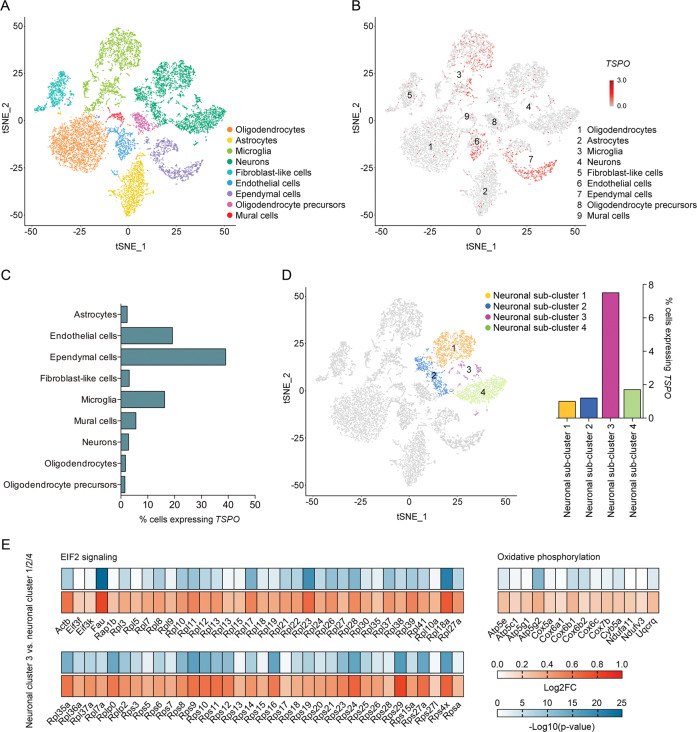
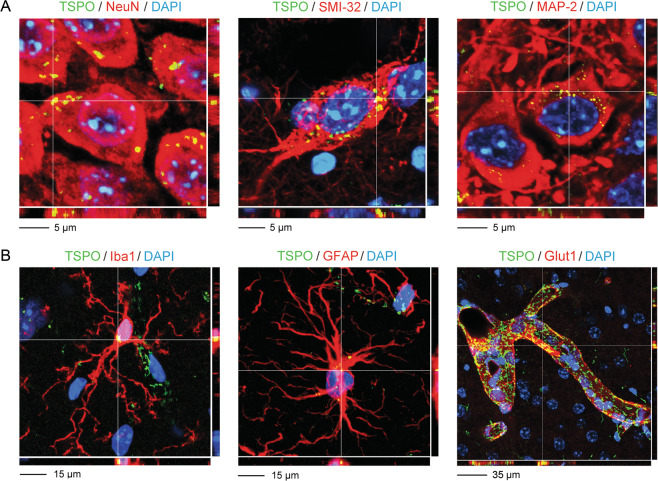
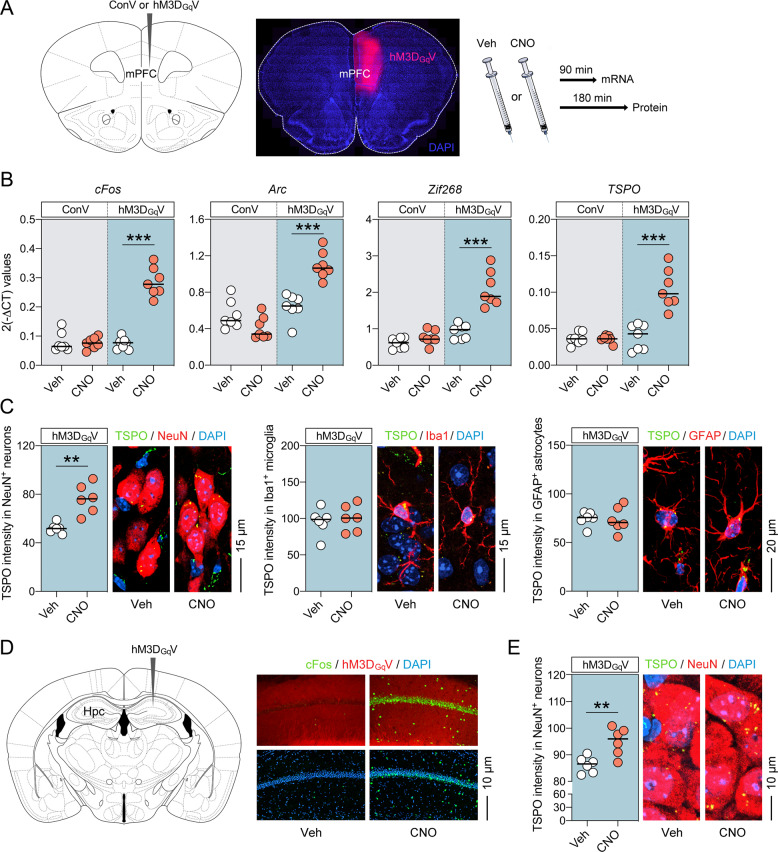
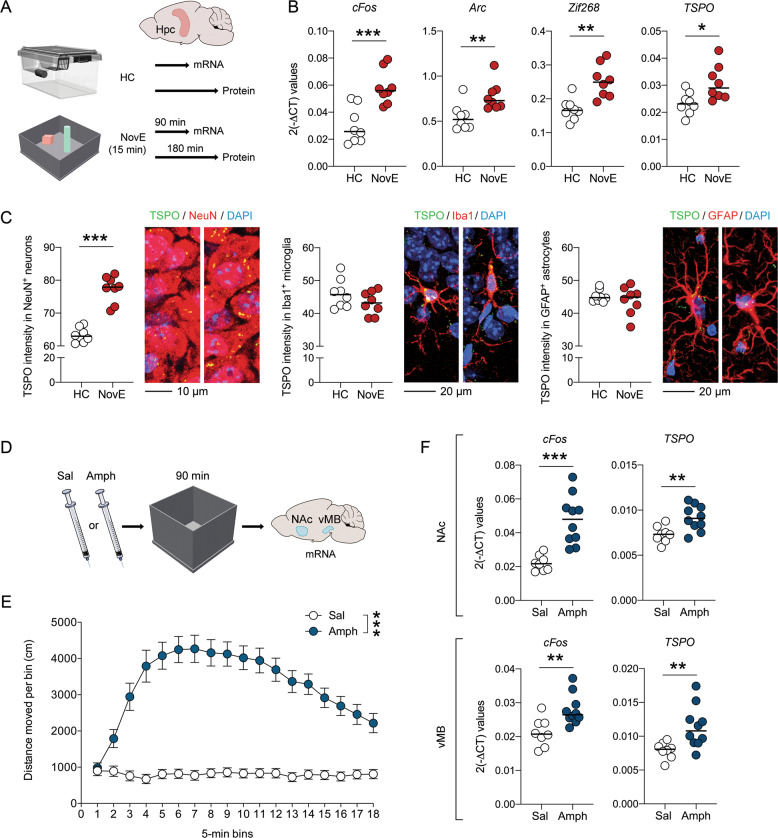
The mitochondrial protein, translocator protein (TSPO), is a widely used biomarker of neuroinflammation, but its non-selective cellular expression pattern implies roles beyond inflammatory processes. In the present study, we investigated whether neuronal activity modifies TSPO levels in the adult central nervous system. First, we used single-cell RNA sequencing to generate a cellular landscape of basal TSPO gene expression in the hippocampus of adult (12 weeks old) C57BL6/N mice, followed by confocal laser scanning microscopy to verify TSPO protein in neuronal and non-neuronal cell populations. We then quantified TSPO mRNA and protein levels after stimulating neuronal activity with distinct stimuli, including designer receptors exclusively activated by designer drugs (DREADDs), exposure to a novel environment and acute treatment with the psychostimulant drug, amphetamine. Single-cell RNA sequencing demonstrated a non-selective and multi-cellular gene expression pattern of TSPO at basal conditions in the adult mouse hippocampus. Confocal laser scanning microscopy confirmed that TSPO protein is present in neuronal and non-neuronal (astrocytes, microglia, vascular endothelial cells) cells of cortical (medial prefrontal cortex) and subcortical (hippocampus) brain regions. Stimulating neuronal activity through chemogenetic (DREADDs), physiological (novel environment exposure) or psychopharmacological (amphetamine treatment) approaches led to consistent increases in TSPO gene and protein levels in neurons, but not in microglia or astrocytes. Taken together, our findings show that neuronal activity has the potential to modify TSPO levels in the adult central nervous system. These findings challenge the general assumption that altered TSPO expression or binding unequivocally mirrors ongoing neuroinflammation and emphasize the need to consider non-inflammatory interpretations in some physiological or pathological contexts.
Overview
The claims and statistics of this paper haven’t been checked yet.
Run the check — free, no account needed. It reads the open-access text and checks the sources it cites.
Integrity signals
Registry
Cites
Statistics
Figures
Verification
Claims the paper makes
The claims and statistics of this paper haven’t been checked yet.
Run the check — free, no account needed. It reads the open-access text and checks the sources it cites.
Claims other papers make about this one
Each is checked against this paper’s own text: does it say what the citing paper says it does?
The cited source says what the claim attributes to it.
In the citing paper
“Given that more recent evidence confirms TSPO expression in neurons [44]”
From Pharmacological modulation of TSPO in microglia/macrophages and neurons in a chronic neurodegenerative model of prion disease (2023) · cites this paper as [44]
Self-check
Percentages, sums and reported differences re-computed from the paper’s own numbers.
The self-check needs the paper’s full text.
Citations
Cites
Analysis of Relative Gene Expression Data Using Real-Time Quantitative PCR and the 2−ΔΔCT Method
Livak, K. J., & Schmittgen, T. D. (2001) · Methods · doi:10.1006/meth.2001.1262 · Cited by 180,860
Comprehensive Integration of Single-Cell Data
Stuart, T., Butler, A., Hoffman, P., Hafemeister, C., Papalexi, E., Mauck, W. M., Hao, Y., Stoeckius, M., Smibert, P., & Satija, R. (2019) · Cell · doi:10.1016/j.cell.2019.05.031 · Cited by 15,453
Gene Expression Omnibus: NCBI gene expression and hybridization array data repository
Edgar, R. (2002) · Nucleic Acids Research · doi:10.1093/nar/30.1.207 · Cited by 13,288
Integrating single-cell transcriptomic data across different conditions, technologies, and species
Butler, A., Hoffman, P., Smibert, P., Papalexi, E., & Satija, R. (2018) · Nature Biotechnology · doi:10.1038/nbt.4096 · Cited by 13,174
Zhang, Y., Chen, K., Sloan, S. A., Bennett, M. L., Scholze, A. R., O'Keeffe, S., Phatnani, H. P., Guarnieri, P., Caneda, C., Ruderisch, N., et al. (2014) · The Journal of Neuroscience · doi:10.1523/jneurosci.1860-14.2014 · Cited by 4,875
Armbruster, B. N., Li, X., Pausch, M. H., Herlitze, S., & Roth, B. L. (2007) · Proceedings of the National Academy of Sciences · doi:10.1073/pnas.0700293104 · Cited by 2,046
Roth, B. L. (2016) · Neuron · doi:10.1016/j.neuron.2016.01.040 · Cited by 1,742
PanglaoDB: a web server for exploration of mouse and human single-cell RNA sequencing data
Franzén, O., Gan, L.-M., & Björkegren, J. L. M. (2019) · Database · doi:10.1093/database/baz046 · Cited by 1,551 · cited 1×
“Cell-type assignments were predicted by matching representative expressed features to published cell markers data [21].”
BackgroundMicroglia in physiology and disease
Wolf, S. A., Boddeke, H. W. G. M., & Kettenmann, H. (2017) · Annual Review of Physiology · doi:10.1146/annurev-physiol-022516-034406 · Cited by 1,426
Brain on stress: how the social environment gets under the skin
McEwen, B. S. (2012) · Proceedings of the National Academy of Sciences · doi:10.1073/pnas.1121254109 · Cited by 1,200
Chemogenetics revealed: DREADD occupancy and activation via converted clozapine
Gomez, J. L., Bonaventura, J., Lesniak, W., Mathews, W. B., Sysa-Shah, P., Rodriguez, L. A., Ellis, R. J., Richie, C. T., Harvey, B. K., Dannals, R. F., et al. (2017) · Science · doi:10.1126/science.aan2475 · Cited by 980
Faraone, S. V. (2018) · Neuroscience & Biobehavioral Reviews · doi:10.1016/j.neubiorev.2018.02.001 · Cited by 631
Immunoneuropsychiatry — novel perspectives on brain disorders
Pape, K., Tamouza, R., Leboyer, M., & Zipp, F. (2019) · Nature Reviews Neurology · doi:10.1038/s41582-019-0174-4 · Cited by 461
Cosenza‐Nashat, M., Zhao, M. ‐., Suh, H. ‐., Morgan, J., Natividad, R., Morgello, S., & Lee, S. C. (2009) · Neuropathology and Applied Neurobiology · doi:10.1111/j.1365-2990.2008.01006.x · Cited by 459
Nuclear RNA-seq of single neurons reveals molecular signatures of activation
Lacar, B., Linker, S. B., Jaeger, B. N., Krishnaswami, S. R., Barron, J. J., Kelder, M. J. E., Parylak, S. L., Paquola, A. C. M., Venepally, P., Novotny, M., et al. (2016) · Nature Communications · doi:10.1038/ncomms11022 · Cited by 405
Ependymal cells: biology and pathology
Bigio, M. R. D. (2009) · Acta Neuropathologica · doi:10.1007/s00401-009-0624-y · Cited by 401
Manvich, D. F., Webster, K. A., Foster, S. L., Farrell, M. S., Ritchie, J., Porter, J. H., & Weinshenker, D. (2018) · Scientific Reports · doi:10.1038/s41598-018-22116-z · Cited by 367
Imaging robust microglial activation after lipopolysaccharide administration in humans with PET
Sandiego, C. M., Gallezot, J.-D., Pittman, B., Nabulsi, N., Lim, K., Lin, S.-F., Matuskey, D., Lee, J.-Y., O’Connor, K. C., Huang, Y., et al. (2015) · Proceedings of the National Academy of Sciences · doi:10.1073/pnas.1511003112 · Cited by 356
Microglial Dynamics and Role in the Healthy and Diseased Brain: A Paradigm of Functional Plasticity
Gomez-Nicola, D., & Perry, V. H. (2015) · The Neuroscientist · doi:10.1177/1073858414530512 · Cited by 340
Bioenergetic regulation of microglia
Ghosh, S., Castillo, E., Frias, E. S., & Swanson, R. A. (2017) · Glia · doi:10.1002/glia.23271 · Cited by 298
Brain microglia in psychiatric disorders
Mondelli, V., Vernon, A. C., Turkheimer, F., Dazzan, P., & Pariante, C. M. (2017) · The Lancet Psychiatry · doi:10.1016/s2215-0366(17)30101-3 · Cited by 271
Positron emission tomography and functional characterization of a complete PBR/TSPO knockout
Banati, R. B., Middleton, R. J., Chan, R., Hatty, C. R., Wai-Ying Kam, W., Quin, C., Graeber, M. B., Parmar, A., Zahra, D., Callaghan, P., et al. (2014) · Nature Communications · doi:10.1038/ncomms6452 · Cited by 241
Karlstetter, M., Nothdurfter, C., Aslanidis, A., Moeller, K., Horn, F., Scholz, R., Neumann, H., Weber, B. H. F., Rupprecht, R., & Langmann, T. (2014) · Journal of Neuroinflammation · doi:10.1186/1742-2094-11-3 · Cited by 224 · cited 1×
“In some pathological conditions, increased TSPO expression may primarily re fl ect ongoing in fl ammatory processes [58 – 60], whereas in others it may signify anomalies in cellular metabolism and energy production [17], oxidative stress [61], and/or neuronal activity (present fi ndings).”
Narayanaswami, V., Dahl, K., Bernard‐Gauthier, V., Josephson, L., Cumming, P. D., & Vasdev, N. (2018) · Molecular Imaging · doi:10.1177/1536012118792317 · Cited by 224 · cited 1×
“changes in inflammatory states in the brain [4, 62, 63].”
BackgroundHannestad, J. O., Gallezot, J., Schafbauer, T., Lim, K., Kloczynski, T., Morris, E. D., Carson, R. E., Ding, Y., & Cosgrove, K. (2012) · NeuroImage · doi:10.1016/j.neuroimage.2012.06.055 · Cited by 218
Neuroinflammation in schizophrenia: meta-analysis of in vivo microglial imaging studies
Marques, T. R., Ashok, A. H., Pillinger, T., Veronese, M., Turkheimer, F. E., Dazzan, P., Sommer, I. E. C., & Howes, O. D. (2019) · Psychological Medicine · doi:10.1017/s0033291718003057 · Cited by 213
PET imaging of microglia by targeting macrophage colony-stimulating factor 1 receptor (CSF1R)
Horti, A. G., Naik, R., Foss, C. A., Minn, I., Misheneva, V., Du, Y., Wang, Y., Mathews, W. B., Wu, Y., Hall, A., et al. (2019) · Proceedings of the National Academy of Sciences · doi:10.1073/pnas.1812155116 · Cited by 204
Translational evaluation of translocator protein as a marker of neuroinflammation in schizophrenia
Notter, T., Coughlin, J. M., Gschwind, T., Weber‐Stadlbauer, U., Wang, Y., Kassiou, M., Vernon, A. C., Benke, D., Pomper, M. G., Sawa, A., et al. (2017) · Molecular Psychiatry · doi:10.1038/mp.2016.248 · Cited by 200
Self-citationOwen, D. R., Narayan, N., Wells, L., Healy, L., Smyth, E., Rabiner, E. A., Galloway, D., Williams, J. B., Lehr, J., Mandhair, H., et al. (2017) · Journal of Cerebral Blood Flow & Metabolism · doi:10.1177/0271678x17710182 · Cited by 194
Imaging Microglial Activation with TSPO PET: Lighting Up Neurologic Diseases?
Vivash, L. E., & O'Brien, T. J. (2015) · Journal of Nuclear Medicine · doi:10.2967/jnumed.114.141713 · Cited by 192
Peripheral type benzodiazepine binding sites are a sensitive indirect index of neuronal damage
Bénavidès, J., Fage, D., Carter, C. J., & Scatton, B. (1987) · Brain Research · doi:10.1016/0006-8993(87)91287-x · Cited by 183
TSPO in diverse CNS pathologies and psychiatric disease: a critical review and a way forward
Guilarte, T. R. (2019) · Pharmacology & Therapeutics · doi:10.1016/j.pharmthera.2018.09.003 · Cited by 173
Weber-Stadlbauer, U., Richetto, J., Labouesse, M. A., Bohacek, J., Mansuy, I. M., & Meyer, U. (2017) · Molecular Psychiatry · doi:10.1038/mp.2016.41 · Cited by 170
Self-citationTherapeutic Implications of Brain–Immune Interactions: Treatment in Translation
Miller, A. H., Haroon, E., & Felger, J. C. (2017) · Neuropsychopharmacology · doi:10.1038/npp.2016.167 · Cited by 152
Reconceptualization of translocator protein as a biomarker of neuroinflammation in psychiatry
Notter, T., Coughlin, J. M., Sawa, A., & Meyer, U. (2017) · Molecular Psychiatry · doi:10.1038/mp.2017.232 · Cited by 151 · cited 10×
“Positron emission tomography (PET) using radiolabeled ligands selective for the 18-kDa translocator protein (TSPO) continues to be the most widely used technique to assess putative neuroin fl ammatory processes in-vivo [4 – 6].”
BackgroundMethodResultInfluentialSelf-citationRichetto, J., Massart, R., Weber-Stadlbauer, U., Szyf, M., Riva, M. A., & Meyer, U. (2017) · Biological Psychiatry · doi:10.1016/j.biopsych.2016.08.010 · Cited by 148
Self-citationA Gαs DREADD Mouse for Selective Modulation of cAMP Production in Striatopallidal Neurons
Farrell, M. S., Pei, Y., Wan, Y., Yadav, P. N., Daigle, T. L., Urban, D. J., Lee, H.-M., Sciaky, N., Simmons, A., Nonneman, R. J., et al. (2012) · Neuropsychopharmacology · doi:10.1038/npp.2012.251 · Cited by 140
Shen, Y., Kapfhamer, D., Minnella, A. M., Kim, J.-E., Won, S. J., Chen, Y., Huang, Y., Low, L. H., Massa, S. M., & Swanson, R. A. (2017) · Nature Communications · doi:10.1038/s41467-017-00707-0 · Cited by 133
Plavén‐Sigray, P., Matheson, G. J., Collste, K., Ashok, A. H., Coughlin, J. M., Howes, O. D., Mizrahi, R., Pomper, M. G., Rusjan, P., Veronese, M., et al. (2018) · Biological Psychiatry · doi:10.1016/j.biopsych.2018.02.1171 · Cited by 132
Purves-Tyson, T. D., Weber‐Stadlbauer, U., Richetto, J., Rothmond, D. A., Labouesse, M. A., Polesel, M., Robinson, K., Weickert, C. S., & Meyer, U. (2019) · Molecular Psychiatry · doi:10.1038/s41380-019-0434-0 · Cited by 127 · cited 3×
“RNA extraction and quantitative RT-PCR analyses were performed according to previously established protocols [24, 25].”
MethodInfluentialSelf-citationGui, Y., Marks, J. D., Das, S., Hyman, B. T., & Serrano‐Pozo, A. (2020) · Brain Pathology · doi:10.1111/bpa.12763 · Cited by 126
Betlazar, C., Harrison-Brown, M., Middleton, R., Banati, R., & Liu, G.-J. (2018) · International Journal of Molecular Sciences · doi:10.3390/ijms19092707 · Cited by 124 · cited 3×
“As expected [12, 14, 15], basal TSPO mRNA expression was most abundant in ependymal cells, vascular endothelial cells and microglia (Fig.”
BackgroundResultEffects of age, BMI and sex on the glial cell marker TSPO — a multicentre [11C]PBR28 HRRT PET study
HRRT [11C ]PBR28 study group, Tuisku, J., Plavén‐Sigray, P., Gaiser, E., Airas, L. M., Al‐Abdulrasul, H., Brück, A., Carson, R. E., Chen, M.-K., Cosgrove, K., et al. (2019) · European Journal of Nuclear Medicine and Molecular Imaging · doi:10.1007/s00259-019-04403-7 · Cited by 120
VDAC1 and the TSPO: Expression, Interactions, and Associated Functions in Health and Disease States
Shoshan‐Barmatz, V., Pittala, S., & Mizrachi, D. (2019) · International Journal of Molecular Sciences · doi:10.3390/ijms20133348 · Cited by 112 · cited 1×
“This nonselective cellular expression pattern is not unprecedented, given that TSPO is a mitochondrial protein with various plausible functions pertaining to a number of CNS cell types [16, 17, 32, 41].”
BackgroundMouse models of maternal immune activation: Mind your caging system!
Mueller, F. S., Polesel, M., Richetto, J., Meyer, U., & Weber‐Stadlbauer, U. (2018) · Brain Behavior and Immunity · doi:10.1016/j.bbi.2018.07.014 · Cited by 111
Self-citationSifting through the surfeit of neuroinflammation tracers
Cumming, P., Burgher, B., Patkar, O., Breakspear, M., Vasdev, N., Thomas, P., Liu, G.-J., & Banati, R. (2018) · Journal of Cerebral Blood Flow & Metabolism · doi:10.1177/0271678x17748786 · Cited by 111
Neuronal Regulation of eIF2α Function in Health and Neurological Disorders
Moon, S. L., Sonenberg, N., & Parker, R. (2018) · Trends in Molecular Medicine · doi:10.1016/j.molmed.2018.04.001 · Cited by 76
Genetic Isolation of Hypothalamic Neurons that Regulate Context-Specific Male Social Behavior
Soden, M. E., Miller, S. M., Burgeno, L. M., Phillips, P. E. M., Hnasko, T. S., & Zweifel, L. S. (2016) · Cell Reports · doi:10.1016/j.celrep.2016.05.067 · Cited by 76
Functional gains in energy and cell metabolism afterTSPOgene insertion
Liu, G.-J., Middleton, R. J., Kam, W. W.-Y., Chin, D. Y., Hatty, C. R., Chan, R. H. Y., & Banati, R. B. (2017) · Cell Cycle · doi:10.1080/15384101.2017.1281477 · Cited by 75
Lost in translocation: the functions of the 18-kD translocator protein
Gut, P., Zweckstetter, M., & Banati, R. B. (2015) · Trends in Endocrinology and Metabolism · doi:10.1016/j.tem.2015.04.001 · Cited by 72
Richetto, J., Polesel, M., & Weber‐Stadlbauer, U. (2018) · Pharmacology Biochemistry and Behavior · doi:10.1016/j.pbb.2018.05.011 · Cited by 60
Self-citationNotter, T., Panzanelli, P., Pfister, S., Mircsof, D., & Fritschy, J. (2013) · European Journal of Neuroscience · doi:10.1111/ejn.12447 · Cited by 59
Self-citationTranslocator protein (TSPO 18kDa) is expressed by neural stem and neuronal precursor cells
Varga, B., Markó, K., Hádinger, N., Jelitai, M., Demeter, K., Tihanyi, K., Vas, Á., & Madarász, E. (2009) · Neuroscience Letters · doi:10.1016/j.neulet.2009.06.051 · Cited by 52
In Vivo Imaging of Translocator Protein in Long-term Cannabis Users
Silva, T. M. S., Hafizi, S., Watts, J. J., Weickert, C. S., Meyer, J. H., Houle, S., Rusjan, P., & Mizrahi, R. (2019) · JAMA Psychiatry · doi:10.1001/jamapsychiatry.2019.2516 · Cited by 51
Microglial activation in schizophrenia: Is translocator 18 kDa protein (TSPO) the right marker?
Sneeboer, M. A. M., van der Doef, T. F., Litjens, M., Psy, N. B. B., Melief, J., Hol, E. M., Kahn, R. S., & de Witte, L. D. (2019) · Schizophrenia Research · doi:10.1016/j.schres.2019.10.045 · Cited by 47
Imaging Translocator Protein as a Biomarker of Neuroinflammation in Dementia
Kreisl, W. C., Henter, I. D., & Innis, R. B. (2017) · Advances in pharmacology · doi:10.1016/bs.apha.2017.08.004 · Cited by 41
Targeting mitochondrial energy metabolism with TSPO ligands
Gut, P. (2015) · Biochemical Society Transactions · doi:10.1042/bst20150019 · Cited by 33
Translocator protein in late stage Alzheimer’s disease and Dementia with Lewy bodies brains
Xu, J., Sun, J., Perrin, R. J., Mach, R. H., Bales, K. R., Morris, J. C., Benzinger, T. L. S., & Holtzman, D. M. (2019) · Annals of Clinical and Translational Neurology · doi:10.1002/acn3.50837 · Cited by 31 · cited 2×
“Finally, it has recently been found that the variable cortical burden of TSPO does not correlate with the burden of activated microglia or reactive astrocytes in the brains of late-stage Alzheimer’s disease patients [54].”
BackgroundSilva, T. M. S., Hafizi, S., Rusjan, P., Houle, S., Wilson, A. A., Prce, I., Sailasuta, N., & Mizrahi, R. (2019) · Journal of Psychiatry and Neuroscience · doi:10.1503/jpn.170201 · Cited by 27
Tong, J., Williams, B., Rusjan, P., Mizrahi, R., Lacapère, J.-J., McCluskey, T., Furukawa, Y., Guttman, M., Ang, L.-C., Boileau, I., et al. (2019) · Journal of Cerebral Blood Flow & Metabolism · doi:10.1177/0271678x19858003 · Cited by 19
Murín, R., Verleysdonk, S., Rapp, M., & Hamprecht, B. (2006) · Journal of Neurochemistry · doi:10.1111/j.1471-4159.2006.03819.x · Cited by 13
Fukudome, D., Hayes, L. N., Faust, T. E., Foss, C. A., Kondo, M., Lee, B. J., Saito, A., Kano, S., Coughlin, J. M., Kamiya, A., et al. (2018) · Schizophrenia Research · doi:10.1016/j.schres.2018.01.015 · Cited by 10
Giovanoli, S., Werge, T. M., Mortensen, P. B., Didriksen, M., & Meyer, U. (2018) · Neuropsychopharmacology · doi:10.1038/s41386-018-0189-3 · Cited by 9
Self-citation
Cited by
Sorted by citations
The Semantics of Microglia Activation: Neuroinflammation, Homeostasis, and Stress
Woodburn, S. C., Bollinger, J. L., & Wohleb, E. S. (2021) · Journal of Neuroinflammation · doi:10.1186/s12974-021-02309-6 · Cited by 783
Inflammation-Related Functional and Structural Dysconnectivity as a Pathway to Psychopathology
Goldsmith, D. R., Bekhbat, M., Mehta, N. D., & Felger, J. C. (2022) · Biological Psychiatry · doi:10.1016/j.biopsych.2022.11.003 · Cited by 229
“competition from activated peripheral immune cells (37, 38), rather than a reduced inflammatory”
Comer, A. L., Carrier, M., Tremblay, M., & Cruz‐Martín, A. (2020) · Frontiers in Cellular Neuroscience · doi:10.3389/fncel.2020.00274 · Cited by 212
“day 11-15) (prenatal exposure) cerebellum myelin density, cerebellum iron levels, RNAseq of cerebellum increased inflammation signaling; increased iron inclusions; myelin sheath damage Klocke et al., 2018 PM (2.5 um) mice adults (exposure in utero) western blot, ELISA and IHC in temporal cortex deficits in spatial mem…”
BackgroundInfluentialPET Imaging of Neuroinflammation in Alzheimer’s Disease
Zhou, R., Ji, B., Kong, Y., Qin, L., Ren, W., Guan, Y., & Ni, R. (2021) · Frontiers in Immunology · doi:10.3389/fimmu.2021.739130 · Cited by 157
Neuroinflammation in schizophrenia: the role of nuclear factor kappa B
Murphy, C. E., Walker, A. K., & Weickert, C. S. (2021) · Translational Psychiatry · doi:10.1038/s41398-021-01607-0 · Cited by 128
Metadata
- Authors
- Notter, T., Schalbetter, S. M., Clifton, N. E., Mattei, D., Richetto, J., Thomas, K., Meyer, U., & Hall, J.
- Affiliations
- Cardiff University (GB)
- University of Zurich (CH)
- Corresponding author
- Notter, Tina
- ORCID
- Venue
- Molecular Psychiatry
- Published
- 2020-05-12
- Volume
- 26
- Issue
- 6
- Pages
- 2025-2037
- ISSN
- 1359-4184 (ISSN-L)
- 1476-5578
- PMC
- PMC8440208
- OpenAlex
- W3016299128
- Cited by
- 118
- References
- 65
- Citations by year
- 2026: 9 · 2025: 13 · 2024: 24 · 2023: 20 · 2022: 20 · 2021: 24 · 2020: 8
- FWCI
- 6.97
- Type
- journal article
- Language
- en
- Open access
- hybrid
- doi.org
- Locations
- Molecular Psychiatry (publishedVersion, cc-by)
- Europe PMC (PubMed Central) (publishedVersion, other-oa)
- PubMed Central (publishedVersion, cc-by)
- PubMed (publishedVersion)
- ORCA Online Research @Cardiff (Cardiff University) (acceptedVersion)
- Zurich Open Repository and Archive (University of Zurich) (acceptedVersion, cc-by)
- Zurich Open Repository and Archive (University of Zurich) (submittedVersion, cc-by)
- Zurich Open Repository and Archive (University of Zurich)
- Funders
- National Science Foundation
- Schweizerischer Nationalfonds zur Förderung der Wissenschaftlichen Forschung (PZ00P3_18009/1, 188524, 174868, 310030)
- Universität Zürich
- Medical Research Council (MR/L010305/1)
- Topics
- Life Sciences › Neuroscience › Neurology › Neuroinflammation and Neurodegeneration Mechanisms
- Life Sciences › Pharmacology, Toxicology and Pharmaceutics › Pharmacology › Pharmacological Receptor Mechanisms and Effects
- Life Sciences › Neuroscience › Cellular and Molecular Neuroscience › Neuroscience and Neuropharmacology Research
- Keywords
- translocator protein (TSPO), neuronal activity, neuroinflammation biomarkers, hippocampus, medial prefrontal cortex, amphetamine, astrocytes, microglia, vascular endothelial cells, single-cell RNA sequencing
- MeSH terms
- Animals, Neurons, Microglia, Receptors, GABA, Endothelial Cells, Positron-Emission Tomography, Mice
About these checks
Registry, retraction, Cites and statistics results are computed, not judged, with one exception: a printed reference that no index lists is read once by a model before it counts as a citation error. Claims are extracted by a model and kept only when their quote appears verbatim in the text; each cited source is then checked, with a model’s help, for whether it says what the claim relies on. Those verdicts can be wrong — read the claim’s quote and the cited source before relying on one.
Statistics and arithmetic are recomputed, not judged.
Confidence bands are shown only for fields calibrated on our annotated test set. None is calibrated yet, so no band is shown.
What counts as a claim ›How we measure confidence ›How we check this ›
Are you an author, or do you see a problem with this page? Request a review
