

The blood-brain barrier in aging and neurodegeneration
Open accessThe DOI matches its Crossref record; 213 of the 213 references it cites were found in a registry or an index.
Abstract
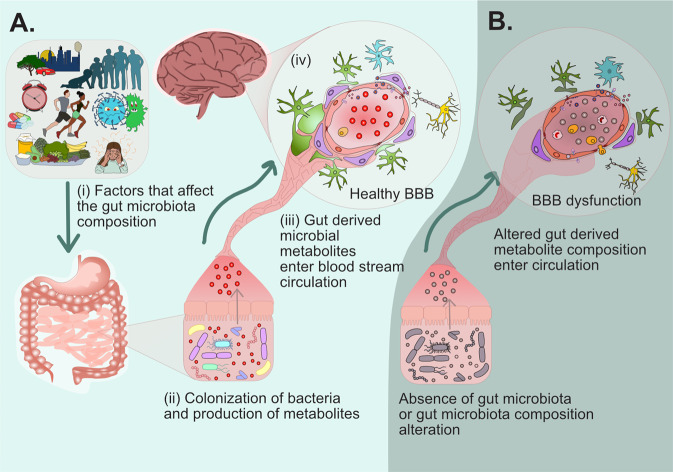
The blood-brain barrier (BBB) is vital for maintaining brain homeostasis by enabling an exquisite control of exchange of compounds between the blood and the brain parenchyma. Moreover, the BBB prevents unwanted toxins and pathogens from entering the brain. This barrier, however, breaks down with age and further disruption is a hallmark of many age-related disorders. Several drugs have been explored, thus far, to protect or restore BBB function. With the recent connection between the BBB and gut microbiota, microbial-derived metabolites have been explored for their capabilities to protect and restore BBB physiology. This review, will focus on the vital components that make up the BBB, dissect levels of disruption of the barrier, and discuss current drugs and therapeutics that maintain barrier integrity and the recent discoveries of effects microbial-derived metabolites have on BBB physiology.
Overview
The claims and statistics of this paper haven’t been checked yet.
Free: it reads the open-access text and checks the first 5 claims that cite a source we can check. Create a free account to check every claim.
Integrity signals
Registry
Cites
Statistics
Figures
Verification
Claims the paper makes
The claims and statistics of this paper haven’t been checked yet.
Free: it reads the open-access text and checks the first 5 claims that cite a source we can check. Create a free account to check every claim.
Claims other papers make about this one
Each is checked against this paper’s own text: does it say what the citing paper says it does?
The source backs part of the claim, not all of it — or backs it for a different population, condition or comparison.
In the citing paper
“Moreover, numerous studies have shown an increased BBB permeability in aged mice, which facilitates the infiltration of peripheral immune cells into the CNS.117,118”
From Role of neuroinflammation in neurodegeneration development (2023) · cites this paper as [117]
Experimental — accuracy not yet measuredThe cited source says what the claim attributes to it.
In the citing paper
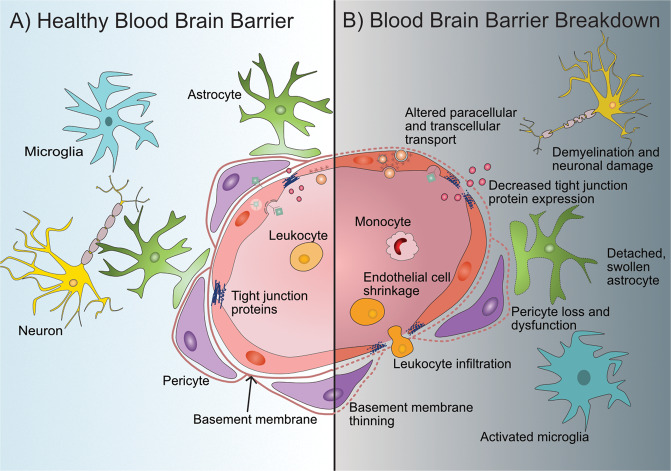
“These can include increased paracellular permeability by loss of TJs, degradation of ECs and pericytes, modification in thickness of the basement membrane, astrocyte degeneration, changes in the expression of transporters/receptors present in the BBB, and so forth [41].”
From Advances in Strategies to Transport Nanoparticles Across the Blood–Brain Barrier for Drug Delivery into the Brain for the Treatment of Alzheimer’s Disease (2026) · cites this paper as [41]
In the citing paper
“BBB disruption is well characterized in other neurodegenerative diseases, including PD, ALS, FTD, and HD.”
From Microbiota–gut–brain axis and its therapeutic applications in neurodegenerative diseases (2024) · cites this paper as [658]
In the citing paper
“Compromised BBB initiates the infiltration of peripheral immune cells and triggers microglial and astrocytic activation, ultimately resulting in synaptic and neuronal loss.”
From Microbiota–gut–brain axis and its therapeutic applications in neurodegenerative diseases (2024) · cites this paper as [658]
In the citing paper
“The structure and function of the BBB also undergo significant alterations with ageing, which contribute to the progression of neurodegenerative diseases and cognitive decline.153”
From Antiageing strategy for neurodegenerative diseases: from mechanisms to clinical advances (2025) · cites this paper as [153]
Self-check
Percentages, sums and reported differences re-computed from the paper’s own numbers.
The self-check needs the paper’s full text.
Citations
Cites
1 retracted
RETRACTED ARTICLE: Pericyte loss influences Alzheimer-like neurodegeneration in mice
Sagare, A. P., Bell, R. D., Zhao, Z., Ma, Q., Winkler, E. A., Ramanathan, A., & Zlokovic, B. V. (2013) · Nature Communications · doi:10.1038/ncomms3932 · Cited by 589 · cited 1×
“Importantly, pericytes play an important role in cerebrovascular malfunction in Alzheimer’s disease (AD) [41].”
BackgroundRetractedRosen, D. R., Siddique, T., Patterson, D., Figlewicz, D. A., Sapp, P., Hentati, A., Donaldson, D., Goto, J., O'Regan, J. P., Deng, H.-X., et al. (1993) · Nature · doi:10.1038/362059a0 · Cited by 7,062 · cited 2×
“Activated protein C downregulates SOD1 in SOD1 mutant mice, reduces blood-spinal cord barrier permeability, and slows disease progression [130].”
BackgroundAstrocyte-endothelial interactions at the blood-brain barrier
Abbott, N. J., Rönnbäck, L., & Hansson, E. (2006) · Nature Reviews Neuroscience · doi:10.1038/nrn1824 · Cited by 5,595 · cited 11×
“Both cell types can also respond to TGF-β through TGF-β receptor.”
BackgroundInfluentialCryan, J. F., O'Riordan, K. J., Cowan, C. S. M., Sandhu, K. V., Bastiaanssen, T. F. S., Boehme, M., Codagnone, M. G., Cussotto, S., Fulling, C., Golubeva, A. V., et al. (2019) · Physiological Reviews · doi:10.1152/physrev.00018.2018 · Cited by 5,286 · cited 3×
“SCFAs have previously been implicated in processes such as gastrointestinal function, blood-pressure regulation, circadian rhythm, and immune function, and more recently explored for the effects on BBB physiology [143].”
BackgroundInfluentialSelf-citationDaneman, R., & Prat, A. (2015) · Cold Spring Harbor Perspectives in Biology · doi:10.1101/cshperspect.a020412 · Cited by 3,437 · cited 3×
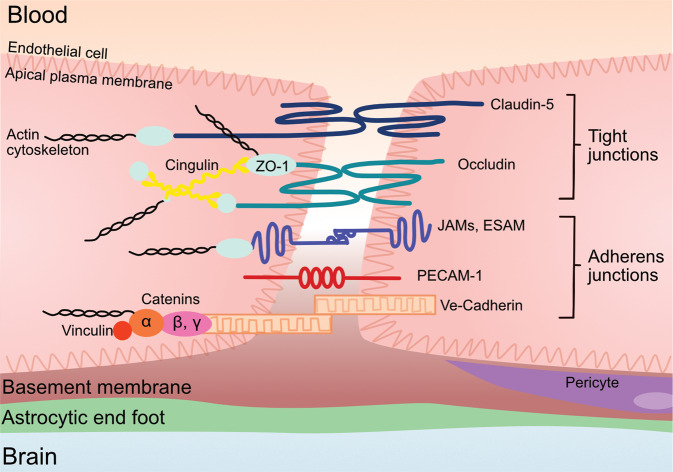
“The basement membrane is composed of both an inner vascular basement membrane, which is secreted by endothelial cells and pericytes and an outer parenchymal basement membrane, which is secreted by astrocytes [1].”
BackgroundThe Blood-Brain Barrier in Health and Chronic Neurodegenerative Disorders
Zlokovic, B. V. (2008) · Neuron · doi:10.1016/j.neuron.2008.01.003 · Cited by 3,280
Neuroinflammation and microglial activation in Alzheimer disease: where do we go from here?
Leng, F., & Edison, P. (2021) · Nature Reviews Neurology · doi:10.1038/s41582-020-00435-y · Cited by 3,179
Blood–brain barrier breakdown in Alzheimer disease and other neurodegenerative disorders
Sweeney, M. D., Sagare, A. P., & Zlokovic, B. V. (2018) · Nature Reviews Neurology · doi:10.1038/nrneurol.2017.188 · Cited by 3,076 · cited 2×
“An increase in BBB permeability is commonly observed via enhanced accumulation of blood-derived proteins in the brains of post-mortem AD patients [101] and supported by the reduction of tight junction proteins [102].”
BackgroundPericytes regulate the blood–brain barrier
Armulik, A., Genové, G., Mäe, M., Nisancioglu, M. H., Wallgard, E., Niaudet, C., He, L., Norlin, J., Lindblom, P., Strittmatter, K., et al. (2010) · Nature · doi:10.1038/nature09522 · Cited by 2,843 · cited 2×
“The co-cultures are useful as the presence of either astrocytes or pericytes or both cells together with brain endothelial cells improves the BBB characteristics [36, 38, 39, 113, 114].”
BackgroundThe gut microbiota influences blood-brain barrier permeability in mice
Braniste, V., Al-Asmakh, M., Kowal, C., Anuar, F., Abbaspour, A., Tóth, M., Korecka, A., Bakocevic, N., Ng, L. G., Kundu, P., et al. (2014) · Science Translational Medicine · doi:10.1126/scitranslmed.3009759 · Cited by 2,530 · cited 1×
“The relationship between BBB integrity and the gut microbiota is evident in germ free mice models which lack a microbiota and have increased BBB permeability and altered tight junction protein expression effects, which continue from in utero into adulthood [147].”
Background
Research works printed but not linked: 1
- Obermeier B Daneman R Ransohoff RM Development, maintenance and disruption of the blood-brain barrier Nat Med 2013 19 1584 1596 10.1038/nm.3407 24309662 PMC4080800 · DOI · Paper page
Cited by
Items 401–500 of 736
Liu, R., Feng, J., Song, Y., Yin, H., Yang, Z., Zhao, Y., Ma, J., Chen, X., & Gao, H. (2025) · Ecotoxicology and Environmental Safety · doi:10.1016/j.ecoenv.2025.119290 · Cited by 8
Nanomaterials: an overview of current trends and future prospects in neurological disorder treatment
Eshak, D., & Arumugam, M. (2025) · Journal of Translational Medicine · doi:10.1186/s12967-025-06877-6 · Cited by 4
“Requirement for progress of therapeutic approaches which can overcome the BBB and likewise can enhance the drug delivery [13–17].”
Song, C., Wu, P. Y., Huffman, W. J., David‐Bercholz, J., Bedolla, A., Velagapudi, R., Njoroge, A. W., Rodriguiz, R. M., Wetsel, W. C., Rendina, D. N., et al. (2026) · Bioelectronic Medicine · doi:10.1186/s42234-025-00194-5 · Cited by 6
“…the neuroim-mune and vascular interface is further impaired in DSD as a synergistic effect from surgical trauma on a vulnerable brain, which further advances barrier pathology, neuroinflammation and microglial activation with aging and neurodegeneration (Knox et al. 2022; Wang et al. 2020).”
Kumar, S., Malviya, R., Sridhar, S. B., Wadhwa, T., & Shareef, J. (2026) · Journal of Neuroscience Methods · doi:10.1016/j.jneumeth.2026.110695 · Cited by 6
Pinto, H. N., Kok, N., Hauger, P. C., Diepen, M. K.-V., de Kok, M., Paauw, N. J., van der Pol, S. M. A., Nugteren‐Boogaard, J. P., Hordijk, P. L., Beekhuis-Hoekstra, S. D., et al. (2026) · Small Methods · doi:10.1002/smtd.202502114 · Cited by 9
“…immune cell trafficking, or improving drug delivery to the brain, BBB-targeted therapies may help mitigate early pathological changes such as increased permeability, impaired amyloid-β clearance, and neuroinflammation, therefore preventing or slowing neuronal damage and cognitive decline [ 11 ].”
The Landscape of Ferritin Nanocages for Neurodegenerative Diseases Treatment
Wen, S., Gao, J., Sun, J., Li, X., Xu, X.-L., & Chen, J. (2026) · International Journal of Nanomedicine · doi:10.2147/ijn.s571993 · Cited by 4
“45,56”
In vitro models of microbiota-gut-brain axis communication at the blood-brain-barrier interface
Davies, M. R., Cross, C., Aburto, M. R., Cryan, J. F., & Wardill, H. R. (2026) · Journal of Cerebral Blood Flow & Metabolism · doi:10.1177/0271678x261419964 · Cited by 7
“19,21 It is becoming evident that even relatively subtle increases in permeability (i.e. leakage) can have quite detrimental impacts.”
Self-citationKhartabil, Z., Kala, D., Prysiazhniuk, Y., & Otáhal, J. (2026) · Frontiers in Physiology · doi:10.3389/fphys.2026.1728065 · Cited by 5
“Common mechanisms include inflammation, oxidative stress, and BBB breakdown, which are more pronounced than in healthy aging (Knox et al., 2022; Chan et al., 2021).”
BBB-Permeable PROTACs: Where Do We Stand?
Francisco, S., Apprato, G., Sebastiano, M. R., Ermondi, G., & Caron, G. (2026) · ACS Medicinal Chemistry Letters · doi:10.1021/acsmedchemlett.5c00768 · Cited by 7
Konstantinou, G., & Warsh, J. J. (2026) · Neuroscience & Biobehavioral Reviews · doi:10.1016/j.neubiorev.2026.106658 · Cited by 7
Deng, T., Chen, H.-S., Wang, H.-J., Shi, Y., Long, L., Jin, Y., Yao, H., Si, T., Yu, X., Li, L., et al. (2026) · Molecular Psychiatry · doi:10.1038/s41380-026-03551-1 · Cited by 5
“Moreover, BBB permeability is greatly restricted by tight junctions between brain endothelial cells, which are mainly mediated by a series of tight junction proteins [17].”
The cellular choreography of brain aging: a neuroimmune network perspective
Müller, L., Benedetto, S. D., & Müller, V. (2026) · Frontiers in Aging Neuroscience · doi:10.3389/fnagi.2026.1848642 · Cited by 5
“Conversely, inflammatory mediators produced by activated microglia and astrocytes can influence vascular function, altering endothelial signaling pathways and vascular tone (Knox et al., 2022; Takata et al., 2021).”
InfluentialTrunfio, M., Caballero, G., Gomez‐Moreno, V., Mallal, S. A., Wanjalla, C. N., Jones, A., Beeri, K., Wells, A., LaMere, S. A., Gouaux, B., et al. (2026) · PLoS Pathogens · doi:10.1371/journal.ppat.1014351 · Cited by 5
Eynde, J. J. V. (2023) · Drugs and Drug Candidates · doi:10.3390/ddc2040043 · Cited by 4
Aging and neurodegeneration: when systemic dysregulations affect brain macrophage heterogeneity
Joly, P., Labsy, R., & Silvin, A. (2025) · The Journal of Immunology · doi:10.1093/jimmun/vkae034 · Cited by 5
Biswal, B., Satapathy, B. S., Maharana, L., & Pattnaik, S. (2025) · Journal of Dispersion Science and Technology · doi:10.1080/01932691.2025.2488455 · Cited by 4
“[28] Therefore, it is essential to find innovative ways to cross the BBB without impairing its natural structure and function.”
Jurek, B., Denk, L., Schäfer, N., Salehi, M. S., Pandamooz, S., & Haerteis, S. (2022) · Frontiers in Cellular Neuroscience · doi:10.3389/fncel.2022.1000538 · Cited by 4
“, as it is the case in the breakdown of the blood-brain barrier (Knox et al., 2022).”
BackgroundDoes DNA methylation in the fetal brain leave an epigenetic memory in the blood?
Strawn, M., Safranski, T. J., & Behura, S. K. (2023) · Gene · doi:10.1016/j.gene.2023.147788 · Cited by 5
Potentiality of Coffee (Coffea robusta) and its Bioactive Compounds in Memory Function: A Review
Ahmad, N., Lesa, K. N., Fakhrudin, N., & Ikawati, Z. (2023) · Tropical Journal of Natural Product Research · doi:10.26538/tjnpr/v7i11.1 · Cited by 5
Dynamic changes in key factors of the blood-brain barrier in early diabetic mice
Xu, Z.-Y., Fu, S.-X., Zhao, H.-C., Wang, Y.-M., Liu, Y., Ma, J., Yu, Y. P., Zhang, J.-L., Han, Z.-P., & Ming-xue, Z. (2024) · Journal of Neuropathology & Experimental Neurology · doi:10.1093/jnen/nlae056 · Cited by 5
Sabetta, Z., Krishna, G., Curry, T., Lopez, M., Adelson, P. D., & Thomas, T. C. (2024) · Frontiers in Physiology · doi:10.3389/fphys.2024.1469073 · Cited by 5
“These TBI-induced changes accelerate brain aging, resulting in cerebrovascular impairment, an early indicator of cognitive decline and a hallmark of age-related neurodegenerative diseases (Senatorov et al., 2019; Barisano et al., 2022; Knox et al., 2022; Sulimai et al., 2023).”
BackgroundJanus, A., Dumas, D., Douce, J. L., Marie, S., Pasculli, G., Bambury, P., Lemarchant, S., Kremer, P. H. C., & Godfrin, Y. (2024) · Neurology and Therapy · doi:10.1007/s40120-024-00691-w · Cited by 6
Latham, A. S., Geer, C. E., Ackart, D. F., Weninger, K. N., Gross, C. C., Podell, B. K., Basaraba, R. J., & Moreno, J. A. (2024) · PLoS ONE · doi:10.1371/journal.pone.0307577 · Cited by 5
Recent advances in nanotherapy-based treatment of epilepsy
Chen, P., Wang, S., Zhang, H., & Li, J. (2025) · Colloids and Surfaces B Biointerfaces · doi:10.1016/j.colsurfb.2025.114499 · Cited by 4
Silva-Llanes, I., Madruga, E. L., Martínez, A., & Lastres‐Becker, I. (2025) · Frontiers in Neuroscience · doi:10.3389/fnins.2024.1530809 · Cited by 8
Research progress of cell senescence in Alzheimer's disease: mechanisms and therapy
Cai, J., Yang, L. C., Xu, Y., Wang, L., Zhang, M., Qiao, J., Qian, X., Zhu, H., & Cai, M. (2025) · European Journal of Pharmacology · doi:10.1016/j.ejphar.2025.177697 · Cited by 6
Pinto, J. R. D., Neto, B. F., Munhoz, L., Kerkis, I., & Araldi, R. P. (2025) · Cells · doi:10.3390/cells14130976 · Cited by 4
Parihar, A., Choudhary, N. K., & Khan, R. (2023) · Elsevier eBooks · doi:10.1016/b978-0-323-95539-3.00006-5 · Cited by 4
Investigation of the Binding Interaction of Mfsd2a with NEDD4-2 via Molecular Dynamics Simulations
Yuan, W., Qiu, Z., Li, H., Huang, M., Yuan, J., Niu, S.-L., Chen, Q., Yang, Q., & Ouyang, Q. (2023) · ACS Chemical Neuroscience · doi:10.1021/acschemneuro.3c00791 · Cited by 5
Harmon, J. N., Chandran, P., Chandrasekaran, A., Hyde, J. E., Hernandez, G., Reed, M. J., Bruce, M. F., & Khaing, Z. Z. (2024) · The Journals of Gerontology Series A · doi:10.1093/gerona/glae215 · Cited by 3
The role of secondary genomes in neurodevelopment and co-evolutionary dynamics
Singh, S., Saini, V., & Jha, H. C. (2025) · International review of neurobiology · doi:10.1016/bs.irn.2025.03.008 · Cited by 5
Infections with Chlamydia pneumoniae and SARS-CoV-2 and Alzheimer’s disease pathogenesis
Romanella, A., McCall, M., Corwin, R., Faruq, A. A., Lingo, E. G., Bhambhani, S., Hammond, C. J., & Balin, B. J. (2025) · Frontiers in Aging Neuroscience · doi:10.3389/fnagi.2025.1587782 · Cited by 6
Yang, E., Rahim, M. A., Masieri, S., & Pasinetti, G. M. (2025) · Progress in Neurobiology · doi:10.1016/j.pneurobio.2025.102797 · Cited by 3
Pallapothu, S., Newman‐Norlund, R., Riccardi, N., Pallapothu, R., Kannan, P. R., Bonilha, L., Fridriksson, J., & Rorden, C. (2025) · Frontiers in Aging Neuroscience · doi:10.3389/fnagi.2025.1611847 · Cited by 4
“These include blood–brain barrier dysfunction (Knox et al., 2022), altered cellular composition and gene expression (Wang et al., 2025), and mitochondrial dysfunction (Bartman et al., 2024).”
Zhang, Z., Hu, X., Tao, W., Ma, R., Zheng, Y., Fang, X., Gao, J., & Xu, Z. (2026) · Journal of Affective Disorders · doi:10.1016/j.jad.2026.121166 · Cited by 3
Wozniczka, C. M., & Weaver, D. F. (2026) · NeuroSci · doi:10.3390/neurosci7010013 · Cited by 4
“Ko-https://doi.org/10.3390/neurosci7010013 mura et al. examined how β -amino acids are transported into the brain using bovine brain capillary endothelial cells [12,13,17,18].”
InfluentialJi, D., Sun, Q., Zhang, C., Zang, M., Xiao, W., Liu, J., Fan, X. Y., & Wang, H. (2026) · Brain Research Bulletin · doi:10.1016/j.brainresbull.2026.111746 · Cited by 3
Nanoplastics penetration across the blood–brain barrier
Ianos, A., Zhou, J., Qiao, T., Wei, T., & Qiao, B. (2026) · Physical Chemistry Chemical Physics · doi:10.1039/d5cp04125b · Cited by 4
Some, A., Naskar, N., Thomas, D. M., Jeengar, M. K., & Nassar, A. (2026) · Neurochemical Research · doi:10.1007/s11064-026-04737-3 · Cited by 3
Zhang, Z., Li, H., Yang, J., Guo, Y., Xiao, M., Li, Y., Yang, S., Peng, T., & Sm, Y. (2026) · Brain Behavior and Immunity · doi:10.1016/j.bbi.2026.106564 · Cited by 5
Type-1 interferons associated with microglial-mediated neuroinflammation in Alzheimer’s disease
Shippy, D. C., Sande, M. L., & Ulland, T. K. (2026) · Journal of Neuroinflammation · doi:10.1186/s12974-026-03828-w · Cited by 4
“Aging also contributes to reduced cerebral blood flow and increased blood-brain barrier (BBB) permeability, particularly in memory centers like the hippocampus, making the brain vulnerable to inflammation [63].”
Protein glycoxidation in neuropsychiatric disorders—from basic research to clinical practice
Orlof, W., & Maciejczyk, M. (2026) · Redox Biology · doi:10.1016/j.redox.2026.104190 · Cited by 3
“Potential drugs include protein C (a natural anticoagulant in blood plasma) [383] and cyclophilin A inhibitors (e.g., cyclosporine A) [384,385], which may improve BBB integrity and thus neurological function [386].”
Diabetic cerebral microvascular disorder: from key pathologies to targeted interventions
Zhang, Q., Liu, J., & Ji, X. (2026) · Annals of Medicine · doi:10.1080/07853890.2026.2654248 · Cited by 4
“A distinctive feature of the cerebral microvasculature is its role in maintaining the integrity of the BBB, which preserves brain homeostasis by strictly regulating both the entry of molecules into the brain parenchyma and vascular permeability (Figure 1) [19].”
Jang, Y. E., Kwon, M., Kwon, C. W., Kim, S. G., Hwang, J. S., George, N. P., Paik, S. R., Misra, S., Basith, S., Sheen, S. S., et al. (2026) · Pharmaceutics · doi:10.3390/pharmaceutics18050537 · Cited by 7
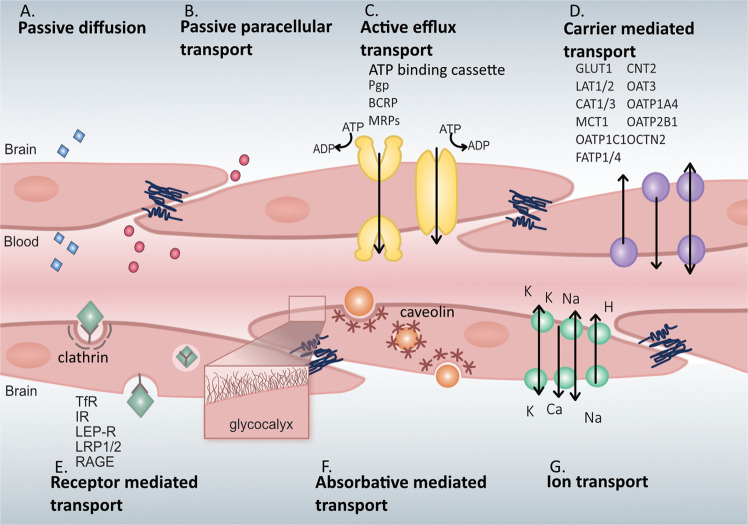
“This neurovascular unit severely limits paracellular diffusion and tightly controls transcellular transport through a repertoire of influx and efflux systems [179,180].”
A Age Related Vascular Senescence: Mystery of Blood-brain Barrier Dysfunction in Neurodegeneration
Behl, T., Jayabalan, K., Ballal, S., Sahoo, S., Chellammal, H. S. J., Gulati, M., Anand, K., Jha, S. K., & Gasmi, A. (2026) · Molecular Neurobiology · doi:10.1007/s12035-026-05984-9 · Cited by 3
Mitochondria and brain aging: From cell-specific dysfunction to intercellular cooperation
Grimm, A., Lang, U. E., & Eckert, A. (2026) · Neuron · doi:10.1016/j.neuron.2026.04.048 · Cited by 6
TGF-β1-induced endothelial transcytosis drives blood-brain barrier leakage during aging
Fang, C., Ma, Y., Wei, P., Yang, S., Yu, M., Liu, J., Suo, S., Zhao, R., Ji, Y., Hussain, B., et al. (2026) · Neuron · doi:10.1016/j.neuron.2026.06.003 · Cited by 6
Dey, U., Madabhushi, L. P., Chacko, A. A., Gopalakrishnan, A. V., Santhanam, R. K., & Gajendran, B. (2026) · Cellular Signalling · doi:10.1016/j.cellsig.2026.112726 · Cited by 3
Sharma, A., Feng, L., Muresanu, D. F., Tian, Z. R., Lafuente, J. V., Buzoianu, A. D., Nozari, A., Bryukhovetskiy, I., Manzhulo, I., Wiklund, L., et al. (2023) · International review of neurobiology · doi:10.1016/bs.irn.2023.05.009 · Cited by 3
Immunology reshapes neuroscience, and neuroscience reshapes immunology
Peng, B., Rao, Y., Wang, Y., Duan, S., Qi, H., Yang, J. H., & Zhang, H. (2024) · Fundamental Research · doi:10.1016/j.fmre.2024.01.003 · Cited by 3
“Additionally, nearly all neurological diseases are linked to immune responses, involving either local microglia or peripheral circulating cells [9–12] .”
BackgroundRamalho, M. J., Serra, É., Loureiro, J. A., & Pereira, M. D. C. (2024) · Journal of Drug Delivery Science and Technology · doi:10.1016/j.jddst.2024.105714 · Cited by 4
Guillot, P., Celle, S., Barth, N., Roche, F., & Perek, N. (2024) · International Journal of Molecular Sciences · doi:10.3390/ijms252011058 · Cited by 6
Chen, Z., Wang, Z., Mentis, A. A., Stey, A. M., & Schwulst, S. J. (2024) · Frontiers in Neurology · doi:10.3389/fneur.2024.1452995 · Cited by 3
Moseholm, K. F., Meineche, J. T., & Jensen, M. K. (2024) · Current Opinion in Lipidology · doi:10.1097/mol.0000000000000968 · Cited by 3
Neonatal Brain Injury Triggers Niche-Specific Changes to Cellular Biogeography
Tahmasian, N., Feng, M. Y., Arbabi, K., Rusu, B., Cao, W., Kukreja, B., Lubotzky, A., Wainberg, M., Tripathy, S. J., & Kalish, B. T. (2024) · eNeuro · doi:10.1523/eneuro.0224-24.2024 · Cited by 3
Jin, Y., Lin, H., Ye, Z., Wang, H., Liu, Y., Qiu, W., & Liu, C. (2025) · Journal of Alzheimer s Disease Reports · doi:10.1177/25424823241300354 · Cited by 4
“45 Oxidative stress is closely tied to in fl ammation.”
Guglielmi, P., Coluccia, M., Marconi, G. D., Ortuso, F., Procopio, F., Carradori, S., Pizzicannella, J., Arrighi, F., Troiani, A., Salvitti, C., et al. (2025) · European Journal of Medicinal Chemistry · doi:10.1016/j.ejmech.2025.117983 · Cited by 4
Circadian Rhythms in Ischemic Stroke: From Molecular Pathways to Chronotherapeutic Strategies
Deb, S., Mondal, R., Sarkar, V., Shome, G., Mete, R., Sarkar, S., Das, S., Roy, J., & Benito‐León, J. (2025) · European Neurology · doi:10.1159/000548456 · Cited by 7
“Molecular pathways implicated in this process include the circadian regulation of proteolytic systems by circulating plasminogen and matrix metalloproteinases, which compromise blood-brain barrier integrity [85].”
Joseph, C. R. (2024) · Diagnostics · doi:10.3390/diagnostics14070726 · Cited by 2
“Thus, a restoration pathway exists in youth, at least with minor TBI, but becomes dysfunctional with repetitive trauma leading to CTE and in ”normal” aging adults [26,35].”
BackgroundInfluentialMetabolic dysfunction contributes to mood disorders after traumatic brain injury
Liu, L., Jia, P., Liu, T., Liang, J., Dang, Y., Rastegar‐Kashkooli, Y., Li, Q., Liu, J., Man, J., Zhao, T., et al. (2024) · Ageing Research Reviews · doi:10.1016/j.arr.2024.102652 · Cited by 3
Transcriptome analysis of early‐ and late‐onset Alzheimer's disease in Korean cohorts
Han, S., Hwang, J., Park, T., Pyun, J., Lee, J., Park, J. S., Bice, P. J., Liu, S., Yun, S., Jeong, J., et al. (2025) · Alzheimer s & Dementia · doi:10.1002/alz.14563 · Cited by 3
Vargas‐Medrano, J., Sotelo, D., Vidal-Martínez, G., & Thompson, P. M. (2025) · Brain Behavior & Immunity - Health · doi:10.1016/j.bbih.2025.101107 · Cited by 4
Bei, J., Miranda-Morales, E. G., Gan, Q., Qiu, Y., Husseinzadeh, S., Liew, J. Y., Chang, Q., Krishnan, B., Gaitas, A., Yuan, S., et al. (2023) · bioRxiv (Cold Spring Harbor Laboratory) · doi:10.1101/2023.04.03.535441 · Cited by 3
Innate Immunity and Parkinson's Disease
Oludipe, D. B., Du, X., Akter, S., Zhang, C., Mosley, R. L., Gendelman, H. E., & Sil, S. (2025) · Cold Spring Harbor Perspectives in Medicine · doi:10.1101/cshperspect.a041640 · Cited by 4
Radabaugh, H. L., Keller, J. N., Radtke, C. H., Kunney, C., Karvelas, N., Chan, H. W., Brathaban, N., Meyer‐Franke, A., Casaletto, K. B., Zetterberg, H., et al. (2025) · bioRxiv (Cold Spring Harbor Laboratory) · doi:10.1101/2025.10.27.684881 · Cited by 3
Silva, R., Monteiro, J., Ramalho, M. J., Andrade, S., Loureiro, J. A., & Pereira, M. C. (2026) · Pharmaceuticals · doi:10.3390/ph19050685 · Cited by 2
“These can include increased paracellular permeability by loss of TJs, degradation of ECs and pericytes, modification in thickness of the basement membrane, astrocyte degeneration, changes in the expression of transporters/receptors present in the BBB, and so forth [41].”
Yin, H., Lu, Z., Deng, Y., Tian, X., & Gong, Q. (2026) · Ageing Research Reviews · doi:10.1016/j.arr.2025.102952 · Cited by 6
Cellular and Molecular Mechanisms of Neuroinflammation in Drug-Resistant Epilepsy
Mercado-Gómez, O. F., Arriaga-Ávila, V. S., Vega-García, A., Sánchez-Hernández, J., Jiménez, A., Organista‐Juárez, D., Guzmán‐Ruiz, M. A., & Guevara‐Guzmán, R. (2023) · Springer eBooks · doi:10.1007/978-3-031-36526-3_8 · Cited by 2
Mutke, M. A., Potreck, A., Möhlenbruch, M. A., Heiland, S., Mundiyanapurath, S., Pham, M., Bendszus, M., & Hoffmann, A. (2024) · American Journal of Neuroradiology · doi:10.3174/ajnr.a8602 · Cited by 2
Influence of feelings on the blood-brain barrier (BBB) and drug delivery
Ocab, O., Saad, H. A., Mashal, R., Osama, K., Marzouk, M., & Hamdi, N. (2025) · Progress in brain research · doi:10.1016/bs.pbr.2025.03.006 · Cited by 2
Stevenson, T. J., Lee, K., Li, S., Montgomery, J. M., Lee, K. Y., & Dragunow, M. (2025) · Molecular Brain · doi:10.1186/s13041-025-01209-7 · Cited by 2
“Their dysfunction and increased vulnerability in the aged brain may not only compromise BBB function but also amplify inflammatory signals, promoting a sustained inflammatory state that accelerates neurodegeneration [2–5].”
Miao, J., Huang, Y., Yi, Q., Wang, Y., Xiao, S., Liu, Y., Yang, C., Li, X., Li, T., He, K., et al. (2025) · Food & Function · doi:10.1039/d5fo01180a · Cited by 2
Maharat, Z., Esmaeili, A., & Taheri‐Kafrani, A. (2025) · Journal of Drug Delivery Science and Technology · doi:10.1016/j.jddst.2025.107310 · Cited by 2
Material considerations for delivering therapeutics across the blood–brain barrier
Zoba, A. N., & Tringides, C. M. (2025) · APL Materials · doi:10.1063/5.0284305 · Cited by 2
Xu, M., Wang, H., Wang, C., Wang, C., Hu, S., & Weng, L. (2025) · International Journal of Pharmaceutics · doi:10.1016/j.ijpharm.2025.126221 · Cited by 2
Zhang, H., Gui, Y., Che, W., Deng, S., & Yang, L. (2025) · Metabolic Brain Disease · doi:10.1007/s11011-025-01724-5 · Cited by 3
“The blood‒brain barrier (BBB) is a unique microvascular structure that separates neural tissue from the intravascular compartment to maintain homeostasis in the brain(Knox et al. 2022).”
Jiang, T., Zuo, Q., Song, L., Gao, X., Fu, X., Qin, S., & Wu, J. (2025) · Atherosclerosis · doi:10.1016/j.atherosclerosis.2025.120554 · Cited by 3
Regulatory T cell α(1,3)-exofucosylation for treatment of neurodegenerative diseases
Gendelman, H. E., Hu, G., Yeapuri, P., Srivastava, S., Mosley, R. L., Mamilla, S., Intrator, W., Are, M. S., & Sackstein, R. (2025) · Journal of Leukocyte Biology · doi:10.1093/jleuko/qiaf154 · Cited by 2
Müller, C. A., Sembill, J. A., Kallmünzer, B., Bailer, M., Singer, L., Engelhorn, T., Doerfler, A., Schwab, S., Balk, S., & Sprügel, M. I. (2025) · Neurology International · doi:10.3390/neurolint17110177 · Cited by 3
“However, it is rather unclear how frequently and at which time points substantial BBB dysfunction occurs after stroke onset in humans and whether it is associated with secondary injury and worse functional outcomes [1,2,5].”
Khani, M., Sass, L. R., Arters, O., Meyer, K., & Martin, B. A. (2025) · Fluids and Barriers of the CNS · doi:10.1186/s12987-025-00723-z · Cited by 3
“Long term, aging and disease-related anatomical changes further alter CSF physiology, affecting both drug clearance and distribution [10, 11].”
Yan, C., Qi, Y., Zhao, R., Zhu, Z., Yan, Z., Qian, C., Wang, Y., Li, Y., Liu, L., Zhang, N., et al. (2025) · ACS Applied Nano Materials · doi:10.1021/acsanm.5c03854 · Cited by 2
Nanomaterial‐based immune therapeutic strategies in neurodegenerative diseases
Zhou, X., Liu, J., Lai, S., Yin, S., Luo, B., Shao, L., & Kang, Y. (2025) · BMEMat · doi:10.1002/bmm2.70050 · Cited by 2
Mapping key mitochondrial genes in Alzheimer’s disease through human tissue and iPSC derived neurons
Dong, D., Ahmed, W., Sagar, R., Boyd, R. J., & Mahairaki, V. (2025) · Scientific Reports · doi:10.1038/s41598-025-27019-4 · Cited by 4
Post‐Covid Alzheimer and Its Remediation via PROTACs Therapy: A Comprehensive Review
Bhowmick, T., Basu, R., Mitra, A. K., Ali, S. A., Kumer, A., & Dhara, B. (2025) · Health Science Reports · doi:10.1002/hsr2.71631 · Cited by 2
“These detrimental occurrences may ultimately lead to Alzheimer's disease [35]. deposits of amyloid‐β, damaged neurons or tangling of neuro-fibrils.”
Alrouji, M., Alshammari, M. S., Alhajlah, S., Syed, T., Ashraf, G. M., Dinislam, K., Shahwan, M. J., & Shamsi, A. (2026) · Engineering · doi:10.1016/j.eng.2025.12.030 · Cited by 5
Hydrogen Sulfide: A Multitarget Therapeutic for Neuroinflammation in Neurodegenerative Diseases
Zhang, Y., Zhang, Q., Yang, L., Fan, Y., Zheng, P., Liu, T., Gao, X., Ren, Z., Wang, X., Zhou, B., et al. (2026) · Research · doi:10.34133/research.1107 · Cited by 5
“Addi tionally, we synthesized preclinical data to delineate therapeutic windows for various H 2 S donors and examined emerging strategies, such as nano-delivery systems and gut–brain axis modulation, to enhance brain targeting [ 30 – 32 ].”
Liu, T., Wang, Y. Y., Wu, J. J., Fan, S., Jiang, L., Ma, W., & Shi, Z. (2026) · Environment International · doi:10.1016/j.envint.2026.110050 · Cited by 2
Singh, G., & Aran, K. R. (2026) · Biogerontology · doi:10.1007/s10522-025-10384-y · Cited by 3
“These structural changes are compounded by chronic neuroinflammation, oxidative stress, and cerebrovascular dysfunction, increasing vulnerability to peripheral metabolites, including BAs (Knox et al. 2022).”
Astragaloside IV is a potential natural neuroprotective agent for stroke: a review
Zhang, Q., Qin, W.-X., Li, X., Zhang, Y.-B., Li, M., Xu, J., & Mao, Z. (2026) · Frontiers in Pharmacology · doi:10.3389/fphar.2025.1718700 · Cited by 4
“Without the BBB, the CNS is vulnerable to invasion by toxins, pathogens, immune cells, or ion disorders, leading to neuronal dysfunction and degeneration (Knox et al., 2022).”
Geremamo, Y. D., Hasan, A., Razzak, S. A., & Uddin, S. (2026) · International Journal of Pharmaceutics · doi:10.1016/j.ijpharm.2026.126604 · Cited by 4
Peng, L., Zhang, Z., Hu, Y., Chen, H., Tian, Y., & Ling, H. (2026) · Frontiers in Immunology · doi:10.3389/fimmu.2026.1706811 · Cited by 2
Palatsides, E. L., Himali, D., Cribb, L., Peloso, G. M., Ryan, J. L., Yang, Q., DeCarli, C. S., Beiser, A., Seshadri, S. S., Cavuoto, M. G., et al. (2026) · Neurology · doi:10.1212/wnl.0000000000214773 · Cited by 2
Tan, Y., Ye, H., Ge, Q., Wang, P., Liu, Z., & Yang, Z. (2026) · Journal of Magnetic Resonance Imaging · doi:10.1002/jmri.70325 · Cited by 3
Krüger, K., van der Veen, H., Beigy, M., O’Donovan, S. D., van Riel, N. A. W., Remie, L. B., Aarts, E., Steegenga, W. T., Smeets, P. A. M., van Trijp, M. P. H., et al. (2026) · Frontiers in Nutrition · doi:10.3389/fnut.2026.1738622 · Cited by 4
The inner fire: the shifting paradigm of complement system in aging
Triggianese, P., & Della-Morte, D. (2026) · Frontiers in Immunology · doi:10.3389/fimmu.2026.1795833 · Cited by 4
“In the context of aging, as documented, chronic and sustained CS activity contributes to the degradation of the blood-brain barrier (BBB), increasing susceptibility to neurodegenerative disorders (35).”
Martini, L., Valori, C. F., Morrone, M., Brambilla, L., & Rossi, D. (2026) · Pharmaceutics · doi:10.3390/pharmaceutics18040484 · Cited by 2
Saha, T., Vats, T., & Mehan, S. (2026) · Immunopharmacology and Immunotoxicology · doi:10.1080/08923973.2026.2671714 · Cited by 2
“…both paracellular and transcellular transport. tight and adhesive junctions form seals between endothelial cells that regulate paracellular transport, while specialized transporters responsible for controlling molecular exchange in the brain are essential for transcellular transport [89].”
Jing, W., Zheng, M., Yang, X., He, B., Zhang, X., & Cui, W. (2026) · Ecotoxicology and Environmental Safety · doi:10.1016/j.ecoenv.2026.120278 · Cited by 5
Tudorancea, I. M., Filipiuc, L.-E., Vieru, D. S., Dobre, C.-E., & Tamba, B.-I. (2026) · Frontiers in Pharmacology · doi:10.3389/fphar.2026.1794928 · Cited by 3
“…with advancing age, exhibits region-specific changes characterized by neuroinflammation, reduced neurogenesis, impaired neuroplasticity, blood–brain barrier (BBB) dysfunction, oxidative stress and structural remodeling (Blinkouskaya et al., 2021; Knox et al., 2022; Navakkode and Kennedy, 2024).”
InfluentialThe Microbiome Epoch: Cracking the Cardiovascular-Neurodegenerative Disorder Code
Parolini, C., & Amedei, A. (2026) · Frontiers in Bioscience-Landmark · doi:10.31083/fbl47174 · Cited by 2
Metadata
- Authors
- Knox, E. G., Aburto, M. R., Clarke, G., Cryan, J. F., & O’Driscoll, C. M.
- Affiliations
- University College Cork (IE)
- Venue
- Molecular Psychiatry
- Published
- 2022-03-31
- Volume
- 27
- Issue
- 6
- Pages
- 2659-2673
- ISSN
- 1359-4184 (ISSN-L)
- 1476-5578
- PMC
- PMC9156404
- OpenAlex
- W4220819957
- Semantic Scholar
- 83f5f22ce6fc91638ce39819b8f1d03e829b7c72
- Cited by
- 738
- References
- 213
- Citations by year
- 2026: 199 · 2025: 233 · 2024: 183 · 2023: 96 · 2022: 27
- FWCI
- 13.86
- Type
- journal article
- Language
- en
- Open access
- hybrid
- doi.org
- Licence
- cc-by
- creativecommons.org/licenses/by/4.0 (tdm)
- creativecommons.org/licenses/by/4.0 (vor)
- Locations
- Molecular Psychiatry (publishedVersion, cc-by)
- PubMed Central (publishedVersion, cc-by)
- PubMed (publishedVersion)
- Lenus, The Irish Health Repository (Dr Steevens Hospital Library) (submittedVersion)
- Funders
- European Office of Aerospace Research and Development, Air Force Office of Scientific Research and 711 Human Performance Wing, Air Force Research Laboratory
- Science Foundation Ireland (SFI/12/RC/2273-P2)
- Topics
- Life Sciences › Neuroscience › Neurology › Barrier Structure and Function Studies
- Health Sciences › Medicine › Oncology › Drug Transport and Resistance Mechanisms
- Health Sciences › Medicine › Clinical Neurology › Cerebrospinal fluid and hydrocephalus
- Keywords
- blood-brain barrier, aging, neurodegeneration, blood-brain barrier disruption, brain homeostasis, gut microbiota, microbial metabolites
- MeSH terms
- Biological Transport, Blood-Brain Barrier, Brain, Homeostasis
About these checks
Registry, retraction, Cites and statistics results are computed, not judged, with one exception: a printed reference that no index lists is read once by a model before it counts as a citation error. Claims are extracted by a model and kept only when their quote appears verbatim in the text; each cited source is then checked, with a model’s help, for whether it says what the claim relies on. Those verdicts can be wrong — read the claim’s quote and the cited source before relying on one.
Statistics and arithmetic are recomputed, not judged.
Confidence bands are shown only for fields calibrated on our annotated test set. None is calibrated yet, so no band is shown.
What counts as a claim ›How we measure confidence ›How we check this ›
Are you an author, or do you see a problem with this page? Request a review
Data sources
Bibliographic data: Semantic Scholar, OpenAlex, Crossref.
Contains information from the Semantic Scholar Academic Graph Datasets, made available under the ODC Attribution License (ODC-BY 1.0).
Semantic Scholar’s data is described in: Kinney, R., et al. (2023). The Semantic Scholar Open Data Platform. arXiv:2301.10140.
