

The blood-brain barrier in aging and neurodegeneration
Open accessThe DOI matches its Crossref record; 213 of the 213 references it cites were found in a registry or an index.
Abstract
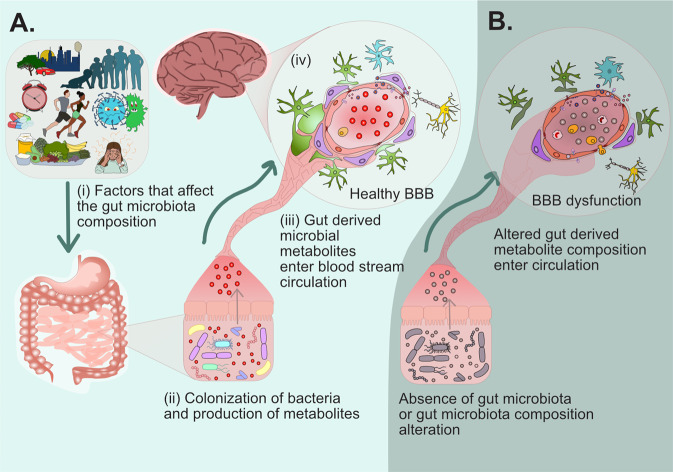
The blood-brain barrier (BBB) is vital for maintaining brain homeostasis by enabling an exquisite control of exchange of compounds between the blood and the brain parenchyma. Moreover, the BBB prevents unwanted toxins and pathogens from entering the brain. This barrier, however, breaks down with age and further disruption is a hallmark of many age-related disorders. Several drugs have been explored, thus far, to protect or restore BBB function. With the recent connection between the BBB and gut microbiota, microbial-derived metabolites have been explored for their capabilities to protect and restore BBB physiology. This review, will focus on the vital components that make up the BBB, dissect levels of disruption of the barrier, and discuss current drugs and therapeutics that maintain barrier integrity and the recent discoveries of effects microbial-derived metabolites have on BBB physiology.
Overview
The claims and statistics of this paper haven’t been checked yet.
Free: it reads the open-access text and checks the first 5 claims that cite a source we can check. Create a free account to check every claim.
Integrity signals
Registry
Cites
Statistics
Figures
Verification
Claims the paper makes
The claims and statistics of this paper haven’t been checked yet.
Free: it reads the open-access text and checks the first 5 claims that cite a source we can check. Create a free account to check every claim.
Claims other papers make about this one
Each is checked against this paper’s own text: does it say what the citing paper says it does?
The source backs part of the claim, not all of it — or backs it for a different population, condition or comparison.
In the citing paper
“Moreover, numerous studies have shown an increased BBB permeability in aged mice, which facilitates the infiltration of peripheral immune cells into the CNS.117,118”
From Role of neuroinflammation in neurodegeneration development (2023) · cites this paper as [117]
Experimental — accuracy not yet measuredThe cited source says what the claim attributes to it.
In the citing paper
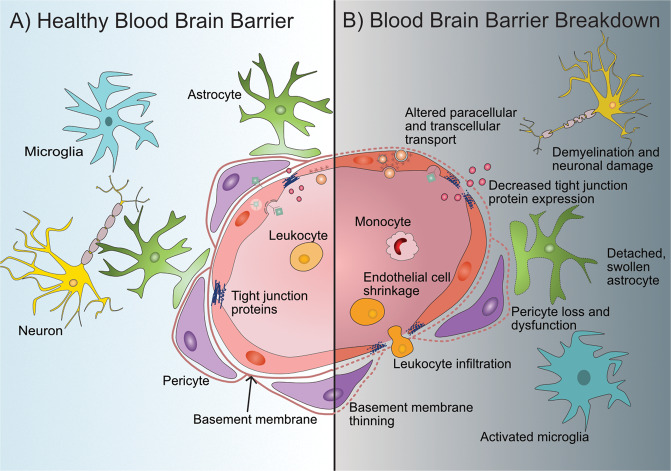
“These can include increased paracellular permeability by loss of TJs, degradation of ECs and pericytes, modification in thickness of the basement membrane, astrocyte degeneration, changes in the expression of transporters/receptors present in the BBB, and so forth [41].”
From Advances in Strategies to Transport Nanoparticles Across the Blood–Brain Barrier for Drug Delivery into the Brain for the Treatment of Alzheimer’s Disease (2026) · cites this paper as [41]
In the citing paper
“BBB disruption is well characterized in other neurodegenerative diseases, including PD, ALS, FTD, and HD.”
From Microbiota–gut–brain axis and its therapeutic applications in neurodegenerative diseases (2024) · cites this paper as [658]
In the citing paper
“Compromised BBB initiates the infiltration of peripheral immune cells and triggers microglial and astrocytic activation, ultimately resulting in synaptic and neuronal loss.”
From Microbiota–gut–brain axis and its therapeutic applications in neurodegenerative diseases (2024) · cites this paper as [658]
In the citing paper
“The structure and function of the BBB also undergo significant alterations with ageing, which contribute to the progression of neurodegenerative diseases and cognitive decline.153”
From Antiageing strategy for neurodegenerative diseases: from mechanisms to clinical advances (2025) · cites this paper as [153]
Self-check
Percentages, sums and reported differences re-computed from the paper’s own numbers.
The self-check needs the paper’s full text.
Citations
Cites
1 retracted
RETRACTED ARTICLE: Pericyte loss influences Alzheimer-like neurodegeneration in mice
Sagare, A. P., Bell, R. D., Zhao, Z., Ma, Q., Winkler, E. A., Ramanathan, A., & Zlokovic, B. V. (2013) · Nature Communications · doi:10.1038/ncomms3932 · Cited by 589 · cited 1×
“Importantly, pericytes play an important role in cerebrovascular malfunction in Alzheimer’s disease (AD) [41].”
BackgroundRetractedRosen, D. R., Siddique, T., Patterson, D., Figlewicz, D. A., Sapp, P., Hentati, A., Donaldson, D., Goto, J., O'Regan, J. P., Deng, H.-X., et al. (1993) · Nature · doi:10.1038/362059a0 · Cited by 7,062 · cited 2×
“Activated protein C downregulates SOD1 in SOD1 mutant mice, reduces blood-spinal cord barrier permeability, and slows disease progression [130].”
BackgroundAstrocyte-endothelial interactions at the blood-brain barrier
Abbott, N. J., Rönnbäck, L., & Hansson, E. (2006) · Nature Reviews Neuroscience · doi:10.1038/nrn1824 · Cited by 5,595 · cited 11×
“Both cell types can also respond to TGF-β through TGF-β receptor.”
BackgroundInfluentialCryan, J. F., O'Riordan, K. J., Cowan, C. S. M., Sandhu, K. V., Bastiaanssen, T. F. S., Boehme, M., Codagnone, M. G., Cussotto, S., Fulling, C., Golubeva, A. V., et al. (2019) · Physiological Reviews · doi:10.1152/physrev.00018.2018 · Cited by 5,286 · cited 3×
“SCFAs have previously been implicated in processes such as gastrointestinal function, blood-pressure regulation, circadian rhythm, and immune function, and more recently explored for the effects on BBB physiology [143].”
BackgroundInfluentialSelf-citationDaneman, R., & Prat, A. (2015) · Cold Spring Harbor Perspectives in Biology · doi:10.1101/cshperspect.a020412 · Cited by 3,437 · cited 3×
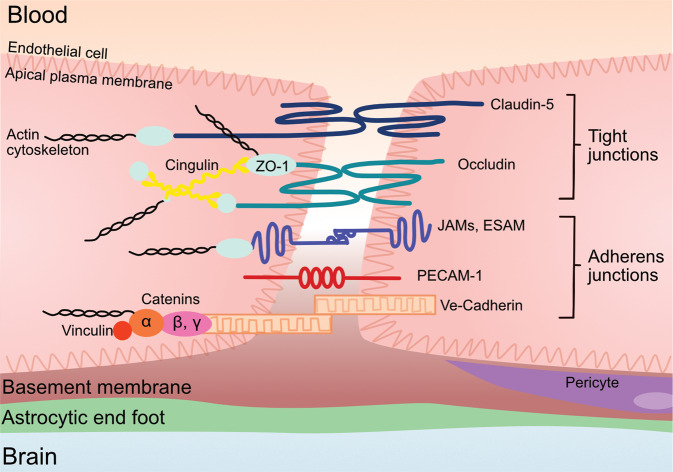
“The basement membrane is composed of both an inner vascular basement membrane, which is secreted by endothelial cells and pericytes and an outer parenchymal basement membrane, which is secreted by astrocytes [1].”
BackgroundThe Blood-Brain Barrier in Health and Chronic Neurodegenerative Disorders
Zlokovic, B. V. (2008) · Neuron · doi:10.1016/j.neuron.2008.01.003 · Cited by 3,280
Neuroinflammation and microglial activation in Alzheimer disease: where do we go from here?
Leng, F., & Edison, P. (2021) · Nature Reviews Neurology · doi:10.1038/s41582-020-00435-y · Cited by 3,179
Blood–brain barrier breakdown in Alzheimer disease and other neurodegenerative disorders
Sweeney, M. D., Sagare, A. P., & Zlokovic, B. V. (2018) · Nature Reviews Neurology · doi:10.1038/nrneurol.2017.188 · Cited by 3,076 · cited 2×
“An increase in BBB permeability is commonly observed via enhanced accumulation of blood-derived proteins in the brains of post-mortem AD patients [101] and supported by the reduction of tight junction proteins [102].”
BackgroundPericytes regulate the blood–brain barrier
Armulik, A., Genové, G., Mäe, M., Nisancioglu, M. H., Wallgard, E., Niaudet, C., He, L., Norlin, J., Lindblom, P., Strittmatter, K., et al. (2010) · Nature · doi:10.1038/nature09522 · Cited by 2,843 · cited 2×
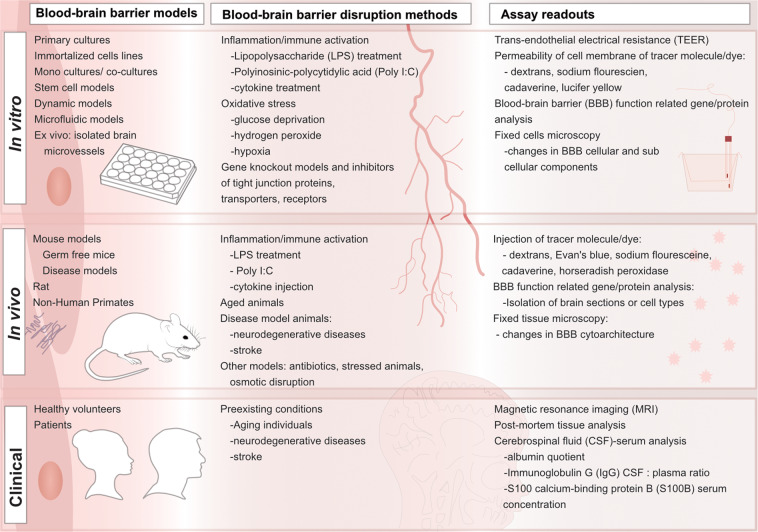
“The co-cultures are useful as the presence of either astrocytes or pericytes or both cells together with brain endothelial cells improves the BBB characteristics [36, 38, 39, 113, 114].”
BackgroundThe gut microbiota influences blood-brain barrier permeability in mice
Braniste, V., Al-Asmakh, M., Kowal, C., Anuar, F., Abbaspour, A., Tóth, M., Korecka, A., Bakocevic, N., Ng, L. G., Kundu, P., et al. (2014) · Science Translational Medicine · doi:10.1126/scitranslmed.3009759 · Cited by 2,530 · cited 1×
“The relationship between BBB integrity and the gut microbiota is evident in germ free mice models which lack a microbiota and have increased BBB permeability and altered tight junction protein expression effects, which continue from in utero into adulthood [147].”
Background
Research works printed but not linked: 1
- Obermeier B Daneman R Ransohoff RM Development, maintenance and disruption of the blood-brain barrier Nat Med 2013 19 1584 1596 10.1038/nm.3407 24309662 PMC4080800 · DOI · Paper page
Cited by
Items 701–736 of 736
Gut-immune signaling drives blood-brain barrier damage in pediatric allogeneic stem cell transplantPreprint
Davies, M. R., Cross, C. B., Ryan, F. J., Yu, L., Dorraki, M., Greenberg, Z., Salter, A., Williams, C. M. D., Li, A., Zannettino, A. C. W., et al. (2026) · bioRxiv (Cold Spring Harbor Laboratory) · doi:10.64898/2026.08.17.745172
Sun, Y., Pei, Y., Liu, H., Gao, Y., Yang, X., Liu, Q. S., Xu, L., Faiola, F., Zhou, Q., & Jiang, G. (2026) · Ecotoxicology and Environmental Safety · doi:10.1016/j.ecoenv.2026.120699
Mitochondrial control of blood-brain barrier homeostasis in neuroinflammatory psychiatric disorders
Pérez-López, L. M., Camacho‐Morales, A., Álvarez, I. H., & Pérez‐Maya, A. A. (2026) · Frontiers in Molecular Neuroscience · doi:10.3389/fnmol.2026.1924581
“Importantly, BBB dysfunction is unlikely to represent an all-or-none phenomenon but rather a continuum that may fluctuate with inflammatory activity, metabolic status and disease stage (Nation et al., 2019; Knox et al., 2022; Wakonigg Alonso et al., 2024; Zhang et al., 2025).”
Melrose, J. (2026) · Research Square · doi:10.21203/rs.3.rs-10723418/v1
Rodríguez-Callejas, J. D., Mimenza-Alvarado, A. J., Lomas‐Soria, C., & Aguilar-Navarro, S. G. (2026) · Revista de investigaci�n Cl�nica · doi:10.1016/j.ric.2026.100056
Blood–Brain Barrier Disruption and Edema in Xenopus: Methods for Analysis
Eldridge, S. S., & Sater, A. K. (2026) · Methods in molecular biology · doi:10.1007/978-1-0716-5360-9_14
Iqbal, M., Yasin, A., Li, F., Liu, S., Hou, Y., Li, J., & Guan, S. (2026) · Journal of Magnesium and Alloys · doi:10.1016/j.jma.2026.102264
Müller, L., Köhler, C., Lindner, T., Polei, S., Vollmar, B., Weber, M., Krause, B. J., Kirschstein, T., Porath, K., Engel, N., et al. (2026) · Fluids and Barriers of the CNS · doi:10.1186/s12987-026-00872-9
“This reflects typical observations on increased BBB-permeability with age [39, 40] that is also reflected in various mouse models by increased leakage of molecules into the brain parenchyma, loss of tight-junctions and reduced pericyte coverage [41–43].”
Aging, the microbiota–gut–brain axis, and late-life epilepsy: a hypothesis-driven review
Cao, Y., Li, H., Xu, M., Teng, Y., & Gu, H.-Y. (2026) · Frontiers in Molecular Neuroscience · doi:10.3389/fnmol.2026.1861519
Abdel-Rasol, M. A. (2026) · Inflammopharmacology · doi:10.1007/s10787-026-02386-0 · Cited by 1
“…α-synuclein, mitochondrial injury, and systemic inflammatory mediators activates endothelial cells, pericytes, astrocytes, and microglia, driving oxidative stress, pro-inflammatory cytokine release, and impaired barrier-supportive signaling (Nehra et al. 2022; Lau et al. 2024; Knox et al. 2022).”
Gao, Y., Li, Z.-K., Li, H.-N., Hu, J.-Z., Du, X.-Z., Yan, X., & Liu, S. (2026) · Frontiers in Immunology · doi:10.3389/fimmu.2026.1944035
“Endothelial dysfunction may compromise BBB integrity, cerebral perfusion, and microcirculation, thereby increasing the in fl uence of peripheral in fl ammatory signals on the brain (43, 44).”
Neuroimaging in Hypertension: A Multifaceted Approach to Investigate the Brain
Ferla, S. L., & Carnevale, L. (2026) · Hypertension · doi:10.1161/hypertensionaha.126.26773
Shehu, K., Onimisi, O. B., Bunza, H. A., Umar, S. M., Oyem, J. C., & Adeyeye, T. A. (2026) · Experimental Neurology · doi:10.1016/j.expneurol.2026.116029
Impaired peptide amidation and risk of incident dementia in the Malmoe preventive project cohort
Kaufmann, P., Ilina, Y., Giontella, A., Press, M., Nägga, K., Hansson, O., Hampel, H. J., Bergmann, A., & Melander, O. (2026) · Alzheimer s Research & Therapy · doi:10.1186/s13195-026-02173-7
“Given the role of bio-ADM in endothelial function and BBB regulation, reduced bio-ADM signalling may lead to endothelial fragility, BBB disruption, and impaired amyloid clearance, processes observed in early AD pathology [71].”
Wang, T., Wang, L., Cao, J., Zhao, Y., He, Z., & Lu, F. (2026) · Frontiers in Immunology · doi:10.3389/fimmu.2026.1956600
“Human imaging, postmortem, and single-nucleus studies demonstrate early and regionally variable abnormalities in barrier permeability, endothelial transport, pericyte support, basement membrane, cerebral amyloid angiopathy, and perivascular spaces (153 – 155).”
Targeting glial modulation: molecular mechanisms of Polygonatum in neurological disorders
Liu, Z., Luo, Y., Zheng, C., Long, X., Zhao, Y., Pan, Z., Xu, B., & Sun, J. (2026) · Frontiers in Pharmacology · doi:10.3389/fphar.2026.1969384
“…Zhang et al., 2024), impaired synaptic plasticity (Hoshina et al., 2021; Menculini et al., 2021), and blood-brain barrier dysfunction (Aryal and Patabendige, 2021; Knox et al., 2022; Patabendige and Janigro, 2023), frequently interact and collectively drive disease initiation and progression.”
Unnikrishnan, B., Anand, A., Fang, C.-N., Wu, S.-M., Wang, C.-C., Huang, C.-C., Chu, H., & Huan‐Tsung, C. (2026) · Chemical Communications · doi:10.1039/d6cc03262a
Nguyen, N., Yuan, M., & Wang, Y. (2026) · Pharmaceutical Research · doi:10.1007/s11095-026-04201-5
“For instance, the BBB's permeability may differ in areas like the hippocampus compared to the cortex [156], and even within a single region, permeability can fluctuate based on blood flow and disease progression [157].”
Fontanini, V., Amenta, A., Maiocchi, A., Vergani, B., Leone, B. E., Camazzola, D., Guarnieri, F. C., Murru, L., Marinelli, L., Pietra, V. L., et al. (2026) · ACS Applied Nano Materials · doi:10.1021/acsanm.6c03130
Cai, D., Ke, X., Luo, F., Li, Y., Cai, H., 祝继洪, Chen, Y., & Chen, G. (2026) · Reviews in the Neurosciences · doi:10.1515/revneuro-2026-0136
“…stress should, therefore, be examined as one part of an aged neurovascular-immune network rather than as an isolated explanation for PND (Abdulkhaliq et al. 2026; Bell et al. 2010; Knox et al. 2022; Montagne et al. 2015; Nation et al. 2019; Nguyen et al. 2014; Sweeney et al. 2018; Zlokovic 2011).”
Vesicular trafficking in vascular endothelial cells: Mechanisms and homeostatic control
ZHANG, L., Han, Y., Yao, L.-T., Ning-Jing, X. U., & Jia, S. (2026) · Shengming kexue · doi:10.3724/cbls.2026137
Gu, D., Lei, Y., Lu, J., Yi, W., Zhang, Q., He, Y., Wang, C., & 蔡志友 (2026) · Brain Sciences · doi:10.3390/brainsci16101080
“Physiological aging is associated with structural and functional alterations of the BBB, including pericyte loss and tight junction disruption [53].”
Zhao, Z., Yixuan, L., Ma, W., Hu, G., Hao, J., Chaobo, B., Chen, J., Zhang, Q., Cao, H., Liu, X., et al. (2026) · Cell Reports Medicine · doi:10.1016/j.xcrm.2026.103098
“7,8 While short-chain fatty acids and amino acid derivatives have been well studied, 9 the role of bile acids in PD progression still remains elusive.”
Melin, J. M., Young, N. A., & Camardo, J. S. (2026) · Journal of Alzheimer s Disease · doi:10.1177/13872877261495936
Post-traumatic dementia: Advances in understanding neurodegenerative mechanisms
He, X.-J., Wang, H., & Zhang, Y. (2026) · Chinese Medical Sciences Journal · doi:10.1016/j.cmsj.2026.08.001
Foundations of Neurochemistry and Neuroanatomy
Goel, F., Dobhal, V., Shipra, & Kumar, P. (2026) · Royal Society of Chemistry eBooks · doi:10.1039/9781837071395-00001
From gut microbiome to aging brain: Butyrate as a neurogeroscience effector
Mitrea, L., Calinoiu, L.-F., Martau, G.-A., Teleky, B.-E., Cocean, A.-M., Odocheanu, R., Stefanescu, B.-E., & Vodnar, D.-C. (2026) · Neuroscience & Biobehavioral Reviews · doi:10.1016/j.neubiorev.2026.107037
Gupta, R. V., Kumar, R., Shreevatsa, B., Modi, D. K., Kumari, S., Kumar, N., Singh, P., Ravi, K., & Abomughaid, M. M. (2026) · Molecular Neurobiology · doi:10.1007/s12035-026-06265-1
Chudzik‐Kozłowska, J., Wasilewska, E. M., Mikołajczyk, A., & Złotkowska, D. (2026) · Nutrients · doi:10.3390/nu18203403
Jacquier‐Sarlin, M. R., Seignobos, M., Rauzier, L., Schaack, B., Laurin, D., & Buisson, A. (2026) · Frontiers in Neuroscience · doi:10.3389/fnins.2026.1963040
“Aging, vascular dysfunction and persistent inflammation impair endothelial integrity, reduce tight-junction expression and promote pericyte degeneration, thereby increasing BBB permeability (Sweeney et al., 2018; Banks et al., 2021; Knox et al., 2022; Nehra et al., 2022).”
Baik, J., Gwon, H., Kim, J.-Y., Shim, J.-J., & Lee, J.-H. (2026) · Journal of Microbiology and Biotechnology · doi:10.4014/jmb.2609.09057
Bourzam, A., Duraisamy, K., Dlimi, O., Mehdi, M. E., Cherif, A., Arabo, A., Lizard, G., Ghrairi, T., Lefranc, B., Solliec, M.-A. L., et al. (2026) · Frontiers in Pharmacology · doi:10.3389/fphar.2026.1933852
Shin, Y., Lee, S., Ánh, N. T. N., & Chung, M. (2026) · International Journal of Pharmaceutics · doi:10.1016/j.ijpharm.2026.127585 · Cited by 1
Laminin Expression and Function in the Central Nervous System
Xu, L., Yuan, S., & Yao, Y. (2026) · Proteoglycan Research · doi:10.1002/pgr2.70058
Bindal, P., Kasher, P. R., & Ogawa, S. (2026) · GeroScience · doi:10.1007/s11357-026-02619-8
Mathew, K., Bhatti, R. G., Zawaideh, T., Faizal, M. A. F. M., & Ghani, Z. (2026) · The Egyptian Journal of Neurology Psychiatry and Neurosurgery · doi:10.1186/s41983-026-01279-x
Metadata
- Authors
- Knox, E. G., Aburto, M. R., Clarke, G., Cryan, J. F., & O’Driscoll, C. M.
- Affiliations
- University College Cork (IE)
- Venue
- Molecular Psychiatry
- Published
- 2022-03-31
- Volume
- 27
- Issue
- 6
- Pages
- 2659-2673
- ISSN
- 1359-4184 (ISSN-L)
- 1476-5578
- PMC
- PMC9156404
- OpenAlex
- W4220819957
- Semantic Scholar
- 83f5f22ce6fc91638ce39819b8f1d03e829b7c72
- Cited by
- 738
- References
- 213
- Citations by year
- 2026: 199 · 2025: 233 · 2024: 183 · 2023: 96 · 2022: 27
- FWCI
- 13.86
- Type
- journal article
- Language
- en
- Open access
- hybrid
- doi.org
- Licence
- cc-by
- creativecommons.org/licenses/by/4.0 (tdm)
- creativecommons.org/licenses/by/4.0 (vor)
- Locations
- Molecular Psychiatry (publishedVersion, cc-by)
- PubMed Central (publishedVersion, cc-by)
- PubMed (publishedVersion)
- Lenus, The Irish Health Repository (Dr Steevens Hospital Library) (submittedVersion)
- Funders
- European Office of Aerospace Research and Development, Air Force Office of Scientific Research and 711 Human Performance Wing, Air Force Research Laboratory
- Science Foundation Ireland (SFI/12/RC/2273-P2)
- Topics
- Life Sciences › Neuroscience › Neurology › Barrier Structure and Function Studies
- Health Sciences › Medicine › Oncology › Drug Transport and Resistance Mechanisms
- Health Sciences › Medicine › Clinical Neurology › Cerebrospinal fluid and hydrocephalus
- Keywords
- blood-brain barrier, aging, neurodegeneration, blood-brain barrier disruption, brain homeostasis, gut microbiota, microbial metabolites
- MeSH terms
- Biological Transport, Blood-Brain Barrier, Brain, Homeostasis
About these checks
Registry, retraction, Cites and statistics results are computed, not judged, with one exception: a printed reference that no index lists is read once by a model before it counts as a citation error. Claims are extracted by a model and kept only when their quote appears verbatim in the text; each cited source is then checked, with a model’s help, for whether it says what the claim relies on. Those verdicts can be wrong — read the claim’s quote and the cited source before relying on one.
Statistics and arithmetic are recomputed, not judged.
Confidence bands are shown only for fields calibrated on our annotated test set. None is calibrated yet, so no band is shown.
What counts as a claim ›How we measure confidence ›How we check this ›
Are you an author, or do you see a problem with this page? Request a review
Data sources
Bibliographic data: Semantic Scholar, OpenAlex, Crossref.
Contains information from the Semantic Scholar Academic Graph Datasets, made available under the ODC Attribution License (ODC-BY 1.0).
Semantic Scholar’s data is described in: Kinney, R., et al. (2023). The Semantic Scholar Open Data Platform. arXiv:2301.10140.
