

AKT inhibition impairs PCNA ubiquitylation and triggers synthetic lethality in homologous recombination-deficient cells submitted to replication stress
Open accessThe DOI matches its Crossref record; 54 of the 54 references it cites were found in a registry or an index.
Abstract
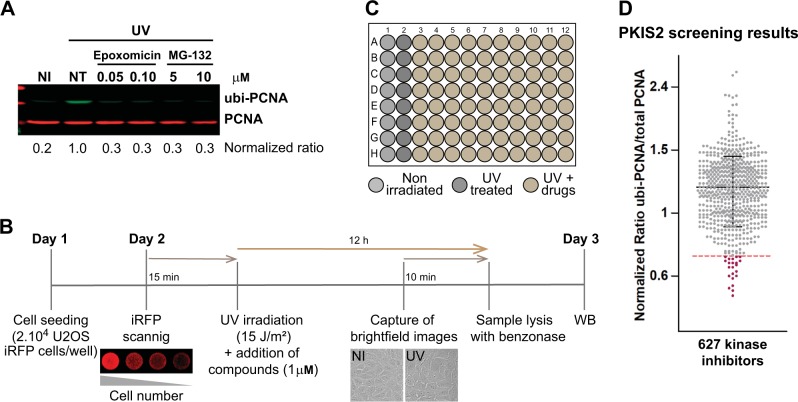
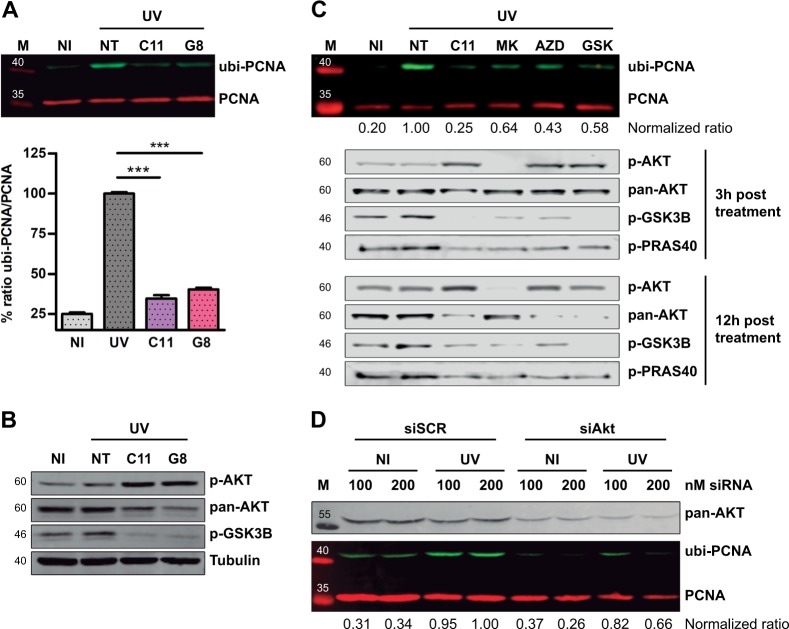
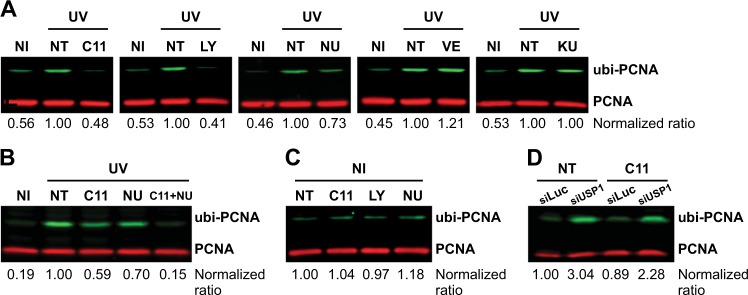
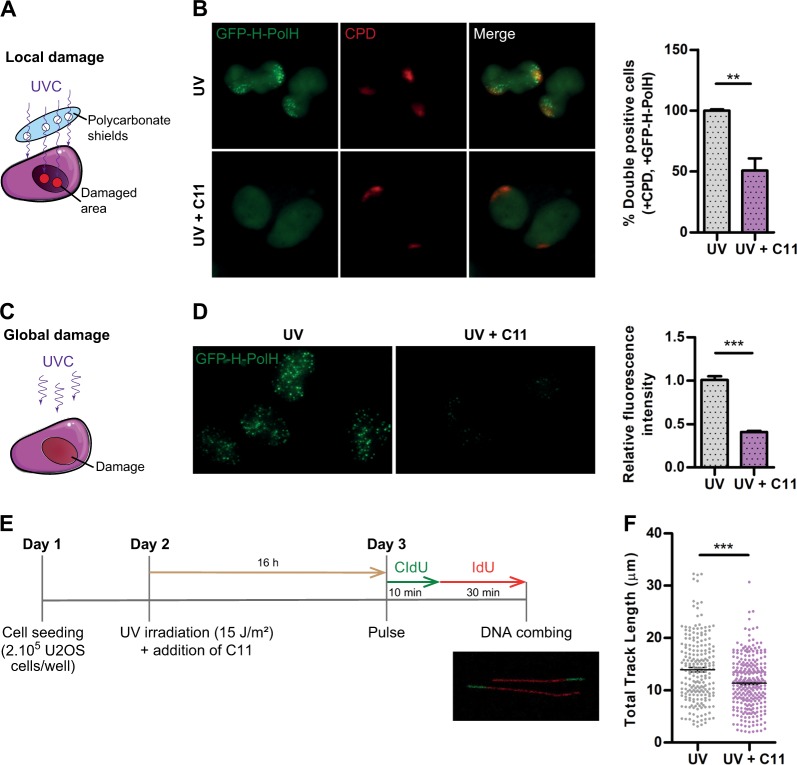
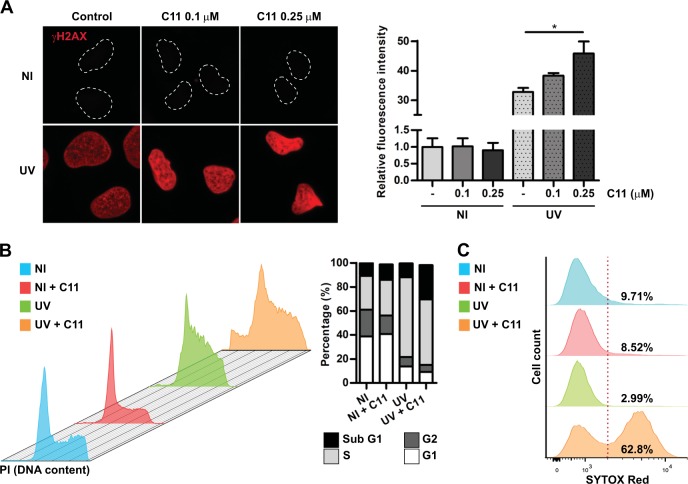
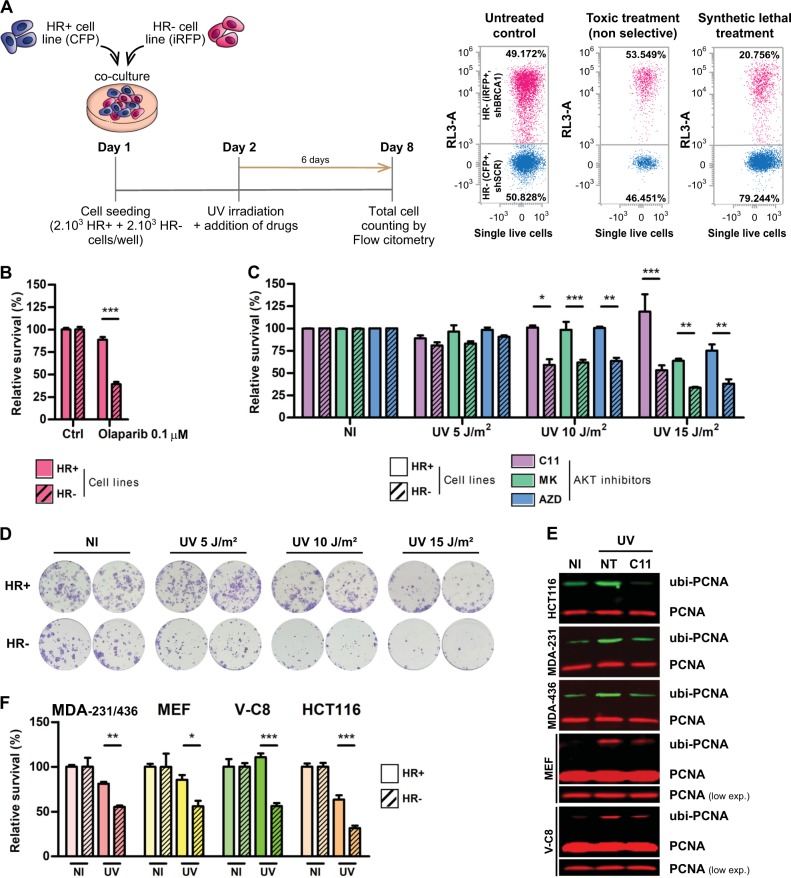
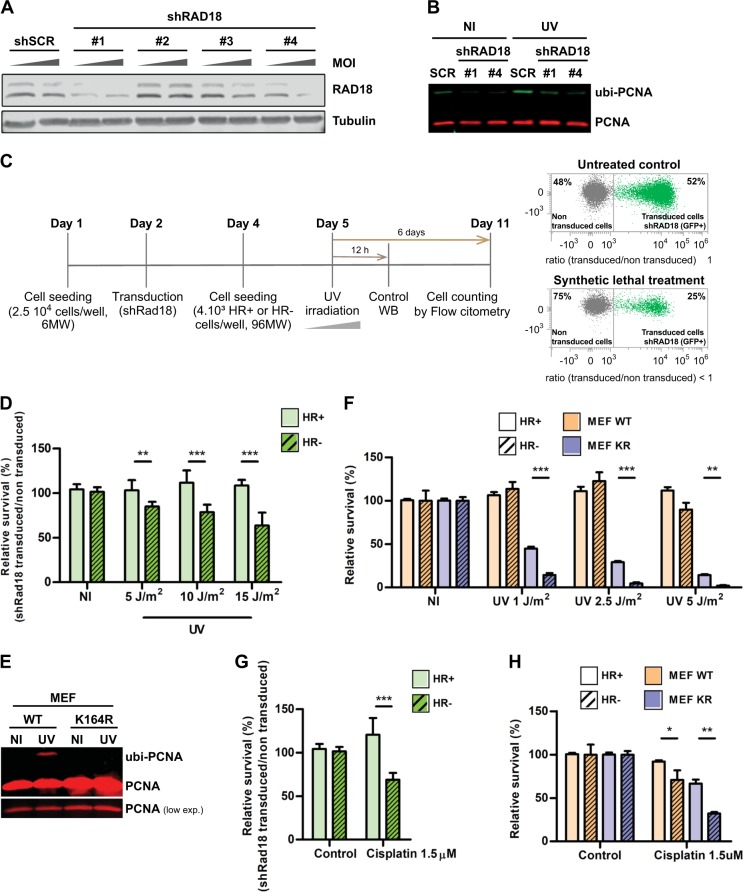
Translesion DNA synthesis (TLS) and homologous recombination (HR) cooperate during S-phase to safeguard replication forks integrity. Thus, the inhibition of TLS becomes a promising point of therapeutic intervention in HR-deficient cancers, where TLS impairment might trigger synthetic lethality (SL). The main limitation to test this hypothesis is the current lack of selective pharmacological inhibitors of TLS. Herein, we developed a miniaturized screening assay to identify inhibitors of PCNA ubiquitylation, a key post-translational modification required for efficient TLS activation. After screening a library of 627 kinase inhibitors, we found that targeting the pro-survival kinase AKT leads to strong impairment of PCNA ubiquitylation. Mechanistically, we found that AKT-mediated modulation of Proliferating Cell Nuclear Antigen (PCNA) ubiquitylation after UV requires the upstream activity of DNA PKcs, without affecting PCNA ubiquitylation levels in unperturbed cells. Moreover, we confirmed that persistent AKT inhibition blocks the recruitment of TLS polymerases to sites of DNA damage and impairs DNA replication forks processivity after UV irradiation, leading to increased DNA replication stress and cell death. Remarkably, when we compared the differential survival of HR-proficient vs HR-deficient cells, we found that the combination of UV irradiation and AKT inhibition leads to robust SL induction in HR-deficient cells. We link this phenotype to AKT ability to inhibit PCNA ubiquitylation, since the targeted knockdown of PCNA E3-ligase (RAD18) and a non-ubiquitylable (PCNA K164R) knock-in model recapitulate the observed SL induction. Collectively, this work identifies AKT as a novel regulator of PCNA ubiquitylation and provides the proof-of-concept of inhibiting TLS as a therapeutic approach to selectively kill HR-deficient cells submitted to replication stress.
Overview
The claims and statistics of this paper haven’t been checked yet.
Free: it reads the open-access text and checks the first 5 claims that cite a source we can check. Create a free account to check every claim.
Integrity signals
Registry
Cites
Statistics
Figures
Verification
Claims the paper makes
The claims and statistics of this paper haven’t been checked yet.
Free: it reads the open-access text and checks the first 5 claims that cite a source we can check. Create a free account to check every claim.
Claims other papers make about this one
Each is checked against this paper’s own text: does it say what the citing paper says it does?
The source backs part of the claim, not all of it — or backs it for a different population, condition or comparison.
In the citing paper
“Such impairment in PCNA ubiquitination enhances the killing of cancer cells treated with cisplatin”
From CDK-Independent and PCNA-Dependent Functions of p21 in DNA Replication (2020) · cites this paper as [121]
Experimental — accuracy not yet measuredThe cited source says what the claim attributes to it.
In the citing paper
“Such a post-transcriptional modification of PCNA can also be inhibited by using AKT inhibitors.”
From CDK-Independent and PCNA-Dependent Functions of p21 in DNA Replication (2020) · cites this paper as [121]
In the citing paper
“displaying an even more potent effect in homologous recombination-deficient cells [121]”
From CDK-Independent and PCNA-Dependent Functions of p21 in DNA Replication (2020) · cites this paper as [121]
Self-check
Percentages, sums and reported differences re-computed from the paper’s own numbers.
The self-check needs the paper’s full text.
Citations
Cites
AKT/PKB signaling: navigating downstream
Manning, B. D., & Cantley, L. C. (2007) · Cell · doi:10.1016/j.cell.2007.06.009 · Cited by 6,115 · cited 1×
“In fact, even before the vast repertoire of AKT targets were identified, multiple groups independently demonstrated the central involvement of AKT in promoting cell survival [14].”
BackgroundThe DNA-damage response in human biology and disease
Jackson, S. P., & Bartek, J. (2009) · Nature · doi:10.1038/nature08467 · Cited by 6,092 · cited 1×
“As DNA damage is an unceasing threat arising from both endogenous and exogenous sources [27], DNA repair pathways are unable to cope with every single DNA damage event in real time, in particular at sensitive points of the cell cycle such as S-phase [28].”
BackgroundAKT/PKB Signaling: Navigating the Network
Manning, B. D., & Toker, A. (2017) · Cell · doi:10.1016/j.cell.2017.04.001 · Cited by 3,772 · cited 2×
“6), a direct causality between ubi-PCNA decrease and SL induction cannot to be claimed given the multiple roles of AKT in cell survival pathways [13].”
BackgroundRAD6-dependent DNA repair is linked to modification of PCNA by ubiquitin and SUMO
Hoege, C., Pfander, B., Moldovan, G.-L., Pyrowolakis, G., & Jentsch, S. (2002) · Nature · doi:10.1038/nature00991 · Cited by 2,198 · cited 1×
“Such mild UV-triggered sensitivity observed in mammalian cells in comparison with the extreme phenotype observed in yeast [1], along with the central housekeeping roles of PCNA in DNA replication [41, 42], discouraged the field from further exploring the therapeutic potential of targeting PCNA ubiquitylation.”
BackgroundThe activation of Akt/PKB signaling pathway and cell survival
Song, G., Ouyang, G., & Bao, S. (2005) · Journal of Cellular and Molecular Medicine · doi:10.1111/j.1582-4934.2005.tb00337.x · Cited by 1,888 · cited 1×
“AKT has a wellestablished anti-apoptotic function, operating both directly, through the phosphorylation of relevant targets such as BAD and caspases, and indirectly, through the transcriptional modulation of pro-survival or pro-apoptotic genes such as IKK/NF-κB and MDM2/p53 [15].”
BackgroundPCNA, the Maestro of the Replication Fork
Moldovan, G.-L., Pfander, B., & Jentsch, S. (2007) · Cell · doi:10.1016/j.cell.2007.05.003 · Cited by 1,796 · cited 1×
“Such mild UV-triggered sensitivity observed in mammalian cells in comparison with the extreme phenotype observed in yeast [1], along with the central housekeeping roles of PCNA in DNA replication [41, 42], discouraged the field from further exploring the therapeutic potential of targeting PCNA ubiquitylation.”
BackgroundLord, C. J., & Ashworth, A. (2016) · Nature Reviews Cancer · doi:10.1038/nrc.2015.21 · Cited by 1,257
HRDetect is a predictor of BRCA1 and BRCA2 deficiency based on mutational signatures
Davies, H., Glodzik, D., Morganella, S., Yates, L. R., Staaf, J., Zou, X., Ramakrishna, M., Martin, S., Boyault, S., Sieuwerts, A. M., et al. (2017) · Nature Medicine · doi:10.1038/nm.4292 · Cited by 1,086 · cited 1×
“Moreover, recent reports revealed that HR deficiency is a much more widely spread feature of human cancers than anticipated [23, 43], and therefore it is a niche of critical importance for drug discovery and for the design of novel therapeutic strategies.”
BackgroundPI3K/AKT signaling pathway and cancer: An updated review
Martini, M., De Santis, M. C., Braccini, L., Gulluni, F., & Hirsch, E. (2014) · Annals of Medicine · doi:10.3109/07853890.2014.912836 · Cited by 1,020 · cited 1×
“PI3K is involved in AKT activation in response to several physiological ligands [19], but was not directly linked to AKT activation after genotoxic stimuli.”
BackgroundUbiquitin-binding domains in Y-family polymerases regulate translesion synthesis.
Bienko, M., Green, C. M., Crosetto, N., Rudolf, F., Zapart, G., Coull, B., Kannouche, P., Wider, G., Peter, M., Lehmann, A. R., et al. (2005) · Science · doi:10.1126/science.1120615 · Cited by 712 · cited 1×
“Ubi-PCNA, along with the specialized ubiquitin-binding domains present in the Y-family of polymerases [6], are key players in translesion DNA synthesis (TLS) across damaged DNA templates [7].”
BackgroundY-family DNA polymerases and their role in tolerance of cellular DNA damage
Sale, J. E., Lehmann, A. R., & Woodgate, R. (2012) · Nature Reviews Molecular Cell Biology · doi:10.1038/nrm3289 · Cited by 665 · cited 2×
“Hence, a series of specialized mechanisms have evolved to deal with unrepaired DNA damage in S-phase to promote cell survival and to increase the time-frame for DNA repair mechanisms to attend the damage, which are collectively referred as DNA damage tolerance pathways [22, 29].”
BackgroundDynamics of DNA Replication Factories in Living Cells
Leonhardt, H., Rahn, H.-P., Weinzierl, P., Sporbert, A., Cremer, T., Zink, D., & Cardoso, M. C. (2000) · The Journal of Cell Biology · doi:10.1083/jcb.149.2.271 · Cited by 582 · cited 1×
“GFP-H-Polη was obtained by cloning a flexible hydrophilic linker between Polη and GFP using XhoI restriction site [50].”
MethodRegulation of monoubiquitinated PCNA by DUB autocleavage
Huang, T. T., Nijman, S. M. B., Mirchandani, K. D., Galardy, P. J., Cohn, M. A., Haas, W., Gygi, S. P., Ploegh, H. L., Bernards, R., & D'Andrea, A. D. (2006) · Nature Cell Biology · doi:10.1038/ncb1378 · Cited by 581 · cited 4×
“Twelve hours after UV irradiation (15 J/m2), samples were processed by WB for the quantification of ubi/ PCNA. c U2OS cells were treated overnight with the optimal dose of each kinase inhibitor (LY294002 50 µM, NU7026 20 µM, and C11 1 µM) followed by sample processing for WB in unperturbed conditions. d U2OS cells wer…”
ResultInfluentialKu DNA end-binding protein modulates homologous repair of double-strand breaks in mammalian cells
Pierce, A. J., Hu, P., Han, M., Ellis, N., & Jasin, M. (2001) · Genes & Development · doi:10.1101/gad.946401 · Cited by 514 · cited 2×
“U2OS cells stably expressing DR-GFP were kindly provided by M. Jasin [51].”
MethodAkt inhibitors in cancer treatment: The long journey from drug discovery to clinical use (Review)
NITULESCU, G. M., MARGINA, D., JUZENAS, P., PENG, Q., OLARU, O. T., SALOUSTROS, E., FENGA, C., SPANDIDOS, D. A., LIBRA, M., & TSATSAKIS, A. M. (2016) · International Journal of Oncology · doi:10.3892/ijo.2015.3306 · Cited by 364 · cited 1×
“inhibitors that are currently in clinical trials [48, 49], which might be used in combination with replication stress inducers in patient cohorts with known HR deficiencies.”
BackgroundPCNA: a silent housekeeper or a potential therapeutic target?
Wang, S.-C. (2014) · Trends in Pharmacological Sciences · doi:10.1016/j.tips.2014.02.004 · Cited by 285 · cited 1×
“Such mild UV-triggered sensitivity observed in mammalian cells in comparison with the extreme phenotype observed in yeast [1], along with the central housekeeping roles of PCNA in DNA replication [41, 42], discouraged the field from further exploring the therapeutic potential of targeting PCNA ubiquitylation.”
BackgroundTranslesion DNA polymerases in eukaryotes: what makes them tick?
Vaisman, A., & Woodgate, R. (2017) · Critical Reviews in Biochemistry and Molecular Biology · doi:10.1080/10409238.2017.1291576 · Cited by 249
Maximising the potential of AKT inhibitors as anti-cancer treatments
Brown, J. S., & Banerji, U. (2017) · Pharmacology & Therapeutics · doi:10.1016/j.pharmthera.2016.12.001 · Cited by 221 · cited 1×
“inhibitors that are currently in clinical trials [48, 49], which might be used in combination with replication stress inducers in patient cohorts with known HR deficiencies.”
BackgroundSrivastava, A. K., Han, C., Zhao, R., Cui, T., Dai, Y., Mao, C., Zhao, W., Zhang, X., Yu, J., & Wang, Q.-E. (2015) · Proceedings of the National Academy of Sciences · doi:10.1073/pnas.1421365112 · Cited by 188
DNA damage tolerance by recombination: Molecular pathways and DNA structures
Branzei, D., & Szakál, B. (2016) · DNA repair · doi:10.1016/j.dnarep.2016.05.008 · Cited by 169 · cited 1×
“Hence, a series of specialized mechanisms have evolved to deal with unrepaired DNA damage in S-phase to promote cell survival and to increase the time-frame for DNA repair mechanisms to attend the damage, which are collectively referred as DNA damage tolerance pathways [22, 29].”
BackgroundRegulation of proliferating cell nuclear antigen ubiquitination in mammalian cells
Niimi, A., Brown, S., Sabbioneda, S., Kannouche, P. L., Scott, A., Yasui, A., Green, C. M., & Lehmann, A. R. (2008) · Proceedings of the National Academy of Sciences · doi:10.1073/pnas.0802727105 · Cited by 168
Akt inhibitor A-443654 induces rapid Akt Ser-473 phosphorylation independent of mTORC1 inhibition
Han, E. K.-H., Leverson, J. D., McGonigal, T., Shah, O. J., Woods, K. W., Hunter, T., Giranda, V. L., & Luo, Y. (2007) · Oncogene · doi:10.1038/sj.onc.1210343 · Cited by 168 · cited 1×
“2b), as it was previously reported for other ATP-competitive AKT inhibitors [17, 18].”
Backgroundp53 stabilization in response to DNA damage requires Akt/PKB and DNA-PK
Boehme, K. A., Kulikov, R., & Blattner, C. (2008) · Proceedings of the National Academy of Sciences · doi:10.1073/pnas.0703423105 · Cited by 151
A/T mutagenesis in hypermutated immunoglobulin genes strongly depends on PCNAK164 modification
Langerak, P., Nygren, A. O. H., Krijger, P. H. L., van den Berk, P. C. M., & Jacobs, H. (2007) · The Journal of Experimental Medicine · doi:10.1084/jem.20070902 · Cited by 151 · cited 1×
“ubiquitylation came with the generation of a mammalian knock-in model of non-ubiquitylable PCNA [25, 40].”
BackgroundSelf-citationRole of AKT signaling in DNA repair and clinical response to cancer therapy
Liu, Q., Turner, K. M., Alfred Yung, W. K., Chen, K., & Zhang, W. (2014) · Neuro-Oncology · doi:10.1093/neuonc/nou058 · Cited by 140 · cited 2×
“Another example of the activation of error-prone DNA repair mediated by AKT to promote cell survival is the stimulation of nonhomologous end joining, NHEJ, by collaborating with DNA PKcs (reviewed in [37]).”
BackgroundPCNA Ubiquitination Is Important, But Not Essential for Translesion DNA Synthesis in Mammalian Cells
Hendel, A., Krijger, P. H. L., Diamant, N., Goren, Z., Langerak, P., Kim, J., Reißner, T., Lee, K.-Y., Geacintov, N. E., Carell, T., et al. (2011) · PLoS Genetics · doi:10.1371/journal.pgen.1002262 · Cited by 132 · cited 2×
“ubiquitylation came with the generation of a mammalian knock-in model of non-ubiquitylable PCNA [25, 40].”
BackgroundSelf-citationP21Cip1/WAF1 downregulation is required for efficient PCNA ubiquitination after UV irradiation
Soria, G., Podhajcer, O. L., Prives, C. L., & Gottifredi, V. (2005) · Oncogene · doi:10.1038/sj.onc.1209315 · Cited by 109
Self-citationCeppi, P., Novello, S., Cambieri, A., Longo, M., Monica, V., Lo Iacono, M., Giaj-Levra, M., Saviozzi, S., Volante, M., Papotti, M., et al. (2009) · Clinical Cancer Research · doi:10.1158/1078-0432.ccr-08-1227 · Cited by 96
Soria, G., Speroni, J., Podhajcer, O. L., Prives, C., & Gottifredi, V. (2008) · Journal of Cell Science · doi:10.1242/jcs.027730 · Cited by 94 · cited 1×
“merases to DNA damage sites, thus impacting on TLS efficiency [12, 47].”
BackgroundSelf-citationCompetition, collaboration and coordination – determining how cells bypass DNA damage
Sale, J. E. (2012) · Journal of Cell Science · doi:10.1242/jcs.094748 · Cited by 89 · cited 6×
“The most well-characterized tolerance pathways are template switch and TLS, two related mechanisms to deal with damaged DNA in S-phase, which share a common player: ubiquitylated PCNA [30].”
BackgroundInfluentialmTOR Complex 2 Targets Akt for Proteasomal Degradation via Phosphorylation at the Hydrophobic Motif
Wu, Y., Ouyang, W., Lazorchak, A. S., Liu, D., Shen, H., & Su, B. (2011) · Journal of Biological Chemistry · doi:10.1074/jbc.m111.219923 · Cited by 88 · cited 1×
“2b), as it was previously reported for other ATP-competitive AKT inhibitors [17, 18].”
BackgroundInhibition of mutagenic translesion synthesis: A possible strategy for improving chemotherapy?
Yamanaka, K., Chatterjee, N., Hemann, M. T., & Walker, G. C. (2017) · PLOS Genetics · doi:10.1371/journal.pgen.1006842 · Cited by 87 · cited 2×
“polymerases have been reported [11], we believe that inhibiting PCNA ubiquitylation should have a more robust effect on TLS inhibition, as it would have a universal effect on the recruitment of TLS polymerases.”
BackgroundSürücü, B., Bozulic, L., Hynx, D., Parcellier, A., & Hemmings, B. A. (2008) · Journal of Biological Chemistry · doi:10.1074/jbc.m803053200 · Cited by 86
Despras, E., Daboussi, F., Hyrien, O., Marheineke, K., & Kannouche, P. L. (2010) · Human Molecular Genetics · doi:10.1093/hmg/ddq046 · Cited by 80 · cited 1×
“On the one hand, it was reported by different groups that to boost the sensitivity associated with TLS inhibition in different cellular models, a concomitant inhibition of checkpoint activation by caffeine treatment is required [38, 39], thus showing that the intricated DDR network in mammals is able to buffer TLS imp…”
BackgroundRoles of sequential ubiquitination of PCNA in DNA‐damage tolerance
Zhang, W., Qin, Z., Zhang, X., & Xiao, W. (2011) · FEBS Letters · doi:10.1016/j.febslet.2011.04.044 · Cited by 80 · cited 1×
“Our initial approach was to downregulate RAD18, the E3-ligase in charge of PCNA monoubiquitylation [24].”
BackgroundPCNA-coupled p21 degradation after DNA damage: The exception that confirms the rule?
Soria, G., & Gottifredi, V. (2010) · DNA Repair · doi:10.1016/j.dnarep.2009.12.003 · Cited by 79
Self-citationMadia, F., Wei, M., Yuan, V., Hu, J., Gattazzo, C., Pham, P., Goodman, M. F., & Longo, V. D. (2009) · Journal of Cell Biology · doi:10.1083/jcb.200906011 · Cited by 73 · cited 1×
“Second, the deletion mutant of yeast AKT homolog Sch9 displays reduced levels of REV1 and impaired TLS [35].”
BackgroundSabbioneda, S., Gourdin, A. M., Green, C. M., Zotter, A., Giglia-Mari, G., Houtsmuller, A., Vermeulen, W., & Lehmann, A. R. (2008) · Molecular Biology of the Cell · doi:10.1091/mbc.e08-07-0724 · Cited by 73 · cited 1×
“These drugs inhibit the proteasome, thus causing accumulation of ubiquitylated proteins and depleting the free ubiquitin required for normal ubiquitylation reactions [16].”
BackgroundDNA Polymerase ζ Is a Major Determinant of Resistance to Platinum-Based Chemotherapeutic Agents
Sharma, S., Shah, N. A., Joiner, A. M., Roberts, K. H., & Canman, C. E. (2012) · Molecular Pharmacology · doi:10.1124/mol.111.076828 · Cited by 68
Park, J., Feng, J., Li, Y., Hammarsten, O., Brazil, D. P., & Hemmings, B. A. (2009) · Journal of Biological Chemistry · doi:10.1074/jbc.c800210200 · Cited by 67
Differential contribution of HP1 proteins to DNA end resection and homology-directed repair
Soria, G., & Almouzni, G. (2013) · Cell Cycle · doi:10.4161/cc.23215 · Cited by 63 · cited 2×
“We used an HR assay generated previously in U2OS cells containing an integrated HR reporter substrate DR-GFP [51] with some modifications described previously [53].”
MethodSelf-citationTu, Y., Ji, C., Yang, B., Yang, Z., Gu, H., Lu, C., Wang, R., Su, Z., Chen, B., Sun, W., et al. (2013) · Molecular Cancer · doi:10.1186/1476-4598-12-172 · Cited by 61 · cited 2×
“Given that AKT is a direct phosphorylation target of DNA PKcs in response to UV irradiation [20], this set of findings indicate that UV-induced DNA damage might be the trigger that activates AKT to promote PCNA ubiquitylation.”
BackgroundUV-triggered p21 degradation facilitates damaged-DNA replication and preserves genomic stability
Mansilla, S. F., Soria, G., Vallerga, M. B., Habif, M., Martinez-Lopez, W., Prives, C., & Gottifredi, V. (2013) · Nucleic Acids Research · doi:10.1093/nar/gkt475 · Cited by 50 · cited 3×
“merases to DNA damage sites, thus impacting on TLS efficiency [12, 47].”
BackgroundMethodSelf-citationMcIntyre, J., & Woodgate, R. (2015) · DNA repair · doi:10.1016/j.dnarep.2015.02.011 · Cited by 48 · cited 1×
“Ubi-PCNA, along with the specialized ubiquitin-binding domains present in the Y-family of polymerases [6], are key players in translesion DNA synthesis (TLS) across damaged DNA templates [7].”
BackgroundWit, N., Buoninfante, O. A., van den Berk, P. C. M., Jansen, J. G., Hogenbirk, M. A., de Wind, N., & Jacobs, H. (2015) · Nucleic Acids Research · doi:10.1093/nar/gku1301 · Cited by 46
Self-citationDespras, E., Delrieu, N., Garandeau, C., Ahmed‐Seghir, S., & Kannouche, P. L. (2012) · Environmental and Molecular Mutagenesis · doi:10.1002/em.21741 · Cited by 36 · cited 1×
“On the one hand, it was reported by different groups that to boost the sensitivity associated with TLS inhibition in different cellular models, a concomitant inhibition of checkpoint activation by caffeine treatment is required [38, 39], thus showing that the intricated DDR network in mammals is able to buffer TLS imp…”
BackgroundThe Regulation of DNA Damage Tolerance by Ubiquitin and Ubiquitin-Like Modifiers
Cipolla, L., Maffia, A., Bertoletti, F., & Sabbioneda, S. (2016) · Frontiers in Genetics · doi:10.3389/fgene.2016.00105 · Cited by 35 · cited 2×
“Although TLS involves mono ubi-PCNA and template switch involves poly ubi-PCNA, the poly-ubi-PCNA requires the initial mono-ubiquitylation at the same K164 residue [30].”
BackgroundREV1 promotes PCNA monoubiquitylation through interacting with ubiquitylated RAD18
Wang, Z., Huang, M., Ma, X., Li, H., Tang, T.-S., & Guo, C. (2016) · Journal of Cell Science · doi:10.1242/jcs.179408 · Cited by 34 · cited 17×
“It will also be important to study in more detail the TLS regulatory proteins RAD18 and REV1 since two lines of evidence suggest that an axis involving AKT/REV1/RAD18 could modulate PCNA ubiquitylation.”
BackgroundInfluentialThe identification of translesion DNA synthesis regulators: Inhibitors in the spotlight
Bertolin, A. P., Mansilla, S. F., & Gottifredi, V. (2015) · DNA Repair · doi:10.1016/j.dnarep.2015.04.027 · Cited by 30
Self-citationRegulation of PCNA polyubiquitination in human cells
Brun, J., Chiu, R. K., Wouters, B. G., & Gray, D. A. (2010) · BMC Research Notes · doi:10.1186/1756-0500-3-85 · Cited by 30
DNA damage induced Pol η recruitment takes place independently of the cell cycle phase
Soria, G., Belluscio, L., van Cappellen, W. A., Kanaar, R., Essers, J., & Gottifredi, V. (2009) · Cell Cycle · doi:10.4161/cc.8.20.9836 · Cited by 28 · cited 2×
“Local and global UV irradiation was performed as previously described [52].”
MethodSelf-citationSokòl, A. M., Cruet-Hennequart, S., Pasero, P., & Carty, M. P. (2013) · Scientific Reports · doi:10.1038/srep03277 · Cited by 26 · cited 1×
“active TLS for DNA damage processing [26].”
Joray, M. B., Villafañez, F., González, M. L., Crespo, M. I., Laiolo, J., Palacios, S. M., Bocco, J. L., Soria, G., & Carpinella, M. C. (2017) · Food and Chemical Toxicology · doi:10.1016/j.fct.2017.04.039 · Cited by 19 · cited 1×
“SYTOX Red (Thermo Fisher Scientific) was used for dead cell staining according as previously described [54].”
MethodSelf-citationA novel function of protein kinase B as an inducer of the mismatch repair gene hPMS2 degradation
Jia, J., Zhang, Y., Cai, J., Wang, J., Ding, H. J., Zhou, J., Fang, F., & Wang, Z. (2013) · Cellular Signalling · doi:10.1016/j.cellsig.2013.02.021 · Cited by 15 · cited 1×
“One clear example is the modulation of mismatch repair (MMR) by AKT, through the control of the stability and localization of the MMR protein hPMS2 [36].”
Background
Cited by
Taglialatela, A., Leuzzi, G., Sannino, V., Cuella-Martin, R., Huang, J.-W., Wu-Baer, F., Baer, R., Costanzo, V., & Ciccia, A. (2021) · Molecular Cell · doi:10.1016/j.molcel.2021.08.016 · Cited by 173
Targeting the PI3K pathway and DNA damage response as a therapeutic strategy in ovarian cancer
Huang, T.-T., Lampert, E. J., Coots, C., & Lee, J.-M. (2020) · Cancer Treatment Reviews · doi:10.1016/j.ctrv.2020.102021 · Cited by 159
“As such, a pan-AKT inhibitor (AKTi) C11 or a pan-PI3K inhibitor (PI3Ki) LY294002 blocks the recruitment of translesion synthesis polymerases at sites of DNA damage, thus hindering the progression of DNA replication forks after UV irradiation, leading to replication stress and cell death [24].”
BackgroundDNA-PKcs: A Multi-Faceted Player in DNA Damage Response
Yue, X., Bai, C., Xie, D., Ma, T., & Zhou, P.-K. (2020) · Frontiers in Genetics · doi:10.3389/fgene.2020.607428 · Cited by 160
CDK-Independent and PCNA-Dependent Functions of p21 in DNA Replication
Mansilla, S. F., De La Vega, M. B., Calzetta, N. L., Siri, S. O., & Gottifredi, V. (2020) · Genes · doi:10.3390/genes11060593 · Cited by 114
Self-citationTargeting AKT/PKB to improve treatment outcomes for solid tumors
Iida, M., Harari, P. M., Wheeler, D. L., & Toulany, M. (2020) · Mutation research. Fundamental and molecular mechanisms of mutagenesis · doi:10.1016/j.mrfmmm.2020.111690 · Cited by 84
Metadata
- Authors
- Villafañez, F., García, I. A., Carbajosa, S., Pansa, M. F., Mansilla, S., Llorens, M. C., Angiolini, V., Guantay, L., Jacobs, H., Madauss, K. P., Gloger, I., Gottifredi, V., Bocco, J. L., & Soria, G.
- Affiliations
- Consejo Nacional de Investigaciones Científicas y Técnicas (AR)
- Fundación Instituto Leloir (AR)
- The Netherlands Cancer Institute (NL)
- GlaxoSmithKline (United States) (US)
- ORCID
- Venue
- Oncogene
- Published
- 2019-01-31
- Volume
- 38
- Issue
- 22
- Pages
- 4310-4324
- ISSN
- 0950-9232 (ISSN-L)
- 1476-5594
- PMC
- PMC6756059
- OpenAlex
- W2911296807
- Cited by
- 30
- References
- 54
- Citations by year
- 2026: 2 · 2025: 1 · 2024: 3 · 2023: 2 · 2022: 1 · 2021: 8 · 2020: 8 · 2019: 5
- FWCI
- 1.82
- Type
- journal article
- Language
- en
- Open access
- hybrid
- doi.org
- Licence
- cc-by
- creativecommons.org/licenses/by/4.0 (tdm)
- Locations
- Oncogene (publishedVersion, cc-by)
- PubMed Central (publishedVersion, cc-by)
- PubMed (publishedVersion)
- LA Referencia (Red Federada de Repositorios Institucionales de Publicaciones Científicas) (submittedVersion, cc-by-nc-sa)
- Greater South Information System
- Funders
- Ministry of Science, Technology and Productive Innovation, Argentina | National Agency for Science and Technology, Argentina | Fondo para la Investigación Científica y Tecnológica (PICT startup 2013-1553, PAE GSK 2014-0005, PAE-GSK 2014-0005)
- GlaxoSmithKline (PAE GSK 2014-0005)
- Consejo Nacional de Investigaciones Científicas y Técnicas
- Instituto Nacional del Cáncer
- Ministry Of Health, Argentina | Instituto Nacional del Cáncer
- KWF Kankerbestrijding (10796/2016-2, 10032/2016-1)
- Topics
- Life Sciences › Biochemistry, Genetics and Molecular Biology › Molecular Biology › DNA Repair Mechanisms
- Health Sciences › Medicine › Oncology › PARP inhibition in cancer therapy
- Life Sciences › Biochemistry, Genetics and Molecular Biology › Molecular Biology › Ubiquitin and proteasome pathways
- Keywords
- AKT inhibition, translesion synthesis, synthetic lethality, homologous recombination deficiency, replication stress, DNA-PKcs, RAD18, UV irradiation, replication fork stability, kinase inhibitor screening
- MeSH terms
- Cell Line, DNA, DNA Damage, DNA-Directed DNA Polymerase, DNA Replication, Humans, Cell Death, Proliferating Cell Nuclear Antigen, Ubiquitin-Protein Ligases, HCT116 Cells, Cell Line, Tumor, Proto-Oncogene Proteins c-akt, Ubiquitination, HEK293 Cells, Homologous Recombination
About these checks
Registry, retraction, Cites and statistics results are computed, not judged, with one exception: a printed reference that no index lists is read once by a model before it counts as a citation error. Claims are extracted by a model and kept only when their quote appears verbatim in the text; each cited source is then checked, with a model’s help, for whether it says what the claim relies on. Those verdicts can be wrong — read the claim’s quote and the cited source before relying on one.
Statistics and arithmetic are recomputed, not judged.
Confidence bands are shown only for fields calibrated on our annotated test set. None is calibrated yet, so no band is shown.
What counts as a claim ›How we measure confidence ›How we check this ›
Are you an author, or do you see a problem with this page? Request a review
Data sources
Bibliographic data: Semantic Scholar, OpenAlex, Crossref.
Contains information from the Semantic Scholar Academic Graph Datasets, made available under the ODC Attribution License (ODC-BY 1.0).
Semantic Scholar’s data is described in: Kinney, R., et al. (2023). The Semantic Scholar Open Data Platform. arXiv:2301.10140.
