

The BET family in immunity and disease
Open accessThe DOI matches its Crossref record; 200 of the 200 references it cites were found in a registry or an index.
Abstract
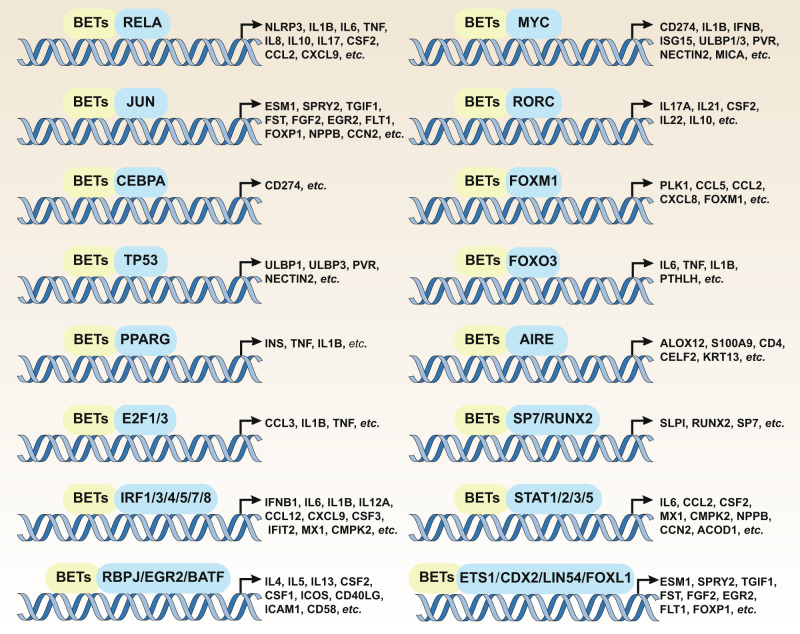
Innate immunity serves as the rapid and first-line defense against invading pathogens, and this process can be regulated at various levels, including epigenetic mechanisms. The bromodomain and extraterminal domain (BET) family of proteins consists of four conserved mammalian members (BRD2, BRD3, BRD4, and BRDT) that regulate the expression of many immunity-associated genes and pathways. In particular, in response to infection and sterile inflammation, abnormally expressed or dysfunctional BETs are involved in the activation of pattern recognition receptor (e.g., TLR, NLR, and CGAS) pathways, thereby linking chromatin machinery to innate immunity under disease or pathological conditions. Mechanistically, the BET family controls the transcription of a wide range of proinflammatory and immunoregulatory genes by recognizing acetylated histones (mainly H3 and H4) and recruiting transcription factors (e.g., RELA) and transcription elongation complex (e.g., P-TEFb) to the chromatin, thereby promoting the phosphorylation of RNA polymerase II and subsequent transcription initiation and elongation. This review covers the accumulating data about the roles of the BET family in innate immunity, and discusses the attractive prospect of manipulating the BET family as a new treatment for disease.
Overview
The claims and statistics of this paper haven’t been checked yet.
Free: it reads the open-access text and checks the first 5 claims that cite a source we can check. Create a free account to check every claim.
Integrity signals
Registry
Cites
Statistics
Figures
Verification
Claims the paper makes
The claims and statistics of this paper haven’t been checked yet.
Free: it reads the open-access text and checks the first 5 claims that cite a source we can check. Create a free account to check every claim.
Claims other papers make about this one
Each is checked against this paper’s own text: does it say what the citing paper says it does?
The cited source says what the claim attributes to it.
In the citing paper
“We previously demonstrated that pharmacological inhibition of bromodomain and extra-terminal domain (BET) proteins, critical mediators of stress-activated chromatin signaling in various diseases3, modulates a reversible transcriptional switch that governs fibroblast activation in chronic heart failure through the transcription factor (TF) MEOX14.”
From Chromatin remodelling drives immune cell–fibroblast communication in heart failure (2024) · cites this paper as [3]
Self-check
Percentages, sums and reported differences re-computed from the paper’s own numbers.
The self-check needs the paper’s full text.
Citations
Cites
Recognition of double-stranded RNA and activation of NF-κB by Toll-like receptor 3
Alexopoulou, L., Holt, A. C., Medzhitov, R., & Flavell, R. A. (2001) · Nature · doi:10.1038/35099560 · Cited by 6,129
The Nuclear Factor NF- B Pathway in Inflammation
Lawrence, T. (2009) · Cold Spring Harbor Perspectives in Biology · doi:10.1101/cshperspect.a001651 · Cited by 4,898 · cited 1×
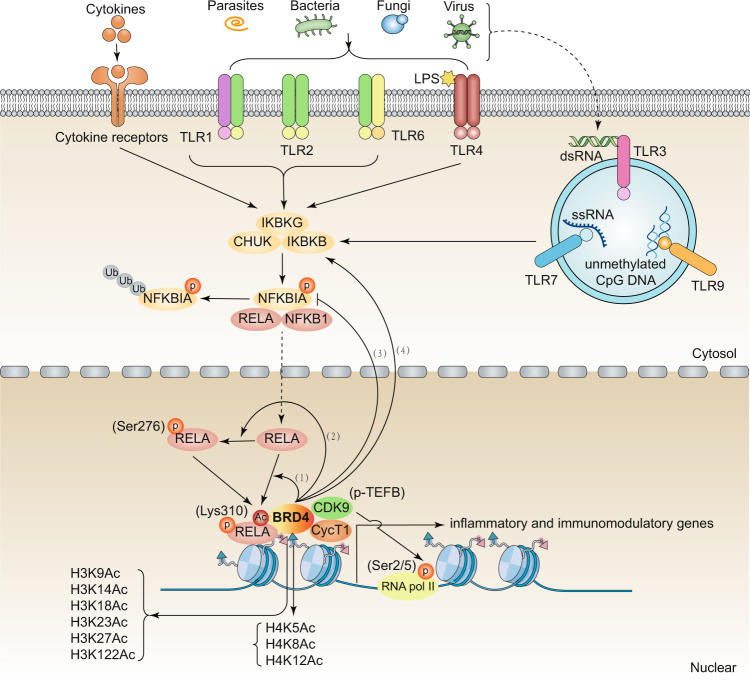
“This dynamic modification and expression change of IκBα further promotes the transport of RELA from the cytoplasm to the nucleus, where it can bind to the promoters of various related genes and regulate their transcription.(81) Both acetylation and phosphorylation are essential for the transcriptional activity of RELA.”
BackgroundThe complexity of NF-κB signaling in inflammation and cancer
Hoesel, B., & Schmid, J. A. (2013) · Molecular Cancer · doi:10.1186/1476-4598-12-86 · Cited by 3,165
Pathogen Recognition and Inflammatory Signaling in Innate Immune Defenses
Mogensen, T. H. (2009) · Clinical Microbiology Reviews · doi:10.1128/cmr.00046-08 · Cited by 3,111 · cited 1×
“TLR4 is expressed in almost all innate immune cells, and it specifically recognizes bacterial LPS, several other components of pathogens, and DAMPs derived from tissue damage.(60) TLR4 binds to its ligands, which ultimately leads to the activation of the nuclear factor kappa light-chain enhancer of activated B cells (…”
BackgroundBET Bromodomain Inhibition as a Therapeutic Strategy to Target c-Myc
Delmore, J. E., Issa, G. C., Lemieux, M. E., Rahl, P. B., Shi, J., Jacobs, H. M., Kastritis, E., Gilpatrick, T., Paranal, R. M., Qi, J., et al. (2011) · Cell · doi:10.1016/j.cell.2011.08.017 · Cited by 2,813
Coactivator condensation at super-enhancers links phase separation and gene control
Sabari, B. R., Dall’Agnese, A., Boija, A., Klein, I. A., Coffey, E. L., Shrinivas, K., Abraham, B. J., Hannett, N. M., Zamudio, A. V., Manteiga, J. C., et al. (2018) · Science · doi:10.1126/science.aar3958 · Cited by 2,595 · cited 1×
“The inherent disordered regions of BRD4 and MED1 can form phase-separated droplets, and then separate and concentrate the nuclear extract transcription device and control key cellidentity genes.(184) In addition, LncRNA DIGIT can promote BRD3 to form a phase-separated condensate, which occupies the enhancer of endoder…”
BackgroundRegulation and function of the cGAS–STING pathway of cytosolic DNA sensing
Chen, Q., Sun, L., & Chen, Z. J. (2016) · Nature Immunology · doi:10.1038/ni.3558 · Cited by 2,333 · cited 1×
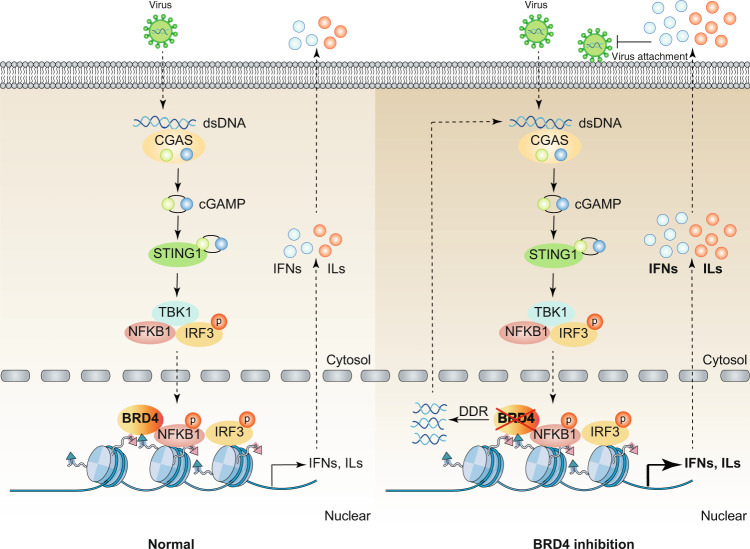
“The CGAS-STING1 pathway-mediated DNA-sensing signaling pathway is crucial for the production of type I IFNs and host antiviral responses.(78) Interestingly, blocking BRD4 widely inhibits the attachment of various DNA and RNA viruses (e.”
BackgroundPathogen Recognition by the Innate Immune System
Kumar, H., Kawai, T., & Akira, S. (2011) · International Reviews of Immunology · doi:10.3109/08830185.2010.529976 · Cited by 2,257 · cited 1×
“Function of BETs in innate immunity The innate immune response is mainly triggered by the recognition of various extracellular or intracellular danger signals through PRRs expressed in immune and non-immune cells.(52) The surface-expressed PRRs include toll-like receptors (TLRs), C-type lectin receptors (CLRs), and ad…”
BackgroundMedzhitov, R., & Janeway, C. (2000) · New England Journal of Medicine · doi:10.1056/nejm200008033430506 · Cited by 1,825
Structure and ligand of a histone acetyltransferase bromodomain
Dhalluin, C., Carlson, J. E., Zeng, L., He, C., Aggarwal, A. K., Zhou, M.-M., & Zhou, M.-M. (1999) · Nature · doi:10.1038/20974 · Cited by 1,732 · cited 1×
“It is worth noting that BETs can recognize not only residues in histones, but also other acetylated nuclear proteins to control gene transcription.(181) It can be supposed that other acetylationregulated TFs, including cAMP response element binding protein 1 (CREB1), heat shock transcription factor 1 (HSF1), sterol re…”
Background
Cited by
Items 101–200 of 329
Design, synthesis, and biological evaluation of quinoxalinone derivatives as potent BRD4 inhibitors
Xu, K.-Y., Wang, X., Cheng, L., Cui, Q.-H., Shi, J.-T., Zhang, L., & Chen, S. (2022) · Bioorganic & Medicinal Chemistry · doi:10.1016/j.bmc.2022.117152 · Cited by 16
BET inhibitors: an updated patent review (2018–2021)
Chen, H., Liu, Z., Zheng, L., Wang, R., & Shi, L. (2022) · Expert Opinion on Therapeutic Patents · doi:10.1080/13543776.2022.2115354 · Cited by 16
Lin, Z., Li, Z., Guo, Z., Cao, Y., Li, J., Liu, P., & Li, Z. (2022) · Frontiers in Pharmacology · doi:10.3389/fphar.2022.887991 · Cited by 15
“Not only governed by the “writer” histone acetyltransferases and the “eraser” histone deacetylases, histone acetylation also relies on “readers”, which are acetyl-binding proteins recognizing the acetylated lysine in histones and recruiting transcriptional regulator complexes to chromatin, eventually regulating gene t…”
BackgroundMcGrath, M. K., Abolhassani, A., Guy, L., Elshazly, A. M., Barrett, J. T., Mivechi, N. F., Gewirtz, D. A., & Schoenlein, P. V. (2024) · Frontiers in Endocrinology · doi:10.3389/fendo.2024.1298423 · Cited by 15
Relevance of BET Family Proteins in SARS-CoV-2 Infection
Lara-Ureña, N., & García‐Domínguez, M. (2021) · Biomolecules · doi:10.3390/biom11081126 · Cited by 15
“On the other hand, BET proteins are involved in activating transcriptional programs related to immunity and the inflammatory response associated with infection [38,39].”
BackgroundAngiogenesis in gastrointestinal stromal tumors: From bench to bedside
Papadakos, S. P., Tsagkaris, C., Papadakis, M., Papazoglou, Α. S., Moysidis, D. V., Zografos, C. G., & Theocharis, S. E. (2022) · World Journal of Gastrointestinal Oncology · doi:10.4251/wjgo.v14.i8.1469 · Cited by 15
Cytoprotective, Cytotoxic and Cytostatic Roles of Autophagy in Response to BET Inhibitors
Elshazly, A. M., & Gewirtz, D. A. (2023) · International Journal of Molecular Sciences · doi:10.3390/ijms241612669 · Cited by 15
“Among the eight families that contain bromodomain modules, the bromodomain and extra-terminal domain (BET) family has attracted extensive attention in recent years [19].”
BackgroundThe association between bromodomain proteins and cancer stemness in different solid tumor types
Czerwińska, P., Jaworska, A. M., Wlodarczyk, N. A., Cisek, M., Karwacka, M., Lipowicz, J. M., Ostapowicz, J., Rosochowicz, M. A., & Mackiewicz, A. A. (2022) · International Journal of Cancer · doi:10.1002/ijc.33937 · Cited by 15
Cen, Y., Chen, Y., Li, X., Chen, X., Yu, B., Yan, M., Yan, N., Cheng, H. B., & Li, S. (2024) · Biomaterials · doi:10.1016/j.biomaterials.2024.122568 · Cited by 14
Malik, A. A., Shariq, M., Sheikh, J. A., Fayaz, H., Srivastava, G., Thakuri, D., Ahuja, Y., Ali, S., Alam, A., Ehtesham, N. Z., et al. (2024) · Advanced Biology · doi:10.1002/adbi.202400174 · Cited by 14
Berryer, M. H., Rizki, G., Nathanson, A. J., Klein, J. A., Trendafilova, D., Susco, S. G., Lam, D., Messana, A., Holton, K. M., Karhohs, K. W., et al. (2023) · eLife · doi:10.7554/elife.80168 · Cited by 14
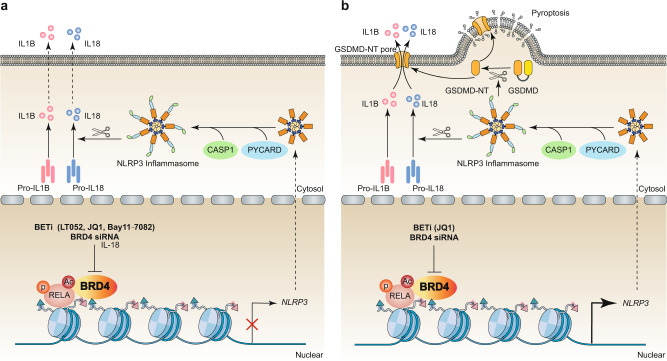
“Indeed, CASP1, GSDMD, and IL6 have all previously been shown to be downregulated by (+)- JQ1 treatment, consistent with the known role of BET proteins in promotion of the inflammatory response (Wang et al., 2021b; Zhou et al., 2019).”
BackgroundTargeting intracellular proteins with cell type-specific functions for cancer immunotherapy
Carelock, M. E., Master, R. P., Kim, M., Jin, Z., Wang, L. A., Maharjan, C. K., Hua, N., De, U., Kolb, R. H., Xiao, Y., et al. (2023) · Life Medicine · doi:10.1093/lifemedi/lnad019 · Cited by 14
“As BET proteins are known for their functions in immune regulation [175], it is not surprising to see that BET inhibitors can modulate the TME.”
Blockade of SARS-CoV-2 infection in vitro by highly potent PI3K-α/mTOR/BRD4 inhibitorPreprint
Acharya, A., Pandey, K., Thurman, M., Challagundala, K. B., Vann, K. R., Kutateladze, T. G., Morales, G. A., Durden, D. L., & Byrareddy, S. N. (2021) · bioRxiv (Cold Spring Harbor Laboratory) · doi:10.1101/2021.03.02.433604 · Cited by 14
“Patients with certain comorbid conditions like hypertension, cardiovascular disease, diabetes, and chronic obstructive pulmonary disorders (COPD) also have a higher probability of developing acute severe respiratory distress syndrome (ARDS).”
BackgroundInfluentialMulti-Water Bridges Enable Design of BET BD1-Selective Inhibitors for Pancreatic Cancer Therapy
Chen, X., Kang, W., Wu, T., Cao, D., Chen, Y., Du, Z., Li, Y., Meng, F., Wang, X., You, Q., et al. (2025) · Journal of Medicinal Chemistry · doi:10.1021/acs.jmedchem.4c03069 · Cited by 13
Proteolysis‐Targeting Chimera (PROTAC): A Revolutionary Tool for Chemical Biology Research
Pan, M., Fu, Z., Hou, H., Yang, C., & Li, J. (2025) · Small Methods · doi:10.1002/smtd.202500402 · Cited by 13
BRD4 inhibition leads to MDSC apoptosis and enhances checkpoint blockade therapy
Savardekar, H., Stiff, A. R., Liu, A., Wesolowski, R., Schwarz, E. J., Garbarine, I. C., Duggan, M. C., Zelinskas, S., Li, J., Lapurga, G., et al. (2025) · Journal of Clinical Investigation · doi:10.1172/jci181975 · Cited by 13
Self-citationRecent advances and strategies in BET bromodomain inhibition for drug discovery
Zhang, P.-F., Li, Y.-S., Wang, C., Gao, Y., Liu, J., Zhang, H.-E., Shi, L., & Sun, L. (2025) · European Journal of Medicinal Chemistry · doi:10.1016/j.ejmech.2025.118230 · Cited by 13
Establishment of environment-sensitive probes targeting BRD3/BRD4 for imaging and therapy of tumor
Gao, Y., Zhang, J., Li, J., Song, S., Zhang, S., Liu, Q., Wang, X., Zhao, J., Xia, C., Xiao, Y., et al. (2023) · European Journal of Medicinal Chemistry · doi:10.1016/j.ejmech.2023.115478 · Cited by 13
Established and Emerging Roles of Epigenetic Regulation in Diabetic Cardiomyopathy
Russell‐Hallinan, A., Karuna, N., Lezoualc’h, F., Matullo, G., Baker, H. E., Bernard, M., Devaux, Y., Badimón, L., Vilahur, G., Rieusset, J., et al. (2025) · Diabetes/Metabolism Research and Reviews · doi:10.1002/dmrr.70081 · Cited by 12
“Among BET proteins, BRD4 is the most well‐researched BET protein, known as the ‘reader’ of lysine acetylation in the context of response to various stressed conditions, including the diabetic heart [93, 94].”
Li, L., Gao, L., Zhou, H., Shi, C., Zhang, X., Zhang, D., & Liu, H. (2023) · Digestive Diseases and Sciences · doi:10.1007/s10620-023-07907-3 · Cited by 12
Targeting Epigenetic Regulators with HDAC and BET Inhibitors to Modulate Muscle Wasting
Nevi, L., Pöllänen, N., Penna, F., & Caretti, G. (2023) · International Journal of Molecular Sciences · doi:10.3390/ijms242216404 · Cited by 12
“Of relevance to non-cancer related diseases, BRD4 plays a key role in the inflammatory response in sepsis and other conditions [87,88].”
BackgroundMondal, A., Singh, B., Felkner, R. H., Falco, A. D., Swapna, G., Montelione, G. T., Roth, M. J., & Pérez, A. (2024) · Angewandte Chemie International Edition · doi:10.1002/anie.202405767 · Cited by 12
Bromodomain and extraterminal domain protein bromodomain inhibitor based cancer therapeutics
Ghosh, T., Soldi, R., & Sharma, S. (2021) · Current Opinion in Oncology · doi:10.1097/cco.0000000000000763 · Cited by 12
“BRD2, BRD3 and BRD4 are abnormally expressed in activated immune cells [28].”
BackgroundDiscovery of electrophilic degraders that exploit SNAr chemistryPreprint
Zhuang, Z., Byun, W. S., Kozicka, Z., Dwyer, B. G., Donovan, K. A., Jiang, Z., Jones, H. M., Abeja, D. M., Nix, M. N., Zhong, J., et al. (2024) · bioRxiv (Cold Spring Harbor Laboratory) · doi:10.1101/2024.09.25.615094 · Cited by 12
“The bromodomain and extra-terminal domain (BET) family of proteins are promising therapeutic targets for cancer and inflammatory diseases 26,27 .”
BackgroundFu, H., Pickering, H. C., Rubbi, L., Ross, T. M., Zhou, W., Reed, E. F., & Pellegrini, M. A. (2024) · Clinical Epigenetics · doi:10.1186/s13148-024-01730-x · Cited by 11
“Among the enriched transcription factors, Brd4 and NFKB1 are known to regulate immune responses [23, 24].”
BackgroundMacrocyclic peptides as a new class of targeted protein degraders
Jing, X., Mackay, J. P., & Passioura, T. (2025) · RSC Chemical Biology · doi:10.1039/d4cb00199k · Cited by 11
Epidrugs in cancer: mechanisms, applications, and future direction
Bibi, R., Varshetha, L., Lahary, R. K., Namburi, J., Laskar, F. A., & Sarkar, K. (2025) · Clinical & Translational Oncology · doi:10.1007/s12094-025-04064-z · Cited by 11
Matuszewska, M., Cieślik, M., Wilkaniec, A., Strawski, M., & Czapski, G. A. (2022) · International Journal of Molecular Sciences · doi:10.3390/ijms24010013 · Cited by 11
“BET proteins are involved in the activation of innate immunity, and their inhibition has been demonstrated to attenuate pro-inflammatory processes [15].”
BackgroundRare and low-frequency coding genetic variants contribute to pediatric-onset multiple sclerosis
Horton, M. K., Shim, J. E., Wallace, A. D., Graves, J., Aaen, G. S., Greenberg, B. M., Mar, S., Wheeler, Y., Weinstock‐Guttman, B., Waldman, A. T., et al. (2023) · Multiple Sclerosis Journal · doi:10.1177/13524585221150736 · Cited by 11
“21 Our results identified that the rare, minor alleles within BRD2 were protective for POMS.”
Mori, J., Shafran, J. S., Stojanova, M., Katz, M. H., Gignac, G. A., Wisco, J. J., Heaphy, C. M., & Denis, G. V. (2022) · The Prostate · doi:10.1002/pros.24351 · Cited by 11
“In particular, aberrant B7‐H3 activation is associated with PDAC progression.(38,49) In breast cancer, the activation of BRD4 promotes”
BackgroundInfluentialBRD4 is involved in viral exacerbation of chronic obstructive pulmonary disease
Duan, Y., Zhou, S., & Wang, J. (2023) · Respiratory Research · doi:10.1186/s12931-023-02348-y · Cited by 11
“It plays an important role in inflammation by regulating the expression of inflammatory genes [25].”
BackgroundEwaoluwagbemiga, E. O., Lloret‐Villas, A., Nosková, A., Pausch, H., & Kasper, C. (2025) · Genetics Selection Evolution · doi:10.1186/s12711-025-00993-z · Cited by 10
“It encodes a protein that influences the expression of other genes by increasing their accessibility to RNA polymerase II for transcription [74] and regulates the expression of several immunity-related genes, thereby constituting an important part of the innate immunity [75].”
Fu, R., Qin, P., Zou, X., Hu, Z., Hong, N., Wang, Y., & Jin, W. (2021) · Frontiers in Cell and Developmental Biology · doi:10.3389/fcell.2021.702897 · Cited by 10
Lee, H., Nam, J., Jang, H., Park, Y., Son, M., Lee, I., Eyun, S., Yang, J., Jeon, J., & Yang, S. (2024) · British Journal of Pharmacology · doi:10.1111/bph.16359 · Cited by 10
“BRD2 binds to acetylated histones and regulates gene expression, cell cycle progression and cell differentiation (Cheung et al., 2017; Shu et al., 2020; Wang, Wu, et al., 2021a).”
BackgroundSong, Z., Li, J., He, Y., Wang, X., Tian, J., & Wu, Y. (2024) · International Immunopharmacology · doi:10.1016/j.intimp.2024.112646 · Cited by 10
Kulski, J. K., Pfaff, A. L., & Kõks, S. (2024) · Genes · doi:10.3390/genes15091185 · Cited by 10
“…be involved in many physiological and pathological processes including the immune response, has a role in nucleosome assembly and chromatin remodeling [55,56], and interacts genome‑wide with the architectural/insulator protein CCCTC‑binding fac‑ tor (CTCF) to form transcriptional boundaries [57].”
BackgroundDemircan, T., Yavuz, M., & Akgül, S. (2021) · OMICS A Journal of Integrative Biology · doi:10.1089/omi.2021.0114 · Cited by 10
Verstockt, B., Alsoud, D., van Oostrom, J. M., Verstockt, S., Smith, J., Stylli, J., Singh, S., van Gennep, S., Rahimian, P., Sabino, J., et al. (2025) · Journal of Crohn s and Colitis · doi:10.1093/ecco-jcc/jjaf063 · Cited by 9
Roles of Brd4 in Vascular Smooth Muscle Cells: Implications for Aging and Vascular Dysfunction
Sun, J., Gui, Y., Yin, H. R., Yan, B., Chen, Y.-X., Belke, D. D., Hill, J. A., Zhou, S., & Zheng, X. (2025) · Arteriosclerosis Thrombosis and Vascular Biology · doi:10.1161/atvbaha.124.322158 · Cited by 9
Lalu, A. C., Lubaba, F., Gopalakrishnan, A. P., Mahin, A., Subair, S., Shivamurthy, P. B., Rajeev, A. C., & Raju, R. (2025) · DNA and Cell Biology · doi:10.1089/dna.2025.0088 · Cited by 9
“JAK2 and CHUK are the currently known kinases that regulate BRD4, with JAK2 phosphorylating Y97 and Y98 and CHUCK phosphorylating S1117 (Pecharromán et al., 2023; Wang et al., 2021b).”
InfluentialThe BRD4-nucleosome interaction is enhanced modestly and non-selectively by histone acetylation
Lambrechts, L., Reid, X. J., Kambanis, L., Luong, C., Kobakhidze, E., Daners, A., Zhong, Y., Patel, K., Franck, C., Sani, H. M., et al. (2025) · Nucleic Acids Research · doi:10.1093/nar/gkaf1406 · Cited by 9
“Bromodomain and Extra-Terminal domain (BET) proteins are a set of widely and abundantly expressed transcriptional regulators that have homologues across eukaryotes [ 1 –3 ].”
Cell‐Free DNA‐Based Theranostics for Inflammatory Disorders
Li, J., Wang, Y., Fan, X., Xu, M., Li, J., Tan, W., Zhang, J., & Li, H. (2026) · Advanced Science · doi:10.1002/advs.202520383 · Cited by 9
Epigenetically controlled endothelial promyelocytic leukemia drives liver inflammation and fibrosis
Gan, C., Lai, E., Tai, Y., Chen, S., Zhao, C., Dai, W., Yang, Z., Li, B., Lan, T., Xiao, Y., et al. (2026) · Journal of Clinical Investigation · doi:10.1172/jci196730 · Cited by 9
“BRD4 is a well-known epigenetic reader that binds to acetylated lysine residues on histones, facilitating the recruitment of transcriptional complexes to active gene loci (23).”
Kouraki, A., Doherty, M., Fernandes, G., Zhang, W., Walsh, D. A., Kelly, A., & Valdes, A. M. (2022) · European Journal of Pain · doi:10.1002/ejp.1902 · Cited by 9
“…or co- repressors of gene expression (Filippakopoulos & Knapp, 2014), where they regulate the expression of key oncogenes, anti- apoptotic proteins and many immunityassociated genes and pathways (Wang et al., 2021), which is consistent with an underlying role of inflammation in local sensitization.”
BackgroundAnalysis of differentially expressed long non-coding RNAs in LPS-induced human HMC3 microglial cells
Baek, M., Chai, J. C., Choi, H. I., Yoo, E., Binas, B., Lee, Y. S., Jung, K. H., & Chai, Y. G. (2022) · BMC Genomics · doi:10.1186/s12864-022-09083-6 · Cited by 9
Sharma, D., Hager, C. G., Li, S., Tran, L. T., Zhu, Y., Ma, A., Magnuson, B., Lesko, M. W., Wicha, M. S., & Burness, M. L. (2023) · Breast Cancer Research · doi:10.1186/s13058-023-01715-3 · Cited by 9
“However, several BET proteins are known to govern immune cell functions [48] and regulate the secretion of immune cytokines by modulating immune cell interactions [49].”
BackgroundMi, W., You, J., Li, L., Zhu, L., Xia, X., Yang, L., Li, F., Xu, Y., Bi, J., Liu, P., et al. (2024) · Life Metabolism · doi:10.1093/lifemeta/loae016 · Cited by 9
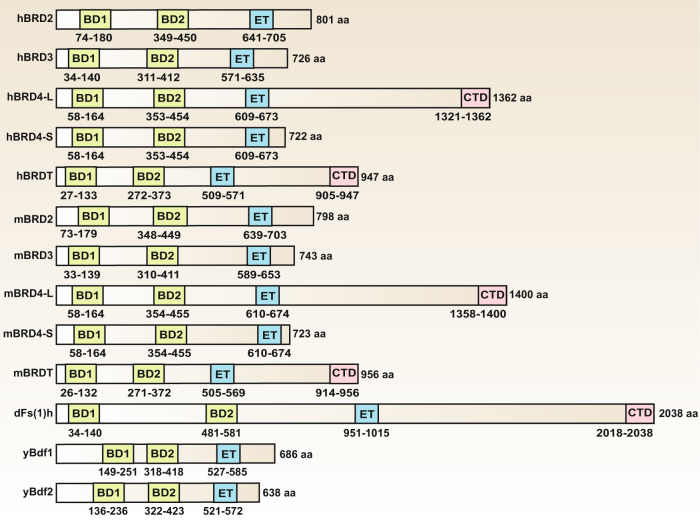
“…(BET) proteins, which comprise bromodomain-containing protein 2 (BRD2), BRD3, and BRD4, and the testis-restricted BRDT (bromodomain testis-specific protein), are epigenetic readers containing two tandem bromodomains (BD1 and BD2), an extra-terminal domain (ET), and a C-terminal domain (CTD) [18].”
Synthesis, SAR, and application of JQ1 analogs as PROTACs for cancer therapy
De, S., Sahu, R., Palei, S., & Nanda, L. N. (2024) · Bioorganic & Medicinal Chemistry · doi:10.1016/j.bmc.2024.117875 · Cited by 9
Marine natural product-inspired discovery of novel BRD4 inhibitors with anti-inflammatory activity
Chen, S., Yang, J., Wang, X., Liu, X., Li, X., Ye, Y., Wang, P., Liu, Z., & Wang, C. (2024) · European Journal of Medicinal Chemistry · doi:10.1016/j.ejmech.2024.117193 · Cited by 9
Proteolysis targeting chimera of BI-2536 induces potent dual degradation of PLK1 and BET proteins
Song, S., Yang, W., & Tai, W. (2025) · Bioorganic & Medicinal Chemistry · doi:10.1016/j.bmc.2025.118087 · Cited by 9
“37 Specifically, the targeted degradation of BRD4 has been observed to trigger a cascade effect, leading to the concomitant degradation of BRD2 and BRD3, two additional members of the BET family.”
Overexpression of BRD4 in Gastric Cancer and its Clinical Significance as a Novel Therapeutic Target
Zhang, M., Huang, H. D., Wei, M., Sun, M., Deng, G., Hu, S., Wang, H., & Gong, Y. (2023) · Current Cancer Drug Targets · doi:10.2174/1568009623666230606164030 · Cited by 9
Pérez-Cabello, J. A., Silvera-Carrasco, L., Franco, J. M., Capilla‐González, V., Armaos, A., Gómez-Lima, M., García-García, R., Yap, X. W., Leal‐Lasarte, M., Lall, D., et al. (2023) · Proceedings of the National Academy of Sciences · doi:10.1073/pnas.2302143120 · Cited by 9
“…has been shown to play crucial roles in innate immune responses by activating transcription of a number of immune genes (26, 70), and BET protein dysfunction has been lately involved in various inflammation-related disorders, including cancer, neurodegenerative disease, and CNS injury (26, 27).”
BackgroundBromodomain Inhibitors Modulate FcγR-Mediated Mononuclear Phagocyte Activation and Chemotaxis
Banham, G. D., Lee, C. Y. C., Ferdinand, J. R., Matthews, R. J., Jing, C., Smithers, N. N., Prinjha, R. K., & Clatworthy, M. R. (2022) · Frontiers in Immunology · doi:10.3389/fimmu.2022.885101 · Cited by 9
“I-BET151 (GSK525762A), referred to hereafter as iBET, is a potent inhibitor of BRD2, BRD3 and BRD4 (29, 30), which are ubiquitously expressed proteins, including in myeloid cells (25, 31).”
BackgroundRegulation of cholesterol metabolism: New players for an old physiological process
Parente, M., Tonini, C., Segatto, M., & Pallottini, V. (2023) · Journal of Cellular Biochemistry · doi:10.1002/jcb.30477 · Cited by 9
“BET proteins are a family of epigenetic readers consisting of four conserved members: BRD2, BRD3, BRD4, and BRDT. 154 Initially, BETs have generated significant interest due to their strong binding ability to different inhibitors which exert anticancer activity.”
BackgroundMarafini, I., Frascatani, R., Colella, M., Cristofaro, E. D., & Monteleone, G. (2025) · Frontiers in Pharmacology · doi:10.3389/fphar.2025.1682223 · Cited by 8
“In line with previous studies showing a diffuse expression of BRD4 in immune and non-immune cells (Wang N. et al., 2021), we showed that virtually all the immune cell types in the gut were positive for BRD4 and that, in IBD mucosa, T lymphocytes and antigen-presenting cells were the major sources…”
BRD2 bridges TFIID and MOF-H4K16ac-containing nucleosomes to promote transcriptional initiation
Zheng, B., Qiu, R., Gold, S. R., Iwanaszko, M., Aoi, Y., Howard, B. C., Das, M., & Shilatifard, A. (2025) · Molecular Cell · doi:10.1016/j.molcel.2025.12.010 · Cited by 8
Navigating the landscape of psoriasis therapy: novel targeted pathways and emerging trends
Innani, S., Tomar, Y., Rana, V., & Singhvi, G. (2023) · Expert Opinion on Therapeutic Targets · doi:10.1080/14728222.2023.2288273 · Cited by 8
“Subsequent tests in human primary CD4+ T cell cultures stimulated with anti-CD3/CD28 antibodies confirmed that iBET-BD2 did not interfere with cell proliferation, unlike other treatments like iBET151 and iBET-BD1, but still reduced the expression of cytokines that contribute to inflammation [52–54].”
BackgroundEpigenetics in the formation of pathological aggregates in amyotrophic lateral sclerosis
Noches, V., Campos‐Melo, D., Droppelmann, C. A., & Strong, M. J. (2024) · Frontiers in Molecular Neuroscience · doi:10.3389/fnmol.2024.1417961 · Cited by 8
Zhang, X., Ge, Y., Ye, M., Wang, X., Tong, Y., Liu, C., Xu, S., Zhao, Z., You, Q., Guo, X., et al. (2025) · Free Radical Biology and Medicine · doi:10.1016/j.freeradbiomed.2025.02.042 · Cited by 8
Ma, Z., McAninch, S. B., Liu, Z., Zhang, C., Chen, H., He, J., Yang, W., Panganiban, R. P., Cong, Y., Yochum, G. S., et al. (2025) · ACS Pharmacology & Translational Science · doi:10.1021/acsptsci.5c00068 · Cited by 8
Si, P., Chen, H., Liu, J., Zhang, E., Li, C., Gu, J., Wang, R., & Li, W. (2022) · Journal of Molecular Structure · doi:10.1016/j.molstruc.2022.133366 · Cited by 8
Lee, H., Han, S. J., Ok, S., Lee, K. M., Choi, S., Yoon, I., Choi, S., Kim, J., Ryu, S., Son, M., et al. (2025) · Frontiers in Immunology · doi:10.3389/fimmu.2025.1633334 · Cited by 7
Frascatani, R., Marafini, I., Colella, M., & Monteleone, G. (2026) · Journal of Inflammation · doi:10.1186/s12950-026-00489-7 · Cited by 7
“BRD4 stabilizes transcriptional complexes at the promoters and enhancers of inflammatory genes, amplifying acute inflammatory responses and contributing to the epigenetic memory that sustains chronic inflammation [5].”
Kumar, T. A., Mahimairaj, P., Venkatesh, R., Kistan, A., & Rajeswaran, P. (2026) · Journal of Sol-Gel Science and Technology · doi:10.1007/s10971-026-07143-x · Cited by 7
“This hysteresis loop type is frequently linked to materials with a complex pore network, in fl uen-cing the reported adsorption-desorption activity [36].”
Histone acetylation-dependent clustering of BRD2 instructs transcription dynamics
Erdogdu, N. U., Guhathakurta, S., Oellers, R., Shvedunova, M., Morín, J. A., Patrick, E. M., Seyfferth, J., Deboutte, W., Gómez-Aulí, A., Mittler, G., et al. (2026) · Nature Genetics · doi:10.1038/s41588-026-02533-x · Cited by 7
Unraveling the Role of Bromodomain and Extra-Terminal Proteins in Human Uterine Leiomyosarcoma
Yang, Q., Falahati, A., Khosh, A., Lastra, R. R., Boyer, T., & Al-Hendy, A. A. (2024) · Cells · doi:10.3390/cells13171443 · Cited by 7
“So far, over sixty BRDs have been identified in the human genome, and these BRDs were divided into eight subfamilies (e.g., bromodomain and extra-terminal domain [BET] subfamilies) based on protein sequence similarity [20,21].”
BackgroundAmrutkar, R. D., Amesar, M. V., Chavan, L. B., Baviskar, N. S., & Bhamare, V. G. (2024) · Current Drug Targets · doi:10.2174/0113894501304747240823111337 · Cited by 7
Morino, K., Miyake, M., Nagasaki, M., Kawaguchi, T., Numa, S., Mori, Y., Yasukura, S., Akada, M., Nakao, S., Nakata, A., et al. (2024) · Ophthalmology Retina · doi:10.1016/j.oret.2024.09.016 · Cited by 7
Achieving theranostic probes targeting BRD3/BRD4 for imaging and therapy of tumor
Gao, Y., Liu, Q., Song, C., Song, S., Tian, C., Li, J., Liu, W., Cheng, M., Zhang, S., Wang, X., et al. (2024) · European Journal of Medicinal Chemistry · doi:10.1016/j.ejmech.2024.117151 · Cited by 7
Rezazadeh‐Shojaee, F., Azadian, E., Wong, M. X., Ma, X., Rickard, J. A., Pang, J., Hall, C., Kueh, A. J., Masters, S. L., Rioja, I., et al. (2025) · Science Advances · doi:10.1126/sciadv.adv0079 · Cited by 7
“However, BETis have also emerged as potential anti-inflammatory compounds because of their capacity to block cytokine gene transcription ( 57 , 58 ).”
Sun, T., Cao, Y., Huang, T., Sang, Y., Dai, Y., & Tao, Z. (2022) · Journal of Clinical Laboratory Analysis · doi:10.1002/jcla.24709 · Cited by 7
Lara-Ureña, N., Gómez-Marín, E., Pozuelo-Sanchez, I., Reyes, J. C., & García‐Domínguez, M. (2024) · Cellular and Molecular Life Sciences · doi:10.1007/s00018-024-05343-8 · Cited by 7
“On one hand, BET proteins are key regulators of the immune response [10], but on the other hand, the interaction of a variety of viral proteins with different BET domains, to hijack BETs’ transcriptional function for its benefit, has been widely documented [11, 12].”
BackgroundResultATAD2 bromodomain in cancer therapy: current status and future perspectives
Biju, T., Venkatesh, C., Honnasiddappa, D. B., Sajjan, M., Mahadeva, N. K., Dinesh, B. G. H., Kumar, B. S. H., Ganjipete, S., Ramar, M., Kunjiappan, S., et al. (2025) · International Journal of Biological Macromolecules · doi:10.1016/j.ijbiomac.2025.143948 · Cited by 7
Wang, B.-R., Wang, J., Tian, T., Zhang, S., Zhao, Y.-Q., Meng, S., Wu, Z.-Y., Huang, F., Zeng, J., & Ni, J. (2023) · Journal of Affective Disorders · doi:10.1016/j.jad.2023.12.042 · Cited by 7
Covalent inhibitors meet epigenetics: New opportunities
Feng, Q., Yu, L., Li, L., & Zhang, Q. (2024) · European Journal of Medicinal Chemistry · doi:10.1016/j.ejmech.2024.116951 · Cited by 6
Epigenetic Regulation and Therapeutic Targeting of Alternative Splicing Dysregulation in Cancer
Yan, L., & Lai, M. (2025) · Pharmaceuticals · doi:10.3390/ph18050713 · Cited by 6
Nord, J. A., Makowski, S. J., Sidlowski, P. F. W., Bursch, K. L., Corbett, J. A., & Smith, B. C. (2025) · Journal of Biological Chemistry · doi:10.1016/j.jbc.2025.110358 · Cited by 6
Ahangaran, S., Pourgholaminejad, A., Nosrati, R., & Babaei, P. (2025) · Behavioural Brain Research · doi:10.1016/j.bbr.2025.115919 · Cited by 6
Rational Combinations of PARP Inhibitors with HRD-Inducing Molecularly Targeted Agents
Lee, E. K., & Liu, J. F. (2023) · Cancer treatment and research · doi:10.1007/978-3-031-30065-3_10 · Cited by 6
Li, Y., Fan, C., Hu, Y., Zhang, W., Li, H., Wang, Y., & Xu, Z. (2024) · International Immunopharmacology · doi:10.1016/j.intimp.2024.112300 · Cited by 6
A Minireview on BET Inhibitors: Beyond Bromodomain Targeting
Iudin, M. S., Khodarovich, Y. M., Varizhuk, A. M., Цветков, В. Б., & Severov, V. V. (2025) · Biomedicines · doi:10.3390/biomedicines13030594 · Cited by 6
“Their dysregulation is involved in many pathologies, such as inflammation, cancer, metabolic disorders, neurodegenerative diseases, etc. [3–7].”
Elfiky, A. M. I., Hageman, I., Becker, M. A. J., Verhoeff, J., Yim, A. Y. F. L., Joustra, V., Mulders, L., Fung, I. T. H., Rioja, I., Prinjha, R. K., et al. (2022) · Cells · doi:10.3390/cells11182846 · Cited by 6
“Regarding regulation of the immune response, the BET proteins are essential for the transcription of several inflammation-related genes and have therefore been targets of interest in drug development for inflammatory diseases and cancer [8,9].”
BackgroundCerezo, I. M., Pérez‐Gómez, O., Bautista, R., Seoane, P., Esteban, M. Á., Balebona, M. C., Moríñigo, M. Á., & Tapia-Paniagua, S. T. (2023) · Animals · doi:10.3390/ani13020193 · Cited by 6
“On the other hand, genes related to the epigenetic effect, such as the histone acetylation (brd2a) [68,69] and methylation (kmt2cb) [70] were also up-regulated in PW specimens.”
BackgroundLi, J., Zhu, R. Y., Zhuang, X., Zhang, C., Shen, H., Wu, X., Zhang, M., Huang, C., Xiang, Q., Zhao, L., et al. (2023) · Bioorganic Chemistry · doi:10.1016/j.bioorg.2023.106495 · Cited by 6
Cohen, A., Pataki, E., Kupiec, M., & Weisman, R. (2022) · PLoS Genetics · doi:10.1371/journal.pgen.1010061 · Cited by 6
“In particular, de-regulation of BRD4 has been associated with several cancer types, and BET inhibitors are potential drugs for anticancer and immune diseases [75].”
BackgroundChow, Y. T., Tong, B., Tan, Z. Y., Tutter, A. V., Nan, Z., Horton, P. A., Romanowski, M. J., Zécri, F. J., Schreiber, S. L., & Liu, S. (2025) · ACS Chemical Biology · doi:10.1021/acschembio.5c00413 · Cited by 5
Epigenetic modulation in cancer drug discovery: promising targets and clinical applications
Sundaram, V. A., Infant, S. S., Manikandan, S., Saravanan, A., Marimuthu, M. M. C., & Chopra, H. (2025) · Pharmacological Reports · doi:10.1007/s43440-025-00770-1 · Cited by 5
A non-canonical immunometabolic function of BRD3 during sepsis
Wang, N., Liu, J., Wu, R., Chen, F., Yu, C., Zeh, H. J., Xiao, X., Wang, H., Billiar, T. R., Zeng, L., et al. (2025) · Developmental Cell · doi:10.1016/j.devcel.2025.09.016 · Cited by 5
Self-citationLi, Z., Wang, X., Li, Q., Liu, Y., Si, W., Chen, D., Wang, Q., & Zhu, M. (2025) · Scientific Reports · doi:10.1038/s41598-025-21631-0 · Cited by 5
“Epigenetic readers (e.g., BET proteins) recognize histone acetylation and regulate chromatin remodeling and transcription by binding acetylated chromatin 13 .”
Zhao, L. N., & Andersen, J. B. (2026) · Clinical and Molecular Hepatology · doi:10.3350/cmh.2025.1370 · Cited by 5
BRD4 binds the nucleosome via both histone and DNA interactions
Zhu, J., Leith, E. M., O’Donnell, E. N., Manzano, B. P., Wu, S.-Y., Chiang, C., Armache, J., & Tan, S. (2026) · Molecular Cell · doi:10.1016/j.molcel.2026.07.012 · Cited by 5
Brown, J. A., Bal, J., Simeoni, M., Williams, P., Mander, P. K., Soden, P. E., Daga, S., Fahy, W. A., Wong, G. K. Y., Bloomer, J. C., et al. (2021) · British Journal of Clinical Pharmacology · doi:10.1111/bcp.15137 · Cited by 5
Xu, L., Jiao, J., Liu, M., Qin, Y., Zhang, M., Yan, D., Xu, K., & Sang, W. (2023) · Current Medicinal Chemistry · doi:10.2174/0109298673244868231017043517 · Cited by 5
BRD2 and BRD3 genes independently evolved RNA structures to control unproductive splicing
Petrova, M. V., Margasyuk, S., Vorobeva, M. A., Skvortsov, D. A., Донцова, О. А., & Pervouchine, D. D. (2024) · NAR Genomics and Bioinformatics · doi:10.1093/nargab/lqad113 · Cited by 5
“The bromodomain and extraterminal domain (BET) protein family, a subgroup of the bromodomain protein superfamily ( 1–3 ), consists of four related chromatin readers ( BRD2 , BRD3 , BRD4 and BRDT ) with broad specificity on transcriptional activation of immunity-associated genes ( 4 ,5 ).”
BRD4 as an emerging epigenetic therapeutic target for inflammatory bowel disease
Ma, Z., Bolinger, A. A., Pinchuk, I. V., Tian, B., & Zhou, J. (2024) · Advances in pharmacology · doi:10.1016/bs.apha.2024.10.008 · Cited by 5
PRIYANKA, P., Mujwar, S., Bharti, R., Singh, T. G., & Khatri, N. (2024) · Journal of Hepatocellular Carcinoma · doi:10.2147/jhc.s479463 · Cited by 5
Zhang, Q., Wu, Q., Huan, X., Song, S., Bao, X., Miao, Z., & Wang, Y.-Q. (2024) · Biochemical Pharmacology · doi:10.1016/j.bcp.2024.116198 · Cited by 5
New generation of clinical epigenetics analysis and diagnosis for precision medicine
Song, P., & Li, B. (2025) · Diagnostics · doi:10.3390/diagnostics15121539 · Cited by 4
Bromodomain-containing proteins in the unicellular eukaryote Tetrahymena thermophila
Zhe, Z., Ju, A., Ai-Li, J., Yuan-Yuan, W., Hong-Zhen, J., Yong-Qiang, L., Shan, G., & 青岛海洋科学与技术试点国家实验室, 海. (2025) · 动物学研究 · doi:10.24272/j.issn.2095-8137.2025.011 · Cited by 4
“Furthermore, BET family proteins play critical roles in immunity-related gene transcription, with their dysregulation implicated in various inflammatory and immune-related disorders, highlighting their suitability for pharmacological intervention (Wang et al., 2021).”
Su, X., Deng, G., Sun, S., Wang, G., Hennessy-Strahs, S., Li, J., Wen, M., Mao, Z., Ghobrial, R. M., Xiao, X., et al. (2025) · American Journal of Transplantation · doi:10.1016/j.ajt.2025.07.2469 · Cited by 4
Metadata
- Authors
- Wang, N., Wu, R., Tang, D., & Kang, R.
- Affiliations
- The University of Texas Southwestern Medical Center (US)
- Corresponding author
- Tang, Daolin
- Kang, Rui
- Venue
- Signal Transduction and Targeted Therapy
- Published
- 2021-01-19
- Volume
- 6
- Issue
- 1
- Pages
- 23-23
- ISSN
- 2059-3635 (ISSN-L)
- PMC
- PMC7813845
- OpenAlex
- W3121466164
- Cited by
- 295
- References
- 200
- Citations by year
- 2026: 33 · 2025: 67 · 2024: 60 · 2023: 57 · 2022: 50 · 2021: 28
- FWCI
- 5.20
- Type
- journal article
- Language
- en
- Open access
- gold
- doi.org
- Licence
- cc-by
- creativecommons.org/licenses/by/4.0 (tdm)
- creativecommons.org/licenses/by/4.0 (vor)
- Locations
- Signal Transduction and Targeted Therapy (publishedVersion, cc-by)
- PubMed Central (publishedVersion, cc-by)
- PubMed (publishedVersion)
- DOAJ (DOAJ: Directory of Open Access Journals) (submittedVersion, cc-by-sa)
- Funders
- University of Texas Southwestern Medical Center
- National Institutes of Health
- National Cancer Institute (R01CA211070)
- National Institute of General Medical Sciences (R01GM127791)
- Topics
- Life Sciences › Biochemistry, Genetics and Molecular Biology › Molecular Biology › Protein Degradation and Inhibitors
- Life Sciences › Biochemistry, Genetics and Molecular Biology › Molecular Biology › Genomics and Chromatin Dynamics
- Life Sciences › Immunology and Microbiology › Immunology › Immune Response and Inflammation
- Keywords
- BET proteins, BRD2, BRD3, BRD4, BRDT, innate immunity, epigenetic regulation, histone acetylation, pattern recognition receptors, Toll-like receptors, sterile inflammation, P-TEFb, RNA polymerase II elongation, RelA, chromatin regulation, BET inhibitors, immunotherapy
- MeSH terms
- Animals, Chromatin, Humans, Immunity, Innate, Transcription Factors, Transcription, Genetic, Epigenesis, Genetic
About these checks
Registry, retraction, Cites and statistics results are computed, not judged, with one exception: a printed reference that no index lists is read once by a model before it counts as a citation error. Claims are extracted by a model and kept only when their quote appears verbatim in the text; each cited source is then checked, with a model’s help, for whether it says what the claim relies on. Those verdicts can be wrong — read the claim’s quote and the cited source before relying on one.
Statistics and arithmetic are recomputed, not judged.
Confidence bands are shown only for fields calibrated on our annotated test set. None is calibrated yet, so no band is shown.
What counts as a claim ›How we measure confidence ›How we check this ›
Are you an author, or do you see a problem with this page? Request a review
Data sources
Bibliographic data: Semantic Scholar, OpenAlex, Crossref.
Contains information from the Semantic Scholar Academic Graph Datasets, made available under the ODC Attribution License (ODC-BY 1.0).
Semantic Scholar’s data is described in: Kinney, R., et al. (2023). The Semantic Scholar Open Data Platform. arXiv:2301.10140.
