

The BET family in immunity and disease
Open accessThe DOI matches its Crossref record; 200 of the 200 references it cites were found in a registry or an index.
Abstract
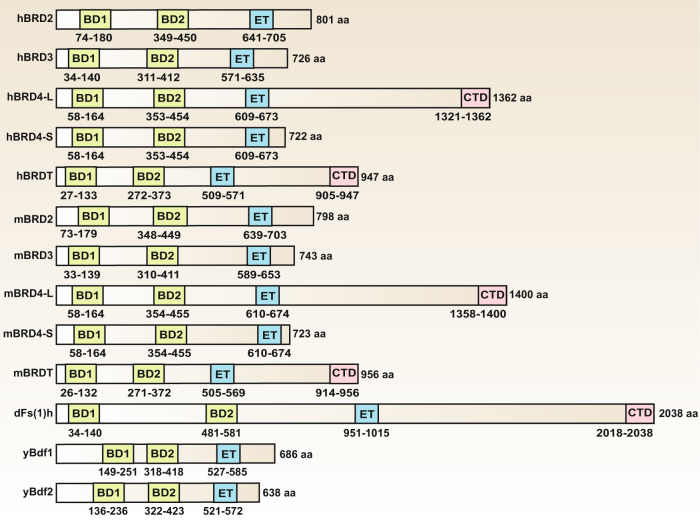
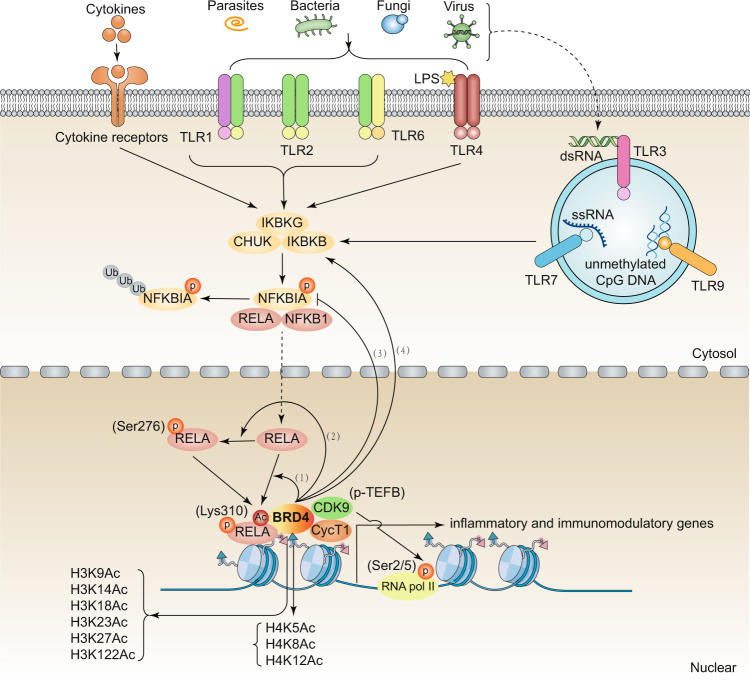
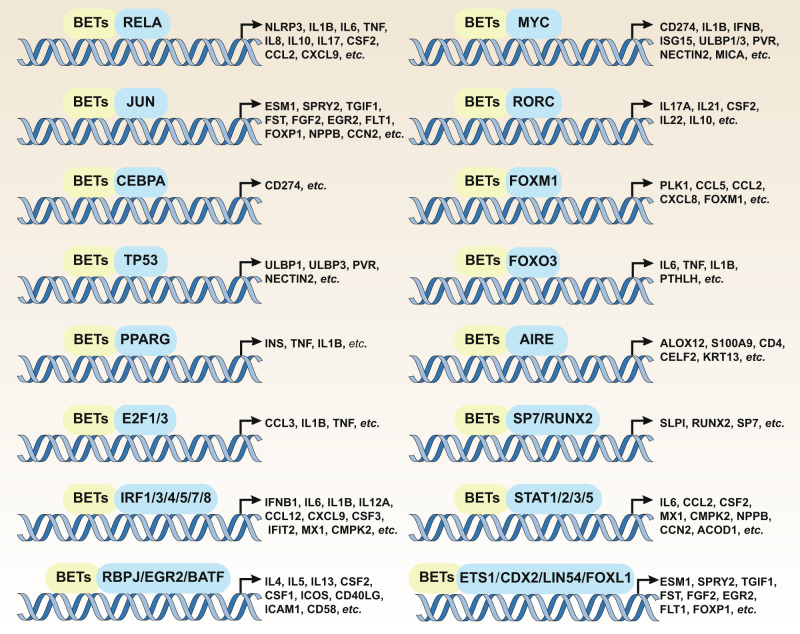
Innate immunity serves as the rapid and first-line defense against invading pathogens, and this process can be regulated at various levels, including epigenetic mechanisms. The bromodomain and extraterminal domain (BET) family of proteins consists of four conserved mammalian members (BRD2, BRD3, BRD4, and BRDT) that regulate the expression of many immunity-associated genes and pathways. In particular, in response to infection and sterile inflammation, abnormally expressed or dysfunctional BETs are involved in the activation of pattern recognition receptor (e.g., TLR, NLR, and CGAS) pathways, thereby linking chromatin machinery to innate immunity under disease or pathological conditions. Mechanistically, the BET family controls the transcription of a wide range of proinflammatory and immunoregulatory genes by recognizing acetylated histones (mainly H3 and H4) and recruiting transcription factors (e.g., RELA) and transcription elongation complex (e.g., P-TEFb) to the chromatin, thereby promoting the phosphorylation of RNA polymerase II and subsequent transcription initiation and elongation. This review covers the accumulating data about the roles of the BET family in innate immunity, and discusses the attractive prospect of manipulating the BET family as a new treatment for disease.
Overview
The claims and statistics of this paper haven’t been checked yet.
Free: it reads the open-access text and checks the first 5 claims that cite a source we can check. Create a free account to check every claim.
Integrity signals
Registry
Cites
Statistics
Figures
Verification
Claims the paper makes
The claims and statistics of this paper haven’t been checked yet.
Free: it reads the open-access text and checks the first 5 claims that cite a source we can check. Create a free account to check every claim.
Claims other papers make about this one
Each is checked against this paper’s own text: does it say what the citing paper says it does?
The cited source says what the claim attributes to it.
In the citing paper
“We previously demonstrated that pharmacological inhibition of bromodomain and extra-terminal domain (BET) proteins, critical mediators of stress-activated chromatin signaling in various diseases3, modulates a reversible transcriptional switch that governs fibroblast activation in chronic heart failure through the transcription factor (TF) MEOX14.”
From Chromatin remodelling drives immune cell–fibroblast communication in heart failure (2024) · cites this paper as [3]
Self-check
Percentages, sums and reported differences re-computed from the paper’s own numbers.
The self-check needs the paper’s full text.
Citations
Cites
Recognition of double-stranded RNA and activation of NF-κB by Toll-like receptor 3
Alexopoulou, L., Holt, A. C., Medzhitov, R., & Flavell, R. A. (2001) · Nature · doi:10.1038/35099560 · Cited by 6,129
The Nuclear Factor NF- B Pathway in Inflammation
Lawrence, T. (2009) · Cold Spring Harbor Perspectives in Biology · doi:10.1101/cshperspect.a001651 · Cited by 4,898 · cited 1×
“This dynamic modification and expression change of IκBα further promotes the transport of RELA from the cytoplasm to the nucleus, where it can bind to the promoters of various related genes and regulate their transcription.(81) Both acetylation and phosphorylation are essential for the transcriptional activity of RELA.”
BackgroundThe complexity of NF-κB signaling in inflammation and cancer
Hoesel, B., & Schmid, J. A. (2013) · Molecular Cancer · doi:10.1186/1476-4598-12-86 · Cited by 3,165
Pathogen Recognition and Inflammatory Signaling in Innate Immune Defenses
Mogensen, T. H. (2009) · Clinical Microbiology Reviews · doi:10.1128/cmr.00046-08 · Cited by 3,111 · cited 1×
“TLR4 is expressed in almost all innate immune cells, and it specifically recognizes bacterial LPS, several other components of pathogens, and DAMPs derived from tissue damage.(60) TLR4 binds to its ligands, which ultimately leads to the activation of the nuclear factor kappa light-chain enhancer of activated B cells (…”
BackgroundBET Bromodomain Inhibition as a Therapeutic Strategy to Target c-Myc
Delmore, J. E., Issa, G. C., Lemieux, M. E., Rahl, P. B., Shi, J., Jacobs, H. M., Kastritis, E., Gilpatrick, T., Paranal, R. M., Qi, J., et al. (2011) · Cell · doi:10.1016/j.cell.2011.08.017 · Cited by 2,813
Coactivator condensation at super-enhancers links phase separation and gene control
Sabari, B. R., Dall’Agnese, A., Boija, A., Klein, I. A., Coffey, E. L., Shrinivas, K., Abraham, B. J., Hannett, N. M., Zamudio, A. V., Manteiga, J. C., et al. (2018) · Science · doi:10.1126/science.aar3958 · Cited by 2,595 · cited 1×
“The inherent disordered regions of BRD4 and MED1 can form phase-separated droplets, and then separate and concentrate the nuclear extract transcription device and control key cellidentity genes.(184) In addition, LncRNA DIGIT can promote BRD3 to form a phase-separated condensate, which occupies the enhancer of endoder…”
BackgroundRegulation and function of the cGAS–STING pathway of cytosolic DNA sensing
Chen, Q., Sun, L., & Chen, Z. J. (2016) · Nature Immunology · doi:10.1038/ni.3558 · Cited by 2,333 · cited 1×
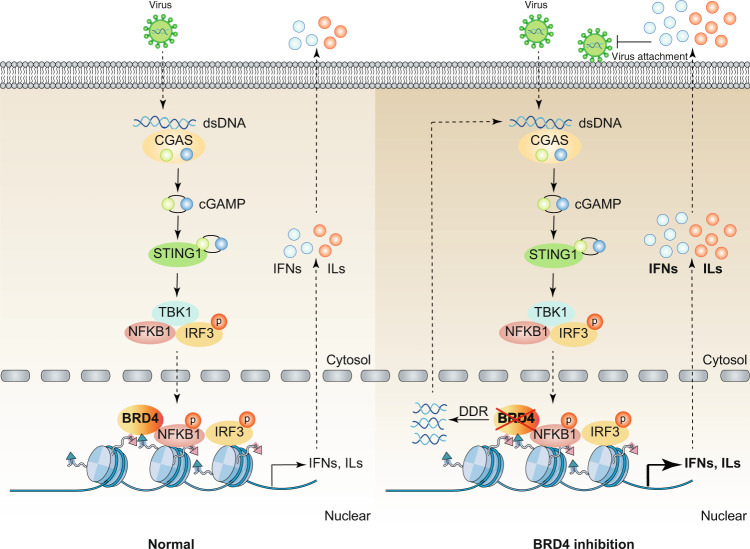
“The CGAS-STING1 pathway-mediated DNA-sensing signaling pathway is crucial for the production of type I IFNs and host antiviral responses.(78) Interestingly, blocking BRD4 widely inhibits the attachment of various DNA and RNA viruses (e.”
BackgroundPathogen Recognition by the Innate Immune System
Kumar, H., Kawai, T., & Akira, S. (2011) · International Reviews of Immunology · doi:10.3109/08830185.2010.529976 · Cited by 2,257 · cited 1×
“Function of BETs in innate immunity The innate immune response is mainly triggered by the recognition of various extracellular or intracellular danger signals through PRRs expressed in immune and non-immune cells.(52) The surface-expressed PRRs include toll-like receptors (TLRs), C-type lectin receptors (CLRs), and ad…”
BackgroundMedzhitov, R., & Janeway, C. (2000) · New England Journal of Medicine · doi:10.1056/nejm200008033430506 · Cited by 1,825
Structure and ligand of a histone acetyltransferase bromodomain
Dhalluin, C., Carlson, J. E., Zeng, L., He, C., Aggarwal, A. K., Zhou, M.-M., & Zhou, M.-M. (1999) · Nature · doi:10.1038/20974 · Cited by 1,732 · cited 1×
“It is worth noting that BETs can recognize not only residues in histones, but also other acetylated nuclear proteins to control gene transcription.(181) It can be supposed that other acetylationregulated TFs, including cAMP response element binding protein 1 (CREB1), heat shock transcription factor 1 (HSF1), sterol re…”
Background
Cited by
Items 201–300 of 329
Advances in BRD proteins in cardiovascular pathophysiology and therapy: A review
Jiang, Y., Jiang, J., Feng, S., & Zhu, R. (2025) · International Journal of Biological Macromolecules · doi:10.1016/j.ijbiomac.2025.148798 · Cited by 4
Macrocyclization in medicinal chemistry: updated strategies and applications
Darlami, O., Kim, K.-Y., Shin, D., & Kim, S. (2025) · Medicinal Chemistry Research · doi:10.1007/s00044-025-03506-1 · Cited by 4
“BET inhibition is considered a potential therapeutic strategy for cancer [14], in fl ammatory diseases [15], and male contraception [16].”
Kim, R. H., Choi, S. U., & Song, Y. W. (2026) · Scientific Reports · doi:10.1038/s41598-026-36645-5 · Cited by 4
“I-BET762, developed by GlaxoSmithKline, as a novel pan-BET inhibitor with potent suppression of BRD2, BRD3, and BRD4 8,21 .”
Pareto optimality reveals an atlas of cellular archetypes
Crowley, G., Alon, U., & Quake, S. R. (2026) · Proceedings of the National Academy of Sciences · doi:10.1073/pnas.2530194123 · Cited by 4
Attenuating iPSC reprogramming stress with dominant-negative BET peptides
Hossain, M. E., Cevallos, R. R., Zhang, R., & Hu, K. (2022) · iScience · doi:10.1016/j.isci.2022.105889 · Cited by 4
Macrocyclic dihydropyridine analogs as pan-BET BD2-preferred inhibitors
Jiang, J., Liang, T., Solberg, J. C., Chan, A., Kalra, P., Shi, R., Pomerantz, W. C. K., Hawkinson, J. E., Schönbrunn, E., & Georg, G. I. (2025) · European Journal of Medicinal Chemistry · doi:10.1016/j.ejmech.2025.117504 · Cited by 4
Sinha, D., Moseley, P., Lu, X., Wright, Q., Gabrielli, B. G., Frazer, I. H., & Cruz, J. L. G. (2022) · Cancers · doi:10.3390/cancers14246150 · Cited by 4
Jeong, Y.-J., Ok, Y.-S., Kwon, G.-N., Kim, M.-Y., Chun, J. H., Kang, S., Yang, H., Son, M., Lee, I., Kim, G.-C., et al. (2025) · Biomedicine & Pharmacotherapy · doi:10.1016/j.biopha.2025.117933 · Cited by 4
Rational Design of CDK12/13 and BRD4 Molecular Glue Degraders
Zhuang, Z., Byun, W. S., Kozicka, Z., Donovan, K. A., Dwyer, B. G., Thornhill, A. M., Jones, H. M., Jiang, Z., Zhu, X., Fischer, E. S., et al. (2025) · Angewandte Chemie · doi:10.1002/ange.202508427 · Cited by 4
Zandian, M., Chen, I. P., Byrareddy, S. N., Fujimori, D. G., Ott, M., & Kutateladze, T. G. (2022) · Biochimica et Biophysica Acta (BBA) - Gene Regulatory Mechanisms · doi:10.1016/j.bbagrm.2022.194859 · Cited by 4
“BETs are known to mediate inflammatory and immune responses to viral infection in general [4] and regulate COVID-19 mediated cytokine storm and cardiac damage [33].”
BackgroundGenomic Identification, Evolution, and Expression Analysis of Bromodomain Genes Family in Buffalo
Zhang, J., Huang, L., Zhang, P., Huang, X., Yang, W., Liu, R., Sun, Q., Lu, Y., Zhang, M., & Fu, Q. (2022) · Genes · doi:10.3390/genes13010103 · Cited by 4
“Recent advances have further revealed the complex and versatile functions of BRD proteins in regulating gene expression and mediating protein–protein interactions [10,22].”
BackgroundZhang, M., Zhang, L., Zhang, Y., Feng, X., Liang, R. S., & Liu, S. (2025) · Journal of Chemical Sciences · doi:10.1007/s12039-025-02386-7 · Cited by 3
“6 For example, some bromodomain-containing proteins can regulate the expression of inflammatory genes and participate in the initiation and resolution of inflam-matory responses.”
Hybrid AI/physics pipeline for miniprotein binder prioritization: application to the BRD3 ET domain
Gaza, J. T., Roth, M. J., Montelione, G. T., & Pérez, A. (2025) · Chemical Communications · doi:10.1039/d5cc05032d · Cited by 3
Lalu, A. C., Joseph, B. B., Varun, T. K., Thaikkad, A., Dcunha, L., Raju, R., & Jayanandan, A. (2025) · Journal of Molecular Graphics and Modelling · doi:10.1016/j.jmgm.2025.109262 · Cited by 3
Wang, B., Li, Y., Yao, T., Shen, X., Li, H., Jiang, W., Li, X., & Zhu, Z. (2026) · RSC Medicinal Chemistry · doi:10.1039/d5md00963d · Cited by 3
Ran, K., Li, Y., Zhang, Y., Tang, D., Chen, Z., Xu, Z., Zhang, L., Wang, B., & Huang, J. (2024) · Bioorganic Chemistry · doi:10.1016/j.bioorg.2024.107929 · Cited by 3
Self-citationPecci, V., Borsa, M., Aiello, A., Martino, S. D., Cis, L., Ripoli, C., Rotili, D., Pierconti, F., Pinto, F., Grassi, C., et al. (2025) · Non-Coding RNA · doi:10.3390/ncrna11030033 · Cited by 3
“Among them, the bromodomain and extra-terminal domain (BET) family proteins—BRD2, BRD3, and BRD4—act as key epigenetic readers that bind acetylated lysine residues on histones and non-histone proteins [9,10].”
Identification and biological evaluation of novel indole-2-one derivatives as BRD4-BD2 inhibitors
Yang, C., Cui, Q.-H., Lyu, H.-J., Wang, Z., Wang, Q., Xiang, R., & Chen, S. (2025) · Bioorganic & Medicinal Chemistry · doi:10.1016/j.bmc.2025.118379 · Cited by 3
Arole, A. H., Deshmukh, P. H., Sridhar, A., Mathur, S., Mahalingaswamy, M., Subramanya, H., Nanjaiah, N. D., & Padmanabhan, B. (2023) · Acta Crystallographica Section D Structural Biology · doi:10.1107/s2059798323005211 · Cited by 3
Vadak, N., Borkar, M. R., & Bhatt, L. K. (2024) · Molecular Diversity · doi:10.1007/s11030-023-10791-8 · Cited by 3
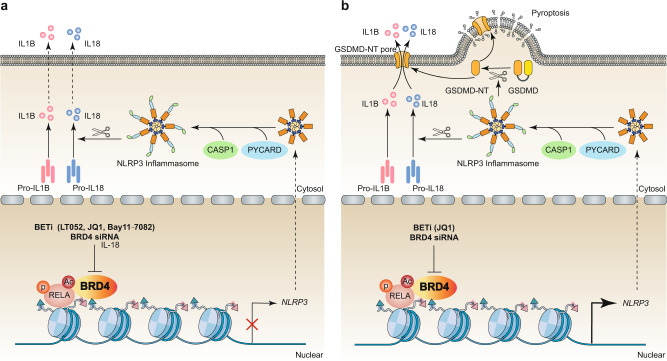
“Upregulated BRD4 protein has been reported to initiate inflammatory response via activation of NF-κβ pathway via phosphorylation of RELA and inhibitor subunit of nuclear factor kappa B. BRD4 has also been reported to activate NLRP3 mediated inflammasome activation and pyroptosis [80, 89].”
Mondal, A., Singh, B., Felkner, R. H., Falco, A. D., Swapna, G., Montelione, G. T., Roth, M. J., & Pérez, A. (2024) · Angewandte Chemie · doi:10.1002/ange.202405767 · Cited by 3
Wang, Y., Wang, Y., Xu, Y., Cheng, H., Dagnew, T. M., Kang, L., Tocci, D. R., Shen, I. Z., Zhang, C. M., & Wang, C. (2025) · Journal of Medicinal Chemistry · doi:10.1021/acs.jmedchem.5c00068 · Cited by 3
Thiel, G., & Rößler, O. G. (2025) · Biomolecules · doi:10.3390/biom15040521 · Cited by 3
Chen, Z., Yang, R., Xu, Y., Liang, L., Ao, S., Wang, Z., Bai, P., Gu, D., Duan, X., Liu, Y., et al. (2022) · Molecular Pharmaceutics · doi:10.1021/acs.molpharmaceut.2c00143 · Cited by 3
Chen, M., Guo, X., Guo, J., Shi, C., Wu, Y., Chen, L., Mao, R., & Fan, Y. (2024) · Advanced Biology · doi:10.1002/adbi.202300334 · Cited by 3
Pandey, K., Acharya, A., Pal, D., Jain, P., Singh, K. D., Durden, D. L., Kutateladze, T. G., Deshpande, A. J., & Byrareddy, S. N. (2024) · Antiviral Research · doi:10.1016/j.antiviral.2024.105904 · Cited by 3
Advances in proteomics in diffuse large B‑cell lymphoma (Review)
Guo, Z., Wang, C., Shi, X., Wang, Z., Tao, J., Ma, J., & Bi, L. (2024) · Oncology Reports · doi:10.3892/or.2024.8746 · Cited by 3
A comprehensive benchmark for multiple highly efficient base editors with broad targeting scopePreprint
Wang, X., Cheng, X., Li, Z., Ma, S., Zhang, H., Chen, Z., Yao, Y., Li, Z., Zhong, C., Li, Y., et al. (2024) · bioRxiv (Cold Spring Harbor Laboratory) · doi:10.1101/2024.12.17.628899 · Cited by 3
Characterisation of the hepatocyte response to long-term Listeria monocytogenes infection
Descoeudres, N. (2021) · theses.fr (ABES) · doi:10.70675/718fdf9bzc6bcz428bz94b5zf474b268f5b9 · Cited by 3
Inhibition of BRD4 attenuated IFNγ-induced apoptosis in colorectal cancer organoids
Yonezawa, A., Shimomura, K., Okamoto, K., & Takeda, H. (2025) · BMC Cancer · doi:10.1186/s12885-025-13544-y · Cited by 2
Matuszewska, M., Cieślik, M., Sulejczak, D., Wilkaniec, A., & Czapski, G. A. (2026) · Brain Research · doi:10.1016/j.brainres.2026.150318 · Cited by 2
Loop Plasticity Drives Paralog-Specific Recognition in BET ET Domains
ÁLVAREZ, G., Sebastian, E., Mondal, A., Roth, M. J., Montelione, G. T., & Pérez, A. (2026) · Journal of Chemical Information and Modeling · doi:10.1021/acs.jcim.6c00121 · Cited by 2
Jagiełło, K., Ciura, K., Muratov, V., Merugu, S., Halappanavar, S. S., Danielsen, P. H., Jacobsen, N. R., Mikołajczyk, A., & Vogel, U. B. (2026) · Environmental Science Nano · doi:10.1039/d5en01090j · Cited by 2
Targeting BRD4—A Promising Therapeutic Option for Glioblastoma?
Lindner, M., Lisińska, D., Kędzierzyńska, A., & Majchrzak‐Celińska, A. (2026) · International Journal of Molecular Sciences · doi:10.3390/ijms27052268 · Cited by 2
“These proteins function as epigenetic “readers” that bind acetylated lysine residues on histones, thereby enabling transcriptional complex assembly and gene expression [23,24].”
Li, S., & Liu, D. X. (2026) · Journal of Virology · doi:10.1128/jvi.02201-25 · Cited by 2
“In fact, BET family proteins are known to epigenetically modulate cytokine transcription, including pro-inflammatory and immune-related factors (40).”
Inflammation reprograms fibro-adipogenic progenitors to sustain immunopathogenic niches in myositis
Nelke, C., Cin, J. D., Dallevet, C.-A., Park, J.-S., Kinold, J. C., Schroeter, C. B., Kleefeld, F., Güttsches, A., Quint, P., Walli, S., et al. (2026) · Cell Death and Disease · doi:10.1038/s41419-026-08966-w · Cited by 3
“These proteins control the transcription of a range of immunoregulatory genes by binding to acetylated histones [57].”
The regulatory logic linking inflammation and fibrosis
Alexanian, M., & Srivastava, D. (2026) · Cell · doi:10.1016/j.cell.2026.08.001 · Cited by 3
Czapski, G. A., Matuszewska, M., Cieślik, M., & Strosznajder, J. B. (2024) · Folia Neuropathologica · doi:10.5114/fn.2024.138140 · Cited by 2
Anti-apoptotic Proteolysis Targeted Chimeras (PROTACs) in Cancer Therapy
Njoka, M., Kamath, D. V., & Bossmann, S. H. (2024) · Medical Research Archives · doi:10.18103/mra.v13i1.6284 · Cited by 2
YAP Upregulation Contributes to Acquired Resistance to BET Inhibitors in Uveal Melanoma
Zhou, Y., Liu, X., Huang, S., Zhang, G., Jin, X., Chen, L., Yu, L., & Li, Y. (2025) · Pigment Cell & Melanoma Research · doi:10.1111/pcmr.70036 · Cited by 2
“The BET family of proteins comprises BRD2, BRD3, BRD4, and testis-specific BRDT, which bind to acetylated lysine residues, primarily in histones, via their tandem bromodomains and play diverse roles in regulating transcription (Filippakopoulos and Knapp 2014; Wang, Wu, et al. 2021).”
Ajgaonkar, S., Hirst, J. J., Norris, M., & Zakár, T. (2023) · PLoS ONE · doi:10.1371/journal.pone.0280645 · Cited by 1
“BET proteins are emerging central players in inflammation with modifiable activity [25].”
BackgroundTian, Y., Zhang, Y., Tang, X., Zhao, C., Jiang, X., Shen, G., Wang, X., Jiang, C., Ruan, T., Ma, J., et al. (2025) · Clinical Genetics · doi:10.1111/cge.70049 · Cited by 1
Photocleavable PROTACs as tools for dynamic regulation of protein function
Xu, H., Yokoo, H., & Demizu, Y. (2025) · Bioorganic & Medicinal Chemistry · doi:10.1016/j.bmc.2025.118491 · Cited by 1
He, J., Li, K., Guo, Z., Zhou, X., & Tang, X. (2025) · Journal of Inflammation Research · doi:10.2147/jir.s543644 · Cited by 1
“47,48 In our study, MR analysis demonstrated a negative correlation between BRD2 expression and protein levels with SjD risk, suggesting a systemic protective role in immune regulation.”
Molecular mechanism of RBM15-mediated m6A modification in hepatitis B virus replication
Ni, M., Li, B., Wang, L., Ma, S., & Ma, K. (2025) · Virology Journal · doi:10.1186/s12985-025-03008-x · Cited by 1
“The bromodomain and extraterminal domain (BET) family regulates inflammatory and immunoregulatory genes through binding acetylated histones and recruiting transcriptional machinery to enable RNA polymerase II transcription [20].”
BRD3 PROTAC degrader targets H3K18ac to alleviate retinal microglia-driven uveitis
Zhang, Z., Lan, T., Liu, Y.-C., Yang, H., Shu, N., Li, R., Li, W., Zhou, Q., Yang, P., Rao, Y., et al. (2025) · iScience · doi:10.1016/j.isci.2025.114526 · Cited by 1
“4 BET proteins consist of testis-specific isoform BRDT and three abundantly and ubiquitously expressed BRD2, 3, and 4 proteins.”
BET inhibitors in cardiovascular diseases: from atherosclerosis to heart failure
Ala, M., Khawajah, I. M., & Khamene, S. S. (2026) · Pharmacological Reports · doi:10.1007/s43440-025-00816-4 · Cited by 1
BRD2 is a transcriptional coactivator of Smad3 in mediating TGF-β tumor suppressive responses
Tian, S., Gu, S., Sun, S., Wang, Z., Zhao, Y., Yuan, B., Liu, X., Zhao, B., Xu, P., Cao, J., et al. (2026) · Oncogene · doi:10.1038/s41388-026-03726-8 · Cited by 1
Jia, J., Ji, K., Zhou, Y., Huang, Y., Li, A., Fan, Y., Huang, W., Chen, F., & Lu, G. (2026) · Cell Death Discovery · doi:10.1038/s41420-026-03113-y · Cited by 1
“Histone acetyltransferases such as P300 serve as co-activators by depositing these acetyl marks [18], which in turn recruit BET proteins [19].”
Zhou, N., Tan, B., Jiang, Y., Wang, H., Peng, W., Yin, M., Fu, L. Y., & Peng, S. (2026) · Journal of Inflammation Research · doi:10.2147/jir.s598139 · Cited by 1
“57 Recent studies have suggested that BRD4 contributes to macrophage polarization partly through modulation of STAT1-dependent transcriptional activity.”
Nisar, A., Khan, S., Li, W., (56049), X. Z., & He, Y. (2026) · Pharmacology & Therapeutics · doi:10.1016/j.pharmthera.2026.109055 · Cited by 1
Chu, C., Zheng, S., Mitchell, N., Li, Z., Zhang, X., Wu, X., Zhang, T., Dang, F., Michowski, W., Kołodziejczyk, A., et al. (2026) · Molecular Cell · doi:10.1016/j.molcel.2026.08.007 · Cited by 1
Kadife, E., Harper, A. P., Chien, K., Kaitu’u‐Lino, T. J., & Brownfoot, F. (2023) · Placenta · doi:10.1016/j.placenta.2023.05.012 · Cited by 1
Wang, Y., Wang, Y., Xu, Y., Tocci, D. R., & Wang, C. (2024) · ACS Omega · doi:10.1021/acsomega.4c01495 · Cited by 1
Hwang, D., Yang, C., Wang, Y., Kelso, H. R., Pochampally, S., Pfeffer, L. M., & Miller, D. D. (2025) · Pharmaceuticals · doi:10.3390/ph18050608 · Cited by 1
“Based on our previous fi ndings with the fi rst generation of TEDs [5], we now performed additional SAR, which led to a generation of new analogs as shown in Figure 1. carbamothioate-type PFI-3 derivatives series 2 (including reported compounds 2a , 2b [12]), , and 5 .”
InfluentialThe extra-terminal domain drives the role of BET proteins in transcription
Pasionek, I., Ridenour, J. B., Machowska, A., Donczew, M., Kinter, M. T., Boyd, K. A., & Donczew, R. (2026) · Nucleic Acids Research · doi:10.1093/nar/gkag717 · Cited by 1
“Consistent with this function, BET proteins have been implicated in sustaining pathological transcriptional programs across various human diseases [ 6 , 7 ].”
Dräger, S., Schlotfeldt, M., Voß, L. C., Johannisson, S., Radziewitz, M., Osterloh, C., Gross, N., Kamaguchi, M., Schneider, A., Vidarsson, G., et al. (2025) · bioRxiv (Cold Spring Harbor Laboratory) · doi:10.1101/2025.11.12.688045 · Cited by 1
Mecanismos modulatorios de MOK en la regulación de la respuesta inflamatoria de la microglía en ELA
Pérez-Cabello, J. Á. (2024) · DIGITAL.CSIC (Spanish National Research Council (CSIC)) · Cited by 1
Kumar, A., Lyu, Y., Yanagihashi, Y., Chantarasrivong, C., Majerčiak, V., Salemi, M., Wang, K.-H., Chuang, F. Y. S., Davis, R. R., Tepper, C. G., et al. (2021) · Research Square · doi:10.21203/rs.3.rs-136834/v1
Wang, J., Chai, Y., Li, Y., Luo, J., Yin, H., & Guan, G. (2022) · Research Square · doi:10.21203/rs.3.rs-1274619/v1
Chen, J., Zhang, X., Wang, J., Ji, C., Pan, J., Cai, M., & Ma, J. (2022) · Research Square · doi:10.21203/rs.3.rs-1502414/v1
Epigenetic therapy and DNA damage response
Baretti, M., & Azad, N. S. (2022) · Elsevier eBooks · doi:10.1016/b978-0-323-91081-1.00009-1
Genomic Identification, Evolution, and Expression Analysis of Bromodomain Genes Family in Buffalo
Fu, Q., Lu, Y., Zhang, M., & Zhang, J. (2021) · Vide Leaf, Hyderabad eBooks · doi:10.37247/pagen2ed.2.22.14
Al‐Ejeh, F., Merhi, M., Al-Muftah, M., Fernandes, Q., Al-Zaidan, L., Bedhiafi, T., Mestiri, S., Moustafa, D., Taib, N., Inchakalody, V. P., et al. (2023) · Elsevier eBooks · doi:10.1016/b978-0-323-91794-0.00002-0
Berryer, M. H., Rizki, G., Nathanson, A. J., Klein, J. A., Trendafilova, D., Susco, S. G., Lam, D., Messana, A., Holton, K. M., Karhohs, K. W., et al. (2023) · eLife · doi:10.7554/elife.80168.sa2
Liu, R., Shi, J., Gao, Y., Xu, X., Zhang, Y., Luo, Y., Du, J., & Li, C. (2023) · Research Square · doi:10.21203/rs.3.rs-3241374/v1
Belloucif, Y. (2023) · theses.fr (ABES) · doi:10.70675/96e08078z56fez43d5z84f3za4274dfbd28f
Obesity, histone acetylation, and insulin resistance
Dhar, A., Marinkova, D. A., Presley, C., Bagchi, A. K., & Bagchi, R. A. (2024) · Elsevier eBooks · doi:10.1016/b978-0-443-18979-1.00007-1
Huang, R., Luo, G., Liu, M.-N., Chen, W., Luo, Q., Ma, W., & Xu, Y. (2025) · Journal of Traditional and Complementary Medicine · doi:10.1016/j.jtcme.2025.03.001
“5 Therefore, targeting BRD4 proteins represents a promising therapeutic strategy for numerous diseases.”
Laddha, A. P., Seyednejad, A., Donepudi, A. C., Goedken, M. J., Manautou, J. E., & Sartor, G. C. (2025) · Chemico-Biological Interactions · doi:10.1016/j.cbi.2025.111491
Mechanism and cytotoxicity of A1874 proteolysis targeting chimera on CT26 colon carcinoma cell line
Shin, J., & Shin, S. (2025) · Journal of Emerging Investigators · doi:10.59720/24-330
Yuan, M., Wu, M., Hu, Y., Zhao, S., Khan, J., Yuan, Z., Huang, Y., He, T., Zhou, Z., Shen, J., et al. (2025) · Parasites & Vectors · doi:10.1186/s13071-025-06821-z
Bromodomain inhibition and its application to human disease
Yang, J., & McKenna, C. E. (2025) · Elsevier eBooks · doi:10.1016/b978-0-443-18722-3.00044-x
Exploring the Impact of miR‐34b‐5p on BRD4 Gene Expression in Triple‐Negative Breast Cancer Cells
Ibrahim, M. A., Jalali, H., & Azarnia, M. (2025) · BioMed Research International · doi:10.1155/bmri/7538031
“…of targeted therapies for breast cancer through disrupting the function of BET proteins (BRD2, BRD3, and BRD4) by preventing their binding to acetylated lysines on histones, leading to a transcriptional downregulation of key oncogenic genes driving tumor growth, cell survival, and metastasis [22].”
Macrophage sensing of the acidic milieu: BRD4 condensates in focus
Zhang, D., Tiwari, V., & Glass, C. K. (2025) · Life Metabolism · doi:10.1093/lifemeta/loaf035
Jain, A., Pagé, V., Devost, D., Pétrin, D., Hébert, T. E., & Tanny, J. C. (2025) · International Journal of Molecular Sciences · doi:10.3390/ijms26188904
“Inflammatory genes are highly sensitive to BET inhibition in several physiological contexts; the cluster of chemokine genes activated by G α q signaling in our dataset was previously found to be JQ1-sensitive in liver endothelial cells [3,7,51].”
Zhou, S., Zeng, Y.-X., Yu, T., & Wang, J. (2025) · Current Medical Science · doi:10.1007/s11596-025-00118-z
“BRD4, which has been extensively studied in the context of cancer, cardiovascular diseases, metabolic disorders, and autoimmune conditions [28], played a crucial role in inflammation by modulating the production of inflammatory genes [29].”
Liu, F., Zhang, Z., & Yang, C. (2025) · Reproductive Medicine and Biology · doi:10.1002/rmb2.12682
“BRD4 is also an important immunomodulator in regulating the immune microenvironment of tumors, autoimmune diseases, and inflammatory diseases in the immune response [16].”
Sturgis, K. A., Davidson, B. D., Richardson, A. W., Hiatt, O., Edwards, B. C., Evans, E. P., Campbell, C., Radford, J. H., Arroyo, J. A., Bikman, B. T., et al. (2025) · Current Issues in Molecular Biology · doi:10.3390/cimb47121062
“Furthermore, BETis have been reported to attenuate RTK-mediated signaling cascades, providing a dual mechanism for controlling immune activation and epithelial dysfunction [27].”
Zeng, H., Liu, W., Zhao, S., Cai, Z., Lai, J., Xiong, G., Zhu, C., & Zhang, Y. (2025) · International Archives of Allergy and Immunology · doi:10.1159/000550107
Wen, J., Zhang, J., Zhang, H., Zhang, N., Lei, R., Deng, Y., Cheng, Q., Li, H., & Luo, P. (2024) · Figshare · doi:10.6084/m9.figshare.25720120
Additional file 1 of BRD4 is involved in viral exacerbation of chronic obstructive pulmonary disease
Duan, Y., Zhou, S., & Wang, J. (2023) · Figshare · doi:10.6084/m9.figshare.22599104
Sharma, D., Hager, C. G., Shang, L., Tran, L. T., Zhu, Y., Ma, A., Magnuson, B., Lesko, M. W., Wicha, M. S., & Burness, M. L. (2024) · Figshare · doi:10.6084/m9.figshare.24572147
Baek, M., Chai, J. C., Choi, H. I., Yoo, E., Binas, B., Lee, Y. S., Jung, K. H., & Chai, Y. G. (2023) · Figshare · doi:10.6084/m9.figshare.22603409
Sharma, D., Hager, C. G., Shang, L., Tran, L. T., Zhu, Y., Ma, A., Magnuson, B., Lesko, M. W., Wicha, M. S., & Burness, M. L. (2023) · Figshare · doi:10.6084/m9.figshare.24571747
Wen, J., Zhang, J., Zhang, H., Zhang, N., Lei, R., Deng, Y., Cheng, Q., Li, H., & Luo, P. (2024) · Figshare · doi:10.6084/m9.figshare.25720290
Xu, X., & Qiu, H. (2024) · Figshare · doi:10.6084/m9.figshare.25876246
Baek, M., Chai, J. C., Choi, H. I., Yoo, E., Binas, B., Lee, Y. S., Jung, K. H., & Chai, Y. G. (2023) · Figshare · doi:10.6084/m9.figshare.22603412
A biopsychosocial approach to understanding the contributors to chronic pain
Kouraki, A. (2022) · Nottingham ePrints (University of Nottingham)
Roberts, E. J. (2024) · University of Hertfordshire Research Archive (University of Hertfordshire)
Tay, T. (2024) · Digital Access to Scholarship at Harvard (DASH) (Harvard University)
THE MOLECULAR BASIS OF HIV-1 LATENCY INITIATION AND MAINTENANCE
Peterson, J. J. (2023) · Carolina Digital Repository (University of North Carolina at Chapel Hill) · doi:10.17615/t2a8-0f96
BETting on the future: BET inhibition for patients with lymphoma
Voorhees, T. J., & Coombs, C. C. (2026) · Med · doi:10.1016/j.medj.2025.100955
Structural Basis for BD1-Preferring 2,4-Disubstituted Pyrimidine BRDT Inhibitors
Liang, T., Guan, X., Chan, A., Kalra, P., Shi, R., Solberg, J., Sigua, L. H., Qi, J., Pomerantz, W. C. K., Schönbrunn, E., et al. (2026) · Journal of Medicinal Chemistry · doi:10.1021/acs.jmedchem.6c00180
“29,31 Subsequent development of more potent and selective pan-BD2 inhibitors provided clearer evidence for domain-selective inhibition of BET biology.”
Hu, J., Gao, X., Li, G. P., He, X., Ke, Y., Zhang, Z., Pang, D., Lin, Z., Xie, C., Chen, X., et al. (2026) · PLoS Pathogens · doi:10.1371/journal.ppat.1014192
BET Inhibitors: Novel Approaches to Combatting Antimicrobial Resistance
Pollard, H. M. (2026) · e-space (Manchester Metropolitan University) · doi:10.83056/mmu.32484198
Voloshyna, I., Patskovsky, Y., Sandigursky, S., Sreenivasaiah, C., Bayrakta, E. C., Tardio, E., Lopez, A. V., Idga, S., Ng, C., Ibrahim, M., et al. (2026) · bioRxiv (Cold Spring Harbor Laboratory) · doi:10.64898/2026.06.03.729692
Li, M., Deng, H., Xu, H., Zhou, Q., & Zhao, S. (2026) · Frontiers in Aging · doi:10.3389/fragi.2026.1842955
“BET proteins recognize acetylated histones and facilitate transcriptional elongation, playing particularly critical roles in the expression of pro-inflammatory genes (Wang N. et al., 2021; Wang et al., 2023).”
Photocleavable PROTACs as tools for dynamic regulation of protein function
Xu, H. (2026) · Institutional Repositories DataBase (IRDB)
Metadata
- Authors
- Wang, N., Wu, R., Tang, D., & Kang, R.
- Affiliations
- The University of Texas Southwestern Medical Center (US)
- Corresponding author
- Tang, Daolin
- Kang, Rui
- Venue
- Signal Transduction and Targeted Therapy
- Published
- 2021-01-19
- Volume
- 6
- Issue
- 1
- Pages
- 23-23
- ISSN
- 2059-3635 (ISSN-L)
- PMC
- PMC7813845
- OpenAlex
- W3121466164
- Cited by
- 295
- References
- 200
- Citations by year
- 2026: 33 · 2025: 67 · 2024: 60 · 2023: 57 · 2022: 50 · 2021: 28
- FWCI
- 5.20
- Type
- journal article
- Language
- en
- Open access
- gold
- doi.org
- Licence
- cc-by
- creativecommons.org/licenses/by/4.0 (tdm)
- creativecommons.org/licenses/by/4.0 (vor)
- Locations
- Signal Transduction and Targeted Therapy (publishedVersion, cc-by)
- PubMed Central (publishedVersion, cc-by)
- PubMed (publishedVersion)
- DOAJ (DOAJ: Directory of Open Access Journals) (submittedVersion, cc-by-sa)
- Funders
- University of Texas Southwestern Medical Center
- National Institutes of Health
- National Cancer Institute (R01CA211070)
- National Institute of General Medical Sciences (R01GM127791)
- Topics
- Life Sciences › Biochemistry, Genetics and Molecular Biology › Molecular Biology › Protein Degradation and Inhibitors
- Life Sciences › Biochemistry, Genetics and Molecular Biology › Molecular Biology › Genomics and Chromatin Dynamics
- Life Sciences › Immunology and Microbiology › Immunology › Immune Response and Inflammation
- Keywords
- BET proteins, BRD2, BRD3, BRD4, BRDT, innate immunity, epigenetic regulation, histone acetylation, pattern recognition receptors, Toll-like receptors, sterile inflammation, P-TEFb, RNA polymerase II elongation, RelA, chromatin regulation, BET inhibitors, immunotherapy
- MeSH terms
- Animals, Chromatin, Humans, Immunity, Innate, Transcription Factors, Transcription, Genetic, Epigenesis, Genetic
About these checks
Registry, retraction, Cites and statistics results are computed, not judged, with one exception: a printed reference that no index lists is read once by a model before it counts as a citation error. Claims are extracted by a model and kept only when their quote appears verbatim in the text; each cited source is then checked, with a model’s help, for whether it says what the claim relies on. Those verdicts can be wrong — read the claim’s quote and the cited source before relying on one.
Statistics and arithmetic are recomputed, not judged.
Confidence bands are shown only for fields calibrated on our annotated test set. None is calibrated yet, so no band is shown.
What counts as a claim ›How we measure confidence ›How we check this ›
Are you an author, or do you see a problem with this page? Request a review
Data sources
Bibliographic data: Semantic Scholar, OpenAlex, Crossref.
Contains information from the Semantic Scholar Academic Graph Datasets, made available under the ODC Attribution License (ODC-BY 1.0).
Semantic Scholar’s data is described in: Kinney, R., et al. (2023). The Semantic Scholar Open Data Platform. arXiv:2301.10140.
