

Targeting TGFβ signal transduction for cancer therapy
Open accessThe DOI matches its Crossref record; 329 of the 330 references it cites were found in a registry or an index.
Abstract
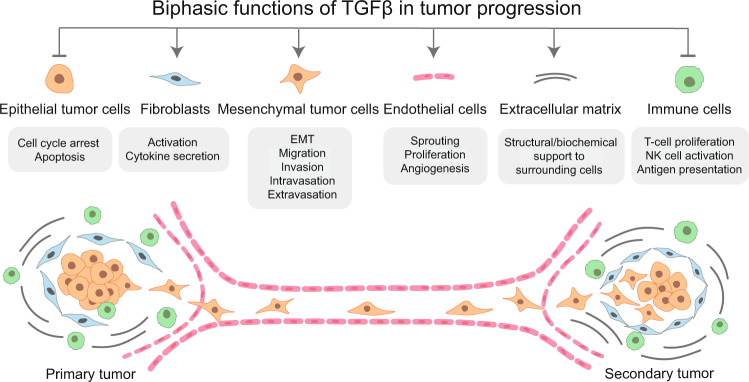
Transforming growth factor-β (TGFβ) family members are structurally and functionally related cytokines that have diverse effects on the regulation of cell fate during embryonic development and in the maintenance of adult tissue homeostasis. Dysregulation of TGFβ family signaling can lead to a plethora of developmental disorders and diseases, including cancer, immune dysfunction, and fibrosis. In this review, we focus on TGFβ, a well-characterized family member that has a dichotomous role in cancer progression, acting in early stages as a tumor suppressor and in late stages as a tumor promoter. The functions of TGFβ are not limited to the regulation of proliferation, differentiation, apoptosis, epithelial-mesenchymal transition, and metastasis of cancer cells. Recent reports have related TGFβ to effects on cells that are present in the tumor microenvironment through the stimulation of extracellular matrix deposition, promotion of angiogenesis, and suppression of the anti-tumor immune reaction. The pro-oncogenic roles of TGFβ have attracted considerable attention because their intervention provides a therapeutic approach for cancer patients. However, the critical function of TGFβ in maintaining tissue homeostasis makes targeting TGFβ a challenge. Here, we review the pleiotropic functions of TGFβ in cancer initiation and progression, summarize the recent clinical advancements regarding TGFβ signaling interventions for cancer treatment, and discuss the remaining challenges and opportunities related to targeting this pathway. We provide a perspective on synergistic therapies that combine anti-TGFβ therapy with cytotoxic chemotherapy, targeted therapy, radiotherapy, or immunotherapy.
Overview
The claims and statistics of this paper haven’t been checked yet.
Free: it reads the open-access text and checks the first 5 claims that cite a source we can check. Create a free account to check every claim.
Integrity signals
Registry
Cites
Statistics
Figures
Verification
Claims the paper makes
The claims and statistics of this paper haven’t been checked yet.
Free: it reads the open-access text and checks the first 5 claims that cite a source we can check. Create a free account to check every claim.
Claims other papers make about this one
Each is checked against this paper’s own text: does it say what the citing paper says it does?
The cited source says what the claim attributes to it.
In the citing paper
“TGF‐β therapeutics have recently shown great promise with the use of TGF‐β‐neutralizing antibodies and ligand traps, which inhibit the binding of TGF‐β with its receptors [155].”
From Tumor microenvironment signaling and therapeutics in cancer progression (2023) · cites this paper as [155]
Self-check
Percentages, sums and reported differences re-computed from the paper’s own numbers.
The self-check needs the paper’s full text.
Citations
Cites
PD-1 and PD-L1 Immune Checkpoint Blockade to Treat Breast Cancer
Hartkopf, A. D., Taran, F.-A., Wallwiener, M., Walter, C. B., Krämer, B., Grischke, E.-M., & Brucker, S. Y. (2016) · Breast Care · doi:10.1159/000453569 · Cited by 30,845
The blockade of immune checkpoints in cancer immunotherapy
Pardoll, D. M. (2012) · Nature Reviews Cancer · doi:10.1038/nrc3239 · Cited by 13,838 · cited 1×
“PD-L1 is a transmembrane ligand expressed on the surface of cancer cells, tumor-infiltrating DCs and macrophages, and binds to PD-1 receptor located in the plasma membrane of cytotoxic CD8 T cells to suppress effector T cell antitumor function.(272) CTLA4 is a a Chemo/Radio-therapy”
BackgroundMolecular mechanisms of epithelial–mesenchymal transition
Lamouille, S., Xu, J., & Derynck, R. (2014) · Nature Reviews Molecular Cell Biology · doi:10.1038/nrm3758 · Cited by 8,091
Cell Signaling by Receptor Tyrosine Kinases
Lemmon, M. A., & Schlessinger, J. (2010) · Cell · doi:10.1016/j.cell.2010.06.011 · Cited by 7,929
Structural absorption by barbule microstructures of super black bird of paradise feathers
McCoy, D. E., Feo, T., Harvey, T. A., & Prum, R. O. (2018) · Nature Communications · doi:10.1038/s41467-017-02088-w · Cited by 7,424
Lehmann, B. D., Bauer, J. A., Chen, X., Sanders, M. E., Chakravarthy, A. B., Shyr, Y., & Pietenpol, J. A. (2011) · Journal of Clinical Investigation · doi:10.1172/jci45014 · Cited by 5,592
TGFβ attenuates tumour response to PD-L1 blockade by contributing to exclusion of T cells
Mariathasan, S., Turley, S. J., Nickles, D., Castiglioni, A., Yuen, K., Wang, Y., Kadel III, E. E., Koeppen, H., Astarita, J. L., Cubas, R., et al. (2018) · Nature · doi:10.1038/nature25501 · Cited by 5,400 · cited 1×
“TGFβ has also been found to drive immune response evasion and attenuate the tumor response to anti-PD-L1 therapy by contributing to the exclusion of CD8 effector T cells.(275,276) In addition, the unsuccessful antitumor activity of chimeric antigen receptor (CAR) T cell therapy has been attributed in part to TGFβ-indu…”
BackgroundPredictive correlates of response to the anti-PD-L1 antibody MPDL3280A in cancer patients
Herbst, R. S., Soria, J.-C., Kowanetz, M., Fine, G. D., Hamid, O., Gordon, M. S., Sosman, J. A., McDermott, D. F., Powderly, J. D., Gettinger, S. N., et al. (2014) · Nature · doi:10.1038/nature14011 · Cited by 5,231 · cited 1×
“However, only 15% of patients respond to immunotherapy.(274) Anti-PD-1 therapy not only initiates a tumor rejection program, but also induces a competing TGFβ-driven immunosuppressive program.”
BackgroundThe biology and function of fibroblasts in cancer
Kalluri, R. (2016) · Nature Reviews Cancer · doi:10.1038/nrc.2016.73 · Cited by 4,366
Enhancement of Antitumor Immunity by CTLA-4 Blockade
Leach, D. R., Krummel, M. F., & Allison, J. P. (1996) · Science · doi:10.1126/science.271.5256.1734 · Cited by 3,955 · cited 1×
“receptor expressed on Treg cells and downregulates immune responses.(273) Immune checkpoint inhibitors (ICIs) are currently at the forefront of cancer therapy, as they display successful longlasting antitumor efficacy, even for certain metastatic cancers.”
Background
Research works printed but not linked: 3
- Derynck, R., Muthusamy, B. P. & Saeteurn, K. Y. Signaling pathway cooperation in TGF-β-induced epithelial-mesenchymal transition. Curr. Opin. Cell Biol. 31, 56–66 (2014). · DOI · Paper page
- Kim, H. S. et al. A phase I study of TGF-β inhibitor, vactosertib in combination with imatinib in patients with advanced desmoid tumor (aggressive fibromatosis). J. Clin. Oncol. 38, e11557 (2020). · DOI
- Derynck, R. & Budi, E. H. J. Ss Specificity, versatility, and control of TGF-β family signaling. Sci. Signal 12, eaav5183 (2019). · DOI · Paper page
Cited by
Items 101–200 of 426
Profibrotic role of transcription factor SP1 in cross-talk between fibroblasts and M2 macrophages
Feng, P., Che, Y., Gao, C., Chu, X., Li, Z., Li, L., Li, J., Gao, J., & Dong, Y. (2023) · iScience · doi:10.1016/j.isci.2023.108484 · Cited by 25
“26,27 Meanwhile, fibrotic tissues have a natural barrier function that reduces the sensitivity to drug treatment.”
BackgroundZhang, Z., Yu, Q., Li, Y., Zuwang, C., Li, T., Gu, M., Li, C., Liu, M., & Li, R. (2021) · Phytotherapy Research · doi:10.1002/ptr.7278 · Cited by 26
“…with potent anticancer activities, including synthetic compounds SB-505124 (DaCosta Byfield, Major, Laping, & Roberts, 2004), LY-2157299 (Z. Liu et al., 2009), and EW-7197 (Yoon et al., 2013), as well as naturally occurring products such as garcimultiflorone K (Huang et al., 2021),…”
BackgroundSimanullang, R. H., Situmorang, P. C., Herlina, M., Noradina, N., Silalahi, B., & Manurung, S. S. (2022) · Saudi Journal of Biological Sciences · doi:10.1016/j.sjbs.2021.12.065 · Cited by 27
“tissue invasion, metastasis, and immune suppression (Liu et al., 2021).”
BackgroundRNF12 is regulated by AKT phosphorylation and promotes TGF-β driven breast cancer metastasis
Huang, Y., Liu, S., Shan, M., Hagenaars, S. C., Mesker, W. E., Cohen, D., Wang, L., Zheng, Z. J., Devilee, P., Tollenaar, R. A. �. �., et al. (2022) · Cell Death and Disease · doi:10.1038/s41419-021-04493-y · Cited by 24
“As TGF-β displays both tumorsuppressing and tumor-promoting activities, directly inhibiting TGF-β, via TGF-β receptor kinase inhibitors or antibodies that block ligandreceptor interactions, to treat cancer remains challenging [42].”
The immune phenotypes and different immune escape mechanisms in colorectal cancer
Mao, Y., Xu, Y., Jiang, C., Chang, W., Lv, Y., Zheng, P., Zhang, Z., Li, Z., Lin, Q., Tang, W., et al. (2022) · Frontiers in Immunology · doi:10.3389/fimmu.2022.968089 · Cited by 24
“Dual antagonizing of TGF-b and PD-1/PD-L1 showed promising results in preclinical researches (50).”
BackgroundLiang, Q., Xu, Z., Liu, Y., Peng, B., Cai, Y., Liu, W., & Yan, Y. (2022) · Cancers · doi:10.3390/cancers14194639 · Cited by 22
Li, G., Liao, G., Xie, J., Liu, B., Li, X., & Qiu, M. (2023) · Respirology · doi:10.1111/resp.14541 · Cited by 23
“In NSCLC, TGFβ promotes cancer progression by stimulating fibroblast proliferation angiogenesis and suppressing the immune response and T-cell proliferation.(9) Recent efforts were focused on addressing the TGFβ overexpression component of NSCLC in the CAR-T therapy identified dominant-negative TGFBRII (dnTGFbRII, DNR…”
Divide and Conquer—Targeted Therapy for Triple-Negative Breast Cancer
Nedeljković, M., Vuletić, A. M., & Martinović, K. M. (2025) · International Journal of Molecular Sciences · doi:10.3390/ijms26041396 · Cited by 25
Innocenti, F., Yazdani, A., Rashid, N., Qu, X., Ou, F., Buren, S. V., Bertagnolli, M. M., Kabbarah, O., Blanke, C. D., Venook, A. P., et al. (2022) · Clinical Cancer Research · doi:10.1158/1078-0432.ccr-21-3202 · Cited by 20
Yap, T. A., Choudhury, A. D., Hamilton, E. P., Rosen, L. S., Stratton, K. L., Gordon, M. S., Schaer, D., Liu, L., Zhang, L., Mittapalli, R. K., et al. (2024) · ESMO Open · doi:10.1016/j.esmoop.2024.103653 · Cited by 23
GPR56 facilitates hepatocellular carcinoma metastasis by promoting the TGF-β signaling pathway
Luo, Y., Lu, J., Lei, Z., Rao, D., Wang, T., Fu, C., Zhu, H., Zhang, Z., Liao, Z., Liang, H., et al. (2024) · Cell Death and Disease · doi:10.1038/s41419-024-07095-6 · Cited by 23
“In the advanced stages of cancer progression, TGF-β can promote tumor metastasis by stimulating tumor cells to undergo epithelial-mesenchymal transformation (EMT), which plays a pro-cancer role [6, 7].”
Yang, D. D., Macmorland, W., & Arnold, J. N. (2025) · Frontiers in Immunology · doi:10.3389/fimmu.2025.1643941 · Cited by 30
“Although TGF-b is a cytokine with pleiotropic effects, it has drawn particular interest in the CAR T-cell fi eld for its tumor-promoting and immune-inhibitory roles in the TME of many solid tumors, especially its suppression of T-cell effector functions (77, 78).”
TGF-β at the crossroads of multiple prognosis in breast cancer, and beyond
Shukla, N., Naik, A., Moryani, K., Soni, M., Shah, J., & Dave, H. V. (2022) · Life Sciences · doi:10.1016/j.lfs.2022.121011 · Cited by 26
Takahashi, K., Kobayashi, M., Katsumata, H., Tokizaki, S., Anzai, T., Ikeda, Y., Alcaide, D., Maeda, K., Ishihara, M., Tahara, K., et al. (2023) · Cancer Science · doi:10.1111/cas.16045 · Cited by 21
Kunihiro, A. G., Brickey, J. A., Frye, J. B., Cheng, J. N., Luis, P. B., Schneider, C. G., & Funk, J. L. (2021) · The Journal of Nutritional Biochemistry · doi:10.1016/j.jnutbio.2021.108842 · Cited by 20
Chen, S. Y., Kung, H., Espinoza, B., Washington, I., Chen, K., Wang, J., Zlomke, H., Loycano, M., Wang, R., Pickup, M. W., et al. (2024) · JCI Insight · doi:10.1172/jci.insight.182766 · Cited by 21
Bonowicz, K., Mikołajczyk, K., Faisal, I., Qamar, M., Steinbrink, K., Kleszczyński, K., Grzanka, A., & Gagat, M. (2022) · International Journal of Molecular Sciences · doi:10.3390/ijms232315335 · Cited by 23
Nicotinamide Adenine Dinucleotide Precursor Suppresses Hepatocellular Cancer Progression in Mice
Pang, N., Hu, Q., Zhou, Y., Xiao, Y., Li, W., Ding, Y., Chen, Y., Ye, M., Pei, L., Li, Q., et al. (2023) · Nutrients · doi:10.3390/nu15061447 · Cited by 18
“Transforming growth factor-β (TGF-β) is identified as one of the most potent inducers of epithelial–mesenchymal transition (EMT), which renders tumor cells more invasive and ultimately leads to tumor metastasis [28,29].”
BackgroundAldehydes alter TGF-β signaling and induce obesity and cancer
Yang, X., Bhowmick, K., Rao, S., Xiang, X., Ohshiro, K., AMDUR, R. L., Hassan, M. I., Mohammad, T., Crandall, K. A., Cifani, P., et al. (2024) · Cell Reports · doi:10.1016/j.celrep.2024.114676 · Cited by 20
Zhang, L., Li, Z., Zhang, L., Qin, Y., & Yu, D. (2023) · Biochemical Pharmacology · doi:10.1016/j.bcp.2023.115698 · Cited by 17
UBR7 in concert with EZH2 inhibits the TGF-β signaling leading to extracellular matrix remodeling
Adhikari, S., Singh, V., Nandi, S., Ghosal, M., Raj, N. S., Khanna, J., Bhattacharya, A., Kabiraj, A., Mondal, A., Vasudevan, M., et al. (2024) · Cell Reports · doi:10.1016/j.celrep.2024.114394 · Cited by 19
Teixeira, A. F., Wang, Y., Iaria, J., ten Dijke, P., & Zhu, H. (2025) · Journal of Extracellular Vesicles · doi:10.1002/jev2.70055 · Cited by 20
“…relevance of TGF-β and its signalling pathway to cancer progression and poor patient outcome are well established (Ren et al. 2020; Javle et al. 2014; Ware and Zhu 2020), leading several TGF-β signalling inhibitors to clinical trials (Liu and Ren 2021; Metropulos et al. 2022; Gulley et al. 2022).”
Rosado-Sanz, M., Martínez-Alarcón, N., Abellán-Soriano, A., Golfe, R., Trinidad, E. M., & de Mora, J. F. (2025) · Biomedicines · doi:10.3390/biomedicines13081945 · Cited by 24
“TGF-β also activates noncanonical pathways, including NF-κ B, Akt, and ERK [58].”
InfluentialShi, Q., Xu, J., Chen, C., Hu, X., Wang, B., Zeng, F., Ren, T., Huang, Y., Guo, W., Tang, X., et al. (2024) · Cancer Letters · doi:10.1016/j.canlet.2024.216902 · Cited by 20
The TGFβ Induced MicroRNAome of the Trabecular Meshwork
Doyle, C., Callaghan, B., Roodnat, A. W., Armstrong, L., Lester, K., Simpson, D. A. C., Atkinson, S. D., Sheridan, C., McKenna, D. J., & Willoughby, C. E. (2024) · Cells · doi:10.3390/cells13121060 · Cited by 19
Targeting TGF-β: a promising strategy for cancer therapy
Himani, Kaur, C., Kumar, R., Mishra, R., & Singh, G. (2025) · Medical Oncology · doi:10.1007/s12032-025-02667-8 · Cited by 20
Liu, L., Zhang, Y., Liu, H., Yang, J., Tian, Q., Chueakula, N., Ramasamy, S. K., Verma, N. K., Cheung, C., & Kusumbe, A. P. (2025) · Cancer Research · doi:10.1158/0008-5472.can-24-4744 · Cited by 18
“TGF β functions as a tumor suppressor in early stages but as a promoter in advanced stages of cancer, further complicating its targeting (13, 14).”
Liu, Y., Ran, X., Zhou, G., Liu, Y., & Tan, W. (2025) · ACS Nano · doi:10.1021/acsnano.4c16628 · Cited by 17
A guide to the types, structures, and multifaceted functions of matrix metalloproteinases in cancer
Piperigkou, Z., Mangani, S., Kremmydas, S., Koletsis, N. E., & Karamanos, N. K. (2025) · FEBS Journal · doi:10.1111/febs.70296 · Cited by 27
Park, S., Lee, J., Kim, J.-J., Ji, M., Cho, E., Sim, H. B., Chang, Y., Chung, J. H., Paik, M., Kim, J., et al. (2024) · Materials & Design · doi:10.1016/j.matdes.2024.112822 · Cited by 16
Immune Checkpoints in Pediatric Solid Tumors: Targetable Pathways for Advanced Therapeutic Purposes
Cocco, C., Morandi, F., & Airoldi, I. (2021) · Cells · doi:10.3390/cells10040927 · Cited by 18
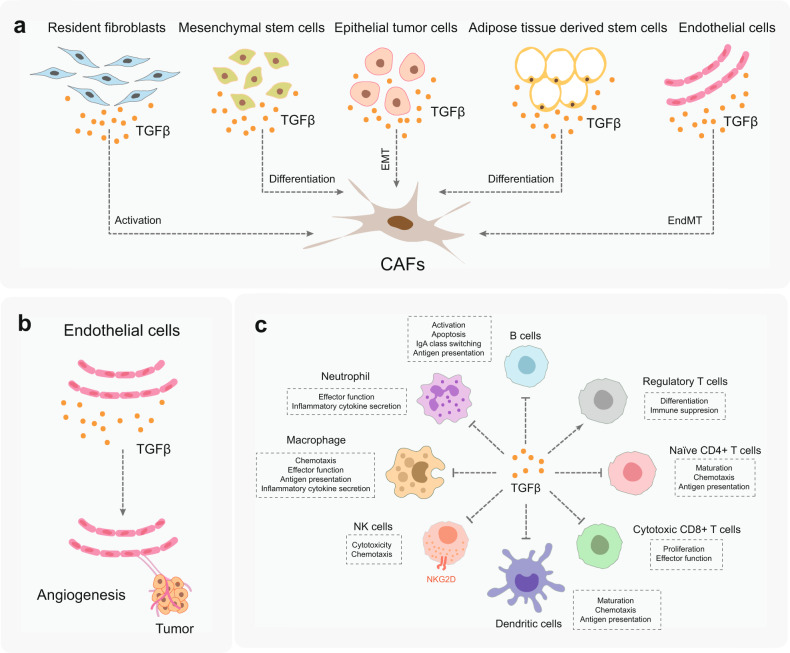
“TGF-β1, in particular, is produced by different cell populations, including tumor cells, endothelial and stem cells and fibroblasts, and (i) supports the growth and activities of CAF, (ii) stimulates angiogenesis and (iii) inhibits the functions of granulocytes, lymphocytes and antigen-presenting cells [3].”
BackgroundDai, S., Liu, T., Liu, X., Li, X.-Y., Xu, K., Ren, T., & Luo, F. (2021) · Frontiers in Cell and Developmental Biology · doi:10.3389/fcell.2021.687473 · Cited by 18
The hallmarks of oncogenic signaling: From pathways to resistance in cancer therapy
Tufail, M., Gong, K., Ijaz, B., Patel, H. H., Lui, W., Wang, X., & Li, J. (2026) · Drug Resistance Updates · doi:10.1016/j.drup.2026.101355 · Cited by 20
Ouyang, W., Li, Q., Niu, Q., Qui, M., Fu, H., Du, Y., & Mo, X. (2023) · Journal of Molecular Cell Biology · doi:10.1093/jmcb/mjad068 · Cited by 16
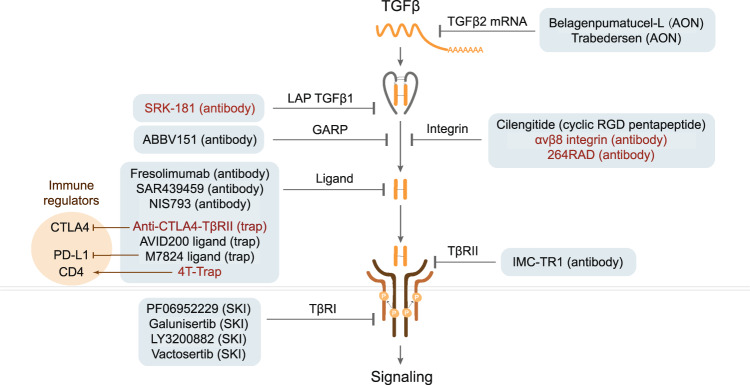
“…therapeutic approaches targeting the anti-TGF β signaling pathway have been developed, focusing on inhibiting upstream TGF β and its receptors through the use of neutralizing antibodies, receptor kinase inhibitors, and anti-sense oligonucleotides ( Ciardiello et al., 2020 ; Liu et al., 2021 ) .”
Wofford, W. O., Kim, J., Kim, D., Janneh, A. H., Lee, H. G., Atilgan, F. C., Oleinik, N. V., Kassir, M. F., Saatci, Ö., Chakraborty, P., et al. (2024) · Cell Reports · doi:10.1016/j.celrep.2024.114532 · Cited by 16
Spiga, M., Martini, E., Maffia, M. C., Ciceri, F., Ruggiero, E., Potenza, A., & Bonini, C. (2024) · Seminars in Immunopathology · doi:10.1007/s00281-024-01011-y · Cited by 16
“…encouraging results in preclinical models, the systemic administration of TGFβ blockers, comprising TGFβ neutralizing antibodies, TGFβ traps, TGFβ antisense oligonucleotides and kinase inhibitors, led to minor improvements in patient prognosis, accompanied by important adverse events [115, 116].”
Gani, I. H., & Al-Obaidi, Z. M. J. (2023) · Frontiers in Materials · doi:10.3389/fmats.2023.1057677 · Cited by 14
“…including antibacterial and antifungal, against Gram-positive, Gram-negative, and specialized aquatic bacterial species was performed based on CLSI (Clinical and Laboratory Standards Institute) methods (Etemadi et al., 2016; Moghaddam-Manesh et al., 2020; Moghaddam-Manesh and Hosseinzadegan, 2021).”
BackgroundMethodRetractedAdoptive NK Cell Therapy - a Beacon of Hope in Multiple Myeloma Treatment
Vu, S. H., Pham, H. H., Pham, T. T. P., Le, T. T., Vo, M.-C., Jung, S., Lee, J., & Nguyen, X. (2023) · Frontiers in Oncology · doi:10.3389/fonc.2023.1275076 · Cited by 15
Zhou, Z., Zhou, Q., Zhao, J., Hou, X., Yan, J., Sun, X., Yang, Z., Ma, J., Zhang, F., Zhan, L., et al. (2023) · International Journal of Biological Sciences · doi:10.7150/ijbs.87867 · Cited by 16
“This is largely due to the complex biology of the TGF-β family and the context-dependent nature of their function (11).”
Fan, W., Chen, Y., Zhou, Z., Duan, W., Yang, C., Sheng, S., Wang, Y., Wei, X., Liu, Y., & Huang, Y. (2024) · International Immunopharmacology · doi:10.1016/j.intimp.2024.111698 · Cited by 16
Verteporfin inhibits TGF-β signaling by disrupting the Smad2/3–Smad4 interaction
Nong, J., Shen, S., Hong, F., Xiao, F., Meng, L., Li, P., Lei, X., & Chen, Y. (2024) · Molecular Biology of the Cell · doi:10.1091/mbc.e24-02-0073 · Cited by 14
You, S., Han, X., Xu, Y., Sui, L., Song, K., & Yao, Q. (2024) · Cancer Medicine · doi:10.1002/cam4.7217 · Cited by 17
“…of the disease, under pathological conditions, overexpression of TGF-β will promote epithelial interstitial transformation (EMT), 41 extracellular matrix deposition (ECM), 42 and the formation of cancer-associated fibroblasts (CAFs), 43 leading to the formation of fibrotic diseases and cancer.”
BackgroundYan, W., Rao, D., Fan, F., Liang, H., Zhang, Z., & Dong, H. (2024) · Frontiers in Oncology · doi:10.3389/fonc.2024.1407434 · Cited by 18
“As mentioned, the TGF-b pathway is involved in tumor suppression during early-stage tumorigenesis and tumor promotion in advanced cancers (94, 182 – 184).”
BackgroundZhou, M., Zhou, C., Geng, H., Huang, Z., Lin, Z., Wang, Y., Zhu, Y., Shi, J. T., Tan, J., Guo, L., et al. (2024) · Small · doi:10.1002/smll.202406245 · Cited by 16
Bisphenol A exacerbates colorectal cancer progression through enhancing ceramide synthesis
Hong, X., Wang, S., Zhang, Q. H., Li, L., Liu, H., Yang, H., Wu, D., Liu, X., & Shen, T. (2025) · Toxicology · doi:10.1016/j.tox.2025.154054 · Cited by 15
Anderson, R., Blidner, A. G., & Rapoport, B. L. (2021) · Frontiers in Pharmacology · doi:10.3389/fphar.2021.676399 · Cited by 14
“In addition, small molecule inhibitors of TGF-β1 receptor signaling, such as galunisertib, an inhibitor of TGF-β1 receptor 1 kinase, represents an alternative strategy (Huynh et al., 2019; Liu et al., 2021).”
BackgroundMechanisms and clinical significance of TGF-β in hepatocellular cancer progression
Zaidi, S., Gough, N. R., & Mishra, L. (2022) · Advances in cancer research · doi:10.1016/bs.acr.2022.02.002 · Cited by 16
Mishra, T. K., Bhardwaj, V., Ahuja, N., Gadgil, P., Ramdas, P., Shukla, S., & Chande, A. G. (2022) · Molecular Therapy — Nucleic Acids · doi:10.1016/j.omtn.2022.03.003 · Cited by 13
He, C., Pin, Y., Zhang, X., Esmaeili, E., Li, Y., Lü, P., & Cai, C. (2023) · International Journal of Molecular Sciences · doi:10.3390/ijms241210381 · Cited by 14
“TGF-β inhibitors are now widely used with success in the cancer field [96,97].”
BackgroundAberrant activation of TGF-β/ROCK1 enhances stemness during prostatic stromal hyperplasia
Li, Y., Li, J., Zhou, L. F., Wang, Z., Jin, L., Cao, J., Xie, H., & Wang, L. (2024) · Cell Communication and Signaling · doi:10.1186/s12964-024-01644-4 · Cited by 19
“The Smad-independent pathways involved include the Rho kinase 1 (ROCK1) pathway, the phosphatidylinositol 3-kinase/protein kinase B pathway, the non-Smad JNK/p38 pathway, and the mitogen-activated protein kinase pathway [21, 22].”
BackgroundGuo, M., Meng, L., Li, F., Liu, Y., Zhang, Z., Zhang, Q., & Kong, W. (2024) · Water Biology and Security · doi:10.1016/j.watbs.2024.100313 · Cited by 17
Takahashi, M., Hashimoto, Y., & Nakamura, Y. (2022) · Molecular Therapy — Nucleic Acids · doi:10.1016/j.omtn.2022.06.001 · Cited by 16
“In relation to cancer, TGF-b exhibits both anti-tumoral and oncogenic properties; however, many agents blocking the TGF-b signaling pathway have demonstrated promising anti-tumor activity in preclinical studies.(10,11) Therapeutic agents targeting distinct com-”
BackgroundZhang, Y., Zhao, G., Liu, J., Zhang, H., Wang, Y., Luo, Y., Lu, Z.-D., Du, X., Shen, S., Du, J., et al. (2023) · Nano Today · doi:10.1016/j.nantod.2023.101992 · Cited by 12
Jiang, W., Xu, S. Y., & Li, P. (2024) · PLoS ONE · doi:10.1371/journal.pone.0301724 · Cited by 15
Teng, S., Ge, J., Yang, Y., Cui, Z., Min, L., Li, W., Yang, G., Liu, K., & Wu, J. (2024) · Medical Oncology · doi:10.1007/s12032-024-02444-z · Cited by 12
“Scientists found that overexpressed TGF-β promotes epithelial-mesenchymal transition (EMT) and excessive deposition of extracellular matrix (ECM) [27, 28], leading to immune dysfunction and cancers, especially CRC [29].”
Sakai, S. A., Saeki, K., Chi, S., Hamaya, Y., Du, J., Nakamura, M., Hojo, H., Kojima, T., Nakamura, Y., Bando, H., et al. (2024) · Cancer Immunology Research · doi:10.1158/2326-6066.cir-24-0610 · Cited by 12
“The TGFB pathway is widely reported to be immunosuppressive (13), and our gene expression analysis also indicated that this pathway was overrepresented in the “during” phase [ Fig.”
Transforming Growth Factor‐β Pathway: Biological Functions and Therapeutic Targets
Mekky, R. H., Fetoh, M. E. A., Faheem, S. A., Radwan, A., Fawzy, M. H., Mustafa, A. M., Said, M. A., Călina, D. C., Sharifi‐Rad, J., & Cho, W. C. S. (2025) · MedComm · doi:10.1002/mco2.70278 · Cited by 17
Barwal, T. S., Sharma, U., Rana, M. K., Bazala, S., Singh, I., Murmu, M., Kapoor, H. S., Thakur, S., Jain, M., & Jain, A. (2022) · Critical Reviews in Oncology/Hematology · doi:10.1016/j.critrevonc.2022.103598 · Cited by 12
Iqbal, A., May, U., Prince, S., Järvinen, T. A. H., & Heydemann, A. (2021) · Pharmaceutics · doi:10.3390/pharmaceutics13091506 · Cited by 12
TGFβ signaling mediates microglial resilience to spatiotemporally restricted myelin degeneration
Zhu, K., Liu, Y., Min, J.-H., Joshua, V., Lin, J., Li, Y., Kreutzmann, J. C., Guo, Y., Xia, W., Mohammadi, E., et al. (2026) · Nature Neuroscience · doi:10.1038/s41593-025-02161-4 · Cited by 11
“Furthermore, TGFβ pathway antagonists are rapidly emerging as effective and promising anticancer agents for preclinical investigations 66,67 .”
Kim, D., Choi, J., Jin, D., Xu, E., Lee, J., Byun, J., & Oh, Y. (2025) · Journal of Controlled Release · doi:10.1016/j.jconrel.2025.01.027 · Cited by 13
ERBB4 selectively amplifies TGF-β pro-metastatic responses
Luo, P., Hong, H., Zhang, B., Li, J., Zhang, S., Yue, C., Cao, J., Wang, J., Dai, Y., Liao, Q., et al. (2025) · Cell Reports · doi:10.1016/j.celrep.2024.115210 · Cited by 11
Choi, S., Hong, J. A., Choi, H. J., & Song, J. J. (2022) · Molecular Therapy — Oncolytics · doi:10.1016/j.omto.2022.09.004 · Cited by 12
“Transforming growth factor b (TGF-b) is one of many targetable candidates and has pleiotropic functions regulating cell growth, differentiation, apoptosis, motility and invasion, extracellular matrix production, angiogenesis, and immune response.(20,21) TGF-b signaling pathway is complex and mediates both protumoral a…”
BackgroundTang, X., Morris, A. J., Deken, M. A., & Brindley, D. N. (2023) · Cancers · doi:10.3390/cancers15112937 · Cited by 12
“TGFβ signaling can have a tumor suppressor effect in early-stage cancers, but it is pro-metastatic in late-stage tumorigenesis [33].”
BackgroundCombinatorial Strategies to Target Molecular and Signaling Pathways to Disarm Cancer Stem Cells
Catara, G., Colanzi, A., & Spano, D. (2021) · Frontiers in Oncology · doi:10.3389/fonc.2021.689131 · Cited by 12
TGF-β Signaling as a Pathological Continuum Linking Idiopathic Pulmonary Fibrosis and Lung Cancer
Huang, K., Wang, L., & Tsai, F. (2026) · Cells · doi:10.3390/cells15050480 · Cited by 10
Fu, Y., Li, M., Wu, S., Wang, J., & Wang, S. (2026) · Cell Death and Disease · doi:10.1038/s41419-026-08685-2 · Cited by 15
Cisplatin-induced activation of TGF-β signaling contributes to drug resistance
IMATSUJI, S., Ujie, Y., Odake, H., Imoto, M., ITOH, S., & Tashiro, E. (2023) · Oncology Research Featuring Preclinical and Clinical Cancer Therapeutics · doi:10.32604/or.2023.030190 · Cited by 10
Identification of a SNAI1 enhancer RNA that drives cancer cell plasticity
Fan, C., Wang, Q., Krijger, P. H. L., Cats, D., Selle, M., Khorosjutina, O., Dhanjal, S., Schmierer, B., Mei, H., de Laat, W. L., et al. (2025) · Nature Communications · doi:10.1038/s41467-025-58032-w · Cited by 14
Exclusion of NUMB Exon12 Controls Cancer Cell Migration through Regulation of Notch1-SMAD3 Crosstalk
Zheng, Z., Yuan, N., You, X., Meng, K., Sha, R., Wang, Z., Peng, Q., Xie, Z., Chen, R., & Feng, Y. (2022) · International Journal of Molecular Sciences · doi:10.3390/ijms23084363 · Cited by 9
“TGF-β signaling has been recognized as a major driver for tumor metastasis and progression [6,7].”
BackgroundLiang, C., Zhang, G., Guo, L., Ding, X., Yang, H., Zhang, H., Zhang, Z., & Hou, L. (2024) · Asian Journal of Pharmaceutical Sciences · doi:10.1016/j.ajps.2024.100888 · Cited by 15
“In addition, transforming growth factor-β (TGF-β ) secreted by CAFs promotes the formation of immunosuppressive microenvironment and inhibits the activity of immune cells [21–23] .”
BackgroundDiatom-Based Nanomedicine for Colorectal Cancer Treatment: New Approaches for Old Challenges
Tramontano, C., Stefano, L. D., & Rea, I. (2023) · Marine Drugs · doi:10.3390/md21050266 · Cited by 9
Transforming growth factor-β micro-environment mediated immune cell functions in cervical cancer
Gnanagurusamy, J., Krishnamoorthy, S., & Muthusami, S. (2024) · International Immunopharmacology · doi:10.1016/j.intimp.2024.112837 · Cited by 10
Nanomaterials targeting cancer stem cells to overcome drug resistance and tumor recurrence
Kumbhakar, D. V., Thakkar, L., Akhand, C., Sharaf, S., & Vemuganti, G. K. (2025) · Frontiers in Oncology · doi:10.3389/fonc.2025.1499283 · Cited by 14
TGF-β-mediated suppression of NK cell function and targeting strategies in tumor immunotherapy
Wang, B., & Bi, J. (2026) · Critical Reviews in Oncology/Hematology · doi:10.1016/j.critrevonc.2026.105141 · Cited by 11
Yavari, M., Jaafari, M. R., Mirzavi, F., Mosayebi, G., Ghazavi, A., & Ganji, A. (2022) · PubMed Central · doi:10.22038/ijbms.2022.63870.14075 · Cited by 10
“TGF-β suppresses the adaptive immune response during cancer progression by inhibiting T cells’ activation, proliferation, differentiation, and migration (33).”
BackgroundLiu, S., van Dinther, M., Hagenaars, S. C., Gu, Y., Kuipers, T. B., Mei, H., Gomez‐Puerto, M. C., Mesker, W. E., & ten Dijke, P. (2023) · International Journal of Cancer · doi:10.1002/ijc.34483 · Cited by 9
“Moreover, it controls the tumor microenvironment (TME) by acting on TME cells such as cancer-associated fibroblasts (CAFs), endothelial cells and immune cells to facilitate cancer cell metastasis.(6,7) TGFβ is often expressed at high levels in TNBC tumors.”
BackgroundAntibody therapy in pancreatic cancer: mAb-ye we’re onto something?
Boland, A. J., O’Kane, A. A., Buick, R. J., Longley, D. B., & Scott, C. J. (2021) · Biochimica et Biophysica Acta (BBA) - Reviews on Cancer · doi:10.1016/j.bbcan.2021.188557 · Cited by 11
Targeting the Tumor Microenvironment of Ewing Sarcoma
Morales, E., Olson, M., Cardenas, F. I., Luetkens, T., & Atanackovic, D. (2021) · Immunotherapy · doi:10.2217/imt-2020-0341 · Cited by 12
Zhu, X., Hao, M., Yu, X., Lin, W., Ma, X., Xu, Q., Cheng, L., & Kuang, H. (2021) · Computational and Mathematical Methods in Medicine · doi:10.1155/2021/9833142 · Cited by 9
“This pathway also regulates cell fate during embryonic development and in the maintenance of adult tissue homeostasis [21].”
BackgroundTLN1 contains a cancer-associated cassette exon that alters talin-1 mechanosensitivity
Gallego-Paez, L. M., Edwards, W. J. S., Chanduri, M. V. L., Guo, Y., Koorman, T., Lee, C.-Y., Grexa, N., Derksen, P. W. B., Yan, J., Schwartz, M. A., et al. (2023) · The Journal of Cell Biology · doi:10.1083/jcb.202209010 · Cited by 13
“Notably, TGF-β signaling is a well-described target in cancer therapy (Liu et al., 2021) and some of the beneficial effects of TGF-β inhibition drugs might be contributed to by changes in exon 17b status.”
BackgroundElayapillai, S. P., Dogra, S., Hladik, C., Lausen, J. D., Bruns, M., Gossett, A. G., Behbod, F., Xu, C., Zhang, R., Ding, W., et al. (2025) · Cancer Letters · doi:10.1016/j.canlet.2025.217794 · Cited by 8
Rane, R., Li, F., Williams, A., Jayadev, A., Tran, N. L., Winkles, J. A., & Kim, G. B. (2025) · Frontiers in Immunology · doi:10.3389/fimmu.2025.1662238 · Cited by 9
“However, tumor cells can selectively bypass TGF-b -mediated growth inhibition by activating oncogenes via mutations and inactivating mutations in tumor suppressor genes (80).”
InfluentialWang, M., Shi, J., Xu, K., Yu, L., Yin, X., Wang, J., Zhu, L., Yang, X., Qian, J., Wang, W., et al. (2025) · Advanced Science · doi:10.1002/advs.202514332 · Cited by 11
Huang, R., Jones, V. S., Zhao, Y., Luo, S., Sun, G., & Huang, R.-P. (2026) · Drug Resistance Updates · doi:10.1016/j.drup.2026.101378 · Cited by 10
de Folmont, A. D. T., Bourhis, J.-H., Chouaïb, S., & Terry, S. (2021) · Immuno · doi:10.3390/immuno1030010 · Cited by 13
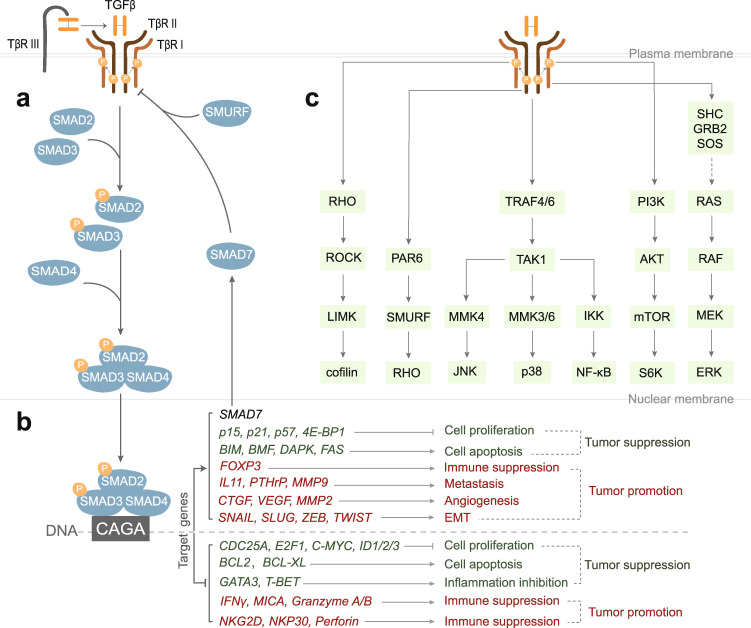
“TGF-β binding to TGF-βRII induces heterodimerization with TGF-βRI and subsequent phosphorylation and activation of the downstream mediators SMAD2 and SMAD3 [31,34] (Figure 2).”
BackgroundKitamura, T. (2023) · Essays in Biochemistry · doi:10.1042/ebc20230002 · Cited by 11
Viral escape from NK‐cell‐mediated immunosurveillance: A lesson for cancer immunotherapy?
Momayyezi, P., Bilev, E., Ljunggren, H., & Hammer, Q. (2023) · European Journal of Immunology · doi:10.1002/eji.202350465 · Cited by 10
“Global inhibition of TGF-β is a challenge due to its pleiotropic functions that likely cause adverse effects [92], thus warranting well-balanced and specifically targeted approaches.”
BackgroundGene profiling of SEC13, SMAD7, GHRL, long non-coding RNA GHRLOS, HIF-1α in gastric cancer patients
Hussein, N. A. E. M., Rashad, M. M., Abdou, A. S., Hussein, A. M., & Mohamed, H. M. (2022) · Scientific Reports · doi:10.1038/s41598-022-10402-w · Cited by 10
Sathipati, S. Y., Tsai, M.-J., Carter, T., Allaire, P., Shukla, S. K., Beheshti, A., & Ho, S. (2022) · Computational and Structural Biotechnology Journal · doi:10.1016/j.csbj.2022.08.025 · Cited by 8
“Several TGF-b-based therapeutics have been developed for the treatment of gastrointestinal cancers and have displayed efficacy in clinical trials [74,75].”
BackgroundLeask, A., Fadl, A., & Naik, A. (2024) · Expert Opinion on Investigational Drugs · doi:10.1080/13543784.2024.2323528 · Cited by 7
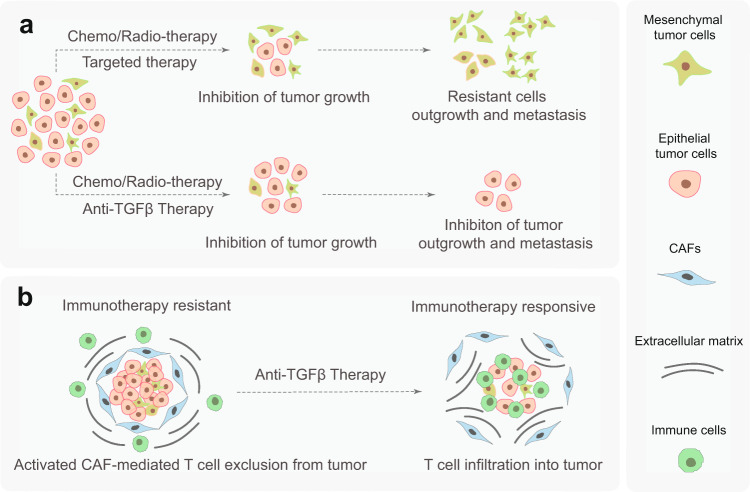
“In this regard, it is interesting that, in oncology, anti-TGFβ strategies, although having significant side effects, have been shown to be useful in some clinical settings, notably to enhance efficacy of other drugs [98].”
BackgroundJu, S., Duan, X., Wang, Y., Zhang, M., Bai, Y., He, X., Wang, C., Liu, J., Yao, W., Zhou, C., et al. (2024) · International Immunopharmacology · doi:10.1016/j.intimp.2024.112585 · Cited by 9
Peng, L., Zhang, Z., Du, W., Jiang, Z., & Duan, W. (2024) · Journal of Proteomics · doi:10.1016/j.jprot.2024.105260 · Cited by 9
Xu, Y., Lv, J., Liu, Y., Du, J., Luo, C., Wang, Y., Liu, L., Sakurai, K., Tang, Z., & Chen, X. (2024) · Nano Letters · doi:10.1021/acs.nanolett.4c05355 · Cited by 8
Sandha, K. K., Kaur, S., Sharma, K., Ali, S. M., Ramajayan, P., Kumar, A., & Gupta, P. N. (2025) · Journal of Controlled Release · doi:10.1016/j.jconrel.2024.12.078 · Cited by 10
Modulating immune cells within pancreatic ductal adenocarcinoma via nanomedicine
Lin, J., Li, Y., & Sun, J. (2025) · Essays in Biochemistry · doi:10.1042/ebc20243001 · Cited by 9
“TAMs secrete cytokines like IL-10 and TGF-β, which inhibit the activity of effector T cells and NK cells, facilitating immune escape [58].”
Tian, H., Zhao, S., Nie, F., Yin, Q., Wang, S., Liu, J., Ju, J., Yang, P., & Yang, C. (2025) · Journal of Advanced Research · doi:10.1016/j.jare.2025.07.027 · Cited by 13
Hybrid regulatory T cells: camouflaged architects of tumor immunity
Azimnasab-sorkhabi, P., Soltani-asl, M., Kfoury, J. R., & Ansa-Addo, E. A. (2025) · Frontiers in Immunology · doi:10.3389/fimmu.2025.1658576 · Cited by 9
Emerging strategies in colorectal cancer immunotherapy: enhancing efficacy and survival
Zhang, Y., Guan, H., Feng, X., Liu, M., Shao, J., Liu, M., He, J., Jin, Y., Zhu, J., & Zheng, C. (2025) · Frontiers in Immunology · doi:10.3389/fimmu.2025.1616414 · Cited by 13
Liu, R., Su, L., Gao, S., Liu, W., & Wang, H. (2026) · Advanced Science · doi:10.1002/advs.202510043 · Cited by 14
“This pathological reprogramming occurs through autocrine-paracrine signaling axes, with key regulatory mediators including TGF-β family ligands and lysophosphatidic acid [ 39–42 ].”
Metadata
- Authors
- Liu, S., Ren, J., & ten Dijke, P.
- Affiliations
- Leiden University Medical Center (NL)
- ORCID
- Liu, Sijia
- Venue
- Signal Transduction and Targeted Therapy
- Published
- 2021-01-08
- Volume
- 6
- Issue
- 1
- Pages
- 8-8
- ISSN
- 2059-3635 (ISSN-L)
- PMC
- PMC7791126
- OpenAlex
- W3119664087
- Cited by
- 413
- References
- 330
- Citations by year
- 2026: 56 · 2025: 95 · 2024: 89 · 2023: 74 · 2022: 58 · 2021: 41
- FWCI
- 7.19
- Type
- journal article
- Language
- en
- Open access
- gold
- doi.org
- Licence
- cc-by
- creativecommons.org/licenses/by/4.0 (tdm)
- creativecommons.org/licenses/by/4.0 (vor)
- Locations
- Signal Transduction and Targeted Therapy (publishedVersion, cc-by)
- PubMed Central (publishedVersion, cc-by)
- PubMed (publishedVersion)
- Leiden Repository (Leiden University) (submittedVersion, cc-by)
- Data Archiving and Networked Services (DANS) (submittedVersion, cc-by)
- DOAJ (DOAJ: Directory of Open Access Journals) (submittedVersion, cc-by-sa)
- Funders
- Cancer Genomics Centre
- Topics
- Life Sciences › Biochemistry, Genetics and Molecular Biology › Molecular Biology › TGF-β signaling in diseases
- Life Sciences › Biochemistry, Genetics and Molecular Biology › Molecular Biology › Kruppel-like factors research
- Life Sciences › Biochemistry, Genetics and Molecular Biology › Molecular Biology › Mechanisms of cancer metastasis
- Keywords
- TGF-beta signaling, cancer therapy, tumor suppressor, tumor promoters, epithelial-mesenchymal transition, metastasis, tumor microenvironment, extracellular matrix deposition, angiogenesis, combination therapy, chemotherapy, targeted therapy, radiotherapy, immunotherapy
- MeSH terms
- Humans, Neoplasm Proteins, Neoplasms, Signal Transduction, Transforming Growth Factor beta, Epithelial-Mesenchymal Transition, Tumor Microenvironment, Carcinogenesis
About these checks
Registry, retraction, Cites and statistics results are computed, not judged, with one exception: a printed reference that no index lists is read once by a model before it counts as a citation error. Claims are extracted by a model and kept only when their quote appears verbatim in the text; each cited source is then checked, with a model’s help, for whether it says what the claim relies on. Those verdicts can be wrong — read the claim’s quote and the cited source before relying on one.
Statistics and arithmetic are recomputed, not judged.
Confidence bands are shown only for fields calibrated on our annotated test set. None is calibrated yet, so no band is shown.
What counts as a claim ›How we measure confidence ›How we check this ›
Are you an author, or do you see a problem with this page? Request a review
Data sources
Bibliographic data: Semantic Scholar, OpenAlex, Crossref.
Contains information from the Semantic Scholar Academic Graph Datasets, made available under the ODC Attribution License (ODC-BY 1.0).
Semantic Scholar’s data is described in: Kinney, R., et al. (2023). The Semantic Scholar Open Data Platform. arXiv:2301.10140.
