

Targeting TGFβ signal transduction for cancer therapy
Open accessThe DOI matches its Crossref record; 329 of the 330 references it cites were found in a registry or an index.
Abstract
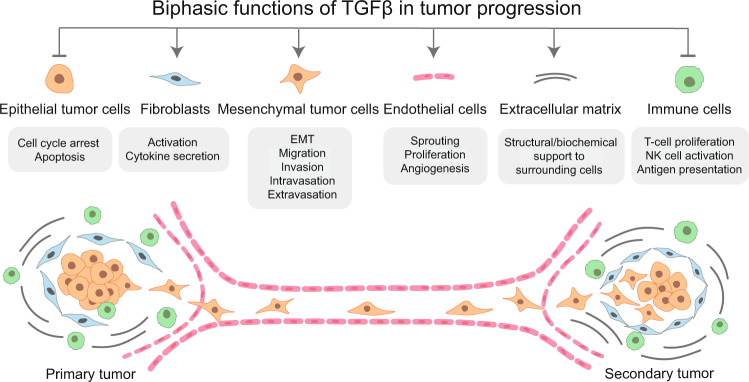
Transforming growth factor-β (TGFβ) family members are structurally and functionally related cytokines that have diverse effects on the regulation of cell fate during embryonic development and in the maintenance of adult tissue homeostasis. Dysregulation of TGFβ family signaling can lead to a plethora of developmental disorders and diseases, including cancer, immune dysfunction, and fibrosis. In this review, we focus on TGFβ, a well-characterized family member that has a dichotomous role in cancer progression, acting in early stages as a tumor suppressor and in late stages as a tumor promoter. The functions of TGFβ are not limited to the regulation of proliferation, differentiation, apoptosis, epithelial-mesenchymal transition, and metastasis of cancer cells. Recent reports have related TGFβ to effects on cells that are present in the tumor microenvironment through the stimulation of extracellular matrix deposition, promotion of angiogenesis, and suppression of the anti-tumor immune reaction. The pro-oncogenic roles of TGFβ have attracted considerable attention because their intervention provides a therapeutic approach for cancer patients. However, the critical function of TGFβ in maintaining tissue homeostasis makes targeting TGFβ a challenge. Here, we review the pleiotropic functions of TGFβ in cancer initiation and progression, summarize the recent clinical advancements regarding TGFβ signaling interventions for cancer treatment, and discuss the remaining challenges and opportunities related to targeting this pathway. We provide a perspective on synergistic therapies that combine anti-TGFβ therapy with cytotoxic chemotherapy, targeted therapy, radiotherapy, or immunotherapy.
Overview
The claims and statistics of this paper haven’t been checked yet.
Free: it reads the open-access text and checks the first 5 claims that cite a source we can check. Create a free account to check every claim.
Integrity signals
Registry
Cites
Statistics
Figures
Verification
Claims the paper makes
The claims and statistics of this paper haven’t been checked yet.
Free: it reads the open-access text and checks the first 5 claims that cite a source we can check. Create a free account to check every claim.
Claims other papers make about this one
Each is checked against this paper’s own text: does it say what the citing paper says it does?
The cited source says what the claim attributes to it.
In the citing paper
“TGF‐β therapeutics have recently shown great promise with the use of TGF‐β‐neutralizing antibodies and ligand traps, which inhibit the binding of TGF‐β with its receptors [155].”
From Tumor microenvironment signaling and therapeutics in cancer progression (2023) · cites this paper as [155]
Self-check
Percentages, sums and reported differences re-computed from the paper’s own numbers.
The self-check needs the paper’s full text.
Citations
Cites
PD-1 and PD-L1 Immune Checkpoint Blockade to Treat Breast Cancer
Hartkopf, A. D., Taran, F.-A., Wallwiener, M., Walter, C. B., Krämer, B., Grischke, E.-M., & Brucker, S. Y. (2016) · Breast Care · doi:10.1159/000453569 · Cited by 30,845
The blockade of immune checkpoints in cancer immunotherapy
Pardoll, D. M. (2012) · Nature Reviews Cancer · doi:10.1038/nrc3239 · Cited by 13,838 · cited 1×
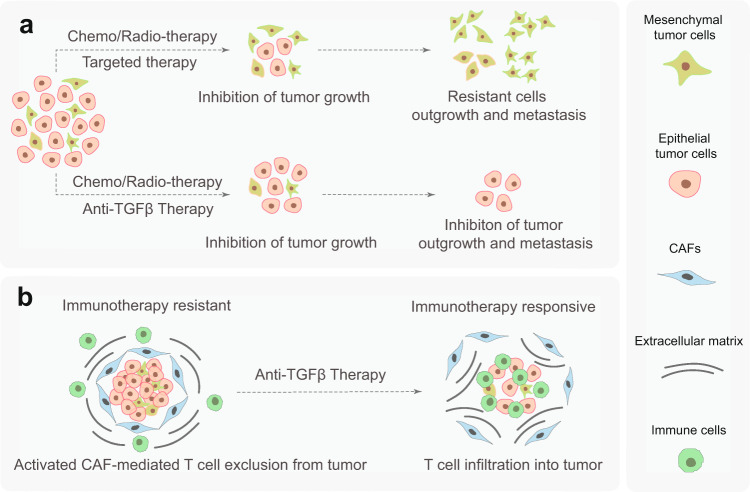
“PD-L1 is a transmembrane ligand expressed on the surface of cancer cells, tumor-infiltrating DCs and macrophages, and binds to PD-1 receptor located in the plasma membrane of cytotoxic CD8 T cells to suppress effector T cell antitumor function.(272) CTLA4 is a a Chemo/Radio-therapy”
BackgroundMolecular mechanisms of epithelial–mesenchymal transition
Lamouille, S., Xu, J., & Derynck, R. (2014) · Nature Reviews Molecular Cell Biology · doi:10.1038/nrm3758 · Cited by 8,091
Cell Signaling by Receptor Tyrosine Kinases
Lemmon, M. A., & Schlessinger, J. (2010) · Cell · doi:10.1016/j.cell.2010.06.011 · Cited by 7,929
Structural absorption by barbule microstructures of super black bird of paradise feathers
McCoy, D. E., Feo, T., Harvey, T. A., & Prum, R. O. (2018) · Nature Communications · doi:10.1038/s41467-017-02088-w · Cited by 7,424
Lehmann, B. D., Bauer, J. A., Chen, X., Sanders, M. E., Chakravarthy, A. B., Shyr, Y., & Pietenpol, J. A. (2011) · Journal of Clinical Investigation · doi:10.1172/jci45014 · Cited by 5,592
TGFβ attenuates tumour response to PD-L1 blockade by contributing to exclusion of T cells
Mariathasan, S., Turley, S. J., Nickles, D., Castiglioni, A., Yuen, K., Wang, Y., Kadel III, E. E., Koeppen, H., Astarita, J. L., Cubas, R., et al. (2018) · Nature · doi:10.1038/nature25501 · Cited by 5,400 · cited 1×
“TGFβ has also been found to drive immune response evasion and attenuate the tumor response to anti-PD-L1 therapy by contributing to the exclusion of CD8 effector T cells.(275,276) In addition, the unsuccessful antitumor activity of chimeric antigen receptor (CAR) T cell therapy has been attributed in part to TGFβ-indu…”
BackgroundPredictive correlates of response to the anti-PD-L1 antibody MPDL3280A in cancer patients
Herbst, R. S., Soria, J.-C., Kowanetz, M., Fine, G. D., Hamid, O., Gordon, M. S., Sosman, J. A., McDermott, D. F., Powderly, J. D., Gettinger, S. N., et al. (2014) · Nature · doi:10.1038/nature14011 · Cited by 5,231 · cited 1×
“However, only 15% of patients respond to immunotherapy.(274) Anti-PD-1 therapy not only initiates a tumor rejection program, but also induces a competing TGFβ-driven immunosuppressive program.”
BackgroundThe biology and function of fibroblasts in cancer
Kalluri, R. (2016) · Nature Reviews Cancer · doi:10.1038/nrc.2016.73 · Cited by 4,366
Enhancement of Antitumor Immunity by CTLA-4 Blockade
Leach, D. R., Krummel, M. F., & Allison, J. P. (1996) · Science · doi:10.1126/science.271.5256.1734 · Cited by 3,955 · cited 1×
“receptor expressed on Treg cells and downregulates immune responses.(273) Immune checkpoint inhibitors (ICIs) are currently at the forefront of cancer therapy, as they display successful longlasting antitumor efficacy, even for certain metastatic cancers.”
Background
Research works printed but not linked: 3
- Derynck, R., Muthusamy, B. P. & Saeteurn, K. Y. Signaling pathway cooperation in TGF-β-induced epithelial-mesenchymal transition. Curr. Opin. Cell Biol. 31, 56–66 (2014). · DOI · Paper page
- Kim, H. S. et al. A phase I study of TGF-β inhibitor, vactosertib in combination with imatinib in patients with advanced desmoid tumor (aggressive fibromatosis). J. Clin. Oncol. 38, e11557 (2020). · DOI
- Derynck, R. & Budi, E. H. J. Ss Specificity, versatility, and control of TGF-β family signaling. Sci. Signal 12, eaav5183 (2019). · DOI · Paper page
Cited by
Items 401–426 of 426
Impact du microenvironnement des cancers du sein sur le protéome membranaire endothélial (MiMEndo).
Martin, J. (2023) · theses.fr (ABES) · doi:10.70675/f2c3b4aeze89bz4587z8dc6z19a1b07aab2b
Activin receptor-like kinase 5 (ALK5) inhibitors: a patent review (2013-present)
Huang, X., Yu, C.-Q., Wang, X., Guo, Z., & Jin, C.-H. (2026) · Expert Opinion on Therapeutic Patents · doi:10.1080/13543776.2026.2660906
“There, they bind to DNA sequence-specific transcription factors and co-regulators at regulatory gene sequences, thereby activating or inhibiting target gene transcription [6–9].”
Application of tumor microenvironment targeting aptamers in cancer diagnosis and treatment
Shao, Z., Zeng, Y., He, J., Liu, X., & Tan, W. (2026) · Scientia Sinica Chimica · doi:10.1360/ssc-2025-0229
UNC5B activates hepatic stellate cells and promotes liver fibrosis via FAK
Wu, S., Wang, K., Tayier, D., Cheng, Z., Shi, Y., Cheng, Q., Wei, S., Li, X., Wei, Q., Wang, H., et al. (2026) · Cell Communication and Signaling · doi:10.1186/s12964-026-02897-x
Alharbi, N. S., Nader, M. A., Serrya, M. S., & Abdelmageed, M. E. (2026) · Pharmaceuticals · doi:10.3390/ph19050798
Peng, X., Liu, Z. M., Chun, L., Luo, W., Mao, Y., Zhao, Y., Li, Z., Li, Y., Wei, W., Zhu, C., et al. (2026) · Cellular Oncology · doi:10.1007/s13402-026-01228-z
“Various strategies have been developed to target the TGF-β pathway in preclinical animal models and tested in clinical cancer patients [28, 29].”
Toumi, R., Guenette, S., & Oda, S. K. (2026) · Frontiers in Immunology · doi:10.3389/fimmu.2026.1819470
Neuro-immune interactions in cancer: mechanisms and therapeutic prospects
Liu, J., Zhang, C., ZHANG, C., Pei, J., & Li, Y. (2026) · Frontiers in Immunology · doi:10.3389/fimmu.2026.1729908
Song, Y., Yu, S., Chen, F., Wang, Y., Zhang, H., & Qu, X. (2026) · Journal of Nanobiotechnology · doi:10.1186/s12951-026-04711-9
“Treatment resistance is also influenced by TGF-β signaling activation through the development of EMT [90], TME regulation, alternate pathway activation, metabolic reprogramming, and the acquisition of stem-like features.”
Cheng, M., Li, X., Song, N., Yang, X., Ma, X., Zhang, H., Lei, Y., Jia, Y., Ba, L., Zhang, R., et al. (2026) · Translational Oncology · doi:10.1016/j.tranon.2026.102881 · Cited by 1
“Moreover, TGFB2 itself is a member of the TGF-β family and plays important roles in the tumor microenvironment, immune escape, and EMT[45 – 47].”
Morinaga, T., Hayama, S., Nakamura, Y., Kawase, K., Ikeda, H., Miyata, S., Mogi, M., Katayama, E., Nakamura, R., & Kawazu, M. (2026) · Oncogene · doi:10.1038/s41388-026-03894-7
Meng, Y., Chen, F., Chen, S., Xu, Y., Tan, Y., Liao, H., & Zheng, Q. (2026) · International Journal of Cancer · doi:10.1002/ijc.70651
“The heightened expression of pro- tumor-related genes, including OSM [21], VEGFA [22], VSIR (encoding VISTA) [23], CD274 (encoding PD-L1) [18], and TGFB1 [24], in mNeu4 is consistent with the more pronounced immunosuppressive phenotype observed in BM mature neutrophils from MM patients (Figure 4C).”
Mitochondrial gene expression-based model for the prediction of thyroid cancer prognosis
Zha, W., Li, J., Li, Y., Li, H., Yang, X., Liu, Y., Wang, C., Xu, Y., Li, X., Wang, X., et al. (2026) · Endocrine Connections · doi:10.1530/ec-26-0245
Paul, B. M., Kannan, G., Arunachalam, K., & Thangaraj, P. (2026) · Inflammopharmacology · doi:10.1007/s10787-026-02346-8
“In OC, SASP signalling promotes epithelial-to-mesenchymal transition (EMT), angiogenesis, extracellular matrix remodelling, cancer stemness, immune evasion, and chemoresistance (Dong et al. 2024).”
InfluentialGrilli, F., Sakib, S., Variola, F., & Zou, S. (2026) · International Journal of Biomaterials · doi:10.1155/ijbm/3462859
“Selective inhibition of TGF β 1 has been shown to alleviate resistance to immune checkpoint blockade by reshaping the tumor immune microenvironment [63].”
Qi, C., Lei, L., Lu, S., Wang, X., Yu, P., Zhu, H., Wang, Y., Wang, Y., & 欧绍武 (2026) · Frontiers in Endocrinology · doi:10.3389/fendo.2026.1943425
Natural Polysaccharides in Health and Targeting TGF-β/Smad Signaling Therapy in Chronic Diseases
Wang, Y.-F., Fang, H.-B., Miao, H., Liu, L.-M., & Zhao, Y. (2026) · Journal of Agricultural and Food Chemistry · doi:10.1021/acs.jafc.6c11382 · Cited by 1
Yu, J., Zhang, W., Liu, L., & Zhang, C. (2026) · Current Pharmaceutical Analysis · doi:10.1016/j.cpan.2026.10.002
Basher, F., Smith, T. A., Rubinstein, M. P., & Wu, J. D. (2026) · Biomedicines · doi:10.3390/biomedicines14102390
BindingDB (2025) · UC San Diego · doi:10.7270/q2668jvd
BindingDB (2025) · UC San Diego · doi:10.7270/q2th8scq
de la Puente, P. (2026) · Zenodo (CERN European Organization for Nuclear Research) · doi:10.5281/zenodo.20514904
Gou, L., Huang, J., Yue, G. G., Lee, J. K.-M., Lu, X., Puno, P. T., & Lau, C. B. (2026) · European Journal of Pharmacology · doi:10.1016/j.ejphar.2026.179488
DCAF6 reprograms TGF-β responses through TRIM33 destruction
Luo, H., Yuan, B., Liu, J., Yao, Z., Hong, H., Lin, D., Zhang, S., Qian, J., Li, J., Cao, J., et al. (2026) · Proceedings of the National Academy of Sciences · doi:10.1073/pnas.2602333123
Cancer-associated fibroblasts: origins, functional heterogeneity and therapeutic potential
Zhou, L., Tang, M., Wang, K., Wang, N., Zhang, J., Liu, K., Li, X., & Dong, Z. (2026) · Signal Transduction and Targeted Therapy · doi:10.1038/s41392-026-02743-z · Cited by 1
Metadata
- Authors
- Liu, S., Ren, J., & ten Dijke, P.
- Affiliations
- Leiden University Medical Center (NL)
- ORCID
- Liu, Sijia
- Venue
- Signal Transduction and Targeted Therapy
- Published
- 2021-01-08
- Volume
- 6
- Issue
- 1
- Pages
- 8-8
- ISSN
- 2059-3635 (ISSN-L)
- PMC
- PMC7791126
- OpenAlex
- W3119664087
- Cited by
- 413
- References
- 330
- Citations by year
- 2026: 56 · 2025: 95 · 2024: 89 · 2023: 74 · 2022: 58 · 2021: 41
- FWCI
- 7.19
- Type
- journal article
- Language
- en
- Open access
- gold
- doi.org
- Licence
- cc-by
- creativecommons.org/licenses/by/4.0 (tdm)
- creativecommons.org/licenses/by/4.0 (vor)
- Locations
- Signal Transduction and Targeted Therapy (publishedVersion, cc-by)
- PubMed Central (publishedVersion, cc-by)
- PubMed (publishedVersion)
- Leiden Repository (Leiden University) (submittedVersion, cc-by)
- Data Archiving and Networked Services (DANS) (submittedVersion, cc-by)
- DOAJ (DOAJ: Directory of Open Access Journals) (submittedVersion, cc-by-sa)
- Funders
- Cancer Genomics Centre
- Topics
- Life Sciences › Biochemistry, Genetics and Molecular Biology › Molecular Biology › TGF-β signaling in diseases
- Life Sciences › Biochemistry, Genetics and Molecular Biology › Molecular Biology › Kruppel-like factors research
- Life Sciences › Biochemistry, Genetics and Molecular Biology › Molecular Biology › Mechanisms of cancer metastasis
- Keywords
- TGF-beta signaling, cancer therapy, tumor suppressor, tumor promoters, epithelial-mesenchymal transition, metastasis, tumor microenvironment, extracellular matrix deposition, angiogenesis, combination therapy, chemotherapy, targeted therapy, radiotherapy, immunotherapy
- MeSH terms
- Humans, Neoplasm Proteins, Neoplasms, Signal Transduction, Transforming Growth Factor beta, Epithelial-Mesenchymal Transition, Tumor Microenvironment, Carcinogenesis
About these checks
Registry, retraction, Cites and statistics results are computed, not judged, with one exception: a printed reference that no index lists is read once by a model before it counts as a citation error. Claims are extracted by a model and kept only when their quote appears verbatim in the text; each cited source is then checked, with a model’s help, for whether it says what the claim relies on. Those verdicts can be wrong — read the claim’s quote and the cited source before relying on one.
Statistics and arithmetic are recomputed, not judged.
Confidence bands are shown only for fields calibrated on our annotated test set. None is calibrated yet, so no band is shown.
What counts as a claim ›How we measure confidence ›How we check this ›
Are you an author, or do you see a problem with this page? Request a review
Data sources
Bibliographic data: Semantic Scholar, OpenAlex, Crossref.
Contains information from the Semantic Scholar Academic Graph Datasets, made available under the ODC Attribution License (ODC-BY 1.0).
Semantic Scholar’s data is described in: Kinney, R., et al. (2023). The Semantic Scholar Open Data Platform. arXiv:2301.10140.
