

Targeting TGFβ signal transduction for cancer therapy
Open accessThe DOI matches its Crossref record; 329 of the 330 references it cites were found in a registry or an index.
Abstract
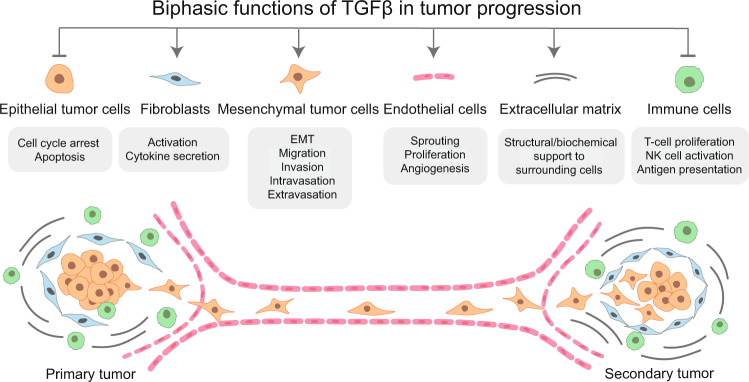
Transforming growth factor-β (TGFβ) family members are structurally and functionally related cytokines that have diverse effects on the regulation of cell fate during embryonic development and in the maintenance of adult tissue homeostasis. Dysregulation of TGFβ family signaling can lead to a plethora of developmental disorders and diseases, including cancer, immune dysfunction, and fibrosis. In this review, we focus on TGFβ, a well-characterized family member that has a dichotomous role in cancer progression, acting in early stages as a tumor suppressor and in late stages as a tumor promoter. The functions of TGFβ are not limited to the regulation of proliferation, differentiation, apoptosis, epithelial-mesenchymal transition, and metastasis of cancer cells. Recent reports have related TGFβ to effects on cells that are present in the tumor microenvironment through the stimulation of extracellular matrix deposition, promotion of angiogenesis, and suppression of the anti-tumor immune reaction. The pro-oncogenic roles of TGFβ have attracted considerable attention because their intervention provides a therapeutic approach for cancer patients. However, the critical function of TGFβ in maintaining tissue homeostasis makes targeting TGFβ a challenge. Here, we review the pleiotropic functions of TGFβ in cancer initiation and progression, summarize the recent clinical advancements regarding TGFβ signaling interventions for cancer treatment, and discuss the remaining challenges and opportunities related to targeting this pathway. We provide a perspective on synergistic therapies that combine anti-TGFβ therapy with cytotoxic chemotherapy, targeted therapy, radiotherapy, or immunotherapy.
Overview
The claims and statistics of this paper haven’t been checked yet.
Free: it reads the open-access text and checks the first 5 claims that cite a source we can check. Create a free account to check every claim.
Integrity signals
Registry
Cites
Statistics
Figures
Verification
Claims the paper makes
The claims and statistics of this paper haven’t been checked yet.
Free: it reads the open-access text and checks the first 5 claims that cite a source we can check. Create a free account to check every claim.
Claims other papers make about this one
Each is checked against this paper’s own text: does it say what the citing paper says it does?
The cited source says what the claim attributes to it.
In the citing paper
“TGF‐β therapeutics have recently shown great promise with the use of TGF‐β‐neutralizing antibodies and ligand traps, which inhibit the binding of TGF‐β with its receptors [155].”
From Tumor microenvironment signaling and therapeutics in cancer progression (2023) · cites this paper as [155]
Self-check
Percentages, sums and reported differences re-computed from the paper’s own numbers.
The self-check needs the paper’s full text.
Citations
Cites
PD-1 and PD-L1 Immune Checkpoint Blockade to Treat Breast Cancer
Hartkopf, A. D., Taran, F.-A., Wallwiener, M., Walter, C. B., Krämer, B., Grischke, E.-M., & Brucker, S. Y. (2016) · Breast Care · doi:10.1159/000453569 · Cited by 30,845
The blockade of immune checkpoints in cancer immunotherapy
Pardoll, D. M. (2012) · Nature Reviews Cancer · doi:10.1038/nrc3239 · Cited by 13,838 · cited 1×
“PD-L1 is a transmembrane ligand expressed on the surface of cancer cells, tumor-infiltrating DCs and macrophages, and binds to PD-1 receptor located in the plasma membrane of cytotoxic CD8 T cells to suppress effector T cell antitumor function.(272) CTLA4 is a a Chemo/Radio-therapy”
BackgroundMolecular mechanisms of epithelial–mesenchymal transition
Lamouille, S., Xu, J., & Derynck, R. (2014) · Nature Reviews Molecular Cell Biology · doi:10.1038/nrm3758 · Cited by 8,091
Cell Signaling by Receptor Tyrosine Kinases
Lemmon, M. A., & Schlessinger, J. (2010) · Cell · doi:10.1016/j.cell.2010.06.011 · Cited by 7,929
Structural absorption by barbule microstructures of super black bird of paradise feathers
McCoy, D. E., Feo, T., Harvey, T. A., & Prum, R. O. (2018) · Nature Communications · doi:10.1038/s41467-017-02088-w · Cited by 7,424
Lehmann, B. D., Bauer, J. A., Chen, X., Sanders, M. E., Chakravarthy, A. B., Shyr, Y., & Pietenpol, J. A. (2011) · Journal of Clinical Investigation · doi:10.1172/jci45014 · Cited by 5,592
TGFβ attenuates tumour response to PD-L1 blockade by contributing to exclusion of T cells
Mariathasan, S., Turley, S. J., Nickles, D., Castiglioni, A., Yuen, K., Wang, Y., Kadel III, E. E., Koeppen, H., Astarita, J. L., Cubas, R., et al. (2018) · Nature · doi:10.1038/nature25501 · Cited by 5,400 · cited 1×
“TGFβ has also been found to drive immune response evasion and attenuate the tumor response to anti-PD-L1 therapy by contributing to the exclusion of CD8 effector T cells.(275,276) In addition, the unsuccessful antitumor activity of chimeric antigen receptor (CAR) T cell therapy has been attributed in part to TGFβ-indu…”
BackgroundPredictive correlates of response to the anti-PD-L1 antibody MPDL3280A in cancer patients
Herbst, R. S., Soria, J.-C., Kowanetz, M., Fine, G. D., Hamid, O., Gordon, M. S., Sosman, J. A., McDermott, D. F., Powderly, J. D., Gettinger, S. N., et al. (2014) · Nature · doi:10.1038/nature14011 · Cited by 5,231 · cited 1×
“However, only 15% of patients respond to immunotherapy.(274) Anti-PD-1 therapy not only initiates a tumor rejection program, but also induces a competing TGFβ-driven immunosuppressive program.”
BackgroundThe biology and function of fibroblasts in cancer
Kalluri, R. (2016) · Nature Reviews Cancer · doi:10.1038/nrc.2016.73 · Cited by 4,366
Enhancement of Antitumor Immunity by CTLA-4 Blockade
Leach, D. R., Krummel, M. F., & Allison, J. P. (1996) · Science · doi:10.1126/science.271.5256.1734 · Cited by 3,955 · cited 1×
“receptor expressed on Treg cells and downregulates immune responses.(273) Immune checkpoint inhibitors (ICIs) are currently at the forefront of cancer therapy, as they display successful longlasting antitumor efficacy, even for certain metastatic cancers.”
Background
Research works printed but not linked: 3
- Derynck, R., Muthusamy, B. P. & Saeteurn, K. Y. Signaling pathway cooperation in TGF-β-induced epithelial-mesenchymal transition. Curr. Opin. Cell Biol. 31, 56–66 (2014). · DOI · Paper page
- Kim, H. S. et al. A phase I study of TGF-β inhibitor, vactosertib in combination with imatinib in patients with advanced desmoid tumor (aggressive fibromatosis). J. Clin. Oncol. 38, e11557 (2020). · DOI
- Derynck, R. & Budi, E. H. J. Ss Specificity, versatility, and control of TGF-β family signaling. Sci. Signal 12, eaav5183 (2019). · DOI · Paper page
Cited by
Items 301–400 of 426
Wang, X., Jin, P., Xu, J., Li, J., & Ji, M. (2025) · Frontiers in Bioinformatics · doi:10.3389/fbinf.2025.1664576 · Cited by 3
Chen, Q., Deng, D., Shen, L., & Li, S. (2025) · International Journal of Surgery · doi:10.1097/js9.0000000000003604 · Cited by 1
Strategies of designing lymph nodes-targeting nanoparticles for cancer immunotherapy
Huang, Z., Fu, F., Deng, C., Wu, S., Huang, M., Sha, X., Wei, M. Q., Zhang, Z., & Zhang, Y. (2025) · Chinese Chemical Letters · doi:10.1016/j.cclet.2025.111993 · Cited by 3
Targeting Tumor‐Immune Microenvironment with Organoid and Organ‐on‐a‐Chip: An Updated Review
Madani, S., Holman, J. B., Rajput, M. U., Ali, S. W., Shi, Z., Qiu, B., Zhang, A., Li, C., & Ding, W. (2025) · Advanced Materials Technologies · doi:10.1002/admt.202501704 · Cited by 1
Miao, T., Zhang, Y., Tian, F., Xu, X., Qin, W. D., Jiang, X., Ma, L., Zhang, P., Chen, F., & Lin, X. (2025) · iScience · doi:10.1016/j.isci.2025.113647 · Cited by 1
“22–24 Therefore, we further investigated the influence of MFNG on the phosphorylation of Smad2/3 and its subcellular localization of Smad2/3 using western blot analysis and IF staining.”
Alfaifi, M. Y., Abosakr, N. E. M., Behery, M. E., El‐Fattah, W. A., Elbehairi, S. E. I., Hafez, H. S., Elshaarawy, R. F. M., & Ismail, L. A. (2025) · Journal of Cluster Science · doi:10.1007/s10876-025-02925-9 · Cited by 1
Huang, G., & Zhou, Z. (2026) · Journal of Inflammation Research · doi:10.2147/jir.s572487 · Cited by 1
“12 The TGF-β signaling pathway is significantly implicated in the progression of liver diseases, spanning from the initial inflammatory response due to chronic liver injury to the activation of hepatic stellate cells (HSC) that secrete ECM, leading to liver fibrosis and eventually to the advanced…”
Jin, X., Yu, J., Wu, X., Hu, Q., Chen, X., Ma, W., Guan, Y., Guo, D., Yang, Y., Wang, L., et al. (2026) · Molecular Therapy · doi:10.1016/j.ymthe.2026.01.028 · Cited by 2
Xing, B., Shen, X., Jia, X., Zhang, Y., Liu, Z., Guo, X., Li, X., & Liu, Z. (2026) · Pharmaceutics · doi:10.3390/pharmaceutics18020184 · Cited by 1
“Meanwhile, TGF-β signaling is also closely associated with immune modulation and angiogenesis [46].”
Wang, H., Xu, C. T., Xie, L., Chu, X., Liu, X., & Wang, P. (2026) · Biosensors · doi:10.3390/bios16040189 · Cited by 2
“Second, systemic anti-fibrotic or pathway-targeted interventions are often constrained by safety considerations, while sustained local drug exposure within dense stroma remains difficult to achieve [19].”
Díaz-Valdivia, N., Duch, P., Ikemori, R., Parker, A. L., Arshakyan, M., Llorente, A., Bernardo, A., Rodriguez-Rojas, J., Carrasco, J. L., Park, D., et al. (2026) · Cell Death and Disease · doi:10.1038/s41419-026-08677-2 · Cited by 2
van Dinther, M., Schwartze, T. A., Zhang, J., Fan, K., van der Zon, G., Power, L., Hinck, C. S., Ciancia, C., Mukundan, A., González‐Prieto, R., et al. (2026) · Advanced Science · doi:10.1002/advs.75322 · Cited by 3
TP53 deficiency in AML induces resistance to T-cell engagers through an immunosuppressive secretome
Winter, L., Pawlowsky, L., Muth, A., Neumann, A.-S., White, K., Pasikhani, M. K., Nixdorf, D., Brauchle, B., Rohrbacher, L., Hänel, G., et al. (2026) · Leukemia · doi:10.1038/s41375-026-02991-6 · Cited by 2
Immune signaling as a determinant of cellular identity and tissue function
Mittal, R., Alipour, F., Dhote, A., Shivakumar, R., & Hirani, K. (2026) · Frontiers in Immunology · doi:10.3389/fimmu.2026.1831391 · Cited by 1
Innate immunity in tumors: From mechanisms to therapeutics
Hu, Y., Wang, X., Ma, H., & Zheng, X. B. (2026) · Chinese Medical Journal · doi:10.1097/cm9.0000000000004116 · Cited by 1
Ji, L., Hl, L., & Zhu, W. (2026) · Human Cell · doi:10.1007/s13577-026-01430-z · Cited by 1
“Oncogenic pathway activation may further redirect TGF-β signaling toward tumor progression [52–55].”
Tumor-Secreted ADAMTSL4 Activates Latent TGFβ1 to Drive Cancer Cachexia
Machado, J., Karthikaisamy, V., Mohr, H., Kaltenecker, D., Benedikt, P., Morigny, P., Mhamane, A., Geppert, J., Fumo, A. R., Haase, K., et al. (2026) · Cancer Discovery · doi:10.1158/2159-8290.cd-26-0045 · Cited by 3
“Targeting TGF β signaling shows promise in preclinical cancer and cachexia models (61, 62), but systemic blockade is limited by pleiotropic roles in tissue homeostasis.”
Dhaliwal, J. (2022) · Undergraduate Research in Natural and Clinical Science and Technology (URNCST) Journal · doi:10.26685/urncst.406 · Cited by 1
Liu, Y., Lu, F., Li, X., Yang, Y., & Yang, J. (2022) · Annals of Translational Medicine · doi:10.21037/atm-22-5223 · Cited by 1
Li, B., Liu, S., Zhao, B., Huang, X., Zhao, Z., Zhang, Z., Zhao, Y., Feng, F., Xue, J., & Liu, F. (2023) · Phytomedicine Plus · doi:10.1016/j.phyplu.2023.100456 · Cited by 2
Avendaño, C., & Menéndez, J. C. (2023) · Elsevier eBooks · doi:10.1016/b978-0-12-818549-0.00011-x · Cited by 1
Ito, K., Yamaguchi, M., Semba, T., Tabata, K., Tamura, M., Aoyama, M., Abe, T., Asano, O., Terada, Y., Funahashi, Y., et al. (2023) · Molecular Cancer Therapeutics · doi:10.1158/1535-7163.mct-23-0158 · Cited by 4
El‐Ashmawy, N. E., Khedr, E. G., Khedr, N. F., & El‐Adawy, S. A. (2023) · Pathology - Research and Practice · doi:10.1016/j.prp.2023.154907 · Cited by 1
Liu, Z., Song, T., & Xie, L. (2024) · International Journal of Drug Discovery and Pharmacology · doi:10.53941/ijddp.2024.100003 · Cited by 2
“In the clinical setting, the primary approaches targeting TGF-β involving inhibiting TGF-β receptor signal transduction, attenuating its activation and expression, and blocking TGF-β binding to its receptor [118].”
BackgroundGuha, M., Thibault, S., Pham, S. M., Bernales, S., Pai, R., Herrera, F. J., Johnson, T. R., Vitsky, A., Fernando, T., & Finkelstein, M. B. (2024) · Journal of Pharmacology and Experimental Therapeutics · doi:10.1124/jpet.124.002193 · Cited by 1
Dai, Y. Q., Duan, Z., Xu, S., & Zhang, J. (2024) · IEEE International Conference on Medical Artificial Intelligence (MedAI) · doi:10.1109/medai62885.2024.00034 · Cited by 1
TGF-β Signaling Pathway and Its Therapeutic Role in Cancer
James, A. W., Bhat, H. M., Yousuf, S., Jan, M., Rehman, M. U., & Rashid, S. M. (2025) · Springer eBooks · doi:10.1007/978-981-96-2763-9_11 · Cited by 2
Harnessing Mechanical Forces for Cancer TreatmentPreprint
Kumari, A., Veena, S., Luha, R., & Tijore, A. (2023) · Preprints.org · doi:10.20944/preprints202307.2038.v1
Laithy, Y. E., de Oliveira, W. A. A., Pabba, A., Qualizza, A., Richard, F., Athanasouli, P., Luci, C., Wispelaere, W. D., Mourão, L., Hamer, S., et al. (2024) · bioRxiv · doi:10.1101/2024.03.08.584051 · Cited by 1
“…including Hedgehog, Notch, IL-6/JAK/STAT3, and TGF - β signaling, along with hallmarks linked to tumor progression, stemness capacity, and metastasis 37–40 (e.g., Angiogenesis and EMT), displayed a significant positive association with Wnt High populations in comparison to Wnt Low populations (Fig.”
BackgroundChoudhury, C., Singleton, M., Lee, K., Brauer, S., Friess, D., Hart, J., Skarne, N., Pullela, K., Mao, L., Day, B. W., et al. (2026) · Stem Cell Reports · doi:10.1101/2025.01.22.634421 · Cited by 1
Mao, Y., Feng, Q., Chang, W., Lv, Y., Xu, Y., Jiang, C., Zheng, P., Yu, S., Zhang, Z., Li, Z., et al. (2022) · bioRxiv (Cold Spring Harbor Laboratory) · doi:10.1101/2022.02.16.480691
“Dual antagonising of 352 TGF-β and PD-1/PD-L1 showed promising results in preclinical researches[45].”
ResultLRG1 is a novel HER3 ligand to promote growth in colorectal cancerPreprint
Rathore, M. G., Wright, M., Martin, D., Huang, W., Taylor, D. J., Miyagi, M., Feng, H., Li, Y., Wang, Z., Ellis, L. M., et al. (2023) · bioRxiv (Cold Spring Harbor Laboratory) · doi:10.1101/2023.02.18.529070 · Cited by 1
Innocenti, F., Yazdani, A., Rashid, N. U., Qu, X., Ou, F., Buren, S. V., Bertagnolli, M. M., Kabbarah, O., Blanke, C. D., Venook, A. P., et al. (2023) · doi:10.1158/1078-0432.c.6532436
Immunotherapy and Cancer Stem Cells
Suryaprakash, R. T. C., Safi, M. A. A., Alonazi, N. A., Alsieedi, A. A., & Kujan, O. (2023) · BENTHAM SCIENCE PUBLISHERS eBooks · doi:10.2174/9789815124606123010007
Ghantous, Y., Nashef, A., Abdol-Elraziq, M., Sudri, S., Araidy, S., & Abu-El-Naaj, I. (2023) · Research Square · doi:10.21203/rs.3.rs-3439034/v1
LRG1 is a novel HER3 ligand and promotes growth in colorectal cancerPreprint
Wang, R., Rathore, M. G., Wright, M., Huang, W., Martin, D., Taylor, D. J., Miyagi, M., Tang, W., Feng, H., Li, Y., et al. (2023) · Research Square · doi:10.21203/rs.3.rs-3454771/v1
Recent updates of clinical trials for colorectal cancer
Prajapati, V. D., Roy, S. D., Shinde, S., & Prajapati, B. G. (2024) · Elsevier eBooks · doi:10.1016/b978-0-443-13870-6.00012-x
Guo, M., Meng, L., Li, F., Liu, Y., Zhang, Z., Zhang, Q., & Kong, W. (2024) · Research Square · doi:10.21203/rs.3.rs-3913695/v1
IDO and TGF-β Inhibitors for the Treatment of Lung Cancer
Devadoss, T., Yeole, K. R., Rajesh, R. B., & Sambhaji, B. C. (2024) · Springer eBooks · doi:10.1007/978-981-99-7141-1_9
Guo, M., Meng, L., Li, F., Liu, Y., Zhang, Z., Zhang, Q., & Kong, W. (2024) · Research Square · doi:10.21203/rs.3.rs-3913695/v2
Targeting Osteosarcoma heterogeneity to improve therapeutic responsePreprint
Melano, B., Dinh, T., Zirak, B., Woo, B. J., Choi, M. H., Karimzadeh, M., Goodarzi, H., & Sweet-Cordero, A. (2025) · bioRxiv (Cold Spring Harbor Laboratory) · doi:10.1101/2025.01.02.631118
“44 Our study represents a shift in this paradigm by identifying and targeting cellular states rather than individual pathways, thereby offering a more systematic approach to combating resistance.”
OR7E47P regulates TGF-β secretion of fibroblast via ROBO2 pathway to modulate the TME in NSCLCPreprint
Zhang, H., Wu, J., Li, L., Li, J., Zhao, X., Zhong, H., Dan, Y., Mao, Z., Song, Q., & Xu, B. (2025) · Research Square · doi:10.21203/rs.3.rs-5809404/v1
Muralidhar, A., Idrissou, M. B., & Sodji, Q. H. (2025) · Applied Radiation Oncology · doi:10.37549/aro-d-24-00038
The Emerging Role of CAR-NK Cells: Next-Generation Cancer Immunotherapy
Narain, A., & Dubey, R. K. (2025) · Springer eBooks · doi:10.1007/978-3-031-88695-9_12
Plesselova, S., Axemaker, H., Calar, K., Isaiah, O., Wollman, J. W., Bhattacharya, S., Gnimpiéba, E. Z., Fink, D. M., Wang, C., Bell, M., et al. (2025) · bioRxiv (Cold Spring Harbor Laboratory) · doi:10.1101/2025.06.23.661098
Immunotherapy and Tumor Resistance to Immune-Mediated Control and Elimination
Monnot, G., & Romero, P. J. (2025) · Elsevier eBooks · doi:10.1016/b978-0-12-824465-4.00235-0
SenGupta, S., Cohen, E., Serrenho, J., Ott, K., Coulombe, P. A., & Parent, C. A. (2025) · Molecular Biology of the Cell · doi:10.1091/mbc.e25-07-0340
“TNF-α also coordinates with TGF-β to induce EMT in multiple cancer types, including breast cancer (Kawata et al. , 2012; Saito et al. , 2013; Liao et al. , 2019; Liu et al. , 2021b).”
Singh, S., Gupta, H., Sinha, S., Kaushik, A. C., Kapoor, S., Awasthi, A. K., Qamar, I., & Sahi, S. (2025) · Computational Biology and Chemistry · doi:10.1016/j.compbiolchem.2025.108646
Meza-Juárez, C. D., Color-Aparicio, V. M., Tecalco-Cruz, Á. C., & Macías‐Silva, M. (2025) · TIP Revista Especializada en Ciencias Químico-Biológicas · doi:10.22201/fesz.23958723e.2025.751
“…de inhibidores de la actividad de cinasa de los receptores, el uso de atrapa ligandos, el uso de anticuerpos monoclonales, el uso de oligonucleótidos anti-sentido y el uso de aptámeros (basados en péptidos o nucleótidos), (Massagué & Sheppard, 2021; Liu, Ren & ten Dijke, 2021; Danielpour, 2024).”
Alam, F., Haque, M. R., Choi, J. U., Roy, S., Jeong, J. H., Al-Hilal, T. A., & Byun, Y. (2025) · Journal of Controlled Release · doi:10.1016/j.jconrel.2025.114273
Identification of progression markers for prostate cancer
Song, J., Zhou, Y., Hedman, H., Rantapero, T., & Landström, M. (2025) · Cell Cycle · doi:10.1080/15384101.2025.2563930
“Since TGFβ signaling is also a therapeutic target in cancer [15,18], there is great potential for use of a combination of TGFβ inhibitors and AURKB inhibitors in future therapeutic strategies.”
Cordeiro, R., Bhitre, M. J., Varma, S., Waragade, S., & Varma, S. (2025) · Anti-Cancer Agents in Medicinal Chemistry · doi:10.2174/0118715206388963250901091741
Li, Y., Liang, T., Hao, Y.-B., Shen, J., Zou, Q., Huang, J., Luo, J., Gong, E. S., & Wang, X. (2025) · Journal of Functional Foods · doi:10.1016/j.jff.2025.107065
Deck, A., Lane, S., Liles, A., & Viola, N. T. (2025) · Journal of Nuclear Medicine · doi:10.2967/jnumed.125.270425
“However, when produced in response to in fl ammation and cancer, TGF-b activates processes that promote cancer growth and tissue remodeling, thereby contributing to tumor development and fi brosis ( 58 ).”
Tchalla, E. Y. I., Betadpur, A., Khalil, A. Y., Lopez, E., Bhalla, M., Chang, M., Wohlfert, E. A., & Ghanem, E. N. B. (2026) · Journal of Leukocyte Biology · doi:10.1093/jleuko/qiag112
“84,85 The cytokine response was skewed toward production of IFN-γ and LAP, both in the presence and absence of PMNs, because the percentage of CD4 + TCR-β + T cells expressing these cytokines was higher than for the other cytokines investigated (Figure S17).”
Ma, C., Yang, C., Peng, A., Sun, T., Ji, X., Mi, J., Wei, L., Shen, S., & Feng, Q. (2024) · Figshare · doi:10.6084/m9.figshare.26626570
Ma, C., Yang, C., Peng, A., Sun, T., Ji, X., Mi, J., Wei, L., Shen, S., & Feng, Q. (2024) · Figshare · doi:10.6084/m9.figshare.26626591
Ma, C., Yang, C., Peng, A., Sun, T., Ji, X., Mi, J., Wei, L., Shen, S., & Feng, Q. (2024) · Figshare · doi:10.6084/m9.figshare.26626639
Ma, C., Yang, C., Peng, A., Sun, T., Ji, X., Mi, J., Wei, L., Shen, S., & Feng, Q. (2024) · Figshare · doi:10.6084/m9.figshare.26626603
Ma, C., Yang, C., Peng, A., Sun, T., Ji, X., Mi, J., Wei, L., Shen, S., & Feng, Q. (2024) · Figshare · doi:10.6084/m9.figshare.26626645
Ma, C., Yang, C., Peng, A., Sun, T., Ji, X., Mi, J., Wei, L., Shen, S., & Feng, Q. (2024) · Figshare · doi:10.6084/m9.figshare.26626597
Ma, C., Yang, C., Peng, A., Sun, T., Ji, X., Mi, J., Wei, L., Shen, S., & Feng, Q. (2024) · Figshare · doi:10.6084/m9.figshare.26626606
Ma, C., Yang, C., Peng, A., Sun, T., Ji, X., Mi, J., Wei, L., Shen, S., & Feng, Q. (2024) · Figshare · doi:10.6084/m9.figshare.26626579
Ma, C., Yang, C., Peng, A., Sun, T., Ji, X., Mi, J., Wei, L., Shen, S., & Feng, Q. (2024) · Figshare · doi:10.6084/m9.figshare.26626615
Ma, C., Yang, C., Peng, A., Sun, T., Ji, X., Mi, J., Wei, L., Shen, S., & Feng, Q. (2024) · Figshare · doi:10.6084/m9.figshare.26626600
Ma, C., Yang, C., Peng, A., Sun, T., Ji, X., Mi, J., Wei, L., Shen, S., & Feng, Q. (2024) · Figshare · doi:10.6084/m9.figshare.26626663
Ma, C., Yang, C., Peng, A., Sun, T., Ji, X., Mi, J., Wei, L., Shen, S., & Feng, Q. (2024) · Figshare · doi:10.6084/m9.figshare.26626642
Ma, C., Yang, C., Peng, A., Sun, T., Ji, X., Mi, J., Wei, L., Shen, S., & Feng, Q. (2024) · Figshare · doi:10.6084/m9.figshare.26626636
Yang, K., Xie, Y., Xue, L., Li, F., Luo, C., Liang, W., Zhang, H., Li, Y., Ren, Y., Zhao, M., et al. (2024) · Figshare · doi:10.6084/m9.figshare.26561485
Ma, C., Yang, C., Peng, A., Sun, T., Ji, X., Mi, J., Wei, L., Shen, S., & Feng, Q. (2024) · Figshare · doi:10.6084/m9.figshare.26626594
Ma, C., Yang, C., Peng, A., Sun, T., Ji, X., Mi, J., Wei, L., Shen, S., & Feng, Q. (2024) · Figshare · doi:10.6084/m9.figshare.26626630
Ma, C., Yang, C., Peng, A., Sun, T., Ji, X., Mi, J., Wei, L., Shen, S., & Feng, Q. (2024) · Figshare · doi:10.6084/m9.figshare.26626618
Ma, C., Yang, C., Peng, A., Sun, T., Ji, X., Mi, J., Wei, L., Shen, S., & Feng, Q. (2024) · Figshare · doi:10.6084/m9.figshare.26626576
Li, Y., Li, J., Zhou, L., Wang, Z., Jin, L., Cao, J., Xie, H., & Wang, L. (2024) · Figshare · doi:10.6084/m9.figshare.25763082
Ma, C., Yang, C., Peng, A., Sun, T., Ji, X., Mi, J., Wei, L., Shen, S., & Feng, Q. (2024) · Figshare · doi:10.6084/m9.figshare.26626657
Ma, C., Yang, C., Peng, A., Sun, T., Ji, X., Mi, J., Wei, L., Shen, S., & Feng, Q. (2024) · Figshare · doi:10.6084/m9.figshare.26626627
Ma, C., Yang, C., Peng, A., Sun, T., Ji, X., Mi, J., Wei, L., Shen, S., & Feng, Q. (2024) · Figshare · doi:10.6084/m9.figshare.26626654
Ma, C., Yang, C., Peng, A., Sun, T., Ji, X., Mi, J., Wei, L., Shen, S., & Feng, Q. (2024) · Figshare · doi:10.6084/m9.figshare.26626609
Ma, C., Yang, C., Peng, A., Sun, T., Ji, X., Mi, J., Wei, L., Shen, S., & Feng, Q. (2024) · Figshare · doi:10.6084/m9.figshare.26626573
Ma, C., Yang, C., Peng, A., Sun, T., Ji, X., Mi, J., Wei, L., Shen, S., & Feng, Q. (2024) · Figshare · doi:10.6084/m9.figshare.26626588
Ma, C., Yang, C., Peng, A., Sun, T., Ji, X., Mi, J., Wei, L., Shen, S., & Feng, Q. (2024) · Figshare · doi:10.6084/m9.figshare.26626612
Ma, C., Yang, C., Peng, A., Sun, T., Ji, X., Mi, J., Wei, L., Shen, S., & Feng, Q. (2024) · Figshare · doi:10.6084/m9.figshare.26626624
Ma, C., Yang, C., Peng, A., Sun, T., Ji, X., Mi, J., Wei, L., Shen, S., & Feng, Q. (2024) · Figshare · doi:10.6084/m9.figshare.26626648
Li, Y., Li, J., Zhou, L. F., Wang, Z., Jin, L., Cao, J., Xie, H., & Wang, L. (2024) · Figshare · doi:10.6084/m9.figshare.25762885
Ma, C., Yang, C., Peng, A., Sun, T., Ji, X., Mi, J., Wei, L., Shen, S., & Feng, Q. (2024) · Figshare · doi:10.6084/m9.figshare.26626651
Ma, C., Yang, C., Peng, A., Sun, T., Ji, X., Mi, J., Wei, L., Shen, S., & Feng, Q. (2024) · Figshare · doi:10.6084/m9.figshare.26626621
Ma, C., Yang, C., Peng, A., Sun, T., Ji, X., Mi, J., Wei, L., Shen, S., & Feng, Q. (2024) · Figshare · doi:10.6084/m9.figshare.26626585
Ma, C., Yang, C., Peng, A., Sun, T., Ji, X., Mi, J., Wei, L., Shen, S., & Feng, Q. (2024) · Figshare · doi:10.6084/m9.figshare.26626633
Ma, C., Yang, C., Peng, A., Sun, T., Ji, X., Mi, J., Wei, L., Shen, S., & Feng, Q. (2024) · Figshare · doi:10.6084/m9.figshare.26626582
Expression and Clinical Significance of FKBP10 in Head and Neck Squamous Cell Carcinoma
徐, 洛. (2025) · Advances in Clinical Medicine · doi:10.12677/acm.2025.15102948
Idrus, F. N. M., Al-Ali, H. A. H., Yasin, Z. N. M., Azlan, M., Suppıan, R., Cun, S. T. W., Hoe, C. H., Ahmad, N. S., Yusof, Z., Isa, W. Y. H. W., et al. (2025) · Immuno · doi:10.3390/immuno6010006
Liu, X., Wang, B. Y., Zhou, M., Gong, D., Zhang, J., He, J., & Xiao, W.-T. (2026) · Frontiers in Cell and Developmental Biology · doi:10.3389/fcell.2025.1754988 · Cited by 1
Role of Molecular Genetics and Epigenetics in Breast Cancer
Teotia, M. S., Ojha, S., Soni, A., Sinha, S., & Sharma, G. (2026) · Elsevier eBooks · doi:10.1016/b978-0-443-33347-7.00012-9
Targeting epithelial-to-mesenchymal transition of cancer cells by sulfated glycans from marine algae
Malyarenko, O. S., Kravchenko, A. O., Druzhinina, V. R., Gundamaraju, R., Ermakova, S. P., & Ambati, R. R. (2026) · Advances in Cancer Biology - Metastasis · doi:10.1016/j.adcanc.2026.100172
Sheikh, W. M., Mehreen, S., Mehraj, I., Jan, J., Hyderi, Z., Rather, B. A., Rafique, A., Shah, U. S., Jadhav, I., Samadh, Y. A., et al. (2026) · Elsevier eBooks · doi:10.1016/b978-0-443-23908-3.00005-8
Investigation of the Immunomodulatory Effect of Quinoline Derivatives with Antitumor Activity
Jaber, M. A., Al‐Sheikh, A., AbuOun, M., & Abuarqoub, D. A. (2026) · Anti-Cancer Agents in Medicinal Chemistry · doi:10.2174/0118715206431991251203110252
Yan, H., Mao, A., Li, D., Fu, G., Pérez‐Baena, M. J., Jiménez‐Navas, A., Wang, D., Hong, R., Cai, W., Pérez‐Losada, J., et al. (2026) · Cancer Letters · doi:10.1016/j.canlet.2026.218447 · Cited by 1
Yang, Y., Wu, C., Yang, W., Peng, L., Zhang, Y., Zheng, X., Wang, Y., Jin, K., & Liu, W. (2026) · Frontiers in Immunology · doi:10.3389/fimmu.2026.1732275
The Elovl5 enzyme in breast cancer : regulation of cancer cell proliferation and metastasis
Kieu, T. (2021) · theses.fr (ABES) · doi:10.70675/09ffad1dzef26z436ez94eezf8f77c83e342
Exploration of autophagy modulation in cancer and infectious diseases
Bestion, E. (2021) · theses.fr (ABES) · doi:10.70675/3663f1cdz2637z4b11za0afza7e39569a2fc
Metadata
- Authors
- Liu, S., Ren, J., & ten Dijke, P.
- Affiliations
- Leiden University Medical Center (NL)
- ORCID
- Liu, Sijia
- Venue
- Signal Transduction and Targeted Therapy
- Published
- 2021-01-08
- Volume
- 6
- Issue
- 1
- Pages
- 8-8
- ISSN
- 2059-3635 (ISSN-L)
- PMC
- PMC7791126
- OpenAlex
- W3119664087
- Cited by
- 413
- References
- 330
- Citations by year
- 2026: 56 · 2025: 95 · 2024: 89 · 2023: 74 · 2022: 58 · 2021: 41
- FWCI
- 7.19
- Type
- journal article
- Language
- en
- Open access
- gold
- doi.org
- Licence
- cc-by
- creativecommons.org/licenses/by/4.0 (tdm)
- creativecommons.org/licenses/by/4.0 (vor)
- Locations
- Signal Transduction and Targeted Therapy (publishedVersion, cc-by)
- PubMed Central (publishedVersion, cc-by)
- PubMed (publishedVersion)
- Leiden Repository (Leiden University) (submittedVersion, cc-by)
- Data Archiving and Networked Services (DANS) (submittedVersion, cc-by)
- DOAJ (DOAJ: Directory of Open Access Journals) (submittedVersion, cc-by-sa)
- Funders
- Cancer Genomics Centre
- Topics
- Life Sciences › Biochemistry, Genetics and Molecular Biology › Molecular Biology › TGF-β signaling in diseases
- Life Sciences › Biochemistry, Genetics and Molecular Biology › Molecular Biology › Kruppel-like factors research
- Life Sciences › Biochemistry, Genetics and Molecular Biology › Molecular Biology › Mechanisms of cancer metastasis
- Keywords
- TGF-beta signaling, cancer therapy, tumor suppressor, tumor promoters, epithelial-mesenchymal transition, metastasis, tumor microenvironment, extracellular matrix deposition, angiogenesis, combination therapy, chemotherapy, targeted therapy, radiotherapy, immunotherapy
- MeSH terms
- Humans, Neoplasm Proteins, Neoplasms, Signal Transduction, Transforming Growth Factor beta, Epithelial-Mesenchymal Transition, Tumor Microenvironment, Carcinogenesis
About these checks
Registry, retraction, Cites and statistics results are computed, not judged, with one exception: a printed reference that no index lists is read once by a model before it counts as a citation error. Claims are extracted by a model and kept only when their quote appears verbatim in the text; each cited source is then checked, with a model’s help, for whether it says what the claim relies on. Those verdicts can be wrong — read the claim’s quote and the cited source before relying on one.
Statistics and arithmetic are recomputed, not judged.
Confidence bands are shown only for fields calibrated on our annotated test set. None is calibrated yet, so no band is shown.
What counts as a claim ›How we measure confidence ›How we check this ›
Are you an author, or do you see a problem with this page? Request a review
Data sources
Bibliographic data: Semantic Scholar, OpenAlex, Crossref.
Contains information from the Semantic Scholar Academic Graph Datasets, made available under the ODC Attribution License (ODC-BY 1.0).
Semantic Scholar’s data is described in: Kinney, R., et al. (2023). The Semantic Scholar Open Data Platform. arXiv:2301.10140.
