

Intercellular mitochondrial transfer as a means of tissue revitalization
Open accessThe DOI matches its Crossref record; 178 of the 180 references it cites were found in a registry or an index.
Abstract
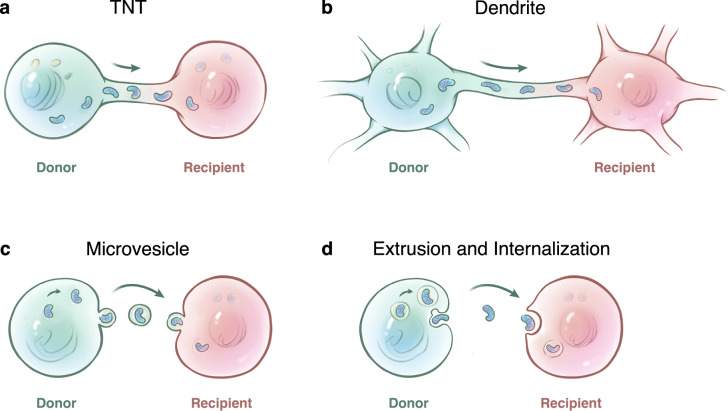
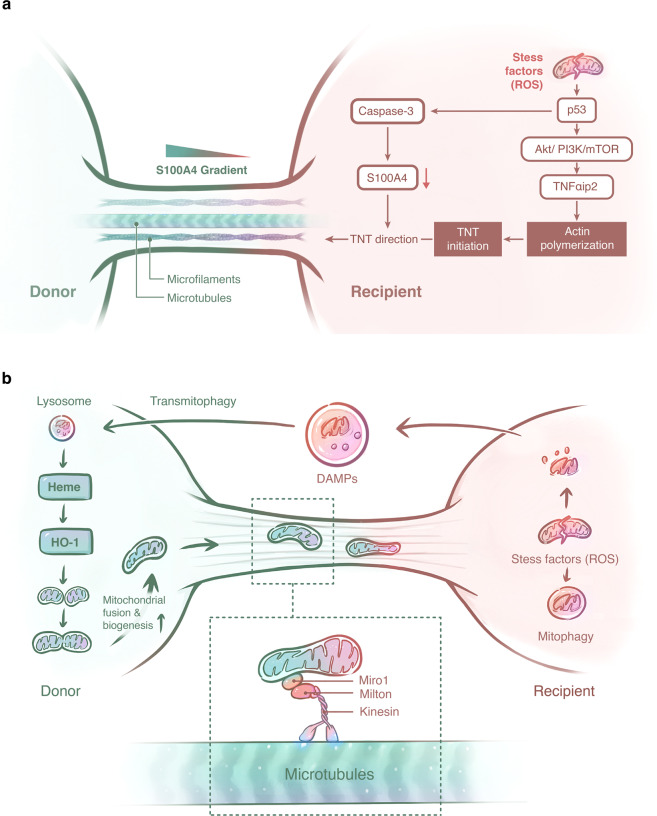
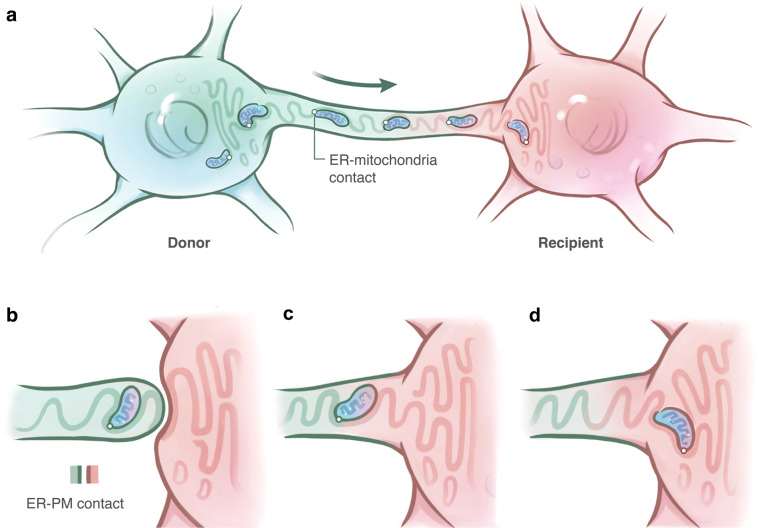
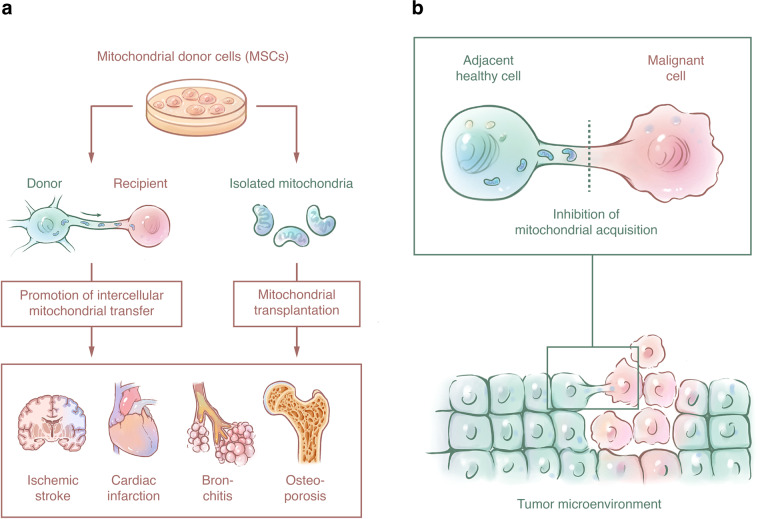
As the crucial powerhouse for cell metabolism and tissue survival, the mitochondrion frequently undergoes morphological or positional changes when responding to various stresses and energy demands. In addition to intracellular changes, mitochondria can also be transferred intercellularly. Besides restoring stressed cells and damaged tissues due to mitochondrial dysfunction, the intercellular mitochondrial transfer also occurs under physiological conditions. In this review, the phenomenon of mitochondrial transfer is described according to its function under both physiological and pathological conditions, including tissue homeostasis, damaged tissue repair, tumor progression, and immunoregulation. Then, the mechanisms that contribute to this process are summarized, such as the trigger factors and transfer routes. Furthermore, various perspectives are explored to better understand the mysteries of cell–cell mitochondrial trafficking. In addition, potential therapeutic strategies for mitochondria-targeted application to rescue tissue damage and degeneration, as well as the inhibition of tumor progression, are discussed.
Overview
The claims and statistics of this paper haven’t been checked yet.
Free: it reads the open-access text and checks the first 5 claims that cite a source we can check. Create a free account to check every claim.
Integrity signals
Registry
Cites
Statistics
Figures
Verification
Claims the paper makes
The claims and statistics of this paper haven’t been checked yet.
Free: it reads the open-access text and checks the first 5 claims that cite a source we can check. Create a free account to check every claim.
Claims other papers make about this one
Each is checked against this paper’s own text: does it say what the citing paper says it does?
The source backs part of the claim, not all of it — or backs it for a different population, condition or comparison.
In the citing paper
“The aberrant mitochondrial exchange between cells has been implicated in the pathogenesis of several neurological diseases including stroke and acute respiratory distress syndrome [9, 10, 11].”
From Aerobic exercise improves astrocyte mitochondrial quality and transfer to neurons in a mouse model of Alzheimer's disease (2025) · cites this paper as [9]
Experimental — accuracy not yet measuredThe cited source says what the claim attributes to it.
In the citing paper
“The release of extracellular mitochondria with preserved functions and their subsequent recapture by other cells might enable the restoration of mitochondrial functions in the recipient cells33,280–282.”
From The role of mitochondria in rheumatic diseases (2022) · cites this paper as [280]
Self-check
Percentages, sums and reported differences re-computed from the paper’s own numbers.
The self-check needs the paper’s full text.
Citations
Cites
How mitochondria produce reactive oxygen species
Murphy, M. P. (2009) · Biochemical Journal · doi:10.1042/bj20081386 · Cited by 8,207 · cited 2×
“17 Under physiological conditions, these byproducts can be decomposed by antioxidant enzymes such as superoxide dismutase (SOD), catalase (CAT), or glutathione peroxidase (GPx) to reduce the detrimental effect of ROS as well as control cellular homeostasis.(17) However, under different pathological conditions, cells s…”
BackgroundAccessories to the Crime: Functions of Cells Recruited to the Tumor Microenvironment
Hanahan, D., & Coussens, L. M. (2012) · Cancer Cell · doi:10.1016/j.ccr.2012.02.022 · Cited by 4,632
Circulating mitochondrial DAMPs cause inflammatory responses to injury
Zhang, Q., Raoof, M., Chen, Y., Sumi, Y., Sursal, T., Junger, W., Brohi, K., Itagaki, K., & Hauser, C. J. (2010) · Nature · doi:10.1038/nature08780 · Cited by 3,812 · cited 1×
“Mitochondrial damage-associated molecular patterns (DAMPs), such as mtDNA, N-formyl peptides, and mitochondrial proteins released from damaged cells, will be recognized by immune cells (neutrophils and monocytes/macrophages) and result in an immune response.(109,110) Thus, mitochondria can be considered not only as se…”
BackgroundMitochondrial diseases in man and mouse
Wallace, D. C. (1999) · Science · doi:10.1126/science.283.5407.1482 · Cited by 3,060 · cited 1×
“Thus, cardiovascular mitochondrial dysfunction or mtDNA mutations induced by increased oxidative and nitro-oxidative stress are closely associated with cardiovascular diseases.(3,52,53) Ischemia is a major cause of myocardial damage and apoptosis because blocking the oxygen supply to CMs generally leads to mitochondri…”
BackgroundSpillantini, M. G., Crowther, R. A., Jakes, R., Hasegawa, M., & Goedert, M. (1998) · Proceedings of the National Academy of Sciences · doi:10.1073/pnas.95.11.6469 · Cited by 2,868
Influence of tumour micro-environment heterogeneity on therapeutic response
Junttila, M. R., & de Sauvage, F. J. (2013) · Nature · doi:10.1038/nature12626 · Cited by 2,694 · cited 1×
“Specifically, one significant factor that leads to intratumoral heterogeneity is that the TME contains many nonmalignant cells, including CAFs, MSCs, and immune cells that are recruited to the tumor site.(80,102) Intercellular Intercellular mitochondrial transfer as a means of tissue revitalization Liu et al.”
BackgroundBonewald, L. F. (2011) · Journal of Bone and Mineral Research · doi:10.1002/jbmr.320 · Cited by 2,287 · cited 2×
“Osteocytes embedded in the bone matrix are connected by dendritic networks and coordinate the function of osteoblasts and osteoclasts.(72) Thus, it is critical to maintain the survival of osteocytes under deleterious conditions, including mechanical loading, hormone stimulation, and other stressors, during their long…”
BackgroundER Tubules Mark Sites of Mitochondrial Division
Friedman, J. R., Lackner, L. L., West, M., DiBenedetto, J. R., Nunnari, J., & Voeltz, G. K. (2011) · Science · doi:10.1126/science.1207385 · Cited by 2,072 · cited 1×
“It has been shown that ER–mitochondria contact coordinates mitochondrial division.(168,169) Thus, it is tempting to speculate that ER also participates in the intercellular degradation of stressed mitochondria in an unknown manner.”
BackgroundNanotubular Highways for Intercellular Organelle Transport
Rustom, A., Saffrich, R., Markovic, I., Walther, P., & Gerdes, H.-H. (2004) · Science · doi:10.1126/science.1093133 · Cited by 2,038
Cardiac progenitor cells from adult myocardium: Homing, differentiation, and fusion after infarction
Oh, H., Bradfute, S. B., Gallardo, T. D., Nakamura, T., Gaussin, V., Mishina, Y., Pocius, J., Michael, L. H., Behringer, R. R., Garry, D. J., et al. (2003) · Proceedings of the National Academy of Sciences · doi:10.1073/pnas.2132126100 · Cited by 1,743
Cited by
Items 301–400 of 433
A Nanotube Injector for Cytoplasmic Transfer and Enhanced Mitochondrial Function
Liu, B., Dai, Z., Zhang, B., Oyama, K., Li, C., Chen, Y., Cui, M., & Miyake, T. (2026) · Small Science · doi:10.1002/smsc.202500598 · Cited by 2
Abdelaziz, A. M., Shokr, M. M., Fathy, M. K., & Fawzy, M. N. (2026) · Journal of Molecular Neuroscience · doi:10.1007/s12031-026-02531-y · Cited by 4
“…mechanism is not confined to AD; emerging evidence indicates its involvement in other neurodegenerative diseases and neuroinflammatory conditions, suggesting it may represent an evolutionarily conserved, fundamental pillar of central nervous system resilience (Liu et al. 2021a ; Ma et al. 2025).”
InfluentialXu, Z., Zhou, Q., & Miao, J. (2026) · Frontiers in Immunology · doi:10.3389/fimmu.2026.1871148 · Cited by 2
“…tumor cells in nutrient-replete regions may export functional organelles to pro-tumor leukocytes, securing a permissive niche, in a manner conceptually analogous to the well-documented stromal-to-tumor transfer of healthy mitochondria via tunneling nanotubes and extracellular vesicles (45, 76).”
Mitophagy-mediated immune evasion: Shared strategies of pathogens
Li, J., Li, W., (34472), D. W., & Liu, Y. (2026) · Redox Biology · doi:10.1016/j.redox.2026.104247 · Cited by 2
“3A) [170,172].”
Mao, W., Wang, K., Mao, J., Xu, Z., Pan, C., Li, D., Liu, T., Chen, H., Wang, H., Huang, C., et al. (2026) · Journal of Nanobiotechnology · doi:10.1186/s12951-026-04761-z · Cited by 2
“…mitochondria” typically carry large amounts of ROS, mitochondrial DNA (mtDNA) damage and functionally defective respiratory chain complexes [25, 26], whose transfer fails to provide energy support but increases the oxidative stress level in recipient cells to weaken their physical functions.”
Deng, W., Pan, J., Tang, K., Tian, T., Cai, Y. Y., Chen, L., Luo, P., Fu, Z., & Zhang, Z. (2026) · Phytomedicine · doi:10.1016/j.phymed.2026.158564 · Cited by 2
Limitations of mitochondrial transplantation
Chaudhari, L. R., Damle, M. N., Sharma, R. K., & Joshi, M. G. (2024) · Elsevier eBooks · doi:10.1016/b978-0-443-18858-9.00013-5 · Cited by 3
Yuan, J., & Jin, Z. (2024) · Journal of Visualized Experiments · doi:10.3791/66917 · Cited by 4
Mozafari, S., Ribes, C., Ayollo, D., Gazeau, F., Silva, A., & Aubertin, K. (2026) · View · doi:10.1002/viw.20260007 · Cited by 2
Uspenskaya, Y. A., Malinovskaya, N. A., & Salmina, A. B. (2022) · Cell and Tissue Biology · doi:10.1134/s1990519x22020109 · Cited by 2
“This effect was mediated by the unidirectional transfer of healthy mitochondria from BM-MSCs to damaged endothelial cells (Liu et al., 2014).”
BackgroundAdopted neoplastic cells and the consequences of their existence
Lazebnik, Y. A. (2023) · Oncotarget · doi:10.18632/oncotarget.28408 · Cited by 2
Krupnova, A. D., Tsomartova, D. A., Васильевна, Ч. Е., Ivanova, M. Y., Tsomartova, E. S., Lomanovskaya, T. A., Pavlova, M. S., & Payushina, O. V. (2024) · Biochemistry (Moscow) Supplement Series A Membrane and Cell Biology · doi:10.1134/s1990747824700272 · Cited by 1
“Mitochondria or their components can also be extruded and internalized by other cells without a carrier through the processes of exocytosis and endocytosis [47].”
Mitochondria in the immune system: Therapeutic potential from mitochondria transfer
Le, T. H. N., & Nguyen, V. T. T. (2025) · International Reviews of Immunology · doi:10.1080/08830185.2025.2577986 · Cited by 2
“Mitochondria transfer between cells remains a critical means of cell-cell interaction and tissue homeostasis in health and disease [12,249–251].”
Redox‐Responsive Mitochondrial Delivery from Functionalized Vascular Stent Surfaces
Tang, F., Applewhite, B. C., Wang, B., & Jiang, B. (2025) · Advanced NanoBiomed Research · doi:10.1002/anbr.202500202 · Cited by 2
da Costa, M. D. A., Pedro, L. C., Ebs, M. F. P., Menegaz, H. M., Bolan, S. J., Machado, A. D., dos Santos, J. C. C., Réus, G. Z., & Gonçalves, C. L. (2025) · Molecular Neurobiology · doi:10.1007/s12035-025-05565-2 · Cited by 1
“Remarkably, mitochondria can also be transferred between cells, not merely inherited [21, 154, 155, 222, 236].”
Rivero‐Silva, M. A., Moreno‐Altamirano, M. M. B., Mondragón‐Flores, R., Mondragón-Castelán, M. E., González‐Pozos, M. S., Rojas-Espinosa, O., Avendaño‐Aguirre, I., & Sánchez‐García, F. J. (2025) · Immunology · doi:10.1111/imm.70084 · Cited by 1
T-cell apoptosis is more susceptible to overactivated neutrophils delivered-NETs-MPO/NE complex
Lu, C., Shao, L., Li, H., Gao, X., Mei, Y., & Sun, B. (2025) · International Immunopharmacology · doi:10.1016/j.intimp.2025.116100 · Cited by 1
Li, X., Huo, Z., Wang, Z., Deng, H., Shao, H., Li, Y., & Jiang, C. (2026) · Journal of Functional Biomaterials · doi:10.3390/jfb17030119 · Cited by 1
Zhang, W., Raghavan, S., Tian, J., Przybelski, S. A., Wiste, H. J., Fought, A. J., Senjem, M. L., Schwarz, C. G., Reid, R. I., Machulda, M. M., et al. (2026) · Nature Communications · doi:10.1038/s41467-026-70707-6 · Cited by 2
Cancer mtDNA mutations: metabolic plasticity and therapeutic promise?
Shang, E., Aftab, O., Dayanamby, A., & Greaves, L. C. (2026) · Trends in Molecular Medicine · doi:10.1016/j.molmed.2026.02.003 · Cited by 1
Zhang, F.-X., Dou, Y., Li, Y., Chien, M., Du, J.-K., Zhang, B., Du, M.-Z., Ai, L.-Y., Wu, T., Guo, H.-L., et al. (2026) · Biomaterials · doi:10.1016/j.biomaterials.2026.124167 · Cited by 1
Labusca, L. S., Gheorghevici, T. S., & Puha, B. (2026) · International Journal of Molecular Sciences · doi:10.3390/ijms27083557 · Cited by 1
Mitochondrial transfer technologies with molecular insights into clinical applications
Martirosian, V., Peng, B., & Teitell, M. A. (2026) · Stem Cells · doi:10.1093/stmcls/sxag026 · Cited by 1
“43 However, while these findings suggest that mitochondrial transfer represents a conserved stress-response and repair program that supports tissue recovery, this process can be exploited by tumors to enhance metabolic plasticity and therapeutic resistance within the tumor microenvironment.”
Wu, S.-H., Wang, Y.-C., Ku, C.-H., Yang, S.-M., Lam, C., Tai, M., & Huang, S. (2026) · Life Sciences · doi:10.1016/j.lfs.2026.124479 · Cited by 1
Zhang, Y.-F., Zhao, D., Wei, J., Liang, X., Wang, L., Wang, J., Li-bin, J., Chen, J.-Y., Zhang, Y., & Liu, Y. (2026) · Translational Stroke Research · doi:10.1007/s12975-026-01446-5 · Cited by 2
“However, it is important to note that the biological outcomes of mitochondrial transfer are context-dependent and not universally beneficial [ 12, 15].”
Wang, X., Liu, J., You, H., Zhao, Y., Fu, H., Liu, Z. L., Sun, Y., Geng, B., Wang, X., & Xia, Y. (2026) · International Journal of Molecular Sciences · doi:10.3390/ijms27125193 · Cited by 2
“Under physiological or stress conditions, these transferred elements undergo fusion, localization, functional activation or degradation within recipient cells [18].”
Self-citationIntercellular mitochondrial transfer in ischemic stroke: Emerging roles of microglia
Yang, H. W., Sun, X., Jiang, J., & Yu, J. (2026) · Journal of Cerebral Blood Flow & Metabolism · doi:10.1177/0271678x261465848 · Cited by 1
Velmurugan, G. V., Vekaria, H. J., Rabchevsky, A. G., Saito, K., Morganti, J. M., Patel, S., Hubbard, W. B., & Sullivan, P. G. (2026) · Acta Neuropathologica Communications · doi:10.1186/s40478-026-02458-w · Cited by 1
Dong, J. I. A. N. Z. E., Yan, B., Zhao, X., Bai, J., Shan, H., Gao, X., Sheng, L., Dai, J., Jiang, F., Zhang, M., et al. (2026) · Journal of Orthopaedic Translation · doi:10.1016/j.jot.2026.101171 · Cited by 1
Free mitochondrial transfer enhances bone regeneration through cathepsin H mediated cysteine cycle
Diao, J., He, Q., Liu, Q., Liu, Y., Chen, S., Zhang, Y., Gui, H., Chen, J., wu, D., Pang, X., et al. (2026) · Cell Communication and Signaling · doi:10.1186/s12964-026-03060-2 · Cited by 1
“Mitochondria can transfer to each other in various ways [10] and regulate the function of receptor cells through the network of mitochondria [11].”
Deng, W., Liu, B. Q., & Xiang, S. (2026) · Frontiers in Immunology · doi:10.3389/fimmu.2026.1863593 · Cited by 1
“…of intact organelle transfer, yet the same signals may also arise from membrane fragments, mitochondrial-derived vesicles, or mtDNA released from damaged organelles, and electron microscopy con fi rmation of intact double-membraned structures in recipient cells remains comparatively scarce (17, 42).”
InfluentialWu, Z., Bai, J., Chang, A., Wang, T., Liu, Y., & Yu, H. (2026) · Translational Oncology · doi:10.1016/j.tranon.2026.102913 · Cited by 1
“Collectively, these studies demonstrate that MSC-mediated mitochondrial transfer is a versatile and effective mechanism for tissue revitalization, with broad implications for regenerative medicine [136,137].”
Heydari, F., Fahmi, S., Alqassimi, S., Mansuri, N., Al-Samawi, R. I., Mozaffari, F., Hamblin, M. R., & Naghinezhad, J. (2026) · Clinical & Experimental Metastasis · doi:10.1007/s10585-026-10424-y · Cited by 2
“…nodes such as TNT formation, Miro1/MIRO2-dependent traf - ficking, CXCL12/CXCR4 signaling, NOX2-ROS axes, or HMGB1-driven recruitment, because broad inhibition would risk losing the beneficial repair functions of mitochondrial exchange in nonmalignant tissues [80, 109, 114, 128, 133, 140 ].”
InfluentialGu, Y., Gu, C., Pan, R., & Liu, B. (2026) · Cells · doi:10.3390/cells15161502 · Cited by 1
“Mitochondria frequently undergo morphological and spatial remodeling in response to cellular stress and energy demands [47].”
The role of extracellular vesicles and gap junctions in inter-cellular mitochondrial transfer
Caldeira, D. D. A. F., & Krasnodembskaya, A. D. (2024) · Elsevier eBooks · doi:10.1016/b978-0-443-18858-9.00006-8 · Cited by 1
Krupnova, A. D., Tsomartova, D. A., Васильевна, Ч. Е., Ivanova, M. Y., Tsomartova, E. S., Lomanovskaya, T. A., Pavlova, M. S., & Payushina, O. V. (2024) · Биологические мембраны Журнал мембранной и клеточной биологии · doi:10.31857/s0233475524040026 · Cited by 1
Güldiken, İ. N., Eyüboğlu, T. F., & Özcan, M. (2025) · Current Oral Health Reports · doi:10.1007/s40496-025-00403-9 · Cited by 1
“…the intercellular transfer of mitochondria can occur under physiological conditions beyond merely restoring stressed cells or repairing damaged tissues caused by mitochondrial dysfunction, positioning mitochondrial transfer (MT) as the current focus of research for regenerative cures [89].”
Peñaherrera, S., Robayo, P., Villagomez, A., Borja, T., Arteaga, M. B., Benavides-Almeida, A., Pérez-Meza, Á., Haro-Vinueza, A., Segnini, G., Pontón, P., et al. (2023) · Research Square · doi:10.21203/rs.3.rs-3492269/v1 · Cited by 1
De novo detection of somatic variants in high-quality long-read single-cell RNA sequencing dataPreprint
Dondi, A., Borgsmüller, N., Ferreira, P., Haas, B. J., Jacob, F., Heinzelmann-Schwarz, V. A., & Beerenwinkel, N. (2024) · bioRxiv (Cold Spring Harbor Laboratory) · doi:10.1101/2024.03.06.583775 · Cited by 1
Knee joint preservation: Strategies for tissue repair and regeneration
Korpershoek, J. V. (2022) · Utrecht University Repository (Utrecht University) · doi:10.33540/1207
Shrimp miR-965 transfers tumoricidal mitochondria
Kim, H., Choi, J. H., Moon, C. M., Kang, J. L., Woo, M., & Kim, M. (2022) · Biological Procedures Online · doi:10.1186/s12575-022-00178-8
Kuo, F., Cheng, B.-L., Tsai, C., Chen, P., Tsai, H.-Y., Tsai, K.-J., Huang, Y., Liu, C., Wu, D., Lin, M., et al. (2023) · Preprints.org · doi:10.20944/preprints202304.0477.v1
Self-citationMitochondria as epigenetic regulators of reproductive aging
Singh, K. K. (2023) · Elsevier eBooks · doi:10.1016/b978-0-12-823937-7.00002-x · Cited by 1
Kurian, G. A. (2023) · Elsevier eBooks · doi:10.1016/b978-0-443-15177-4.00011-x
Zhao, Q., Zhou, X., Yan, J., Kuiper, R., Curbo, S., & Karlsson, A. (2023) · PLoS ONE · doi:10.1371/journal.pone.0285242
“including their mtDNA can be transferred intercellularly [20].”
BackgroundBeihaghia, M., Sahebi, R., Beihaghi, M. R., Tehrani, H., Dowom, S. A., neissiani, R. K., & Janati, Z. (2023) · Preprints.org · doi:10.20944/preprints202312.0021.v1 · Cited by 1
Extracellular mitochondria as promising diagnostic agents
Kit, O. I., Frantsiyants, E. M., Shikhlyarova, A. I., Neskubina, I. V., & Ilchenko, S. A. (2024) · Research and Practical Medicine Journal · doi:10.17709/2410-1893-2024-11-1-4 · Cited by 2
Mechanism of Malignancy Development When the Metabolism of the Human Body DeterioratesPreprint
kato, M. (2024) · Preprints.org · doi:10.20944/preprints202403.0985.v1
Mechanisms of organic dust induced neuroinflammation
Massey, N. (2021) · doi:10.31274/td-20240329-498
Mechanisms of Mitochondrial Influence on Tumor Radioresistivity
Rozenberg, J. M., Maximov, V. V., Kuzmin, D., & Leonov, S. V. (2024) · Medical Radiology and radiation safety · doi:10.33266/1024-6177-2024-69-2-12-17
Cardiovascular diseases and mitochondrial transplantation
Borisov, A. B., McCusker, K., McIntyre, D., & Peduzzi-Nelson, J. D. (2024) · Elsevier eBooks · doi:10.1016/b978-0-443-18858-9.00016-0
Mitochondrial transplantation, methods and mitochondrial dysfunction related diseases
Ülger, Ö., & Kubat, G. B. (2024) · Elsevier eBooks · doi:10.1016/b978-0-443-18858-9.00001-9
Mitochondrial Plasticity and Quality Control in Health and Disease
Rizzo, M., Forini, F., Bramanti, E., Levantini, E., Santorelli, F. M., Ali, A., & Lionetti, V. (2024) · Frontiers research topics · doi:10.3389/978-2-8325-5317-6
Mechanism of Malignancy Development When the Metabolism of the Human Body DeterioratesPreprint
kato, M. (2024) · Preprints.org · doi:10.20944/preprints202403.0985.v2
Wang, Z., Zhu, J., Xu, M., Ma, X., Shen, M., Yan, J., Gan, G., & Zhou, X. P. (2025) · eLife · doi:10.7554/elife.98554.2.sa0
Yue, Q., Cao, Z., Zhang, T., Yin, N., & Liu, L. (2025) · Antioxidants · doi:10.3390/antiox14030270
“Furthermore, mitochondria exposed to the extracellular environment are prone to death due to high calcium levels and pH changes [58].”
Zhao, Y., Guo, H., Zhou, Y., Niu, L., & Wu, N. (2025) · Cancer Research and Treatment · doi:10.4143/crt.2025.281
“This encompasses functions such as maintaining tissue homeostasis, facilitating the repair of damaged tissues, promoting tumor progression, and contributing to immunoregulation [22].”
Hassan, F. E., Elgilil, N. M. A., Aboulhoda, B. E., Abdallah, H. A., Rashed, L., & Shaban, S. M. (2025) · Histochemistry and Cell Biology · doi:10.1007/s00418-025-02427-9
“Also, this blocks redox-sensitive cellular pathways such as mitogen-activated protein kinase (MAPK), NF-κB, and protein kinase B (PKB) and hinders ROS generation (Liu et al. 2021).”
Therapeutic potential of extracellular mitochondria: applications and challenges
Mas‐Bargues, C., Huete-Acevedo, J., Arnal-Forné, M., Atencia-Rabadán, S., de Santiago-Montesinos, J., Dorosz, K., & Borrás, C. (2025) · Elsevier eBooks · doi:10.1016/b978-0-443-29283-5.00009-1
Cellular mechanisms of mitochondrial transfer and metabolic and immune signaling
Guedes, B., Melo-Marques, I., Cardoso, S. M., & Esteves, A. R. (2025) · Elsevier eBooks · doi:10.1016/b978-0-443-29283-5.00002-9
Adaptation of mitochondria in drug resistance of cancer: frequency, mechanisms, and control
Ashesh, A. M., Lari, M. Q., Kumar, D., & Kumar, A. (2025) · Elsevier eBooks · doi:10.1016/b978-0-443-33910-3.00001-7
Vecchio, V. D., Rehman, A., Panda, S. K., Torsiello, M., Marigliano, M., Nicoletti, M. M., Ferraro, G. A., Falco, V. D., Lappano, R., Lieto, E., et al. (2024) · Figshare · doi:10.6084/m9.figshare.26733921
Zhang, Y., Xu, T., Xie, J., Wu, H., Hu, W., & Yuan, X. (2024) · Figshare · doi:10.6084/m9.figshare.25698218
Hayashida, K., Takegawa, R., Endo, Y., Yin, T., Choudhary, R. C., Aoki, T., Nishikimi, M., Murao, A., Nakamura, E., Shoaib, M., et al. (2023) · Figshare · doi:10.6084/m9.figshare.22626340
Vecchio, V. D., Rehman, A., Panda, S. K., Torsiello, M., Marigliano, M., Nicoletti, M. M., Ferraro, G. A., Falco, V. D., Lappano, R., Lieto, E., et al. (2024) · Figshare · doi:10.6084/m9.figshare.26043815
Vecchio, V. D., Rehman, A., Panda, S. K., Torsiello, M., Marigliano, M., Nicoletti, M. M., Ferraro, G. A., Falco, V. D., Lappano, R., Lieto, E., et al. (2024) · Figshare · doi:10.6084/m9.figshare.26733915
Vecchio, V. D., Rehman, A., Panda, S. K., Torsiello, M., Marigliano, M., Nicoletti, M. M., Ferraro, G. A., Falco, V. D., Lappano, R., Lieto, E., et al. (2024) · Figshare · doi:10.6084/m9.figshare.26043677
Vecchio, V. D., Rehman, A., Panda, S. K., Torsiello, M., Marigliano, M., Nicoletti, M. M., Ferraro, G. A., Falco, V. D., Lappano, R., Lieto, E., et al. (2024) · Figshare · doi:10.6084/m9.figshare.26733927
Vecchio, V. D., Rehman, A., Panda, S. K., Torsiello, M., Marigliano, M., Nicoletti, M. M., Ferraro, G. A., Falco, V. D., Lappano, R., Lieto, E., et al. (2024) · Figshare · doi:10.6084/m9.figshare.26733924
Vecchio, V. D., Rehman, A., Panda, S. K., Torsiello, M., Marigliano, M., Nicoletti, M. M., Ferraro, G. A., Falco, V. D., Lappano, R., Lieto, E., et al. (2024) · Figshare · doi:10.6084/m9.figshare.26733918
Zhang, Y., Xu, T., Xie, J., Wu, H., Hu, W., & Yuan, X. (2024) · Figshare · doi:10.6084/m9.figshare.25698424
Bi, Y., Guo, X., Zhang, M., Zhu, K., Shi, C., Fan, B., Wu, Y., Yang, Z., & Ji, G. (2021) · Figshare · doi:10.6084/m9.figshare.17162925
Paracrine Regulation of the Neurogenic Niche by Neural Stem Cells
Oliveira, R. P. (2022) · Portuguese National Funding Agency for Science, Research and Technology (RCAAP Project by FCT) · Cited by 1
Dupard, S. J. (2024) · Lund University Publications (Lund University)
Mesenchymal stem cells and the rescue of mitochondrial damage in different disease models (Review)
Tran, C., & Nguyen, V. (2025) · World Academy of Sciences Journal · doi:10.3892/wasj.2025.419 · Cited by 2
“Mitochondrial transfer and transplantation appear to be an innovative and promising tool for targeting mitochon‑ dria‑related pathological conditions (25,236‑238).”
Luan, T., Hu, S., Nie, W., Liu, J., Jia, L., Yang, W., Wang, S., An, N., Liao, Z., Wangqu, X., et al. (2026) · Journal of Functional Foods · doi:10.1016/j.jff.2025.107131
Self-citationMechanisms and prospects of multifunctional organelles in intercellular communication
Yin, K., Zhang, Z., Zhao, F., Qian, N., He, H., & Zheng, B. (2026) · Nano Research · doi:10.26599/nr.2026.94908422
Bjelogrlić, S., Vujatović-Velimirov, T., Korać, A., Stojanovic, S., Grahovac, J., & Vitorović-Todorović, M. D. (2026) · Chemico-Biological Interactions · doi:10.1016/j.cbi.2026.111925
Mitochondria transfer from myocytes to endothelial cells promotes angiogenesis in skeletal muscle
Long, Y.-F., Huang, A.-J., Tang, S., Xu, Z., Wu, M.-Y., Liu, K., Chen, Z.-C., Qin, L., Dai, B.-Y., Dong, C., et al. (2026) · Mitochondrion · doi:10.1016/j.mito.2026.102116 · Cited by 1
Mitochondrial Dysfunction, Transfer, and Therapeutic Strategies in Neurological Disorders
Ling, L., Chen, D., Wang, C., & Dang, R. (2026) · Neuropharmacology and Therapy · doi:10.15212/npt-2025-0020 · Cited by 1
Mitochondrial dynamics and purine metabolism in zebrafish cone photoreceptors
Rutter, K. M. (2025) · ResearchWorks at the University of Washington (University of Washington)
Costabile, F., Pierini, S., Perales-Linares, R. F., Leli, N. M., Bear, A. S., Koch, C. J., Carreno, B. M., Lotze, M. T., Singh, L. N., Falck, M., et al. (2026) · bioRxiv (Cold Spring Harbor Laboratory) · doi:10.64898/2026.01.30.702567
“Intercellular mitochondrial transfer has most frequently been discussed in tumors in the context of metabolic adaptation and stress tolerance and has often emphasized stromal-to-tumor mitochondrial donation 20,41 .”
Chen, F., Deng, D., Li, X., Wang, H., Li, F., Chen, Y.-Z., Tian, Y., Jia, N., Bi, J.-M., Zhang, J.-J., et al. (2026) · Research Square · doi:10.21203/rs.3.rs-9015325/v1
The Application of Stem Cells in Chronic Wound Healing
Atta, D., Dixit, N., Blades, C. M., & Kumar, A. (2026) · Stem cell biology and regenerative medicine · doi:10.1007/978-3-032-12705-1_5
Développement de nouvelles stratégies de thérapie génique pour le syndrome de Leigh
Reynaud-Dulaurier, R. (2022) · theses.fr (ABES) · doi:10.70675/b7b02210za175z491eza3dbzb67e5d705506
Mitochondria transfer-driven chemical sensing: FRET platforms for dynamic disease diagnostics
Zhang, W., You, J., Liu, H., Liu, C., Li, J., Zhang, Y., Huachen, Z., Hu, P., Li, D., & Huang, C. Z. (2026) · TrAC Trends in Analytical Chemistry · doi:10.1016/j.trac.2026.118839
Chen, Q., Da, W., Luo, N., & Shen, B. (2026) · PubMed Central · doi:10.7507/1002-1892.202602016
Mao, J., Xia, W., Li, M., Huang, X., Zhao, Y., Hu, Z., Su, Y., Wang, J., Cui, W., & Zan, T. (2026) · Bioactive Materials · doi:10.1016/j.bioactmat.2026.03.048 · Cited by 1
Angelim, M. K. S. C., Silva, L. F. L., Castro, G., Greison, W. S. S., Requião, R. D., Nogueira, G. A. S., Campos, T. P., Bresil, C., Baratti, M. O., da Costa, W. L. G., et al. (2026) · Research Square · doi:10.21203/rs.3.rs-9558181/v1
Qiang, J., Jin, R., Sha, T., Zheng, F., Zhou, Y., Hu, Y., Zhang, S., Yang, Z., Nie, M., Luo, H., et al. (2026) · Cell Proliferation · doi:10.1111/cpr.70226
“Gao et al. [9] proposed that osteocyte dendrites could represent TNT-like protrusions [48].”
Rethinking the origins and functions of adaptive immunity
Okwan-Duodu, D. K., Sperling, E. A., & Engleman, E. G. (2026) · Trends in Immunology · doi:10.1016/j.it.2026.04.008
Tumor-derived mitochondria enhance CD8 + T cell cytotoxicity through SPHK2-dependent S1P signalingPreprint
Chen, C., Wang, X., Li, H., Gao, Q., Zhang, J., & Cheng, S. (2026) · bioRxiv (Cold Spring Harbor Laboratory) · doi:10.64898/2026.05.15.725367
Agrawal, P., Tiwari, S., Mendhey, P., Jampala, P., Rajak, H., Kurrey, N. K., Ahmed, N., Yadav, S. K., & Kumar, S. (2026) · Onco · doi:10.3390/onco6020025
“For example, B16 melanoma cells lacking mtDNA regain tumorigenicity only after acquiring functional mitochondria from the TME, highlighting the essential role of mitochondrial competence in tumor initiation and progression [33].”
Ustymenko, A., Kyryk, V. M., Smozhanik, E., & Tsupykov, O. (2026) · Research Square · doi:10.21203/rs.3.rs-9790503/v1
Song, C., Xu, Y., Zhang, D., Kang, F., Liao, J., Ding, H., Hu, W., Dong, S., & Li, J. (2026) · Biomedical Technology · doi:10.1016/j.bmt.2026.100163
He, Q., Tan, Z., Xu, J., Wang, T. Q., Li, Q., & Li, X. (2026) · Frontiers in Immunology · doi:10.3389/fimmu.2026.1850600
Liu, K., Sun, X., Jiao, X., Chao, L., Zhang, B., Liu, C. H., Wu, J., Huang, M., Cai, P., Li, X., et al. (2026) · Stem Cell Research & Therapy · doi:10.1186/s13287-026-05127-w
Metadata
- Authors
- Liu, D., Gao, Y., Liu, J., Huang, Y., Yin, J., Feng, Y., Shi, L., Meloni, B. P., Zhang, C., Zheng, M., & Gao, J.
- Affiliations
- The University of Western Australia (AU)
- Fudan University (CN)
- Shanghai Jiao Tong University (CN)
- Zhejiang University (CN)
- Perron Institute for Neurological and Translational Science (AU)
- Corresponding author
- Zhang, Changqing
- Zheng, Minghao
- Gao, Junjie
- ORCID
- Venue
- Signal Transduction and Targeted Therapy
- Published
- 2021-02-16
- Volume
- 6
- Issue
- 1
- Pages
- 65-65
- ISSN
- 2059-3635 (ISSN-L)
- PMC
- PMC7884415
- OpenAlex
- W3130924806
- Semantic Scholar
- 5c86d8cb4d8bc2069719d23bc2b62ae8fad37b1b
- Cited by
- 403
- References
- 178
- Citations by year
- 2026: 73 · 2025: 97 · 2024: 98 · 2023: 67 · 2022: 46 · 2021: 21
- FWCI
- 6.08
- Type
- journal article
- Language
- en
- Open access
- gold
- doi.org
- Licence
- cc-by
- creativecommons.org/licenses/by/4.0 (tdm)
- creativecommons.org/licenses/by/4.0 (vor)
- Locations
- Signal Transduction and Targeted Therapy (publishedVersion, cc-by)
- PubMed Central (publishedVersion, cc-by)
- PubMed (publishedVersion)
- UWA Profiles and Research Repository (UWA) (submittedVersion, cc-by)
- DOAJ (DOAJ: Directory of Open Access Journals) (submittedVersion, cc-by-sa)
- Funders
- National Natural Science Foundation of China (81672143, 81820108020)
- China Scholarship Council
- Topics
- Life Sciences › Biochemistry, Genetics and Molecular Biology › Molecular Biology › Mitochondrial Function and Pathology
- Life Sciences › Biochemistry, Genetics and Molecular Biology › Cell Biology › Autophagy in Disease and Therapy
- Life Sciences › Biochemistry, Genetics and Molecular Biology › Cell Biology › Mesenchymal stem cell research
- Keywords
- intercellular mitochondrial transfer, mitochondrial trafficking, tissue homeostasis, tissue repair, mitochondrial dysfunction, tumor progression, immune regulation, mitochondrial-targeted therapy, tissue degeneration, intercellular communication
- MeSH terms
- DNA, Mitochondrial, Energy Metabolism, Humans, Mitochondria, Mesenchymal Stem Cells
About these checks
Registry, retraction, Cites and statistics results are computed, not judged, with one exception: a printed reference that no index lists is read once by a model before it counts as a citation error. Claims are extracted by a model and kept only when their quote appears verbatim in the text; each cited source is then checked, with a model’s help, for whether it says what the claim relies on. Those verdicts can be wrong — read the claim’s quote and the cited source before relying on one.
Statistics and arithmetic are recomputed, not judged.
Confidence bands are shown only for fields calibrated on our annotated test set. None is calibrated yet, so no band is shown.
What counts as a claim ›How we measure confidence ›How we check this ›
Are you an author, or do you see a problem with this page? Request a review
Data sources
Bibliographic data: Semantic Scholar, OpenAlex, Crossref.
Contains information from the Semantic Scholar Academic Graph Datasets, made available under the ODC Attribution License (ODC-BY 1.0).
Semantic Scholar’s data is described in: Kinney, R., et al. (2023). The Semantic Scholar Open Data Platform. arXiv:2301.10140.
