

Intercellular mitochondrial transfer as a means of tissue revitalization
Open accessThe DOI matches its Crossref record; 178 of the 180 references it cites were found in a registry or an index.
Abstract
As the crucial powerhouse for cell metabolism and tissue survival, the mitochondrion frequently undergoes morphological or positional changes when responding to various stresses and energy demands. In addition to intracellular changes, mitochondria can also be transferred intercellularly. Besides restoring stressed cells and damaged tissues due to mitochondrial dysfunction, the intercellular mitochondrial transfer also occurs under physiological conditions. In this review, the phenomenon of mitochondrial transfer is described according to its function under both physiological and pathological conditions, including tissue homeostasis, damaged tissue repair, tumor progression, and immunoregulation. Then, the mechanisms that contribute to this process are summarized, such as the trigger factors and transfer routes. Furthermore, various perspectives are explored to better understand the mysteries of cell–cell mitochondrial trafficking. In addition, potential therapeutic strategies for mitochondria-targeted application to rescue tissue damage and degeneration, as well as the inhibition of tumor progression, are discussed.
Overview
The claims and statistics of this paper haven’t been checked yet.
Free: it reads the open-access text and checks the first 5 claims that cite a source we can check. Create a free account to check every claim.
Integrity signals
Registry
Cites
Statistics
Figures
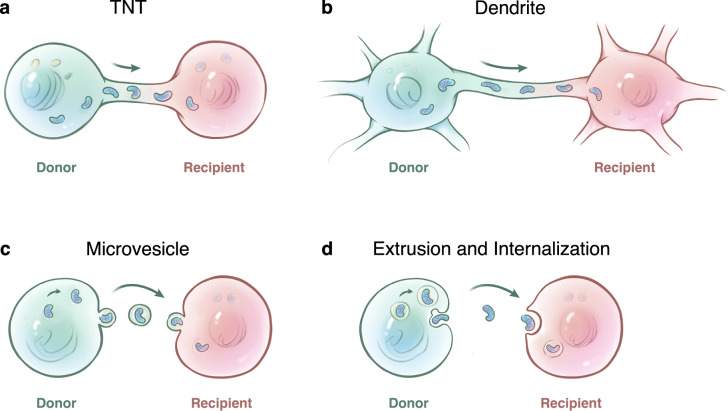
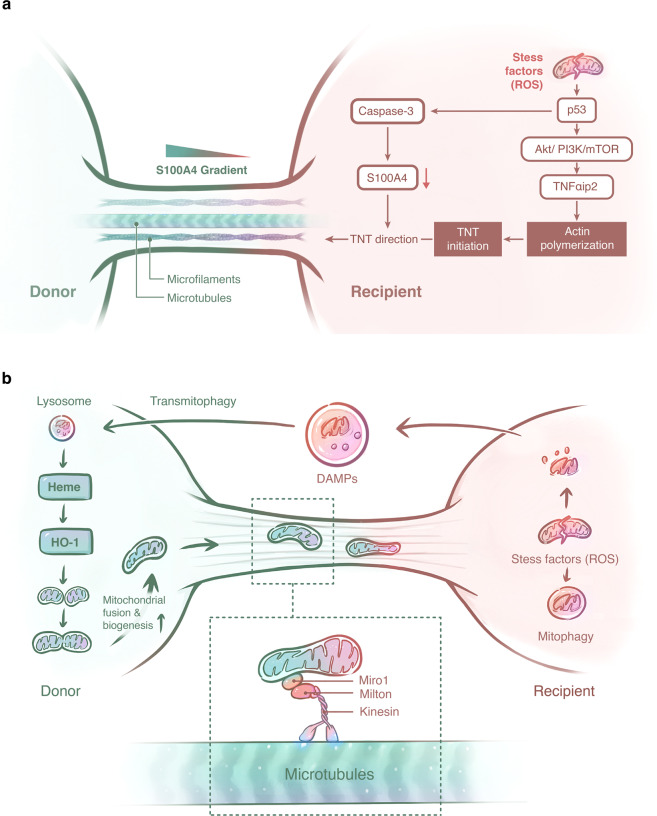
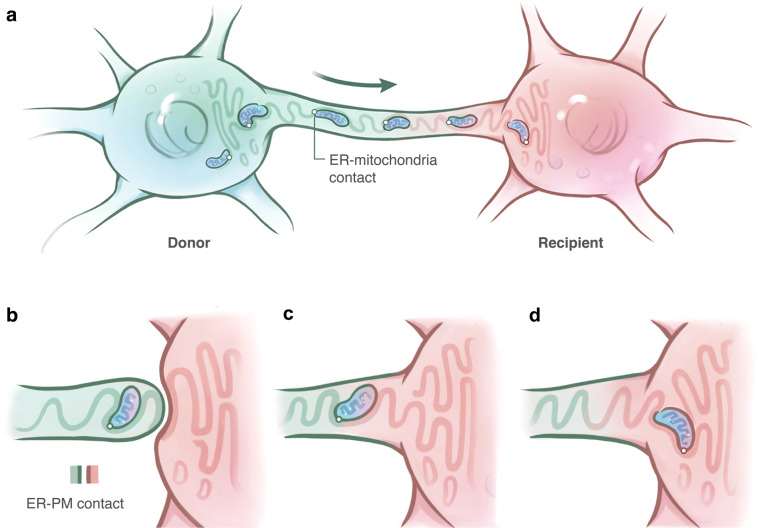
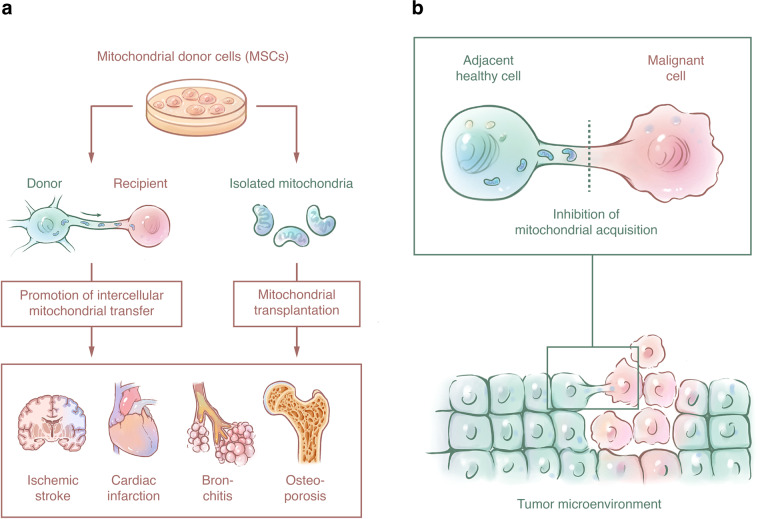
Verification
Claims the paper makes
The claims and statistics of this paper haven’t been checked yet.
Free: it reads the open-access text and checks the first 5 claims that cite a source we can check. Create a free account to check every claim.
Claims other papers make about this one
Each is checked against this paper’s own text: does it say what the citing paper says it does?
The source backs part of the claim, not all of it — or backs it for a different population, condition or comparison.
In the citing paper
“The aberrant mitochondrial exchange between cells has been implicated in the pathogenesis of several neurological diseases including stroke and acute respiratory distress syndrome [9, 10, 11].”
From Aerobic exercise improves astrocyte mitochondrial quality and transfer to neurons in a mouse model of Alzheimer's disease (2025) · cites this paper as [9]
Experimental — accuracy not yet measuredThe cited source says what the claim attributes to it.
In the citing paper
“The release of extracellular mitochondria with preserved functions and their subsequent recapture by other cells might enable the restoration of mitochondrial functions in the recipient cells33,280–282.”
From The role of mitochondria in rheumatic diseases (2022) · cites this paper as [280]
Self-check
Percentages, sums and reported differences re-computed from the paper’s own numbers.
The self-check needs the paper’s full text.
Citations
Cites
How mitochondria produce reactive oxygen species
Murphy, M. P. (2009) · Biochemical Journal · doi:10.1042/bj20081386 · Cited by 8,207 · cited 2×
“17 Under physiological conditions, these byproducts can be decomposed by antioxidant enzymes such as superoxide dismutase (SOD), catalase (CAT), or glutathione peroxidase (GPx) to reduce the detrimental effect of ROS as well as control cellular homeostasis.(17) However, under different pathological conditions, cells s…”
BackgroundAccessories to the Crime: Functions of Cells Recruited to the Tumor Microenvironment
Hanahan, D., & Coussens, L. M. (2012) · Cancer Cell · doi:10.1016/j.ccr.2012.02.022 · Cited by 4,632
Circulating mitochondrial DAMPs cause inflammatory responses to injury
Zhang, Q., Raoof, M., Chen, Y., Sumi, Y., Sursal, T., Junger, W., Brohi, K., Itagaki, K., & Hauser, C. J. (2010) · Nature · doi:10.1038/nature08780 · Cited by 3,812 · cited 1×
“Mitochondrial damage-associated molecular patterns (DAMPs), such as mtDNA, N-formyl peptides, and mitochondrial proteins released from damaged cells, will be recognized by immune cells (neutrophils and monocytes/macrophages) and result in an immune response.(109,110) Thus, mitochondria can be considered not only as se…”
BackgroundMitochondrial diseases in man and mouse
Wallace, D. C. (1999) · Science · doi:10.1126/science.283.5407.1482 · Cited by 3,060 · cited 1×
“Thus, cardiovascular mitochondrial dysfunction or mtDNA mutations induced by increased oxidative and nitro-oxidative stress are closely associated with cardiovascular diseases.(3,52,53) Ischemia is a major cause of myocardial damage and apoptosis because blocking the oxygen supply to CMs generally leads to mitochondri…”
BackgroundSpillantini, M. G., Crowther, R. A., Jakes, R., Hasegawa, M., & Goedert, M. (1998) · Proceedings of the National Academy of Sciences · doi:10.1073/pnas.95.11.6469 · Cited by 2,868
Influence of tumour micro-environment heterogeneity on therapeutic response
Junttila, M. R., & de Sauvage, F. J. (2013) · Nature · doi:10.1038/nature12626 · Cited by 2,694 · cited 1×
“Specifically, one significant factor that leads to intratumoral heterogeneity is that the TME contains many nonmalignant cells, including CAFs, MSCs, and immune cells that are recruited to the tumor site.(80,102) Intercellular Intercellular mitochondrial transfer as a means of tissue revitalization Liu et al.”
BackgroundBonewald, L. F. (2011) · Journal of Bone and Mineral Research · doi:10.1002/jbmr.320 · Cited by 2,287 · cited 2×
“Osteocytes embedded in the bone matrix are connected by dendritic networks and coordinate the function of osteoblasts and osteoclasts.(72) Thus, it is critical to maintain the survival of osteocytes under deleterious conditions, including mechanical loading, hormone stimulation, and other stressors, during their long…”
BackgroundER Tubules Mark Sites of Mitochondrial Division
Friedman, J. R., Lackner, L. L., West, M., DiBenedetto, J. R., Nunnari, J., & Voeltz, G. K. (2011) · Science · doi:10.1126/science.1207385 · Cited by 2,072 · cited 1×
“It has been shown that ER–mitochondria contact coordinates mitochondrial division.(168,169) Thus, it is tempting to speculate that ER also participates in the intercellular degradation of stressed mitochondria in an unknown manner.”
BackgroundNanotubular Highways for Intercellular Organelle Transport
Rustom, A., Saffrich, R., Markovic, I., Walther, P., & Gerdes, H.-H. (2004) · Science · doi:10.1126/science.1093133 · Cited by 2,038
Cardiac progenitor cells from adult myocardium: Homing, differentiation, and fusion after infarction
Oh, H., Bradfute, S. B., Gallardo, T. D., Nakamura, T., Gaussin, V., Mishina, Y., Pocius, J., Michael, L. H., Behringer, R. R., Garry, D. J., et al. (2003) · Proceedings of the National Academy of Sciences · doi:10.1073/pnas.2132126100 · Cited by 1,743
Cited by
Items 401–433 of 433
Li, Y., Gao, Y., Song, D., Liu, Y., Zhang, F., He, Q. Z., & Zheng, J. (2026) · Advanced Materials · doi:10.1002/adma.73889
Self-citationWang, Z., Sun, L., Ping, Y., Han, W., Deng, X., Chen, X., Bai, M., Zhao, Y., Wu, X., & Li, B. (2026) · International Journal of Nanomedicine · doi:10.2147/ijn.s616690
Mitochondrial dysfunction in energy metabolism: Unraveling cardiometabolic diseases
Gao, J., & Yao, M. (2026) · Elsevier eBooks · doi:10.1016/b978-0-443-34186-1.00011-6
Self-citationMoraes, C. T. (2026) · Molecular Therapy · doi:10.1016/j.ymthe.2026.07.025
Wang, K., Hu, X., Bi, C., Zhuang, Y., Zhang, Y., Shao, Z., Chen, L., Xiang, H., Jin, L., Chen, S., et al. (2026) · Advanced Materials · doi:10.1002/adma.74133
“Currently, intervention strategies targeting mitochondrial homeostasis primarily focus on antioxidant scavenging of ROS [17, 18], activation of mitophagy [19, 20], and mitochondrial transplantation [21, 22].”
Cell-based bioactive materials for osteoarthritis therapy: a comprehensive review
Qing-jun, L., Cheng, S., & Qiao, B.-R. (2026) · Biomedical Materials · doi:10.1088/1748-605x/ae8e16 · Cited by 1
Targeting mitochondria for the treatment of neurodegenerative diseases
Li, Q., & You, M. (2026) · Frontiers in Neuroscience · doi:10.3389/fnins.2026.1835506
Liang, C., Cheng, Y., Li, Z., Zheng, A., Fu, X., Zhang, W., Cao, L., & Wang, C. (2026) · Advanced Materials · doi:10.1002/adma.74352
Zhang, Y., Han, F., Yuan, Y., Li, M., Yi, L., Xiao, Y., Zhang, D., Zhang, Z., Wang, Y., Wang, H., et al. (2026) · Journal of Nanobiotechnology · doi:10.1186/s12951-026-04846-9 · Cited by 1
“MSC transplantation has shown promise for treating various diseases, with mitochondrial transfer increasingly being recognized as a key mechanism underlying their therapeutic effects [27, 65].”
Castelli, S., Aiello, G., Bruno, A. D., Fratantonio, D., Tripodi, G., Aiello, V., Lombardo, M., & Baldelli, S. (2026) · Metabolites · doi:10.3390/metabo16080533
Kim, Y. S., 김, 다., Jung, Y. J., Yoon, J. W., Kwon, Y. S., Pak, Y. K., Kim, S.-J., & Kim, J. H. (2026) · BMB Reports · doi:10.5483/bmbrep.2025-0024
“Mitochondrial transplantation is an innovative approach for treating mitochondrial dysfunction and diseases (5, 6).”
Microspheres in myocardial infarction therapy
Liu, T., Hao, Y., Xu, L., Zhou, H., Li, B., Chen, Y., & Chen, M. (2026) · International Journal of Pharmaceutics · doi:10.1016/j.ijpharm.2026.127262
Zhou, J., Lin, X., Yan, L., Cha, Z., Li, J., & Xu, H. (2026) · Extracellular Vesicles and Circulating Nucleic Acids · doi:10.20517/evcna.2026.06
Cho, H., Sayana, R., Koladiya, A., Colella, P., Cho, S., Jahng, J. W. S., Vasquez, J. J., Basurto, J. A., Wu, J. C., & Gomez‐Ospina, N. (2026) · Nature Communications · doi:10.1038/s41467-026-76775-y
“Several studies have shown that cells can export mitochondria to FA-relevant cells under normal and pathological conditions 86,98 – 100 .”
Dental Pulp Stem Cells Transfer Mitochondria via Tunneling Nanotubes to Drive Hypoxic Angiogenesis
Yang, S., Liu, J., Thalakiriyawa, D. S., Liu, J., Yang, X., Yiu, C. K. Y., & Dissanayaka, W. L. (2026) · Journal of Dental Research · doi:10.1177/00220345261473588
Self-citationThe making of cells and organs in xenogeneic animal bioreactor
Tang, Y., Feng, Y., Chen, Z., Chen, S., & Cheng, L. (2026) · Signal Transduction and Targeted Therapy · doi:10.1038/s41392-026-02781-7
“312 In the event that cells in chimeric organs receive mitochondrial transfer from recipient cells, this could potentially disrupt information exchange with host cells post-transplantation, thereby impairing function.”
Self-citationMeems, C. J., van Beuningen, F. E., Coenen, B. A., Lu, J., Horst, S. T., & Bouma, H. R. (2026) · Critical Care · doi:10.1186/s13054-026-06291-4
Mitochondrial transfer mediates metabolic communication between beta cells and islet macrophagesPreprint
Monteiro, L. D. B., Archambault, A., Ma, P., Soukhatcheva, G., Dai, D., Velghe, J., Izerable, D., Mojibian, M., Patterson, A. E., Geltink, R. I. K., et al. (2026) · bioRxiv (Cold Spring Harbor Laboratory) · doi:10.64898/2026.09.01.748415
Ma, M., Tian, J., Wang, Z., Zhang, Z., Zhang, Y., & Hai, B. (2026) · Free Radical Biology and Medicine · doi:10.1016/j.freeradbiomed.2026.09.003
Caicedo, A., Benavides-Almeida, A., Peñaherrera, S., Robayo, P., Villagomez, A., Leon, M., Suárez‐Usbeck, A., Padilla-Sánchez, S. D., Santacruz, M., Borja, T., et al. (2026) · Journal of Translational Medicine · doi:10.1186/s12967-026-08801-y
Li, S., Sheng, S., Fu, Z., Zhou, A., & Ning, X. (2026) · Chemical Engineering Journal · doi:10.1016/j.cej.2026.182348
Tsui, K., Raj, E. N., Tsai, A. P., Wang, B., Wen, C., & Li, C.-J. (2026) · International Journal of Biological Sciences · doi:10.7150/ijbs.140360
ROSSI, A. (n.d.) · Institutional Research Information System University of Turin (University of Turin)
Liu, Z., Cui, X., Liu, T., & Zhou, G. (2026) · Neuropharmacology and Therapy · doi:10.15212/npt-2026-0027
Cellular Mechanisms Enabling Mitochondria Transfer and Transplantation
GÖKDEMİR, F. Ş., Ozendi, Y., Kubat, G. B., & Singh, K. K. (2026) · Advanced Science · doi:10.1002/advs.78137
“In parallel, polymeric carriers, biomaterial-assisted delivery systems, and surface-modification approaches are being explored to increase tissue targeting and reduce off-target loss after administration [ 3, 25, 98 ].”
Wu, Y., Gu, Y., Wang, Y., Li, R., Shi, W., Liu, J., Lai, C., Wang, X., Tang, J., Pan, D., et al. (2026) · Cell Reports · doi:10.1016/j.celrep.2026.118107
Self-citationSu, H., Liu, C., Cheng, Y., Cheng, W., Xu, A., Hu, D., Shi, H., Huang, M., Yuan, H., Huang, C., et al. (2026) · Materials Today Bio · doi:10.1016/j.mtbio.2026.103743
“Tissue repair efficiency is tightly regulated by the homeostatic balance of cellular energy metabolism, in which adequate ATP production is essential for the biosynthetic and functional activities of regenerating cells [34,35].”
Self-citationHuang, L., Chen, X., Guo, Y., Guo, F., Zhang, Y., Li, X., Dong, Z., & Kou, X. (2026) · Frontiers in Endocrinology · doi:10.3389/fendo.2026.1978936
Deonath, A. (2026) · Gene & Protein in Disease · doi:10.36922/gpd026280024
Augmenting intercellular mitochondrial transfer for tissue repair and rejuvenation
Soukar, J., Jones, K., Garza, N. M., Salas, V. D., Roy, S., Gohil, V. M., & Gaharwar, A. K. (2026) · Science Advances · doi:10.1126/sciadv.aeg5364
“MSCs preferentially initiate mitochondrial transfer to neighboring cells using EVs, gap junctions, and TNTs as principal routes of transfer ( 25 , 47 , 53 – 55 ).”
InfluentialIslam, A. K. M. R., Bejoy, S., Motdhare, P., Riyas, A., Abraham, C. P., & Hussain, M. A. (2026) · Molecular Neurobiology · doi:10.1007/s12035-026-06303-y
“In parallel, EV-mediated transfer and LRP1-associated endocytic pathways contribute to indirect mitochondrial trafficking and metabolic coupling between donor and acceptor cells [73, 74].”
Li, W., Meng, S., & Zhu, K. (2026) · Frontiers in Cell and Developmental Biology · doi:10.3389/fcell.2026.2014138
Bodenstein, D. F. (2024) · TSpace (University of Toronto)
Metadata
- Authors
- Liu, D., Gao, Y., Liu, J., Huang, Y., Yin, J., Feng, Y., Shi, L., Meloni, B. P., Zhang, C., Zheng, M., & Gao, J.
- Affiliations
- The University of Western Australia (AU)
- Fudan University (CN)
- Shanghai Jiao Tong University (CN)
- Zhejiang University (CN)
- Perron Institute for Neurological and Translational Science (AU)
- Corresponding author
- Zhang, Changqing
- Zheng, Minghao
- Gao, Junjie
- ORCID
- Venue
- Signal Transduction and Targeted Therapy
- Published
- 2021-02-16
- Volume
- 6
- Issue
- 1
- Pages
- 65-65
- ISSN
- 2059-3635 (ISSN-L)
- PMC
- PMC7884415
- OpenAlex
- W3130924806
- Semantic Scholar
- 5c86d8cb4d8bc2069719d23bc2b62ae8fad37b1b
- Cited by
- 403
- References
- 178
- Citations by year
- 2026: 73 · 2025: 97 · 2024: 98 · 2023: 67 · 2022: 46 · 2021: 21
- FWCI
- 6.08
- Type
- journal article
- Language
- en
- Open access
- gold
- doi.org
- Licence
- cc-by
- creativecommons.org/licenses/by/4.0 (tdm)
- creativecommons.org/licenses/by/4.0 (vor)
- Locations
- Signal Transduction and Targeted Therapy (publishedVersion, cc-by)
- PubMed Central (publishedVersion, cc-by)
- PubMed (publishedVersion)
- UWA Profiles and Research Repository (UWA) (submittedVersion, cc-by)
- DOAJ (DOAJ: Directory of Open Access Journals) (submittedVersion, cc-by-sa)
- Funders
- National Natural Science Foundation of China (81672143, 81820108020)
- China Scholarship Council
- Topics
- Life Sciences › Biochemistry, Genetics and Molecular Biology › Molecular Biology › Mitochondrial Function and Pathology
- Life Sciences › Biochemistry, Genetics and Molecular Biology › Cell Biology › Autophagy in Disease and Therapy
- Life Sciences › Biochemistry, Genetics and Molecular Biology › Cell Biology › Mesenchymal stem cell research
- Keywords
- intercellular mitochondrial transfer, mitochondrial trafficking, tissue homeostasis, tissue repair, mitochondrial dysfunction, tumor progression, immune regulation, mitochondrial-targeted therapy, tissue degeneration, intercellular communication
- MeSH terms
- DNA, Mitochondrial, Energy Metabolism, Humans, Mitochondria, Mesenchymal Stem Cells
About these checks
Registry, retraction, Cites and statistics results are computed, not judged, with one exception: a printed reference that no index lists is read once by a model before it counts as a citation error. Claims are extracted by a model and kept only when their quote appears verbatim in the text; each cited source is then checked, with a model’s help, for whether it says what the claim relies on. Those verdicts can be wrong — read the claim’s quote and the cited source before relying on one.
Statistics and arithmetic are recomputed, not judged.
Confidence bands are shown only for fields calibrated on our annotated test set. None is calibrated yet, so no band is shown.
What counts as a claim ›How we measure confidence ›How we check this ›
Are you an author, or do you see a problem with this page? Request a review
Data sources
Bibliographic data: Semantic Scholar, OpenAlex, Crossref.
Contains information from the Semantic Scholar Academic Graph Datasets, made available under the ODC Attribution License (ODC-BY 1.0).
Semantic Scholar’s data is described in: Kinney, R., et al. (2023). The Semantic Scholar Open Data Platform. arXiv:2301.10140.
