

Early-life stress alters affective behaviors in adult mice through persistent activation of CRH-BDNF signaling in the oval bed nucleus of the stria terminalis
Open accessThe DOI matches its Crossref record; 103 of the 103 references it cites were found in a registry or an index.
Abstract
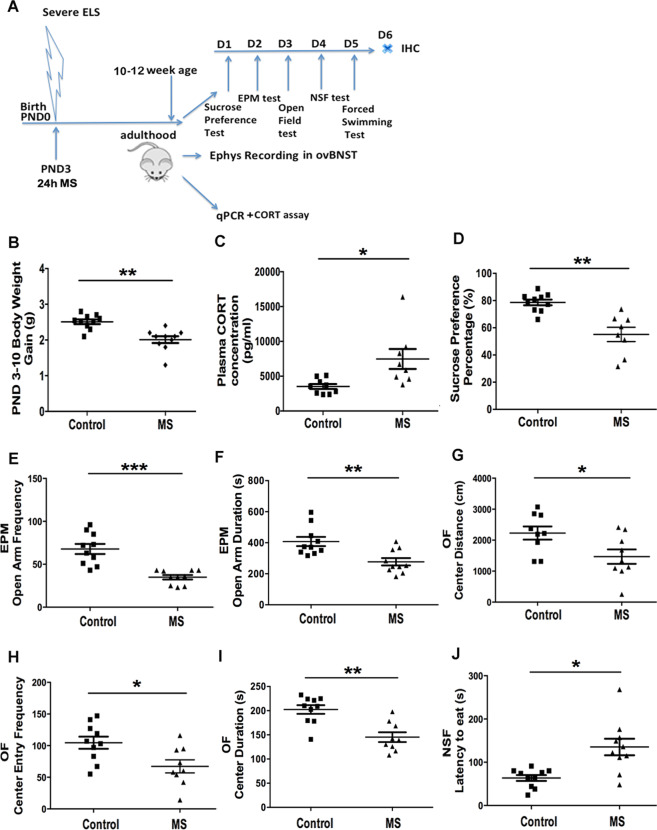
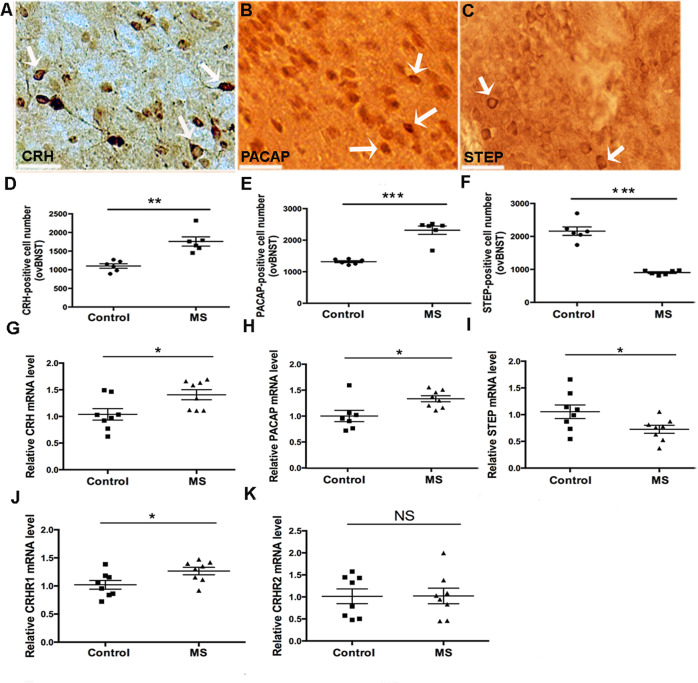
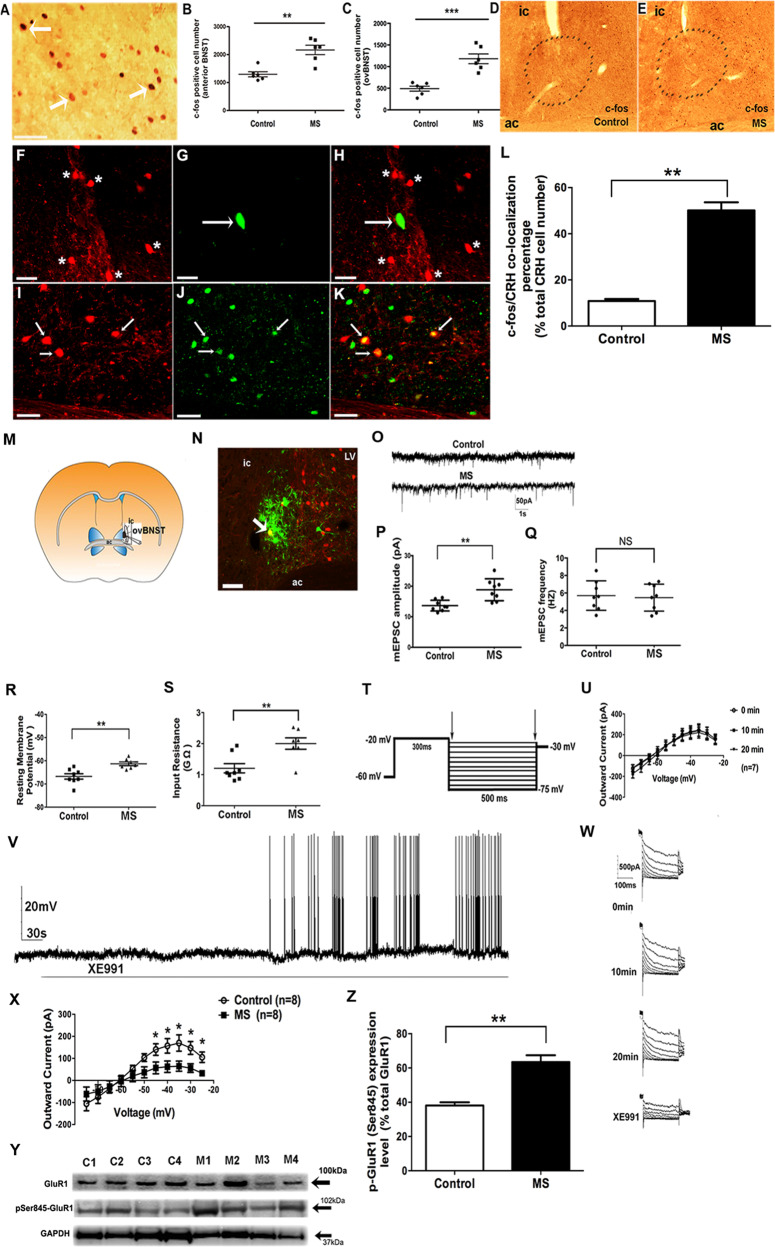
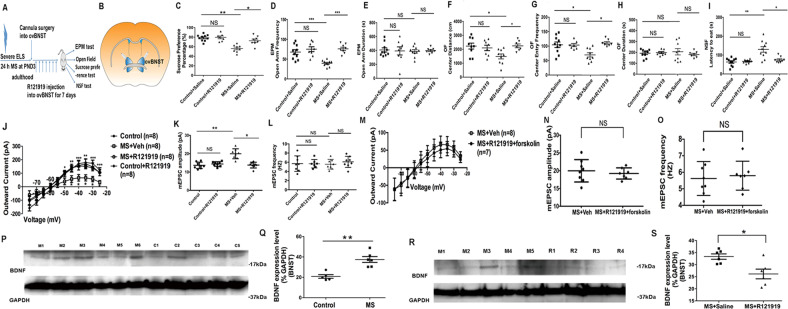
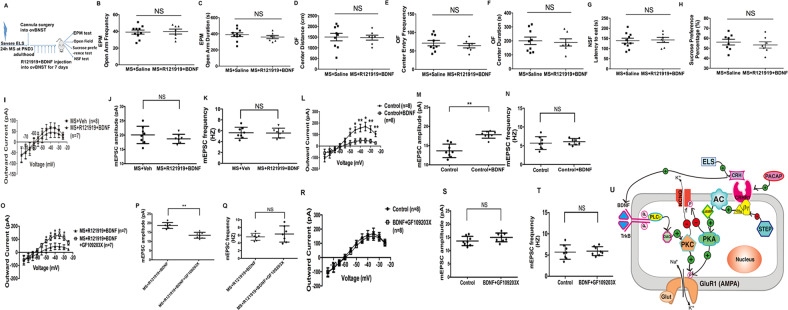
Early-life stress (ELS) leads to stress-related psychopathology in adulthood. Although dysfunction of corticotropin-releasing hormone (CRH) signaling in the bed nucleus of the stria terminalis (BNST) mediates chronic stress-induced maladaptive affective behaviors that are historically associated with mood disorders such as anxiety and depression, it remains unknown whether ELS affects CRH function in the adult BNST. Here we applied a well-established ELS paradigm (24 h maternal separation (MS) at postnatal day 3) and assessed the effects on CRH signaling and electrophysiology in the oval nucleus of BNST (ovBNST) of adult male mouse offspring. ELS increased maladaptive affective behaviors, and amplified mEPSCs and decreased M-currents (a voltage-gated K+ current critical for stabilizing membrane potential) in ovBNST CRH neurons, suggesting enhanced cellular excitability. Furthermore, ELS increased the numbers of CRH+ and PACAP+ (the pituitary adenylate cyclase-activating polypeptide, an upstream CRH regulator) cells and decreased STEP+ (striatal-enriched protein tyrosine phosphatase, a CRH inhibitor) cells in BNST. Interestingly, ELS also increased BNST brain-derived neurotrophic factor (BDNF) expression, indicating enhanced neuronal plasticity. These electrophysiological and behavioral effects of ELS were reversed by chronic application of the CRHR1-selective antagonist R121919 into ovBNST, but not when BDNF was co-administered. In addition, the neurophysiological effects of BDNF on M-currents and mEPSCs in BNST CRH neurons mimic effects and were abolished by PKC antagonism. Together, our findings indicate that ELS results in a long-lasting activation of CRH signaling in the mouse ovBNST. These data highlight a regulatory role of CRHR1 in the BNST and for BDNF signaling in mediating ELS-induced long-term behavioral changes.
Overview
The claims and statistics of this paper haven’t been checked yet.
Free: it reads the open-access text and checks the first 5 claims that cite a source we can check. Create a free account to check every claim.
Integrity signals
Registry
Cites
Statistics
Figures
Verification
Claims the paper makes
The claims and statistics of this paper haven’t been checked yet.
Free: it reads the open-access text and checks the first 5 claims that cite a source we can check. Create a free account to check every claim.
Claims other papers make about this one
Each is checked against this paper’s own text: does it say what the citing paper says it does?
The source backs part of the claim, not all of it — or backs it for a different population, condition or comparison.
In the citing paper
“Early-life stress, such as physical, sexual, or emotional childhood trauma, has been generally associated with MDD [23, 24]”
From The HPA Axis as Target for Depression (2024) · cites this paper as [24]
Experimental — accuracy not yet measured
Self-check
Percentages, sums and reported differences re-computed from the paper’s own numbers.
The self-check needs the paper’s full text.
Citations
Cites
Domingos da Silveira da Luz, A. C., Pereira Dias, G., do Nascimento Bevilaqua, M. C., Cocks, G., Gardino, P. F., Thuret, S., & Nardi, A. E. (2013) · Neuropsychobiology · doi:10.1159/000353269 · Cited by 3,995
Childhood adversities and adult psychopathology in the WHO World Mental Health Surveys
Kessler, R. C., McLaughlin, K. A., Green, J. G., Gruber, M. J., Sampson, N. A., Zaslavsky, A. M., Aguilar-Gaxiola, S., Alhamzawi, A. O., Alonso, J., Angermeyer, M., et al. (2010) · British Journal of Psychiatry · doi:10.1192/bjp.bp.110.080499 · Cited by 2,640
Neurocircuitry of stress: central control of the hypothalamo–pituitary–adrenocortical axis
Herman, J. P., & Cullinan, W. E. (1997) · Trends in Neurosciences · doi:10.1016/s0166-2236(96)10069-2 · Cited by 2,270 · cited 2×
“The BNST is an important node in the limbic forebrain stress-response circuitry that transmits stress information from structures such as the amygdala and hippocampus to the PVN and thereby participates in regulation of HPA axis responsivity 16 .”
BDNF: A Key Factor with Multipotent Impact on Brain Signaling and Synaptic Plasticity
Kowiański, P., Lietzau, G., Czuba, E., Waśkow, M., Steliga, A., & Moryś, J. (2018) · Cellular and Molecular Neurobiology · doi:10.1007/s10571-017-0510-4 · Cited by 1,359 · cited 1×
“In addition, CRH regulates brain-derived neurotrophic factor (BDNF) 34 , a well-known growth factor implicated in neuronal plasticity 35,36 .”
BackgroundCharacterization of multiple phosphorylation sites on the AMPA receptor GluR1 subunit
Roche, K. W., O'Brien, R. J., Mammen, A. L., Bernhardt, J., & Huganir, R. L. (1996) · Neuron · doi:10.1016/s0896-6273(00)80144-0 · Cited by 812
A sex difference in the human brain and its relation to transsexuality
Zhou, J.-N., Hofman, M. A., Gooren, L. J. G., & Swaab, D. F. (1995) · Nature · doi:10.1038/378068a0 · Cited by 779
Self-citationActivity-Dependent Modulation of Synaptic AMPA Receptor Accumulation
O’Brien, R. J., Kamboj, S., Ehlers, M. D., Rosen, K. R., Fischbach, G. D., & Huganir, R. L. (1998) · Neuron · doi:10.1016/s0896-6273(00)80624-8 · Cited by 688 · cited 1×
“3y, z) 76 .”
Diverging neural pathways assemble a behavioural state from separable features in anxiety
Kim, S.-Y., Adhikari, A., Lee, S. Y., Marshel, J. H., Kim, C. K., Mallory, C. S., Lo, M., Pak, S., Mattis, J., Lim, B. K., et al. (2013) · Nature · doi:10.1038/nature12018 · Cited by 666
Environmental Enrichment Reverses the Effects of Maternal Separation on Stress Reactivity
Francis, D. D., Diorio, J., Plotsky, P. M., & Meaney, M. J. (2002) · The Journal of Neuroscience · doi:10.1523/jneurosci.22-18-07840.2002 · Cited by 663
BLA to vHPC inputs modulate anxiety-related behaviors
Felix-Ortiz, A. C., Beyeler, A., Seo, C., Leppla, C. A., Wildes, C. P., & Tye, K. M. (2013) · Neuron · doi:10.1016/j.neuron.2013.06.016 · Cited by 592
A Novel Mouse Model for Acute and Long-Lasting Consequences of Early Life Stress
Rice, C. J., Sandman, C. A., Lenjavi, M. R., & Baram, T. Z. (2008) · Endocrinology · doi:10.1210/en.2008-0633 · Cited by 521 · cited 1×
“Compared with other protocols (such as limited bedding and/or nesting material or fragmented maternal care) 69,70 , the MS paradigm we used is more severe 8,36 .”
MethodDong, H., Petrovich, G. D., Watts, A. G., & Swanson, L. W. (2001) · Journal of Comparative Neurology · doi:10.1002/cne.1079 · Cited by 521 · cited 1×
“…the BNST is a critical node of the avoidance circuitry 90 , which has mutual projections to the central amygdala 53 , PVN 91 , ventral tegmental area (VTA) 92 and lateral hypothalamus 93 , whereas it further receives input from the ventral subiculum 94 that is involved in HPA-negative feedback.”
BackgroundPadilla-Coreano, N., Bolkan, S. S., Pierce, G. M., Blackman, D. R., Hardin, W. D., Garcia-Garcia, A. L., Spellman, T. J., & Gordon, J. A. (2016) · Neuron · doi:10.1016/j.neuron.2016.01.011 · Cited by 463 · cited 1×
“Through both direct and indirect connections 83,84 , these regions form a circuit that controls avoidance behaviors 79 .”
BackgroundSerotonin engages an anxiety and fear-promoting circuit in the extended amygdala
Marcinkiewcz, C. A., Mazzone, C. M., D’Agostino, G., Halladay, L. R., Hardaway, J. A., DiBerto, J. F., Navarro, M., Burnham, N., Cristiano, C., Dorrier, C. E., et al. (2016) · Nature · doi:10.1038/nature19318 · Cited by 456 · cited 1×
“Importantly, the BNST is a critical node of the avoidance circuitry 90 , which has mutual projections to the central amygdala 53 , PVN 91 , ventral tegmental area (VTA) 92 and lateral hypothalamus 93 , whereas it further receives input from the ventral subiculum 94 that is involved in HPA-negative…”
BackgroundCummings, S., Elde, R., Ells, J., & Lindall, A. (1983) · The Journal of Neuroscience · doi:10.1523/jneurosci.03-07-01355.1983 · Cited by 414
Early life stress confers lifelong stress susceptibility in mice via ventral tegmental area OTX2
Peña, C. J., Kronman, H. G., Walker, D. M., Cates, H. M., Bagot, R. C., Purushothaman, I., Issler, O., Loh, Y.-H. E., Leong, T., Kiraly, D. D., et al. (2017) · Science · doi:10.1126/science.aan4491 · Cited by 394 · cited 1×
“ELS increases the risk to develop stress-related mood disorders in adulthood, results in long-lasting transcriptional alterations 66,67 and permanently changes several behavioral and neuroendocrine stress responses 68 .”
BackgroundNeurobiology of BDNF in fear memory, sensitivity to stress, and stress-related disorders
Notaras, M., & van den Buuse, M. (2020) · Molecular Psychiatry · doi:10.1038/s41380-019-0639-2 · Cited by 392
Inhibition of GABAASynaptic Responses by Brain-Derived Neurotrophic Factor (BDNF) in Rat Hippocampus
Tanaka, T., Saito, H., & Matsuki, N. (1997) · The Journal of Neuroscience · doi:10.1523/jneurosci.17-09-02959.1997 · Cited by 385
Presynaptic glutamate receptors: physiological functions and mechanisms of action
Pinheiro, P. S., & Mulle, C. (2008) · Nature Reviews Neuroscience · doi:10.1038/nrn2379 · Cited by 369
KCNQ/M Channels Control Spike Afterdepolarization and Burst Generation in Hippocampal Neurons
Yue, C., & Yaari, Y. (2004) · The Journal of Neuroscience · doi:10.1523/jneurosci.0765-04.2004 · Cited by 369
Oomen, C. A., Soeters, H., Audureau, N., Vermunt, L., van Hasselt, F. N., Manders, E. M. M., Joëls, M., Lucassen, P. J., & Krugers, H. (2010) · The Journal of Neuroscience · doi:10.1523/jneurosci.0247-10.2010 · Cited by 361
Self-citationDong, H., & Swanson, L. W. (2004) · Journal of Comparative Neurology · doi:10.1002/cne.10949 · Cited by 346
Walker, D. L., Miles, L. A., & Davis, M. (2009) · Progress in Neuro-Psychopharmacology and Biological Psychiatry · doi:10.1016/j.pnpbp.2009.06.022 · Cited by 331 · cited 1×
“In NSF, MS increased eating latency (F(1,18)= 12.”
BackgroundMaternal and Environmental Influences on the Adrenocortical Response to Stress in Weanling Rats
Levine, S. (1967) · Science · doi:10.1126/science.156.3772.258 · Cited by 304
Dong, H., & Swanson, L. W. (2004) · Journal of Comparative Neurology · doi:10.1002/cne.20002 · Cited by 294
Naninck, E. F. G., Hoeijmakers, L., Kakava-Georgiadou, N., Meesters, A., Lazic, S. E., Lucassen, P. J., & Korosi, A. (2015) · Hippocampus · doi:10.1002/hipo.22374 · Cited by 285
Self-citationThe Behavioral Effects of the Antidepressant Tianeptine Require the Mu-Opioid Receptor
Samuels, B. A., Nautiyal, K. M., Kruegel, A. C., Levinstein, M. R., Magalong, V. M., Gassaway, M. M., Grinnell, S. G., Han, J., Ansonoff, M. A., Pintar, J. E., et al. (2017) · Neuropsychopharmacology · doi:10.1038/npp.2017.60 · Cited by 274
Self-citationJiang, X., Xu, K., Hoberman, J., Tian, F., Marko, A. J., Waheed, J. F., Harris, C. R., Marini, A. M., Enoch, M.-A., & Lipsky, R. H. (2005) · Neuropsychopharmacology · doi:10.1038/sj.npp.1300703 · Cited by 244
Hammack, S. E., Cheung, J., Rhodes, K. M., Schutz, K. C., Falls, W. A., Braas, K. M., & May, V. (2009) · Psychoneuroendocrinology · doi:10.1016/j.psyneuen.2008.12.013 · Cited by 231
Wook Koo, J., Labonté, B., Engmann, O., Calipari, E. S., Juarez, B., Lorsch, Z., Walsh, J. J., Friedman, A. K., Yorgason, J. T., Han, M.-H., et al. (2016) · Biological Psychiatry · doi:10.1016/j.biopsych.2015.12.009 · Cited by 231
Stress during development: Impact on neuroplasticity and relevance to psychopathology
Fumagalli, F., Molteni, R., Racagni, G., & Riva, M. A. (2007) · Progress in Neurobiology · doi:10.1016/j.pneurobio.2007.01.002 · Cited by 220
Hanson, J. L., Chung, M. K., Avants, B. B., Rudolph, K. D., Shirtcliff, E. A., Gee, J. C., Davidson, R. J., & Pollak, S. D. (2012) · Journal of Neuroscience · doi:10.1523/jneurosci.0307-12.2012 · Cited by 219
Early life stress alters transcriptomic patterning across reward circuitry in male and female mice
Peña, C. J., Smith, M., Ramakrishnan, A., Cates, H. M., Bagot, R. C., Kronman, H. G., Patel, B., Chang, A. B., Purushothaman, I., Dudley, J., et al. (2019) · Nature Communications · doi:10.1038/s41467-019-13085-6 · Cited by 219 · cited 1×
“ELS increases the risk to develop stress-related mood disorders in adulthood, results in long-lasting transcriptional alterations 66,67 and permanently changes several behavioral and neuroendocrine stress responses 68 .”
BackgroundHippocampal atrophy in major depression: a function of childhood maltreatment rather than diagnosis?
Opel, N., Redlich, R., Zwanzger, P., Grotegerd, D., Arolt, V., Heindel, W., Konrad, C., Kugel, H., & Dannlowski, U. (2014) · Neuropsychopharmacology · doi:10.1038/npp.2014.145 · Cited by 214
Stress Modulation of Opposing Circuits in the Bed Nucleus of the Stria Terminalis
Daniel, S. E., & Rainnie, D. G. (2016) · Neuropsychopharmacology · doi:10.1038/npp.2015.178 · Cited by 213
Bolton, J. L., Molet, J., Regev, L., Chen, Y., Rismanchi, N., Haddad, E., Yang, D. Z., Obenaus, A., & Baram, T. Z. (2018) · Biological Psychiatry · doi:10.1016/j.biopsych.2017.08.023 · Cited by 213
Stress and CRF gate neural activation of BDNF in the mesolimbic reward pathway
Walsh, J. J., Friedman, A. K., Sun, H., Heller, E. A., Ku, S. M., Juarez, B., Burnham, V. L., Mazei-Robison, M. S., Ferguson, D., Golden, S. A., et al. (2014) · Nature Neuroscience · doi:10.1038/nn.3591 · Cited by 210 · cited 3×
“BDNF activation also mediates social stress-induced maladaptive affective and social avoidance behaviors 40,41 and glucocorticoid-enhanced contextual fear memory 42,43 .”
BackgroundSahuque, L. L., Kullberg, E. F., Mcgeehan, A. J., Kinder, J. R., Hicks, M. P., Blanton, M. G., Janak, P. H., & Olive, M. F. (2006) · Psychopharmacology · doi:10.1007/s00213-006-0362-y · Cited by 207
5-HT1A receptors on mature dentate gyrus granule cells are critical for the antidepressant response
Samuels, B. A., Anacker, C., Hu, A., Levinstein, M. R., Pickenhagen, A., Tsetsenis, T., Madroñal, N., Donaldson, Z. R., Drew, L. J., Dranovsky, A., et al. (2015) · Nature Neuroscience · doi:10.1038/nn.4116 · Cited by 200 · cited 5×
“Mice were allowed overnight adaptation in the behavior rooms and behavioral tests were performed between 8 and 12 a.m. Detailed descriptions of sucrose preference test (SPT), elevated plus maze (EPM) test, open-fi eld (OF) test, and novelty suppressed feeding (NSF) tests can be found in the Supplemental Methods 44,45 .”
MethodInfluentialSelf-citationForray, M. I., & Gysling, K. (2004) · Brain Research Reviews · doi:10.1016/j.brainresrev.2004.07.011 · Cited by 191
Early-life adversity and neurological disease: age-old questions and novel answers
Short, A. K., & Baram, T. Z. (2019) · Nature Reviews Neurology · doi:10.1038/s41582-019-0246-5 · Cited by 183
Battefeld, A., Tran, B. T., Gavrilis, J., Cooper, E. C., & Kole, M. H. P. (2014) · The Journal of Neuroscience · doi:10.1523/jneurosci.4206-13.2014 · Cited by 180
Korosi, A., Shanabrough, M., McClelland, S., Liu, Z.-W., Borok, E., Gao, X.-B., Horvath, T. L., & Baram, T. Z. (2010) · The Journal of Neuroscience · doi:10.1523/jneurosci.4214-09.2010 · Cited by 171
Hernandez, C. C., Zaika, O., Tolstykh, G. P., & Shapiro, M. S. (2008) · The Journal of Physiology · doi:10.1113/jphysiol.2007.148304 · Cited by 169
Lucassen, P. J., Oomen, C. A., Naninck, E. F. G., Fitzsimons, C. P., van Dam, A.-M., Czeh, B., & Korosi, A. (2015) · Cold Spring Harbor Perspectives in Biology · doi:10.1101/cshperspect.a021303 · Cited by 166
Self-citationDirect Intraventricular Delivery of Drugs to the Rodent Central Nervous System
DeVos, S. L., & Miller, T. M. (2013) · Journal of Visualized Experiments · doi:10.3791/50326 · Cited by 165
Gunn, B. G., Cunningham, L., Cooper, M. A., Corteen, N. L., Seifi, M., Swinny, J. D., Lambert, J. J., & Belelli, D. (2013) · The Journal of Neuroscience · doi:10.1523/jneurosci.1337-13.2013 · Cited by 151
Early Life Stress, Mood, and Anxiety Disorders
Syed, S. A., & Nemeroff, C. B. (2017) · Chronic Stress · doi:10.1177/2470547017694461 · Cited by 151
Morin, S. M., LING, N. C., Liu, X.-J., Kahl, S. D., & Gehlert, D. R. (1999) · Neuroscience · doi:10.1016/s0306-4522(98)00732-5 · Cited by 149
Revest, J.-M., Le Roux, A., Roullot-Lacarrière, V, Kaouane, N., Vallée, M., Kasanetz, F., Rougé-Pont, F., Tronche, F., Desmedt, A., & Piazza, P. V. (2014) · Molecular Psychiatry · doi:10.1038/mp.2013.134 · Cited by 144
A Corticotropin Releasing Factor Network in the Extended Amygdala for Anxiety
Pomrenze, M. B., Tovar-Diaz, J., Blasio, A., Maiya, R., Giovanetti, S. M., Lei, K., Morikawa, H., Hopf, F. W., & Messing, R. O. (2019) · The Journal of Neuroscience · doi:10.1523/jneurosci.2143-18.2018 · Cited by 140
The maternal deprivation animal model revisited.
Marco, E. M., Llorente, R., López-Gallardo, M., Mela, V., Llorente-Berzal, Á., Prada, C., & Viveros, M.-P. (2015) · Neuroscience & Biobehavioral Reviews · doi:10.1016/j.neubiorev.2015.01.015 · Cited by 132
Wang, H. S., & McKinnon, D. (1995) · The Journal of Physiology · doi:10.1113/jphysiol.1995.sp020732 · Cited by 130
Hammack, S. E., Roman, C. W., Lezak, K. R., Kocho-Shellenberg, M., Grimmig, B., Falls, W. A., Braas, K., & May, V. (2010) · Journal of Molecular Neuroscience · doi:10.1007/s12031-010-9364-7 · Cited by 127
Lehmann, J., Russig, H., Feldon, J., & Pryce, C. R. (2002) · Pharmacology Biochemistry and Behavior · doi:10.1016/s0091-3057(02)00788-8 · Cited by 126
Fenoglio, K. A., Chen, Y., & Baram, T. Z. (2006) · The Journal of Neuroscience · doi:10.1523/jneurosci.4080-05.2006 · Cited by 124 · cited 1×
“Corticotropin-releasing hormone (CRH) coordinates the behavioral stress response and is regulated by early-life experiences 6,9,10 .”
BackgroundGreisen, M. H., Altar, C. A., Bolwig, T. G., Whitehead, R., & Wörtwein, G. (2005) · Journal of Neuroscience Research · doi:10.1002/jnr.20418 · Cited by 121
Amygdala hyper-connectivity in a mouse model of unpredictable early life stress
Johnson, F. K., Delpech, J.-C., Thompson, G. J., Wei, L., Hao, J., Herman, P., Hyder, F., & Kaffman, A. (2018) · Translational Psychiatry · doi:10.1038/s41398-018-0092-z · Cited by 121
Murthy, S., Kane, G. A., Katchur, N. J., Lara Mejia, P. S., Obiofuma, G., Buschman, T. J., McEwen, B. S., & Gould, E. (2019) · Biological Psychiatry · doi:10.1016/j.biopsych.2019.02.021 · Cited by 118 · cited 2×
“ELS leads to long-lasting alterations in hypothalamus – pituitary – adrenal (HPA) stress-related parameters 3 – 6 and expression of plasticity-related genes, and induces maladaptive affective behaviors in adulthood 7,8 .”
BackgroundThe intersection of stress and reward: BNST modulation of aversive and appetitive states
Ch'ng, S., Fu, J., Brown, R. M., McDougall, S. J., & Lawrence, A. J. (2018) · Progress in Neuro-Psychopharmacology and Biological Psychiatry · doi:10.1016/j.pnpbp.2018.01.005 · Cited by 112
Role of Mesolimbic Brain-Derived Neurotrophic Factor in Depression
Koo, J. W., Chaudhury, D., Han, M.-H., & Nestler, E. J. (2019) · Biological Psychiatry · doi:10.1016/j.biopsych.2019.05.020 · Cited by 112 · cited 1×
“BDNF signaling in the nucleus accumbens mediates maladaptive affective and social avoidance behaviors induced by chronic social defeat stress in adult mice 40,62 , so we next asked whether increases in BDNF expression in BNST underlie the maladaptive affective phenotype induced by MS.”
BackgroundPlasticity of the Reward Circuitry After Early-Life Adversity: Mechanisms and Significance
Birnie, M. T., Kooiker, C. L., Short, A. K., Bolton, J. L., Chen, Y., & Baram, T. Z. (2020) · Biological Psychiatry · doi:10.1016/j.biopsych.2019.12.018 · Cited by 112
Martinello, K., Huang, Z., Lujan, R., Tran, B., Watanabe, M., Cooper, E. C., Brown, D. A., & Shah, M. M. (2015) · Neuron · doi:10.1016/j.neuron.2014.12.030 · Cited by 111
Effects of early-life stress on cognitive function and hippocampal structure in female rodents.
Loi, M., Mossink, J. C. L., Meerhoff, G. F., Den Blaauwen, J. L., Lucassen, P. J., & Joëls, M. (2017) · Neuroscience · doi:10.1016/j.neuroscience.2015.08.024 · Cited by 109 · cited 2×
“Similarly, for mEPSC amplitude, a significant group effect was found (F(3,28)= 19.”
BackgroundSelf-citationSink, K. S., Walker, D. L., Freeman, S. M., Flandreau, E. I., Ressler, K. J., & Davis, M. (2013) · Molecular Psychiatry · doi:10.1038/mp.2011.188 · Cited by 107
Gutman, D. A., Owens, M. J., Skelton, K. H., Thrivikraman, K. V., & Nemeroff, C. B. (2003) · Journal of Pharmacology and Experimental Therapeutics · doi:10.1124/jpet.102.042788 · Cited by 106
Tran, L., Schulkin, J. A., & Meerveld, B. G. (2014) · Neuropsychopharmacology · doi:10.1038/npp.2014.117 · Cited by 92
The behavioral phenotype of early life adversity: A 3-level meta-analysis of rodent studies
Bonapersona, V., Kentrop, J., Van Lissa, C. J., van der Veen, R., Joëls, M., & Sarabdjitsingh, R. A. (2019) · Neuroscience & Biobehavioral Reviews · doi:10.1016/j.neubiorev.2019.04.021 · Cited by 91
Penke, Felszeghy, Fernette, Sage, Nyakas, C., & Burlet, A. (2001) · European Journal of Neuroscience · doi:10.1046/j.0953-816x.2001.01691.x · Cited by 88
Henckens, M. J. A. G., Printz, Y., Shamgar, U., Dine, J., Lebow, M., Drori, Y., Kuehne, C., Kolarz, A., Eder, M., Deussing, J. M., et al. (2017) · Molecular Psychiatry · doi:10.1038/mp.2016.133 · Cited by 83
Fasting and 17β-Estradiol Differentially Modulate the M-Current in Neuropeptide Y Neurons
Roepke, T. A., Qiu, J., Smith, A. W., Rønnekleiv, O. K., & Kelly, M. J. (2011) · The Journal of Neuroscience · doi:10.1523/jneurosci.1395-11.2011 · Cited by 79
Self-citationHart, H., Lim, L., Mehta, M. A., Simmons, A., Mirza, K. A. H., & Rubia, K. (2018) · Psychological Medicine · doi:10.1017/s0033291716003585 · Cited by 77
Early life stress impairs fear memory and synaptic plasticity; a potential role for GluN2B
Lesuis, S. L., Lucassen, P. J., & Krugers, H. J. (2019) · Neuropharmacology · doi:10.1016/j.neuropharm.2019.01.010 · Cited by 73
Self-citationHu, P., Liu, J., Maita, I., Kwok, C., Gu, E., Gergues, M. M., Kelada, F., Phan, M., Zhou, J.-N., Swaab, D. F., et al. (2020) · The Journal of Neuroscience · doi:10.1523/jneurosci.2410-19.2020 · Cited by 71 · cited 8×
“We also found that ovBNST CRH dysfunction mediates chronic stress-induced avoidance behaviors in adult mice 21 .”
BackgroundMethodInfluentialSelf-citationOgnibene, E., Adriani, W., Caprioli, A., Ghirardi, O., Ali, S. F., Aloe, L., & Laviola, G. (2008) · Progress in Neuro-Psychopharmacology and Biological Psychiatry · doi:10.1016/j.pnpbp.2008.03.023 · Cited by 70
Uchida, K., Otsuka, H., Morishita, M., Tsukahara, S., Sato, T., Sakimura, K., & Itoi, K. (2019) · Biology of Sex Differences · doi:10.1186/s13293-019-0221-2 · Cited by 69
Rosas-Vidal, L. E., Lozada-Miranda, V., Cantres-Rosario, Y. M., Vega-Medina, A., Meléndez, L. M., & Quirk, G. J. (2018) · Neuropsychopharmacology · doi:10.1038/s41386-018-0176-8 · Cited by 67
Maciag, C. M., Dent, G., Gilligan, P., He, L., Dowling, K., Ko, T., Levine, S., & Smith, M. A. (2002) · Neuropsychopharmacology · doi:10.1016/s0893-133x(01)00398-0 · Cited by 62
Bayatti, N., Hermann, H., Lutz, B., & Behl, C. (2005) · Endocrinology · doi:10.1210/en.2004-1154 · Cited by 60
Ohta, K., Suzuki, S., Warita, K., Kaji, T., Kusaka, T., & Miki, T. (2017) · Journal of Neurochemistry · doi:10.1111/jnc.13977 · Cited by 60
Programming of Stress-Sensitive Neurons and Circuits by Early-Life Experiences
Bolton, J. L., Short, A. K., Simeone, K. A., Daglian, J., & Baram, T. Z. (2019) · Frontiers in Behavioral Neuroscience · doi:10.3389/fnbeh.2019.00030 · Cited by 56
Loi, M., Sarabdjitsingh, R. A., Tsouli, A., Trinh, S., Arp, M., Krugers, H. J., Karst, H., van den Bos, R., & Joëls, M. (2017) · eneuro · doi:10.1523/eneuro.0253-17.2017 · Cited by 54
van der Doelen, R. H. A., Arnoldussen, I. A., Ghareh, H., van Och, L., Homberg, J. R., & Kozicz, T. (2015) · Development and Psychopathology · doi:10.1017/s0954579414001345 · Cited by 53
PKC phosphorylates GluA1-Ser831 to enhance AMPA receptor conductance
Jenkins, M. A., & Traynelis, S. F. (2012) · Channels · doi:10.4161/chan.18648 · Cited by 53
Dabrowska, J., Hazra, R., Guo, J.-D., Li, C., DeWitt, S., Xu, J., Lombroso, P. J., & Rainnie, D. G. (2013) · Biological Psychiatry · doi:10.1016/j.biopsych.2013.07.032 · Cited by 53
Coplan, J. D., Fathy, H. M., Jackowski, A. P., Tang, C. Y., Perera, T. D., Mathew, S. J., Martinez, J., Abdallah, C. G., Dwork, A. J., Pantol, G., et al. (2014) · Frontiers in Behavioral Neuroscience · doi:10.3389/fnbeh.2014.00342 · Cited by 47
How Early Life Adversity Influences Defensive Circuitry
Murthy, S. S., & Gould, E. (2020) · Trends in Neurosciences · doi:10.1016/j.tins.2020.02.001 · Cited by 46
Gibon, J., Barker, P. A., & Séguéla, P. (2016) · Molecular Brain · doi:10.1186/s13041-016-0203-9 · Cited by 46
Lesuis, S. L., Kaplick, P. M., Lucassen, P. J., & Krugers, H. J. (2019) · Neuropharmacology · doi:10.1016/j.neuropharm.2019.02.023 · Cited by 41
Self-citationOverexpression of Forebrain CRH During Early Life Increases Trauma Susceptibility in Adulthood
Tóth, M., Flandreau, E. I., Deslauriers, J., Geyer, M. A., Mansuy, I. M., Pich, E. M., & Risbrough, V. B. (2015) · Neuropsychopharmacology · doi:10.1038/npp.2015.338 · Cited by 41
Hu, P., Liu, J., Yasrebi, A., Gotthardt, J. D., Bello, N. T., Pang, Z. P., & Roepke, T. A. (2016) · Endocrinology · doi:10.1210/en.2016-1191 · Cited by 40 · cited 3×
“Standard whole-cell voltage-clamp patch recording was performed as previously described 21,47,48 Recordings were performed using glass pipettes pulled with a PC-10 Puller (Narishige, Japan).”
MethodSelf-citationForster, G. L., Anderson, E. M., Scholl, J. L., Lukkes, J. L., & Watt, M. J. (2018) · Neurobiology of Stress · doi:10.1016/j.ynstr.2018.08.001 · Cited by 40
Tao, W., Chen, Q., Zhou, W., Wang, Y., Wang, L., & Zhang, Z. (2014) · Journal of Biological Chemistry · doi:10.1074/jbc.m114.580381 · Cited by 39
Self-citationHennings, J. M., Kohli, M. A., Uhr, M., Holsboer, F., Ising, M., & Lucae, S. (2019) · Progress in Neuro-Psychopharmacology and Biological Psychiatry · doi:10.1016/j.pnpbp.2019.109686 · Cited by 39
Jenkins, M. A., Wells, G., Bachman, J., Snyder, J. P., Jenkins, A., Huganir, R. L., Oswald, R. E., & Traynelis, S. F. (2014) · Molecular Pharmacology · doi:10.1124/mol.113.091488 · Cited by 30
Banihashemi, L., O'Neill, E. J., & Rinaman, L. (2011) · Neuroscience · doi:10.1016/j.neuroscience.2011.06.052 · Cited by 29
Petrovic, B. R., Hrnčić, D., Mladenović, D. R., Simic, T. P., Suvakov, S. R., Jerotić, D., Puškaš, N., Zaletel, I. V., Velimirović, M., Ćirković, V., et al. (2019) · BioMed Research International · doi:10.1155/2019/3426092 · Cited by 29
Lee, S. Y., Choi, H., Kim, S., Chung, S., Park, M. K., Cho, J.-H., Ho, W., & Cho, H. (2010) · Journal of Biological Chemistry · doi:10.1074/jbc.m109.048868 · Cited by 28
Gabriel, L. R., Wu, S., & Melikian, H. E. (2014) · Journal of Visualized Experiments · doi:10.3791/51240 · Cited by 25
Early life stress alters transcriptomic patterning across reward circuitry in male and female micePreprint
Peña, C. J., Smith, M. R., Ramakrishnan, A., et al. (2019) · bioRxiv (Cold Spring Harbor Laboratory) · doi:10.1101/624353 · Cited by 24
Sun, W., Eisenstein, S. A., Zelek-Molik, A., & McGinty, J. F. (2014) · The International Journal of Neuropsychopharmacology · doi:10.1093/ijnp/pyu049 · Cited by 18
Li, C., Lü, Q., Huang, P., Fu, T., Li, C., Guo, L., & Xu, X. (2015) · Neuropharmacology · doi:10.1016/j.neuropharm.2015.03.004 · Cited by 14
Danielewicz, J., Trenk, A., & Hess, G. (2016) · Behavioural Brain Research · doi:10.1016/j.bbr.2016.09.065 · Cited by 9
Cited by
The HPA Axis as Target for Depression
Menke, A. (2024) · Current Neuropharmacology · doi:10.2174/1570159x21666230811141557 · Cited by 131
“Early-life stress, such as physical, sexual, or emotional childhood trauma, has been generally associated with MDD [23, 24], but the increase of MDD risk is also moderated by genetic variants, for example, by FKBP5 variants [25], encoding the FK 506 binding protein 51 or FKBP51, a co-chaperone of…”
BackgroundUvnäs‐Moberg, K., Groß, M. M., Calleja‐Agius, J., & Turner, J. D. (2024) · Frontiers in Endocrinology · doi:10.3389/fendo.2024.1272270 · Cited by 69
Chemoarchitecture of the bed nucleus of the stria terminalis: Neurophenotypic diversity and function
Hammack, S. E., Braas, K. M., & May, V. (2021) · Handbook of clinical neurology · doi:10.1016/b978-0-12-819975-6.00025-x · Cited by 63
Adverse effects of early-life stress: focus on the rodent neuroendocrine system
Lee, S. H., & Jung, E. (2023) · Neural Regeneration Research · doi:10.4103/1673-5374.377587 · Cited by 52
Bardo, M. T., Hammerslag, L. R., & Malone, S. G. (2021) · Neuropharmacology · doi:10.1016/j.neuropharm.2021.108567 · Cited by 32
Metadata
- Authors
- Hu, P., Maita, I., Phan, M. L., Gu, E., Kwok, C., Dieterich, A., Gergues, M. M., Yohn, C. N., Wang, Y., Zhou, J.-N., Qi, X.-R., Swaab, D. F., Pang, Z. P., Lucassen, P. J., Roepke, T. A., & Samuels, B. A.
- Affiliations
- Rutgers, The State University of New Jersey (US)
- University of Science and Technology of China (CN)
- Tongji University (CN)
- Netherlands Institute for Neuroscience (NL)
- University of Amsterdam (NL)
- Corresponding author
- Roepke, Troy A.
- Samuels, Benjamin A.
- ORCID
- Venue
- Translational Psychiatry
- Published
- 2020-11-11
- Volume
- 10
- Issue
- 1
- Pages
- 396-396
- ISSN
- 2158-3188 (ISSN-L)
- PMC
- PMC7658214
- OpenAlex
- W3100193186
- Cited by
- 49
- References
- 102
- Citations by year
- 2026: 4 · 2025: 14 · 2024: 11 · 2023: 7 · 2022: 5 · 2021: 7
- FWCI
- 2.66
- Type
- journal article
- Language
- en
- Open access
- gold
- doi.org
- Licence
- cc-by
- creativecommons.org/licenses/by/4.0 (tdm)
- creativecommons.org/licenses/by/4.0 (vor)
- Locations
- Translational Psychiatry (publishedVersion, cc-by)
- PubMed Central (publishedVersion, cc-by)
- PubMed (publishedVersion)
- KNAW research portal (Royal Academy of Art and Sciences (KNAW)) (publishedVersion, other-oa)
- Rutgers University Community Repository (Rutgers University) (submittedVersion, cc-by)
- Data Archiving and Networked Services (DANS) (submittedVersion, other-oa)
- UvA-DARE (University of Amsterdam) (submittedVersion, cc-by)
- KNAW Research Portal (The Royal Netherlands Academy of Arts and Sciences) (submittedVersion, other-oa)
- Funders
- Robert Wood Johnson Foundation Grant #74260
- Topics
- Life Sciences › Neuroscience › Behavioral Neuroscience › Stress Responses and Cortisol
- Life Sciences › Neuroscience › Cellular and Molecular Neuroscience › Neuropeptides and Animal Physiology
- Life Sciences › Neuroscience › Endocrine and Autonomic Systems › Neuroendocrine regulation and behavior
- Keywords
- early life stress, maternal separation, corticotropin-releasing factor, bed nucleus of the stria terminalis, brain-derived neurotrophic factor, CRHR1, PACAP, STEP, M-current, neuronal excitability, miniature excitatory postsynaptic currents, protein kinase C, anxiety, depression, stress-related psychopathology, neuroplasticity
- MeSH terms
- Animals, Corticotropin-Releasing Hormone, Male, Maternal Deprivation, Septal Nuclei, Stress, Psychological, Brain-Derived Neurotrophic Factor, Mice
About these checks
Registry, retraction, Cites and statistics results are computed, not judged, with one exception: a printed reference that no index lists is read once by a model before it counts as a citation error. Claims are extracted by a model and kept only when their quote appears verbatim in the text; each cited source is then checked, with a model’s help, for whether it says what the claim relies on. Those verdicts can be wrong — read the claim’s quote and the cited source before relying on one.
Statistics and arithmetic are recomputed, not judged.
Confidence bands are shown only for fields calibrated on our annotated test set. None is calibrated yet, so no band is shown.
What counts as a claim ›How we measure confidence ›How we check this ›
Are you an author, or do you see a problem with this page? Request a review
Data sources
Bibliographic data: Semantic Scholar, OpenAlex, Crossref.
Contains information from the Semantic Scholar Academic Graph Datasets, made available under the ODC Attribution License (ODC-BY 1.0).
Semantic Scholar’s data is described in: Kinney, R., et al. (2023). The Semantic Scholar Open Data Platform. arXiv:2301.10140.
