

Multivariate genome-wide association study of depression, cognition, and memory phenotypes and validation analysis identify 12 cross-ethnic variants
Open accessThe DOI matches its Crossref record; 89 of the 90 references it cites were found in a registry or an index.
Abstract
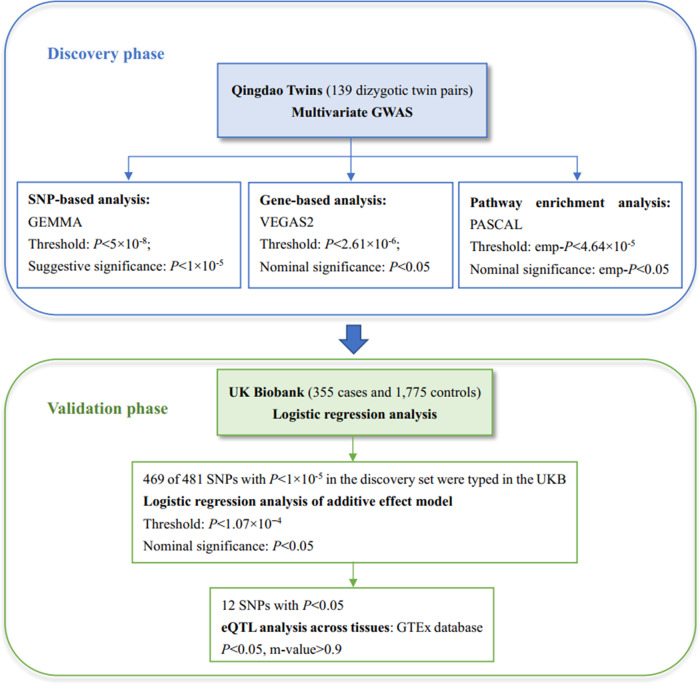
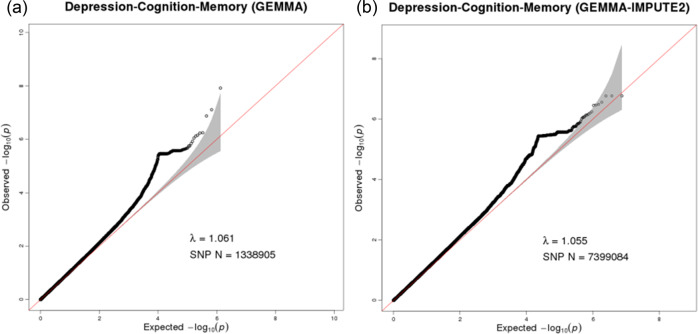
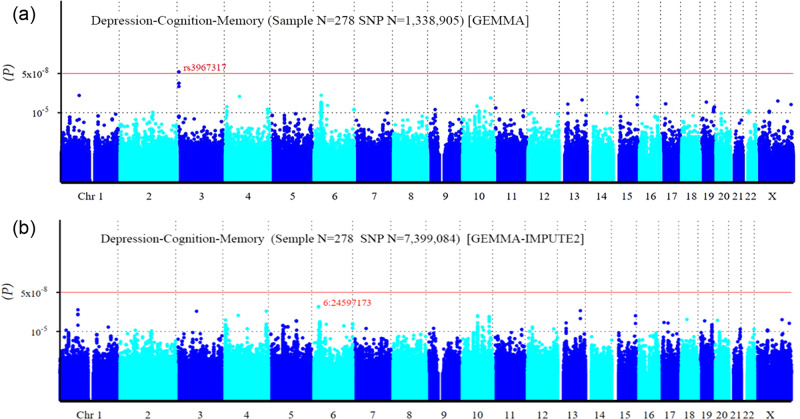
To date, little is known about the pleiotropic genetic variants among depression, cognition, and memory. The current research aimed to identify the potential pleiotropic single nucleotide polymorphisms (SNPs), genes, and pathways of the three phenotypes by conducting a multivariate genome-wide association study and an additional pleiotropy analysis among Chinese individuals and further validate the top variants in the UK Biobank (UKB). In the discovery phase, the participants were 139 pairs of dizygotic twins from the Qingdao Twins Registry. The genome-wide efficient mixed-model analysis identified 164 SNPs reaching suggestive significance (P < 1 × 10⁻⁵). Among them, rs3967317 (P = 1.21 × 10⁻⁸) exceeded the genome-wide significance level (P < 5 × 10⁻⁸) and was also demonstrated to be associated with depression and memory in pleiotropy analysis, followed by rs9863698, rs3967316, and rs9261381 (P = 7.80 × 10⁻⁸−5.68 × 10⁻⁷), which were associated with all three phenotypes. After imputation, a total of 457 SNPs reached suggestive significance. The top SNP chr6:24597173 was located in the KIAA0319 gene, which had biased expression in brain tissues. Genes and pathways related to metabolism, immunity, and neuronal systems demonstrated nominal significance (P < 0.05) in gene-based and pathway enrichment analyses. In the validation phase, 12 of the abovementioned SNPs reached the nominal significance level (P < 0.05) in the UKB. Among them, three SNPs were located in the KIAA0319 gene, and four SNPs were identified as significant expression quantitative trait loci in brain tissues. These findings may provide evidence for pleiotropic variants among depression, cognition, and memory and clues for further exploring the shared genetic pathogenesis of depression with Alzheimer’s disease.
Overview
The claims and statistics of this paper haven’t been checked yet.
Free: it reads the open-access text and checks the first 5 claims that cite a source we can check. Create a free account to check every claim.
Integrity signals
Registry
Cites
Statistics
Figures
Verification
Claims the paper makes
The claims and statistics of this paper haven’t been checked yet.
Free: it reads the open-access text and checks the first 5 claims that cite a source we can check. Create a free account to check every claim.
Claims other papers make about this one
Each is checked against this paper’s own text: does it say what the citing paper says it does?
The source backs part of the claim, not all of it — or backs it for a different population, condition or comparison.
In the citing paper
“Large-scale genome-wide association studies have also identified associations between immune system-related genes and psychiatric conditions [15, 16].”
From Inflammatory ratios as predictors of length of hospitalization in psychiatric patients: A multicenter study (2025) · doi:10.1007/s00406-025-02033-9 · cites this paper as [16]
Experimental — accuracy not yet measured
Self-check
Percentages, sums and reported differences re-computed from the paper’s own numbers.
The self-check needs the paper’s full text.
Citations
Cites
The Montreal Cognitive Assessment, MoCA: a brief screening tool for mild cognitive impairment
Nasreddine, Z. S., Phillips, N. A., Bédirian, V., Charbonneau, S., Whitehead, V., Collin, I., Cummings, J. L., & Chertkow, H. (2005) · Journal of the American Geriatrics Society · doi:10.1111/j.1532-5415.2005.53221.x · Cited by 25,553 · cited 1×
“Cognition was measured using the Montreal Cognitive Assessment (MoCA, Chinese version) with high reliability and acceptance in Chinese adults [37, 38].”
MethodA global reference for human genetic variation
The 1000 Genomes Project Consortium, authors, C., Auton, A., Abecasis, G. R., Steering committee, Altshuler, D. M., Durbin, R. M., Abecasis, G. R., Bentley, D. R., Chakravarti, A., et al. (2015) · Nature · doi:10.1038/nature15393 · Cited by 18,247 · cited 1×
“On the basis of the linkage disequilibrium (LD) principle, IMPUTE2 software [41] was utilized to impute untyped SNPs with reference to the data collected during the third phase of the 1000 Genomes Project (ASIAN) [42].”
MethodSelf-citationDevelopment and validation of a geriatric depression screening scale: a preliminary report
Yesavage, J. A., Brink, T. L., Rose, T. L., Lum, O., Huang, V., Adey, M., & Leirer, V. O. (1982) · Journal of Psychiatric Research · doi:10.1016/0022-3956(82)90033-4 · Cited by 15,025 · cited 1×
“The GDS-30 is especially suitable for the assessment of depression in middle-aged and elderly individuals and is also highly valid in the Chinese population [35, 36].”
BackgroundThe UK Biobank resource with deep phenotyping and genomic data
Bycroft, C., Freeman, C., Petkova, D., Band, G., Elliott, L. T., Sharp, K., Motyer, A., Vukcevic, D., Delaneau, O., O’Connell, J., et al. (2018) · Nature · doi:10.1038/s41586-018-0579-z · Cited by 8,876 · cited 1×
“Validation analysis To identify the cross-ethnicity generalizability and cross-ethnic associations, we validated the top variants in an independent UKB population, which is a population-based cohort of 488,377 individuals with genotypic data across the United Kingdom; more details of genotyping, quality control, and i…”
MethodThe Patient Health Questionnaire-2: Validity of a Two-Item Depression Screener
Kroenke, K., Spitzer, R. L., & Williams, J. B. W. (2003) · Medical Care · doi:10.1097/01.mlr.0000093487.78664.3c · Cited by 6,359 · cited 1×
“Depression was assessed using the two-item Patient Health Questionnaire (PHQ-2), and a total score of three and more indicated possible depression [53].”
MethodInflammation and Alzheimer’s disease
Akiyama, H. (2000) · Neurobiology of Aging · doi:10.1016/s0197-4580(00)00124-x · Cited by 4,514
Methodology for Genetic Studies of Twins and Families
Neale, M. C., & Cardon, L. R. (1992) · doi:10.1007/978-94-015-8018-2 · Cited by 4,005
Genome-wide efficient mixed-model analysis for association studies
Zhou, X., & Stephens, M. (2012) · Nature Genetics · doi:10.1038/ng.2310 · Cited by 3,627 · cited 2×
“The genome-wide efficient mixed-model association (GEMMA) [43] was used to evaluate the association of SNP genotypes with depression-cognition-memory phenotypic pairs after depression, cognition, and memory scores were transformed by rank transformation based on Blom’s formula [44] to normalize their skewed distributi…”
MethodCognitive Stimulation in Patients with Dementia: Randomized Controlled Trial
Mapelli, D., Di Rosa, E., Nocita, R., & Sava, D. (2013) · Dementia and Geriatric Cognitive Disorders Extra · doi:10.1159/000353457 · Cited by 3,453
Genetic Epidemiology of Major Depression: Review and Meta-Analysis
Sullivan, P. F., Neale, M. C., & Kendler, K. S. (2000) · American Journal of Psychiatry · doi:10.1176/appi.ajp.157.10.1552 · Cited by 3,431 · cited 1×
“According to a meta-analysis of twin studies, the heritability of depression ranges from 31% to 42% [12].”
MethodA new multipoint method for genome-wide association studies by imputation of genotypes
Marchini, J., Howie, B., Myers, S., McVean, G., & Donnelly, P. (2007) · Nature Genetics · doi:10.1038/ng2088 · Cited by 2,609 · cited 1×
“On the basis of the linkage disequilibrium (LD) principle, IMPUTE2 software [41] was utilized to impute untyped SNPs with reference to the data collected during the third phase of the 1000 Genomes Project (ASIAN) [42].”
MethodHoward, D. M., Adams, M. J., Clarke, T.-K., Hafferty, J. D., Gibson, J., Shirali, M., Coleman, J. R. I., Hagenaars, S. P., Ward, J., Wigmore, E. M., et al. (2019) · Nature Neuroscience · doi:10.1038/s41593-018-0326-7 · Cited by 2,565
Glutamate-mediated excitotoxicity and neurodegeneration in Alzheimer?s disease
HYND, M. (2004) · Neurochemistry International · doi:10.1016/j.neuint.2004.03.007 · Cited by 938 · cited 1×
“In the pathway enrichment analysis, most pathways that reached nominal significance were related to metabolism, immune, and neuronal system, and several important pathways were revealed as follows: (1) metabolism of amino acids and derivatives, various metabolites of this pathway including glutamate and glycine are in…”
BackgroundWard, L. D., & Kellis, M. (2016) · Nucleic Acids Research · doi:10.1093/nar/gkv1340 · Cited by 927 · cited 1×
“1 [47], and the cell-type enhancers with a P value of <0.”
BackgroundEfficient multivariate linear mixed model algorithms for genome-wide association studies
Zhou, X., & Stephens, M. (2014) · Nature Methods · doi:10.1038/nmeth.2848 · Cited by 841
Estimation of significance thresholds for genomewide association scans
Dudbridge, F., & Gusnanto, A. (2008) · Genetic Epidemiology · doi:10.1002/gepi.20297 · Cited by 703 · cited 1×
“The significance level was defined as a P value threshold of <5 × 10 (a conventional Bonferronicorrected threshold) [45], and the suggestive level was defined as a P value threshold of <1 × 10 (a commonly utilized threshold in GWAS) [46].”
BackgroundDavies, G., Lam, M., Harris, S. E., Trampush, J. W., Luciano, M., Hill, W. D., Hagenaars, S. P., Ritchie, S. J., Marioni, R. E., Fawns-Ritchie, C., et al. (2018) · Nature Communications · doi:10.1038/s41467-018-04362-x · Cited by 686 · cited 1×
“Interestingly, 70 of the 269 depression-related genes were also found in another genome-wide meta-analysis of cognitive function [21].”
BackgroundIntegrating neuroimmune systems in the neurobiology of depression
Wohleb, E. S., Franklin, T., Iwata, M., & Duman, R. S. (2016) · Nature Reviews Neuroscience · doi:10.1038/nrn.2016.69 · Cited by 668 · cited 2×
“The lipid metabolism process involves the pathogenesis of depression and AD [76, 77]; (2) the C3a peptide encoded by C3 can modulate the inflammation process which is closely related to depression and AD [7, 8]; and (3) the protein encoded by TET1 influences gene activation and the process of DNA methylation.”
BackgroundMR-based in vivo hippocampal volumetrics: 2. Findings in neuropsychiatric disorders
Geuze, E., Vermetten, E., & Bremner, J. D. (2005) · Molecular Psychiatry · doi:10.1038/sj.mp.4001579 · Cited by 412 · cited 1×
“Evidence has shown some common pathogenic mechanisms and pathological changes between depression and AD, such as chronic inflammation [7, 8], dysregulation of the hypothalamicpituitary-adrenal axis [9], lower levels of norepinephrine and 5-hydroxytryptamine [10], and a smaller volume of the hippocampus [11], suggestin…”
BackgroundChen, K., Xu, Y., Chu, A., Ding, D., Liang, X., Nasreddine, Z. S., Dong, Q., Hong, Z., Zhao, Q., & Guo, Q. (2016) · Journal of the American Geriatrics Society · doi:10.1111/jgs.14530 · Cited by 399 · cited 1×
“Cognition was measured using the Montreal Cognitive Assessment (MoCA, Chinese version) with high reliability and acceptance in Chinese adults [37, 38].”
MethodPrioritizing diversity in human genomics research
Hindorff, L. A., Bonham, V. L., Brody, L. C., Ginoza, M. E. C., Hutter, C. M., Manolio, T. A., & Green, E. D. (2018) · Nature Reviews Genetics · doi:10.1038/nrg.2017.89 · Cited by 386 · cited 1×
“Additionally, owing to the severe European bias of GWASs, it is unknown how many genetic risk loci can be translated across ethnicities [33].”
BackgroundMaes, M., Smith, R., Christophe, A., Vandoolaeghe, E., Gastel, A. V., Neels, H., Demedts, P., Wauters, A., & Meltzer, H. Y. (1997) · Acta Psychiatrica Scandinavica · doi:10.1111/j.1600-0447.1997.tb09622.x · Cited by 356 · cited 1×
“The lipid metabolism process involves the pathogenesis of depression and AD [76, 77]; (2) the C3a peptide encoded by C3 can modulate the inflammation process which is closely related to depression and AD [7, 8]; and (3) the protein encoded by TET1 influences gene activation and the process of DNA methylation.”
BackgroundFast and Rigorous Computation of Gene and Pathway Scores from SNP-Based Summary Statistics
Lamparter, D., Marbach, D., Rueedi, R., Kutalik, Z., & Bergmann, S. (2016) · PLOS Computational Biology · doi:10.1371/journal.pcbi.1004714 · Cited by 324 · cited 1×
“PASCAL [51] was utilized to evaluate pathway scores.”
MethodHodson, R. (2018) · Nature · doi:10.1038/d41586-018-05717-6 · Cited by 320
Depression and Alzheimer's disease: Neurobiological links and common pharmacological targets
Caraci, F., Copani, A., Nicoletti, F., & Drago, F. (2010) · European Journal of Pharmacology · doi:10.1016/j.ejphar.2009.10.022 · Cited by 314 · cited 1×
“Evidence has shown some common pathogenic mechanisms and pathological changes between depression and AD, such as chronic inflammation [7, 8], dysregulation of the hypothalamicpituitary-adrenal axis [9], lower levels of norepinephrine and 5-hydroxytryptamine [10], and a smaller volume of the hippocampus [11], suggestin…”
BackgroundDepression, anxiety, and the gastrointestinal system.
Mayer, E. A., Craske, M., & Naliboff, B. D. (2001) · PubMed · Cited by 286
The Construct of Minor and Major Depression in Alzheimer’s Disease
Starkstein, S. E., Jorge, R., Mizrahi, R., & Robinson, R. G. (2005) · American Journal of Psychiatry · doi:10.1176/appi.ajp.162.11.2086 · Cited by 271 · cited 1×
“An increasing number of studies support that depression and AD are comorbidities [5, 6].”
BackgroundNocturnal catecholamines and immune function in insomniacs, depressed patients, and control subjects
Irwin, M., Clark, C., Kennedy, B., Christian Gillin, J., & Ziegler, M. (2003) · Brain Behavior and Immunity · doi:10.1016/s0889-1591(03)00031-x · Cited by 268
The Genotype-Tissue Expression (GTEx) project
Lonsdale, J., Thomas, J., Salvatore, M., Phillips, R., Lo, E., Shad, S., Hasz, R., Walters, G., Garcia, F., Young, N., et al. (2013) · Nature Genetics · doi:10.1038/ng.2653 · Cited by 263
VEGAS2: Software for More Flexible Gene-Based Testing
Mishra, A., & Macgregor, S. (2015) · Twin Research and Human Genetics · doi:10.1017/thg.2014.79 · Cited by 257 · cited 1×
“VEGAS2 [49] was applied to carry out gene-based analysis by integrating the SNPs within a gene, and “1000 G East Asian Population” was used.”
MethodBDNF/NF-κB Signaling in the Neurobiology of Depression
Caviedes, A., Lafourcade, C., Soto, C., & Wyneken, U. (2017) · Current Pharmaceutical Design · doi:10.2174/1381612823666170111141915 · Cited by 226 · cited 1×
“NF-κB has been found to be involved in the pathophysiology of depression [73] and is closely related to the pathogenesis of AD [74].”
BackgroundThe role of the immune system in Alzheimer disease: Etiology and treatment
Jevtic, S., Sengar, A. S., Salter, M. W., & McLaurin, J. (2017) · Ageing Research Reviews · doi:10.1016/j.arr.2017.08.005 · Cited by 215 · cited 1×
“(6) Immunoregulatory interactions between a lymphoid and a non-lymphoid cell, which is an important pathway in the immune system; relevantly, the immune system is regarded as a major factor in both depression and AD [86, 87].”
BackgroundSeshadri, S., DeStefano, A. L., Au, R., Massaro, J. M., Beiser, A. S., Kelly-Hayes, M., Kase, C. S., D'Agostino, R. B., DeCarli, C., Atwood, L. D., et al. (2007) · BMC Medical Genetics · doi:10.1186/1471-2350-8-s1-s15 · Cited by 199
Giannakopoulou, O., Lin, K., Meng, X., Su, M.-H., Kuo, P.-H., Peterson, R. E., Awasthi, S., Moscati, A., Coleman, J. R. I., Bass, N., et al. (2021) · JAMA Psychiatry · doi:10.1001/jamapsychiatry.2021.2099 · Cited by 193 · cited 1×
“Another study also showed that only 11% of depression risk loci previously identified in the European population reached nominal significance in the East Asian population [59].”
ResultInterpreting Meta-Analyses of Genome-Wide Association Studies
Han, B., & Eskin, E. (2012) · PLoS Genetics · doi:10.1371/journal.pgen.1002555 · Cited by 184 · cited 1×
“9 indicated that the tissue had an eQTL effect [55].”
BackgroundElectroconvulsive therapy, depression, the immune system and inflammation: A systematic review
Yrondi, A., Sporer, M., Péran, P., Schmitt, L., Arbus, C., & Sauvaget, A. (2018) · Brain Stimulation · doi:10.1016/j.brs.2017.10.013 · Cited by 182 · cited 1×
“(6) Immunoregulatory interactions between a lymphoid and a non-lymphoid cell, which is an important pathway in the immune system; relevantly, the immune system is regarded as a major factor in both depression and AD [86, 87].”
BackgroundNF-κB as a Key Mediator of Brain Inflammation in Alzheimer’s Disease
Ju Hwang, C., Choi, D.-Y., Park, M. H., & Hong, J. T. (2019) · CNS & Neurological Disorders - Drug Targets · doi:10.2174/1871527316666170807130011 · Cited by 178 · cited 1×
“NF-κB has been found to be involved in the pathophysiology of depression [73] and is closely related to the pathogenesis of AD [74].”
BackgroundThe Genetics and Biology of Disc1—An Emerging Role in Psychosis and Cognition
Porteous, D. J., Thomson, P., Brandon, N. J., & Millar, J. K. (2006) · Biological Psychiatry · doi:10.1016/j.biopsych.2006.04.008 · Cited by 172 · cited 1×
“Studies reported that DISC1 gene polymorphisms were associated with depression [26, 27], cognition [27], and memory [27, 28].”
BackgroundLipid Biomarkers in Alzheimer's Disease
Zarrouk, A., Debbabi, M., Bezine, M., Karym, E. M., Badreddine, A., Rouaud, O., Moreau, T., Cherkaoui-Malki, M., El Ayeb, M., Nasser, B., et al. (2018) · Current Alzheimer Research · doi:10.2174/1567205014666170505101426 · Cited by 170 · cited 1×
“The lipid metabolism process involves the pathogenesis of depression and AD [76, 77]; (2) the C3a peptide encoded by C3 can modulate the inflammation process which is closely related to depression and AD [7, 8]; and (3) the protein encoded by TET1 influences gene activation and the process of DNA methylation.”
BackgroundMultiple Phenotype Modeling in Gene-Mapping Studies of Quantitative Traits: Power Advantages
Allison, D. B., Thiel, B., St. Jean, P., Elston, R. C., Infante, M. C., & Schork, N. J. (1998) · The American Journal of Human Genetics · doi:10.1086/302038 · Cited by 167 · cited 1×
“Moreover, multivariate GWASs have higher statistical power and more accurate parameter estimation than univariate GWASs, which is helpful for the discovery of pleiotropic and small effects of genes [29, 30].”
BackgroundIntegrated Metabolomics and Proteomics Analysis of Hippocampus in a Rat Model of Depression
Zhang, Y., Yuan, S., Pu, J., Yang, L., Zhou, X., Liu, L., Jiang, X., Zhang, H., Teng, T., Tian, L., et al. (2017) · Neuroscience · doi:10.1016/j.neuroscience.2017.12.001 · Cited by 161 · cited 1×
“In the pathway enrichment analysis, most pathways that reached nominal significance were related to metabolism, immune, and neuronal system, and several important pathways were revealed as follows: (1) metabolism of amino acids and derivatives, various metabolites of this pathway including glutamate and glycine are in…”
BackgroundRelevance of gutmicrobiota in cognition, behaviour and Alzheimer’s disease
de J.R. De-Paula, V., Forlenza, A. S., & Forlenza, O. V. (2018) · Pharmacological Research · doi:10.1016/j.phrs.2018.07.007 · Cited by 145
Mullish, B. H., Kabir, M. S., Thursz, M. R., & Dhar, A. (2014) · Alimentary Pharmacology & Therapeutics · doi:10.1111/apt.12925 · Cited by 144
N -glycan and Alzheimer's disease
Kizuka, Y., Kitazume, S., & Taniguchi, N. (2017) · Biochimica et Biophysica Acta (BBA) - General Subjects · doi:10.1016/j.bbagen.2017.04.012 · Cited by 143 · cited 1×
“For (4) N-glycan antennae elongation in the medial/trans-Golgi and (5) N-glycan antennae elongation, there are significant differences between depression patients and controls in the serum N-glycan structure levels [84], and N-glycans can influence the development and progression of AD by regulating the key glycoprote…”
BackgroundLipnicki, D. M., Makkar, S. R., Crawford, J. D., Thalamuthu, A., Kochan, N. A., Lima-Costa, M. F., Castro-Costa, E., Ferri, C. P., Brayne, C., Stephan, B., et al. (2019) · PLOS Medicine · doi:10.1371/journal.pmed.1002853 · Cited by 143 · cited 1×
“The APOE-4 allele gene was linked to lower cognitive ability, faster cognitive decline [24], and poorer memory [25].”
BackgroundJiang, Q., Jin, S., Jiang, Y., Liao, M., Feng, R., Zhang, L., Liu, G., & Hao, J. (2017) · Molecular Neurobiology · doi:10.1007/s12035-015-9670-8 · Cited by 132
The Clinical and Biological Relationship between Type II Diabetes Mellitus and Alzheimers Disease
Nicolls, M. (2004) · Current Alzheimer Research · doi:10.2174/1567205043480555 · Cited by 130
Evidence of Common Genetic Overlap Between Schizophrenia and Cognition
Hubbard, L., Tansey, K. E., Rai, D., Jones, P., Ripke, S., Chambert, K. D., Moran, J. L., McCarroll, S. A., Linden, D. E. J., Owen, M. J., et al. (2016) · Schizophrenia Bulletin · doi:10.1093/schbul/sbv168 · Cited by 123 · cited 1×
“Digit span tasks have widely been used to reflect short-term memory, and the backward digit span also reflects working memory [40].”
MethodDong, E., Gavin, D. P., Chen, Y., & Davis, J. (2012) · Translational Psychiatry · doi:10.1038/tp.2012.86 · Cited by 122 · cited 1×
“Studies have shown that the expression level of TET1 is significantly increased in psychotic participants [78], and TET1 variation is associated with late-onset AD [79]; (4) FGF1 is related to the survival of neurons and is involved in various biological processes.”
BackgroundMedical Comorbidity in Alzheimer’s Disease: A Nested Case-Control Study
Wang, J., Wu, Y.-J., Tee, B. L., & Lo, R. Y. (2018) · Journal of Alzheimer s Disease · doi:10.3233/jad-170786 · Cited by 112 · cited 1×
“An increasing number of studies support that depression and AD are comorbidities [5, 6].”
BackgroundWeinstein, G., Davis‐Plourde, K., Himali, J. J., Zelber‐Sagi, S., Beiser, A. S., & Seshadri, S. (2019) · Liver International · doi:10.1111/liv.14161 · Cited by 107
Genetic Risk Variants Associated With Comorbid Alcohol Dependence and Major Depression
Zhou, H., Polimanti, R., Yang, B.-Z., Wang, Q., Han, S., Sherva, R., Nuñez, Y. Z., Zhao, H., Farrer, L. A., Kranzler, H. R., et al. (2017) · JAMA Psychiatry · doi:10.1001/jamapsychiatry.2017.3275 · Cited by 94 · cited 1×
“Semaphorins have been related to major depression risk [89], and plexin-A4 can mediate Aβ-induced tau pathology in the pathogenesis of AD [90].”
BackgroundBlokland, G. A. M., Mesholam-Gately, R. I., Toulopoulou, T., del Re, E. C., Lam, M., DeLisi, L. E., Donohoe, G., Walters, J. T. R., GENUS Consortium, Seidman, L. J., et al. (2017) · Schizophrenia Bulletin · doi:10.1093/schbul/sbw146 · Cited by 91 · cited 1×
“As the most commonly used endophenotypes of AD in genetic studies [13, 14], the heritability of cognition and memory ranges from 47% to 59% and 36% to 47%, respectively, based on a large meta-analysis of twin and family studies [15].”
BackgroundTwin studies to GWAS: there and back again
Friedman, N. P., Banich, M. T., & Keller, M. C. (2021) · Trends in Cognitive Sciences · doi:10.1016/j.tics.2021.06.007 · Cited by 86 · cited 2×
“The combination of twin-based design with GWAS is excellent in controlling population stratification and ‘passive geneenvironment correlation (rGE)’ and can distinguish direct genetic effects from indirect genetic effects [32].”
MethodImpact of DISC1 variation on neuroanatomical and neurocognitive phenotypes
Carless, M. A., Glahn, D. C., Johnson, M. P., Curran, J. E., Bozaoglu, K., Dyer, T. D., Winkler, A. M., Cole, S. A., Almasy, L., MacCluer, J. W., et al. (2011) · Molecular Psychiatry · doi:10.1038/mp.2011.37 · Cited by 84 · cited 1×
“Studies reported that DISC1 gene polymorphisms were associated with depression [26, 27], cognition [27], and memory [27, 28].”
BackgroundGenetic effects influencing risk for major depressive disorder in China and Europe
Bigdeli, T. B., Ripke, S., Peterson, R. E., Trzaskowski, M., Bacanu, S.-A., Abdellaoui, A., Andlauer, T. F. M., Beekman, A. T. F., Berger, K., Blackwood, D. H. R., et al. (2017) · Translational Psychiatry · doi:10.1038/tp.2016.292 · Cited by 80 · cited 1×
“found a weak overlap of SNP effects between East Asian and European ancestries by combining MDD GWAS summary statistics of Chinese and European participants [58].”
BackgroundCategory fluency, latent semantic analysis and schizophrenia: a candidate gene approach
Nicodemus, K. K., Elvevåg, B., Foltz, P. W., Rosenstein, M., Diaz-Asper, C., & Weinberger, D. R. (2014) · Cortex · doi:10.1016/j.cortex.2013.12.004 · Cited by 79
Hung, Y., Hsieh, C., Chen, Y., Pei, D., Kuo, S., Shen, D., Sheu, W. H., & Chen, Y. (2007) · Clinical Endocrinology · doi:10.1111/j.1365-2265.2007.02963.x · Cited by 79
Shared genetic etiology underlying Alzheimer’s disease and major depressive disorder
Lutz, M. W., Sprague, D., Barrera, J., & Chiba‐Falek, O. (2020) · Translational Psychiatry · doi:10.1038/s41398-020-0769-y · Cited by 79 · cited 2×
“A previous study also found immune-related pathways in the shared genetic etiology of depression and AD [57].”
BackgroundResultMemory Self-Appraisal in Middle-Aged and Older Adults With the Apolipoprotein E-4 Allele
Small, G. W., Chen, S. T., Komo, S., Ercoli, L., Bookheimer, S., Miller, K., Lavretsky, H., Saxena, S., Kaplan, A., Dorsey, D., et al. (1999) · American Journal of Psychiatry · doi:10.1176/ajp.156.7.1035 · Cited by 77 · cited 1×
“The APOE-4 allele gene was linked to lower cognitive ability, faster cognitive decline [24], and poorer memory [25].”
BackgroundCeramide and Its Related Neurochemical Networks as Targets for Some Brain Disorder Therapies
Brodowicz, J., Przegaliński, E., Müller, C. P., & Filip, M. (2018) · Neurotoxicity Research · doi:10.1007/s12640-017-9798-6 · Cited by 70 · cited 1×
“The intermediate product is ceramide, which is closely related to the pathological mechanisms of depression and AD and used as a therapeutic target [83].”
BackgroundMulti-ethnic studies in complex traits
Fu, J., Festen, E. A. M., & Wijmenga, C. (2011) · Human Molecular Genetics · doi:10.1093/hmg/ddr386 · Cited by 69 · cited 1×
“Human genomics research among under-represented populations and cross-ethnic studies are urgently needed, given that crossethnicity generalizability is vital for improving genetic risk prediction and the applicability of therapeutic targets, alleviating bias and unfairness against specific subpopulations [34].”
BackgroundStatistical Methods for Testing Genetic Pleiotropy
Schaid, D. J., Tong, X., Larrabee, B. R., Kennedy, R. B., Poland, G. A., & Sinnwell, J. P. (2016) · Genetics · doi:10.1534/genetics.116.189308 · Cited by 68 · cited 2×
“Specifically, a new likelihood-ratio test with an extended sequential approach was used to test pleiotropy, which provides a testing framework to identify the number of phenotypes associated with a genetic variant, accounting for correlations among the phenotypes [48].”
MethodLoukola, A., Wedenoja, J., Keskitalo-Vuokko, K., Broms, U., Korhonen, T., Ripatti, S., Sarin, A.-P., Pitkäniemi, J., He, L., Häppölä, A., et al. (2014) · Molecular Psychiatry · doi:10.1038/mp.2013.72 · Cited by 67 · cited 1×
“The significance level was defined as a P value threshold of <5 × 10 (a conventional Bonferronicorrected threshold) [45], and the suggestive level was defined as a P value threshold of <1 × 10 (a commonly utilized threshold in GWAS) [46].”
BackgroundDijkhuizen, T., van Essen, T., van der Vlies, P., Verheij, J. B. G. M., Sikkema‐Raddatz, B., van der Veen, A. Y., Gerssen‐Schoorl, K. B. J., Buys, C. H. C. M., & Kok, K. (2006) · American Journal of Medical Genetics Part A · doi:10.1002/ajmg.a.31487 · Cited by 65 · cited 1×
“Pertinently, studies have found that CNTN4 is associated with mental retardation [60] and affects intelligence [61].”
BackgroundScotland, G., Thomson, P. A., Parla, J. S., McRae, A. F., Kramer, M., Ramakrishnan, K., Yao, J., Soares, D. C., McCarthy, S., Morris, S. W., et al. (2013) · Molecular Psychiatry · doi:10.1038/mp.2013.68 · Cited by 64
Recent advances in research on Alzheimer's disease in China
Zhang, Y., Li, Y., & Ma, L. (2020) · Journal of Clinical Neuroscience · doi:10.1016/j.jocn.2020.09.018 · Cited by 64 · cited 1×
“INTRODUCTION Depression and Alzheimer’s disease (AD) are two common mental disorders that pose a serious threat to the physical and mental health of the public, especially elderly persons [1, 2], resulting in a heavy burden of disease worldwide [3, 4].”
BackgroundFranz, C. E., Lyons, M. J., O'Brien, R., Panizzon, M. S., Kim, K., Bhat, R., Grant, M. D., Toomey, R., Eisen, S., Xian, H., et al. (2011) · The American Journal of Geriatric Psychiatry · doi:10.1097/jgp.0b013e3181ef79f1 · Cited by 62 · cited 1×
“found that shared genetic effects could explain 77% of the correlation of early cognitive function with midlife depression in American male twins [16].”
BackgroundDepression among older adults: a systematic review of South Asian countries
Assariparambil, A. R., Noronha, J. A., Kamath, A., Adhikari, P., Nayak, B. S., Shankar, R., & George, A. (2020) · Psychogeriatrics · doi:10.1111/psyg.12644 · Cited by 62 · cited 1×
“INTRODUCTION Depression and Alzheimer’s disease (AD) are two common mental disorders that pose a serious threat to the physical and mental health of the public, especially elderly persons [1, 2], resulting in a heavy burden of disease worldwide [3, 4].”
BackgroundAlarcón, M., Plomin, R. J., Fulker, D. W., Corley, R. P., & DeFries, J. C. (1998) · Behavior Genetics · doi:10.1023/a:1021667213066 · Cited by 50
Endophenotypes in normal brain morphology and Alzheimer's disease: a review
Reitz, C., & Mayeux, R. (2009) · Neuroscience · doi:10.1016/j.neuroscience.2009.04.006 · Cited by 50 · cited 1×
“As the most commonly used endophenotypes of AD in genetic studies [13, 14], the heritability of cognition and memory ranges from 47% to 59% and 36% to 47%, respectively, based on a large meta-analysis of twin and family studies [15].”
BackgroundThalamuthu, A., Mills, N. T., Berger, K., Minnerup, H., Grotegerd, D., Dannlowski, U., Meinert, S., Opel, N., Repple, J., Gruber, M., et al. (2021) · Molecular Psychiatry · doi:10.1038/s41380-021-01379-5 · Cited by 49 · cited 4×
“Thalamuthu et al. performed a genomewide interaction analysis of major depressive disorder (MDD) with cognitive function among European cohorts.”
BackgroundInfluentialIzumi, A., Iijima, Y., Noguchi, H., Numakawa, T., Okada, T., Hori, H., Kato, T., Tatsumi, M., Kosuga, A., Kamijima, K., et al. (2008) · Neuropsychopharmacology · doi:10.1038/npp.2008.29 · Cited by 47 · cited 1×
“In addition, the hNP gene was associated with both depression [22] and memory [23].”
BackgroundZhang, H., Chen, X., & Sairam, M. R. (2012) · Endocrinology · doi:10.1210/en.2011-2008 · Cited by 46 · cited 1×
“The potential mechanisms of several interesting genes other than those mentioned above were as follows: (1) MEDAG is an adipogenic gene that can promote the formation of adipocytes [75].”
BackgroundSchichl, Y. M., Resch, U., Lemberger, C. E., Stichlberger, D., & de Martin, R. (2011) · Journal of Biological Chemistry · doi:10.1074/jbc.m111.254888 · Cited by 45 · cited 1×
“Pertinently, the protein encoded by MAP3K1 is part of the nuclear factor kappa beta (NF-κB) pathway [72].”
BackgroundMorgan, A. R., Hamilton, G., Turic, D., Jehu, L., Harold, D., Abraham, R., Hollingworth, P., Moskvina, V., Brayne, C., Rubinsztein, D. C., et al. (2008) · American Journal of Medical Genetics Part B: Neuropsychiatric Genetics · doi:10.1002/ajmg.b.30670 · Cited by 44 · cited 1×
“Studies have shown that the expression level of TET1 is significantly increased in psychotic participants [78], and TET1 variation is associated with late-onset AD [79]; (4) FGF1 is related to the survival of neurons and is involved in various biological processes.”
BackgroundNiu, L., Jia, C.-X., Ma, Z., Wang, G., Yu, Z., & Zhou, L. (2018) · Journal of Affective Disorders · doi:10.1016/j.jad.2018.08.066 · Cited by 35 · cited 1×
“The GDS-30 is especially suitable for the assessment of depression in middle-aged and elderly individuals and is also highly valid in the Chinese population [35, 36].”
BackgroundUnivariate/Multivariate Genome-Wide Association Scans Using Data from Families and Unrelated Samples
Zhang, L., Pei, Y., Li, J., Papasian, C. J., & Deng, H. (2009) · PLoS ONE · doi:10.1371/journal.pone.0006502 · Cited by 34 · cited 1×
“Moreover, multivariate GWASs have higher statistical power and more accurate parameter estimation than univariate GWASs, which is helpful for the discovery of pleiotropic and small effects of genes [29, 30].”
BackgroundAlterations of the serum N-glycan profile in female patients with Major Depressive Disorder
Boeck, C., Pfister, S., Bürkle, A., Vanhooren, V., Libert, C., Salinas-Manrique, J., Dietrich, D. E., Kolassa, I., & Karabatsiakis, A. (2018) · Journal of Affective Disorders · doi:10.1016/j.jad.2018.02.082 · Cited by 33 · cited 1×
“For (4) N-glycan antennae elongation in the medial/trans-Golgi and (5) N-glycan antennae elongation, there are significant differences between depression patients and controls in the serum N-glycan structure levels [84], and N-glycans can influence the development and progression of AD by regulating the key glycoprote…”
BackgroundRizzi, T. S., Vásquez, A. A., Rommelse, N. N. J., Kuntsi, J., Anney, R., Asherson, P. J., Buitelaar, J. K., Banaschewski, T., Ebstein, R. P., Ruano, D., et al. (2010) · American Journal of Medical Genetics Part B Neuropsychiatric Genetics · doi:10.1002/ajmg.b.31149 · Cited by 32 · cited 1×
“Studies have shown that the TRIM31 gene was associated with intelligence only in the background of a psychiatric disorder [62].”
BackgroundGenome-Wide Association Study of Intelligence: Additive Effects of Novel Brain Expressed Genes
Loo, S. K., Shtir, C. J., Doyle, A. E., Mick, E. O., McGough, J. J., McCracken, J. T., Biederman, J., Smalley, S. L., Cantor, R. M., Faraone, S. V., et al. (2012) · Journal of the American Academy of Child & Adolescent Psychiatry · doi:10.1016/j.jaac.2012.01.006 · Cited by 30 · cited 1×
“Pertinently, studies have found that CNTN4 is associated with mental retardation [60] and affects intelligence [61].”
BackgroundGil, V., & del Río, J. A. (2019) · Cells · doi:10.3390/cells8030206 · Cited by 28 · cited 1×
“(7) Other semaphorin interactions pathway containing four types of plexins and eight classes of semaphorins is involved in axon guidance and the development of the nervous system [88].”
BackgroundGustavson, D. E., Franz, C. E., Panizzon, M. S., Reynolds, C. A., Xian, H., Jacobson, K. C., Toomey, R., Lyons, M. J., & Kremen, W. S. (2019) · Clinical Psychological Science · doi:10.1177/2167702618805075 · Cited by 22
HUMAN NEUROPSIN GENE IN DEPRESSION
Bobińska, K., Mossakowska-Wójcik, J., Szemraj, J., Gałecki, P., Zajączkowska, M., & Talarowska, M. E. (2017) · Psychiatria Danubina · doi:10.24869/psyd.2017.195 · Cited by 21 · cited 1×
“In addition, the hNP gene was associated with both depression [22] and memory [23].”
BackgroundPlexin-A4 mediates amyloid-β–induced tau pathology in Alzheimer’s disease animal model
Chung, S., Yang, J., Kim, H. J., Hwang, E. M., Lee, W., Suh, K. Y., Choi, H., & Mook‐Jung, I. (2021) · Progress in Neurobiology · doi:10.1016/j.pneurobio.2021.102075 · Cited by 20 · cited 1×
“Semaphorins have been related to major depression risk [89], and plexin-A4 can mediate Aβ-induced tau pathology in the pathogenesis of AD [90].”
BackgroundA genome-wide association study of cognitive function in Chinese adult twins
Xu, C., Zhang, D., Wu, Y., Tian, X., Pang, Z., Li, S., & Tan, Q. (2017) · Biogerontology · doi:10.1007/s10522-017-9725-5 · Cited by 18
Self-citationXu, C., Sun, J., Ji, F., Tian, X., Duan, H., Zhai, Y., Wang, S., Pang, Z., Zhang, D., Zhao, Z., et al. (2015) · Twin Research and Human Genetics · doi:10.1017/thg.2014.76 · Cited by 17 · cited 2×
“MATERIALS AND METHODS Study population In the discovery phase, the participants were adult twins from the Qingdao Twins Registry, China, and the details have been described in previous literature [19].”
MethodSelf-citationA variant withinFGF1is associated with Alzheimer's disease in the Han Chinese population
Tao, Q., Sun, Y., Liu, Z., Wang, N., Yang, P., Li, H., Lu, S., & Wu, Z. (2014) · American Journal of Medical Genetics Part B Neuropsychiatric Genetics · doi:10.1002/ajmg.b.32205 · Cited by 15 · cited 1×
“Furthermore, FGF1 has been reported to be associated with AD in Han Chinese individuals [80].”
BackgroundPeavy, G. M., Jenkins, C., Little, E. A., Gigliotti, C. M., Calcetas, A. T., Edland, S. D., Brewer, J. B., Galasko, D. R., & Salmon, D. P. (2020) · Alzheimer s Research & Therapy · doi:10.1186/s13195-020-00643-0 · Cited by 9 · cited 1×
“To correct for the effect of education on cognitive performance, education-adjusted scores were used [39], where the scores of participants with ≤12 years of education were given one additional point, but with a total score of no more than 30.”
Method
Research works printed but not linked: 2
- Geuze E, Vermetten E, Bremner JD. MR-based in vivo hippocampal volumetrics: 2. Find Neuropsychiatr Disord Mol Psychiatry. 2005;10:160-84.
- Blom G, Statistical estimates and transformed beta-variables. New York: John Wiley & Sons, Inc.; 1958.
Cited by
Ren, Z., Yang, H., Zhu, C., Deng, J., & Fan, D. (2023) · Journal of Agricultural and Food Chemistry · doi:10.1021/acs.jafc.3c02550 · Cited by 25
Martín‐Hernández, D., Muñoz‐López, M., Tendilla‐Beltrán, H., Caso, J. R., García‐Bueno, B., Menchen, L. A., & Leza, J. C. (2023) · International Journal of Molecular Sciences · doi:10.3390/ijms241612634 · Cited by 16
“This discovery has confirmed previous clinical evidence and underscored the connection between the immune system and SZ, a relationship further corroborated in MDD [7,8].”
ResultNoble, A. J., Adams, A. T., Satsangi, J. J., Boden, J. M., & Osborne, A. J. (2024) · Molecular Psychiatry · doi:10.1038/s41380-024-02752-w · Cited by 14
“However, this CpG site is 877 bp upstream of TRIM31 (chr6:30,070,674-30,080,867), which is associated with cognitive performance/intelligence [82, 83], memory [83], unipolar depression [83, 84], ASD and schizophrenia [85], all of which are epidemiologically associated with PCE.”
Liu, Z., Su, Y., Huang, R., Li, R., Wei, Z., He, L., Pei, Y., Yu, M., Hu, X., & Peng, X. (2023) · Gerontology · doi:10.1159/000530200 · Cited by 8
Sun, Y., Zhang, Y., Lu, Z., Liao, Y., Feng, Q., Yu, M., Chen, Y., Kang, Z., Feng, X., Zhao, G., et al. (2024) · EBioMedicine · doi:10.1016/j.ebiom.2024.105195 · Cited by 8
“37 Another study un-covered the important roles of ST6GALNAC family in leading glycosylation alterations across different brain regions in patients with Alzheimer ’ s disease, showing reduced expression level of ST6GALNAC5 in medial temporal cortex.”
Self-citation
Metadata
- Authors
- Sun, J., Wang, W., Zhang, R., Duan, H., Tian, X., Xu, C., Li, X., & Zhang, D.
- Affiliations
- Qingdao University (CN)
- Qingdao Municipal Center for Disease Control and Prevention (CN)
- Second Affiliated Hospital of Zhejiang University (CN)
- Corresponding author
- Li, Xue
- Zhang, Dongfeng
- ORCID
- Venue
- Translational Psychiatry
- Published
- 2022-07-30
- Volume
- 12
- Issue
- 1
- Pages
- 304-304
- ISSN
- 2158-3188 (ISSN-L)
- PMC
- PMC9338946
- OpenAlex
- W4288684867
- Cited by
- 18
- References
- 90
- Citations by year
- 2026: 3 · 2025: 7 · 2024: 4 · 2023: 4
- FWCI
- 2.26
- Type
- journal article
- Language
- en
- Open access
- gold
- doi.org
- Licence
- cc-by
- creativecommons.org/licenses/by/4.0 (tdm)
- creativecommons.org/licenses/by/4.0 (vor)
- Locations
- Translational Psychiatry (publishedVersion, cc-by)
- PubMed Central (publishedVersion, cc-by)
- PubMed (publishedVersion)
- DOAJ (DOAJ: Directory of Open Access Journals) (submittedVersion, cc-by-sa)
- Funders
- National Natural Science Foundation of China (82073641)
- Topics
- Life Sciences › Biochemistry, Genetics and Molecular Biology › Genetics › Genetic Associations and Epidemiology
- Life Sciences › Biochemistry, Genetics and Molecular Biology › Genetics › Genetic Mapping and Diversity in Plants and Animals
- Life Sciences › Neuroscience › Cellular and Molecular Neuroscience › Neurotransmitter Receptor Influence on Behavior
- Keywords
- depression, cognition, memory, pleiotropy, genetic variants, single nucleotide polymorphisms, KIAA0319, expression quantitative trait loci, brain tissue expression, Alzheimer's disease, Chinese population, dizygotic twins
- MeSH terms
- Cognition, Depression, Humans, Phenotype, Genetic Predisposition to Disease, Polymorphism, Single Nucleotide, Quantitative Trait Loci, Genome-Wide Association Study
About these checks
Registry, retraction, Cites and statistics results are computed, not judged, with one exception: a printed reference that no index lists is read once by a model before it counts as a citation error. Claims are extracted by a model and kept only when their quote appears verbatim in the text; each cited source is then checked, with a model’s help, for whether it says what the claim relies on. Those verdicts can be wrong — read the claim’s quote and the cited source before relying on one.
Statistics and arithmetic are recomputed, not judged.
Confidence bands are shown only for fields calibrated on our annotated test set. None is calibrated yet, so no band is shown.
What counts as a claim ›How we measure confidence ›How we check this ›
Are you an author, or do you see a problem with this page? Request a review
Data sources
Bibliographic data: Semantic Scholar, OpenAlex, Crossref.
Contains information from the Semantic Scholar Academic Graph Datasets, made available under the ODC Attribution License (ODC-BY 1.0).
Semantic Scholar’s data is described in: Kinney, R., et al. (2023). The Semantic Scholar Open Data Platform. arXiv:2301.10140.
