

Multi-laboratory assessment of reproducibility, qualitative and quantitative performance of SWATH-mass spectrometry
Open accessPublished version of a preprint
The DOI matches its Crossref record; 82 of the 82 references it cites were found in a registry or an index; 19 of the 48 sources its claims cite were checked for support.
Abstract
Quantitative proteomics employing mass spectrometry is an indispensable tool in life science research. Targeted proteomics has emerged as a powerful approach for reproducible quantification but is limited in the number of proteins quantified. SWATH-mass spectrometry consists of data-independent acquisition and a targeted data analysis strategy that aims to maintain the favorable quantitative characteristics (accuracy, sensitivity, and selectivity) of targeted proteomics at large scale. While previous SWATH-mass spectrometry studies have shown high intra-lab reproducibility, this has not been evaluated between labs. In this multi-laboratory evaluation study including 11 sites worldwide, we demonstrate that using SWATH-mass spectrometry data acquisition we can consistently detect and reproducibly quantify >4000 proteins from HEK293 cells. Using synthetic peptide dilution series, we show that the sensitivity, dynamic range and reproducibility established with SWATH-mass spectrometry are uniformly achieved. This study demonstrates that the acquisition of reproducible quantitative proteomics data by multiple labs is achievable, and broadly serves to increase confidence in SWATH-mass spectrometry data acquisition as a reproducible method for large-scale protein quantification.
Overview
CoChat Summary
TL;DR
This multi-laboratory study shows that SWATH-MS data acquisition can reproducibly detect and quantify thousands of proteins across 11 sites, with quantitative performance approaching targeted proteomics. The authors conclude that SWATH-MS is suitable for large-scale, reproducible protein quantification across laboratories.
Key findings
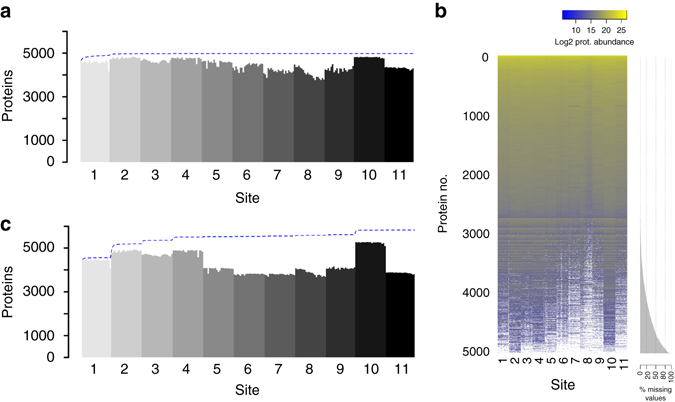
- Across 229 SWATH-MS files from 11 laboratories, 4,984 proteins were detected at 1% FDR; the median per file was 4,548 proteins, and 4,077 proteins were detected in >80% of all samples.
- Median repeatability was 91.6% at the protein level and 79.5% at the peptide level across all sites; within-site median repeatability ranged from 90.0–98.2% (protein) and 79.5–95.5% (peptide).
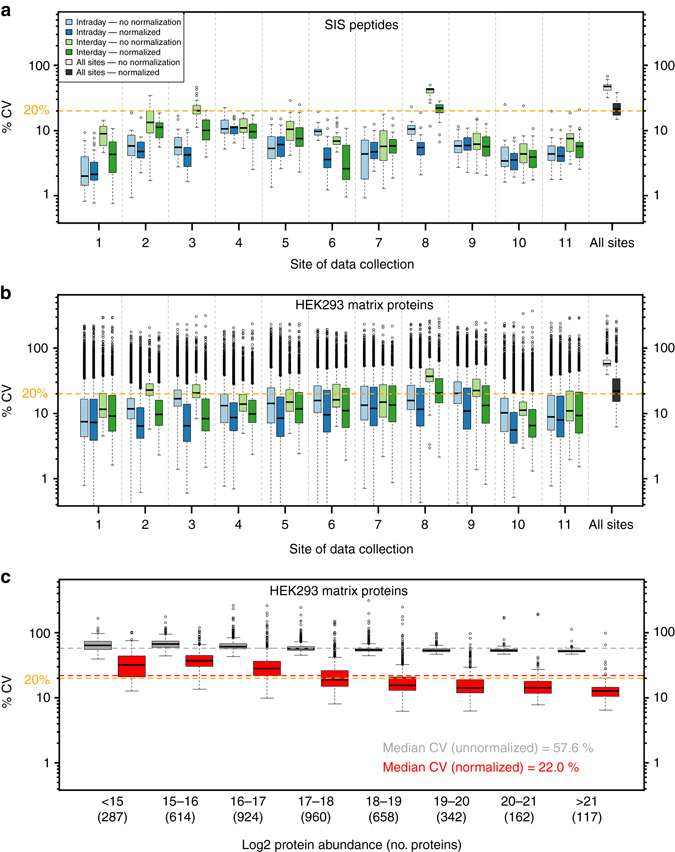
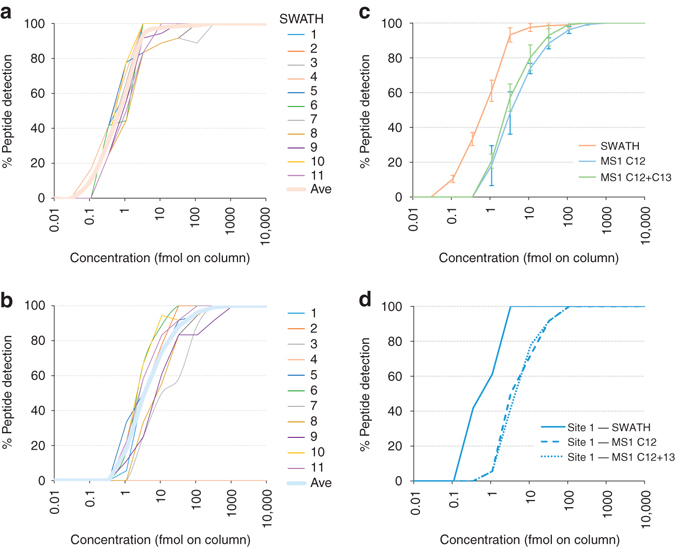
- For SIS peptides in sample S4, median intra-day CV was 5.5 ± 2.9%, inter-day CV was 8.9 ± 11.1%, and inter-site CV was 47.3 ± 13.9% without normalization, reduced to 21.3 ± 10.3% after normalization.
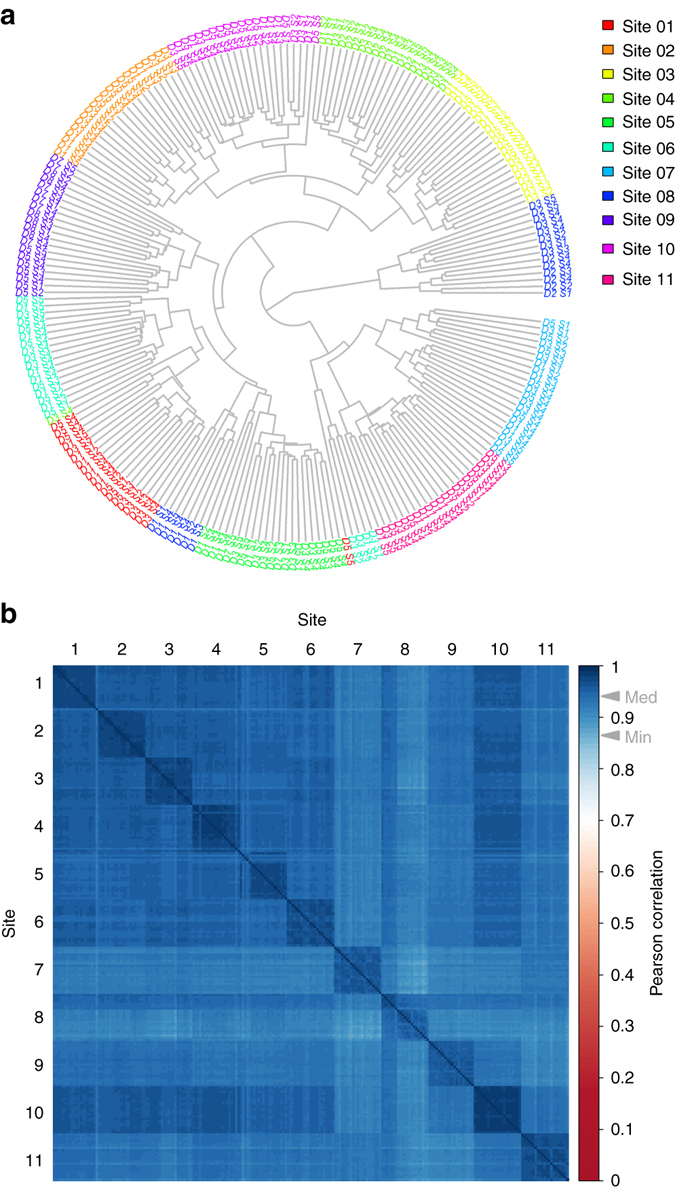
- Protein-level CVs for the 4,077 proteins detected in >80% of samples were 8.3 ± 16.2% intra-day, 11.9 ± 17.2% inter-day, and 22.0 ± 17.4% inter-site; median Pearson correlation across all runs was 0.940, with within-site median 0.971 and minimum pairwise 0.868.
Methods
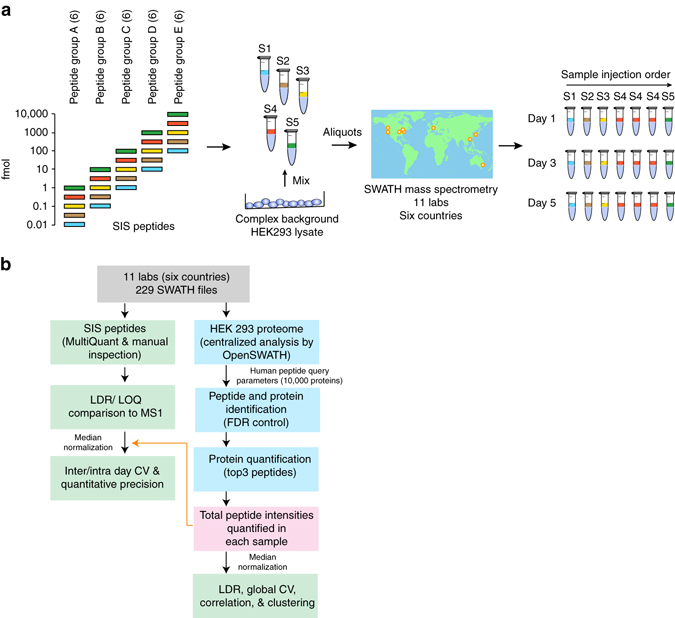
- Benchmarking sample: 30 stable isotope-labeled standard peptides partitioned into five groups and serially diluted into 1 µg HEK293 cell lysate, creating samples S1–S5 spanning 0.012–10,000 fmol on column; distributed to 11 laboratories worldwide.
- Acquisition: SWATH-MS on SCIEX TripleTOF 5600/5600+ systems using 64 variable-width Q1 windows; samples S1–S5 acquired with S4 in technical triplicate on days 1, 3, and 5, yielding 229 SWATH-MS files.
- Analysis: OpenSWATH with a 10,000+ human protein spectral library, PyProphet for 1% FDR control at peptide query and protein levels, aLFQ for protein abundance inference, MultiQuant for SIS peptide XIC analysis, and median normalization based on HEK293 background peptides.
Limitations
- Stated: the study did not evaluate variance in sample preparation between sites, so no conclusions can be made on that topic; only one instrument type/model was used, limiting tested variables mainly to site of data acquisition.
- Stated: high peptide loads at the upper end of the dilution series caused some MS signal saturation; a newer instrument platform (TripleTOF 6600) would be expected to reduce this.
- Stated/evident: no internal standard was available for protein-level dynamic range, so U2OS copy-number data from a different cell line was used as a surrogate; the study is also limited to HEK293 background and SIS peptides, so generalizability to other sample types and platforms is not established.
Model-written summary. Check it against the paper before relying on it.
Integrity signals
Registry
Cites
Statistics
Figures
Verification
Claims the paper makes
10 Valid · 1 Not valid · 16 Not checked · 81 Own results and interpretations
The cited sources support only part of this claim — read each source’s verdict below.
In the paper
“In general, these studies confirmed that a high degree of reproducibility is difficult to achieve for complex samples10.”
§ Multi-laboratory assessment of reproducibility, qualitative and quantitative performance of SWATH-mass spectrometry > Introduction
What the sources say
- Partly supportedcites [10] Rudnick PA Performance metrics for liquid chromatography-tandem mass spectrometry systems in proteomics analyses Mol. Cell. Proteomics 2010 9 225 241 10.1074/mcp.M900223-MCP200 19837981 PMC2830836 sourceExperimental — accuracy not yet measured
The Abstract identifies stochastic sampling of lower-abundance peptides as a source of variability in LC-MS/MS identifications, which supports the DDA-related concern. But the Results report stable metrics across analytical replicates and highly reproducible chromatography metrics across instruments; they do not establish that high reproducibility is generally difficult to achieve for complex samples. Page numbers are unavailable in our copy. (LLM, conf=0.78)
plain- Asserted: passes — The authors put it forward as true.
- Checkable: passes — It can be checked against evidence.
- Load-bearing: passes — The paper’s conclusions depend on it.
- Based: passes — The paper gives a reason why it holds.
- Partly supported
Every source the paper cites for this claim was checked and supports it.
In the paper
“SWATH-MS and related DIA approaches have achieved a high degree of reproducibility in intra-laboratory studies in a variety of research questions such as interaction proteomics40, 41, plasma proteomics42, tissue proteomics43, microbial proteomics44, 45, pre-clinical toxicology9, analysis of genetic reference strains46, and many others.”
§ Multi-laboratory assessment of reproducibility, qualitative and quantitative performance of SWATH-mass spectrometry > Introduction
What the sources say
- Supportedcites [40] Collins BC Quantifying protein interaction dynamics by SWATH mass spectrometry: application to the 14-3-3 system Nat. Methods 2013 10 1246 1253 10.1038/nmeth.2703 24162925 source
Our copy of Collins et al. (2013) is precisely the intra-laboratory interaction-proteomics application the citing sentence offers this reference for: SWATH-MS (a DIA implementation) applied to affinity-purified 14-3-3β complexes, yielding an essentially complete quantitative matrix for 1,967 proteins across 27 samples in biological triplicate (Generation and analysis of AP-SWATH maps; Abstract: dynamics 'robustly followed'). The Introduction states SWATH-MS 'provides SRM-like performance in terms of quantitative accuracy, data completeness and dynamic range', against the explicit contrast that DDA identification is not reproducible while SRM reproducibly targets a predetermined peptide set. The paper's detailed quantitative-reproducibility figures are referred to its Supplementary Results from the same section, so the magnitude is asserted here qualitatively rather than numerically, but the source plainly supports the exemplified point. (LLM, conf=0.80)
- Supportedcites [41] Lambert J-P Mapping differential interactomes by affinity purification coupled with data-independent mass spectrometry acquisition Nat. Methods 2013 10 1239 1245 10.1038/nmeth.2702 24162924 PMC3882083 source
The citation is attached to the 'interaction proteomics' instance of the citing sentence, and our copy is exactly an interaction-proteomics (AP-SWATH) study reporting reproducibility. Results ('A pipeline for quantitative interactome monitoring', p. ~3) give 79% of peptides and 87% of proteins quantified within 20% CV across CDK4 AP biological replicates (plus three technical replicates each), a higher proportion of peptides at CV ≤ 20% than DDA (82.1% vs 74.5%), and conclude the extraction/normalization pipeline 'is reliable'. The Discussion states the pipeline studies interactome changes 'in an unbiased and reproducible manner', and the Abstract calls AP-SWATH 'a robust label-free approach'. The 'related DIA approaches … variety of research questions' breadth rests on the other citations, not this one, so nothing here is unsupported. (LLM, conf=0.85)
- Supportedcites [42] Liu Y Quantitative variability of 342 plasma proteins in a human twin population Mol. Syst. Biol. 2015 11 786 10.15252/msb.20145728 25652787 PMC4358658 source
The citation is offered as an exemplar of SWATH-MS/DIA applied to plasma proteomics with high reproducibility, and our copy is exactly that: the Results subsection 'The reproducible quantification of plasma proteins across a longitudinal twin cohort by SWATH-MS' reports median CVs of 7.2% (technical) and 14.2% (whole-process) replicates with 84.5%/76.0% of proteins below 25% CV, and states the study 'significantly exceeds the previous studies in terms of reproducibility and quantitative accuracy'. All measurements were run on the same in-house LC-MS/MS system and analysed on an internal computing cluster (Materials and Methods), i.e. a single-laboratory study, matching the 'intra-laboratory' qualifier. The list of other application areas (interaction, tissue, microbial proteomics, toxicology, genetic reference strains) belongs to the other citations and the citing authors' own framing, not to this source. (LLM, conf=0.88)
- Supportedcites [43] Guo T Rapid mass spectrometric conversion of tissue biopsy samples into permanent quantitative digital proteome maps Nat. Med. 2015 21 407 413 10.1038/nm.3807 25730263 PMC4390165 source
The cited sentence attaches this source to the 'tissue proteomics' instance of high reproducibility in intra-laboratory SWATH-MS/DIA studies, and our copy is exactly that: the Abstract (p. 1) reports converting 18 renal biopsy samples into SWATH-MS maps and quantifying >2,000 proteins 'with a high degree of reproducibility across all samples', and the Discussion states the pipeline performs 'high throughput, quantitative and highly reproducible proteomic analyses of clinical tumor biopsies' with 'a median CV of technical replicates below 20%'. The Results (Generation of SWATH-MS maps) quantify that reproducibility as a single-laboratory technical-replicate experiment (median CV 10-12% for repeat MS injections, 24% overall including PCT digestion), matching the 'intra-laboratory' qualifier. The wider list of application areas (interaction, plasma, microbial proteomics, toxicology, genetic reference strains) is carried by the sentence's other citations, not by this one, so nothing here is overstated. (LLM, conf=0.85)
boosted- Asserted: passes — The authors put it forward as true.
- Checkable: passes — It can be checked against evidence.
- Load-bearing: passes — The paper’s conclusions depend on it.
- Based: passes — The paper gives a reason why it holds.
- Supported
Every source the paper cites for this claim was checked and supports it.
In the paper
“Notably, the spectral library and peptide query parameters we used to perform the analysis of the SWATH-MS data were previously published49 and built by a single lab independent of the current study, illustrating the generic applicability of such spectral libraries.”
§ Multi-laboratory assessment of reproducibility, qualitative and quantitative performance of SWATH-mass spectrometry > Discussion
What the sources say
- Supportedcites [49] Rosenberger G A repository of assays to quantify 10,000 human proteins by SWATH-MS Sci. Data 2014 1 140031 10.1038/sdata.2014.31 25977788 PMC4322573 source
The Background & Summary of Rosenberger et al. (2014) presents 'a generic large-scale human assay library' built by the authors' group from 331 fraction measurements, stating its results are 'applicable across laboratories', and Data Record 2 confirms that both spectral libraries (SpectraST format) and assay libraries (CSV, TraML, converted to formats for OpenSWATH/PeakView/Skyline/Spectronaut) were published. The Technical Validation section 'Portability of the combined assay library to different sample types and laboratories' explicitly demonstrates the library working on data acquired in a different laboratory, at a different time and under different chromatographic conditions — i.e., the generic applicability the citing sentence attributes to it. Only the exact term 'peptide query parameters' is absent from our copy (the paper describes the equivalent assay-library content: precursor/fragment ion m/z, normalized RT and relative ion intensities), which is a wording difference rather than an unsupported element. (LLM, conf=0.85)
plainstates a cause- Asserted: passes — The authors put it forward as true.
- Checkable: passes — It can be checked against evidence.
- Load-bearing: unclear — It is unclear whether the paper’s conclusions depend on it.
- Based: passes — The paper gives a reason why it holds.
- Supported
The cited sources support only part of this claim — read each source’s verdict below.
In the paper
“Here, we highlight an advantage of SWATH-MS data; i.e., as with MS1/DDA-based quantification and, unlike more classical targeted methods such as SRM, there are large numbers of peptides available for global normalization that can be used in sample types where the assumptions underlying this type of normalization are valid65, 66.”
§ Multi-laboratory assessment of reproducibility, qualitative and quantitative performance of SWATH-mass spectrometry > Discussion
What the sources say
- Partly supportedcites [65] Välikangas, T., Suomi, T. & Elo, L. L. A systematic evaluation of normalization methods in quantitative label-free proteomics. Brief Bioinform. 10.1093/bib/bbw095 (2016). PMC5862339 27694351 sourceExperimental — accuracy not yet measured
Our copy of Välikangas et al. (2016) supports only the qualifier of the claim: the Discussion states that all the normalization methods studied, excluding EigenMS, 'assume that only a small portion of the proteins are differentially expressed between samples and force the total intensity levels of the samples to be on the same level', which 'might be problematic if in fact a large number of proteins are differentially expressed' — i.e. global normalization is usable only where its assumptions hold. The Introduction and Materials and methods (Description of the data sets) frame this entirely in shotgun/DDA label-free data (UPS1, CPTAC, SGSD, mouse liver). The distinctive part of the claim — that SWATH-MS, unlike classical targeted SRM, yields large numbers of peptides available for global normalization — is absent: no passage in our copy mentions SWATH, DIA-based targeted quantification or SRM/MRM at all (searched: SWATH, data-independent acquisition targeted, SRM/MRM, number of peptides for global normalization). (LLM, conf=0.65)
- Partly supportedcites [66] Karpievitch YV Dabney AR Smith RD Normalization and missing value imputation for label-free LC-MS analysis BMC Bioinformatics 2012 13 S5 10.1186/1471-2105-13-S16-S5 23176322 PMC3489534 sourceExperimental — accuracy not yet measured
Our copy supports the normalization half of the attributed point: Methods > Normalization states that global adjustment centers log-intensity distributions on a constant and rests on 'an assumption... that most peptide abundances do not change', and the Background notes high-throughput MS quantifies 'thousands of peptides', which is the label-free shotgun setting the citing authors equate with MS1/DDA and SWATH. However, the paper never mentions SWATH-MS, DIA, or a comparison with targeted SRM/MRM (searched: 'SWATH data independent acquisition targeted MS/MS SRM MRM'; only Background/Methods normalization passages returned), so the specific claim of an advantage over classical targeted methods is not in our copy. It also frames validity of the normalization assumption as a property of the data rather than of particular 'sample types'. (LLM, conf=0.72)
plainstates a cause- Asserted: passes — The authors put it forward as true.
- Checkable: passes — It can be checked against evidence.
- Load-bearing: passes — The paper’s conclusions depend on it.
- Based: passes — The paper gives a reason why it holds.
- Partly supported
A result the paper reports from its own data — it cites no other source for it, so there is none to check. The quote shows it is in the paper.
In the paper
“In this multi-laboratory evaluation study including 11 sites worldwide, we demonstrate that using SWATH-mass spectrometry data acquisition we can consistently detect and reproducibly quantify >4000 proteins from HEK293 cells.”
§ Multi-laboratory assessment of reproducibility, qualitative and quantitative performance of SWATH-mass spectrometry > Abstract
boostedstates a cause- Asserted: passes — The authors put it forward as true.
- Checkable: passes — It can be checked against evidence.
- Load-bearing: passes — The paper’s conclusions depend on it.
- Based: passes — The paper gives a reason why it holds.
46 more claims
Create a free account to see all 108 claims and to verify the 29 references still open.
- It may state two separate claims as one. 42
- Probably not a substantial claim. 21
Claims other papers make about this one
Each is checked against this paper’s own text: does it say what the citing paper says it does?
The source backs part of the claim, not all of it — or backs it for a different population, condition or comparison.
In the citing paper
“Proteomic technologies, including mass spectrometry–based proteomics, aptamer-based arrays (SomaLogic), and proximity extension assay technology (Olink), are now available for the large-scale quantification and validation of thousands of proteins in human biological fluids or tissues (122–127).”
From Connecting aging biology and inflammation in the omics era (2022) · cites this paper as [124]
Experimental — accuracy not yet measured
Self-check
Percentages, sums and reported differences re-computed from the paper’s own numbers.
Each contradiction between two passages listed here was confirmed by an independent check.
Rated minor: it would not touch a result — a value no result rests on, a p-value that stays on the same side of the significance level, or a conflict that is clerical, resolved elsewhere in the paper, or outside its own findings.
In the paper
§ Multi-laboratory assessment of reproducibility, qualitative and quantitative performance of SWATH-mass spectrometry > Results > Reproducibility of quantification
“The median for site intra-day and inter-day CVs (expressed as median ± standard deviation) were 5.5 ± 2.9% and 8.9 ± 11.1%, respectively”
§ Multi-laboratory assessment of reproducibility, qualitative and quantitative performance of SWATH-mass spectrometry > Results > Reproducibility of quantification
“Normalization also reduced the median within site inter-day CV from 8.9 ± 11.0 to 5.8 ± 5.4%”
Rated minor: it would not touch a result — a value no result rests on, a p-value that stays on the same side of the significance level, or a conflict that is clerical, resolved elsewhere in the paper, or outside its own findings.
In the paper
§ Multi-laboratory assessment of reproducibility, qualitative and quantitative performance of SWATH-mass spectrometry > Results > Linearity and dynamic range
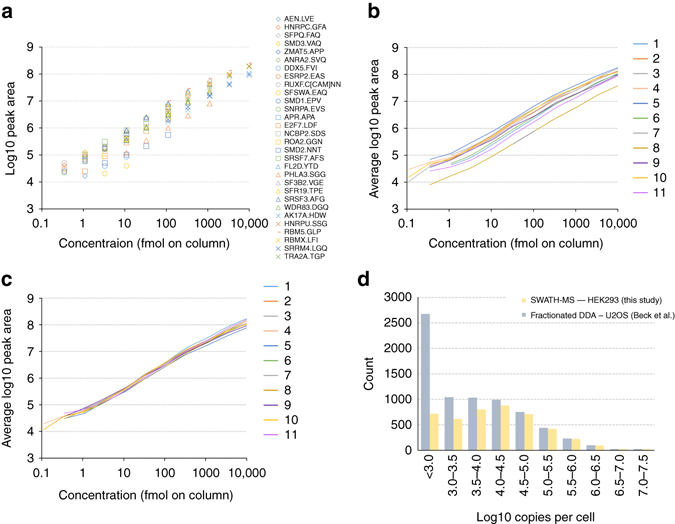
“A representative example for a single site is shown in Fig 4a (remaining sites in Supplementary Fig. 15; equivalent plots separated by peptide are shown in Supplementary Fig. 16; source data in Supplementary Data 8).”
§ Multi-laboratory assessment of reproducibility, qualitative and quantitative performance of SWATH-mass spectrometry > Results > Linearity and dynamic range
“a The response curves for each of the 30 SIS peptides for Site 1 were determined and plotted together (corresponding plots for all other sites are shown in Supplementary Fig. 13).”
Citations
Cites
Statistical significance for genomewide studies
Storey, J. D., & Tibshirani, R. (2003) · Proceedings of the National Academy of Sciences · doi:10.1073/pnas.1530509100 · Cited by 9,692
Cox, J., Hein, M. Y., Luber, C. A., Paron, I., Nagaraj, N., & Mann, M. (2014) · Molecular & Cellular Proteomics · doi:10.1074/mcp.m113.031591 · Cited by 5,180
Raise standards for preclinical cancer research
Begley, C. G., & Ellis, L. M. (2012) · Nature · doi:10.1038/483531a · Cited by 2,979
Gillet, L. C., Navarro, P., Tate, S., Röst, H., Selevsek, N., Reiter, L., Bonner, R., & Aebersold, R. (2012) · Molecular & Cellular Proteomics · doi:10.1074/mcp.o111.016717 · Cited by 2,877
Self-citationSemi-supervised learning for peptide identification from shotgun proteomics datasets
Käll, L., Canterbury, J. D., Weston, J., Noble, W. S., & MacCoss, M. J. (2007) · Nature Methods · doi:10.1038/nmeth1113 · Cited by 2,424
A draft map of the human proteome
Kim, M.-S., Pinto, S. M., Getnet, D., Nirujogi, R. S., Manda, S. S., Chaerkady, R., Madugundu, A. K., Kelkar, D. S., Isserlin, R., Jain, S., et al. (2014) · Nature · doi:10.1038/nature13302 · Cited by 2,198
The Proteomics Identifications (PRIDE) database and associated tools: status in 2013
Vizcaíno, J. A., Côté, R. G., Csordas, A., Dianes, J. A., Fabregat, A., Foster, J. M., Griss, J., Alpi, E., Birim, M., Contell, J., et al. (2012) · Nucleic Acids Research · doi:10.1093/nar/gks1262 · Cited by 1,918
Believe it or not: how much can we rely on published data on potential drug targets?
Prinz, F., Schlange, T., & Asadullah, K. (2011) · Nature Reviews Drug Discovery · doi:10.1038/nrd3439-c1 · Cited by 1,888
Mass-spectrometry-based draft of the human proteome
Wilhelm, M., Schlegl, J., Hahne, H., Gholami, A. M., Lieberenz, M., Savitski, M. M., Ziegler, E., Butzmann, L., Gessulat, S., Marx, H., et al. (2014) · Nature · doi:10.1038/nature13319 · Cited by 1,820
Peterson, A. C., Russell, J. D., Bailey, D. J., Westphall, M. S., & Coon, J. J. (2012) · Molecular & Cellular Proteomics · doi:10.1074/mcp.o112.020131 · Cited by 1,288
Research works printed but not linked: 1
- Ting YS Peptide-centric proteome analysis: an alternative strategy for the analysis of tandem mass spectrometry data Mol. Cell. Proteomics 2015 14 2301 2307 10.1074/mcp.O114.047035 26217018 PMC4563716 · DOI · Paper page
Cited by
Items 501–600 of 601
Sondermann, J. R. (2019) · eDiss (Georg-August-Universität Göttingen) · doi:10.53846/goediss-7316 · Cited by 1
Optimized Data-Independent Acquisition Approach for Proteomic Analysis at Single-Cell LevelPreprint
Wang, Y., Lih, T. M., Chen, L., Xu, Y., Kuczler, M. D., Cao, L., Pienta, K. J., Amend, S. R., & Zhang, H. (2021) · Research Square · doi:10.21203/rs.3.rs-977693/v2
Self-citationAn assessment of SWATH reproducibility
(2017) · Nature Methods · doi:10.1038/nmeth.4446
Yang, Y., Zhang, H., Cai, Y., Ding, Y., Zhang, G., Liu, Y., Sun, J., Tao, W. A., & Gu, Y. (2022) · Science Discovery · doi:10.11648/j.sd.20221002.15
Self-citationBagley, A. H. (2022) · Queensland University of Technology · doi:10.5204/thesis.eprints.235131 · Cited by 1
LC‐MS / MS ‐Based Proteomics Methods for Quantifying Drug‐Metabolizing Enzymes and Transporters
Smith, L. S., Jung, S. M., Li, J., & Zhu, H. (2022) · Wiley eBooks · doi:10.1002/9781119851042.ch6
Improving SWATH-MS data analysis using multi-omics approach
Singh, M. (2022) · Queensland University of Technology · doi:10.5204/thesis.eprints.236964
Luan, Y., Hu, J., Wang, Q., Li, W., Wang, X., Qu, R., Rajendran, B. K., Zhou, H., Liu, P., Shi, Y., et al. (2023) · bioRxiv (Cold Spring Harbor Laboratory) · doi:10.1101/2023.01.28.526056
Self-citationHuang, T. C. (2021) · Digital Repository Service (Northeastern University) · doi:10.17760/d20467211
Utility of proteomics and phosphoproteomics in the tailored medication of cancer
Tarfeen, N., Nisa, K. U., Ali, S., Yatoo, A. M., Shah, A. M., Sabba, A., Maqbool, R., & Ahmad, M. B. (2023) · Elsevier eBooks · doi:10.1016/b978-0-323-95072-5.00006-7
Sahu, N. (2023) · SZTE Repository of Dissertations (University of Szeged) · doi:10.14232/phd.11641
Holcom, A., Fuentealba, M., Sivapatham, R., King, C. D., Osman, H., Foulger, A., Bhaumik, D., Schilling, B., Furman, D., Andersen, J. K., et al. (2023) · SSRN Electronic Journal · doi:10.2139/ssrn.4588112
Self-citationQuantitative Proteomics of Breast Benign and Malignant Tumors Reveals a Malignancy SignaturePreprint
Moreno‐Ulloa, A., Zárate-Córdova, V. L., Ramírez‐Sánchez, I., Lopez, J. C., Perez-Ortiz, A. C., Villarreal-Garza, C. M., Díaz‐Chávez, J., Estrada-Mena, B., Antonio‐Aguirre, B., López-Almanza, X. P., et al. (2023) · Research Square · doi:10.21203/rs.3.rs-3622132/v1
Molecular Profiling of Inflammatory Arthritis
Aboo, C. (2023) · VBN Forskningsportal (Aalborg Universitet) · doi:10.54337/aau617107575
Tian, S., Zhan, D., Yu, Y., Wang, Y., Liu, M., Tan, S., Li, Y., Song, L., Qin, Z., Li, X., et al. (2023) · Figshare · doi:10.6084/m9.figshare.24098169
Self-citationZhou, Y., Lih, T. M., Pan, J., Höti, N., Dong, M., Cao, L., Hu, Y., Cho, K.-C., Chen, S., Eguez, R. V., et al. (2020) · Figshare · doi:10.6084/m9.figshare.13346607
Self-citationZhou, Y., Lih, T. M., Pan, J., Höti, N., Dong, M., Cao, L., Hu, Y., Cho, K.-C., Chen, S., Eguez, R. V., et al. (2020) · Figshare · doi:10.6084/m9.figshare.13346604
Self-citationTian, S., Zhan, D., Yu, Y., Wang, Y., Liu, M., Tan, S., Li, Y., Song, L., Qin, Z., Li, X., et al. (2023) · Figshare · doi:10.6084/m9.figshare.24098163
Self-citationTian, S., Zhan, D., Yu, Y., Wang, Y., Liu, M., Tan, S., Li, Y., Song, L., Qin, Z., Li, X., et al. (2023) · Figshare · doi:10.6084/m9.figshare.24098157
Self-citationZhou, Y., Lih, T. M., Pan, J., Höti, N., Dong, M., Cao, L., Hu, Y., Cho, K.-C., Chen, S., Eguez, R. V., et al. (2020) · Figshare · doi:10.6084/m9.figshare.13346598
Self-citationTian, S., Zhan, D., Yu, Y., Wang, Y., Liu, M., Tan, S., Li, Y., Song, L., Qin, Z., Li, X., et al. (2023) · Figshare · doi:10.6084/m9.figshare.24098151
Self-citationTian, S., Zhan, D., Yu, Y., Wang, Y., Liu, M., Tan, S., Li, Y., Song, L., Qin, Z., Li, X., et al. (2023) · Figshare · doi:10.6084/m9.figshare.24098172
Self-citationWang, Y., Lih, T. M., Chen, L., Xu, Y., Kuczler, M. D., Cao, L., Pienta, K. J., Amend, S. R., & Zhang, H. (2022) · Figshare · doi:10.6084/m9.figshare.20282155
Self-citationZhou, Y., Lih, T. M., Pan, J., Höti, N., Dong, M., Cao, L., Hu, Y., Cho, K.-C., Chen, S., Eguez, R. V., et al. (2020) · Figshare · doi:10.6084/m9.figshare.13346610
Self-citationTian, S., Zhan, D., Yu, Y., Wang, Y., Liu, M., Tan, S., Li, Y., Song, L., Qin, Z., Li, X., et al. (2023) · Figshare · doi:10.6084/m9.figshare.24098160
Self-citationZhou, Y., Lih, T. M., Pan, J., Höti, N., Dong, M., Cao, L., Hu, Y., Cho, K.-C., Chen, S., Eguez, R. V., et al. (2020) · Figshare · doi:10.6084/m9.figshare.13346601
Self-citationZhou, Y., Lih, T. M., Pan, J., Höti, N., Dong, M., Cao, L., Hu, Y., Cho, K.-C., Chen, S., Eguez, R. V., et al. (2020) · Figshare · doi:10.6084/m9.figshare.13346595
Self-citationTian, S., Zhan, D., Yu, Y., Wang, Y., Liu, M., Tan, S., Li, Y., Song, L., Qin, Z., Li, X., et al. (2023) · Figshare · doi:10.6084/m9.figshare.24098166
Self-citationXu, J. (2024) · Journal of Electrical Systems · doi:10.52783/jes.3174
“Performance evaluation and quality improvement therefore appear to be essential [1].”
BackgroundApplication of in vitro models for pediatric translational research
Chatterjee, S., Annaert, P., & Prasad, B. (2024) · Elsevier eBooks · doi:10.1016/b978-0-323-88459-4.00008-0
Bundgaard, L., Årman, F., Åhrman, E., Walters, M., Keller, U. A. D., Malmström, J. A., & Jacobsen, S. B. (2024) · Journal of Proteome Research · doi:10.1021/acs.jproteome.4c00125
Considerations for Characterizing Protein Expression Changes with SWATH®-MS
Min, L., Hamaker, N. K., & Lee, K. H. (2024) · Springer eBooks · doi:10.1007/978-981-97-5045-0_5
Burton, J. B., Gascard, P. D., Pan, D., Bons, J., Bai, R., Chen‐Tanyolac, C., Caruso, J. A., Hunter, C. L., Schilling, B., & Tlsty, T. D. (2025) · bioRxiv (Cold Spring Harbor Laboratory) · doi:10.1101/2025.01.21.634187 · Cited by 2
Self-citationMorán, Á. C. (2025) · Gredos (University of Salamanca) · doi:10.14201/gredos.166181
Burton, J. B., Pladna, K. M., Bons, J., Watson, M. A., King, C. D., Pardee, T. S., & Schilling, B. (2025) · bioRxiv (Cold Spring Harbor Laboratory) · doi:10.1101/2025.07.04.663197
“The proteomic workflow (Figure 1C) was comprised of cell lysis, protein digestion, and microflow reverse-phase high performance liquid chromatography tandem mass spectrometry (LC-MS/MS) (9, 14, 15).”
Self-citationShotton, R., Campbell, A. E., Baričević-Jones, I., Reed, R., Kelsall, J., Williams, J., Mellor, H. R., Unwin, R. D., & Linton, K. (2026) · Cardio-Oncology · doi:10.1186/s40959-026-00484-0
“For differential expression analysis, sequential window acquisition of all theoretical mass spectra (SWATH-MS) [11] was used.”
Rosenberger, G., Xue, P., Bludau, I., Martelli, C., Williams, E. G., Collins, B. C., Califano, A., Liu, Y., & Aebersold, R. H. (2026) · Molecular Systems Biology · doi:10.1038/s44320-026-00228-3
“SWATH scans were performed using an updated scheme of 64 variably sized precursor co-isolation windows (Collins et al, 2017), covering similar precursor densities (in terms of number and intensity) within all SWATH windows.”
Self-citationAddressing multiple facets of ligand–receptor network inference including single-cell proteomics
Villemin, J.-P., Giroux, P., Maillard, M., Colombo, P., Larbouret, C., & Colinge, J. (2026) · Nucleic Acids Research · doi:10.1093/nar/gkag690
Burton, J. B., McHugh, T. L. M., Schurman, C. A., Bons, J., Sanchez, M., Ellerby, L., & Schilling, B. (2025) · bioRxiv (Cold Spring Harbor Laboratory) · doi:10.1101/2025.11.02.686128
Self-citationRichert, A. C., Zhang, Y., Bharathi, S. S., Hernandez, A., Dodatko, T., Bons, J., Roundtree, K. E., Stauffer, B. B., Yu, C., Schilling, B., et al. (2025) · The FASEB Journal · doi:10.1096/fj.202502381r · Cited by 1
“All samples were acquired in data-independent acquisition (DIA) mode [39–41].”
Self-citationWang, H., Zhu, J., Li, S., Zhang, L., Guo, M., Zhao, J., Zhang, Y., Cao, C., Hu, S., & Xiao, H. (2025) · Nucleic Acids Research · doi:10.1093/nar/gkaf1167
“In contrast, DIA offers a more comprehensive and unbiased solution by dividing the full m/z range into predefined precursor isolation windows, systematically fragmenting and analyzing all precursor ions in a cyclic manner [ 23 ].”
Continuing the data independent acquisition revolution: ZT Scan DIA for quantitative proteomics
Shibata, T. (2025) · SEIBUTSU BUTSURI KAGAKU · doi:10.2198/electroph.69.35
Zhang, M., Shi, J., Feng, Y., Liu, B., Jiang, J., Song, D., & Jiang, Y. (2025) · Chinese Chemical Letters · doi:10.1016/j.cclet.2025.112208
Back2Basics: interpreting chromatograms in LC-MS based proteomics
Babele, P., Singhania, S., & Yadav, A. K. (2025) · Journal of Proteins and Proteomics · doi:10.1007/s42485-025-00199-3
“Consequently, modern DIA workflows increasingly adopt hybrid strate - gies (e.g., landmark-guided DTW) to achieve low alignment errors, enabling robust cross-cohort biomarker verification (Collins et al. 2017).”
Permentier, T., Ducret, H., Timmins‐Schiffman, E., Willard, H. F., Heidig, S.-L., Suchocki, C. R., Toonen, R. J., Nunn, B. L., Kochzius, M., & Flot, J. (2025) · bioRxiv (Cold Spring Harbor Laboratory) · doi:10.64898/2025.12.02.691798
“However, data-independent acquisition (DIA) work-flows have improved reproducibility and proteomic depth compared to traditional meth-ods (Collins et al. , 2017).”
Ergin, E. K., Conrrero, A., Ferguson, K. M., & Lange, P. F. (2026) · Journal of Proteome Research · doi:10.1021/acs.jproteome.5c01235
Identification of molecular mechanisms driving skeletal muscle atrophy
Miller, M. J. (2025) · Iowa Research Online (The University of Iowa) · doi:10.25820/etd.007865
Additional file 2 of Sex-specific role of galectin-3 in aortic stenosis
Matilla, L., Martín‐Núñez, E., Garaikoetxea, M., Navarro, A., Tamayo, I., Fernández‐Celis, A., Gainza, A., Fernández‐Irigoyen, J., Santamaría, E., Muntendam, P., et al. (2024) · Figshare · doi:10.6084/m9.figshare.24432124
Oleaga, A., Carnero-Morán, Á., Valero, M. L., & Pérez–Sánchez, R. (2021) · Figshare · doi:10.6084/m9.figshare.15153890
Wu, L., Zhou, L., An, J., Shao, X., Zhang, H., Wang, C., Zhao, G., Chen, S., Cui, X., Zhang, X., et al. (2024) · Figshare · doi:10.6084/m9.figshare.26597480
Self-citationTian, S., Zhan, D., Yu, Y., Wang, Y., Liu, M., Tan, S., Li, Y., Song, L., Qin, Z., Li, X., et al. (2023) · Figshare · doi:10.6084/m9.figshare.24098148
Self-citationWu, L., Zhou, L., An, J., Shao, X., Zhang, H., Wang, C., Zhao, G., Chen, S., Cui, X., Zhang, X., et al. (2024) · Figshare · doi:10.6084/m9.figshare.26597495
Self-citationWu, L., Zhou, L., An, J., Shao, X., Zhang, H., Wang, C., Zhao, G., Chen, S., Cui, X., Zhang, X., et al. (2024) · Figshare · doi:10.6084/m9.figshare.26597483
Self-citationWu, L., Zhou, L., An, J., Shao, X., Zhang, H., Wang, C., Zhao, G., Chen, S., Cui, X., Zhang, X., et al. (2024) · Figshare · doi:10.6084/m9.figshare.26597492
Self-citationWu, L., Zhou, L., An, J., Shao, X., Zhang, H., Wang, C., Zhao, G., Chen, S., Cui, X., Zhang, X., et al. (2024) · Figshare · doi:10.6084/m9.figshare.26597510
Self-citationWu, L., Zhou, L., An, J., Shao, X., Zhang, H., Wang, C., Zhao, G., Chen, S., Cui, X., Zhang, X., et al. (2024) · Figshare · doi:10.6084/m9.figshare.26597501
Self-citationWu, L., Zhou, L., An, J., Shao, X., Zhang, H., Wang, C., Zhao, G., Chen, S., Cui, X., Zhang, X., et al. (2024) · Figshare · doi:10.6084/m9.figshare.26597489
Self-citationWu, L., Zhou, L., An, J., Shao, X., Zhang, H., Wang, C., Zhao, G., Chen, S., Cui, X., Zhang, X., et al. (2024) · Figshare · doi:10.6084/m9.figshare.26597486
Self-citationZhou, Y., Lih, T. M., Pan, J., Höti, N., Dong, M., Cao, L., Hu, Y., Cho, K.-C., Chen, S.-Y., Eguez, R. V., et al. (2020) · Figshare · doi:10.6084/m9.figshare.13346592
Self-citationAdditional file 1 of Sex-specific role of galectin-3 in aortic stenosis
Matilla, L., Martín‐Núñez, E., Garaikoetxea, M., Navarro, A., Tamayo, I., Fernández‐Celis, A., Gainza, A., Fernández-Irigoyen, J., Santamaría, E., Muntendam, P., et al. (2023) · Figshare · doi:10.6084/m9.figshare.24431979
Gadd45a is a molecular mediator of skeletal muscle atrophy
Marcotte, G. R. (2023) · Iowa Research Online (The University of Iowa) · doi:10.25820/etd.006930
Wu, L., Zhou, L., An, J., Shao, X., Zhang, H., Wang, C., Zhao, G., Chen, S., Cui, X., Zhang, X., et al. (2024) · Figshare · doi:10.6084/m9.figshare.26597507
Self-citationWu, L., Zhou, L., An, J., Shao, X., Zhang, H., Wang, C., Zhao, G., Chen, S., Cui, X., Zhang, X., et al. (2024) · Figshare · doi:10.6084/m9.figshare.26597498
Self-citationAcuña-Catalán, D. (2023) · Universidad de Chile · doi:10.58011/wkj1-8t82
Wu, L., Zhou, L., An, J., Shao, X., Zhang, H., Wang, C., Zhao, G., Chen, S., Cui, X., Zhang, X., et al. (2024) · Figshare · doi:10.6084/m9.figshare.26597504
Self-citationWu, L., Zhou, L., An, J., Shao, X., Zhang, H., Wang, C., Zhao, G., Chen, S., Cui, X., Zhang, X., et al. (2024) · Figshare · doi:10.6084/m9.figshare.26597513
Self-citationTian, S., Zhan, D., Yu, Y., Wang, Y., Liu, M., Tan, S., Li, Y., Song, L., Qin, Z., Li, X., et al. (2023) · Figshare · doi:10.6084/m9.figshare.24098175
Self-citationHong, Y. (2023) · UTUPub (University of Turku)
Safaridehkohneh, N., & Ott, A. (2025) · Journal of the American Society for Mass Spectrometry · doi:10.1021/jasms.5c00226
Liao, Y., Li, Y., Xiao, Z., Miao, C., Yi, T., Zhao, X., Zhang, Y., Wen, H., Weinan, E., Chang, C., et al. (2026) · bioRxiv (Cold Spring Harbor Laboratory) · doi:10.64898/2026.02.09.704949
“To meet these rigorous requirements for depth and scalability, data-independent acquisition mass spectrometry (DIA-MS) has emerged as a cornerstone of high-throughput proteomics 7-10 , lauded for its high reproducibility 11 , sensitivity 12,13 , and high-throughput 14 .”
Omic analysis of the protein profile in digestive tumours, from proteomics to clinical practice
Bura, F. I., Pezzopane, R., Granados-Rodríguez, M., Rodríguez-Ortíz, L., Rufián‐Andújar, B., Martínez-López, A., Vazquez-Borrego, M. C., Romero‐Ruíz, A., & Arjona-Sánchez, Á. (2026) · Cirugía Española · doi:10.1016/j.cireng.2026.800303
Androgen targeted therapy induced proteomic alterations in prostate cancer
Liyanage, C. D. K. (2023) · Queensland University of Technology · doi:10.5204/thesis.eprints.249342
Characterizing Human and Viral Proteins in the HIV-1 Envelope Using Novel Methods in Flow Virometry
Burnie, J. (2023) · TSpace (University of Toronto)
Proteomic Signatures of Conversion Risk and Disease Severity in Multiple SclerosisPreprint
Bastide, L., Imbault, V., Perrotta, G., Borrelli, S., Elands, S., Pesch, V. V., Borràs, E., Sabidó, E., Gaspard, N., Communi, D., et al. (2026) · medRxiv · doi:10.64898/2026.03.25.26348613
ProAKAP4 as a sperm quality and fertility biomarker in domestic large animals
Dordas‐Perpinyà, M. (2024) · theses.fr (ABES) · doi:10.70675/92105d16z7a8bz4126z8419za09b9e5e3c32
Zhou, Q., & Shen, Y. (2026) · Clinical Proteomics · doi:10.1186/s12014-026-09583-7
“These advances have improved reproducibility across batches and enabled larger cohort studies [10, 11].”
Kaftan, A. N. (2026) · Accreditation and Quality Assurance · doi:10.1007/s00769-026-01707-8
“In addition, evaluation within an ISO 15189-aligned quality management environment allowed assessment under realistic operational conditions, including traceability structures, documentation requirements, and supervised interpretation workflows [30].”
Proteomics to Elucidate the Beneficial Effects of Functional Food Factors on Human Health
Kurogi, K., & Sakakibara, Y. (2026) · Springer eBooks · doi:10.1007/978-981-95-7068-3_11
Ground Truth–Based Evaluation of False Discovery Rate and Statistical Power in DIA ProteomicsPreprint
Yarbro, J. M., Huang, Y., Pagala, V., Fu, Y., Wang, Z., Wu, L., Wang, X., High, A. A., Byrum, S. D., Peng, J., et al. (2026) · bioRxiv (Cold Spring Harbor Laboratory) · doi:10.64898/2026.05.29.728747
Azevedo, A., Leckenby, A., Nicholson, R. I., Menezes, A. C., Davies, S., Gilkes, A., Baker, S., Toghill, R., McCracken, E., Pierce, A., et al. (2026) · Blood Neoplasia · doi:10.1016/j.bneo.2026.100259
“17 The aim of this study was to determine quantitative changes in the proteomic profile of normal human CD34 + -derived HSPCs expressing RUNX1::RUNX1T1.”
Fibulin-2 transduces a matrix-to-metabolism signal in kidney fibrosisPreprint
Gui, Y., Wang, Y., Li, W., Liu, J.-J., Dai, C., Mallari, S. M., Zheng, K., Jones, C., Shaffer, H. W., Dorsett, L. Y., et al. (2026) · bioRxiv (Cold Spring Harbor Laboratory) · doi:10.64898/2026.06.19.733428
Self-citationProteomics- and bioinformatics-based identification of regulators of radiosensitivity in lung cancer
Li, J., Huang, X., Sun, C., & Zhu, Y. (2026) · Current Radiopharmaceuticals · doi:10.1016/j.craph.2026.100071
Shimizu, K., Yuanzheng, X., Cottrell, G. S., & Widera, D. (2026) · Cancer and Metastasis Reviews · doi:10.1007/s10555-026-10367-6
“…of high-abundance proteins, enrichment of EV fractions, and multiplexed quantitative approaches, including tandem mass tag or isobaric tags for relative and absolute quantification, can extend dynamic range and improve detection of lower-abundance, biologically relevant proteins [113, 114].”
Kratka, C. E., Huang, R., Pea, J., Skory, R. M., King, C. D., Zhang, J., Pattarawat, P., Milner, C. M., Day, A. J., Plachta, N., et al. (2026) · bioRxiv (Cold Spring Harbor Laboratory) · doi:10.64898/2026.07.22.738304
Self-citationCantrell, L. S., Just, S., Stukalov, A., Farokhzad, O. C., & Batzoglou, S. (2026) · Journal of Proteome Research · doi:10.1021/acs.jproteome.6c00415
Torres, P., Becerra, D., Astorga, J. I., Fuentealba, M., Kauwe, G., Gonzalez, L., Diaz, G., Morales, V., Valenzuela, V., Wehrfritz, C., et al. (2026) · bioRxiv (Cold Spring Harbor Laboratory) · doi:10.64898/2026.08.07.743573
Self-citationInterworlds: studying metaphor using neurosymbolic AI
Lippolis, A. S. (2026) · AMS Dottorato Institutional Doctoral Theses Repository (University of Bologna) · doi:10.48676/unibo/amsdottorato/12920
Targeting cellular senescence mitigates chemotherapy-induced bone loss in young and aged mice
Izquierdo, D. J., Blancarte-Hernández, E., Schurman, C. A., Schilling, B., Woloszyk, A., Aguilar, L., Salmon, A., & Glatt, V. (2026) · GeroScience · doi:10.1007/s11357-026-02485-4
Self-citationBravo, J. I., Tewelde, E., King, C. D., Tellakula, N. S., Schilling, B., & Benayoun, B. A. (2026) · bioRxiv (Cold Spring Harbor Laboratory) · doi:10.64898/2026.09.03.749265
Self-citationA Framework for Assessing LLM Consistency in Knowledge Engineering
Saeedizade, M. J., Alharbi, R., Giglou, H. B., Lippolis, A. S., Blomqvist, E., Tamma, V., Grasso, F., Payne, T. R., D'Souza, J., Auer, S., et al. (2026) · Semantic Web: – Interoperability, Usability, Applicability · doi:10.1177/22104968261479512 · Cited by 1
“In the context of natural sciences, consistency is often classified into two distinct categories Collins et al. (2017): “Quantitative Consistency” refers to the ability to replicate the same scores/values through repeated experiments; and “Qualitative Consistency” , which seeks to achieve…”
Li, J., & Röst, H. L. (2026) · bioRxiv (Cold Spring Harbor Laboratory) · doi:10.64898/2026.09.12.751192
Wang, C., Meng, L., Gao, Y., Wang, X., Han, Y., Huo, D., Qi, X., Li, X., & Liang, G. (2026) · Journal of Clinical Neuroscience · doi:10.1016/j.jocn.2026.112312
Gawor, A., & Bulska, E. (2026) · Molecules · doi:10.3390/molecules31203604
“…of repeatability and reproducibility in proteomic identification [41] and multi-site studies of targeted proteomics and of SWATH-MS data-independent acquisition showed that quantification can be reproduced across laboratories when samples, assays, and analysis pipelines are standardised [40,42,96].”
Exploring the role of apolipoproteins in hepatitis B virus-related acute-on-chronic liver failure
Cao, L.-M., Liu, L., Zhai, D.-K., & Yang, B. (2026) · World Journal of Hepatology · doi:10.4254/wjh.123360
Chen, C.-Y., Lu, Y., Chang, P.-H., Chen, H.-J., Hsueh, Y., Chang, C.-W., Hsu, H.-C., Yang, T.-C., Chang, Y.-Y., & Chang, H.-M. (2026) · Frontiers in Endocrinology · doi:10.3389/fendo.2026.1962631
Shahid, S. (2024) · International journal of medical and health research. · doi:10.61424/ijmhr.v2i1.1106
Metadata
- Authors
- Collins, B. C., Hunter, C. L., Liu, Y., Schilling, B., Rosenberger, G., Bader, S. L., Chan, D. W., Gibson, B. W., Gingras, A.-C., Held, J. M., Hirayama-Kurogi, M., Hou, G., Krisp, C., Larsen, B., Lin, L., Liu, S., Molloy, M. P., Moritz, R. L., Ohtsuki, S., Schlapbach, R., Selevsek, N., Thomas, S. N., Tzeng, S.-C., Zhang, H., & Aebersold, R.
- Affiliations
- ETH Zurich (CH)
- Buck Institute for Research on Aging (US)
- University of Zurich (CH)
- Institute for Systems Biology (US)
- Johns Hopkins University (US)
- University of Toronto (CA)
- Washington University in St. Louis (US)
- BGI Group (China) (CN)
- Macquarie University (AU)
- Lunenfeld-Tanenbaum Research Institute (CA)
- Kumamoto University (JP)
- Corresponding author
- Aebersold, Ruedi
- ORCID
- Collins, Ben C.
- Hunter, Christie L.
- Liu, Yansheng
- Schilling, Birgit
- Rosenberger, George
- Bader, Samuel L.
- Chan, Daniel W.
- Gibson, Bradford W.
- Gingras, Anne-Claude
- Held, Jason M.
- Hou, Guixue
- Krisp, Christoph
- Liu, Siqi
- Molloy, Mark P.
- Moritz, Robert L.
- Ohtsuki, Sumio
- Schlapbach, Ralph
- Thomas, Stefani N.
- Tzeng, Shin-Cheng
- Zhang, Hui
- Aebersold, Ruedi
- Venue
- Nature Communications
- Published
- 2017-08-21
- Volume
- 8
- Issue
- 1
- Pages
- 291-291
- ISSN
- 2041-1723 (ISSN-L)
- PMC
- PMC5566333
- OpenAlex
- W2950557897
- Semantic Scholar
- 9c55acff92bfc3dfc5b12eddbb845c075896d866
- Cited by
- 576
- References
- 80
- Citations by year
- 2026: 37 · 2025: 60 · 2024: 77 · 2023: 81 · 2022: 66 · 2021: 71 · 2020: 60 · 2019: 66 · 2018: 45 · 2017: 11
- FWCI
- 25.37
- Type
- journal article
- Language
- en
- Open access
- gold
- doi.org
- Licence
- cc-by
- creativecommons.org/licenses/by/4.0 (tdm)
- creativecommons.org/licenses/by/4.0 (vor)
- Locations
- Nature Communications (publishedVersion, cc-by)
- bioRxiv (Cold Spring Harbor Laboratory) (acceptedVersion, cc-by-nc-nd)
- Europe PMC (PubMed Central) (publishedVersion, cc-by)
- PubMed Central (publishedVersion, cc-by)
- PubMed (publishedVersion)
- Research Portal (Queen's University Belfast) (publishedVersion, cc-by)
- Digital Commons@Becker (Washington University School of Medicine) (submittedVersion)
- RePEc: Research Papers in Economics (submittedVersion)
- DOAJ (DOAJ: Directory of Open Access Journals) (submittedVersion, cc-by-sa)
- Repository for Publications and Research Data (ETH Zurich) (submittedVersion, cc-by)
- ETH Zürich Research Collection (cc-by)
- Funders
- National Science Foundation (1330912, 1S10 OD016281)
- Genome Canada (OGI-097)
- Japan Agency for Medical Research and Development (CREST)
- Ontario Genomics (OGI-097)
- Buck Institute for Research on Aging
- Australian Government
- Government of Canada (FDN 143301, 143301)
- European Commission (233226, 602156)
- Schweizerischer Nationalfonds zur Förderung der Wissenschaftlichen Forschung (143301, 166435, 161435)
- SystemsX.ch
- National Institutes of Health (1s10od016281-01)
- Canadian Institutes of Health Research (14330_1, FDN143301)
- Functional Genomics Center Zurich
- National Human Genome Research Institute (RC2HG005805, HG005805)
- National Cancer Institute (U24CA160036)
- National Institute of General Medical Sciences (R01GM087221, R01GM087221, S10RR027584 and 2P50GM076547, P50GM076547)
- National Center for Research Resources (S10RR027584)
- Core Research for Evolutional Science and Technology
- H2020 European Research Council (670821)
- Topics
- Physical Sciences › Chemistry › Spectroscopy › Advanced Proteomics Techniques and Applications
- Physical Sciences › Chemistry › Spectroscopy › Mass Spectrometry Techniques and Applications
- Life Sciences › Biochemistry, Genetics and Molecular Biology › Molecular Biology › Advanced Biosensing Techniques and Applications
- Keywords
- SWATH mass spectrometry, reproducibility, quantitative proteomics, targeted proteomics, data-independent acquisition, protein quantification, HEK293 cells, sensitivity, dynamic range
- MeSH terms
- Humans, Laboratories, Mass Spectrometry, Reproducibility of Results, Proteome, Proteomics, HEK293 Cells, Laboratory Proficiency Testing
About these checks
Registry, retraction, Cites and statistics results are computed, not judged, with one exception: a printed reference that no index lists is read once by a model before it counts as a citation error. Claims are extracted by a model and kept only when their quote appears verbatim in the text; each cited source is then checked, with a model’s help, for whether it says what the claim relies on. Those verdicts can be wrong — read the claim’s quote and the cited source before relying on one.
The claim verdicts this report counts are experimental: their accuracy is not yet measured.
A language model drew the claims from the paper on 2026-10-05, under version 3 of the claim definition (model deepseek-v4.1-flash, prompt extract-v3).
A second model labelled each claim on 2026-10-05 (model jev-1.13-20260917, definition revision gold-guideline-v0.2).
Cited sources are checked with a language model’s help (gpt-6-sol and qwen3.8-omni-flash).
Statistics and arithmetic are recomputed, not judged.
Confidence bands are shown only for fields calibrated on our annotated test set. None is calibrated yet, so no band is shown.
What counts as a claim ›How we measure confidence ›How we check this ›
Are you an author, or do you see a problem with this page? Request a review
Data sources
Bibliographic data: Semantic Scholar, OpenAlex, Crossref.
Contains information from the Semantic Scholar Academic Graph Datasets, made available under the ODC Attribution License (ODC-BY 1.0).
Semantic Scholar’s data is described in: Kinney, R., et al. (2023). The Semantic Scholar Open Data Platform. arXiv:2301.10140.
