

Hypoxia inducible factor HIF-1 promotes myeloid-derived suppressor cells accumulation through ENTPD2/CD39L1 in hepatocellular carcinoma
Open accessThe DOI matches its Crossref record; 57 of the 57 references it cites were found in a registry or an index.
Abstract
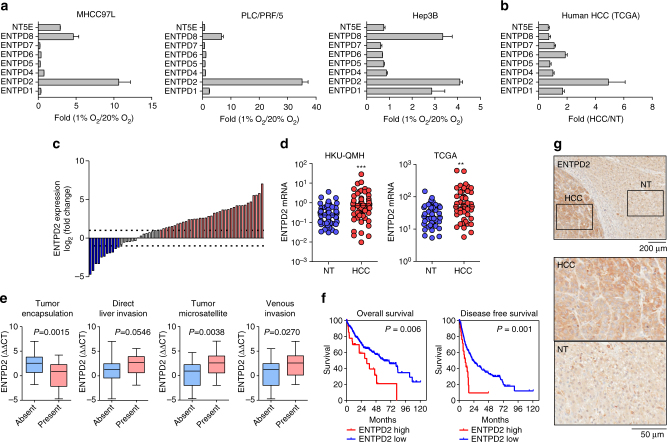
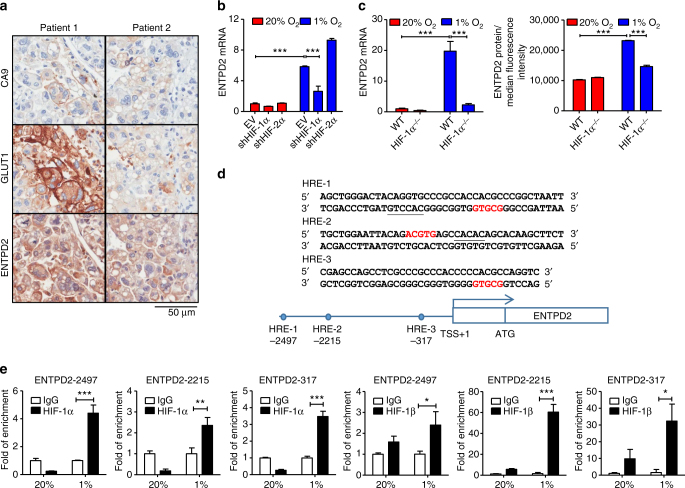
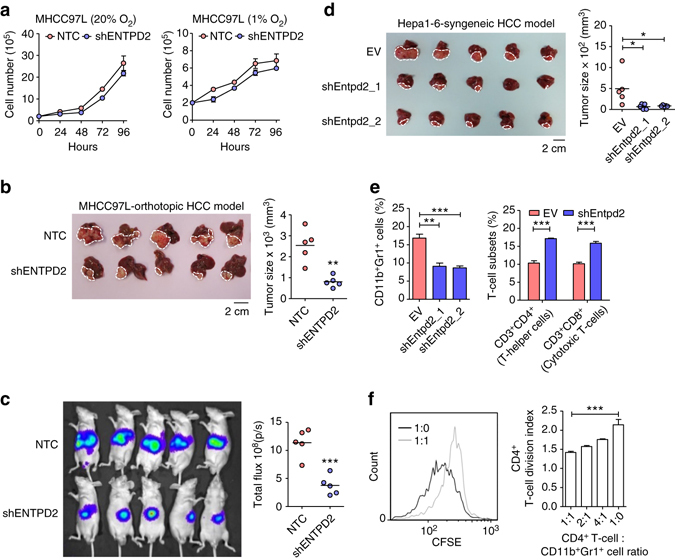
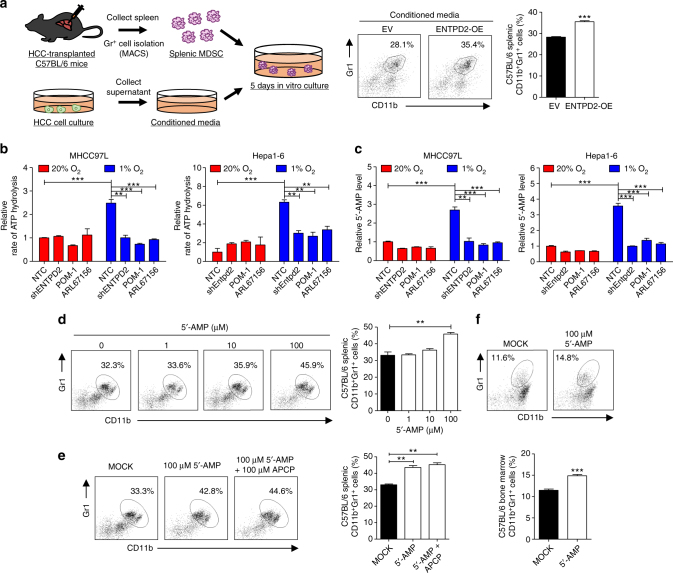
Myeloid-derived suppressor cells (MDSCs) possess immunosuppressive activities, which allow cancers to escape immune surveillance and become non-responsive to immune checkpoints blockade. Here we report hypoxia as a cause of MDSC accumulation. Using hepatocellular carcinoma (HCC) as a cancer model, we show that hypoxia, through stabilization of hypoxia-inducible factor-1 (HIF-1), induces ectoenzyme, ectonucleoside triphosphate diphosphohydrolase 2 (ENTPD2/CD39L1), in cancer cells, causing its overexpression in HCC clinical specimens. Overexpression of ENTPD2 is found as a poor prognostic indicator for HCC. Mechanistically, we demonstrate that ENTPD2 converts extracellular ATP to 5′-AMP, which prevents the differentiation of MDSCs and therefore promotes the maintenance of MDSCs. We further find that ENTPD2 inhibition is able to mitigate cancer growth and enhance the efficiency and efficacy of immune checkpoint inhibitors. Our data suggest that ENTPD2 may be a good prognostic marker and therapeutic target for cancer patients, especially those receiving immune therapy.
Overview
The claims and statistics of this paper haven’t been checked yet.
Free: it reads the open-access text and checks the first 5 claims that cite a source we can check. Create a free account to check every claim.
Integrity signals
Registry
Cites
Statistics
Figures
Verification
Claims the paper makes
The claims and statistics of this paper haven’t been checked yet.
Free: it reads the open-access text and checks the first 5 claims that cite a source we can check. Create a free account to check every claim.
Claims other papers make about this one
Each is checked against this paper’s own text: does it say what the citing paper says it does?
The source backs part of the claim, not all of it — or backs it for a different population, condition or comparison.
In the citing paper
“For example, hypoxia promotes the secretion of CCL28 by tumor cells in a HIF-1α-dependent manner, which enhances recruitment of CCR10+ T reg cells to the tumor site, suppressing the functions of cytotoxic T cells and promoting tumor growth (Fig. 2C) [81,82].”
From Revisiting the HIF switch in the tumor and its immune microenvironment. (2022) · cites this paper as [82]
Experimental — accuracy not yet measuredThe source backs part of the claim, not all of it — or backs it for a different population, condition or comparison.
In the citing paper
“Independent of glycolysis, the HIFs can induce the production of immunosuppressive metabolites such as adenosine by transcriptionally activating ectoenzymes such as ENTPD2/CD39L1, CD39, and CD73 (Table 1), which contribute to the multistep conversion of extracellular ATP through ADP/AMP to adenosine, thus promoting the maintenance of MDSCs, which limits the activity of immune checkpoint inhibitors”
From The HIF Axes in Cancer - Angiogenesis, Metabolism and Immune-Modulation (2025) · cites this paper as [90]
Experimental — accuracy not yet measuredThe source backs part of the claim, not all of it — or backs it for a different population, condition or comparison.
In the citing paper
“which together with CXCL1, mediate recruitment or maintenance of immunosuppressive MDSCs and TAMs (72, 73)”
From HIF inhibitor 32-134D eradicates murine hepatocellular carcinoma in combination with anti-PD1 therapy (2022) · cites this paper as [72]
Experimental — accuracy not yet measuredThe cited source says what the claim attributes to it.
In the citing paper
“Inhibition of either ENTPD2 or ADK enhanced the activity of immune checkpoint inhibitors, which highlights their significance in driving immunosuppression and their potential utility as therapeutic targets to enhance the efficacy of immune checkpoint inhibitors [90, 93].”
From The HIF Axes in Cancer - Angiogenesis, Metabolism and Immune-Modulation (2025) · cites this paper as [90]
Self-check
Percentages, sums and reported differences re-computed from the paper’s own numbers.
The self-check needs the paper’s full text.
Citations
Cites
PD-1 and PD-L1 Immune Checkpoint Blockade to Treat Breast Cancer
Hartkopf, A. D., Taran, F.-A., Wallwiener, M., Walter, C. B., Krämer, B., Grischke, E.-M., & Brucker, S. Y. (2016) · Breast Care · doi:10.1159/000453569 · Cited by 30,845
Trapnell, C., Williams, B. A., Pertea, G., Mortazavi, A., Kwan, G., van Baren, M. J., Salzberg, S. L., Wold, B. J., & Pachter, L. (2010) · Nature Biotechnology · doi:10.1038/nbt.1621 · Cited by 15,556
The blockade of immune checkpoints in cancer immunotherapy
Pardoll, D. M. (2012) · Nature Reviews Cancer · doi:10.1038/nrc3239 · Cited by 13,838
Myeloid-derived-suppressor cells as regulators of the immune system
Gabrilovich, D. I., & Nagaraj, S. (2009) · Nature Reviews Immunology · doi:10.1038/nri2506 · Cited by 6,753
Wang, G. L., Jiang, B. H., Rue, E. A., & Semenza, G. L. (1995) · Proceedings of the National Academy of Sciences · doi:10.1073/pnas.92.12.5510 · Cited by 6,212
Improved vectors and genome-wide libraries for CRISPR screening
Sanjana, N. E., Shalem, O., & Zhang, F. (2014) · Nature Methods · doi:10.1038/nmeth.3047 · Cited by 5,239
Innate and adaptive immune cells in the tumor microenvironment
Gajewski, T. F., Schreiber, H., & Fu, Y.-X. (2013) · Nature Immunology · doi:10.1038/ni.2703 · Cited by 4,148
Hypoxia-inducible factors in physiology and medicine
Semenza, G. L. (2012) · Cell · doi:10.1016/j.cell.2012.01.021 · Cited by 3,645
Epstein, A. C. R., Gleadle, J. M., McNeill, L. A., Hewitson, K. S., O'Rourke, J., Mole, D. R., Mukherji, M., Metzen, E., Wilson, M. I., Dhanda, A., et al. (2001) · Cell · doi:10.1016/s0092-8674(01)00507-4 · Cited by 3,333
Oxygen sensing by metazoans: the central role of the HIF hydroxylase pathway.
Kaelin, W. G., & Ratcliffe, P. J. (2008) · Molecular Cell · doi:10.1016/j.molcel.2008.04.009 · Cited by 3,251
Research works printed but not linked: 1
- 33. Chiu DK, et al. Hypoxia induces myeloid-derived suppressor cell recruitment to hepatocellular carcinoma through chemokine (C-C motif) ligand 26. Hepatology. 2016;64:797–813. doi: 10.1002/hep.28655. · DOI · Paper page
Cited by
Items 201–300 of 469
Hanidziar, D., Nakahori, Y., Cahill, L. A., Gallo, D. J., Keegan, J. W., Nguyen, J. P., Otterbein, L. E., Lederer, J. A., & Robson, S. C. (2020) · Scientific Reports · doi:10.1038/s41598-020-61489-y · Cited by 25
Immunotherapy for Hepatocellular Carcinoma: New Prospects for the Cancer Therapy
Fasano, R., Shadbad, M. A., Brunetti, O., Argentiero, A., Calabrese, A., Nardulli, P., Calbi, R., Baradaran, B., & Silvestris, N. (2021) · Life · doi:10.3390/life11121355 · Cited by 25
“have shown that hypoxia in the tumor microenvironment of the HCC can pave the way for MDSC infiltration via the hypoxia-inducible factor (HIF)-dependent regulation of the CCL26/C-X3-C motif chemokine receptor 1 (CX3CR1) pathway [33].”
BackgroundEghbali, S. Z., & Heumann, T. R. (2025) · Cancers · doi:10.3390/cancers17020236 · Cited by 28
“This accumulation inhibited the differentiation of myeloid-derived suppressor cells (MDSCs), leading to the accumulation of immunosuppressive MDSCs in hypoxic HCC [47].”
Pharmacological modulation of myeloid-derived suppressor cells to dampen inflammation
van Geffen, C., Heiss, C., Deißler, A., & Kolahian, S. (2022) · Frontiers in Immunology · doi:10.3389/fimmu.2022.933847 · Cited by 24
Huang, W., Zhu, L., Huang, H., Li, Y., Wang, G., & Zhang, C. (2023) · BMC Cancer · doi:10.1186/s12885-022-10353-5 · Cited by 24
Yin, L., Zhou, S., Zhang, H., Yao, C., Al-Qadhi, Z. T. A., Shang, Y., Wu, S., & Jin, T. (2025) · Antibody Therapeutics · doi:10.1093/abt/tbaf017 · Cited by 30
Feng, H., Wang, T., Ye, J., Yang, Y., Huang, X., Lai, D., Lv, Z., Huang, Y., & Zhang, X. (2022) · Discover Oncology · doi:10.1007/s12672-022-00592-0 · Cited by 23
The Tumor Microenvironment of Hepatocellular Carcinoma: Untying an Intricate Immunological Network
Volponi, C., Gazzillo, A., & Bonavita, E. (2022) · Cancers · doi:10.3390/cancers14246151 · Cited by 24
“Hypoxia plays an important role in the maintenance of MDSCs through the HIF-1α-mediated expression of ectonucleoside triphosphate diphosphohydrolase 2 in cancer cells [37].”
BackgroundZhang, W., Jin, C., Liu, S., Wan, X., Li, Y., Liu, J., Duan, Z., Ma, J., & Gao, Y. (2026) · Frontiers in Immunology · doi:10.3389/fimmu.2026.1757513 · Cited by 22
Liu, F., Ning, S., Wang, X., Fan, X., Wan, B., Sun, F., Du, L., Shi, K., Zou, X., Zhu, R., et al. (2025) · Science Advances · doi:10.1126/sciadv.adr8001 · Cited by 22
Liu, J., Jing, W., Wang, T., Hu, Z., & Lu, H. (2022) · Pharmacological Research · doi:10.1016/j.phrs.2022.106554 · Cited by 24
Chronic Kidney Disease Induces Proarrhythmic Remodeling
King, B., Mintz, S. B., Lin, X., Morley, G. E., Schlamp, F., Khodadadi‐Jamayran, A., & Fishman, G. I. (2023) · Circulation Arrhythmia and Electrophysiology · doi:10.1161/circep.122.011466 · Cited by 22
Target immune components to circumvent sorafenib resistance in hepatocellular carcinoma
Wei, S., Wei, F., Li, M., Yang, Y., Zhang, J., Li, C., & Wang, J. (2023) · Biomedicine & Pharmacotherapy · doi:10.1016/j.biopha.2023.114798 · Cited by 22
Song, L., Zhu, C., Shi, Q., Xia, Y., Liang, X., Qin, W., Tao, Y., Yang, B., Cao, X., Xia, J., et al. (2024) · EBioMedicine · doi:10.1016/j.ebiom.2024.105436 · Cited by 23
Connections between Metabolism and Epigenetic Modification in MDSCs
Dai, H., Xu, H., Wang, S., & Ma, J. (2020) · International Journal of Molecular Sciences · doi:10.3390/ijms21197356 · Cited by 23
“Furthermore, inhibition of ENTPD2 can slow tumor growth and improve the efficiency and efficacy of immunocheckpoint inhibitors [31].”
BackgroundBayık, D., Lauko, A. J., Roversi, G. A., Serbinowski, E., Acevedo-Moreno, L.-A. G., Lanigan, C. P., Orujov, M., Lo, A., Alban, T. J., Kim, A., et al. (2020) · Scientific Reports · doi:10.1038/s41598-020-75881-1 · Cited by 22
METTL3-VISTA axis-based combination immunotherapy for APC truncation colorectal cancer
Wu, L., Bai, R., Zhang, Y., Chen, H., Wu, J., Chen, Z., Wang, H., & Zhao, L. (2024) · Journal for ImmunoTherapy of Cancer · doi:10.1136/jitc-2024-009865 · Cited by 21
Wang, Y., Wang, J., Zhu, F., Wang, H., Yi, L., Huang, K., & Zhai, Z. (2022) · Immunity Inflammation and Disease · doi:10.1002/iid3.616 · Cited by 23
“MDSCs are a crowd of heterogeneous and immature myeloid progenitors which that originate from tbone marrow and have been defined to be a major regulator in tumorigenesis and tumor progression.(17,18) Accumulating evidence suggested that MDSCs participated in the immunosuppressive response to many types of cancers, suc…”
BackgroundYang, Z., Zuo, H., Hou, Y., Zhou, S., Zhang, Y., Yang, W., He, J., Shen, X., & Peng, Q. (2024) · Small · doi:10.1002/smll.202406860 · Cited by 22
The role of myeloid-derived suppressor cells in lung cancer and targeted immunotherapies
Sheida, F., Razi, S., Keshavarz‐Fathi, M., & Rezaei, N. (2021) · Expert Review of Anticancer Therapy · doi:10.1080/14737140.2022.2011224 · Cited by 22
“Myeloid-linage cells (such as macrophages, DCs, and MDSCs), endothelial cells, fibroblasts, and specific tumor cell lines express IDO in cancerous conditions [114,115].”
BackgroundInfluentialWen, K., Yan, Y., Shi, J., Hu, L., Wang, W., Liao, H., Li, H., Zhu, Y., Mao, K., & Xiao, Z. (2021) · Frontiers in Molecular Biosciences · doi:10.3389/fmolb.2021.809672 · Cited by 24
“Hypoxia can promote the secretion of CCL26 by tumor cells to recruit MDSCs, which is the main driver of MDSCs accumulation in tumor immune microenvironment (Chiu et al., 2016; Chiu et al., 2017).”
BackgroundMechanisms of HIF-driven immunosuppression in tumour microenvironment
Bandopadhyay, S., & Patranabis, S. (2023) · Journal of the Egyptian National Cancer Institute · doi:10.1186/s43046-023-00186-z · Cited by 25
“In hepatocellular carcinoma, HIF-1α is reported to promote the migration and differentiation of TAMs from immature myeloid cells via VEGF exposure [42].”
BackgroundIriondo, O., Mecenas, D., Li, Y., Chin, C. R., Thomas, A., Moriarty, A., Marker, R., Wang, Y. J., Hendrick, H., Amzaleg, Y., et al. (2024) · Cancer Research · doi:10.1158/0008-5472.can-23-2028 · Cited by 21
Role of hyperoxic treatment in cancer
Kim, S. W., Kim, I. K., & Lee, S. H. (2020) · Experimental Biology and Medicine · doi:10.1177/1535370220921547 · Cited by 22
Zhou, M., Wang, X., Lin, S., Liu, Y., Lin, J., Jiang, B., Zhao, X., & Wei, H. (2020) · Advanced Therapeutics · doi:10.1002/adtp.202000191 · Cited by 21
Wu, H., Liu, S., Wu, D., Zhou, H., Sui, G., & Wu, G. (2023) · Cancer Medicine · doi:10.1002/cam4.5718 · Cited by 19
Shi, M., Ye, L., Zhao, L., He, L., Chen, J., Zhang, J., Su, Y., Dong, H., Liu, J., Liang, L., et al. (2024) · Cell Communication and Signaling · doi:10.1186/s12964-024-01654-2 · Cited by 19
“To date, only Chiu [31] has reported a correlation between ENTPD2 expression and M-MDSC differentiation in hepatocellular carcinoma.”
BackgroundYasunaga, M., Saijou, S., Hanaoka, S., Anzai, T., Tsumura, R., & Matsumura, Y. (2019) · Cancer Science · doi:10.1111/cas.13907 · Cited by 20
Natural products as potent inhibitors of hypoxia-inducible factor-1α in cancer therapy
Zhong, J., Li, X., Lyu, W.-Y., Ye, W., & Zhang, D. (2020) · Chinese Journal of Natural Medicines · doi:10.1016/s1875-5364(20)60008-5 · Cited by 24
Hypoxia-Induced LXRα Contributes to the Migration and Invasion of Gastric Cancer Cells
Guo, R., & Yang, B. J. (2021) · Folia Biologica · doi:10.14712/fb2021067030091 · Cited by 19
Purinergic and Adenosinergic Signaling in Pancreatobiliary Diseases
Faraoni, E. Y., Ju, C., Robson, S. C., Eltzschig, H. K., & Bailey, J. M. (2022) · Frontiers in Physiology · doi:10.3389/fphys.2022.849258 · Cited by 20
Chen, S., Gao, Y., Wang, Y., & Daemen, T. (2022) · International Journal of Cancer · doi:10.1002/ijc.34045 · Cited by 19
Jiang, K., Liu, H., Chen, X., Wang, Z., Wang, X., Gu, X., Tong, Y., Ba, X., Yu, H., Wu, J., et al. (2025) · International Journal of Nanomedicine · doi:10.2147/ijn.s513207 · Cited by 19
“61 Alterations in the metabolism of tumors upregulate MDSCs, and MDSCs show good adaptability to energy depletion, hypoxia, and a high lactate level in the TME, which promotes cancer progression and immunosuppression.”
Hypoxic link between cancer cells and the immune system: The role of adenosine and lactate
Alvarado-Ortiz, E., & Sarabia-Sánchez, M. Á. (2025) · Oncology Research Featuring Preclinical and Clinical Cancer Therapeutics · doi:10.32604/or.2025.065953 · Cited by 20
“Moreover, the A2A receptor is responsible for this immunosuppressive state; therefore, the use of an adenosine receptor antagonist together with immunotherapy (Anti-PD1) could be a promising clinical approach [28,39,65].”
Tumor-related stress regulates functional plasticity of MDSCs
Mandula, J. K., & Rodríguez, P. C. (2021) · Cellular Immunology · doi:10.1016/j.cellimm.2021.104312 · Cited by 19
Chen, L., Wang, Y., Hu, Q., Liu, Y., Qi, X., Tang, Z., Hu, H., Lin, N., Zeng, S., & Yu, L. (2023) · Frontiers in Immunology · doi:10.3389/fimmu.2023.1225948 · Cited by 24
“The ectonucleoside triphosphate diphosphohydrolase, ENTPD2, which is highly expressed in many types of tumors, hydrolyzes extracellular ATP into 5’-AMP to maintain the immunosuppressive function of M-MDSCs (95).”
BackgroundLiang, Z., He, H., Zhang, B., Kai, Z., & Zong, L. (2024) · Drug Development Research · doi:10.1002/ddr.22168 · Cited by 18
“Indeed, solid tumors often grow in a hypoxic environment and thus their biological properties are already altered (Chen & Lou, 2017; Chiu et al., 2017; Park et al., 2023).”
BackgroundImmunosurveillance of cancer cell stress
Lorenzo‐Herrero, S., Sordo‐Bahamonde, C., Gonzalez, S. R., & López‐Soto, A. (2019) · Cell Stress · doi:10.15698/cst2019.09.198 · Cited by 19
“Ectonucleoside triphosphate diphosphohydrolase 2 (ENTPD2), an ecto-ATPase key for MDSC function and accumulation, is highly expressed in hepatocellular carcinoma cell lines owing to tumor hypoxia [89].”
Innate immune cells and their interaction with T cells in hepatocellular carcinoma (Review)
Hong, G., Cai, D., Gong, J., & Lai, X. (2020) · Oncology Letters · doi:10.3892/ol.2020.12319 · Cited by 20
Shao, Y., Fan, X., Yang, X. F., Li, S., Huang, L., Zhou, X., Zhang, S., Zheng, M., & Sun, J. P. (2023) · Computational and Structural Biotechnology Journal · doi:10.1016/j.csbj.2023.06.011 · Cited by 19
“Immune cells, the major cellular components of TME, include various types of anti-tumor immune cells (T cells, B cells, NK cells, and Dendritic cells) and pro-tumor immune cells (Tregs, MDSC, and Macrophages) [78,79], which have been proven to play a significant role in tumor development, progression and therapeutic r…”
BackgroundZhang, M., Huang, K., Yin, Q., Wu, X., Zhu, M., & Li, M. (2025) · Discover Oncology · doi:10.1007/s12672-025-01747-5 · Cited by 19
Lattanzi, C., Bianchetto-Aguilera, F. M., Donini, M., Pettinella, F., Caveggion, E., Castellucci, M., Gasperini, S., Mariotti, B., Signoretto, I., Cantini, M., et al. (2025) · OncoImmunology · doi:10.1080/2162402x.2025.2521396 · Cited by 17
“51,77,78 However, these studies mostly referred to immunosuppressive neutrophils infiltrating the tumor tissue and not to circulating cells.”
Xiao, J., Liu, T., Liu, Z., Xiao, C., Du, J., Zuo, S., Li, H., & Gu, H. (2022) · Cells · doi:10.3390/cells11152302 · Cited by 18
“Recently, molecularly targeted drugs and immunotherapy represented by immune checkpoint inhibitor (ICI) therapy have shown encouraging changes in the treatment of HCC [4,5].”
BackgroundJUN, Y. H., Ju, G. S., Chung, Y. Y., Shin, H., Kim, D. J., Choi, M. S., Kim, S. T., & Son, K. M. (2019) · In Vivo · doi:10.21873/invivo.11761 · Cited by 17
Yang, Q., Gao, L., Huang, X., Weng, J., Chen, Y., Lin, S., & Yin, Q. (2021) · Experimental and Therapeutic Medicine · doi:10.3892/etm.2021.10412 · Cited by 17
“be classified into the three isoforms HIF 1α, HIF 2α and HIF 3α (25,26).”
BackgroundComprehensive analysis reveals a metabolic ten-gene signature in hepatocellular carcinoma
Zhu, Z., Li, L., Xu, J., Ye, W., Chen, B., Zeng, J., & Huang, Z. (2020) · PeerJ · doi:10.7717/peerj.9201 · Cited by 19
Self-citationSchwarz, J., Rühle, J., Stephan, K., Dietz, S., Geißert, J., Schoppmeier, U., Frick, J.-S., Hudalla, H., Lajqi, T., Poets, C. F., et al. (2023) · European Journal of Immunology · doi:10.1002/eji.202250144 · Cited by 16
The immune landscape of hepatocellular carcinoma‑where we are? (Review)
Gryziak, M., Woźniak, K., Kraj, L., Róg, L., & Stec, R. (2022) · Oncology Letters · doi:10.3892/ol.2022.13530 · Cited by 18
“Due to the hypoxic microenvironment, the process of differentiation can be prevented in HCC (8,9).”
BackgroundKähkönen, T. E., Halleen, J. M., & Bernoulli, J. (2020) · Cancers · doi:10.3390/cancers12061615 · Cited by 17
“Hypoxic tissue microenvironment can increase the presence of MDSCs, leading to immune escape and favoring M1 macrophage differentiation [31, 32].”
BackgroundTurning Fluvastatin into a supramolecular immuno-sensitizer towards augmented tumor immunotherapy
Ma, F., Liu, T., Yang, W., You, W., He, W., Yan, J., & Liu, W. (2022) · Chemical Engineering Journal · doi:10.1016/j.cej.2022.135310 · Cited by 19
Liu, W., Zhang, F., Quan, B., Yao, F., Chen, R., Ren, Z., & Yin, X. H. (2023) · MedComm · doi:10.1002/mco2.447 · Cited by 18
Role played by MDSC in colitis-associated colorectal cancer and potential therapeutic strategies
Wang, K., Wang, Y., & Yin, K. (2024) · Journal of Cancer Research and Clinical Oncology · doi:10.1007/s00432-024-05755-w · Cited by 15
Advances and challenges of immunocheckpoint inhibitors in the treatment of primary liver cancer
Hu, M. X., Yao, W., & Shen, Q. (2022) · Frontiers in Genetics · doi:10.3389/fgene.2022.1005658 · Cited by 16
“, 2017); Some studies have shown that the proliferation of liver tumor cells will generate local hypoxia to induce the increase of MDSCs, leading to the progress of tumor cell cloning (Chiu et al., 2017).”
BackgroundHIF1α is not a target of 14q deletion in clear cell renal cancer
Shenoy, N. (2020) · Scientific Reports · doi:10.1038/s41598-020-74631-7 · Cited by 14
Muliawan, G. K., & Lee, T. K. (2024) · Frontiers in Immunology · doi:10.3389/fimmu.2024.1400112 · Cited by 14
Yan, J., Huang, Y. J., Huang, Q. Y., Liu, P. X., & Wang, C. S. (2022) · Molecular Carcinogenesis · doi:10.1002/mc.23393 · Cited by 14
Yang, M., Qiu, Y., Yang, Y., & Wang, W. (2022) · Frontiers in Cell and Developmental Biology · doi:10.3389/fcell.2022.840010 · Cited by 16
“Tumor patients with lower abundance of MDSCs before treatment responded better to immunotherapy agents that were reported in previous literature (Chiu et al., 2017).”
MDSCs might be “Achilles heel” for eradicating CSCs
Yang, T., Liang, N., Li, J., Hu, P., Huang, Q., Zhao, Z., Wang, Q., & Zhang, H. (2022) · Cytokine & Growth Factor Reviews · doi:10.1016/j.cytogfr.2022.04.006 · Cited by 14
Wang, N., Zhu, L., Xu, X., Yu, C. S., & Huang, X. (2022) · Computational and Structural Biotechnology Journal · doi:10.1016/j.csbj.2022.08.026 · Cited by 14
“4398 that patients with T-cell-infiltration present better response to ICB therapy than those with non-T-cell-infiltration [29,30].”
BackgroundOvercoming the therapeutic resistance of hepatomas by targeting the tumor microenvironment
Zhang, J., Han, H., Wang, L., Wang, W., Yang, M., & Qin, Y. (2022) · Frontiers in Oncology · doi:10.3389/fonc.2022.988956 · Cited by 17
Associations between HIFs and tumor immune checkpoints: mechanism and therapy
Liu, J., Jiang, Y., Chen, L., Qian, Z., & Zhang, Y. (2024) · Discover Oncology · doi:10.1007/s12672-023-00836-7 · Cited by 13
Shen, W.-X., Li, Z., Wang, L., Liu, Q., Zhang, R., Yao, Y., Zhao, Z., & Ji, L. (2025) · Scientific Reports · doi:10.1038/s41598-025-99973-y · Cited by 13
“In the human body, liver cancer cells produce a protease called ENTPD2, which indirectly promotes the growth of liver tumors and weakens the effectiveness of immunotherapy 47 .”
Ying, S., Liu, H., Zhang, Y., & Mei, Y. (2025) · Vaccines · doi:10.3390/vaccines13050496 · Cited by 14
“Hypoxia induces the expression of hypoxia-inducible factor (HIF), promoting the recruitment and activation of Tregs and MDSCs. Simultaneously, lactic acid accumulation suppresses the proliferation and cytokine secretion of effector T cells [70,71].”
Balanophorin B inhibited glycolysis with the involvement of HIF-1α
Dai, T., Li, L., Qi, W., Liu, B., Jiang, Z., Song, J., & Hua, H. (2020) · Life Sciences · doi:10.1016/j.lfs.2020.118910 · Cited by 13
Self-citationTargeting ectonucleotidases to treat inflammation and halt cancer development in the gut
Longhi, M. S., Feng, L., & Robson, S. C. (2021) · Biochemical Pharmacology · doi:10.1016/j.bcp.2021.114417 · Cited by 13
Tumor microenvironment regulation - enhanced radio - immunotherapy
Yu, X., Wang, X., Sun, L., Yamazaki, A., & Li, X. (2022) · Biomaterials Advances · doi:10.1016/j.bioadv.2022.212867 · Cited by 14
Zhou, L., Lin, X., Zhang, L., Chen, S., Chen, J., Zhou, Z., Tang, A., Ruan, J., Wang, X., & Chen, B. (2022) · International Immunopharmacology · doi:10.1016/j.intimp.2022.109329 · Cited by 14
The cell stress and immunity cycle in cancer: Toward next generation of cancer immunotherapy
Laureano, R. S., Vanmeerbeek, I., Sprooten, J., Govaerts, J., Naulaerts, S., & Garg, A. D. (2023) · Immunological Reviews · doi:10.1111/imr.13287 · Cited by 13
Shan, L., Zhao, N. O., Wang, F., Zhai, D., Liu, J., & Lv, X. (2024) · Journal of Inflammation Research · doi:10.2147/jir.s424384 · Cited by 13
Hsu, C., Mustafa, M. A., Kumar, A., Pramanik, A., Sharma, R., Mohammed, F., Jawad, I. A., Mohammed, I. J., Alshahrani, M. Y., Khalil, N. A. M. A., et al. (2024) · Pathology - Research and Practice · doi:10.1016/j.prp.2024.155266 · Cited by 18
Moving toward improved immune checkpoint immunotherapy for advanced prostate cancer
Velasco, M. A. D., Kura, Y., Fujita, K., & Uemura, H. (2024) · International Journal of Urology · doi:10.1111/iju.15378 · Cited by 13
Chen, T., Ma, W., Wang, X., Ye, Q., Hou, X., Wang, Y., Jiang, C., Meng, X., Sun, Y., & Cai, J. (2024) · Journal of Advanced Research · doi:10.1016/j.jare.2024.07.033 · Cited by 13
“…MDSCs by raising CCL26 expression [39], and upregulates the statement of VEGF and hypoxia-inducible factor-1 a (HIF1AMP) in glioma cells, which in turn induces extracellular nucleoside diphosphate hydrolase 2 (ENTPD2), and induce the generation of 5 0 -AMP to help the accumulation of MDSCs [40].”
Yang, H., Lei, M. M. L., Xie, L., Shou, Y., & Lee, T. K. (2025) · Clinical and Molecular Hepatology · doi:10.3350/cmh.2024.1068 · Cited by 12
Development of small molecule inhibitors of hypoxia-inducible factors for cancer therapy
Semenza, G. L. (2025) · Pharmacological Reviews · doi:10.1016/j.pharmr.2025.100075 · Cited by 12
Anemia management in cancer patients with chronic kidney disease
Latcha, S. (2019) · Seminars in Dialysis · doi:10.1111/sdi.12841 · Cited by 13
Metabolic regulation of the HBV-specific T cell function
Barili, V., Boni, C., Rossi, M., Vecchi, A. L., Zecca, A., Penna, A., Missale, G., Ferrari, C. I., & Fisicaro, P. (2020) · Antiviral Research · doi:10.1016/j.antiviral.2020.104989 · Cited by 13
Huang, B., Zhang, J., Zong, W., Chen, S., Zong, Z., Zeng, X., & Zhang, H. (2023) · Frontiers in Immunology · doi:10.3389/fimmu.2023.994698 · Cited by 20
“Moreover, they can also overexpress hypoxia-inducible factor 1 alpha (HIF1a) and vascular endothelial growth factor (VEGF) to promote the recruitment of MDSCs by converting extracellular ATP to 50-AMP (62).”
BackgroundZhang, W., Han, B. R., Zhang, H., Fu, R., Lu, Y., & Zhang, G. (2023) · Heliyon · doi:10.1016/j.heliyon.2023.e14949 · Cited by 15
“In addition, Nhej1 , Cited4 and Entpd2 strictly regulate the hypoxia-related pathway HIF-1 signaling [55 – 57], but their functions in the nervous system remain less reported, and their responses to hypoxia and regulation of the nervous system need further investigation.”
Zhang, Y., Pan, Y., Bai, X., Sun, W. R., Zhou, X., Dong, Q., Wang, H., Zhang, Y., Bai, W., & Zhang, W. (2024) · Ecotoxicology and Environmental Safety · doi:10.1016/j.ecoenv.2024.116230 · Cited by 12
Nanoenabled Tumor Oxygenation Strategies for Overcoming Hypoxia-Associated Immunosuppression
Zhang, C., Yan, Q., Li, J., Zhu, Y. J., & Zhang, Y. (2020) · ACS Applied Bio Materials · doi:10.1021/acsabm.0c01328 · Cited by 12
Immunological characterization of hepatocellular carcinoma
Wang, S. Z., Lee, S. D., Sarkar, D., Lee, H. M., Khan, A. A., Bhati, C. S., Sharma, A., Kumaran, V., Bruno, D., COTTERELL, A. H., et al. (2021) · Hepatoma Research · doi:10.20517/2394-5079.2020.113 · Cited by 14
“MDSCs are known to promote tumor angiogenesis and are upregulated in HCC, partly due to the hypoxic tumor microenvironment([23,24]).”
BackgroundLi, D., Li, Z., Liu, S., Chen, X., Che, X., Deng, G., Chen, J., He, L., Wang, R., Chen, X., et al. (2024) · International Journal of Dermatology · doi:10.1111/ijd.17516 · Cited by 12
“37 Therefore, we inferred that VEC might act as conditioned immune cells by recruiting CD39 and CD73 under hypoxia to influence the immune microenvironment during keloid development to some extent.”
InfluentialLi, C., Xue, Y., Yinwang, E., & Ye, Z. (2025) · Cancer Reports · doi:10.1002/cnr2.70044 · Cited by 13
Li, W., Li, G., Luo, C.-S., Yu, Q., & Cui, M. (2025) · Cancer Management and Research · doi:10.2147/cmar.s537930 · Cited by 11
Xiao, L., Li, Q., Huang, Y., Fan, Z., Qin, W., Liu, B., & Yuan, X. (2022) · Frontiers in Cell and Developmental Biology · doi:10.3389/fcell.2022.835043 · Cited by 11
“Inhibition of ENTPD2 could augment the efficacy of immunotherapy (Chiu et al., 2017).”
BackgroundPFC@O2 Targets HIF-1α to Reverse the Immunosuppressive TME in OSCC
Lan, Z., Zou, K., Cui, H., Chen, H. H., Zhao, Y., & Yu, G. (2023) · Journal of Clinical Medicine · doi:10.3390/jcm12020560 · Cited by 11
“revealed that HIF-1α could account for the accumulation of MDSCs in hepatocellular carcinoma (HCC) via chemokines (C-C motif ligand 26 (CCL26)) and maintenance by Ectonucleoside Triphosphate Diphosphohydrolase 2 (ENTPD2), which is a direct transcriptional target of HIF-1α [17].”
BackgroundTanaka, K., Kondo, T., Narita, M., Muta, T., Yoshida, S., Sato, D., Suda, Y., Hamada, Y., Tezuka, H., Kuzumaki, N., et al. (2023) · Biochemical and Biophysical Research Communications · doi:10.1016/j.bbrc.2023.01.075 · Cited by 11
Conway, J. W., Braden, J., Lo, S., Scolyer, R. A., Carlino, M. S., Menzies, A. M., Long, G. V., & da Silva, I. P. (2023) · Cancers · doi:10.3390/cancers15205012 · Cited by 11
“…been clearly shown in the context of HCC, where HIF1 induces the overexpression of ectonucleoside triphosphate diphosphohydrolase 2 (ENTPD2/CD39L1) in cancer cells, which impairs the myeloid-derived suppressor cell differentiation, leading to their accumulation in the tumour microenvironment [12].”
BackgroundHypoxia-Associated Alternative Splicing Signature in Lung Adenocarcinoma
Xu, Z., Wei, J., Qin, F., Sun, Y., Xiang, W., Yuan, L., Qin, J., Deng, K., Zheng, T., & Li, S. (2020) · Epigenomics · doi:10.2217/epi-2020-0399 · Cited by 14
Wang, S., Ye, W., Yang, K., Lv, X., & Luan, J. (2024) · Journal of Inflammation Research · doi:10.2147/jir.s476388 · Cited by 10
The important role of myeloid-derived suppressor cells: From hepatitis to liver cancer
Li, S., Zhang, J., Wang, W., Zhang, Z., Huang, W., & Xia, L. (2025) · Biochimica et Biophysica Acta (BBA) - Reviews on Cancer · doi:10.1016/j.bbcan.2025.189329 · Cited by 11
Tumor hypoxia shapes natural killer cell anticancer activities
Retamal, M. A., Salazar‐Onfray, F., González, F. E., & Tittarelli, A. (2025) · Journal of Molecular Medicine · doi:10.1007/s00109-025-02557-6 · Cited by 11
Metabolic adaptations of immunosuppressive cells in cancer: mechanisms and therapeutic targets
Kim, J., Shin, J. M., Um, Y., Yuan, S., & Lim, S. A. (2026) · Experimental & Molecular Medicine · doi:10.1038/s12276-026-01713-3 · Cited by 11
“In addition, HIF-1 α regulates extracellular nucleotide metabolism by inducing ENTPD2, which promotes accumulation of 5 ′ -AMP, thereby facilitating MDSC recruitment and tumor growth in human hepatocellular carcinoma samples 49 (Fig.”
Cancer stem cells: advances in biology and clinical translation—a Keystone Symposia report
Cable, J., Pei, D., Reid, L. M., Wang, X. W., Bhatia, S., Karras, P., Melenhorst, J. J., Grompe, M., Lathia, J. D., Song, E., et al. (2021) · Annals of the New York Academy of Sciences · doi:10.1111/nyas.14719 · Cited by 11
Self-citationGao, X., & Zuo, S. (2023) · Clinical and Experimental Medicine · doi:10.1007/s10238-023-01015-2 · Cited by 10
“Furthermore, HIF-1 can promote MDSC accumulation via ectonucleoside triphosphate diphosphohydrolase-2, which can also inhibit MDSC maturation in HCC [63, 64].”
BackgroundChaetocochin J exhibits anti-hepatocellular carcinoma effect independent of hypoxia
Hu, P., Hu, L., Chen, Y., Wang, F., Xiao, Y., Zhou, T., Li, H., Xiang, M., Tong, Q., & Zhang, Y. (2023) · Bioorganic Chemistry · doi:10.1016/j.bioorg.2023.106701 · Cited by 10
Tang, C., Ma, J., Liu, X., & Liu, Z. (2020) · PeerJ · doi:10.7717/peerj.9774 · Cited by 13
Li, Y., Li, H., He, Q., & Yang, X. (2022) · Molecules · doi:10.3390/molecules28010195 · Cited by 10
“However, curcumol blocked the crosstalk via simultaneously inhibiting JAK, mTOR, and MAPK pathways, which were responsible for the phosphorylation of STAT3 and expression of HIF-1α, respectively [96].”
BackgroundInfluentialZhou, C.-M., Wang, Y., Wang, Y., Lei, L., Ji, M., Zhou, G., Xia, H., & Yang, J. (2021) · Aging · doi:10.18632/aging.202682 · Cited by 10
“[15]; moreover, studies have shown that ENTPD2 is of great significance in the diagnosis, monitoring and prognosis of LUAD [16].”
BackgroundXie, S., Ding, B., Wang, S., Zhang, X., Yan, W., Xia, Q., Meng, D., Shen, S., Yu, B., Liu, H., et al. (2022) · International Immunology · doi:10.1093/intimm/dxac017 · Cited by 12
Metadata
- Authors
- Chiu, D. K.-C., Tse, A. P.-W., Xu, I. M.-J., Di Cui, J., Lai, R. K.-H., Li, L. L., Koh, H.-Y., Tsang, F. H.-C., Wei, L. L., Wong, C.-M., Ng, I. O.-L., & Wong, C. C.-L.
- Affiliations
- University of Hong Kong (HK)
- Venue
- Nature Communications
- Published
- 2017-09-11
- Volume
- 8
- Issue
- 1
- Pages
- 517-517
- ISSN
- 2041-1723 (ISSN-L)
- PMC
- PMC5593860
- OpenAlex
- W2753173755
- Cited by
- 448
- References
- 56
- Citations by year
- 2026: 25 · 2025: 43 · 2024: 57 · 2023: 61 · 2022: 71 · 2021: 76 · 2020: 71 · 2019: 28 · 2018: 16
- FWCI
- 14.23
- Type
- journal article
- Language
- en
- Open access
- gold
- doi.org
- Licence
- cc-by
- creativecommons.org/licenses/by/4.0 (tdm)
- creativecommons.org/licenses/by/4.0 (vor)
- Locations
- Nature Communications (publishedVersion, cc-by)
- PubMed Central (publishedVersion, cc-by)
- PubMed (publishedVersion)
- RePEc: Research Papers in Economics (submittedVersion)
- DOAJ (DOAJ: Directory of Open Access Journals) (submittedVersion, cc-by-sa)
- DOAJ (DOAJ: Directory of Open Access Journals) (submittedVersion)
- The HKU Scholars Hub (University of Hong Kong) (submittedVersion, cc-by-nc-nd)
- Funders
- University of Hong Kong
- Health and Medical Research Fund (03142926, T12-704/16-R)
- Topics
- Life Sciences › Immunology and Microbiology › Immunology › Immune cells in cancer
- Life Sciences › Biochemistry, Genetics and Molecular Biology › Physiology › Adenosine and Purinergic Signaling
- Life Sciences › Biochemistry, Genetics and Molecular Biology › Cancer Research › Cancer, Hypoxia, and Metabolism
- Keywords
- myeloid-derived suppressor cells, hepatocellular carcinoma, hypoxia, HIF-1, extracellular ATP, 5'-AMP, tumor immune evasion, immune checkpoint inhibitors, prognostic factors, therapeutic target, MDSC differentiation
- MeSH terms
- Myeloid-Derived Suppressor Cells, Adenosine Triphosphatases, Hypoxia, Cell Differentiation, Carcinoma, Hepatocellular, Humans, Liver Neoplasms, Cell Proliferation, Hypoxia-Inducible Factor 1
About these checks
Registry, retraction, Cites and statistics results are computed, not judged, with one exception: a printed reference that no index lists is read once by a model before it counts as a citation error. Claims are extracted by a model and kept only when their quote appears verbatim in the text; each cited source is then checked, with a model’s help, for whether it says what the claim relies on. Those verdicts can be wrong — read the claim’s quote and the cited source before relying on one.
Statistics and arithmetic are recomputed, not judged.
Confidence bands are shown only for fields calibrated on our annotated test set. None is calibrated yet, so no band is shown.
What counts as a claim ›How we measure confidence ›How we check this ›
Are you an author, or do you see a problem with this page? Request a review
Data sources
Bibliographic data: Semantic Scholar, OpenAlex, Crossref.
Contains information from the Semantic Scholar Academic Graph Datasets, made available under the ODC Attribution License (ODC-BY 1.0).
Semantic Scholar’s data is described in: Kinney, R., et al. (2023). The Semantic Scholar Open Data Platform. arXiv:2301.10140.
