

Hypoxia inducible factor HIF-1 promotes myeloid-derived suppressor cells accumulation through ENTPD2/CD39L1 in hepatocellular carcinoma
Open accessThe DOI matches its Crossref record; 57 of the 57 references it cites were found in a registry or an index.
Abstract
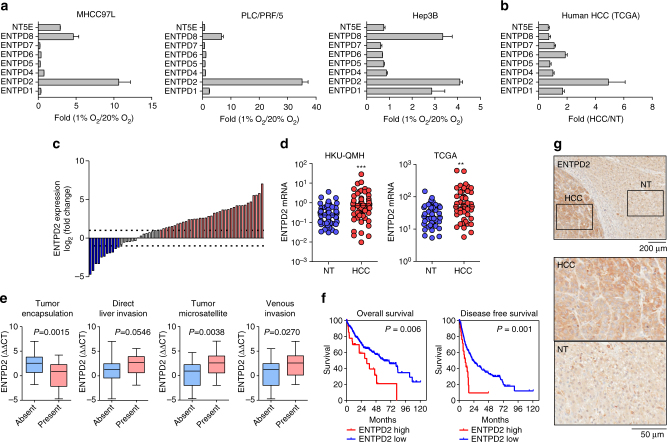
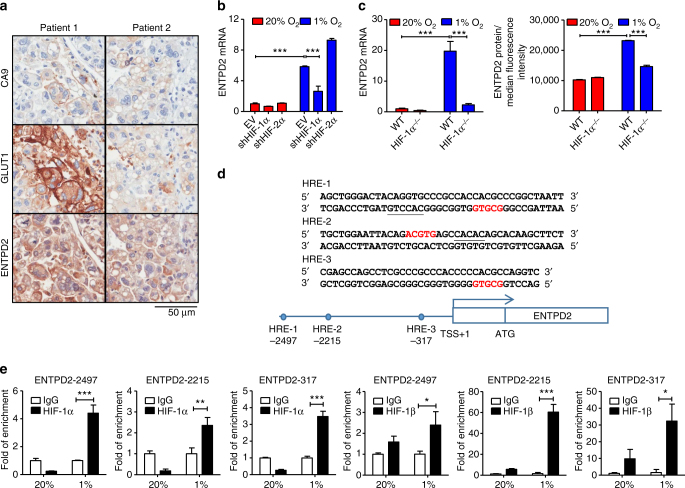
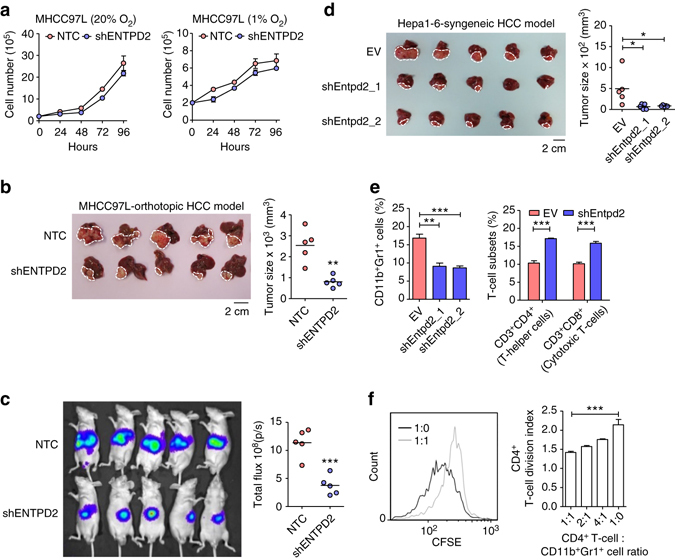
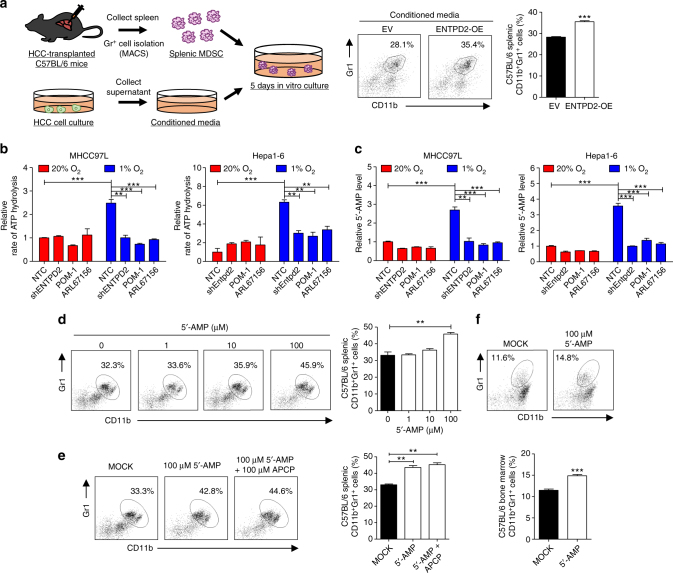
Myeloid-derived suppressor cells (MDSCs) possess immunosuppressive activities, which allow cancers to escape immune surveillance and become non-responsive to immune checkpoints blockade. Here we report hypoxia as a cause of MDSC accumulation. Using hepatocellular carcinoma (HCC) as a cancer model, we show that hypoxia, through stabilization of hypoxia-inducible factor-1 (HIF-1), induces ectoenzyme, ectonucleoside triphosphate diphosphohydrolase 2 (ENTPD2/CD39L1), in cancer cells, causing its overexpression in HCC clinical specimens. Overexpression of ENTPD2 is found as a poor prognostic indicator for HCC. Mechanistically, we demonstrate that ENTPD2 converts extracellular ATP to 5′-AMP, which prevents the differentiation of MDSCs and therefore promotes the maintenance of MDSCs. We further find that ENTPD2 inhibition is able to mitigate cancer growth and enhance the efficiency and efficacy of immune checkpoint inhibitors. Our data suggest that ENTPD2 may be a good prognostic marker and therapeutic target for cancer patients, especially those receiving immune therapy.
Overview
The claims and statistics of this paper haven’t been checked yet.
Free: it reads the open-access text and checks the first 5 claims that cite a source we can check. Create a free account to check every claim.
Integrity signals
Registry
Cites
Statistics
Figures
Verification
Claims the paper makes
The claims and statistics of this paper haven’t been checked yet.
Free: it reads the open-access text and checks the first 5 claims that cite a source we can check. Create a free account to check every claim.
Claims other papers make about this one
Each is checked against this paper’s own text: does it say what the citing paper says it does?
The source backs part of the claim, not all of it — or backs it for a different population, condition or comparison.
In the citing paper
“For example, hypoxia promotes the secretion of CCL28 by tumor cells in a HIF-1α-dependent manner, which enhances recruitment of CCR10+ T reg cells to the tumor site, suppressing the functions of cytotoxic T cells and promoting tumor growth (Fig. 2C) [81,82].”
From Revisiting the HIF switch in the tumor and its immune microenvironment. (2022) · cites this paper as [82]
Experimental — accuracy not yet measuredThe source backs part of the claim, not all of it — or backs it for a different population, condition or comparison.
In the citing paper
“Independent of glycolysis, the HIFs can induce the production of immunosuppressive metabolites such as adenosine by transcriptionally activating ectoenzymes such as ENTPD2/CD39L1, CD39, and CD73 (Table 1), which contribute to the multistep conversion of extracellular ATP through ADP/AMP to adenosine, thus promoting the maintenance of MDSCs, which limits the activity of immune checkpoint inhibitors”
From The HIF Axes in Cancer - Angiogenesis, Metabolism and Immune-Modulation (2025) · cites this paper as [90]
Experimental — accuracy not yet measuredThe source backs part of the claim, not all of it — or backs it for a different population, condition or comparison.
In the citing paper
“which together with CXCL1, mediate recruitment or maintenance of immunosuppressive MDSCs and TAMs (72, 73)”
From HIF inhibitor 32-134D eradicates murine hepatocellular carcinoma in combination with anti-PD1 therapy (2022) · cites this paper as [72]
Experimental — accuracy not yet measuredThe cited source says what the claim attributes to it.
In the citing paper
“Inhibition of either ENTPD2 or ADK enhanced the activity of immune checkpoint inhibitors, which highlights their significance in driving immunosuppression and their potential utility as therapeutic targets to enhance the efficacy of immune checkpoint inhibitors [90, 93].”
From The HIF Axes in Cancer - Angiogenesis, Metabolism and Immune-Modulation (2025) · cites this paper as [90]
Self-check
Percentages, sums and reported differences re-computed from the paper’s own numbers.
The self-check needs the paper’s full text.
Citations
Cites
PD-1 and PD-L1 Immune Checkpoint Blockade to Treat Breast Cancer
Hartkopf, A. D., Taran, F.-A., Wallwiener, M., Walter, C. B., Krämer, B., Grischke, E.-M., & Brucker, S. Y. (2016) · Breast Care · doi:10.1159/000453569 · Cited by 30,845
Trapnell, C., Williams, B. A., Pertea, G., Mortazavi, A., Kwan, G., van Baren, M. J., Salzberg, S. L., Wold, B. J., & Pachter, L. (2010) · Nature Biotechnology · doi:10.1038/nbt.1621 · Cited by 15,556
The blockade of immune checkpoints in cancer immunotherapy
Pardoll, D. M. (2012) · Nature Reviews Cancer · doi:10.1038/nrc3239 · Cited by 13,838
Myeloid-derived-suppressor cells as regulators of the immune system
Gabrilovich, D. I., & Nagaraj, S. (2009) · Nature Reviews Immunology · doi:10.1038/nri2506 · Cited by 6,753
Wang, G. L., Jiang, B. H., Rue, E. A., & Semenza, G. L. (1995) · Proceedings of the National Academy of Sciences · doi:10.1073/pnas.92.12.5510 · Cited by 6,212
Improved vectors and genome-wide libraries for CRISPR screening
Sanjana, N. E., Shalem, O., & Zhang, F. (2014) · Nature Methods · doi:10.1038/nmeth.3047 · Cited by 5,239
Innate and adaptive immune cells in the tumor microenvironment
Gajewski, T. F., Schreiber, H., & Fu, Y.-X. (2013) · Nature Immunology · doi:10.1038/ni.2703 · Cited by 4,148
Hypoxia-inducible factors in physiology and medicine
Semenza, G. L. (2012) · Cell · doi:10.1016/j.cell.2012.01.021 · Cited by 3,645
Epstein, A. C. R., Gleadle, J. M., McNeill, L. A., Hewitson, K. S., O'Rourke, J., Mole, D. R., Mukherji, M., Metzen, E., Wilson, M. I., Dhanda, A., et al. (2001) · Cell · doi:10.1016/s0092-8674(01)00507-4 · Cited by 3,333
Oxygen sensing by metazoans: the central role of the HIF hydroxylase pathway.
Kaelin, W. G., & Ratcliffe, P. J. (2008) · Molecular Cell · doi:10.1016/j.molcel.2008.04.009 · Cited by 3,251
Research works printed but not linked: 1
- 33. Chiu DK, et al. Hypoxia induces myeloid-derived suppressor cell recruitment to hepatocellular carcinoma through chemokine (C-C motif) ligand 26. Hepatology. 2016;64:797–813. doi: 10.1002/hep.28655. · DOI · Paper page
Cited by
Items 301–400 of 469
Taghizadeh‐Hesary, F., Ghadyani, M., Kashanchi, F., & Behnam, B. (2024) · Cancers · doi:10.3390/cancers16173044 · Cited by 9
“In addition, HIF-1 signaling can induce MDSC accumulation in TME [89], which inhibits the immune response in several ways, including by attracting M2 macrophages and Tregs into TME, impairing lymphocyte adhesion to endothelial cells and expression of immune checkpoint molecules (PD-L1) [90].”
BackgroundYousef, E. H., Gayar, A. M. E., & El‐Magd, N. F. A. (2024) · Naunyn-Schmiedeberg s Archives of Pharmacology · doi:10.1007/s00210-024-03530-9 · Cited by 10
“HIF-1α has been linked to the increase in plasmacytoid dendritic cells (Pang et al. 2021) and myeloid-derived suppressor cells (MDSCs) (Chiu et al. 2017; Hinshaw and Shevde 2019), tumor-associated macrophages (TAM) (Kumar and Gabrilovich 2014), as well as to the induction of IL-1β (Zhang et al.…”
[Research Advances in the Roles of High-Altitude Hypoxic Stress in Hepatocellular Carcinoma].
Liang, Y., Li, L., Liu, B., Gao, J., Chen, X., Li, J., Yang, K., & Chen, Y. (2024) · 四川大学学报:医学版 · doi:10.12182/20241160605 · Cited by 9
Self-citationLiver microenvironment and therapy resistance in hepatocellular carcinoma
Rahi, K., Hedayati, M., Hendi, Z., Najimi, M., & Vosough, M. (2025) · Critical Reviews in Oncology/Hematology · doi:10.1016/j.critrevonc.2025.104997 · Cited by 9
Lei, M. M. L., Leung, C. O. N., Leung, R. W. H., Wu, X., Chung, K. P. S., Gu, C. Y. J., Chan, M. S. M., Chau, W. K., Mu, Q. H., Ng, K. Y., et al. (2025) · Nature Communications · doi:10.1038/s41467-025-64860-7 · Cited by 9
“13, 14). c Bubble plot of lineage-de fi ning genes for major immune cell subtypes. d Bubble plot showing KRAS exerts an immunosuppressive effect on the TIME, including downregulation of in fl ammatory response, interferon signalling and T cell chemotaxis (one-sided Kolmogorov – Smirnov test). e , f…”
Semiconducting Polymers for Cancer Immunotherapy
Li, W., Liang, M., Qi, J., & Ding, D. (2023) · Macromolecular Rapid Communications · doi:10.1002/marc.202300496 · Cited by 9
Blocking HIF to Enhance NK Cells: Hints for New Anti-Tumor Therapeutic Strategies?
Vitale, M., & Parodi, M. (2021) · Vaccines · doi:10.3390/vaccines9101144 · Cited by 9
“Finally, HIF1α can favor Tregs [28] and, indirectly, MDSC and TAM accumulation [29,30].”
BackgroundBarbaro, A. D. L., Palano, M. T., Cucchiara, M., Gallazzi, M., Mortara, L., & Bruno, A. (2021) · Vaccines · doi:10.3390/vaccines9101178 · Cited by 8
Zhang, G., Xiao, Y., Zhang, X., Fan, W., Zhao, Y., Wu, Y., Wang, H., & Li, J. (2022) · Frontiers in Oncology · doi:10.3389/fonc.2022.978050 · Cited by 8
Construction of a Combined Hypoxia-related Genes Model for Hepatocellular Carcinoma Prognosis
Ren, L., Pan, X., Lin, N., Gong, D., Huang, J. H., Deng, K., Xie, L., & Zhang, Y. (2022) · Current Computer - Aided Drug Design · doi:10.2174/1573409919666221223123610 · Cited by 8
Lee, A., Park, H., Lim, S., Lim, J., Koh, J., Jeon, Y. K., Yang, Y. D., Lee, M., & Lim, J. (2023) · Journal for ImmunoTherapy of Cancer · doi:10.1136/jitc-2022-005699 · Cited by 9
Wei, T., Liu, J., Ma, S., Wang, M., Yuan, Q., Huang, A., Wu, Z., Shang, D., & Yin, P. (2023) · Metabolites · doi:10.3390/metabo13111116 · Cited by 8
“It is expected that the current investigation might provide novel perspectives for clinical management and personalized treatment of HCC patients.”
BackgroundDeciphering and Reversing Immunosuppressive Cells in the Treatment of Hepatocellular Carcinoma
Yu, S. J., & Greten, T. F. (2020) · Journal of Liver Cancer · doi:10.17998/jlc.20.1.1 · Cited by 8
“PD2 inhibited tumor growth and enhanced the efficacy of PD-1/CTLA-4 blockade.(30) Zhou et al.”
BackgroundChiu, D. K., Zhang, M. S., Tse, A. P., & Wong, C. C. (2019) · Methods in molecular biology · doi:10.1007/978-1-4939-9027-6_6 · Cited by 8
Self-citationSphyris, N., King, C., Hoar, J., Werden, S. J., Vijay, G. V., Miura, N., Gaharwar, A. K., & Sarkar, T. R. (2021) · Oncotarget · doi:10.18632/oncotarget.27940 · Cited by 8
“We next examined the infiltration of the differently sized tumors by myeloid-derived suppressor cells (MDSCs), a heterogeneous population of bone marrowderived myeloid progenitors known to be recruited to hypoxic tumor areas [47].”
BackgroundAdenosine receptors on the immuno-oncology expressway: TIME, perspectives, and translation
Majumder, B., & Datta, S. (2026) · Frontiers in Immunology · doi:10.3389/fimmu.2025.1676702 · Cited by 9
Intratumoral microbiome and gastrointestinal cancers
Li, S., Li, Q., & Lu, W. (2022) · Frontiers in Oncology · doi:10.3389/fonc.2022.1047015 · Cited by 11
Zhao, J., Gu, M., Zhang, Y., Jia, X., Xiao, W., Lu, G., Chen, W., & Gong, W. (2024) · Biochemical and Biophysical Research Communications · doi:10.1016/j.bbrc.2024.150408 · Cited by 7
The immunological landscape of CCL26High invasive oral squamous cell carcinoma
Liu, L., Guan, S., Xue, Y., He, Y., Ding, L., Fu, Y., Chen, S., Wang, Z., & Wang, Y. (2025) · Frontiers in Cell and Developmental Biology · doi:10.3389/fcell.2025.1502073 · Cited by 7
Munansangu, B. S. M., Kenyon, C. P., Walzl, G., Loxton, A. G., Kotzé, L. A., & du Plessis, N. (2022) · International Journal of Molecular Sciences · doi:10.3390/ijms23073512 · Cited by 10
“reduction of these AA leads to the inhibition of T-cell activation and proliferation and reduced expression of T-cell receptor TCR-CD3 ζ chain, inducing the cell to undergo proliferative arrest [40–42]; (ii) The production of reactive oxygen species (ROS) and reactive nitrogen species (RNS) by MDSC skews the polarizat…”
BackgroundXu, R., Qi, L., Ren, X., Zhang, W., Li, C., Liu, Z., Tu, C., & Li, Z. (2022) · Cancers · doi:10.3390/cancers14225675 · Cited by 7
Alhajahjeh, A. A., Stahl, M. F., Kim, T. K., Kewan, T. Z., Stempel, J. M., Zeidan, A. M., & Bewersdorf, J. P. (2025) · Expert Review of Anticancer Therapy · doi:10.1080/14737140.2025.2483855 · Cited by 7
“…illustrated in Figure 3 involves an increase in glycolysis and fatty acid oxidation, inducing a hypoxic state within the cells which activates Hypoxia Inducible factor (HIF-1α) genes, which, in turn, drive further metabolic reprogramming and increase the production of iNOS, ARG1, and IDO [54–56].”
Zhao, H., Liu, J., Zhang, X., Xu, J., & Zhai, X. (2024) · International Immunopharmacology · doi:10.1016/j.intimp.2024.113543 · Cited by 7
Guo, T., Zhang, S., Zeng, W., Liang, Y., Xie, J., Liu, S., Qiu, Y., Fu, Y., Ou, Y., Ma, K., et al. (2024) · Journal of Translational Medicine · doi:10.1186/s12967-024-05870-9 · Cited by 6
“…CD8 + T cells, PD-L1 and CTLA4, it is less effective against immune checkpoint inhibitors due to the presence of MDSCs. Recent studies have indicated that ENTPD2 can inhibit the differentiation of MDSCs, promote the maintenance of MDSCs, leading to an immunosuppressive microenvironment [48].”
Hypoxia, Stem Cells and Cancer Stem Cells
Manian, M., Taherian, M., Nickho, H., Nejad, A. E., & Shaverdi, S. (2024) · Stem cell biology and regenerative medicine · doi:10.1007/978-3-031-74842-4_3 · Cited by 8
Recent Advances and Mechanism of Nanomaterials Promoting Tumor Metastasis
Wang, W., Pang, X., Dong, M., Li, R., Liu, Z., Liang, Y., Liu, H., Ni, N., Chen, D., & Sun, X. J. (2023) · Environment & Health · doi:10.1021/envhealth.3c00132 · Cited by 6
He, K., Zhang, Y.-F., Liang, L.-Y., Cheng, X., Gong, G., Ouyang, X.-M., Lin, Y., & Guleng, B. (2022) · Molecular Therapy — Nucleic Acids · doi:10.1016/j.omtn.2022.09.007 · Cited by 6
Xu, Z., Liu, K., Xu, Q., Li, P., Wu, Q., & Ye, J. (2025) · Technology in Cancer Research & Treatment · doi:10.1177/15330338251382839 · Cited by 5
“46,47 However, in terms of OS, there was no signi fi cant difference.”
He, Z., Hu, T., Zhang, Z., Wang, T.-C., & Huang, W. (2024) · Risk Management and Healthcare Policy · doi:10.2147/rmhp.s473247 · Cited by 5
“18,19 To date, peripheral blood inflammatory markers, such as the monocyte-to-lymphocyte ratio (MLR) and neutrophil-to-lymphocyte ratio (NLR), have been recognized as dependable predictors for prognosticating the clinical outcomes of patients with HCC. 16,20 Bone mineral density (BMD) has been…”
BackgroundThe Role of Hypoxia-inducible Factor-1 in Bladder Cancer
Chai, J., Yin, S., Feng, W., Zhang, T., & Ke, C. (2023) · Current Molecular Medicine · doi:10.2174/1566524023666230720163448 · Cited by 5
“[11-13].”
An In Situ Chemotherapy Drug Combined with Immune Checkpoint Inhibitor for Chemoimmunotherapy
Yuan, X., & Wang, X. (2023) · Nanomaterials · doi:10.3390/nano13243144 · Cited by 5
A model of twenty-three metabolic-related genes predicting overall survival for lung adenocarcinoma
Zhao, Z., He, B., Cai, Q., Zhang, P., Peng, X., Zhang, Y., Xie, H., & Wang, X. (2020) · PeerJ · doi:10.7717/peerj.10008 · Cited by 6
Li, N., Zhou, Z., Zhang, L., Tang, H., Chen, X., & Zhou, H. (2022) · Translational Cancer Research · doi:10.21037/tcr-21-2674 · Cited by 5
“Research on the role of TIICs in human tumors has generally focused on T cells, and there have been several reports on their response to immune checkpoint inhibitors (33-36).”
BackgroundWang, N., Zhou, X., Wang, X., & Zhu, X. (2022) · Journal of Biochemical and Molecular Toxicology · doi:10.1002/jbt.23166 · Cited by 5
Rodríguez-Martínez, A., Trapero, C., Vidal, A., Piulats, J. M., de Aranda, I. G., Sévigny, J., Fernández-Montolí, M.-E., Ponce, J., Matías‐Guiu, X., & Martín-Satué, M. (2021) · Journal of Personalized Medicine · doi:10.3390/jpm11050331 · Cited by 5
“In hepatocellular carcinoma, for example, NTPDase2 promotes tumor growth and the maintenance of myeloid-derived suppressor cells, allowing cancer cells to escape immune surveillance by suppressing T cells in mice [36].”
BackgroundStability of Blood DNA Methylation Across Two Timepoints in Three Cohorts
Danielewski, M., Walkowiak, J., Wielgus, K., & Nowak, J. K. (2024) · Biomedicines · doi:10.3390/biomedicines12112557 · Cited by 4
“Others explored its functions in colon cancer and hepatocellular carcinoma [41,42].”
Su, Y., Liu, Y., Hsiao, C., Hsu, C., & Chen, L. (2022) · Journal of Hepatocellular Carcinoma · doi:10.2147/jhc.s220978 · Cited by 4
“Although cell damage caused by TACE may increase exposure of tumor antigens, TACE-induced hypoxia may increase hypoxia inducible factor-1α (HIF-1α) and vascular endothelial growth factor (VEGF) production in tumor microenvironment that resulted in immune suppression.(67,68) On the other hand, Y-90 SIRT may induce more…”
BackgroundImmune Surveillance by Myeloid-Derived Suppressor Cells in Liver Diseases
Sehgal, R., Kaur, N., Ramakrishna, G., & Trehanpati, N. (2021) · Digestive Diseases · doi:10.1159/000517459 · Cited by 5
Guan, Z., Han, L., Chen, B., Ma, Y., Ni, Q., Wang, Z., Yang, J., & Liu, Z. (2026) · Oncology Letters · doi:10.3892/ol.2026.15461 · Cited by 3
“…binds to the promoter region of the PD‑L1 gene, inducing its expression in tumor cells and MDSCs. Concurrently, HIF‑1 α upregulates chemokines such as CCL28 and CXCL12, facilitating the selective recruitment of Tregs and MDSCs to hypoxic tumor regions and intensi‑ fying immunosuppression (127,128).”
Jiang, H., Wang, X., Cai, X., Zhang, J., Kong, F., Fan, Q., & Dong, Z. (2026) · Nano Today · doi:10.1016/j.nantod.2026.102997 · Cited by 3
Foglia, B., Nurcis, J., Signorini, M., & Cannito, S. (2026) · Frontiers in Cell and Developmental Biology · doi:10.3389/fcell.2026.1823145 · Cited by 5
“…with suppressive myeloid programming: HIF-1 α -dependent arginase activity and NO are linked to the induction of suppressive surface molecules (Chiu et al., 2017; Deng et al., 2019), and hypoxia is described as limiting DC stimulatory capacity while promoting Tregs homing (Winning and…”
Su, P., Han, Y., Yi, J., Hou, Y., & Xiao, Y. (2025) · Frontiers in Oncology · doi:10.3389/fonc.2025.1587252 · Cited by 3
Metabolic reprogramming and tumor immunity under hypoxic microenvironment
Yan, R., Sun, L., & Zhang, H. (2019) · Current Opinion in Physiology · doi:10.1016/j.cophys.2019.01.001 · Cited by 4
Role of ferroptosis-related molecular patterns in hepatocellular carcinoma microenvironment.
Wang, J., Li, Y., Zhang, C., Chen, X., Zhu, L., & Luo, T. (2022) · PubMed Central · Cited by 4
The Role of Intra-Tumor Hypoxia in Cancer Cells Immune Escape Mechanism
Farhangnia, P., Delbandi, A., Aghamohamadi, N., Safdarian, A. R., & Akbarpour, M. (2022) · Springer eBooks · doi:10.1007/978-3-030-80962-1_61-1 · Cited by 4
Ruan, Y., Tang, Q., Qiao, J., Wang, J., Li, H., Yue, X., Sun, Y., Wang, P., Yang, H., & Liu, Z. (2023) · Frontiers in Oncology · doi:10.3389/fonc.2023.1171496 · Cited by 3
“Many studies have revealed that patients with immunogenic tumors show better response to immune checkpoint blockade compared to patients with non-immunogenic tumors (22), which may predict the efficacy B C”
BackgroundWang, L., Han, H., Ma, J., Feng, Y., Han, Z., Maharaj, V. J., Tian, J., Zhu, W., Li, S., & Shao, X. (2024) · ONCOLOGIE · doi:10.1515/oncologie-2023-0539 · Cited by 4
Tamuli, B., Sharma, S., Patkar, M., & Biswas, S. (2024) · Cancer Reports · doi:10.1002/cnr2.2066 · Cited by 3
“77,78 Increased 5 0 AMP drives MDSC-maintenance while preventing their differentiation and stimulating synthesis of TGF-β , arginase and release of nitric oxides.”
BackgroundEichhorn, J. S., & Petrik, J. (2024) · Pathology - Research and Practice · doi:10.1016/j.prp.2024.155370 · Cited by 4
Advanced omics approaches in liver transplant settings: current applications and future prospectives
Wang, H., Zhou, Y., Yu, L., Liu, Z., & Zheng, S. (2025) · Frontiers in Immunology · doi:10.3389/fimmu.2025.1564248 · Cited by 2
Bacteria-Based Roles in Solid Tumors: Potential for Prevention and Treatment
Huang, J., Zhang, A., Sun, J., Fu, Y., Li, W., & Wang, Y. (2025) · Pathogens · doi:10.3390/pathogens14090874 · Cited by 2
The mechanisms of action and targeting potential of vasculogenic mimicry in breast cancer metastasis
Guan, C., Hao, L., Gong, B., & Zheng, L. (2025) · Advances in Cancer Biology - Metastasis · doi:10.1016/j.adcanc.2025.100153 · Cited by 2
Yang, Y., Ning, X., Chen, M., Gao, K., Guo, T., Zhou, L., Zeng, B., & Zhou, W. (2025) · Molecular Diversity · doi:10.1007/s11030-025-11370-9 · Cited by 3
“Furthermore, hypoxia propels HCC progression by triggering key immune-related signaling pathways [33].”
Chen, X., Li, S., Lu, Q., Li, Y., Zhu, M., Zhang, S., Fang, Y., Wen, C., Yang, D., Fan, P.-L., et al. (2025) · Journal of Nanobiotechnology · doi:10.1186/s12951-025-03852-7 · Cited by 2
“These MDSCs, driven by adenosine accumulation and tumor hypoxia, facilitate tumor immune evasion [10, 11].”
Sun, J., Yang, F., Li, Y., Li, S., & Song, J. (2026) · Cancer Letters · doi:10.1016/j.canlet.2026.218527 · Cited by 3
Targeting HIF as a Promising Approach to Synergize With Immune Checkpoint Inhibitors
Li, S., Liu, Y., Liu, X., Wang, X., Li, W., Song, M., Fu, N., Guo, Y., Li, Z., Zhang, Q. Y., et al. (2026) · International Journal of Cancer · doi:10.1002/ijc.70515 · Cited by 3
Horowitz, N. B., Mohammad, I., Shin, J. H., Hickey, J. W., Chockley, P. J., Snyder, G., Chen, C., Lee, K., Sharma, K., Tran, Q., et al. (2026) · Science Translational Medicine · doi:10.1126/scitranslmed.adw5567 · Cited by 2
A prognostic model for STAD based on hypoxia- and immune-related genes
Wang, M., Zhang, Y., Gu, J., Zhang, J., & Wen, X. (2023) · Archives of Medical Science · doi:10.5114/aoms/167481 · Cited by 2
“[4] reported that HIF-1 (hypoxia-inducible factor-1, a key mediator of tumor metabolism, which is involved in tumor-related inflammatory signaling) can promote ENTPD2 (ec-tonucleoside triphosphate diphosphohydrolase-2, a family of nucleoside triphosphate-diphospho-hydrogenase enzymes, which can…”
Progress in research on the role played by myeloid‐derived suppressor cells in liver diseases
Sun, Q.-Q., Dai, H., Wang, S., Chen, Y., & Shi, H. (2023) · Scandinavian Journal of Immunology · doi:10.1111/sji.13312 · Cited by 2
Measurement of Metabolic Alteration in Immune Cells Under Hypoxia
Fujii, Y., & Mehla, K. (2024) · Methods in molecular biology · doi:10.1007/978-1-0716-3633-6_15 · Cited by 2
Challenges and strategies in relation to effective CAR-T cell immunotherapy for solid tumors
Yuan, G., Ye, M., Zhang, Y., & Zeng, X. (2024) · Medical Oncology · doi:10.1007/s12032-024-02310-y · Cited by 2
“The primary cellular response to hypoxia involves the stabilization of hypoxia-inducible subunits, namely HIF-1α and HIF-2α [61–64].”
The role of immune metabolism in skin cancers: implications for pathogenesis and therapy
Lu, X., Zhu, Y., Qin, T., & Shen, Y. (2024) · Translational Cancer Research · doi:10.21037/tcr-24-695 · Cited by 2
“The depletion of amino acids, such as arginine and tryptophan, by MDSCs can further impair the metabolic fitness and effector functions of tumor-infiltrating T cells, creating a metabolic barrier to effective anti-tumor immunity (43,44).”
Chen, R., Yao, Z., Jiang, L., & Hu, J. (2025) · Discover Oncology · doi:10.1007/s12672-025-01827-6 · Cited by 2
“Overexpression of ENTPD2 is considered to be an indicator of poor prognosis of HCC, and ENTPD2 inhibitors can reduce the growth of cancer cells and improve the efficiency and efficacy of immune checkpoint inhibitors [27].”
Hepatocarcinoma Angiogenesis and DNA Damage Repair Response: An Update
Long, X., Long, Z.-X., Huang, X., Yao, J., Xia, Q., & Deng, Y. (2019) · IntechOpen eBooks · doi:10.5772/intechopen.82034 · Cited by 3
Nanomedicine Approach to Immunotherapy of Hepatocellular Carcinoma
Ni, H., Xue, J., Wang, F., Sun, X., & Niu, M. (2021) · Journal of Biomedical Nanotechnology · doi:10.1166/jbn.2021.3055 · Cited by 4
Zhuang, H., Zhang, Z., Chen, B., Tang, C., Chen, X., Tan, W., Yang, L., Xie, Z., Ma, X., Wang, Q., et al. (2023) · Journal Of Big Data · doi:10.1186/s40537-023-00752-1 · Cited by 1
Xu, G., Ni, Y., Cui, C., Du, J., Duan, M., Yang, Y., & Yu, C. (2025) · Journal of Pharmaceutical and Biomedical Analysis · doi:10.1016/j.jpba.2025.117021 · Cited by 1
The Role of Intra-tumor Hypoxia in Cancer Cells Immune Escape Mechanism
Farhangnia, P., Delbandi, A., Aghamohamadi, N., Safdarian, A. R., & Akbarpour, M. (2025) · Springer eBooks · doi:10.1007/978-3-032-00759-9_61 · Cited by 1
Huang, K., Ding, X., Wen, X., Huang, C., Chen, Y., Zhou, X., Zhou, L., He, Y., Bai, Z., Zhang, C., et al. (2025) · Journal for ImmunoTherapy of Cancer · doi:10.1136/jitc-2025-012336 · Cited by 1
Molecular Targets for Cancer Immunotherapy: Focusing on (Immune and Tumor) Cell-Derived Metabolites
Quintans, R. D. T., de Freitas, Â. A., de Souza, M. M., Dias-Lopes, G., & Silva, R. C. M. C. (2026) · Applied Sciences · doi:10.3390/app16052461 · Cited by 1
Zhang, M. S., Kwan, K. K., Tse, A. P., Wang, G., Wei, L. L., Sun, K., Chui, N. N., Lee, D., Bao, M. H., Pang, X., et al. (2026) · Cell Reports Medicine · doi:10.1016/j.xcrm.2026.102784 · Cited by 1
Self-citationPlatelets as regulators of anti-tumor immunity: mechanisms and clinical implications
Schlesinger, M. (2026) · Cancer and Metastasis Reviews · doi:10.1007/s10555-026-10362-x · Cited by 1
“The rate-limiting enzyme CD39 cleaves ATP and ADP to AMP and is expressed on the membranes of different leukocytes, tumor cells, epithelial, vascular endothelial cells as a result of tissue hypoxia, oxidative stress or inflammation [102, 103].”
Metabolic–epigenetic crosstalk in innate immune cell plasticity within the tumor microenvironment
Noh, J., Lee, J., You, C., & Kang, K. (2026) · Experimental & Molecular Medicine · doi:10.1038/s12276-026-01802-3 · Cited by 1
“Stabilized HIF-1 α drives glycolytic reprogramming and increases PD-L1 expression 118,137 while inducing ENTPD2/CD39L1 to convert extracellular ATP to 5 ′ -AMP, thereby suppressing MDSC differentiation and promoting their accumulation in the TME 138 .”
Biology of NK Cells and NK Cells in Clinic
Birch, G. C., Fehniger, T. A., & Romee, R. (2022) · Cancer drug discovery and develogment/Cancer drug discovery and development · doi:10.1007/978-3-030-87849-8_16 · Cited by 2
Белогубов, П. В., Рузов, В. И., Slesarev, S. M., & Sharafutdinova, R. R. (2022) · Ulyanovsk Medico-biological Journal · doi:10.34014/2227-1848-2022-2-102-116 · Cited by 1
Analisis Pemberian Propolis terhadap Kadar CA 15-3 Kasus Kanker Payudara Stadium Lanjut
Pai, F., Manginstar, C., Merung, M. A., & Langi, F. G. L. (2023) · Medical Scope Journal · doi:10.35790/msj.v6i1.48478 · Cited by 3
“Perbedaan bermakna dalam jumlah mortalitas disebabkan karena sekitar 80% penderita kanker payudara di Indonesia berobat pada saat stadium lanjut.(2) Produk lebah Propolis merupakan agen antikanker yang potensial dan telah disaring untuk mekanisme antikankernya.”
BackgroundBayık, D., Lauko, A. J., Roversi, G. A., Serbinowski, E., Acevedo-Moreno, L.-A. G., Lanigan, C. P., Orujov, M., Lo, A., Alban, T. J., Silver, D. J., et al. (2019) · bioRxiv (Cold Spring Harbor Laboratory) · doi:10.1101/554600 · Cited by 1
“One possible explanation of decreased CD33 and HLA-DR positive cells in malignant tumors is that ENTPD2/CD39L expression by tumor cells hinders MDSC maturation in liver tumors 40 .”
BackgroundImmunotherapy: a new era for hepatocellular carcinoma
He, Y., Guo, Y., Zhu, W., He, Y., & Hou, J. (2018) · Hepatoma Research · doi:10.20517/2394-5079.2018.45
Hepatobiliary Cancers and Immunology
Kodama, T., & Takehara, T. (2020) · Springer eBooks · doi:10.1007/978-3-030-51709-0_31
Immune Checkpoint Inhibitors in Gastrointestinal Malignancies
Padmaraju, V., & Rao, M. R. M. (2020) · Diagnostics and therapeutic advances in GI malignancies · doi:10.1007/978-981-15-6487-1_6
Yang, H.-Z., & Zhou, X.-H. (2020) · World Chinese Journal of Digestology · doi:10.11569/wcjd.v28.i18.904 · Cited by 1
Bhattacharyya, S. (2021) · Springer eBooks · doi:10.1007/978-981-15-4501-6_62-1
(2020) · PeerJ · doi:10.7287/peerj.9774v0.1/reviews/1
“In this way, MDSC can promote 321 tumour immune escape (Chiu et al. 2017).”
Bhattacharyya, S. (2022) · Springer eBooks · doi:10.1007/978-981-15-9411-3_62
(2020) · PeerJ · doi:10.7287/peerj.10008v0.1/reviews/1
“The inhibition of ENTPD2 expression can reduce cancer growth and improve the effectiveness of immune checkpoint inhibitors (Chiu et al., 2017).”
Background(2020) · PeerJ · doi:10.7287/peerj.9201v0.2/reviews/1
“ENTPD2 belongs to ENTPD family (Chiu et al., 2017), have reported only ENTPD1 plays an important role in cancer, however, discloses that ENTPD2 is harnessed by cancer cells to escape immune-mediated destruction and the expression level of ENTPD2 was also high in HCC patients, and the high expression of ENTPD2 was asso…”
BackgroundDisección mecanística del fracaso loco-regional en cáncer de mama
de Córdoba, B. R. (2022) · Depósito Académico Digital Universidad de Navarra (University of Navarra) · doi:10.15581/10171/63818
The Immune System in Liver Cancer: From Beginning to Progression
Silva, A. J. D. M., Gama, J. E. D. M., do Nascimento, C. M., Lucena, J. P., da Costa, C. J., Fernandes, C. J. B., Moura, D. M. N., Carvalho, H., & de Oliveira, S. A. (2022) · Interdisciplinary cancer research · doi:10.1007/16833_2022_37
Metadata
- Authors
- Chiu, D. K.-C., Tse, A. P.-W., Xu, I. M.-J., Di Cui, J., Lai, R. K.-H., Li, L. L., Koh, H.-Y., Tsang, F. H.-C., Wei, L. L., Wong, C.-M., Ng, I. O.-L., & Wong, C. C.-L.
- Affiliations
- University of Hong Kong (HK)
- Venue
- Nature Communications
- Published
- 2017-09-11
- Volume
- 8
- Issue
- 1
- Pages
- 517-517
- ISSN
- 2041-1723 (ISSN-L)
- PMC
- PMC5593860
- OpenAlex
- W2753173755
- Cited by
- 448
- References
- 56
- Citations by year
- 2026: 25 · 2025: 43 · 2024: 57 · 2023: 61 · 2022: 71 · 2021: 76 · 2020: 71 · 2019: 28 · 2018: 16
- FWCI
- 14.23
- Type
- journal article
- Language
- en
- Open access
- gold
- doi.org
- Licence
- cc-by
- creativecommons.org/licenses/by/4.0 (tdm)
- creativecommons.org/licenses/by/4.0 (vor)
- Locations
- Nature Communications (publishedVersion, cc-by)
- PubMed Central (publishedVersion, cc-by)
- PubMed (publishedVersion)
- RePEc: Research Papers in Economics (submittedVersion)
- DOAJ (DOAJ: Directory of Open Access Journals) (submittedVersion, cc-by-sa)
- DOAJ (DOAJ: Directory of Open Access Journals) (submittedVersion)
- The HKU Scholars Hub (University of Hong Kong) (submittedVersion, cc-by-nc-nd)
- Funders
- University of Hong Kong
- Health and Medical Research Fund (03142926, T12-704/16-R)
- Topics
- Life Sciences › Immunology and Microbiology › Immunology › Immune cells in cancer
- Life Sciences › Biochemistry, Genetics and Molecular Biology › Physiology › Adenosine and Purinergic Signaling
- Life Sciences › Biochemistry, Genetics and Molecular Biology › Cancer Research › Cancer, Hypoxia, and Metabolism
- Keywords
- myeloid-derived suppressor cells, hepatocellular carcinoma, hypoxia, HIF-1, extracellular ATP, 5'-AMP, tumor immune evasion, immune checkpoint inhibitors, prognostic factors, therapeutic target, MDSC differentiation
- MeSH terms
- Myeloid-Derived Suppressor Cells, Adenosine Triphosphatases, Hypoxia, Cell Differentiation, Carcinoma, Hepatocellular, Humans, Liver Neoplasms, Cell Proliferation, Hypoxia-Inducible Factor 1
About these checks
Registry, retraction, Cites and statistics results are computed, not judged, with one exception: a printed reference that no index lists is read once by a model before it counts as a citation error. Claims are extracted by a model and kept only when their quote appears verbatim in the text; each cited source is then checked, with a model’s help, for whether it says what the claim relies on. Those verdicts can be wrong — read the claim’s quote and the cited source before relying on one.
Statistics and arithmetic are recomputed, not judged.
Confidence bands are shown only for fields calibrated on our annotated test set. None is calibrated yet, so no band is shown.
What counts as a claim ›How we measure confidence ›How we check this ›
Are you an author, or do you see a problem with this page? Request a review
Data sources
Bibliographic data: Semantic Scholar, OpenAlex, Crossref.
Contains information from the Semantic Scholar Academic Graph Datasets, made available under the ODC Attribution License (ODC-BY 1.0).
Semantic Scholar’s data is described in: Kinney, R., et al. (2023). The Semantic Scholar Open Data Platform. arXiv:2301.10140.
