

Hypoxia inducible factor HIF-1 promotes myeloid-derived suppressor cells accumulation through ENTPD2/CD39L1 in hepatocellular carcinoma
Open accessThe DOI matches its Crossref record; 57 of the 57 references it cites were found in a registry or an index.
Abstract
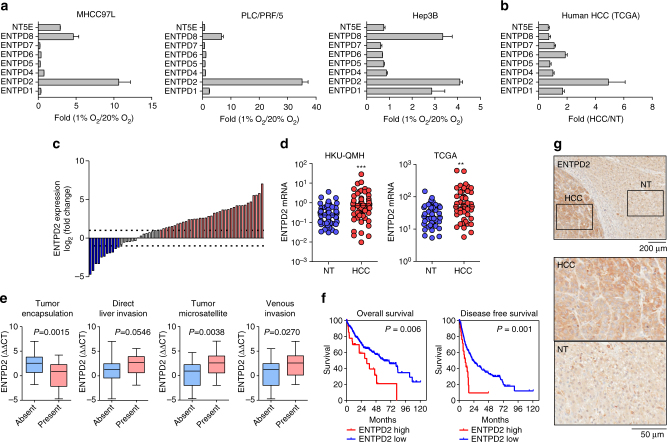
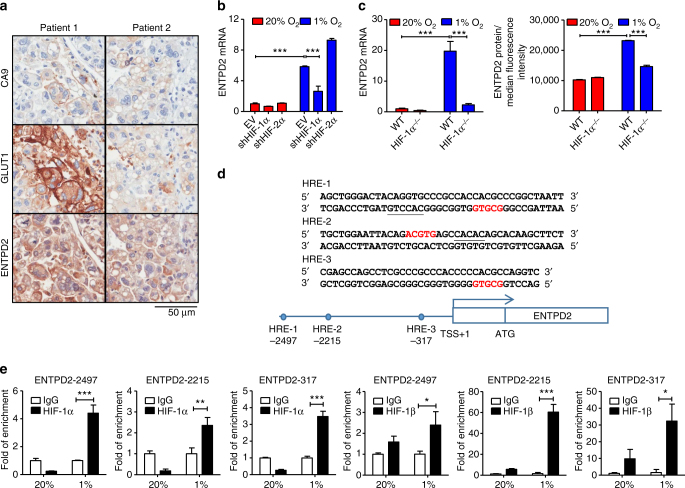
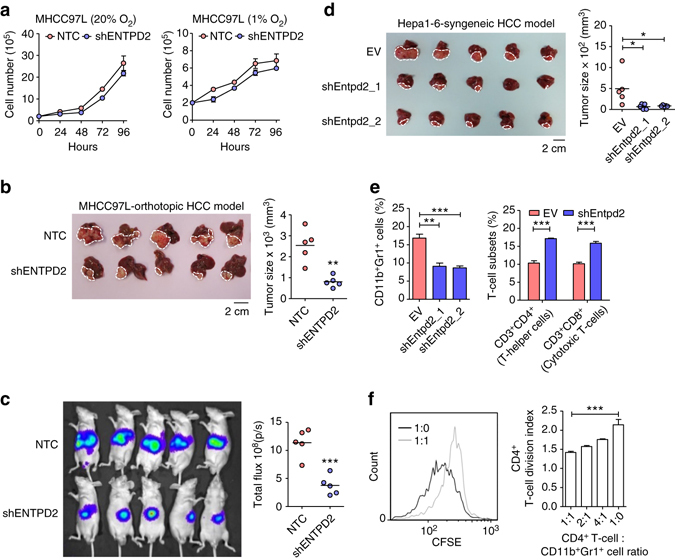
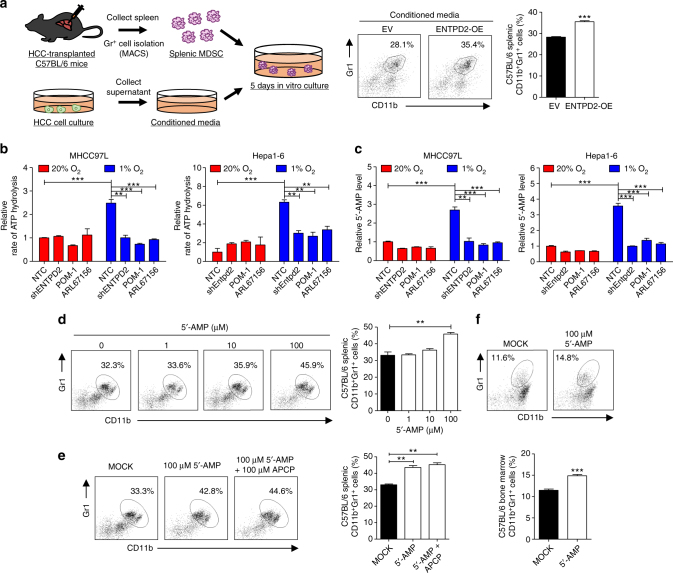
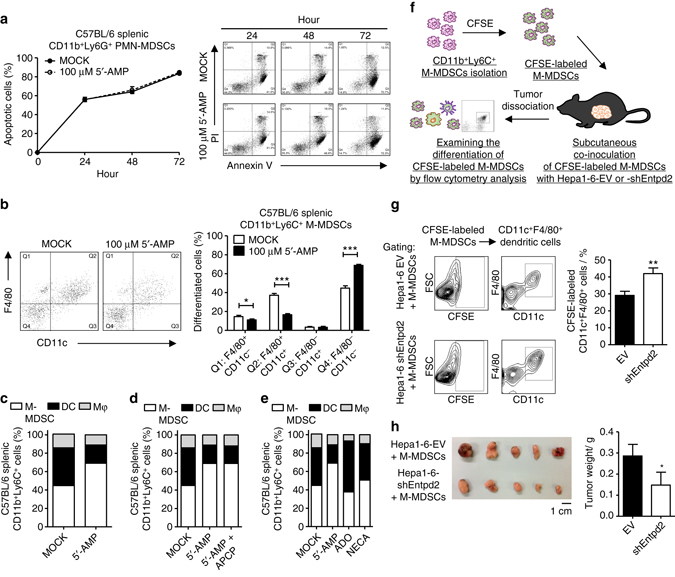
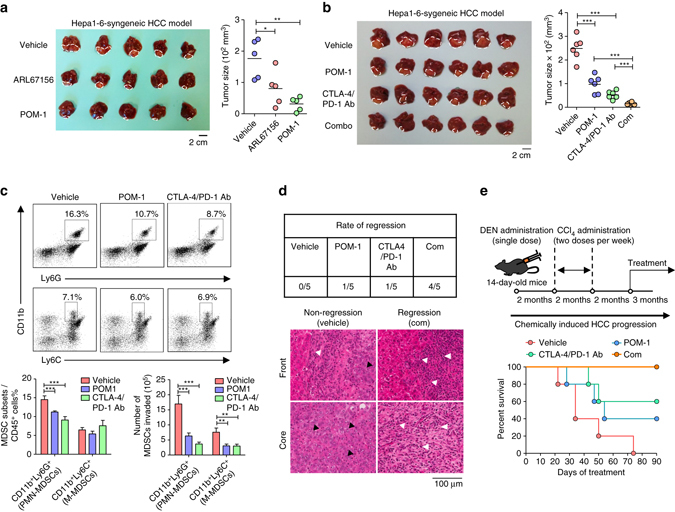
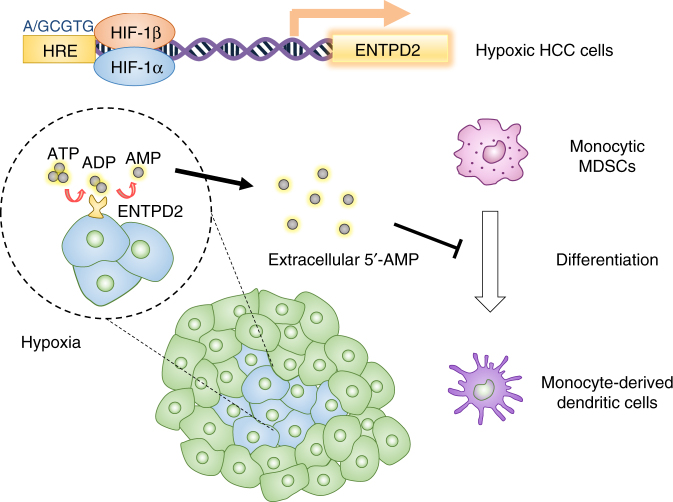
Myeloid-derived suppressor cells (MDSCs) possess immunosuppressive activities, which allow cancers to escape immune surveillance and become non-responsive to immune checkpoints blockade. Here we report hypoxia as a cause of MDSC accumulation. Using hepatocellular carcinoma (HCC) as a cancer model, we show that hypoxia, through stabilization of hypoxia-inducible factor-1 (HIF-1), induces ectoenzyme, ectonucleoside triphosphate diphosphohydrolase 2 (ENTPD2/CD39L1), in cancer cells, causing its overexpression in HCC clinical specimens. Overexpression of ENTPD2 is found as a poor prognostic indicator for HCC. Mechanistically, we demonstrate that ENTPD2 converts extracellular ATP to 5′-AMP, which prevents the differentiation of MDSCs and therefore promotes the maintenance of MDSCs. We further find that ENTPD2 inhibition is able to mitigate cancer growth and enhance the efficiency and efficacy of immune checkpoint inhibitors. Our data suggest that ENTPD2 may be a good prognostic marker and therapeutic target for cancer patients, especially those receiving immune therapy.
Overview
The claims and statistics of this paper haven’t been checked yet.
Free: it reads the open-access text and checks the first 5 claims that cite a source we can check. Create a free account to check every claim.
Integrity signals
Registry
Cites
Statistics
Figures
Verification
Claims the paper makes
The claims and statistics of this paper haven’t been checked yet.
Free: it reads the open-access text and checks the first 5 claims that cite a source we can check. Create a free account to check every claim.
Claims other papers make about this one
Each is checked against this paper’s own text: does it say what the citing paper says it does?
The source backs part of the claim, not all of it — or backs it for a different population, condition or comparison.
In the citing paper
“For example, hypoxia promotes the secretion of CCL28 by tumor cells in a HIF-1α-dependent manner, which enhances recruitment of CCR10+ T reg cells to the tumor site, suppressing the functions of cytotoxic T cells and promoting tumor growth (Fig. 2C) [81,82].”
From Revisiting the HIF switch in the tumor and its immune microenvironment. (2022) · cites this paper as [82]
Experimental — accuracy not yet measuredThe source backs part of the claim, not all of it — or backs it for a different population, condition or comparison.
In the citing paper
“Independent of glycolysis, the HIFs can induce the production of immunosuppressive metabolites such as adenosine by transcriptionally activating ectoenzymes such as ENTPD2/CD39L1, CD39, and CD73 (Table 1), which contribute to the multistep conversion of extracellular ATP through ADP/AMP to adenosine, thus promoting the maintenance of MDSCs, which limits the activity of immune checkpoint inhibitors”
From The HIF Axes in Cancer - Angiogenesis, Metabolism and Immune-Modulation (2025) · cites this paper as [90]
Experimental — accuracy not yet measuredThe source backs part of the claim, not all of it — or backs it for a different population, condition or comparison.
In the citing paper
“which together with CXCL1, mediate recruitment or maintenance of immunosuppressive MDSCs and TAMs (72, 73)”
From HIF inhibitor 32-134D eradicates murine hepatocellular carcinoma in combination with anti-PD1 therapy (2022) · cites this paper as [72]
Experimental — accuracy not yet measuredThe cited source says what the claim attributes to it.
In the citing paper
“Inhibition of either ENTPD2 or ADK enhanced the activity of immune checkpoint inhibitors, which highlights their significance in driving immunosuppression and their potential utility as therapeutic targets to enhance the efficacy of immune checkpoint inhibitors [90, 93].”
From The HIF Axes in Cancer - Angiogenesis, Metabolism and Immune-Modulation (2025) · cites this paper as [90]
Self-check
Percentages, sums and reported differences re-computed from the paper’s own numbers.
The self-check needs the paper’s full text.
Citations
Cites
PD-1 and PD-L1 Immune Checkpoint Blockade to Treat Breast Cancer
Hartkopf, A. D., Taran, F.-A., Wallwiener, M., Walter, C. B., Krämer, B., Grischke, E.-M., & Brucker, S. Y. (2016) · Breast Care · doi:10.1159/000453569 · Cited by 30,845
Trapnell, C., Williams, B. A., Pertea, G., Mortazavi, A., Kwan, G., van Baren, M. J., Salzberg, S. L., Wold, B. J., & Pachter, L. (2010) · Nature Biotechnology · doi:10.1038/nbt.1621 · Cited by 15,556
The blockade of immune checkpoints in cancer immunotherapy
Pardoll, D. M. (2012) · Nature Reviews Cancer · doi:10.1038/nrc3239 · Cited by 13,838
Myeloid-derived-suppressor cells as regulators of the immune system
Gabrilovich, D. I., & Nagaraj, S. (2009) · Nature Reviews Immunology · doi:10.1038/nri2506 · Cited by 6,753
Wang, G. L., Jiang, B. H., Rue, E. A., & Semenza, G. L. (1995) · Proceedings of the National Academy of Sciences · doi:10.1073/pnas.92.12.5510 · Cited by 6,212
Improved vectors and genome-wide libraries for CRISPR screening
Sanjana, N. E., Shalem, O., & Zhang, F. (2014) · Nature Methods · doi:10.1038/nmeth.3047 · Cited by 5,239
Innate and adaptive immune cells in the tumor microenvironment
Gajewski, T. F., Schreiber, H., & Fu, Y.-X. (2013) · Nature Immunology · doi:10.1038/ni.2703 · Cited by 4,148
Hypoxia-inducible factors in physiology and medicine
Semenza, G. L. (2012) · Cell · doi:10.1016/j.cell.2012.01.021 · Cited by 3,645
Epstein, A. C. R., Gleadle, J. M., McNeill, L. A., Hewitson, K. S., O'Rourke, J., Mole, D. R., Mukherji, M., Metzen, E., Wilson, M. I., Dhanda, A., et al. (2001) · Cell · doi:10.1016/s0092-8674(01)00507-4 · Cited by 3,333
Oxygen sensing by metazoans: the central role of the HIF hydroxylase pathway.
Kaelin, W. G., & Ratcliffe, P. J. (2008) · Molecular Cell · doi:10.1016/j.molcel.2008.04.009 · Cited by 3,251
Research works printed but not linked: 1
- 33. Chiu DK, et al. Hypoxia induces myeloid-derived suppressor cell recruitment to hepatocellular carcinoma through chemokine (C-C motif) ligand 26. Hepatology. 2016;64:797–813. doi: 10.1002/hep.28655. · DOI · Paper page
Cited by
Hypoxic microenvironment in cancer: molecular mechanisms and therapeutic interventions
Chen, Z., Han, F., Du, Y., Shi, H., & Zhou, W. (2023) · Signal Transduction and Targeted Therapy · doi:10.1038/s41392-023-01332-8 · Cited by 1,612
“found that hypoxiainduced HIF-1α promotes the expression of ENTPD2/CD39L1, an indicator of poor HCC prognosis, which is thought to convert extracellular ATP to 5’-AMP, preventing the differentiation of MDSCs, but maintaining their survival.(329) In addition, under hypoxic conditions, MDSCs express multiple immunosuppr…”
BackgroundTargeting Metabolism to Improve the Tumor Microenvironment for Cancer Immunotherapy
Bader, J. E., Voss, K., & Rathmell, J. C. (2020) · Molecular Cell · doi:10.1016/j.molcel.2020.05.034 · Cited by 1,030
Immunosuppression mediated by myeloid-derived suppressor cells (MDSCs) during tumour progression
Groth, C., Hu, X., Weber, R., Fleming, V., Altevogt, P., Utikal, J., & Umansky, V. (2019) · British Journal of Cancer · doi:10.1038/s41416-018-0333-1 · Cited by 839
Extracellular ATP and P2 purinergic signalling in the tumour microenvironment
Di Virgilio, F., Sarti, A. C., Falzoni, S., De Marchi, E., & Adinolfi, E. (2018) · Nature Reviews Cancer · doi:10.1038/s41568-018-0037-0 · Cited by 723
Emami Nejad, A., Najafgholian, S., Rostami, A., Sistani, A., Shojaeifar, S., Esparvarinha, M., Nedaeinia, R., Haghjooy Javanmard, S., Taherian, M., Ahmadlou, M., et al. (2021) · Cancer Cell International · doi:10.1186/s12935-020-01719-5 · Cited by 693
Tumor Immune Microenvironment and Immunosuppressive Therapy in Hepatocellular Carcinoma: A Review
Oura, K., Morishita, A., Tani, J., & Masaki, T. (2021) · International Journal of Molecular Sciences · doi:10.3390/ijms22115801 · Cited by 426
“by converting extracellular ATP to 5′ AMP [68]”
BackgroundMethodInfluentialLu, C., Rong, D., Zhang, B., Zheng, W., Wang, X., Chen, Z., & Tang, W. (2019) · Molecular Cancer · doi:10.1186/s12943-019-1047-6 · Cited by 418
“ENTPD2/CD39L1 MDSCs Blockade of ENTPD2/CD39L1 Hypoxia induces the expression of ENTPD2 on cancer cells leading to elevated extracellular 5'-AMP, which promotes the maintenance of MDSCs by preventing their differentiation in HCC [50]”
BackgroundUnveiling the mechanisms and challenges of cancer drug resistance
Khan, S. U., Fatima, K., Aisha, S., & Malik, F. (2024) · Cell Communication and Signaling · doi:10.1186/s12964-023-01302-1 · Cited by 417
“In hepatocellular carcinoma, the hypoxia-mediated CSCs attract MDSCs to the tumor site through ENTPD2/CD39 L1 signaling and halt the PD1 treatment, and the reduction of MDSC sensitizes these cells to 5-FU [170, 171].”
BackgroundLin, H., Liu, C., Hu, A., Zhang, D., Yang, H., & Mao, Y. (2024) · Journal of Hematology & Oncology · doi:10.1186/s13045-024-01544-7 · Cited by 392
Fu, Y., Liu, S., Zeng, S., & Shen, H. (2019) · Journal of Experimental & Clinical Cancer Research · doi:10.1186/s13046-019-1396-4 · Cited by 390
Korbecki, J., Grochans, S., Gutowska, I., Barczak, K., & Baranowska-Bosiacka, I. (2020) · International Journal of Molecular Sciences · doi:10.3390/ijms21207619 · Cited by 373
“The most significant is the area affected by chronic hypoxia [9], characterized by the accumulation of tumor-associated macrophages (TAM) [10–13], regulatory T cells (Treg) [14–16], and myeloid-derived suppressor cells (MDSC) [17,18].”
BackgroundInfluentialTumor Immune Microenvironment during Epithelial–Mesenchymal Transition
Taki, M., Abiko, K., Ukita, M., Murakami, R., Yamanoi, K., Yamaguchi, K., Hamanishi, J., Baba, T., Matsumura, N., & Mandai, M. (2021) · Clinical Cancer Research · doi:10.1158/1078-0432.ccr-20-4459 · Cited by 351
“9 Hypoxia stimulates recruitment of MDSCs to local tumors via CCL26 or CD39L1 10 (40,71,72).”
BackgroundDe Cicco, P., Ercolano, G., & Ianaro, A. (2020) · Frontiers in Immunology · doi:10.3389/fimmu.2020.01680 · Cited by 332
“found that targeting the enzyme, ectonucleoside triphosphate diphosphohydrolase 2 (ENTPD2), which support the maintenance of MDSCs, enhanced the efficacy of PD1/CTLA-4 blockade (230).”
BackgroundReactive Oxygen Species as Regulators of MDSC-Mediated Immune Suppression
Ohl, K., & Tenbrock, K. (2018) · Frontiers in Immunology · doi:10.3389/fimmu.2018.02499 · Cited by 330
“Afterwards, Nrf2 translocates Abbreviations: ATRA, All-trans retinoic acid; CDDO-Me, C-28 methyl ester of 2-cyano-3,12-dioxooleana-1,9,-dien-28-oic acid; Cys, cysteine; GSH, Glutathione; HCC, Hepatocellular carcinoma; HIF, Hypoxia-inducible factor; Keap1, Kelch ECH associating protein 1; MDSC, Myeloid-derived suppress…”
BackgroundHypoxia, Metabolic Reprogramming, and Drug Resistance in Liver Cancer
Bao, M. H.-R., & Wong, C. C.-L. (2021) · Cells · doi:10.3390/cells10071715 · Cited by 316
“We showed that CD39L1 inhibitor, POM-1, synergized with ICIs to increase lymphocyte infiltration, suppress tumor growth and promote survival of HCC-bearing mice (Table 2) [58].”
BackgroundSelf-citationWang, B., Zhao, Q., Zhang, Y., Liu, Z., Zheng, Z., Liu, S., Meng, L., Xin, Y., & Jiang, X. (2021) · Journal of Experimental & Clinical Cancer Research · doi:10.1186/s13046-020-01820-7 · Cited by 315
“Data from B16-F10 melanoma-bearing mouse models have revealed that the exposure of MDSCs isolated from the spleen to hypoxia significantly promotes PD-L1 expression [65].”
BackgroundInfluentialHIF Inhibitors: Status of Current Clinical Development
Fallah, J., & Rini, B. I. (2019) · Current Oncology Reports · doi:10.1007/s11912-019-0752-z · Cited by 308
Tumor microenvironment-mediated immune evasion in hepatocellular carcinoma
Chen, C., Wang, Z., Ding, Y., & Qin, Y. (2023) · Frontiers in Immunology · doi:10.3389/fimmu.2023.1133308 · Cited by 305
“Hypoxia-inducible factor 1a (HIF-1a) mediates ENTPD2 overexpression to convert ATP to 5’-AMP, which recruits a great quantity of MDSCs into the TME (40).”
BackgroundYang, Y., Li, C., Liu, T., Dai, X., & Bazhin, A. V. (2020) · Frontiers in Immunology · doi:10.3389/fimmu.2020.01371 · Cited by 291
“The homeostasis of tumor-infiltrating MDSCs is fine-tuned by the hypoxic microenvironment, since hypoxia promotes the differentiation of intratumoral MDSCs to TAMs (190), while it is also reported that hypoxia promotes the maintenance of MDSCs by upregulating ectonucleoside triphosphate diphosphohydrolas 2 in tumor ce…”
BackgroundLi, Q., Pan, X., Zhu, D., Deng, Z., Jiang, R., & Wang, X. (2019) · Hepatology · doi:10.1002/hep.30671 · Cited by 287
“The growth of functional blood vessels often cannot match the growth of HCC cells, leading to an inadequate supply of oxygen.(5) Cancer cells adjust to hypoxic stress and undergo metabolic reprogramming by altering glucose metabolism from oxidation to glycolysis to supply sufficient energy and materials for anabolic t…”
BackgroundIrreversible electroporation reverses resistance to immune checkpoint blockade in pancreatic cancer
Zhao, J., Wen, X., Tian, L., Li, T., Xu, C., Wen, X., Melancon, M. P., Gupta, S., Shen, B., Peng, W., et al. (2019) · Nature Communications · doi:10.1038/s41467-019-08782-1 · Cited by 272
Hypoxia-Driven Immune Escape in the Tumor Microenvironment
Vito, A., El-Sayes, N., & Mossman, K. (2020) · Cells · doi:10.3390/cells9040992 · Cited by 270
The role of hypoxia‐inducible factor 1 in tumor immune evasion
You, L., Wu, W., Wang, X., Fang, L., Adam, V., Nepovimova, E., Wu, Q., & Kuca, K. (2021) · Medicinal Research Reviews · doi:10.1002/med.21771 · Cited by 265
Revisiting the HIF switch in the tumor and its immune microenvironment.
Cowman, S. J., & Koh, M. Y. (2022) · Trends in Cancer · doi:10.1016/j.trecan.2021.10.004 · Cited by 256
Myeloid cell-targeted therapies for solid tumours
Goswami, S., Anandhan, S., Raychaudhuri, D., & Sharma, P. (2023) · Nature Reviews Immunology · doi:10.1038/s41577-022-00737-w · Cited by 220
Zhang, X., Li, Y., Ma, Y., Yang, L., Wang, T., Meng, X., Zong, Z., Sun, X., Hua, X., & Li, H. (2018) · Journal of Experimental & Clinical Cancer Research · doi:10.1186/s13046-018-0892-2 · Cited by 234
RetractedNeutrophils as potential therapeutic targets in hepatocellular carcinoma
Geh, D., Leslie, J., Rumney, R., Reeves, H. L., Bird, T. G., & Mann, D. A. (2022) · Nature Reviews Gastroenterology & Hepatology · doi:10.1038/s41575-021-00568-5 · Cited by 218
Bruno, A., Mortara, L., Baci, D., Noonan, D. M., & Albini, A. (2019) · Frontiers in Immunology · doi:10.3389/fimmu.2019.00771 · Cited by 215
“MDSCs are able to express high levels of CD39/CD73 in tumor lesions, resulting in higher secretion of adenosine (111, 112) (Figure 2).”
BackgroundHypoxia as a barrier to immunotherapy in pancreatic adenocarcinoma
Daniel, S. K., Sullivan, K. M., Labadie, K. P., & Pillarisetty, V. G. (2019) · Clinical and Translational Medicine · doi:10.1186/s40169-019-0226-9 · Cited by 207
“Additionally, MDSCs have been shown to increase in number and remain undifferentiated in hepatocellular carcinoma in hypoxic conditions via up regulation of CCL26 and CD391L [122, 123].”
BackgroundMyeloid-derived suppressor cells in cancer: therapeutic targets to overcome tumor immune evasion
Lu, J., Luo, Y., Rao, D., Wang, T., Lei, Z., Chen, X., Zhang, B., Li, Y., Liu, B., Xia, L., et al. (2024) · Experimental Hematology & Oncology · doi:10.1186/s40164-024-00505-7 · Cited by 172
“In HCC, hypoxia induces the ectodomain, ectonucleoside triphosphate diphosphohydrolase 2 (ENTPD2), mainly through hypoxia-inducible factor-1 (HIF-1), leading to its overexpression [114].”
BackgroundImmune checkpoint inhibitor resistance in hepatocellular carcinoma
Wang, Z., Wang, Y., Gao, P., & Ding, J. (2023) · Cancer Letters · doi:10.1016/j.canlet.2022.216038 · Cited by 189
Metabolic Modulation of Immunity: A New Concept in Cancer Immunotherapy
Guerra, L., Bonetti, L., & Brenner, D. (2020) · Cell Reports · doi:10.1016/j.celrep.2020.107848 · Cited by 189
“IDO-expressing MDSCs then accumulate mainly in hypoxic tumor regions (Chiu et al., 2017; Chun et al., 2015; Holmgaard et al., 2015).”
BackgroundTumor Hypoxia as a Barrier in Cancer Therapy: Why Levels Matter
Hompland, T., Fjeldbo, C. S., & Lyng, H. (2021) · Cancers · doi:10.3390/cancers13030499 · Cited by 179
Hypoxia-inducible factors and innate immunity in liver cancer
Yuen, V. W.-H., & Wong, C. C.-L. (2020) · Journal of Clinical Investigation · doi:10.1172/jci137553 · Cited by 183
“Our group showed that HIF-1–induced CD39L1 in HCC cells suppresses the differentiation of M-MDSCs to dendritic cells through AMP, thereby maintaining MDSCs and limiting T cell activity in the hypoxic niche (118).”
BackgroundSelf-citationHypoxia Compromises Anti-Cancer Immune Responses
Multhoff, G., & Vaupel, P. (2020) · Advances in Experimental Medicine and Biology · doi:10.1007/978-3-030-34461-0_18 · Cited by 181
Strategies to Improve the Antitumor Effect of Immunotherapy for Hepatocellular Carcinoma
Xing, R., Gao, J., Cui, Q., & Wang, Q. (2021) · Frontiers in Immunology · doi:10.3389/fimmu.2021.783236 · Cited by 167
“Hypoxia, a typical characteristic of the TME, can induce the recruitment of MDSCs (the powerful immunosuppressive cells) in the TME through hypoxia-inducible factor 1a (HIF-1a) (24) (Figure 1).”
Fusobacterium nucleatum and colorectal cancer: A mechanistic overview
Hashemi Goradel, N., Heidarzadeh, S., Jahangiri, S., Farhood, B., Mortezaee, K., Khanlarkhani, N., & Negahdari, B. (2019) · Journal of Cellular Physiology · doi:10.1002/jcp.27250 · Cited by 175
“Another effect of hypoxia and HIF‐1 in tumor microenvironment is related to the promotion of myeloid‐derived suppressor cells (MDSCs), which act as immunosuppressive cells in cancer (Chiu et al., 2017).”
BackgroundLiu, J., Bai, Y., Li, Y., Li, X., & Luo, K. (2024) · eBioMedicine · doi:10.1016/j.ebiom.2024.105301 · Cited by 163
Enhancing immunotherapy with tumour-responsive nanomaterials
Linderman, S. W., DeRidder, L. B., Sanjurjo, L., Foote, M. B., Alonso, M. J., Kirtane, A. R., Langer, R., & Traverso, G. (2025) · Nature Reviews Clinical Oncology · doi:10.1038/s41571-025-01000-6 · Cited by 184
“18,19) and CD73 (ref.”
Liu, Z., Wang, Y., Dou, C., Xu, M., Sun, L., Wang, L., Yao, B., Li, Q., Yang, W., Tu, K., et al. (2018) · Theranostics · doi:10.7150/thno.26789 · Cited by 171
“The microenvironment of solid tumors is often hypoxic, and our study identified HIF-1α as a critical transcriptional factor in the migration and invasion of HCC [33].”
BackgroundATP and Adenosine Metabolism in Cancer: Exploitation for Therapeutic Gain
Yegutkin, G. G., & Boison, D. (2022) · Pharmacological Reviews · doi:10.1124/pharmrev.121.000528 · Cited by 170
Chiu, D. K.-C., Yuen, V. W.-H., Cheu, J. W.-S., Wei, L. L., Ting, V., Fehlings, M., Sumatoh, H., Nardin, A., Newell, E. W., Ng, I. O.-L., et al. (2020) · Gastroenterology · doi:10.1053/j.gastro.2020.03.074 · Cited by 170
Self-citationZheng, Y., Huang, C., Lu, L., Yu, K., Zhao, J., Chen, M., Liu, L., Sun, Q., Lin, Z., Zheng, J., et al. (2021) · Journal of Hematology & Oncology · doi:10.1186/s13045-020-01029-3 · Cited by 175
“transcriptionally regulates STOML2 Hypoxia is one of the main contributors to the acquisition of drug resistance and closely related to a worse prognosis [25, 26].”
BackgroundInterplay Between Mitochondrial Peroxiredoxins and ROS in Cancer Development and Progression
Ismail, T., Kim, Y., Lee, H., Lee, D., & Lee, H. (2019) · International Journal of Molecular Sciences · doi:10.3390/ijms20184407 · Cited by 162
“Hypoxia-inducible factors (HIFs) are stabilized in the resulting hypoxic tissue [137,138].”
BackgroundRole of hypoxia in the tumor microenvironment and targeted therapy
Chen, G., Wu, K., Li, H., Xia, D., & He, T. (2022) · Frontiers in Oncology · doi:10.3389/fonc.2022.961637 · Cited by 346
Targeting Immune Cells in the Tumor Microenvironment of HCC: New Opportunities and Challenges
Hao, X., Sun, G., Zhang, Y., Kong, X., Rong, D., Song, J., Tang, W., & Wang, X. (2021) · Frontiers in Cell and Developmental Biology · doi:10.3389/fcell.2021.775462 · Cited by 161
Targeting myeloid-derived suppressor cells to enhance natural killer cell-based immunotherapy
Joshi, S., & Sharabi, A. B. (2022) · Pharmacology & Therapeutics · doi:10.1016/j.pharmthera.2022.108114 · Cited by 154
“In the hepatocellular carcinoma model, hypoxia promotes stabilization of HIF1α which induces increased expression of ectoenzyme, ectonucleoside triphosphate diphosphohydrolase 2 (ENTPD2/CD39L1) in cancer cells (Chiu et al., 2017).”
BackgroundHou, A., Hou, K., Huang, Q., Lei, Y., & Chen, W. (2020) · Frontiers in Immunology · doi:10.3389/fimmu.2020.00783 · Cited by 145
“The HIFs activate the transcription of CCL26 in cancer cells to recruit CX3CR1MDSCs and prevent the differentiation of M-MDSCs into non-immune suppressive CD11cDCs via upregulation of extracellular 5-AMP (92, 96).”
BackgroundThe Tumor Microenvironment in Tumorigenesis and Therapy Resistance Revisited
Dzobo, K., Senthebane, D. A., & Dandara, C. (2023) · Cancers · doi:10.3390/cancers15020376 · Cited by 146
Targeting the tumor microenvironment in B-cell lymphoma: challenges and opportunities
Liu, Y., Zhou, X., & Wang, X. (2021) · Journal of Hematology & Oncology · doi:10.1186/s13045-021-01134-x · Cited by 149
“Apart from promoting the expansion of regulatory T cells (Tregs), MDSCs also assist in the secretion and activation of inhibitory molecules, such as arginase1 (Arg1), inducible nitric oxide synthase (iNOS), reactive oxygen species (ROS) and prostaglandin E2 (PGE2), thereby suppressing the function of effector T cells…”
BackgroundInfluentialThe therapeutic implications of immunosuppressive tumor aerobic glycolysis
Reinfeld, B. I., Rathmell, W. K., Kim, T. K., & Rathmell, J. C. (2021) · Cellular and Molecular Immunology · doi:10.1038/s41423-021-00727-3 · Cited by 149
Unraveling tumor microenvironment of small-cell lung cancer: Implications for immunotherapy
Li, T. X., & Qiao, T. (2022) · Seminars in Cancer Biology · doi:10.1016/j.semcancer.2022.09.005 · Cited by 142
Fu, Z., Mowday, A. M., Smaill, J. B., Hermans, I. F., & Patterson, A. V. (2021) · Cells · doi:10.3390/cells10051006 · Cited by 147
“5′-AMP prevents the maturation of MDSCs and promotes their maintenance [96].”
BackgroundQiu, W., Guo, X., Li, B., Wang, J., Qi, Y., Chen, Z., Zhao, R., Deng, L., Qian, M., Wang, S., et al. (2021) · Molecular Therapy · doi:10.1016/j.ymthe.2021.06.023 · Cited by 126
Yin, Y., Feng, W., Chen, J., Chen, X., Wang, G., Wang, S., Xu, X., Nie, Y., Fan, D., Wu, K., et al. (2024) · Experimental Hematology and Oncology · doi:10.1186/s40164-024-00539-x · Cited by 137
Targeting Natural Killer Cells for Tumor Immunotherapy
Zhang, C., Hu, Y., & Shi, C. (2020) · Frontiers in Immunology · doi:10.3389/fimmu.2020.00060 · Cited by 136
“NK cell antitumor activities are inhibited by adenosine via limiting IFN-γ/TNF-α release, inhibiting Fas ligand and perforin-mediated cytotoxic activity and blocking granzyme exocytosis (38, 46).”
BackgroundLiu, Y., Zhang, X., Zhang, J., Tan, J., Li, J., & Song, Z. (2020) · Frontiers in Cell and Developmental Biology · doi:10.2139/ssrn.3678770 · Cited by 146
Gao, D., Chen, T., Chen, S., Ren, X., Han, Y., Li, Y., Wang, Y., Guo, X., Wang, H., Chen, X., et al. (2021) · Nano-Micro Letters · doi:10.1007/s40820-021-00616-4 · Cited by 128
Cancer Stem Cells: Emerging Key Players in Immune Evasion of Cancers
Lei, M. M. L., & Lee, T. K. (2021) · Frontiers in Cell and Developmental Biology · doi:10.3389/fcell.2021.692940 · Cited by 130
“These MDSCs further promote HCC progression and reduce the efficacy of PD1 therapy (Chiu et al., 2017).”
BackgroundBoreel, D. F., Span, P. N., Heskamp, S., Adema, G. J., & Bussink, J. (2021) · Clinical Cancer Research · doi:10.1158/1078-0432.ccr-20-3913 · Cited by 126
“Hypoxia-associated activation of the HIF1 pathway in tumor cells indirectly promotes the accumulation ofMDSCs inHepa16 hepatocellular cancer via the extracellular conversion of ATP to 50AMP (28), while it directly promotes Treg activation in induced colon cancer (29).”
BackgroundHypoxia signaling in cancer: Implications for therapeutic interventions
Zhuang, Y., Liu, K., He, Q., Gu, X., Jiang, C., & Wu, J. (2023) · MedComm · doi:10.1002/mco2.203 · Cited by 119
Opportunities for Small Molecules in Cancer Immunotherapy
van der Zanden, S. Y., Luimstra, J. J., Neefjes, J., Borst, J., & Ovaa, H. (2020) · Trends in Immunology · doi:10.1016/j.it.2020.04.004 · Cited by 119
Cao, X., Geng, Q., Fan, D., Wang, Q., Wang, X., Zhang, M., Zhao, L., Jiao, Y., Deng, T., Liu, H., et al. (2023) · Molecular Cancer · doi:10.1186/s12943-022-01704-8 · Cited by 122
“In hepatocellular carcinoma (HCC), HIF-1 enhances the enrichment of MDSCs [73]; additionally, HIF-2α deletion in cancer-associated fibroblasts in pancreatic cancer reduces tumour infiltration of immunesuppressive immune cells, including M2 TAMs and Tregs, restoring the efficacy of immunotherapy [74].”
BackgroundInfluentialKurt, F. G. Ö., Lasser, S., Arkhypov, I., Utikal, J. S., & Umansky, V. (2023) · Journal of Clinical Investigation · doi:10.1172/jci170762 · Cited by 122
Niu, Y., Lin, Z., Wan, A., Sun, L., Yan, S., Liang, H., Zhan, S., Chen, D., Bu, X., Liu, P., et al. (2021) · Hepatology · doi:10.1002/hep.31846 · Cited by 115
“Previously, HIF-1α, the transcriptional activator upon hypoxia stimulation, is found to be highly expressed in HCC and to activate a series of downstream targets that play important roles in clinical outcome in HCC patients (26, 27).”
BackgroundCurrent developments in nanotechnology for improved cancer treatment, focusing on tumor hypoxia
Phung, C. D., Tran, T. H., Pham, L. M., Nguyen, H. T., Jeong, J., Yong, C. S., & Kim, J. O. (2020) · Journal of Controlled Release · doi:10.1016/j.jconrel.2020.05.029 · Cited by 115
Lactate: The Mediator of Metabolism and Immunosuppression
Zhang, Y., Zhai, Z., Duan, J., Wang, X., Zhong, J., Wu, L., Li, A., Cao, M., Wu, Y., Shi, H., et al. (2022) · Frontiers in Endocrinology · doi:10.3389/fendo.2022.901495 · Cited by 120
Hypoxia-induced macropinocytosis represents a metabolic route for liver cancer
Zhang, M. S., Cui, J. D., Lee, D., Yuen, V. W., Chiu, D. K., Goh, C. C., Cheu, J. W., Tse, A. P., Bao, M. H., Wong, B. P., et al. (2022) · Nature Communications · doi:10.1038/s41467-022-28618-9 · Cited by 115
Self-citationSalman, S., Meyers, D. J., Wicks, E. E., Lee, S. N., Datan, E., Thomas, A. M., Anders, N. M., Hwang, Y., Lyu, Y., Yang, Y., et al. (2022) · Journal of Clinical Investigation · doi:10.1172/jci156774 · Cited by 111
“Treatment with 32-134D led to decreased expression of the Th2 cytokines IL-4 and IL-13, which together with CXCL1, mediate recruitment or maintenance of immunosuppressive MDSCs and TAMs (72, 73).”
BackgroundInfluentialDing, M., Zhang, Y., Yu, N., Zhou, J., Zhu, L., Wang, X., & Li, J. (2023) · Advanced Materials · doi:10.1002/adma.202302508 · Cited by 113
Nanoceria: an innovative strategy for cancer treatment
Tang, J., Moonshi, S. S., & Ta, H. T. (2023) · Cellular and Molecular Life Sciences · doi:10.1007/s00018-023-04694-y · Cited by 109
Identification of Energy Metabolism Genes for the Prediction of Survival in Hepatocellular Carcinoma
Chen, Q., Li, F., Gao, Y., Xu, G., Liang, L., & Xu, J. (2020) · Frontiers in Oncology · doi:10.3389/fonc.2020.01210 · Cited by 116
“Inhibition of ENTPD2 could suppress the proliferation of cancer cells (17).”
BackgroundThe Immune Landscape of Thyroid Cancer in the Context of Immune Checkpoint Inhibition
Varricchi, G., Loffredo, S., Marone, G., Modestino, L., Fallahi, P., Ferrari, S. M., de Paulis, A., Antonelli, A., & Galdiero, M. R. (2019) · International Journal of Molecular Sciences · doi:10.3390/ijms20163934 · Cited by 114
“In tumors, the incoming cells dive into a fairly hostile microenvironment characterized by hypoxia, low pH, and high concentrations of cytokines, lactate, adenosine, and oxidative agents (ROS, NO) [176,177].”
BackgroundHypoxia/HIF Modulates Immune Responses
Chen, Y., & Gaber, T. (2021) · Biomedicines · doi:10.3390/biomedicines9030260 · Cited by 119
“The hypoxic milieu recruits myeloid-derived suppressor cells (MDSCs) to the primary tumor site by activating the transcription of chemokine ligand in cancer cells [40] and promoting ectonucleoside triphosphate diphosphohydrolase 2 (ENTPD2/CD39L1) [41].”
BackgroundThe impact of hypoxia on immune state in cancer
Mortezaee, K., & Majidpoor, J. (2021) · Life Sciences · doi:10.1016/j.lfs.2021.120057 · Cited by 106
Hypoxia in Breast Cancer—Scientific Translation to Therapeutic and Diagnostic Clinical Applications
Zhang, Y., Zhang, H., Wang, M., Schmid, T., Xin, Z., Kozhuharova, L., Yu, W.-K., Huang, Y., Cai, F., & Biskup, E. M. (2021) · Frontiers in Oncology · doi:10.3389/fonc.2021.652266 · Cited by 114
“Generation of a hypoxic environment and the activation of its main effector, the hypoxia-inducible factor (HIF)-1, are even more common features of advanced malignancy (13, 14).”
BackgroundZalfa, C., & Paust, S. (2021) · Frontiers in Immunology · doi:10.3389/fimmu.2021.633205 · Cited by 107
“MDSCs express increased levels of CD39 and CD73 under hypoxic conditions or TGF-β stimulation (283, 284).”
BackgroundAlleviating hypoxia to improve cancer immunotherapy
Fan, P., Zhang, N., Candi, E., Agostini, M., Piacentini, M., Bernassola, F., Bove, P., Alessandro, M., Giuseppe, N., Valentina, R., et al. (2023) · Oncogene · doi:10.1038/s41388-023-02869-2 · Cited by 104
“HIF-1 α can induce the overexpression of ectonucleoside triphosphate diphosphohydrolase 2 (ENTPD2/CD39L1) in the hepatocellular carcinoma (HCC) tumors, which prevents MDSCs differentiation by converting extracellular ATP to 5 ′ -AMP [80].”
BackgroundHe, W., Xu, J., Mu, R., Li, Q., Lv, D.-L., Huang, Z., Zhang, J., Wang, C., & Dong, L. (2020) · Nature Communications · doi:10.1038/s41467-020-15524-1 · Cited by 98
The Endless Saga of Monocyte Diversity
Canè, S., Ugel, S., Trovato, R., Marigo, I., Sanctis, F. D., Sartoris, S., & Bronte, V. (2019) · Frontiers in Immunology · doi:10.3389/fimmu.2019.01786 · Cited by 107
“Moreover, M-MDSC differentiation toward mature anti-tumoral monocytes-derived DCs can be achieved using pharmacological inhibitor of ATP-converting ectoenzyme ENTPD2, thus mitigating cancer growth and enhancing the efficiency of immune checkpoint inhibitors (184).”
BackgroundThe Immune Regulatory Role of Adenosine in the Tumor Microenvironment
Xing, J., Zhang, J., & Wang, J. (2023) · International Journal of Molecular Sciences · doi:10.3390/ijms241914928 · Cited by 277
“Hypoxia induces enhanced expression of CD39 through stabilization of HIF-1 in the tumor tissue of HCC, thereby preventing differentiation but promoting the survival of MDSCs [88].”
BackgroundInfluentialSono/Photodynamic Nanomedicine‐Elicited Cancer Immunotherapy
Li, Y., Xie, J., Um, W., You, D. G., Kwon, S., Zhang, L., Zhu, J., & Park, J. H. (2021) · Advanced Functional Materials · doi:10.1002/adfm.202008061 · Cited by 99
Li, T., Liu, T., Zhu, W., Xie, S., Zhao, Z., Feng, B., Guo, H., & Yang, R. (2021) · Clinical Medicine Insights Oncology · doi:10.1177/11795549211035540 · Cited by 112
Yang, K., Yu, G., Tian, R., Zhou, Z., Deng, H., Li, L., Yáng, Z., Zhang, G., Liu, D., Wei, J., et al. (2021) · Advanced Functional Materials · doi:10.1002/adfm.202008078 · Cited by 98
Self-citationZhang, C., Xia, D., Liu, J., Huo, D., Jiang, X., & Hu, Y. (2020) · Advanced Functional Materials · doi:10.1002/adfm.202000189 · Cited by 100
Fu, Y., Mackowiak, B., Feng, D., Lu, H., Guan, Y., Lehner, T., Pan, H., Wang, X. W., He, Y., & Gao, B. (2023) · Gut · doi:10.1136/gutjnl-2022-327924 · Cited by 96
Cheu, J. W., & Wong, C. C. (2021) · Hepatology · doi:10.1002/hep.31840 · Cited by 102
Self-citationPang, L., Ng, T., Liu, J., Yeung, W.-H. O., Zhu, J., Chiu, T.-L. S., Liu, H., Chen, Z., Lo, C., & Man, K. (2021) · Cancer Letters · doi:10.1016/j.canlet.2021.09.022 · Cited by 93
Kao, T.-W., Bai, G.-H., Wang, T.-L., Shih, I.-M., Chuang, C.-M., Lo, C.-L., Tsai, M.-C., Chiu, L.-Y., Lin, C.-C., & Shen, Y.-A. (2023) · Journal of Experimental & Clinical Cancer Research · doi:10.1186/s13046-023-02724-y · Cited by 89
“HIF‐1α inhibitors improve immunotherapy efficacy In human hepatocellular carcinoma (HCC), entonucleoside triphosphate diphosphohydrolase 2 (ENTPD2), a direct transcriptional target of HIF-1α, is predominantly upregulated in hypoxia [111].”
BackgroundRadiotherapy and cGAS/STING signaling: Impact on MDSCs in the tumor microenvironment
Kho, V. M., Mekers, V. E., Span, P. N., Bussink, J., & Adema, G. J. (2021) · Cellular Immunology · doi:10.1016/j.cellimm.2021.104298 · Cited by 93
Stromal Modulation Reverses Primary Resistance to Immune Checkpoint Blockade in Pancreatic Cancer
Zhao, J., Xiao, Z., Li, T., Chen, H., Yuan, Y., Wang, Y., Hsiao, C.-H., Chow, D. S., Overwijk, W. W., & Li, C. (2018) · ACS Nano · doi:10.1021/acsnano.8b02481 · Cited by 84
Wang, X., Zhou, Y., Dong, K., Zhang, H., Gong, J., & Wang, S. (2022) · Environmental Toxicology · doi:10.1002/tox.23489 · Cited by 78
“TAM is a general term for macrophages infiltrating in and around tumor tissues.(6) Once macrophages are recruited to the side of the tumor, they will differentiate into anti-cancer M1 or cancer-promoting M2.”
BackgroundHypoxic Signaling and Cholesterol Lipotoxicity in Fatty Liver Disease Progression
Tirosh, O. (2018) · Oxidative Medicine and Cellular Longevity · doi:10.1155/2018/2548154 · Cited by 80
“Indeed, it was reported that hypoxia causes MDSC accumulation via the HIF-1α signaling pathway [62].”
BackgroundHuang, A., Sun, Z., Hong, H., Yang, Y., Chen, J., Gao, Z., & Gu, J. F. (2024) · Journal of Translational Medicine · doi:10.1186/s12967-024-05391-5 · Cited by 79
The Engagement Between MDSCs and Metastases: Partners in Crime
Trovato, R., Canè, S., Petrova, V., Sartoris, S., Ugel, S., & Sanctis, F. D. (2020) · Frontiers in Oncology · doi:10.3389/fonc.2020.00165 · Cited by 79
“Interestingly, the activation of HIF1α in MDSCs favors also the expression of ectonucleoside triphosphate disphosphohydrolase 2 (NTPDase2/CD39L1), an ectoenzyme that controls MDSCs accumulation (98) as well as the expression of (NTPDase1/CD39) and ecto-5-nucleotidase (Ecto5’NTase/CD73) directly involved in the generat…”
BackgroundYin, Z., Jiang, K., Li, R., Dong, C., & Wang, L. (2018) · Molecular Cancer · doi:10.1186/s12943-018-0926-6 · Cited by 73
Nanotechnology Reprogramming Metabolism for Enhanced Tumor Immunotherapy
Zhou, Y., Yuan, J. T., Xu, K., Li, S., & Liu, Y. (2024) · ACS Nano · doi:10.1021/acsnano.3c11260 · Cited by 78
Immune infiltration profiling in gastric cancer and their clinical implications
Ren, F., Zhao, Q., Zhao, M., Shaogong, Z., Liu, B., Bukhari, I., Zhang, K., Wu, W., Fu, Y., Yu, Y., et al. (2021) · Cancer Science · doi:10.1111/cas.15057 · Cited by 73
Sasidharan Nair, V., Saleh, R., Toor, S. M., Taha, R. Z., Ahmed, A. A., Kurer, M. A., Murshed, K., Alajez, N. M., Abu Nada, M., & Elkord, E. (2020) · Clinical Epigenetics · doi:10.1186/s13148-020-0808-9 · Cited by 72
“These data are consistent with previous reports demonstrating that HIF-1α is essential for the infiltration and differentiation of myeloid cells within the TME [21, 22].”
ResultLu, L.-C., Chang, C.-J., & Hsu, C.-H. (2019) · Journal of Hepatocellular Carcinoma · doi:10.2147/jhc.s159693 · Cited by 68
“ENTPD2 supported the maintenance of MDSCs, and targeting ENTPD2 inhibited tumor growth and enhanced the efficacy of PD-1/CTLA4 blockade.(46) Zhou et al demonstrated that the overexpression of cell cycle-related kinase (CCRK), a cyclindependent kinase family member, increased MDSC accumulation and T cell suppression in…”
Background
Metadata
- Authors
- Chiu, D. K.-C., Tse, A. P.-W., Xu, I. M.-J., Di Cui, J., Lai, R. K.-H., Li, L. L., Koh, H.-Y., Tsang, F. H.-C., Wei, L. L., Wong, C.-M., Ng, I. O.-L., & Wong, C. C.-L.
- Affiliations
- University of Hong Kong (HK)
- Venue
- Nature Communications
- Published
- 2017-09-11
- Volume
- 8
- Issue
- 1
- Pages
- 517-517
- ISSN
- 2041-1723 (ISSN-L)
- PMC
- PMC5593860
- OpenAlex
- W2753173755
- Cited by
- 448
- References
- 56
- Citations by year
- 2026: 25 · 2025: 43 · 2024: 57 · 2023: 61 · 2022: 71 · 2021: 76 · 2020: 71 · 2019: 28 · 2018: 16
- FWCI
- 14.23
- Type
- journal article
- Language
- en
- Open access
- gold
- doi.org
- Licence
- cc-by
- creativecommons.org/licenses/by/4.0 (tdm)
- creativecommons.org/licenses/by/4.0 (vor)
- Locations
- Nature Communications (publishedVersion, cc-by)
- PubMed Central (publishedVersion, cc-by)
- PubMed (publishedVersion)
- RePEc: Research Papers in Economics (submittedVersion)
- DOAJ (DOAJ: Directory of Open Access Journals) (submittedVersion, cc-by-sa)
- DOAJ (DOAJ: Directory of Open Access Journals) (submittedVersion)
- The HKU Scholars Hub (University of Hong Kong) (submittedVersion, cc-by-nc-nd)
- Funders
- University of Hong Kong
- Health and Medical Research Fund (03142926, T12-704/16-R)
- Topics
- Life Sciences › Immunology and Microbiology › Immunology › Immune cells in cancer
- Life Sciences › Biochemistry, Genetics and Molecular Biology › Physiology › Adenosine and Purinergic Signaling
- Life Sciences › Biochemistry, Genetics and Molecular Biology › Cancer Research › Cancer, Hypoxia, and Metabolism
- Keywords
- myeloid-derived suppressor cells, hepatocellular carcinoma, hypoxia, HIF-1, extracellular ATP, 5'-AMP, tumor immune evasion, immune checkpoint inhibitors, prognostic factors, therapeutic target, MDSC differentiation
- MeSH terms
- Myeloid-Derived Suppressor Cells, Adenosine Triphosphatases, Hypoxia, Cell Differentiation, Carcinoma, Hepatocellular, Humans, Liver Neoplasms, Cell Proliferation, Hypoxia-Inducible Factor 1
About these checks
Registry, retraction, Cites and statistics results are computed, not judged, with one exception: a printed reference that no index lists is read once by a model before it counts as a citation error. Claims are extracted by a model and kept only when their quote appears verbatim in the text; each cited source is then checked, with a model’s help, for whether it says what the claim relies on. Those verdicts can be wrong — read the claim’s quote and the cited source before relying on one.
Statistics and arithmetic are recomputed, not judged.
Confidence bands are shown only for fields calibrated on our annotated test set. None is calibrated yet, so no band is shown.
What counts as a claim ›How we measure confidence ›How we check this ›
Are you an author, or do you see a problem with this page? Request a review
Data sources
Bibliographic data: Semantic Scholar, OpenAlex, Crossref.
Contains information from the Semantic Scholar Academic Graph Datasets, made available under the ODC Attribution License (ODC-BY 1.0).
Semantic Scholar’s data is described in: Kinney, R., et al. (2023). The Semantic Scholar Open Data Platform. arXiv:2301.10140.
