

Cortical dendritic activity correlates with spindle-rich oscillations during sleep in rodents
Open accessThe DOI matches its Crossref record; 44 of the 44 references it cites were found in a registry or an index.
Abstract
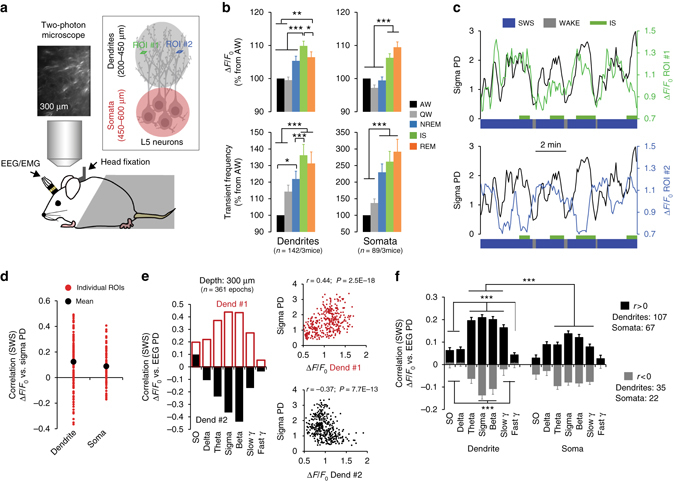
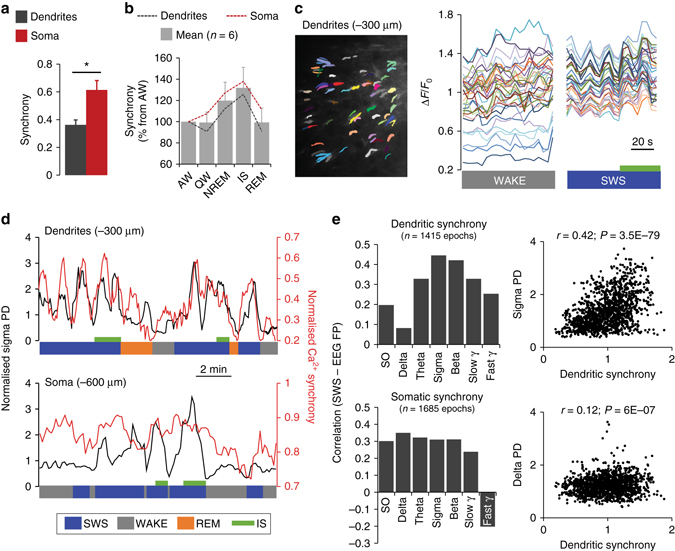
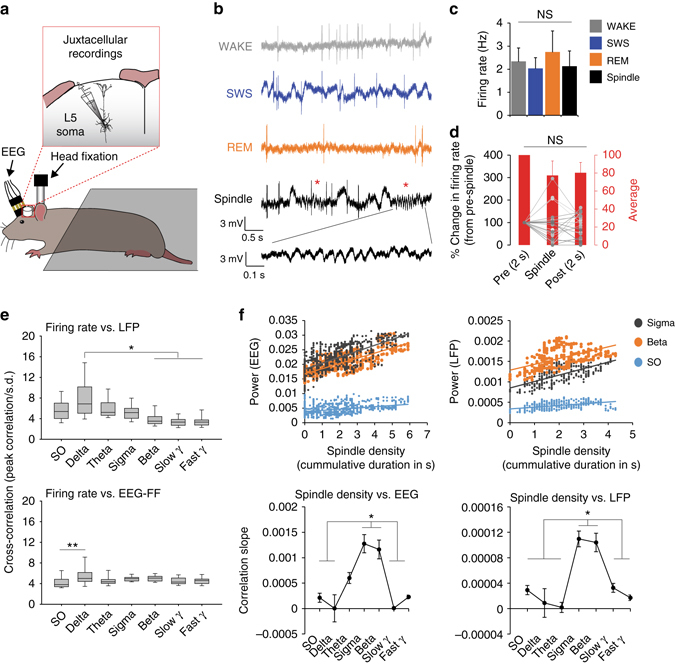
How sleep influences brain plasticity is not known. In particular, why certain electroencephalographic (EEG) rhythms are linked to memory consolidation is poorly understood. Calcium activity in dendrites is known to be necessary for structural plasticity changes, but this has never been carefully examined during sleep. Here, we report that calcium activity in populations of neocortical dendrites is increased and synchronised during oscillations in the spindle range in naturally sleeping rodents. Remarkably, the same relationship is not found in cell bodies of the same neurons and throughout the cortical column. Spindles during sleep have been suggested to be important for brain development and plasticity. Our results provide evidence for a physiological link of spindles in the cortex specific to dendrites, the main site of synaptic plasticity.
Overview
The claims and statistics of this paper haven’t been checked yet.
Free: it reads the open-access text and checks the first 5 claims that cite a source we can check. Create a free account to check every claim.
Integrity signals
Registry
Cites
Statistics
Figures
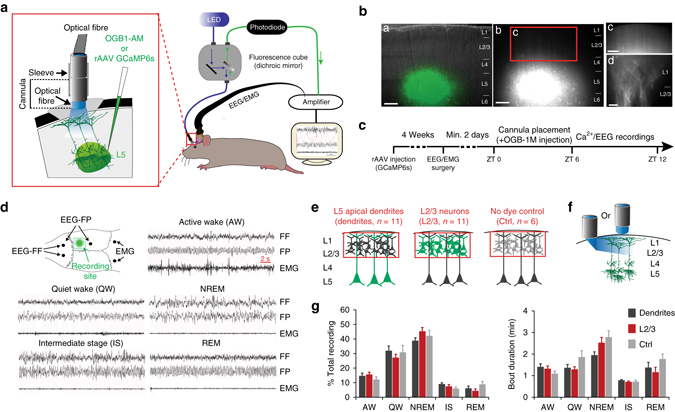
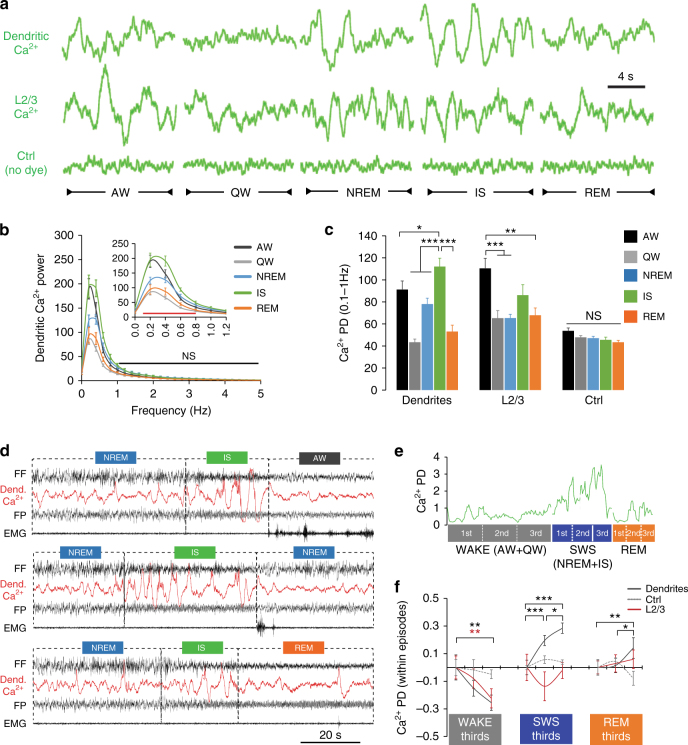
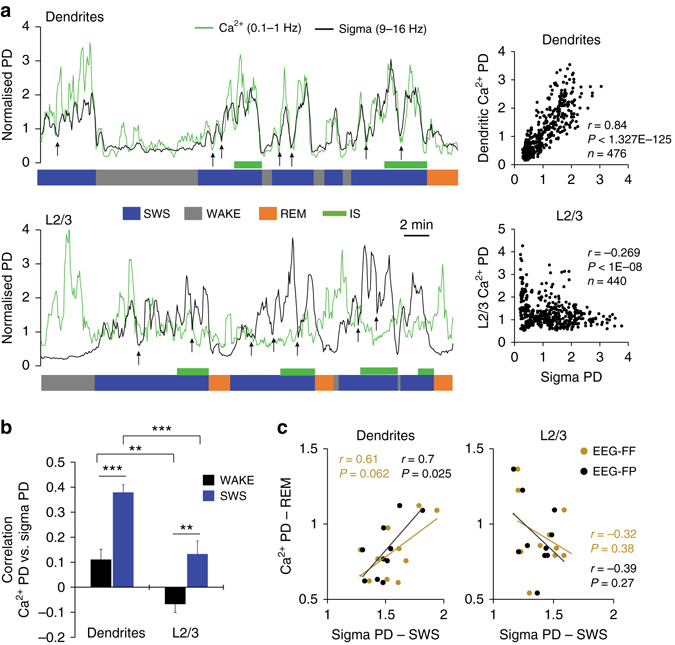
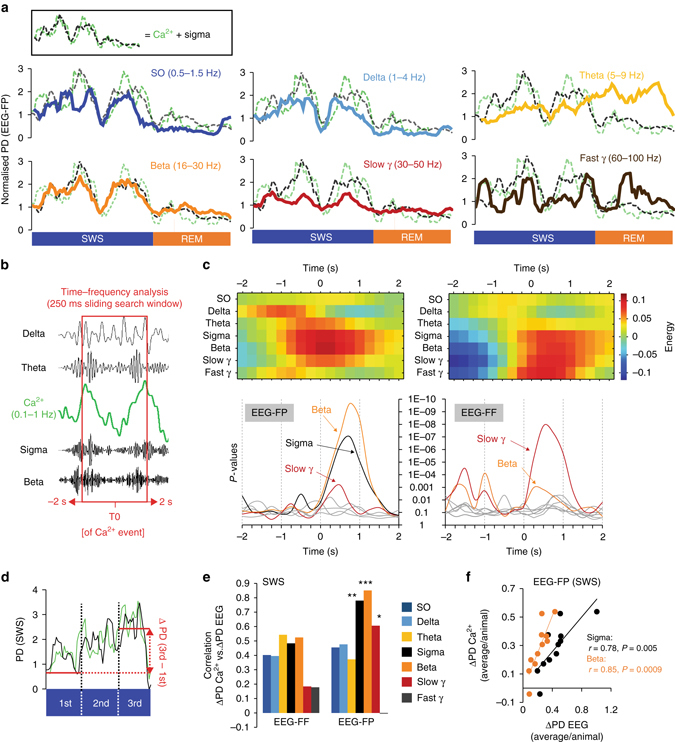
Verification
Claims the paper makes
The claims and statistics of this paper haven’t been checked yet.
Free: it reads the open-access text and checks the first 5 claims that cite a source we can check. Create a free account to check every claim.
Claims other papers make about this one
Each is checked against this paper’s own text: does it say what the citing paper says it does?
The source backs part of the claim, not all of it — or backs it for a different population, condition or comparison.
In the citing paper
“Sleep spindles go along with reduced inhibition of the dendrites of cortical pyramidal cells thus enabling increased dendritic calcium influx while at the same time the soma of these cells is subjected to an increased inhibition by parvalbumin-positive interneurons.161,240”
From Sleep—A brain-state serving systems memory consolidation (2023) · cites this paper as [240]
Experimental — accuracy not yet measuredThe check wasn’t confident either way, so it gives no verdict — never disputed.
In the citing paper
“timing of cue delivery in relation to SOs, 129 spindles, or spindle refractory periods, respectively, 116,117,127 or the phase-coupling of spindles to the SO peak or trough 125 may substantially affect the effect of TMR on memory performance.”
From Sleep—A brain-state serving systems memory consolidation (2023) · cites this paper as [125]
Experimental — accuracy not yet measuredThe check wasn’t confident either way, so it gives no verdict — never disputed.
In the citing paper
“It is associated with increased SO power, amplitude and density, 120,125,128 increased spindle power and density, 116,117,120,128 as well as improved SO-spindle coupling, 120 and these characteristics are often associated with the TMRinduced memory advantage.”
From Sleep—A brain-state serving systems memory consolidation (2023) · cites this paper as [125]
Experimental — accuracy not yet measured
Self-check
Percentages, sums and reported differences re-computed from the paper’s own numbers.
The self-check needs the paper’s full text.
Citations
Cites
Rasch, B., & Born, J. (2013) · Physiological Reviews · doi:10.1152/physrev.00032.2012 · Cited by 2,783
Tononi, G., & Cirelli, C. (2014) · Neuron · doi:10.1016/j.neuron.2013.12.025 · Cited by 2,356
Causal evidence for the role of REM sleep theta rhythm in contextual memory consolidation
Boyce, R., Glasgow, S. D., Williams, S., & Adamantidis, A. (2016) · Science · doi:10.1126/science.aad5252 · Cited by 696
Neuronal Plasticity in Thalamocortical Networks during Sleep and Waking Oscillations
Steriade, M., & Timofeev, I. (2003) · Neuron · doi:10.1016/s0896-6273(03)00065-5 · Cited by 643
Grouping of spindle activity during slow oscillations in human non-rapid eye movement sleep
Mölle, M., Marshall, L., Gais, S., & Born, J. (2002) · The Journal of Neuroscience · doi:10.1523/jneurosci.22-24-10941.2002 · Cited by 617
Sleep promotes branch-specific formation of dendritic spines after learning
Yang, G., Lai, C. S. W., Cichon, J., Ma, L., Li, W., & Gan, W.-B. (2014) · Science · doi:10.1126/science.1249098 · Cited by 616
Ultrastructural evidence for synaptic scaling across the wake/sleep cycle
de Vivo, L., Bellesi, M., Marshall, W., Bushong, E. A., Ellisman, M. H., Tononi, G., & Cirelli, C. (2017) · Science · doi:10.1126/science.aah5982 · Cited by 574
REM sleep selectively prunes and maintains new synapses in development and learning
Li, W., Ma, L., Yang, G., & Gan, W.-B. (2017) · Nature Neuroscience · doi:10.1038/nn.4479 · Cited by 543
Nonlinear dendritic integration of sensory and motor input during an active sensing task
Xu, N.-L., Harnett, M. T., Williams, S. R., Huber, D., O’Connor, D. H., Svoboda, K., & Magee, J. C. (2012) · Nature · doi:10.1038/nature11601 · Cited by 537
Sleep Enhances Plasticity in the Developing Visual Cortex
Frank, M. G., Issa, N. P., & Stryker, M. P. (2001) · Neuron · doi:10.1016/s0896-6273(01)00279-3 · Cited by 523
Cited by
Mechanisms of systems memory consolidation during sleep
Klinzing, J. G., Niethard, N., & Born, J. (2019) · Nature Neuroscience · doi:10.1038/s41593-019-0467-3 · Cited by 1,176
Sleep spindles: mechanisms and functions
Fernandez, L. M. J., & Lüthi, A. (2020) · Physiological Reviews · doi:10.1152/physrev.00042.2018 · Cited by 716
Sleep—A brain-state serving systems memory consolidation
Brodt, S., Inostroza, M., Niethard, N., & Born, J. (2023) · Neuron · doi:10.1016/j.neuron.2023.03.005 · Cited by 343
Memory-enhancing properties of sleep depend on the oscillatory amplitude of norepinephrine
Kjaerby, C., Andersen, M., Hauglund, N., Untiet, V., Dall, C., Sigurdsson, B., Ding, F., Feng, J., Li, Y., Weikop, P., et al. (2022) · Nature Neuroscience · doi:10.1038/s41593-022-01102-9 · Cited by 306
Cortical circuit activity underlying sleep slow oscillations and spindles
Niethard, N., Ngo, H.-V. V., Ehrlich, I., & Born, J. (2018) · Proceedings of the National Academy of Sciences · doi:10.1073/pnas.1805517115 · Cited by 245
“Moreover, during SWS, after motor memory encoding dendritic plasticity was shown to occur, as a consequence of reactivated representations, on select apical branches of Pyr cells (60) and dendritic calcium activity was found to be distinctly increased during spindles (54).”
BackgroundResultInfluentialNoradrenergic circuit control of non-REM sleep substates
Osorio-Forero, A., Cardis, R., Vantomme, G., Guillaume-Gentil, A., Katsioudi, G., Devenoges, C., Fernandez, L. M. J., & Lüthi, A. (2021) · Current Biology · doi:10.1016/j.cub.2021.09.041 · Cited by 230
Bojarskaite, L., Bjørnstad, D. M., Pettersen, K. H., Cunen, C., Hermansen, G. H., Åbjørsbråten, K. S., Chambers, A. R., Sprengel, R., Vervaeke, K., Tang, W., et al. (2020) · Nature Communications · doi:10.1038/s41467-020-17062-2 · Cited by 218
The hippocampus is crucial for forming non-hippocampal long-term memory during sleep
Sawangjit, A., Oyanedel, C. N., Niethard, N., Salazar, C., Born, J., & Inostroza, M. (2018) · Nature · doi:10.1038/s41586-018-0716-8 · Cited by 208
Schreiner, T., Petzka, M., Staudigl, T., & Staresina, B. P. (2021) · Nature Communications · doi:10.1038/s41467-021-23520-2 · Cited by 161
Sleep spindles mediate hippocampal-neocortical coupling during long-duration ripples
Ngo, H.-V., Fell, J., & Staresina, B. (2020) · eLife · doi:10.7554/elife.57011 · Cited by 158
Cortical astrocytes independently regulate sleep depth and duration via separate GPCR pathways
Vaidyanathan, T. V., Collard, M., Yokoyama, S., Reitman, M. E., & Poskanzer, K. E. (2021) · eLife · doi:10.7554/elife.63329 · Cited by 166
“Results Accurate detection of astrocyte Ca events in vivo across sleep and wake To study the role of astrocytes in sleep regulation, we conducted 2P imaging of astrocyte Ca dynamics as animals naturally transitioned between sleep and wake states (Niethard et al., 2018; Seibt et al., 2017).”
MethodBojarskaite, L., Vallet, A., Bjørnstad, D. M., Gullestad Binder, K. M., Cunen, C., Heuser, K., Kuchta, M., Mardal, K.-A., & Enger, R. (2023) · Nature Communications · doi:10.1038/s41467-023-36643-5 · Cited by 149
REM sleep promotes experience-dependent dendritic spine elimination in the mouse cortex
Zhou, Y., Lai, C. S. W., Bai, Y., Li, W., Zhao, R., Yang, G., Frank, M. G., & Gan, W.-B. (2020) · Nature Communications · doi:10.1038/s41467-020-18592-5 · Cited by 135
Isolated cortical computations during delta waves support memory consolidation
Todorova, R., & Zugaro, M. (2019) · Science · doi:10.1126/science.aay0616 · Cited by 130
Slow Wave Sleep Is a Promising Intervention Target for Alzheimer’s Disease
Lee, Y. F., Gerashchenko, D., Timofeev, I., Bacskai, B. J., & Kastanenka, K. V. (2020) · Frontiers in Neuroscience · doi:10.3389/fnins.2020.00705 · Cited by 135
“, 2007) and major Ca2+ activities in dendrites (Milojkovic et al., 2007; Seibt et al., 2017).”
BackgroundThalamocortical Assemblies: Sleep spindles, slow waves and epileptic discharges
Destexhe, A., & Sejknowski, T. (2023) · doi:10.1093/oso/9780198864998.001.0001 · Cited by 118
Primed to Sleep: The Dynamics of Synaptic Plasticity Across Brain States
Seibt, J., & Frank, M. G. (2019) · Frontiers in Systems Neuroscience · doi:10.3389/fnsys.2019.00002 · Cited by 113
Self-citationFrank, M. G., & Heller, H. C. (2018) · Handbook of experimental pharmacology · doi:10.1007/164_2018_140 · Cited by 146
Phase-Amplitude Coupling: A General Mechanism for Memory Processing and Synaptic Plasticity?
Bergmann, T. O., & Born, J. (2018) · Neuron · doi:10.1016/j.neuron.2017.12.023 · Cited by 121
Paradoxical somatodendritic decoupling supports cortical plasticity during REM sleep
Aime, M., Calcini, N., Borsa, M., Campelo, T., Rusterholz, T., Sattin, A., Fellin, T., & Adamantidis, A. (2022) · Science · doi:10.1126/science.abk2734 · Cited by 106
A role for spindles in the onset of rapid eye movement sleep
Bandarabadi, M., Herrera, C. G., Gent, T. C., Bassetti, C., Schindler, K., & Adamantidis, A. R. (2020) · Nature Communications · doi:10.1038/s41467-020-19076-2 · Cited by 92
A mechanism for learning with sleep spindles
Peyrache, A., & Seibt, J. (2020) · Philosophical Transactions of the Royal Society B: Biological Sciences · doi:10.1098/rstb.2019.0230 · Cited by 89
“The lack of modulation of deep layer excitatory neurons by spindles was confirmed in the somatosensory cortex of head-fixed rats using juxtacellular recording ([31] and figure 2 c ).”
BackgroundSelf-citationCoupled sleep rhythms for memory consolidation
Staresina, B. P. (2024) · Trends in Cognitive Sciences · doi:10.1016/j.tics.2024.02.002 · Cited by 113
Hippocampal coupling with cortical and subcortical structures in the context of memory consolidation
Skelin, I., Kilianski, S., & McNaughton, B. L. (2019) · Neurobiology of Learning and Memory · doi:10.1016/j.nlm.2018.04.004 · Cited by 83
“Although in most studies SPs were analyzed as a single entity, they could be classified into two categories with potentially different mechanistic roles in memory consolidation.”
InfluentialFeld, G. B., & Born, J. (2019) · Neuropsychopharmacology · doi:10.1038/s41386-019-0490-9 · Cited by 90
Jiang, X., Gonzalez-Martinez, J., & Halgren, E. (2019) · The Journal of Neuroscience · doi:10.1523/jneurosci.2857-18.2019 · Cited by 76
“, 2018), which together with a strong apical dendritic Ca influx (Seibt et al., 2017; Niethard et al., 2018) would create the conditions for Spike Timing Dependent Plasticity (Froemke and Dan, 2002).”
BackgroundClasses of dendritic information processing
Payeur, A., Béïque, J.-C., & Naud, R. (2019) · Current Opinion in Neurobiology · doi:10.1016/j.conb.2019.07.006 · Cited by 89
Lüthi, A., & Nedergaard, M. (2025) · Neuron · doi:10.1016/j.neuron.2024.12.009 · Cited by 93
“53,65,68 Clusters of sleep spindles are important for plasticity processes at the cellular and circuit levels 87,88 as well as behaviorally.”
Apical drive-A cellular mechanism of dreaming?
Aru, J., Siclari, F., Phillips, W. A., & Storm, J. F. (2020) · Neuroscience & Biobehavioral Reviews · doi:10.1016/j.neubiorev.2020.09.018 · Cited by 74
Cognitive and Physiologic Impacts of the Infraslow Oscillation
Watson, B. O. (2018) · Frontiers in Systems Neuroscience · doi:10.3389/fnsys.2018.00044 · Cited by 74
Hippocampal ripples as a mode of communication with cortical and subcortical areas
Todorova, R., & Zugaro, M. (2018) · Hippocampus · doi:10.1002/hipo.22997 · Cited by 88
“Moreover, because during spindles calcium entry into the dendrites can be decoupled from somatic firing (Seibt et al., 2017), the absence of cortical spikes should not be interpreted as evidence that cortical networks are unaffected by hippocampal rip-ples occurring during spindles.”
BackgroundTravelling spindles create necessary conditions for spike-timing-dependent plasticity in humans
Dickey, C. W., Sargsyan, A., Madsen, J. R., Eskandar, E. N., Cash, S. S., & Halgren, E. (2021) · Nature Communications · doi:10.1038/s41467-021-21298-x · Cited by 70
Shaping overnight consolidation via slow-oscillation closed-loop targeted memory reactivation
Ngo, H.-V. V., & Staresina, B. P. (2022) · Proceedings of the National Academy of Sciences · doi:10.1073/pnas.2123428119 · Cited by 77
Sleep spindles track cortical learning patterns for memory consolidation
Petzka, M., Chatburn, A., Charest, I., Balanos, G. M., & Staresina, B. P. (2022) · Current Biology · doi:10.1016/j.cub.2022.04.045 · Cited by 63
Overnight neuronal plasticity and adaptation to emotional distress
Cabrera, Y., Koymans, K. J., Poe, G. R., Kessels, H. W. H. G., Someren, E. J. W. V., & Wassing, R. (2024) · Nature reviews. Neuroscience · doi:10.1038/s41583-024-00799-w · Cited by 72
Jiang, X., Gonzalez-Martinez, J., & Halgren, E. (2019) · The Journal of Neuroscience · doi:10.1523/jneurosci.2858-18.2019 · Cited by 58
Insights on auditory closed-loop stimulation targeting sleep spindles in slow oscillation up-states
Ngo, H.-V. V., Seibold, M., Boche, D. C., Mölle, M., & Born, J. (2019) · Journal of Neuroscience Methods · doi:10.1016/j.jneumeth.2018.09.006 · Cited by 57
Local Sleep Oscillations: Implications for Memory Consolidation
Geva‐Sagiv, M., & Nir, Y. (2019) · Frontiers in Neuroscience · doi:10.3389/fnins.2019.00813 · Cited by 56
“HC reactivation tends to co-occur with sleep spindles that optimize plasticity (Seibt et al., 2017), resulting in long-term modification of synaptic efficacy.”
BackgroundLocal targeted memory reactivation in human sleep
Bar, E., Marmelshtein, A., Arzi, A., Perl, O., Livne, E., Hizmi, E., Paz, R., Sobel, N., Dudai, Y., & Nir, Y. (2020) · Current Biology · doi:10.1016/j.cub.2020.01.091 · Cited by 50
Sleep spindles in the healthy brain from birth through 18 years
Kwon, H., Walsh, K. G., Berja, E. D., Manoach, D. S., Eden, U. T., Kramer, M., & Chu, C. J. (2023) · SLEEP · doi:10.1093/sleep/zsad017 · Cited by 63
Friedrich, M., Mölle, M., Friederici, A. D., & Born, J. (2020) · Nature Communications · doi:10.1038/s41467-020-14850-8 · Cited by 49
Sleep decreases neuronal activity control of microglial dynamics in mice
Hristovska, I., Robert, M., Combet, K., Honnorat, J., Comte, J.-C., & Pascual, O. (2022) · Nature Communications · doi:10.1038/s41467-022-34035-9 · Cited by 58
Regulation of REM sleep by inhibitory neurons in the dorsomedial medulla
Stucynski, J. A., Schott, A. L., Baik, J., Chung, S., & Weber, F. (2021) · Current Biology · doi:10.1016/j.cub.2021.10.030 · Cited by 50
Niethard, N., Brodt, S., & Born, J. (2021) · The Journal of Neuroscience · doi:10.1523/jneurosci.1957-20.2021 · Cited by 46
“Because spindles are known to promote synaptic plasticity underlying memory formation (Steriade and Timofeev, 2003; Rosanova and Ulrich, 2005; Seibt et al., 2017; Niethard et al., 2018; Puentes-Mestril et al., 2019; Fernandez and Lüthi, 2020), this finding concurs with the notion that sleep…”
BackgroundResultKatsuki, F., Gerashchenko, D., & Brown, R. E. (2022) · Brain Research Bulletin · doi:10.1016/j.brainresbull.2022.07.002 · Cited by 52
Spindle-locked ripples mediate memory reactivation during human NREM sleep
Schreiner, T., Griffiths, B., Kutlu, M., Vollmar, C., Kaufmann, E., Quach, S., Rémi, J., Noachtar, S., & Staudigl, T. (2024) · Nature Communications · doi:10.1038/s41467-024-49572-8 · Cited by 60
Composite‐Structure Material Design for High‐Energy Lithium Storage
Wang, L., Shi, J., Su, H. Y., Li, G., Zubair, M., Guo, Y., & Yu, H. (2018) · Small · doi:10.1002/smll.201800887 · Cited by 43
Yuan, R. K., Lopez, M. R., Ramos‐Álvarez, M. M., Normandin, M. E., Thomas, A. S., Uygun, D. S., Cerda, V. R., Grenier, A. E., Wood, M. T., Gagliardi, C. M., et al. (2021) · Cell Reports · doi:10.1016/j.celrep.2021.109234 · Cited by 45
“Because cortical spindles are associated with increased dendritic activity (Seibt et al., 2017) and intracellular calcium (Niethard et al.”
BackgroundThe up and down of sleep: From molecules to electrophysiology
Navarro-Lobato, I., & Genzel, L. (2019) · Neurobiology of Learning and Memory · doi:10.1016/j.nlm.2018.03.013 · Cited by 41
“not reach the cell body (Seibt et al., 2017); in contrast parietal spindles may have an individual sharp-wave-ripple nested in their troughs (Staresina et al.”
How Early Life Adversity Influences Defensive Circuitry
Murthy, S. S., & Gould, E. (2020) · Trends in Neurosciences · doi:10.1016/j.tins.2020.02.001 · Cited by 46
“Despite the lack of evidence linking dendritic structural change to altered neuronal oscillations, some studies have shown that dendritic components, including spines, play important roles in certain types of rhythmic firing in the hippocampus [70,71], raising the possibility that ELA alters defensive behavior through…”
BackgroundMemory corticalization triggered by REM sleep: mechanisms of cellular and systems consolidation
Almeida-Filho, D. G., Queiroz, C. M., & Ribeiro, S. (2018) · Cellular and Molecular Life Sciences · doi:10.1007/s00018-018-2886-9 · Cited by 38
Experience and sleep-dependent synaptic plasticity: from structure to activity
Sun, L., Zhou, H., Cichon, J., & Yang, G. (2020) · Philosophical Transactions of the Royal Society B Biological Sciences · doi:10.1098/rstb.2019.0234 · Cited by 42
Spindle-dependent memory consolidation in healthy adults: a meta-analysis
Kumral, D., Matzerath, A., Leonhart, R., & Schönauer, M. (2023) · Neuropsychologia · doi:10.1016/j.neuropsychologia.2023.108661 · Cited by 32
Thalamocortical processing of the head-direction sense
Peyrache, A., Duszkiewicz, A. J., Viejo, G. D., & Ángeles-Durán, S. (2019) · Progress in Neurobiology · doi:10.1016/j.pneurobio.2019.101693 · Cited by 39
“During spindles, cortical neurons are dominated by shunting inhibition (Contreras et al., 1997; Peyrache et al., 2011; Seibt et al., 2017), thus constituting another possible mechanism underlying the relative unresponsiveness of thalamocortical networks during spindles (Dang-Vu et al.”
BackgroundPerspective on the Multiple Pathways to Changing Brain States
Tantirigama, M. L. S., Zolnik, T. A., Judkewitz, B., Larkum, M. E., & Sachdev, R. N. S. (2020) · Frontiers in Systems Neuroscience · doi:10.3389/fnsys.2020.00023 · Cited by 34
Self-citationFekete, Z., Zátonyi, A., Kaszás, A., Madarász, M., & Slézia, A. (2023) · Microsystems & Nanoengineering · doi:10.1038/s41378-023-00519-x · Cited by 33
Spindle-dependent memory consolidation in healthy adults: A meta-analysis
(2022) · doi:10.1101/2022.07.18.500433 · Cited by 32
Coupling of gamma band activity to sleep spindle oscillations - a combined EEG/MEG study
Weber, F. D., Supp, G. G., Klinzing, J. G., Mölle, M., Engel, A. K., & Born, J. (2021) · NeuroImage · doi:10.1016/j.neuroimage.2020.117452 · Cited by 29
Learning cortical representations through perturbed and adversarial dreaming
Deperrois, N., Petrovici, M. A., Senn, W., & Jordan, J. (2022) · eLife · doi:10.7554/elife.76384 · Cited by 28
Champetier, P., André, C., Weber, F. D., Rehel, S., Ourry, V., Lanièpce, A., Lutz, A., Bertran, F., Cabé, N., Pitel, A., et al. (2022) · SLEEP · doi:10.1093/sleep/zsac282 · Cited by 39
Sleep’s contribution to memory formation
Lutz, N. D., Harkotte, M., & Born, J. (2025) · Physiological Reviews · doi:10.1152/physrev.00054.2024 · Cited by 60
The differing roles of NREM and REM sleep in the slow enhancement of skills and schemas
Pereira, S. I. R., & Lewis, P. A. (2019) · Current Opinion in Physiology · doi:10.1016/j.cophys.2019.12.005 · Cited by 31
“In the future, it might be interesting to build on Seibt and Frank’s model to include evidence implicating NREM sleep in dendritic spine plasticity [47–49] and homeostatic downscaling [50], as well as experimental findings linking REM sleep to epigenetic changes [51], gene expression [51] and…”
Schreiner, T., Petzka, M., Staudigl, T., & Staresina, B. P. (2020) · bioRxiv (Cold Spring Harbor Laboratory) · doi:10.1101/2020.09.16.299545 · Cited by 25
Multiple Stochastic Resonances and Oscillation Transitions in Cortical Networks With Time Delay
Yu, H., Guo, X., Wang, J., Li, K., Deng, B., Wei, X., & Liu, C. (2018) · IEEE Transactions on Fuzzy Systems · doi:10.1109/tfuzz.2018.2884229 · Cited by 25
The role of slow-wave sleep rhythms in the cortical-hippocampal loop for memory consolidation
Navarrete, M., Valderrama, M., & Lewis, P. A. (2020) · Current Opinion in Behavioral Sciences · doi:10.1016/j.cobeha.2020.02.006 · Cited by 30
“By silencing competing inputs in superior layers, spindles are thought to protect newly minted cortico-cortical plasticity[24,31].”
BackgroundThe Engram’s Dark Horse: How Interneurons Regulate State-Dependent Memory Processing and Plasticity
Raven, F., & Aton, S. J. (2021) · Frontiers in Neural Circuits · doi:10.3389/fncir.2021.750541 · Cited by 29
“…Circuits | www.frontiersin.org 1 September 2021 | Volume 15 | Article 750541 Though the idea of the engram was postulated about a century ago (Semon, 1921), it is only over the past decade that engram neuron populations have been identified by researchers and their function manipulated, due…”
BackgroundGonzalez, C. E., Jiang, X., Gonzalez-Martinez, J. A., & Halgren, E. (2022) · Journal of Neuroscience · doi:10.1523/jneurosci.1786-21.2022 · Cited by 26
Learning cortical representations through perturbed and adversarial dreaming.
Deperrois, N., Petrovici, M. A., Senn, W., & Jordan, J. (2022) · doi:10.48350/169088 · Cited by 23
Electrophysiological monitoring of inhibition in mammalian species, from rodents to humans
Peyrache, A., & Destexhe, A. (2019) · Neurobiology of Disease · doi:10.1016/j.nbd.2019.104500 · Cited by 27
“, 2011), as recently confirmed with calcium imaging (Seibt et al., 2017) This may be the consequence of the strong feed-forward activation of FS neurons by thalamocortical inputs, therefore exerting shunting inhibition (Contreras et al.”
Neural reactivation during human sleep
Denis, D., & Cairney, S. A. (2023) · Emerging Topics in Life Sciences · doi:10.1042/etls20230109 · Cited by 26
Competitive dynamics underlie cognitive improvements during sleep
Chen, P., Niknazar, H., Alaynick, W. A., Whitehurst, L. N., & Mednick, S. C. (2021) · Proceedings of the National Academy of Sciences · doi:10.1073/pnas.2109339118 · Cited by 28
“Sigma activity is proposed to facilitate plasticity by producing long-term changes in responsiveness in cortical neurons (24) and increasing dendritic Ca influxes (25), particularly enhanced when coupled to down-to-up transitions of the sleep SO.”
How Sleep Shapes Thalamocortical Circuit Function in the Visual System
Durkin, J., & Aton, S. J. (2019) · Annual Review of Vision Science · doi:10.1146/annurev-vision-091718-014715 · Cited by 24
Dynamics of sleep spindles and coupling to slow oscillations following motor learning in adult mice
Kam, K., Pettibone, W. D., Shim, K., Chen, R. K., & Varga, A. W. (2019) · Neurobiology of Learning and Memory · doi:10.1016/j.nlm.2019.107100 · Cited by 24
Embedded ensemble encoding hypothesis: The role of the “Prepared” cell
Antic, S. D., Hines, M. L., & Lytton, W. W. (2018) · Journal of Neuroscience Research · doi:10.1002/jnr.24240 · Cited by 23
“theoretical neuroscience in particular, is to fit together existing theories with new findings, reconciling top-down concepts, models, frameworks, and theories (Palmer, Marre, Berry, & Bialek, 2015; Sompolinsky, 2014) with the changing bottom-up landscape of neuroscience discoveries (Bittner et al., 2015; Grosenick et…”
BackgroundFrӧhlich, F., & Lustenberger, C. (2020) · Schizophrenia Research · doi:10.1016/j.schres.2020.04.003 · Cited by 24
“Such enhanced interaction could be desirable, as it provides optimal conditions for synaptic plasticity in neocortex (Niethard et al., 2018; Seibt et al., 2017) along with the potential to promote memory consolidation.”
BackgroundMolecular Mechanisms of Memory Consolidation That Operate During Sleep
Reyes‐Resina, I., Samer, S., Kreutz, M. R., & Oelschlegel, A. M. (2021) · Frontiers in Molecular Neuroscience · doi:10.3389/fnmol.2021.767384 · Cited by 19
Sleep orchestrates indices of local plasticity and global network stability in the human cortex
Maier, J. G., Kühn, M., Mainberger, F., Nachtsheim, K., Guo, S., Bucsenez, U., Feige, B., Mikutta, C. A., Spiegelhalder, K., Klöppel, S., et al. (2018) · SLEEP · doi:10.1093/sleep/zsy263 · Cited by 19
Input rate encoding and gain control in dendrites of neocortical pyramidal neurons
Dembrow, N. C., & Spain, W. J. (2022) · Cell Reports · doi:10.1016/j.celrep.2022.110382 · Cited by 18
“…(Beltramo et al., 2013; Castro-Alamancos, 2013; Stern et al., 1997; Vesuna et al., 2020), initiating up states (e.g., during slow wave sleep [Neske, 2016; Seibt et al., 2017]) and initiate and propagate neocortical epileptic seizure discharges (Hoffman et al., 1994; Ping and Jin, 2016).”
Manzella, F. M., Joksimovic, S. M., Orfila, J. E., Fine-Raquet, B., Dietz, R. M., Sampath, D., Fiedler, H. K., Tešić, V., Atluri, N., Raol, Y. H., et al. (2020) · Frontiers in Systems Neuroscience · doi:10.3389/fnsys.2020.00026 · Cited by 17
Yoshida, K., & Toyoizumi, T. (2022) · PNAS Nexus · doi:10.1093/pnasnexus/pgac286 · Cited by 17
Deepened sleep makes hippocampal spatial memory more persistent
Sawangjit, A., Oyanedel, C. N., Niethard, N., Born, J., & Inostroza, M. (2020) · Neurobiology of Learning and Memory · doi:10.1016/j.nlm.2020.107245 · Cited by 16
Takata, N., Sato, N., Komaki, Y., Okano, H., & Tanaka, K. F. (2021) · Scientific Reports · doi:10.1038/s41598-021-85807-0 · Cited by 15
Sleep deprivation directly following eyeblink-conditioning impairs memory consolidation
Zeeuw, C. I. D., & Canto, C. B. (2020) · Neurobiology of Learning and Memory · doi:10.1016/j.nlm.2020.107165 · Cited by 17
“REM sleep can be defined by low amplitude ECoG/EEG and EMG signals (Seibt et al., 2017).”
Sigl‐Glöckner, J., & Seibt, J. (2018) · Journal of Neuroscience Methods · doi:10.1016/j.jneumeth.2018.09.011 · Cited by 15
Self-citationDynamics of Cortical Local Connectivity during Sleep–Wake States and the Homeostatic Process
Miyazaki, T., Kanda, T., Tsujino, N., Ishii, R., Nakatsuka, D., Mariko, K., Kasagi, Y., Hino, H., & Yanagisawa, M. (2020) · Cerebral Cortex · doi:10.1093/cercor/bhaa012 · Cited by 15
Bojarskaite, L., Bjørnstad, D. M., Vallet, A., Binder, K. M. G., Cunen, C., Heuser, K., Kuchta, M., Mardal, K., & Enger, R. (2022) · bioRxiv (Cold Spring Harbor Laboratory) · doi:10.1101/2022.07.14.500017 · Cited by 13
Membrane potential states gate synaptic consolidation in human neocortical tissue
Mittermaier, F. X., Kalbhenn, T., Xu, R., Onken, J., Faust, K., Sauvigny, T., Thomale, U. W., Kaindl, A. M., Holtkamp, M., Grosser, S., et al. (2024) · Nature Communications · doi:10.1038/s41467-024-53901-2 · Cited by 15
“Furthermore, other components of the neocortical circuit, such as inhibitory networks 84,85 , interactions between cortical layers 81,86 , dendritic 87 and postsynaptic mechanisms 88 are involved in computations during SWA and are believed to also contribute to memory consolidation.”
Monoaminergic signaling during mammalian NREM sleep - Recent insights and next-level questions
Foustoukos, G., & Lüthi, A. (2025) · Current Opinion in Neurobiology · doi:10.1016/j.conb.2025.103025 · Cited by 15
“Aside mammals (mice [41], rats [79] and humans [90,91]) alternations between sleep states are also observed in ectothermic reptiles [92,93].”
Memory and sleep: brain networks, cell dynamics and global states
Genzel, L. (2020) · Current Opinion in Behavioral Sciences · doi:10.1016/j.cobeha.2020.02.003 · Cited by 14
Memory reactivations and consolidation: considering neuromodulators across wake and sleep
Samanta, A., Alonso, A., & Genzel, L. (2020) · Current Opinion in Physiology · doi:10.1016/j.cophys.2020.01.003 · Cited by 12
Liu, T., & Watson, B. O. (2020) · Philosophical Transactions of the Royal Society B Biological Sciences · doi:10.1098/rstb.2019.0233 · Cited by 10
“Relatedly, some UP states are accompanied by spindle oscillations during which intracellular calcium, a major plasticity signal, has been seen to be elevated [82,83] —further potentiating the role for UP states as agents of plasticity.”
BackgroundThalamic Stroke: An Opportunity to Study the Brain Mechanisms of Sleep–Wake and Cognition
Filchenko, I., Bassetti, C. L., & Herrera, C. G. (2023) · Clinical and Translational Neuroscience · doi:10.3390/ctn7040036 · Cited by 13
“Indeed, clinical studies have demonstrated the negative impact of SWD (i.e., insomnia, sleep-disordered breathing (SDB), daytime dysfunction, rapid eye movement (REM), sleep behavior disorder) and alterations in sleep duration on cognitive abilities [7–9].”
BackgroundElectrophysiological Mechanisms of Memory Consolidation in Human Non-rapid Eye Movement Sleep
Denis, D., & Cairney, S. A. (2024) · Current Sleep Medicine Reports · doi:10.1007/s40675-024-00291-y · Cited by 15
Ng, T.-P., Noh, E., & Spencer, R. M. C. (2025) · eLife · doi:10.7554/elife.101992 · Cited by 40
A visual paired associate learning ( vPAL ) paradigm to study memory consolidation during sleep
Schmidig, F. J., Geva‐Sagiv, M., Falach, R., Yakim, S., Gat, Y., Sharon, O., Fried, I., & Nir, Y. (2024) · Journal of Sleep Research · doi:10.1111/jsr.14151 · Cited by 10
“We then tested whether the known association between sleep spindles and successful memory consolidation (Cairney et al., 2018; Diekelmann & Born, 2010; Seibt et al., 2017; Walker & Stickgold, 2004), can be observed with the vPAL paradigm.”
Paleologos, N., Vöröslakos, M., González, J., Maslarova, A., Aykan, D., Liu, A. A., & Buzsáki, G. (2025) · Frontiers in Behavioral Neuroscience · doi:10.3389/fnbeh.2025.1685846 · Cited by 10
Kobayashi, G., Tanaka, K. F., & Takata, N. (2023) · The Keio Journal of Medicine · doi:10.2302/kjm.2022-0020-oa · Cited by 9
Li, Z., Wang, J., Tang, C., Wang, P., Ren, P., Li, S., Yi, L., Liu, Q., Sun, L., Li, K. X., et al. (2024) · Communications Biology · doi:10.1038/s42003-024-06941-9 · Cited by 8
“In contrast, the effect of spindles on synapses is re fl ected in both band-based 53,72,89,90 and event-based 91,92 dynamics, indicating a more relaxed modulation effect comparing with ripples.”
Denis, D., Baran, B., Mylonas, D., Spitzer, C., Raymond, N., Talbot, C., Kohnke, E., Larson, O., Stickgold, R., Keshavan, M. S., et al. (2024) · Schizophrenia Research · doi:10.1016/j.schres.2024.10.026 · Cited by 10
“Sleep spindles are propagated to cortex, where they induce long-term potentiation and synaptic plasticity, facilitating overnight memory consolidation (Peyrache and Seibt, 2020; Seibt et al., 2017; Steriade and Timofeev, 2003; Werk et al., 2005).”
BackgroundSleep and wake in a model of the thalamocortical system with Martinotti cells
Bugnon, T., Mayner, W. G. P., Cirelli, C., & Tononi, G. (2024) · European Journal of Neuroscience · doi:10.1111/ejn.15836 · Cited by 6
Metadata
- Authors
- Seibt, J., Richard, C. J., Sigl-Glöckner, J., Takahashi, N., Kaplan, D. I., Doron, G., de Limoges, D., Bocklisch, C., & Larkum, M. E.
- Affiliations
- University of Surrey (GB)
- NeuroCure Cluster of Excellence (DE)
- Humboldt-Universität zu Berlin (DE)
- Corresponding author
- Seibt, Julie
- Larkum, Matthew E.
- Venue
- Nature Communications
- Published
- 2017-09-25
- Volume
- 8
- Issue
- 1
- Pages
- 684-684
- ISSN
- 2041-1723 (ISSN-L)
- PMC
- PMC5612962
- OpenAlex
- W2754072850
- Semantic Scholar
- 1e87c1b39b30e3ea3b04f0f2c39382bd85461ba7
- Cited by
- 165
- References
- 44
- Citations by year
- 2026: 13 · 2025: 13 · 2024: 12 · 2023: 34 · 2022: 18 · 2021: 14 · 2020: 26 · 2019: 17 · 2018: 17 · 2017: 1
- FWCI
- 9.58
- Type
- journal article
- Language
- en
- Update notices
- correction (2017-11-23)
- Open access
- gold
- doi.org
- Licence
- cc-by
- creativecommons.org/licenses/by/4.0 (tdm)
- creativecommons.org/licenses/by/4.0 (vor)
- Locations
- Nature Communications (publishedVersion, cc-by)
- Europe PMC (PubMed Central) (publishedVersion, cc-by)
- PubMed Central (publishedVersion, cc-by)
- PubMed (publishedVersion)
- RePEc: Research Papers in Economics (submittedVersion)
- Bern Open Repository and Information System (University of Bern) (submittedVersion, cc-by)
- DOAJ (DOAJ: Directory of Open Access Journals) (submittedVersion)
- DOAJ (DOAJ: Directory of Open Access Journals) (submittedVersion, cc-by-sa)
- Refubium (Universitätsbibliothek der Freien Universität Berlin) (submittedVersion, cc-by)
- Funders
- National Science Foundation
- European Commission (268273)
- Deutsche Forschungsgemeinschaft (EXC 257 NeuroCure)
- Schweizerischer Nationalfonds zur Förderung der Wissenschaftlichen Forschung (130694)
- Topics
- Life Sciences › Neuroscience › Cognitive Neuroscience › Sleep and Wakefulness Research
- Life Sciences › Neuroscience › Cognitive Neuroscience › Neural dynamics and brain function
- Life Sciences › Neuroscience › Cognitive Neuroscience › Memory and Neural Mechanisms
- Keywords
- sleep spindles, neocortex, cortical oscillations, memory consolidation, synaptic plasticity, sleep stages, EEG rhythms, rodents
- MeSH terms
- Memory Consolidation, Animals, Calcium, Cerebral Cortex, Dendrites, Electroencephalography, Female, Neuronal Plasticity, Neurons, Sleep, Neocortex, Rats, Brain Waves
About these checks
Registry, retraction, Cites and statistics results are computed, not judged, with one exception: a printed reference that no index lists is read once by a model before it counts as a citation error. Claims are extracted by a model and kept only when their quote appears verbatim in the text; each cited source is then checked, with a model’s help, for whether it says what the claim relies on. Those verdicts can be wrong — read the claim’s quote and the cited source before relying on one.
Statistics and arithmetic are recomputed, not judged.
Confidence bands are shown only for fields calibrated on our annotated test set. None is calibrated yet, so no band is shown.
What counts as a claim ›How we measure confidence ›How we check this ›
Are you an author, or do you see a problem with this page? Request a review
Data sources
Bibliographic data: Semantic Scholar, OpenAlex, Crossref.
Contains information from the Semantic Scholar Academic Graph Datasets, made available under the ODC Attribution License (ODC-BY 1.0).
Semantic Scholar’s data is described in: Kinney, R., et al. (2023). The Semantic Scholar Open Data Platform. arXiv:2301.10140.
