

Resistance to checkpoint blockade therapy through inactivation of antigen presentation
Open accessThe DOI matches its Crossref record; 44 of the 44 references it cites were found in a registry or an index.
Abstract
Treatment with immune checkpoint blockade (CPB) therapies often leads to prolonged responses in patients with metastatic melanoma, but the common mechanisms of primary and acquired resistance to these agents remain incompletely characterized and have yet to be validated in large cohorts. By analyzing longitudinal tumor biopsies from 17 metastatic melanoma patients treated with CPB therapies, we observed point mutations, deletions or loss of heterozygosity (LOH) in beta-2-microglobulin ( B2M ), an essential component of MHC class I antigen presentation, in 29.4% of patients with progressing disease. In two independent cohorts of melanoma patients treated with anti-CTLA4 and anti-PD1, respectively, we find that B2M LOH is enriched threefold in non-responders (~30%) compared to responders (~10%) and associated with poorer overall survival. Loss of both copies of B2M is found only in non-responders. B2M loss is likely a common mechanism of resistance to therapies targeting CTLA4 or PD1.
Overview
The claims and statistics of this paper haven’t been checked yet.
Free: it reads the open-access text and checks the first 5 claims that cite a source we can check. Create a free account to check every claim.
Integrity signals
Registry
Cites
Statistics
Figures
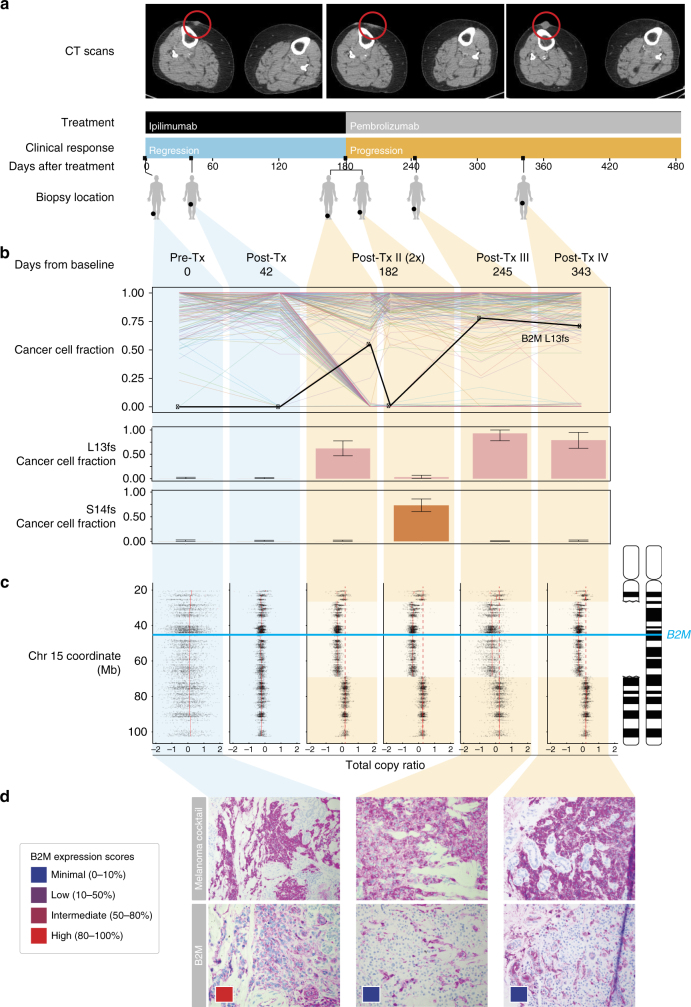
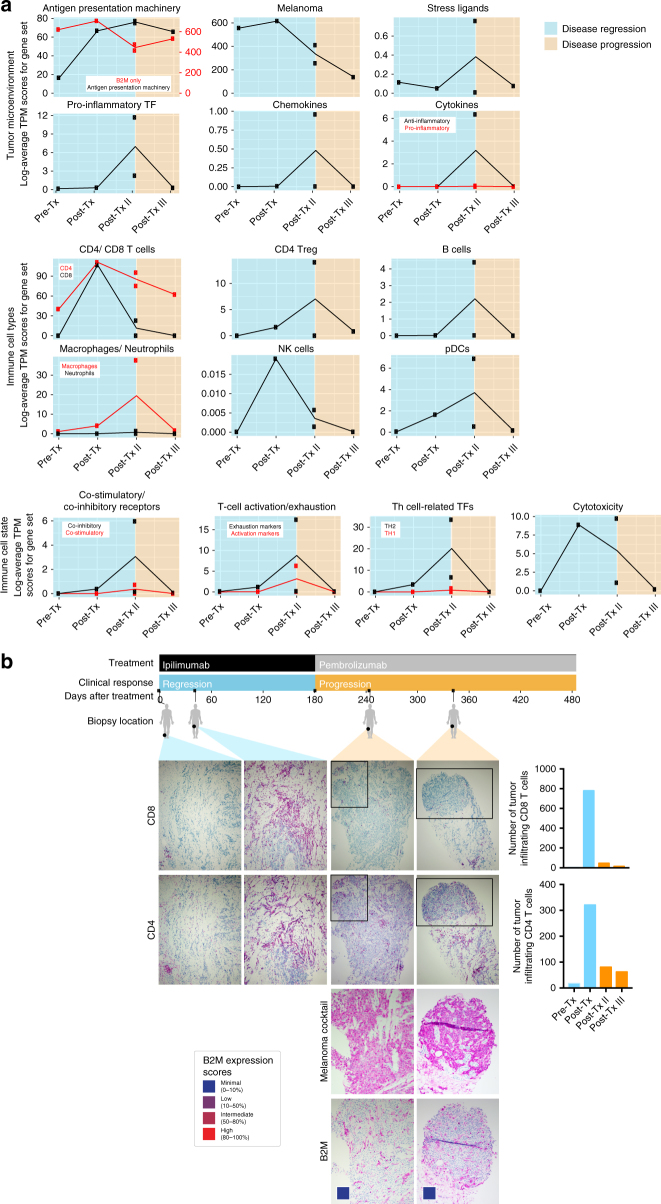
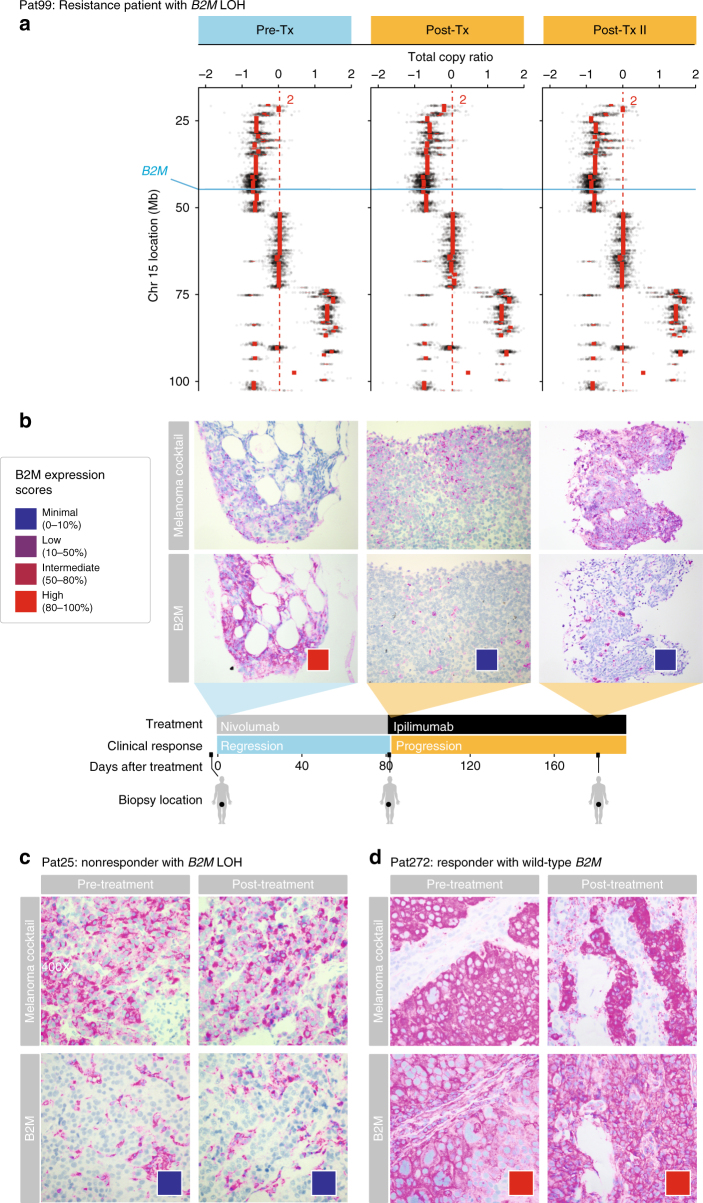
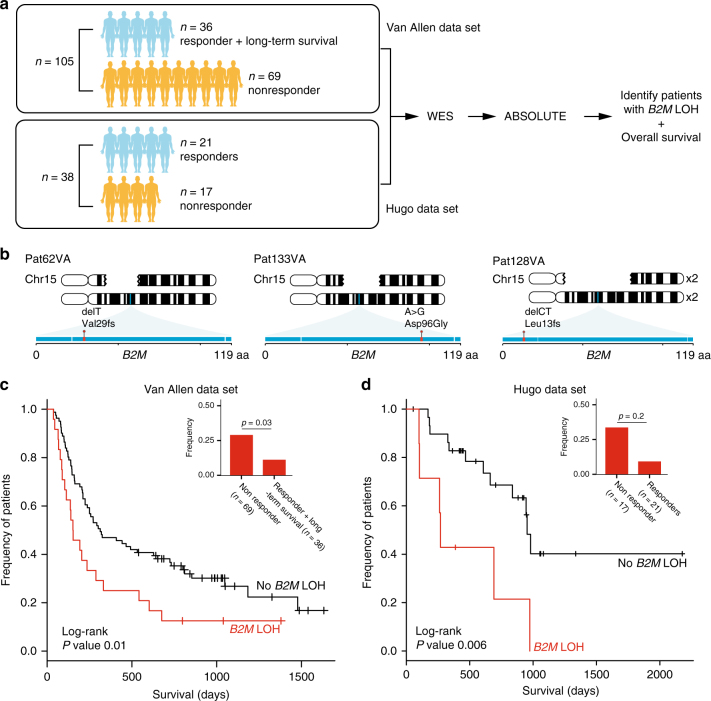
Verification
Claims the paper makes
The claims and statistics of this paper haven’t been checked yet.
Free: it reads the open-access text and checks the first 5 claims that cite a source we can check. Create a free account to check every claim.
Claims other papers make about this one
Each is checked against this paper’s own text: does it say what the citing paper says it does?
The source backs part of the claim, not all of it — or backs it for a different population, condition or comparison.
In the citing paper
“perturbations of B2M, HLA-A, JAK1, JAK2, STAT1, IFNGR1 and IFNGR2 (Fig. 2d,e, Extended Data Fig. 3e,f, Supplementary Table 2) conferred immune evasion, consistent with clinical mechanisms of resistance to immunotherapy7–9.”
From Multimodal pooled Perturb-CITE-seq screens in patient models define mechanisms of cancer immune evasion (2021) · cites this paper as [8]
Experimental — accuracy not yet measuredIn the citing paper
“Clinically relevant mechanisms of include mutations in beta-2-microglobulin (B2M) resulting in loss of MHC Class I presentation, downregulation of the antigen presentation machinery, and mutations in the IFNγ-JAK/STAT pathway that impair response to T cell mediated anti-tumor activity7–9.”
From Multimodal pooled Perturb-CITE-seq screens in patient models define mechanisms of cancer immune evasion (2021) · cites this paper as [8]
Self-check
Percentages, sums and reported differences re-computed from the paper’s own numbers.
The self-check needs the paper’s full text.
Citations
Cites
Fiji: an open-source platform for biological-image analysis
Schindelin, J., Arganda-Carreras, I., Frise, E., Kaynig, V., Longair, M., Pietzsch, T., Preibisch, S., Rueden, C., Saalfeld, S., Schmid, B., et al. (2012) · Nature Methods · doi:10.1038/nmeth.2019 · Cited by 66,890
STAR: ultrafast universal RNA-seq aligner
Dobin, A., Davis, C. A., Schlesinger, F., Drenkow, J., Zaleski, C., Jha, S., Batut, P., Chaisson, M., & Gingeras, T. R. (2013) · Bioinformatics · doi:10.1093/bioinformatics/bts635 · Cited by 51,709
PD-1 and PD-L1 Immune Checkpoint Blockade to Treat Breast Cancer
Hartkopf, A. D., Taran, F.-A., Wallwiener, M., Walter, C. B., Krämer, B., Grischke, E.-M., & Brucker, S. Y. (2016) · Breast Care · doi:10.1159/000453569 · Cited by 30,845
RSEM: accurate transcript quantification from RNA-Seq data with or without a reference genome
Li, B., & Dewey, C. N. (2011) · BMC Bioinformatics · doi:10.1186/1471-2105-12-323 · Cited by 22,179
Self-citationCerami, E., Gao, J., Dogrusoz, U., Gross, B. E., Sumer, S. O., Aksoy, B. A., Jacobsen, A., Byrne, C. J., Heuer, M. L., Larsson, E., et al. (2012) · Cancer Discovery · doi:10.1158/2159-8290.cd-12-0095 · Cited by 17,455
Adverse Renal Effects of Immune Checkpoint Inhibitors: A Narrative Review
Wanchoo, R., Karam, S., Uppal, N. N., Barta, V. S., Deray, G., Devoe, C., Launay-Vacher, V., Jhaveri, K. D., & on behalf of Cancer and Kidney International Network Workgroup on Immune Checkpoint Inhibitors (2017) · American Journal of Nephrology · doi:10.1159/000455014 · Cited by 15,256
Integrative Analysis of Complex Cancer Genomics and Clinical Profiles Using the cBioPortal
Gao, J., Aksoy, B. A., Dogrusoz, U., Dresdner, G., Gross, B., Sumer, S. O., Sun, Y., Jacobsen, A., Sinha, R., Larsson, E., et al. (2013) · Science Signaling · doi:10.1126/scisignal.2004088 · Cited by 15,160
The blockade of immune checkpoints in cancer immunotherapy
Pardoll, D. M. (2012) · Nature Reviews Cancer · doi:10.1038/nrc3239 · Cited by 13,838
PD-1 blockade induces responses by inhibiting adaptive immune resistance
Tumeh, P. C., Harview, C. L., Yearley, J. H., Shintaku, I. P., Taylor, E. J. M., Robert, L., Chmielowski, B., Spasic, M., Henry, G., Ciobanu, V., et al. (2014) · Nature · doi:10.1038/nature13954 · Cited by 6,609
Pembrolizumab versus Ipilimumab in Advanced Melanoma
Robert, C., Schachter, J., Long, G. V., Arance, A., Grob, J. J., Mortier, L., Daud, A., Carlino, M. S., McNeil, C., Lotem, M., et al. (2015) · New England Journal of Medicine · doi:10.1056/nejmoa1503093 · Cited by 5,887
Cited by
Items 401–500 of 998
The role of IFN-γ-signalling in response to immune checkpoint blockade therapy
Wong, C. W., Huang, Y., & Hurlstone, A. F. L. (2023) · Essays in Biochemistry · doi:10.1042/ebc20230001 · Cited by 35
Tumor-associated neutrophils attenuate the immunosensitivity of hepatocellular carcinoma
Teo, J. M. N., Chen, Z., Chen, W., Tan, R. J. Y., Cao, Q., Chu, Y., Ma, D., Chen, L., Yu, H., Lam, K.-H., et al. (2024) · The Journal of Experimental Medicine · doi:10.1084/jem.20241442 · Cited by 37
Wickström, S. L., Lövgren, T., Volkmar, M., Reinhold, B. B., Duke‐Cohan, J. S., Hartmann, L., Rebmann, J., Müeller, A., Melief, J., Maas, R. R., et al. (2019) · Frontiers in Immunology · doi:10.3389/fimmu.2019.02766 · Cited by 32
“Such a cytokine-inducible epitope display is consistent with the importance of an intact antigen presentation and IFN-γ signature for immunotherapy to be efficient (35).”
BackgroundExercise Oncology and Immuno-Oncology; A (Future) Dynamic Duo
Olofsson, G. H., Jensen, A. W. P., Idorn, M., & Straten, P. T. (2020) · International Journal of Molecular Sciences · doi:10.3390/ijms21113816 · Cited by 37
Lee, C., DiNatale, R. G., Chowell, D., Krishna, C., Makarov, V., Valero, C., Vuong, L. H., Lee, M., Weiss, K. L., Hoen, D., et al. (2021) · Molecular Cancer Research · doi:10.1158/1541-7786.mcr-21-0053 · Cited by 36
Wenthe, J., Naseri, S., Hellström, A.-C., Moreno, R., Ullenhag, G. J., Alemany, R., Lövgren, T., Eriksson, E., & Loskog, A. (2022) · Molecular Therapy — Oncolytics · doi:10.1016/j.omto.2022.01.003 · Cited by 30
“Facilitating NK cell responses may be crucial in patients who acquire a loss of MHC class I molecules on tumor cells, which is frequently seen in melanoma patients no longer benefiting from immune checkpoint inhibitors.(34)”
Zhao, L.-P., Hu, J.-H., Hu, D., Wang, H., Huang, C.-G., Luo, R., Zhou, Z.-H., Huang, X., Xie, T., & Lou, J.-S. (2022) · Biomedicine & Pharmacotherapy · doi:10.1016/j.biopha.2022.112949 · Cited by 37
Zhang, W., Tang, Y., Guo, Y., Kong, Y., Shi, F., Sheng, C., Wang, S., & Wang, Q. (2022) · npj Precision Oncology · doi:10.1038/s41698-022-00292-6 · Cited by 35
Harnessing the immune system by targeting immune checkpoints: Providing new hope for Oncotherapy
Yu, L., Sun, M., Zhang, Q., Zhou, Q., & Wang, Y. (2022) · Frontiers in Immunology · doi:10.3389/fimmu.2022.982026 · Cited by 33
Veerman, R. E., Akpinar, G. G., Offens, A., Steiner, L., Larssen, P., Lundqvist, A., Karlsson, M. C. I., & Gabrielsson, S. (2023) · Cancer Immunology Research · doi:10.1158/2326-6066.cir-22-0540 · Cited by 31
DGKα/ζ inhibitors combine with PD-1 checkpoint therapy to promote T cell–mediated antitumor immunity
Wichroski, M. J., Benci, J. L., Liu, S.-Q., Chupak, L. S., Fang, J., Cao, C., Wang, C., Onorato, J. M., Qiu, H., Shan, Y., et al. (2023) · Science Translational Medicine · doi:10.1126/scitranslmed.adh1892 · Cited by 32
Mechanisms of Resistance to Anti-PD-1 Immunotherapy in Melanoma and Strategies to Overcome It
Zielińska, M. K., Ciążyńska, M. A., Sulejczak, D., Rutkowski, P. L., & Czarnecka, A. M. (2025) · Biomolecules · doi:10.3390/biom15020269 · Cited by 36
Roberts, R., Mainiero, S., Powell, A. F., Liu, A. E., Shi, K., Hind, S. R., Strickler, S. R., Collmer, A., & Martin, G. B. (2019) · New Phytologist · doi:10.1111/nph.15788 · Cited by 30
Cohen, R., Jonchère, V., de la Fouchardière, C., Ratovomanana, T., Letourneur, Q., Ayadi, M., Armenoult, L., Buisson, A., Sarabi, M., Pellat, A., et al. (2021) · Journal for ImmunoTherapy of Cancer · doi:10.1136/jitc-2020-001903 · Cited by 36
HOIP limits anti-tumor immunity by protecting against combined TNF and IFN-gamma-induced apoptosis
Freeman, A. J., Vervoort, S. J., Michie, J., Ramsbottom, K. M., Silke, J., Kearney, C. J., & Oliaro, J. (2021) · EMBO Reports · doi:10.15252/embr.202153391 · Cited by 33
“…conjugation, which may have positive implications for TNF and IFN-c -induced “bystander” killing of antigen-negative tumor cells that have downregulated essential antigen presentation proteins to evade T-cell attack during immunotherapy (Restifo et al , 1996; Sade-Feldman et al , 2017).”
Walsh, R. J., & Tan, D. S. P. (2021) · Journal of Clinical Medicine · doi:10.3390/jcm10194523 · Cited by 36
Jang, H.-J., Truong, C., Lo, E. M., Holmes, H. M., Ramos, D., Ramineni, M., Lee, J., Wang, D. Y., Pietropaolo, M., Ripley, R. T., et al. (2021) · The Annals of Thoracic Surgery · doi:10.1016/j.athoracsur.2021.08.054 · Cited by 33
Lau, D., Khare, S., Stein, M. M., Jain, P., Gao, Y., BenTaieb, A., Rand, T., Salahudeen, A. A., & Khan, A. A. (2022) · Nature Communications · doi:10.1038/s41467-022-31769-4 · Cited by 38
Jan, Y., Tan, K. T., Chen, S., Yip, T. T. C., Lu, C., & Lam, A. K.-Y. (2022) · British Journal of Cancer · doi:10.1038/s41416-022-01913-4 · Cited by 31
“Although inconclusive, numbers of ICI-resistant markers have been proposed for MSI-H tumours, including low TMB, Janus kinase (JAK1/2/3) mutations, loss of beta-2-microglobulin (B2M) that could impair antigen presentation by class I major histocompatibility complex [6, 20, 22, 23].”
BackgroundPolycomb Directed Cell Fate Decisions in Development and Cancer
German, B., & Ellis, L. (2022) · Epigenomes · doi:10.3390/epigenomes6030028 · Cited by 37
Li, Y., Mahadevan, N. R., Duplaquet, L., Hong, D., Durmaz, Y. T., Jones, K. L., Cho, H., Morrow, M., Protti, A., Poitras, M. J., et al. (2023) · Cell Reports Medicine · doi:10.1016/j.xcrm.2023.101282 · Cited by 36
Snahnicanova, Z., Kasubova, I., Kalman, M., Grendar, M., Mikolajcik, P., Gabonova, E., Laca, L., Caprnda, M., Rodrigo, L., Ciccocioppo, R., et al. (2020) · Clinical and Experimental Medicine · doi:10.1007/s10238-019-00601-7 · Cited by 29
“This hypothesis is supported by the increased accumulation of B2M mutations during and after therapy by immune checkpoint inhibitors [7, 8, 20, 21, 44].”
BackgroundOvercoming resistance to PD-1/PD-L1 inhibitors in esophageal cancer
Cheng, C., Zhuge, L., Xiao, X., Luan, S., & Yuan, Y. (2022) · Frontiers in Oncology · doi:10.3389/fonc.2022.955163 · Cited by 34
“Cancer cells interfere the synthesis of MHC class I molecule through decreased expression of b2M and loss of functional b2M as a response to immunotherapy, contributing to the acquired resistance (21, 22), which was illustrated by several studies of melanoma.”
BackgroundLNP-RNA-mediated antigen presentation leverages SARS-CoV-2-specific immunity for cancer treatment
Xue, Y., Hou, X., Zhong, Y., Zhang, Y., Du, S., Kang, D. D., Wang, L., Wang, C., Li, H., Wang, S., et al. (2025) · Nature Communications · doi:10.1038/s41467-025-57149-2 · Cited by 36
Morris, V. K., Parseghian, C. M., Bahrambeigi, V., Abdelfattah, N., Xiao, L., Agrawal, A., Lin, K., Raghav, K. P. S., Wolff, R. A., Dasari, A. N., et al. (2025) · Cancer Cell · doi:10.1016/j.ccell.2025.08.002 · Cited by 38
Self-citationThe impact of effective systemic therapies on surgery for stage IV melanoma
Smith, M. J. F., Smith, H. G., Joshi, K., Gore, M. E., Strauß, D., Hayes, A. J., & Larkin, J. (2018) · European Journal of Cancer · doi:10.1016/j.ejca.2018.08.008 · Cited by 29
microRNAs Tune Oxidative Stress in Cancer Therapeutic Tolerance and Resistance
Zhang, W. C. (2019) · International Journal of Molecular Sciences · doi:10.3390/ijms20236094 · Cited by 30
“In addition, most cancer patients either do not respond to the immune checkpoint blockade or develop resistance to it, often because of acquired mutations [175] that impair antigen presentation [176].”
BackgroundmiRNA as a Modulator of Immunotherapy and Immune Response in Melanoma
Nguyen, M.-H. T., Luo, Y.-H., Li, A.-L., Tsai, J.-C., Wu, K., Chung, P., & Ma, N. J.-L. (2021) · Biomolecules · doi:10.3390/biom11111648 · Cited by 33
“Mutations in Janus kinase 1/2 (JAK1/2) and beta-2-microglobulin (B2M) were found in both primary and acquired resistance to anti-PD-1 antibody (pembrolizumab) or anti-CTLA-4 (ipilimumab) in metastatic melanoma patients [19,20,28].”
BackgroundViral and cellular oncogenes promote immune evasion
Roetman, J. J., Apostolova, M. K. I., & Philip, M. (2022) · Oncogene · doi:10.1038/s41388-021-02145-1 · Cited by 34
“Metastatic melanoma patients with B2M LOH had reduced response to ICB and worse overall survival [88].”
BackgroundMulti-modal molecular programs regulate melanoma cell state
Andrews, M. C., Oba, J., Wu, C., Zhu, H., Karpinets, T. V., Creasy, C. A., Forget, M., Yu, X., Song, X., Mao, X., et al. (2022) · Nature Communications · doi:10.1038/s41467-022-31510-1 · Cited by 36
Strategies for Predicting Response to Checkpoint Inhibitors
Zappasodi, R., Wolchok, J. D., & Merghoub, T. (2018) · Current Hematologic Malignancy Reports · doi:10.1007/s11899-018-0471-9 · Cited by 31
Qiu, J., Sharma, S., Rollins, R. A., & Paul, T. A. (2020) · Future Medicinal Chemistry · doi:10.4155/fmc-2020-0072 · Cited by 31
Gamma delta T cells and their immunotherapeutic potential in cancer
Cieslak, S. G., & Shahbazi, R. (2025) · Biomarker Research · doi:10.1186/s40364-025-00762-6 · Cited by 38
Ascierto, P. A., Bifulco, C. B., Buonaguro, L., Emens, L. A., Ferris, R. L., Fox, B. A., Delgoffe, G. M., Galon, J., Gridelli, C., Merlano, M. C., et al. (2019) · Journal for ImmunoTherapy of Cancer · doi:10.1186/s40425-019-0798-3 · Cited by 31
Léon-Letelier, R. A., Bonifaz, L. C., & Fuentes‐Pananá, E. M. (2019) · Journal of Leukocyte Biology · doi:10.1002/jlb.mr0618-241rr · Cited by 31
The Genetic Evolution of Metastasis
Rogiers, A., Lobón, I., Spain, L. A., & Turajlic, S. (2022) · Cancer Research · doi:10.1158/0008-5472.can-21-3863 · Cited by 30
Zapata, I., Moraes, L. E., Fiala, E. M., Zaldívar‐López, S., Couto, C. G., Rowell, J., & Alvarez, C. E. (2019) · BMC Genomics · doi:10.1186/s12864-019-5531-6 · Cited by 33
“canine cancer [7] have strong biomarker and therapeutic implications [31, 32].”
BackgroundCheckpoint blockade toxicities: Insights into autoimmunity and treatment
Walsh, M. J., & Dougan, M. L. (2021) · Seminars in Immunology · doi:10.1016/j.smim.2021.101473 · Cited by 29
Zhang, W., Kong, Y., Li, Y., Shi, F., Lyu, J., Sheng, C., Wang, S., & Wang, Q. (2022) · Frontiers in Immunology · doi:10.3389/fimmu.2021.798474 · Cited by 28
“Nevertheless, mutations in B2M, which stabilize intracellular peptides on the cell surface and play a vital role in antigen presentation, were demonstrated to be associated with acquired resistance to CTLA-4 and PD-1 inhibitors in melanoma (23).”
BackgroundYu, J., Wu, X., Song, J., Zhao, Y., Li, H., Luo, M., & Liu, X. (2022) · Frontiers in Pharmacology · doi:10.3389/fphar.2022.928226 · Cited by 36
“acquired resistance to anti-PD-1 therapy, which can be used as a hallmark of resistance to PD-1 inhibitors (Sade-Feldman et al., 2017; Lee et al., 2020).”
BackgroundHargadon, K. M. (2023) · Cellular and Molecular Life Sciences · doi:10.1007/s00018-023-04689-9 · Cited by 36
“Likewise, point mutations, deletions, and loss of heterozygosity in the gene encoding β2-microglobulin, which is needed for stable expression of cell surface HLA/antigen complexes, have been shown to emerge over the course of cancer progression and often correlate with resistance to immunotherapy [17, 73, 74].”
BackgroundOtegui, N., Houry, M., Arozarena, I., Serrano, D., Redín, E., Expósito, F., León, S., Valencia, K., Montuenga, L. M., & Calvo, A. (2023) · Cancers · doi:10.3390/cancers15123076 · Cited by 30
Iorgulescu, J. B., Ruthen, N. G., Ahn, R., Panagioti, E., Gokhale, P. C., Neagu, M. R., Speranza, M. C., Eschle, B. K., Soroko, K. M., Piranlioglu, R., et al. (2023) · Frontiers in Immunology · doi:10.3389/fimmu.2023.1297932 · Cited by 30
Challenges in Combining Immunotherapy with Radiotherapy in Recurrent/Metastatic Head and Neck Cancer
Plavc, G., Jesenko, T., Oražem, M., & Strojan, P. (2020) · Cancers · doi:10.3390/cancers12113197 · Cited by 29
“Loss of β2-microglobulin is also a known evasive mechanism to anti-PD-1 therapy [43,44].”
BackgroundAddressing Resistance to Immune Checkpoint Inhibitor Therapy: An Urgent Unmet Need
Hu‐Lieskovan, S., Malouf, G. G., Jacobs, I. A., Chou, J., Liu, L., & Johnson, M. L. (2021) · Future Oncology · doi:10.2217/fon-2020-0967 · Cited by 32
Pizzolla, A., Keam, S. P., Vergara, I. A., Caramia, F., Thio, N., Wang, M., Kocovski, N., Tantalo, D. G. M., Jabbari, J. S., Au‐Yeung, G., et al. (2022) · Journal for ImmunoTherapy of Cancer · doi:10.1136/jitc-2022-004574 · Cited by 27
Tumor cGAMP Awakens the Natural Killers
Sundararaman, S. K., & Barbie, D. A. (2018) · Immunity · doi:10.1016/j.immuni.2018.10.001 · Cited by 28
Predicting tumour response to anti-PD-1 immunotherapy with computational modelling
Valentinuzzi, D., Simončič, U., Uršič, K., Vrankar, M., Turk, M., & Jeraj, R. (2019) · Physics in Medicine and Biology · doi:10.1088/1361-6560/aaf96c · Cited by 27
Genomic characterization of hepatoid tumors: context matters
Lawlor, R. T., Mafficini, A., Sciammarella, C., Cantù, C., Rusev, B. C., Piredda, M. L., Antonello, D., Grimaldi, S., Bonizzato, G., Sperandio, N., et al. (2021) · Human Pathology · doi:10.1016/j.humpath.2021.09.006 · Cited by 25
Luchini, C., Mafficini, A., Chatterjee, D., Piredda, M. L., Sciammarella, C., Navale, P., Malleo, G., Mattiolo, P., Marchegiani, G., Pea, A., et al. (2021) · Archiv für Pathologische Anatomie und Physiologie und für Klinische Medicin · doi:10.1007/s00428-021-03205-3 · Cited by 25
Ma, X., Wu, J., Wang, B., Liu, C., Liu, L., & Sun, C. (2022) · International Journal of Oncology · doi:10.3892/ijo.2022.5424 · Cited by 30
Connecting multiple microenvironment proteomes uncovers the biology in head and neck cancer
Busso-Lopes, A. F., Neves, L. X., Câmara, G. A., Granato, D. C., Pretti, M. A. M., Heberle, H., Patroni, F. M. D. S., SÁ, J. D. O., Yokoo, S., Rivera, C., et al. (2022) · Nature Communications · doi:10.1038/s41467-022-34407-1 · Cited by 28
Reduced MHC Class I and II Expression in HPV−Negative vs. HPV−Positive Cervical Cancers
Evans, A. M., Salnikov, M. Y., Tessier, T. M., & Mymryk, J. S. (2022) · Cells · doi:10.3390/cells11233911 · Cited by 32
Bypassing anti-PD-(L)1 therapy: Mechanisms and management strategies
Mortezaee, K., Majidpoor, J., Najafi, S., & Tasa, D. (2022) · Biomedicine & Pharmacotherapy · doi:10.1016/j.biopha.2022.114150 · Cited by 27
Singh, S. D., Singh, N., Baranwal, M., Sharma, S., Devi, S., & Kumar, S. (2023) · 3 Biotech · doi:10.1007/s13205-023-03826-2 · Cited by 27
“…another on mismatch repair-deficient tumours patients resulted in the identification of acquired resistance due to loss of β2M in one patient out of 14 in the first study, and 2 patients out of 5 have acquired alteration of β2M in the latter study (Zaretsky et al. 2016; Sade-Feldman et al. 2017).”
BackgroundDecoding MHC loss: Molecular mechanisms and implications for immune resistance in cancer
Lin, P., Lin, Y., Xu, C., Zhao, X., & Cui, L. (2025) · Clinical and Translational Medicine · doi:10.1002/ctm2.70403 · Cited by 36
Understanding and Overcoming the Inflammatory Toxicities of Immunotherapy
Dougan, M. L. (2020) · Cancer Immunology Research · doi:10.1158/2326-6066.cir-20-0372 · Cited by 26
Resistance mechanisms to checkpoint inhibitors
Weiss, S. A., & Sznol, M. (2021) · Current Opinion in Immunology · doi:10.1016/j.coi.2021.02.001 · Cited by 27
Autophagy: The Potential Link between SARS-CoV-2 and Cancer
Habibzadeh, P., Dastsooz, H., Eshraghi, M., Łoś, M., Klionsky, D. J., & Ghavami, S. (2021) · Cancers · doi:10.3390/cancers13225721 · Cited by 26
“MHC-I loss or downregulation is a common mechanism for the development of resistance to PDCD1/PD-1 inhibitors among patients with melanoma [61,62].”
BackgroundLocal γδ T cells: translating promise to practice in cancer immunotherapy
Zlatareva, I., & Wu, Y. (2023) · British Journal of Cancer · doi:10.1038/s41416-023-02303-0 · Cited by 27
“Suppression of neoantigens [50–53] and/or defects in antigen presentation [54, 55] through cancer-associated genomic instability, epigenetic silencing, or other mechanisms, drive immune evasion and resistance to current immunotherapies.”
BackgroundA Narrative Review of Current Knowledge on Cutaneous Melanoma
Caraban, B. M., Aşchie, M., Deacu, M., Cozaru, G. C., Pundiche, M. B., Orǎșanu, C. I., & Vodă, R. I. (2024) · Clinics and Practice · doi:10.3390/clinpract14010018 · Cited by 29
Schröder, M., Krötschel, M., Conrad, L., Naumann, S. K., Bachran, C., Rolfe, A., Umansky, V., Helming, L., & Swee, L. K. (2018) · Scientific Reports · doi:10.1038/s41598-018-31674-1 · Cited by 26
Targeted demethylation and activation of NLRC5 augment cancer immunogenicity through MHC class I
Sun, X., Watanabe, T., Oda, Y., Shen, W., Ahmad, A. M., Ouda, R., de Figueiredo, P., Kitamura, H., Tanaka, S., & Kobayashi, K. S. (2024) · Proceedings of the National Academy of Sciences · doi:10.1073/pnas.2310821121 · Cited by 28
Ranjan, K., Rajendran, B. K., Deen, I. U., Costantini, A., de Rodas, M. L., Desai, S., Scallo, F., Gianino, N., Ferrone, S., & Schalper, K. A. (2025) · Molecular Cancer · doi:10.1186/s12943-025-02276-z · Cited by 28
Acquired resistance to immunotherapy in solid tumors
Verdys, P., Johansen, A. Z., Gupta, A. K., Presti, M., Dionisio, E., Madsen, D. H., Fontecedro, A. C., & Donia, M. (2025) · Trends in Molecular Medicine · doi:10.1016/j.molmed.2025.03.010 · Cited by 32
Isazadeh, A., Hajazimian, S., Garshasbi, H., Shadman, B., Baghbanzadeh, A., Chavoshi, R., Taefehshokr, S., Jadid, M. F. S., Hajiasgharzadeh, K., & Baradaran, B. (2020) · Journal of Cellular Physiology · doi:10.1002/jcp.29905 · Cited by 25
“are connected with innate resistance to immune checkpoints blockade (Sade‐Feldman et al., 2017).”
BackgroundHLA Genotyping in Synovial Sarcoma: Identifying HLA-A*02 and Its Association with Clinical Outcome
E, E. R. P., Seier, K. P., Bandlamudi, C., Dickson, M. A., Gounder, M. M., Keohan, M. L., Chi, P., Kelly, C. M., Movva, S., Nacev, B. A., et al. (2020) · Clinical Cancer Research · doi:10.1158/1078-0432.ccr-20-0832 · Cited by 23
Alrabadi, N., Abushukair, H. M., Ababneh, O. E., Syaj, S., Al-Horani, S., Qarqash, A., Darabseh, O., Al-Sous, M. M., Al-Aomar, S., Ahmed, Y. B., et al. (2021) · Clinical & Translational Oncology · doi:10.1007/s12094-021-02598-6 · Cited by 26
“Also, some patients have an insufficient presentation of cancerous antigens due to mutations or deletions in the beta-2-microglobulin (β2M) gene resulting in a decrease in MHC I molecules impairing the function of CD8 + T cells [50].”
BackgroundCombination therapy with nivolumab (anti-PD-1 monoclonal antibody): A new era in tumor immunotherapy
Kiasari, B. A., Abbasi, A., Darestani, N. G., Adabi, N., Moradian, A., Yazdani, Y., Hosseini, G. S., Gholami, N., & Janati, S. (2022) · International Immunopharmacology · doi:10.1016/j.intimp.2022.109365 · Cited by 31
Biomarker-Driven Personalization of Neoadjuvant Immunotherapy in Melanoma
Hoeijmakers, L. L., Reijers, I. L. M., & Blank, C. U. (2023) · Cancer Discovery · doi:10.1158/2159-8290.cd-23-0352 · Cited by 28
Huang, Y., Chen, Z., Shen, G., Fang, S., Zheng, J., Chi, Z., Zhang, Y., Zou, Y., Gan, Q., Liao, C., et al. (2024) · Human Vaccines & Immunotherapeutics · doi:10.1080/21645515.2024.2318815 · Cited by 24
Vathiotis, I. A., Johnson, J. M., & Argiris, A. E. (2021) · Cancer Treatment Reviews · doi:10.1016/j.ctrv.2021.102192 · Cited by 24
Dahl, O., & Brydøy, M. (2019) · Acta Oncologica · doi:10.1080/0284186x.2018.1555375 · Cited by 24
Modern cancer therapy: cryoablation meets immune checkpoint blockade
Liu, Q., Zhang, C., Chen, X., & Han, Z. (2024) · Frontiers in Oncology · doi:10.3389/fonc.2024.1323070 · Cited by 28
Engineering Multidimensional Evolutionary Forces to Combat Cancer
McCoach, C. E., & Bivona, T. G. (2019) · Cancer Discovery · doi:10.1158/2159-8290.cd-18-1196 · Cited by 25
“These findings link tumor genomic alterations and heterogeneity to immune escape and are parallel to findings in melanoma in which LOH in MHC class I antigen presentation components may contribute to resistance to certain immunotherapies (57).”
ResultPromotion on NLRC5 upregulating MHC-I expression by IFN-γ in MHC-I–deficient breast cancer cells
Zhao, M., Sun, Y., Jiang, X., Liu, L., Liu, L., & Sun, L. (2019) · Immunologic Research · doi:10.1007/s12026-019-09111-w · Cited by 26
Nicotinamide Inhibits T Cell Exhaustion and Increases Differentiation of CD8 Effector T Cells
Alavi, S., Emran, A. A., Tseng, H., Tiffen, J. C., McGuire, H. M., & Hersey, P. (2022) · Cancers · doi:10.3390/cancers14020323 · Cited by 23
“Multiple causes of resistance to immunotherapy have been defined [1–3] including defects in antigen presentation [4] and low T cell infiltration into tumors [5].”
BackgroundZheng, K. C., Gao, L., Hao, J., Zou, X., & Hu, X. (2022) · Frontiers in Immunology · doi:10.3389/fimmu.2022.972227 · Cited by 26
“Exhausted/dysfunctional CD8 T cells (13, 14), antiinflammatory/M2-like tumor-associated macrophages (TAMs) (13, 14), defects in IFNg signaling (15) or antigen processing and presentation (16) all contribute to resistance.”
Radiosensitization-Related Cuproptosis LncRNA Signature in Non-Small Cell Lung Cancer
Xu, Q., Liu, T., & Wang, J. (2022) · Genes · doi:10.3390/genes13112080 · Cited by 22
Füchsl, F., & Krackhardt, A. M. (2022) · Cells · doi:10.3390/cells11030410 · Cited by 25
Overcoming Resistance Mechanisms to Melanoma Immunotherapy
Zheng, D. X., Bozym, D. J., Tarantino, G., Sullivan, R. J., Liu, D., & Jenkins, R. W. (2024) · American Journal of Clinical Dermatology · doi:10.1007/s40257-024-00907-7 · Cited by 31
“Moreover, deficiency in the B2M subunit of MHC class I can also impede antigen presentation and render tumors less responsive to immune checkpoint inhibition, even in instances of high TMB [72].”
Self-citationCRATER tumor niches facilitate CD8+ T cell engagement and correspond with immunotherapy success
Ludin, A., Stirtz, G. L., Tal, A., Nirmal, A. J., Pfaff, K. L., Manos, M. P., Besson, N. R., Eskndir, N., Porter, B. A., Jones, S. M., et al. (2025) · Cell · doi:10.1016/j.cell.2025.09.021 · Cited by 24
Reticker-Flynn, N. E., & Engleman, E. G. (2020) · eLife · doi:10.7554/elife.53839 · Cited by 26
Calmeiro, J., Carrascal, M. A., Tavares, A. R., Ferreira, D. A., Gomes, C. M. F., Cruz, M. T., Falcão, A. C., & Neves, B. M. (2020) · Pharmacological Research · doi:10.1016/j.phrs.2020.105309 · Cited by 22
Zettl, M., Wurm, M., Schaaf, O., Mostböck, S., Tirapu, I., Apfler, I., Lorenz, I. C., Frego, L., Kenny, C. H., Thibodeau, M. S., et al. (2022) · OncoImmunology · doi:10.1080/2162402x.2022.2080328 · Cited by 22
Uncoupling CD4+ TIL-Mediated Tumor Killing from JAK-Signaling in Melanoma
Draghi, A., Presti, M., Jensen, A. W. P., Chamberlain, C. A., Albieri, B., Rasmussen, A.-C. K., Andersen, M. H., Crowther, M. D., Svane, I. M., & Donia, M. (2023) · Clinical Cancer Research · doi:10.1158/1078-0432.ccr-22-3853 · Cited by 22
Wang, Y., Yang, S., Wan, L., Ling, W., Chen, H. H., & Wang, J. (2023) · International Journal of Oncology · doi:10.3892/ijo.2023.5534 · Cited by 24
Na, H. Y., Park, Y., Nam, S. K., Lee, K. S., Oh, H., Kim, D., Kang, S., Kim, W. H., & Lee, H. S. (2020) · Cancer Science · doi:10.1111/cas.14723 · Cited by 24
Metabolic Modifications, Inflammation, and Cancer Immunotherapy
Zheng, S., Song, Q., & Zhang, P. (2021) · Frontiers in Oncology · doi:10.3389/fonc.2021.703681 · Cited by 21
Tumor evolution selectively inactivates the core microRNA machinery for immune evasion
Song, T., Long, M., Zhao, H., Zou, M.-W., Fan, H., Liu, Y., Geng, C., Song, M., Liu, Y.-F., Chen, J., et al. (2021) · Nature Communications · doi:10.1038/s41467-021-27331-3 · Cited by 21
Self-citationEisa, N. H., Crowley, V. M., Elahi, A., Kommalapati, V. K., Serwetnyk, M. A., Llbiyi, T., Lu, S., Kainth, K., Jilani, Y., Marasco, D., et al. (2023) · iScience · doi:10.1016/j.isci.2023.108308 · Cited by 21
Chromatin Remodelers Are Regulators of the Tumor Immune Microenvironment
Chaudhri, A., Lizee, G. A., Hwu, P., & Rai, K. (2024) · Cancer Research · doi:10.1158/0008-5472.can-23-2244 · Cited by 23
Immuno-oncology from the perspective of somatic evolution
González, S., Volkova, N. V., Beer, P. A., & Gerstung, M. (2017) · Seminars in Cancer Biology · doi:10.1016/j.semcancer.2017.12.001 · Cited by 23
Lost in the crowd: identifying targetable MHC class I neoepitopes for cancer immunotherapy
Wilson, E., & Anderson, K. S. (2018) · Expert Review of Proteomics · doi:10.1080/14789450.2018.1545578 · Cited by 20
“expression significantly impacted the effectiveness of the immune checkpoint blockade antibody [68,69].”
BackgroundCancer research in the era of immunogenomics
Wolf, Y., & Samuels, Y. (2018) · ESMO Open · doi:10.1136/esmoopen-2018-000475 · Cited by 22
“This can be achieved by acquired mutations of the human leucocyte antigen (HLA) component β 2M 71 72 or loss of the HLA alleles.”
BackgroundLevitzki, A., & Klein, S. (2019) · Proceedings of the National Academy of Sciences · doi:10.1073/pnas.1816012116 · Cited by 22
Sirohi, D., Schmidt, R. L., Aisner, D. L., Behdad, A., Betz, B. L., Brown, N. A., Coleman, J. F., Corless, C. L., Deftereos, G., Ewalt, M. D., et al. (2019) · Journal of Molecular Diagnostics · doi:10.1016/j.jmoldx.2019.10.010 · Cited by 24
Melanoma immunotherapy: strategies to overcome pharmacological resistance
Trojaniello, C., Vitale, M. G., Scarpato, L., Esposito, A., & Ascierto, P. A. (2020) · Expert Review of Anticancer Therapy · doi:10.1080/14737140.2020.1745634 · Cited by 23
“the TME and the release of tumor molecules, such as adenosine, CD73 and transforming growth factor (TGF)-β, may all represent mechanisms of tumor escape [22].”
BackgroundImmunity, immunotherapy, and rectal cancer: A clinical and translational science review
Otegbeye, E. E., Mitchem, J. B., Park, H., Chaudhuri, A. A., Kim, H. J., Mutch, M. G., & Ciorba, M. A. (2020) · Translational research · doi:10.1016/j.trsl.2020.12.002 · Cited by 23
Industrializing engineered autologous T cells as medicines for solid tumours
Britten, C. M., Shalabi, A. M., & Hoos, A. (2021) · Nature Reviews Drug Discovery · doi:10.1038/s41573-021-00175-8 · Cited by 21
Metadata
- Authors
- Sade-Feldman, M., Jiao, Y. J., Chen, J. H., Rooney, M. S., Barzily-Rokni, M., Eliane, J.-P., Bjorgaard, S. L., Hammond, M. R., Vitzthum, H., Blackmon, S. M., Frederick, D. T., Hazar-Rethinam, M., Nadres, B. A., Van Seventer, E. E., Shukla, S. A., Yizhak, K., Ray, J. P., Rosebrock, D., Livitz, D., Adalsteinsson, V., Getz, G., Duncan, L. M., Li, B., Corcoran, R. B., Lawrence, D. P., Stemmer-Rachamimov, A., Boland, G. M., Landau, D. A., Flaherty, K. T., Sullivan, R. J., & Hacohen, N.
- Affiliations
- Broad Institute (US)
- Massachusetts General Hospital (US)
- Dana-Farber Cancer Institute (US)
- Corresponding author
- Sullivan, Ryan J.
- Hacohen, Nir
- ORCID
- Sade-Feldman, Moshe
- Jiao, Yunxin J.
- Chen, Jonathan H.
- Barzily-Rokni, Michal
- Frederick, Dennie T.
- Hazar-Rethinam, Mehlika
- Nadres, Brandon A.
- Shukla, Sachet A.
- Yizhak, Keren
- Rosebrock, Daniel
- Livitz, Dimitri
- Adalsteinsson, Viktor
- Getz, Gad
- Duncan, Lyn M.
- Li, Bo
- Corcoran, Ryan B.
- Lawrence, Donald P.
- Stemmer-Rachamimov, Anat
- Boland, Genevieve M.
- Landau, Dan A.
- Flaherty, Keith T.
- Sullivan, Ryan J.
- Hacohen, Nir
- Venue
- Nature Communications
- Published
- 2017-10-26
- Volume
- 8
- Issue
- 1
- Pages
- 1136-1136
- ISSN
- 2041-1723 (ISSN-L)
- PMC
- PMC5656607
- OpenAlex
- W2765417948
- Cited by
- 1,005
- References
- 44
- Citations by year
- 2026: 90 · 2025: 116 · 2024: 110 · 2023: 129 · 2022: 145 · 2021: 152 · 2020: 125 · 2019: 78 · 2018: 53 · 2017: 4
- FWCI
- 31.34
- Type
- journal article
- Language
- en
- Open access
- gold
- doi.org
- Licence
- cc-by
- creativecommons.org/licenses/by/4.0 (tdm)
- creativecommons.org/licenses/by/4.0 (vor)
- Locations
- Nature Communications (publishedVersion, cc-by)
- Europe PMC (PubMed Central) (publishedVersion, cc-by)
- PubMed Central (publishedVersion, cc-by)
- PubMed (publishedVersion)
- Digital Access to Scholarship at Harvard (DASH) (Harvard University) (submittedVersion, cc-by)
- RePEc: Research Papers in Economics (submittedVersion)
- DOAJ (DOAJ: Directory of Open Access Journals) (submittedVersion, cc-by-sa)
- DOAJ (DOAJ: Directory of Open Access Journals) (submittedVersion)
- Funders
- National Science Foundation
- Cancer Research Institute
- Melanoma Research Alliance
- Dr. Miriam and Sheldon G. Adelson Medical Research Foundation
- Wellcome Trust
- Broad Institute
- National Institutes of Health
- Stand Up To Cancer
- National Human Genome Research Institute (U54HG003067)
- National Cancer Institute (R01CA208756, T32CA207021, R50CA211482)
- National Institute of Environmental Health Sciences (K01ES025431)
- Topics
- Health Sciences › Medicine › Oncology › Cancer Immunotherapy and Biomarkers
- Life Sciences › Immunology and Microbiology › Immunology › Immunotherapy and Immune Responses
- Health Sciences › Medicine › Oncology › Cutaneous Melanoma Detection and Management
- Keywords
- immune checkpoint blockade, metastatic melanoma, beta2-microglobulin, loss of heterozygosity, MHC class I antigen presentation, anti-CTLA-4, anti-PD-1, treatment resistance, tumor immune evasion, overall survival
- MeSH terms
- Animals, Antibodies, Monoclonal, beta 2-Microglobulin, Female, Humans, Melanoma, Mice, Inbred C57BL, Neoplasm Metastasis, Neoplasms, Experimental, Point Mutation, Antigen Presentation, Mice, Knockout, Drug Resistance, Neoplasm, Loss of Heterozygosity, CTLA-4 Antigen, Programmed Cell Death 1 Receptor
About these checks
Registry, retraction, Cites and statistics results are computed, not judged, with one exception: a printed reference that no index lists is read once by a model before it counts as a citation error. Claims are extracted by a model and kept only when their quote appears verbatim in the text; each cited source is then checked, with a model’s help, for whether it says what the claim relies on. Those verdicts can be wrong — read the claim’s quote and the cited source before relying on one.
Statistics and arithmetic are recomputed, not judged.
Confidence bands are shown only for fields calibrated on our annotated test set. None is calibrated yet, so no band is shown.
What counts as a claim ›How we measure confidence ›How we check this ›
Are you an author, or do you see a problem with this page? Request a review
Data sources
Bibliographic data: Semantic Scholar, OpenAlex, Crossref.
Contains information from the Semantic Scholar Academic Graph Datasets, made available under the ODC Attribution License (ODC-BY 1.0).
Semantic Scholar’s data is described in: Kinney, R., et al. (2023). The Semantic Scholar Open Data Platform. arXiv:2301.10140.
