

Resistance to checkpoint blockade therapy through inactivation of antigen presentation
Open accessThe DOI matches its Crossref record; 44 of the 44 references it cites were found in a registry or an index.
Abstract
Treatment with immune checkpoint blockade (CPB) therapies often leads to prolonged responses in patients with metastatic melanoma, but the common mechanisms of primary and acquired resistance to these agents remain incompletely characterized and have yet to be validated in large cohorts. By analyzing longitudinal tumor biopsies from 17 metastatic melanoma patients treated with CPB therapies, we observed point mutations, deletions or loss of heterozygosity (LOH) in beta-2-microglobulin ( B2M ), an essential component of MHC class I antigen presentation, in 29.4% of patients with progressing disease. In two independent cohorts of melanoma patients treated with anti-CTLA4 and anti-PD1, respectively, we find that B2M LOH is enriched threefold in non-responders (~30%) compared to responders (~10%) and associated with poorer overall survival. Loss of both copies of B2M is found only in non-responders. B2M loss is likely a common mechanism of resistance to therapies targeting CTLA4 or PD1.
Overview
The claims and statistics of this paper haven’t been checked yet.
Free: it reads the open-access text and checks the first 5 claims that cite a source we can check. Create a free account to check every claim.
Integrity signals
Registry
Cites
Statistics
Figures
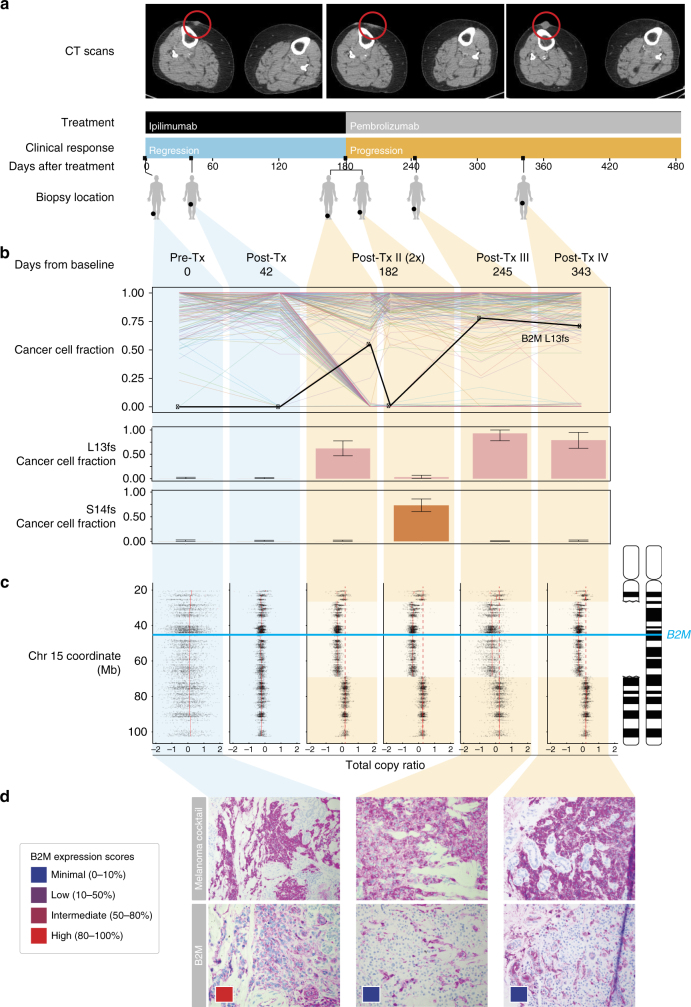
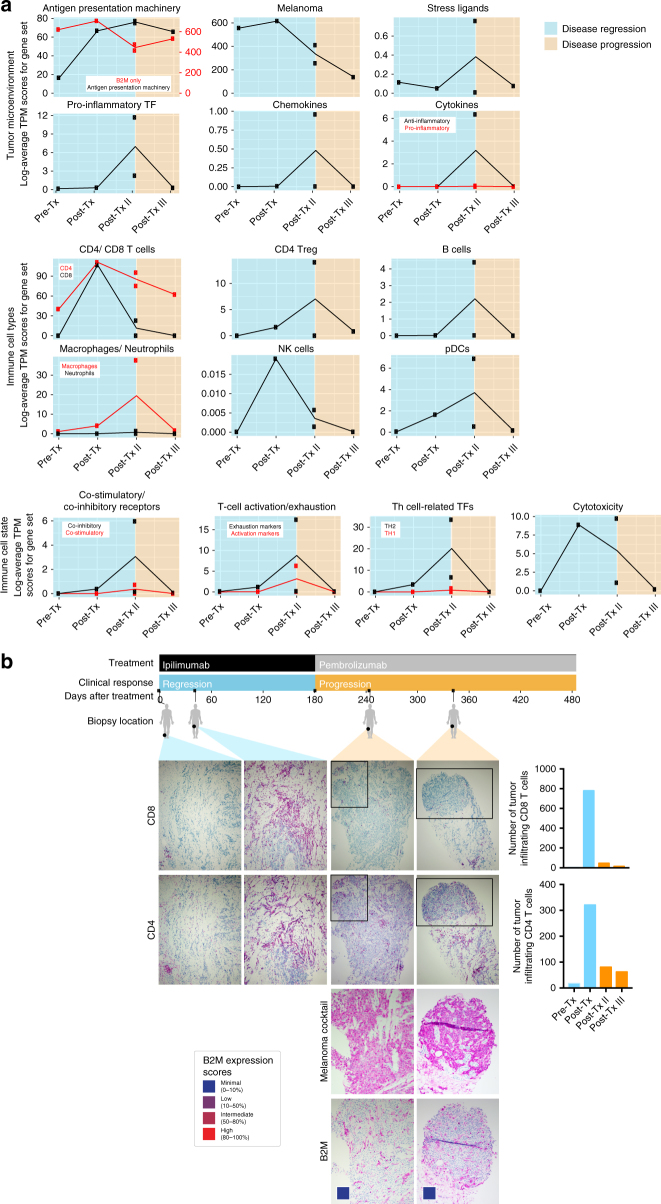
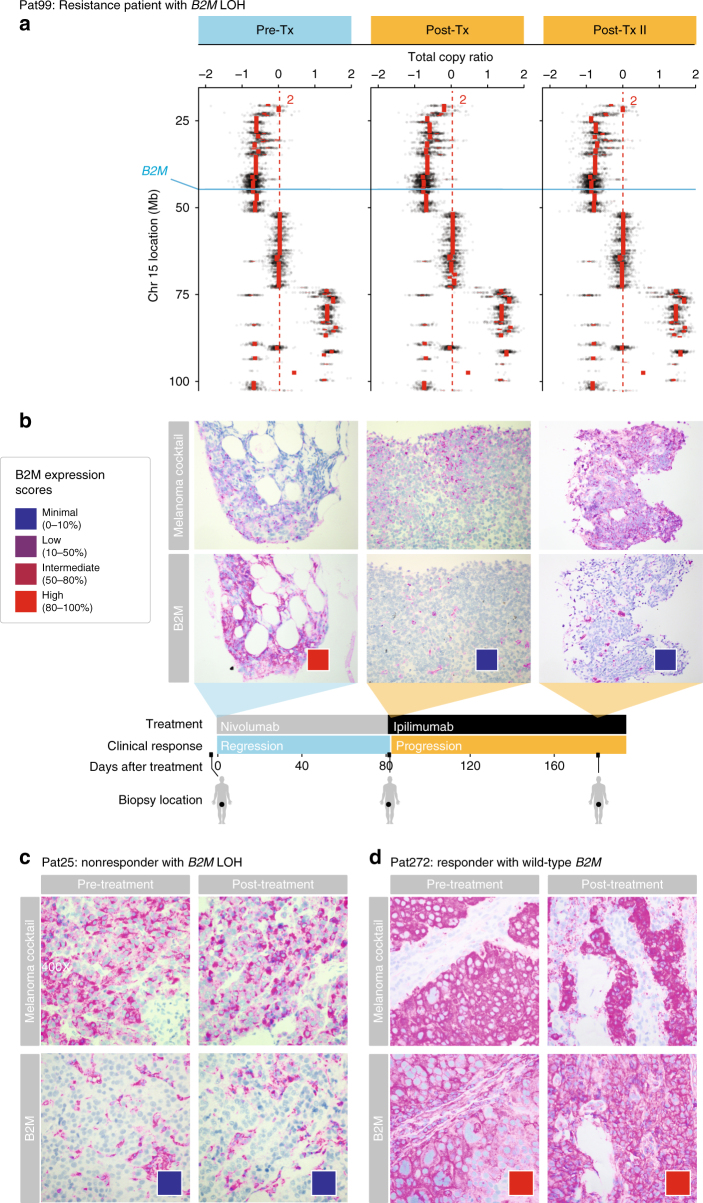
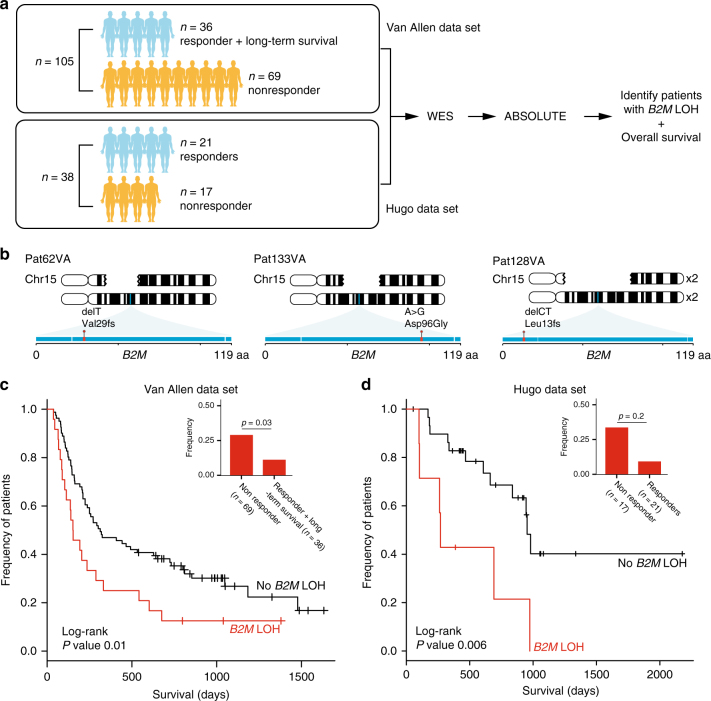
Verification
Claims the paper makes
The claims and statistics of this paper haven’t been checked yet.
Free: it reads the open-access text and checks the first 5 claims that cite a source we can check. Create a free account to check every claim.
Claims other papers make about this one
Each is checked against this paper’s own text: does it say what the citing paper says it does?
The source backs part of the claim, not all of it — or backs it for a different population, condition or comparison.
In the citing paper
“perturbations of B2M, HLA-A, JAK1, JAK2, STAT1, IFNGR1 and IFNGR2 (Fig. 2d,e, Extended Data Fig. 3e,f, Supplementary Table 2) conferred immune evasion, consistent with clinical mechanisms of resistance to immunotherapy7–9.”
From Multimodal pooled Perturb-CITE-seq screens in patient models define mechanisms of cancer immune evasion (2021) · cites this paper as [8]
Experimental — accuracy not yet measuredIn the citing paper
“Clinically relevant mechanisms of include mutations in beta-2-microglobulin (B2M) resulting in loss of MHC Class I presentation, downregulation of the antigen presentation machinery, and mutations in the IFNγ-JAK/STAT pathway that impair response to T cell mediated anti-tumor activity7–9.”
From Multimodal pooled Perturb-CITE-seq screens in patient models define mechanisms of cancer immune evasion (2021) · cites this paper as [8]
Self-check
Percentages, sums and reported differences re-computed from the paper’s own numbers.
The self-check needs the paper’s full text.
Citations
Cites
Fiji: an open-source platform for biological-image analysis
Schindelin, J., Arganda-Carreras, I., Frise, E., Kaynig, V., Longair, M., Pietzsch, T., Preibisch, S., Rueden, C., Saalfeld, S., Schmid, B., et al. (2012) · Nature Methods · doi:10.1038/nmeth.2019 · Cited by 66,890
STAR: ultrafast universal RNA-seq aligner
Dobin, A., Davis, C. A., Schlesinger, F., Drenkow, J., Zaleski, C., Jha, S., Batut, P., Chaisson, M., & Gingeras, T. R. (2013) · Bioinformatics · doi:10.1093/bioinformatics/bts635 · Cited by 51,709
PD-1 and PD-L1 Immune Checkpoint Blockade to Treat Breast Cancer
Hartkopf, A. D., Taran, F.-A., Wallwiener, M., Walter, C. B., Krämer, B., Grischke, E.-M., & Brucker, S. Y. (2016) · Breast Care · doi:10.1159/000453569 · Cited by 30,845
RSEM: accurate transcript quantification from RNA-Seq data with or without a reference genome
Li, B., & Dewey, C. N. (2011) · BMC Bioinformatics · doi:10.1186/1471-2105-12-323 · Cited by 22,179
Self-citationCerami, E., Gao, J., Dogrusoz, U., Gross, B. E., Sumer, S. O., Aksoy, B. A., Jacobsen, A., Byrne, C. J., Heuer, M. L., Larsson, E., et al. (2012) · Cancer Discovery · doi:10.1158/2159-8290.cd-12-0095 · Cited by 17,455
Adverse Renal Effects of Immune Checkpoint Inhibitors: A Narrative Review
Wanchoo, R., Karam, S., Uppal, N. N., Barta, V. S., Deray, G., Devoe, C., Launay-Vacher, V., Jhaveri, K. D., & on behalf of Cancer and Kidney International Network Workgroup on Immune Checkpoint Inhibitors (2017) · American Journal of Nephrology · doi:10.1159/000455014 · Cited by 15,256
Integrative Analysis of Complex Cancer Genomics and Clinical Profiles Using the cBioPortal
Gao, J., Aksoy, B. A., Dogrusoz, U., Dresdner, G., Gross, B., Sumer, S. O., Sun, Y., Jacobsen, A., Sinha, R., Larsson, E., et al. (2013) · Science Signaling · doi:10.1126/scisignal.2004088 · Cited by 15,160
The blockade of immune checkpoints in cancer immunotherapy
Pardoll, D. M. (2012) · Nature Reviews Cancer · doi:10.1038/nrc3239 · Cited by 13,838
PD-1 blockade induces responses by inhibiting adaptive immune resistance
Tumeh, P. C., Harview, C. L., Yearley, J. H., Shintaku, I. P., Taylor, E. J. M., Robert, L., Chmielowski, B., Spasic, M., Henry, G., Ciobanu, V., et al. (2014) · Nature · doi:10.1038/nature13954 · Cited by 6,609
Pembrolizumab versus Ipilimumab in Advanced Melanoma
Robert, C., Schachter, J., Long, G. V., Arance, A., Grob, J. J., Mortier, L., Daud, A., Carlino, M. S., McNeil, C., Lotem, M., et al. (2015) · New England Journal of Medicine · doi:10.1056/nejmoa1503093 · Cited by 5,887
Cited by
Items 501–600 of 998
Gil-Julio, H., Perea, F., Rodríguez-Nicolás, A., Cózar, J. M., Ramírez, A. R. G., Concha, Á., Garrido, F., Aptsiauri, N., & Ruiz‐Cabello, F. (2021) · International Journal of Molecular Sciences · doi:10.3390/ijms22147248 · Cited by 20
He, Y., Zheng, K., Qin, X., Wang, S., Li, X., Liu, H., Liu, M., Xu, R., Peng, S., & Pang, Z. (2024) · Acta Pharmaceutica Sinica B · doi:10.1016/j.apsb.2024.06.004 · Cited by 22
“One of the biggest hurdles facing tumor immunotherapy is the presence of the tumor immunosuppressive microenvironment (TIME), which can hinder the effectiveness of treatment 8,9 .”
Lozac’hmeur, A., Danek, T., Yang, Q., Rosasco, M. G., Welch, J. S., Go, W. Y., Ng, E. W., Mardiros, A., Maloney, D. G., Garon, E. B., et al. (2024) · npj Precision Oncology · doi:10.1038/s41698-024-00665-z · Cited by 21
“3a and c), supporting the idea that antigen presentation via HLA-I is important for ICB response in this cohort 27 – 29 .”
BackgroundChoucair, K., Radford, M., Bansal, A. K., Park, R., & Saeed, A. (2021) · International Journal of Oncology · doi:10.3892/ijo.2021.5254 · Cited by 21
Nielsen, M., Presti, M., Sztupinszki, Z. M., Jensen, A. W. P., Draghi, A., Chamberlain, C. A., Schina, A., Yde, C. W., Wojcik, J. B., Szállási, Z., et al. (2022) · Cancer Immunology Research · doi:10.1158/2326-6066.cir-22-0326 · Cited by 22
Heng, Y., Zhu, X., Wu, Q., Lin, H., Ding, X., Tao, L., & Lu, L. (2023) · Translational Oncology · doi:10.1016/j.tranon.2023.101678 · Cited by 20
Biomarkers and Outcomes in Diverse Cancers: Meta-Analysis of Early Phase Immuno-Oncology Trials
Fountzilas, E., Vo, H. H., Mueller, P. J., Kurzrock, R., & Tsimberidou, A. M. (2022) · European Journal of Cancer · doi:10.1016/j.ejca.2023.05.015 · Cited by 19
Hermida‐Prado, F., Xie, Y., Sherman, S., Nagy, Z., Russo, D., Akhshi, T. K., Chu, Z., Feit, A. S., Campisi, M., Chen, M., et al. (2023) · Cancer Research · doi:10.1158/0008-5472.can-23-1711 · Cited by 22
Analysis of Immune Resistance Mechanisms in TNBC: Dual Effects Inside and Outside the Tumor
Xu, J., Chen, G., Yu, S., Yao, S., Li, W., & Cheng, H. (2023) · Clinical Breast Cancer · doi:10.1016/j.clbc.2023.10.011 · Cited by 21
Decoding the functional impact of the cancer genome through protein–protein interactions
Fu, H., Mo, X., & Ivanov, A. A. (2025) · Nature reviews. Cancer · doi:10.1038/s41568-024-00784-6 · Cited by 41
“T cell recognition in patients with melanoma 182,183 .”
Flores-Martín, J. F., Perea, F., Ruíz, M. E., Carretero, F., Rodríguez, T., Villamediana, M., Ruiz‐Cabello, F., Garrido, F., Cozar-Olmo, J. M., & Aptsiauri, N. (2019) · Annals of Surgical Oncology · doi:10.1245/s10434-019-07371-2 · Cited by 24
Pourmaleki, M., Young, J. H., Socci, N. D., Chiang, S., Edelweiss, M., Li, Y., Zhang, M., Roshal, L., Dennis, S., BUSAM, K. J., et al. (2019) · Oncotarget · doi:10.18632/oncotarget.27247 · Cited by 21
“While the primary tumor was not available for comparison, loss of B2M and MHC-I have been reported as mechanisms of immune resistance [61, 62].”
BackgroundAcquired Resistance to Immune Checkpoint Blockade Therapies
Zhao, X., Wangmo, D., Robertson, M. J., & Subramanian, S. (2020) · Cancers · doi:10.3390/cancers12051161 · Cited by 21
“In patients that developed acquired anti-PD-1 resistance, a truncating mutation discovered in the β2M gene leads to loss of surface expression of the MHC-I complex [8,25,26].”
BackgroundThe Cancer-Immune Set Point in Oesophageal Cancer
Power, R. F., Lowery, M. A., Reynolds, J. V., & Dunne, M. R. (2020) · Frontiers in Oncology · doi:10.3389/fonc.2020.00891 · Cited by 19
“Hypermutation is associated with higher immune activity, while Wnt dysregulation and loss of B2M is associated with immune escape (30).”
BackgroundBusch, E., Ahadova, A., Kosmalla, K., Bohaumilitzky, L., Pfuderer, P. L., Ballhausen, A., Witt, J., Wittemann, J.-N., Bläker, H., Holinski‐Feder, E., et al. (2021) · Frontiers in Oncology · doi:10.3389/fonc.2021.669774 · Cited by 18
“Besides misdiagnosis of MMR-proficient tumors as MSI (5), non-functionality of tumor cells’ antigen presentation machinery, mediated by mutations of the Beta2-microglobulin (B2M) gene, has been discussed as a key mechanism of resistance towards ICB in some cancer types, such as melanoma (6, 7).”
BackgroundCastro, A., Zanetti, M., & Carter, H. K. (2021) · Annual Review of Biomedical Data Science · doi:10.1146/annurev-biodatasci-092820-112713 · Cited by 20
Setdb1 Loss Induces Type I Interferons and Immune Clearance of Melanoma
McGeary, M. K., Damsky, W., Daniels, A. J., Lang, S. M., Xu, Q., Song, E., Huet-Calderwood, C., Lou, H. J., Paradkar, S., Micevic, G., et al. (2024) · Cancer Immunology Research · doi:10.1158/2326-6066.cir-23-0514 · Cited by 22
Immune checkpoint blockade for cancer therapy: current progress and perspectives
Ye, H., Liao, W., Pan, J., Shi, Y. P., & Wang, Q. (2025) · Journal of Zhejiang University SCIENCE B · doi:10.1631/jzus.b2300492 · Cited by 27
“The loss of β -2 microglobulin ( B2M ) alleles, a component of HLA-I that maintains stability, can ob ‐ served only in ICB non-responders (Sade-Feldman et al., 2017).”
Kawakami, H., Kadowaki, S., Makiyama, A., Tsuda, M., Hirata, K., Sugimoto, N., Machida, N., Hara, H., Hirano, H., Esaki, T., et al. (2025) · Journal of Clinical Oncology · doi:10.1200/jco-24-02463 · Cited by 27
Wszola, M., Nitarska, D., Cywoniuk, P., Gomółka, M., & Klak, M. (2021) · Cells · doi:10.3390/cells10061544 · Cited by 22
Overcoming Resistance to Immunotherapy in Advanced Cutaneous Squamous Cell Carcinoma
García‐Sancha, N., Corchado‐Cobos, R., Bellido-Hernández, L., Román‐Curto, C., Álvarez, E. C., Pérez‐Losada, J., Órfão, A., & Cañueto, J. (2021) · Cancers · doi:10.3390/cancers13205134 · Cited by 23
Zimmerman, S. M., Nixon, S. J., Chen, P., Raj, L., Smith, S. R., Paolini, R. L., Lin, P. N., & Souroullas, G. P. (2022) · Oncogene · doi:10.1038/s41388-022-02492-7 · Cited by 19
“5g–h), consistent with prior melanoma studies [32].”
Isomoto, K., Haratani, K., Tsujikawa, T., Makutani, Y., Kawakami, H., Takeda, M., Yonesaka, K., Tanaka, K., Iwasa, T., Hayashi, H., et al. (2022) · Lung Cancer · doi:10.1016/j.lungcan.2022.10.012 · Cited by 23
Human CD4 cytotoxic T lymphocytes mediate potent tumor control in humanized immune system mice
Lin, W., Singh, V. J., Springer, R., Choonoo, G., Gupta, N., Patel, A. K., Frleta, D., Zhong, J., Owczarek, T. B., Decker, C. E., et al. (2023) · Communications Biology · doi:10.1038/s42003-023-04812-3 · Cited by 21
“Dysfunction of CD8 CTLs and/or loss of HLA-I by tumor cells appear to be the most common mechanisms of ICI resistance 5 – 7 .”
Tackling of Immunorefractory Tumors by Targeting Alternative Immune Checkpoints
Dulal, D., Boring, A. R., Terrero, D., Johnson, T. L., Tiwari, A. K., & Raman, D. (2023) · Cancers · doi:10.3390/cancers15102774 · Cited by 23
Sammarco, E., Manfredi, F., Nuzzo, A., Ferrari, M., Bonato, A., Salfi, A., Serafin, D., Zatteri, L., Antonuzzo, A., & Galli, L. (2023) · Cancers · doi:10.3390/cancers15123172 · Cited by 21
Epigenetic reprogramming of T cells: unlocking new avenues for cancer immunotherapy
Singh, V., Nandi, S., Ghosh, A., Adhikary, S., Mukherjee, S., Roy, S., & Das, C. (2024) · Cancer and Metastasis Reviews · doi:10.1007/s10555-024-10167-w · Cited by 23
“These adaptations involve diminishing the expression of neoantigens (non-self-anti-gens), antigen presentation molecules such as MHC-I [118, 119], and the mutational burden.”
Reis, B., Attig, J., Dziadek, S., Graefe, N., Heller, A., Rieder, N., & Gomes, B. (2024) · Frontiers in Immunology · doi:10.3389/fimmu.2024.1285049 · Cited by 22
Iwasaki, A., Shinozaki‐Ushiku, A., Kunita, A., Yamazawa, S., Sato, Y., Yamashita, H., Fukayama, M., Seto, Y., & Ushiku, T. (2021) · The American Journal of Surgical Pathology · doi:10.1097/pas.0000000000001779 · Cited by 20
“0008 Median 0 1 0 ≥ 1 10 (23) 30 (52) 30 (28) 0.”
Garrido, M. A., Perea, F., Vilchez, J. R., Rodríguez, T., Anderson, P. O., Garrido, F., Ruiz‐Cabello, F., & Aptsiauri, N. (2021) · Cancers · doi:10.3390/cancers13205046 · Cited by 28
Ahmed, F., Tseng, H., Ahn, A., Gunatilake, D., Alavi, S., Eccles, M. R., Rizos, H., Gallagher, S. J., Tiffen, J. C., Hersey, P., et al. (2021) · Journal of Investigative Dermatology · doi:10.1016/j.jid.2021.09.030 · Cited by 18
Labaki, C., Saad, E., Madsen, K. N., Hobeika, C. S., Bi, K., Alchoueiry, M., Camp, S. Y., Hou, Y., Bakouny, Z., Matar, S., et al. (2025) · Journal of Clinical Oncology · doi:10.1200/jco-25-00234 · Cited by 19
Self-citationEvolution of Lung Cancer in the Context of Immunotherapy
Yu, S., Wang, R., Tang, H., Wang, L., Zhang, Z., Yang, S., Jiao, S., Wu, X., Wang, S., Wang, M., et al. (2020) · Clinical Medicine Insights Oncology · doi:10.1177/1179554920979697 · Cited by 17
Spiliopoulou, P., Vornicova, O., Genta, S., & Spreafico, A. (2023) · International Journal of Molecular Sciences · doi:10.3390/ijms24021294 · Cited by 20
Gavrielatou, N., Vathiotis, I. A., Aung, T. N., Shafi, S., Burela, S., Fernandez, A. I., Moutafi, M. K., Burtness, B. A., Economopoulou, P., Anastasiou, Μ., et al. (2023) · Cancer Research Communications · doi:10.1158/2767-9764.crc-22-0299 · Cited by 19
The therapeutic potential of targeting minimal residual disease in melanoma
Patel, R. P., Somasundram, P. M., Smith, L. K., Sheppard, K. E., & McArthur, G. A. (2023) · Clinical and Translational Medicine · doi:10.1002/ctm2.1197 · Cited by 23
Genetic and immune landscape evolution in MMR‐ deficient colorectal cancer
Challoner, B. R., Woolston, A., Lau, D. K., Buzzetti, M., Fong, C., Barber, L. J., Anandappa, G., Crux, R., Assiotis, I., Fenwick, K., et al. (2023) · The Journal of Pathology · doi:10.1002/path.6228 · Cited by 21
“The enrichment of NK cells is an expected consequence of B2M loss and suggests opportunities for NK cell therapies [13].”
BackgroundGenetic immune escape in cancer: timing and implications for treatment
Martínez-Jiménez, F., & Chowell, D. (2024) · Trends in cancer · doi:10.1016/j.trecan.2024.11.002 · Cited by 18
Cesano, A., Augustin, R. C., Barrea, L., Bedognetti, D., Bruno, T. C., Carturan, A., Hammer, C., Ho, W. S., Kather, J. N., Kirchhoff, T., et al. (2025) · Journal for ImmunoTherapy of Cancer · doi:10.1136/jitc-2024-008876 · Cited by 25
“168 169 These data again highlight that the quality of TMB may be more significant than pure quantity as measured by current TMB assays.”
Ladányi, A., Papp, E., Mohos, A., Balatoni, T., Liszkay, G., Oláh, J., Varga, A., Lengyel, Z., Emri, G., & Ferrone, S. (2020) · Journal for ImmunoTherapy of Cancer · doi:10.1136/jitc-2019-000209 · Cited by 17
https://cdrjournal.com/article/view/3531
Moreira, M., Pobel, C., Epaillard, N., Simonaggio, A., Oudard, S. M., & Vano, Y. A. (2020) · Cancer Drug Resistance · doi:10.20517/cdr.2020.16 · Cited by 39
“also demonstrated that the loss of heterozygosity at the B2M locus was associated with lower OS in melanoma patients receiving ICI([59]).”
BackgroundInfluentialThe head and neck cancer genome in the era of immunotherapy
Wijetunga, N. A., Yu, Y., Morris, L. G. T., Lee, N. Y., & Riaz, N. (2020) · Oral Oncology · doi:10.1016/j.oraloncology.2020.105040 · Cited by 19
Lynch syndrome-associated epithelial ovarian cancer and its immunological profile
Rasmussen, M., Lim, K., Rambech, E., Andersen, M. H., Svane, I. M., Andersen, O., Jensen, L. H., Nilbert, M. C., & Therkildsen, C. (2021) · Gynecologic Oncology · doi:10.1016/j.ygyno.2021.07.001 · Cited by 19
Targeting protein kinases benefits cancer immunotherapy
Zhang, Z., Bu, L., Luo, J., & Guo, J. (2022) · Biochimica et Biophysica Acta (BBA) - Reviews on Cancer · doi:10.1016/j.bbcan.2022.188738 · Cited by 20
Morante, M., Pandiella, A., Crespo, P., & Herrero, A. (2022) · Biomolecules · doi:10.3390/biom12111562 · Cited by 23
“Together with other studies, the common features during immunotherapy resistance are B-catenin activation [44–46], PTEN loss [37,47], lack of response to IFNg [48,49], depletion of tumor-specific neo-antigen presentation [49,50], genome instability [51,52], cell-cycle dysregulation [53] and epigenetic modulations [38,…”
BackgroundPersonal tumor antigens in blood malignancies: genomics-directed identification and targeting
Penter, L., & Wu, C. J. (2020) · Journal of Clinical Investigation · doi:10.1172/jci129209 · Cited by 19
“Combinatorial genomics-directed therapeutic modalities to overcome resistance mechanisms While therapeutic efforts directed at targeting neoantigens have shown promising activity, there has been increasing recognition of the negative impact of immune escape mechanisms, which include increased checkpoint expression on…”
BackgroundAdoptive cell therapy against tumor immune evasion: mechanisms, innovations, and future directions
Ruan, L., & Wang, L. (2025) · Frontiers in Oncology · doi:10.3389/fonc.2025.1530541 · Cited by 19
“In some instances, tumor cells might even cease to express tumor-speci fi c antigens, thereby fundamentally evading immune system assaults (81).”
Do BRAF-targeted therapies have a role in the era of immunotherapy?
Braden, J., Conway, J. W., Wilmott, J. S., Scolyer, R. A., Long, G. V., & da Silva, I. P. (2025) · ESMO Open · doi:10.1016/j.esmoop.2025.105314 · Cited by 18
Downregulation of KEAP1 in melanoma promotes resistance to immune checkpoint blockade
Fox, D. B., Ebright, R. Y., Hong, X., Russell, H. C., Guo, H., LaSalle, T. J., Wittner, B. S., Poux, N., Vuille, J. A., Toner, M., et al. (2023) · npj Precision Oncology · doi:10.1038/s41698-023-00362-3 · Cited by 15
Self-citationKuras, M. (2023) · International Journal of Molecular Sciences · doi:10.3390/ijms241814403 · Cited by 19
Interferon-driven Metabolic Reprogramming and Tumor Microenvironment Remodeling
Chang, T.-H., & Ho, P. (2025) · Immune Network · doi:10.4110/in.2025.25.e8 · Cited by 22
Einstein, D. J., Arai, S., Calagua, C., Xie, F., Voznesensky, O. S., Capaldo, B. J., Luffman, C. I., Hecht, J. L., Balk, S. P., Sowalsky, A. G., et al. (2021) · JCO Precision Oncology · doi:10.1200/po.21.00059 · Cited by 16
Ledys, F., Kalfeist, L., Galland, L., Limagne, E., & Ladoire, S. (2021) · Cancers · doi:10.3390/cancers13235999 · Cited by 21
“Accordingly, tumors with both poor antigenicity and a low level of inflammation are generally much more resistant to immunotherapy [57].”
BackgroundUltrasound and microbubble-mediated drug delivery and immunotherapy
Omata, D., Munakata, L., Maruyama, K., & Suzuki, R. (2022) · Journal of Medical Ultrasonics · doi:10.1007/s10396-022-01201-x · Cited by 21
Chiang, N.-J., Tan, K. T., Bai, L., Hsiao, C., Huang, C., Hung, Y., Huang, C., Chen, S., Shan, Y., Chao, Y., et al. (2022) · Clinical Cancer Research · doi:10.1158/1078-0432.ccr-22-1152 · Cited by 19
“7months,likelyduetoacquired loss of the second allele of the B2M gene (16), and was excluded from theanalysis.”
de Waard, A. A., Verkerk, T., Jongsma, M. L. M., Hoefakker, K., Sethumadhavan, S., Gerke, C., Bliss, S., Kong, X., Janssen, G. M. C., de Ru, A. H., et al. (2021) · European Journal of Immunology · doi:10.1002/eji.202048599 · Cited by 20
Massa, D., Tosi, A., Rosato, A., Guarneri, V., & Dieci, M. V. (2022) · Cancers · doi:10.3390/cancers14194885 · Cited by 18
“Those strategies are highly effective immune escape mechanisms, as cancers that downregulate HLA-I tend to have a lower density of TILs [47,69–71] and are generally more resistant to ICIs [70].”
BackgroundWenthe, J., Eriksson, E., Hellström, A.-C., Moreno, R., Ullenhag, G. J., Alemany, R., Lövgren, T., & Loskog, A. (2023) · Journal of Translational Medicine · doi:10.1186/s12967-023-04374-2 · Cited by 26
“Driving NK-cell responses may be particularly advantageous in tumors that evade a T-cell response by downregulating MHC class I molecules, which is a common resistance mechanism to checkpoint blockade therapy in malignant melanoma [42, 43].”
BackgroundLim, W. C., Costa, M. E. M. D., Godefroy, K., Jacquet, E., Gragert, L. A., Rondof, W., Marchais, A., Nhiri, N., Dalfovo, D., Viard, M., et al. (2024) · Frontiers in Immunology · doi:10.3389/fimmu.2023.1265469 · Cited by 19
Stinson, J. A., Barbosa, M. M. P., Sheen, A. M., Momin, N., Fink, E., Hampel, J., Selting, K. A., Kamerer, R. L., Bailey, K. L., Wittrup, K. D., et al. (2024) · Clinical Cancer Research · doi:10.1158/1078-0432.ccr-24-0861 · Cited by 22
Wofford, W. O., Kim, J., Kim, D., Janneh, A. H., Lee, H. G., Atilgan, F. C., Oleinik, N. V., Kassir, M. F., Saatci, Ö., Chakraborty, P., et al. (2024) · Cell Reports · doi:10.1016/j.celrep.2024.114532 · Cited by 16
TNF-α inhibitor reduces drug-resistance to anti-PD-1: A mathematical model
Lai, X., Hao, W., & Friedman, A. (2020) · PLoS ONE · doi:10.1371/journal.pone.0231499 · Cited by 15
The Genetic Evolution of Treatment-Resistant Cutaneous, Acral, and Uveal Melanomas
Makohon-Moore, A. P., Lipson, E. J., Hooper, J. E., Zucker, A., Hong, J., Bielski, C. M., Hayashi, A., Tokheim, C. J., Baez, P., Kappagantula, R. L., et al. (2021) · Clinical Cancer Research · doi:10.1158/1078-0432.ccr-20-2984 · Cited by 16
Precision Medicine for Colorectal Cancer with Liquid Biopsy and Immunotherapy
Nagayama, S., Low, S., Kiyotani, K., & Nakamura, Y. (2021) · Cancers · doi:10.3390/cancers13194803 · Cited by 17
Understanding genetic determinants of resistance to immune checkpoint blockers
Aspeslagh, S., Chabanon, R. M., Champiat, S., & Postel-Vinay, S. C. (2019) · Seminars in Cancer Biology · doi:10.1016/j.semcancer.2019.12.020 · Cited by 17
Voutsadakis, I. A. (2023) · Cancer Treatment and Research Communications · doi:10.1016/j.ctarc.2023.100746 · Cited by 14
Cancer evolution: Special focus on the immune aspect of cancer
Hu, X., Chen, Z., Wang, Z., & Xiao, Q. (2022) · Seminars in Cancer Biology · doi:10.1016/j.semcancer.2022.05.006 · Cited by 15
STUB1 is an intracellular checkpoint for interferon gamma sensing
Ng, S., Lim, S., Sim, A. C. N., Mangadu, R., Lau, A., Zhang, C., Martinez, S. B., Chandramohan, A., Lim, U.-M., Ho, S. S. W., et al. (2022) · Scientific Reports · doi:10.1038/s41598-022-18404-4 · Cited by 15
Dougan, M. L. (2023) · Immunological Reviews · doi:10.1111/imr.13239 · Cited by 17
Assessment of cancer cell‐expressed HLA class I molecules and their immunopathological implications
Kubo, T., Asano, S., Sasaki, K., Murata, K., Kanaseki, T., Tsukahara, T., Hirohashi, Y., & Torigoe, T. (2024) · HLA · doi:10.1111/tan.15472 · Cited by 15
The ending is not the end: Lymph node metastasis in oral squamous cell carcinoma
Wei, L.-Y., Li, Z., Xu, Z.-Y., Wang, G.-R., Xiao, Y., Liu, B., & Bu, L. (2024) · International Immunopharmacology · doi:10.1016/j.intimp.2024.113917 · Cited by 22
Do innate killing mechanisms activated by inflammasomes have a role in treating melanoma?
Emran, A. A., Tseng, H., Coleman, M. C., Tiffen, J. C., Cook, S. J., McGuire, H. M., Gallagher, S. J., Feng, C. G., & Hersey, P. (2020) · Pigment Cell & Melanoma Research · doi:10.1111/pcmr.12870 · Cited by 14
“Multiple causes of resistance to immunotherapy have been defined (Ribas & Wolchok, 2018; Sharma, Hu-Lieskovan, Wargo, & Ribas, 2017) including defects in antigen presentation (Sade-Feldman et al., 2017) and low T-cell infiltration into tumors (Li et al., 2019).”
BackgroundLiu, L., Hu, J., Wang, Y., Sun, T., Zhou, X., Li, X., & Ma, F. (2020) · Aging · doi:10.18632/aging.103364 · Cited by 18
HLA Class I Downregulation in Progressing Metastases of Melanoma Patients Treated With Ipilimumab
Ladányi, A., Hegyi, B., Balatoni, T., Liszkay, G., Rohregger, R., Waldnig, C., Dudás, J., & Ferrone, S. (2022) · Pathology & Oncology Research · doi:10.3389/pore.2022.1610297 · Cited by 16
“The same mechanisms have also been implicated in primary resistance to ICI-based therapy [3, 4, 8, 10, 11].”
BackgroundMolecular Mechanisms and Countermeasures of Immunotherapy Resistance in Malignant Tumor
Jiang, X., Li, L., Li, Y., & Li, Q. (2019) · Journal of Cancer · doi:10.7150/jca.26481 · Cited by 17
A trispecific antibody engaging T cells with tumour and myeloid cells augments antitumour immunity
Yang, C., Guo, S., Ye, K., Ding, Y., Zhao, X., Yang, Y., Sun, B., Qian, S., Cai, M., Liu, L., et al. (2025) · Nature Biomedical Engineering · doi:10.1038/s41551-025-01569-4 · Cited by 19
Oxidative Stress in the Tumor Immune Microenvironment: Mechanisms and Therapeutic Perspectives
Wang, Z., Li, B., Tang, P., Yan, F., Wang, S., Leng, G., Dawa, P., Chen, Y., Guo, Y., Yang, P., et al. (2026) · MedComm – Oncology · doi:10.1002/mog2.70068 · Cited by 18
Self-citationDUX4 is a common driver of immune evasion and immunotherapy failure in metastatic cancers
Pineda, J. M. B., & Bradley, R. K. (2024) · eLife · doi:10.7554/elife.89017 · Cited by 18
König, D., Sandholzer, M. T., Uzun, S., Zingg, A., Ritschard, R., Thut, H., Glatz, K., Kappos, E. A., Schaefer, D. J., Kettelhack, C., et al. (2024) · Cancer Immunology Research · doi:10.1158/2326-6066.cir-23-0757 · Cited by 13
Chen, S., Xie, D., Li, Z., Wang, J., Hu, Z., & Zhou, D. (2024) · Communications Biology · doi:10.1038/s42003-024-06460-7 · Cited by 13
“…have been proposed, such as insuf fi cient immune cell in fi ltration 16 , PD-L1 overexpression off-setting therapy 17 , loss of an HLA haplotype 18,19 , somatic mutations in B2M gene or HLA alleles leading to dysfunctional neoantigen presentation 20,21 , high intra-tumor heterogeneity 22 , etc .”
BackgroundLi, C. L., Yuan, X. Y., & Yi, P. (2024) · Cell Biochemistry and Function · doi:10.1002/cbf.70011 · Cited by 17
Tarantino, G., Ricker, C. A., Wang, A., Ge, W. H., Aprati, T. J., Huang, A. Y., Madha, S., Chen, J., Shi, Y., Glettig, M., et al. (2024) · Science Advances · doi:10.1126/sciadv.adp4670 · Cited by 16
Self-citationMazzaschi, G., Marrocchio, C., Tor, L. M. D., Leo, L., Balbi, M., Milanese, G., Adebanjo, G. A. R., Lorusso, B., Monica, G., Pluchino, M., et al. (2024) · Clinical Cancer Research · doi:10.1158/1078-0432.ccr-24-1926 · Cited by 12
Multispecific Antibodies Targeting PD-1/PD-L1 in Cancer
Chen, M., Zhou, Y., Bao, K., Chen, S., Song, G., & Wang, S.-L. (2025) · BioDrugs · doi:10.1007/s40259-025-00712-6 · Cited by 17
“However, even among patients with high PD-L1 expression, a considerable proportion does not respond to treatment, highlighting the limited efficacy of using a single antibody and underscoring the need for alternative treatment options [12–14].”
Immunotherapy for triple-negative breast cancer: current trends and future prospects
Essalihi, A., Bouchra, O., Khadiri, K., Khadrouf, Z., & Karkouri, M. (2025) · Journal of the Egyptian National Cancer Institute · doi:10.1186/s43046-025-00295-x · Cited by 19
“Checkpoint blockade in melanoma has been highly successful, prompting the investigation of these agents in other malignancies, including TNBC [7].”
Indini, A., Roila, F., Grossi, F., Massi, D., & Mandalà, M. (2021) · American Journal of Clinical Dermatology · doi:10.1007/s40257-021-00608-5 · Cited by 13
“Recognized mechanisms involved in resistance to immune checkpoint inhibitors include the activation of the WNT/β-catenin signaling pathway, which induces T-cell exclusion [77]; the loss of PTEN, which reduces T-cell expansion and tumor infiltration [78]; mutations in the Janus kinase (JAK1/JAK2) pathway, which impairs…”
BackgroundAscierto, P. A., Brugarolas, J., Buonaguro, L., Butterfield, L. H., Carbone, D. P., Daniele, B., Ferris, R. L., Fox, B. A., Galon, J., Gridelli, C., et al. (2018) · Journal for ImmunoTherapy of Cancer · doi:10.1186/s40425-018-0377-z · Cited by 18
“B2M) are detectable in ctDNA using ultra-low pass whole genome sequencing and droplet digital polymerase chain reaction (ddPCR) [22].”
MethodSelf-citationYu, J., Zhang, W., Ding, D., Hu, Y., Guo, G., Wang, J., & Han, Y. (2022) · Frontiers in Oncology · doi:10.3389/fonc.2022.830174 · Cited by 13
Ziranu, P., Pretta, A., Pozzari, M., Maccioni, A., Badiali, M., Fanni, D., Lai, E., Donisi, C., Persano, M., Gerosa, C., et al. (2023) · Scientific Reports · doi:10.1038/s41598-023-31538-3 · Cited by 15
All-FIT: allele-frequency-based imputation of tumor purity from high-depth sequencing data
Loh, J. W., Guccione, C., Clemente, F. D., Riedlinger, G., Ganesan, S., & Khiabanian, H. (2019) · Bioinformatics · doi:10.1093/bioinformatics/btz865 · Cited by 16
Effect of stress-induced polyploidy on melanoma reprogramming and therapy resistance
Meierjohann, S. (2021) · Seminars in Cancer Biology · doi:10.1016/j.semcancer.2021.02.005 · Cited by 16
A Combination of Epigenetic BET and CDK9 Inhibitors for Treatment of Human Melanoma
Emran, A. A., Tseng, H., Gunatilake, D., Cook, S. J., Ahmed, F., Wang, S., Hersey, P., Gallagher, S. J., & Tiffen, J. C. (2021) · Journal of Investigative Dermatology · doi:10.1016/j.jid.2020.12.038 · Cited by 14
“Multiple causes of resistance to immunotherapy have been defined (Ribas and Wolchok, 2018; Sharma et al., 2017), including defects in antigen presentation (Sade-Feldman et al., 2017) and low Tcell infiltration into tumors (Li et al., 2019).”
BackgroundReview of the recent clinical trials for PD-1/PD-L1 based lung cancer immunotherapy
Behrouzieh, S., Sheida, F., & Rezaei, N. (2021) · Expert Review of Anticancer Therapy · doi:10.1080/14737140.2021.1996230 · Cited by 14
Hsp90 pan and Isoform-Selective Inhibitors as Sensitizers for Cancer Immunotherapy
Jia, S., Maurya, N., Blagg, B. S. J., & Lü, X. (2025) · Pharmaceuticals · doi:10.3390/ph18071025 · Cited by 12
“Key mechanisms include the loss or downregulation of neoantigens and tumor-associated antigens [112–118], defects in antigen processing and presentation machinery [119–122], and constitutive expression of immune checkpoint ligands such as PD-L1.”
Mogat1 drives metabolic adaptations to evade immune surveillance
Wei, H., Niu, C., Shi, Y., Fang, Y., Yang, C., Li, J., & Xu, Z. (2025) · Nature Communications · doi:10.1038/s41467-025-62134-w · Cited by 13
Rasmussen, M., Durhuus, J. A., Nilbert, M. C., Andersen, O., & Therkildsen, C. (2022) · Journal of Clinical Medicine · doi:10.3390/jcm12010329 · Cited by 16
Therapeutic Cancer Vaccines for Nonmelanoma Skin Cancer
Wu, S., Chen, Y., Hung, C., & Yang, B.-H. (2023) · Current Treatment Options in Oncology · doi:10.1007/s11864-023-01074-3 · Cited by 12
Samnani, S., Sachedina, F., Gupta, M., Guo, E., & Navani, V. (2023) · Cancer Drug Resistance · doi:10.20517/cdr.2023.02 · Cited by 12
Wijdeven, R. H. M., Luk, S. J., Schoufour, T. A. W., van der Zanden, S. Y., Cabezuelo-Rodríguez, M., Heemskerk, M. H. M., & Neefjes, J. (2023) · The Journal of Immunology · doi:10.4049/jimmunol.2300263 · Cited by 15
Genomic and molecular alterations associated with primary resistance to immune checkpoint inhibitors
Malhotra, J. D., De, S., Nguyen, K., Lee, P. P., & Villaflor, V. M. (2024) · Cancer Immunology Immunotherapy · doi:10.1007/s00262-024-03825-z · Cited by 12
“With-out β2M on the tumor cell surface, HLA class I molecules are unstable and unable to present antigen to CD8 + T cells. β2M point mutations, deletions, or loss of heterozygosity (LOH) were detected in 29% of patients (n = 17) with metastatic melanoma progressing on ICI treatment [22].”
Background
Metadata
- Authors
- Sade-Feldman, M., Jiao, Y. J., Chen, J. H., Rooney, M. S., Barzily-Rokni, M., Eliane, J.-P., Bjorgaard, S. L., Hammond, M. R., Vitzthum, H., Blackmon, S. M., Frederick, D. T., Hazar-Rethinam, M., Nadres, B. A., Van Seventer, E. E., Shukla, S. A., Yizhak, K., Ray, J. P., Rosebrock, D., Livitz, D., Adalsteinsson, V., Getz, G., Duncan, L. M., Li, B., Corcoran, R. B., Lawrence, D. P., Stemmer-Rachamimov, A., Boland, G. M., Landau, D. A., Flaherty, K. T., Sullivan, R. J., & Hacohen, N.
- Affiliations
- Broad Institute (US)
- Massachusetts General Hospital (US)
- Dana-Farber Cancer Institute (US)
- Corresponding author
- Sullivan, Ryan J.
- Hacohen, Nir
- ORCID
- Sade-Feldman, Moshe
- Jiao, Yunxin J.
- Chen, Jonathan H.
- Barzily-Rokni, Michal
- Frederick, Dennie T.
- Hazar-Rethinam, Mehlika
- Nadres, Brandon A.
- Shukla, Sachet A.
- Yizhak, Keren
- Rosebrock, Daniel
- Livitz, Dimitri
- Adalsteinsson, Viktor
- Getz, Gad
- Duncan, Lyn M.
- Li, Bo
- Corcoran, Ryan B.
- Lawrence, Donald P.
- Stemmer-Rachamimov, Anat
- Boland, Genevieve M.
- Landau, Dan A.
- Flaherty, Keith T.
- Sullivan, Ryan J.
- Hacohen, Nir
- Venue
- Nature Communications
- Published
- 2017-10-26
- Volume
- 8
- Issue
- 1
- Pages
- 1136-1136
- ISSN
- 2041-1723 (ISSN-L)
- PMC
- PMC5656607
- OpenAlex
- W2765417948
- Cited by
- 1,005
- References
- 44
- Citations by year
- 2026: 90 · 2025: 116 · 2024: 110 · 2023: 129 · 2022: 145 · 2021: 152 · 2020: 125 · 2019: 78 · 2018: 53 · 2017: 4
- FWCI
- 31.34
- Type
- journal article
- Language
- en
- Open access
- gold
- doi.org
- Licence
- cc-by
- creativecommons.org/licenses/by/4.0 (tdm)
- creativecommons.org/licenses/by/4.0 (vor)
- Locations
- Nature Communications (publishedVersion, cc-by)
- Europe PMC (PubMed Central) (publishedVersion, cc-by)
- PubMed Central (publishedVersion, cc-by)
- PubMed (publishedVersion)
- Digital Access to Scholarship at Harvard (DASH) (Harvard University) (submittedVersion, cc-by)
- RePEc: Research Papers in Economics (submittedVersion)
- DOAJ (DOAJ: Directory of Open Access Journals) (submittedVersion, cc-by-sa)
- DOAJ (DOAJ: Directory of Open Access Journals) (submittedVersion)
- Funders
- National Science Foundation
- Cancer Research Institute
- Melanoma Research Alliance
- Dr. Miriam and Sheldon G. Adelson Medical Research Foundation
- Wellcome Trust
- Broad Institute
- National Institutes of Health
- Stand Up To Cancer
- National Human Genome Research Institute (U54HG003067)
- National Cancer Institute (R01CA208756, T32CA207021, R50CA211482)
- National Institute of Environmental Health Sciences (K01ES025431)
- Topics
- Health Sciences › Medicine › Oncology › Cancer Immunotherapy and Biomarkers
- Life Sciences › Immunology and Microbiology › Immunology › Immunotherapy and Immune Responses
- Health Sciences › Medicine › Oncology › Cutaneous Melanoma Detection and Management
- Keywords
- immune checkpoint blockade, metastatic melanoma, beta2-microglobulin, loss of heterozygosity, MHC class I antigen presentation, anti-CTLA-4, anti-PD-1, treatment resistance, tumor immune evasion, overall survival
- MeSH terms
- Animals, Antibodies, Monoclonal, beta 2-Microglobulin, Female, Humans, Melanoma, Mice, Inbred C57BL, Neoplasm Metastasis, Neoplasms, Experimental, Point Mutation, Antigen Presentation, Mice, Knockout, Drug Resistance, Neoplasm, Loss of Heterozygosity, CTLA-4 Antigen, Programmed Cell Death 1 Receptor
About these checks
Registry, retraction, Cites and statistics results are computed, not judged, with one exception: a printed reference that no index lists is read once by a model before it counts as a citation error. Claims are extracted by a model and kept only when their quote appears verbatim in the text; each cited source is then checked, with a model’s help, for whether it says what the claim relies on. Those verdicts can be wrong — read the claim’s quote and the cited source before relying on one.
Statistics and arithmetic are recomputed, not judged.
Confidence bands are shown only for fields calibrated on our annotated test set. None is calibrated yet, so no band is shown.
What counts as a claim ›How we measure confidence ›How we check this ›
Are you an author, or do you see a problem with this page? Request a review
Data sources
Bibliographic data: Semantic Scholar, OpenAlex, Crossref.
Contains information from the Semantic Scholar Academic Graph Datasets, made available under the ODC Attribution License (ODC-BY 1.0).
Semantic Scholar’s data is described in: Kinney, R., et al. (2023). The Semantic Scholar Open Data Platform. arXiv:2301.10140.
