

Resistance to checkpoint blockade therapy through inactivation of antigen presentation
Open accessThe DOI matches its Crossref record; 44 of the 44 references it cites were found in a registry or an index.
Abstract
Treatment with immune checkpoint blockade (CPB) therapies often leads to prolonged responses in patients with metastatic melanoma, but the common mechanisms of primary and acquired resistance to these agents remain incompletely characterized and have yet to be validated in large cohorts. By analyzing longitudinal tumor biopsies from 17 metastatic melanoma patients treated with CPB therapies, we observed point mutations, deletions or loss of heterozygosity (LOH) in beta-2-microglobulin ( B2M ), an essential component of MHC class I antigen presentation, in 29.4% of patients with progressing disease. In two independent cohorts of melanoma patients treated with anti-CTLA4 and anti-PD1, respectively, we find that B2M LOH is enriched threefold in non-responders (~30%) compared to responders (~10%) and associated with poorer overall survival. Loss of both copies of B2M is found only in non-responders. B2M loss is likely a common mechanism of resistance to therapies targeting CTLA4 or PD1.
Overview
The claims and statistics of this paper haven’t been checked yet.
Free: it reads the open-access text and checks the first 5 claims that cite a source we can check. Create a free account to check every claim.
Integrity signals
Registry
Cites
Statistics
Figures
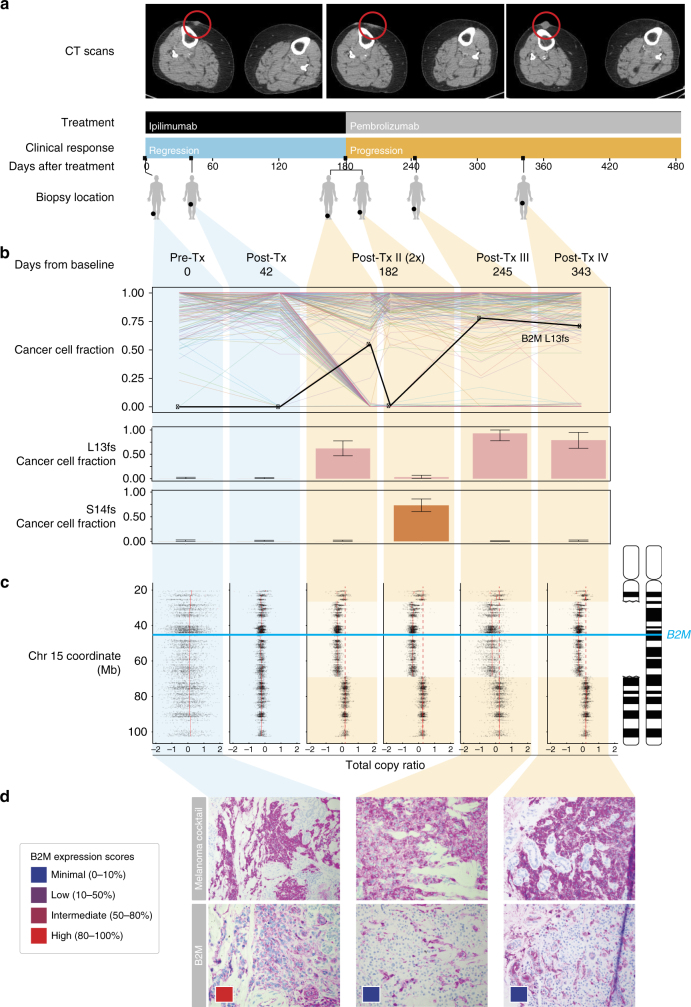
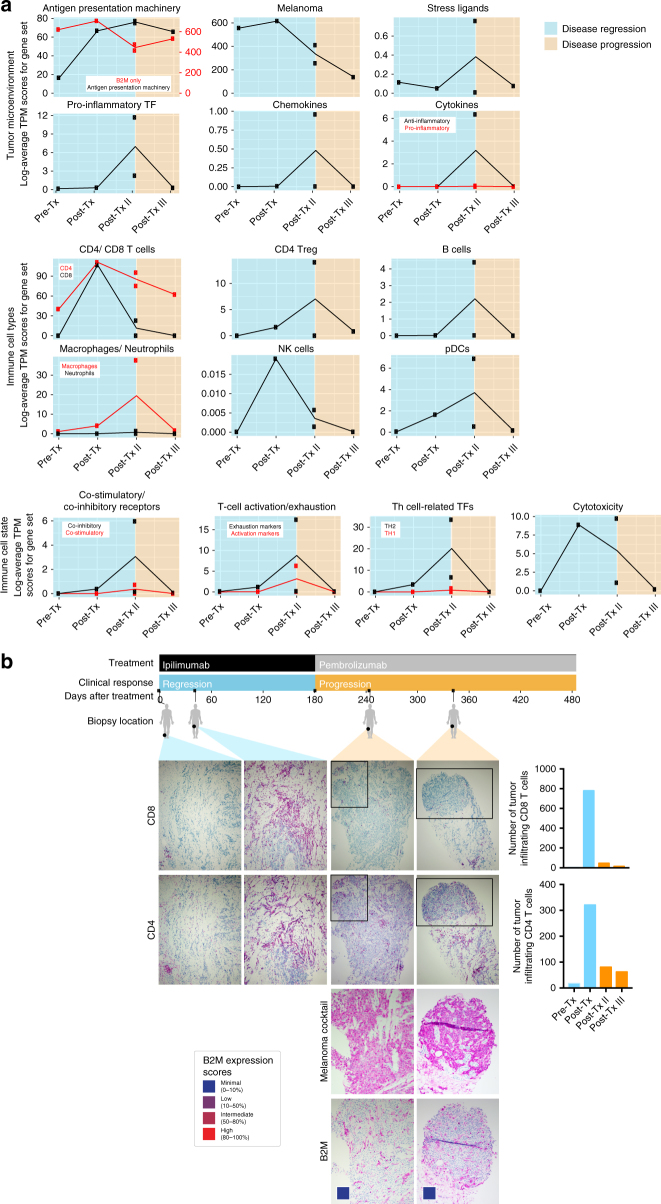
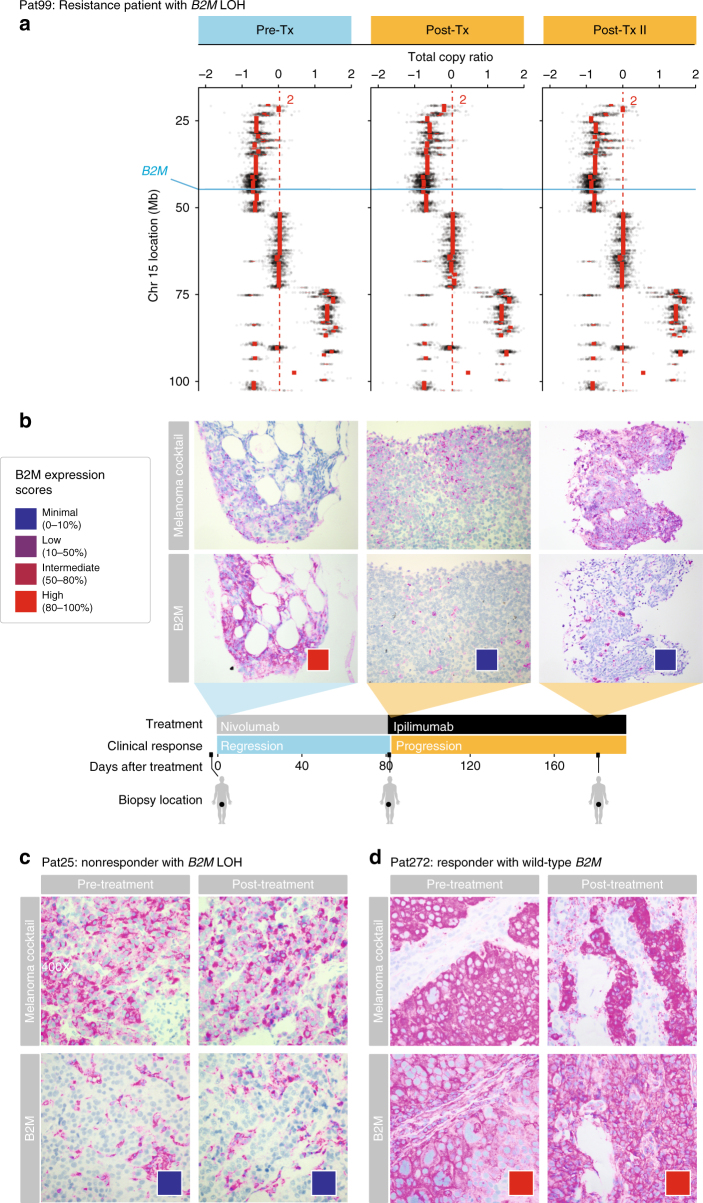
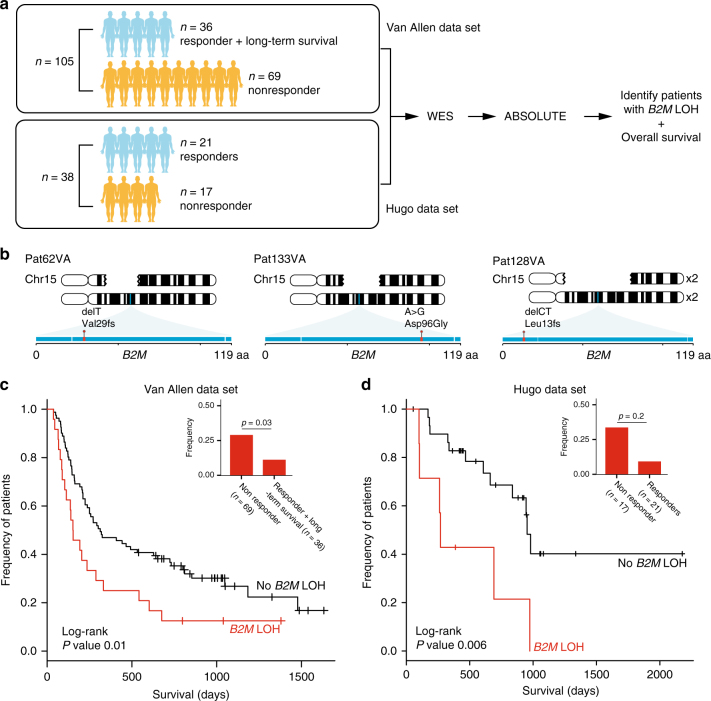
Verification
Claims the paper makes
The claims and statistics of this paper haven’t been checked yet.
Free: it reads the open-access text and checks the first 5 claims that cite a source we can check. Create a free account to check every claim.
Claims other papers make about this one
Each is checked against this paper’s own text: does it say what the citing paper says it does?
The source backs part of the claim, not all of it — or backs it for a different population, condition or comparison.
In the citing paper
“perturbations of B2M, HLA-A, JAK1, JAK2, STAT1, IFNGR1 and IFNGR2 (Fig. 2d,e, Extended Data Fig. 3e,f, Supplementary Table 2) conferred immune evasion, consistent with clinical mechanisms of resistance to immunotherapy7–9.”
From Multimodal pooled Perturb-CITE-seq screens in patient models define mechanisms of cancer immune evasion (2021) · cites this paper as [8]
Experimental — accuracy not yet measuredIn the citing paper
“Clinically relevant mechanisms of include mutations in beta-2-microglobulin (B2M) resulting in loss of MHC Class I presentation, downregulation of the antigen presentation machinery, and mutations in the IFNγ-JAK/STAT pathway that impair response to T cell mediated anti-tumor activity7–9.”
From Multimodal pooled Perturb-CITE-seq screens in patient models define mechanisms of cancer immune evasion (2021) · cites this paper as [8]
Self-check
Percentages, sums and reported differences re-computed from the paper’s own numbers.
The self-check needs the paper’s full text.
Citations
Cites
Fiji: an open-source platform for biological-image analysis
Schindelin, J., Arganda-Carreras, I., Frise, E., Kaynig, V., Longair, M., Pietzsch, T., Preibisch, S., Rueden, C., Saalfeld, S., Schmid, B., et al. (2012) · Nature Methods · doi:10.1038/nmeth.2019 · Cited by 66,890
STAR: ultrafast universal RNA-seq aligner
Dobin, A., Davis, C. A., Schlesinger, F., Drenkow, J., Zaleski, C., Jha, S., Batut, P., Chaisson, M., & Gingeras, T. R. (2013) · Bioinformatics · doi:10.1093/bioinformatics/bts635 · Cited by 51,709
PD-1 and PD-L1 Immune Checkpoint Blockade to Treat Breast Cancer
Hartkopf, A. D., Taran, F.-A., Wallwiener, M., Walter, C. B., Krämer, B., Grischke, E.-M., & Brucker, S. Y. (2016) · Breast Care · doi:10.1159/000453569 · Cited by 30,845
RSEM: accurate transcript quantification from RNA-Seq data with or without a reference genome
Li, B., & Dewey, C. N. (2011) · BMC Bioinformatics · doi:10.1186/1471-2105-12-323 · Cited by 22,179
Self-citationCerami, E., Gao, J., Dogrusoz, U., Gross, B. E., Sumer, S. O., Aksoy, B. A., Jacobsen, A., Byrne, C. J., Heuer, M. L., Larsson, E., et al. (2012) · Cancer Discovery · doi:10.1158/2159-8290.cd-12-0095 · Cited by 17,455
Adverse Renal Effects of Immune Checkpoint Inhibitors: A Narrative Review
Wanchoo, R., Karam, S., Uppal, N. N., Barta, V. S., Deray, G., Devoe, C., Launay-Vacher, V., Jhaveri, K. D., & on behalf of Cancer and Kidney International Network Workgroup on Immune Checkpoint Inhibitors (2017) · American Journal of Nephrology · doi:10.1159/000455014 · Cited by 15,256
Integrative Analysis of Complex Cancer Genomics and Clinical Profiles Using the cBioPortal
Gao, J., Aksoy, B. A., Dogrusoz, U., Dresdner, G., Gross, B., Sumer, S. O., Sun, Y., Jacobsen, A., Sinha, R., Larsson, E., et al. (2013) · Science Signaling · doi:10.1126/scisignal.2004088 · Cited by 15,160
The blockade of immune checkpoints in cancer immunotherapy
Pardoll, D. M. (2012) · Nature Reviews Cancer · doi:10.1038/nrc3239 · Cited by 13,838
PD-1 blockade induces responses by inhibiting adaptive immune resistance
Tumeh, P. C., Harview, C. L., Yearley, J. H., Shintaku, I. P., Taylor, E. J. M., Robert, L., Chmielowski, B., Spasic, M., Henry, G., Ciobanu, V., et al. (2014) · Nature · doi:10.1038/nature13954 · Cited by 6,609
Pembrolizumab versus Ipilimumab in Advanced Melanoma
Robert, C., Schachter, J., Long, G. V., Arance, A., Grob, J. J., Mortier, L., Daud, A., Carlino, M. S., McNeil, C., Lotem, M., et al. (2015) · New England Journal of Medicine · doi:10.1056/nejmoa1503093 · Cited by 5,887
Cited by
Items 601–700 of 998
Takahashi, N., Pongor, L. S., Agrawal, S. P., Shtumpf, M., Gurjar, A., Rajapakse, V. N., Shafiei, A., Schultz, C. W., Kim, S., Roame, D., et al. (2025) · Genome Medicine · doi:10.1186/s13073-025-01438-4 · Cited by 14
“Truncating mutation of B2M ( B2M Asn103fs), a known resistance mechanism to immune checkpoint blockade [75, 76], was identified in the cfDNA of a patient who did not respond to treatment (CL0191, Fig.”
Resistance mechanisms to programmed cell death protein 1 and programmed death ligand 1 inhibitors
Pezeshki, P. S., Sharif, P. M., & Rezaei, N. (2021) · Expert Opinion on Biological Therapy · doi:10.1080/14712598.2021.1929919 · Cited by 14
Functionalization of Nanomaterials for Skin Cancer Theranostics
Zhang, C., Zhu, X., Hou, S., Pan, W., & Liao, W. (2022) · Frontiers in Bioengineering and Biotechnology · doi:10.3389/fbioe.2022.887548 · Cited by 14
“The underlying mechanisms associated with drug resistance include immune surveillance escape, interferon signaling deficiency, and MITF/dedifferentiated phenotype (Sosman et al., 2012; Sade-Feldman et al., 2017; Liu et al., 2019).”
BackgroundBolzacchini, E., Libera, L., Church, S., Sahnane, N., Bombelli, R., Digiacomo, N., Giordano, M., Petracco, G., Sessa, F., Capella, C., et al. (2022) · Cancers · doi:10.3390/cancers14163951 · Cited by 14
“By contrast, immunomodulator factors cannot correct irreversible alterations caused by mutational events and chromosomal abnormalities in HLA-I and Beta-2-Microglobulin (β2m) genes and the IFN signaling pathway, leading to the progression of HLA-I negative lesions [31,35,36].”
BackgroundZheng, X., Sun, Y., Li, Y., Ma, J., Lv, Y., Hu, Y., Zhou, Y., & Zhang, J. (2022) · Cells · doi:10.3390/cells12010035 · Cited by 12
Giraudo, L., Cattaneo, G., Gammaitoni, L., Iaia, I., Donini, C., Massa, A., Centomo, M. L., Basiricò, M., Vigna, E., Pisacane, A. M., et al. (2023) · Journal of Experimental & Clinical Cancer Research · doi:10.1186/s13046-023-02884-x · Cited by 15
“Indeed, genetic aberrations of HLA-I and β2 microglobulin (β2m) have been associated with disease progression and poorer overall survival in melanoma patients treated with ICI [7, 8].”
BackgroundPotts, M. A., McDonald, J. A., Sutherland, K. D., & Herold, M. J. (2020) · European Journal of Immunology · doi:10.1002/eji.202048712 · Cited by 12
Okuno, K., Ikemura, K., Okamoto, R., Oki, K., Watanabe, A., Kuroda, Y., Kidachi, M., Fujino, S., Nie, Y., Higuchi, T., et al. (2024) · PLoS ONE · doi:10.1371/journal.pone.0299827 · Cited by 12
The role of extracellular vesicles in immune cell exhaustion and resistance to immunotherapy
Aghakhani, A., Pezeshki, P. S., & Rezaei, N. (2024) · Expert Opinion on Investigational Drugs · doi:10.1080/13543784.2024.2360209 · Cited by 11
“Acquired resistance may be caused due to mutations or epigenetic modifications, eventually resulting in relapse or further tumor progression [7,52,53].”
Shapiro, I. E., Maschke, C., Michaux, J., Pak, H., Wessling, L., Verkerk, T., Spaapen, R. M., & Bassani‐Sternberg, M. (2025) · Molecular & Cellular Proteomics · doi:10.1016/j.mcpro.2025.100951 · Cited by 12
“For example, the loss of B2M severely impairs a cell's ability to present HLA-I complexes, which directly affects the responsiveness of cancer patients to immune checkpoint inhibitors (6).”
Zhang, H., Wang, Y., Ji, Q., Cai, H., Liang, X., Xie, J., Li, H., Wang, J., Zhu, G., Tian, E., et al. (2021) · Oncology Letters · doi:10.3892/ol.2021.12590 · Cited by 11
Ladányi, A., Rásó, E., Barbai, T., Vízkeleti, L., Puskás, L. G., Kovacs, S., Győrffy, B., & Tímár, J. (2022) · International Journal of Molecular Sciences · doi:10.3390/ijms23052704 · Cited by 12
“Other studies found downregulation or loss of heterozygosity of HLA-B [33], B2M [34], JAK1 [35], and SERPINB3/4 mutations [36] as markers of ICI resistance.”
BackgroundWhat does radiomics do in PD‐L1 blockade therapy of NSCLC patients?
Cui, R., Yang, Z., & Liu, L. (2022) · Thoracic Cancer · doi:10.1111/1759-7714.14620 · Cited by 11
Katagiri, W., Yokomizo, S., Ishizuka, T., Yamashita, K., Kopp, T., Roeßing, M., Satô, A., Iwasaki, T., Sato, H., Fukuda, T., et al. (2022) · The FASEB Journal · doi:10.1096/fj.202200033r · Cited by 11
Wang, X., Yang, X., Wang, Y., Chen, Y., Yang, Y., Shang, S., Wang, W., & Wang, Y. (2022) · Cancers · doi:10.3390/cancers15010251 · Cited by 11
Pickering, C., Aiyetan, P., Xu, G., Mitchell, A., Rice, R. A., Najjar, Y. G., Markowitz, J., Ebert, L. M., Brown, M. P., Rico, G. T., et al. (2023) · Frontiers in Immunology · doi:10.3389/fimmu.2023.1187332 · Cited by 14
“Male sex 139 (69) 52 (66) 43 (73) 44 (69)”
BackgroundSelf-citationMourah, S., Louveau, B., & Dumaz, N. (2019) · Current Opinion in Oncology · doi:10.1097/cco.0000000000000603 · Cited by 12
Allais, B. S., Fay, C. J., Kim, D. Y., Semenov, Y. R., & LeBoeuf, N. R. (2023) · Immunological Reviews · doi:10.1111/imr.13257 · Cited by 11
Metabolic predictors of response to immune checkpoint blockade therapy
Shorer, O., & Yizhak, K. (2023) · iScience · doi:10.1016/j.isci.2023.108188 · Cited by 11
Self-citationGenetic alteration of class I HLA in cutaneous T-cell lymphoma
Kwang, A. C., Durán, G. E., Fernandez‐Pol, S., Najidh, S., Li, S., Torres, A. N. B., Wang, E. B., Herrera, M. C., Bandali, T., Kurtz, D. M., et al. (2024) · Blood · doi:10.1182/blood.2024024817 · Cited by 13
Han, R., Zhou, H., Peng, B., Yu, S., Zhu, J., & Chen, J. (2025) · Vaccines · doi:10.3390/vaccines13060550 · Cited by 16
Self-citationBasic rules to respond to PD-1 blockade cancer immunotherapy
Ribas, A. (2025) · Journal for ImmunoTherapy of Cancer · doi:10.1136/jitc-2025-012096 · Cited by 12
Lakshmipathi, J., Santha, S., Li, M., Qian, Y., Roy, S. F., Luheshi, N., Politi, K. A., Bosenberg, M., Eyles, J. E., & Muthusamy, V. (2025) · Cancer Immunology Immunotherapy · doi:10.1007/s00262-025-04105-0 · Cited by 11
“Defects in antigen processing and presentation that blunt the anti-tumor immune responses are frequently encountered in ICI resistance [4, 6–9].”
Resident Memory T Cells in the Tumor Microenvironment
Williams, J. B., & Kupper, T. S. (2020) · Advances in experimental medicine and biology · doi:10.1007/978-3-030-49270-0_3 · Cited by 12
Lee, S., Wang, F., Grefe, M., Trujillo‐Ocampo, A., Ruiz‐Vasquez, W., Takahashi, K., Abbas, H. A., Borges, P., Antunes, D. A., Alatrash, G., et al. (2023) · Clinical Cancer Research · doi:10.1158/1078-0432.ccr-22-2601 · Cited by 10
Harnessing tumor immunogenomics: Tumor neoantigens in ovarian cancer and beyond
Wu, M., & Zhou, S. (2023) · Biochimica et Biophysica Acta (BBA) - Reviews on Cancer · doi:10.1016/j.bbcan.2023.189017 · Cited by 11
Moving toward improved immune checkpoint immunotherapy for advanced prostate cancer
Velasco, M. A. D., Kura, Y., Fujita, K., & Uemura, H. (2024) · International Journal of Urology · doi:10.1111/iju.15378 · Cited by 13
“55 B2M is a secreted protein that is regulated by AR and is elevated in patients with advanced disease.”
BackgroundGenomic and epigenomic perspectives of T-cell exhaustion in cancer
Xia, A., Wang, J., Yang, K., Ji, D., Huang, Z., & Xu, Y. (2018) · Briefings in Functional Genomics · doi:10.1093/bfgp/ely005 · Cited by 12
Khoshghamat, N., Jafari, N., Moetamani‐Ahmadi, M., Khalili‐Tanha, G., rad, M.-H. K., Sahebdel, S., Khalili‐Tanha, N., Soleimanpour, S., Khazaei, M., Hassanian, S. M., et al. (2021) · Pathology - Research and Practice · doi:10.1016/j.prp.2021.153390 · Cited by 10
Kazemi, N. Y., Langstraat, C., & Weroha, S. J. (2022) · Gynecologic Oncology Reports · doi:10.1016/j.gore.2022.100923 · Cited by 11
Long-term effects of COVID-19 on cancer patients: the experience from Guy’s Cancer Centre
Monroy‐Iglesias, M. J., Tremble, K., Russell, B. A., Moss, C. L., Dolly, S. O., Sita-Lumsden, A. R., Cortellini, A., Pinato, D. J., Rigg, A. S., Karagiannis, S. N., et al. (2022) · Future Oncology · doi:10.2217/fon-2022-0088 · Cited by 13
The CD58:CD2 axis is co-regulated with PD-L1 via CMTM6 and governs anti-tumor immunityPreprint
Ho, P., Melms, J. C., Rogava, M., Frangieh, C. J., Shah, S. B., Walsh, Z. H., Kyrysyuk, O., Amin, A. D., Caprio, L., Fullerton, B. T., et al. (2022) · bioRxiv (Cold Spring Harbor Laboratory) · doi:10.1101/2022.03.21.485049 · Cited by 10
Stachura, P., Liu, W., Xu, H. C., Wlodarczyk, A., Stencel, O., Pandey, P., Vogt, M., Bhatia, S., Picard, D. J., Remke, M., et al. (2023) · Molecular Cancer · doi:10.1186/s12943-023-01833-8 · Cited by 10
“Clinically, tumors have variable MHC-I expression that tends to be suppressed in later stages of progression making tumors refractory to checkpoint inhibition [58–61].”
BackgroundAdvances in predictive biomarkers for melanoma immunotherapy
Ma, W., Liu, W., Zhong, J., Zou, Z., Lin, X., Sun, W., Hu, T., Xu, Y., & Chen, Y. (2024) · Holistic Integrative Oncology · doi:10.1007/s44178-024-00121-9 · Cited by 13
Triggering immunogenic death of cancer cells by nanoparticles overcomes immunotherapy resistance
Mei, T., Ye, T., Huang, D., Xie, Y., Xue, Y., Zhou, D., Wang, W., & Chen, J. (2024) · Cellular Oncology · doi:10.1007/s13402-024-01009-6 · Cited by 12
Self-citationMengoni, M., Mahlo, F. O., Gaffal, E., Tüting, T., & Braun, A. D. (2024) · Laboratory Investigation · doi:10.1016/j.labinv.2024.102209 · Cited by 14
Reversible downregulation of HLA class I in adenoid cystic carcinoma
Li, A., Gonda, B. L., Codd, E. M., von Paternos, A., Mitchell, D. R., Herrmann, M. D., Kalyan, P., Flynn, S. E., Dzu, T., Gao, C., et al. (2025) · Journal for ImmunoTherapy of Cancer · doi:10.1136/jitc-2024-011380 · Cited by 15
Szabó, I. L., Emri, G., Ladányi, A., & Tímár, J. (2025) · Cancers · doi:10.3390/cancers17091422 · Cited by 13
Wang, C., Yu, X., Teer, J. K., Yao, J., Du, D., Liu, X., Thompson, Z., Wang, M. H., Welsh, E. A., Memon, D., et al. (2025) · Nature Cancer · doi:10.1038/s43018-025-00946-x · Cited by 11
“Furthermore, impaired antigen presentation 6 , immunoregulatory molecules 7 and an extracellular matrix 8 may all hinder migration of transferred T cells in melanoma.”
Chen, Y., Chen, D., Liang, Z., Yu, H., Sun, H., Hu, Y., Jiang, P., Zhang, M., Ye, L., & Li, H. (2025) · Cancer Drug Resistance · doi:10.20517/cdr.2025.120 · Cited by 16
Optimizing early-phase immunotherapy trials: the role of biomarker enrichment strategies
Catani, G., Morchón-Araujo, D., Mirallas, O., Sánchez-Pérez, V., Nuciforo, P. G., Villacampa, G. J., Dienstmann, R., Vivancos, A. P., Garralda, E., & Hernando‐Calvo, A. (2025) · Frontiers in Immunology · doi:10.3389/fimmu.2025.1664443 · Cited by 14
Xu, Y., Shen, H., Shang, D., & Zhu, C. (2026) · Frontiers in Oncology · doi:10.3389/fonc.2025.1665239 · Cited by 10
Okuyama, K., Naruse, T., Matsushita, Y., Fujimoto, J., Yanamoto, S., Lei, Y. L., & Hu, J. (2026) · Molecular Cancer · doi:10.1186/s12943-026-02609-6 · Cited by 9
The Predictive Value of MAP2K1/2 Mutations on Efficiency of Immunotherapy in Melanoma
Ye, T., Zhang, J., Liu, X.-Y., Zhou, Y., Yuan, S., Yang, M., Xie, W., Gao, C., Chen, Y., Huang, M., et al. (2022) · Frontiers in Immunology · doi:10.3389/fimmu.2021.785526 · Cited by 10
“In contrast, the expression of MHC class II, which is associated with interferon-g-related signatures, can predict the treatment response to anti-PD-1 therapy, rather than antiCTLA-4 therapy (23, 28, 30).”
BackgroundSelf-citationDual Targeting with EZH2 Inhibitor and STING Agonist to Treat Melanoma
Emran, A. A., & Fisher, D. E. (2022) · Journal of Investigative Dermatology · doi:10.1016/j.jid.2021.09.028 · Cited by 10
Sun, Y., Zhou, X., Lucas, E., Chen, L., Zhang, H., Chen, H., & Zhou, F. (2023) · The Journal of Pathology Clinical Research · doi:10.1002/cjp2.345 · Cited by 10
“Mechanisms of resistance or non-responsiveness to ICI remain poorly understood, but evidence suggests multifactorial causes, including tumor mutational burden [ 17], PD-L1 expression level [18], interferon-γ signaling pathways [19], and inactivation of antigen presentation [20].”
BackgroundPrediction of immunotherapy response using mutations to cancer protein assemblies
Kong, J., Zhao, X., Singhal, A., Park, S., Bachelder, R. E., Shen, J., Zhang, H., Moon, J., Ahn, C.-H., Ock, C., et al. (2024) · Science Advances · doi:10.1126/sciadv.ado9746 · Cited by 10
“For example, previously reported immunotherapy biomarkers in this complex ( 22 , 31 , 42 ), such as B2M, JAK2, and STAT5A, were mutated very rarely in either Samstein (Fig.”
BackgroundTackling HLA Deficiencies Head on with Oncolytic Viruses
Fisher, K. D., Hazini, A., & Seymour, L. W. (2021) · Cancers · doi:10.3390/cancers13040719 · Cited by 11
Kang, N., Tan, K. T., Li, C., & Kuo, Y. (2021) · Current Oncology · doi:10.3390/curroncol28060388 · Cited by 9
Wang, M. M., Koskela, S. A., Mehmood, A., Langguth, M., Maranou, E., & Figueiredo, C. R. (2023) · Frontiers in Immunology · doi:10.3389/fimmu.2023.1152228 · Cited by 13
“Since b2M is an essential component of MHC-I antigen presentation to CD8+ T cells in the context of tumor immunity (36), and downregulation of HLA-I has been associated with deficient expression of b2M in ICT-resistant metastatic melanoma patients (8), we sought to evaluate whether CD1d, CD1b, and FCGRT, could also be…”
BackgroundDeveloping an Arrayed CRISPR-Cas9 Co-Culture Screen for Immuno-Oncology Target ID
Gee, S., Nelson, N., Bornot, A., Carter, N., Cuomo, M. E., Dovedi, S. J., Smith, P. D., Gianni, D., & Baker, D. J. (2020) · SLAS DISCOVERY · doi:10.1177/2472555220916457 · Cited by 9
Cho, U., Im, S., & Park, H. S. (2024) · Journal of Pathology and Translational Medicine · doi:10.4132/jptm.2024.01.31 · Cited by 8
“Some tumor cells evade the host immune system due to defects in their ability to present tumor antigens to naïve T cells via HLA class I molecules [ 70 ] .”
BackgroundBarger, L. N., Naggar, O. S. E., Ha, B., & Romano, G. (2024) · Cancer and Metastasis Reviews · doi:10.1007/s10555-024-10230-6 · Cited by 9
“Resistance can be inherent (e.g., low expression of PD-1) or acquired, like decreased antigen presentation or alterations in interferon-receptor signaling pathways [22, 23].”
Liao, Y., Yang, R., Wang, B., Ruan, Y., Cui, L., Yang, J., Yu, X., Han, S., Yao, Y., Luan, X., et al. (2024) · Oncogene · doi:10.1038/s41388-024-03255-2 · Cited by 9
Oncogenic Signalling Pathways in Cancer Immunotherapy: Leader or Follower in This Delicate Dance?
Cartwright, D., Kidd, A. C., Ansel, S., Ascierto, M. L., & Spiliopoulou, P. (2025) · International Journal of Molecular Sciences · doi:10.3390/ijms26094393 · Cited by 9
Zervanos, D.-I., Galatou, E., Miliotou, Α. N., Theodoroula, N. F., Grigoriadis, N., & Vizirianakis, I. S. (2025) · Future Pharmacology · doi:10.3390/futurepharmacol5030043 · Cited by 8
Kwok, T., Silva, I., Korpe, S., Dong, H., & Lancaster, J. N. (2025) · iScience · doi:10.1016/j.isci.2025.113538 · Cited by 12
“31,32 In addition, genes involved in chemokine signaling ( Ccl2, Cxcl9 ) were upregulated following treatment, suggesting improved immune cell recruitment to the tumor (Figure S1A).”
van Renterghem, A. W. J., Parra-Martinez, M., Witsen, M., Verkerk, K., Steur, M., Zeverijn, L. J., Dijkstra, K. K., Akkari, L., & Voest, E. E. (2026) · Cell Reports Medicine · doi:10.1016/j.xcrm.2025.102579 · Cited by 11
“13,14 41 The differential immunological pressures these tumors undergo may, in turn, drive the emergence of different negative feedback mechanisms.”
A comprehensive review of mechanisms underlying resistance to immune checkpoint inhibitors
Bertucci, A., -, T. K., Billon, E., Fernez, T., & Rochigneux, P. (2026) · Frontiers in Immunology · doi:10.3389/fimmu.2026.1735741 · Cited by 13
Vredevoogd, D. W., Apriamashvili, G., & Peeper, D. S. (2021) · Immuno-Oncology Technology · doi:10.1016/j.iotech.2021.100043 · Cited by 8
“The finding that loss of the same proteins can also cause sensitivity in vivo can be readily explained: in vivo, cells lacking productive AP can also be attacked by NK cells, as the loss of AP relieves their inhibition by MHC-I molecules.(30,65) Tumors lacking AP machinery, however, can become resistant to ICB,(30,66,…”
BackgroundSheban, F. (2023) · Frontiers in Immunology · doi:10.3389/fimmu.2023.1183578 · Cited by 11
Kobayashi, Y., Niida, A., Nagayama, S., Saeki, K., Haeno, H., Takahashi, K., Hayashi, S., Ozato, Y., Saito, H., Hasegawa, T., et al. (2023) · British Journal of Cancer · doi:10.1038/s41416-023-02395-8 · Cited by 9
Current Status and Molecular Mechanisms of Resistance to Immunotherapy in Oral Malignant Melanoma
Usta, S. Z., Uchihashi, T., Kodama, S., Kurioka, K., Inubushi, T., Shimooka, T., Sugauchi, A., Seki, S., & Tanaka, S. (2023) · International Journal of Molecular Sciences · doi:10.3390/ijms242417282 · Cited by 9
Wang, Y., Ding, L., Lin, Z., Li, B., Hu, D., Zhang, S., Zhou, S., Ning, Y., Xin, F., Ying, Y., et al. (2025) · Chemical Engineering Journal · doi:10.1016/j.cej.2025.160294 · Cited by 9
Self-citationThe Era of Checkpoint Inhibition: Lessons Learned from Melanoma
Paschen, A., & Schadendorf, D. (2019) · Recent results in cancer research/Recent Results in Cancer Research · doi:10.1007/978-3-030-23765-3_6 · Cited by 9
PEGylated IL-10: Clinical Development in Cancer Immunotherapy, Where to Go?
Sebold, B. C., Ni, G., Li, J., Li, H., Liu, X., & Wang, T. (2022) · Current Oncology Reports · doi:10.1007/s11912-022-01355-4 · Cited by 9
Frigola, J., Carbonell, C., Iranzo, P., Pardo, N., Callejo, A., Cedrés, S., Martínez‐Martí, A., Navarro, A., Soleda, M., Jimenez, J., et al. (2022) · Journal for ImmunoTherapy of Cancer · doi:10.1136/jitc-2021-004197 · Cited by 9
“We also identified differences regarding the SCNAs burden and immune infiltration levels between primary and metastatic lesions, although distinct metastatic sites may behave differently.”
Zhang, Y., Yin, K., Ma, R., Sun, Y., Wang, L., & Yin, D. (2025) · iScience · doi:10.1016/j.isci.2025.112615 · Cited by 8
Lee, S., Pankaj, A., Rickelt, S., Ting, D. T., Ferrone, C. R., Patil, D. T., Yilmaz, Ö. H., Berger, D. L., Deshpande, V., & Yilmaz, O. H. (2024) · American Journal of Clinical Pathology · doi:10.1093/ajcp/aqae066 · Cited by 8
Garrido, M. A., Navarro-Ocón, A., Ronco-Díaz, V., Olea, N., & Aptsiauri, N. (2024) · Genes · doi:10.3390/genes15121542 · Cited by 9
BIRC2 blockade facilitates immunotherapy of hepatocellular carcinoma
Fu, L., Li, S., Mei, J., Li, Z., Yang, X., Zheng, C., Li, N., Lin, Y., Cao, C., Liu, L., et al. (2025) · Molecular Cancer · doi:10.1186/s12943-025-02319-5 · Cited by 12
“Loss of heterozygosity in MHC-I has been correlated with acquired resistance to ICB [40, 41].”
Metabolism and Immune Suppressive Response in Liver Cancer
Caini, P., & Carloni, V. (2025) · Biomedicines · doi:10.3390/biomedicines13061461 · Cited by 10
Li, Z., Wang, X., Yang, Y., Shi, F., Zhang, W., Wang, Q., & Wang, S. (2022) · Cells · doi:10.3390/cells11233841 · Cited by 7
“In addition, ICI treatment resistance was observed in patients with mutations of JAK1/2 [9,10] or B2M [11].”
BackgroundIdentification of DDX60 as a Regulator of MHC-I Class Molecules in Colorectal Cancer
Geng, N., Hu, T., & He, C. (2022) · Biomedicines · doi:10.3390/biomedicines10123092 · Cited by 7
Zhang, C., Wang, L., Xu, C., Xu, H., & Wu, Y. (2023) · Frontiers in Pharmacology · doi:10.3389/fphar.2023.1079924 · Cited by 11
“solid tumors, including melanoma and lung cancer (Gettinger et al., 2017; Sade-Feldman et al., 2017; Betof Warner et al., 2019; Lei et al., 2020).”
BackgroundFreile, J. Á., Qi, Y., Jacob, L., Lobo, M. F., Lourens, H. J., Huls, G. A., & Bremer, E. (2023) · Frontiers in Immunology · doi:10.3389/fimmu.2023.1233113 · Cited by 7
Inflammation-Associated Cytotoxic Agents in Tumorigenesis
Arnhold, J. (2023) · Cancers · doi:10.3390/cancers16010081 · Cited by 8
“In addition, the expression of neoantigens and antigen-presenting molecules like MHC-1 are decreased in cancer cells [52,53].”
BackgroundPlasma plastin‑3: A tumor marker in patients with non‑small‑cell lung cancer treated with nivolumab
Kuriyama, K., Yokobori, T., Sohda, M., Nakazawa, N., Yajima, T., Naruse, I., Kuwano, H., Shirabe, K., Kaira, K., & Saeki, H. (2020) · Oncology Letters · doi:10.3892/ol.2020.12272 · Cited by 11
“Genetic alterations in β‐2‐microglobulin, an essential component of the major histo‐ compatibility complex (MHC) class I antigen presentation, have been identified in progressing lesions in patients who exhibited an initial response to PD‐1 blockade (13).”
BackgroundA natural killer cell gene signature predicts melanoma patient survivalPreprint
Cursons, J., Souza-Fonseca-Guimarães, F., Anderson, A., Foroutan, M., Hediyeh-zadeh, S., Behren, A., Huntington, N. D., & Davis, M. J. (2018) · bioRxiv (Cold Spring Harbor Laboratory) · doi:10.1101/375253 · Cited by 7
Wang, R., Yan, Q., Guo, X., Song, F., Xiong, Z., Cai, S., Bian, X., Wong, M. H., Cao, Q., Cheng, L., et al. (2025) · Genome Medicine · doi:10.1186/s13073-025-01441-9 · Cited by 9
“The loss of B2M has been linked to immune escape and resistance of immune checkpoint blockade therapies, making it a potential biomarker of immunotherapy[88–90].”
Versluis, J. M., Shehwana, H., Elens, R., Menzies, A. M., Reijers, I. L. M., Dimitriadis, P., Maher, N. G., van der Veldt, A. A. M., Kapiteijn, E., Broeks, A., et al. (2025) · Communications Medicine · doi:10.1038/s43856-025-01118-9 · Cited by 8
“…has been shown that loss of beta-2-microglobulin ( B2M ) and mutations in interferon-receptor-associated Janus kinase ( JAK ) 1 and 2, resulting in a lack of response to interferon-gamma, were both mechanismsofacquired resistance 13 – 15 , and these mutationsarean example of tumor immune evasion.”
The science of tumor-infiltrating lymphocytes (TIL): perspectives from the SITC Surgery Committee
Coukos, G., Donia, M., Gastman, B., Goff, S. L., Gros, A., Harari, A., Hernandez, S., Ito, F., Maker, A. V., Mullinax, J. E., et al. (2025) · Journal for ImmunoTherapy of Cancer · doi:10.1136/jitc-2025-013420 · Cited by 8
“Indeed, patients who exhibit resistance to PD-1 blockade therapy harbor tumors with increased loss of class I restricted antigen presentation, 205 206 which is essential in tumor recognition by CD8 TIL.”
Cancer drug response and resistance: molecular mechanisms and combating strategies
Cheng, X., Xu, M., Wei, J., & Cao, C. (2026) · Signal Transduction and Targeted Therapy · doi:10.1038/s41392-026-02924-w · Cited by 20
“64,65 Cytokine agents such as the CD122 agonist bempegaldesleukin have demonstrated immune-expanding activity in phase I-II trials and restored antitumor responses in B2M-null models when combined with PD-1 blockade in preclinical settings.”
Tumor characteristics of dissociated response to immune checkpoint inhibition in advanced melanoma
Versluis, J. M., Hoefsmit, E. P., Shehwana, H., Dimitriadis, P., Sanders, J., Broeks, A., & Blank, C. U. (2024) · Cancer Immunology Immunotherapy · doi:10.1007/s00262-023-03581-6 · Cited by 7
“Alterations in this gene are previously described in melanoma patients with acquired resistance to ICI [28, 33] and also in patients with lung cancer [34] and mismatch repair-deficient cancers [35].”
BackgroundChanges in AXL and/or MITF melanoma subpopulations in patients receiving immunotherapy
Willemsen, M., Bulgarelli, J., Chauhan, S. K., Lereim, R. R., Angeli, D., Grisendi, G., Krebbers, G., Davidson, I., Kyte, J. A., Guidoboni, M., et al. (2024) · Immuno-Oncology Technology · doi:10.1016/j.iotech.2024.101009 · Cited by 7
“Resistance to immunotherapy might result from selective outgrowth of antigen-negative tumor cells 3-6 or from tumor cells with stemness properties that phenotypically differ from their more differentiated counterparts.”
Acquired resistance to PD-L1 inhibition enhances a type I IFN-regulated secretory program in tumors
Shi, Y., McKenery, A., Dolan, M., Mastri, M., Hill, J. W., Dommer, A. P., Benzekry, S., Long, M., Abrams, S. I., Puzanov, I. J., et al. (2024) · EMBO Reports · doi:10.1038/s44319-024-00333-0 · Cited by 9
“For instance, IFNs can boost antigen presentation (e.g., via beta-2-microglobulin and MHC-I expression) to improve PD-1 inhibitor responses (Sade-Feldman et al, 2017; Vraetz et al, 1999), while also suppressing immune cell attack via the induction of Τ -cell inhibitory ligands (Benci et al, 2016;…”
de Waard, A. A., Verkerk, T., Hoefakker, K., van der Steen, D. M., Jongsma, M. L. M., Kadosh, D. M., Bliss, S., de Ru, A. H., Admon, A., van Veelen, P. A., et al. (2020) · iScience · doi:10.1016/j.isci.2021.102051 · Cited by 7
Resistance to Immunotherapy: Mechanisms and Means for Overcoming
Salkeni, M. A., Shin, J. Y., & Gulley, J. L. (2021) · Advances in experimental medicine and biology · doi:10.1007/978-3-030-79308-1_2 · Cited by 6
Jimeno, A., Baranda, J. C., Iams, W. T., Park, J. C., Mita, M. M., Gordon, M. S., Taylor, M. H., Dhani, N. C., Leal, A. D., Neupane, P. C., et al. (2023) · Investigational New Drugs · doi:10.1007/s10637-023-01342-x · Cited by 8
“…can be classified into the mutations in signaling pathways supporting tumor-immune control, the loss of tumor antigen expression, the changes in antigen processing pathways, and the loss of HLA expression, epigenetic changes, and increased expression of immunosuppressive ligands [26, 27].”
Tseng, D., Padda, S. K., & Wakelee, H. A. (2018) · Journal of Thoracic Oncology · doi:10.1016/j.jtho.2018.04.008 · Cited by 7
Wang, J., Li, F., Xu, Y., Zheng, X., Zhang, C., Hu, C., Xu, Y., Mi, W., Li, X., & Zhang, Y. (2021) · Journal of Translational Medicine · doi:10.1186/s12967-021-02962-8 · Cited by 6
Seriniquinones as Therapeutic Leads for Treatment of BRAF and NRAS Mutant Melanomas
Hirata, A. S., Teixeira, P. R., Machado‐Neto, J. A., Jimenez, P. C., Clair, J. J. L., Fenical, W., & Costa-Lotufo, L. V. (2021) · Molecules · doi:10.3390/molecules26237362 · Cited by 6
Zhou, L. Y., Zou, F., & Sun, W. (2022) · Biometrics · doi:10.1111/biom.13717 · Cited by 6
“This is important because different HLA alleles may present very different numbers of peptides, for example, due to the low expression of an HLA allele (Bassani-Sternberg & Gfeller, 2016) or somatic mutations of an HLA allele (Sade-Feldman et al., 2017).”
BackgroundKoc, M. A., Wiles, T. A., Weinhold, D. C., Rightmyer, S., Weaver, A. L., McDowell, C. T., Roder, J., Asmellash, S. G., Pestano, G. A., Röder, H., et al. (2023) · Journal of Mass Spectrometry and Advances in the Clinical Lab · doi:10.1016/j.jmsacl.2023.11.001 · Cited by 7
“Additionally, B2M has been found to correlate with ICI therapeutic response in NSCLC and melanoma [72,73], likely due to its impact on tumor antigen presentation disruption [74].”
BackgroundGenomic mechanisms of immune evasion in colorectal cancer: from discovery to clinical practice
Grasso, C. S., & Giannakis, M. (2018) · Oncotarget · doi:10.18632/oncotarget.26105 · Cited by 6
Memon, D., Rizvi, H. A., Fromm, G. J., Lihm, J., Schoenfeld, A. J., Sauter, J. L., Luo, J., Chow, A. T., Bhanot, U. K., McCarthy, C. G., et al. (2021) · bioRxiv (Cold Spring Harbor Laboratory) · doi:10.1101/2021.07.21.452854 · Cited by 6
“Along with case reports in other diseases, these studies have identified that loss of key proteins associated with antigen presentation or defects of the IFNγ signaling pathway can contribute to immune resistance (Gettinger et al., 2017; Le et al., 2017; Sade-Feldman et al., 2017; Zaretsky et al., 2016).”
BackgroundThe Latest Developments in Biomarkers Predicting Response to Immunotherapy
Roviello, G., Bersanelli, M., & Catalano, M. (2022) · Immunotherapy · doi:10.2217/imt-2022-0053 · Cited by 5
IFN γ and the IFN γ Signaling Pathways in Merkel Cell Carcinoma
Song, L., Guan, J., Zhou, Q., Liu, W., Becker, J. C., & Deng, D. (2025) · Cancers · doi:10.3390/cancers17152547 · Cited by 5
“Loss-of-function mutations and genomic alterations in the IFN γ signaling pathway lead to immune evasion, causing tumor resistance to ICI therapy [74,75,77].”
Modeling anti-tumor immune responses using patient-derived melanoma organoids
Kaminska, K. K., Phung, B., Karlström, J., Lauss, M., Harbst, K., Svensson, T., Pietras, K., Nielsen, K., Carneiro, A., Ekedahl, H., et al. (2025) · Cancer Immunology Immunotherapy · doi:10.1007/s00262-025-04269-9 · Cited by 6
Cancer Neoantigen Vaccines Emerge Efficacious
Sultan, H., & Schreiber, R. D. (2026) · Annual Review of Medicine · doi:10.1146/annurev-med-071723-045853 · Cited by 5
Metadata
- Authors
- Sade-Feldman, M., Jiao, Y. J., Chen, J. H., Rooney, M. S., Barzily-Rokni, M., Eliane, J.-P., Bjorgaard, S. L., Hammond, M. R., Vitzthum, H., Blackmon, S. M., Frederick, D. T., Hazar-Rethinam, M., Nadres, B. A., Van Seventer, E. E., Shukla, S. A., Yizhak, K., Ray, J. P., Rosebrock, D., Livitz, D., Adalsteinsson, V., Getz, G., Duncan, L. M., Li, B., Corcoran, R. B., Lawrence, D. P., Stemmer-Rachamimov, A., Boland, G. M., Landau, D. A., Flaherty, K. T., Sullivan, R. J., & Hacohen, N.
- Affiliations
- Broad Institute (US)
- Massachusetts General Hospital (US)
- Dana-Farber Cancer Institute (US)
- Corresponding author
- Sullivan, Ryan J.
- Hacohen, Nir
- ORCID
- Sade-Feldman, Moshe
- Jiao, Yunxin J.
- Chen, Jonathan H.
- Barzily-Rokni, Michal
- Frederick, Dennie T.
- Hazar-Rethinam, Mehlika
- Nadres, Brandon A.
- Shukla, Sachet A.
- Yizhak, Keren
- Rosebrock, Daniel
- Livitz, Dimitri
- Adalsteinsson, Viktor
- Getz, Gad
- Duncan, Lyn M.
- Li, Bo
- Corcoran, Ryan B.
- Lawrence, Donald P.
- Stemmer-Rachamimov, Anat
- Boland, Genevieve M.
- Landau, Dan A.
- Flaherty, Keith T.
- Sullivan, Ryan J.
- Hacohen, Nir
- Venue
- Nature Communications
- Published
- 2017-10-26
- Volume
- 8
- Issue
- 1
- Pages
- 1136-1136
- ISSN
- 2041-1723 (ISSN-L)
- PMC
- PMC5656607
- OpenAlex
- W2765417948
- Cited by
- 1,005
- References
- 44
- Citations by year
- 2026: 90 · 2025: 116 · 2024: 110 · 2023: 129 · 2022: 145 · 2021: 152 · 2020: 125 · 2019: 78 · 2018: 53 · 2017: 4
- FWCI
- 31.34
- Type
- journal article
- Language
- en
- Open access
- gold
- doi.org
- Licence
- cc-by
- creativecommons.org/licenses/by/4.0 (tdm)
- creativecommons.org/licenses/by/4.0 (vor)
- Locations
- Nature Communications (publishedVersion, cc-by)
- Europe PMC (PubMed Central) (publishedVersion, cc-by)
- PubMed Central (publishedVersion, cc-by)
- PubMed (publishedVersion)
- Digital Access to Scholarship at Harvard (DASH) (Harvard University) (submittedVersion, cc-by)
- RePEc: Research Papers in Economics (submittedVersion)
- DOAJ (DOAJ: Directory of Open Access Journals) (submittedVersion, cc-by-sa)
- DOAJ (DOAJ: Directory of Open Access Journals) (submittedVersion)
- Funders
- National Science Foundation
- Cancer Research Institute
- Melanoma Research Alliance
- Dr. Miriam and Sheldon G. Adelson Medical Research Foundation
- Wellcome Trust
- Broad Institute
- National Institutes of Health
- Stand Up To Cancer
- National Human Genome Research Institute (U54HG003067)
- National Cancer Institute (R01CA208756, T32CA207021, R50CA211482)
- National Institute of Environmental Health Sciences (K01ES025431)
- Topics
- Health Sciences › Medicine › Oncology › Cancer Immunotherapy and Biomarkers
- Life Sciences › Immunology and Microbiology › Immunology › Immunotherapy and Immune Responses
- Health Sciences › Medicine › Oncology › Cutaneous Melanoma Detection and Management
- Keywords
- immune checkpoint blockade, metastatic melanoma, beta2-microglobulin, loss of heterozygosity, MHC class I antigen presentation, anti-CTLA-4, anti-PD-1, treatment resistance, tumor immune evasion, overall survival
- MeSH terms
- Animals, Antibodies, Monoclonal, beta 2-Microglobulin, Female, Humans, Melanoma, Mice, Inbred C57BL, Neoplasm Metastasis, Neoplasms, Experimental, Point Mutation, Antigen Presentation, Mice, Knockout, Drug Resistance, Neoplasm, Loss of Heterozygosity, CTLA-4 Antigen, Programmed Cell Death 1 Receptor
About these checks
Registry, retraction, Cites and statistics results are computed, not judged, with one exception: a printed reference that no index lists is read once by a model before it counts as a citation error. Claims are extracted by a model and kept only when their quote appears verbatim in the text; each cited source is then checked, with a model’s help, for whether it says what the claim relies on. Those verdicts can be wrong — read the claim’s quote and the cited source before relying on one.
Statistics and arithmetic are recomputed, not judged.
Confidence bands are shown only for fields calibrated on our annotated test set. None is calibrated yet, so no band is shown.
What counts as a claim ›How we measure confidence ›How we check this ›
Are you an author, or do you see a problem with this page? Request a review
Data sources
Bibliographic data: Semantic Scholar, OpenAlex, Crossref.
Contains information from the Semantic Scholar Academic Graph Datasets, made available under the ODC Attribution License (ODC-BY 1.0).
Semantic Scholar’s data is described in: Kinney, R., et al. (2023). The Semantic Scholar Open Data Platform. arXiv:2301.10140.
