

Resistance to checkpoint blockade therapy through inactivation of antigen presentation
Open accessThe DOI matches its Crossref record; 44 of the 44 references it cites were found in a registry or an index.
Abstract
Treatment with immune checkpoint blockade (CPB) therapies often leads to prolonged responses in patients with metastatic melanoma, but the common mechanisms of primary and acquired resistance to these agents remain incompletely characterized and have yet to be validated in large cohorts. By analyzing longitudinal tumor biopsies from 17 metastatic melanoma patients treated with CPB therapies, we observed point mutations, deletions or loss of heterozygosity (LOH) in beta-2-microglobulin ( B2M ), an essential component of MHC class I antigen presentation, in 29.4% of patients with progressing disease. In two independent cohorts of melanoma patients treated with anti-CTLA4 and anti-PD1, respectively, we find that B2M LOH is enriched threefold in non-responders (~30%) compared to responders (~10%) and associated with poorer overall survival. Loss of both copies of B2M is found only in non-responders. B2M loss is likely a common mechanism of resistance to therapies targeting CTLA4 or PD1.
Overview
The claims and statistics of this paper haven’t been checked yet.
Free: it reads the open-access text and checks the first 5 claims that cite a source we can check. Create a free account to check every claim.
Integrity signals
Registry
Cites
Statistics
Figures
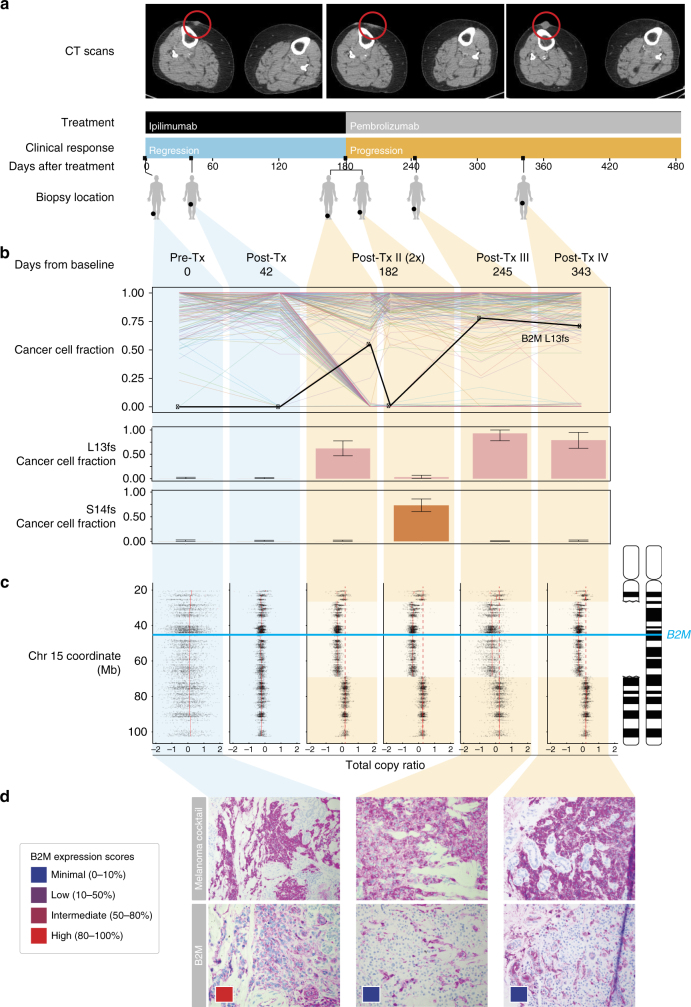
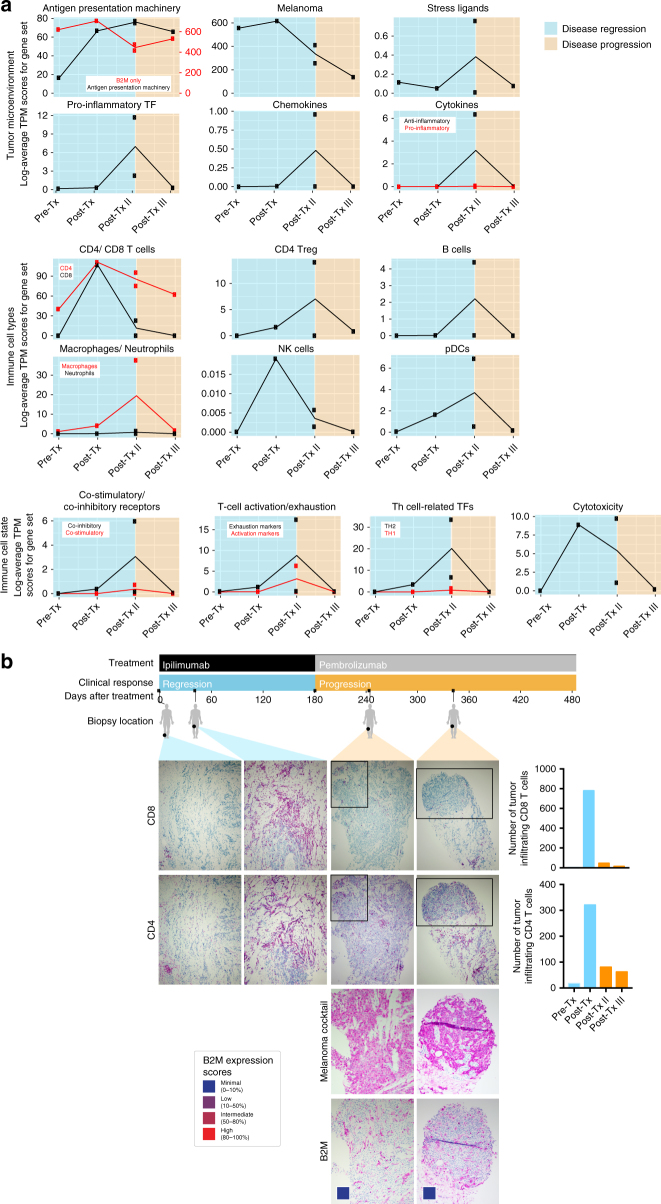
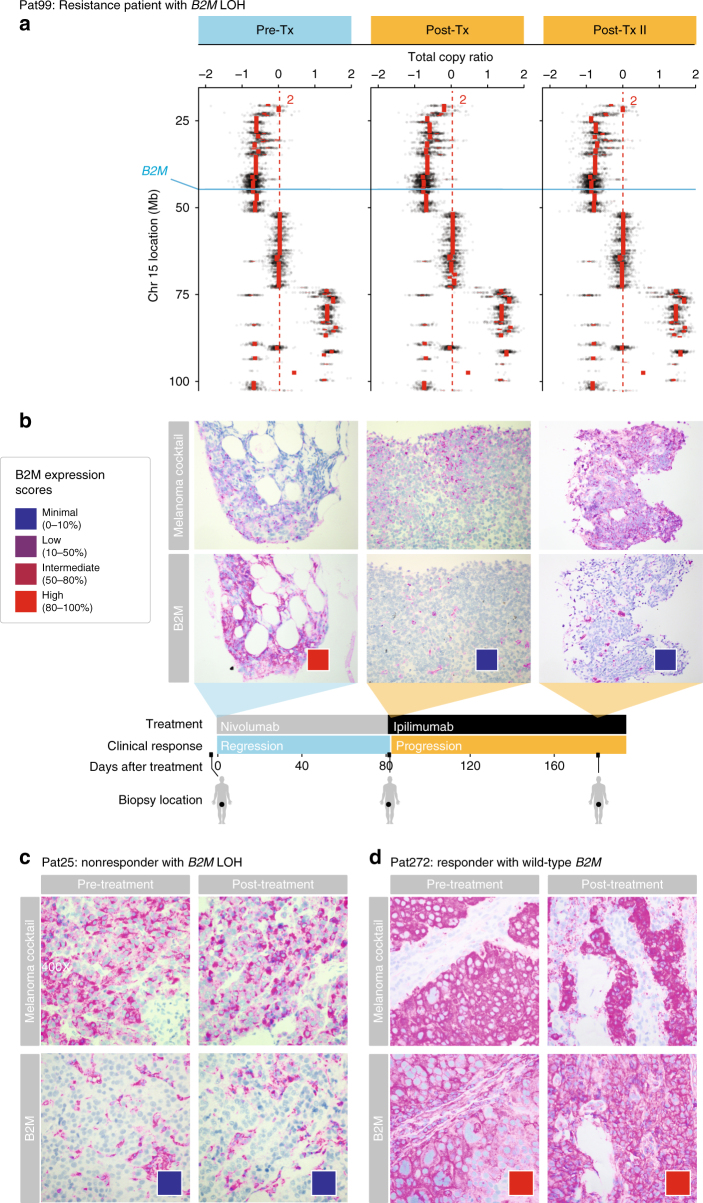
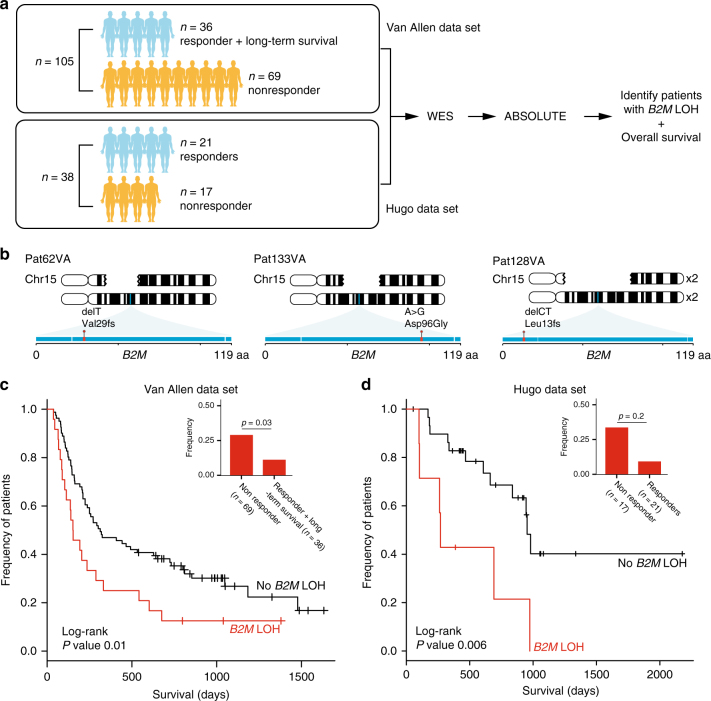
Verification
Claims the paper makes
The claims and statistics of this paper haven’t been checked yet.
Free: it reads the open-access text and checks the first 5 claims that cite a source we can check. Create a free account to check every claim.
Claims other papers make about this one
Each is checked against this paper’s own text: does it say what the citing paper says it does?
The source backs part of the claim, not all of it — or backs it for a different population, condition or comparison.
In the citing paper
“perturbations of B2M, HLA-A, JAK1, JAK2, STAT1, IFNGR1 and IFNGR2 (Fig. 2d,e, Extended Data Fig. 3e,f, Supplementary Table 2) conferred immune evasion, consistent with clinical mechanisms of resistance to immunotherapy7–9.”
From Multimodal pooled Perturb-CITE-seq screens in patient models define mechanisms of cancer immune evasion (2021) · cites this paper as [8]
Experimental — accuracy not yet measuredIn the citing paper
“Clinically relevant mechanisms of include mutations in beta-2-microglobulin (B2M) resulting in loss of MHC Class I presentation, downregulation of the antigen presentation machinery, and mutations in the IFNγ-JAK/STAT pathway that impair response to T cell mediated anti-tumor activity7–9.”
From Multimodal pooled Perturb-CITE-seq screens in patient models define mechanisms of cancer immune evasion (2021) · cites this paper as [8]
Self-check
Percentages, sums and reported differences re-computed from the paper’s own numbers.
The self-check needs the paper’s full text.
Citations
Cites
Fiji: an open-source platform for biological-image analysis
Schindelin, J., Arganda-Carreras, I., Frise, E., Kaynig, V., Longair, M., Pietzsch, T., Preibisch, S., Rueden, C., Saalfeld, S., Schmid, B., et al. (2012) · Nature Methods · doi:10.1038/nmeth.2019 · Cited by 66,890
STAR: ultrafast universal RNA-seq aligner
Dobin, A., Davis, C. A., Schlesinger, F., Drenkow, J., Zaleski, C., Jha, S., Batut, P., Chaisson, M., & Gingeras, T. R. (2013) · Bioinformatics · doi:10.1093/bioinformatics/bts635 · Cited by 51,709
PD-1 and PD-L1 Immune Checkpoint Blockade to Treat Breast Cancer
Hartkopf, A. D., Taran, F.-A., Wallwiener, M., Walter, C. B., Krämer, B., Grischke, E.-M., & Brucker, S. Y. (2016) · Breast Care · doi:10.1159/000453569 · Cited by 30,845
RSEM: accurate transcript quantification from RNA-Seq data with or without a reference genome
Li, B., & Dewey, C. N. (2011) · BMC Bioinformatics · doi:10.1186/1471-2105-12-323 · Cited by 22,179
Self-citationCerami, E., Gao, J., Dogrusoz, U., Gross, B. E., Sumer, S. O., Aksoy, B. A., Jacobsen, A., Byrne, C. J., Heuer, M. L., Larsson, E., et al. (2012) · Cancer Discovery · doi:10.1158/2159-8290.cd-12-0095 · Cited by 17,455
Adverse Renal Effects of Immune Checkpoint Inhibitors: A Narrative Review
Wanchoo, R., Karam, S., Uppal, N. N., Barta, V. S., Deray, G., Devoe, C., Launay-Vacher, V., Jhaveri, K. D., & on behalf of Cancer and Kidney International Network Workgroup on Immune Checkpoint Inhibitors (2017) · American Journal of Nephrology · doi:10.1159/000455014 · Cited by 15,256
Integrative Analysis of Complex Cancer Genomics and Clinical Profiles Using the cBioPortal
Gao, J., Aksoy, B. A., Dogrusoz, U., Dresdner, G., Gross, B., Sumer, S. O., Sun, Y., Jacobsen, A., Sinha, R., Larsson, E., et al. (2013) · Science Signaling · doi:10.1126/scisignal.2004088 · Cited by 15,160
The blockade of immune checkpoints in cancer immunotherapy
Pardoll, D. M. (2012) · Nature Reviews Cancer · doi:10.1038/nrc3239 · Cited by 13,838
PD-1 blockade induces responses by inhibiting adaptive immune resistance
Tumeh, P. C., Harview, C. L., Yearley, J. H., Shintaku, I. P., Taylor, E. J. M., Robert, L., Chmielowski, B., Spasic, M., Henry, G., Ciobanu, V., et al. (2014) · Nature · doi:10.1038/nature13954 · Cited by 6,609
Pembrolizumab versus Ipilimumab in Advanced Melanoma
Robert, C., Schachter, J., Long, G. V., Arance, A., Grob, J. J., Mortier, L., Daud, A., Carlino, M. S., McNeil, C., Lotem, M., et al. (2015) · New England Journal of Medicine · doi:10.1056/nejmoa1503093 · Cited by 5,887
Cited by
Items 101–200 of 998
The PTPN2/PTPN1 inhibitor ABBV-CLS-484 unleashes potent anti-tumour immunity
Baumgartner, C. K., Ebrahimi-Nik, H., Iracheta-Vellve, A., Hamel, K. M., Olander, K. E., Davis, T. G. R., McGuire, K. A., Halvorsen, G. T., Avila, O. I., Patel, C. H., et al. (2023) · Nature · doi:10.1038/s41586-023-06575-7 · Cited by 186
Resistance mechanisms to immune checkpoint inhibitors: updated insights
Alsaafeen, B. H., Ali, B. R., & Elkord, E. (2025) · Molecular Cancer · doi:10.1186/s12943-024-02212-7 · Cited by 191
“In line with this study, others demonstrated that homozygous loss or heterozygous mutations combined with loss of heterozygosity in β2M gene in tumors could confer primary or acquired resistance to ICIs resulting from loss of MHC I expression [115, 116].”
Ravi, A., Hellmann, M. D., Arniella, M. B., Holton, M., Freeman, S. S., Naranbhai, V., Stewart, C., Leshchiner, I., Kim, J., Akiyama, Y., et al. (2023) · Nature Genetics · doi:10.1038/s41588-023-01355-5 · Cited by 188
Self-citationBeta2-microglobulin(B2M) in cancer immunotherapies: Biological function, resistance and remedy
Wang, H., Liu, B., & Wei, J. (2021) · Cancer Letters · doi:10.1016/j.canlet.2021.06.008 · Cited by 190
Tumor immunotherapy resistance: Revealing the mechanism of PD-1 / PD-L1-mediated tumor immune escape
Cui, J.-W., Li, Y., Yang, Y., Yang, H.-K., Dong, J.-M., Xiao, Z.-H., He, X., Guo, J.-H., Wang, R.-Q., Dai, B., et al. (2024) · Biomedicine & Pharmacotherapy · doi:10.1016/j.biopha.2024.116203 · Cited by 184
Mechanisms of immune escape in the cancer immune cycle
Tang, S., Ning, Q., Yang, L., Mo, Z., & Tang, S. (2020) · International Immunopharmacology · doi:10.1016/j.intimp.2020.106700 · Cited by 178
Understanding and overcoming the resistance of cancer to PD-1/PD-L1 blockade
Shergold, A. L., Millar, R., & Nibbs, R. J. B. (2019) · Pharmacological Research · doi:10.1016/j.phrs.2019.104258 · Cited by 174
White paper on microbial anti-cancer therapy and prevention
Forbes, N. S., Coffin, R. S., Deng, L., Evgin, L., Fiering, S., Giacalone, M., Gravekamp, C., Gulley, J. L., Gunn, H., Hoffman, R. M., et al. (2018) · Journal for ImmunoTherapy of Cancer · doi:10.1186/s40425-018-0381-3 · Cited by 168
“D ow nloaded from that facilitate tumor-specific T cell recruitment to tumors [53], (5) loss of B2M required for cell surface expression of HLA-I [54, 55], and (6) loss-of-function mutations in JAK1 or JAK2 [54].”
BackgroundMismatch Repair-Deficient Colorectal Cancer: Building on Checkpoint Blockade
Jin, Z., & Sinicrope, F. A. (2022) · Journal of Clinical Oncology · doi:10.1200/jco.21.02691 · Cited by 168
Newell, F., Pires da Silva, I., Johansson, P. A., Menzies, A. M., Wilmott, J. S., Addala, V., Carlino, M. S., Rizos, H., Nones, K., Edwards, J. J., et al. (2022) · Cancer Cell · doi:10.1016/j.ccell.2021.11.012 · Cited by 164
Tumour mutational burden: clinical utility, challenges and emerging improvements
Budczies, J., Kazdal, D. N., Menzel, M., Beck, S., Kluck, K., Altbürger, C., Schwab, C., Allgäuer, M., Ahadova, A., Kloor, M., et al. (2024) · Nature Reviews Clinical Oncology · doi:10.1038/s41571-024-00932-9 · Cited by 218
“B2M has a crucial role in the assembly of the MHC class I antigen complex and cancer cells harbouring such mutations cannot effectively present antigens to cytotoxic T cells 156 .”
InfluentialTímár, J., & Ladányi, A. (2022) · International Journal of Molecular Sciences · doi:10.3390/ijms23105384 · Cited by 164
“In a small proportion of melanomas, loss of HLA class I expression is caused by mutation of the B2M gene [60,63]; however, epigenetic mechanisms or translational dysregulation are much more frequent mechanisms of HLA class I loss in cancers [64,65].”
BackgroundStanniocalcin 1 is a phagocytosis checkpoint driving tumor immune resistance
Lin, H., Kryczek, I., Li, S., Green, M. D., Ali, A., Hamasha, R., Wei, S., Vatan, L., Szeliga, W., Grove, S., et al. (2021) · Cancer Cell · doi:10.1016/j.ccell.2020.12.023 · Cited by 159
“, 2015), mutations in interferon (IFN)γ and MHC signaling pathway (Gao et al., 2016; Sade-Feldman et al., 2017; Shin et al., 2017; Zaretsky et al., 2016), dysfunctional T-cell trafficking and cytotoxic T cell activity (Peng et al.”
BackgroundXu, H., Van der Jeught, K., Zhou, Z., Zhang, L., Yu, T., Sun, Y., Li, Y., Wan, C., So, K. M., Liu, D., et al. (2021) · Journal of Clinical Investigation · doi:10.1172/jci146832 · Cited by 160
“…immune checkpoint blockade therapies revealed a correlation of point mutations, deletions or loss of heterozygosity in the β -2- microglobulin ( B2M ) gene, which encodes an essential component of the MHC-I antigen presentation complex, with therapeutic resistance and poor clinical outcomes (2).”
RetractedTrujillo, J. A., Luke, J. J., Zha, Y., Segal, J. P., Ritterhouse, L. L., Spranger, S., Matijevich, K., & Gajewski, T. F. (2019) · Journal for ImmunoTherapy of Cancer · doi:10.1186/s40425-019-0780-0 · Cited by 159
Gut microbiota shapes cancer immunotherapy responses
Lei, W., Zhou, K., Lei, Y., Li, Q., & Zhu, H. (2025) · npj Biofilms and Microbiomes · doi:10.1038/s41522-025-00786-8 · Cited by 195
The molecular and functional landscape of resistance to immune checkpoint blockade in melanoma
Lim, S. Y., Shklovskaya, E., Lee, J., Pedersen, B., Stewart, A., Ming, Z., Irvine, M., Shivalingam, B., Saw, R. P. M., Menzies, A. M., et al. (2023) · Nature Communications · doi:10.1038/s41467-023-36979-y · Cited by 173
Bortolomeazzi, M., Keddar, M. R., Montorsi, L., Acha-Sagredo, A., Benedetti, L., Temelkovski, D., Choi, S., Petrov, N., Todd, K., Wai, P., et al. (2021) · Gastroenterology · doi:10.1053/j.gastro.2021.06.064 · Cited by 146
“In melanoma, B2M loss has been associated with resistance to immune checkpoint inhibitors.(31) Our data indicate an opposite association in CRC, supporting similar recent observations.”
ResultCancer Immunotherapy: Beyond Checkpoint Blockade
Dougan, M. L., Dranoff, G., & Dougan, S. K. (2018) · Annual Review of Cancer Biology · doi:10.1146/annurev-cancerbio-030518-055552 · Cited by 164
Ramachandran, I., Lowther, D. E., Dryer-Minnerly, R., Wang, R., Fayngerts, S., Nunez, D., Betts, G. J., Bath, N. M., Tipping, A. J., Melchiori, L., et al. (2019) · Journal for ImmunoTherapy of Cancer · doi:10.1186/s40425-019-0762-2 · Cited by 158
Overcoming Genetically Based Resistance Mechanisms to PD-1 Blockade
Torrejon, D. Y., Abril-Rodriguez, G., Champhekar, A. S., Tsoi, J., Campbell, K. M., Kalbasi, A., Parisi, G., Zaretsky, J. M., Garcia-Diaz, A., Puig-Saus, C., et al. (2020) · Cancer Discovery · doi:10.1158/2159-8290.cd-19-1409 · Cited by 146
“Loss of function B2M mutations have been reported in microsatellite stable and MSI-high colorectal (56), melanoma (9,57) and lung cancers (58), and promote resistance to immunotherapy mediated by loss of antigen presentation (5,8–10,35).”
BackgroundFigueiredo, C. R., Kalirai, H., Sacco, J. J., Azevedo, R., Duckworth, A. D., Slupsky, J. R., Coulson, J. M., & Coupland, S. E. (2020) · The Journal of Pathology · doi:10.1002/path.5384 · Cited by 169
“This may help us to understand why this type of cancer is one of the most refractory to current immunotherapies using ICIs at present.”
BackgroundInfluentialMolecular Markers of Response to Anti-PD1 Therapy in Advanced Hepatocellular Carcinoma
Haber, P. K., Castet, F., Torres-Martin, M., Andreu-Oller, C., Puigvehí, M., Miho, M., Radu, P., Dufour, J.-F., Verslype, C., Zimpel, C., et al. (2023) · Gastroenterology · doi:10.1053/j.gastro.2022.09.005 · Cited by 145
Dersh, D., Phelan, J. D., Gumina, M. E., Wang, B., Arbuckle, J. H., Hollý, J., Kishton, R. J., Markowitz, T. E., Seedhom, M. O., Fridlyand, N., et al. (2020) · Immunity · doi:10.1016/j.immuni.2020.11.002 · Cited by 156
“Since such immunoevasion is one of the principal reasons for immunotherapy failure (Dersh et al., 2020; Sade-Feldman et al., 2017), it is critical to identify gene products that enable or counteract immunoevasion.”
BackgroundIFNγ signaling integrity in colorectal cancer immunity and immunotherapy
Du, W., Frankel, T. L., Green, M., & Zou, W. (2022) · Cellular & Molecular Immunology · doi:10.1038/s41423-021-00735-3 · Cited by 143
Beyaz, S., Chung, C., Mou, H., Bauer-Rowe, K. E., Xifaras, M. E., Ergin, I., Dohnalová, L., Biton, M., Shekhar, K., Eskiocak, O., et al. (2021) · Cell stem cell · doi:10.1016/j.stem.2021.08.007 · Cited by 155
“Recognition of antigens by T cells through antigen presentation pathways is a major mechanism for triggering anti-tumor immunity (Sade-Feldman et al., 2017; Vanneman and Dranoff, 2012).”
BackgroundHallmarks of Resistance to Immune-Checkpoint Inhibitors
Karasarides, M., Cogdill, A. P., Robbins, P. B., Bowden, M., Burton, E. M., Butterfield, L. H., Cesano, A., Hammer, C., Haymaker, C., Horak, C. E., et al. (2022) · Cancer Immunology Research · doi:10.1158/2326-6066.cir-20-0586 · Cited by 162
“Complete loss of beta-2 microglobulin (B2M) alleles, an essential component of major histocompatibility complex class I (MHC-I) required for antigen presentation, was evident only in ICI nonresponders, whereas permutations of the B2M gene (absence of tumor-specific expression, frameshift mutations, or LOH) were observ…”
BackgroundCancer Immunoediting in the Era of Immuno-oncology
Gubin, M. M., & Vesely, M. D. (2022) · Clinical Cancer Research · doi:10.1158/1078-0432.ccr-21-1804 · Cited by 184
The emergence of drug resistance to targeted cancer therapies: Clinical evidence
Sarmento‐Ribeiro, A. B., Scorilas, A., Gonçalves, A. C., Efferth, T., & Trougakos, I. P. (2019) · Drug Resistance Updates · doi:10.1016/j.drup.2019.100646 · Cited by 150
Dongre, A., Rashidian, M., Eaton, E. N., Reinhardt, F., Thiru, P., Zagorulya, M., Nepal, S., Banaz, T., Martner, A., Spranger, S., et al. (2021) · Cancer Discovery · doi:10.1158/2159-8290.cd-20-0603 · Cited by 138
“J Clin Invest 2012;122(5):1849-68 doi 10.”
BackgroundInfluentialAdvances and prospects of biomarkers for immune checkpoint inhibitors
Yamaguchi, H., Hsu, J.-M., Sun, L., Wang, S., & Hung, M. (2024) · Cell Reports Medicine · doi:10.1016/j.xcrm.2024.101621 · Cited by 168
“71–74 Unlike MHC-I molecules, which are commonly found in most nucleated cells, MHC-II molecules are typically specifically expressed in APCs such as dendritic cells (DCs) and macrophages.”
BackgroundType I and II Interferons in the Anti-Tumor Immune Response
Fenton, S. E., Saleiro, D., & Platanias, L. C. (2021) · Cancers · doi:10.3390/cancers13051037 · Cited by 161
“Further studies have also shown that loss of function mutations in the IFNR and alterations in the IFN signaling pathways allow immune escape from ICIs [36,197].”
BackgroundDu, W., Hua, F., Li, X., Zhang, J., Li, S., Wang, W., Zhou, J., Wang, W., Liao, P., Yan, Y., et al. (2021) · Cancer Discovery · doi:10.1158/2159-8290.cd-20-1571 · Cited by 150
CD8+ T cells maintain killing of MHC-I-negative tumor cells through the NKG2D–NKG2DL axis
Lerner, E. C., Woroniecka, K. I., D’Anniballe, V. M., Wilkinson, D. S., Mohan, A. A., Lorrey, S. J., Waibl-Polania, J., Wachsmuth, L. P., Miggelbrink, A. M., Jackson, J. D., et al. (2023) · Nature Cancer · doi:10.1038/s43018-023-00600-4 · Cited by 136
Acquired resistance in cancer: towards targeted therapeutic strategies
Soragni, A., Knudsen, E. S., O’Connor, T. N., Tognon, C. E., Tyner, J. W., Gini, B., Kim, D., Bivona, T. G., Zang, X., Witkiewicz, A. K., et al. (2025) · Nature reviews. Cancer · doi:10.1038/s41568-025-00824-9 · Cited by 182
“Consequently, the loss of MHC-I expression in tumour cells, including deleterious mutations in β 2 -microglobulin, causes acquired resistance to PD1 and CTLA4 blockade 81–83 .”
Evolution of delayed resistance to immunotherapy in a melanoma responder
Liu, D., Lin, J., Robitschek, E. J., Kasumova, G. G., Heyde, A., Shi, A., Kraya, A., Zhang, G., Moll, T. O. C., Frederick, D. T., et al. (2021) · Nature Medicine · doi:10.1038/s41591-021-01331-8 · Cited by 148
“Post-treatment resistant lesions arose out of lineage 3, distinguished by regional loss of 15q, including B2M required for MHC-I antigen presentation 10 .”
InfluentialSelf-citationRicciuti, B., Lamberti, G., Puchala, S. R., Mahadevan, N. R., Lin, J., Alessi, J. V., Chowdhury, A., Li, Y. Y., Wang, X., Spurr, L. F., et al. (2024) · Journal of Clinical Oncology · doi:10.1200/jco.23.00580 · Cited by 157
“21 In a previous analysis of 14 ICI-resistant NSCLC samples, an acquired homozygous deletion of B2M that caused lack of cell-surface HLA class I expression in the tumor and a matched patient-derived xenograft was identi fi ed, and CRISPR-mediated knockout of B2M in an immunocompetent lung cancer…”
MethodUnleashing Natural Killer Cells in the Tumor Microenvironment–The Next Generation of Immunotherapy?
Ben‐Shmuel, A., Biber, G., & Barda‐Saad, M. (2020) · Frontiers in Immunology · doi:10.3389/fimmu.2020.00275 · Cited by 147
“The selective pressure leading to low MHC presentation impairs T-cell anti-tumor activity (7).”
BackgroundHellmann, M. D., Jänne, P. A., Opyrchal, M., Hafez, N., Raez, L. E., Gabrilovich, D. I., Wang, F., Trepel, J. B., Lee, M.-J., Yuno, A., et al. (2021) · Clinical Cancer Research · doi:10.1158/1078-0432.ccr-20-3305 · Cited by 133
Mechanisms of Resistance to Immune Checkpoint Blockade
Liu, D., Jenkins, R. W., & Sullivan, R. J. (2019) · American Journal of Clinical Dermatology · doi:10.1007/s40257-018-0389-y · Cited by 130
Self-citationCotto, K. C., Feng, Y.-Y., Ramu, A., Richters, M. M., Freshour, S. L., Skidmore, Z. L., Xia, H., McMichael, J. F., Kunisaki, J., Campbell, K. M., et al. (2023) · Nature Communications · doi:10.1038/s41467-023-37266-6 · Cited by 199
Kumar, S., Chatterjee, M., Ghosh, P., Ganguly, K. K., Basu, M., & Ghosh, M. K. (2022) · Genes & Diseases · doi:10.1016/j.gendis.2022.07.024 · Cited by 144
“, colorectal, melanoma and lung cancers) the B2M mutations are acquired during the course of the immunotherapy.(74,89,90) In the patients with acquired resistance, tumors were no longer responded to the IFN-g.”
BackgroundNagasaki, J., Togashi, Y., Sugawara, T., Itami, M., Yamauchi, N., Yuda, J., Sugano, M., Ohara, Y., Minami, Y., Nakamae, H., et al. (2020) · Blood Advances · doi:10.1182/bloodadvances.2020002098 · Cited by 128
Beyond the Barrier: Unraveling the Mechanisms of Immunotherapy Resistance
Bell, H. N., & Zou, W. (2024) · Annual Review of Immunology · doi:10.1146/annurev-immunol-101819-024752 · Cited by 150
Wang, P., Chen, Y., & Wang, C. (2021) · Frontiers in Oncology · doi:10.3389/fonc.2021.672677 · Cited by 156
The Cancer Immunogram as a Framework for Personalized Immunotherapy in Urothelial Cancer
van Dijk, N., Funt, S. A., Blank, C. U., Powles, T. B., Rosenberg, J. E., & van der Heijden, M. S. (2018) · European Urology · doi:10.1016/j.eururo.2018.09.022 · Cited by 125
Williams, J. B., Li, S., Higgs, E. F., Cabanov, A., Wang, X., Huang, H., & Gajewski, T. F. (2020) · Nature Communications · doi:10.1038/s41467-020-14290-4 · Cited by 122
Mechanisms of resistance to immune checkpoint inhibitors
Nagasaki, J., Ishino, T., & Togashi, Y. (2022) · Cancer Science · doi:10.1111/cas.15497 · Cited by 138
DUX4 Suppresses MHC Class I to Promote Cancer Immune Evasion and Resistance to Checkpoint Blockade
Chew, G.-L., Campbell, A. E., De Neef, E., Sutliff, N. A., Shadle, S. C., Tapscott, S. J., & Bradley, R. K. (2019) · Developmental Cell · doi:10.1016/j.devcel.2019.06.011 · Cited by 123
“DUX4 Promotes Resistance to Immune Checkpoint Blockade As immune checkpoint blockade relies upon antigen presentation, resistance to these therapies is strongly associated with loss of antigen presentation as well as loss of interferon-g signal transduction (Gao et al., 2016; Sade-Feldman et al., 2017; Zaretsky et al.…”
InfluentialMpakali, A., & Stratikos, E. (2021) · Cancers · doi:10.3390/cancers13010134 · Cited by 138
“Since successful treatment with ICIs relies on re-activation of T cells, alterations in antigen processing and presentation of antigens can result to impaired antitumor responses and therapy resistance [16,62,63].”
BackgroundNeoantigens and genome instability: impact on immunogenomic phenotypes and immunotherapy response
Mardis, E. R. (2019) · Genome Medicine · doi:10.1186/s13073-019-0684-0 · Cited by 123
Predictive biomarkers for response to immune checkpoint inhibition
Shum, B., Larkin, J., & Turajlic, S. (2021) · Seminars in Cancer Biology · doi:10.1016/j.semcancer.2021.03.036 · Cited by 134
Pierini, S., Gabbasov, R. T., Oliveira-Nunes, M. C., Qureshi, R., Worth, A. M., Huang, S., Nagar, K. K., Griffin, C., Lian, L., Yashiro–Ohtani, Y., et al. (2025) · Nature Communications · doi:10.1038/s41467-024-55770-1 · Cited by 157
Thompson, J. C., Davis, C. W., Deshpande, C. G., Hwang, W., Jeffries, S., Huang, A. C. C., Mitchell, T. C., Langer, C. J., & Albelda, S. Μ. (2020) · Journal for ImmunoTherapy of Cancer · doi:10.1136/jitc-2020-000974 · Cited by 129
Belmontes, B., Sawant, D. V., Zhong, W., Tan, H. L. E., Kaul, A. M., Aeffner, F., O’Brien, S. A., Chun, M. G. H., Noubade, R., Eng, J. S., et al. (2021) · Science Translational Medicine · doi:10.1126/scitranslmed.abd1524 · Cited by 126
Yang, S. Y. C., Lien, S. C., Wang, B. X., Clouthier, D., Hanna, Y., Cirlan, I., Zhu, K., Bruce, J. P., Ghamrasni, S. E., Iafolla, M. A. J., et al. (2021) · Nature Communications · doi:10.1038/s41467-021-25432-7 · Cited by 126
HLA-A*03 and response to immune checkpoint blockade in cancer: an epidemiological biomarker study
Naranbhai, V., Viard, M., Dean, M., Groha, S., Braun, D. A., Labaki, C., Shukla, S. A., Yuki, Y., Shah, P., Chin, K., et al. (2022) · The Lancet Oncology · doi:10.1016/s1470-2045(21)00582-9 · Cited by 113
Self-citationSeliger, B. (2019) · Journal of Clinical Medicine · doi:10.3390/jcm8122168 · Cited by 129
Wang, M. M., Coupland, S. E., Aittokallio, T. A., & Figueiredo, C. R. (2023) · British Journal of Cancer · doi:10.1038/s41416-023-02361-4 · Cited by 123
“T-cell desertification β2M downregulation CD1d/SPI1 epigenetic control Anti-PD-1/PD-L1 [56, 58].”
BackgroundInfluentialFBXO44 promotes DNA replication-coupled repetitive element silencing in cancer cells
Shen, J. Z., Qiu, Z., Wu, Q., Finlay, D., Garcia, G., Sun, D., Rantala, J., Barshop, W., Hope, J. L., Gimple, R. C., et al. (2021) · Cell · doi:10.1016/j.cell.2020.11.042 · Cited by 113
Middha, S., Yaeger, R., Shia, J., Stadler, Z. K., King, S., Guercio, S., Paroder, V., Bates, D. D. B., Rana, S., Diaz, L. A., et al. (2019) · JCO Precision Oncology · doi:10.1200/po.18.00321 · Cited by 109
Directing Traffic: How to Effectively Drive T Cells into Tumors
Anandappa, A. J., Wu, C. J., & Ott, P. A. (2020) · Cancer Discovery · doi:10.1158/2159-8290.cd-19-0790 · Cited by 156
“Additional mechanisms affecting antigen presentation that can account for lack of tumor T-cell inflammation include mutations or epigenetic changes affecting antigen-presentation machinery, such as loss of β-2-microglobulin—a subunit required for HLA I surface expression—and mutations in HLA, which have been associate…”
BackgroundOstrowski, S. M., & Fisher, D. E. (2020) · Hematology/Oncology Clinics of North America · doi:10.1016/j.hoc.2020.08.010 · Cited by 148
Histone lactylation-driven B7-H3 expression promotes tumor immune evasion
Ma, Z., Yang, J., Jia, W., Li, L., Li, Y., Hu, J., Luo, W., Li, R., Ye, D., & Lan, P. (2025) · Theranostics · doi:10.7150/thno.105947 · Cited by 128
Rugo, H. S., Jacobs, I. A., Sharma, S., Scappaticci, F. A., Paul, T. A., Jensen-Pergakes, K., & Malouf, G. G. (2020) · Advances in Therapy · doi:10.1007/s12325-020-01379-x · Cited by 113
The SPPL3-Defined Glycosphingolipid Repertoire Orchestrates HLA Class I-Mediated Immune Responses
Jongsma, M. L. M., de Waard, A. A., Raaben, M., Zhang, T., Cabukusta, B., Platzer, R., Blomen, V. A., Xagara, A., Verkerk, T., Bliss, S., et al. (2021) · Immunity · doi:10.1016/j.immuni.2020.11.003 · Cited by 108
“one or multiple molecules critical in HLA-I antigen presentation (Chowell et al., 2018; Gettinger et al., 2017; Restifo et al., 1996; Sade-Feldman et al., 2017; Zaretsky et al., 2016).”
BackgroundHLA class I loss in colorectal cancer: implications for immune escape and immunotherapy
Anderson, P., Aptsiauri, N., Ruiz-Cabello, F., & Garrido, F. (2021) · Cellular & Molecular Immunology · doi:10.1038/s41423-021-00634-7 · Cited by 107
Zhou, X., Ni, Y., Liang, X., Lin, Y., An, B., He, X., & Zhao, X. (2022) · Frontiers in Immunology · doi:10.3389/fimmu.2022.915094 · Cited by 145
“The degree of b2M LOH was tripled in non-responders (approximately 30%) when compared with responders (approximately 10%) and was correlated with inferior OS (41).”
ResultBladder cancer, a unique model to understand cancer immunity and develop immunotherapy approaches
Song, D., Powles, T. B., Shi, L., Zhang, L., Ingersoll, M. A., & Lu, Y. (2019) · The Journal of Pathology · doi:10.1002/path.5306 · Cited by 117
Engineered T cell therapy for viral and non-viral epithelial cancers
Norberg, S. M., & Hinrichs, C. S. (2022) · Cancer Cell · doi:10.1016/j.ccell.2022.10.016 · Cited by 116
The Cellular Immunotherapy Revolution: Arming the Immune System for Precision Therapy
Paucek, R. D., Baltimore, D., & Li, G. (2019) · Trends in Immunology · doi:10.1016/j.it.2019.02.002 · Cited by 104
Oncogenic states dictate the prognostic and predictive connotations of intratumoral immune response
Roelands, J. P., Hendrickx, W., Zoppoli, G. M., Mall, R., Saad, M., Halliwill, K. D., Curigliano, G., Rinchai, D., Decock, J. V., Delogu, L. G., et al. (2020) · Journal for ImmunoTherapy of Cancer · doi:10.1136/jitc-2020-000617 · Cited by 108
Pech, M. F., Fong, L. E., Villalta, J. E., Chan, L. J., Kharbanda, S., O’Brien, J. J., McAllister, F. E., Firestone, A. J., Jan, C. H., & Settleman, J. E. (2019) · eLife · doi:10.7554/elife.47362 · Cited by 105
Patel, R. R., He, K., Barsoumian, H. B., Chang, J. Y., Tang, C. Z., Verma, V., Comeaux, N. I., Chun, S. G., Gandhi, S. J., Truong, M. T., et al. (2021) · Radiotherapy and Oncology · doi:10.1016/j.radonc.2021.06.037 · Cited by 113
Schoenfeld, A. J., Antonia, S. J., Awad, M. M., Felip, E., Gainor, J. F., Gettinger, S. N., Hodi, F. S., Johnson, M. L., Leighl, N. B., Lovly, C. M., et al. (2021) · Annals of Oncology · doi:10.1016/j.annonc.2021.08.2151 · Cited by 107
Tumor immune evasion through loss of MHC class-I antigen presentation
Sarı, G., & Rock, K. L. (2023) · Current Opinion in Immunology · doi:10.1016/j.coi.2023.102329 · Cited by 126
Labriola, M., Zhu, J., Gupta, R. T., McCall, S. J., Jackson, J., Kong, E., White, J. R., Cerqueira, G. C., Gerding, K., Simmons, J. K., et al. (2020) · Journal for ImmunoTherapy of Cancer · doi:10.1136/jitc-2019-000319 · Cited by 103
The CD58-CD2 axis is co-regulated with PD-L1 via CMTM6 and shapes anti-tumor immunity
Ho, P., Melms, J. C., Rogava, M., Frangieh, C. J., Poźniak, J., Shah, S. B., Walsh, Z. H., Kyrysyuk, O., Amin, A. D., Caprio, L., et al. (2023) · Cancer Cell · doi:10.1016/j.ccell.2023.05.014 · Cited by 118
Kobayashi, Y., Lim, S., & Yamaguchi, H. (2019) · Seminars in Cancer Biology · doi:10.1016/j.semcancer.2019.11.011 · Cited by 102
Ding, Q., Tang, W., Li, X., Ding, Y., Chen, X., Cao, W., Wang, X., Mo, W., Su, Z., Zhang, Q. H., et al. (2023) · Journal of Controlled Release · doi:10.1016/j.jconrel.2023.09.024 · Cited by 107
Mutational and Antigenic Landscape in Tumor Progression and Cancer Immunotherapy
Vitale, I., Sistigu, A., Manic, G., Rudqvist, N.-P., Trajanoski, Z., & Galluzzi, L. (2019) · Trends in Cell Biology · doi:10.1016/j.tcb.2019.01.003 · Cited by 94
Progress and Challenges of Predictive Biomarkers for Immune Checkpoint Blockade
Lei, Y., Li, X., Huang, Q., Zheng, X., & Liu, M. (2021) · Frontiers in Oncology · doi:10.3389/fonc.2021.617335 · Cited by 102
Genome-scale screens identify factors regulating tumor cell responses to natural killer cells
Sheffer, M., Lowry, E., Beelen, N. A., Borah, M., Amara, S. N.-A., Mader, C. C., Roth, J. A., Tsherniak, A., Freeman, S. S., Dashevsky, O., et al. (2021) · Nature Genetics · doi:10.1038/s41588-021-00889-w · Cited by 102
Chen, H., Deng, C., Gao, J., Wang, J., Fu, F., Wang, Q., Wang, Q., Zhang, S., Zhang, S., Fan, F., et al. (2025) · Cancer Cell · doi:10.1016/j.ccell.2025.01.012 · Cited by 111
miRNAs and lncRNAs as Novel Therapeutic Targets to Improve Cancer Immunotherapy
Martino, M. T. D., Riillo, C., Scionti, F., Grillone, K., Polerà, N., Caracciolo, D., Arbitrio, M., Tagliaferri, P., & Tassone, P. (2021) · Cancers · doi:10.3390/cancers13071587 · Cited by 102
The perfect personalized cancer therapy: cancer vaccines against neoantigens
Aurisicchio, L., Pallocca, M., Ciliberto, G., & Palombo, F. (2018) · Journal of Experimental & Clinical Cancer Research · doi:10.1186/s13046-018-0751-1 · Cited by 97
“However, for both ICI and NCV approaches, a functional HLA presentation machinery is required, as it would be meaningless to treat a patient with ICI if the β2 microglobulin gene is mutated [59].”
BackgroundDubrot, J., Lane-Reticker, S. K., Kessler, E. A., Ayer, A., Mishra, G., Wolfe, C. H., Zimmer, M. D., Du, P. P., Mahapatra, A., Ockerman, K. M., et al. (2021) · Immunity · doi:10.1016/j.immuni.2021.01.001 · Cited by 91
Effect of physicochemical properties on in vivo fate of nanoparticle-based cancer immunotherapies
Wang, Y., Wang, J., Zhu, D., Wang, Y., Qing, G., Zhang, Y., Liu, X., & Liang, X. (2021) · Acta Pharmaceutica Sinica B · doi:10.1016/j.apsb.2021.03.007 · Cited by 96
Defective HLA class I antigen processing machinery in cancer
Cai, L., Michelakos, T., Yamada, T., Fan, S., Wang, X., Schwab, J. H., Ferrone, C. R., & Ferrone, S. (2018) · Cancer Immunology, Immunotherapy · doi:10.1007/s00262-018-2131-2 · Cited by 90
“This conclusion applies also to the association in melanoma between LOH for β2m and increased frequency of patients who do not respond to immunotherapy with checkpoint inhibitors [14].”
Toward a comprehensive view of cancer immune responsiveness: a synopsis from the SITC workshop
Society for Immunotherapy of Cancer (SITC) Cancer Immune Responsiveness Task Force and Working Groups, Bedognetti, D., Ceccarelli, M., Galluzzi, L., Lu, R., Palucka, K., Samayoa, J., Spranger, S., Warren, S., Wong, K.-K., et al. (2019) · Journal for ImmunoTherapy of Cancer · doi:10.1186/s40425-019-0602-4 · Cited by 88
Intrinsic Resistance to Immune Checkpoint Blockade in a Mismatch Repair–Deficient Colorectal Cancer
Gurjao, C., Liu, D., Hofree, M., AlDubayan, S. H., Wakiro, I., Su, M.-J., Felt, K., Gjini, E., Brais, L. K., Rotem, A., et al. (2019) · Cancer Immunology Research · doi:10.1158/2326-6066.cir-18-0683 · Cited by 89
“Loss of B2M has been previously implicated in acquired resistance in melanoma, lung cancer, and MSI-H colorectal cancer (3, 20, 21) and intrinsic resistance in melanoma (22), but it has not beenpreviously described as source of intrinsic resistance in dMMR tumors.”
BackgroundExploiting temporal aspects of cancer immunotherapy
Zemek, R. M., Anagnostou, V., da Silva, I. P., Long, G. V., & Lesterhuis, W. J. (2024) · Nature reviews. Cancer · doi:10.1038/s41568-024-00699-2 · Cited by 107
“For example, there is a strong correlation to response with B cells in TNBC 8,52,53 , NK cell genes in melanoma 13,65 and CD4 + T cells in antigen-loss variants 50 .”
Recent Advancements in the Mechanisms Underlying Resistance to PD-1/PD-L1 Blockade Immunotherapy
Yuan, Y. J., Adam, A., Zhao, C., & Chen, H. (2021) · Cancers · doi:10.3390/cancers13040663 · Cited by 92
KIR3DL3-HHLA2 is a human immunosuppressive pathway and a therapeutic target
Yao, W., Ren, X., Galbo, P. M., Moerdler, S., Wang, H., Sica, R. A., Etemad-Gilbertson, B. A., Shi, L., Zhu, L., Tang, X.-D., et al. (2021) · Science Immunology · doi:10.1126/sciimmunol.abf9792 · Cited by 92
Elevated neoantigen levels in tumors with somatic mutations in the HLA-A, HLA-B, HLA-C and B2M genes
Castro, A., Öztürk, K., Pyke, R. M., Su, X., Zanetti, M., & Carter, H. K. (2019) · BMC Medical Genomics · doi:10.1186/s12920-019-0544-1 · Cited by 96
Immune Therapy Resistance and Immune Escape of Tumors
Seliger, B., & Massa, C. (2021) · Cancers · doi:10.3390/cancers13030551 · Cited by 86
Evolutionary history of transformation from chronic lymphocytic leukemia to Richter syndrome
Parry, E. M., Leshchiner, I., Guièze, R., Johnson, C., Tausch, E., Parikh, S. A., Lemvigh, C. K., Broséus, J., Hergalant, S., Messer, C., et al. (2023) · Nature Medicine · doi:10.1038/s41591-022-02113-6 · Cited by 100
Self-citationFujita, M., Yamaguchi, R., Hasegawa, T., Shimada, S., Arihiro, K., Hayashi, S., Maejima, K., Nakano, K., Fujimoto, A., Ono, A., et al. (2020) · EBioMedicine · doi:10.1016/j.ebiom.2020.102659 · Cited by 87
Anagnostou, V., Bruhm, D. C., Niknafs, N., White, J. R., Shao, X. M., Sidhom, J.-W., Stein, J. E., Tsai, H., Wang, H., Belcaid, Z., et al. (2020) · Cell Reports Medicine · doi:10.1016/j.xcrm.2020.100139 · Cited by 89
Sun, S., Liu, L., Zhang, J., Sun, L., Shu, W., Yang, Z., Yao, H., & Zhang, Z. (2025) · Journal of Hematology & Oncology · doi:10.1186/s13045-025-01732-z · Cited by 113
“Deficiencies in antigen presentation, including B2M loss or MHC downregulation, further obscure neoantigen visibility to T cells, even in tumors with high TMB [28, 175].”
Metadata
- Authors
- Sade-Feldman, M., Jiao, Y. J., Chen, J. H., Rooney, M. S., Barzily-Rokni, M., Eliane, J.-P., Bjorgaard, S. L., Hammond, M. R., Vitzthum, H., Blackmon, S. M., Frederick, D. T., Hazar-Rethinam, M., Nadres, B. A., Van Seventer, E. E., Shukla, S. A., Yizhak, K., Ray, J. P., Rosebrock, D., Livitz, D., Adalsteinsson, V., Getz, G., Duncan, L. M., Li, B., Corcoran, R. B., Lawrence, D. P., Stemmer-Rachamimov, A., Boland, G. M., Landau, D. A., Flaherty, K. T., Sullivan, R. J., & Hacohen, N.
- Affiliations
- Broad Institute (US)
- Massachusetts General Hospital (US)
- Dana-Farber Cancer Institute (US)
- Corresponding author
- Sullivan, Ryan J.
- Hacohen, Nir
- ORCID
- Sade-Feldman, Moshe
- Jiao, Yunxin J.
- Chen, Jonathan H.
- Barzily-Rokni, Michal
- Frederick, Dennie T.
- Hazar-Rethinam, Mehlika
- Nadres, Brandon A.
- Shukla, Sachet A.
- Yizhak, Keren
- Rosebrock, Daniel
- Livitz, Dimitri
- Adalsteinsson, Viktor
- Getz, Gad
- Duncan, Lyn M.
- Li, Bo
- Corcoran, Ryan B.
- Lawrence, Donald P.
- Stemmer-Rachamimov, Anat
- Boland, Genevieve M.
- Landau, Dan A.
- Flaherty, Keith T.
- Sullivan, Ryan J.
- Hacohen, Nir
- Venue
- Nature Communications
- Published
- 2017-10-26
- Volume
- 8
- Issue
- 1
- Pages
- 1136-1136
- ISSN
- 2041-1723 (ISSN-L)
- PMC
- PMC5656607
- OpenAlex
- W2765417948
- Cited by
- 1,005
- References
- 44
- Citations by year
- 2026: 90 · 2025: 116 · 2024: 110 · 2023: 129 · 2022: 145 · 2021: 152 · 2020: 125 · 2019: 78 · 2018: 53 · 2017: 4
- FWCI
- 31.34
- Type
- journal article
- Language
- en
- Open access
- gold
- doi.org
- Licence
- cc-by
- creativecommons.org/licenses/by/4.0 (tdm)
- creativecommons.org/licenses/by/4.0 (vor)
- Locations
- Nature Communications (publishedVersion, cc-by)
- Europe PMC (PubMed Central) (publishedVersion, cc-by)
- PubMed Central (publishedVersion, cc-by)
- PubMed (publishedVersion)
- Digital Access to Scholarship at Harvard (DASH) (Harvard University) (submittedVersion, cc-by)
- RePEc: Research Papers in Economics (submittedVersion)
- DOAJ (DOAJ: Directory of Open Access Journals) (submittedVersion, cc-by-sa)
- DOAJ (DOAJ: Directory of Open Access Journals) (submittedVersion)
- Funders
- National Science Foundation
- Cancer Research Institute
- Melanoma Research Alliance
- Dr. Miriam and Sheldon G. Adelson Medical Research Foundation
- Wellcome Trust
- Broad Institute
- National Institutes of Health
- Stand Up To Cancer
- National Human Genome Research Institute (U54HG003067)
- National Cancer Institute (R01CA208756, T32CA207021, R50CA211482)
- National Institute of Environmental Health Sciences (K01ES025431)
- Topics
- Health Sciences › Medicine › Oncology › Cancer Immunotherapy and Biomarkers
- Life Sciences › Immunology and Microbiology › Immunology › Immunotherapy and Immune Responses
- Health Sciences › Medicine › Oncology › Cutaneous Melanoma Detection and Management
- Keywords
- immune checkpoint blockade, metastatic melanoma, beta2-microglobulin, loss of heterozygosity, MHC class I antigen presentation, anti-CTLA-4, anti-PD-1, treatment resistance, tumor immune evasion, overall survival
- MeSH terms
- Animals, Antibodies, Monoclonal, beta 2-Microglobulin, Female, Humans, Melanoma, Mice, Inbred C57BL, Neoplasm Metastasis, Neoplasms, Experimental, Point Mutation, Antigen Presentation, Mice, Knockout, Drug Resistance, Neoplasm, Loss of Heterozygosity, CTLA-4 Antigen, Programmed Cell Death 1 Receptor
About these checks
Registry, retraction, Cites and statistics results are computed, not judged, with one exception: a printed reference that no index lists is read once by a model before it counts as a citation error. Claims are extracted by a model and kept only when their quote appears verbatim in the text; each cited source is then checked, with a model’s help, for whether it says what the claim relies on. Those verdicts can be wrong — read the claim’s quote and the cited source before relying on one.
Statistics and arithmetic are recomputed, not judged.
Confidence bands are shown only for fields calibrated on our annotated test set. None is calibrated yet, so no band is shown.
What counts as a claim ›How we measure confidence ›How we check this ›
Are you an author, or do you see a problem with this page? Request a review
Data sources
Bibliographic data: Semantic Scholar, OpenAlex, Crossref.
Contains information from the Semantic Scholar Academic Graph Datasets, made available under the ODC Attribution License (ODC-BY 1.0).
Semantic Scholar’s data is described in: Kinney, R., et al. (2023). The Semantic Scholar Open Data Platform. arXiv:2301.10140.
