

Activation of STAT3 integrates common profibrotic pathways to promote fibroblast activation and tissue fibrosis
Open accessThe DOI matches its Crossref record; 71 of the 71 references it cites were found in a registry or an index.
Abstract
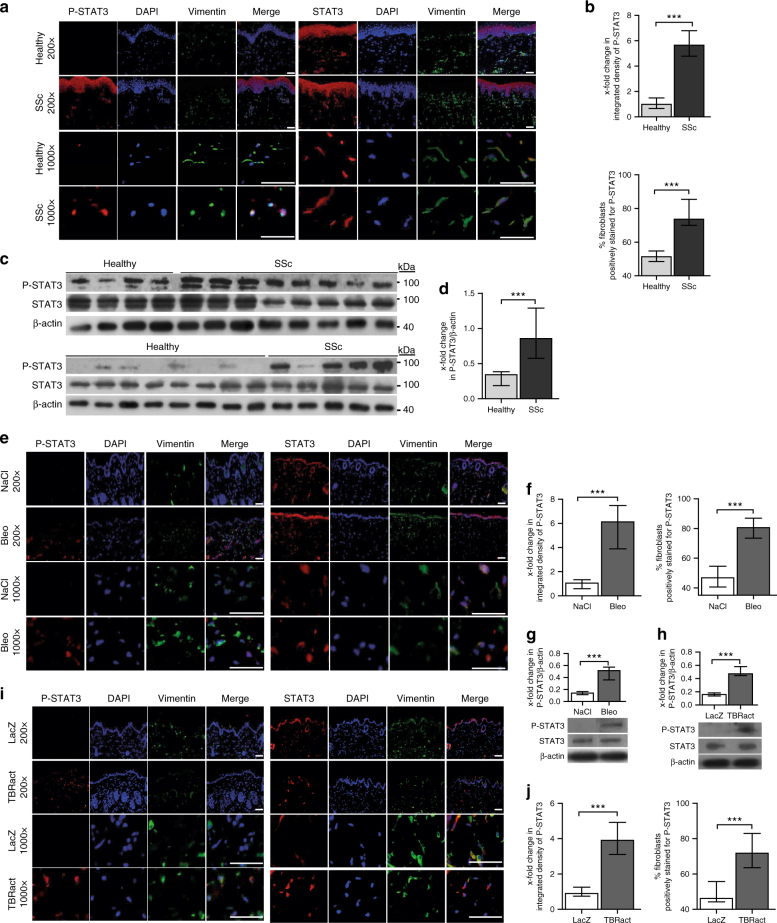
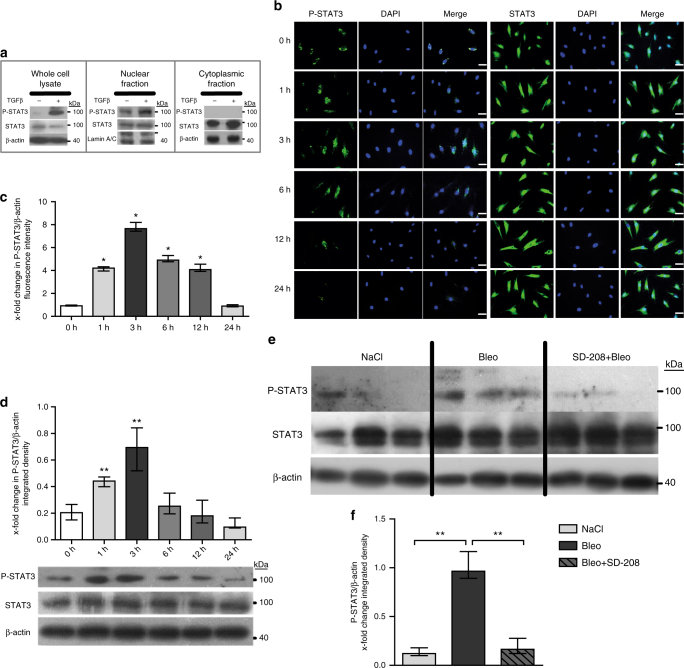
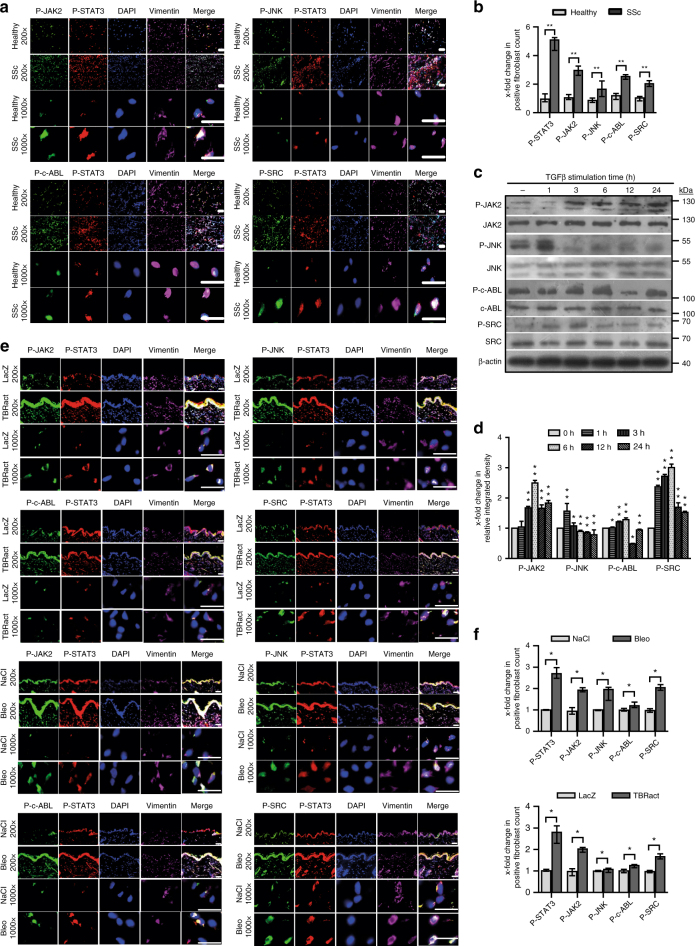
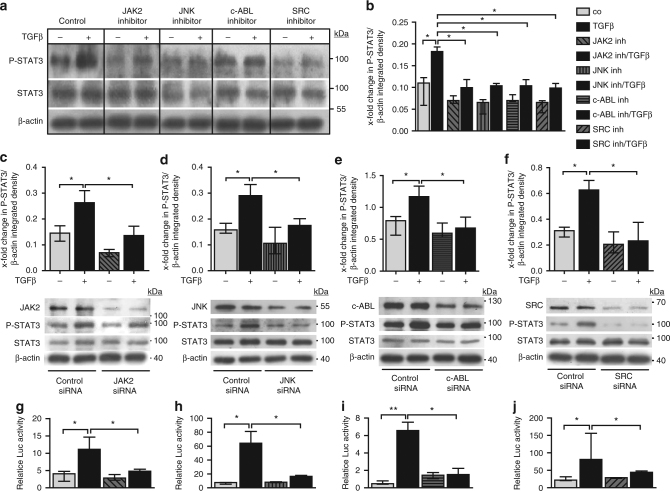
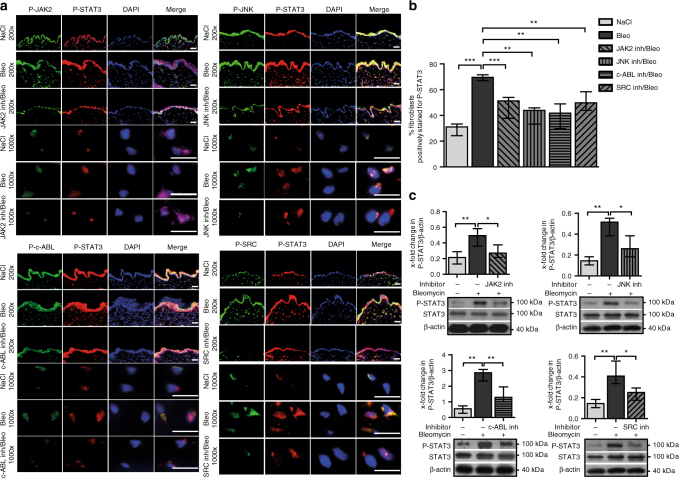
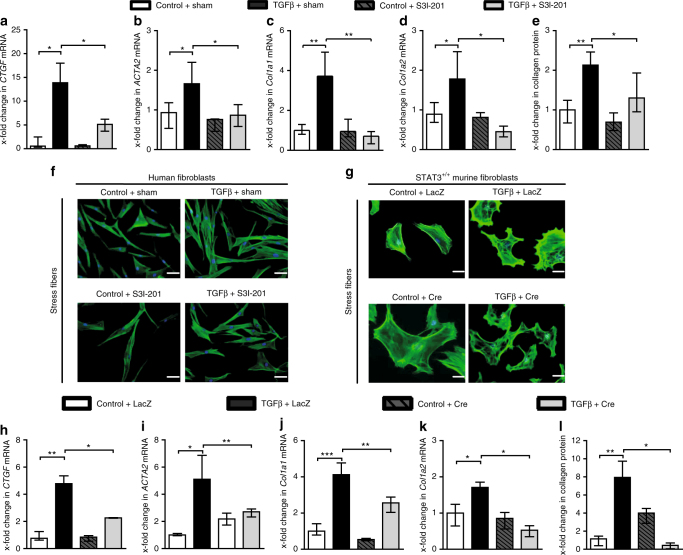
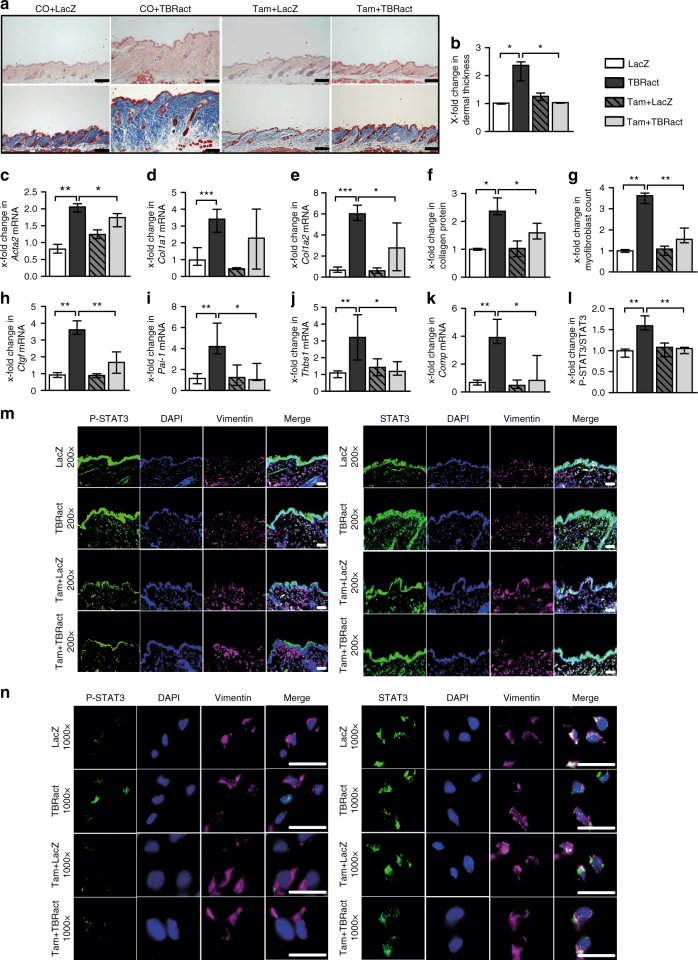
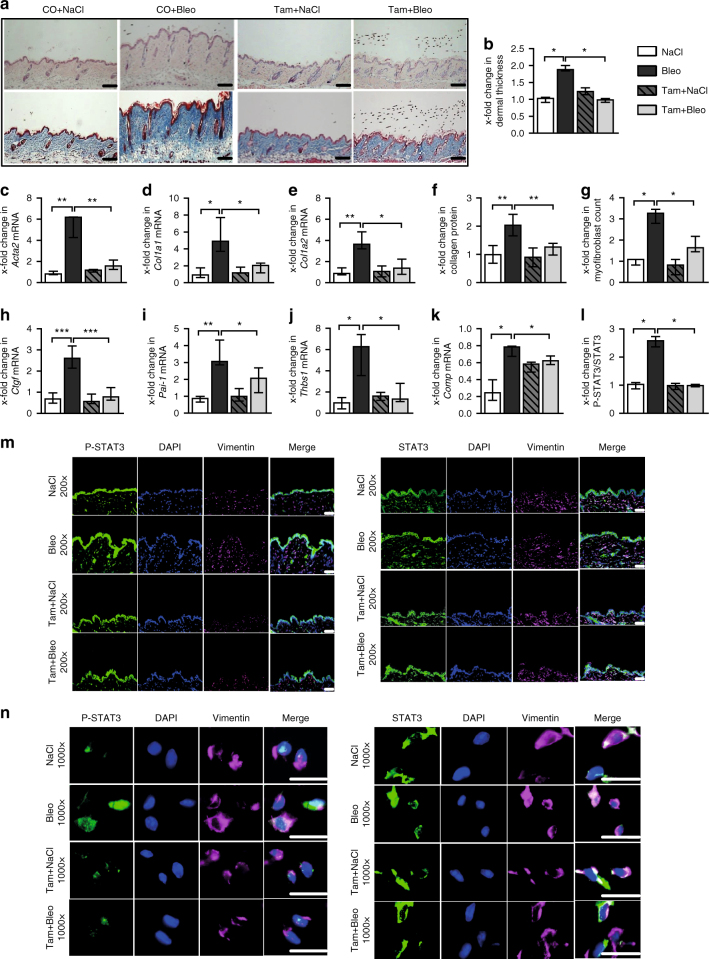
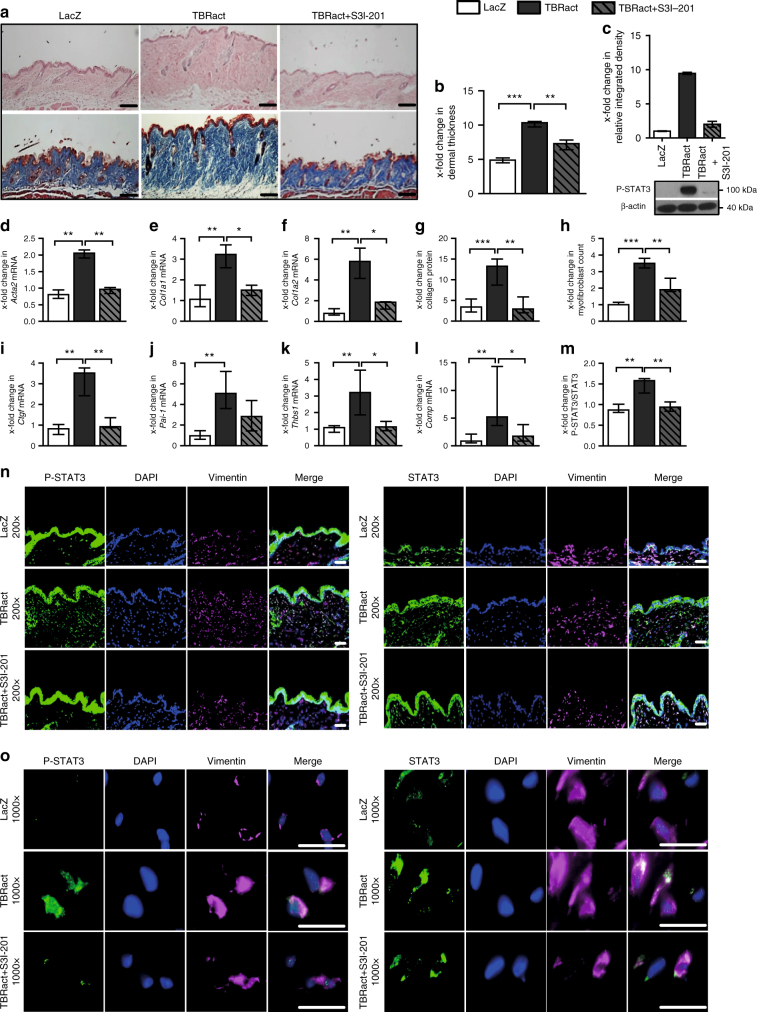
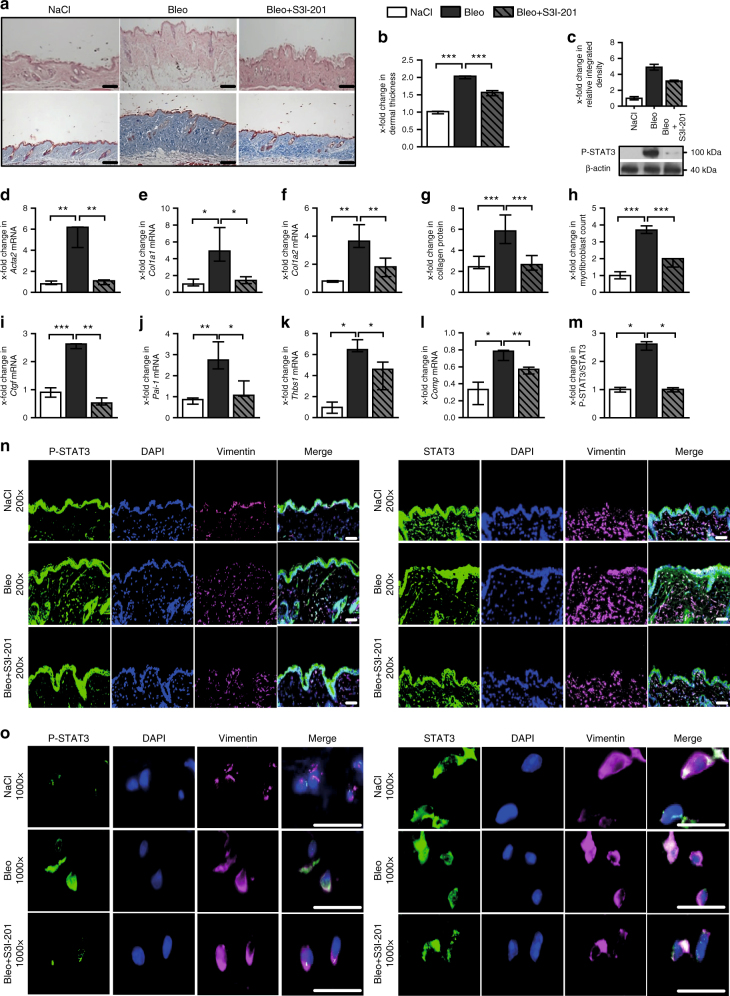
Signal transducer and activator of transcription 3 (STAT3) is phosphorylated by various kinases, several of which have been implicated in aberrant fibroblast activation in fibrotic diseases including systemic sclerosis (SSc). Here we show that profibrotic signals converge on STAT3 and that STAT3 may be an important molecular checkpoint for tissue fibrosis. STAT3 signaling is hyperactivated in SSc in a TGFβ-dependent manner. Expression profiling and functional studies in vitro and in vivo demonstrate that STAT3 activation is mediated by the combined action of JAK, SRC, c-ABL, and JNK kinases. STAT3-deficient fibroblasts are less sensitive to the pro-fibrotic effects of TGFβ. Fibroblast-specific knockout of STAT3, or its pharmacological inhibition, ameliorate skin fibrosis in experimental mouse models. STAT3 thus integrates several profibrotic signals and might be a core mediator of fibrosis. Considering that several STAT3 inhibitors are currently tested in clinical trials, STAT3 might be a candidate for molecular targeted therapies of SSc.
Overview
The claims and statistics of this paper haven’t been checked yet.
Free: it reads the open-access text and checks the first 5 claims that cite a source we can check. Create a free account to check every claim.
Integrity signals
Registry
Cites
Statistics
Figures
Verification
Claims the paper makes
The claims and statistics of this paper haven’t been checked yet.
Free: it reads the open-access text and checks the first 5 claims that cite a source we can check. Create a free account to check every claim.
Claims other papers make about this one
Each is checked against this paper’s own text: does it say what the citing paper says it does?
The source backs part of the claim, not all of it — or backs it for a different population, condition or comparison.
In the citing paper
“In SSc skin, STAT3 signaling is activated (81) resulting in pro-fibrotic gene expression in fibroblasts; for example, STAT3 regulates collagen type I expression in SSc skin fibroblasts (82). However, of note, in lungs of SSc patients no enhanced STAT3 activation can be observed (82).”
From Unraveling SSc Pathophysiology; The Myofibroblast (2018) · cites this paper as [81]
Experimental — accuracy not yet measuredThe source backs part of the claim, not all of it — or backs it for a different population, condition or comparison.
In the citing paper
“Both TTI-101 and S3I-201 have been tested in several mouse models of fibrosis, including bleomycin-induced lung and skin fibrosis (scleroderma) and genetically-engineered models of scleroderma, as well as a model mouse of interstitial kidney fibrosis induced by unilateral ureteral obstruction, in which inhibition of STAT3 phosphorylation by these compounds blocks the development of organ fibrosis”
From Targeting Janus Kinases and Signal Transducer and Activator of Transcription 3 To Treat Inflammation, Fibrosis, and Cancer: Rationale, Progress, and Caution (2020) · cites this paper as Chakraborty et al., 2017
Experimental — accuracy not yet measuredIn the citing paper
“Importantly, in both bleomycin induced skin and lung fibrosis in mice, knockout or pharmacological inhibition of STAT3 ameliorates fibrosis (83) (81). Furthermore, in both models, STAT3 was shown to be downstream of TGFβ signaling, as inhibition of STAT3 prevented TGFβ-induced myofibroblasts formation (81, 83).”
From Unraveling SSc Pathophysiology; The Myofibroblast (2018) · cites this paper as [81]
Self-check
Percentages, sums and reported differences re-computed from the paper’s own numbers.
The self-check needs the paper’s full text.
Citations
Cites
1 retracted
Ruzehaji, N., Avouac, J., Elhaï, M., Fréchet, M., Frantz, C., Ruiz, B., Distler, J. H. W., & Allanore, Y. (2015) · Arthritis Research & Therapy · doi:10.1186/s13075-015-0659-5 · Cited by 42
Self-citationRetractedSmad-dependent and Smad-independent pathways in TGF-β family signalling
Derynck, R., & Zhang, Y. E. (2003) · Nature · doi:10.1038/nature02006 · Cited by 5,373
Cellular and molecular mechanisms of fibrosis
Wynn, T. (2008) · The Journal of Pathology · doi:10.1002/path.2277 · Cited by 4,495
STATs in cancer inflammation and immunity: a leading role for STAT3
Yu, H., Pardoll, D., & Jove, R. (2009) · Nature reviews. Cancer · doi:10.1038/nrc2734 · Cited by 4,383
van den Hoogen, F., Khanna, D., Fransen, J., Johnson, S. R., Baron, M., Tyndall, A., Matucci‐Cerinic, M., Naden, R. P., Medsger, T. A., Carreira, P. E., et al. (2013) · Arthritis & Rheumatism · doi:10.1002/art.38098 · Cited by 3,409
Self-citationMassagué, J. (2012) · Nature Reviews Molecular Cell Biology · doi:10.1038/nrm3434 · Cited by 3,128
Massagué, J., Seoane, J., & Wotton, D. (2005) · Genes & Development · doi:10.1101/gad.1350705 · Cited by 2,452
TGF-β signaling and the fibrotic response
Leask, A., & Abraham, D. J. (2004) · The FASEB Journal · doi:10.1096/fj.03-1273rev · Cited by 2,319
Zhong, Z., Wen, Z., & Darnell, J. E. (1994) · Science · doi:10.1126/science.8140422 · Cited by 2,070
Non-Smad pathways in TGF-β signaling
Zhang, Y. E. (2009) · Cell Research · doi:10.1038/cr.2008.328 · Cited by 1,749
Criteria for the classification of early systemic sclerosis.
LeRoy, E. C., & Medsger, T. A. (2001) · PubMed · Cited by 1,384
Gabrielli, A., Avvedimento, E. V., & Krieg, T. (2009) · New England Journal of Medicine · doi:10.1056/nejmra0806188 · Cited by 1,384
Targeted disruption of the mouse Stat3 gene leads to early embryonic lethality
Takeda, K., Noguchi, K., Shi, W., Tanaka, T., Matsumoto, M., Yoshida, N., Kishimoto, T., & Akira, S. (1997) · Proceedings of the National Academy of Sciences · doi:10.1073/pnas.94.8.3801 · Cited by 1,323
Systemic sclerosis: a prototypic multisystem fibrotic disorder
Varga, J., & Abraham, D. (2007) · Journal of Clinical Investigation · doi:10.1172/jci31139 · Cited by 1,163
CD4 + Regulatory T Cells Control T H 17 Responses in a Stat3-Dependent Manner
Chaudhry, A., Rudra, D., Treuting, P., Samstein, R. M., Liang, Y., Kas, A., & Rudensky, A. Y. (2009) · Science · doi:10.1126/science.1172702 · Cited by 1,000
Activation of canonical Wnt signalling is required for TGF-β-mediated fibrosis
Akhmetshina, A., Palumbo, K., Dees, C., Bergmann, C., Venalis, P., Zerr, P., Horn, A., Kireva, T., Beyer, C., Zwerina, J., et al. (2012) · Nature Communications · doi:10.1038/ncomms1734 · Cited by 843
Self-citationGarcia, R., Bowman, T. L., Niu, G., Yu, H., Minton, S., Muro-Cacho, C. A., Cox, C. E., Falcone, R., Fairclough, R., Parsons, S., et al. (2001) · Oncogene · doi:10.1038/sj.onc.1204349 · Cited by 756
Sano, S., Chan, K. S., Carbajal, S., Clifford, J., Peavey, M., Kiguchi, K., Itami, S., Nickoloff, B. J., & DiGiovanni, J. (2005) · Nature Medicine · doi:10.1038/nm1162 · Cited by 752
Siddiquee, K., Zhang, S., Guida, W. C., Blaskovich, M. A., Greedy, B., Lawrence, H. R., Yip, M. L. R., Jove, R., McLaughlin, M. M., Lawrence, N. J., et al. (2007) · Proceedings of the National Academy of Sciences · doi:10.1073/pnas.0609757104 · Cited by 736
Laklai, H., Miroshnikova, Y. A., Pickup, M. W., Collisson, E. A., Kim, G. E., Barrett, A. S., Hill, R. C., Lakins, J. N., Schlaepfer, D. D., Mouw, J. K., et al. (2016) · Nature Medicine · doi:10.1038/nm.4082 · Cited by 603
Daniels, C. E., Wilkes, M. C., Edens, M., Kottom, T. J., Murphy, S. J., LIMPER, A. H., & Leof, E. B. (2004) · Journal of Clinical Investigation · doi:10.1172/jci19603 · Cited by 574
Transforming growth factor-β and fibrosis
Verrecchia, F., & Mauviel, A. (2007) · World Journal of Gastroenterology · doi:10.3748/wjg.v13.i22.3056 · Cited by 510
Daniels, C. E., Wilkes, M. C., Edens, M., et al. (2004) · Journal of Clinical Investigation · doi:10.1172/jci200419603 · Cited by 493
Uhl, M., Aulwurm, S., Wischhusen, J., Weiler, M., Ma, J. Y., Almirez, R., Mangadu, R., Liu, Y.-W., Platten, M., Herrlinger, U., et al. (2004) · Cancer Research · doi:10.1158/0008-5472.can-04-1013 · Cited by 414
Targeting STAT3 in cancer: how successful are we?
Yue, P., & Turkson, J. (2009) · Expert Opinion on Investigational Drugs · doi:10.1517/13543780802565791 · Cited by 413
Molecular Subsets in the Gene Expression Signatures of Scleroderma Skin
Milano, A., Pendergrass, S. A., Sargent, J. L., George, L. K., McCalmont, T. H., Connolly, M. K., & Whitfield, M. L. (2008) · PLoS ONE · doi:10.1371/journal.pone.0002696 · Cited by 386
Schmitt, N., Liu, Y., Bentebibel, S.-E., Munagala, I., Bourdery, L., Venuprasad, K., Banchereau, J., & Ueno, H. (2014) · Nature Immunology · doi:10.1038/ni.2947 · Cited by 364
Song, L., Turkson, J., Karras, J. G., Jove, R., & Haura, E. B. (2003) · Oncogene · doi:10.1038/sj.onc.1206479 · Cited by 362
Jacoby, J. J., Kalinowski, A., Liu, M.-G., Zhang, S. S.-M., Gao, Q., Chai, G.-X., Ji, L., Iwamoto, Y., Li, E., Schneider, M., et al. (2003) · Proceedings of the National Academy of Sciences · doi:10.1073/pnas.2134694100 · Cited by 357
Functional Roles of STAT Family Proteins: Lessons from Knockout Mice
Akira, S. (1999) · STEM CELLS · doi:10.1002/stem.170138 · Cited by 348
Strategies and Approaches of Targeting STAT3 for Cancer Treatment
Furtek, S. L., Backos, D. S., Matheson, C. J., & Reigan, P. (2016) · ACS Chemical Biology · doi:10.1021/acschembio.5b00945 · Cited by 347
Orphan nuclear receptor NR4A1 regulates transforming growth factor-β signaling and fibrosis
Palumbo-Zerr, K., Zerr, P., Distler, A., Fliehr, J., Mancuso, R., Huang, J., Mielenz, D., Tomcik, M., Fürnrohr, B. G., Scholtysek, C., et al. (2015) · Nature Medicine · doi:10.1038/nm.3777 · Cited by 342
Self-citationTang, L.-Y., Heller, M., Meng, Z., Yu, L.-R., Tang, Y., Zhou, M., & Zhang, Y. E. (2017) · Journal of Biological Chemistry · doi:10.1074/jbc.m116.773085 · Cited by 278
Pang, M., Ma, L., Gong, R., Tolbert, E., Mao, H., Ponnusamy, M., Chin, Y. E., Yan, H., Dworkin, L. D., & Zhuang, S. (2010) · Kidney International · doi:10.1038/ki.2010.154 · Cited by 260
Barnes, T. C., Anderson, M. E., & Moots, R. J. (2011) · International Journal of Rheumatology · doi:10.1155/2011/721608 · Cited by 244
Miyoshi, K., Takaishi, M., Nakajima, K., Ikeda, M., Kanda, T., Tarutani, M., Iiyama, T., Asao, N., DiGiovanni, J., & Sano, S. (2011) · Journal of Investigative Dermatology · doi:10.1038/jid.2010.255 · Cited by 235
Sonnylal, S., Denton, C. P., Zheng, B., Keene, D. R., He, R., Adams, H. P., VanPelt, C. S., Geng, Y. J., Deng, J. M., Behringer, R. R., et al. (2007) · Arthritis & Rheumatism · doi:10.1002/art.22328 · Cited by 198
Shima, Y., Kuwahara, Y., Murota, H., Kitaba, S., Kawai, M., Hirano, T., Arimitsu, J., Narazaki, M., Hagihara, K., Ogata, A., et al. (2010) · Rheumatology · doi:10.1093/rheumatology/keq275 · Cited by 195
Animal models of systemic sclerosis: Prospects and limitations
Beyer, C., Schett, G. A., Distler, O., & Distler, J. H. W. (2010) · Arthritis & Rheumatism · doi:10.1002/art.27647 · Cited by 187
Self-citationAkhmetshina, A., Dees, C., Pileckyte, M., Maurer, B., Axmann, R., Jüngel, A., Zwerina, J., Gay, S., Schett, G., Distler, O., et al. (2008) · The FASEB Journal · doi:10.1096/fj.07-105627 · Cited by 187
Self-citationLiu, Y., Liu, H., Meyer, C., Li, J., Nadalin, S., Königsrainer, A., Weng, H., Dooley, S., & ten Dijke, P. (2013) · Journal of Biological Chemistry · doi:10.1074/jbc.m113.478685 · Cited by 181
A four‐gene biomarker predicts skin disease in patients with diffuse cutaneous systemic sclerosis
Farina, G., Lafyatis, D., Lemaire, R., & Lafyatis, R. (2010) · Arthritis & Rheumatism · doi:10.1002/art.27220 · Cited by 170
STAT3 Phosphorylation at Tyrosine 705 and Serine 727 Differentially Regulates Mouse ESC Fates
Huang, G., Yan, H., Ye, S., Tong, C., & Ying, Q. (2014) · STEM CELLS · doi:10.1002/stem.1609 · Cited by 163
Dees, C., Tomcik, M., Palumbo‐Zerr, K., Distler, A., Beyer, C., Lang, V., Horn, A., Zerr, P., Zwerina, J., Gelse, K., et al. (2012) · Arthritis & Rheumatism · doi:10.1002/art.34500 · Cited by 148
Self-citationSTAT3 inhibitors for cancer therapy: Have all roads been explored?
Fagard, R., Metelev, V., Souissi, I., & Baran-Marszak, F. (2013) · JAK-STAT · doi:10.4161/jkst.22882 · Cited by 129
Src inhibition blocks renal interstitial fibroblast activation and ameliorates renal fibrosis
Yan, Y., Ma, L., Zhou, X., Ponnusamy, M., Tang, J., Zhuang, M. A., Tolbert, E., Bayliss, G., Bai, J., & Zhuang, S. (2016) · Kidney International · doi:10.1038/ki.2015.293 · Cited by 121
Mueller, K. A. L., Mueller, I. I., Eppler, D., Zuern, C. S., Seizer, P., Kramer, U., Koetter, I., Roecken, M., Kandolf, R., Gawaz, M., et al. (2015) · PLOS ONE · doi:10.1371/journal.pone.0126707 · Cited by 120
Src kinases in systemic sclerosis: Central roles in fibroblast activation and in skin fibrosis
Skhirtladze, C., Distler, O., Dees, C., Akhmetshina, A., Busch, N., Venalis, P., Zwerina, J., Spriewald, B., Pileckyte, M., Schett, G., et al. (2008) · Arthritis & Rheumatism · doi:10.1002/art.23436 · Cited by 120
Self-citationVarga, J., & Pasche, B. (2008) · Current Opinion in Rheumatology · doi:10.1097/bor.0b013e32830e48e8 · Cited by 107
Elhaï, M., Guerini, H., Bazeli, R., Avouac, J., Freire, V., Drapé, J., Kahan, A., & Allanore, Y. (2012) · Arthritis Care & Research · doi:10.1002/acr.21668 · Cited by 107
Role of the TAK1-NLK-STAT3 pathway in TGF-β-mediated mesoderm induction
Ohkawara, B., Shirakabe, K., Hyodo-Miura, J., Matsuo, R., Ueno, N., Matsumoto, K., & Shibuya, H. (2004) · Genes & Development · doi:10.1101/gad.1166904 · Cited by 106
Li, C., Iness, A., Yoon, J., Grider, J. R., Murthy, K. S., Kellum, J. M., & Kuemmerle, J. F. (2015) · The Journal of Immunology · doi:10.4049/jimmunol.1401779 · Cited by 103
STAT3 selectively interacts with Smad3 to antagonize TGF-β
Wang, G., Yu, Y., Sun, C., Liu, T., Liang, T., Zhan, L., Lin, X., & Feng, X.-H. (2016) · Oncogene · doi:10.1038/onc.2015.446 · Cited by 103
Ejarque, R. A., Montesinos, M. C., Navalón, P., Payá, M., & Terencio, M. C. (2013) · Journal of Investigative Dermatology · doi:10.1038/jid.2013.182 · Cited by 102
Biomarkers in Systemic Sclerosis
Castro, S. V., & Jiménez, S. A. (2010) · Biomarkers in Medicine · doi:10.2217/bmm.09.79 · Cited by 101
Growth Regulation in Scleroderma Fibroblasts: Increased Response to Transforming Growth Factor-β1
Kikuchi, K., Kadono, T., Ihn, H., Sato, S., Igarashi, A., Nakagawa, H., Tamaki, K., & Takehara, K. (1995) · Journal of Investigative Dermatology · doi:10.1111/1523-1747.ep12313452 · Cited by 97
Xu, M., Hu, J., Shen, J., Wang, M., Zhang, Q., Qu, Y., & Lu, L. (2014) · Biochimica et Biophysica Acta (BBA) - Molecular Basis of Disease · doi:10.1016/j.bbadis.2014.07.025 · Cited by 97
Effects of Plasmid-Based Stat3-Specific Short Hairpin RNA and GRIM-19 on PC-3M Tumor Cell Growth
Zhang, L., Gao, L., Li, Y., Lin, G., Shao, Y., Ji, K., Yu, H., Hu, J., Kalvakolanu, D. V., Kopecko, D. J., et al. (2008) · Clinical Cancer Research · doi:10.1158/1078-0432.ccr-07-1176 · Cited by 94
Erratum: STAT3 selectively interacts with Smad3 to antagonize TGF-β signalling
Wang, G., Yu, Y., Sun, C., Liu, T., Liang, T., Zhan, L., Lin, X., & Feng, X.-H. (2016) · Oncogene · doi:10.1038/onc.2016.145 · Cited by 88
Chen, E., Xu, D., Lan, X., Jia, B., Sun, L., Zheng, J., & Peng, H. (2013) · Current Molecular Medicine · doi:10.2174/15665240113139990076 · Cited by 84
Kim, J.-H., Lee, S. C., Ro, J., Kang, H. S., Kim, H. S., & Yoon, S. (2009) · Biochemical Pharmacology · doi:10.1016/j.bcp.2009.09.008 · Cited by 76
JNK-Dependent Stat3 Phosphorylation Contributes to Akt Activation in Response to Arsenic Exposure
Liu, J., Chen, B., Lu, Y.-M., Guan, Y., & Chen, F. (2012) · Toxicological Sciences · doi:10.1093/toxsci/kfs199 · Cited by 67
Biomarkers in systemic sclerosis: Their potential to predict clinical courses
Hasegawa, M. (2016) · The Journal of Dermatology · doi:10.1111/1346-8138.13156 · Cited by 66
Zhang, Y., Liang, R., Chen, C.-W., Mallano, T., Dees, C., Distler, A., Reich, A., Bergmann, C., Ramming, A., Gelse, K., et al. (2017) · Annals of the Rheumatic Diseases · doi:10.1136/annrheumdis-2016-210911 · Cited by 64
Self-citationEngagement of the B-cell antigen receptor activates STAT through Lyn in a Jak-independent pathway
Wang, L., Kurosaki, T., & Corey, S. J. (2006) · Oncogene · doi:10.1038/sj.onc.1210092 · Cited by 63
Reich, N., Tomcik, M., Zerr, P., Lang, V., Dees, C., Avouac, J., Palumbo, K., Horn, A., Akhmetshina, A., Beyer, C., et al. (2012) · Annals of the Rheumatic Diseases · doi:10.1136/annrheumdis-2011-200412 · Cited by 60
Self-citationMuangchant, C., & Pope, J. E. (2013) · PubMed · Cited by 59
Jin, J., Chou, C., Lima, M. G., Zhou, D., & Zhou, X. (2014) · The Open Rheumatology Journal · doi:10.2174/1874312901408010029 · Cited by 49
Correction: Molecular Subsets in the Gene Expression Signatures of Scleroderma Skin
Milano, A., Pendergrass, S. A., Sargent, J. L., George, L. K., McCalmont, T. H., Connolly, M. K., & Whitfield, M. L. (2008) · PLoS ONE · doi:10.1371/annotation/05bed72c-c6f6-4685-a732-02c78e5f66c2 · Cited by 40
Biomarkers for skin involvement and fibrotic activity in scleroderma
Moinzadeh, P., Denton, C. P., Abraham, D., Ong, V. H., Hunzelmann, N., Eckes, B., & Krieg, T. M. (2011) · Journal of the European Academy of Dermatology and Venereology · doi:10.1111/j.1468-3083.2011.04206.x · Cited by 40
Transforming growth factor-β and fibrosis
Franck, Verrecchia, Alain, & Mauviel (2007) · Acta Scientiarum Naturalium Universitatis Sunyatseni · Cited by 31
Cited by
Tocilizumab in systemic sclerosis: a randomised, double-blind, placebo-controlled, phase 3 trial
Khanna, D., Lin, C. J. F., Furst, D. E., Goldin, J., Kim, G., Kuwana, M., Allanore, Y., Matucci-Cerinic, M., Distler, O., Shima, Y., et al. (2020) · The Lancet Respiratory Medicine · doi:10.1016/s2213-2600(20)30318-0 · Cited by 662
Self-citationAliyu, M., Zohora, F. T., Anka, A. U., Ali, K., Maleknia, S., Saffarioun, M., & Azizi, G. (2022) · International Immunopharmacology · doi:10.1016/j.intimp.2022.109130 · Cited by 401
Macrophage and Fibroblast Interactions in Biomaterial‐Mediated Fibrosis
Witherel, C. E., Abebayehu, D., Barker, T. H., & Spiller, K. L. (2019) · Advanced Healthcare Materials · doi:10.1002/adhm.201801451 · Cited by 374
Bharadwaj, U., Kasembeli, M. M., Robinson, P., & Tweardy, D. J. (2020) · Pharmacological Reviews · doi:10.1124/pr.119.018440 · Cited by 342
“…in which inhibition of STAT3 phosphorylation by these compounds blocks the development of organ fibrosis by reducing expression levels of proteins that mediate fibrosis and impairing myofibroblast differentiation (Pang et al., 2010; Pedroza et al., 2016, 2017; Chakraborty et al., 2017).”
BackgroundInfluentialEmerging Topical and Systemic JAK Inhibitors in Dermatology
Solimani, F., Meier, K., & Ghoreschi, K. (2019) · Frontiers in Immunology · doi:10.3389/fimmu.2019.02847 · Cited by 308
“These results are in agreement with experimental findings demonstrating a pivotal role of STAT3 in the activation of profibrotic pathways in vivo and in vitro (169).”
Result
Metadata
- Authors
- Chakraborty, D., Šumová, B., Mallano, T., Chen, C.-W., Distler, A., Bergmann, C., Ludolph, I., Horch, R. E., Gelse, K., Ramming, A., Distler, O., Schett, G., Šenolt, L., & Distler, J. H. W.
- Affiliations
- Friedrich-Alexander-Universität Erlangen-Nürnberg (DE)
- University Hospital Zurich (CH)
- Charles University (CZ)
- Corresponding author
- Distler, Jörg H. W.
- ORCID
- Venue
- Nature Communications
- Published
- 2017-10-24
- Volume
- 8
- Issue
- 1
- Pages
- 1130-1130
- ISSN
- 2041-1723 (ISSN-L)
- PMC
- PMC5654983
- OpenAlex
- W2766965802
- Cited by
- 356
- References
- 70
- Citations by year
- 2026: 31 · 2025: 36 · 2024: 48 · 2023: 36 · 2022: 46 · 2021: 60 · 2020: 48 · 2019: 32 · 2018: 18 · 2017: 1
- FWCI
- 21.26
- Type
- journal article
- Language
- en
- Update notices
- correction (2021-12-08)
- Open access
- gold
- doi.org
- Licence
- cc-by
- creativecommons.org/licenses/by/4.0 (tdm)
- creativecommons.org/licenses/by/4.0 (vor)
- Locations
- Nature Communications (publishedVersion, cc-by)
- PubMed Central (publishedVersion, cc-by)
- PubMed (publishedVersion)
- Zurich Open Repository and Archive (University of Zurich) (acceptedVersion, cc-by)
- RePEc: Research Papers in Economics (submittedVersion)
- DOAJ (DOAJ: Directory of Open Access Journals) (submittedVersion, cc-by-sa)
- Zurich Open Repository and Archive (University of Zurich) (submittedVersion, cc-by)
- Zurich Open Repository and Archive (University of Zurich)
- Funders
- Deutsche Forschungsgemeinschaft (CRC‐1181, DI 1537/11‐1, DI 1537/, DI 1537/8-1, Project C01, DI 1537/9‐1, DI 1537/7-1, 2013.056.1, DE2414/2-1)
- Ministerstvo Zdravotnictví Ceské Republiky (#00023728)
- Topics
- Health Sciences › Medicine › Rheumatology › Systemic Sclerosis and Related Diseases
- Life Sciences › Immunology and Microbiology › Immunology › Cytokine Signaling Pathways and Interactions
- Life Sciences › Biochemistry, Genetics and Molecular Biology › Molecular Biology › TGF-β signaling in diseases
- Keywords
- STAT3, systemic sclerosis, fibroblast activation, fibrosis, TGF-beta signaling, JAK kinases, Src kinase, c-Abl kinase, JNK kinase, skin fibrosis, STAT3 inhibitor, targeted therapy
- MeSH terms
- Adolescent, Adult, Aged, Aminosalicylic Acids, Animals, Benzenesulfonates, Biopsy, Bleomycin, Collagen, Enzyme Activation, Female, Fibroblasts, Fibrosis, Humans, Inflammation, Male, Middle Aged, Phosphorylation, Scleroderma, Systemic, Skin, Signal Transduction, Transforming Growth Factor beta, Receptors, Transforming Growth Factor beta, Microscopy, Confocal, STAT3 Transcription Factor, Mice, Young Adult
About these checks
Registry, retraction, Cites and statistics results are computed, not judged, with one exception: a printed reference that no index lists is read once by a model before it counts as a citation error. Claims are extracted by a model and kept only when their quote appears verbatim in the text; each cited source is then checked, with a model’s help, for whether it says what the claim relies on. Those verdicts can be wrong — read the claim’s quote and the cited source before relying on one.
Statistics and arithmetic are recomputed, not judged.
Confidence bands are shown only for fields calibrated on our annotated test set. None is calibrated yet, so no band is shown.
What counts as a claim ›How we measure confidence ›How we check this ›
Are you an author, or do you see a problem with this page? Request a review
Data sources
Bibliographic data: Semantic Scholar, OpenAlex, Crossref.
Contains information from the Semantic Scholar Academic Graph Datasets, made available under the ODC Attribution License (ODC-BY 1.0).
Semantic Scholar’s data is described in: Kinney, R., et al. (2023). The Semantic Scholar Open Data Platform. arXiv:2301.10140.
