

Structural absorption by barbule microstructures of super black bird of paradise feathers
Open accessThe DOI matches its Crossref record; 28 of the 28 references it cites were found in a registry or an index.
Abstract
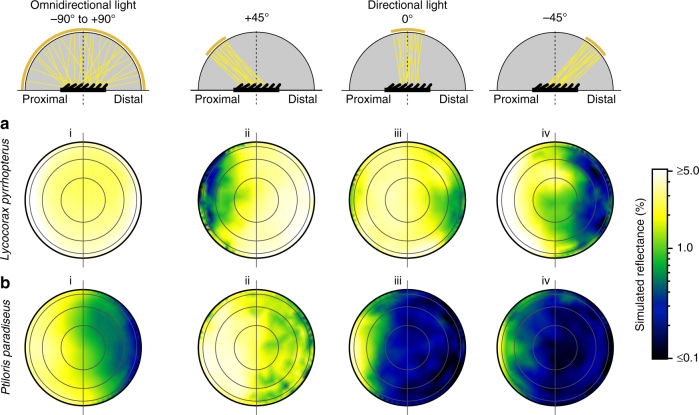
Many studies have shown how pigments and internal nanostructures generate color in nature. External surface structures can also influence appearance, such as by causing multiple scattering of light (structural absorption) to produce a velvety, super black appearance. Here we show that feathers from five species of birds of paradise (Aves: Paradisaeidae) structurally absorb incident light to produce extremely low-reflectance, super black plumages. Directional reflectance of these feathers (0.05–0.31%) approaches that of man-made ultra-absorbent materials. SEM, nano-CT, and ray-tracing simulations show that super black feathers have titled arrays of highly modified barbules, which cause more multiple scattering, resulting in more structural absorption, than normal black feathers. Super black feathers have an extreme directional reflectance bias and appear darkest when viewed from the distal direction. We hypothesize that structurally absorbing, super black plumage evolved through sensory bias to enhance the perceived brilliance of adjacent color patches during courtship display.
Overview
The claims and statistics of this paper haven’t been checked yet.
Free: it reads the open-access text and checks the first 5 claims that cite a source we can check. Create a free account to check every claim.
Integrity signals
Registry
Cites
Statistics
Figures
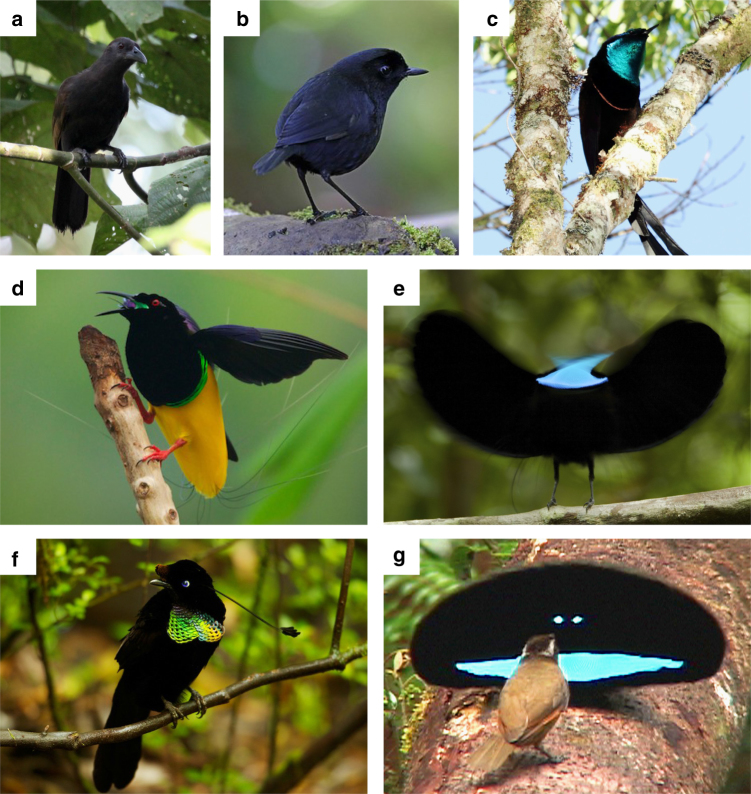
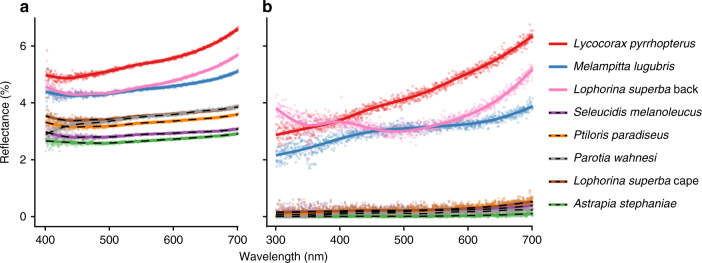
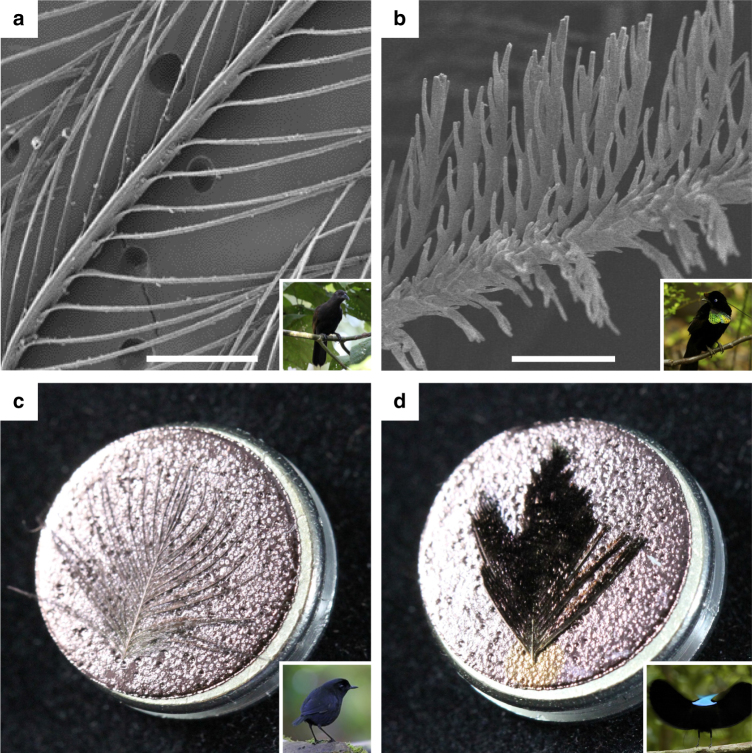
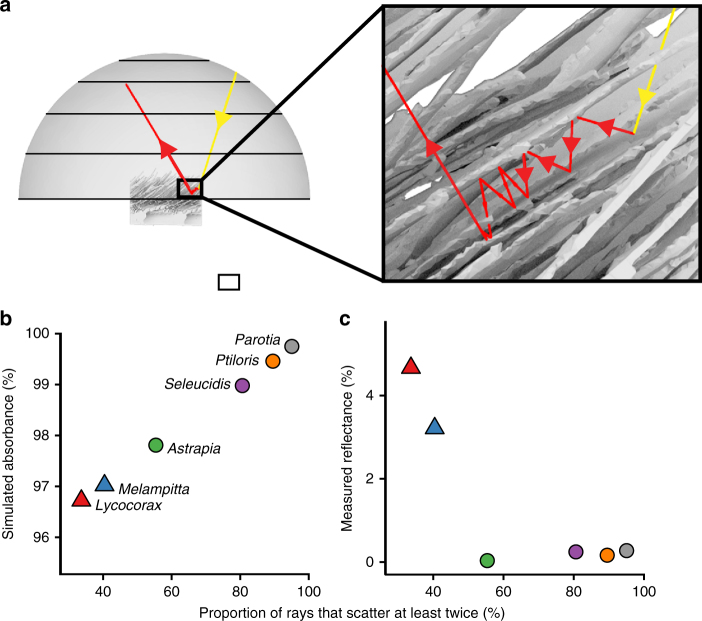
Verification
Claims the paper makes
The claims and statistics of this paper haven’t been checked yet.
Free: it reads the open-access text and checks the first 5 claims that cite a source we can check. Create a free account to check every claim.
Claims other papers make about this one
Each is checked against this paper’s own text: does it say what the citing paper says it does?
The check wasn’t confident either way, so it gives no verdict — never disputed.
In the citing paper
“So far, several groups and companies have claimed the realization of hybrid CMOS/memristor implementations of ANNs53–61, —from now on, memristive ANNs— with performance that is superior to that of fully-CMOS counterparts.”
From Hardware implementation of memristor-based artificial neural networks (2024) · cites this paper as [54]
Experimental — accuracy not yet measuredThe check wasn’t confident either way, so it gives no verdict — never disputed.
In the citing paper
“On the other hand, some studies exclusively focused on the memristor crossbar use an on-chip communication interface to acquire the image from a computer (e.g. ref. 54 uses a serial communication port) already shaped in the required input format.”
From Hardware implementation of memristor-based artificial neural networks (2024) · cites this paper as [54]
Experimental — accuracy not yet measuredThe check wasn’t confident either way, so it gives no verdict — never disputed.
In the citing paper
“The most advanced studies in this field have reported fully integrated memristor-based compute-in-memory systems48,53–55,58,59,61,71–73, but a systematic description of essential details on the device structure or circuit architecture are generally lacking in these reports.”
From Hardware implementation of memristor-based artificial neural networks (2024) · cites this paper as [54]
Experimental — accuracy not yet measuredThe check wasn’t confident either way, so it gives no verdict — never disputed.
In the citing paper
“many authors focusing on the optimization of the 1T1R memory cell structures have opted for using off-the-shelf integrated circuits, assembled in printed circuit boards54,85, as in this way they can avoid the limitations posed by the trade-offs between resolution, area and power of the ADCs.”
From Hardware implementation of memristor-based artificial neural networks (2024) · cites this paper as [54]
Experimental — accuracy not yet measuredThe check wasn’t confident either way, so it gives no verdict — never disputed.
In the citing paper
“in situ training with backpropagation is capable of self-adaptively adjust the network parameters to minimize the impacts of the inevitable non-idealities of the hardware (such as wire resistance, analogue peripheral asymmetry, non-responsive memristors, conductance drift and variations in the conductance programming) without any prior knowledge of the hardware54.”
From Hardware implementation of memristor-based artificial neural networks (2024) · cites this paper as [54]
Experimental — accuracy not yet measured
6 more claims about this paper
Create a free account to see every claim other papers make about this one.
Self-check
Percentages, sums and reported differences re-computed from the paper’s own numbers.
The self-check needs the paper’s full text.
Citations
Cites
The Color of Light in Forests and Its Implications
Endler, J. A. (1993) · Ecological Monographs · doi:10.2307/2937121 · Cited by 1,251 · cited 1×
“…(setup i) is comparable to light in an open environment on a cloudy day, whereas the directional illuminations (setups ii – iv) are comparable to light in a closed environment, such as the forest fl oor, with breaks in the canopy that constrain incident light to a narrow angular range 20 .”
BackgroundMetscher, B. D. (2009) · Developmental Dynamics · doi:10.1002/dvdy.21857 · Cited by 607
Black silicon: fabrication methods, properties and solar energy applications
Liu, X., Coxon, P. R., Peters, M., Hoex, B., Cole, J. M., & Fray, D. J. (2014) · Energy Environ. Sci. · doi:10.1039/c4ee01152j · Cited by 511 · cited 3×
“However, the mechanism of “ structural absorption 4 – 8 , ” which occurs when super fi cial features cause multiple scattering of light 5, 9 , can also in fl uence visual appearance.”
BackgroundComparison of structure and properties of femtosecond and nanosecond laser-structured silicon
Crouch, C. H., Carey, J. E., Warrender, J. M., Aziz, M. J., Mazur, E., & Génin, F. Y. (2004) · Applied Physics Letters · doi:10.1063/1.1667004 · Cited by 402 · cited 2×
“Each time light scatters at a surface interface, a proportion of that light is transmitted into the material, where it can be absorbed 9 .”
BackgroundMcGraw, K. J., Mackillop, E. A., Dale, J., & Hauber, M. E. (2002) · Journal of Experimental Biology · doi:10.1242/jeb.205.23.3747 · Cited by 342 · cited 1×
“1a – c and 2a – c), which is typical of melanin pigments 19 .”
BackgroundAndersson, S., Cuthill, I. C., Hill, G. E., Kimball, R. T., McGraw, K. J., Montgomerie, R., Mundy, N. I., Prager, M., Prum, R. O., & Théry, M. (2006) · Harvard University Press eBooks · doi:10.4159/9780674273788 · Cited by 206
Self-citationShawkey, M. D., & D'Alba, L. (2017) · Philosophical Transactions of the Royal Society B: Biological Sciences · doi:10.1098/rstb.2016.0536 · Cited by 187 · cited 3×
“(2) “Transmitted,” where the ray strikes the surface of the feather one or more times until it ultimately exits the underside or reverse surface of the feather vane and terminates on the transmittance hemisphere.”
BackgroundMethodInfluentialNecessary and sufficient conditions for Von Kries chromatic adaptation to give color constancy
West, G., & Brill, M. H. (1982) · Journal of Mathematical Biology · doi:10.1007/bf00275077 · Cited by 170
Structurally assisted blackness in butterfly scales
Vukusic, P., Sambles, J. R., & Lawrence, C. R. (2004) · Proceedings of the Royal Society of London. Series B: Biological Sciences · doi:10.1098/rsbl.2003.0150 · Cited by 144
Zhao, Q., Fan, T., Ding, J., Zhang, D., Guo, Q., & Kamada, M. (2010) · Carbon · doi:10.1016/j.carbon.2010.10.048 · Cited by 122
Research works printed but not linked: 3
- Hill, G. E. & McGraw, K. J. Bird Coloration: Function and Evolution. Vol. 2 (Harvard University Press, Cambridge, 2006).
- Willmouth, F. M. in Optical Properties of Polymers (ed. Meeten, G. H.) 265–334 (Elsevier Applied Science Publishers, London, 1986).
- Bostwick, K. S., Harvey, T. A. & Scholes, E. in The Extended Specimen: Emerging Frontiers in Collections-Based Ornithological Research (ed. Webster, M. S.) (CRC Press, Boca Raton, 2017).
Cited by
Items 1,001–1,045 of 1,045
Energetic materials based on poly furazan and furoxan structures
Zhang, J.-L., Zhou, J. W., Bi, F., & Wang, B. (2020) · Chinese Chemical Letters · doi:10.1016/j.cclet.2020.01.026 · Cited by 78
The impact of cell type and context-dependent regulatory variants on human immune traits
Mu, Z., Wei, W., Fair, B., Miao, J., Zhu, P., & Li, Y. I. (2021) · Genome Biology · doi:10.1186/s13059-021-02334-x · Cited by 73
The Beauty of Biocatalysis: Sustainable Synthesis of Ingredients in Cosmetics
Heath, R. S., Ruscoe, R. E., & Turner, N. J. (2022) · Natural Product Reports · doi:10.1039/d1np00027f · Cited by 65
John, R. A., Acharya, J., Zhu, C., Surendran, A., Bose, S. K., Chaturvedi, A., Tiwari, N., Gao, Y., He, Y., Zhang, K. K., et al. (2020) · Nature Communications · doi:10.1038/s41467-020-16985-0 · Cited by 68
Meta-atom library generation via an efficient multi-objective shape optimization method
Whiting, E. B., Campbell, S. D., Kang, L., & Werner, D. H. (2020) · Optics Express · doi:10.1364/oe.398332 · Cited by 67
She, C., Huang, Q., Chen, C., Jiang, Y., Fan, Z., & Gao, J. (2021) · Journal of Materials Chemistry A · doi:10.1039/d1ta08194b · Cited by 59
Recent progress on peripheral neural interface technology towards bioelectronic medicine
Cho, Y., Park, J., Lee, C., & Lee, S. (2020) · Bioelectronic Medicine · doi:10.1186/s42234-020-00059-z · Cited by 55
A data-driven approach for predicting the impact of drugs on the human microbiome
Algavi, Y. M., & Borenstein, E. (2023) · Nature Communications · doi:10.1038/s41467-023-39264-0 · Cited by 54
ApoE4 attenuates autophagy via FoxO3a repression in the brain
Sohn, H.-Y., Kim, S.-I., Park, J.-Y., Park, S.-H., Koh, Y. H., Kim, J., & Jo, C. (2021) · Scientific Reports · doi:10.1038/s41598-021-97117-6 · Cited by 54
High performance transition metal-based electrocatalysts for green hydrogen production
Kwon, H. R., Park, H., Jun, S. E., Choi, S., & Jang, H. W. (2022) · Chemical Communications · doi:10.1039/d2cc02423c · Cited by 53
Carter, J. K., Bhattacharya, D., Borgerding, J. N., Fiel, M. I., Faith, J. J., & Friedman, S. L. (2021) · PLOS ONE · doi:10.1371/journal.pone.0244763 · Cited by 52
Liu, W., Lu, Y., Wei, D., Huo, X., Huang, X., Li, Y., Meng, J., Zhao, S., Qiao, B., Liang, Z., et al. (2022) · Journal of Materials Chemistry A · doi:10.1039/d2ta04788h · Cited by 52
Introduction to Electrocatalysts
Banoth, P., Kandula, C., & Kollu, P. (2022) · ACS symposium series · doi:10.1021/bk-2022-1432.ch001 · Cited by 51
Structural basis of LRPPRC–SLIRP-dependent translation by the mitoribosome
Singh, V., Moran, J. C., Itoh, Y., Soto, I. C., Fontanesi, F., Couvillion, M., Huynen, M. A., Churchman, L. S., Barrientos, A., & Amunts, A. (2024) · Nature Structural & Molecular Biology · doi:10.1038/s41594-024-01365-9 · Cited by 49
Sleep quality and treatment of social anxiety disorder
Horenstein, A., Morrison, A. S., Goldin, P., ten Brink, M., Gross, J. J., & Heimberg, R. G. (2019) · Anxiety, Stress, & Coping · doi:10.1080/10615806.2019.1617854 · Cited by 45
Asadollah, S. B. H. S., Khan, N., Sharafati, A., Shahid, S., Chung, E.-S., & Wang, X.-J. (2022) · Stochastic Environmental Research and Risk Assessment · doi:10.1007/s00477-021-02103-z · Cited by 43
Shinkawa, T., Ohuchida, K., Mochida, Y., Sakihama, K., Iwamoto, C., Abe, T., Ideno, N., Mizuuchi, Y., Shindo, K., Ikenaga, N., et al. (2022) · Journal of Experimental & Clinical Cancer Research · doi:10.1186/s13046-022-02301-9 · Cited by 41
Entanglement-Induced Barren Plateaus
Ortiz Marrero, C., Kieferová, M., & Wiebe, N. (2021) · PRX Quantum · doi:10.1103/prxquantum.2.040316 · Cited by 39
Yu, H., & Welch, J. D. (2021) · Genome Biology · doi:10.1186/s13059-021-02373-4 · Cited by 38
CryoEM structure of the type IVa pilus secretin required for natural competence in Vibrio cholerae
Weaver, S. J., Ortega, D. R., Sazinsky, M. H., Dalia, T. N., Dalia, A. B., & Jensen, G. J. (2020) · Nature Communications · doi:10.1038/s41467-020-18866-y · Cited by 37
Pirhooshyaran, M., & Terlaky, T. (2020) · arXiv · doi:10.48550/arxiv.2012.04046 · Cited by 34
CryoEM structure of the outer membrane secretin channel pIV from the f1 filamentous bacteriophage
Conners, R., McLaren, M., Łapińska, U., Sanders, K., Stone, M. R. L., Blaskovich, M. A. T., Pagliara, S., Daum, B., Rakonjac, J., & Gold, V. A. M. (2021) · Nature Communications · doi:10.1038/s41467-021-26610-3 · Cited by 32
Acetylation-dependent coupling between G6PD activity and apoptotic signaling
(2023) · doi:10.1038/s41467-023-41895-2 · Cited by 28
Xu, Z., Wu, C., Zhu, Y., Ju, S., Ma, F., Guo, T., Li, F., & Kim, T. W. (2021) · Nanoscale · doi:10.1039/d0nr06550a · Cited by 26
Yang, X., Wu, C., Li, M., & Chen, Y. (2022) · Advanced Intelligent Systems · doi:10.1002/aisy.202200029 · Cited by 22
Zhao, R., Xing, B., Mu, H., Fu, Y., & Zhang, L. (2022) · Chinese Physics B · doi:10.1088/1674-1056/ac5d2d · Cited by 21
Behera, S., Belyeu, J. R., Chen, X., Paulin, L. F., Nguyen, N. Q. H., Newman, E., Mahmoud, M., Menon, V. K., Qi, Q., Joshi, P., et al. (2023) · doi:10.1101/2023.04.24.538128 · Cited by 21
Bird, K. A. (2021) · American Journal of Physical Anthropology · doi:10.1002/ajpa.24216 · Cited by 19
Song, H., Kim, Y. S., Park, J., & Kim, K. M. (2019) · Advanced Electronic Materials · doi:10.1002/aelm.201800740 · Cited by 18
Ersozoglu, M. G., Gursu, H., Gumrukcu, S., Sarac, A. S., & Sahin, Y. (2022) · ChemElectroChem · doi:10.1002/celc.202101455 · Cited by 16
Automating Analogue AI Chip Design with Genetic Search
Krestinskaya, O., Salama, K. N., & James, A. P. (2020) · Advanced Intelligent Systems · doi:10.1002/aisy.202000075 · Cited by 14
Synaptic signatures and disease vulnerabilities of layer 5 pyramidal neurons
Marcassa, G., Dascenco, D., Lorente-Echeverría, B., Daaboul, D., Vandensteen, J., Leysen, E., Baltussen, L., Howden, A. J. M., & de Wit, J. (2025) · Nature Communications · doi:10.1038/s41467-024-55470-w · Cited by 14
The NMDA receptor subunit GluN2D is a potential target for rapid antidepressant action
Vestring, S., Veleanu, M., Perez, M. C., Schuberth, L. E., Bronnec, M., Li, A., Würz, L. M., Erdogdu, F., Stocker, J., Moos, J., et al. (2025) · Nature Communications · doi:10.1038/s41467-025-66774-w · Cited by 13
Na-k liquid alloy: A review on wettability enhancement and ionic carrier selection mechanism
Li, X., Liu, J., Chen, C., Yang, J., Xu, Z., Wu, M., Wang, Y., & Karim, Z. (2021) · Chinese Chemical Letters · doi:10.1016/j.cclet.2020.09.018 · Cited by 12
Bartlett, T. E., Jia, P., Chandna, S., & Roy, S. (2021) · Scientific Reports · doi:10.1038/s41598-021-03161-7 · Cited by 6
Characterizing Structural and Kinetic Ensembles of Intrinsically Disordered Proteins Using Writhe
(2025) · doi:10.1021/acs.jctc.5c01133 · Cited by 5
Characterizing structural and kinetic ensembles of intrinsically disordered proteins using writhe
Sisk, T. R., Olsson, S., & Robustelli, P. (2025) · doi:10.1101/2025.04.26.650781 · Cited by 5
Structural basis of a dual-function type II-B CRISPR–Cas9
Hibshman, G. N., & Taylor, D. W. (2025) · Nucleic Acids Research · doi:10.1093/nar/gkaf585 · Cited by 4
Mejía, L. M., Bernasconi, S. M., Fernandez, A., Zhang, H., Guitián, J., Jaggi, M., Taylor, V. E., Perez-Huerta, A., & Stoll, H. (2025) · Nature Communications · doi:10.1038/s41467-025-65954-y · Cited by 4
Structural basis for a dual-function type II-B CRISPR-Cas9
Hibshman, G. N., & Taylor, D. W. (2024) · doi:10.1101/2024.10.22.619592 · Cited by 4
Single-molecule imaging of transcription dynamics, RNA localization and fate in human T cells
Lattanzio, M. V., Šoštarić, N., Kanagasabesan, N., Popović, B., Bradarić, A., Wardak, L., Guislain, A., Savakis, P., Tutucci, E., & Wolkers, M. C. (2025) · The EMBO Journal · doi:10.1038/s44318-025-00592-0 · Cited by 3
On the impact of publicly available news and information transfer to financial markets
Jazbec, M., Pàsztor, B., Faltings, F., Antulov-Fantulin, N., & Kolm, P. N. (2021) · Royal Society Open Science · doi:10.1098/rsos.202321 · Cited by 3
Single molecule imaging of transcription dynamics, RNA localization and fate in human T cells
Lattanzio, M. V., Šoštarić, N., Kanagasabesan, N., Popović, B., Bradarić, A., Wardak, L., Guislain, A., Savakis, P., Tutucci, E., & Wolkers, M. C. (2024) · doi:10.1101/2024.11.11.622939 · Cited by 3
Learning antibody sequence constraints from allelic inclusion
Jagota, M., Hsu, C., Mazumder, T., Sung, K., DeWitt, W. S., Listgarten, J., Matsen, F. A., Ye, C. J., & Song, Y. S. (2024) · doi:10.1101/2024.10.22.619760 · Cited by 2
Learning antibody sequence constraints from allelic inclusion
Jagota, M., Hsu, C., Mazumder, T., Sung, K., DeWitt, W. S., Listgarten, J., Matsen IV, F. A., Ye, C. J., & Song, Y. S. (2025) · Cell Systems · doi:10.1016/j.cels.2025.101368 · Cited by 2
Metadata
- Authors
- McCoy, D. E., Feo, T., Harvey, T. A., & Prum, R. O.
- Affiliations
- Harvard University (US)
- Smithsonian Institution (US)
- Yale University (US)
- Corresponding author
- McCoy, Dakota E.
- Venue
- Nature Communications
- Published
- 2018-01-09
- Volume
- 9
- Issue
- 1
- Pages
- 1-1
- ISSN
- 2041-1723 (ISSN-L)
- PMC
- PMC5760687
- OpenAlex
- W2777639606
- Semantic Scholar
- e073319b3954b07c5de1f2a123a1d1ea5362c527
- Cited by
- 7,424
- References
- 27
- Citations by year
- 2026: 76 · 2025: 505 · 2024: 602 · 2023: 1012 · 2022: 1461 · 2021: 2010 · 2020: 1325 · 2019: 364 · 2018: 68
- FWCI
- 257.32
- Type
- journal article
- Language
- en
- Open access
- gold
- doi.org
- Licence
- cc-by
- creativecommons.org/licenses/by/4.0 (tdm)
- creativecommons.org/licenses/by/4.0 (vor)
- Locations
- Nature Communications (publishedVersion, cc-by)
- Europe PMC (PubMed Central) (publishedVersion, cc-by)
- PubMed Central (publishedVersion, cc-by)
- PubMed (publishedVersion)
- Digital Access to Scholarship at Harvard (DASH) (Harvard University) (submittedVersion, cc-by)
- RePEc: Research Papers in Economics (submittedVersion)
- DOAJ (DOAJ: Directory of Open Access Journals) (submittedVersion)
- DOAJ (DOAJ: Directory of Open Access Journals) (submittedVersion, cc-by-sa)
- Funders
- National Science Foundation (1523857, 41887, 1541959)
- U.S. Department of Defense
- U.S. Department of Energy (1523857, 41887)
- Yale University
- Harvard University (1541959)
- Office of Science (41887, 1523857)
- National Defense Science and Engineering Graduate (1541959)
- Division of Electrical, Communications and Cyber Systems (1541959)
- Argonne National Laboratory (41887, 1523857)
- Topics
- Life Sciences › Biochemistry, Genetics and Molecular Biology › Cell Biology › melanin and skin pigmentation
- Physical Sciences › Physics and Astronomy › Atomic and Molecular Physics, and Optics › Photonic Crystals and Applications
- Physical Sciences › Materials Science › Surfaces, Coatings and Films › Optical Coatings and Gratings
- Keywords
- birds of paradise, feather barbules, multiple scattering, directional reflectance, feather microstructure, courtship display, sensory bias, color perception, natural coloration
- MeSH terms
- Animals, Computer Simulation, Feathers, Image Processing, Computer-Assisted, Light, Male, Microscopy, Electron, Scanning, Species Specificity, Tomography, X-Ray Computed, Passeriformes, Biophysical Phenomena
About these checks
Registry, retraction, Cites and statistics results are computed, not judged, with one exception: a printed reference that no index lists is read once by a model before it counts as a citation error. Claims are extracted by a model and kept only when their quote appears verbatim in the text; each cited source is then checked, with a model’s help, for whether it says what the claim relies on. Those verdicts can be wrong — read the claim’s quote and the cited source before relying on one.
Statistics and arithmetic are recomputed, not judged.
Confidence bands are shown only for fields calibrated on our annotated test set. None is calibrated yet, so no band is shown.
What counts as a claim ›How we measure confidence ›How we check this ›
Are you an author, or do you see a problem with this page? Request a review
Data sources
Bibliographic data: Semantic Scholar, OpenAlex, Crossref.
Contains information from the Semantic Scholar Academic Graph Datasets, made available under the ODC Attribution License (ODC-BY 1.0).
Semantic Scholar’s data is described in: Kinney, R., et al. (2023). The Semantic Scholar Open Data Platform. arXiv:2301.10140.
