

The molecular basis of JAK/STAT inhibition by SOCS1
Open accessThe DOI matches its Crossref record; 59 of the 59 references it cites were found in a registry or an index.
Abstract
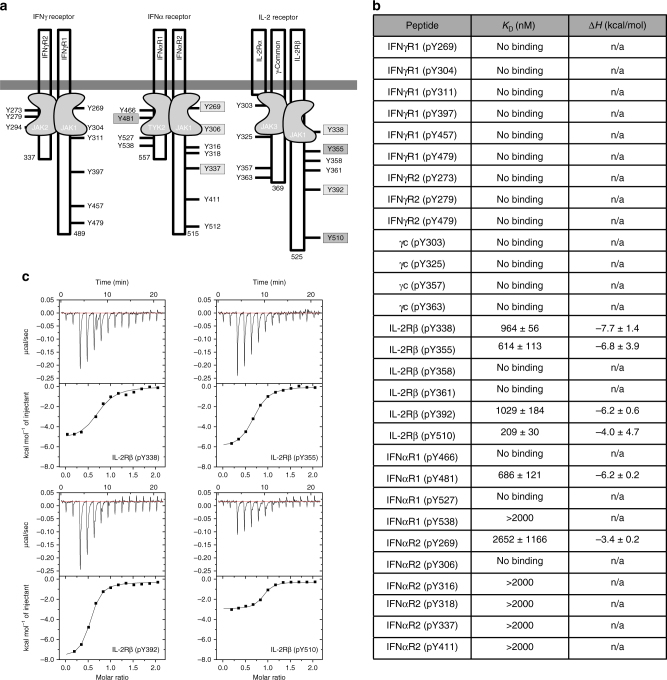
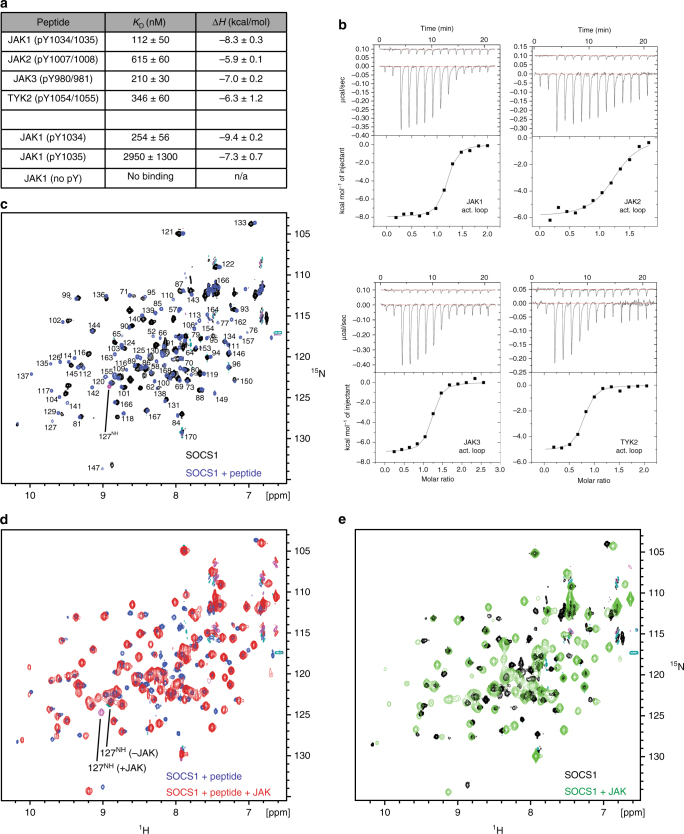
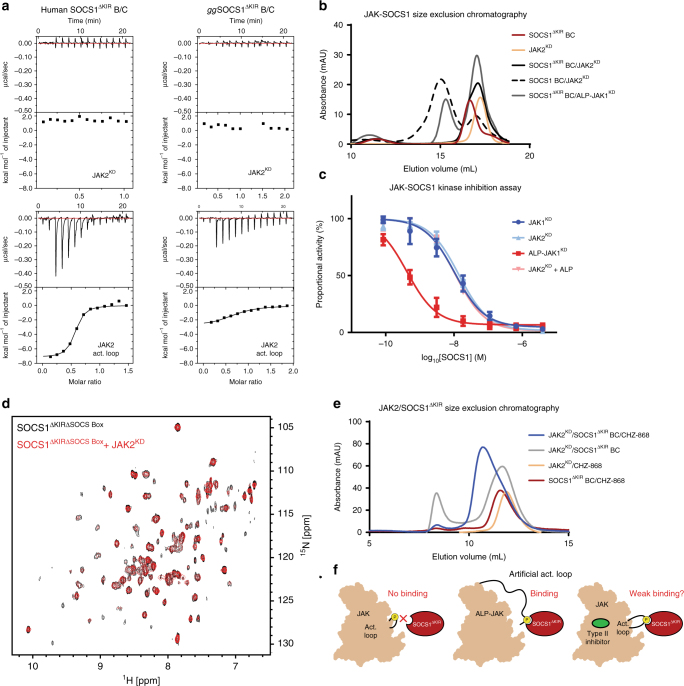
The SOCS family of proteins are negative-feedback inhibitors of signalling induced by cytokines that act via the JAK/STAT pathway. SOCS proteins can act as ubiquitin ligases by recruiting Cullin5 to ubiquitinate signalling components; however, SOCS1, the most potent member of the family, can also inhibit JAK directly. Here we determine the structural basis of both these modes of inhibition. Due to alterations within the SOCS box domain, SOCS1 has a compromised ability to recruit Cullin5; however, it is a direct, potent and selective inhibitor of JAK catalytic activity. The kinase inhibitory region of SOCS1 targets the substrate binding groove of JAK with high specificity and thereby blocks any subsequent phosphorylation. SOCS1 is a potent inhibitor of the interferon gamma (IFNγ) pathway, however, it does not bind the IFNγ receptor, making its mode-of-action distinct from SOCS3. These findings reveal the mechanism used by SOCS1 to inhibit signalling by inflammatory cytokines.
Overview
The claims and statistics of this paper haven’t been checked yet.
Free: it reads the open-access text and checks the first 5 claims that cite a source we can check. Create a free account to check every claim.
Integrity signals
Registry
Cites
Statistics
Figures
Verification
Claims the paper makes
The claims and statistics of this paper haven’t been checked yet.
Free: it reads the open-access text and checks the first 5 claims that cite a source we can check. Create a free account to check every claim.
Claims other papers make about this one
Each is checked against this paper’s own text: does it say what the citing paper says it does?
The source backs part of the claim, not all of it — or backs it for a different population, condition or comparison.
In the citing paper
“Targeting SOCS1, a negative regulator of JAK/STAT signaling in T cells, showed enhanced T cell clearance comparable to CBLB (Liau et al., 2018).”
From Genome-wide CRISPR Screens in Primary Human T Cells Reveal Key Regulators of Immune Function (2018) · cites this paper as Liau et al., 2018
Experimental — accuracy not yet measuredThe source backs part of the claim, not all of it — or backs it for a different population, condition or comparison.
In the citing paper
“Ablation of TCEB2, a binding partner of SOCS1, also improved tumor clearance, suggesting that the SOCS1/TCEB2 complex restrains T cell responses and is a potential target for immunotherapy (Ilangumaran et al., 2017; Kamizono et al., 2001; Liau et al., 2018).”
From Genome-wide CRISPR Screens in Primary Human T Cells Reveal Key Regulators of Immune Function (2018) · cites this paper as Liau et al., 2018
Experimental — accuracy not yet measuredThe check wasn’t confident either way, so it gives no verdict — never disputed.
In the citing paper
“SOCS‐1 is upregulated by Aβ via the JAK2/STAT3 pathway, leading to insulin resistance.”
From BACE1: More than just a β‐secretase (2022) · cites this paper as [95]
Experimental — accuracy not yet measuredIn the citing paper
“TCEB2 (rank 5) complexes with RNF7 (rank 34), CUL5 (rank 162), and SOCS1 (rank 3), a key suppressor of JAK/STAT signaling in activated T cells (Kamura et al., 1998; Liau et al., 2018).”
From Genome-wide CRISPR Screens in Primary Human T Cells Reveal Key Regulators of Immune Function (2018) · cites this paper as Liau et al., 2018
In the citing paper
“Insulin sensitivity is also affected by Aβ‐mediated upregulation of SOCS‐1, an inhibitor of the interferon‐gamma pathway.”
From BACE1: More than just a β‐secretase (2022) · cites this paper as [95]
Self-check
Percentages, sums and reported differences re-computed from the paper’s own numbers.
The self-check needs the paper’s full text.
Citations
Cites
Features and development of Coot
Emsley, P., Lohkamp, B., Scott, W. G., & Cowtan, K. (2010) · Acta Crystallographica Section D Biological Crystallography · doi:10.1107/s0907444910007493 · Cited by 29,915
PHENIX : a comprehensive Python-based system for macromolecular structure solution
Adams, P. D., Afonine, P. V., Bunkóczi, G., Chen, V. B., Davis, I. W., Echols, N., Headd, J. J., Hung, L.-W., Kapral, G. J., Grosse-Kunstleve, R. W., et al. (2010) · Acta Crystallographica Section D Biological Crystallography · doi:10.1107/s0907444909052925 · Cited by 23,716
Phaser crystallographic software
McCoy, A. J., Grosse-Kunstleve, R. W., Adams, P. D., Winn, M. D., Storoni, L. C., & Read, R. J. (2007) · Journal of Applied Crystallography · doi:10.1107/s0021889807021206 · Cited by 20,612
Vogelstein, B., Papadopoulos, N., Velculescu, V. E., Zhou, S., Diaz, L. A., & Kinzler, K. W. (2013) · Science · doi:10.1126/science.1235122 · Cited by 7,863
PHENIX: a comprehensive Python-based system for macromolecular structure solution
Adams, P. D., Afonine, P. V., Bunkóczi, G., Chen, V. B., Davis, I. W., Echols, N., Headd, J. J., Hung, L.-W., Kapral, G. J., Grosse-Kunstleve, R. W., et al. (2012) · International Tables for Crystallography · doi:10.1107/97809553602060000865 · Cited by 7,334
IFN-γ–related mRNA profile predicts clinical response to PD-1 blockade
Ayers, M., Lunceford, J., Nebozhyn, M., Murphy, E., Loboda, A., Kaufman, D. R., Albright, A., Cheng, J. D., Kang, S. P., Shankaran, V., et al. (2017) · Journal of Clinical Investigation · doi:10.1172/jci91190 · Cited by 3,788
Mutations Associated with Acquired Resistance to PD-1 Blockade in Melanoma
Zaretsky, J. M., Garcia-Diaz, A., Shin, D. S., Escuin-Ordinas, H., Hugo, W., Hu-Lieskovan, S., Torrejon, D. Y., Abril-Rodriguez, G., Sandoval, S., Barthly, L., et al. (2016) · New England Journal of Medicine · doi:10.1056/nejmoa1604958 · Cited by 3,237
Culture Medium for Enterobacteria
Neidhardt, F. C., Bloch, P. L., & Smith, D. F. (1974) · Journal of Bacteriology · doi:10.1128/jb.119.3.736-747.1974 · Cited by 2,958
Integration, scaling, space-group assignment and post-refinement
Kabsch, W. (2010) · Acta Crystallographica Section D Biological Crystallography · doi:10.1107/s0907444909047374 · Cited by 2,528
A family of cytokine-inducible inhibitors of signalling
Starr, R., Willson, T. A., Viney, E. M., Murray, L. J. L., Rayner, J. R., Jenkins, B. J., Gonda, T. J., Alexander, W. S., Metcalf, D., Nicola, N. A., et al. (1997) · Nature · doi:10.1038/43206 · Cited by 2,066
Self-citation
Cited by
Items 101–200 of 449
A Review of micro RNAs changes in T2DM in animals and humans
Afsharmanesh, M. R., Mohammadi, Z., Mansourian, A. R., & Jafari, S. M. (2023) · Journal of Diabetes · doi:10.1111/1753-0407.13431 · Cited by 40
“Various studies suggests that the suppressor of cytokine signaling 3 (SOCS3) is associated with the suppression of insulin synthesis and secretion through inactivation of the JAK/STAT pathway.(32) Recently, studies have indicated that miR-19a-3p promotes pancreatic β-cell proliferation and insulin secretion and suppre…”
BackgroundKorsten, S. G. P. J., Peracic, L., van Groeningen, L. M. B., Diks, M. A. P., Vromans, H., Garssen, J., & Willemsen, L. E. M. (2022) · International Journal of Molecular Sciences · doi:10.3390/ijms23073980 · Cited by 39
“In both activated cascades, suppressors of cytokine signaling 1 (SOCS1) can directly inhibit JAK1 and JAK2, ensuring a negative feedback mechanism [29].”
BackgroundLi, J., & Zheng, S. J. (2020) · Viruses · doi:10.3390/v12050543 · Cited by 37
“SOCS1 belongs to the SOCS family that acts as a negative regulator for immune signaling and tumor suppressors [86,87].”
BackgroundRole of cannabinoids in alcohol-induced neuroinflammation
García-Baos, A., Alegre-Zurano, L., Cantacorps, L., Martín‐Sánchez, A., & Valverde, O. (2020) · Progress in Neuro-Psychopharmacology and Biological Psychiatry · doi:10.1016/j.pnpbp.2020.110054 · Cited by 35
Therapeutic implications of current Janus kinase inhibitors as anti-COVID agents: A review
Jain, N. K., Tailang, M., Jain, H. K., Chandrasekaran, B., Sahoo, B. M., Subramanian, A., Thangavel, N., Aldahish, A. A., Chidambaram, K., Muthumanickam, A., et al. (2023) · Frontiers in Pharmacology · doi:10.3389/fphar.2023.1135145 · Cited by 38
“suppressor of cytokine signaling (SOCS) family of negative regulators regulates JAK-STAT through a negative feedback mechanism by inactivating JAKs proteins and preventing access of STATs to receptor binding site and blocking signaling proteins’ access to the proteasome (Liau et al., 2018).”
BackgroundTumuluru, S., Godfrey, J. K., Cooper, A. B., Yu, J., Chen, X., MacNabb, B. W., Venkataraman, G., Zha, Y., Pelzer, B. W., Song, J. Y., et al. (2025) · Blood · doi:10.1182/blood.2024025355 · Cited by 43
Hi-JAKi-ng Synovial Fibroblasts in Inflammatory Arthritis With JAK Inhibitors
Burja, B., Mertelj, T., & Frank‐Bertoncelj, M. (2020) · Frontiers in Medicine · doi:10.3389/fmed.2020.00124 · Cited by 38
“Additionally, suppressors of cytokine signaling (SOCS) competitively inhibit binding of STATs to cytokine receptors but act also as ubiquitin ligases, targeting the components of the JAK-STAT pathway for proteosomal degradation (11).”
BackgroundOne Gene, Many Facets: Multiple Immune Pathway Dysregulation in SOCS1 Haploinsufficiency
Körholz, J., Gabrielyan, A., Sowerby, J. M., Boschann, F., Chen, L., Paul, D., Brandt, D., Kleymann, J., Kolditz, M., Toepfner, N., et al. (2021) · Frontiers in Immunology · doi:10.3389/fimmu.2021.680334 · Cited by 39
The Ups and Downs of STAT Inhibition in Acute Myeloid Leukemia
Moser, B., Edtmayer, S., Witalisz‐Siepracka, A., & Stoiber, D. (2021) · Biomedicines · doi:10.3390/biomedicines9081051 · Cited by 40
Expression of MicroRNAs in Sepsis-Related Organ Dysfunction: A Systematic Review
Maiese, A., Scatena, A., Costantino, A., Chiti, E., Occhipinti, C., Russa, R. L., Paolo, M. D., Turillazzi, E., Frati, P., & Fineschi, V. (2022) · International Journal of Molecular Sciences · doi:10.3390/ijms23169354 · Cited by 34
Inflammatory Skin Diseases: Focus on the Role of Suppressors of Cytokine Signaling (SOCS) Proteins
Cianciulli, A., Calvello, R., Porro, C., Lofrumento, D. D., & Panaro, M. A. (2024) · Cells · doi:10.3390/cells13060505 · Cited by 38
“In this context, a special family of proteins known as suppressors of cytokine signaling (SOCS) is involved in the negative feedback regulation of cytokine signaling, ensuring its proper retention [9].”
BackgroundIndolent T-Cell Lymphoproliferative Disorders of the Gastrointestinal Tract (iTLPD-GI): A Review
Sanguedolce, F., Zanelli, M., Zizzo, M., Luminari, S., Martino, G., Soriano, A., Ricci, L., Caprera, C., & Ascani, S. (2021) · Cancers · doi:10.3390/cancers13112790 · Cited by 32
“Deletion of SOCS1, a negative regulator of the JAK family proteins [31], which was seen in a colonic CD4+ iTLPD [21], is a recurrent abnormality in a variety of T-cell lymphomas and more commonly reported in mycosis fungoides [32].”
BackgroundSuppressors of Cytokine Signaling and Hepatocellular Carcinoma
Masuzaki, R., Kanda, T., Sasaki, R., Matsumoto, N., Nirei, K., Ogawa, M., Karp, S. J., Moriyama, M., & Kogure, H. (2022) · Cancers · doi:10.3390/cancers14102549 · Cited by 35
Upstream regulators of phosphoinositide 3‐kinase and their role in diseases
Wang, D., Zhou, W., Chen, J., & Wei, W. (2019) · Journal of Cellular Physiology · doi:10.1002/jcp.28215 · Cited by 32
Michniacki, T. F., Walkovich, K. J., DeMeyer, L., Saad, N., Hannibal, M., Basiaga, M. L., Horst, K. K., Mohan, S., Chen, L., Brodeur, K. E., et al. (2022) · Journal of Clinical Immunology · doi:10.1007/s10875-022-01346-x · Cited by 35
“Type I interferons bind to IFNAR1 and IFNAR2 resulting in a structural change leading to activation of JAK1/TYK2.”
BackgroundInfluentialYe, F., Cai, Z., Wang, B., Zeng, C., Xi, Y., Hu, S., Qu, R., Yuan, Z., Yue, J., Tian, Y., et al. (2023) · Cancer Research · doi:10.1158/0008-5472.can-22-3009 · Cited by 31
Li, D., Wang, J., Tuo, Z., Yoo, K. H., Yu, Q., Miyamoto, A., Zhang, C., Ye, X., Wei, W., Wu, R., et al. (2024) · Phytomedicine · doi:10.1016/j.phymed.2024.155503 · Cited by 30
Shi, J., Yang, M. M., Yang, S., Fan, F., Zheng, G., Miao, Y., Hua, Y., Zhang, J., Cheng, Y., Liu, S., et al. (2024) · Phytomedicine · doi:10.1016/j.phymed.2024.155489 · Cited by 33
Cytokines in Focus: IL-2 and IL-15 in NK Adoptive Cell Cancer Immunotherapy
Marr, B., Jo, D., Jang, M., & Lee, S.-H. (2025) · Immune Network · doi:10.4110/in.2025.25.e17 · Cited by 41
Rise of TRIM8: A Molecule of Duality
Bhaduri, U., & Merla, G. (2020) · Molecular Therapy — Nucleic Acids · doi:10.1016/j.omtn.2020.08.034 · Cited by 30
“The RING domain of TRIM8 is crucial for its activity to regulate stabilization and activation TP53, degradation of MDM2,(8) and destabilization of DNp63a,(9) and thus plays an important role in the context of cell proliferation, whereas the conserved B-box and coiled-coil domain region is known to mediate the interact…”
BackgroundPersistence of myelofibrosis treated with ruxolitinib: biology and clinical implications
Ross, D. M., Babon, J. J., Tvorogov, D., & Thomas, D. (2021) · Haematologica · doi:10.3324/haematol.2020.262691 · Cited by 32
Self-citationZhao, X., Peng, T., Cao, X., Hou, Y., Li, R., Han, T., Fan, Z., Zhao, M., Chang, Y., Chen, H., et al. (2022) · Cell Reports · doi:10.1016/j.celrep.2022.111342 · Cited by 36
Zanin, N., de Lesegno, C. V., Podkalicka, J., Meyer, T., Troncoso, P. G., Bun, P., Danglot, L., Chmiest, D., Urbé, S., Piehler, J., et al. (2023) · Nature Cell Biology · doi:10.1038/s41556-022-01085-6 · Cited by 31
The stem-like STAT3-responsive cells of zebrafish intestine are WNT/β-catenin dependent
Peron, M., Dinarello, A., Meneghetti, G., Martorano, L., Facchinello, N., Vettori, A., Licciardello, G., Tiso, N., & Argenton, F. (2020) · Development · doi:10.1242/dev.188987 · Cited by 35
Zhao, R., Hu, Z., Zhang, X., Huang, S., Yu, G., Wu, Z. B., Yu, W., Lu, J., & Ruan, B. (2024) · Cell Communication and Signaling · doi:10.1186/s12964-023-01421-9 · Cited by 34
Proteomimetics of Natural Regulators of JAK–STAT Pathway: Novel Therapeutic Perspectives
Manna, S. L., Benedictis, I. D., & Marasco, D. (2022) · Frontiers in Molecular Biosciences · doi:10.3389/fmolb.2021.792546 · Cited by 33
Functional CRISPR screens in T cells reveal new opportunities for cancer immunotherapies
Xiang, M., Li, H., Zhan, Y., Ma, D., Gao, Q., & Fang, Y. (2024) · Molecular Cancer · doi:10.1186/s12943-024-01987-z · Cited by 30
“Ablation of negative regulators that hinder TCR response in T cells not only promoted T cell activation but significantly enhanced T cell tumour-killing capabilities through pathways of MAPK ( RASA2 ) [131], ubiquitination degradation ( CBLB ) [148], and JAK/STAT ( SOCS1 and TCEB1 ) [149].”
BackgroundThe Curcumin Analog GO-Y030 Controls the Generation and Stability of Regulatory T Cells
Maruyama, T., Kobayashi, S., Nakatsukasa, H., Moritoki, Y., Taguchi, D., Sunagawa, Y., Morimoto, T., Asao, A., Jin, W., Owada, Y., et al. (2021) · Frontiers in Immunology · doi:10.3389/fimmu.2021.687669 · Cited by 30
“One reason for this is that GO-Y030-treated CD4CD25 Tregs highly expressed SOCS1, a common g chain inhibitor (43) (Figure S11A).”
BackgroundDealing with Macrophage Plasticity to Address Therapeutic Challenges in Head and Neck Cancers
Furgiuele, S., Descamps, G., Cascarano, L., Boucq, A., Dubois, C., Journé, F., & Saussez, S. (2022) · International Journal of Molecular Sciences · doi:10.3390/ijms23126385 · Cited by 34
“More specifically, SOCS1 inhibits JAK1 and JAK2 by blocking substrate binding, using the JAK kinase inhibitory region [45,46].”
BackgroundFTO‐mediated m6A modification of SOCS1 mRNA promotes the progression of diabetic kidney disease
Sun, Q., Geng, H., Zhao, M., Li, Y., Chen, X., Sha, Q., Lai, P., Tang, D., Yang, D., Liang, J., et al. (2022) · Clinical and Translational Medicine · doi:10.1002/ctm2.942 · Cited by 32
Role of Omega-3 Fatty Acids as Non-Photic Zeitgebers and Circadian Clock Synchronizers
Checa-Ros, A., & D’Marco, L. (2022) · International Journal of Molecular Sciences · doi:10.3390/ijms232012162 · Cited by 31
“Srebf1 is involved in de novo lipogenesis, whereas Socs2 is a key molecule in the JAK-STAT-SOC pathway, implicated in the transcription of pro-inflammatory cytokines and tumorigenesis [124]; Ccl-2 favors hepatic steatosis and inflammation [125], and Sema4a participates in the differentiation of T-helper lymphocytes du…”
BackgroundLing, Q., Fang, J. S., Zhai, C., Wan, H., Chen, Y., Zhou, T., Liu, Y., & Fang, X. (2023) · European Journal of Pharmacology · doi:10.1016/j.ejphar.2023.175724 · Cited by 29
Tumor-derived miR-6794-5p enhances cancer growth by promoting M2 macrophage polarization
Choi, J. Y., Seok, H. J., Lee, D. H., Lee, E., Kim, T., Bae, S., Shin, I., & Bae, I. H. (2024) · Cell Communication and Signaling · doi:10.1186/s12964-024-01570-5 · Cited by 30
“It has been reported that SOCS1 is known to block the JAK/STAT pathway, inhibiting tyrosine phosphorylation by directly binding to the SH2 domains of JAK and STAT [47, 48].”
BackgroundTranscriptional control of interferon-stimulated genes
Babadei, O., Strobl, B., Müller, M. M., & Decker, T. (2024) · Journal of Biological Chemistry · doi:10.1016/j.jbc.2024.107771 · Cited by 32
“While the KIR domain of SOCS1 acts as a JAK pseudosubstrate and inhibits catalytic activity, SOCS3 targets and inhibits receptor complexes predominantly via SH2 domain-mediated association (80, 81).”
BackgroundChakraborty, N., Waning, D. L., Gautam, A., Hoke, A. V., Sowe, B., Youssef, D., Butler, S., Savaglio, M. K., Childress, P., Kumar, R., et al. (2020) · Journal of Bone and Mineral Research · doi:10.1002/jbmr.4102 · Cited by 29
The Role of Cullin-RING Ligases in Striated Muscle Development, Function, and Disease
Blondelle, J., Biju, A., & Lange, S. (2020) · International Journal of Molecular Sciences · doi:10.3390/ijms21217936 · Cited by 28
Ubiquitination network in the type I IFN‐induced antiviral signaling pathway
Zhao, Q., Zhang, R., Qiao, C., Miao, Y., Yuan, Y., & Zheng, H. (2023) · European Journal of Immunology · doi:10.1002/eji.202350384 · Cited by 30
Fadanni, G. P., & Calixto, J. Β. (2023) · Cytokine & Growth Factor Reviews · doi:10.1016/j.cytogfr.2023.07.002 · Cited by 33
Zhou, X., Chen, J., Tao, H., Cai, Y., Huang, L., Zhou, H., Chen, Y., Cui, L., Zhong, W., & Li, K. (2020) · Neuropsychiatric Disease and Treatment · doi:10.2147/ndt.s247677 · Cited by 26
Manna, S. L., Lopez‐Sanz, L., Bernal, S., Fortuna, S., Mercurio, F. A., Leone, M., Gómez‐Guerrero, C., & Marasco, D. (2021) · European Journal of Medicinal Chemistry · doi:10.1016/j.ejmech.2021.113547 · Cited by 27
Tripartite motif containing 14: An oncogene in papillary thyroid carcinoma
Sun, W., Wang, Y., Li, D., Wu, Y., Ji, Q., & Sun, T. (2019) · Biochemical and Biophysical Research Communications · doi:10.1016/j.bbrc.2019.10.127 · Cited by 25
Exploring Specific miRNA-mRNA Axes With Relationship to Taxanes-Resistance in Breast Cancer
Chen, D., Bao, C., Zhao, F., Yu, H., Zhong, G., Xu, L., & Yan, S. (2020) · Frontiers in Oncology · doi:10.3389/fonc.2020.01397 · Cited by 27
de Oliveira, L. F., de Andrade, A. A. S., Pagliari, C., de Carvalho, L. V., Silveira, T. S., Cardoso, J. F., Silva, A. L. T. E., de Vasconcelos, J. M., Moreira-Nunes, C. A., Burbano, R. M. R., et al. (2021) · Scientific Reports · doi:10.1038/s41598-020-72892-w · Cited by 25
Discovery of an exosite on the SOCS2-SH2 domain that enhances SH2 binding to phosphorylated ligands
Linossi, E. M., Li, K., Veggiani, G., Tan, C., Dehkhoda, F., Hockings, C., Calleja, D. J., Keating, N., Feltham, R., Brooks, A. J., et al. (2021) · Nature Communications · doi:10.1038/s41467-021-26983-5 · Cited by 28
“There is a precedent within the SOCS family, given the SOCS1 and SOCS3-SH2 domains interact with a GQM motif on the JAK1, JAK2, and TYK2 kinase domains; however, this interaction interface is quite distinct from the F3 exosite and does not impact on binding to phosphorylated ligands 9,43,44 .”
Self-citationGuo, H., Li, R., Wang, M., Hou, Y., Liu, S., Peng, T., Zhao, X., Lu, L., Han, Y., Shao, Y., et al. (2022) · Advanced Science · doi:10.1002/advs.202200978 · Cited by 28
Jang, K. O., Choi, J. S., Choi, K. H., Kim, S., Kim, H., & Chung, D. K. (2023) · Heliyon · doi:10.1016/j.heliyon.2023.e12926 · Cited by 28
“SOCS-1 is a negative regulator of JAK-STAT signaling pathway [26].”
BackgroundSomade, O. T., Oyinloye, B. E., Ajiboye, B. O., & Osukoya, O. A. (2023) · Biochemistry and Biophysics Reports · doi:10.1016/j.bbrep.2023.101484 · Cited by 48
“There are eight members of the SOCS family, but SOCS1 is the most potent member of the family and is capable of inhibiting JAK directly [38].”
BackgroundKaulen, L. D., Denisova, E., Hinz, F. E., Hai, L., Friedel, D., Henegariu, O., Hoffmann, D. C., Ito, J., Kourtesakis, A., Lehnert, P., et al. (2023) · Acta Neuropathologica · doi:10.1007/s00401-023-02613-w · Cited by 33
“SOCS1 directly interacts with JAK1 via its SH2 domain, which results in ubiquitination and subsequent proteasomal degradation of JAK1 as well as direct inhibition of Janus kinase activity [38].”
BackgroundHong, Y., Chen, Q., Wang, Z., Zhang, Y., Li, B., Guo, H., Huang, C., Kong, X., Mo, P., Xiao, N., et al. (2024) · Advanced Science · doi:10.1002/advs.202310037 · Cited by 34
Hromadová, D., Elewaut, D. S., Inman, R. D., Strobl, B., & Gracey, E. (2021) · Frontiers in Genetics · doi:10.3389/fgene.2021.685280 · Cited by 25
“Inducible negative regulation occurs through the suppressor of cytokine signaling (SOCS) family, which can specifically block kinase activity of JAK (Liau et al., 2018), block STAT docking (Yamamoto et al., 2003) and can also target the activated cytokine receptor for degradation via ubiquitination…”
BackgroundThe Molecular Mechanism of Renal Tubulointerstitial Inflammation Promoting Diabetic Nephropathy
Xue, R., Xiao, H., Kumar, V., Lan, X., Malhotra, A., Singhal, P. C., & Chen, J. (2023) · International Journal of Nephrology and Renovascular Disease · doi:10.2147/ijnrd.s436791 · Cited by 27
Unravelling the druggability and immunological roles of the SOCS-family proteins
Lynch, D. M., Forrester, B., Webb, T., & Ciulli, A. (2024) · Frontiers in Immunology · doi:10.3389/fimmu.2024.1449397 · Cited by 27
Ranjan, K., Rajendran, B. K., Deen, I. U., Costantini, A., de Rodas, M. L., Desai, S., Scallo, F., Gianino, N., Ferrone, S., & Schalper, K. A. (2025) · Molecular Cancer · doi:10.1186/s12943-025-02276-z · Cited by 28
“Analysis of transcripts significantly upregulated in TAP2 deficient cells identified SOCS1 (suppressor of cytokine signaling 1) as the top increased gene and this molecule has been previously shown in multiple studies to effectively suppress the IFNγ/STAT pathway and TNFα signaling [33, 34].”
Lin, X., Li, X., Zhai, Z., & Zhang, M. (2025) · Frontiers in Immunology · doi:10.3389/fimmu.2025.1563286 · Cited by 29
Tumor-Infiltrating Lymphocyte Therapy for the Treatment of Metastatic Melanoma
Tsai, K. K., & Komanduri, K. V. (2025) · American Journal of Clinical Dermatology · doi:10.1007/s40257-025-00957-5 · Cited by 23
Song, W., Chen, Y., Zhu, G., Xie, H., Yang, Z., & Li, L. (2020) · Biochemical and Biophysical Research Communications · doi:10.1016/j.bbrc.2020.06.114 · Cited by 25
Cell-cycle-gated feedback control mediates desensitization to interferon stimulation
Mudla, A., Jiang, Y., Arimoto, K., Xu, B., Rajesh, A., Ryan, A. P., Wang, W., Daugherty, M. D., Zhang, D., & Hao, N. (2020) · eLife · doi:10.7554/elife.58825 · Cited by 27
Insight into Janus kinases specificity: From molecular architecture to cancer therapeutics
Wei, T., Lu, M., Yao, S., Hong, Y., Yang, J., Zhang, M., Yin, Y., Han, Y., Li, Q., Wang, Z., et al. (2024) · MedComm – Oncology · doi:10.1002/mog2.69 · Cited by 24
Self-citationHaving an Old Friend for Dinner: The Interplay between Apoptotic Cells and Efferocytes
Lam, A. L., & Heit, B. (2021) · Cells · doi:10.3390/cells10051265 · Cited by 23
Xie, J., Wang, M., Cheng, A., Zhao, X., Liu, M., Zhu, D., Chen, S., Jia, R., Yang, Q., Wu, Y., et al. (2019) · Frontiers in Immunology · doi:10.3389/fimmu.2019.00731 · Cited by 23
“In addition, it has been demonstrated that SOCS1 is a potent inhibitor of the IFNγ signaling pathway (36, 37) and can prevent atherosclerosis by inhibiting IFNγ signaling (38).”
BackgroundPhenogenomic heterogeneity of post-transplant plasmablastic lymphomas
Leeman‐Neill, R. J., Soderquist, C. R., Montanari, F., Raciti, P., Park, D. S., Radeski, D., MANSUKHANI, M. M., Murty, V. V. V. S., Hsiao, S. J., Alobeid, B., et al. (2020) · Haematologica · doi:10.3324/haematol.2020.267294 · Cited by 23
“Multiple concomitant mutations in SOCS1, a negative regulator of JAK family 13 proteins, present in one PT-PBL, have not been functionally characterized, but are predicted to inactivate SOCS1.”
BackgroundSOCS-1 inhibition of type I interferon restrains Staphylococcus aureus skin host defense
Klopfenstein, N., Brandt, S. L., Castellanos, S., Gunzer, M., Blackman, A., & Serezani, C. H. (2021) · PLoS Pathogens · doi:10.1371/journal.ppat.1009387 · Cited by 24
“SOCS-1 acts mainly through direct inhibition of the JAK tyrosine kinase to prevent STAT-1 phosphorylation and activation in a classical negative feedback loop [30].”
BackgroundInfluentialManipulating immune activity of macrophages: a materials and mechanics perspective
Clevenger, A. J., Jha, A., Moore, E., & Raghavan, S. A. (2024) · Trends in biotechnology · doi:10.1016/j.tibtech.2024.07.009 · Cited by 23
Adachi, Y., Terakura, S., Osaki, M., Okuno, Y., Sato, Y., Sagou, K., Takeuchi, Y., Yokota, H., Imai, K., Steinberger, P., et al. (2024) · Nature Communications · doi:10.1038/s41467-024-54794-x · Cited by 24
The SOCS1 KIR and SH2 domain are both required for suppression of cytokine signaling in vivo
Doggett, K., Keating, N., Dehkhoda, F., Bidgood, G. M., Guzman, L. G. M., Leong, E., Kueh, A. J., Nicola, N. A., Kershaw, N. J., Babon, J. J., et al. (2023) · Cytokine · doi:10.1016/j.cyto.2023.156167 · Cited by 22
Self-citationYang, C., Li, Y., Yang, Y., Ni, Q., Zhang, Z., Chai, Y., & Li, J. (2023) · Angewandte Chemie International Edition · doi:10.1002/anie.202312603 · Cited by 22
Low, Z. Y., Yip, A. J. W., Chow, V. T. K., & Lal, S. K. (2021) · Reviews in Medical Virology · doi:10.1002/rmv.2300 · Cited by 23
“This is achieved by the recruitment of the E3 ubiquitin ligase scaffold via the interaction between the SOCS box motif and Cullin‐5.28 As the central SH2 domain determines the binding mechanism of the SOCS protein members, each SOCS protein member has different binding mechanisms.”
BackgroundInfluentialLuan, X., Yang, W., Bai, X., Li, H., Li, H., Fan, W., Zhang, H., Liu, W., & Sun, L. (2021) · The FASEB Journal · doi:10.1096/fj.202101044rrr · Cited by 21
Jiang, D., Wu, S., Xu, L., Xie, G., Li, D., & Peng, H. (2022) · Parasites & Vectors · doi:10.1186/s13071-021-05003-x · Cited by 21
Dissecting the Functional Role of the TRIM8 Protein on Cancer Pathogenesis
Esposito, J. E., Iuliis, V. D., Avolio, F., Liberatoscioli, E., Pulcini, R., Francesco, S. D., Pennelli, A., Martinotti, S., & Toniato, E. (2022) · Cancers · doi:10.3390/cancers14092309 · Cited by 22
“Specifically, TRIM8 regulates the p53 suppressor signaling pathway; it is involved in the NF-kB and in STAT3 of the JAK-STAT pathways.”
BackgroundInfluentialSignaling Pathways Associated with Chronic Wound Progression: A Systems Biology Approach
Basu, P., & Martins‐Green, M. M. (2022) · Antioxidants · doi:10.3390/antiox11081506 · Cited by 23
“inhibiting JAK1 and JAK2 function [53].”
BackgroundCook, C. P., Taylor, M. A., Liu, Y., Schmidt, R. L. J., Sedgewick, A. J., Kim, E., Hailer, A., North, J. P., Harirchian, P., Wang, H., et al. (2022) · Cell Reports Medicine · doi:10.1016/j.xcrm.2022.100715 · Cited by 26
“Some ZISTmembers outside of ZFP36L2 and ZFP36 are wellcharacterized global regulators of T cell activation, such as BTG1, or SOCS proteins, which appear to substantially inhibit JAK/STAT signaling.(44) Others, such as CCL22, may lower T cell inflammatory tone both by direct action on Tregs(24) and”
BackgroundSuzuki, Y., Lutshumba, J., Chen, K. C., Abdelaziz, M. H., Sa, Q., & Ochiai, E. (2023) · Frontiers in Cellular and Infection Microbiology · doi:10.3389/fcimb.2023.1110508 · Cited by 25
Martinez, C. D. J. H., Villafuerte, K. R. V., Luchiari, H. R., Cruz, J. D. O., Sales, M. D. C., Palioto, D. B., Messora, M. R., de Souza, S. L. S., Taba, M., Ramos, E. S., et al. (2019) · Journal of Periodontology · doi:10.1002/jper.18-0692 · Cited by 21
Interrelation of Natural Polyphenol and Fibrosis in Diabetic Nephropathy
Ma, Y., Wang, J., Fan, J., Jia, H., & Li, J. (2024) · Molecules · doi:10.3390/molecules30010020 · Cited by 20
“In kidney fibrosis, SOCS1 and SOCS3 are particularly important, as they inhibit JAK/STAT signaling by binding to JAK and promoting its degradation [31].”
A Literature Review on the Antiviral Mechanism of Luteolin
Lu, P., Zhang, T., Ren, Y., Rao, H., Lei, J., Zhao, G., Wang, M., Gong, D., & Cao, Z. (2023) · Natural Product Communications · doi:10.1177/1934578x231171521 · Cited by 25
Torres-Paz, Y. E., Gamboa, R., Fuentevilla-Álvarez, G., Soto, M. E., González-Moyotl, N. J., Martínez-Alvarado, M. R., Torres‐Tamayo, M., Ramírez-Marroquín, E. S., Vásquez-Jiménez, X., Sainz-Escárrega, V. H., et al. (2023) · International Journal of Molecular Sciences · doi:10.3390/ijms24108641 · Cited by 20
“Previous reports have shown that treatment with metformin decreases the expression of both miR-21-5p in plasma and miR-221-5p in internal mammary arteries in diabetic patients [33,34].”
BackgroundmiR-150 inhibitor ameliorates adriamycin-induced focal segmental glomerulosclerosis
Qi, H., Fu, J., Luan, J., Jiao, C., Cui, X., Cao, X., Zhang, Y., Wang, Y., Kopp, J. B., Pi, J., et al. (2019) · Biochemical and Biophysical Research Communications · doi:10.1016/j.bbrc.2019.11.096 · Cited by 20
Ferroptosis: Iron-mediated cell death linked to disease pathogenesis
Zhang, X., Hu, Y., Wang, B., & Yang, S. (2024) · Journal of Biomedical Research · doi:10.7555/jbr.37.20230224 · Cited by 18
Insights Into Macrophage Polarization and M1 / M2 Balance in Diabetic Foot Ulcers
Zhang, J., Li, H., Dong, Y., Zhou, Z., Wang, Y., Chen, X., & Cai, Y. (2026) · Journal of Diabetes · doi:10.1111/1753-0407.70205 · Cited by 25
Yoshimura, A., Aki, D., & Ito, M. (2021) · Proceedings of the Japan Academy Series B · doi:10.2183/pjab.97.016 · Cited by 20
Mobasher, M. A., Alsirhani, A. M., Alwaili, M. A., Baakdah, F. M., Eid, T. M., Alshanbari, F. A., Alzahri, R. Y., Alkhodair, S. A., & El-Said, K. S. (2024) · International Journal of Molecular Sciences · doi:10.3390/ijms25105562 · Cited by 22
“Of the eight SOCS proteins, SOCS-1 is the most effective and can directly inhibit JAK/STAT transcription [24].”
BackgroundWu, Q., Zhu, Y., Liu, Y., Wei, F., Tong, Y.-X., Cao, J., Zhou, P., Niu, M., Li, Z., Zeng, L.-Y., et al. (2018) · Cell Death and Disease · doi:10.1038/s41419-018-0812-6 · Cited by 21
Wu, Q., Ning, X., & Sun, L. (2021) · International Journal of Molecular Sciences · doi:10.3390/ijms22063156 · Cited by 20
“SOCS1 is an inhibitor of JAK-STAT signaling and the interferon gamma (IFNγ) pathway [86].”
BackgroundBudroni, V., & Versteeg, G. A. (2021) · Viruses · doi:10.3390/v13040584 · Cited by 21
“In line with this notion, differentiation of BMDMs to osteoclasts by the cytokine Receptor Activator Of Nuclear Factor Kappa B Ligand (RANKL), is likewise accompanied by proteasomal JAK1 degradation, thereby releasing IFNβ-dependent inhibition of this differentiation process [270].”
BackgroundInfluentialNovel Discoveries in Immune Dysregulation in Inborn Errors of Immunity
Ren, A., Yin, W., Miller, H. E., Westerberg, L. S., Candotti, F., Park, C.-S., Lee, P. P. W., Gong, Q., Chen, Y., & Liu, C. (2021) · Frontiers in Immunology · doi:10.3389/fimmu.2021.725587 · Cited by 19
“SOCS1 also binds to unphosphorylated JAK, which enhances its negative regulatory role (61).”
BackgroundStructural basis of HIV-1 Vif-mediated E3 ligase targeting of host APOBEC3H
Ito, F., Alvarez-Cabrera, A. L., Kim, K., Zhou, Z. H., & Chen, X. S. (2023) · Nature Communications · doi:10.1038/s41467-023-40955-x · Cited by 21
“A small Vif α -domain with a zinc-coordinating site mediates the recruitment of ELOB/C and CUL5 through a three-way interaction between Vif-ELOC-CUL5, which is typical for CUL5 recruiting SOCS-box containing substrate receptors 29,30 .”
BackgroundPereira, P. D. C., Diniz, D. G., da Costa, E. R., Magalhães, N. G. D. M., da Silva, A. D. J. F., Leite, J. G. S., Almeida, N. I. P., Cunha, K. D. N., de Melo, M. A. D., Vasconcelos, P. F. D. C., et al. (2023) · Frontiers in Immunology · doi:10.3389/fimmu.2023.1239572 · Cited by 19
Jafarzadeh, A., Jafarzadeh, Z., Nemati, M., & Yoshimura, A. (2024) · Helicobacter · doi:10.1111/hel.13105 · Cited by 18
Manna, S. L., Cugudda, A., Mercurio, F. A., Leone, M., Fortuna, S., Natale, C. D., Lagreca, E., Netti, P. A., Panzetta, V., & Marasco, D. (2024) · International Journal of Nanomedicine · doi:10.2147/ijn.s441205 · Cited by 17
“…mechanisms of action (MOAs) of these proteins in the inhibition of JAKs: while the SH2 domain of SOCS1 directly binds to the activation loop of JAK, 6 the SH2 domain of SOCS3 binds to phosphorylated tyrosine residues on activated cytokine receptors (glycoprotein (gp) 130 in IL-6 signaling).”
BackgroundSingh, M., Louie, R. H. Y., Samir, J., Field, M. A., Milthorpe, C., Adikari, T. N., Mackie, J., Roper, E. A., Faulks, M. L., Jackson, K., et al. (2025) · Science Translational Medicine · doi:10.1126/scitranslmed.adp6812 · Cited by 21
Chen, Y., Chen, H., Ren, S., Xiao, Y., Tao, S., Liu, J., Yuan, X., Chen, X., & Mu, Y. (2024) · Water Biology and Security · doi:10.1016/j.watbs.2024.100270 · Cited by 15
Type I interferon pathway in pediatric systemic lupus erythematosus
Zhou, Y., & Song, H. (2024) · World Journal of Pediatrics · doi:10.1007/s12519-024-00811-4 · Cited by 17
“SOCS1 regulates the JAK-STAT pathway by inhibiting JAK1/2 phosphorylation and suppressing the activity of TYK2 [76].”
BackgroundRefractory Celiac Disease: What the Gastroenterologist Should Know
Machado, M. V. (2024) · International Journal of Molecular Sciences · doi:10.3390/ijms251910383 · Cited by 18
“…frequent mutation, present in 50% of RCDII patients and 68% of EATL cases complicating RCDII, is the JAK1 p.G1097 [53], a hotspot mutation localized in a highly conserved position at the site of interaction of the JAK-1 negative regulator, a suppressor of cytokine signaling (SOCS)-1 [54].”
BackgroundHadjadj, J., Wolfers, A. F., Borisov, O., Hazard, D. Y., Leahy, T. R., Jeanpierre, M., Bélot, A., Bakhtiar, S., Hauck, F. H., Lee, P. Y., et al. (2025) · The Lancet Rheumatology · doi:10.1016/s2665-9913(24)00348-5 · Cited by 18
Luckey, M. A., Kim, T., Prakhar, P., Keller, H. R., Crossman, A., Choi, S., Love, P. E., Walsh, S. T. R., & Park, J. (2020) · European Journal of Immunology · doi:10.1002/eji.201948307 · Cited by 19
Plummer, C. E., Polk, T., Sharma, J., Bae, S. S., Barr, O., Jones, A., Kitchen, H., Wilhelmy, M., Devin, K., Smith, W. C., et al. (2022) · Scientific Reports · doi:10.1038/s41598-022-11338-x · Cited by 17
Pim Kinases: Important Regulators of Cardiovascular Disease
Nock, S. H., Karim, E., & Unsworth, A. J. (2023) · International Journal of Molecular Sciences · doi:10.3390/ijms241411582 · Cited by 23
“SOCS-1 is involved in the degradation of proteins through ubiquitination [57].”
BackgroundBalasubramanian, P., Balaji, U., Santos, M. S., Baisch, J. M., Smitherman, C., Walters, L., Sparagana, P. R., Nassi, L., Stewart, K., Fuller, J., et al. (2025) · Nature Immunology · doi:10.1038/s41590-025-02297-2 · Cited by 17
“1e) 16 .”
Post-transcriptional regulatory feedback encodes JAK-STAT signal memory of interferon stimulation
Kalliara, E., Kardyńska, M., Bagnall, J., Spiller, D. G., Müller, W., Rückerl, D., Biswas, S. K., Śmieja, J., & Paszek, P. (2022) · Frontiers in Immunology · doi:10.3389/fimmu.2022.947213 · Cited by 15
“Frontiers in Immunology 10 particular, IFN-g-mediated upregulation of SOCS1 is thought to be important for STAT1 responses (28).”
Background
Metadata
- Authors
- Liau, N. P. D., Laktyushin, A., Lucet, I. S., Murphy, J. M., Yao, S., Whitlock, E., Callaghan, K., Nicola, N. A., Kershaw, N. J., & Babon, J. J.
- Affiliations
- The University of Melbourne (AU)
- Corresponding author
- Kershaw, Nadia J.
- Babon, Jeffrey J.
- ORCID
- Venue
- Nature Communications
- Published
- 2018-04-19
- Volume
- 9
- Issue
- 1
- Pages
- 1558-1558
- ISSN
- 2041-1723 (ISSN-L)
- PMC
- PMC5908791
- OpenAlex
- W2801285271
- Cited by
- 456
- References
- 59
- Citations by year
- 2026: 47 · 2025: 70 · 2024: 64 · 2023: 77 · 2022: 65 · 2021: 61 · 2020: 46 · 2019: 18 · 2018: 8
- FWCI
- 12.47
- Type
- journal article
- Language
- en
- Open access
- gold
- doi.org
- Licence
- cc-by
- creativecommons.org/licenses/by/4.0 (tdm)
- creativecommons.org/licenses/by/4.0 (vor)
- Locations
- Nature Communications (publishedVersion, cc-by)
- Europe PMC (PubMed Central) (publishedVersion, other-oa)
- PubMed Central (publishedVersion, cc-by)
- PubMed (publishedVersion)
- Minerva Access (University of Melbourne) (submittedVersion, cc-by)
- RePEc: Research Papers in Economics (submittedVersion)
- DOAJ (DOAJ: Directory of Open Access Journals) (submittedVersion)
- DOAJ (DOAJ: Directory of Open Access Journals) (submittedVersion, cc-by-sa)
- Funders
- Commonwealth Scientific and Industrial Research Organisation
- Australian Synchrotron
- Medical Research Council
- National Health and Medical Research Council (1113577, 1122999, 9000220)
- Cancer Council Victoria (1065180)
- Topics
- Life Sciences › Immunology and Microbiology › Immunology › Cytokine Signaling Pathways and Interactions
- Life Sciences › Biochemistry, Genetics and Molecular Biology › Molecular Biology › Protein Tyrosine Phosphatases
- Life Sciences › Immunology and Microbiology › Immunology › interferon and immune responses
- Keywords
- SOCS1, JAK/STAT signaling, negative feedback regulation, ubiquitination, interferon-gamma signaling, cytokine signaling, SOCS3, protein structure
- MeSH terms
- Suppressor of Cytokine Signaling 1 Protein, Suppressor of Cytokine Signaling 3 Protein, Protein Domains, Janus Kinase Inhibitors, Binding Sites, Humans, Interferon-gamma, Models, Molecular, Phosphorylation, Signal Transduction, Crystallography, X-Ray, Cullin Proteins, STAT Transcription Factors, Janus Kinase 1, Janus Kinase 2
About these checks
Registry, retraction, Cites and statistics results are computed, not judged, with one exception: a printed reference that no index lists is read once by a model before it counts as a citation error. Claims are extracted by a model and kept only when their quote appears verbatim in the text; each cited source is then checked, with a model’s help, for whether it says what the claim relies on. Those verdicts can be wrong — read the claim’s quote and the cited source before relying on one.
Statistics and arithmetic are recomputed, not judged.
Confidence bands are shown only for fields calibrated on our annotated test set. None is calibrated yet, so no band is shown.
What counts as a claim ›How we measure confidence ›How we check this ›
Are you an author, or do you see a problem with this page? Request a review
Data sources
Bibliographic data: Semantic Scholar, OpenAlex, Crossref.
Contains information from the Semantic Scholar Academic Graph Datasets, made available under the ODC Attribution License (ODC-BY 1.0).
Semantic Scholar’s data is described in: Kinney, R., et al. (2023). The Semantic Scholar Open Data Platform. arXiv:2301.10140.
