

The molecular basis of JAK/STAT inhibition by SOCS1
Open accessThe DOI matches its Crossref record; 59 of the 59 references it cites were found in a registry or an index.
Abstract
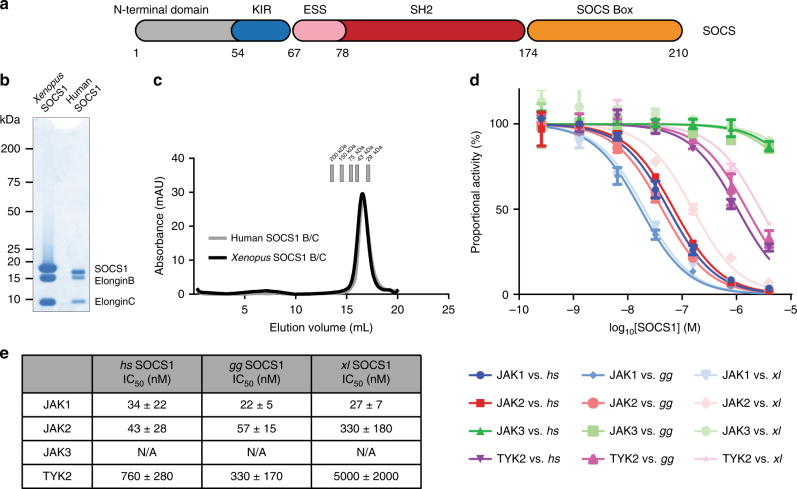
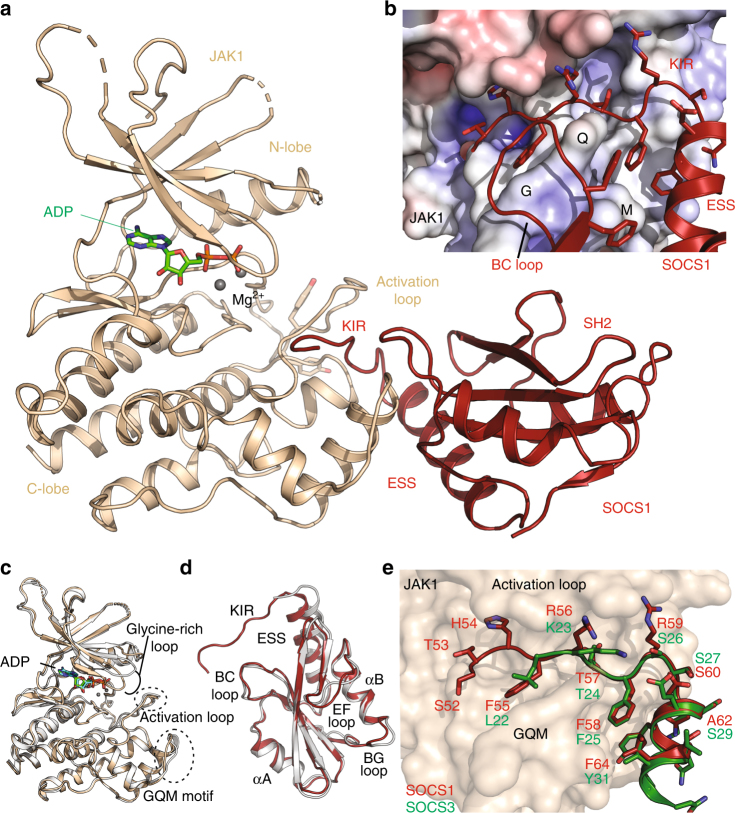
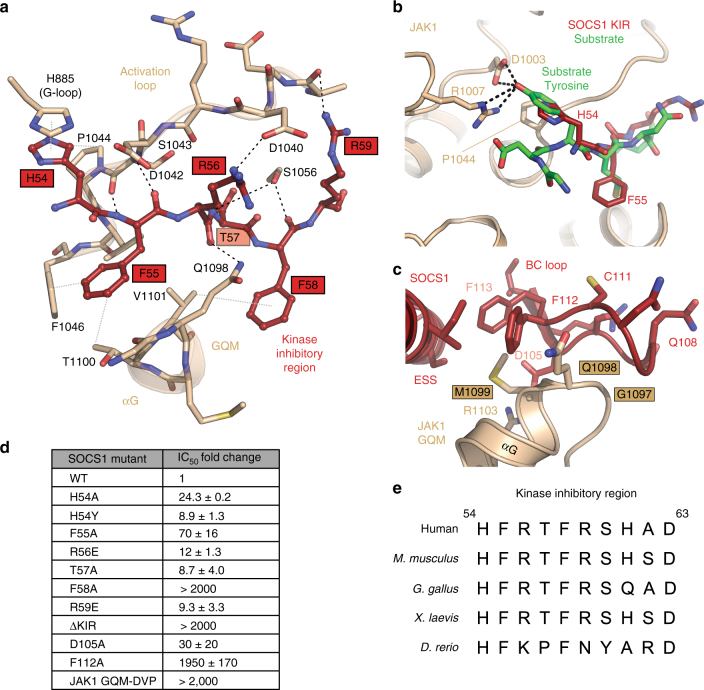
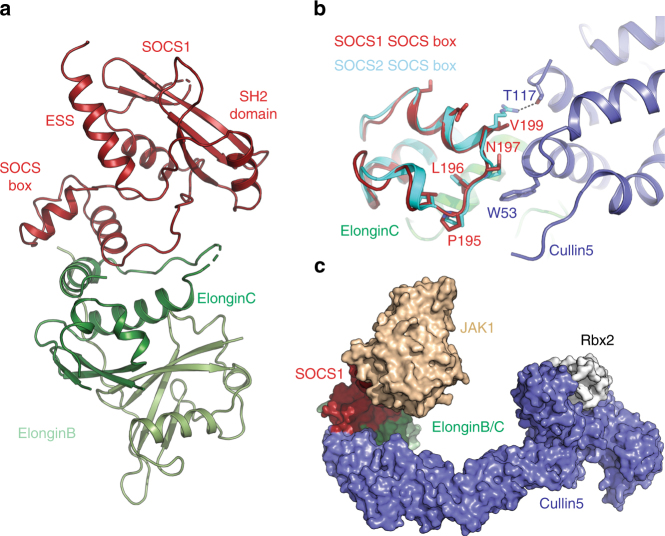
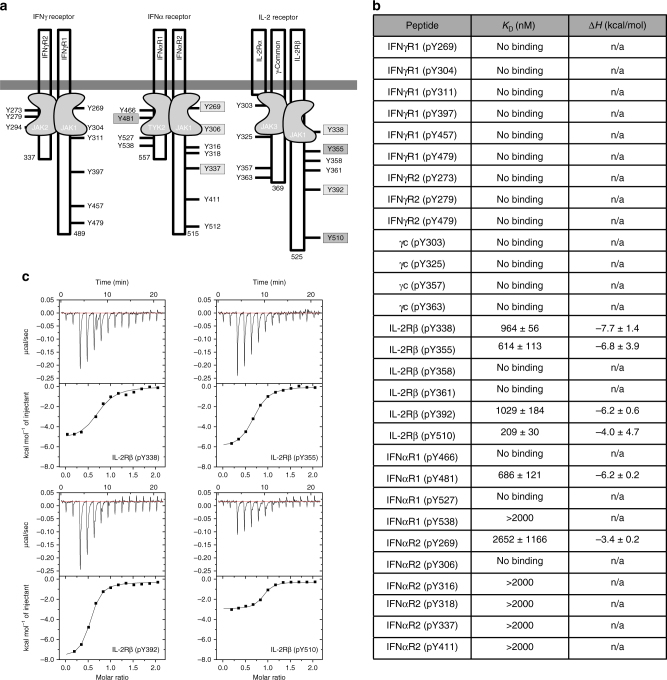
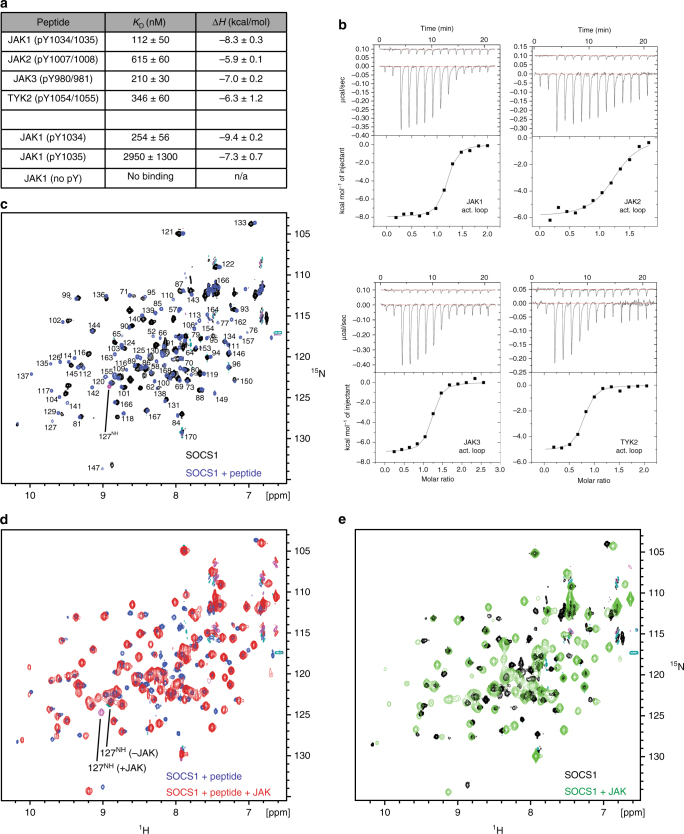
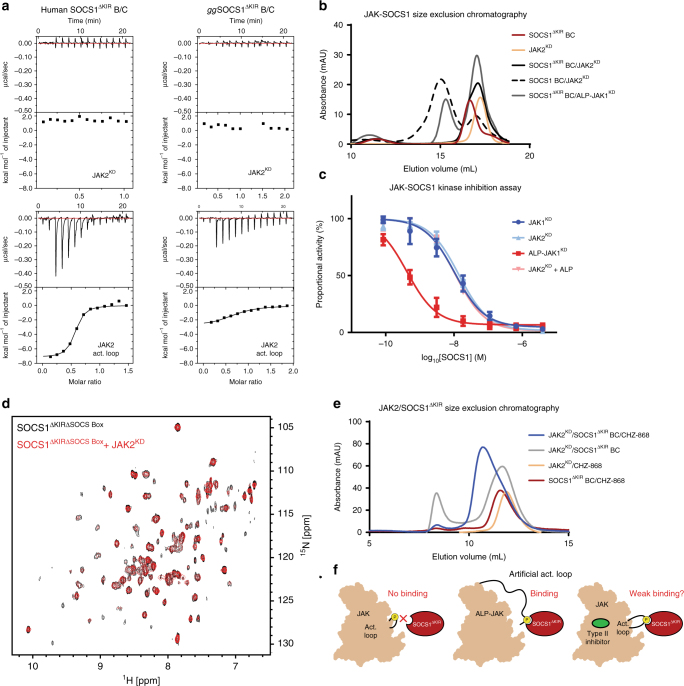
The SOCS family of proteins are negative-feedback inhibitors of signalling induced by cytokines that act via the JAK/STAT pathway. SOCS proteins can act as ubiquitin ligases by recruiting Cullin5 to ubiquitinate signalling components; however, SOCS1, the most potent member of the family, can also inhibit JAK directly. Here we determine the structural basis of both these modes of inhibition. Due to alterations within the SOCS box domain, SOCS1 has a compromised ability to recruit Cullin5; however, it is a direct, potent and selective inhibitor of JAK catalytic activity. The kinase inhibitory region of SOCS1 targets the substrate binding groove of JAK with high specificity and thereby blocks any subsequent phosphorylation. SOCS1 is a potent inhibitor of the interferon gamma (IFNγ) pathway, however, it does not bind the IFNγ receptor, making its mode-of-action distinct from SOCS3. These findings reveal the mechanism used by SOCS1 to inhibit signalling by inflammatory cytokines.
Overview
The claims and statistics of this paper haven’t been checked yet.
Free: it reads the open-access text and checks the first 5 claims that cite a source we can check. Create a free account to check every claim.
Integrity signals
Registry
Cites
Statistics
Figures
Verification
Claims the paper makes
The claims and statistics of this paper haven’t been checked yet.
Free: it reads the open-access text and checks the first 5 claims that cite a source we can check. Create a free account to check every claim.
Claims other papers make about this one
Each is checked against this paper’s own text: does it say what the citing paper says it does?
The source backs part of the claim, not all of it — or backs it for a different population, condition or comparison.
In the citing paper
“Targeting SOCS1, a negative regulator of JAK/STAT signaling in T cells, showed enhanced T cell clearance comparable to CBLB (Liau et al., 2018).”
From Genome-wide CRISPR Screens in Primary Human T Cells Reveal Key Regulators of Immune Function (2018) · cites this paper as Liau et al., 2018
Experimental — accuracy not yet measuredThe source backs part of the claim, not all of it — or backs it for a different population, condition or comparison.
In the citing paper
“Ablation of TCEB2, a binding partner of SOCS1, also improved tumor clearance, suggesting that the SOCS1/TCEB2 complex restrains T cell responses and is a potential target for immunotherapy (Ilangumaran et al., 2017; Kamizono et al., 2001; Liau et al., 2018).”
From Genome-wide CRISPR Screens in Primary Human T Cells Reveal Key Regulators of Immune Function (2018) · cites this paper as Liau et al., 2018
Experimental — accuracy not yet measuredThe check wasn’t confident either way, so it gives no verdict — never disputed.
In the citing paper
“SOCS‐1 is upregulated by Aβ via the JAK2/STAT3 pathway, leading to insulin resistance.”
From BACE1: More than just a β‐secretase (2022) · cites this paper as [95]
Experimental — accuracy not yet measuredIn the citing paper
“TCEB2 (rank 5) complexes with RNF7 (rank 34), CUL5 (rank 162), and SOCS1 (rank 3), a key suppressor of JAK/STAT signaling in activated T cells (Kamura et al., 1998; Liau et al., 2018).”
From Genome-wide CRISPR Screens in Primary Human T Cells Reveal Key Regulators of Immune Function (2018) · cites this paper as Liau et al., 2018
In the citing paper
“Insulin sensitivity is also affected by Aβ‐mediated upregulation of SOCS‐1, an inhibitor of the interferon‐gamma pathway.”
From BACE1: More than just a β‐secretase (2022) · cites this paper as [95]
Self-check
Percentages, sums and reported differences re-computed from the paper’s own numbers.
The self-check needs the paper’s full text.
Citations
Cites
Features and development of Coot
Emsley, P., Lohkamp, B., Scott, W. G., & Cowtan, K. (2010) · Acta Crystallographica Section D Biological Crystallography · doi:10.1107/s0907444910007493 · Cited by 29,915
PHENIX : a comprehensive Python-based system for macromolecular structure solution
Adams, P. D., Afonine, P. V., Bunkóczi, G., Chen, V. B., Davis, I. W., Echols, N., Headd, J. J., Hung, L.-W., Kapral, G. J., Grosse-Kunstleve, R. W., et al. (2010) · Acta Crystallographica Section D Biological Crystallography · doi:10.1107/s0907444909052925 · Cited by 23,716
Phaser crystallographic software
McCoy, A. J., Grosse-Kunstleve, R. W., Adams, P. D., Winn, M. D., Storoni, L. C., & Read, R. J. (2007) · Journal of Applied Crystallography · doi:10.1107/s0021889807021206 · Cited by 20,612
Vogelstein, B., Papadopoulos, N., Velculescu, V. E., Zhou, S., Diaz, L. A., & Kinzler, K. W. (2013) · Science · doi:10.1126/science.1235122 · Cited by 7,863
PHENIX: a comprehensive Python-based system for macromolecular structure solution
Adams, P. D., Afonine, P. V., Bunkóczi, G., Chen, V. B., Davis, I. W., Echols, N., Headd, J. J., Hung, L.-W., Kapral, G. J., Grosse-Kunstleve, R. W., et al. (2012) · International Tables for Crystallography · doi:10.1107/97809553602060000865 · Cited by 7,334
IFN-γ–related mRNA profile predicts clinical response to PD-1 blockade
Ayers, M., Lunceford, J., Nebozhyn, M., Murphy, E., Loboda, A., Kaufman, D. R., Albright, A., Cheng, J. D., Kang, S. P., Shankaran, V., et al. (2017) · Journal of Clinical Investigation · doi:10.1172/jci91190 · Cited by 3,788
Mutations Associated with Acquired Resistance to PD-1 Blockade in Melanoma
Zaretsky, J. M., Garcia-Diaz, A., Shin, D. S., Escuin-Ordinas, H., Hugo, W., Hu-Lieskovan, S., Torrejon, D. Y., Abril-Rodriguez, G., Sandoval, S., Barthly, L., et al. (2016) · New England Journal of Medicine · doi:10.1056/nejmoa1604958 · Cited by 3,237
Culture Medium for Enterobacteria
Neidhardt, F. C., Bloch, P. L., & Smith, D. F. (1974) · Journal of Bacteriology · doi:10.1128/jb.119.3.736-747.1974 · Cited by 2,958
Integration, scaling, space-group assignment and post-refinement
Kabsch, W. (2010) · Acta Crystallographica Section D Biological Crystallography · doi:10.1107/s0907444909047374 · Cited by 2,528
A family of cytokine-inducible inhibitors of signalling
Starr, R., Willson, T. A., Viney, E. M., Murray, L. J. L., Rayner, J. R., Jenkins, B. J., Gonda, T. J., Alexander, W. S., Metcalf, D., Nicola, N. A., et al. (1997) · Nature · doi:10.1038/43206 · Cited by 2,066
Self-citation
Cited by
The molecular details of cytokine signaling via the JAK/STAT pathway
Morris, R., Kershaw, N. J., & Babon, J. J. (2018) · Protein Science · doi:10.1002/pro.3519 · Cited by 943
“The target of the SOCS1 SH2 domain is unclear, it binds tightly to the activation loop sequence of all four JAKs when they are synthesized as synthetic peptides in vitro, however, appears to be sterically hindered from doing so when the activation loop is part of an intact kinase domain.(201) Further work is needed to…”
BackgroundSelf-citationEvolving cognition of the JAK-STAT signaling pathway: autoimmune disorders and cancer
Xue, C., Yao, Q., Gu, X., Shi, Q., Yuan, X., Chu, Q., Bao, Z., Lu, J., & Li, L. (2023) · Signal Transduction and Targeted Therapy · doi:10.1038/s41392-023-01468-7 · Cited by 699
Interferon-γ: teammate or opponent in the tumour microenvironment?
Gocher, A. M., Workman, C. J., & Vignali, D. A. A. (2022) · Nature Reviews Immunology · doi:10.1038/s41577-021-00566-3 · Cited by 582
Genome-wide CRISPR Screens in Primary Human T Cells Reveal Key Regulators of Immune Function
Shifrut, E., Carnevale, J., Tobin, V., Roth, T. L., Woo, J. M., Bui, C. T., Li, P. J., Diolaiti, M. E., Ashworth, A., & Marson, A. (2018) · Cell · doi:10.1016/j.cell.2018.10.024 · Cited by 573
Romano, M., Ruggiero, A., Squeglia, F., Maga, G., & Berisio, R. (2020) · Cells · doi:10.3390/cells9051267 · Cited by 527
Signaling pathways of chronic kidney diseases, implications for therapeutics
Yuan, Q., Tang, B., & Zhang, C. (2022) · Signal Transduction and Targeted Therapy · doi:10.1038/s41392-022-01036-5 · Cited by 453
“The kinase inhibitory region of SOCS1 binds to the substrate-binding groove of JAK with high specificity and acts as a pseudo substrate for JAK kinases.(261) Overexpressing SOCS1 or SOCS3 with adenovirus mitigated interstitial fibrosis, macrophage infiltration, and proteinuria of DN by suppressing STAT1 and STAT3 acti…”
BackgroundCAR T Cell Therapy for Solid Tumors: Bright Future or Dark Reality?
Wagner, J., Wickman, E., DeRenzo, C., & Gottschalk, S. (2020) · Molecular Therapy · doi:10.1016/j.ymthe.2020.09.015 · Cited by 380
Kern, L., Mittenbühler, M., Vesting, A., Ostermann, A., Wunderlich, C., & Wunderlich, F. (2018) · Cancers · doi:10.3390/cancers11010024 · Cited by 331
“All eight members share the central SH2 domain, a conserved carboxyl-terminal region, and a conserved SOCS box [145,149].”
BackgroundChen, Q., Zheng, W., Guan, J., Liu, H., Dan, Y., Zhu, L., Song, Y., Zhou, Y., Zhao, X., Zhang, Y., et al. (2023) · Cell Death & Differentiation · doi:10.1038/s41418-022-01051-7 · Cited by 304
“Herein, we hypothesized that SOCS2 could serve as a bridge between SLC7A11 and ubiquitin, utilizing its SH2 region to recognize certain phosphorylated tyrosine residues [36, 37] at SLC7A11-NTD, recruiting ubiquitin through BOX region, thereby transferring ubiquitin to SLC7A11.”
BackgroundShi, X., Wang, X., Yao, W., Shi, D., Shao, X., Lu, Z., Chai, Y., Song, J., Tang, W., & Wang, X. (2024) · Signal Transduction and Targeted Therapy · doi:10.1038/s41392-024-01885-2 · Cited by 258
“79 The Wnt/ β -catenin pathway plays a crucial role in the maintenance of cellular polarity, and aberrant activation thereof can result in tumor metastasis.”
BackgroundSuren Garg, S., Kushwaha, K., Dubey, R., & Gupta, J. (2023) · Diabetes Research and Clinical Practice · doi:10.1016/j.diabres.2023.110691 · Cited by 224
Redox Regulation of STAT1 and STAT3 Signaling
Butturini, E., Carcereri de Prati, A., & Mariotto, S. (2020) · International Journal of Molecular Sciences · doi:10.3390/ijms21197034 · Cited by 204
“Among the SOCS family, SOCS1 and SOCS3 are unique in that they contain 12 amino acid region known as the kinase in ibitory region (KIR), required for inhibition of JAK kinase activity [30,31].”
BackgroundModulation of regulatory T cell function and stability by co-inhibitory receptors
Lucca, L. E., & Dominguez-Villar, M. (2020) · Nature Reviews Immunology · doi:10.1038/s41577-020-0296-3 · Cited by 189
Targeting SOCS proteins to control JAK-STAT signalling in disease
Durham, G. A., Williams, J. J. L., Nasim, M. T., & Palmer, T. M. (2019) · Trends in Pharmacological Sciences · doi:10.1016/j.tips.2019.03.001 · Cited by 183
Peptides as Therapeutic Agents for Inflammatory-Related Diseases
La Manna, S., Di Natale, C., Florio, D., & Marasco, D. (2018) · International Journal of Molecular Sciences · doi:10.3390/ijms19092714 · Cited by 176
“SOCS are thought to regulate over 30 cytokines; in detail, SOCS1 controls, preferentially, the expression of interferon- γ (IFNγ) of interleukins (IL)-12/23, 4/13 [37]; instead, the constitutive expression of SOCS3 is able to inhibit lipopolysaccharide (LPS)-induced expression of nitric oxide (NO), tumor necrosis fact…”
BackgroundJAK-STAT Pathway Inhibition and their Implications in COVID-19 Therapy
Satarker, S., Tom, A. A., Shaji, R. A., Alosious, A., Luvis, M., & Nampoothiri, M. (2021) · Postgraduate Medicine · doi:10.1080/00325481.2020.1855921 · Cited by 171
SOCS Proteins in Immunity, Inflammatory Diseases, and Immune-Related Cancer
Sobah, M. L., Liongue, C., & Ward, A. C. (2021) · Frontiers in Medicine · doi:10.3389/fmed.2021.727987 · Cited by 170
Adachi, Y., Kamiyama, H., Ichikawa, K., Fukushima, S., Ozawa, Y., Yamaguchi, S., Goda, S., Kimura, T., Kodama, K., Matsuki, M., et al. (2021) · Cancer Research · doi:10.1158/0008-5472.can-20-2426 · Cited by 186
“SOCS1 (suppressor of cytokine signaling 1) is a potent inhibitor of the JAK/STAT signaling pathway (41), and the expression of SOCS1 is upregulated by the activation of FGFR signaling and disrupted IFN g -signaling pathways in rat chondrocytes (42).”
Janus kinases to jakinibs: from basic insights to clinical practice
Gadina, M., Le, M. T., Schwartz, D. M., Silvennoinen, O., Nakayamada, S., Yamaoka, K., & O’Shea, J. J. (2019) · Rheumatology · doi:10.1093/rheumatology/key432 · Cited by 173
Targeting STAT3 signaling pathway in cancer by agents derived from Mother Nature
Mohan, C. D., Rangappa, S., Preetham, H. D., Chandra Nayaka, S., Gupta, V. K., Basappa, S., Sethi, G., & Rangappa, K. S. (2022) · Seminars in Cancer Biology · doi:10.1016/j.semcancer.2020.03.016 · Cited by 157
Early-onset autoimmunity associated with SOCS1 haploinsufficiency
Hadjadj, J., Castro, C. N., Tusseau, M., Stolzenberg, M.-C., Mazerolles, F., Aladjidi, N., Armstrong, M., Ashrafian, H., Cutcutache, I., Ebetsberger-Dachs, G., et al. (2020) · Nature Communications · doi:10.1038/s41467-020-18925-4 · Cited by 156
A human multi-lineage hepatic organoid model for liver fibrosis
Guan, Y., Enejder, A., Wang, M., Fang, Z., Cui, L., Chen, S.-Y., Wang, J., Tan, Y., Wu, M., Chen, X., et al. (2021) · Nature Communications · doi:10.1038/s41467-021-26410-9 · Cited by 149
IFNγ signaling integrity in colorectal cancer immunity and immunotherapy
Du, W., Frankel, T. L., Green, M., & Zou, W. (2022) · Cellular & Molecular Immunology · doi:10.1038/s41423-021-00735-3 · Cited by 143
Dysregulation in IFN-γ signaling and response: the barricade to tumor immunotherapy
Han, J., Wu, M., & Liu, Z. (2023) · Frontiers in Immunology · doi:10.3389/fimmu.2023.1190333 · Cited by 169
“The well-studied suppressor of cytokine signaling (SOCS) proteins bind to activated JAK catalytic sites (84) and are constantly active in melanoma cell lines to suppress interferon response (85).”
BackgroundLee, P. Y., Platt, C. D., Weeks, S., Grace, R. F., Maher, G. M., Gauthier, K., Devana, S., Vitali, S. H., Randolph, A. G., McDonald, D. R., et al. (2020) · Journal of Allergy and Clinical Immunology · doi:10.1016/j.jaci.2020.07.033 · Cited by 147
Winer, H. Y., Rodrigues, G. O. L., Hixon, J. A., Aiello, F. B., Hsu, T. C., Wachter, B. T., Li, W., & Durum, S. K. (2022) · Cytokine · doi:10.1016/j.cyto.2022.156049 · Cited by 142
Cowan, A. D., & Ciulli, A. (2022) · Annual Review of Biochemistry · doi:10.1146/annurev-biochem-032620-104421 · Cited by 130
A Glimpse of the Mechanisms Related to Renal Fibrosis in Diabetic Nephropathy
Zeng, L., Xiao, Y., & Sun, L. (2019) · Advances in experimental medicine and biology · doi:10.1007/978-981-13-8871-2_4 · Cited by 133
Wang, M. M., Coupland, S. E., Aittokallio, T. A., & Figueiredo, C. R. (2023) · British Journal of Cancer · doi:10.1038/s41416-023-02361-4 · Cited by 122
“Importantly, SOCS1 gene was previously identified to regulate JAK/STAT and suppress melanoma immunogenicity, and its pharmacological inhibition is now considered a potential target for immunotherapies [75].”
BackgroundMetcalfe, R. D., Putoczki, T. L., & Griffin, M. D. W. (2020) · Frontiers in Immunology · doi:10.3389/fimmu.2020.01424 · Cited by 130
The Role of the IL-6 Cytokine Family in Epithelial–Mesenchymal Plasticity in Cancer Progression
Abaurrea, A., Araujo, A. M., & Caffarel, M. M. (2021) · International Journal of Molecular Sciences · doi:10.3390/ijms22158334 · Cited by 117
“STATs also induce the suppressors of cytokine signalling (SOCS) [37,38], which bind to tyrosine-phosphorylated JAK and tyrosine-phosphorylated gp130 [39], respectively, to stop IL-6 family signalling by means of a negative feedback loop.”
BackgroundImmunopathology of RSV: An Updated Review
Bergeron, H. C., & Tripp, R. A. (2021) · Viruses · doi:10.3390/v13122478 · Cited by 136
BACE1: More than just a β‐secretase
Taylor, H. A., Przemylska, L., Clavane, E. M., & Meakin, P. J. (2022) · Obesity Reviews · doi:10.1111/obr.13430 · Cited by 107
“mediated upregulation of SOCS-1, an inhibitor of the interferongamma pathway.(95) SOCS-1 is upregulated by Aβ via the JAK2/ STAT3 pathway, leading to insulin resistance.”
BackgroundOncogenetic landscape of lymphomagenesis in coeliac disease
Cording, S., Lhermitte, L., Malamut, G., Berrabah, S., Trinquand, A., Guégan, N., Villarèse, P., Kaltenbach, S., Meresse, B., Khater, S., et al. (2021) · Gut · doi:10.1136/gutjnl-2020-322935 · Cited by 114
CD4+ T-Cell Lymphoma Harboring a Chimeric Antigen Receptor Integration in TP53
Perica, K., Jain, N., Scordo, M., Patel, R., Eren, Ö. C., Patel, U. A., Gundem, G., Domenico, D., Mitra, S., Socci, N. D., et al. (2025) · New England Journal of Medicine · doi:10.1056/nejmoa2411507 · Cited by 108
Interferons in health and disease
Boehmer, D. F. R., & Zanoni, I. (2025) · Cell · doi:10.1016/j.cell.2025.06.044 · Cited by 119
Modulation of IL-4/IL-13 cytokine signaling in the context of allergic disease
Shankar, A., McAlees, J. W., & Lewkowich, I. P. (2022) · Journal of Allergy and Clinical Immunology · doi:10.1016/j.jaci.2022.06.012 · Cited by 111
Base editing screens map mutations affecting interferon-γ signaling in cancer
Coelho, M. A., Cooper, S., Strauß, M. E., Karakoç, E., Bhosle, S. G., Gonçalves, E., Picco, G., Burgold, T., Cattaneo, C. M., Veninga, V., et al. (2023) · Cancer Cell · doi:10.1016/j.ccell.2022.12.009 · Cited by 103
“Comparison of base editing technologies for mutagenesis screening An analysis of amino acid mutations predicted from gRNA sequences suggested the BE3-NGG library targeted approximately 21.4% of the amino acids in JAK1.”
BackgroundInfluentialThe involvement of JAK/STAT signaling pathway in the treatment of Parkinson's disease
Lashgari, N., Roudsari, N. M., Momtaz, S., Sathyapalan, T., Abdolghaffari, A. H., & Sahebkar, A. (2021) · Journal of Neuroimmunology · doi:10.1016/j.jneuroim.2021.577758 · Cited by 97
Wang, J., Wang, Q., Guan, Y., Sun, Y., Wang, X., Lively, K., Wang, Y., Luo, M., Kim, J. A., Murphy, E. A., et al. (2022) · Journal of Clinical Investigation · doi:10.1172/jci157248 · Cited by 101
“SOCS1 has been identified as an important miR-155 target (14) and an inhibitor of cytokine-induced signaling that acts via the JAK/STAT pathway (24).”
SOCS Proteins Participate in the Regulation of Innate Immune Response Caused by Viruses
Huang, S., Liu, K., Cheng, A., Wang, M., Cui, M., Huang, J., Zhu, D., Chen, S., Liu, M., Zhao, X., et al. (2020) · Frontiers in Immunology · doi:10.3389/fimmu.2020.558341 · Cited by 94
Regulation of Src Family Kinases during Colorectal Cancer Development and Its Clinical Implications
Jin, W. (2020) · Cancers · doi:10.3390/cancers12051339 · Cited by 86
“The suppressors of cytokine signaling (SOCS)-1 inhibit JAK/STAT3 pathways by inhibiting the phosphorylation of JAK, through direct binding with the substrate-binding groove of JAK [167].”
BackgroundInfluentialMicroRNA-155 and antiviral immune responses
Jafarzadeh, A., Naseri, A., Shojaie, L., Nemati, M., Jafarzadeh, S., Baghi, H. B., Hamblin, M. R., Akhlagh, S. A., & Mirzaei, H. (2021) · International Immunopharmacology · doi:10.1016/j.intimp.2021.108188 · Cited by 91
Molecular profiling of EBV associated diffuse large B-cell lymphoma
Frontzek, F., Staiger, A. M., Stelmach, R., Grau, M., Zapukhlyak, M., Kurz, K. S., Horn, H., Erdmann, T., Fend, F., Richter, J., et al. (2023) · Leukemia · doi:10.1038/s41375-022-01804-w · Cited by 89
“SOCS1 is a negative regulator of the JAK-STAT and interferon gamma (INFγ) signaling pathways [29, 30].”
BackgroundSoderquist, C. R., Patel, N., Murty, V. V. V. S., Betman, S., Aggarwal, N., Young, K. H., Xerri, L., Leeman‐Neill, R. J., Lewis, S. K., Green, P. H., et al. (2019) · Haematologica · doi:10.3324/haematol.2019.230961 · Cited by 81
Galy, A. S. D., Menegatti, S., Fuentealba, J. R., Perrin, L., Lucibello, F., Helft, J., Darbois, A., Saitakis, M., Tosello, J., Rookhuizen, D. C., et al. (2021) · Science Immunology · doi:10.1126/sciimmunol.abe8219 · Cited by 84
“SOCS1 can also be induced by IL-2 in T cells and associates with IL-2 receptor (IL-2R) (32) to potently inhibit IL-2– induced signal transducer and activator of transcription 5 (STAT5) function (33).”
BackgroundInfluentialTherapeutic Implication of SOCS1 Modulation in the Treatment of Autoimmunity and Cancer
Sharma, J., & Larkin, J. (2019) · Frontiers in Pharmacology · doi:10.3389/fphar.2019.00324 · Cited by 77
“Suppressor of cytokine signaling 1 KIR, a SOCS1 mimetic containing only the KIR domain, acts as a pseudosubstrate for JAK1, JAK2, and TYK2, with no known interaction with JAK3 (Liau et al., 2018).”
BackgroundInfluentialGenetic and epigenetic insights into cutaneous T-cell lymphoma
Tensen, C. P., Quint, K. D., & Vermeer, M. H. (2021) · Blood · doi:10.1182/blood.2019004256 · Cited by 80
The meningeal transcriptional response to traumatic brain injury and aging
Bolte, A. C., Shapiro, D. A., Dutta, A. B., Feng, W., Bruch, K. R., Kovacs, M. A., Marco, A. R., Ennerfelt, H. E., & Lukens, J. R. (2023) · eLife · doi:10.7554/elife.81154 · Cited by 83
Cui, Y., Chen, C., Tang, Z., Yuan, W., Yue, K., Cui, P., Qiu, X., Zhang, H., Li, T., Zhu, X., et al. (2024) · Cell Death and Disease · doi:10.1038/s41419-024-06756-w · Cited by 79
Xu, W., Zhang, Z., Lai, F., Yang, J., Qin, Q., Huang, Y., & Huang, X. (2023) · Fish & Shellfish Immunology · doi:10.1016/j.fsi.2023.108753 · Cited by 66
Irgm2 and Gate‐16 cooperatively dampen Gram‐negative bacteria‐induced caspase‐11 response
Eren, E., Planès, R., Bagayoko, S., Bordignon, P., Chaoui, K., Hessel, A., Santoni, K., Pinilla, M., Lagrange, B., Burlet‐Schiltz, O., et al. (2020) · EMBO Reports · doi:10.15252/embr.202050829 · Cited by 66
“For instance, SOCS1 and USP18 are ISGs that balance the level of the host cell response (Basters et al , 2018; Liau et al , 2018).”
Ramachandran, S., & Ciulli, A. (2021) · Current Opinion in Structural Biology · doi:10.1016/j.sbi.2020.10.009 · Cited by 60
Pandey, R., Bakay, M. A., & Hakonarson, H. H. (2023) · Frontiers in Immunology · doi:10.3389/fimmu.2023.1271102 · Cited by 63
Lee, L. K., Medzikovic, L., Eghbali, M., Eltzschig, H. K., & Yuan, X. (2020) · Anesthesia & Analgesia · doi:10.1213/ane.0000000000005146 · Cited by 61
SOCS1 is a critical checkpoint in immune homeostasis, inflammation and tumor immunity
Bidgood, G. M., Keating, N., Doggett, K., & Nicholson, S. E. (2024) · Frontiers in Immunology · doi:10.3389/fimmu.2024.1419951 · Cited by 66
“…the structural constraints it seems unlikely that SOCS1 can simultaneously interact with a single JAK molecule via both the substrate binding groove and the activation loop (5), thus raising some interesting questions about the stoichiometry of the SOCS1: JAK complexes that are yet to be resolved.”
BackgroundInfluentialWang, S., Ling, Y., Yao, Y., Zheng, G., & Chen, W. (2020) · Virology Journal · doi:10.1186/s12985-020-01451-6 · Cited by 58
Crosstalk Between Inflammatory Signaling and Methylation in Cancer
Das, D., Karthik, N., & Taneja, R. (2021) · Frontiers in Cell and Developmental Biology · doi:10.3389/fcell.2021.756458 · Cited by 59
Understanding SOCS protein specificity
Linossi, E. M., Calleja, D. J., & Nicholson, S. E. (2018) · Growth Factors · doi:10.1080/08977194.2018.1518324 · Cited by 57
“Although this region sits upstream of the modular SH2 domain, its binding to the substrate pocket of the JAK1, JAK2 and TYK2 kinase domains relies on an approximately 1000Å surface that consists of the KIR, BG loop and the ESS (Kershaw et al., 2013; Liau et al., 2018) (Figure 3(C,D)).”
BackgroundResultInfluentialJAK-STAT Signaling in Autoimmunity and Cancer
Parveen, S., Fatma, M., Mir, S. S., Dermime, S., & Shahab Uddin, M. S. (2025) · ImmunoTargets and Therapy · doi:10.2147/itt.s485670 · Cited by 65
In vivo CRISPR screens identify modifiers of CAR T cell function in myeloma
Knudsen, N. H., Escobar, G., Korell, F., Kienka, T., Nobrega, C., Anderson, S., Cheng, A. Y., Zschummel, M., Armstrong, A., Bouffard, A. A., et al. (2025) · Nature · doi:10.1038/s41586-025-09489-8 · Cited by 64
AXL Receptor in Cancer Metastasis and Drug Resistance: When Normal Functions Go Askew
Auyez, A., Sayan, E., Kriajevska, M. V., & Tulchinsky, E. M. (2021) · Cancers · doi:10.3390/cancers13194864 · Cited by 56
“These inhibitors of Janus kinases/signal transducer and activator of transcription proteins (JAK/STATs) signaling are components of E3 ubiquitin ligase complexes, degrading adaptor molecules, which are required for the TLR pathway activation [41].”
BackgroundWang, R., Yang, X., Chang, M., Xue, Z., Wang, W., Bai, L., Zhao, S., & Liu, E. (2021) · Frontiers in Microbiology · doi:10.3389/fmicb.2021.752597 · Cited by 54
Potential of E3 Ubiquitin Ligases in Cancer Immunity: Opportunities and Challenges
Ye, P., Chi, X., Cha, J., Luo, S., Yang, G., Yan, X., & Yang, W. (2021) · Cells · doi:10.3390/cells10123309 · Cited by 54
Tumor-intrinsic response to IFNγ shapes the tumor microenvironment and anti–PD-1 response in NSCLC
Bullock, B., Kimball, A. K., Poczobutt, J. M., Neuwelt, A. J., Li, H. Y., Johnson, A. M., Kwak, J., Kleczko, E. K., Kaspar, R. E., Wagner, E. K., et al. (2019) · Life Science Alliance · doi:10.26508/lsa.201900328 · Cited by 54
Rong, J., Xu, L., Hu, Y., Liu, F., Yu, Y., Guo, H., Ni, X., Huang, Y., Zhao, L., & Wang, Z. (2020) · Cancer Cell International · doi:10.1186/s12935-020-01563-7 · Cited by 48
Kayaoğlu, B., Kasap, N., Yilmaz, N. S., Charbonnier, L., Geckin, B., Akçay, A., Eltan, S. B., Öztürk, G., Ozen, A. O., Karakoç-Aydıner, E., et al. (2021) · Journal of Clinical Immunology · doi:10.1007/s10875-020-00943-y · Cited by 47
Digesting the Role of JAK-STAT and Cytokine Signaling in Oral and Gastric Cancers
Ni, Y., Low, J. T., Silke, J., & O’Reilly, L. A. (2022) · Frontiers in Immunology · doi:10.3389/fimmu.2022.835997 · Cited by 52
“SOCS1 and SOCS3 are the most mechanistically and functionally defined members of this family and are potent inhibitors of the JAKs, using a range of mechanisms, such as phosphorylation inhibition, blocking STAT recruitment (30, 31) or binding to cytokine receptor complexes via (Figure 2) shutdown off JAK-STAT signalin…”
EHBP1L1 Drives Immune Evasion in Renal Cell Carcinoma through Binding and Stabilizing JAK1
Pan, Y., Shu, G., Fu, L., Huang, K., Zhou, X., Gui, C., Liu, H., Jin, X., Chen, M., Li, P., et al. (2023) · Advanced Science · doi:10.1002/advs.202206792 · Cited by 47
Zhu, Y., Liu, Y., Ma, Y., Chen, L., Huang, H., Huang, S., Zhang, H., He, Y., Tan, C., He, Y., et al. (2023) · Cell Reports · doi:10.1016/j.celrep.2023.113430 · Cited by 50
Morelli, M., Madonna, S., & Albanesi, C. (2024) · Frontiers in Immunology · doi:10.3389/fimmu.2024.1393799 · Cited by 54
“Considerable evidence showed SOCS3 exhibiting a high af fi nity for glycoprotein130 (gp130)-related receptors, especially IL-6 receptor (19, 40).”
BackgroundTargeting transcription factors for therapeutic benefit in rheumatoid arthritis
Balendran, T., Lim, K. K. T., Hamilton, J. A., & Achuthan, A. A. (2023) · Frontiers in Immunology · doi:10.3389/fimmu.2023.1196931 · Cited by 55
Chapman, J. R., Bouska, A. C., Zhang, W., Alderuccio, J. P., Lossos, I. S., Rimsza, L. M., Maguire, A., Yi, S., Chan, W. C., Vega, F., et al. (2021) · British Journal of Haematology · doi:10.1111/bjh.17708 · Cited by 48
Non-Coding RNAs: Uncharted Mediators of Thyroid Cancer Pathogenesis
Tabatabaeian, H., Yang, S. P., & Tay, Y. (2020) · Cancers · doi:10.3390/cancers12113264 · Cited by 48
“This protein was demonstrated to be a direct inhibitor of the catalytic activity of Janus Kinase 1 (JAK1), JAK2 and Tyrosine Kinase 2 (TYK2), thereby suppressing the JAK/ Signal Transducer And Activator of Transcription (STAT) signalling pathway (99).”
BackgroundInflammation versus regulation: how interferon-gamma contributes to type 1 diabetes pathogenesis
George, D. J. D., Ge, T., Krishnamurthy, B., Kay, T. W. H., & Thomas, H. E. (2023) · Frontiers in Cell and Developmental Biology · doi:10.3389/fcell.2023.1205590 · Cited by 50
“JAK inhibitors work by impeding ATP binding required for tyrosine kinase-mediated protein phosphorylation (Liau et al., 2018; Tanaka et al., 2022).”
BackgroundInfluentialYadu, N., Singh, M. R., Singh, D., & Keshavkant, S. (2024) · International Journal of Pharmaceutics · doi:10.1016/j.ijpharm.2024.125117 · Cited by 45
Natural products for the treatment of ulcerative colitis: focus on the JAK/STAT pathway
Long, D., Mao, C., Zhang, W., Zhu, Y., & Xu, Y. Y. (2025) · Frontiers in Immunology · doi:10.3389/fimmu.2025.1538302 · Cited by 49
“PTP can dephosphorylate JAK by interacting with receptors as a phosphatase.”
Rational design of a SOCS1-edited tumor-infiltrating lymphocyte therapy using CRISPR/Cas9 screens
Schlabach, M. R., Lin, S., Collester, Z. R., Wrocklage, C., Shenker, S., Calnan, C., Xu, T., Gannon, H., Williams, L. J., Thompson, F., et al. (2023) · Journal of Clinical Investigation · doi:10.1172/jci163096 · Cited by 45
Advances in Nonresponsive and Refractory Celiac Disease
Malamut, G., Soderquist, C. R., Bhagat, G., & Cerf–Bensussan, N. (2024) · Gastroenterology · doi:10.1053/j.gastro.2024.02.048 · Cited by 66
Disentangling molecular mechanisms regulating sensitization of interferon alpha signal transduction
Kok, F., Rosenblatt, M., Teusel, M., Nizharadze, T., Magalhães, V. G., Dächert, C., Maiwald, T., Vlasov, A., Wäsch, M., Tyufekchieva, S., et al. (2020) · Molecular Systems Biology · doi:10.15252/msb.20198955 · Cited by 46
“It was also proposed that besides inhibiting downstream pathway activation, SOCS1 prevents JAK autophosphorylation and it was hypothesized that SOCS1 distinct from SOCS3 might not require receptor binding (Liau et al , 2018).”
The potential use of microRNAs as a therapeutic strategy for SARS-CoV-2 infection
Hu, J., Stojanović, J., Yasamineh, S., Yasamineh, P., Karuppannan, S. K., Dowlath, M. J. H., & Serati‐Nouri, H. (2021) · Archives of Virology · doi:10.1007/s00705-021-05152-5 · Cited by 45
GHR signalling: Receptor activation and degradation mechanisms
Chhabra, Y., Lee, C. M. M., Mueller, A., & Brooks, A. J. (2020) · Molecular and Cellular Endocrinology · doi:10.1016/j.mce.2020.111075 · Cited by 45
Cellular and Molecular Mechanisms of Breast Implant–Associated Anaplastic Large Cell Lymphoma
DeCoster, R. C., Clemens, M. W., Napoli, A. D., Lynch, E. B., Bonaroti, A. R., Rinker, B. D., Butterfield, T. A., & Vásconez, H. C. (2020) · Plastic & Reconstructive Surgery · doi:10.1097/prs.0000000000007423 · Cited by 44
Structural insights into substrate recognition by the SOCS2 E3 ubiquitin ligase
Kung, W.-W., Ramachandran, S., Makukhin, N., Bruno, E., & Ciulli, A. (2019) · Nature Communications · doi:10.1038/s41467-019-10190-4 · Cited by 43
ETV7 limits antiviral gene expression and control of influenza viruses
Froggatt, H. M., Harding, A. T., Heaton, B. E., & Heaton, N. S. (2021) · Science Signaling · doi:10.1126/scisignal.abe1194 · Cited by 45
The JAK-STAT Signaling Pathway in Epilepsy
Sun, H., Ma, D., Cheng, Y., Li, J., Zhang, W., Jiang, T., Li, Z., Li, X., & Meng, H. (2022) · Current Neuropharmacology · doi:10.2174/1570159x21666221214170234 · Cited by 44
“In recent years, an increasing number of studies have shown that the JAK-STAT pathway is involved in the development of epilepsy, and inhibition of JAK-STAT activity may lead to epilepsy treatment and further generation of new small anti-inflammatory molecules [6-8].”
BackgroundMiao, M., Pan, M., Chen, X., Shen, J., Zhang, L., Feng, X., Chen, M., Cui, G., Zong, H., Zhang, W., et al. (2024) · Redox Biology · doi:10.1016/j.redox.2024.103100 · Cited by 47
“Since SOCS1 is a member of the SOCS family and has been shown to function as an E3 ubiquitin ligase [31,32], we wondered whether SOCS1 could interact directly with SLC7A11 to promote its ubiquitinated degradation.”
BackgroundThe role of natural products targeting macrophage polarization in sepsis-induced lung injury
Li, Y., Ai, S., Li, Y., Ye, W., Li, R., Xu, X., & Liu, Q. (2025) · Chinese Medicine · doi:10.1186/s13020-025-01067-4 · Cited by 48
Du, Y., Yang, F., Wang, Q., Xu, N., Xie, Y., Chen, S., Qin, T., & Peng, D. (2020) · Virology Journal · doi:10.1186/s12985-020-01348-4 · Cited by 44
The link between rheumatic disorders and inborn errors of immunity
Sogkas, G., & Witte, T. (2023) · EBioMedicine · doi:10.1016/j.ebiom.2023.104501 · Cited by 44
Rai, K. R., Liao, Y., Cai, M., Qiu, H., Wen, F., Peng, M., Wang, S., Liu, S., Guo, G., Chi, X., et al. (2022) · mBio · doi:10.1128/mbio.02510-22 · Cited by 45
“Indeed, it has been shown that SOCS1, a downstream signaling molecule of IFN, is the main target of miRNA-155 (9, 10, 29), leading to enhanced phosphorylation of STAT1 (47).”
BackgroundInterferon signaling pathways in health and disease
Wen, C., Lan, Q., Wang, Y., Ni, Y., Wong, A. S. T., & Liu, D. (2025) · Molecular Biomedicine · doi:10.1186/s43556-025-00381-5 · Cited by 50
Downes, C. E. J., McClure, B. J., McDougal, D. P., Heatley, S. L., Bruning, J. B., Thomas, D., Yeung, D. T. O., & White, D. L. (2022) · Frontiers in Cell and Developmental Biology · doi:10.3389/fcell.2022.942053 · Cited by 42
Liu, C., Zhao, Q., Zhong, L. X., Li, Q., Li, R., Li, S., Li, Y., Li, N., Su, J., Dhondrup, W., et al. (2021) · Journal of Ethnopharmacology · doi:10.1016/j.jep.2021.113820 · Cited by 40
Bao, X., Tang, Y., Lv, Y., Fu, S., Liu, Y., Chen, Y., Zhou, M., Zhu, B., Ding, Z., & Zhou, F. (2024) · International Immunopharmacology · doi:10.1016/j.intimp.2024.112404 · Cited by 41
Hepatocyte growth control by SOCS1 and SOCS3
Khan, M. G. M., Ghosh, A., Variya, B. C., Santharam, M. A., Kandhi, R., Ramanathan, S., & Ilangumaran, S. (2019) · Cytokine · doi:10.1016/j.cyto.2019.154733 · Cited by 39
SOCS: negative regulators of cytokine signaling for immune tolerance
Yoshimura, A., Ito, M., Mise‐Omata, S., & Ando, M. (2021) · International Immunology · doi:10.1093/intimm/dxab055 · Cited by 41
Zhao, Y., He, D., Zeng, H. M., Luo, J., Yang, S. C., Chen, J., Abdullah, R. K., & Liu, N. (2021) · Reproductive Biology and Endocrinology · doi:10.1186/s12958-021-00820-2 · Cited by 37
“Exogenous expression of SOCS1 is the key negative regulator of cytokine and growth factor signaling [24].”
BackgroundGlassman, C. R., Su, L., Majri-Morrison, S. S., Winkelmann, H., Mo, F., Li, P., Pérez-Cruz, M., Ho, P. P.-K., Koliesnik, I. O., Nagy, N., et al. (2021) · eLife · doi:10.7554/elife.65777 · Cited by 39
Benaglio, P., Zhu, H., Okino, M.-L., Yan, J., Elgamal, R. M., Nariai, N., Beebe, E., Korgaonkar, K., Qiu, Y., Donovan, M. K. R., et al. (2022) · Cell Genomics · doi:10.1016/j.xgen.2022.100214 · Cited by 40
“Studies in model systems have shown that SOCS1 promotes beta cell survival by blocking the phosphorylation of JAK to suppress the inflammatory response.(20,21,42) In line with these findings, our study reveals a role for PTPN2 and SOCS1 in promoting human beta cell survival in cytokines.”
Background
Metadata
- Authors
- Liau, N. P. D., Laktyushin, A., Lucet, I. S., Murphy, J. M., Yao, S., Whitlock, E., Callaghan, K., Nicola, N. A., Kershaw, N. J., & Babon, J. J.
- Affiliations
- The University of Melbourne (AU)
- Corresponding author
- Kershaw, Nadia J.
- Babon, Jeffrey J.
- ORCID
- Venue
- Nature Communications
- Published
- 2018-04-19
- Volume
- 9
- Issue
- 1
- Pages
- 1558-1558
- ISSN
- 2041-1723 (ISSN-L)
- PMC
- PMC5908791
- OpenAlex
- W2801285271
- Cited by
- 456
- References
- 59
- Citations by year
- 2026: 47 · 2025: 70 · 2024: 64 · 2023: 77 · 2022: 65 · 2021: 61 · 2020: 46 · 2019: 18 · 2018: 8
- FWCI
- 12.47
- Type
- journal article
- Language
- en
- Open access
- gold
- doi.org
- Licence
- cc-by
- creativecommons.org/licenses/by/4.0 (tdm)
- creativecommons.org/licenses/by/4.0 (vor)
- Locations
- Nature Communications (publishedVersion, cc-by)
- Europe PMC (PubMed Central) (publishedVersion, other-oa)
- PubMed Central (publishedVersion, cc-by)
- PubMed (publishedVersion)
- Minerva Access (University of Melbourne) (submittedVersion, cc-by)
- RePEc: Research Papers in Economics (submittedVersion)
- DOAJ (DOAJ: Directory of Open Access Journals) (submittedVersion)
- DOAJ (DOAJ: Directory of Open Access Journals) (submittedVersion, cc-by-sa)
- Funders
- Commonwealth Scientific and Industrial Research Organisation
- Australian Synchrotron
- Medical Research Council
- National Health and Medical Research Council (1113577, 1122999, 9000220)
- Cancer Council Victoria (1065180)
- Topics
- Life Sciences › Immunology and Microbiology › Immunology › Cytokine Signaling Pathways and Interactions
- Life Sciences › Biochemistry, Genetics and Molecular Biology › Molecular Biology › Protein Tyrosine Phosphatases
- Life Sciences › Immunology and Microbiology › Immunology › interferon and immune responses
- Keywords
- SOCS1, JAK/STAT signaling, negative feedback regulation, ubiquitination, interferon-gamma signaling, cytokine signaling, SOCS3, protein structure
- MeSH terms
- Suppressor of Cytokine Signaling 1 Protein, Suppressor of Cytokine Signaling 3 Protein, Protein Domains, Janus Kinase Inhibitors, Binding Sites, Humans, Interferon-gamma, Models, Molecular, Phosphorylation, Signal Transduction, Crystallography, X-Ray, Cullin Proteins, STAT Transcription Factors, Janus Kinase 1, Janus Kinase 2
About these checks
Registry, retraction, Cites and statistics results are computed, not judged, with one exception: a printed reference that no index lists is read once by a model before it counts as a citation error. Claims are extracted by a model and kept only when their quote appears verbatim in the text; each cited source is then checked, with a model’s help, for whether it says what the claim relies on. Those verdicts can be wrong — read the claim’s quote and the cited source before relying on one.
Statistics and arithmetic are recomputed, not judged.
Confidence bands are shown only for fields calibrated on our annotated test set. None is calibrated yet, so no band is shown.
What counts as a claim ›How we measure confidence ›How we check this ›
Are you an author, or do you see a problem with this page? Request a review
Data sources
Bibliographic data: Semantic Scholar, OpenAlex, Crossref.
Contains information from the Semantic Scholar Academic Graph Datasets, made available under the ODC Attribution License (ODC-BY 1.0).
Semantic Scholar’s data is described in: Kinney, R., et al. (2023). The Semantic Scholar Open Data Platform. arXiv:2301.10140.
