

The molecular basis of JAK/STAT inhibition by SOCS1
Open accessThe DOI matches its Crossref record; 59 of the 59 references it cites were found in a registry or an index.
Abstract
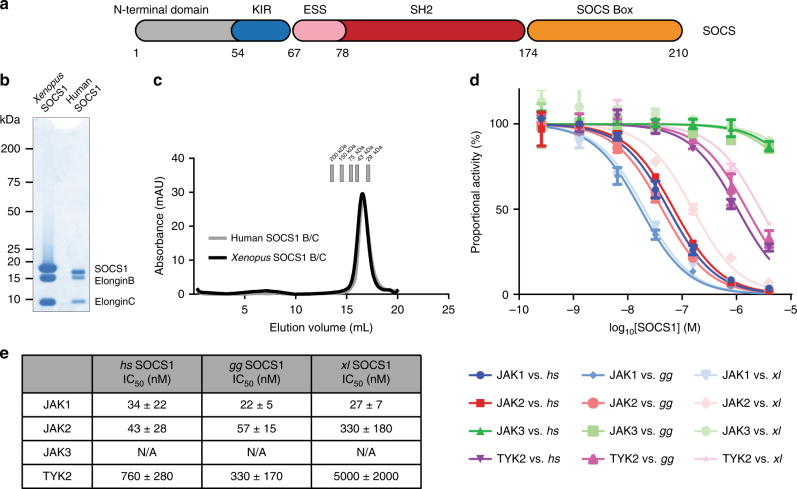
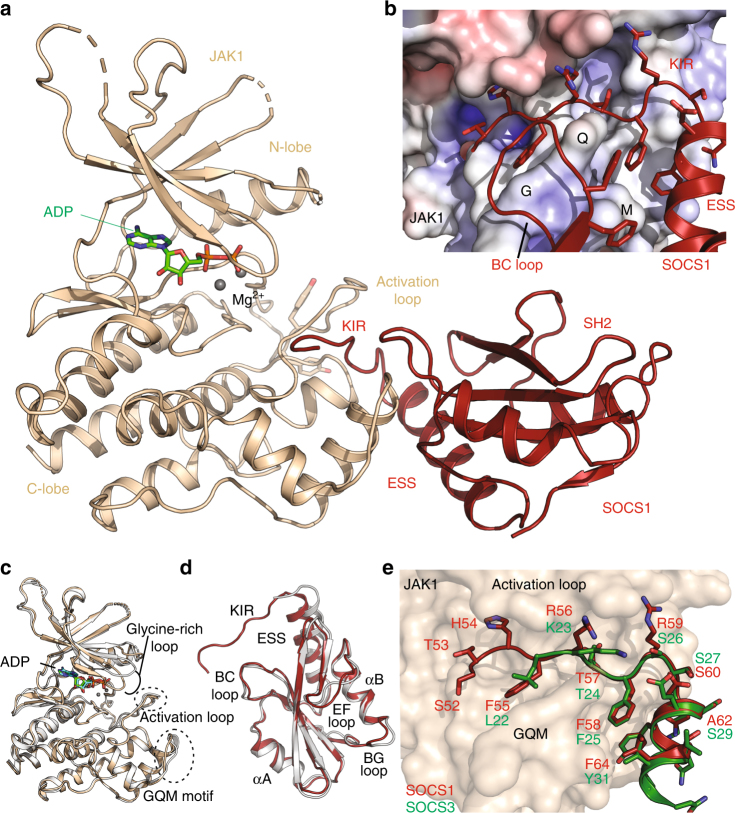
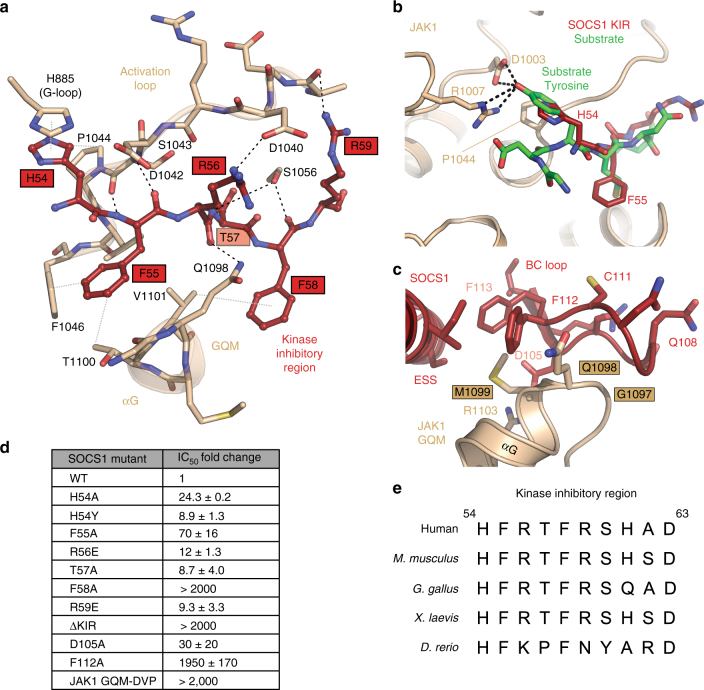
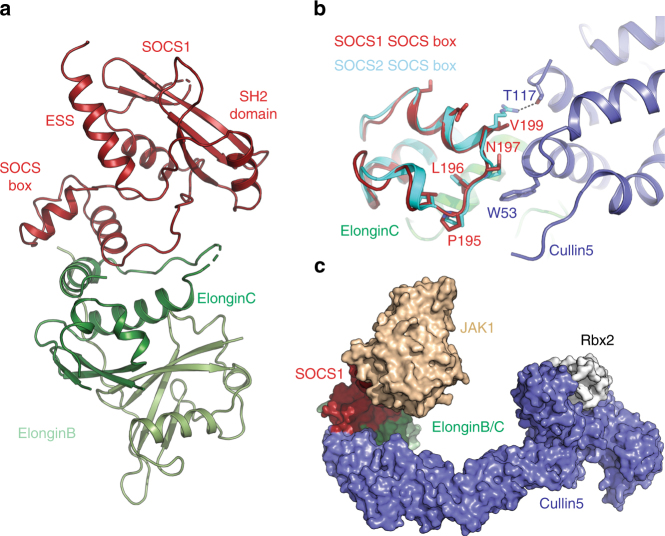
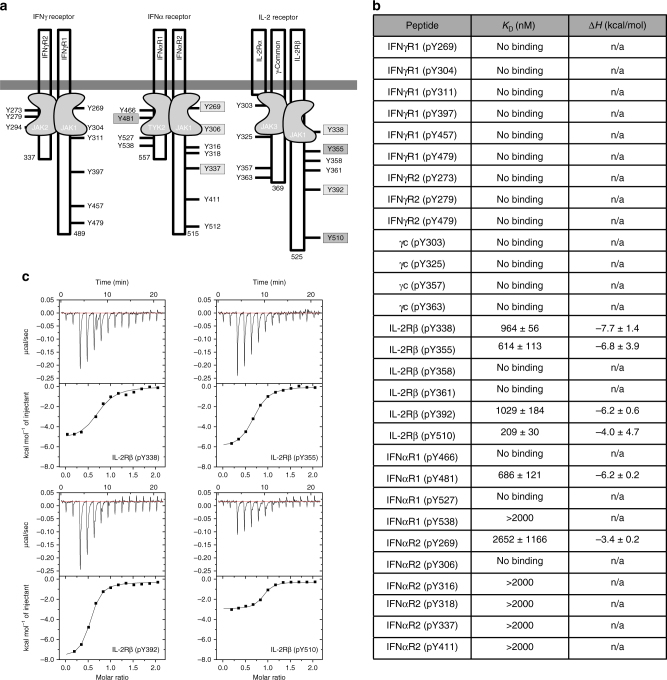
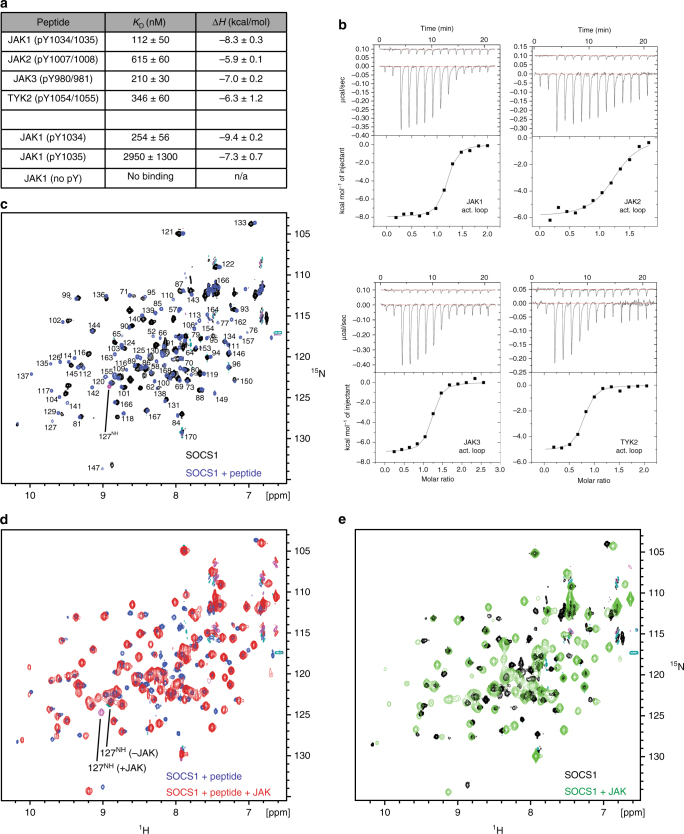
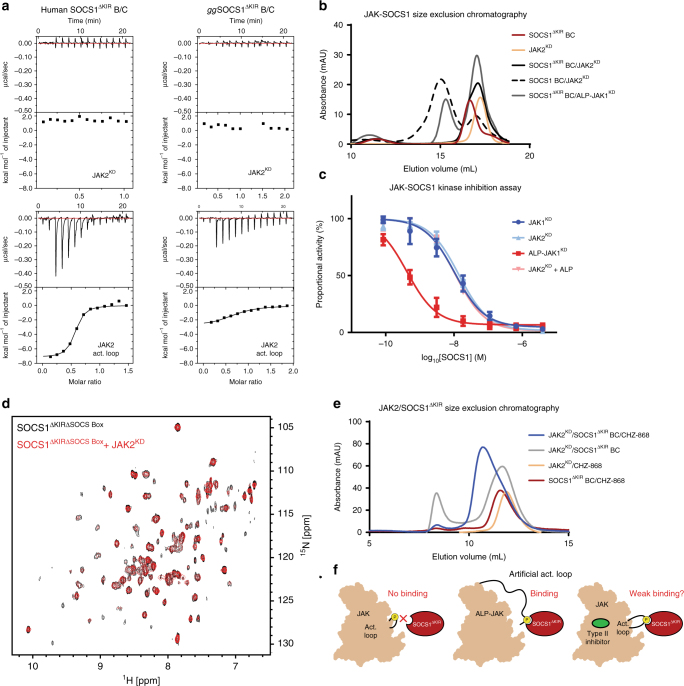
The SOCS family of proteins are negative-feedback inhibitors of signalling induced by cytokines that act via the JAK/STAT pathway. SOCS proteins can act as ubiquitin ligases by recruiting Cullin5 to ubiquitinate signalling components; however, SOCS1, the most potent member of the family, can also inhibit JAK directly. Here we determine the structural basis of both these modes of inhibition. Due to alterations within the SOCS box domain, SOCS1 has a compromised ability to recruit Cullin5; however, it is a direct, potent and selective inhibitor of JAK catalytic activity. The kinase inhibitory region of SOCS1 targets the substrate binding groove of JAK with high specificity and thereby blocks any subsequent phosphorylation. SOCS1 is a potent inhibitor of the interferon gamma (IFNγ) pathway, however, it does not bind the IFNγ receptor, making its mode-of-action distinct from SOCS3. These findings reveal the mechanism used by SOCS1 to inhibit signalling by inflammatory cytokines.
Overview
The claims and statistics of this paper haven’t been checked yet.
Free: it reads the open-access text and checks the first 5 claims that cite a source we can check. Create a free account to check every claim.
Integrity signals
Registry
Cites
Statistics
Figures
Verification
Claims the paper makes
The claims and statistics of this paper haven’t been checked yet.
Free: it reads the open-access text and checks the first 5 claims that cite a source we can check. Create a free account to check every claim.
Claims other papers make about this one
Each is checked against this paper’s own text: does it say what the citing paper says it does?
The source backs part of the claim, not all of it — or backs it for a different population, condition or comparison.
In the citing paper
“Targeting SOCS1, a negative regulator of JAK/STAT signaling in T cells, showed enhanced T cell clearance comparable to CBLB (Liau et al., 2018).”
From Genome-wide CRISPR Screens in Primary Human T Cells Reveal Key Regulators of Immune Function (2018) · cites this paper as Liau et al., 2018
Experimental — accuracy not yet measuredThe source backs part of the claim, not all of it — or backs it for a different population, condition or comparison.
In the citing paper
“Ablation of TCEB2, a binding partner of SOCS1, also improved tumor clearance, suggesting that the SOCS1/TCEB2 complex restrains T cell responses and is a potential target for immunotherapy (Ilangumaran et al., 2017; Kamizono et al., 2001; Liau et al., 2018).”
From Genome-wide CRISPR Screens in Primary Human T Cells Reveal Key Regulators of Immune Function (2018) · cites this paper as Liau et al., 2018
Experimental — accuracy not yet measuredThe check wasn’t confident either way, so it gives no verdict — never disputed.
In the citing paper
“SOCS‐1 is upregulated by Aβ via the JAK2/STAT3 pathway, leading to insulin resistance.”
From BACE1: More than just a β‐secretase (2022) · cites this paper as [95]
Experimental — accuracy not yet measuredIn the citing paper
“TCEB2 (rank 5) complexes with RNF7 (rank 34), CUL5 (rank 162), and SOCS1 (rank 3), a key suppressor of JAK/STAT signaling in activated T cells (Kamura et al., 1998; Liau et al., 2018).”
From Genome-wide CRISPR Screens in Primary Human T Cells Reveal Key Regulators of Immune Function (2018) · cites this paper as Liau et al., 2018
In the citing paper
“Insulin sensitivity is also affected by Aβ‐mediated upregulation of SOCS‐1, an inhibitor of the interferon‐gamma pathway.”
From BACE1: More than just a β‐secretase (2022) · cites this paper as [95]
Self-check
Percentages, sums and reported differences re-computed from the paper’s own numbers.
The self-check needs the paper’s full text.
Citations
Cites
Features and development of Coot
Emsley, P., Lohkamp, B., Scott, W. G., & Cowtan, K. (2010) · Acta Crystallographica Section D Biological Crystallography · doi:10.1107/s0907444910007493 · Cited by 29,915
PHENIX : a comprehensive Python-based system for macromolecular structure solution
Adams, P. D., Afonine, P. V., Bunkóczi, G., Chen, V. B., Davis, I. W., Echols, N., Headd, J. J., Hung, L.-W., Kapral, G. J., Grosse-Kunstleve, R. W., et al. (2010) · Acta Crystallographica Section D Biological Crystallography · doi:10.1107/s0907444909052925 · Cited by 23,716
Phaser crystallographic software
McCoy, A. J., Grosse-Kunstleve, R. W., Adams, P. D., Winn, M. D., Storoni, L. C., & Read, R. J. (2007) · Journal of Applied Crystallography · doi:10.1107/s0021889807021206 · Cited by 20,612
Vogelstein, B., Papadopoulos, N., Velculescu, V. E., Zhou, S., Diaz, L. A., & Kinzler, K. W. (2013) · Science · doi:10.1126/science.1235122 · Cited by 7,863
PHENIX: a comprehensive Python-based system for macromolecular structure solution
Adams, P. D., Afonine, P. V., Bunkóczi, G., Chen, V. B., Davis, I. W., Echols, N., Headd, J. J., Hung, L.-W., Kapral, G. J., Grosse-Kunstleve, R. W., et al. (2012) · International Tables for Crystallography · doi:10.1107/97809553602060000865 · Cited by 7,334
IFN-γ–related mRNA profile predicts clinical response to PD-1 blockade
Ayers, M., Lunceford, J., Nebozhyn, M., Murphy, E., Loboda, A., Kaufman, D. R., Albright, A., Cheng, J. D., Kang, S. P., Shankaran, V., et al. (2017) · Journal of Clinical Investigation · doi:10.1172/jci91190 · Cited by 3,788
Mutations Associated with Acquired Resistance to PD-1 Blockade in Melanoma
Zaretsky, J. M., Garcia-Diaz, A., Shin, D. S., Escuin-Ordinas, H., Hugo, W., Hu-Lieskovan, S., Torrejon, D. Y., Abril-Rodriguez, G., Sandoval, S., Barthly, L., et al. (2016) · New England Journal of Medicine · doi:10.1056/nejmoa1604958 · Cited by 3,237
Culture Medium for Enterobacteria
Neidhardt, F. C., Bloch, P. L., & Smith, D. F. (1974) · Journal of Bacteriology · doi:10.1128/jb.119.3.736-747.1974 · Cited by 2,958
Integration, scaling, space-group assignment and post-refinement
Kabsch, W. (2010) · Acta Crystallographica Section D Biological Crystallography · doi:10.1107/s0907444909047374 · Cited by 2,528
A family of cytokine-inducible inhibitors of signalling
Starr, R., Willson, T. A., Viney, E. M., Murray, L. J. L., Rayner, J. R., Jenkins, B. J., Gonda, T. J., Alexander, W. S., Metcalf, D., Nicola, N. A., et al. (1997) · Nature · doi:10.1038/43206 · Cited by 2,066
Self-citation
Cited by
Items 301–400 of 449
Pang, E. Z., Zhao, B., Flowers, C., Oroudjeva, E., Winter, J. B., Pandey, V., Sawaya, M. R., Wohlschlegel, J. A., Loo, J. A., Rodríguez, J. A., et al. (2025) · Journal of Biological Chemistry · doi:10.1016/j.jbc.2025.110735 · Cited by 5
Ren, Y., Wang, Y., Fang, L., Ma, M., Ge, L., Su, C., Xin, L., He, J., Yang, J., & Liu, X. (2022) · Cancer Medicine · doi:10.1002/cam4.5251 · Cited by 5
KIAA0317 regulates SOCS1 stability to ameliorate colonic inflammation
Lockwood, K. C., Lear, T., Rajbhandari, S., McKelvey, A. C., Dunn, S. R., Boudreau, Á. N., Liu, Y., & Chen, B. B. (2023) · FEBS Journal · doi:10.1111/febs.16780 · Cited by 5
Masyeni, S., Kuntaman, K., Aryati, A., Sofro, M. A. U., Hadi, U., Mastutik, G., Purnomo, W., Santosa, A., Iqhrammullah, M., Yohan, B., et al. (2023) · Narra J · doi:10.52225/narra.v3i2.167 · Cited by 6
“Previously, SOCS-1 is reported to be more potent inhibitor of JAKs compared to SOCS-3 [19].”
BackgroundAdvances in research on potential inhibitors of multiple myeloma
Tang, G., Huang, S., Luo, J., Wu, Y., Zheng, S., Tong, R., Zhong, L., & Shi, J. (2023) · European Journal of Medicinal Chemistry · doi:10.1016/j.ejmech.2023.115875 · Cited by 5
Wang, Y., Wu, S., Song, Z., Yu, Y., Li, Y., & Li, J. (2024) · Pathology - Research and Practice · doi:10.1016/j.prp.2024.155564 · Cited by 5
Comparing Bayesian-Based Reconstruction Strategies in Topology-Based Pathway Enrichment Analysis
Wang, Y., Li, J., Huang, D., Hao, Y., Li, B., Wang, K., Chen, B., Li, T., & Liu, X. (2022) · Biomolecules · doi:10.3390/biom12070906 · Cited by 6
“Phosphorylated STATs dimerize, ultimately leading to their nuclear translocation and DNA binding to regulate gene expression in the cell nucleus [28], including suppressors of the cytokine signaling (SOCS) family of proteins, which serve as negative feedback inhibitors of JAK-STAT [29].”
BackgroundWu, X., Zhang, Y., Ding, Z., Yin, Y., Peng, M., Wang, J., & Zhu, X. (2023) · Pharmaceutical Biology · doi:10.1080/13880209.2023.2182892 · Cited by 7
“SOCS1, the most potential member of the SOCS family, can be expressed as a negative regulator that binds to multiple signalling proteins or in a secreted form possessing unique immune suppressive functions (Liau et al. 2018).”
BackgroundGenetic variability of molecules involved in the disease pathogenesis in Leishmania infection
Sánchez-Luquez, K., Zerpa, O., Paz-Villarraga, C. A., & Fernández‐Mestre, M. (2020) · Experimental Parasitology · doi:10.1016/j.exppara.2020.108007 · Cited by 5
STAT Signaling in Metabolic Disorders: From Molecular Mechanisms to Therapeutic Implications
Zhang, K., Sang, J., Kan, C., Sheng, S., Sun, X., & Guo, Z. (2026) · Cell Biochemistry and Biophysics · doi:10.1007/s12013-026-02038-8 · Cited by 4
“SOCS1 and SOCS3 are rapidly induced by STATs, directly inhibit JAK activity, and promote proteasomal degradation of signaling components [19, 20].”
Tin, W., Xiao, C., Sun, K., Zhao, Y., Xie, M., Zheng, J., Wang, Y., Liu, S., & Yu, U. (2024) · Frontiers in Oncology · doi:10.3389/fonc.2024.1427776 · Cited by 4
Protein Kinases as Mediators for miRNA Modulation of Neuropathic Pain
Chang, L. M., Čok, Z., & Yu, L. (2025) · Cells · doi:10.3390/cells14080577 · Cited by 6
“Suppressor of cytokine signaling 1 (SOCS1) inhibits MAPK signaling by indirectly blocking the activation of the upstream kinases, primarily by targeting and inhibiting the JAK family of kinases, which are crucial for the phosphorylation cascade leading to MAPK activation [124].”
Novel targets for treating neurodegenerative diseases: The PKM2-STAT3-hnRNPA1 feedback loop
Ye, P., Li, Z., & Jiang, H. (2025) · Pharmacological Research · doi:10.1016/j.phrs.2025.107840 · Cited by 4
Rewired type I IFN signaling is linked to age-dependent differences in COVID-19
Petrov, L., Brumhard, S., Wisniewski, S., Georg, P., Hillus, D., Hiller, A. L., Astaburuaga-García, R., Blüthgen, N., Wyler, E., Vogt, K., et al. (2025) · Cell Reports Medicine · doi:10.1016/j.xcrm.2025.102285 · Cited by 6
SOCS1 depletion drives osteosarcoma stemness and chemoresistance by suppressing ACTN4 degradation
Feng, J., Wei, X., Chen, L., Yang, H.-Z., Li, Y., Wang, J., Liu, Y., Xu, Y., Zhao, Q.-Q., Li, P., et al. (2025) · Acta Pharmacologica Sinica · doi:10.1038/s41401-025-01650-3 · Cited by 4
“It has been reported that SOCS1 has an important function in facilitating the ubiquitination of protein substrates such as JAK, IRS, and Val by assembling an Elongin B/C E3 ligase complex and promoting their subsequent proteasomal degradation [36, 37, 44, 55].”
Evolving landscape of small-molecule immunotherapeutics for uveitis: a scoping review
Yim, T. S. Y., Cifuentes‐González, C., Agrawal, R. V., & Oon, H. H. B. (2025) · Drug Discovery Today · doi:10.1016/j.drudis.2025.104515 · Cited by 6
Li, X., Zheng, J., Zhang, G., Li, P., Dong, M., Liu, Q., & Ren, L. (2025) · Transboundary and Emerging Diseases · doi:10.1155/tbed/3468674 · Cited by 4
“Concurrently, SOCS1 can inhibit the phosphorylation of JAK1/Tyk2, thereby tempering IFN signal transduction [53].”
Liu, X., Cheng, J., Tang, M., Liao, C., Yang, Y., Luo, M., Xu, L., Zhong, X., Ma, Q., & Guo, X. (2025) · European Journal of Pharmaceutical Sciences · doi:10.1016/j.ejps.2025.107051 · Cited by 4
Data-driven projections of candidate enhancer-activating SNPs in immune regulation
Hoffmann, M., Vaz, T. A. G., Chhatrala, S., & Hennighausen, L. G. (2025) · BMC Genomics · doi:10.1186/s12864-025-11374-7 · Cited by 5
Zhao, H., Zhu, H., Zhang, Y., Ding, Y., Feng, R., Li, J., Ma, T., & Huang, C. (2023) · Inflammation · doi:10.1007/s10753-023-01831-4 · Cited by 4
Demethylation of SOCS1 mediates its abnormally high expression in ovarian cancer
Li, X., Kong, C., Fan, Y.-C., Liu, J., Lu, W., Meng, C., Li, A., Zhai, A., Yan, B., Song, W., et al. (2019) · Oncology Letters · doi:10.3892/ol.2019.10451 · Cited by 4
“As a major signal transduction pathway, the JAK/STAT signaling pathway serves a notable role in numerous biological reactions (3).”
BackgroundLi, X., Xia, Q., Meng, C., Wu, H., Huang, H., Qian, J., Li, A., Zhai, A., Kao, W., Song, W., et al. (2020) · Scandinavian Journal of Immunology · doi:10.1111/sji.12974 · Cited by 4
Expression of PVRL4, a molecular target for cancer treatment, is transcriptionally regulated by FOS
Nanamiya, T., Takane, K., Yamaguchi, K., Okawara, Y., Arakawa, M., Saku, A., Ikenoue, T., Fujiyuki, T., Yoneda, M., Kai, C., et al. (2023) · Oncology Reports · doi:10.3892/or.2023.8676 · Cited by 4
Emerging Therapeutic Targets in Rheumatoid Arthritis: Focusing on HIF-1α, Nrf2, STATs, and RORγt
Prajapati, P. S., Singh, P. K., & Doshi, G. (2025) · Current Drug Targets · doi:10.2174/0113894501372670250408074908 · Cited by 5
Demirkaya, D. B., Colak, B. C., Sefer, A. P., & Barış, S. (2025) · Expert Review of Clinical Immunology · doi:10.1080/1744666x.2025.2543475 · Cited by 4
“SOCS1 binds to the SH2 domain of JAKs, disrupting STAT recruitment and phosphorylation, thereby attenuating down-stream transcriptional responses [44–46].”
Respiratory viruses activate autophagy via the IFN-STAT1/STAT5B-SOCS1 axis
Hunszinger, V., Dürr, H., Engels, Z., Hoenigsperger, H., Koepke, L., Klute, S., Fischer, J.-R., Ott, B., Graf, A., Krebs, S., et al. (2026) · PLoS Pathogens · doi:10.1371/journal.ppat.1014414 · Cited by 3
“In addition, SOCS1 plays a major role in T cell homeostasis [57].”
Syringic acid suppresses inflammation by upregulation of SOCS3
Khatun, A., Patra, S., Chowdhury, S., Saha, J., Goswami, R., Pradhan, S., Ghosh, K., & Chakrabarti, S. (2025) · Journal of Neuroimmunology · doi:10.1016/j.jneuroim.2025.578813 · Cited by 3
Viral mimicry may help explain immunogenic cell death
Levine, M. S., Li, J., Ehrlich, L. I. R., DePinho, R. A., Iverson, B. L., & Sessler, J. L. (2026) · Proceedings of the National Academy of Sciences · doi:10.1073/pnas.2537547123 · Cited by 5
“…contributes to host defense and tissue injury during viral infection, Socs1 and Socs3, genes that act as negative regulators of cytokine signaling (37), IL10, a cytokine that regulates immune responses by sup pressing inflammation (38), and Nfkbia that acts as a regulator for Nuclear factor -…”
JAK-STAT signaling pathway in cancer: from molecular mechanisms to clinical intervention
Zhang, X., Li, P., Ma, F., Wang, T., Chu, Q., Wei, S., Xue, C., Wang, Z., & Lu, J. J. (2026) · Molecular Cancer · doi:10.1186/s12943-026-02692-9 · Cited by 5
“These include direct inhibition of JAK catalytic activity, competition for phosphorylated receptor docking sites, and recruitment of ubiquitin ligase complexes that promote the degradation of JAK and STAT proteins [64–67].”
Chander, A., Zaim, S. R., Dillon, M. A., Genge, P. C., Moss, N., McGrath, P. I., Kopp, M. S., Lee, K. J., Kuan, E. L., Reading, J., et al. (2026) · Cell Press Blue · doi:10.1016/j.cpblue.2026.100087 · Cited by 3
CAR T-Cell Therapy in Solid Tumors: Current Review and Future Perspectives
Zheng, J. (2023) · Highlights in Science Engineering and Technology · doi:10.54097/hset.v54i.9841 · Cited by 4
Suppressor of Cytokine Signaling 1 Haploinsufficiency
Liu, M., Hsu, E., Du, Y., & Lee, P. Y. (2023) · Rheumatic Disease Clinics of North America · doi:10.1016/j.rdc.2023.06.003 · Cited by 4
Paeiz, H., Salehi, Z., Mashayekhi, F., Saedi, H. S., & Mirzanejad, L. (2023) · Breast Cancer Research and Treatment · doi:10.1007/s10549-023-07070-3 · Cited by 3
“In addition, it down-regulates cytokine signaling by inhibiting the JAK/ STAT signaling pathway [11].”
BackgroundKinases Inhibitors as New Therapeutic Opportunities in Cutaneous T-Cell Lymphoma
Valero-Dıáz, S., Amato, C., & Casar, B. (2024) · Kinases and Phosphatases · doi:10.3390/kinasesphosphatases2030016 · Cited by 3
Cai, Y., Shen, A., Liu, H., Liu, C., Xu, W., & Jia, R. (2025) · Marine Environmental Research · doi:10.1016/j.marenvres.2025.107140 · Cited by 3
Huang, Y., Ruan, R., Fang, Y., Wu, K., Long, Y., Zhang, R., & He, W. (2021) · International Journal of Molecular Medicine · doi:10.3892/ijmm.2021.5017 · Cited by 3
“Among the SOcS family of proteins, SOcS1 is the most potent inhibitor of proinflammatory cytokine signaling (15).”
Ganjali, F., Asri, N., Rostami‐Nejad, M., Hashemi, M., Ainy, E., Masotti, A., & Aghdaei, H. A. (2023) · Molecular Biology Reports · doi:10.1007/s11033-023-08394-5 · Cited by 3
Shimamura, Y., Noaki, R., Oura, Y., Ichikawa, K., Kan, T., & Masuda, S. (2023) · Microorganisms · doi:10.3390/microorganisms11041039 · Cited by 3
“SOCS1 inhibits insulin action by blocking tyrosine phosphorylation of insulin receptor substrate 1 [12].”
BackgroundInfluentialComputational simulation of JAK / STAT signaling in somatic versus germline stem cells
Li, W. X. (2023) · Developmental Dynamics · doi:10.1002/dvdy.684 · Cited by 3
“36 The reversible reaction is described in (Equation 6) with forward and reverse rate constants k 6 and k 6 r .”
BackgroundRane, S. S., Shellard, E., Adamson, A. D., Eyre, S., & Warren, R. B. (2024) · Experimental Dermatology · doi:10.1111/exd.15180 · Cited by 4
Abbasifard, M., Ebrahimi, H. O., Sharifi, G. T. K., Bahrehmand, F., & Bagheri‐Hosseinabadi, Z. (2024) · Human Immunology · doi:10.1016/j.humimm.2024.111208 · Cited by 3
Morichika, K., Karube, K., Sakihama, S., Watanabe, R., Kawaki, M., Nishi, Y., Nakachi, S., Okamoto, S., Takahara, T., Satou, A., et al. (2021) · The American Journal of Surgical Pathology · doi:10.1097/pas.0000000000001691 · Cited by 3
Santharam, M. A., Shukla, A., Ihsan, A. U., Cloutier, M., Lévesque, D., Ramanathan, S., Boisvert, F., & Ilangumaran, S. (2020) · Biochimie · doi:10.1016/j.biochi.2021.01.012 · Cited by 3
Douglas, K. R., Logan, S. M., & Storey, K. B. (2022) · Cryobiology · doi:10.1016/j.cryobiol.2022.08.003 · Cited by 4
Role of miRNAs in the Chikungunya virus replication and pathogenesis
Nangare, R. A., Gajbhiye, V., & Karpe, Y. A. (2024) · Frontiers in Virology · doi:10.3389/fviro.2024.1386580 · Cited by 2
Identification and Ranking of Binding Sites from Structural Ensembles: Application to SARS-CoV-2
Lazou, M., Bekar-Cesaretli, A. A., Vajda, S., & Joseph‐McCarthy, D. (2024) · Viruses · doi:10.3390/v16111647 · Cited by 3
Brouwer, M. A. E., Karami, Z., Keating, S. T., Vrijmoeth, H. D., Lemmers, H., Dijkstra, H., van de Veerdonk, F. L., Lupșe, M. S., ter Hofstede, H. J. M., Netea, M. G., et al. (2025) · Ticks and Tick-borne Diseases · doi:10.1016/j.ttbdis.2025.102442 · Cited by 3
Immunoregulatory Microenvironment in the Elderly Skin
Shimizu, Y., Koguchi‐Yoshioka, H., Kubo, T., Matsumura, Y., Matsuda, S., Tanemura, A., Nomori, M., Otani, N., Taminato, M., Tomita, K., et al. (2025) · JID Innovations · doi:10.1016/j.xjidi.2025.100401 · Cited by 2
Loss of Cullin 5 in myeloid cells protects against autoimmune neuroinflammation
Ortega-Burgos, Y., Dar, A. A., Tomishima, S. A., Guha, I., Brien, C. O., Porter, N., Bennett, F. C., & Oliver, P. M. (2025) · Frontiers in Immunology · doi:10.3389/fimmu.2025.1611818 · Cited by 2
Cugudda, A., & Marasco, D. (2025) · Frontiers in Medicine · doi:10.3389/fmed.2025.1708293 · Cited by 2
Zheng, Z., Zhao, F., Zhao, S., Bai, Y., Shi, L., Zhu, B., Huang, X., Zheng, Y., Zhao, Q., Wen, Y., et al. (2025) · International Journal of Biological Macromolecules · doi:10.1016/j.ijbiomac.2025.150018 · Cited by 2
Ward, A. C. (2026) · Biomolecules · doi:10.3390/biom16020219 · Cited by 3
“…regulators SOCS1 and SOCS3, which are induced by IL-7 and act via direct inhibition of JAK activity and proteasomal degradation of receptor signaling components [17], and the activity of a variety of phosphatases [18], as well as clathrin-mediated internalization of the receptor complex [19].”
Smith, A. J., Dhakal, S., Challagulla, A., Nair, K. K., Weiss, E., Jenkins, K. A., & Wynne, J. W. (2026) · Developmental & Comparative Immunology · doi:10.1016/j.dci.2026.105561 · Cited by 2
A comprehensive review of T-cell lymphoma following CAR T-cell immunotherapy
Shi, W.-P. J., & Wang, H.-Y. (2026) · Blood Advances · doi:10.1182/bloodadvances.2026021166 · Cited by 2
“57 Although SH2B3 mutation was reported in a case of indolent natural killer cell LPD of the GI tract 58 and T-large granular lymphocytosis, 59 this was the first reported SH2B3 mutation in ITCL.”
Antiviral innate immunity in myocarditis: mechanisms and emerging therapeutics
Hammons, C., Mohanram, A., Nguyen, P. T., Lu, W., Jacobs, B., Li, X. C., Zhang, Z., & Xing, J. (2026) · Experimental & Molecular Medicine · doi:10.1038/s12276-026-01822-z · Cited by 2
“Experimental evidence suggests that SOCS1 upregulation can dampen IFN-γ signaling and worsen early viral control in the heart 197,199 (Fig.”
Mechanisms of Lymphomagenesis in Celiac Disease: Lessons for Therapy
Cording, S., Berrabah, S., Lhermitte, L., Malamut, G., & Cerf–Bensussan, N. (2022) · Springer eBooks · doi:10.1007/978-3-030-90142-4_3 · Cited by 3
Guo, M., Zhang, L., Wang, H., Zhou, Q., Zhu, X., Fu, X., Yang, J., Liu, S., Guo, D., & Zhang, B. (2023) · Current Issues in Molecular Biology · doi:10.3390/cimb45070353 · Cited by 2
“SOCS1 was initially thought to be a potent inhibitor of the JAK-STAT pathway, which not only has a negative role in downregulating JAK signaling, but can also modulate other signaling pathways that can stimulate STAT activation, and is involved in the progression of various cancers [41,42].”
BackgroundBioinformatics analysis of potential ferroptosis and non-alcoholic fatty liver disease biomarkers
Yu, X., Yang, K., Fang, Z., Zhu, T., Liu, C., Guo, Z., Dong, Z., & Liu, C. (2024) · General Physiology and Biophysics · doi:10.4149/gpb_2024017 · Cited by 2
Liu, T., Shao, Q., Cui, Z., Qing, P., Gao, P., Zhang, Y., Zhou, L., Ge, X., Guo, X., Han, J., et al. (2024) · Journal of Virology · doi:10.1128/jvi.01132-24 · Cited by 3
SOCS1 deficiency—crossroads of autoimmunity and autoinflammation—two case reports
Trojovsky, K., Seidl, M., Babor, F., Ehl, S. R., Lee‐Kirsch, M. A., Friedt, M., Laws, H.-J., Naami, N., Oommen, P. T., & Ghosh, S. (2025) · Frontiers in Pediatrics · doi:10.3389/fped.2024.1516017 · Cited by 2
The Ability of SOCS1 to Cross-Regulate GM-CSF Signaling is Dose Dependent
Bidgood, G. M., Keating, N., Guzman, L. G. M., Li, K., Leong, E., Kueh, A. J., Babon, J. J., Hockings, C., Doggett, K., & Nicholson, S. E. (2025) · Journal of Interferon & Cytokine Research · doi:10.1089/jir.2024.0140 · Cited by 2
Self-citationRanti, D. L., Wang, A. Y., Daza, J., Bieber, C., Salomé, B., Merritt, E., Cavallo, J. A., Hegewisch-Solloa, E., Mace, E. M., Farkas, A. M., et al. (2022) · bioRxiv (Cold Spring Harbor Laboratory) · doi:10.1101/2022.03.06.483198 · Cited by 4
“Whereas STAT3 signals are critical for the production of IL-6 and IL10, Suppressor of Cytokine Signaling Protein-1 (SOCS1) plays a critical role in negative feedback inhibition to shut down inflammatory immune responses through targeting JAK1 and JAK2 for proteasomal degradation (34-36).”
BackgroundCao, T., Hong, L., Yu, D., Shen, J., Jiang, L., Hu, N., & He, S. (2024) · Heliyon · doi:10.1016/j.heliyon.2024.e24402 · Cited by 1
Caldirola, M. S., Daiana, E., Raccio, A. C. G., Garcia, A., Bernacchia, A., Medín, M., Gaillard, M. I., & Giovanni, D. D. (2024) · Frontiers in Pediatrics · doi:10.3389/fped.2024.1423858 · Cited by 2
Huang, R., Zhang, B., Ye, W., Tang, Z., & Zheng, Q. (2024) · Journal of Interferon & Cytokine Research · doi:10.1089/jir.2024.0110 · Cited by 1
“SOCS1 functions as a tumor suppressor in diverse cancers (Beaurivage et al., 2016; Liau et al., 2018).”
Cancer therapies targeting the STING pathway
Karimova, A. O., Sadovskaya, Y. O., & Солопова, О. Н. (2025) · Russian Journal of Oncology · doi:10.17816/onco689194 · Cited by 1
ARAP2 regulates responses to interferon-gamma by restricting SOCS1
Keating, N., Doggett, K., Bidgood, G. M., Meza Guzman, L. G., Dagley, L. F., Li, K., Williams, B. E., Gabrielyan, A., Alvarado, C., Broomfield, B. J., et al. (2025) · Cell Reports · doi:10.1016/j.celrep.2025.116667 · Cited by 1
Self-citationmiR-221-3p Exacerbates Obesity-Induced Insulin Resistance by Targeting SOCS1 in Adipocytes
Li, N., Zhang, L., Guo, Q., Yang, X., Liu, C., & Zhou, Y. (2025) · Metabolites · doi:10.3390/metabo15090572 · Cited by 1
“SOCS1 has been reported as a key cytokine in the immune response [42].”
Palmeri, S., Prigione, I., Schena, F., Jeanpierre, M., Bertoni, A., Penco, F., Bocca, P., Zotto, G. D., Massucco, S., Venturi, C. B., et al. (2025) · Journal of Clinical Immunology · doi:10.1007/s10875-025-01958-z · Cited by 1
Nagase, S., Nakamura, N., Kikuti, Y. Y., Carreras, J., Tanigaki, Y., Orita, M., Ito, A., Ikoma, H., Kawada, H., & Masugi, Y. (2025) · Modern Pathology · doi:10.1016/j.modpat.2025.100950 · Cited by 1
Wang, T., Lin, P., Wang, Y., Afonso, L. O. B., & Feng, J. (2026) · Fish & Shellfish Immunology · doi:10.1016/j.fsi.2026.111138 · Cited by 1
Propionate-engineered probiotics reduce radiation-induced intestinal damage
Gao, X., Wu, J., Ji, K., Gao, M., Guo, Y., Wang, L., Jia, X., Lu, X., Zhu, Z., Wang, Q., et al. (2026) · Bioresources and Bioprocessing · doi:10.1186/s40643-026-01020-9 · Cited by 1
“Through this negative feedback mechanism, SOCS1 prevents excessive signal activation and maintains immune balance (Liau et al. 2018; Philips et al. 2022).”
Wang, Y., Wang, Y., Wu, R., Luo, H., Li, Y., Chen, X., Liu, K., Dong, Z., & Liu, H. (2026) · Genes & Diseases · doi:10.1016/j.gendis.2026.102096 · Cited by 1
Liu, L., Duan, X. L., Li, M., Gu, Y., Zhao, J.-H., Si, K., Wang, N., Chen, X., Yin, Z., Li, L., et al. (2026) · Frontiers in Pharmacology · doi:10.3389/fphar.2026.1730503 · Cited by 1
“By occupying the ADP-binding pocket, a small molecule inhibitor obstructs this necessary conformational reset and thus prevents the initiation of a new phosphorylation cycle (Kavanagh et al., 2022).”
InfluentialDiaz-del-Olmo, I., O’Sullivan, P. A., Wilson, T. S., Majstorović, A., Miller, G., Shizukuishi, S., Stypulkowska, A., Panagi, I., Grzymajło, K., Ogawa, M., et al. (2026) · Molecular Cell · doi:10.1016/j.molcel.2026.04.012 · Cited by 1
Pan, J., Li, B., Lin, R., Fang, C., Lau, L., Hong, Z., & Chen, Y. (2026) · International Journal of Oncology · doi:10.3892/ijo.2026.5932 · Cited by 3
“The result is a brief STAT1 activation pulse that fails to maintain antigen processing and loading programs (45,46).”
Epigenetics of T cell-mediated immunological responses
Biswas, B. K., & Goswami, R. (2023) · Elsevier eBooks · doi:10.1016/b978-0-12-823931-5.00007-4 · Cited by 1
Yang, C., Li, Y., Yang, Y., Ni, Q., Zhang, Z., Chai, Y., & Li, J. (2023) · Angewandte Chemie · doi:10.1002/ange.202312603 · Cited by 1
Weissinger, S. E., Zahn, M., Marienfeld, R. B., Tessmer, C., Moldenhauer, G., & Mӧller, P. (2021) · European Journal Of Haematology · doi:10.1111/ejh.13620 · Cited by 1
He, B., Wang, W., Sun, C., Yang, T., Li, H., Chen, X., Liang, H., Song, H., Wang, Y., & Wang, Y. (2021) · Journal of Integrative Neuroscience · doi:10.31083/j.jin2003062 · Cited by 1
Gluchowski, M., Yu, X., Abrenica, B., Yao, S., Kimani, J., Douville, R. N., Ball, T. B., & Su, R. (2022) · Viruses · doi:10.3390/v14030471 · Cited by 1
“Interestingly, while SOCS1 can regulate IRF-1 [91], SOCS1 was shown to be regulated by IRF-1 as well [74,96].”
BackgroundSelf-citationInterferón-gamma: vías de señalización y sus implicaciones en el cáncer
Zamora-Salas, S. X., Robles-Villarruel, M. L., Macías‐Silva, M., Álvarez-Sánchez, M. E., & Tecalco-Cruz, Á. C. (2023) · TIP Revista Especializada en Ciencias Químico-Biológicas · doi:10.22201/fesz.23958723e.2023.533 · Cited by 2
Jhala, G., Krishnamurthy, B., Brodnicki, T. C., Ge, T., Akazawa, S., Selck, C., Trivedi, P., Pappas, E. G., Mackin, L., Principe, N., et al. (2021) · SSRN Electronic Journal · doi:10.2139/ssrn.3919948 · Cited by 1
Primary Immune Regulatory Disorders
Chandrakasan, S., Uzel, G., Lucas, C. L., & Snow, A. L. (2024) · Wiley eBooks · doi:10.1002/9781683674023.ch68 · Cited by 1
Lim, T. K. Y., Ritoux, A., Paine, L. W., Ferguson, L., Abdul, T., Grundy, L. J., & Smith, E. S. J. (2025) · eLife · doi:10.7554/elife.105978.2 · Cited by 1
Connective tissue growth in a mouse model of Kosaki overgrowth syndrome is limited by STAT1Preprint
Kim, J. H., Kwon, H. R., Berry, W. L., & Olson, L. E. (2026) · bioRxiv (Cold Spring Harbor Laboratory) · doi:10.64898/2026.04.09.717535 · Cited by 1
“As a consequence of this mechanism, PDGFR b -induced STAT activation might be resistant to negative feedback mechanisms that depend on inhibition of JAK activity, for instance via suppressors of cytokines signaling (SOCS) 28 .”
ARAP2 regulates responses to interferon-gamma by restricting SOCS1
Keating, N., Doggett, K., Bidgood, G. M., Meza Guzman, L. G., Dagley, L. F., Li, K., Gabrielyan, A., Alvarado, C., Williams, B. E., Broomfield, B. J., et al. (2025) · doi:10.1101/2025.04.28.650977 · Cited by 1
Self-citationMulti-Scale Modeling of the Innate Immune System: A Dynamic Investigation into Pathogenic Detection
Gregg, R. W. (2020) · D-Scholarship@Pitt (University of Pittsburgh)
Weissinger, S. E., Zahn, M., Marienfeld, R. B., Tessmer, C., Moldenhauer, G., & Mӧller, P. (2021) · European Journal Of Haematology · doi:10.1111/ejh.13730
Garg, S., Kumar, S., Anand, A., Menon, T., Sharma, N., Singh, J., Chawla, S., & Das, A. (2022) · Vegetos · doi:10.1007/s42535-021-00329-4
Laboratory Findings for the Diagnosis of Celiac Disease Related Complications
Brouzes, C., Cording, S., Bensalah, A., Asnafi, V., Cerf–Bensussan, N., & Lhermitte, L. (2022) · Springer eBooks · doi:10.1007/978-3-030-90142-4_7
Мултисистемен инфламаторен синдром след КОВИД-19 в детска възраст и генетична предразположеност
Ganeva, M. (2022) · Редки болести и лекарства сираци · doi:10.36865/2022.v13i2.163
Author response: The meningeal transcriptional response to traumatic brain injury and aging
Bolte, A. C., Shapiro, D. A., Dutta, A. B., Feng, W., Bruch, K. R., Kovacs, M. A., Marco, A. R., Ennerfelt, H. E., & Lukens, J. R. (2022) · eLife · doi:10.7554/elife.81154.sa2
Saleem, M., Aden, L. A., Mutchler, A. P., Basu, C., Ertuğlu, L. A., Sheng, Q., Park, J., Ishimwe, J., Laffer, C. L., Elijovich, F., et al. (2023) · Research Square · doi:10.21203/rs.3.rs-2908485/v1 · Cited by 1
The role of miRNAs in the development of cholangiopathies. Part 2
Абатуров, А. Е., & Babуch, V. L. (2023) · CHILD`S HEALTH · doi:10.22141/2224-0551.18.5.2023.1619
“Встановлено, що в тканині печінки хворих із АЖШ і клітинах жовчних проток мишей, які індуковані IFN-γ , спостерігається високий рівень експресії miR-155 [11].”
InfluentialAnálise da expressão gênica de monócitos clássicos (CD14++CD16-) de pacientes com artrite reumatoide
Sales, L. P. (2023) · Digital Library of Theses and Dissertations (Universidade de São Paulo) · doi:10.11606/t.5.2023.tde-07022024-134605
Lashkari, M., Kariminik, A., & Banavandi, M. J. S. (2024) · Journal of Kermanshah University of Medical Sciences · doi:10.5812/jkums-145333
Zhu, Y. X., Wong, J., Hilal, T., Maguire, A., Ocal, J., Zellner, K. R., Chen, X., Link, B. K., Habermann, T. M., Maurer, M. J., et al. (2024) · medRxiv · doi:10.1101/2024.11.11.24316310
Microglial Signaling in Health and Disease
Oppenheimer, M. R., Singh, S., Antoine, D., Truitt, B., & Roy, S. (2024) · Springer eBooks · doi:10.1007/978-3-031-68237-7_8
Metadata
- Authors
- Liau, N. P. D., Laktyushin, A., Lucet, I. S., Murphy, J. M., Yao, S., Whitlock, E., Callaghan, K., Nicola, N. A., Kershaw, N. J., & Babon, J. J.
- Affiliations
- The University of Melbourne (AU)
- Corresponding author
- Kershaw, Nadia J.
- Babon, Jeffrey J.
- ORCID
- Venue
- Nature Communications
- Published
- 2018-04-19
- Volume
- 9
- Issue
- 1
- Pages
- 1558-1558
- ISSN
- 2041-1723 (ISSN-L)
- PMC
- PMC5908791
- OpenAlex
- W2801285271
- Cited by
- 456
- References
- 59
- Citations by year
- 2026: 47 · 2025: 70 · 2024: 64 · 2023: 77 · 2022: 65 · 2021: 61 · 2020: 46 · 2019: 18 · 2018: 8
- FWCI
- 12.47
- Type
- journal article
- Language
- en
- Open access
- gold
- doi.org
- Licence
- cc-by
- creativecommons.org/licenses/by/4.0 (tdm)
- creativecommons.org/licenses/by/4.0 (vor)
- Locations
- Nature Communications (publishedVersion, cc-by)
- Europe PMC (PubMed Central) (publishedVersion, other-oa)
- PubMed Central (publishedVersion, cc-by)
- PubMed (publishedVersion)
- Minerva Access (University of Melbourne) (submittedVersion, cc-by)
- RePEc: Research Papers in Economics (submittedVersion)
- DOAJ (DOAJ: Directory of Open Access Journals) (submittedVersion)
- DOAJ (DOAJ: Directory of Open Access Journals) (submittedVersion, cc-by-sa)
- Funders
- Commonwealth Scientific and Industrial Research Organisation
- Australian Synchrotron
- Medical Research Council
- National Health and Medical Research Council (1113577, 1122999, 9000220)
- Cancer Council Victoria (1065180)
- Topics
- Life Sciences › Immunology and Microbiology › Immunology › Cytokine Signaling Pathways and Interactions
- Life Sciences › Biochemistry, Genetics and Molecular Biology › Molecular Biology › Protein Tyrosine Phosphatases
- Life Sciences › Immunology and Microbiology › Immunology › interferon and immune responses
- Keywords
- SOCS1, JAK/STAT signaling, negative feedback regulation, ubiquitination, interferon-gamma signaling, cytokine signaling, SOCS3, protein structure
- MeSH terms
- Suppressor of Cytokine Signaling 1 Protein, Suppressor of Cytokine Signaling 3 Protein, Protein Domains, Janus Kinase Inhibitors, Binding Sites, Humans, Interferon-gamma, Models, Molecular, Phosphorylation, Signal Transduction, Crystallography, X-Ray, Cullin Proteins, STAT Transcription Factors, Janus Kinase 1, Janus Kinase 2
About these checks
Registry, retraction, Cites and statistics results are computed, not judged, with one exception: a printed reference that no index lists is read once by a model before it counts as a citation error. Claims are extracted by a model and kept only when their quote appears verbatim in the text; each cited source is then checked, with a model’s help, for whether it says what the claim relies on. Those verdicts can be wrong — read the claim’s quote and the cited source before relying on one.
Statistics and arithmetic are recomputed, not judged.
Confidence bands are shown only for fields calibrated on our annotated test set. None is calibrated yet, so no band is shown.
What counts as a claim ›How we measure confidence ›How we check this ›
Are you an author, or do you see a problem with this page? Request a review
Data sources
Bibliographic data: Semantic Scholar, OpenAlex, Crossref.
Contains information from the Semantic Scholar Academic Graph Datasets, made available under the ODC Attribution License (ODC-BY 1.0).
Semantic Scholar’s data is described in: Kinney, R., et al. (2023). The Semantic Scholar Open Data Platform. arXiv:2301.10140.
