

The molecular basis of JAK/STAT inhibition by SOCS1
Open accessThe DOI matches its Crossref record; 59 of the 59 references it cites were found in a registry or an index.
Abstract
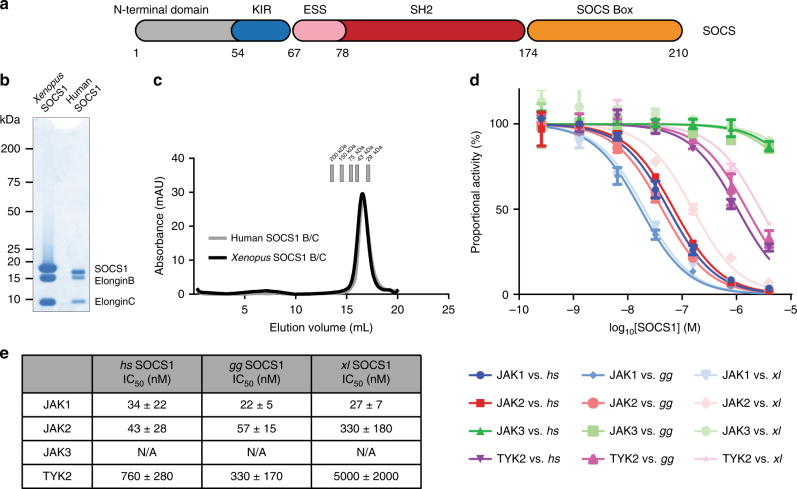
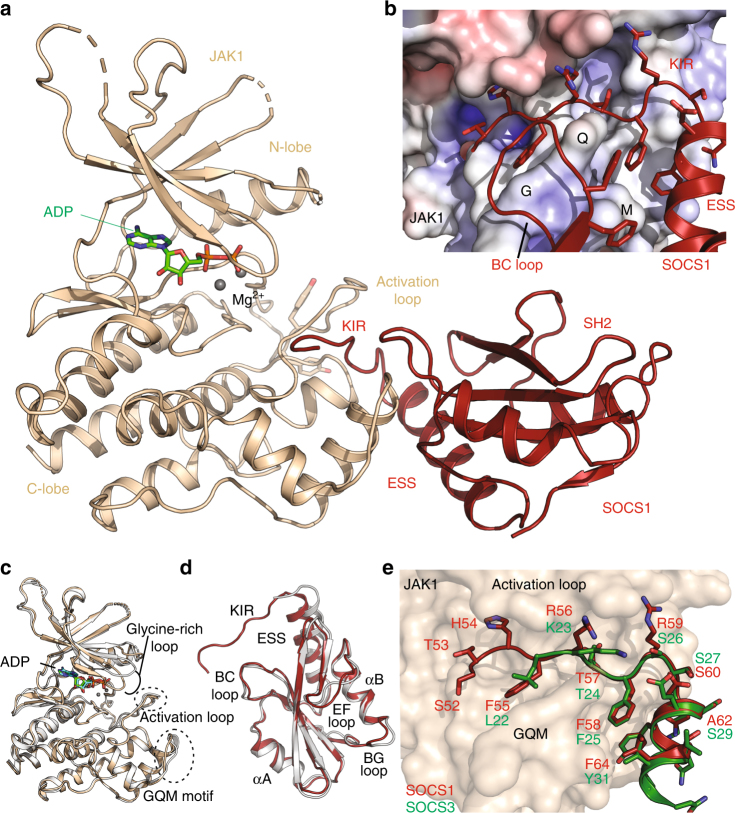
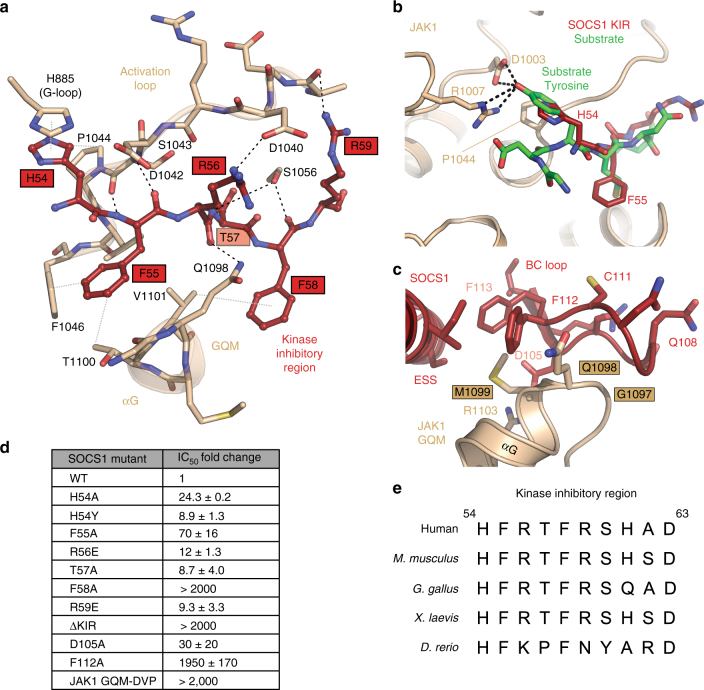
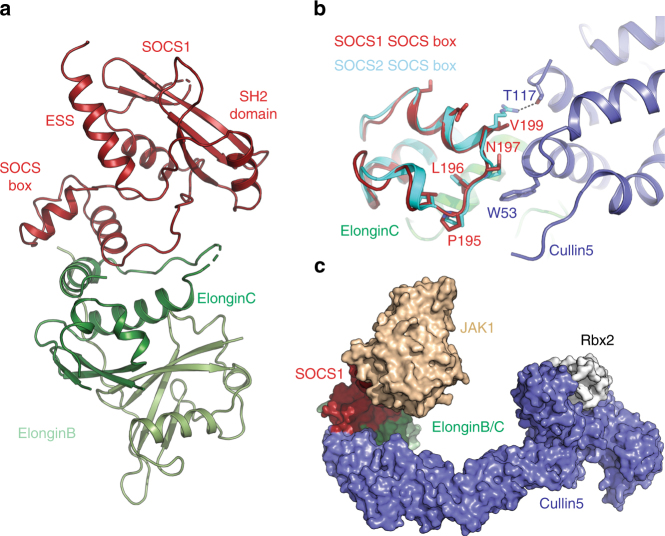
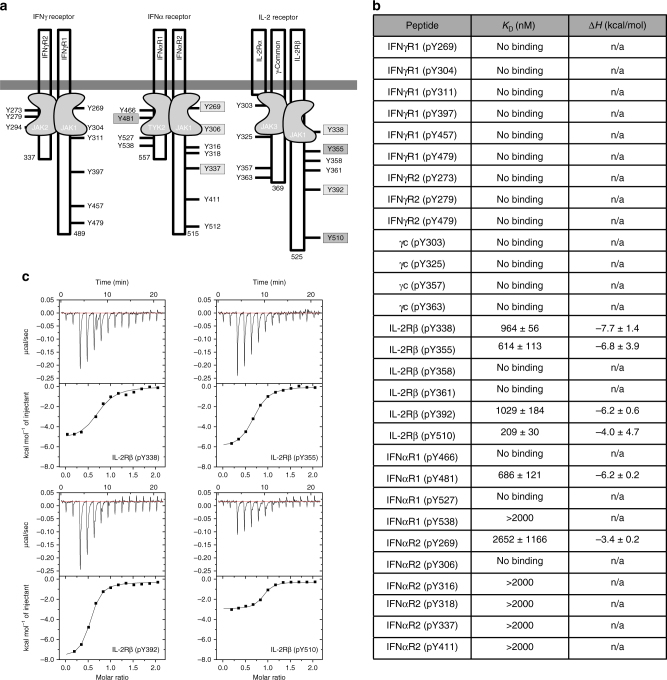
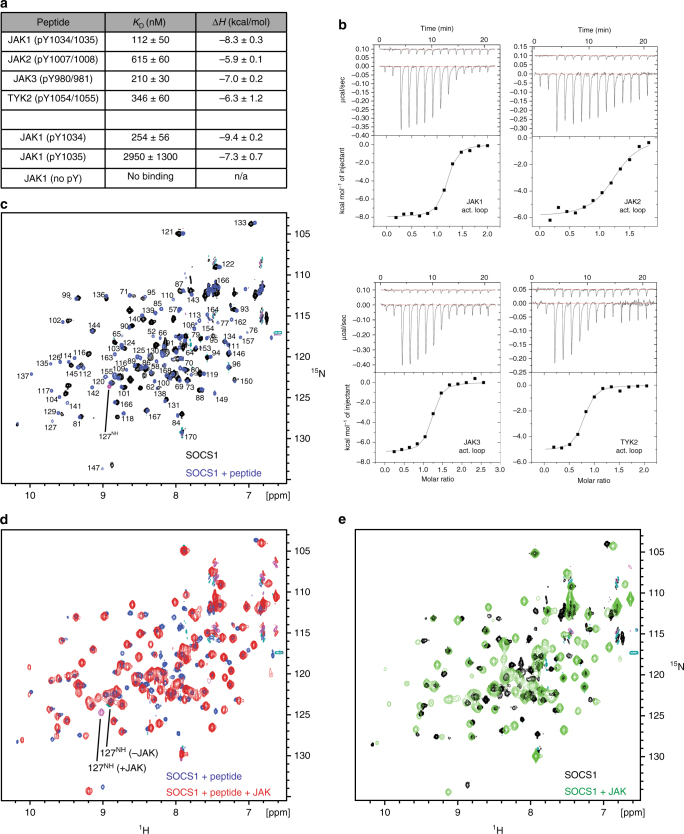
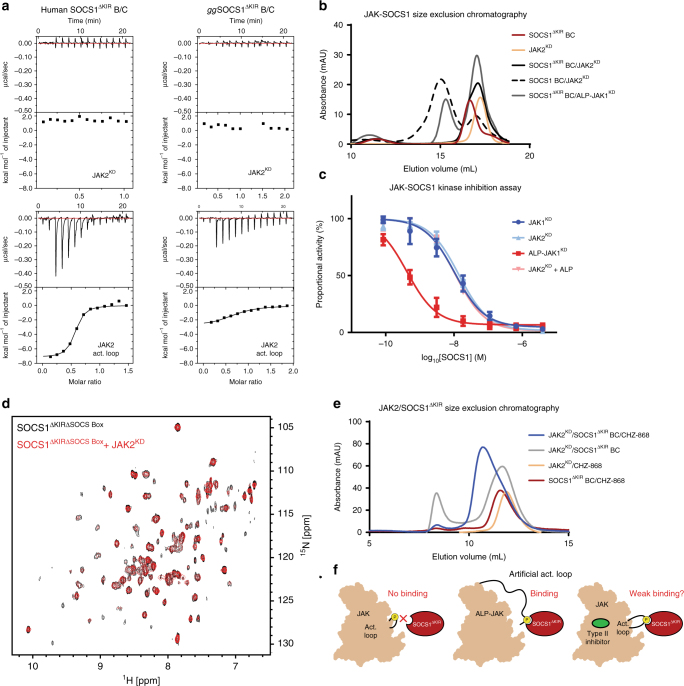
The SOCS family of proteins are negative-feedback inhibitors of signalling induced by cytokines that act via the JAK/STAT pathway. SOCS proteins can act as ubiquitin ligases by recruiting Cullin5 to ubiquitinate signalling components; however, SOCS1, the most potent member of the family, can also inhibit JAK directly. Here we determine the structural basis of both these modes of inhibition. Due to alterations within the SOCS box domain, SOCS1 has a compromised ability to recruit Cullin5; however, it is a direct, potent and selective inhibitor of JAK catalytic activity. The kinase inhibitory region of SOCS1 targets the substrate binding groove of JAK with high specificity and thereby blocks any subsequent phosphorylation. SOCS1 is a potent inhibitor of the interferon gamma (IFNγ) pathway, however, it does not bind the IFNγ receptor, making its mode-of-action distinct from SOCS3. These findings reveal the mechanism used by SOCS1 to inhibit signalling by inflammatory cytokines.
Overview
The claims and statistics of this paper haven’t been checked yet.
Free: it reads the open-access text and checks the first 5 claims that cite a source we can check. Create a free account to check every claim.
Integrity signals
Registry
Cites
Statistics
Figures
Verification
Claims the paper makes
The claims and statistics of this paper haven’t been checked yet.
Free: it reads the open-access text and checks the first 5 claims that cite a source we can check. Create a free account to check every claim.
Claims other papers make about this one
Each is checked against this paper’s own text: does it say what the citing paper says it does?
The source backs part of the claim, not all of it — or backs it for a different population, condition or comparison.
In the citing paper
“Targeting SOCS1, a negative regulator of JAK/STAT signaling in T cells, showed enhanced T cell clearance comparable to CBLB (Liau et al., 2018).”
From Genome-wide CRISPR Screens in Primary Human T Cells Reveal Key Regulators of Immune Function (2018) · cites this paper as Liau et al., 2018
Experimental — accuracy not yet measuredThe source backs part of the claim, not all of it — or backs it for a different population, condition or comparison.
In the citing paper
“Ablation of TCEB2, a binding partner of SOCS1, also improved tumor clearance, suggesting that the SOCS1/TCEB2 complex restrains T cell responses and is a potential target for immunotherapy (Ilangumaran et al., 2017; Kamizono et al., 2001; Liau et al., 2018).”
From Genome-wide CRISPR Screens in Primary Human T Cells Reveal Key Regulators of Immune Function (2018) · cites this paper as Liau et al., 2018
Experimental — accuracy not yet measuredThe check wasn’t confident either way, so it gives no verdict — never disputed.
In the citing paper
“SOCS‐1 is upregulated by Aβ via the JAK2/STAT3 pathway, leading to insulin resistance.”
From BACE1: More than just a β‐secretase (2022) · cites this paper as [95]
Experimental — accuracy not yet measuredIn the citing paper
“TCEB2 (rank 5) complexes with RNF7 (rank 34), CUL5 (rank 162), and SOCS1 (rank 3), a key suppressor of JAK/STAT signaling in activated T cells (Kamura et al., 1998; Liau et al., 2018).”
From Genome-wide CRISPR Screens in Primary Human T Cells Reveal Key Regulators of Immune Function (2018) · cites this paper as Liau et al., 2018
In the citing paper
“Insulin sensitivity is also affected by Aβ‐mediated upregulation of SOCS‐1, an inhibitor of the interferon‐gamma pathway.”
From BACE1: More than just a β‐secretase (2022) · cites this paper as [95]
Self-check
Percentages, sums and reported differences re-computed from the paper’s own numbers.
The self-check needs the paper’s full text.
Citations
Cites
Features and development of Coot
Emsley, P., Lohkamp, B., Scott, W. G., & Cowtan, K. (2010) · Acta Crystallographica Section D Biological Crystallography · doi:10.1107/s0907444910007493 · Cited by 29,915
PHENIX : a comprehensive Python-based system for macromolecular structure solution
Adams, P. D., Afonine, P. V., Bunkóczi, G., Chen, V. B., Davis, I. W., Echols, N., Headd, J. J., Hung, L.-W., Kapral, G. J., Grosse-Kunstleve, R. W., et al. (2010) · Acta Crystallographica Section D Biological Crystallography · doi:10.1107/s0907444909052925 · Cited by 23,716
Phaser crystallographic software
McCoy, A. J., Grosse-Kunstleve, R. W., Adams, P. D., Winn, M. D., Storoni, L. C., & Read, R. J. (2007) · Journal of Applied Crystallography · doi:10.1107/s0021889807021206 · Cited by 20,612
Vogelstein, B., Papadopoulos, N., Velculescu, V. E., Zhou, S., Diaz, L. A., & Kinzler, K. W. (2013) · Science · doi:10.1126/science.1235122 · Cited by 7,863
PHENIX: a comprehensive Python-based system for macromolecular structure solution
Adams, P. D., Afonine, P. V., Bunkóczi, G., Chen, V. B., Davis, I. W., Echols, N., Headd, J. J., Hung, L.-W., Kapral, G. J., Grosse-Kunstleve, R. W., et al. (2012) · International Tables for Crystallography · doi:10.1107/97809553602060000865 · Cited by 7,334
IFN-γ–related mRNA profile predicts clinical response to PD-1 blockade
Ayers, M., Lunceford, J., Nebozhyn, M., Murphy, E., Loboda, A., Kaufman, D. R., Albright, A., Cheng, J. D., Kang, S. P., Shankaran, V., et al. (2017) · Journal of Clinical Investigation · doi:10.1172/jci91190 · Cited by 3,788
Mutations Associated with Acquired Resistance to PD-1 Blockade in Melanoma
Zaretsky, J. M., Garcia-Diaz, A., Shin, D. S., Escuin-Ordinas, H., Hugo, W., Hu-Lieskovan, S., Torrejon, D. Y., Abril-Rodriguez, G., Sandoval, S., Barthly, L., et al. (2016) · New England Journal of Medicine · doi:10.1056/nejmoa1604958 · Cited by 3,237
Culture Medium for Enterobacteria
Neidhardt, F. C., Bloch, P. L., & Smith, D. F. (1974) · Journal of Bacteriology · doi:10.1128/jb.119.3.736-747.1974 · Cited by 2,958
Integration, scaling, space-group assignment and post-refinement
Kabsch, W. (2010) · Acta Crystallographica Section D Biological Crystallography · doi:10.1107/s0907444909047374 · Cited by 2,528
A family of cytokine-inducible inhibitors of signalling
Starr, R., Willson, T. A., Viney, E. M., Murray, L. J. L., Rayner, J. R., Jenkins, B. J., Gonda, T. J., Alexander, W. S., Metcalf, D., Nicola, N. A., et al. (1997) · Nature · doi:10.1038/43206 · Cited by 2,066
Self-citation
Cited by
Items 201–300 of 449
House, I. G., Derrick, E. B., Sek, K., Chen, A. X. Y., Li, J., Lai, J., Todd, K. L., Munoz, I., Michie, J., Chan, C. W., et al. (2023) · Cell Reports · doi:10.1016/j.celrep.2023.113014 · Cited by 17
Regulation of macrophage IFNγ-stimulated gene expression by the transcriptional coregulator CITED1
Subramani, A., Hite, M. E. L., Garcia, S., Maxwell, J. N., Kondee, H., Millican, G. E., McClelland, E. E., Seipelt-Thiemann, R. L., & Nelson, D. E. (2022) · Journal of Cell Science · doi:10.1242/jcs.260529 · Cited by 18
Lai, S., Tang, N., Guo, J. J., Deng, L., Yuan, L., Zeng, L., Yang, L., & Mu, Y. (2025) · Colloids and Surfaces B Biointerfaces · doi:10.1016/j.colsurfb.2025.114709 · Cited by 15
sun, L., Chu, X., Kong, T., Chen, X., Ru, J., Gao, Q., Zhou, W., Wang, X., Cheng, S., Zhu, L. L., et al. (2026) · Immunity · doi:10.1016/j.immuni.2026.04.001 · Cited by 22
Biological Functions of Let-7e-5p in Promoting the Differentiation of MC3T3-E1 Cells
Wang, C., Liu, S., Li, J., Cheng, Y., Wang, Z., Feng, T., Lu, G., Wang, S., Song, J., Xia, P., et al. (2021) · Frontiers in Cell and Developmental Biology · doi:10.3389/fcell.2021.671170 · Cited by 17
Xia, F., Bo, W., Ding, J., Yu, Y., & Wang, J. (2022) · The Turkish Journal of Gastroenterology · doi:10.5152/tjg.2022.21769 · Cited by 15
Englander, H. E., Paiewonsky, B., & Castelo‐Soccio, L. A. (2023) · Skin Appendage Disorders · doi:10.1159/000530432 · Cited by 14
“SOCS1 works to prevent constitutive activation of the JAK-STAT pathway [36].”
BackgroundMayaro virus infection elicits a robust pro-inflammatory and antiviral response in human macrophages
Hernández-Sarmiento, L. J., Tamayo-Molina, Y. S., Valdés‐López, J. F., & Inchima, S. U. (2024) · Acta Tropica · doi:10.1016/j.actatropica.2024.107146 · Cited by 15
Exploring the role of CITED transcriptional regulators in the control of macrophage polarization
Wiggins, D. A., Maxwell, J. N., & Nelson, D. E. (2024) · Frontiers in Immunology · doi:10.3389/fimmu.2024.1365718 · Cited by 14
Entering a new era of tumor-infiltrating lymphocyte cell therapy innovation
Amaria, R. N., Komanduri, K. V., Schoenfeld, A. J., Ramsingh, G., Burga, R. A., & Jagasia, M. (2024) · Cytotherapy · doi:10.1016/j.jcyt.2024.12.010 · Cited by 14
Selective Stimulation of Duplicated Atlantic Salmon MHC Pathway Genes by Interferon-Gamma
Grimholt, U., Fosse, J. H., & Sundaram, A. Y. M. (2020) · Frontiers in Immunology · doi:10.3389/fimmu.2020.571650 · Cited by 16
“The stimulatory effect of interferon gamma needs to be transient and is therefore heavily regulated by suppressor of cytokine signaling 1 (SOCS1), which turns off the JAK phosphorylation in turn reducing the phosphorylation of STATs (43).”
BackgroundInfluentialSuppressors of cytokine signaling (SOCS) proteins in inflammatory bone disorders
Santos, M. R. G., Queiroz‐Junior, C. M., Madeira, M. F. M., & Machado, F. S. (2020) · Bone · doi:10.1016/j.bone.2020.115538 · Cited by 15
Chen, Y., Song, S., Wang, Y., Zhang, X., Zhang, J., Wu, L., Wu, J., & Li, X. (2024) · Arabian Journal of Chemistry · doi:10.1016/j.arabjc.2024.105612 · Cited by 14
New insight into the role of SOCS family in immune regulation and autoimmune pathogenesis
Liu, S., Wang, M., Xu, L., Deng, D., Lu, L., Tian, J., Zhou, D., & Rui, K. (2025) · Journal of Advanced Research · doi:10.1016/j.jare.2025.05.020 · Cited by 16
Pathogenic signaling in multiple myeloma
Bolomsky, A., & Young, R. M. (2022) · Seminars in Oncology · doi:10.1053/j.seminoncol.2022.01.005 · Cited by 15
Kang, I., Kim, J. A., Kim, J., Lee, J. H., Kim, M.-J., & Ahn, J. K. (2022) · BMB Reports · doi:10.5483/bmbrep.2022.55.5.157 · Cited by 13
“HBx interferes with SOCS1-mediated suppression of p65 and physically binds to SOCS1 It has been reported that suppressor of cytokine signaling 1 (SOCS1) affects several signaling pathways, in addition to the classical JAK/STAT pathway (27).”
BackgroundAd-hoc modifications of cyclic mimetics of SOCS1 protein: Structural and functional insights
Manna, S. L., Fortuna, S., Leone, M., Mercurio, F. A., Donato, I. D., Bellavita, R., Grieco, P., Merlino, F., & Marasco, D. (2022) · European Journal of Medicinal Chemistry · doi:10.1016/j.ejmech.2022.114781 · Cited by 14
Toth, K. A., Schmitt, E. G., & Cooper, M. A. (2023) · The Journal of Immunology · doi:10.4049/jimmunol.2200905 · Cited by 13
Yi, J., Lin, P., Li, Q., Zhang, A., & Kong, X. (2023) · Molecular Therapy — Oncolytics · doi:10.1016/j.omto.2023.08.010 · Cited by 17
“In contrast, cytokine signaling (SOCS) suppressors, mainly SOCS3 and SOCS1, are negative regulators of IFN-g signaling.(10) In conclusion, IFN-g can lead to anti-tumor immunosuppression in vivo by activating SOCS family proteins and inducing the expression of immunosuppressive molecules in various ways, limiting the t…”
BackgroundIn cis “benign” SOCS1 variants linked to enhanced interferon signaling and autoimmunity
Du, Y., Brodeur, K. E., Hsu, E., Chen, L., Chen, Q., Liu, M., Cheng, Q., Rosen, S., Michniacki, T. F., Chou, J. S., et al. (2023) · Journal of Autoimmunity · doi:10.1016/j.jaut.2023.103119 · Cited by 15
Wei, Y., Zhang, Z., She, N., Chen, X., Zhao, Y., & Zhang, J. (2019) · Physical Chemistry Chemical Physics · doi:10.1039/c9cp02257k · Cited by 14
Yenamandra, A. K., Smith, R. B., Senaratne, T. N., Kang, S.-H. L., Fink, J. M., Corboy, G., Hodge, C. A., Lu, X. Y., Mathew, S., Crocker, S. F., et al. (2022) · Cancer Genetics · doi:10.1016/j.cancergen.2022.07.006 · Cited by 14
Transcriptional signature of early cisplatin drug-tolerant persister cells in lung adenocarcinoma
Chavez-Dominguez, R., Aguilar‐Cázares, D., Perez-Medina, M., Ávila‐Ríos, S., Soto-Nava, M., Méndez-Tenorio, A., Islas-Vázquez, L., Benito-Lopez, J. J., Galicia-Velasco, M., & López-González, J. S. (2023) · Frontiers in Oncology · doi:10.3389/fonc.2023.1208403 · Cited by 13
“In accordance with previous reports, we found that SOCS1 was mainly localized in the cytoplasm, where it can interact with STAT family members, such as STAT3 and STAT1 (57).”
IL4Rα and IL17A Blockade Rescue Autoinflammation in SOCS1 Haploinsufficiency
Gruber, C. N., Lee, A. E., Buta, S., Khattri, S., Gottlieb, A. B., Frost, J., Bowcock, A. M., Ho, H.-E., & Bogunovic, D. (2023) · Journal of Clinical Immunology · doi:10.1007/s10875-023-01635-z · Cited by 13
Lazar, I., Livneh, I., Ciechanover, A. J., & Fabre, B. (2024) · Cells · doi:10.3390/cells13020180 · Cited by 12
Xue, W., & Deng, L. (2024) · Cytokine · doi:10.1016/j.cyto.2024.156507 · Cited by 12
Topical delgocitinib for the treatment of chronic hand eczema
Abdelhalim, A., Yilmaz, O., Berair, M. E., & Torres, T. R. (2025) · Journal of Dermatological Treatment · doi:10.1080/09546634.2025.2479126 · Cited by 14
Sid, H., von Heyl, T., Schleibinger, S., Klinger, R., Nabel, L. H., Vikkula, H., Guabiraba, R., Guillory, V., Scicluna, R., Alhussien, M. N., et al. (2025) · Frontiers in Immunology · doi:10.3389/fimmu.2025.1680791 · Cited by 12
“This may explain the signi fi cant increase in viral genome copies and the observed T cell phenotype since SOCS1 is a potent inhibitor of JAK/ STAT signaling (34) and is involved in several mechanisms that regulate T cell maturation, differentiation, and function (35).”
Wang, Y., Li, Y., Wang, X., Li, X.-Z., Chen, Y., Yang, L., & Ming, H. (2020) · Evidence-based Complementary and Alternative Medicine · doi:10.1155/2020/2407239 · Cited by 12
“Further more, observing the ultrastructure of lung tissue by transmission electronmicroscopy (TEM), the detection of JAK/STATpathway related indicators including p-JAK1, p-STAT1, and SOCS3 with immunohistochemistry and SOCS3 with real-time PCR (RT-PCR) was performed.”
BackgroundInfluentialEmerging Roles of lncRNAs Regulating RNA-Mediated Type-I Interferon Signaling Pathway
Ji, X., Meng, W., Liu, Z., & Mu, X. N. (2022) · Frontiers in Immunology · doi:10.3389/fimmu.2022.811122 · Cited by 14
“Evidence suggested that it reduces the expression of suppressor of cytokine signaling 1 (SOCS1), a protein negatively regulates the phosphorylation of JAK1, tyrosine kinase 2 (TYK2), and STAT1 in the IFN-I pathway (88).”
BackgroundSk, M. F., Jonniya, N. A., Roy, R., & Kar, P. (2022) · The Journal of Physical Chemistry B · doi:10.1021/acs.jpcb.1c10733 · Cited by 12
Topical and systemic JAK inhibitors in hand eczema – a narrative review
Zalewski, A., & Szepietowski, J. C. (2023) · Expert Review of Clinical Immunology · doi:10.1080/1744666x.2023.2174526 · Cited by 14
Dong, S., Hou, B., Yang, C., Li, Y., Sun, B., Guo, Y., Deng, M., Liu, D., & Liu, G. (2023) · Genes · doi:10.3390/genes14020444 · Cited by 14
“The study found that the SOCS family of proteins included negative-feedback inhibitors of signaling induced by cytokines that act via the Jak-STAT pathway [33].”
BackgroundYu, Y.-Q., Li, X., Mi, J., Qu, L., Yang, D., Guo, J., & Qiu, L. (2018) · Molecules · doi:10.3390/molecules23092327 · Cited by 12
“All SOCS proteins share a central SRC-homology 2 (SH2) domain, an amino-terminal domain of variable length and sequence, and a conserved SOCS box at the C-terminus [23].”
BackgroundInfluentialGray, P. E., Bartlett, A. W., & Tangye, S. G. (2022) · Clinical & Translational Immunology · doi:10.1002/cti2.1365 · Cited by 14
Vardas, E. P., Oikonomou, E. K., Vardas, P. E., & Tousoulis, D. (2024) · Biomedicines · doi:10.3390/biomedicines13010032 · Cited by 11
“Specifically, it is hypothesized that miR-155 targets the suppressor of cytokine signaling 1 (SOCS1), which subsequently influences the Janus kinase/signal transducer and activator of transcription (JAK-STAT) pathway and inflammatory responses [37,38] (Figure 1).”
Salih, D. J., Barsoom, S. H., Ahmed, G. F., Hussien, S. Q., Ismaeel, Q. A., Al-Asady, A. A., Alsalim, T. A. Q., & Salih, A. M. (2025) · Saudi Pharmaceutical Journal · doi:10.1007/s44446-025-00018-2 · Cited by 16
“SOCS1 is known to act as a feedback inhibitor of JAK-STAT signaling (Liau et al. 2018), but para-doxically, its overexpression in tumors has been associated with immune escape mechanisms.”
Glucocorticoid Dose Dependency on Gene Expression in Vocal Fold Fibroblasts and Macrophages
Nakamura, R., Bing, R., Gartling, G. J., Garabedian, M. J., & Branski, R. C. (2022) · The Laryngoscope · doi:10.1002/lary.30330 · Cited by 11
TRIM8: a double-edged sword in glioblastoma with the power to heal or hurt
Hosseinalizadeh, H., Mohamadzadeh, O., Kahrizi, M. S., Bahabadi, Z. R., Klionsky, D. J., & Mirzei, H. (2023) · Cellular & Molecular Biology Letters · doi:10.1186/s11658-023-00418-z · Cited by 11
“They serve as ubiquitin ligases for ubiquitination-dependent regulation of signaling components or directly inhibit JAK tyrosine kinase receptors via their kinase inhibitory domains (KIRs) [37, 38].”
BackgroundDynamic changes in transcriptome during orthodontic tooth movement
Liu, J., Chen, P., Mehta, S., Dutra, E. H., & Yadav, S. K. (2023) · Orthodontics and Craniofacial Research · doi:10.1111/ocr.12650 · Cited by 13
“33 We have also detected that Socs1 and Scos3 were increased along with cytokines and chemokines which play a vital role in the regulation of the resolution of inflammatory cascades.”
Chen, C., LIM, D. J., Cai, Z., Zhang, F., Liu, G., Dong, C., & Feng, Z. (2023) · Food and Chemical Toxicology · doi:10.1016/j.fct.2023.113783 · Cited by 12
Gene editing: Towards the third generation of adoptive T-cell transfer therapies
Puig-Saus, C., & Ribas, A. (2019) · Immuno-Oncology Technology · doi:10.1016/j.iotech.2019.06.001 · Cited by 12
“SOCS1 is a negative regulator of the JAK/STAT pathway in T cells [63], and TCEB2 is a binding partner of SOCS1 [63].”
BackgroundHu, K., Yin, E. T. S., Hu, Y., & Huang, H. (2021) · Current Medical Science · doi:10.1007/s11596-021-2391-5 · Cited by 13
Subramaniam, S., Rao, J. S. A., Ramdas, P., Ng, M. H., Kutty, M. K., Selvaduray, K. R., & Radhakrishnan, A. K. (2021) · Clinical & Experimental Immunology · doi:10.1111/cei.13650 · Cited by 14
“Further, SOCS1, known as a potent inhibitor of the JAK– STAT signalling pathway, was highly expressed in breast cancer progression [41], which shows γT3’s ability to reduce SOCS1 expression by controlling tumour progression.”
BackgroundInfluentialThe multi-faceted roles of cancer-associated fibroblasts in pancreatic cancer
Kwon, J. Y., Vera, R. E., & Fernández-Zapico, M. E. (2025) · Cellular Signalling · doi:10.1016/j.cellsig.2024.111584 · Cited by 11
Bernal, S., Priéto, I., Kavanagh, M. E., del Real, I. H., Manna, S. L., Lázaro, I., Quiceno, H., Lopez‐Sanz, L., Picatoste, B., Valdecantos, M. P., et al. (2025) · Redox Biology · doi:10.1016/j.redox.2025.103670 · Cited by 10
“Unlike the full-length SOCS1 protein, which contains domains like SH2 and SOCS box involved in substrate targeting and proteasomal degradation [12,56], KIR-based peptides lack these motifs, minimizing interference with broader metabolic pathways such as insulin signaling.”
JAKinibs prevent persistent, IFNγ-autonomous endothelial cell inflammation and immunogenicity
Valenzuela, N. M. (2023) · American Journal of Physiology-Cell Physiology · doi:10.1152/ajpcell.00298.2022 · Cited by 13
Sales, L. P., Hounkpe, B. W., Perez, M. O., Caparbo, V. F., Domiciano, D. S., Borba, E. F., Schett, G. A., Figueiredo, C. P., & Pereira, R. M. R. (2023) · Frontiers in Immunology · doi:10.3389/fimmu.2023.1251034 · Cited by 11
“In part, this cytokine upregulation can be explained by the observed up-regulation of SOCS1 that is a negative-feedback inhibitor of JAK/STAT pathway (30).”
BackgroundPrakash, A., SAXENA, V. K., Kumar, R., Tomar, S., Singh, M. K., & Singh, G. (2021) · Tropical Animal Health and Production · doi:10.1007/s11250-021-02844-7 · Cited by 10
System-Based Approaches to Delineate the Antiviral Innate Immune Landscape
Krey, K., Babnis, A. W., & Pichlmair, A. (2020) · Viruses · doi:10.3390/v12101196 · Cited by 10
“The group of proteins belonging to the suppressor of cytokine signaling (SOCS) family are negative feedback regulators of cytokine signaling, including IFNs, that act by blocking and inducing ubiquitination of factors of the JAK/STAT signaling pathway [26,27].”
BackgroundZhang, Y., Jing, Z., Cao, X., Wei, Q., He, W., Zhang, N., Liu, Y., Yuan, Q., Zhuang, Z., Dong, Y., et al. (2022) · Gene · doi:10.1016/j.gene.2022.146190 · Cited by 9
TSLP as a Potential Therapy in the Treatment of CRLF2 B Cell Acute Lymphoblastic Leukemia
Alkashgari, H. R., Ruiz-Jiménez, C., Stoian, C., Coats, J. S., Báez, I., Chirshev, E., Martinez, S. R., Dovat, S., Francis, O. L., Casiano, C. A., et al. (2022) · International Journal of Molecular Sciences · doi:10.3390/ijms24010474 · Cited by 9
“SOCS1 has been shown to be a potent inhibitor for JAK1 and JAK2 while SOCS3 can inhibit PI3K-AKT downstream activity by binding to phosphorylated cytokine receptors [37,38].”
BackgroundAre peptidomimetics the compounds of choice for developing new modulators of the JAK-STAT pathway?
Cugudda, A., Manna, S. L., & Marasco, D. (2024) · Frontiers in Immunology · doi:10.3389/fimmu.2024.1406886 · Cited by 9
The Impact of EGCG and RG108 on SOCS1 Promoter DNA Methylation and Expression in U937 Leukemia Cells
Alizadeh, M., Nafari, A., Safarzadeh, A., Veiskarami, S., Almasian, M., & Kiani, A. A. (2021) · Reports of Biochemistry and Molecular Biology · doi:10.52547/rbmb.10.3.455 · Cited by 9
Bednarczyk, M., Bolduan, V., Haist, M., Stege, H. M., Hieber, C., Johann, L., Schelmbauer, C., Blanfeld, M., Karram, K., Schunke, J., et al. (2022) · Cells · doi:10.3390/cells11142188 · Cited by 9
“At the same time, STATs also upregulate the expression of SOCS proteins, which limit cytokine production by interfering with JAK-induced STAT activation [57].”
BackgroundOligonucleotide‐Based Modulation of Macrophage Polarization: Emerging Strategies in Immunotherapy
Zhang, H., Yu, Y., & Qian, C. (2025) · Immunity Inflammation and Disease · doi:10.1002/iid3.70200 · Cited by 11
Recent advances and future perspectives in small molecule JAK2 inhibitors
Yasir, M., Choe, J., Hassan, M., Kloczkowski, A., & Chun, W. (2025) · Future Medicinal Chemistry · doi:10.1080/17568919.2025.2507564 · Cited by 8
Liu, Y., Huang, Y., He, Q., Shen, Y., & Wang, Y. (2025) · Frontiers in Oncology · doi:10.3389/fonc.2025.1598170 · Cited by 15
Manna, S. L., Leone, M., Mercurio, F. A., Florio, D., & Marasco, D. (2022) · Pharmaceuticals · doi:10.3390/ph15040458 · Cited by 9
“Biochemical studies have highlighted different mechanisms of action (MOA) of these proteins in the inhibition of JAKs: while the SH2 domain of SOCS1 directly binds to the activation loop of JAK [6], the SH2 domains of CIS, SOCS2 and SOCS3 bind to phosphorylated tyrosine residues on activated cytokine receptors (glycop…”
BackgroundBhattacharya, A., Shukla, V. K., Kachariya, N. N., Preeti, P., Sehrawat, P., & Kumar, A. (2022) · Journal of Molecular Biology · doi:10.1016/j.jmb.2022.167830 · Cited by 10
Feng, Y., Wang, J., Fan, W., Geng, Y., Huang, X., Ouyang, P., Chen, D., Guo, H., Deng, H., Lai, W., et al. (2023) · Frontiers in Immunology · doi:10.3389/fimmu.2023.1172849 · Cited by 10
“However, our observations also found that the SOCS-1 protein might be inadequate in suppressing its target Jak-STAT pathway (29), B”
BackgroundSOCS1 Protects Acute Myeloid Leukemia against Allogeneic T Cell–Mediated Cytotoxicity
Tin, E., Rutella, S., Khatri, I. A., Na, Y., Yan, Y., MacLean, N., Vadakekolathu, J. N., Minden, M. D., Schimmer, A. D., Lee, J. B., et al. (2025) · Blood Cancer Discovery · doi:10.1158/2643-3230.bcd-24-0140 · Cited by 10
SOCS4 expressed by recombinant HSV protects against cytokine storm in a mouse model
Ren, S., Chen, X., Huang, R., Zhou, G. G., & Yuan, Z. (2018) · Oncology Reports · doi:10.3892/or.2018.6935 · Cited by 8
“Unlike SOCS1, SOCS3 and other members of the SOCS family that have been well-described (16-18), studies concerning SOCS4 protein are relatively scarce.”
BackgroundCentral and local controls of monocytopoiesis influence the outcome of Leishmania infection
Raybarman, C., & Bhattacharjee, S. (2020) · Cytokine · doi:10.1016/j.cyto.2020.155325 · Cited by 8
Cecil, D. L., Park, K. H., Curtis, B. C., Corulli, L. R., & Disis, M. L. (2021) · Journal for ImmunoTherapy of Cancer · doi:10.1136/jitc-2021-002355 · Cited by 9
Nohara, S., Yamamoto, M., Yasukawa, H., Nagata, T., Takahashi, J., Shimozono, K., Yanai, T., Sasaki, T., Okabe, K., Shibata, T., et al. (2021) · PLoS ONE · doi:10.1371/journal.pone.0254712 · Cited by 10
“We previously proposed that SOCS1 and SOCS3 inhibit JAK kinase activity via binding in the activation loop as a pseudosubstrate [28, 29] and this was confirmed by X-ray crystal structure analysis [54].”
BackgroundShimamura, Y., Noaki, R., Kurokawa, A., Utsumi, M., Hirai, C., Kan, T., & Masuda, S. (2021) · Toxins · doi:10.3390/toxins13090609 · Cited by 10
“SOCS1 regulates both the adaptive and the innate immune responses [7].”
BackgroundChen, H., Wu, Y., Li, K., Currie, I., Keating, N., Dehkhoda, F., Grohmann, C., Babon, J. J., Nicholson, S. E., & Sleebs, B. E. (2022) · ACS Chemical Biology · doi:10.1021/acschembio.1c00884 · Cited by 8
Self-citationda Costa, J. C., de Souza, S. S., & Val, A. L. (2022) · Microbial Pathogenesis · doi:10.1016/j.micpath.2022.105804 · Cited by 8
Wang, T., Hu, Y., Dusi, S., Qi, F., Sartoris, S., Ugel, S., & Sanctis, F. D. (2023) · Frontiers in Immunology · doi:10.3389/fimmu.2023.1130060 · Cited by 10
“Moreover, independent of IFN production, STING overexpression in MDSCs upregulated the suppressor of cytokine signaling 1 (SOCS1), a potent inhibitor of Janus kinase (JAK) 1/2 in the JAK/STAT signaling pathway (121), preventing STAT3 phosphorylation (122, 123) and inhibiting the production and release of IL-6 and GM-C…”
BackgroundJAK1 Pseudokinase V666G Mutant Dominantly Impairs JAK3 Phosphorylation and IL-2 Signaling
Grant, A. H., Rodriguez, A. C., Moncivais, O. J. R., Sun, S., Li, L., Mohl, J. E., Leung, M., Kirken, R. A., & Rodriguez, G. (2023) · International Journal of Molecular Sciences · doi:10.3390/ijms24076805 · Cited by 9
Lim, T. K. Y., Ritoux, A., Paine, L. W., Ferguson, L., Abdul, T., Grundy, L. J., & Smith, E. S. J. (2025) · eLife · doi:10.7554/elife.105978.3 · Cited by 11
Cullin-5 controls the number of megakaryocyte-committed stem cells to prevent thrombocytosis in mice
Kauppi, M., Hyland, C. D., Viney, E. M., White, C. A., de Graaf, C. A., Welch, A. E., Yousef, J. M., Dagley, L. F., Emery‐Corbin, S. J., Rago, L. D., et al. (2025) · Blood · doi:10.1182/blood.2024025406 · Cited by 8
Self-citationMetwally, H., Elbrashy, M. M., Kayama, H., Okuyama, K., Taniuchi, I., Takeda, K., & Kishimoto, T. (2025) · Proceedings of the National Academy of Sciences · doi:10.1073/pnas.2511957122 · Cited by 8
“We next tested whether the detrimental effect of the T748A mutation was due to diminished Stat3 activation, and whether the observed increase in Stat1 Tyr701 phosphorylation could result from reduced expression of negative feedback regulators such as Socs1 ( 30 ).”
Research progress of SOCS in autoimmune diseases: mechanisms and therapeutic implications
Cui, R., & Zhang, J. (2025) · Frontiers in Immunology · doi:10.3389/fimmu.2025.1604271 · Cited by 9
“By primarily targeting the JAK-STAT pathway, SOCS proteins effectively suppress hyperactive immune responses, thus ensuring the maintenance of homeostasis (2).”
Chen, J., Mo, J., Wei, J., Qu, M., Dai, J., Kong, Y., Xu, H., Li, J., Yan, X., Cui, C., et al. (2025) · Advanced Science · doi:10.1002/advs.202514600 · Cited by 11
Bo, Z., Li, X., Wang, S., Zhang, C., Guo, M., Cao, Y., Zhang, X., & Wu, Y. (2023) · Veterinary Microbiology · doi:10.1016/j.vetmic.2023.109896 · Cited by 7
Design and functional studies of xylene-based cyclic mimetics of SOCS1 protein
Cugudda, A., Manna, S. L., Leone, M., Vincenzi, M., & Marasco, D. (2024) · European Journal of Medicinal Chemistry · doi:10.1016/j.ejmech.2024.117107 · Cited by 7
Cancer Immunotherapy: Silencing Intracellular Negative Immune Regulators of Dendritic Cells
Liu, Y., Yeh, I., Lai, M., Liu, K., Kuo, P., & Yen, M. (2019) · Cancers · doi:10.3390/cancers11010108 · Cited by 12
“The SH2 domain of SOCS directly interacts with Janus kinase (JAK) or signal transducers and activators of transcription (STAT) [29].”
BackgroundInfluentialQiao, R., Yeyang, X., Liu, Y., Gao, S., Li, X., Li, J., Zhu, P., Wei, Y., & Qi, Z. (2021) · Aquaculture Research · doi:10.1111/are.15470 · Cited by 7
Tomaszewska, E., Rudyk, H., Wojtysiak, D., Donaldson, J., Muszyński, S., Arciszewski, M. B., Lisova, N., Brezvyn, O. M., Puzio, I., Abramowicz, B., et al. (2022) · Animals · doi:10.3390/ani12182353 · Cited by 7
“This pathway involves a group of proteins that act as negative-feedback inhibitors of the signaling that is induced by the cytokines that act via the JAK/STAT pathway [31].”
BackgroundWijerathna, H. M. S. M., Nadarajapillai, K., Shanaka, K. A. S. N., Kasthuriarachchi, T. D. W., Jung, S., Lee, S., & Lee, J. (2023) · Fish & Shellfish Immunology · doi:10.1016/j.fsi.2023.108629 · Cited by 7
Zhu, W., & Huang, X. (2023) · Archives of Oral Biology · doi:10.1016/j.archoralbio.2023.105687 · Cited by 8
Interferons limit autoantigen-specific CD8+ T-cell expansion in the non-obese diabetic mouse
Jhala, G., Krishnamurthy, B., Brodnicki, T. C., Ge, T., Akazawa, S., Selck, C., Trivedi, P., Pappas, E. G., Mackin, L., Principe, N., et al. (2022) · Cell Reports · doi:10.1016/j.celrep.2022.110747 · Cited by 9
Three patients with defects in interferon gamma receptor signaling: A challenging diagnosis
Zhou, Z., Hollink, I. H. I. M., Bouman, A., Lourens, M. S., Brooimans, R. A., van Ham, T. J., Fraaij, P. L. A., van Rossum, A. M. C., Zijtregtop, E. A. M., Dik, W. A., et al. (2022) · Pediatric Allergy and Immunology · doi:10.1111/pai.13768 · Cited by 7
Baicalin mitigates alcoholic-associated liver disease via SOCS1-driven reprogramming of macrophages
Huang, S., Wang, Y., Wen, J. F., Ji, W., Zeng, Q., Deng, K., Li, M., Kuang, S., Zhang, W., Chan, M., et al. (2025) · Chinese Medicine · doi:10.1186/s13020-025-01110-4 · Cited by 6
Hong, X., Ye, Y., Lin, C., Zheng, M., Lin, F., Xiong, Q., Xu, W., Huang, L., Zhang, Y., & Zheng, H. (2025) · Frontiers in Immunology · doi:10.3389/fimmu.2025.1665648 · Cited by 6
Näsiaho, J., Nissi, L., Ventelä, S., Irjala, H., & Salmi, M. (2026) · Cell Reports Medicine · doi:10.1016/j.xcrm.2026.102615 · Cited by 10
“…DNAJ4 (regulating heat shock response and endothelial migration 33 ), TYMS (involved in DNA replication 34 ), SOCS1 (regulating JAK/STAT signaling 35 ), and CCL20 (supporting chemotaxis of Tregs and other lymphocytes 36 and angiogenesis 37 ), were enriched in proliferating LECs compared to…”
Fujii, T., Maehara, K., Fujita, M., & Ohkawa, Y. (2021) · PLoS Computational Biology · doi:10.1371/journal.pcbi.1009579 · Cited by 6
Crisler, W. J., Rowley, R., Oke, O. H., Steuart, S. J., Modi, M. M., Davis, D. L., Chen, C., Gray, L., Teague, J. E., Zhan, Q., et al. (2025) · Journal of Investigative Dermatology · doi:10.1016/j.jid.2025.05.023 · Cited by 10
Soderquist, C. R., & Bhagat, G. (2022) · Hemato · doi:10.3390/hemato3010018 · Cited by 6
“Deletion of SOCS1, a negative regulator of the JAK family proteins [64], was also reported in one CD4+ case [27].”
BackgroundCRISPR screening identifies T cell-intrinsic regulators of CD3-bispecific antibody responses
Molony, R. D., Funk, T., Trabucco, G. M., Corcoran, E., Ruddy, D. A., Varadarajan, M., Elliot, G., Piquet, M., Lam, J. W., Meyer, M. J., et al. (2022) · Frontiers in Immunology · doi:10.3389/fimmu.2022.909979 · Cited by 6
“Consistently, the knockout of SOCS1 in CD8+ T cells, a potent inhibitor of IL-2 family cytokine signaling (23), obviated the need for CD4+ help to sustain long-term BsAb-mediated target tumor cell killing by CD8+ T cells, whereas its knockout in CD4+ cells failed to impact CD8+ responses in this assay context.”
BackgroundNakamura, R., Bing, R., Gartling, G. J., Garabedian, M. J., & Branski, R. C. (2023) · The Laryngoscope · doi:10.1002/lary.30594 · Cited by 7
Chen, L., Bi, T., Huang, J., Zhu, B., Yang, X., Yao, S., Dai, X., Liu, C., Wang, T., Liu, L., et al. (2026) · Journal of Medicinal Chemistry · doi:10.1021/acs.jmedchem.5c03213 · Cited by 6
Self-citationLesgidou, N., & Vlassi, M. (2023) · Proteins Structure Function and Bioinformatics · doi:10.1002/prot.26631 · Cited by 5
“52”
Savardashtaki, A., Alashti, S. K., Vafadar, A., Sadeghi, M., Baneshi, M., Hashemi, K. S., Karami, J., Muro, A., Manzano-Román, R., & Rashidi, S. (2024) · Scientific Reports · doi:10.1038/s41598-024-63462-5 · Cited by 6
“Notably, SOCS1 ’s ability to inhibit the JAK/STAT1 signaling pathway, leading to the suppression of pro-inflammatory cytokine expression 44 , positions it as a promising candidate for therapeutic intervention in leishmaniasis.”
BackgroundSTATs, promising targets for the treatment of autoimmune and inflammatory diseases
He, X., Liu, P., Luo, Y., Fu, X.-Y., & Yang, T. (2024) · European Journal of Medicinal Chemistry · doi:10.1016/j.ejmech.2024.116783 · Cited by 5
Samanta, S., Sk, M. F., Koirala, S., & Kar, P. (2024) · The Journal of Physical Chemistry B · doi:10.1021/acs.jpcb.4c03217 · Cited by 5
Li, Y., Tian, L., Yang, Z., Liu, Y., Li, D., & Tang, Z. (2025) · European journal of medical research · doi:10.1186/s40001-025-02683-4 · Cited by 5
“…among which suppressor of cytokine signaling 1 (SOCS1), a member of the signal transducer and activator of transcription protein family, is a crucial negative regulator that regulates immune and inflammatory reactions by inhibiting pathways, such as the JAK/STAT and TLR4/NF-κB pathways [19, 20].”
Song, K., Gu, H., Li, Q., Kong, X., Li, Y., Meng, Q., Liu, K., Liu, Z., Wang, Z., Zhang, Y., et al. (2025) · International Journal of Biological Macromolecules · doi:10.1016/j.ijbiomac.2025.146457 · Cited by 7
Metadata
- Authors
- Liau, N. P. D., Laktyushin, A., Lucet, I. S., Murphy, J. M., Yao, S., Whitlock, E., Callaghan, K., Nicola, N. A., Kershaw, N. J., & Babon, J. J.
- Affiliations
- The University of Melbourne (AU)
- Corresponding author
- Kershaw, Nadia J.
- Babon, Jeffrey J.
- ORCID
- Venue
- Nature Communications
- Published
- 2018-04-19
- Volume
- 9
- Issue
- 1
- Pages
- 1558-1558
- ISSN
- 2041-1723 (ISSN-L)
- PMC
- PMC5908791
- OpenAlex
- W2801285271
- Cited by
- 456
- References
- 59
- Citations by year
- 2026: 47 · 2025: 70 · 2024: 64 · 2023: 77 · 2022: 65 · 2021: 61 · 2020: 46 · 2019: 18 · 2018: 8
- FWCI
- 12.47
- Type
- journal article
- Language
- en
- Open access
- gold
- doi.org
- Licence
- cc-by
- creativecommons.org/licenses/by/4.0 (tdm)
- creativecommons.org/licenses/by/4.0 (vor)
- Locations
- Nature Communications (publishedVersion, cc-by)
- Europe PMC (PubMed Central) (publishedVersion, other-oa)
- PubMed Central (publishedVersion, cc-by)
- PubMed (publishedVersion)
- Minerva Access (University of Melbourne) (submittedVersion, cc-by)
- RePEc: Research Papers in Economics (submittedVersion)
- DOAJ (DOAJ: Directory of Open Access Journals) (submittedVersion)
- DOAJ (DOAJ: Directory of Open Access Journals) (submittedVersion, cc-by-sa)
- Funders
- Commonwealth Scientific and Industrial Research Organisation
- Australian Synchrotron
- Medical Research Council
- National Health and Medical Research Council (1113577, 1122999, 9000220)
- Cancer Council Victoria (1065180)
- Topics
- Life Sciences › Immunology and Microbiology › Immunology › Cytokine Signaling Pathways and Interactions
- Life Sciences › Biochemistry, Genetics and Molecular Biology › Molecular Biology › Protein Tyrosine Phosphatases
- Life Sciences › Immunology and Microbiology › Immunology › interferon and immune responses
- Keywords
- SOCS1, JAK/STAT signaling, negative feedback regulation, ubiquitination, interferon-gamma signaling, cytokine signaling, SOCS3, protein structure
- MeSH terms
- Suppressor of Cytokine Signaling 1 Protein, Suppressor of Cytokine Signaling 3 Protein, Protein Domains, Janus Kinase Inhibitors, Binding Sites, Humans, Interferon-gamma, Models, Molecular, Phosphorylation, Signal Transduction, Crystallography, X-Ray, Cullin Proteins, STAT Transcription Factors, Janus Kinase 1, Janus Kinase 2
About these checks
Registry, retraction, Cites and statistics results are computed, not judged, with one exception: a printed reference that no index lists is read once by a model before it counts as a citation error. Claims are extracted by a model and kept only when their quote appears verbatim in the text; each cited source is then checked, with a model’s help, for whether it says what the claim relies on. Those verdicts can be wrong — read the claim’s quote and the cited source before relying on one.
Statistics and arithmetic are recomputed, not judged.
Confidence bands are shown only for fields calibrated on our annotated test set. None is calibrated yet, so no band is shown.
What counts as a claim ›How we measure confidence ›How we check this ›
Are you an author, or do you see a problem with this page? Request a review
Data sources
Bibliographic data: Semantic Scholar, OpenAlex, Crossref.
Contains information from the Semantic Scholar Academic Graph Datasets, made available under the ODC Attribution License (ODC-BY 1.0).
Semantic Scholar’s data is described in: Kinney, R., et al. (2023). The Semantic Scholar Open Data Platform. arXiv:2301.10140.
