

Impaired immune surveillance accelerates accumulation of senescent cells and aging
Open accessThe DOI matches its Crossref record; 71 of the 72 references it cites were found in a registry or an index.
Abstract
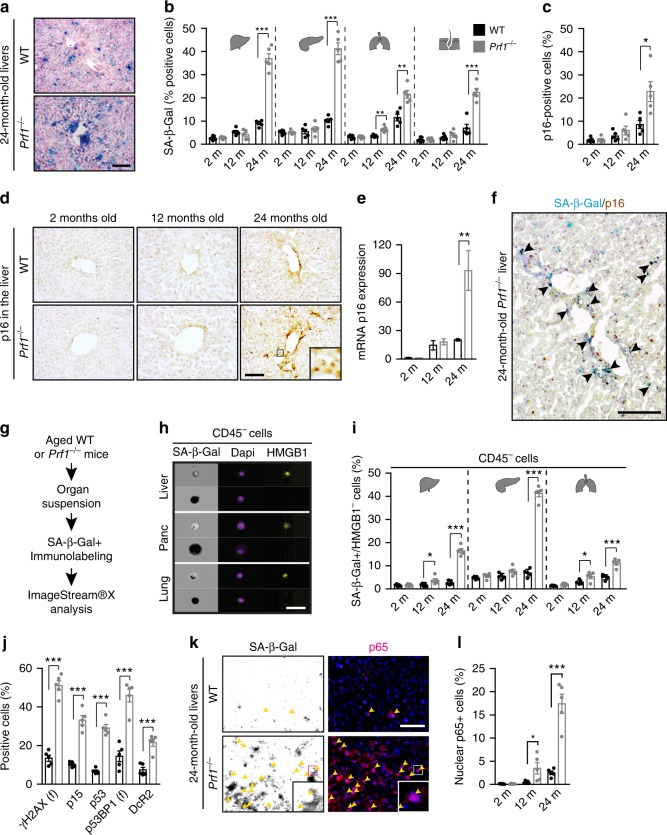
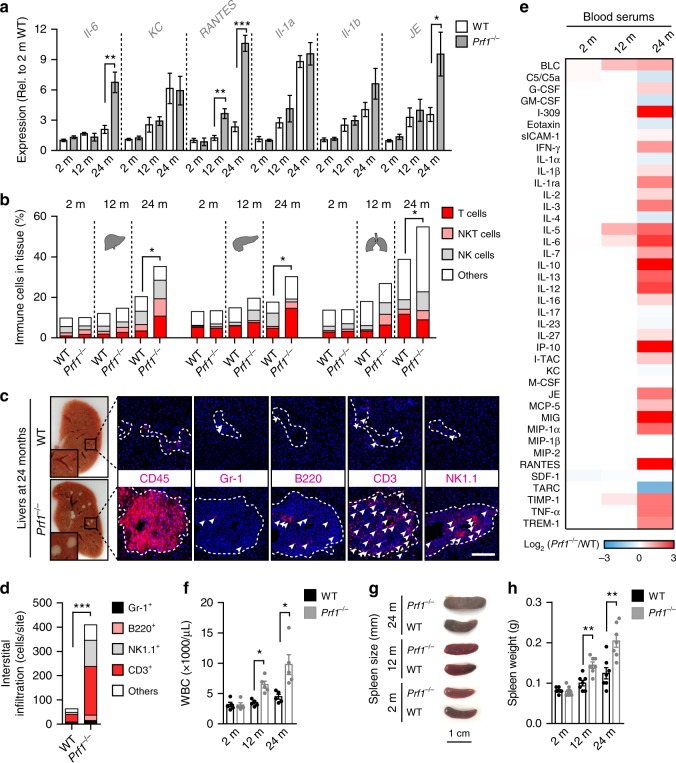
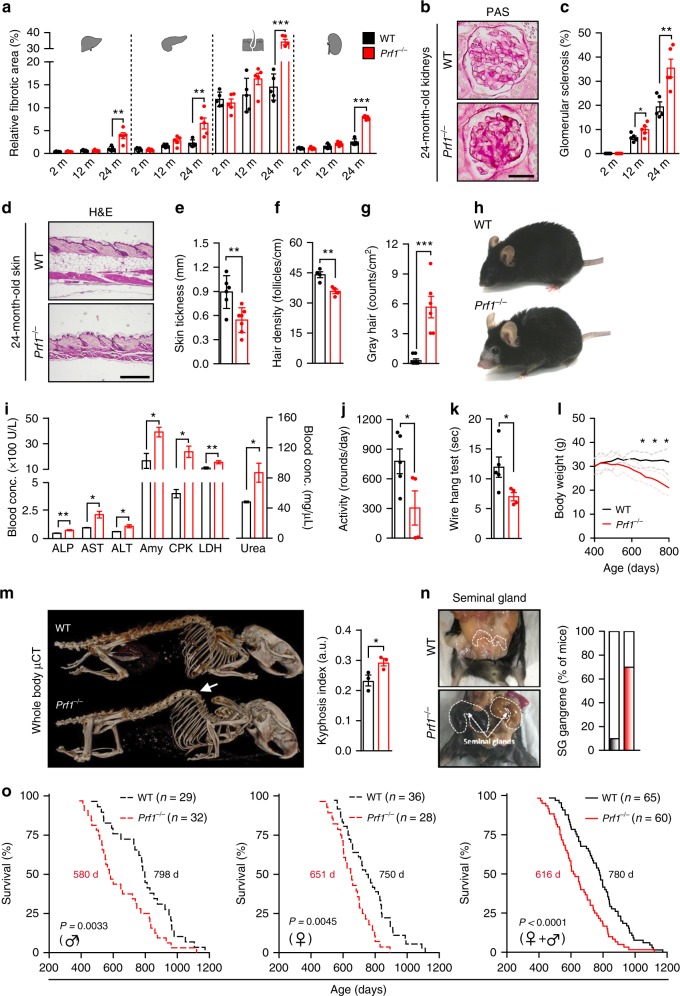
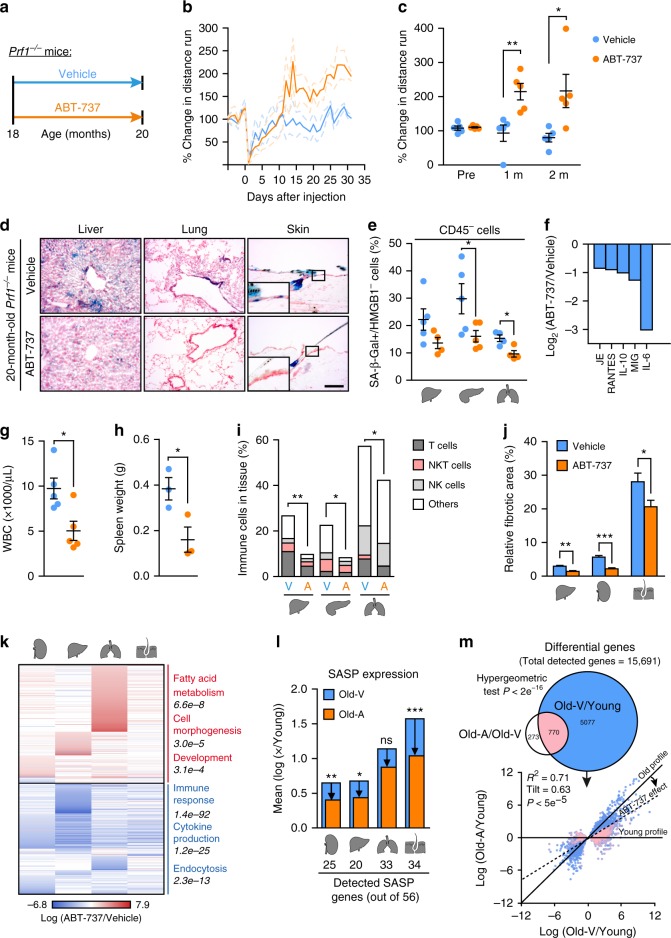
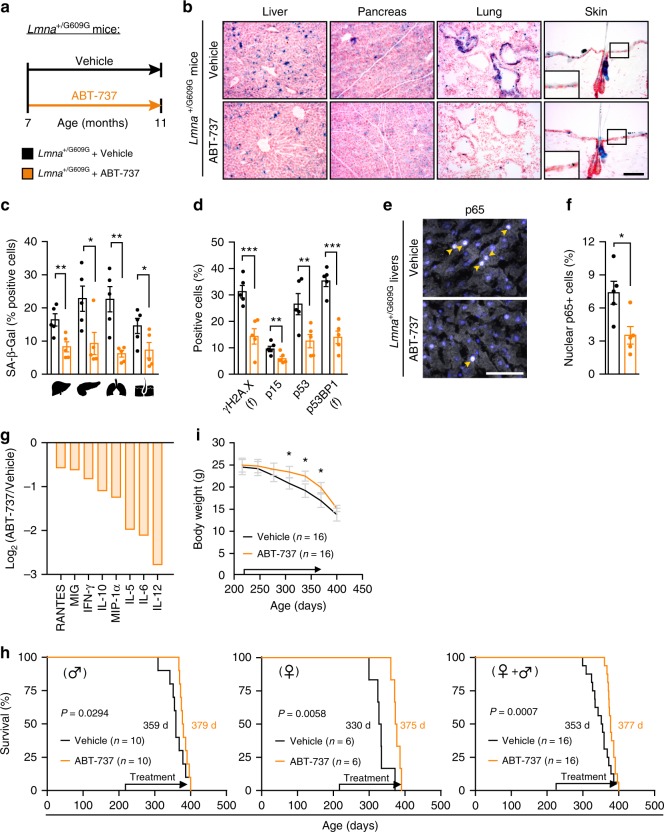
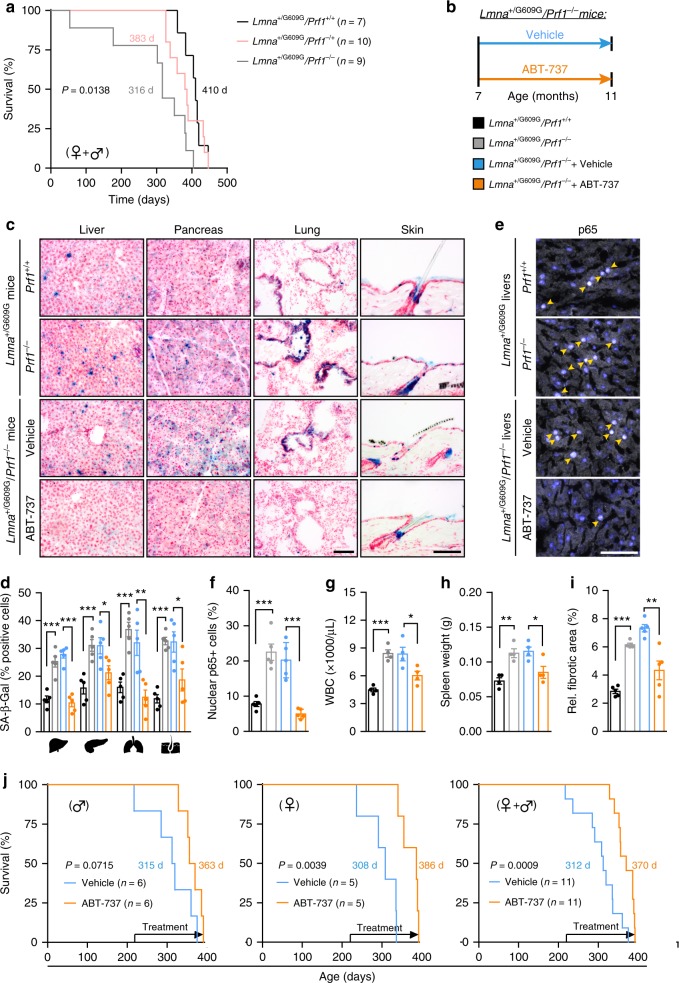
Cellular senescence is a stress response that imposes stable cell-cycle arrest in damaged cells, preventing their propagation in tissues. However, senescent cells accumulate in tissues in advanced age, where they might promote tissue degeneration and malignant transformation. The extent of immune-system involvement in regulating age-related accumulation of senescent cells, and its consequences, are unknown. Here we show that Prf1 −/− mice with impaired cell cytotoxicity exhibit both higher senescent-cell tissue burden and chronic inflammation. They suffer from multiple age-related disorders and lower survival. Strikingly, pharmacological elimination of senescent-cells by ABT-737 partially alleviates accelerated aging phenotype in these mice. In LMNA +/G609G progeroid mice, impaired cell cytotoxicity further promotes senescent-cell accumulation and shortens lifespan. ABT-737 administration during the second half of life of these progeroid mice abrogates senescence signature and increases median survival. Our findings shed new light on mechanisms governing senescent-cell presence in aging, and could motivate new strategies for regenerative medicine.
Overview
The claims and statistics of this paper haven’t been checked yet.
Free: it reads the open-access text and checks the first 5 claims that cite a source we can check. Create a free account to check every claim.
Integrity signals
Registry
Cites
Statistics
Figures
Verification
Claims the paper makes
The claims and statistics of this paper haven’t been checked yet.
Free: it reads the open-access text and checks the first 5 claims that cite a source we can check. Create a free account to check every claim.
Claims other papers make about this one
Each is checked against this paper’s own text: does it say what the citing paper says it does?
The source backs part of the claim, not all of it — or backs it for a different population, condition or comparison.
In the citing paper
“Nuclear DNA damage is often reported as a commonly underlying cause of senescence, mainly in the form of DNA double-strand breaks (DSBs)20 that activate the DNA damage response (DDR) pathway”
From Cellular senescence in ageing: from mechanisms to therapeutic opportunities (2021) · cites this paper as [20]
Experimental — accuracy not yet measuredThe cited source says what the claim attributes to it.
In the citing paper
“Senescence immunosurveillance is also essential to limit pathological fibrotic conditions and ageing20,145,151,157.”
From Cellular senescence in ageing: from mechanisms to therapeutic opportunities (2021) · cites this paper as [20]
The cited source says what the claim attributes to it.
In the citing paper
“Under some conditions, including old age, failed clearance of senescent cells leads to their accumulation and chronic SASP inflammation (Ovadya et al., 2018).”
From Cytoplasmic DNA: sources, sensing, and role in aging and disease (2021) · cites this paper as Ovadya et al., 2018
The cited source says what the claim attributes to it.
In the citing paper
“During the aging process, declining immune function leads to failures in senescence surveillance, resulting in accumulation of senescent cells.43”
From Cellular senescence and senescence-associated secretory phenotype via the cGAS-STING signaling pathway in cancer (2020) · cites this paper as [43]
The cited source says what the claim attributes to it.
In the citing paper
“Mounting evidence from human samples and preclinical animal models shows that the excessive presence of senescent cells is a contributing cause of ageing, which is featured by a functional decline in multiple physiological systems [39,40].”
From Immune Clearance of Senescent Cells to Combat Ageing and Chronic Diseases (2020) · cites this paper as [40]
3 more claims about this paper
Create a free account to see every claim other papers make about this one.
Self-check
Percentages, sums and reported differences re-computed from the paper’s own numbers.
The self-check needs the paper’s full text.
Citations
Cites
López-Otín, C., Blasco, M. A., Partridge, L., Serrano, M., & Kroemer, G. (2013) · Cell · doi:10.1016/j.cell.2013.05.039 · Cited by 14,982
Gene Expression Omnibus: NCBI gene expression and hybridization array data repository
Edgar, R. (2002) · Nucleic Acids Research · doi:10.1093/nar/30.1.207 · Cited by 13,288
A biomarker that identifies senescent human cells in culture and in aging skin in vivo.
Dimri, G. P., Lee, X., Basile, G., Acosta, M., Scott, G., Roskelley, C., Medrano, E. E., Linskens, M., Rubelj, I., & Pereira-Smith, O. (1995) · Proceedings of the National Academy of Sciences · doi:10.1073/pnas.92.20.9363 · Cited by 7,477
Inflamm‐aging: An Evolutionary Perspective on Immunosenescence
FRANCESCHI, C., BONAFÈ, M., VALENSIN, S., OLIVIERI, F., DE LUCA, M., OTTAVIANI, E., & DE BENEDICTIS, G. (2000) · Annals of the New York Academy of Sciences · doi:10.1111/j.1749-6632.2000.tb06651.x · Cited by 5,358
The senescence-associated secretory phenotype: the dark side of tumor suppression
Coppé, J.-P., Desprez, P.-Y., Krtolica, A., & Campisi, J. (2010) · Annual Review of Pathology: Mechanisms of Disease · doi:10.1146/annurev-pathol-121808-102144 · Cited by 5,206
Chronic Inflammation (Inflammaging) and Its Potential Contribution to Age-Associated Diseases
Franceschi, C., & Campisi, J. (2014) · The Journals of Gerontology Series A: Biological Sciences and Medical Sciences · doi:10.1093/gerona/glu057 · Cited by 3,891
Clearance of p16Ink4a-positive senescent cells delays ageing-associated disorders
Baker, D. J., Wijshake, T., Tchkonia, T., LeBrasseur, N. K., Childs, B. G., van de Sluis, B., Kirkland, J. L., & van Deursen, J. M. (2011) · Nature · doi:10.1038/nature10600 · Cited by 3,670
Aging, Cellular Senescence, and Cancer
Campisi, J. (2013) · Annual Review of Physiology · doi:10.1146/annurev-physiol-030212-183653 · Cited by 2,954
Naturally occurring p16Ink4a-positive cells shorten healthy lifespan
Baker, D. J., Childs, B. G., Durik, M., Wijers, M. E., Sieben, C. J., Zhong, J., A. Saltness, R., Jeganathan, K. B., Verzosa, G. C., Pezeshki, A., et al. (2016) · Nature · doi:10.1038/nature16932 · Cited by 2,876 · cited 1×
“Accumulation of senescent p16-positive cells shortens mouse lifespan (Baker et al, 2016).”
BackgroundCellular senescence: from physiology to pathology
Muñoz-Espín, D., & Serrano, M. (2014) · Nature Reviews Molecular Cell Biology · doi:10.1038/nrm3823 · Cited by 2,818
Cited by
Items 201–300 of 616
Extracellular Vesicles as “Very Important Particles” (VIPs) in Aging
Mas‐Bargues, C., & Alique, M. (2023) · International Journal of Molecular Sciences · doi:10.3390/ijms24044250 · Cited by 38
“have demonstrated for the first time that mesenchymal stem cell-derived EVs have significant age-dependent differences in their immune profiles [78].”
BackgroundLagger, C., Ursu, E., Equey, A., Avelar, R. A., Pisco, A. O., Tăcutu, R., & de Magalhães, J. P. (2023) · Nature Aging · doi:10.1038/s43587-023-00514-x · Cited by 38
“All these annotations are directly accessible from scDiffCom (Supplementary Tables 3–6).”
BackgroundAging reshapes the adaptive immune system from healer to saboteur
Delgado-Pulido, S., Yousefzadeh, M. J., & Mittelbrunn, M. (2025) · Nature Aging · doi:10.1038/s43587-025-00906-1 · Cited by 37
“Cytotoxic T cells have a pivotal role in the elimination of senescent cells, as evidenced in a mouse model deficient in perforin, which showed increased inflammation and accumulation of senescent cells in aged mice 30 .”
Hou, J., Yun, Y. J., Xue, J., Sun, M., & Kim, S. (2019) · Molecular Medicine Reports · doi:10.3892/mmr.2019.10677 · Cited by 36
Can Blood-Circulating Factors Unveil and Delay Your Biological Aging?
Rybtsova, N., Berezina, T. N., Kagansky, A., & Александрович, Р. С. (2020) · Biomedicines · doi:10.3390/biomedicines8120615 · Cited by 36
“Such aging of the immune system reduces immune surveillance, which leads to the emergence of foci of chronic infections, as well as of malignant proliferative disorders [50].”
BackgroundA BDNF-TrkB autocrine loop enhances senescent cell viability
Anerillas, C., Herman, A. B., Munk, R., Garrido, A., Lam, K.-W. G., Payea, M. J., Rossi, M., Tsitsipatis, D., Martindale, J. L., Piao, Y., et al. (2022) · Nature Communications · doi:10.1038/s41467-022-33709-8 · Cited by 35
Adoptive NK cell therapy: a potential revolutionary approach in longevity therapeutics
Deng, X., & Terunuma, H. (2024) · Immunity & Ageing · doi:10.1186/s12979-024-00451-2 · Cited by 36
“Impaired immunosurveillance accelerates the accumulation of SNCs and SASPs [52].”
BackgroundSahu, P., & Satapathy, T. (2025) · Inflammopharmacology · doi:10.1007/s10787-025-01867-y · Cited by 36
Du, H., Xiao, N., Zhang, S., Zhou, X., Zhang, Y., Lu, Z., Fu, Y., Huang, M., Xu, S., & Chen, Q. (2023) · iScience · doi:10.1016/j.isci.2023.107090 · Cited by 35
“TREX1 deletion-induced cellular senescence is accompanied by DNA damage and oxidative stress Cellular senescence can be induced by environmental stress leading to DNA damage.(11) In our RNA-Seq analysis, we found that the transcripts of the ATM were significantly up-regulated (Figure S1G).”
BackgroundContext‐dependent roles of cellular senescence in normal, aged, and disease states
Moiseeva, V., Cisneros, A., Cobos, A. C., Tarrega, A. B., Oñate, C. S., Perdiguero, E., Serrano, A. L., & Muñoz‐Cánoves, P. (2023) · The FEBS Journal · doi:10.1111/febs.16573 · Cited by 34
T cell control of inflammaging
Shchukina, I., Boháčová, P., & Artyomov, M. N. (2023) · Seminars in Immunology · doi:10.1016/j.smim.2023.101818 · Cited by 34
Ahmad, A., Braden, A. A., Khan, S., Xiao, J., & Khan, M. M. (2024) · Seminars in Immunopathology · doi:10.1007/s00281-024-01016-7 · Cited by 35
“Second-arily, immunosenescence program has impaired immune function which, in turn, accounts for the disrupted or alleviated rate of senescent cell clearance [96].”
Salminen, A. (2025) · Ageing Research Reviews · doi:10.1016/j.arr.2025.102694 · Cited by 34
“However, it seems that the origin of the accumulation of senescent cells with aging is attributable to impaired immune clearance rather than an upregulated senescence process (Ovadya et al., 2018; Kale et al., 2020; Salminen, 2024a).”
Ozdemir, S. A., Faizan, M. I., Kaur, G., Shaikh, S. B., Islam, K. U., & Rahman, I. (2025) · International Journal of Molecular Sciences · doi:10.3390/ijms26199687 · Cited by 35
p21 regulates expression of ECM components and promotes pulmonary fibrosis via CDK4 and Rb
Papismadov, N., Levi, N., Roitman, L., Agrawal, A., Ovadya, Y., Cherqui, U., Yosef, R., Akiva, H., Gal, H., & Krizhanovsky, V. (2024) · The EMBO Journal · doi:10.1038/s44318-024-00246-7 · Cited by 34
“Conversely, the accumulation of senescent cells in tissues, a process that occurs during aging, contributes to age-related pathologies, including fi brotic diseases, and shortens healthspan and lifespan (Baker et al, 2016; Ovadya et al, 2018).”
Self-citationCellular senescence—an aging hallmark in chronic obstructive pulmonary disease pathogenesis
Araya, J., & Kuwano, K. (2021) · Respiratory Investigation · doi:10.1016/j.resinv.2021.09.003 · Cited by 33
Sharma, R., Diwan, B., Sharma, A., & Witkowski, J. M. (2022) · Biogerontology · doi:10.1007/s10522-022-09995-6 · Cited by 33
Jiang, J., Yang, M., Zhu, H., Long, D., He, Z., Liu, J., He, L., Tan, Y., Akbar, A. N., Reddy, V. R., et al. (2024) · European Journal of Immunology · doi:10.1002/eji.202350603 · Cited by 34
SMARCA4 regulates the NK-mediated killing of senescent cells
Reen, V., D’Ambrosio, M., Søgaard, P. P., Tyson, K., Leeke, B. J., Clément, I., Dye, I. C., Pombo, J., Kuba, A., Lan, Y., et al. (2025) · Science Advances · doi:10.1126/sciadv.adn2811 · Cited by 33
“In particular, NK cells have been involved in the elimination of senescent cells in fibrosis ( 5 ), cancer ( 11 ), and aging ( 12 ).”
Yang, J., Jiang, Q., Liu, L., Peng, H., Wang, Y., Li, S., Tang, Y., Yu, J., Gan, R., & Liu, Z. (2020) · Aging · doi:10.18632/aging.104199 · Cited by 33
Stojiljkovic, M. R., Schmeer, C. W., & Witte, O. W. (2022) · Neuroscience · doi:10.1016/j.neuroscience.2022.02.018 · Cited by 33
Role of low-dose radiation in senescence and aging: A beneficial perspective
Xu, J., Liu, D., Zhao, D., Jiang, X. M., Meng, X., Jiang, L., Meina, Y., Zhang, L., & Jiang, H. (2022) · Life Sciences · doi:10.1016/j.lfs.2022.120644 · Cited by 32
The paradox of aging: Aging-related shifts in T cell function and metabolism
Quinn, K. M., Moreno-Vicencio, D., & Gruta, N. L. L. (2023) · Seminars in Immunology · doi:10.1016/j.smim.2023.101834 · Cited by 31
The Immune System and Cellular Senescence: A Complex Interplay in Aging and Disease
Ayoub, M., Jaoude, C. A., Ayoub, M., Hamadé, A., & Rima, M. (2025) · Immunology · doi:10.1111/imm.70036 · Cited by 31
“These accumulated senescent cells secrete immunosuppressive factors, triggering further immune dysfunction [35].”
Extracellular miRNAs in redox signaling: Health, disease and potential therapies
Ruiz, G. P., Camara, H., Fazolini, N. P. B., & Mori, M. A. (2021) · Free Radical Biology and Medicine · doi:10.1016/j.freeradbiomed.2021.05.004 · Cited by 32
Impact of senolytic treatment on immunity, aging, and disease
Lorenzo, E. C., Torrance, B. L., & Haynes, L. (2023) · Frontiers in Aging · doi:10.3389/fragi.2023.1161799 · Cited by 31
“With aging, in particular, declines in immune cell traf fi cking and clearance mechanisms further exacerbate SC accumulation and limit responsiveness to SASP signals (Ovadya et al., 2018).”
BackgroundMechanoregulation of lymphocyte cytotoxicity
Huse, M. (2025) · Nature reviews. Immunology · doi:10.1038/s41577-025-01173-2 · Cited by 31
“Senescent cells are particularly intriguing as potential targets of mechanosurveillance because they adopt an extended, F-actin-rich architecture and are known to be cleared by cytotoxic lymphocytes in vivo 108,109 .”
Beta Cell Therapies for Preventing Type 1 Diabetes: From Bench to Bedside
Brawerman, G. M., & Thompson, P. J. (2020) · Biomolecules · doi:10.3390/biom10121681 · Cited by 30
Progress and trends in the development of therapies for Hutchinson–Gilford progeria syndrome
Lai, W., & Wong, W. (2020) · Aging Cell · doi:10.1111/acel.13175 · Cited by 29
“, 2016), ABT-737 (Ovadya et al., 2018), sodium salicylate (Osorio et al.”
BackgroundMethodInfluentialSalminen, A. (2024) · Biogerontology · doi:10.1007/s10522-024-10114-w · Cited by 29
“For instance, Ovadya et al. (2018) demonstrated that deficiency in immunosurveillance activity, evoked either via genetic or pharmacological treatments, disturbed the clearance of senescent cells (SA-β-gal and p16-positive) from tissues in aged mice.”
BackgroundCD4 T cell therapy counteracts inflammaging and senescence by preserving gut barrier integrity
Heras, M. M. G. D. L., Carrasco, E., Pérez-Manrique, M., Inohara, N., Delgado-Pulido, S., Fernández-Almeida, Á., Gálvez-Castaño, M. I., Francos-Quijorna, I., Simó, C., García‐Cañas, V., et al. (2025) · Science Immunology · doi:10.1126/sciimmunol.adv0985 · Cited by 29
“In addition, impaired immunosurveillance can indirectly increase the burden of senescent cells in the tissues (35, 36).”
Sharma, R., & Padwad, Y. S. (2020) · Ageing Research Reviews · doi:10.1016/j.arr.2020.101141 · Cited by 29
Zhao, Z., Fan, X., Gu, Y., Han, J., Jia, Y., Ye, K., & Zhang, Y. Q. (2020) · Molecular Metabolism · doi:10.1016/j.molmet.2020.101149 · Cited by 29
“It is widely accepted that chronic inflammation is one of the characteristics of senescence and aging [55,56,67].”
BackgroundRahimpour, S., Clary, B. L., Nasoohi, S., Berhanu, Y. S., & Brown, C. M. (2024) · Aging and Disease · doi:10.14336/ad.2024.1293 · Cited by 28
“[35, 36] Recent discoveries have also connected TLR as one of the key players in age-related impairment, due to its overexpression in older plasma cells [37 – 39].”
Haematopoietic ageing in health and lifespan
Andersson, R., Mejía-Ramírez, E., & Florian, M. C. (2025) · Nature Cell Biology · doi:10.1038/s41556-025-01739-1 · Cited by 29
“…compartment and showed that the aged immune system is sufficient to induce senescence in solid organs such as the kidney 60 , which complements previous research that demonstrated the importance of a functional CD8 + T cell cytotoxic activity to clear senescent cells throughout the organism 86 .”
Luca, F. D., Camporeale, V., Leccese, G., Cuttano, R., Troise, D. E., Infante, B., Stallone, G., Netti, G. S., & Ranieri, E. (2025) · Cells · doi:10.3390/cells14221831 · Cited by 29
“This persistent presence of senescent cells intensifies inflammatory responses due to ongoing SASP production [34].”
Cellular senescence and frailty: a comprehensive insight into the causal links
Marcozzi, S., Bigossi, G., Giuliani, M. E., Giacconi, R., Piacenza, F., Cardelli, M., Brunetti, D., Segala, A., Valerio, A., Nisoli, E., et al. (2023) · GeroScience · doi:10.1007/s11357-023-00960-w · Cited by 28
“…senescent cells in aging are still not completely elucidated; however, it is likely that the increased rate of senescence-inducing damage with the functional decline of the immune system [54] as well as the resistance to apoptosis displayed by some senescent cells [55] play a role in this process.”
BackgroundP-selectin deficiency promotes liver senescence in sickle cell disease mice
Vats, R., Kaminski, T. W., Ju, E.-M., Brozska, T., Tütüncüoğlu, E., Tejero, J., Novelli, E. M., Sundd, P., & Pradhan‐Sundd, T. (2021) · Blood · doi:10.1182/blood.2020009779 · Cited by 28
Liu, Y., Hong, T., Lv, M., Guo, X., Zhang, P. Y., Yan, A., & Wei, W. (2025) · Alzheimer s Research & Therapy · doi:10.1186/s13195-025-01783-x · Cited by 29
“All values are presented as mean ± standard error of the mean (SEM) and were analyzed using GraphPad Prism 10.”
Postbiotics: A Promising Approach to Combat Age-Related Diseases
Hamdi, A., Lloyd, C., Eri, R. D., & Van, T. T. H. (2025) · Life · doi:10.3390/life15081190 · Cited by 27
“Damaging hallmarks include hampering of immune surveillance and promoting of immunosenescence to accelerate the accumulation of senescent cells, tissue fibrosis, organ dysfunction, and eventually unhealthy ageing, making individuals more susceptible to disease [130].”
Aging Leukocytes and the Inflammatory Microenvironment of the Adipose Tissue
Dahlquist, K. J. V., & Camell, C. D. (2021) · Diabetes · doi:10.2337/dbi21-0013 · Cited by 29
Intercellular communication is crucial in the regulation of healthy aging via exosomes
Sun, H., Xia, T., Ma, S., Lv, T., & Li, Y. (2025) · Pharmacological Research · doi:10.1016/j.phrs.2025.107591 · Cited by 27
Zhao, X., Zhao, Y., Jiang, Y., & Zhang, Q. (2022) · Frontiers in Immunology · doi:10.3389/fimmu.2022.952708 · Cited by 26
“Moreover, impaired immune surveillance can lead to senescent cell accumulation (83, 84).”
BackgroundSenolytic therapies for cardiovascular aging: tackling fibrosis and metabolic dysfunction
Atlante, S., Zamperla, M. G., Cis, L., Farsetti, A., & Gaetano, C. (2025) · European Journal of Internal Medicine · doi:10.1016/j.ejim.2025.07.009 · Cited by 25
Involvement of NRF2 and AMPK signaling in aging and progeria: a digest
Petsouki, E., Gerakopoulos, V., Gianniou, D. D., Heiß, E. H., & Trougakos, I. P. (2025) · Redox Biology · doi:10.1016/j.redox.2025.103782 · Cited by 25
Franck, M., Daunizeau, C., Aronoff, J. E., Tanner, K., Trumble, B. C., Franceschi, C., Hertel, J., Fülöp, T., Lemoine, M., Gurven, M., et al. (2025) · Ageing Research Reviews · doi:10.1016/j.arr.2025.102880 · Cited by 25
Analysis of senescence in gingival tissues and gingival fibroblast cultures
Furukawa, M., Matsuda, K., Aoki, Y., Yamada, M., Wang, J., WATANABE, M., Kurosawa, M., Shikama, Y., & Matsushita, K. (2022) · Clinical and Experimental Dental Research · doi:10.1002/cre2.581 · Cited by 25
“Further, the accumulation of senescent cells reportedly contributes to inflammation and a decrease in the function of each organ (Ovadya et al., 2018), and it has been reported that the accumulation of senescent cells contributes to an increase in inflammation, thereby reducing the function of each…”
BackgroundNutrition and immunity: perspectives on key issues and next steps
Dunbar, C. L., Aukema, H. M., Calder, P. C., Gibson, D. L., Henrickson, S. E., Khan, S., Mailhot, G., Panahi, S., Tabung, F. K., Tom, M., et al. (2023) · Applied Physiology, Nutrition, and Metabolism · doi:10.1139/apnm-2022-0276 · Cited by 24
Small-Molecule Therapeutic Perspectives for the Treatment of Progeria
Macicior, J., Marcos‐Ramiro, B., & Ortega‐Gutiérrez, S. (2021) · International Journal of Molecular Sciences · doi:10.3390/ijms22137190 · Cited by 24
“Additionally, the selective removal of senescent cells with the senolytic compound ABT-737 (Figure 6) has a positive impact on the global senescent signature and in the median survival, which is significantly increased in the heterozygous Lmna+/G609G progeroid mouse model treated with this compound during their second…”
BackgroundQamsari, E. S., & Stewart, D. J. (2024) · Frontiers in Immunology · doi:10.3389/fimmu.2024.1403669 · Cited by 24
Li, A., Kou, R., Wang, R., Wang, J., Zhang, B., Liu, J., Hu, Y., & Wang, S. (2024) · Aging Cell · doi:10.1111/acel.14343 · Cited by 24
Senolytics and the compression of late-life mortality
Kowald, A., & Kirkwood, T. B. L. (2021) · Experimental Gerontology · doi:10.1016/j.exger.2021.111588 · Cited by 24
Saxena, S., & Kumar, S. (2020) · GeroScience · doi:10.1007/s11357-020-00167-3 · Cited by 24
“Pharmacological treatment with ABT737 in these mice significantly reduced the number of senescent cells in the liver, pancreas, lungs, and skin of these mice and partially ameliorated progeric phenotype (Ovadya et al. 2018).”
BackgroundHuang, R., Zhang, J., Sun, M., Xu, L., Kuang, H., Xu, C., & Guo, L. (2025) · International Journal of Biological Macromolecules · doi:10.1016/j.ijbiomac.2025.141129 · Cited by 26
Sharma, R. (2021) · PharmaNutrition · doi:10.1016/j.phanu.2021.100281 · Cited by 23
Xu, W., Zhao, T., Chen, H., Huang, N., Gong, H., Zhang, J., Yu, Y., Li, T., Zhang, G., Gong, C., et al. (2022) · Biochemical Pharmacology · doi:10.1016/j.bcp.2022.115045 · Cited by 23
The Impact of T-cell Aging on Alloimmunity and Inflammaging
Iske, J., Dedeilia, A., Xiao, Y., Martin, F., Emmert, M. Y., Sage, P. T., Abdi, R., Zhou, H., & Tullius, S. G. (2023) · Transplantation · doi:10.1097/tp.0000000000004715 · Cited by 23
“87 T-cell immunosenescence may thus further contribute to senescent cell accumulation in older organs promoting more pronounced inflammaging while contributing to an accelerated aging process that may, at least in part, drive chronic allograft nephropathy (Figure 3).”
BackgroundStimuli-Specific Senescence of Primary Human Lung Fibroblasts Modulates Alveolar Stem Cell Function
Melo-Narváez, M. C., Bramey, N., See, F., Heinzelmann, K., Ballester, B., Steinchen, C., Jain, E., Federl, K., Hu, Q., Dhakad, D., et al. (2024) · Cells · doi:10.3390/cells13131129 · Cited by 23
“…can Indeed, elevated levels of CDKN1A/P21, CDKN2A/P16, and SA-β -galactosidase were found in fi broblasts from both IPF and COPD lungs and therefore, have been linked to the disease pathobiology [16,35,40–42]. evade immune clearance, thereby accumulating and promoting organ dysfunction [36–39].”
BackgroundVenkataraman, A., Kordic, I., Li, J., Zhang, N. Y., Bharadwaj, N. S., Fang, Z., Das, S., & Coskun, A. F. (2024) · npj Aging · doi:10.1038/s41514-024-00178-w · Cited by 23
Molecular mechanisms and potential interventions during aging-associated sarcopenia
Luo, X., Wang, J., Ju, Q., Li, T., & Bi, X. (2024) · Mechanisms of Ageing and Development · doi:10.1016/j.mad.2024.112020 · Cited by 23
Organismal Aging and Oxidants beyond Macromolecules Damage
Clement, M., & Luo, L. (2020) · PROTEOMICS · doi:10.1002/pmic.201800400 · Cited by 23
Kellers, F., Fernandez, A., Konukiewitz, B., Schindeldecker, M., Tagscherer, K. E., Heintz, A., Jesinghaus, M., Roth, W., & Foersch, S. (2022) · Frontiers in Medicine · doi:10.3389/fmed.2022.865230 · Cited by 23
“Disruption of the tumor immunosurveillance results in accumulation of senescent cells (39), which might be the cause for the negative prognosis we observed in patients with extensive expression of senescence markers.”
BackgroundCellular senescence in renal ischemia-reperfusion injury
Chen, Y., & Li, Y. (2025) · Chinese Medical Journal · doi:10.1097/cm9.0000000000003698 · Cited by 22
“[9] Features and markers of SnCs Cellular senescence was initially defined as a non-proliferative yet viable state observed in cultured fibroblasts, primarily attributed to telomere shortening.”
Nunes, J. M., Kell, L., Slaghekke, A., Wüst, R. C. I., Fielding, B. C., Kell, D. B., & Pretorius, E. (2026) · Cell Death and Disease · doi:10.1038/s41419-025-08162-2 · Cited by 22
“This phenotype is highly immunogenic (containing, for example, interleukin (IL)-6, IL-8, and tumour necrosis factor (TNF)- α )); thus, senescent cells attract immune cells, such as CD8+T cells, natural killer cells, and neutrophils, to coordinate their removal [69, 70].”
Santamaria, J. C., & Irla, M. (2026) · Science Advances · doi:10.1126/sciadv.aeb2970 · Cited by 23
“In addition to dysfunctions in immune responses and consistent with the recognized role of T cells in immune surveillance of senescent cells, recent studies have emphasized the major role of T cells in maintaining physiological homeostasis and their contribution to age-related decline ( 19 – 21 ).”
The ageing immune system as a potential target of senolytics
Du, P. Y., Gandhi, A., Bawa, M., & Gromala, J. (2023) · Oxford Open Immunology · doi:10.1093/oxfimm/iqad004 · Cited by 22
“Over time, SnCs accumulate due to poor immune clearance and their characteristic resistance to apoptosis [15, 16].”
BackgroundHuang, Y., Li, S., Ye, W., Wang, H., Su, J., Gao, L., Shi, R., Mou, X., Leng, S. X., Xiao, C., et al. (2025) · Vaccines · doi:10.3390/vaccines13040431 · Cited by 22
“On , adaptive immune cells, such as T and B cells, exhibit reduced cytotoxicity [87], the other hand, adaptive immune cells, such as T and B cells, exhibit reduced cytotoxicity [87], leading to a weakened ability to clear senescent cells. leading to a weakened ability to clear senescent cells.”
CD4 T cells acquire Eomesodermin to modulate cellular senescence and aging
Elyahu, Y., Feygin, I., Eremenko, E., Pinkas, N., Zemer, A., Shicht, A., Berner, O., Avigdory-Meiri, R., Nemirovsky, A., Reshef, K., et al. (2025) · Nature Aging · doi:10.1038/s43587-025-00953-8 · Cited by 21
Self-citationFrom Neuron‐Centric to Glia‐Centric: How Aging Glial Networks Drive Neurodegenerative Disease
Hayashide, L. D. S., Pessoa, B., Dias, G. R., Pontes, B., Pinto, R. S., & Diniz, L. P. (2026) · Journal of Neurochemistry · doi:10.1111/jnc.70361 · Cited by 21
“Although senescent cells can emerge at any stage of life, maintaining a balance between their production and clearance is essential (Demaria et al. 2014; Ovadya et al. 2018).”
Wang, X., Wang, Q., Yin, P., Chen, L., Zhao, X., Wen, D., & Tan, Y. (2022) · Cell and Tissue Research · doi:10.1007/s00441-022-03697-8 · Cited by 21
“A complex skin environment network affects the homeostasis, metabolism, and barrier function of the skin leading to the occurrence and development of dermatological diseases (Lephart 2016; Shmulevich and Krizhanovsky 2021; Ovadya et al. 2018).”
BackgroundSenescent T Cells in Age-Related Diseases
Yu, P.-J., Zhou, M. L., Liu, Y., & Du, J. (2024) · Aging and Disease · doi:10.14336/ad.2024.0219 · Cited by 22
“After knocking out the gene encoding PRF1, apoptosis mediated by granule cytotoxicity is disabled, leading to impaired immune surveillance [129].”
Senescence in the ageing skin: a new focus on m TORC 1 and the lysosome
Smith, P., & Carroll, B. (2024) · FEBS Journal · doi:10.1111/febs.17281 · Cited by 21
“…senescent cells, as shown by in vivo studies of senescence in liver tissue [8,9], the age-dependent accumulation of senescent cells may be a result of a decline in the efficacy of the immune system — an idea supported by the increased senescent load seen in immune-deficient ageing mouse models [10].”
InfluentialSenescence, Aging and Disease Throughout the Gastrointestinal System
Ferreira-González, S., Matsumoto, T., Hara, E., & Forbes, S. J. (2025) · Gastroenterology · doi:10.1053/j.gastro.2025.06.010 · Cited by 20
Memory regulatory T cells in pregnancy
Chen, Z., Zhang, Y., Kwak-Kim, J. Y.-H., & Wang, W. (2023) · Frontiers in Immunology · doi:10.3389/fimmu.2023.1209706 · Cited by 20
Huang, Z., Xu, P., Hess, D. C., & Zhang, Q. (2024) · Translational Neurodegeneration · doi:10.1186/s40035-024-00457-2 · Cited by 20
SIRT3-Mediated Mitochondrial Regulation and Driver Tissues in Systemic Aging
Šešelja, K., Šimunić, E., Sobočanec, S., Podgorski, I. I., Pinterić, M., Hadžija, M. P., Balog, T., & Belužić, R. (2025) · Genes · doi:10.3390/genes16121497 · Cited by 20
“Locally, accumulated senescent fibroblasts and endothelial cells contribute to extracellular matrix degradation and vascular stiffening, while senescent immune cells impair immune surveillance, amplifying low-grade inflammaging [52,53].”
Decreased thymic output predicts progression of chronic kidney disease
Iio, K., Kabata, D., Iio, R., Shibamoto, S., Watanabe, Y., Morita, M., Imai, Y., Hatanaka, M., Omori, H., & Isaka, Y. (2023) · Immunity & Ageing · doi:10.1186/s12979-023-00333-z · Cited by 19
“However, the relationship between T cell senescence and CKD progression remains unclear, although immune senescence has been suggested to promote systemic and kidney aging and decline in renal function in mice [17, 18, 23, 24].”
BackgroundMolecular Markers of Blood Cell Populations Can Help Estimate Aging of the Immune System
Rybtsova, N., Berezina, T. N., & Александрович, Р. С. (2023) · International Journal of Molecular Sciences · doi:10.3390/ijms24065708 · Cited by 20
“Ageing of several cellular components of immunity results in gradual failures in the functioning of this protective mechanism and in various immunodeficiencies that cause impaired immune surveillance and reduction of certain peripheral immune responses [17].”
BackgroundSharma, R. (2024) · Cell Biochemistry and Function · doi:10.1002/cbf.3970 · Cited by 20
“Although it is as yet unclear why tissue senescent cell burden increases with age, there is increasing evidence that deregulations of the immune system can drive the accumulation of senescent cells and thus increase tissue senescent cell burden 41 (Figure 1).”
Hernández‐González, F., Pietrocola, F., Cameli, P., Bargagli, E., Prieto‐González, S., Cruz, T., Mendoza, N., Rojas, M. M., Serrano, M., Agustí, A. G. N., et al. (2024) · International Journal of Molecular Sciences · doi:10.3390/ijms25147554 · Cited by 19
Hugo, C., Asante, I., Sadybekov, A., Katritch, V., & Yassine, H. N. (2024) · Antioxidants and Redox Signaling · doi:10.1089/ars.2024.0794 · Cited by 20
“…number of senescent cells in the body accumulates with age (Hudgins et al., 2018; Tuttle et al., 2020), partly due to impaired immune surveillance (Ovadya et al., 2018), and this prolonged accumulation of senescent cells can promote in fl ammation, tissue dysfunction, and the pathogenesis of…”
Accelerated Cellular Senescence in Progressive Multiple Sclerosis: A Histopathological Study
Papadopoulos, D., Magliozzi, R., Bandiera, S., Cimignolo, I., Barusolo, E., Probert, L., Gorgoulis, V. G., Reynolds, R., & Nicholas, R. S. (2025) · Annals of Neurology · doi:10.1002/ana.27195 · Cited by 19
“…cell clearance by the immune system is thought to be highly regulated and may contribute to the accelerated brain volume loss seen in MS. 61 – 63 Recognizing CS as a pathogenetic mechanism of age-related neurodegeneration could provide a promising therapeutic target for neuroprotection,…”
Fleyshman, D. I., Wakshlag, J. J., Huson, H. J., Loftus, J. P., Olby, N. J., Brodsky, L., Gudkov, A. V., & Andrianova, E. L. (2021) · Aging · doi:10.18632/aging.203600 · Cited by 19
“Failure of innate immunity manifests as ineffective “garbage removal” functions, resulting in the accumulation of cellular debris, elevated cancer risk, and an increased number of senescent cells [79, 80].”
BackgroundLagger, C., Ursu, E., Equey, A., Avelar, R. A., Pisco, A. O., Tăcutu, R., & de Magalhães, J. P. (2021) · bioRxiv (Cold Spring Harbor Laboratory) · doi:10.1101/2021.08.13.456238 · Cited by 19
“Results are returned in a convenient format for downstream analyses and interpretation (6).”
BackgroundTranslating cellular senescence research into clinical practice for metabolic disease
Chaib, S., Palmer, A. K., Wyles, S. P., Musi, N., Kirkland, J. L., & Tchkonia, T. (2025) · Nature Reviews Endocrinology · doi:10.1038/s41574-025-01187-9 · Cited by 19
T-cell immunity against senescence: potential role and perspectives
Matveeva, K. S., Vasilieva, M., Minskaia, E., Александрович, Р. С., & Shevyrev, D. (2024) · Frontiers in Immunology · doi:10.3389/fimmu.2024.1360109 · Cited by 18
“Many of these factors are pro-in fl ammatory and attract macrophages, NK and NKT cells, neutrophils, other immune system cells, and natural IgM antibodies that provide the removal of old cells (30, 31, 34).”
BackgroundThe Role of Aging and Senescence in Immune Checkpoint Inhibitor Response and Toxicity
Jain, S. S., Sojo, G. B., Sun, H., Friedland, B. N., McNamara, M. E., Schmidt, M. O., & Wellstein, A. (2024) · International Journal of Molecular Sciences · doi:10.3390/ijms25137013 · Cited by 18
“Exactly how these changes in lymphocyte function and abundance may impact ICI efficacy or toxicity has not been well studied, but conflicting clinical evidence suggests that age-related changes in these cell populations may or may not impact response to ICI.”
BackgroundChronological versus immunological aging: Immune rejuvenation to arrest cognitive decline
Basurco, L., Abellanas, M. A., Purnapatre, M., Antonello, P., & Schwartz, M. (2024) · Neuron · doi:10.1016/j.neuron.2024.12.004 · Cited by 18
Preclinical Advances of Therapies for Laminopathies
Benarroch, L., Cohen, E., Atalaia, A., Yaou, R. B., Bonne, G., & Bertrand, A. (2021) · Journal of Clinical Medicine · doi:10.3390/jcm10214834 · Cited by 18
Chen, F., Gong, X., Meng, X., Feng, Y., Wu, J., Yu, C., & Li, J. (2022) · Frontiers in Oncology · doi:10.3389/fonc.2022.857994 · Cited by 18
“Previous results have shown that cellular senescence is regulated by aging-related genes (AGs), which present important functions in tumor malignancy (19, 20).”
BackgroundCD137 Regulates Bone Loss via the p53 Wnt/β-Catenin Signaling Pathways in Aged Mice
Han, J., Wang, Y., Zhou, H., Zhang, Y., & Wan, D. (2022) · Frontiers in Endocrinology · doi:10.3389/fendo.2022.922501 · Cited by 18
“Senescent cells accumulate with age and secrete senescenceassociated molecules into the bone marrow microenvironment (36).”
BackgroundMetabolic dysregulation of trained immunity in immune aging and the impact of dietary patterns
Grigorescu, A., Riza, A., Streață, I., & Netea, M. G. (2025) · American Journal of Physiology-Cell Physiology · doi:10.1152/ajpcell.00153.2025 · Cited by 17
Liu, J. A., Walton, J. C., Bumgarner, J. R., Walker, W. H., Meléndez‐Fernández, O. H., DeVries, A. C., & Nelson, R. J. (2022) · Chronobiology International · doi:10.1080/07420528.2022.2135442 · Cited by 17
“…implicated in cellular senescence, where impaired immune surveillance accelerates aging, accumulation of senescent cells and chronic inflammation (Ovadya et al. 2018); however, the relationship between disruptions to circadian rhythms and its effects on immune function and aging remains…”
BackgroundThe Roles of Myeloid Cells in Aging-related Liver Diseases
Yao, J., Li, Y., & Wang, H. (2023) · International Journal of Biological Sciences · doi:10.7150/ijbs.82352 · Cited by 18
“Senescent cells accumulate as a result of age-related immune system degradation, which may cause age-related functional decline and diseases [111].”
BackgroundLandsberger, T., Amit, I., & Alon, U. S. (2023) · GeroScience · doi:10.1007/s11357-023-00915-1 · Cited by 17
“Recently, transcriptomic data pertaining to the four paradigmatic ger-oprotective interventions (GIs) has become available [3–6], calling for a comprehensive comparative analysis.”
Self-citationThe Regulation of Cellular Senescence in Cancer
Zhang, X., Gao, Y., Zhang, S., Wang, Y., Du, Y., Hao, S., & Ni, T. (2025) · Biomolecules · doi:10.3390/biom15030448 · Cited by 17
“Unfortunately, senescence is irreversible, and its decline in biological function is associated with a higher risk of age-related diseases such as cancer, diabetes, and hypertension.”
Cai, D., Zhao, Z., Hu, J., Dai, X., Zhong, G., Gong, J., & Qi, F. (2022) · Frontiers in Surgery · doi:10.3389/fsurg.2022.836080 · Cited by 17
“Agingrelated genes (AGs) can regulate cellular senescence and play a key role in tumor malignancy (7, 18).”
BackgroundTelomeres, the loop tying cancer to organismal life‐histories
Újvári, B., Raven, N., Madsen, T. R. L., Klaassen, M., Dujon, A. M., Schultz, A. G., Nunney, L., Lemaître, J., Giraudeau, M., & Thomas, F. (2022) · Molecular Ecology · doi:10.1111/mec.16488 · Cited by 17
Fraile‐Μartinez, O., León-Oliva, D. D., Boaru, D. L., Castro-Martinez, P. D., Montero, C. G., Barrena-Blázquez, S., García-García, J., García‐Honduvilla, N., Álvarez‐Mon, M., López-González, L., et al. (2024) · Frontiers in Genetics · doi:10.3389/fgene.2024.1345459 · Cited by 17
“…the number of senescent cells in the tissues and contribute to the development and progression of aging-related diseases such as cancer, neurodegenerative diseases, atherosclerosis, osteoarthritis or pulmonary fi brosis (Burton and Stolzing, 2018; Ovadya et al., 2018; Mylonas and O ’ Loghlen, 2022).”
BackgroundFailure of immunosurveillance accelerates aging
Pérez-Lanzón, M., Zitvogel, L., & Kroemer, G. (2019) · OncoImmunology · doi:10.1080/2162402x.2019.1575117 · Cited by 17
“Importantly, this phenotype was attenuated by treating mice with the senolytic agent ABT-737, which reduced the accumulation of senescent cells and decreased histological, functional and transcriptional signs of aging.(9) Moreover, in a mouse model of Hutchinson–Gilford progeria syndrome (HGPS) with the LMNA genotype,…”
BackgroundInfluential
Metadata
- Authors
- Ovadya, Y., Landsberger, T., Leins, H., Vadai, E., Gal, H., Biran, A., Yosef, R., Sagiv, A., Agrawal, A., Shapira, A., Windheim, J., Tsoory, M., Schirmbeck, R., Amit, I., Geiger, H., & Krizhanovsky, V.
- Affiliations
- Weizmann Institute of Science (IL)
- Universität Ulm (DE)
- University Hospital Ulm (DE)
- Cincinnati Children's Hospital Medical Center (US)
- Corresponding author
- Krizhanovsky, Valery
- ORCID
- Venue
- Nature Communications
- Published
- 2018-12-21
- Volume
- 9
- Issue
- 1
- Pages
- 5435-5435
- ISSN
- 2041-1723 (ISSN-L)
- PMC
- PMC6303397
- OpenAlex
- W2904408826
- Semantic Scholar
- e004152eaa5ce10f6fdd255845a11ff32c0d928a
- Cited by
- 578
- References
- 72
- Citations by year
- 2026: 79 · 2025: 84 · 2024: 80 · 2023: 77 · 2022: 74 · 2021: 76 · 2020: 78 · 2019: 30
- FWCI
- 31.54
- Type
- journal article
- Language
- en
- Open access
- gold
- doi.org
- Licence
- cc-by
- creativecommons.org/licenses/by/4.0 (tdm)
- creativecommons.org/licenses/by/4.0 (vor)
- Locations
- Nature Communications (publishedVersion, cc-by)
- Europe PMC (PubMed Central) (publishedVersion, cc-by)
- PubMed Central (publishedVersion, cc-by)
- PubMed (publishedVersion)
- RePEc: Research Papers in Economics (submittedVersion)
- DOAJ (DOAJ: Directory of Open Access Journals) (submittedVersion, cc-by-sa)
- DOAJ (DOAJ: Directory of Open Access Journals) (submittedVersion)
- Funders
- Deutsche Forschungsgemeinschaft
- Universidad de Oviedo
- Topics
- Life Sciences › Biochemistry, Genetics and Molecular Biology › Cell Biology › Telomeres, Telomerase, and Senescence
- Life Sciences › Biochemistry, Genetics and Molecular Biology › Aging › Genetics, Aging, and Longevity in Model Organisms
- Health Sciences › Medicine › Geriatrics and Gerontology › Sirtuins and Resveratrol in Medicine
- Keywords
- cellular senescence, senolytics, ABT-737, immune surveillance, cytotoxic T lymphocytes, chronic inflammation, accelerated aging, lifespan, senescent cell accumulation, regenerative medicine
- MeSH terms
- Immunosenescence, Animals, Biphenyl Compounds, Drug Evaluation, Preclinical, Female, Inflammation, Male, Mice, Inbred C57BL, Nitrophenols, Piperazines, Progeria, Sulfonamides, Cellular Senescence, Mice, Knockout, Proto-Oncogene Proteins c-bcl-2, Perforin
About these checks
Registry, retraction, Cites and statistics results are computed, not judged, with one exception: a printed reference that no index lists is read once by a model before it counts as a citation error. Claims are extracted by a model and kept only when their quote appears verbatim in the text; each cited source is then checked, with a model’s help, for whether it says what the claim relies on. Those verdicts can be wrong — read the claim’s quote and the cited source before relying on one.
Statistics and arithmetic are recomputed, not judged.
Confidence bands are shown only for fields calibrated on our annotated test set. None is calibrated yet, so no band is shown.
What counts as a claim ›How we measure confidence ›How we check this ›
Are you an author, or do you see a problem with this page? Request a review
Data sources
Bibliographic data: Semantic Scholar, OpenAlex, Crossref.
Contains information from the Semantic Scholar Academic Graph Datasets, made available under the ODC Attribution License (ODC-BY 1.0).
Semantic Scholar’s data is described in: Kinney, R., et al. (2023). The Semantic Scholar Open Data Platform. arXiv:2301.10140.
