

Impaired immune surveillance accelerates accumulation of senescent cells and aging
Open accessThe DOI matches its Crossref record; 71 of the 72 references it cites were found in a registry or an index.
Abstract
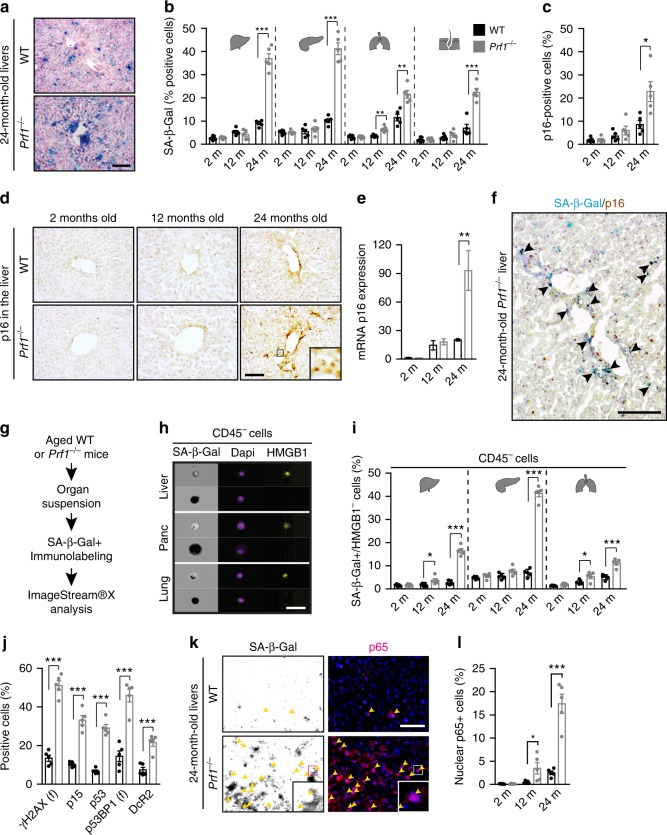
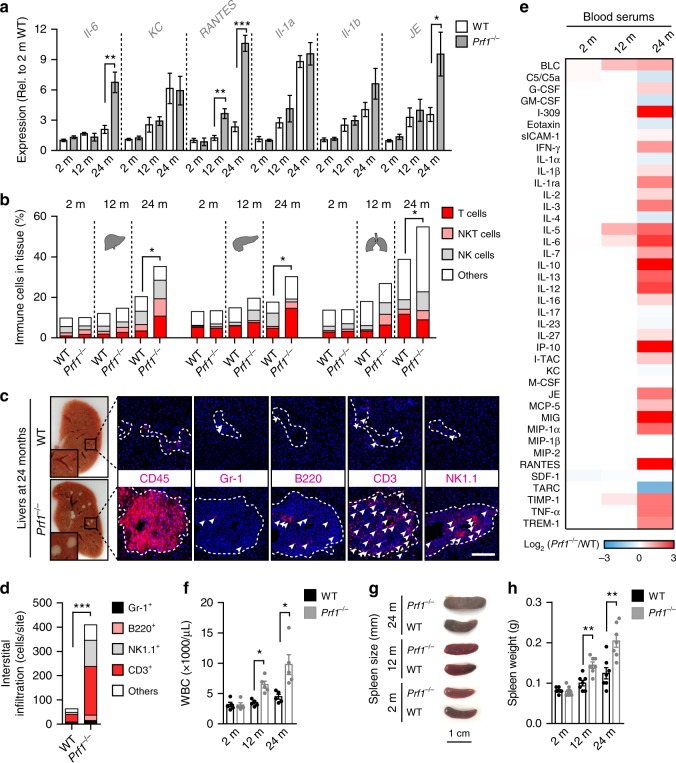
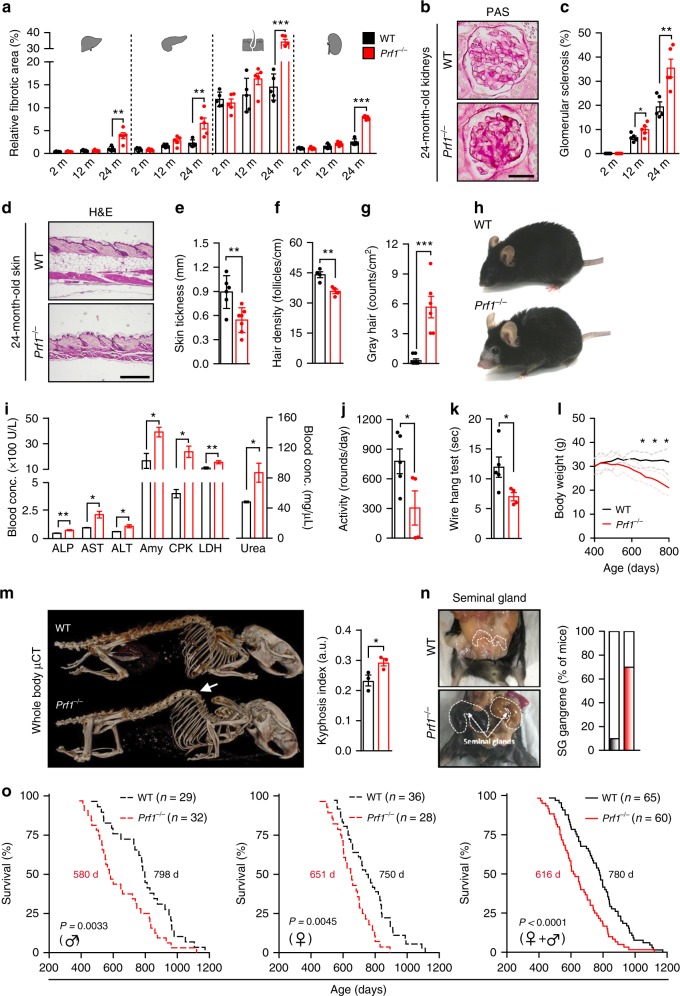
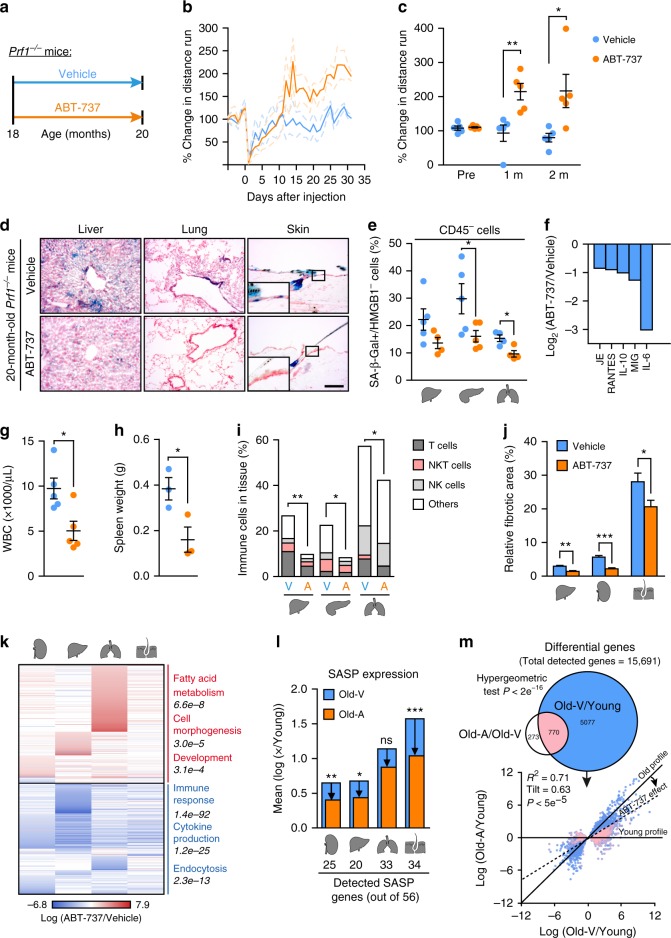
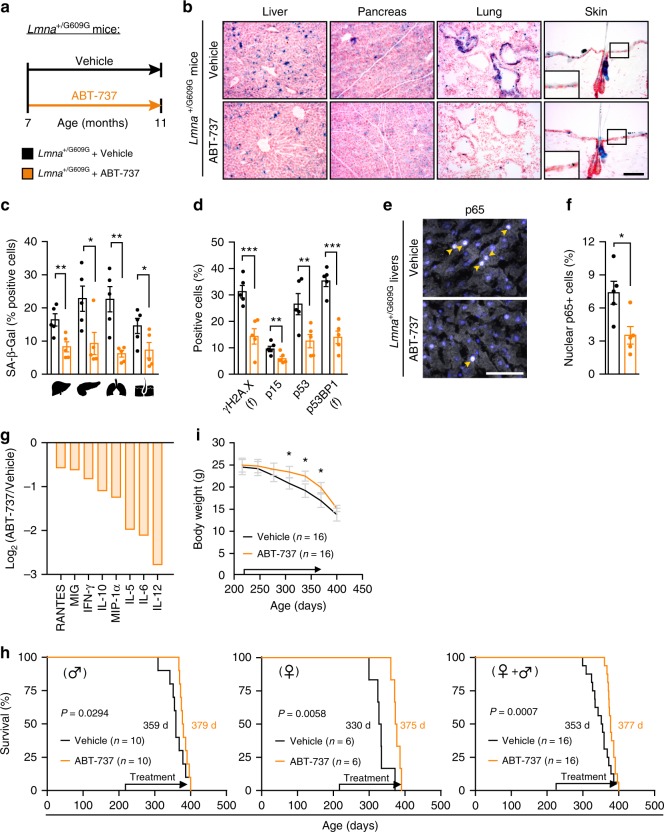
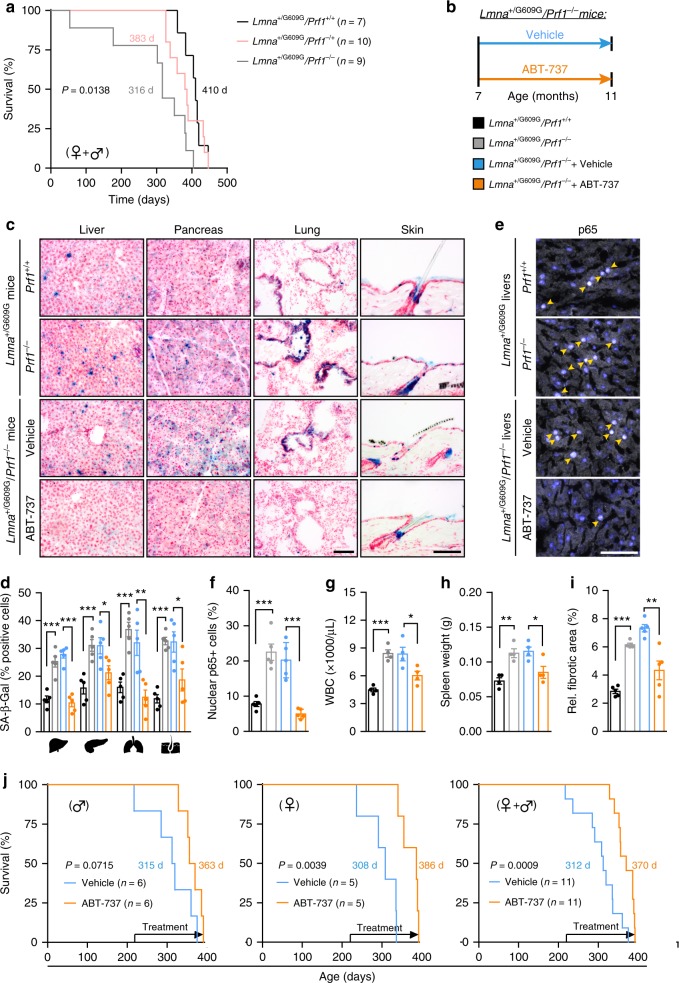
Cellular senescence is a stress response that imposes stable cell-cycle arrest in damaged cells, preventing their propagation in tissues. However, senescent cells accumulate in tissues in advanced age, where they might promote tissue degeneration and malignant transformation. The extent of immune-system involvement in regulating age-related accumulation of senescent cells, and its consequences, are unknown. Here we show that Prf1 −/− mice with impaired cell cytotoxicity exhibit both higher senescent-cell tissue burden and chronic inflammation. They suffer from multiple age-related disorders and lower survival. Strikingly, pharmacological elimination of senescent-cells by ABT-737 partially alleviates accelerated aging phenotype in these mice. In LMNA +/G609G progeroid mice, impaired cell cytotoxicity further promotes senescent-cell accumulation and shortens lifespan. ABT-737 administration during the second half of life of these progeroid mice abrogates senescence signature and increases median survival. Our findings shed new light on mechanisms governing senescent-cell presence in aging, and could motivate new strategies for regenerative medicine.
Overview
The claims and statistics of this paper haven’t been checked yet.
Free: it reads the open-access text and checks the first 5 claims that cite a source we can check. Create a free account to check every claim.
Integrity signals
Registry
Cites
Statistics
Figures
Verification
Claims the paper makes
The claims and statistics of this paper haven’t been checked yet.
Free: it reads the open-access text and checks the first 5 claims that cite a source we can check. Create a free account to check every claim.
Claims other papers make about this one
Each is checked against this paper’s own text: does it say what the citing paper says it does?
The source backs part of the claim, not all of it — or backs it for a different population, condition or comparison.
In the citing paper
“Nuclear DNA damage is often reported as a commonly underlying cause of senescence, mainly in the form of DNA double-strand breaks (DSBs)20 that activate the DNA damage response (DDR) pathway”
From Cellular senescence in ageing: from mechanisms to therapeutic opportunities (2021) · cites this paper as [20]
Experimental — accuracy not yet measuredThe cited source says what the claim attributes to it.
In the citing paper
“Senescence immunosurveillance is also essential to limit pathological fibrotic conditions and ageing20,145,151,157.”
From Cellular senescence in ageing: from mechanisms to therapeutic opportunities (2021) · cites this paper as [20]
The cited source says what the claim attributes to it.
In the citing paper
“Under some conditions, including old age, failed clearance of senescent cells leads to their accumulation and chronic SASP inflammation (Ovadya et al., 2018).”
From Cytoplasmic DNA: sources, sensing, and role in aging and disease (2021) · cites this paper as Ovadya et al., 2018
The cited source says what the claim attributes to it.
In the citing paper
“During the aging process, declining immune function leads to failures in senescence surveillance, resulting in accumulation of senescent cells.43”
From Cellular senescence and senescence-associated secretory phenotype via the cGAS-STING signaling pathway in cancer (2020) · cites this paper as [43]
The cited source says what the claim attributes to it.
In the citing paper
“Mounting evidence from human samples and preclinical animal models shows that the excessive presence of senescent cells is a contributing cause of ageing, which is featured by a functional decline in multiple physiological systems [39,40].”
From Immune Clearance of Senescent Cells to Combat Ageing and Chronic Diseases (2020) · cites this paper as [40]
3 more claims about this paper
Create a free account to see every claim other papers make about this one.
Self-check
Percentages, sums and reported differences re-computed from the paper’s own numbers.
The self-check needs the paper’s full text.
Citations
Cites
López-Otín, C., Blasco, M. A., Partridge, L., Serrano, M., & Kroemer, G. (2013) · Cell · doi:10.1016/j.cell.2013.05.039 · Cited by 14,982
Gene Expression Omnibus: NCBI gene expression and hybridization array data repository
Edgar, R. (2002) · Nucleic Acids Research · doi:10.1093/nar/30.1.207 · Cited by 13,288
A biomarker that identifies senescent human cells in culture and in aging skin in vivo.
Dimri, G. P., Lee, X., Basile, G., Acosta, M., Scott, G., Roskelley, C., Medrano, E. E., Linskens, M., Rubelj, I., & Pereira-Smith, O. (1995) · Proceedings of the National Academy of Sciences · doi:10.1073/pnas.92.20.9363 · Cited by 7,477
Inflamm‐aging: An Evolutionary Perspective on Immunosenescence
FRANCESCHI, C., BONAFÈ, M., VALENSIN, S., OLIVIERI, F., DE LUCA, M., OTTAVIANI, E., & DE BENEDICTIS, G. (2000) · Annals of the New York Academy of Sciences · doi:10.1111/j.1749-6632.2000.tb06651.x · Cited by 5,358
The senescence-associated secretory phenotype: the dark side of tumor suppression
Coppé, J.-P., Desprez, P.-Y., Krtolica, A., & Campisi, J. (2010) · Annual Review of Pathology: Mechanisms of Disease · doi:10.1146/annurev-pathol-121808-102144 · Cited by 5,206
Chronic Inflammation (Inflammaging) and Its Potential Contribution to Age-Associated Diseases
Franceschi, C., & Campisi, J. (2014) · The Journals of Gerontology Series A: Biological Sciences and Medical Sciences · doi:10.1093/gerona/glu057 · Cited by 3,891
Clearance of p16Ink4a-positive senescent cells delays ageing-associated disorders
Baker, D. J., Wijshake, T., Tchkonia, T., LeBrasseur, N. K., Childs, B. G., van de Sluis, B., Kirkland, J. L., & van Deursen, J. M. (2011) · Nature · doi:10.1038/nature10600 · Cited by 3,670
Aging, Cellular Senescence, and Cancer
Campisi, J. (2013) · Annual Review of Physiology · doi:10.1146/annurev-physiol-030212-183653 · Cited by 2,954
Naturally occurring p16Ink4a-positive cells shorten healthy lifespan
Baker, D. J., Childs, B. G., Durik, M., Wijers, M. E., Sieben, C. J., Zhong, J., A. Saltness, R., Jeganathan, K. B., Verzosa, G. C., Pezeshki, A., et al. (2016) · Nature · doi:10.1038/nature16932 · Cited by 2,876 · cited 1×
“Accumulation of senescent p16-positive cells shortens mouse lifespan (Baker et al, 2016).”
BackgroundCellular senescence: from physiology to pathology
Muñoz-Espín, D., & Serrano, M. (2014) · Nature Reviews Molecular Cell Biology · doi:10.1038/nrm3823 · Cited by 2,818
Cited by
Cellular senescence in ageing: from mechanisms to therapeutic opportunities
Di Micco, R., Krizhanovsky, V., Baker, D., & d’Adda di Fagagna, F. (2021) · Nature Reviews Molecular Cell Biology · doi:10.1038/s41580-020-00314-w · Cited by 2,277
Self-citationImmunosenescence: molecular mechanisms and diseases
Liu, Z., Liang, Q., Ren, Y., Guo, C., Ge, X., Wang, L., Cheng, Q., Luo, P., Zhang, Y., & Han, X. (2023) · Signal Transduction and Targeted Therapy · doi:10.1038/s41392-023-01451-2 · Cited by 960
“However, excessive senescence, particularly of T cells, may ultimately lead to catastrophic immune decline and an increased risk of age-related diseases.(26,27) Cellular senescence can be divided into premature senescence and telomere-dependent senescence (age-dependent replicative senescence).”
BackgroundMittelbrunn, M., & Kroemer, G. (2021) · Nature Immunology · doi:10.1038/s41590-021-00927-z · Cited by 702
Targeting cellular senescence with senotherapeutics: senolytics and senomorphics
Zhang, L., Pitcher, L. E., Prahalad, V., Niedernhofer, L. J., & Robbins, P. D. (2023) · The FEBS Journal · doi:10.1111/febs.16350 · Cited by 621
Strategies for targeting senescent cells in human disease
Gasek, N. S., Kuchel, G. A., Kirkland, J. L., & Xu, M. (2021) · Nature Aging · doi:10.1038/s43587-021-00121-8 · Cited by 501
Salminen, A., Kaarniranta, K., & Kauppinen, A. (2022) · Inflammation Research · doi:10.1007/s00011-022-01598-8 · Cited by 432
SenNet recommendations for detecting senescent cells in different tissues
Suryadevara, V., Hudgins, A. D., Rajesh, A., Pappalardo, A., Karpova, A., Dey, A. K., Hertzel, A., Agudelo, A., Rocha, A., Soygur, B., et al. (2024) · Nature Reviews Molecular Cell Biology · doi:10.1038/s41580-024-00738-8 · Cited by 408
“Several lines of evidence suggest that the ability of the immune system to clear senescent cells decreases with age, leading to their accumulation in tissues 7–10 .”
Ogrodnik, M., Evans, S. A., Fielder, E., Victorelli, S., Kruger, P., Salmonowicz, H., Weigand, B. M., Patel, A. D., Pirtskhalava, T., Inman, C. L., et al. (2021) · Aging Cell · doi:10.1111/acel.13296 · Cited by 405
Mechanisms and Regulation of Cellular Senescence
Roger, L., Tomas, F., & Gire, V. (2021) · International Journal of Molecular Sciences · doi:10.3390/ijms222313173 · Cited by 395
“Indeed, in a context of impaired immune cytotoxicity, senescent cells accumulate with age in mice, and this is accompanied by increased inflammation and accelerated aging [340].”
BackgroundImmune ageing at single-cell resolution
Mogilenko, D. A., Shchukina, I., & Artyomov, M. N. (2022) · Nature Reviews Immunology · doi:10.1038/s41577-021-00646-4 · Cited by 381
Guidelines for minimal information on cellular senescence experimentation in vivo
Ogrodnik, M., Carlos Acosta, J., Adams, P. D., d’Adda di Fagagna, F., Baker, D. J., Bishop, C. L., Chandra, T., Collado, M., Gil, J., Gorgoulis, V., et al. (2024) · Cell · doi:10.1016/j.cell.2024.05.059 · Cited by 376
Self-citationTargeted Elimination of Senescent Beta Cells Prevents Type 1 Diabetes
Thompson, P. J., Shah, A., Ntranos, V., Van Gool, F., Atkinson, M., & Bhushan, A. (2019) · Cell Metabolism · doi:10.1016/j.cmet.2019.01.021 · Cited by 353
Role of immune cells in the removal of deleterious senescent cells
Kale, A., Sharma, A., Stolzing, A., Desprez, P.-Y., & Campisi, J. (2020) · Immunity & Ageing · doi:10.1186/s12979-020-00187-9 · Cited by 351
“Impairing NK cell function results in an accelerated accumulation of senescent cells in various tissues, at least in animal models [88].”
BackgroundCellular Senescence Is Immunogenic and Promotes Antitumor Immunity
Marin, I., Boix, O., Garcia-Garijo, A., Sirois, I., Caballe, A., Zarzuela, E., Ruano, I., Attolini, C. S.-O., Prats, N., López-Domínguez, J. A., et al. (2023) · Cancer Discovery · doi:10.1158/2159-8290.cd-22-0523 · Cited by 346
Cellular senescence: all roads lead to mitochondria
Martini, H., & Passos, J. F. (2023) · The FEBS Journal · doi:10.1111/febs.16361 · Cited by 334
Interconnections between Inflammageing and Immunosenescence during Ageing
Teissier, T., Boulanger, E., & Cox, L. S. (2022) · Cells · doi:10.3390/cells11030359 · Cited by 301
“NK cells play an important role in clearing senescent cells [24,28,37], especially senescent tumour cells (reviewed in [26]), so reduced NK activity with age may contribute to the accumulation of senescent cells.”
BackgroundInfluentialCytoplasmic DNA: sources, sensing, and role in aging and disease
Miller, K. N., Victorelli, S. G., Salmonowicz, H., Dasgupta, N., Liu, T., Passos, J. F., & Adams, P. D. (2021) · Cell · doi:10.1016/j.cell.2021.09.034 · Cited by 288
A Senescence-Centric View of Aging: Implications for Longevity and Disease
Borghesan, M., Hoogaars, W. M. H., Varela-Eirin, M., Talma, N., & Demaria, M. (2020) · Trends in Cell Biology · doi:10.1016/j.tcb.2020.07.002 · Cited by 267
“ABT-737 Senolytic Bcl-2/Bcl-x family Lung function, accelerated aging, liver regeneration [75,127,128]”
BackgroundIL-17 and immunologically induced senescence regulate response to injury in osteoarthritis
Faust, H. J., Zhang, H., Han, J., Wolf, M. T., Jeon, O. H., Sadtler, K., Peña, A. N., Chung, L., Maestas, D. R., Tam, A. J., et al. (2020) · Journal of Clinical Investigation · doi:10.1172/jci134091 · Cited by 260
“Furthermore, impaired immune activity in aged animals may also reduce SnC clearance (66).”
BackgroundCellular senescence and Alzheimer disease: the egg and the chicken scenario
Saez-Atienzar, S., & Masliah, E. (2020) · Nature Reviews Neuroscience · doi:10.1038/s41583-020-0325-z · Cited by 257
Connective tissue and fibroblast senescence in skin aging
Wlaschek, M., Maity, P., Makrantonaki, E., & Scharffetter-Kochanek, K. (2021) · Journal of Investigative Dermatology · doi:10.1016/j.jid.2020.11.010 · Cited by 245
Emerging Sonodynamic Therapy‐Based Nanomedicines for Cancer Immunotherapy
Yang, Y., Huang, J., Liu, M., Qiu, Y., Chen, Q., Zhao, T., Xiao, Z., Yang, Y., Jiang, Y., Huang, Q., et al. (2023) · Advanced Science · doi:10.1002/advs.202204365 · Cited by 242
The role of T cells in age-related diseases
Carrasco, E., Gómez de las Heras, M. M., Gabandé-Rodríguez, E., Desdín-Micó, G., Aranda, J. F., & Mittelbrunn, M. (2022) · Nature Reviews Immunology · doi:10.1038/s41577-021-00557-4 · Cited by 239
Cellular senescence at the crossroads of inflammation and Alzheimer's disease
Guerrero, A., De Strooper, B., & Arancibia-Cárcamo, I. L. (2021) · Trends in Neurosciences · doi:10.1016/j.tins.2021.06.007 · Cited by 236
Loo, T. M., Miyata, K., Tanaka, Y., & Takahashi, A. (2020) · Cancer Science · doi:10.1111/cas.14266 · Cited by 232
Senescence Rewires Microenvironment Sensing to Facilitate Antitumor Immunity
Chen, H.-A., Ho, Y.-J., Mezzadra, R., Adrover, J. M., Smolkin, R., Zhu, C., Woess, K., Bernstein, N., Schmitt, G., Fong, L., et al. (2023) · Cancer Discovery · doi:10.1158/2159-8290.cd-22-0528 · Cited by 230
Amor, C., Fernández-Maestre, I., Chowdhury, S., Ho, Y.-J., Nadella, S., Graham, C., Carrasco, S. E., Nnuji-John, E., Feucht, J., Hinterleitner, C., et al. (2024) · Nature Aging · doi:10.1038/s43587-023-00560-5 · Cited by 228
“…uPAR-targeting CAR T cells on physiologically aged mice, we intravenously infused damage and decreased function of the immune system leads to the accumulation of senescent cells 4,5 , thereby generating a chronic pro-inflammatory milieu that leads to a range of age-related tissue pathologies 6–9 .”
BackgroundPilkington, S. M., Bulfone-Paus, S., Griffiths, C. E. M., & Watson, R. E. B. (2021) · Journal of Investigative Dermatology · doi:10.1016/j.jid.2020.11.006 · Cited by 219
Martínez‐Zamudio, R. I., Dewald, H. K., Vasilopoulos, T., Gittens‐Williams, L., Fitzgerald‐Bocarsly, P., & Herbig, U. (2021) · Aging Cell · doi:10.1111/acel.13344 · Cited by 213
Conclusive Identification of Senescent T Cells Reveals Their Abundance in Aging Humans
(2020) · doi:10.1101/2020.06.17.157826 · Cited by 213
Neutrophils induce paracrine telomere dysfunction and senescence in ROS‐dependent manner
Lagnado, A., Leslie, J., Ruchaud‐Sparagano, M., Victorelli, S., Hirsova, P., Ogrodnik, M., Collins, A. L., Vizioli, M. G., Habiballa, L., Saretzki, G., et al. (2021) · The EMBO Journal · doi:10.15252/embj.2020106048 · Cited by 211
“The SASP is thought to communicate with the immune system and facilitate immune surveillance, stimulating the clearance of senescent or pre-malignant cells (Ovadya et al, 2018).”
Papatheodoridi, A., Chrysavgis, L., Koutsilieris, M., & Chatzigeorgiou, A. (2020) · Hepatology · doi:10.1002/hep.30834 · Cited by 209
“The secretion of chemokines and cytokines such as IL-1b, IL-8, and MCP-1 through SASP attracts immune cells, leading to immunological clearance of the senescent cells.(14,15) Consistently, aging and chronic stress induce telomere attrition and excessive SASP, leading to accumulation of senescent cells and insufficient…”
BackgroundImmune Clearance of Senescent Cells to Combat Ageing and Chronic Diseases
Song, P., An, J., & Zou, M.-H. (2020) · Cells · doi:10.3390/cells9030671 · Cited by 198
“Mounting evidence from human samples and preclinical animal models shows that the excessive presence of senescent cells is a contributing cause of ageing, which is featured by a functional decline in multiple physiological systems [39,40].”
BackgroundSenescence as a therapeutic target in cancer and age-related diseases
McHugh, D., Durán, I., & Gil, J. (2025) · Nature Reviews Drug Discovery · doi:10.1038/s41573-024-01074-4 · Cited by 197
“Immune-mediated elimination of SnCs is a natural mechanism that limits the detrimental persistence of SnCs in a tissue 26,130 .”
Roles of extracellular vesicles in the aging microenvironment and age‐related diseases
Yin, Y., Chen, H., Wang, Y., Zhang, L., & Wang, X. (2021) · Journal of Extracellular Vesicles · doi:10.1002/jev2.12154 · Cited by 196
Senescent Cells: Emerging Targets for Human Aging and Age-Related Diseases
Song, S., Lam, E. W.-F., Tchkonia, T., Kirkland, J. L., & Sun, Y. (2020) · Trends in Biochemical Sciences · doi:10.1016/j.tibs.2020.03.008 · Cited by 195
Age-associated remodeling of T cell immunity and metabolism
Han, S., Georgiev, P., Ringel, A. E., Sharpe, A. H., & Haigis, M. C. (2023) · Cell Metabolism · doi:10.1016/j.cmet.2022.11.005 · Cited by 193
Cellular senescence in cancer: from mechanisms to detection
Ou, H., Hoffmann, R., González‐López, C., Doherty, G. J., Korkola, J. E., & Muñoz‐Espín, D. (2021) · Molecular Oncology · doi:10.1002/1878-0261.12807 · Cited by 190
Senescence-induced inflammation: an important player and key therapeutic target in atherosclerosis
Stojanović, S. D., Fiedler, J., Bauersachs, J., Thum, T., & Sedding, D. G. (2020) · European Heart Journal · doi:10.1093/eurheartj/ehz919 · Cited by 188
“However, some senescent cells remain and gradually accumulate in tissues.(84) These persisting senescent cells have been”
BackgroundSurvey of senescent cell markers with age in human tissues
Idda, M. L., McClusky, W. G., Lodde, V., Munk, R., Abdelmohsen, K., Rossi, M., & Gorospe, M. (2020) · Aging · doi:10.18632/aging.102903 · Cited by 188
“Alternatively, mechanisms to clear senescent cells from tissues, such as immune cells [41], may be more active in the removal of p16and/or p21-expressing cells in these organs.”
BackgroundHallmarks of aging and immunosenescence: Connecting the dots
Rodrigues, L. P., Teixeira, V. R., Alencar-Silva, T., Simonassi-Paiva, B., Pereira, R. W., Pogue, R., & Carvalho, J. L. (2021) · Cytokine & Growth Factor Reviews · doi:10.1016/j.cytogfr.2021.01.006 · Cited by 184
On the evolution of cellular senescence
Kowald, A., Passos, J. F., & Kirkwood, T. B. L. (2020) · Aging Cell · doi:10.1111/acel.13270 · Cited by 179
“Indeed, immunocompromised mice that have defective cytotoxic T cells develop chronic inflammation, accumulate senescent cells much faster and die 20% earlier (Ovadya et al., 2018).”
BackgroundRegulation of Survival Networks in Senescent Cells: From Mechanisms to Interventions
Soto-Gamez, A., Quax, W. J., & Demaria, M. (2019) · Journal of Molecular Biology · doi:10.1016/j.jmb.2019.05.036 · Cited by 175
“Accordingly, perforin knockout mice accumulate more senescent cells in their tissues with age and display chronic inflammation and increased tissue fibrosis [116].”
BackgroundCellular Senescence: Molecular Targets, Biomarkers, and Senolytic Drugs
Kudlova, N., De Sanctis, J. B., & Hajduch, M. (2022) · International Journal of Molecular Sciences · doi:10.3390/ijms23084168 · Cited by 171
The multifaceted role of the SASP in atherosclerosis: from mechanisms to therapeutic opportunities
Sun, Y., Wang, X., Liu, T., Zhu, X., & Pan, X. (2022) · Cell & Bioscience · doi:10.1186/s13578-022-00815-5 · Cited by 169
Activation of immunosuppressive network in the aging process
Salminen, A. (2020) · Ageing Research Reviews · doi:10.1016/j.arr.2019.100998 · Cited by 151
Mechanism and therapeutic potential of targeting cGAS-STING signaling in neurological disorders
Huang, Y., Liu, B., Sinha, S. C., Amin, S., & Gan, L. (2023) · Molecular Neurodegeneration · doi:10.1186/s13024-023-00672-x · Cited by 164
“Nevertheless, senescent cells persist and accumulate within the numerous tissues, as the capacity of the immune system diminishes with age [75, 76].”
BackgroundMetabolic programs tailor T cell immunity in viral infection, cancer, and aging
Møller, S. H., Hsueh, P., Yu, Y.-R., Zhang, L., & Ho, P. (2022) · Cell Metabolism · doi:10.1016/j.cmet.2022.02.003 · Cited by 164
DCAF1 regulates Treg senescence via the ROS axis during immunological aging
Guo, Z., Wang, G., Wu, B., Chou, W.-C., Cheng, L., Zhou, C., Lou, J., Wu, D., Su, L., Zheng, J., et al. (2020) · Journal of Clinical Investigation · doi:10.1172/jci136466 · Cited by 162
Cellular Senescence: From Mechanisms to Current Biomarkers and Senotherapies
Lucas, V., Cavadas, C., & Aveleira, C. A. (2023) · Pharmacological Reviews · doi:10.1124/pharmrev.122.000622 · Cited by 160
Epigenetic Aging: More Than Just a Clock When It Comes to Cancer
Yu, M., Hazelton, W. D., Luebeck, E. G., & Grady, W. M. (2020) · Cancer Research · doi:10.1158/0008-5472.can-19-0924 · Cited by 158
“These processes may induce age-related tissue decline and increase disease risk by influencing the proliferative potential of stem cell pools, impairing immune surveillance, and altering the expression of oncogenes and tumor suppressor genes (5).”
BackgroundCell Senescence, DNA Damage, and Metabolism
Shmulevich, R., & Krizhanovsky, V. (2021) · Antioxidants & Redox Signaling · doi:10.1089/ars.2020.8043 · Cited by 157
“NF-j B is one of the main regulators and activators of proinflammatory alterations in tissues during aging (1, 14, 52, 70).”
Self-citationInflammatory Processes Affecting Bone Health and Repair
de Oliveira, H. T., Arnold, K. M., Oviedo, M., Westendorf, J. J., & Weaver, S. R. (2023) · Current Osteoporosis Reports · doi:10.1007/s11914-023-00824-4 · Cited by 150
“Accumulation of senescent cells during aging is, in part, attributable to impaired surveillance of immune cells and chronic systemic inflammation [172].”
The immune system in cardiovascular diseases: from basic mechanisms to therapeutic implications
Wang, X., Chen, L., Wei, J., Zheng, H., Zhou, N., Xu, X., Deng, X., Liu, T., & Zou, Y. (2025) · Signal Transduction and Targeted Therapy · doi:10.1038/s41392-025-02220-z · Cited by 148
“…and Th17/Th1 cell differentiation, leading to tissue damage 193 ; 3) Dysfunctional T cells fail to clear senescent cells, leading to the accumulation of these cells and exacerbating tissue damage 194 ; Senescent CD8 + and CD4 + T cells acquire cytotoxicity, which directly damages tissue cells.”
Wang, B., Wang, L., Gasek, N. S., Zhou, Y., Kim, T., Guo, C., Jellison, E. R., Haynes, L., Yadav, S., Tchkonia, T., et al. (2021) · Nature Aging · doi:10.1038/s43587-021-00107-6 · Cited by 145
Considerations for designing preclinical cancer immune nanomedicine studies
Jiang, W., Wang, Y., Wargo, J. A., Lang, F. F., & Kim, B. Y. S. (2020) · Nature Nanotechnology · doi:10.1038/s41565-020-00817-9 · Cited by 142
Targeting senescent cells: approaches, opportunities, challenges
von Kobbe, C. (2019) · Aging · doi:10.18632/aging.102557 · Cited by 127
“In this regard, a recent article shows that mice lacking the main cytotoxic functions of NK and T cells (perforin pathway), accelerates both senescent cell burden and aging [80].”
Backgroundp16-dependent increase of PD-L1 stability regulates immunosurveillance of senescent cells
Majewska, J., Agrawal, A., Mayo, A., Roitman, L., Chatterjee, R., Sekeresova Kralova, J., Landsberger, T., Katzenelenbogen, Y., Meir-Salame, T., Hagai, E., et al. (2024) · Nature Cell Biology · doi:10.1038/s41556-024-01465-0 · Cited by 114
Self-citationAgeing with HIV: Challenges and biomarkers
Rodés, B., Cadiñanos, J., Esteban-Cantos, A., Rodríguez-Centeno, J., & Arribas, J. R. (2022) · eBioMedicine · doi:10.1016/j.ebiom.2022.103896 · Cited by 136
The Role of Immune Cells in Oxi-Inflamm-Aging
Martínez de Toda, I., Ceprián, N., Díaz-Del Cerro, E., & De la Fuente, M. (2021) · Cells · doi:10.3390/cells10112974 · Cited by 120
“NK cell-mediated clearance of senescent cells is an essential aspect of tissue homeostasis [64] and tumor growth limitation [65], and as such, the age-related diminished NK cell function results in an accelerated accumulation of senescent cells in various tissues [59,66] and to uncontrolled malignant cell division [67…”
BackgroundCellular Senescence: Pathogenic Mechanisms in Lung Fibrosis
Parimon, T., Hohmann, M. S., & Yao, C. (2021) · International Journal of Molecular Sciences · doi:10.3390/ijms22126214 · Cited by 135
“Immunosenescence contributes to lung fibrosis pathogenesis in two ways: first, it promotes an accumulation of senescent cells that are the primary sources of SASP mediators [153,154], and second, it enhances proinflammatory mediators released from immune cells into the lung microenvironment providing additive effects…”
BackgroundAge Related Osteoporosis: Targeting Cellular Senescence
Föger‐Samwald, U., Kerschan‐Schindl, K., Butylina, M., & Pietschmann, P. (2022) · International Journal of Molecular Sciences · doi:10.3390/ijms23052701 · Cited by 133
“Taken together, an aging immune system fails to clear tissues from senescent cells, which, in turn, promotes a state of chronic inflammation [4,33,34].”
BackgroundEmerging use of senolytics and senomorphics against aging and chronic diseases
Martel, J., Ojcius, D. M., Wu, C., Peng, H., Voisin, L., Perfettini, J., Ko, Y., & Young, J. D. (2020) · Medicinal Research Reviews · doi:10.1002/med.21702 · Cited by 127
SenNet Consortium, Writing Group, Lee, P. J., Benz, C. C., Blood, P., Börner, K., Campisi, J., Chen, F., Daldrup-Link, H., De Jager, P., et al. (2022) · Nature Aging · doi:10.1038/s43587-022-00326-5 · Cited by 122
The 3 I’s of immunity and aging: immunosenescence, inflammaging, and immune resilience
Wrona, M. V., Ghosh, R. B., Coll, K., Chun, C., & Yousefzadeh, M. J. (2024) · Frontiers in Aging · doi:10.3389/fragi.2024.1490302 · Cited by 124
“The primary transcription factor involved in their differentiation is Eomes (Soto-Heredero et al., 2023), which plays a fundamental role in the generation of these lytic molecules and cytokines (Ovadya et al., 2018; Thelen et al., 2023).”
BackgroundPolyphenols as Caloric-Restriction Mimetics and Autophagy Inducers in Aging Research
Yessenkyzy, A., Saliev, T. M., Zhanaliyeva, M., Masoud, A., Umbayev, B. A., Sergazy, S., Кривых, Е. А., Gulyayev, A., & Nurgozhin, T. S. (2020) · Nutrients · doi:10.3390/nu12051344 · Cited by 121
Gaikwad, S., Senapati, S., Haque, M. A., & Kayed, R. (2024) · Alzheimer's & Dementia · doi:10.1002/alz.13490 · Cited by 117
“60,61 Fundamentally, the SASP impairs tissue regenerative capacity through paracrine senescence in stem cells.”
BackgroundSenescent cells and macrophages: key players for regeneration?
Elder, S. S., & Emmerson, E. (2020) · Open Biology · doi:10.1098/rsob.200309 · Cited by 120
“After this, the role of immune cells, including macrophages, were shown to be important in the removal of senescent cells in models of liver injury, as well as for preventing excessive detrimental fibrosis and in resolving liver fibrosis [117].”
BackgroundThe efficacy of chemotherapy is limited by intratumoral senescent cells expressing PD-L2
Chaib, S., López-Domínguez, J. A., Lalinde-Gutiérrez, M., Prats, N., Marin, I., Boix, O., García-Garijo, A., Meyer, K., Muñoz, M. I., Aguilera, M., et al. (2024) · Nature Cancer · doi:10.1038/s43018-023-00712-x · Cited by 114
“The accumulation of senescent cells with aging and in multiple pathological conditions, including cancers, has been partially attributed to defective immunosurveillance by the innate immune system, mainly macrophages and NK cells 41–47 .”
Impaired Myofibroblast Dedifferentiation Contributes to Nonresolving Fibrosis in Aging
Kato, K., Logsdon, N. J., Shin, Y.-J., Palumbo, S., Knox, A., Irish, J. D., Rounseville, S. P., Rummel, S. R., Mohamed, M., Ahmad, K., et al. (2020) · American Journal of Respiratory Cell and Molecular Biology · doi:10.1165/rcmb.2019-0092oc · Cited by 114
“Impaired immune surveillance has been shown to accelerate the accumulation of senescent cells in aged lung tissues (58).”
BackgroundThe untwining of immunosenescence and aging
Xu, W., Wong, G., Hwang, Y. Y., & Larbi, A. (2020) · Seminars in Immunopathology · doi:10.1007/s00281-020-00824-x · Cited by 100
Understanding and targeting prostate cancer cell heterogeneity and plasticity
Tang, D. G. (2021) · Seminars in Cancer Biology · doi:10.1016/j.semcancer.2021.11.001 · Cited by 112
Kolodkin-Gal, D., Roitman, L., Ovadya, Y., Azazmeh, N., Assouline, B., Schlesinger, Y., Kalifa, R., Horwitz, S., Khalatnik, Y., Hochner-Ger, A., et al. (2022) · Gut · doi:10.1136/gutjnl-2020-321112 · Cited by 92
Self-citationBiological functions of therapy-induced senescence in cancer
Fitsiou, E., Soto-Gamez, A., & Demaria, M. (2021) · Seminars in Cancer Biology · doi:10.1016/j.semcancer.2021.03.021 · Cited by 111
Beneficial autoimmunity improves cancer prognosis
Zitvogel, L., Perreault, C., Finn, O. J., & Kroemer, G. (2021) · Nature Reviews Clinical Oncology · doi:10.1038/s41571-021-00508-x · Cited by 113
“This concept, referred to as immunogenic cell death (ICD), was initially described in mice29 and also applies to patients with cancer, as illustrated by several observations: (1) markers of ICD have prognostic significance in patients receiving systemic therapy or radiotherapy30,31; (2) in a trial of an autologous vac…”
ResultWang, Y., Che, L., Chen, X., He, Z., Song, D., Yuan, Y., & Liu, C. (2023) · Bioactive Materials · doi:10.1016/j.bioactmat.2023.01.009 · Cited by 110
Fisetin as a senotherapeutic agent: Evidence and perspectives for age-related diseases
Tavenier, J., Nehlin, J. O., Houlind, M. B., Rasmussen, L. J., Tchkonia, T., Kirkland, J. L., Andersen, O., & Rasmussen, L. J. H. (2024) · Mechanisms of Ageing and Development · doi:10.1016/j.mad.2024.111995 · Cited by 111
“…including macrophages, and natural killer (NK) cells as well as certain adaptive immune cell types like T cells, which are attracted and activated by the SASP to remove senescent cells by senolysis (Kale et al., 2020; Ovadya et al., 2018; Pra ˇ snikar et al., 2021; Tchkonia and Kirkland, 2018).”
Noncanonical Cell Fate Regulation by Bcl-2 Proteins
Chong, S. J. F., Marchi, S., Petroni, G., Kroemer, G., Galluzzi, L., & Pervaiz, S. (2020) · Trends in Cell Biology · doi:10.1016/j.tcb.2020.03.004 · Cited by 107
Ritschka, B., Knauer-Meyer, T., Gonçalves, D. S., Mas, A., Plassat, J.-L., Durik, M., Jacobs, H., Pedone, E., Di Vicino, U., Cosma, M. P., et al. (2020) · Genes & Development · doi:10.1101/gad.332643.119 · Cited by 105
“Indeed, senolytics were shown to function in the liver (Ovadya et al. 2018) and in ameliorating age-related hepatic steatosis (Ogrodnik et al. 2017).”
The role of senescence in cancer development
Mavrogonatou, E., Pratsinis, H., & Kletsas, D. (2019) · Seminars in Cancer Biology · doi:10.1016/j.semcancer.2019.06.018 · Cited by 106
Autophagic Control of Skin Aging
Eckhart, L., Tschachler, E., & Gruber, F. (2019) · Frontiers in Cell and Developmental Biology · doi:10.3389/fcell.2019.00143 · Cited by 90
Elyahu, Y., & Monsonego, A. (2020) · Ageing Research Reviews · doi:10.1016/j.arr.2020.101231 · Cited by 103
“, 2020), was recently shown to accelerate senescent cell accumulation along with aging-related tissue dysfunction and reduced life expectancy (Ovadya et al., 2018).”
Dissecting primary and secondary senescence to enable new senotherapeutic strategies
Admasu, T. D., Rae, M. J., & Stolzing, A. (2021) · Ageing Research Reviews · doi:10.1016/j.arr.2021.101412 · Cited by 103
Extremely Differentiated T Cell Subsets Contribute to Tissue Deterioration During Aging
Soto‐Heredero, G., Heras, M. M. G. D. L., Escrig-Larena, J. I., & Mittelbrunn, M. (2023) · Annual Review of Immunology · doi:10.1146/annurev-immunol-101721-064501 · Cited by 104
Andrade, B., Jara‐Gutiérrez, C., Paz-Araos, M., Vázquez, M. C., Díaz, P., & Murgas, P. (2022) · International Journal of Molecular Sciences · doi:10.3390/ijms232315182 · Cited by 102
Inflammation: a matter of immune cell life and death
Bender, E. C., Tareq, H. S., & Suggs, L. J. (2025) · npj Biomedical Innovations. · doi:10.1038/s44385-025-00010-4 · Cited by 97
COX2 regulates senescence secretome composition and senescence surveillance through PGE2
Gonçalves, S., Yin, K., Ito, Y., Chan, A., Olan, I., Gough, S., Cassidy, L., Serrao, E., Smith, S., Young, A., et al. (2021) · Cell Reports · doi:10.1016/j.celrep.2021.108860 · Cited by 95
“This is an open access article und CD8 lymphocytes (Ovadya et al., 2018), macrophages (Eggert et al.”
BackgroundCellular Senescence and the Kidney: Potential Therapeutic Targets and Tools
Knoppert, S. N., Valentijn, F. A., Nguyen, T. Q., Goldschmeding, R., & Falke, L. L. (2019) · Frontiers in Pharmacology · doi:10.3389/fphar.2019.00770 · Cited by 83
The role of senescent T cells in immunopathology
Covre, L. P., De Maeyer, R. P. H., Gomes, D. C. O., & Akbar, A. N. (2020) · Aging Cell · doi:10.1111/acel.13272 · Cited by 93
“Despite the evidence for senescent cell clearance by the immune system, it is not yet clear why senescent cells accumulate during ageing and persist at sites of age-related pathology (Karin et al., 2019; Ovadya et al., 2018; Sharpless & Sherr, 2015).”
BackgroundCellular Senescence: The Trojan Horse in Chronic Lung Diseases
Hamsanathan, S., Alder, J. K., Sellares, J., Rojas, M., Gurkar, A. U., & Mora, A. L. (2019) · American Journal of Respiratory Cell and Molecular Biology · doi:10.1165/rcmb.2018-0410tr · Cited by 86
“Clearance of senescent cells is mediated by immune cells that are recruited in response to SASP factors (17).”
BackgroundOgata, Y., Yamada, T., Hasegawa, S., Sanada, A., Iwata, Y., Arima, M., Nakata, S., Sugiura, K., & Akamatsu, H. (2021) · Experimental Dermatology · doi:10.1111/exd.14205 · Cited by 76
Cell senescence in neuropathology: A focus on neurodegeneration and tumours
Carreno, G., Guiho, R., & Martinez‐Barbera, J. P. (2021) · Neuropathology and Applied Neurobiology · doi:10.1111/nan.12689 · Cited by 74
Aging, Cell Senescence, the Pathogenesis and Targeted Therapies of Osteoarthritis
Zhang, X., He, S., Liang, X., Li, W., Li, T.-F., & Li, D. (2021) · Frontiers in Pharmacology · doi:10.3389/fphar.2021.728100 · Cited by 88
“However, long-term macromolecular damage can cause chronic senescence due to decreased clearance of SnCs by the immune system with aging (Childs et al., 2015; Ovadya et al., 2018).”
BackgroundThe role of mitochondria dysfunction and hepatic senescence in NAFLD development and progression
Dabravolski, S. A., Bezsonov, E. E., & Orekhov, A. N. (2021) · Biomedicine & Pharmacotherapy · doi:10.1016/j.biopha.2021.112041 · Cited by 82
Aging, Cellular Senescence, and Progressive Multiple Sclerosis
Papadopoulos, D., Magliozzi, R., Mitsikostas, D. D., Gorgoulis, V. G., & Nicholas, R. S. (2020) · Frontiers in Cellular Neuroscience · doi:10.3389/fncel.2020.00178 · Cited by 79
“Both apoptotic and senescent cells are cleared by the immune system in a highly regulatedmanner andmay contribute to age-related brain volume loss (Hoenicke and Zender, 2012; Ovadya et al., 2018).”
BackgroundSevere COVID-19 Lung Infection in Older People and Periodontitis
Aquino-Martínez, R., & Vigueras, S. H. (2021) · Journal of Clinical Medicine · doi:10.3390/jcm10020279 · Cited by 85
“Considering that with advancing aging, the host immune surveillance is impaired [167,168], these studies suggest that bacterial mechanisms of immune evasion can not only promote their overgrowth, but also facilitate SARS-CoV-2 replication in lung cells.”
BackgroundJang, D., Shin, J., Shim, E., Ohtani, N., & Jeon, O. H. (2024) · Aging Cell · doi:10.1111/acel.14315 · Cited by 84
“This gradual deterioration compromises the ability to mount effective immune responses, with aged CD8 + T cells, memory B cells, and senescence-associated macrophages particularly affected (Liu et al., 2023; Ovadya et al., 2018; Yousefzadeh et al., 2021 ).”
BackgroundHughes, M., McGettrick, H. M., & Sapey, E. (2020) · European Respiratory Review · doi:10.1183/16000617.0102-2019 · Cited by 86
Sharma, R. (2022) · Probiotics and Antimicrobial Proteins · doi:10.1007/s12602-021-09903-3 · Cited by 75
“A recent study conclusively demonstrated that immune cells with dysfunctional cytotoxic ability exhibit inefficient clearance of SC in vivo resulting in their accumulation and augmentation of inflammatory disorders [62].”
BackgroundCellular senescence and the host immune system in aging and age-related disorders
Giannoula, Y., Kroemer, G., & Pietrocola, F. (2023) · Biomedical Journal · doi:10.1016/j.bj.2023.02.001 · Cited by 79
“[66] Ovadya Y, Landsberger T, Leins H, Vadai E, Gal H, Biran A, et al.”
Background
Metadata
- Authors
- Ovadya, Y., Landsberger, T., Leins, H., Vadai, E., Gal, H., Biran, A., Yosef, R., Sagiv, A., Agrawal, A., Shapira, A., Windheim, J., Tsoory, M., Schirmbeck, R., Amit, I., Geiger, H., & Krizhanovsky, V.
- Affiliations
- Weizmann Institute of Science (IL)
- Universität Ulm (DE)
- University Hospital Ulm (DE)
- Cincinnati Children's Hospital Medical Center (US)
- Corresponding author
- Krizhanovsky, Valery
- ORCID
- Venue
- Nature Communications
- Published
- 2018-12-21
- Volume
- 9
- Issue
- 1
- Pages
- 5435-5435
- ISSN
- 2041-1723 (ISSN-L)
- PMC
- PMC6303397
- OpenAlex
- W2904408826
- Semantic Scholar
- e004152eaa5ce10f6fdd255845a11ff32c0d928a
- Cited by
- 578
- References
- 72
- Citations by year
- 2026: 79 · 2025: 84 · 2024: 80 · 2023: 77 · 2022: 74 · 2021: 76 · 2020: 78 · 2019: 30
- FWCI
- 31.54
- Type
- journal article
- Language
- en
- Open access
- gold
- doi.org
- Licence
- cc-by
- creativecommons.org/licenses/by/4.0 (tdm)
- creativecommons.org/licenses/by/4.0 (vor)
- Locations
- Nature Communications (publishedVersion, cc-by)
- Europe PMC (PubMed Central) (publishedVersion, cc-by)
- PubMed Central (publishedVersion, cc-by)
- PubMed (publishedVersion)
- RePEc: Research Papers in Economics (submittedVersion)
- DOAJ (DOAJ: Directory of Open Access Journals) (submittedVersion, cc-by-sa)
- DOAJ (DOAJ: Directory of Open Access Journals) (submittedVersion)
- Funders
- Deutsche Forschungsgemeinschaft
- Universidad de Oviedo
- Topics
- Life Sciences › Biochemistry, Genetics and Molecular Biology › Cell Biology › Telomeres, Telomerase, and Senescence
- Life Sciences › Biochemistry, Genetics and Molecular Biology › Aging › Genetics, Aging, and Longevity in Model Organisms
- Health Sciences › Medicine › Geriatrics and Gerontology › Sirtuins and Resveratrol in Medicine
- Keywords
- cellular senescence, senolytics, ABT-737, immune surveillance, cytotoxic T lymphocytes, chronic inflammation, accelerated aging, lifespan, senescent cell accumulation, regenerative medicine
- MeSH terms
- Immunosenescence, Animals, Biphenyl Compounds, Drug Evaluation, Preclinical, Female, Inflammation, Male, Mice, Inbred C57BL, Nitrophenols, Piperazines, Progeria, Sulfonamides, Cellular Senescence, Mice, Knockout, Proto-Oncogene Proteins c-bcl-2, Perforin
About these checks
Registry, retraction, Cites and statistics results are computed, not judged, with one exception: a printed reference that no index lists is read once by a model before it counts as a citation error. Claims are extracted by a model and kept only when their quote appears verbatim in the text; each cited source is then checked, with a model’s help, for whether it says what the claim relies on. Those verdicts can be wrong — read the claim’s quote and the cited source before relying on one.
Statistics and arithmetic are recomputed, not judged.
Confidence bands are shown only for fields calibrated on our annotated test set. None is calibrated yet, so no band is shown.
What counts as a claim ›How we measure confidence ›How we check this ›
Are you an author, or do you see a problem with this page? Request a review
Data sources
Bibliographic data: Semantic Scholar, OpenAlex, Crossref.
Contains information from the Semantic Scholar Academic Graph Datasets, made available under the ODC Attribution License (ODC-BY 1.0).
Semantic Scholar’s data is described in: Kinney, R., et al. (2023). The Semantic Scholar Open Data Platform. arXiv:2301.10140.
