

Impaired immune surveillance accelerates accumulation of senescent cells and aging
Open accessThe DOI matches its Crossref record; 71 of the 72 references it cites were found in a registry or an index.
Abstract
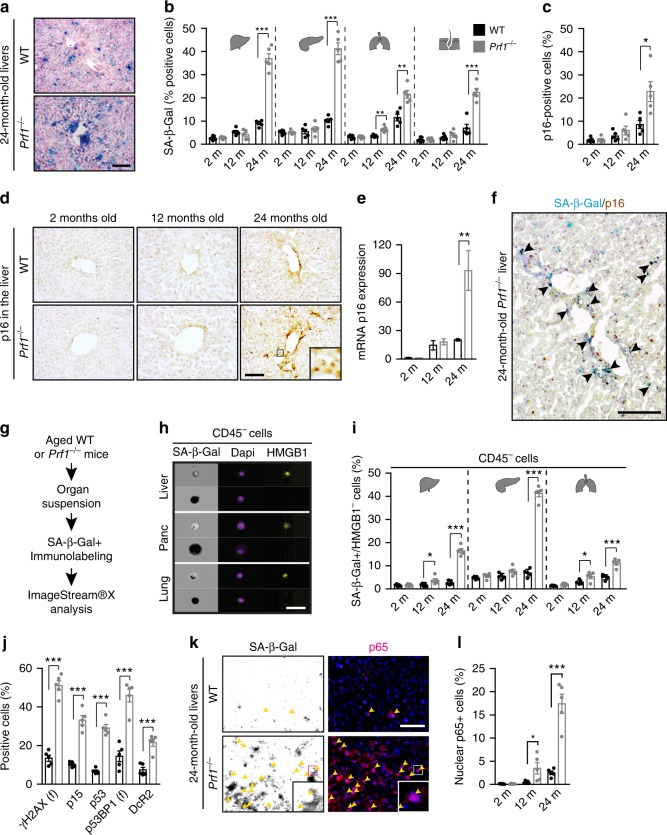
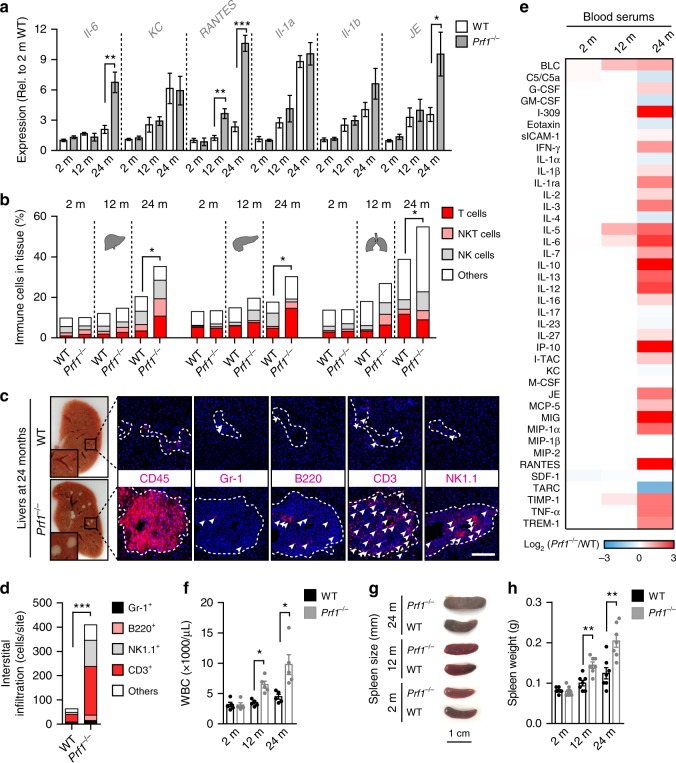
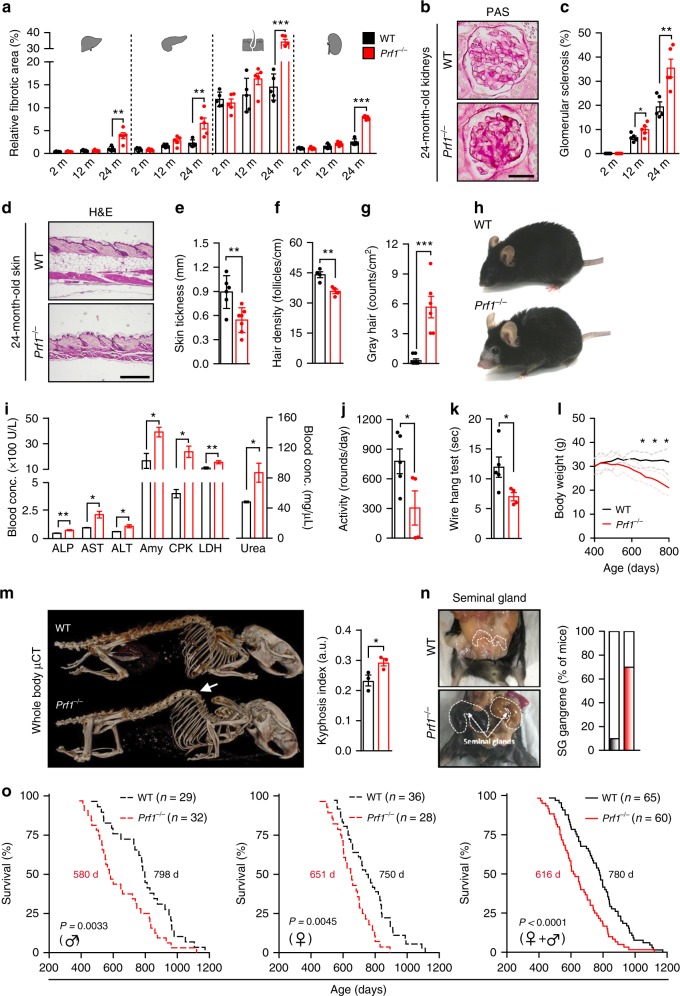
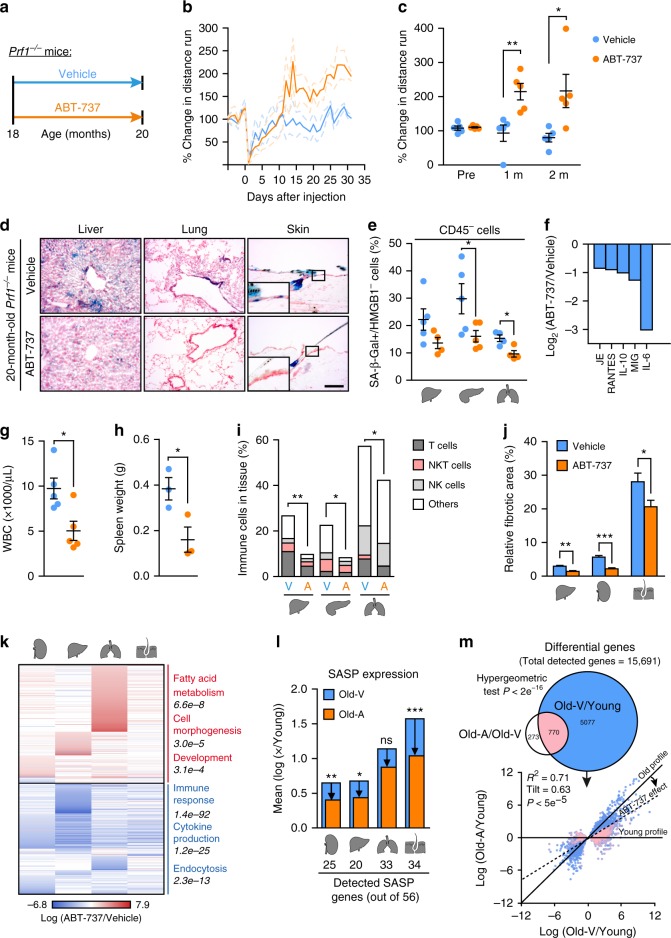
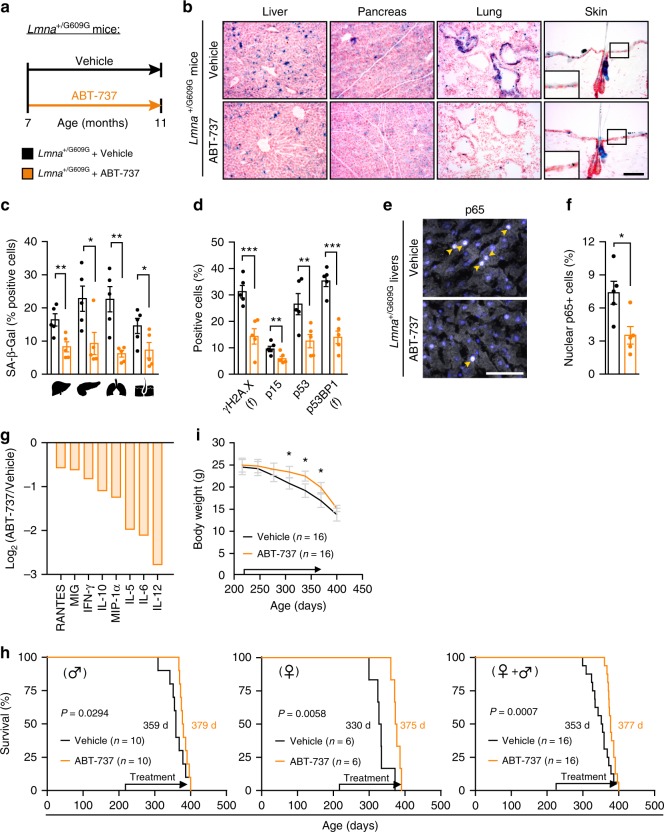
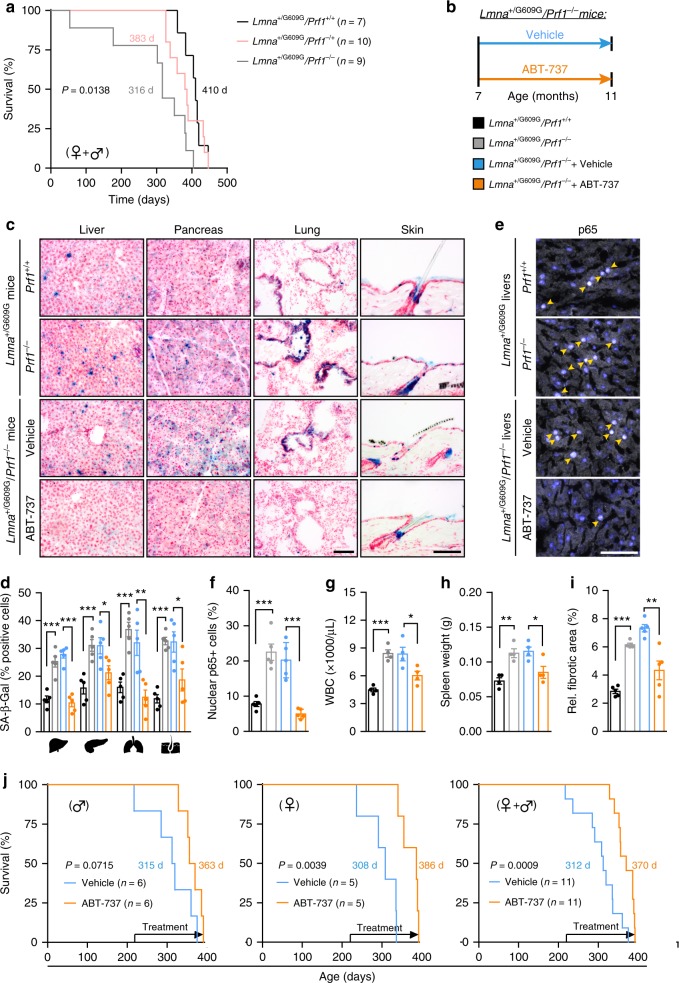
Cellular senescence is a stress response that imposes stable cell-cycle arrest in damaged cells, preventing their propagation in tissues. However, senescent cells accumulate in tissues in advanced age, where they might promote tissue degeneration and malignant transformation. The extent of immune-system involvement in regulating age-related accumulation of senescent cells, and its consequences, are unknown. Here we show that Prf1 −/− mice with impaired cell cytotoxicity exhibit both higher senescent-cell tissue burden and chronic inflammation. They suffer from multiple age-related disorders and lower survival. Strikingly, pharmacological elimination of senescent-cells by ABT-737 partially alleviates accelerated aging phenotype in these mice. In LMNA +/G609G progeroid mice, impaired cell cytotoxicity further promotes senescent-cell accumulation and shortens lifespan. ABT-737 administration during the second half of life of these progeroid mice abrogates senescence signature and increases median survival. Our findings shed new light on mechanisms governing senescent-cell presence in aging, and could motivate new strategies for regenerative medicine.
Overview
The claims and statistics of this paper haven’t been checked yet.
Free: it reads the open-access text and checks the first 5 claims that cite a source we can check. Create a free account to check every claim.
Integrity signals
Registry
Cites
Statistics
Figures
Verification
Claims the paper makes
The claims and statistics of this paper haven’t been checked yet.
Free: it reads the open-access text and checks the first 5 claims that cite a source we can check. Create a free account to check every claim.
Claims other papers make about this one
Each is checked against this paper’s own text: does it say what the citing paper says it does?
The source backs part of the claim, not all of it — or backs it for a different population, condition or comparison.
In the citing paper
“Nuclear DNA damage is often reported as a commonly underlying cause of senescence, mainly in the form of DNA double-strand breaks (DSBs)20 that activate the DNA damage response (DDR) pathway”
From Cellular senescence in ageing: from mechanisms to therapeutic opportunities (2021) · cites this paper as [20]
Experimental — accuracy not yet measuredThe cited source says what the claim attributes to it.
In the citing paper
“Senescence immunosurveillance is also essential to limit pathological fibrotic conditions and ageing20,145,151,157.”
From Cellular senescence in ageing: from mechanisms to therapeutic opportunities (2021) · cites this paper as [20]
The cited source says what the claim attributes to it.
In the citing paper
“Under some conditions, including old age, failed clearance of senescent cells leads to their accumulation and chronic SASP inflammation (Ovadya et al., 2018).”
From Cytoplasmic DNA: sources, sensing, and role in aging and disease (2021) · cites this paper as Ovadya et al., 2018
The cited source says what the claim attributes to it.
In the citing paper
“During the aging process, declining immune function leads to failures in senescence surveillance, resulting in accumulation of senescent cells.43”
From Cellular senescence and senescence-associated secretory phenotype via the cGAS-STING signaling pathway in cancer (2020) · cites this paper as [43]
The cited source says what the claim attributes to it.
In the citing paper
“Mounting evidence from human samples and preclinical animal models shows that the excessive presence of senescent cells is a contributing cause of ageing, which is featured by a functional decline in multiple physiological systems [39,40].”
From Immune Clearance of Senescent Cells to Combat Ageing and Chronic Diseases (2020) · cites this paper as [40]
3 more claims about this paper
Create a free account to see every claim other papers make about this one.
Self-check
Percentages, sums and reported differences re-computed from the paper’s own numbers.
The self-check needs the paper’s full text.
Citations
Cites
López-Otín, C., Blasco, M. A., Partridge, L., Serrano, M., & Kroemer, G. (2013) · Cell · doi:10.1016/j.cell.2013.05.039 · Cited by 14,982
Gene Expression Omnibus: NCBI gene expression and hybridization array data repository
Edgar, R. (2002) · Nucleic Acids Research · doi:10.1093/nar/30.1.207 · Cited by 13,288
A biomarker that identifies senescent human cells in culture and in aging skin in vivo.
Dimri, G. P., Lee, X., Basile, G., Acosta, M., Scott, G., Roskelley, C., Medrano, E. E., Linskens, M., Rubelj, I., & Pereira-Smith, O. (1995) · Proceedings of the National Academy of Sciences · doi:10.1073/pnas.92.20.9363 · Cited by 7,477
Inflamm‐aging: An Evolutionary Perspective on Immunosenescence
FRANCESCHI, C., BONAFÈ, M., VALENSIN, S., OLIVIERI, F., DE LUCA, M., OTTAVIANI, E., & DE BENEDICTIS, G. (2000) · Annals of the New York Academy of Sciences · doi:10.1111/j.1749-6632.2000.tb06651.x · Cited by 5,358
The senescence-associated secretory phenotype: the dark side of tumor suppression
Coppé, J.-P., Desprez, P.-Y., Krtolica, A., & Campisi, J. (2010) · Annual Review of Pathology: Mechanisms of Disease · doi:10.1146/annurev-pathol-121808-102144 · Cited by 5,206
Chronic Inflammation (Inflammaging) and Its Potential Contribution to Age-Associated Diseases
Franceschi, C., & Campisi, J. (2014) · The Journals of Gerontology Series A: Biological Sciences and Medical Sciences · doi:10.1093/gerona/glu057 · Cited by 3,891
Clearance of p16Ink4a-positive senescent cells delays ageing-associated disorders
Baker, D. J., Wijshake, T., Tchkonia, T., LeBrasseur, N. K., Childs, B. G., van de Sluis, B., Kirkland, J. L., & van Deursen, J. M. (2011) · Nature · doi:10.1038/nature10600 · Cited by 3,670
Aging, Cellular Senescence, and Cancer
Campisi, J. (2013) · Annual Review of Physiology · doi:10.1146/annurev-physiol-030212-183653 · Cited by 2,954
Naturally occurring p16Ink4a-positive cells shorten healthy lifespan
Baker, D. J., Childs, B. G., Durik, M., Wijers, M. E., Sieben, C. J., Zhong, J., A. Saltness, R., Jeganathan, K. B., Verzosa, G. C., Pezeshki, A., et al. (2016) · Nature · doi:10.1038/nature16932 · Cited by 2,876 · cited 1×
“Accumulation of senescent p16-positive cells shortens mouse lifespan (Baker et al, 2016).”
BackgroundCellular senescence: from physiology to pathology
Muñoz-Espín, D., & Serrano, M. (2014) · Nature Reviews Molecular Cell Biology · doi:10.1038/nrm3823 · Cited by 2,818
Cited by
Items 501–600 of 616
Calin, G., Hofman, P. M., & Mani, S. A. (2019) · MDPI eBooks · doi:10.3390/books978-3-03921-452-5
Witkowski, J. M., & Fülöp, T. (2021) · Elsevier eBooks · doi:10.1016/b978-0-12-818731-9.00183-x
Clearance of senescent cells: potent anti-aging approach
Ferreira, J., & Deamer, A. (2022) · Elsevier eBooks · doi:10.1016/b978-0-323-90235-9.00002-1
Influences of Disrupted Circadian Rhythms on Stroke Outcome
Liu, J. A. (2022) · The Research Repository @ WVU (West Virginia University) · doi:10.33915/etd.11606
Zhang, X., Wang, X., Li, H., Wang, X., Zhang, M., Liu, Y., & Li, X. (2023) · Research Square · doi:10.21203/rs.3.rs-2492545/v1
Younis, L., Razali, N., Abidin, M. Z., & Hassan, M. A. (2013) · Compendium of Oral Science · doi:10.24191/cos.v10i1.21608
Data from Senescence Rewires Microenvironment Sensing to Facilitate Antitumor Immunity
Chen, H.-A., Ho, Y.-J., Mezzadra, R., Adrover, J. M., Smolkin, R. M., Zhu, C., Woess, K., Bernstein, N., Schmitt, G., Fong, L. E., et al. (2023) · doi:10.1158/2159-8290.c.6549996
Ageing and Cancer Research & Treatment
Pawelec, G., & Bueno, V. (2023) · Ageing and Cancer Research & Treatment · doi:10.37155/2972-4759-2023-01-01-1
The T cell senescence in breast cancer
Denariyakoon, S. (2022) · Chula Digiverse · doi:10.58837/chula.the.2022.26
Tumor-Immunzell-Interaktion und Seneszenz-assoziierte Moleküle im kolorektalen Karzinom
Kellers, F. (2023) · Die Pathologie · doi:10.1007/s00292-023-01267-5
¿Combatir la senescencia para un envejecimiento saludable?
Resano, M. M. (2024) · doi:10.18567/sebbmdiv_r.202403
Fülöp, T., Cohen, A. A., Larbi, A., & Witkowski, J. M. (2024) · Springer eBooks · doi:10.1007/978-3-031-55022-5_10 · Cited by 1
Investigating cellular senescence during gliomagenesis
Salam, R. (2021) · theses.fr (ABES) · doi:10.70675/03e8bc79zd44ez4465z9b00ze8c0b82c28dc
He, K., Nie, L., Ali, T., Liu, Z., Li, W., Gao, R., Zhang, Z., Liu, J., Dai, Z., Xie, Y., et al. (2023) · Figshare · doi:10.6084/m9.figshare.22623431
Role of Transcription Factor NF-κB in Neuroimmunoendocrine Mechanisms of Respiratory Diseases
Belova, Y. I., Mironova, E. S., Zubareva, T. S., Kvetnoy, I. M., & Yablonsky, P. K. (2024) · Journal of Evolutionary Biochemistry and Physiology · doi:10.1134/s0022093024020285
Contribution of senescent cells to anti-tumoral vaccine responses in the elderly
Çobanoglu, Ö. (2023) · theses.fr (ABES) · doi:10.70675/4bf1ebafz05efz4b3dz80e4z3d15c894b081
Transcriptome analyses reveal key features of mouse seminal vesicle during aging
Luo, P., Guo, H., Liu, B., Zhang, Z., Xie, Y., Yao, J., Li, X., Bian, J., Zhuang, J., Ouyang, B., et al. (2024) · Systems Biology in Reproductive Medicine · doi:10.1080/19396368.2024.2388121
“Seminal vesicles in aging mice undergo an age-related enlargement with lipo-fuscin accumulation (Finch and Girgis 1974; Ovadya et al. 2018).”
Kirkendoll, A. (2024) · Preprints.org · doi:10.20944/preprints202408.0650.v2
Belova, Y. I., Mironova, E. S., Zubareva, T. S., Kvetnoy, I. M., & Yablonsky, P. K. (2024) · Российский физиологический журнал им И М Сеченова · doi:10.31857/s0869813924040029
Ageing and Cancer Research & Treatment
Bueno, V., & Pawelec, G. (2023) · Ageing and Cancer Research & Treatment · doi:10.70401/acrt.2023.54
Immunology and Antiaging Medicine: What Is Immunosenescence?
Maruyama, M. (2024) · Springer eBooks · doi:10.1007/978-981-97-8514-8_33
Rahimpourkaldeh, S. (2025) · The Research Repository @ WVU (West Virginia University) · doi:10.33915/etd.12771
Liu, Y., Jiang, B., Xia, L., Bao, E., Wang, L., & Zhu, P.-Y. (2025) · Nature and Science of Sleep · doi:10.2147/nss.s496540
“39,40 Furthermore, the higher prevalence of comorbidities and metabolic dysfunction in older populations could further contribute to cancer development.”
Molla, A. (2025) · American Journal of Biomedical and Life Sciences · doi:10.11648/j.ajbls.20251305.12
Hematopoietic (stem) cells—The elixir of life?
Cerezo, E. L., Anderson, J., Vedrenne, E. D., Martín, N. Y., & Lengefeld, J. (2025) · FEBS Letters · doi:10.1002/1873-3468.70215
“One supported model is that they restore a functional immune system, which in turn improves the health of other organs by, for example, removing premalignant and senescent cells as outlined above [81,90,124,142,144].”
He, K., Nie, L., Ali, T., Liu, Z., Li, W., Gao, R., Zhang, Z., Liu, J., Dai, Z., Yongmei, X., et al. (2023) · Figshare · doi:10.6084/m9.figshare.22623425
Stojiljkovic, M. R. (2021) · Common Library Network (Der Gemeinsame Bibliotheksverbund) · doi:10.22032/dbt.48762
Additional file 1 of Decreased thymic output predicts progression of chronic kidney disease
Iio, K., Kabata, D., Iio, R., Shibamoto, S., Watanabe, Y., Morita, M., Imai, Y., Hatanaka, M., Omori, H., & Isaka, Y. (2024) · Figshare · doi:10.6084/m9.figshare.26568466
He, K., Nie, L., Ali, T., Liu, Z., Li, W., Gao, R., Zhang, Z., Liu, J., Dai, Z., Yongmei, X., et al. (2023) · Figshare · doi:10.6084/m9.figshare.22623428
Tumor-Immunzell-Interaktion und Seneszenz-assoziierte Moleküle im kolorektalen Karzinom
Kellers, F. (2023) · Gutenberg Open Science · doi:10.25358/openscience-9340
Single-cell sequencing analysis unravels genes/pathways regulating vertebrate aging
Meng, Y. (2024) · Common Library Network (Der Gemeinsame Bibliotheksverbund) · doi:10.22032/dbt.62628
He, K., Nie, L., Ali, T., Liu, Z., Li, W., Gao, R., Zhang, Z., Liu, J., Dai, Z., Yongmei, X., et al. (2023) · Figshare · doi:10.6084/m9.figshare.22623434
Espinosa-Rodríguez, B. A. (2023) · El Repositorio Academico Digital de la UANL (Universidad Autónoma de Nuevo León)
Effets des cellules sénescentes sur les processus immunitaires impliqués dans le rejet rénal
Marcoux, M. (2023) · Corpus Université Laval (Université Laval)
Modulating Cellular Senescence to Improve Age-Associated Wound Healing Impairment
Niyogi, U. (2022) · DigitalCommons@UNMC
Moskalevska, I., Okorokova, L. S., Rousset, R., Juhel, T., Gilson, É., Dadone‐Montaudié, B., Bianchini, L., Cristofari, G., & Cherfils‐Vicini, J. (2026) · bioRxiv (Cold Spring Harbor Laboratory) · doi:10.64898/2026.01.06.697856
“Unlike other senolytic treatments that require chronic administration 4,14,15 , a short mid-life treatment conferred durable benefits for over a year, attenuating pulmonary, hepatic, and renal pathologies, and improving both lifespan and healthspan.”
Characterization of the effects of aging on the cardiovascular system of C57/BL6 mice
das Dores, J. H. A. (2024) · LA Referencia (Red Federada de Repositorios Institucionales de Publicaciones Científicas)
Monitoring senescent cell dynamics in wound healing using a p16-tdtomato mouse model
Wang, Q., Shvedova, M., Abdelkader, M., & Roh, D. S. (2026) · Journal of Investigative Dermatology · doi:10.1016/j.jid.2025.12.029
Physiological Mechanisms of Paracrine Signaling in Tissue Aging and Repair
Tula, S. L. (2025) · Journal of Pharma Insights and Research. · doi:10.69613/cmncqg42
“NK cells and macrophages exhibit reduced cytotoxic activity and impaired chemotaxis as the immune system ages, rendering them less effective at clearing target cells [18].”
Genomic architecture of the aging hematopoietic system
Bader, E. (2023) · TSpace (University of Toronto)
Intra- and inter-organ communications in aging and cancer: Local and global spatial perspectives
Mulay, O., Benedicto, A., Murata, Y., Ng, M. S. Y., Cruz, J. L. G., & Nguyen, Q. H. (2026) · Seminars in Cell and Developmental Biology · doi:10.1016/j.semcdb.2026.103672
Duan, H., Li, N., Song, D., Li, Y., LIANG, X., Ding, Y., & Tong, M. (2026) · Discover Oncology · doi:10.1007/s12672-026-04484-5
“CS is regarded as a double-edged sword, as it has been shown to exert both tumor-suppressive and oncogenic effects, depending on the surrounding environment [13–15].”
SENOLYTIC COMBINATION OF DASATINIB AND QUERCETIN: A REVIEW OF PRECLINICAL AND CLINICAL STUDIES
Morozov, I. I., Molkanov, N. N., & Kiseleva, N. M. (2025) · Медико-фармацевтический журнал «Пульс» · doi:10.26787/nydha-2686-6838-2026-28-1-49-58
Dilating the aging clock with light
Jing‐Yi, J. C., Ho, I. Y. M., Quah, C. B., Bai, Y. Y., Ren, J., Foo, A. S. C., & Teh, D. B. L. (2026) · The Innovation · doi:10.1016/j.xinn.2026.101368
“104 Thus, light-based models are best interpreted as tools to induce and study cell-intrinsic senescence programs and localized SASP signaling.”
Teissier, T. (2019) · theses.fr (ABES) · doi:10.70675/f49bc069z5ee6z4c49zb46fz0a1413dbba95
Modeling Hormone Receptor Positive Breast Cancer in Immunocompetent Mice
Pérez-Lanzón, M. (2021) · theses.fr (ABES) · doi:10.70675/8d0cd788z71c4z4627z898ezbb2b6500fa17
An RNA Signature Links Oxidative Stress To Cellular Senescence
Mullani, N. (2019) · theses.fr (ABES) · doi:10.70675/1babf95cz77a0z4561za6cdz6bf733f9f455
Mise au point d’un modèle de sénescence chondrocytaire et rôle de la O-GlcNAcylation dans l’arthrose
Georget, M. (2023) · theses.fr (ABES) · doi:10.70675/6d61648fzae2bz4aabz9549ze3dd1dcde111
Immunosénescence, inflammation et immunothérapies
Naigeon, M. (2022) · theses.fr (ABES) · doi:10.70675/f0b0b5e9zc57dz4931z82c0z1510abbc8c2c
Dynamique nucléaire de cGAS lors de la sénescence induite par des dommages à l’ADN
Bressac, F. (2024) · theses.fr (ABES) · doi:10.70675/f3ed582az6a6dz4acdzb84cz73d8ec55c000
Inflammation, aging and chronic diseases : implication of inflammasomes
Guerville, F. (2023) · theses.fr (ABES) · doi:10.70675/eac3286czda71z4606z9c90z3d3efeaf1afe
Etude du métabolisme des cellules Natural Killer CD56Dim humaines en conditions basales
Kern, N. (2024) · theses.fr (ABES) · doi:10.70675/1cc3828fz1b01z471az9e06zcc976e8a278b
Photo-downregulation of SIRT4 mitigates aging in mice by enhancing H3K9ac via fatty acid metabolism
Deng, F., Yang, R., Li, X., Niu, J., Gao, Z., Wang, M., Liu, Y., Yang, L., Liu, H., Yang, Y., et al. (2026) · eLife · doi:10.7554/elife.111498.3
Targeting Cellular Senescence: The Role of Collagen and Fibroblasts in Senotherapeutic Strategies
Han, Y.-J. (2026) · International journal of high school research · doi:10.36838/ijhsr86.55
Reversing PROTAC-induced ASH2L degradation reactivates proliferation in senescent cellsPreprint
Müller, J., Barsoum, M., Bussmann, P., Mabrouk, M. H. E., Sayadi-Boroujeni, R., Vllaho, A.-M., Stenzel, A. T., Vogt, L., Kießling, P., Kuppe, C., et al. (2026) · bioRxiv (Cold Spring Harbor Laboratory) · doi:10.64898/2026.05.02.722411
Csoka, A. B., Stambler, I., West, M. D., Heinbockel, T., Bhowmik, D., Herbig, U., & Stair, S. E. (2026) · Healthy ageing and longevity · doi:10.1007/978-3-032-20006-8_9
Bat-Inspired Longevity: Immune Damage Management and Nutritional Modulation for Healthy Aging
Park, S., & Daily, J. W. (2026) · International Journal of Molecular Sciences · doi:10.3390/ijms27104467
“Centenarians maintain efficient efferocytosis through elevated NK cells and CMV-specific cytotoxic T lymphocytes (CTLs) with senolytic capacity, preventing SASP-mediated inflammation [62,90,100,115].”
InfluentialPhoto-downregulation of SIRT4 mitigates aging in mice by enhancing H3K9ac via fatty acid metabolismPreprint
Deng, F., Yang, R., Niu, J., Wang, M., Liu, Y., Li, X., Gao, Z., Yang, L., Liu, H., Yang, Y. Q., et al. (2026) · eLife · doi:10.7554/elife.111498
“Aging is characterized by the onset of chronic inflammation, cardiovascular fibrosis, subcutaneous melanin accumulation, wrinkle formation, and other physiological changes ( Ovadya et al., 2018 ; Jin et al., 2025 ).”
Photo-downregulation of SIRT4 mitigates aging in mice by enhancing H3K9ac via fatty acid metabolismPreprint
Deng, F., Yang, R., Li, X., Niu, J., Gao, Z., Wang, M., Liu, Y., Yang, L., Liu, H., Yang, Y. Q., et al. (2026) · eLife · doi:10.7554/elife.111498.1
Senescent fibroblasts in aging and pulmonary fibrosis
Palega, S., Borengasser, A. Y., & Sanders, Y. Y. (2026) · Frontiers in Aging · doi:10.3389/fragi.2026.1816071
“With advancing age, however, immune surveillance declines, and repeated exposure to stressors leads to the gradual accumulation of senescent cells that are not properly cleared (Ovadya et al., 2018).”
Targeting Cellular Senescence Enhances Post-Burn Wound Healing in Aged Mice
Faour, S., Khalaf, F., Chen, Y., Bieerkehazhi, S., Monteiro, L. D. B., Aijaz, A., Kareem, N. A., Matveev, A., Hinz, B., & Jeschke, M. G. (2026) · Shock · doi:10.1097/shk.0000000000002898
Gao, F., Fung, A. A., Zhang, D., Lou, X., Nam, J., Yang, M., Tian, X., Farzad, N., Wang, D., Li, G., et al. (2026) · bioRxiv (Cold Spring Harbor Laboratory) · doi:10.64898/2026.06.18.732453
SenoQuant: One-stop AI software for senescence marker analysis and predictionPreprint
Lagnado, A. B., Li, Y., Nwakama, C., Franco, A. C., Han, Y., Jurk, D., Martini, H., Victorelli, S. G., Lee, G., Saul, D., et al. (2026) · bioRxiv (Cold Spring Harbor Laboratory) · doi:10.64898/2026.06.18.733222
Artificial “zombie” cells: An emerging platform for targeted drug delivery and disease treatment
Sun, Y., Feng, J., Xing, Y., Sun, P., Liao, M., Tan, X., & Wang, Y. (2026) · Acta Pharmaceutica Sinica B · doi:10.1016/j.apsb.2026.06.037
“Through the secretion of various inflammatory factors, proteases, chemokines, and other signaling molecules, they can inflict sustained damage on the surrounding tissue microenvironment, thereby promoting organismal aging and the progression of related diseases 24 .”
Escape and evasion: when immunosurveillance of senescent cells goes wrong
Shakur, E., Jacobs, A., Ghosh, R., & Yousefzadeh, M. J. (2026) · Frontiers in Genetics · doi:10.3389/fgene.2026.1882818
“However, with aging, this clearance system becomes less efficient due to declining immune function, which impairs its ability to remove senescent cells (Ovadya et al., 2018; Majewska and Krizhanovsky, 2025b).”
Wang, X., Ning, M., Wang, H., Li, J., Xie, X., Xie, H., Li, L., Sun, X., Lu, L., Zhang, Y., et al. (2026) · Cellular Signalling · doi:10.1016/j.cellsig.2026.112737
Thymic health and implications for chronic kidney disease
Betjes, M. G. H., & Litjens, N. H. R. (2026) · Nature Reviews Nephrology · doi:10.1038/s41581-026-01104-x
Delebecque, C. J., Monica, M. B. L., Keller, D., Shannon, W., Ziegenfuss, T. N., & Zimmerman, N. P. (2026) · Beneficial Microbes · doi:10.1163/18762891-bja00129
Natural Killer Cells in the Skin and Lymphoid Tissues
Johnson, K. M., & Lee, D. A. (2026) · Springer eBooks · doi:10.1007/978-3-662-68816-8_72-1
Hillal, J. P. D., Weber, T. A., Staub, H. L., & Bauer, M. E. (2026) · Autoimmunity Reviews · doi:10.1016/j.autrev.2026.104144
Brain aging clocks: From methodological advances to cellular mechanisms
Suk, K. (2026) · Experimental Gerontology · doi:10.1016/j.exger.2026.113260
Spatial remodeling of the thymic stroma with age disrupts niches for T cell selection and tolerancePreprint
Tarcevski, A., Dhalla, F., Moore, J. W., Žuklys, S., Kusch, A., Tchernev, L., Grier, J., Maio, S., Khan, A., Barthlott, T., et al. (2026) · bioRxiv (Cold Spring Harbor Laboratory) · doi:10.64898/2026.07.29.741472
Li, J., Yang, Y., Fan, H., Huang, Z., Yuan, Y., Bai, R., Wang, X., & Liang, B. (2026) · Cardiovascular Therapeutics · doi:10.1155/cdr/4440768
“Recent studies have revealed that intrinsic aging alterations in CD4 + T cells cause chronic inflammation, which promotes body-wide aging [37] Mittelbrunn [38] highlighted the top ten hallmarks of T cell dysfunction with aging.”
Völker, L. A., & Ceccon, G. S. (2026) · Springer eBooks · doi:10.1007/978-3-476-06005-1_55-1
Wang, G., Meng, Y., & Han, J. (2026) · Ageing Research Reviews · doi:10.1016/j.arr.2026.103293
The senescence–immune axis as a target for combining immunotherapy and senotherapy
Saez‐Calazans, F., Grün, L. K., Stein, L. E., Barbé‐Tuana, F. M., & Filippi‐Chiela, E. C. (2026) · Ageing Research Reviews · doi:10.1016/j.arr.2026.103309
Immune evasion of senescent cells: Mechanisms, pathological significance, and targeted interventions
Ou, Q., Zhao, J., Ge, Y., & Wu, S. (2026) · Ageing and Cancer Research & Treatment · doi:10.70401/acrt.2026.0034
Lue, J. C., Stallings‐Mann, M. L., Hoskin, T. L., McCauley, B. M., Vierkant, R. A., Pacheco-Spann, L. M., Fischer, J., Gehling, D., Seymour, L. R., Baker, D. J., et al. (2026) · EBioMedicine · doi:10.1016/j.ebiom.2026.106463
Lv, S., Xie, J., Huang, X., Liu, Z., Shi, J., Cao, Z., & Shang, Z. (2026) · International Journal of Nanomedicine · doi:10.2147/ijn.s619730
“61,62 Based on whether the stimulus triggers DDR, the mechanisms leading to senescence can be grouped into two main categories.”
Étude de l’effet du BQ-123 et du R-954 dans un modèle d’ostéoarthrose induite chez le rat
Léveillé, N. (2026) · Papyrus : Institutional Repository (Université de Montréal) · doi:10.71781/36090
Hesen, S. S., Kassem, K. F., Naser, A. A., salah, M. S., .Salah, N. S., & Hafez, O. M. (2026) · Research Square · doi:10.21203/rs.3.rs-10942772/v1
Photo-downregulation of SIRT4 mitigates aging in mice by enhancing H3K9ac via fatty acid metabolismPreprint
Deng, F., Yang, R., Li, X., Niu, J., Gao, Z., Wang, M., Liu, Y., Yang, L., Liu, H., Yang, Y., et al. (2026) · eLife · doi:10.7554/elife.111498.2
Biomaterials regulate cellular senescence for the treatment of H. pylori-related gastric cancer
Gong, Y., Chen, Y., Zhang, T., Xu, Z., Wu, Y., Li, Z., Du, Y., & Gao, J. (2026) · TransMed · doi:10.1016/j.tmed.2026.100055
Blocking PD-L2 prevents senescent cell accumulation and age-related dysfunction
Chaib, S., Prata, L. G. P. L., Suda, M., Sola, A., Mitchell, T. J., Anastasiadis, Z. P., Kunz, H., Nie, J., Victorelli, S. G., Flores, R. L., et al. (2026) · Cell Metabolism · doi:10.1016/j.cmet.2026.08.014
Harris, R. E., Postnikoff, S. D. L., Shukla, N. K., Harkness, A., Brooks, H. M., Khawaja, A.-A.-W., Malo, M. E., Verdugo, C. Z., Waddell, B. M., Wu, C., et al. (2026) · Genetics · doi:10.1093/genetics/iyag249
Matveeva, K. S., & Shevyrev, D. (2026) · International Journal of Molecular Sciences · doi:10.3390/ijms27188416
“The latter may reflect the emergence of peripheral tolerance to senescence-associated antigens during aging, which could also contribute to the reduced immune clearance of senescent cells [54,55].”
The role of senescence in kidney ageing, injury and fibrosis
Janas, P. P., Mason, T., & Ferenbach, D. A. (2026) · Nature Reviews Nephrology · doi:10.1038/s41581-026-01123-8
The Role of EVs in the Aging Hematopoietic System
Kosebent, E. G., Havranek, N., Kollmann, K., Kirschner, K., Doma, E., & Gupta, K. (2026) · Aging Cell · doi:10.1111/acel.70715
“Chronological aging drives a progressive accumulation of senescent cells across tissues, though whether this reflects increased induction, impaired immune clearance, or both remains incompletely understood (Ovadya et al. 2018; Suryadevara et al. 2024; Wang et al. 2022).”
Coronado, R. E. (2026) · GeroScience · doi:10.1007/s11357-026-02554-8
Chimeric antigen receptor T (CAR-T) cell therapy in non-oncological diseases
Fan, Z., Zheng, X., Jin, C., Zhang, J., Gong, N., & Li, X. (2026) · Signal Transduction and Targeted Therapy · doi:10.1038/s41392-026-02783-5
Zhang, Y., Zhu, J., 崔力凡, Chen, S., Li, X., Gao, L., Chen, X., Wen, K., Zeng, B., & Qian, Y. (2026) · Biogerontology · doi:10.1007/s10522-026-10515-z
“These findings suggest that declining immune surveillance is an important driver of persistent cellular senescence (Ovadya et al. 2018).”
Ou, H., Hoffmann, R. J., Smith, R., Devlin, K. L., Dane, M. A., Muñoz‐Espín, D., & Korkola, J. E. (2026) · Cell Death and Disease · doi:10.1038/s41419-026-09309-5
Metadata
- Authors
- Ovadya, Y., Landsberger, T., Leins, H., Vadai, E., Gal, H., Biran, A., Yosef, R., Sagiv, A., Agrawal, A., Shapira, A., Windheim, J., Tsoory, M., Schirmbeck, R., Amit, I., Geiger, H., & Krizhanovsky, V.
- Affiliations
- Weizmann Institute of Science (IL)
- Universität Ulm (DE)
- University Hospital Ulm (DE)
- Cincinnati Children's Hospital Medical Center (US)
- Corresponding author
- Krizhanovsky, Valery
- ORCID
- Venue
- Nature Communications
- Published
- 2018-12-21
- Volume
- 9
- Issue
- 1
- Pages
- 5435-5435
- ISSN
- 2041-1723 (ISSN-L)
- PMC
- PMC6303397
- OpenAlex
- W2904408826
- Semantic Scholar
- e004152eaa5ce10f6fdd255845a11ff32c0d928a
- Cited by
- 578
- References
- 72
- Citations by year
- 2026: 79 · 2025: 84 · 2024: 80 · 2023: 77 · 2022: 74 · 2021: 76 · 2020: 78 · 2019: 30
- FWCI
- 31.54
- Type
- journal article
- Language
- en
- Open access
- gold
- doi.org
- Licence
- cc-by
- creativecommons.org/licenses/by/4.0 (tdm)
- creativecommons.org/licenses/by/4.0 (vor)
- Locations
- Nature Communications (publishedVersion, cc-by)
- Europe PMC (PubMed Central) (publishedVersion, cc-by)
- PubMed Central (publishedVersion, cc-by)
- PubMed (publishedVersion)
- RePEc: Research Papers in Economics (submittedVersion)
- DOAJ (DOAJ: Directory of Open Access Journals) (submittedVersion, cc-by-sa)
- DOAJ (DOAJ: Directory of Open Access Journals) (submittedVersion)
- Funders
- Deutsche Forschungsgemeinschaft
- Universidad de Oviedo
- Topics
- Life Sciences › Biochemistry, Genetics and Molecular Biology › Cell Biology › Telomeres, Telomerase, and Senescence
- Life Sciences › Biochemistry, Genetics and Molecular Biology › Aging › Genetics, Aging, and Longevity in Model Organisms
- Health Sciences › Medicine › Geriatrics and Gerontology › Sirtuins and Resveratrol in Medicine
- Keywords
- cellular senescence, senolytics, ABT-737, immune surveillance, cytotoxic T lymphocytes, chronic inflammation, accelerated aging, lifespan, senescent cell accumulation, regenerative medicine
- MeSH terms
- Immunosenescence, Animals, Biphenyl Compounds, Drug Evaluation, Preclinical, Female, Inflammation, Male, Mice, Inbred C57BL, Nitrophenols, Piperazines, Progeria, Sulfonamides, Cellular Senescence, Mice, Knockout, Proto-Oncogene Proteins c-bcl-2, Perforin
About these checks
Registry, retraction, Cites and statistics results are computed, not judged, with one exception: a printed reference that no index lists is read once by a model before it counts as a citation error. Claims are extracted by a model and kept only when their quote appears verbatim in the text; each cited source is then checked, with a model’s help, for whether it says what the claim relies on. Those verdicts can be wrong — read the claim’s quote and the cited source before relying on one.
Statistics and arithmetic are recomputed, not judged.
Confidence bands are shown only for fields calibrated on our annotated test set. None is calibrated yet, so no band is shown.
What counts as a claim ›How we measure confidence ›How we check this ›
Are you an author, or do you see a problem with this page? Request a review
Data sources
Bibliographic data: Semantic Scholar, OpenAlex, Crossref.
Contains information from the Semantic Scholar Academic Graph Datasets, made available under the ODC Attribution License (ODC-BY 1.0).
Semantic Scholar’s data is described in: Kinney, R., et al. (2023). The Semantic Scholar Open Data Platform. arXiv:2301.10140.
