

Impaired immune surveillance accelerates accumulation of senescent cells and aging
Open accessThe DOI matches its Crossref record; 71 of the 72 references it cites were found in a registry or an index.
Abstract
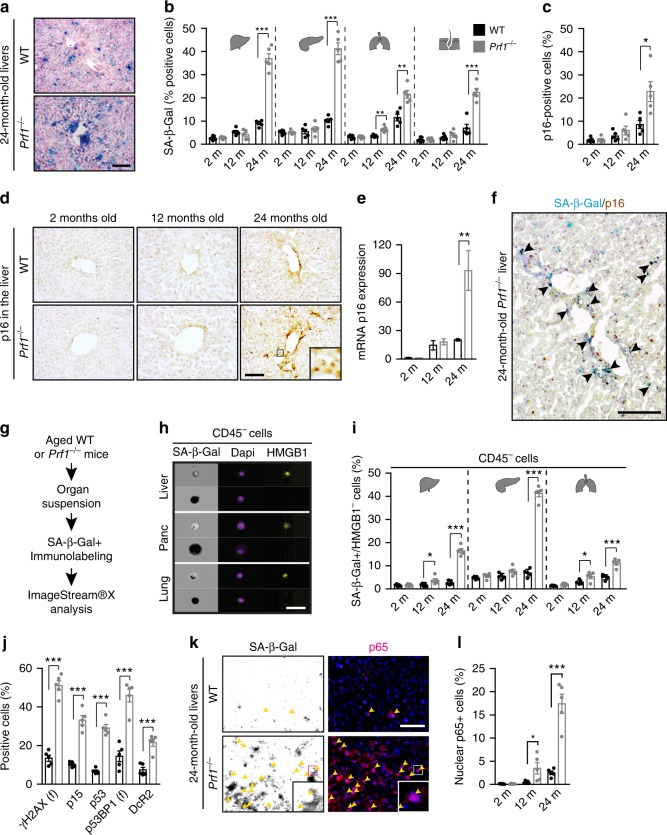
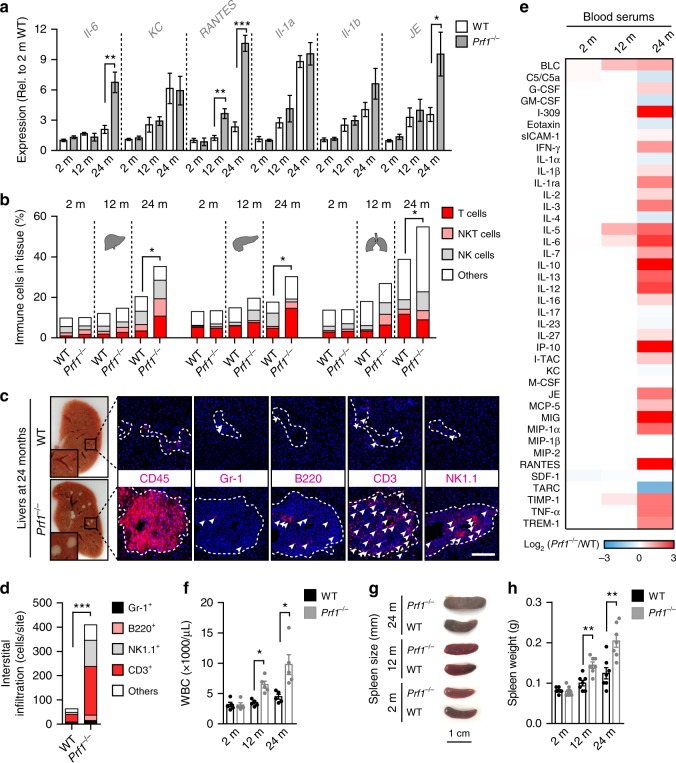
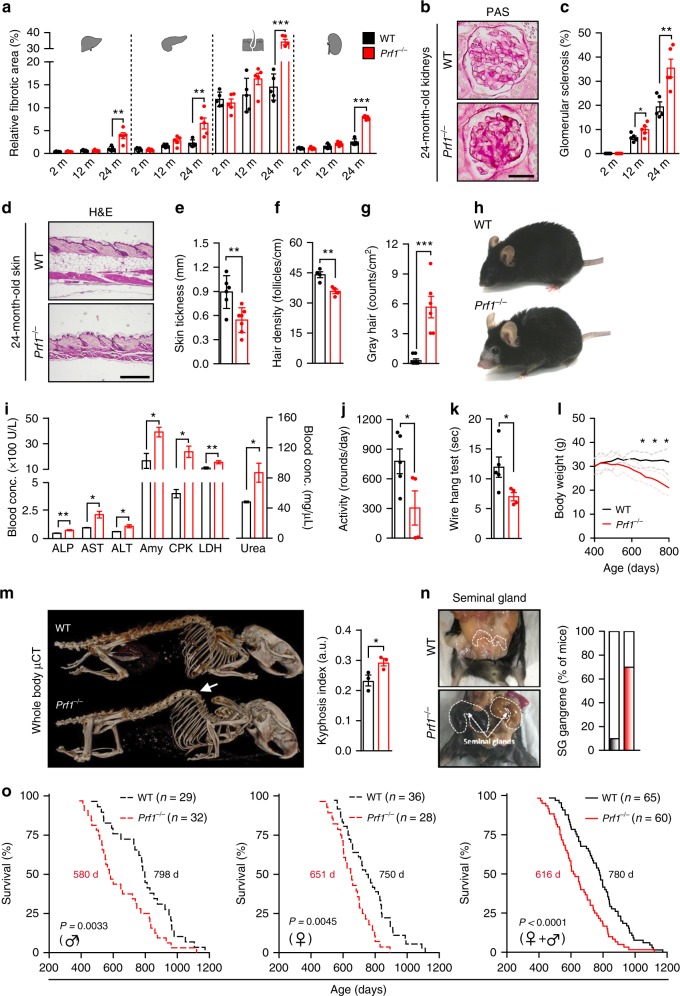
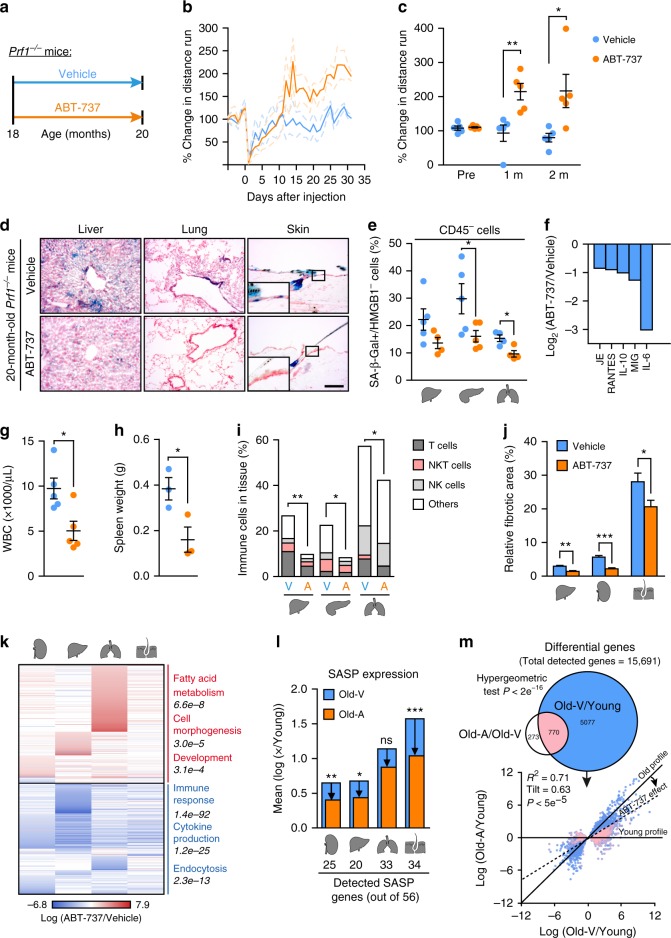
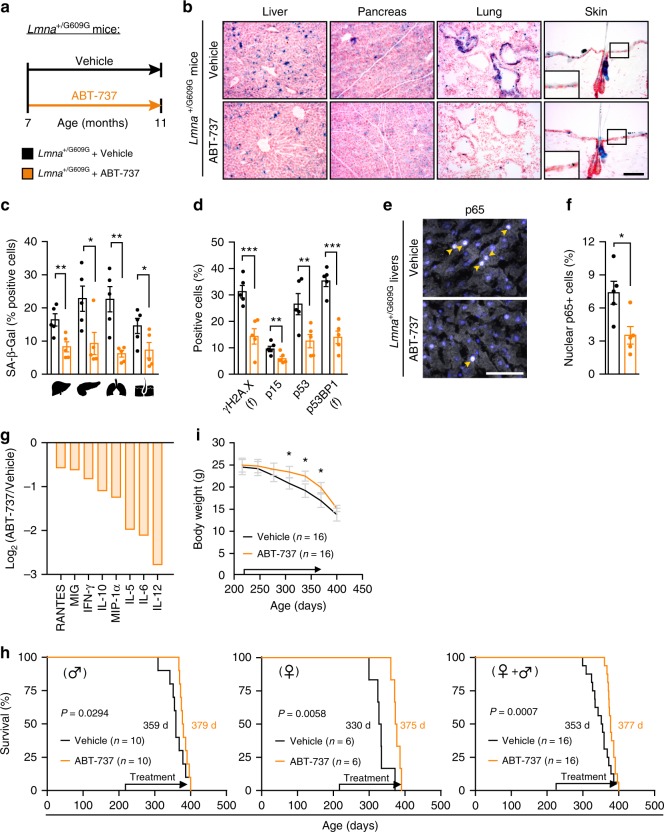
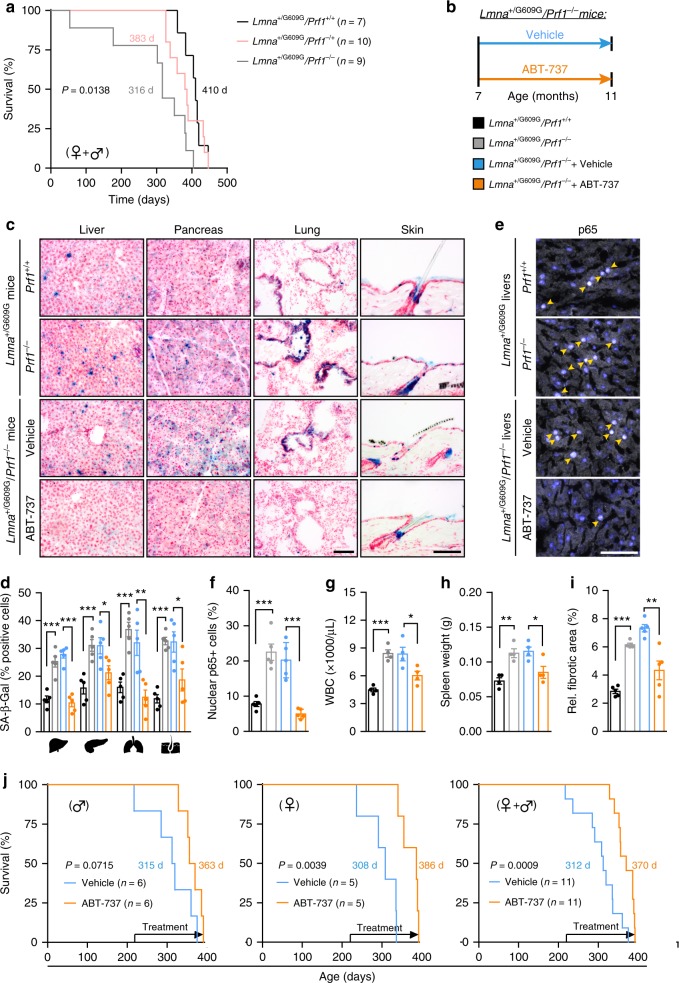
Cellular senescence is a stress response that imposes stable cell-cycle arrest in damaged cells, preventing their propagation in tissues. However, senescent cells accumulate in tissues in advanced age, where they might promote tissue degeneration and malignant transformation. The extent of immune-system involvement in regulating age-related accumulation of senescent cells, and its consequences, are unknown. Here we show that Prf1 −/− mice with impaired cell cytotoxicity exhibit both higher senescent-cell tissue burden and chronic inflammation. They suffer from multiple age-related disorders and lower survival. Strikingly, pharmacological elimination of senescent-cells by ABT-737 partially alleviates accelerated aging phenotype in these mice. In LMNA +/G609G progeroid mice, impaired cell cytotoxicity further promotes senescent-cell accumulation and shortens lifespan. ABT-737 administration during the second half of life of these progeroid mice abrogates senescence signature and increases median survival. Our findings shed new light on mechanisms governing senescent-cell presence in aging, and could motivate new strategies for regenerative medicine.
Overview
The claims and statistics of this paper haven’t been checked yet.
Free: it reads the open-access text and checks the first 5 claims that cite a source we can check. Create a free account to check every claim.
Integrity signals
Registry
Cites
Statistics
Figures
Verification
Claims the paper makes
The claims and statistics of this paper haven’t been checked yet.
Free: it reads the open-access text and checks the first 5 claims that cite a source we can check. Create a free account to check every claim.
Claims other papers make about this one
Each is checked against this paper’s own text: does it say what the citing paper says it does?
The source backs part of the claim, not all of it — or backs it for a different population, condition or comparison.
In the citing paper
“Nuclear DNA damage is often reported as a commonly underlying cause of senescence, mainly in the form of DNA double-strand breaks (DSBs)20 that activate the DNA damage response (DDR) pathway”
From Cellular senescence in ageing: from mechanisms to therapeutic opportunities (2021) · cites this paper as [20]
Experimental — accuracy not yet measuredThe cited source says what the claim attributes to it.
In the citing paper
“Senescence immunosurveillance is also essential to limit pathological fibrotic conditions and ageing20,145,151,157.”
From Cellular senescence in ageing: from mechanisms to therapeutic opportunities (2021) · cites this paper as [20]
The cited source says what the claim attributes to it.
In the citing paper
“Under some conditions, including old age, failed clearance of senescent cells leads to their accumulation and chronic SASP inflammation (Ovadya et al., 2018).”
From Cytoplasmic DNA: sources, sensing, and role in aging and disease (2021) · cites this paper as Ovadya et al., 2018
The cited source says what the claim attributes to it.
In the citing paper
“During the aging process, declining immune function leads to failures in senescence surveillance, resulting in accumulation of senescent cells.43”
From Cellular senescence and senescence-associated secretory phenotype via the cGAS-STING signaling pathway in cancer (2020) · cites this paper as [43]
The cited source says what the claim attributes to it.
In the citing paper
“Mounting evidence from human samples and preclinical animal models shows that the excessive presence of senescent cells is a contributing cause of ageing, which is featured by a functional decline in multiple physiological systems [39,40].”
From Immune Clearance of Senescent Cells to Combat Ageing and Chronic Diseases (2020) · cites this paper as [40]
3 more claims about this paper
Create a free account to see every claim other papers make about this one.
Self-check
Percentages, sums and reported differences re-computed from the paper’s own numbers.
The self-check needs the paper’s full text.
Citations
Cites
López-Otín, C., Blasco, M. A., Partridge, L., Serrano, M., & Kroemer, G. (2013) · Cell · doi:10.1016/j.cell.2013.05.039 · Cited by 14,982
Gene Expression Omnibus: NCBI gene expression and hybridization array data repository
Edgar, R. (2002) · Nucleic Acids Research · doi:10.1093/nar/30.1.207 · Cited by 13,288
A biomarker that identifies senescent human cells in culture and in aging skin in vivo.
Dimri, G. P., Lee, X., Basile, G., Acosta, M., Scott, G., Roskelley, C., Medrano, E. E., Linskens, M., Rubelj, I., & Pereira-Smith, O. (1995) · Proceedings of the National Academy of Sciences · doi:10.1073/pnas.92.20.9363 · Cited by 7,477
Inflamm‐aging: An Evolutionary Perspective on Immunosenescence
FRANCESCHI, C., BONAFÈ, M., VALENSIN, S., OLIVIERI, F., DE LUCA, M., OTTAVIANI, E., & DE BENEDICTIS, G. (2000) · Annals of the New York Academy of Sciences · doi:10.1111/j.1749-6632.2000.tb06651.x · Cited by 5,358
The senescence-associated secretory phenotype: the dark side of tumor suppression
Coppé, J.-P., Desprez, P.-Y., Krtolica, A., & Campisi, J. (2010) · Annual Review of Pathology: Mechanisms of Disease · doi:10.1146/annurev-pathol-121808-102144 · Cited by 5,206
Chronic Inflammation (Inflammaging) and Its Potential Contribution to Age-Associated Diseases
Franceschi, C., & Campisi, J. (2014) · The Journals of Gerontology Series A: Biological Sciences and Medical Sciences · doi:10.1093/gerona/glu057 · Cited by 3,891
Clearance of p16Ink4a-positive senescent cells delays ageing-associated disorders
Baker, D. J., Wijshake, T., Tchkonia, T., LeBrasseur, N. K., Childs, B. G., van de Sluis, B., Kirkland, J. L., & van Deursen, J. M. (2011) · Nature · doi:10.1038/nature10600 · Cited by 3,670
Aging, Cellular Senescence, and Cancer
Campisi, J. (2013) · Annual Review of Physiology · doi:10.1146/annurev-physiol-030212-183653 · Cited by 2,954
Naturally occurring p16Ink4a-positive cells shorten healthy lifespan
Baker, D. J., Childs, B. G., Durik, M., Wijers, M. E., Sieben, C. J., Zhong, J., A. Saltness, R., Jeganathan, K. B., Verzosa, G. C., Pezeshki, A., et al. (2016) · Nature · doi:10.1038/nature16932 · Cited by 2,876 · cited 1×
“Accumulation of senescent p16-positive cells shortens mouse lifespan (Baker et al, 2016).”
BackgroundCellular senescence: from physiology to pathology
Muñoz-Espín, D., & Serrano, M. (2014) · Nature Reviews Molecular Cell Biology · doi:10.1038/nrm3823 · Cited by 2,818
Cited by
Items 101–200 of 616
Senescence-induced endothelial phenotypes underpin immune-mediated senescence surveillance
Yin, K., Patten, D., Gough, S., de Barros Gonçalves, S., Chan, A., Olan, I., Cassidy, L., Poblocka, M., Zhu, H., Lun, A., et al. (2022) · Genes & Development · doi:10.1101/gad.349585.122 · Cited by 73
“2014), aging phenotypes (Ovadya et al. 2018), and tumorigenesis (Kang et al.”
BackgroundZheng, L., He, S., Wang, H., Li, J., Liu, Y., & Liu, S. (2024) · Aging and Disease · doi:10.14336/ad.2024.0206 · Cited by 83
“Immune senescence leads to impaired immune function, thereby reducing the clearance of SnCs [62, 69].”
Salminen, A. (2021) · Ageing Research Reviews · doi:10.1016/j.arr.2021.101280 · Cited by 73
Targeting cellular senescence in metabolic disease
Palmer, A. K., Tchkonia, T., & Kirkland, J. L. (2022) · Molecular Metabolism · doi:10.1016/j.molmet.2022.101601 · Cited by 80
“Impaired immune cell cytotoxicity in experimental animals leads to accumulation of senescent cells [16].”
BackgroundAquino‐Martinez, R., Eckhardt, B. A., Rowsey, J. L., Fraser, D. G., Khosla, S., Farr, J. N., & Monroe, D. G. (2021) · Journal of Periodontology · doi:10.1002/jper.20-0529 · Cited by 78
Invariant natural killer T cells coordinate removal of senescent cells
Arora, S., Thompson, P. J., Wang, Y., Bhattacharyya, A., Apostolopoulou, H., Hatano, R., Naikawadi, R. P., Shah, A., Wolters, P. J., Koliwad, S., et al. (2021) · Med · doi:10.1016/j.medj.2021.04.014 · Cited by 77
Adipose tissue, immune aging, and cellular senescence
Frasca, D., & Blomberg, B. B. (2020) · Seminars in Immunopathology · doi:10.1007/s00281-020-00812-1 · Cited by 78
“Senescent cells accumulate in the body during aging and promote tissue degeneration and malignant transformation, mainly due to impaired immune surveillance and impaired cytotoxicity by NK cells, and lead to the development of ageassociated diseases [140].”
BackgroundCellular senescence in lymphoid organs and immunosenescence
Budamagunta, V., Foster, T. C., & Zhou, D. (2021) · Aging · doi:10.18632/aging.203405 · Cited by 67
“com 19922 AGING upon impaired immune surveillance [32].”
BackgroundThe YAP-TEAD complex promotes senescent cell survival by lowering endoplasmic reticulum stress
Anerillas, C., Mazan-Mamczarz, K., Herman, A. B., Munk, R., Lam, K.-W. G., Calvo-Rubio, M., Garrido, A., Tsitsipatis, D., Martindale, J. L., Altés, G., et al. (2023) · Nature Aging · doi:10.1038/s43587-023-00480-4 · Cited by 76
Montero-Melendez, T., Nagano, A., Chelala, C., Filer, A., Buckley, C. D., & Perretti, M. (2020) · Nature Communications · doi:10.1038/s41467-020-14421-x · Cited by 75
Targeting senescent cells with NKG2D-CAR T cells
Deng, Y., Kumar, A., Xie, K., Schaaf, K., Scifo, E., Morsy, S., Li, T., Ehninger, A., Bano, D., & Ehninger, D. (2024) · Cell Death Discovery · doi:10.1038/s41420-024-01976-7 · Cited by 75
“In addition to these antibody-based immune therapies, increasing evidence under-scores the role of immune cells, including cytotoxic T cells, in the immunological surveillance of senescent cells in the context of cancer [25, 26].”
Malavolta, M., Giacconi, R., Brunetti, D., Provinciali, M., & Maggi, F. (2020) · Cells · doi:10.3390/cells9040909 · Cited by 72
“Impaired immune surveillance of senescent cells may contribute to their accumulation during aging [75] and to the development of cancer [74].”
BackgroundStochastic non-enzymatic modification of long-lived macromolecules - A missing hallmark of aging
Fedintsev, A., & Moskalev, A. (2020) · Ageing Research Reviews · doi:10.1016/j.arr.2020.101097 · Cited by 72
Microglial response to aging and neuroinflammation in the development of neurodegenerative diseases
Han, T., Xu, Y., Sun, L., Hashimoto, M., & Wei, J. (2023) · Neural Regeneration Research · doi:10.4103/1673-5374.385845 · Cited by 72
“During aging, uncontrolled age-related immune detection, combined with the immune evasion of senescent cells, leads to a further increase in the number of senescent cells, severely affecting the organism’s routine physiological functions (Ovadya et al., 2018; Muñoz et al., 2019).”
BackgroundDeciphering the mechanisms, biochemistry, physiology, and social habits in the process of aging
Asejeje, F. O., & Ogunro, O. B. (2023) · Archives of Gerontology and Geriatrics Plus · doi:10.1016/j.aggp.2023.100003 · Cited by 72
Stress-induced β cell early senescence confers protection against type 1 diabetes
Lee, H., Sahin, G. S., Chen, C.-W., Sonthalia, S., Cañas, S. M., Oktay, H. Z., Duckworth, A. T., Brawerman, G. M., Thompson, P. J., Hatzoglou, M., et al. (2023) · Cell Metabolism · doi:10.1016/j.cmet.2023.10.014 · Cited by 70
Telomeres, cellular senescence, and aging: past and future
Eppard, M., Passos, J. F., & Victorelli, S. G. (2023) · Biogerontology · doi:10.1007/s10522-023-10085-4 · Cited by 71
Cellular Senescence in Aging Lungs and Diseases
Aghali, A., Ngassie, M. L. K., Pabelick, C. M., & Prakash, Y. S. (2022) · Cells · doi:10.3390/cells11111781 · Cited by 69
“However, with aging, the efficiency of the immune system to clear senescent cells is impaired [30].”
BackgroundSenescence in the Development and Response to Cancer with Immunotherapy: A Double-Edged Sword
Battram, A. M., Bachiller, M., & Martín-Antonio, B. (2020) · International Journal of Molecular Sciences · doi:10.3390/ijms21124346 · Cited by 70
Cellular Senescence in Acute and Chronic Wound Repair
Wilkinson, H. N., & Hardman, M. J. (2022) · Cold Spring Harbor Perspectives in Biology · doi:10.1101/cshperspect.a041221 · Cited by 69
Senescent stromal cells: roles in the tumor microenvironment
Gabai, Y., Assouline, B., & Ben‐Porath, I. (2022) · Trends in cancer · doi:10.1016/j.trecan.2022.09.002 · Cited by 69
DAMPs in immunosenescence and cancer
Chen, F., Tang, H., Cai, X., Lin, J., Kang, R., Tang, D., & Liu, J. (2024) · Seminars in Cancer Biology · doi:10.1016/j.semcancer.2024.09.005 · Cited by 67
Ligon, M. M., Wang, C., Jennings, Z., Schulz, C., DeJong, E. N., Lowder, J. L., Bowdish, D. M. E., & Mysorekar, I. U. (2020) · Mucosal Immunology · doi:10.1038/s41385-020-0290-x · Cited by 67
Chiral CuxCoyS Nanoparticles under Magnetic Field and NIR Light to Eliminate Senescent Cells
Li, S., Sun, M., Hao, C., Qu, A., Wu, X., Xu, L., Xu, C., & Kuang, H. (2020) · Angewandte Chemie International Edition · doi:10.1002/anie.202004575 · Cited by 66
Periodontal Disease and Senescent Cells: New Players for an Old Oral Health Problem?
Aquino-Martínez, R., Khosla, S., Farr, J. N., & Monroe, D. G. (2020) · International Journal of Molecular Sciences · doi:10.3390/ijms21207441 · Cited by 67
“Dysfunctional senescent cells accumulate as a result of defective immune elimination and/or accelerated generation over time [65].”
BackgroundInfluentialYang, Y., Jn-Simon, N., He, Y., Sun, C., Zhang, P., Hu, W., Tian, T., Zeng, H., Basha, S., Huerta, A. S., et al. (2025) · Nature Aging · doi:10.1038/s43587-025-00811-7 · Cited by 65
Cellular Senescence and Periodontitis: Mechanisms and Therapeutics
Chen, S., Zhou, D., Liu, O., Chen, H., Wang, Y., & Zhou, Y. (2022) · Biology · doi:10.3390/biology11101419 · Cited by 65
“Immune surveillance may be hampered by senescent cells interfering with immune activity [90].”
BackgroundSenolytics: A Translational Bridge Between Cellular Senescence and Organismal Aging
Thoppil, H., & Riabowol, K. T. (2020) · Frontiers in Cell and Developmental Biology · doi:10.3389/fcell.2019.00367 · Cited by 64
Senescence under appraisal: hopes and challenges revisited
Davan-Wetton, C. S. A., Pessolano, E., Perretti, M., & Montero‐Melendez, T. (2021) · Cellular and Molecular Life Sciences · doi:10.1007/s00018-020-03746-x · Cited by 64
“In a bleomycin model, it has been shown that senescent cell turnover can take from days in young mice to weeks in old animals [50], and that the reduced CD8+ T cell cytotoxic activity associated with age accelerates the accumulation of senescent cells [51].”
BackgroundMitochondrial dysfunction in cellular senescence: a bridge to neurodegenerative disease
Hruby, A. J., & Higuchi‐Sanabria, R. (2025) · npj Aging · doi:10.1038/s41514-025-00291-4 · Cited by 63
Ring, N. A. R., Valdivieso, K., Grillari, J., Redl, H., & Ogrodnik, M. (2022) · Developmental Cell · doi:10.1016/j.devcel.2022.04.005 · Cited by 60
Salminen, A. (2022) · Cellular and Molecular Life Sciences · doi:10.1007/s00018-022-04520-x · Cited by 61
“[231] reported that there was a robust accumulation of senescent cells in the tissues of perforin-knockout mice which displayed a premature aging process.”
BackgroundMicroRNAs are critical regulators of senescence and aging in mesenchymal stem cells
Potter, M. L., Hill, W., Isales, C. M., Hamrick, M. W., & Fulzele, S. (2020) · Bone · doi:10.1016/j.bone.2020.115679 · Cited by 63
“(2018) demonstrated immune function impairment in mice (perforin gene knockout) resulted in a higher burden of senescence and age-related disorders while lowering survival (31).”
BackgroundCitrulline regulates macrophage metabolism and inflammation to counter aging in mice
Xie, Z., Lin, M., Xing, B., Wang, H., Zhang, H., Cai, Z., Mei, X., & Zhu, Z. (2025) · Science Advances · doi:10.1126/sciadv.ads4957 · Cited by 61
“During aging, the liver and spleen of mice increase in weight primarily due to factors such as fat accumulation ( 35 , 36 ) and inflammatory responses ( 37 ).”
The Immune Response Against Human Cytomegalovirus Links Cellular to Systemic Senescence
Heath, J., & Grant, M. D. (2020) · Cells · doi:10.3390/cells9030766 · Cited by 60
“As these inflammatory secretions are often a form of distress signaling, the increase in chronic inflammation that directly results from senescent cell accumulation is compounded by any age-related decline in immune function that compromises clearance of the accumulating pro-inflammatory cells [35].”
BackgroundAging and Options to Halt Declining Immunity to Virus Infections
Palacios-Pedrero, M. Á., Osterhaus, A. D. M. E., Becker, T., Elbahesh, H., Rimmelzwaan, G. F., & Saletti, G. (2021) · Frontiers in Immunology · doi:10.3389/fimmu.2021.681449 · Cited by 61
Senescence and the Aging Immune System as Major Drivers of Chronic Kidney Disease
Schroth, J., Thiemermann, C., & Henson, S. M. (2020) · Frontiers in Cell and Developmental Biology · doi:10.3389/fcell.2020.564461 · Cited by 59
Iltis, C., Moskalevska, I., Debiesse, A., Seguin, L., Fissoun, C., Cervera, L., Moudombi, L., Ardin, M., Ferrari, A., Eliott, C., et al. (2024) · Nature Aging · doi:10.1038/s43587-024-00776-z · Cited by 59
“Indeed, recent studies have established a clear link among SnC accumulation, fibrosis and lung disease 17,22,23 , a process that can be studied using intratracheal instillation of bleo-mycin in mice 24 .”
Is There a Positive Side to T Cell Exhaustion?
Pawelec, G. (2019) · Frontiers in Immunology · doi:10.3389/fimmu.2019.00111 · Cited by 58
“A fail-safe mechanism requiring the elimination of senescent cells by the immune system (18) may also become less effective with age (19, 20).”
BackgroundClinical perspectives on the age-related increase of immunosuppressive activity
Salminen, A. (2022) · Journal of Molecular Medicine · doi:10.1007/s00109-022-02193-4 · Cited by 57
“[89] demonstrated that the ablation of the Perforin 1 (Prf1) gene in mice increased the accumulation of senescent cells within tissues, triggered chronic inflammatory state, and finally reduced the survival of the animals.”
BackgroundAzazmeh, N., Assouline, B., Winter, E., Ruppo, S., Nevo, Y., Maly, A., Meir, K., Witkiewicz, A. K., Cohen, J., Rizou, S. V., et al. (2020) · Nature Communications · doi:10.1038/s41467-020-16475-3 · Cited by 57
Immune surveillance of senescent cells in aging and disease
Majewska, J., & Krizhanovsky, V. (2025) · Nature Aging · doi:10.1038/s43587-025-00910-5 · Cited by 58
“Impairment of the cytotoxic function of NK cells results in an accelerated accumulation of senescent cells in various tissues 26 .”
Self-citationImmunosenescence, inflammaging, and cancer immunotherapy efficacy
Rodriguez, J. E., Naigeon, M., Goldschmidt, V., Dugage, M. R., Seknazi, L., Danlos, F., Champiat, S., Marabelle, A., Michot, J., Massard, C., et al. (2022) · Expert Review of Anticancer Therapy · doi:10.1080/14737140.2022.2098718 · Cited by 57
“This phenomenon is marked by an increase in serum pro-inflammatory mediators, especially IL-6, IL-8, IL-1RA, TNF-α, IL-1, CXCL1, and CCL2 [2] but also Growth/ differentiation factor 15 (GDF15), stanniocalcin 1 (STC1), and serine protease inhibitors (SERPIN), and MMP1 [18] and accelerates immune aging itself [21].”
BackgroundG Protein-Coupled Receptor Systems and Their Role in Cellular Senescence
Santos‐Otte, P., Leysen, H., van Gastel, J., Hendrickx, J. O., Martin, B., & Maudsley, S. R. (2019) · Computational and Structural Biotechnology Journal · doi:10.1016/j.csbj.2019.08.005 · Cited by 58
Probiotic bacteria as modulators of cellular senescence: emerging concepts and opportunities
Sharma, R., & Padwad, Y. S. (2019) · Gut Microbes · doi:10.1080/19490976.2019.1697148 · Cited by 56
“This notion has been recently substantiated when it was observed that mice deficient in perforin-mediated cell cytotoxicity exhibited higher senescent-cell tissue burden, chronic inflammation and also suffered from multiple age-related disorders suggesting that impaired immune surveillance can accelerate the accumulat…”
BackgroundSharma, R., & Padwad, Y. S. (2020) · Trends in Food Science & Technology · doi:10.1016/j.tifs.2020.02.004 · Cited by 56
The Roles and Pharmacological Effects of FGF21 in Preventing Aging-Associated Metabolic Diseases
Yan, J., Nie, Y., Cao, J., Luo, M., Yan, M., Chen, Z., & He, B. (2021) · Frontiers in Cardiovascular Medicine · doi:10.3389/fcvm.2021.655575 · Cited by 56
“Senescence-associated secretory phenotype (SASP) secretes chemokines and cytokines (such as IL-1B and MCP-1) to attract immune cells and clear aging cells (16).”
BackgroundDiverse Roles of Cellular Senescence in Skeletal Muscle Inflammation, Regeneration, and Therapeutics
Saito, Y., & Chikenji, T. (2021) · Frontiers in Pharmacology · doi:10.3389/fphar.2021.739510 · Cited by 57
“…inflammatory diseases, such as chronic kidney disease (Docherty et al., 2019), idiopathic pulmonary fibrosis (Schafer et al., 2017), diabetes (Palmer et al., 2019), atherosclerosis (Wang and Bennett, 2012), sarcopenia (Sousa-Victor et al., 2014), osteoarthritis (Coryell et al., 2021),…”
BackgroundSharma, R. (2021) · Biogerontology · doi:10.1007/s10522-021-09936-9 · Cited by 55
Sessions, G. A., Copp, M. E., Liu, J., Sinkler, M. A., D'Costa, S., & Diekman, B. O. (2019) · The FASEB Journal · doi:10.1096/fj.201900815rr · Cited by 52
Liu, Y., Pagacz, J., Wolfgeher, D. J., Bromerg, K. D., Gorman, J. V., & Kron, S. J. (2023) · Journal for ImmunoTherapy of Cancer · doi:10.1136/jitc-2022-005862 · Cited by 54
Pancreatic β-cell senescence in diabetes: mechanisms, markers and therapies
Cha, J., Aguayo‐Mazzucato, C., & Thompson, P. J. (2023) · Frontiers in Endocrinology · doi:10.3389/fendo.2023.1212716 · Cited by 55
“The clearance of accumulated senescent cells by the immune system seems to be the primary way senescence is resolved in most tissues during aging and is necessary for tissue homeostasis (24).”
BackgroundAdiponectin deficiency accelerates brain aging via mitochondria-associated neuroinflammation
He, K., Nie, L., Ali, T., Liu, Z., Li, W., Gao, R., Zhang, Z., Liu, J., Dai, Z., Xie, Y., et al. (2023) · Immunity & Ageing · doi:10.1186/s12979-023-00339-7 · Cited by 53
“and its deficiency enhanced neuroinflammation in mice Chronic inflammation is one of the essential characteristics of aging that is usually accompanied by increased proinflammatory indices [27].”
BackgroundThe struggle of a good friend getting old: cellular senescence in viral responses and therapy
Kohli, J., Veenstra, I., & Demaria, M. (2021) · The EMBO Reports · doi:10.15252/embr.202052243 · Cited by 52
“Mice engineered with an impaired capacity to eliminate senescent cells display increased natural accumulation of senescent cells, premature signs of ageing and shortened lifespans compared to wild-type animals (Ovadya et al , 2018).”
Walters, H., & Cox, L. S. (2021) · Oxidative Medicine and Cellular Longevity · doi:10.1155/2021/6697861 · Cited by 52
Cancer Etiology: A Metabolic Disease Originating from Life’s Major Evolutionary Transition?
Poljšak, B., Kovač, V., Dahmane, R. G., Levec, T., & Starc, A. (2019) · Oxidative Medicine and Cellular Longevity · doi:10.1155/2019/7831952 · Cited by 51
“With increased age, the innate immune system does not efficiently clears the senescent cells as emitters of signals that drive inflammation and the vicious cycle initiates [156].”
BackgroundMitochondria‐Targeting Plasmonic Spiky Nanorods Increase the Elimination of Aging Cells in Vivo
Lu, M., Qu, A., Li, S., Sun, M., Xu, L., Kuang, H., & Xu, C. (2020) · Angewandte Chemie International Edition · doi:10.1002/anie.202002576 · Cited by 51
Zhao, R., Jin, X., Li, A., Xu, B., Shen, Y., Wang, W., Huang, J., Zhang, Y., & Li, X. (2021) · Advanced Science · doi:10.1002/advs.202104128 · Cited by 51
Potential Active Marine Peptides as Anti-Aging Drugs or Drug Candidates
Yang, H., Zhang, Q., Zhang, B., Zhao, Y., & Wang, N. (2023) · Marine Drugs · doi:10.3390/md21030144 · Cited by 50
“The immune system plays a fundamental role in the elimination of senescent cells, and the decline in immune function is associated with an increase in the number of senescent cells, which eventually leads to various diseases [24], such as cancer, human immunodeficiency virus, multiple sclerosis, and aging [25–27].”
Aging impairs alveolar epithelial type II cell function in acute lung injury
Yazicioglu, T., Mühlfeld, C., Autilio, C., Huang, C.-K., Bär, C., Dittrich‐Breiholz, O., Thum, T., Pérez‐Gil, J., Schmiedl, A., & Brandenberger, C. (2020) · American Journal of Physiology-Lung Cellular and Molecular Physiology · doi:10.1152/ajplung.00093.2020 · Cited by 50
Health disparities: Intracellular consequences of social determinants of health
Emeny, R. T., Carpenter, D. O., & Lawrence, D. A. (2021) · Toxicology and Applied Pharmacology · doi:10.1016/j.taap.2021.115444 · Cited by 50
Ogrodnik, M. B., & Gladyshev, V. N. (2023) · Nature Aging · doi:10.1038/s43587-023-00447-5 · Cited by 50
“…in aging, including protection against cancer 17 , accumulation of damage incompatible with cell division 11 , high activity of cell expansion pathways 18 , a combination of both damage and expansion stimuli 19 , dysfunction of the immune system 20 , and a wound-like signature of aging organs 10 .”
Kita, A., Saito, Y., Miura, N., Miyajima, M., Yamamoto, S., Sato, T., Yotsuyanagi, T., Fujimiya, M., & Chikenji, T. (2022) · Communications Biology · doi:10.1038/s42003-022-03266-3 · Cited by 50
Senotherapeutics and Their Molecular Mechanism for Improving Aging
Park, J., & Shin, D. W. (2022) · Biomolecules & Therapeutics · doi:10.4062/biomolther.2022.114 · Cited by 49
“Thus, the physiological role of the immune system in the elimination of senescent cells is crucial (van Deursen, 2014; Ovadya et al., 2018).”
Hampel, H., Lista, S., Neri, C., & Vergallo, A. (2019) · Progress in Neurobiology · doi:10.1016/j.pneurobio.2019.101662 · Cited by 47
Intersection of immunometabolism and immunosenescence during aging
Lee, K.-A., Robbins, P. D., & Camell, C. D. (2021) · Current Opinion in Pharmacology · doi:10.1016/j.coph.2021.01.003 · Cited by 46
“Their accumulation can be driven by increased expression of inhibitory molecules permitting escape from immunosurveillance and suboptimal cytotoxicity from aged immune cells [9,10].”
BackgroundSenescent cell accumulation mechanisms inferred from parabiosis
Karin, O., & Alon, U. (2021) · GeroScience · doi:10.1007/s11357-020-00286-x · Cited by 48
DNA damage response(DDR): a link between cellular senescence and human cytomegalovirus
Wu, X., Zhou, X., Wang, S., & Mao, G. (2023) · Virology Journal · doi:10.1186/s12985-023-02203-y · Cited by 49
“DNA damage is likely the most powerful cause of cellular senescence, as DNA carries information about all of the proteins and RNAs produced by the cell [65, 66].”
BackgroundSoluble factors influencing the neural stem cell niche in brain physiology, inflammation, and aging
Willis, C. M., Nicaise, A. M., Krzak, G., Ionescu, R.-B., Pappa, V., D’Angelo, A., Agarwal, R., Repollés-de-Dalmau, M., Peruzzotti‐Jametti, L., & Pluchino, S. (2022) · Experimental Neurology · doi:10.1016/j.expneurol.2022.114124 · Cited by 48
“Normally, the SASP regulates the removal of senescent cells via local macrophages, which provides beneficial effects (105, 106).”
BackgroundMbara, K. C., Devnarain, N., & Owira, P. M. O. (2022) · Pharmaceutical Medicine · doi:10.1007/s40290-022-00444-w · Cited by 47
“Since the accumulation of SCs in aged tissues is associated with an intrinsic decline of immune function [34], therapeutic strategies to boost the immune system could lead to successful clearance of SCs from aged tissues.”
BackgroundCellular senescence as a driver of cognitive decline triggered by chronic unpredictable stress
Lin, Y.-F., Wang, L.-Y., Chen, C.-S., Li, C.-C., & Hsiao, Y.-H. (2021) · Neurobiology of Stress · doi:10.1016/j.ynstr.2021.100341 · Cited by 47
“Scientists have discovered that senescent cells are widespread in human, primate, and rodent tissues (Ovadya et al., 2018; van Deursen, 2014).”
The central role of DNA damage in immunosenescence
Kell, L., Simon, A. K., Alsaleh, G., & Cox, L. S. (2023) · Frontiers in Aging · doi:10.3389/fragi.2023.1202152 · Cited by 49
“, 2018) together with reduced immunosurveillance for cancer neoantigens (Ovadya et al., 2018).”
BackgroundImmune dysfunction in Alzheimer disease
Butovsky, O., Rosenzweig, N., Kleemann, K. L., Jorfi, M., Kuchroo, V. K., Tanzi, R. E., & Weiner, H. L. (2025) · Nature reviews. Neuroscience · doi:10.1038/s41583-025-00997-0 · Cited by 48
“Immune homeostasis disruptions at either end of the lifespan, during critical developmental windows or in the context of age-related immune senescence 6 can create a neurobiological environment that predisposes the brain to neurodegeneration 7 .”
Trussoni, C. E., O’Hara, S. P., & LaRusso, N. F. (2022) · Seminars in Immunopathology · doi:10.1007/s00281-022-00909-9 · Cited by 43
“Here, the authors showed that mice deficient in perforin-1, which lack functional NK, NK T cells, and cytotoxic CD8 + T cells, did not effectively eliminate senescent cells resulting in their increased accumulation leading to kidney, liver, and pancreas fibrosis along with other signs of aggravated aging [28].”
BackgroundLung regeneration: implications of the diseased niche and ageing
Melo-Narváez, M. C., Stegmayr, J., Wagner, D. E., & Lehmann, M. (2020) · European Respiratory Review · doi:10.1183/16000617.0222-2020 · Cited by 46
Wong, G. C., & Chow, H. (2022) · Journal of Alzheimer s Disease · doi:10.3233/jad-220203 · Cited by 48
“It is proposed that a malfunctioning and aged immune system which fails to promptly remove these cells may contribute to that [55, 56], but others also suggested that senescent cells emerged from persistent DDR may become resistant to apoptosis [57].”
BackgroundAryl hydrocarbon receptor (AhR) impairs circadian regulation: Impact on the aging process
Salminen, A. (2023) · Ageing Research Reviews · doi:10.1016/j.arr.2023.101928 · Cited by 46
Aging of the progenitor cells that initiate prostate cancer
Freeland, J., Crowell, P. D., Giafaglione, J. M., Boutros, P. C., & Goldstein, A. S. (2021) · Cancer Letters · doi:10.1016/j.canlet.2021.05.014 · Cited by 47
“Similarly, age-related immune dysfunction may reduce efficiency of immune surveillance[16, 17], enabling the survival and expansion of pre-malignant cells.”
BackgroundDeryabin, P. I., Shatrova, A. N., Marakhova, I. I., Nikolsky, N. N., & Borodkina, A. V. (2021) · Cellular and Molecular Life Sciences · doi:10.1007/s00018-021-03980-x · Cited by 46
Age-associated changes in innate and adaptive immunity: role of the gut microbiota
Gao, H., Nepovimová, E., Adam, V., Heger, Z., Valko, M., Wu, Q., & Kuča, K. (2024) · Frontiers in Immunology · doi:10.3389/fimmu.2024.1421062 · Cited by 47
Cellular senescence offers distinct immunological vulnerabilities in cancer
Zhou, L., Ma, B., & Ruscetti, M. A. (2024) · Trends in cancer · doi:10.1016/j.trecan.2024.11.010 · Cited by 45
Enhancing immunity during ageing by targeting interactions within the tissue environment
Bracken, O. V., Maeyer, R. P. H. D., & Akbar, A. N. (2025) · Nature Reviews Drug Discovery · doi:10.1038/s41573-024-01126-9 · Cited by 46
“alterations in immunity might lead to defective immune clearance of senescent cells in tissues, resulting in their accumulation during ageing 38 .”
The Role of Ageing and Parenchymal Senescence on Macrophage Function and Fibrosis
Campbell, R., Docherty, M.-H., Ferenbach, D. A., & Mylonas, K. J. (2021) · Frontiers in Immunology · doi:10.3389/fimmu.2021.700790 · Cited by 48
The Emerging Role of Accelerated Cellular Senescence in Periodontitis
Aquino-Martínez, R. (2023) · Journal of Dental Research · doi:10.1177/00220345231154567 · Cited by 45
“Accordingly, dysfunctional senescent cells are found at sites of chronic diseases, where they deteriorate tissue structure and function (Coppé et al. 2010; Ovadya et al. 2018).”
BackgroundObesity Accelerates Age Defects in Mouse and Human B Cells
Frasca, D., & Blomberg, B. B. (2020) · Frontiers in Immunology · doi:10.3389/fimmu.2020.02060 · Cited by 44
“Senescent cells accumulate in the AT of aging mice and humans (40).”
BackgroundA guide to senolytic intervention in neurodegenerative disease
Lee, S., Wang, E. Y., Steinberg, A. B., Walton, C. C., Chinta, S. J., & Andersen, J. K. (2021) · Mechanisms of Ageing and Development · doi:10.1016/j.mad.2021.111585 · Cited by 39
Pathogenesis and inflammaging in myelodysplastic syndrome
Villaume, M. T., & Savona, M. R. (2024) · Haematologica · doi:10.3324/haematol.2023.284944 · Cited by 43
“25 Immunosenescence is linked to inflammaging and hypothesized to contribute to MDS pathogenesis.”
The ageing immune system as a driver of systemic ageing
Jang, I. H., Niedernhofer, L. J., Robbins, P. D., & Camell, C. D. (2026) · Nature reviews. Immunology · doi:10.1038/s41577-026-01269-3 · Cited by 45
“Global deficiency in perforin, which is required for cell lysis by CD8 + T cells, results in increased senescent cell accumulation and accelerated ageing 45 .”
Serrano‐López, J., & Martín-Antonio, B. (2021) · Cells · doi:10.3390/cells10102562 · Cited by 43
“This accumulation of senescent cells will enhance the SASP promoting further inflammaging and accelerated aging [22] and will contribute to cancer development [7,25,26].”
BackgroundMolecular hallmarks of ageing in amyotrophic lateral sclerosis
Jagaraj, C. J., Shadfar, S., Kashani, S. A., Saravanabavan, S., Farzana, F., & Atkin, J. D. (2024) · Cellular and Molecular Life Sciences · doi:10.1007/s00018-024-05164-9 · Cited by 43
Ren, D., Quan, N., Fedorova, J., Zhang, J., He, Z., & Li, J. (2020) · Redox Biology · doi:10.1016/j.redox.2020.101556 · Cited by 42
“Given the pro-inflammatory signaling activation in Sesn2-KO heart, and it was reported that chronic systemic inflammation is one of the characteristics in aging [39].”
BackgroundInsights from In Vivo Studies of Cellular Senescence
Prieto, L. I., Graves, S. I., & Baker, D. J. (2020) · Cells · doi:10.3390/cells9040954 · Cited by 41
“Indeed, the accumulation of senescent cells has been shown to correlate with age and disease, which may result from impaired clearance by the immune system [2].”
BackgroundT cell aging and Alzheimer’s disease
Guo, L., Li, X., Gould, T. M., Wang, Z., & Cao, W. (2023) · Frontiers in Immunology · doi:10.3389/fimmu.2023.1154699 · Cited by 41
Diwan, B., & Sharma, R. (2022) · Food Science and Biotechnology · doi:10.1007/s10068-022-01114-y · Cited by 40
“For example, it was demonstrated that in vivo deficiency in cytotoxic response of effector immune cells can enhance the accumulation of SC in tissues accompanied with chronic inflammation (Ovadya et al., 2018).”
BackgroundCellular senescence in liver diseases: From mechanisms to therapies
Ge, T., Shao, Y., Bao, X., Xu, W., & Lu, C. (2023) · International Immunopharmacology · doi:10.1016/j.intimp.2023.110522 · Cited by 38
López-Jiménez, F. A., Kapa, S., Friedman, P. A., LeBrasseur, N. K., Klavetter, E. W., Mangold, K. E., & Attia, Z. I. (2024) · JACC. Clinical electrophysiology · doi:10.1016/j.jacep.2024.02.011 · Cited by 38
Salminen, A., Kaarniranta, K., & Kauppinen, A. (2020) · Cellular Signalling · doi:10.1016/j.cellsig.2020.109771 · Cited by 38
Hypoxia and aging: molecular mechanisms, diseases, and therapeutic targets
Nisar, A., Khan, S., Li, W., Hu, L., Samarawickrama, P. N., Gold, N. M., Zi, M., Mehmood, S. A., Miao, J., & He, Y. (2024) · MedComm · doi:10.1002/mco2.786 · Cited by 38
Cardiovascular ageing: hallmarks, signaling pathways, diseases and therapeutic targets
Zheng, P., Yan, W., Ding, Y.-N., Zhang, Y., Chen, Z., Qian, J., & Ge, J. (2026) · Signal Transduction and Targeted Therapy · doi:10.1038/s41392-026-02630-7 · Cited by 40
MicroRNAs: a crossroad that connects obesity to immunity and aging
Rakib, A., Kiran, S., Mandal, M., & Singh, U. P. (2022) · Immunity & Ageing · doi:10.1186/s12979-022-00320-w · Cited by 37
“DDR is demonstrated as an underlying cause of cellular senescence by activating the DDR pathway through DNA double-strand breaks [174, 175].”
Background
Metadata
- Authors
- Ovadya, Y., Landsberger, T., Leins, H., Vadai, E., Gal, H., Biran, A., Yosef, R., Sagiv, A., Agrawal, A., Shapira, A., Windheim, J., Tsoory, M., Schirmbeck, R., Amit, I., Geiger, H., & Krizhanovsky, V.
- Affiliations
- Weizmann Institute of Science (IL)
- Universität Ulm (DE)
- University Hospital Ulm (DE)
- Cincinnati Children's Hospital Medical Center (US)
- Corresponding author
- Krizhanovsky, Valery
- ORCID
- Venue
- Nature Communications
- Published
- 2018-12-21
- Volume
- 9
- Issue
- 1
- Pages
- 5435-5435
- ISSN
- 2041-1723 (ISSN-L)
- PMC
- PMC6303397
- OpenAlex
- W2904408826
- Semantic Scholar
- e004152eaa5ce10f6fdd255845a11ff32c0d928a
- Cited by
- 578
- References
- 72
- Citations by year
- 2026: 79 · 2025: 84 · 2024: 80 · 2023: 77 · 2022: 74 · 2021: 76 · 2020: 78 · 2019: 30
- FWCI
- 31.54
- Type
- journal article
- Language
- en
- Open access
- gold
- doi.org
- Licence
- cc-by
- creativecommons.org/licenses/by/4.0 (tdm)
- creativecommons.org/licenses/by/4.0 (vor)
- Locations
- Nature Communications (publishedVersion, cc-by)
- Europe PMC (PubMed Central) (publishedVersion, cc-by)
- PubMed Central (publishedVersion, cc-by)
- PubMed (publishedVersion)
- RePEc: Research Papers in Economics (submittedVersion)
- DOAJ (DOAJ: Directory of Open Access Journals) (submittedVersion, cc-by-sa)
- DOAJ (DOAJ: Directory of Open Access Journals) (submittedVersion)
- Funders
- Deutsche Forschungsgemeinschaft
- Universidad de Oviedo
- Topics
- Life Sciences › Biochemistry, Genetics and Molecular Biology › Cell Biology › Telomeres, Telomerase, and Senescence
- Life Sciences › Biochemistry, Genetics and Molecular Biology › Aging › Genetics, Aging, and Longevity in Model Organisms
- Health Sciences › Medicine › Geriatrics and Gerontology › Sirtuins and Resveratrol in Medicine
- Keywords
- cellular senescence, senolytics, ABT-737, immune surveillance, cytotoxic T lymphocytes, chronic inflammation, accelerated aging, lifespan, senescent cell accumulation, regenerative medicine
- MeSH terms
- Immunosenescence, Animals, Biphenyl Compounds, Drug Evaluation, Preclinical, Female, Inflammation, Male, Mice, Inbred C57BL, Nitrophenols, Piperazines, Progeria, Sulfonamides, Cellular Senescence, Mice, Knockout, Proto-Oncogene Proteins c-bcl-2, Perforin
About these checks
Registry, retraction, Cites and statistics results are computed, not judged, with one exception: a printed reference that no index lists is read once by a model before it counts as a citation error. Claims are extracted by a model and kept only when their quote appears verbatim in the text; each cited source is then checked, with a model’s help, for whether it says what the claim relies on. Those verdicts can be wrong — read the claim’s quote and the cited source before relying on one.
Statistics and arithmetic are recomputed, not judged.
Confidence bands are shown only for fields calibrated on our annotated test set. None is calibrated yet, so no band is shown.
What counts as a claim ›How we measure confidence ›How we check this ›
Are you an author, or do you see a problem with this page? Request a review
Data sources
Bibliographic data: Semantic Scholar, OpenAlex, Crossref.
Contains information from the Semantic Scholar Academic Graph Datasets, made available under the ODC Attribution License (ODC-BY 1.0).
Semantic Scholar’s data is described in: Kinney, R., et al. (2023). The Semantic Scholar Open Data Platform. arXiv:2301.10140.
