

Impaired immune surveillance accelerates accumulation of senescent cells and aging
Open accessThe DOI matches its Crossref record; 71 of the 72 references it cites were found in a registry or an index.
Abstract
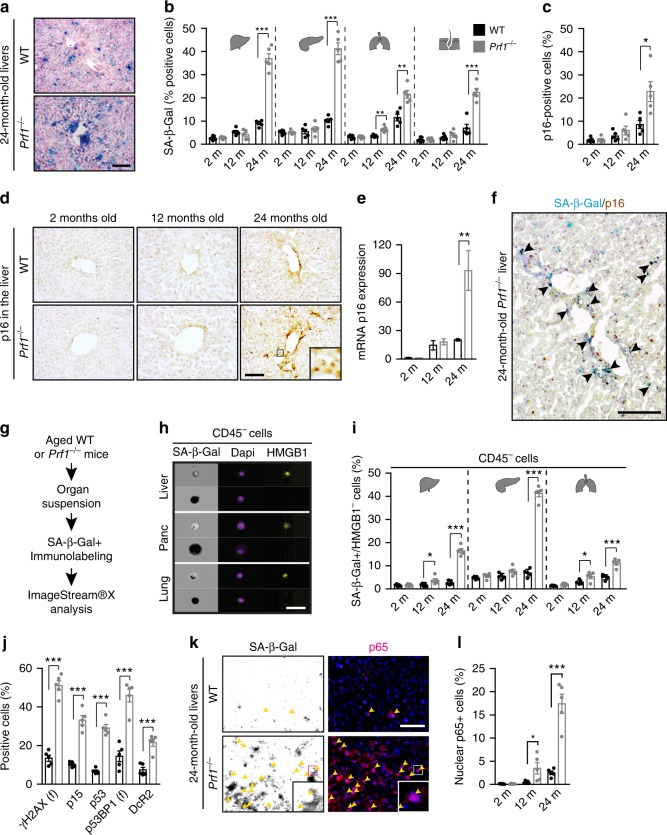
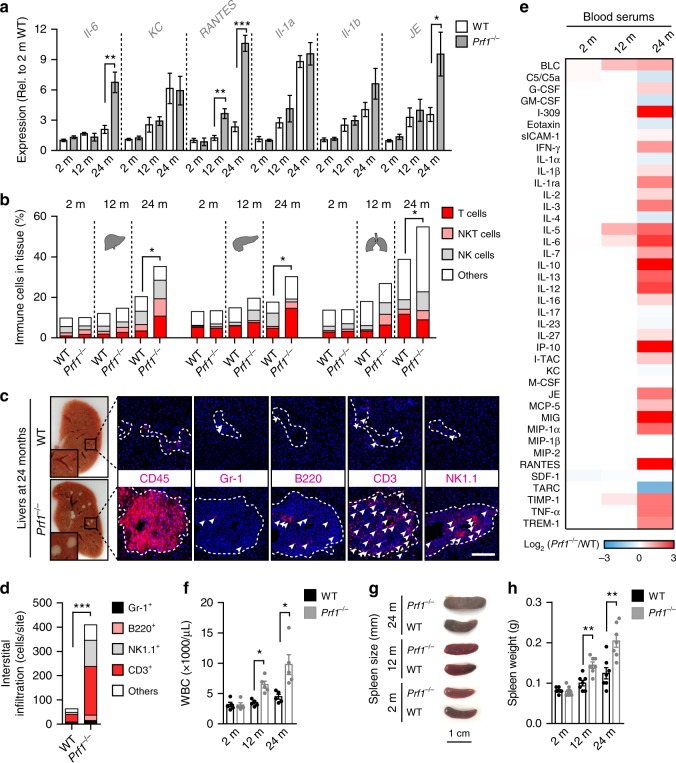
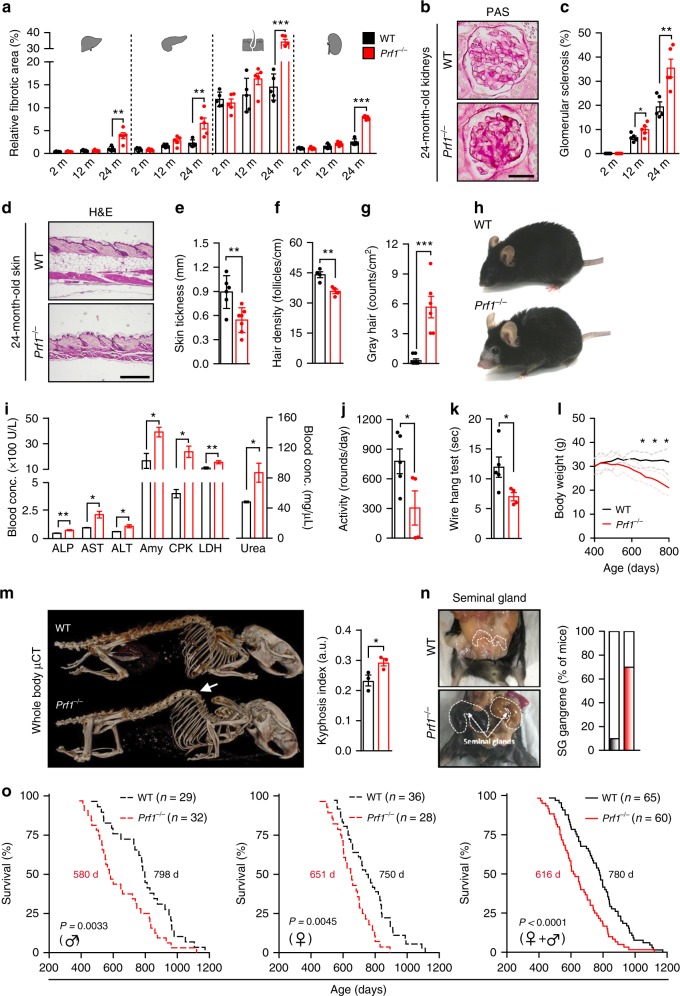
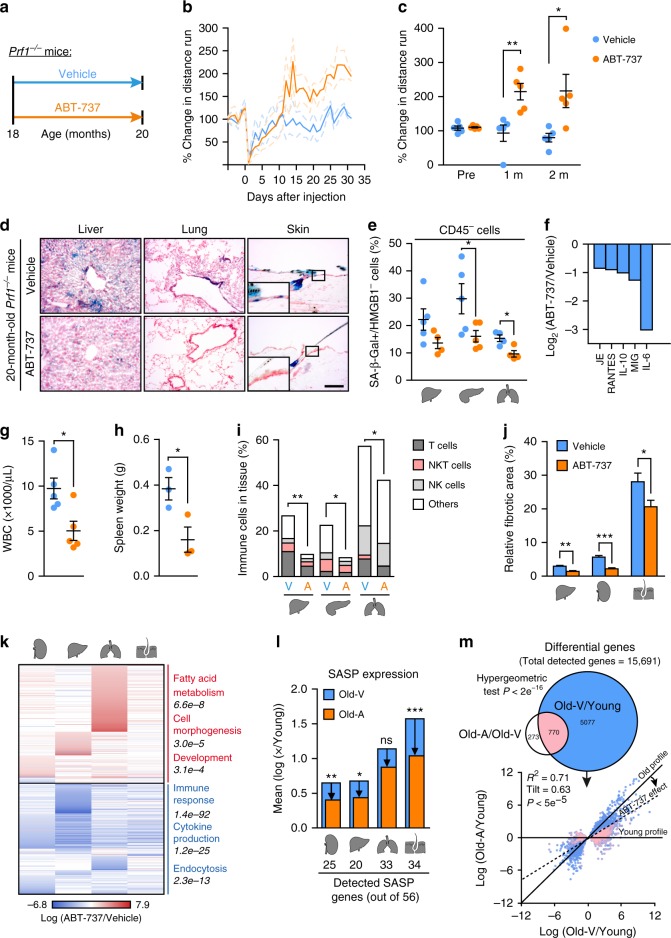
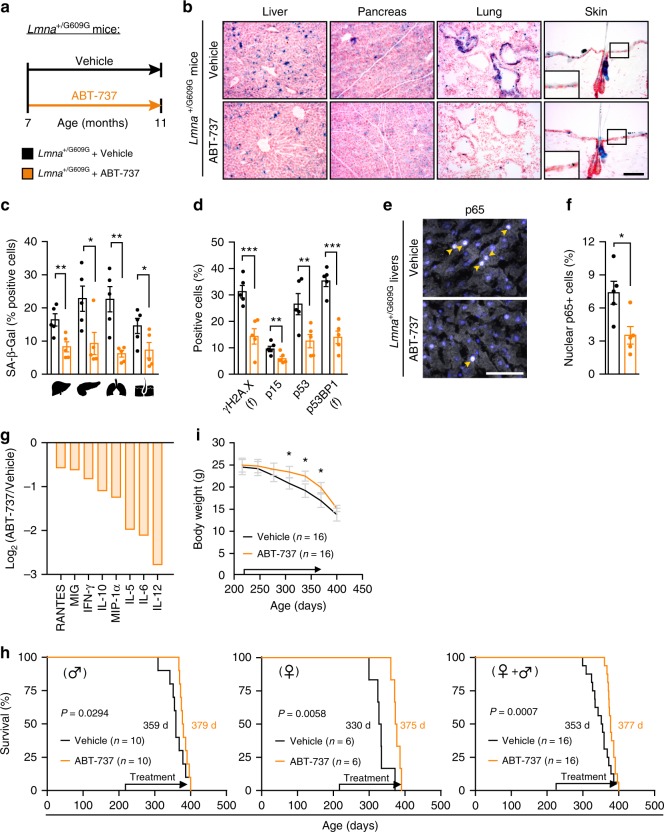
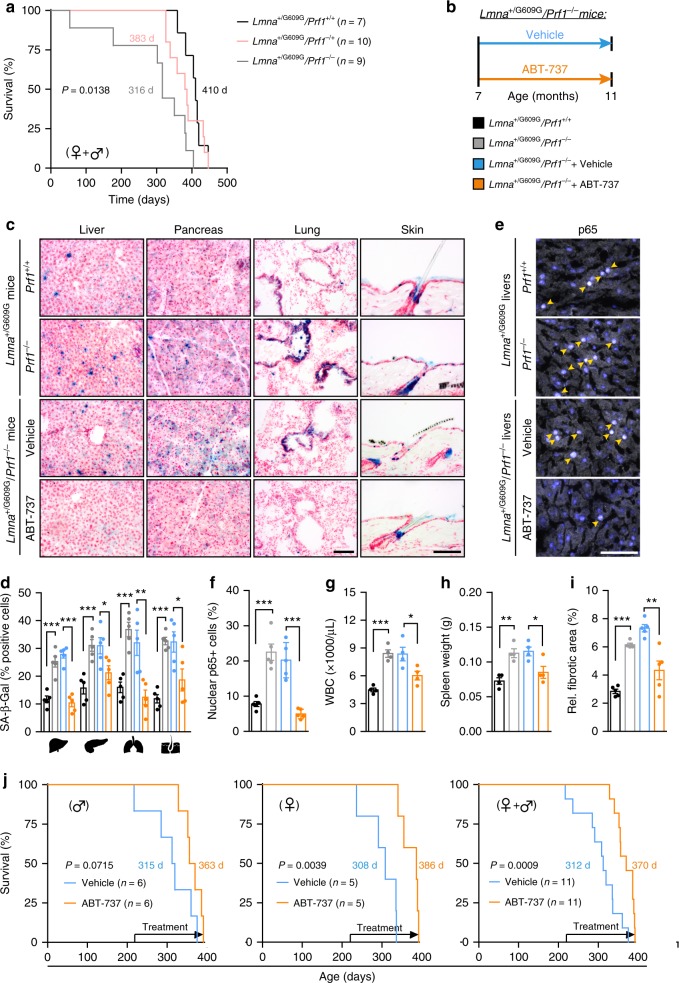
Cellular senescence is a stress response that imposes stable cell-cycle arrest in damaged cells, preventing their propagation in tissues. However, senescent cells accumulate in tissues in advanced age, where they might promote tissue degeneration and malignant transformation. The extent of immune-system involvement in regulating age-related accumulation of senescent cells, and its consequences, are unknown. Here we show that Prf1 −/− mice with impaired cell cytotoxicity exhibit both higher senescent-cell tissue burden and chronic inflammation. They suffer from multiple age-related disorders and lower survival. Strikingly, pharmacological elimination of senescent-cells by ABT-737 partially alleviates accelerated aging phenotype in these mice. In LMNA +/G609G progeroid mice, impaired cell cytotoxicity further promotes senescent-cell accumulation and shortens lifespan. ABT-737 administration during the second half of life of these progeroid mice abrogates senescence signature and increases median survival. Our findings shed new light on mechanisms governing senescent-cell presence in aging, and could motivate new strategies for regenerative medicine.
Overview
The claims and statistics of this paper haven’t been checked yet.
Free: it reads the open-access text and checks the first 5 claims that cite a source we can check. Create a free account to check every claim.
Integrity signals
Registry
Cites
Statistics
Figures
Verification
Claims the paper makes
The claims and statistics of this paper haven’t been checked yet.
Free: it reads the open-access text and checks the first 5 claims that cite a source we can check. Create a free account to check every claim.
Claims other papers make about this one
Each is checked against this paper’s own text: does it say what the citing paper says it does?
The source backs part of the claim, not all of it — or backs it for a different population, condition or comparison.
In the citing paper
“Nuclear DNA damage is often reported as a commonly underlying cause of senescence, mainly in the form of DNA double-strand breaks (DSBs)20 that activate the DNA damage response (DDR) pathway”
From Cellular senescence in ageing: from mechanisms to therapeutic opportunities (2021) · cites this paper as [20]
Experimental — accuracy not yet measuredThe cited source says what the claim attributes to it.
In the citing paper
“Senescence immunosurveillance is also essential to limit pathological fibrotic conditions and ageing20,145,151,157.”
From Cellular senescence in ageing: from mechanisms to therapeutic opportunities (2021) · cites this paper as [20]
The cited source says what the claim attributes to it.
In the citing paper
“Under some conditions, including old age, failed clearance of senescent cells leads to their accumulation and chronic SASP inflammation (Ovadya et al., 2018).”
From Cytoplasmic DNA: sources, sensing, and role in aging and disease (2021) · cites this paper as Ovadya et al., 2018
The cited source says what the claim attributes to it.
In the citing paper
“During the aging process, declining immune function leads to failures in senescence surveillance, resulting in accumulation of senescent cells.43”
From Cellular senescence and senescence-associated secretory phenotype via the cGAS-STING signaling pathway in cancer (2020) · cites this paper as [43]
The cited source says what the claim attributes to it.
In the citing paper
“Mounting evidence from human samples and preclinical animal models shows that the excessive presence of senescent cells is a contributing cause of ageing, which is featured by a functional decline in multiple physiological systems [39,40].”
From Immune Clearance of Senescent Cells to Combat Ageing and Chronic Diseases (2020) · cites this paper as [40]
3 more claims about this paper
Create a free account to see every claim other papers make about this one.
Self-check
Percentages, sums and reported differences re-computed from the paper’s own numbers.
The self-check needs the paper’s full text.
Citations
Cites
López-Otín, C., Blasco, M. A., Partridge, L., Serrano, M., & Kroemer, G. (2013) · Cell · doi:10.1016/j.cell.2013.05.039 · Cited by 14,982
Gene Expression Omnibus: NCBI gene expression and hybridization array data repository
Edgar, R. (2002) · Nucleic Acids Research · doi:10.1093/nar/30.1.207 · Cited by 13,288
A biomarker that identifies senescent human cells in culture and in aging skin in vivo.
Dimri, G. P., Lee, X., Basile, G., Acosta, M., Scott, G., Roskelley, C., Medrano, E. E., Linskens, M., Rubelj, I., & Pereira-Smith, O. (1995) · Proceedings of the National Academy of Sciences · doi:10.1073/pnas.92.20.9363 · Cited by 7,477
Inflamm‐aging: An Evolutionary Perspective on Immunosenescence
FRANCESCHI, C., BONAFÈ, M., VALENSIN, S., OLIVIERI, F., DE LUCA, M., OTTAVIANI, E., & DE BENEDICTIS, G. (2000) · Annals of the New York Academy of Sciences · doi:10.1111/j.1749-6632.2000.tb06651.x · Cited by 5,358
The senescence-associated secretory phenotype: the dark side of tumor suppression
Coppé, J.-P., Desprez, P.-Y., Krtolica, A., & Campisi, J. (2010) · Annual Review of Pathology: Mechanisms of Disease · doi:10.1146/annurev-pathol-121808-102144 · Cited by 5,206
Chronic Inflammation (Inflammaging) and Its Potential Contribution to Age-Associated Diseases
Franceschi, C., & Campisi, J. (2014) · The Journals of Gerontology Series A: Biological Sciences and Medical Sciences · doi:10.1093/gerona/glu057 · Cited by 3,891
Clearance of p16Ink4a-positive senescent cells delays ageing-associated disorders
Baker, D. J., Wijshake, T., Tchkonia, T., LeBrasseur, N. K., Childs, B. G., van de Sluis, B., Kirkland, J. L., & van Deursen, J. M. (2011) · Nature · doi:10.1038/nature10600 · Cited by 3,670
Aging, Cellular Senescence, and Cancer
Campisi, J. (2013) · Annual Review of Physiology · doi:10.1146/annurev-physiol-030212-183653 · Cited by 2,954
Naturally occurring p16Ink4a-positive cells shorten healthy lifespan
Baker, D. J., Childs, B. G., Durik, M., Wijers, M. E., Sieben, C. J., Zhong, J., A. Saltness, R., Jeganathan, K. B., Verzosa, G. C., Pezeshki, A., et al. (2016) · Nature · doi:10.1038/nature16932 · Cited by 2,876 · cited 1×
“Accumulation of senescent p16-positive cells shortens mouse lifespan (Baker et al, 2016).”
BackgroundCellular senescence: from physiology to pathology
Muñoz-Espín, D., & Serrano, M. (2014) · Nature Reviews Molecular Cell Biology · doi:10.1038/nrm3823 · Cited by 2,818
Cited by
Items 301–400 of 616
Turano, P. S., Akbulut, E., Dewald, H. K., Vasilopoulos, T., Fitzgerald-Bocarsly, P., Herbig, U., & Martínez-Zamudio, R. I. (2026) · Cell Reports · doi:10.1016/j.celrep.2025.116795 · Cited by 16
“55,60,61 In older humans, both CD4 + and CD8 + T cells acquire features of senescence, 15,62,63 which is linked to defective immune responses.”
The Potent and Paradoxical Biology of Cellular Senescence in Cancer
Romesser, P. B., & Lowe, S. W. (2023) · Annual Review of Cancer Biology · doi:10.1146/annurev-cancerbio-061421-124434 · Cited by 16
Aging and infectious diseases in myasthenia gravis
Bril, V., & Gilhus, N. E. (2024) · Journal of the Neurological Sciences · doi:10.1016/j.jns.2024.123314 · Cited by 16
MicroRNAs orchestrating senescence of endothelial and vascular smooth muscle cells
Colpani, O., & Spinetti, G. (2019) · Vascular Biology · doi:10.1530/vb-19-0017 · Cited by 16
Luo, H., Tao, C., Long, X., Huang, K., & Zhu, X. (2021) · Aging · doi:10.18632/aging.203146 · Cited by 17
“Aging-related genes (AGs) can regulate cellular senescence and play a key role in tumor malignancy [11, 19].”
BackgroundSynergistic Anti-Ageing through Senescent Cells Specific Reprogramming
Chen, R., & Skutella, T. (2022) · Cells · doi:10.3390/cells11050830 · Cited by 16
“the accelerated accumulation of senescent cells [17].”
Cellular Senescence and Ageing
Reed, R., & Miwa, S. (2023) · Sub-cellular biochemistry/Subcellular biochemistry · doi:10.1007/978-3-031-21410-3_7 · Cited by 16
Choi, J., Seo, S., Choi, S., Piao, S., Park, C., Ryu, S. J., Kim, B. J., & Park, S. (2023) · Computers in Biology and Medicine · doi:10.1016/j.compbiomed.2023.106721 · Cited by 16
Increased lifespan, decreased mortality, and delayed cognitive decline in osteoarthritis
Mayburd, A. L., & Baranova, A. V. (2019) · Scientific Reports · doi:10.1038/s41598-019-54867-8 · Cited by 16
Senescent Cells in IPF: Locked in Repair?
Meiners, S., & Lehmann, M. (2020) · Frontiers in Medicine · doi:10.3389/fmed.2020.606330 · Cited by 16
“Together with defective immune surveillance in aging and chronically inflamed lungs (18) this will further increase the number of senescent cells thereby closing the vicious cycle that drives irreversible lung fibrosis in IPF.”
Backgroundp21 facilitates chronic lung inflammation via epithelial and endothelial cells
Levi, N., Papismadov, N., Majewska, J., Roitman, L., Wigoda, N., Eilam, R., Tsoory, M., Rotkopf, R., Ovadya, Y., Akiva, H., et al. (2023) · Aging · doi:10.18632/aging.204622 · Cited by 15
“Conversely, accumulation of senescent cells in tissues, a process that occurs during aging, stimulates tumorigenesis and the development of age-related diseases by promoting chronic inflammation [37–39].”
Self-citationVascular Senescence: A Potential Bridge Between Physiological Aging and Neurogenic Decline
Rojas-Vázquez, S., Blasco-Chamarro, L., López-Fabuel, I., Martínez-Máñez, R., & Fariñas, I. (2021) · Frontiers in Neuroscience · doi:10.3389/fnins.2021.666881 · Cited by 15
“A weakened immune phagocytic response and anti-apoptotic pathways (SCAP) selectively activated by senescent cells are also likely to significantly contribute to the increasing burden of senescent cells with age (Zhu et al., 2015; Ovadya et al., 2018).”
BackgroundResolution Pharmacology: State-of-the-art and therapeutic landscape
Perretti, M., & Montero‐Melendez, T. (2025) · Pharmacological Reviews · doi:10.1016/j.pharmr.2025.100097 · Cited by 16
“If not cleared, for example due to an aged immune system, 41 their accumulation in tissues leads to inflammation and tissue damage.”
Carroll, J., Olmstead, R. E., Cole, S. W., Breen, E. C., Arevalo, J. M. G., & Irwin, M. R. (2023) · GeroScience · doi:10.1007/s11357-023-00741-5 · Cited by 15
“Of note, our marker of cellular senescence captures aging within the circulating immune system, which has implications for immunity [17–21], but may also contribute to aging processes across other tissues in the body [17, 19, 22, 23], and be a link to chronic disease and death [24–26].”
BackgroundPodocyte senescence: from molecular mechanisms to therapeutics
Zhao, Q., Huang, Y., Fu, N., Cui, C., Peng, X., Kang, H., Xiao, J., & Ke, G. (2024) · Renal Failure · doi:10.1080/0886022x.2024.2398712 · Cited by 15
“Nuclear DNA damage is often considered a common underlying cause of aging, mainly in the form of double-stranded DNA breaks, which activate the DDR pathway [72].”
Deciphering the impact of TERT/telomerase on immunosenescence and T cell revitalization
Huang, L., Zhang, M., Bai, D., & Qu, Y. (2024) · Frontiers in Immunology · doi:10.3389/fimmu.2024.1465006 · Cited by 15
“As immune cells senesce, irreparably damaged tissue cells persist and accumulate, exacerbating the in fl ammatory response (19).”
BackgroundPhotoactivatable Exosenolytics Activate Natural Killer Cells for Delaying Osteoarthritis
Zhang, L., Xiang, K., Li, J., Hao, M., Zhu, Z., Wang, S., & Sun, H. (2025) · ACS Nano · doi:10.1021/acsnano.5c03344 · Cited by 15
Ye, Q., Huang, Z., Lu, W., Yan, F., Zeng, W., Xie, J., & Zhong, W. (2022) · Frontiers in Neuroscience · doi:10.3389/fnins.2022.994575 · Cited by 15
“Meanwhile, immunity and inflammation were also dispensable in aging (Ovadya et al., 2018; Wu et al., 2019).”
BackgroundBiomarkers of Senescence during Aging as Possible Warnings to Use Preventive Measures
Gasmi, A., Chirumbolo, S., Peana, M., Mujawdiya, P. K., Dadar, M., Menzel, A., & Bjørklund, G. (2020) · Current Medicinal Chemistry · doi:10.2174/0929867327999200917150652 · Cited by 15
Cellular Senescence Exacerbates Features of Aging in the Eyes
Kitazawa, K., Campisi, J., Numa, K., Patel, S. K., King, C. D., Matsumoto, A., Sotozono, C., Desprez, P., & Schilling, B. (2023) · doi:10.59368/agingbio.20230014 · Cited by 14
c-Jun N-terminal kinase signaling in aging
Li, Y., You, L., Nepovimová, E., Adam, V., Heger, Z., Jomová, K., Valko, M., Wu, Q., & Kuča, K. (2024) · Frontiers in Aging Neuroscience · doi:10.3389/fnagi.2024.1453710 · Cited by 14
“When the accumulation of senescent cells reaches a certain level, SASP factors become prominent, ultimately leading to organ failure, disease, and death (Ovadya et al., 2018).”
BackgroundInflammaging and Immunosenescence in the Post‐COVID Era: Small Molecules, Big Challenges
Francavilla, F., Intranuovo, F., Spada, G. L., Lacivita, E., Catto, M., Graps, E. A., & Altomare, C. (2024) · ChemMedChem · doi:10.1002/cmdc.202400672 · Cited by 14
The aging hematopoietic stem cell niche: a mini review
Gao, X., Zhang, J., & Tamplin, O. J. (2025) · Frontiers in Hematology · doi:10.3389/frhem.2025.1525132 · Cited by 14
“Recent evidence indicates that age-associated intrinsic alterations in CD4+ T cells are suf fi cient to reduce humoral responses in young mice (55) and accelerate organism-wide aging phenotypes (56, 57).”
Elvebakken, H. F., Christensen, I. B., Vedel, C., & Kjærulff, S. (2024) · Journal of Cosmetic Dermatology · doi:10.1111/jocd.16138 · Cited by 14
Wang, A. S., Steers, N. J., Parab, A. R., Gachon, F., Sweet, M. J., & Mysorekar, I. U. (2022) · Mucosal Immunology · doi:10.1038/s41385-022-00558-z · Cited by 14
MAPKs in the early steps of senescence implemEMTation
Anerillas, C., Altés, G., & Gorospe, M. (2023) · Frontiers in Cell and Developmental Biology · doi:10.3389/fcell.2023.1083401 · Cited by 13
“When this stage begins to decline, a more pro-inflammatory stage follows, during which cytokines and inflammatory mediators are robustly expressed, leading to enhanced immune surveillance and clearance of senescent cells (Tasdemir et al., 2016; Ovadya et al., 2018; Prata et al., 2018; Desdin-Mico et al., 2020).”
BackgroundMalojirao, V. H., Vasquez, V., Kodavati, M., Mitra, J., Provasek, V., Voh, A. T. T., Liopo, A. V., Derry, P. J., Mikheev, A. M., Rostomily, R. C., et al. (2025) · Communications Biology · doi:10.1038/s42003-025-07983-3 · Cited by 13
“The progression to long-lasting senescencecancreateapro-in fl ammatoryenvironmentthatnotonlycauses damage to neighboring cells through paracrine senescence, but also drives chronic low-grade in fl ammation within the brain 41 – 43 .”
LIMD2 is the Signature of Cell Aging-immune/Inflammation in Acute Myocardial Infarction
Tao, P., Chen, X.-M., Xu, L., Chen, J., Nie, Q., Xu, M., & Feng, J. (2023) · Current Medicinal Chemistry · doi:10.2174/0109298673274563231031044134 · Cited by 13
Chandra, A., Law, S. F., & Pignolo, R. J. (2025) · Mechanisms of Ageing and Development · doi:10.1016/j.mad.2025.112059 · Cited by 13
Allen, N. C., Ringler, C., Woo, S., Phipps, S., Lee, J. Y., Reyes, N. S., Biswas, R., Neyton, L. P. A., Willmore, A., Caryotakis, S. E., et al. (2026) · Immunity · doi:10.1016/j.immuni.2026.02.016 · Cited by 14
T-cell lymphocytes’ aging clock: telomeres, telomerase and aging
Chebly, A., Khalil, C., Kuzyk, A. C., Beylot-Barry, M., & Chevret, E. (2023) · Biogerontology · doi:10.1007/s10522-023-10075-6 · Cited by 13
“Thus, the irreversibly damaged cells that became senescent will not be cleared and will accumulate (Ovadya et al. 2018).”
Diwan, B., Yadav, R., Goyal, R., & Sharma, R. (2024) · Biogerontology · doi:10.1007/s10522-024-10092-z · Cited by 13
“…that an increase in senescent cell burden may directly contribute to tissue dysfunctions with advancing age which could at least be partially attributed to their decreased clearance by immune cells such as macrophages and NK cells (Ovadya et al. 2018; Pignolo et al. 2020; Prata et al. 2018).”
Why death and aging ? All memories are imperfect
Miller, W. B., Baluška, F., Reber, A. S., & Slijepčević, P. (2024) · Progress in Biophysics and Molecular Biology · doi:10.1016/j.pbiomolbio.2024.02.001 · Cited by 14
New Insights for BPIFB4 in Cardiovascular Therapy
Dossena, M., Ferrario, A., Lopardo, V., Ciaglia, E., & Puca, A. A. (2020) · International Journal of Molecular Sciences · doi:10.3390/ijms21197163 · Cited by 13
Saaristo, M., Craft, J. A., Tyagi, S., Johnstone, C. P., Allinson, M., Ibrahim, K. S., & Wong, B. B. M. (2020) · Environmental Pollution · doi:10.1016/j.envpol.2020.116286 · Cited by 14
Mitochondria‐Targeting Plasmonic Spiky Nanorods Increase the Elimination of Aging Cells in Vivo
Lu, M., Qu, A., Li, S., Sun, M., Xu, L., Kuang, H., & Xu, C. (2020) · Angewandte Chemie · doi:10.1002/ange.202002576 · Cited by 14
Çobanoglu, Ö., Delval, L., Ferrari, D. P., Deruyter, L., Heumel, S., Wolowczuk, I., Hussein, A., Menevse, A. N., Bernard, D., Beckhove, P., et al. (2023) · Aging Cell · doi:10.1111/acel.14007 · Cited by 12
Signs of Alzheimer’s Disease: Tied to Aging
Chen, J., Zhu, Z., & Xu, Y. (2025) · International Journal of Molecular Sciences · doi:10.3390/ijms26114974 · Cited by 12
“In addition, immune senescence can lead to impaired immune function, thereby reducing the clearance of senescent cells, resulting in the accumulation of senescent cells, and further exacerbating inflammation [55,56].”
Ahmed, S., Gozal, D., & Khalyfa, A. (2025) · Sleep Medicine Reviews · doi:10.1016/j.smrv.2025.102170 · Cited by 12
Senescent CD4+ T cells and autoimmune diseases: mechanisms and therapeutic prospects
Hu, Y., He, L., & Long, H. (2025) · Autoimmunity Reviews · doi:10.1016/j.autrev.2025.103957 · Cited by 12
Emerging Therapeutic Strategies in Anti‐Aging Medicine: A Comprehensive Review
Peng, Y., Li, R., Li, H., Zhou, J., Liu, X., Valente, G. T., Melo, T. D. C., Chen, S., & 顾镭 (2026) · Medicine Bulletin · doi:10.1002/mdb2.70021 · Cited by 12
Senescent cells in systemic aging: SASP heterogeneity, immune escape, and endocrine modulation
Qoura, L. A., Churov, A. V., Maltseva, O. N., Ерусланова, К. А., & Zeng, G. (2026) · Biogerontology · doi:10.1007/s10522-026-10449-6 · Cited by 12
“…T lymphocytes, contributes to the expansion of senescent cell burden and further disrupts immune homeostasis (Krizhanovsky et al. 2008; Angeli et al. 2013; Muñoz-Espín and Serrano 2014; Ovadya et al. 2018; Goto et al. 2023; Tizazu et al. 2025; Abo Qoura et al. 2026a) (Teissier et al. 2022).”
Melanocortin therapies to resolve fibroblast-mediated diseases
Khodeneva, N., Sugimoto, M. A., Davan-Wetton, C. S. A., & Montero‐Melendez, T. (2023) · Frontiers in Immunology · doi:10.3389/fimmu.2022.1084394 · Cited by 12
“During ageing these cells accumulate in tissues, likely due to the inefficiency of the aged immune system to detect and clear them (73), and they release pro-inflammatory mediators that cause tissue damage and alter tissue homeostasis and function (74).”
BackgroundImmortalized cell lines derived from dental/odontogenic tissue
Zeng, Y., Liu, L., Huang, D., & Song, D. (2023) · Cell and Tissue Research · doi:10.1007/s00441-023-03767-5 · Cited by 12
“Cellular senescence usually responds to various triggers, including DNA damage, telomere dysfunction, and oncogene activation (Gorgoulis et al. 2019; Ovadya et al. 2018).”
BackgroundKamali, F., Rajaei, G. E., Mohajeri, S., Shamel, A., & Khodadadi-Moghaddam, M. (2022) · Inorganic Chemistry Communications · doi:10.1016/j.inoche.2022.109527 · Cited by 12
Senescence- and Immunity-Related Changes in the Central Nervous System: A Comprehensive Review
Feng, H., Li, J., Wang, H., Wei, Z., & Feng, S. (2024) · Aging and Disease · doi:10.14336/ad.2024.0755 · Cited by 11
Serum Proteomic and Metabolomic Signatures of High Versus Low Physical Function in Octogenarians
Ubaida‐Mohien, C., Moaddel, R., Spendiff, S., MacMillan, N. J., Filion, M., Morais, J. A., Candia, J., Fitzgerald, L. F., Taivassalo, T., Coen, P. M., et al. (2025) · Aging Cell · doi:10.1111/acel.70002 · Cited by 11
“There is some evidence that senescent cells accumulate with aging and produce a prolonged low-level inflammation (Ovadya et al. 2018), abnormal tissue growth, and intercellular matrix changes through the secretion of senescence-associated secretory phenotype (SASP) factors (Li et al. 2023).”
Cellular senescence as a therapeutic target for aging intervention
Bi, Y., & Ji, G. (2026) · Biomedical Journal · doi:10.1016/j.bj.2026.100948 · Cited by 11
“…[95] • Reduced senescence markers in irradiated tissues • Poor oral bioavailability and low solubility limit in vivo use • Progeroid model [96] • Decreased SnC burden across multi-organs • Hematologic toxicity • Neurodegenerative disease model [97] • Reduced senescent microglia and…”
Chiral CuxCoyS Nanoparticles under Magnetic Field and NIR Light to Eliminate Senescent Cells
Li, S., Sun, M., Hao, C., Qu, A., Wu, X., Xu, L., Xu, C., & Kuang, H. (2020) · Angewandte Chemie · doi:10.1002/ange.202004575 · Cited by 11
Targeted Therapeutics Delivery by Exploiting Biophysical Properties of Senescent Cells
Low, J., Chan, B., & Tay, A. K. P. (2021) · Advanced Functional Materials · doi:10.1002/adfm.202107990 · Cited by 11
A senescence-related lncRNA signature predicts prognosis and reflects immune landscape in HNSCC
Chen, L., Lin, J., Wen, Y., Lan, B., Xiong, J., Fu, Y., Chen, Y., & Chen, C. (2023) · Oral Oncology · doi:10.1016/j.oraloncology.2023.106659 · Cited by 11
Almohaimeed, G. M., Alonazi, A. S., Dayel, A. F. B., Alshammari, T. K., Alghibiwi, H. K., Alamin, M. A., Almotairi, A. R., & Al-Rasheed, N. M. (2024) · Biomedicines · doi:10.3390/biomedicines12040759 · Cited by 11
Dolan, M., Shi, Y., Mastri, M., Long, M. D., McKenery, A., Hill, J. W., Vaghi, C., Benzekry, S., Barbi, J. J., & Ebos, J. M. L. (2024) · Molecular Cancer Therapeutics · doi:10.1158/1535-7163.mct-24-0139 · Cited by 11
Cellular senescence is a double‐edged sword in regulating aged immune responses to influenza
Torrance, B. L., Panier, H. A., Cadar, A. N., Martin, D., Lorenzo, E. C., Jellison, E. R., Bartley, J. M., & Haynes, L. (2024) · Aging Cell · doi:10.1111/acel.14162 · Cited by 12
“This can compensate for the decreased efficacy of homeostatic immune surveillance, but there comes a point where the rate of senescent cell accumulation goes beyond the rate of clearance (Ovadya et al., 2018).”
BackgroundCharacterization of senescence and nuclear reorganization in aging gingival cells
Fernández, C., Ormeno, D., Villalobos, V., Garrido, M., Canelo, J., Cerda, O., Maldonado, F., & Cáceres, M. (2025) · npj Aging · doi:10.1038/s41514-025-00200-9 · Cited by 11
Study of calcitriol anti-aging effects on human natural killer cells in vitro
Li, W., Che, X., Chen, X., Zhou, M., Luo, X., & Liu, T. (2021) · Bioengineered · doi:10.1080/21655979.2021.1972076 · Cited by 11
“The common features of aging mainly include inflammageing with chronic low inflammation [1], genome instability, protein expression imbalance, mitochondrial inactivation, cellular senescence, and changes in intercellular communication [2].”
BackgroundSenolytic CAR T cells reverse aging-associated defects in intestinal regeneration and fitnessPreprint
Eskiocak, O., Chowdhury, S., Shah, V., Nnuji-John, E., Chung, C., Boyer, J. A., Harris, A. S., Habel, J., Sadelain, M., Beyaz, S., et al. (2024) · bioRxiv (Cold Spring Harbor Laboratory) · doi:10.1101/2024.03.19.585779 · Cited by 11
Current strategies for senescence treatment: Focused on theranostic performance of nanomaterials
Cong, Y., Li, X., & Hong, H. (2025) · Journal of Controlled Release · doi:10.1016/j.jconrel.2025.113710 · Cited by 10
Giroud, J., Combémorel, E., Pourtier, A., Abbadie, C., & Pluquet, O. (2025) · American Journal of Physiology-Cell Physiology · doi:10.1152/ajpcell.00091.2025 · Cited by 10
Recent advances and applications of mitochondria in tumors and inflammation
Hui, L., Pan, M., Li, Y., Huang, Z. Y., Li, H., Zhang, C., Guo, C., & Wang, H. (2025) · Journal of Translational Medicine · doi:10.1186/s12967-025-06722-w · Cited by 10
“…DNA, activate the cGAS STING pathway, and trigger inflammatory responses and senescence associated phenotypes (SASP), further weakening immune surveillance function [67] Aging cells inhibit NK and CD8 + T cell clearance by upregulating HLA-E, promoting APC mediated chronic inflammation [69].”
Adipose immune microenvironment: catalyst of age-related adipose tissue dysfunction
Song, Y., Xing, H., Luo, Y., Li, B., Li, Y., & Dong, Z. (2025) · Immunity & Ageing · doi:10.1186/s12979-025-00545-5 · Cited by 10
“Senes-cent cells exhibit a distinctive capacity for prolonged survival within tissues, facilitated by the upregulation of senescent cell anti-apoptotic pathways (SCAPs) and the impairment of immune surveillance mechanisms [33–35].”
A short-lived fish with long-lasting effects: hallmarks of aging in Nothobranchius furzeri
Savel, O., Lehmann, J., Poyraz, Y. K., & Page, M. M. (2026) · Frontiers in Aging · doi:10.3389/fragi.2025.1741819 · Cited by 10
“In addition to increased SA-β -gal staining, the hearts from older individuals displayed increased expression of genes related to SASP, cell cycle inhibition and DNA damage (Ma et al., 2025).”
InfluentialNatural killer cell immunotherapy reverses lung fibrosis by eliminating senescent fibroblasts
Merkt, W., Rodon, L., Deicher, F. S., Freitag, M., Claus, M., Lister, R. T., Han, H., Zhou, Y., Horne, A., Stütz, A. N., et al. (2026) · Science Translational Medicine · doi:10.1126/scitranslmed.adq5442 · Cited by 11
Nanomaterials intervene in cell senescence to reinforce cancer therapy
Sun, S., Yang, N., Nie, J., Yang, Z., Pei, Z., Ding, R., & Cheng, L. (2025) · Coordination Chemistry Reviews · doi:10.1016/j.ccr.2025.217012 · Cited by 10
Sharma, R., & Diwan, B. (2022) · Human Nutrition & Metabolism · doi:10.1016/j.hnm.2022.200149 · Cited by 11
Cholinergic Senescence in the Ts65Dn Mouse Model for Down Syndrome
Kirstein, M., Cambrils, A., Segarra, A., Melero, A., & Varea, E. (2022) · Neurochemical Research · doi:10.1007/s11064-022-03659-0 · Cited by 10
“However, when the immune system is not able to eliminate them [69], a large accumulation of senescent cells will trigger a chronic inflammatory state that gives rise to cellular damage.”
BackgroundHarder, better, faster, stronger: biochemistry and biophysics in the immunosurveillance concert
Tello‐Lafoz, M., de Jesus, M., & Huse, M. (2021) · Trends in Immunology · doi:10.1016/j.it.2021.12.003 · Cited by 10
Cotarelo, C., Schad, A., Schmidt, M., Hönig, A., Sleeman, J. P., & Thaler, S. (2023) · Cancers · doi:10.3390/cancers15061860 · Cited by 10
“A decrease in immune function in advanced aging or under pathophysiological conditions leading to decreased immune system function has been associated with the development of cancer [44].”
BackgroundEffect of Daily Rhythms of Cortisol Secretion on the Rate of Aging in Men.
Gorelik, S. G., Белоусова, О. Н., Treneva, E. V., Bulgakova, S. V., Захарова, Н. О., & Nesterenko, S. A. (2022) · PubMed Central · doi:10.22092/ari.2022.357394.2034 · Cited by 9
Cellular senescence: A potential mode of circular RNAs regulating prostate cancer
Li, Y., Fan, A., Zhang, Y., Guo, Z., Meng, W., Pan, W., Ma, Z., & Chen, W. (2023) · MedComm – Oncology · doi:10.1002/mog2.61 · Cited by 9
Establishing evidence for immune surveillance of β-cell senescence
Morelli, N. R., Pipella, J., & Thompson, P. J. (2024) · Trends in Endocrinology and Metabolism · doi:10.1016/j.tem.2024.01.003 · Cited by 9
Maués, J. H. D. S., Moreira-Nunes, C. A., & Burbano, R. M. R. (2020) · Biomolecules · doi:10.3390/biom10081173 · Cited by 9
“Aging is characterized by a functional decline in many physiological systems that can be triggered by environmental and endogenous stress, including the wear on telomeres, genomic instability, epigenetic changes, and loss of proteostasis, favoring cell damage and the progression of physiological aging [43].”
BackgroundKim, K., Admasu, T. D., Stolzing, A., & Sharma, A. (2022) · Aging · doi:10.18632/aging.203931 · Cited by 9
“Moreover, impairment of NK cell function has been shown to accelerate aging in perforin-deficient mice due to the accumulation of senescent cells [15].”
A Cellular Senescence-Centric Integrated Approach to Understanding Organismal Aging
Sharma, R., & Diwan, B. (2022) · Current Aging Science · doi:10.2174/1874609815666220914104548 · Cited by 9
Aging and immunity: the age-old tango
Fernández-Maestre, I., Harris, A. S., & Amor, C. (2025) · Genes & Development · doi:10.1101/gad.352644.125 · Cited by 8
“In sum-mary, senescent T cells are dysfunctional in cytokine production and proliferation, as typified by an increased SASP production and decreased Ki67 expression (Tahir et al. 2015; Ovadya et al. 2018; Lee et al. 2022b).”
Deng, Y., He, X., Peng, J., Pan, Y., Luo, Y., Ruan, Y., Hou, J., Jiang, B., Li, X., Liang, X., et al. (2025) · Cell Death and Disease · doi:10.1038/s41419-025-08007-y · Cited by 8
“GO terms were deemed substantially enriched by DEGs if their adjusted P value was less than 0.05.”
InfluentialSenotherapeutics for metabolic disease and diabetic complications
Palmer, A. K., Spinelli, R., Prata, L. G. P. L., Chaib, S., Suda, M., Tchkonia, T., Smith, U., & Kirkland, J. L. (2025) · Journal of Internal Medicine · doi:10.1111/joim.70039 · Cited by 9
“Macrophages participate by phagocytosing SCs, a process aided by the SASP, which recruits immune cells to sites of senescence [24, 25].”
Yu, C., Wang, W., Shi, L., Ma, R., Zhang, Y., Zhang, C., Wang, X., Wang, T., Zheng, Y., & Tian, J. (2025) · npj Aging · doi:10.1038/s41514-025-00303-3 · Cited by 8
“As age progresses, the immune functions of identify and eliminate senescent cells gradually declines, therefore, leading to the accumulation of senescent cells in the brain 3 .”
Zhao, Y., Lyu, X., Wu, X., Liu, Y., Zhang, N., Wei, W., & Liu, M. (2026) · Journal of Clinical Investigation · doi:10.1172/jci194715 · Cited by 8
Li, C., Liu, Z., & Shi, R. (2023) · Frontiers in Medicine · doi:10.3389/fmed.2023.1072359 · Cited by 8
“As we known, the declination of immunological function is closely related to the increasing of senescent cells (27).”
BackgroundCellular Senescence in Acute Liver Injury: What Happens to the Young Liver?
He, K., Zhou, D., Pu, Z., Chen, S., Shen, Y., Zhao, S., Qian, X., Hu, Q., Wu, X., Xie, Z., et al. (2024) · Aging and Disease · doi:10.14336/ad.2024.0586 · Cited by 9
“BCL-2 family inhibitors such as ABT-737 and ABT-263 (Navitoclax) can also increase median survival of progeroid mice [108].”
Perforin Acts as an Immune Regulator to Prevent the Progression of NAFLD
Wang, Q., Li, D., Zhu, J., Zhang, M., Zhang, H., Cao, G., Zhu, L., Shi, Q., Hao, J., Wen, Q., et al. (2020) · Frontiers in Immunology · doi:10.3389/fimmu.2020.00846 · Cited by 8
“Aged Prf mice have been reported to have accumulation of senescent cells and development of chronic systemic and local inflammation in the liver (25, 26).”
BackgroundSexual dimorphism in liver cell cycle and senescence signalling pathways in young and old rats
Lomas‐Soria, C., Cox, L. A., Nathanielsz, P. W., & Zambrano, E. (2021) · The Journal of Physiology · doi:10.1113/jp281822 · Cited by 8
“Initially, developing cellular senescence induces a variety of mechanisms for cell surveillance, to eliminate possible DNAdamage (Campisi 2001; Ovadya et al. 2018).”
BackgroundGene expression signatures of human senescent corneal and conjunctival epithelial cells
Kitazawa, K., Matsumoto, A., Numa, K., Tomioka, Y., Zhang, Z. A., Yamashita, Y., Sotozono, C., Desprez, P., & Campisi, J. (2023) · Aging · doi:10.18632/aging.205113 · Cited by 8
Muyayalo, K. P., Song, S., Liu, C., Gong, G.-S., Zhang, Y., Zhou, H., Shen, L., & Liao, A. (2022) · American Journal of Reproductive Immunology · doi:10.1111/aji.13591 · Cited by 8
Immunobiology of pulmonary fibrosis
Bindu, S., Yasmin, H., Barman, U., Pandit, S., Masmoudi, K., & Kishore, U. (2025) · Frontiers in Immunology · doi:10.3389/fimmu.2025.1708716 · Cited by 7
“Immune cells also express SASP markers contributing to immunosenescence (188).”
Senotypes define the diverse landscape of senescent cells
Schafer, M. J., Basisty, N., Hertzel, A. V., Rindone, A. N., Elisseeff, J. H., Suryadevara, V., Aliferis, C., Robbins, P. D., Niedernhofer, L. J., Miller, K. N., et al. (2026) · Nature Aging · doi:10.1038/s43587-026-01148-5 · Cited by 8
“Aging probably shifts the balance between formation and clearance: insults accumulate while immune-mediated removal declines, promoting net senescent cell burden 33 .”
Pagliuca, S., & Ferraro, F. (2024) · Seminars in Hematology · doi:10.1053/j.seminhematol.2024.01.002 · Cited by 7
Senescent characteristics of human corneal endothelial cells upon ultraviolet-A exposure
Numa, K., Patel, S. K., Zhang, Z. A., Burton, J. B., Matsumoto, A., Hughes, J. B., Sotozono, C., Schilling, B., Desprez, P., Campisi, J., et al. (2024) · Aging · doi:10.18632/aging.205761 · Cited by 7
Targeting senescent cell clearance: An approach to delay aging and age-associated disorders
Qiu, Z., Jia, J., Zou, H., Ao, Y., Liu, B., & Wang, Z. (2021) · Translational Medicine of Aging · doi:10.1016/j.tma.2020.12.001 · Cited by 7
Breathe it in – Spotlight on senescence and regeneration in the lung
Majewska, J., & Krizhanovsky, V. (2021) · Mechanisms of Ageing and Development · doi:10.1016/j.mad.2021.111550 · Cited by 7
Self-citationPapismadov, N., & Krizhanovsky, V. (2020) · Nature Neuroscience · doi:10.1038/s41593-020-00749-6 · Cited by 7
Self-citationImmunological consequences of senescence in physiology and pathology
Zubova, A., Pietrocola, F., & Morsli, S. (2026) · Journal of Translational Medicine · doi:10.1186/s12967-026-08335-3 · Cited by 7
“In perforin-deficient mice, impaired NK-and CD8 ⁺ -mediated killing leads to widespread accumulation of p16 ⁺ and SA-β-Gal ⁺ senescent cells accompanied by fibrosis, chronic inflammation and reduced lifespan [9].”
Senescence as a therapeutic target
Meyer, K. R., Lopez-Dominguez, J. A., Maus, M., Kovatcheva, M., & Serrano, M. (2021) · Elsevier eBooks · doi:10.1016/b978-0-12-822514-1.00014-6 · Cited by 6
Ding, Y., Jiang, C., Chen, L., Liu, X., & Shao, B. (2024) · Experimental Neurology · doi:10.1016/j.expneurol.2024.115135 · Cited by 7
Yin, F.-Q., Wang, X.-Y., Li, Y.-X., Li, K.-J., Ma, S., Lv, M.-J., Liu, Z., Zhong, W.-X., Liu, Y., Tang, C.-F., et al. (2025) · Proceedings of the National Academy of Sciences · doi:10.1073/pnas.2423142122 · Cited by 6
Guan, Y., Bai, X., Li, C., Zhang, Z., He, Q., Chen, L., Xie, Y., & Wang, Z. (2025) · Genes & Diseases · doi:10.1016/j.gendis.2025.101871 · Cited by 6
“56 Upon DNA double-strand break occurrence, ATM kinase is recruited to the site of damage, facilitating the assembly of specific DNA repair complexes through the phosphorylation of histone H2AX and histone methylation.”
Koroma, A. K., Singh, K., Wang, Y., Krug, L., Haas, P., Wlaschek, M., Sakk, V., Schuster, T., Furst, D. E., Schrezenmeier, H., et al. (2026) · Aging Cell · doi:10.1111/acel.70398 · Cited by 7
“It also increases the susceptibility to infections, and facilitating malignant tumor progression, including hematological malignancies (Ovadya et al. 2018; Fane and Weeraratna 2020).”
Self-citationBibliometric and visualization analysis of global research trends on immunosenescence (1970–2021)
Tan, Y., Zhang, C., Li, D., Huang, J., Liu, Z., Chen, T., Zou, X., & Qin, B. (2023) · Experimental Gerontology · doi:10.1016/j.exger.2023.112089 · Cited by 6
“The SASP has been demonstrated to affect immune system functions, including senescent cell clearance (34).”
Effects of immune exhaustion and senescence of innate immunity in autoimmune disorders
Cunha, A. L. S., & Perazzio, S. F. (2024) · Brazilian Journal of Medical and Biological Research · doi:10.1590/1414-431x2024e13225 · Cited by 6
“Studies demonstrated that both obese mice and human adipose tissues recruit pathogenic autoanti-bodies-secreting B cells (75) and favor proin fl ammatory cytokine secretion during aging, generating SASP senescent cells (76).”
Background
Metadata
- Authors
- Ovadya, Y., Landsberger, T., Leins, H., Vadai, E., Gal, H., Biran, A., Yosef, R., Sagiv, A., Agrawal, A., Shapira, A., Windheim, J., Tsoory, M., Schirmbeck, R., Amit, I., Geiger, H., & Krizhanovsky, V.
- Affiliations
- Weizmann Institute of Science (IL)
- Universität Ulm (DE)
- University Hospital Ulm (DE)
- Cincinnati Children's Hospital Medical Center (US)
- Corresponding author
- Krizhanovsky, Valery
- ORCID
- Venue
- Nature Communications
- Published
- 2018-12-21
- Volume
- 9
- Issue
- 1
- Pages
- 5435-5435
- ISSN
- 2041-1723 (ISSN-L)
- PMC
- PMC6303397
- OpenAlex
- W2904408826
- Semantic Scholar
- e004152eaa5ce10f6fdd255845a11ff32c0d928a
- Cited by
- 578
- References
- 72
- Citations by year
- 2026: 79 · 2025: 84 · 2024: 80 · 2023: 77 · 2022: 74 · 2021: 76 · 2020: 78 · 2019: 30
- FWCI
- 31.54
- Type
- journal article
- Language
- en
- Open access
- gold
- doi.org
- Licence
- cc-by
- creativecommons.org/licenses/by/4.0 (tdm)
- creativecommons.org/licenses/by/4.0 (vor)
- Locations
- Nature Communications (publishedVersion, cc-by)
- Europe PMC (PubMed Central) (publishedVersion, cc-by)
- PubMed Central (publishedVersion, cc-by)
- PubMed (publishedVersion)
- RePEc: Research Papers in Economics (submittedVersion)
- DOAJ (DOAJ: Directory of Open Access Journals) (submittedVersion, cc-by-sa)
- DOAJ (DOAJ: Directory of Open Access Journals) (submittedVersion)
- Funders
- Deutsche Forschungsgemeinschaft
- Universidad de Oviedo
- Topics
- Life Sciences › Biochemistry, Genetics and Molecular Biology › Cell Biology › Telomeres, Telomerase, and Senescence
- Life Sciences › Biochemistry, Genetics and Molecular Biology › Aging › Genetics, Aging, and Longevity in Model Organisms
- Health Sciences › Medicine › Geriatrics and Gerontology › Sirtuins and Resveratrol in Medicine
- Keywords
- cellular senescence, senolytics, ABT-737, immune surveillance, cytotoxic T lymphocytes, chronic inflammation, accelerated aging, lifespan, senescent cell accumulation, regenerative medicine
- MeSH terms
- Immunosenescence, Animals, Biphenyl Compounds, Drug Evaluation, Preclinical, Female, Inflammation, Male, Mice, Inbred C57BL, Nitrophenols, Piperazines, Progeria, Sulfonamides, Cellular Senescence, Mice, Knockout, Proto-Oncogene Proteins c-bcl-2, Perforin
About these checks
Registry, retraction, Cites and statistics results are computed, not judged, with one exception: a printed reference that no index lists is read once by a model before it counts as a citation error. Claims are extracted by a model and kept only when their quote appears verbatim in the text; each cited source is then checked, with a model’s help, for whether it says what the claim relies on. Those verdicts can be wrong — read the claim’s quote and the cited source before relying on one.
Statistics and arithmetic are recomputed, not judged.
Confidence bands are shown only for fields calibrated on our annotated test set. None is calibrated yet, so no band is shown.
What counts as a claim ›How we measure confidence ›How we check this ›
Are you an author, or do you see a problem with this page? Request a review
Data sources
Bibliographic data: Semantic Scholar, OpenAlex, Crossref.
Contains information from the Semantic Scholar Academic Graph Datasets, made available under the ODC Attribution License (ODC-BY 1.0).
Semantic Scholar’s data is described in: Kinney, R., et al. (2023). The Semantic Scholar Open Data Platform. arXiv:2301.10140.
