

Impaired immune surveillance accelerates accumulation of senescent cells and aging
Open accessThe DOI matches its Crossref record; 71 of the 72 references it cites were found in a registry or an index.
Abstract
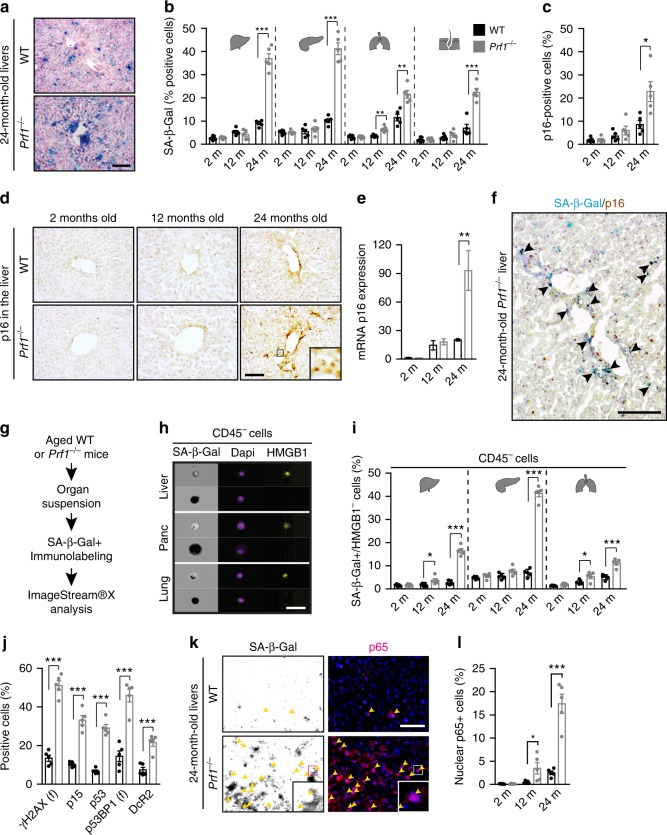
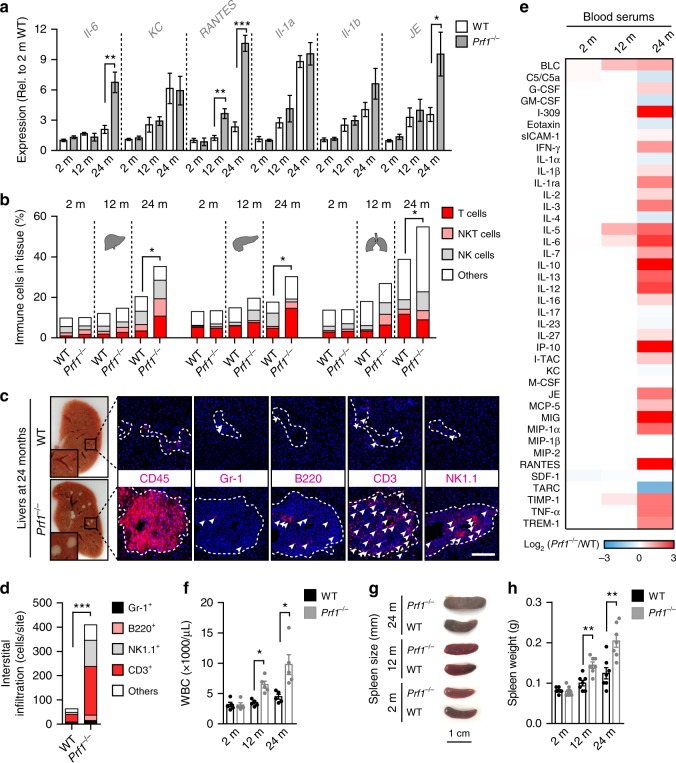
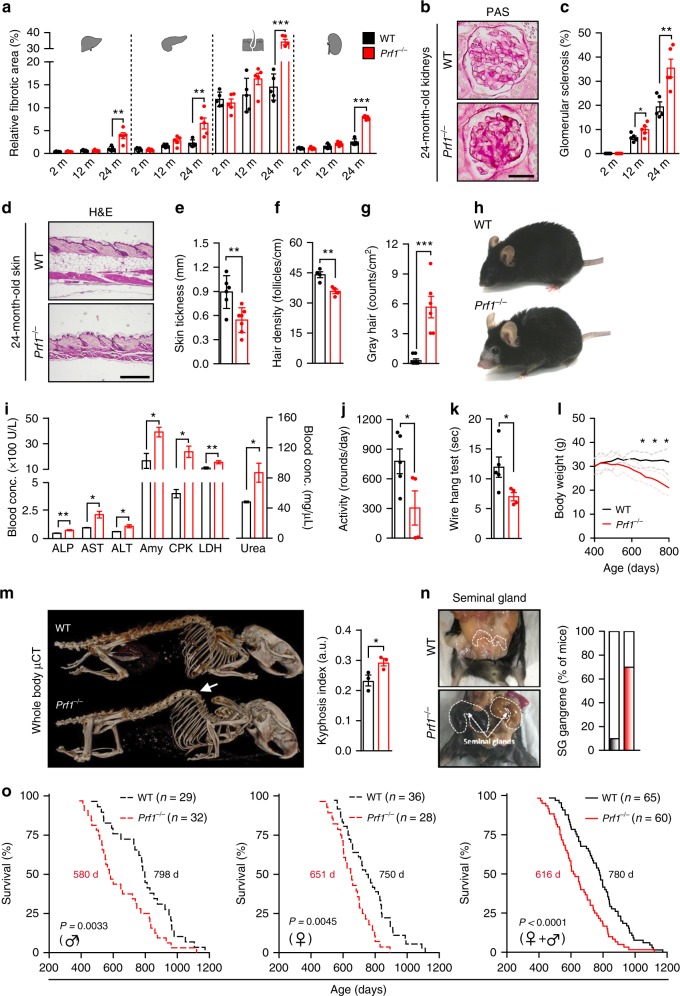
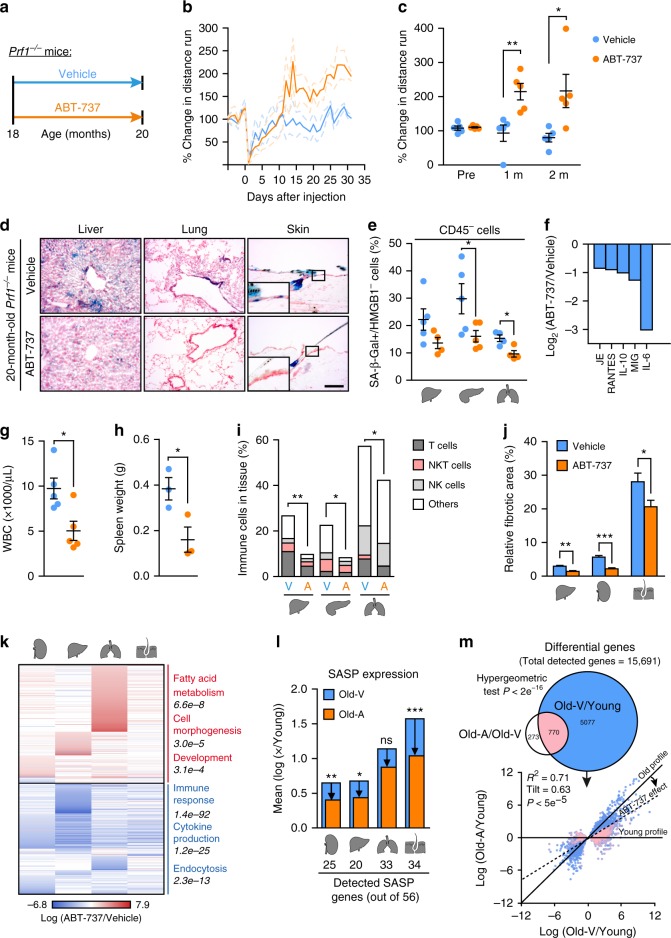
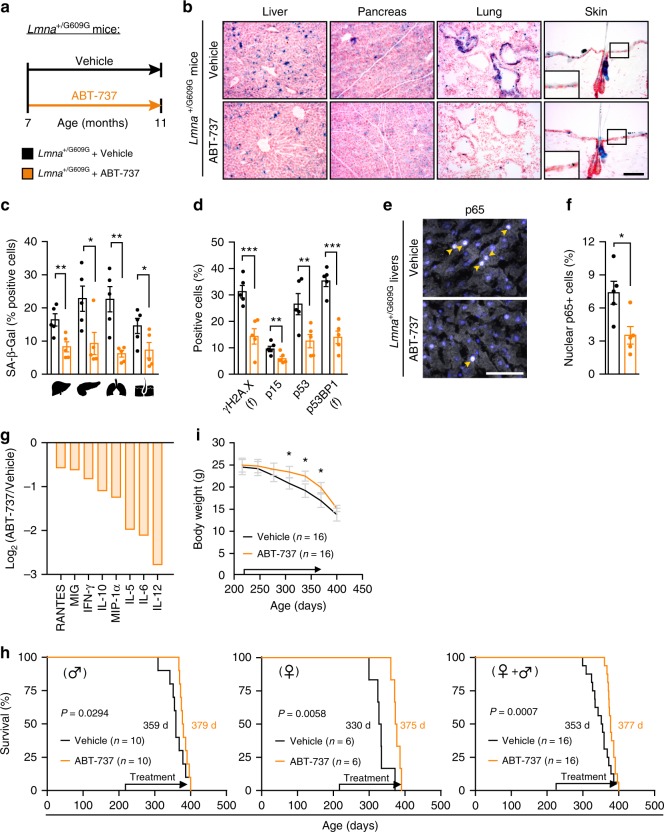
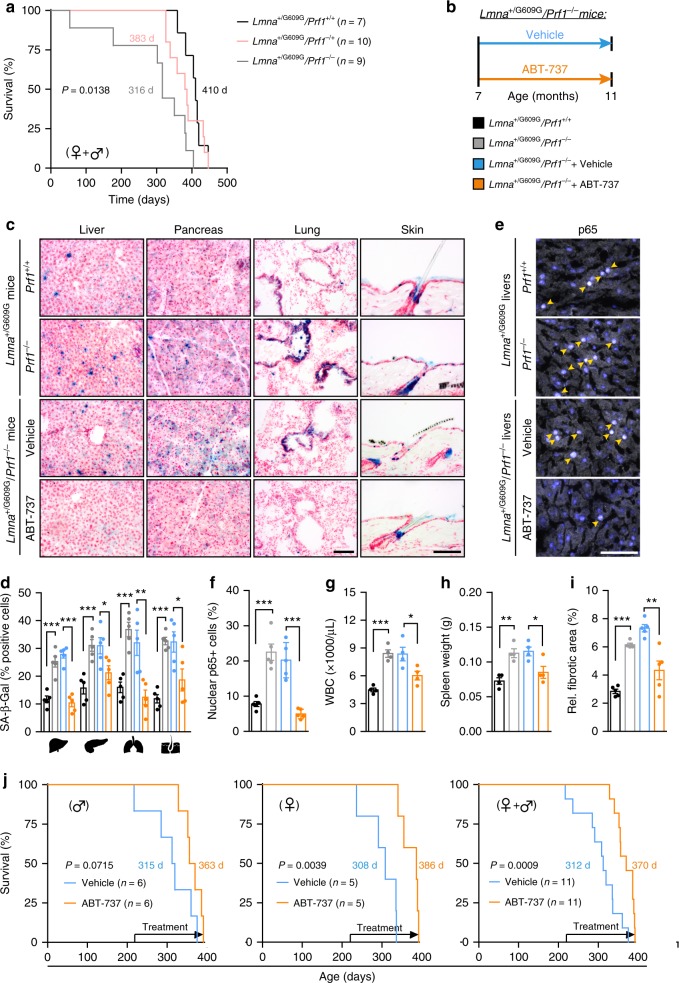
Cellular senescence is a stress response that imposes stable cell-cycle arrest in damaged cells, preventing their propagation in tissues. However, senescent cells accumulate in tissues in advanced age, where they might promote tissue degeneration and malignant transformation. The extent of immune-system involvement in regulating age-related accumulation of senescent cells, and its consequences, are unknown. Here we show that Prf1 −/− mice with impaired cell cytotoxicity exhibit both higher senescent-cell tissue burden and chronic inflammation. They suffer from multiple age-related disorders and lower survival. Strikingly, pharmacological elimination of senescent-cells by ABT-737 partially alleviates accelerated aging phenotype in these mice. In LMNA +/G609G progeroid mice, impaired cell cytotoxicity further promotes senescent-cell accumulation and shortens lifespan. ABT-737 administration during the second half of life of these progeroid mice abrogates senescence signature and increases median survival. Our findings shed new light on mechanisms governing senescent-cell presence in aging, and could motivate new strategies for regenerative medicine.
Overview
The claims and statistics of this paper haven’t been checked yet.
Free: it reads the open-access text and checks the first 5 claims that cite a source we can check. Create a free account to check every claim.
Integrity signals
Registry
Cites
Statistics
Figures
Verification
Claims the paper makes
The claims and statistics of this paper haven’t been checked yet.
Free: it reads the open-access text and checks the first 5 claims that cite a source we can check. Create a free account to check every claim.
Claims other papers make about this one
Each is checked against this paper’s own text: does it say what the citing paper says it does?
The source backs part of the claim, not all of it — or backs it for a different population, condition or comparison.
In the citing paper
“Nuclear DNA damage is often reported as a commonly underlying cause of senescence, mainly in the form of DNA double-strand breaks (DSBs)20 that activate the DNA damage response (DDR) pathway”
From Cellular senescence in ageing: from mechanisms to therapeutic opportunities (2021) · cites this paper as [20]
Experimental — accuracy not yet measuredThe cited source says what the claim attributes to it.
In the citing paper
“Senescence immunosurveillance is also essential to limit pathological fibrotic conditions and ageing20,145,151,157.”
From Cellular senescence in ageing: from mechanisms to therapeutic opportunities (2021) · cites this paper as [20]
The cited source says what the claim attributes to it.
In the citing paper
“Under some conditions, including old age, failed clearance of senescent cells leads to their accumulation and chronic SASP inflammation (Ovadya et al., 2018).”
From Cytoplasmic DNA: sources, sensing, and role in aging and disease (2021) · cites this paper as Ovadya et al., 2018
The cited source says what the claim attributes to it.
In the citing paper
“During the aging process, declining immune function leads to failures in senescence surveillance, resulting in accumulation of senescent cells.43”
From Cellular senescence and senescence-associated secretory phenotype via the cGAS-STING signaling pathway in cancer (2020) · cites this paper as [43]
The cited source says what the claim attributes to it.
In the citing paper
“Mounting evidence from human samples and preclinical animal models shows that the excessive presence of senescent cells is a contributing cause of ageing, which is featured by a functional decline in multiple physiological systems [39,40].”
From Immune Clearance of Senescent Cells to Combat Ageing and Chronic Diseases (2020) · cites this paper as [40]
3 more claims about this paper
Create a free account to see every claim other papers make about this one.
Self-check
Percentages, sums and reported differences re-computed from the paper’s own numbers.
The self-check needs the paper’s full text.
Citations
Cites
López-Otín, C., Blasco, M. A., Partridge, L., Serrano, M., & Kroemer, G. (2013) · Cell · doi:10.1016/j.cell.2013.05.039 · Cited by 14,982
Gene Expression Omnibus: NCBI gene expression and hybridization array data repository
Edgar, R. (2002) · Nucleic Acids Research · doi:10.1093/nar/30.1.207 · Cited by 13,288
A biomarker that identifies senescent human cells in culture and in aging skin in vivo.
Dimri, G. P., Lee, X., Basile, G., Acosta, M., Scott, G., Roskelley, C., Medrano, E. E., Linskens, M., Rubelj, I., & Pereira-Smith, O. (1995) · Proceedings of the National Academy of Sciences · doi:10.1073/pnas.92.20.9363 · Cited by 7,477
Inflamm‐aging: An Evolutionary Perspective on Immunosenescence
FRANCESCHI, C., BONAFÈ, M., VALENSIN, S., OLIVIERI, F., DE LUCA, M., OTTAVIANI, E., & DE BENEDICTIS, G. (2000) · Annals of the New York Academy of Sciences · doi:10.1111/j.1749-6632.2000.tb06651.x · Cited by 5,358
The senescence-associated secretory phenotype: the dark side of tumor suppression
Coppé, J.-P., Desprez, P.-Y., Krtolica, A., & Campisi, J. (2010) · Annual Review of Pathology: Mechanisms of Disease · doi:10.1146/annurev-pathol-121808-102144 · Cited by 5,206
Chronic Inflammation (Inflammaging) and Its Potential Contribution to Age-Associated Diseases
Franceschi, C., & Campisi, J. (2014) · The Journals of Gerontology Series A: Biological Sciences and Medical Sciences · doi:10.1093/gerona/glu057 · Cited by 3,891
Clearance of p16Ink4a-positive senescent cells delays ageing-associated disorders
Baker, D. J., Wijshake, T., Tchkonia, T., LeBrasseur, N. K., Childs, B. G., van de Sluis, B., Kirkland, J. L., & van Deursen, J. M. (2011) · Nature · doi:10.1038/nature10600 · Cited by 3,670
Aging, Cellular Senescence, and Cancer
Campisi, J. (2013) · Annual Review of Physiology · doi:10.1146/annurev-physiol-030212-183653 · Cited by 2,954
Naturally occurring p16Ink4a-positive cells shorten healthy lifespan
Baker, D. J., Childs, B. G., Durik, M., Wijers, M. E., Sieben, C. J., Zhong, J., A. Saltness, R., Jeganathan, K. B., Verzosa, G. C., Pezeshki, A., et al. (2016) · Nature · doi:10.1038/nature16932 · Cited by 2,876 · cited 1×
“Accumulation of senescent p16-positive cells shortens mouse lifespan (Baker et al, 2016).”
BackgroundCellular senescence: from physiology to pathology
Muñoz-Espín, D., & Serrano, M. (2014) · Nature Reviews Molecular Cell Biology · doi:10.1038/nrm3823 · Cited by 2,818
Cited by
Items 401–500 of 616
Mannan-binding lectin inhibits oxidative stress-induced senescence via the NAD+/Sirt1 pathway
Lei, Y., Meng, J., Shi, H., Shi, C., Li, C., Yang, Z., Zhang, W., Zuo, D., Wang, F., & Wang, M. (2024) · International Immunopharmacology · doi:10.1016/j.intimp.2024.112468 · Cited by 6
Science‐in‐brief: The importance of senescence in tendinopathy: New opportunities
Kelly, E. F., Smith, R. K. W., Dudhia, J., & Faragher, R. (2020) · Equine Veterinary Journal · doi:10.1111/evj.13228 · Cited by 6
Fontanilla-Ramirez, P., Willaume, S., Thezé, B., Moussa, A., Pennarun, G., & Bertrand, P. (2020) · médecine/sciences · doi:10.1051/medsci/2020241 · Cited by 6
Dietary restriction in senolysis and prevention and treatment of disease
Aminzadeh-Gohari, S., Kofler, B., & Herzog, C. M. S. (2022) · Critical Reviews in Food Science and Nutrition · doi:10.1080/10408398.2022.2153355 · Cited by 6
“…of cell-mediated clearance, mitochondrial signaling, epigenome and chromatin organization, cytokines and chemokines, (Yousefzadeh et al. 2021; Ovadya et al. 2018), or exogenous triggers such as obesity (Wang et al. 2009; Shirakawa et al. 2016; Palmer et al. 2019) and cigarette smoking…”
Frequent birth-and-death events throughout perforin-1 evolution
Araujo‐Voces, M., & Quesada, V. (2020) · BMC Evolutionary Biology · doi:10.1186/s12862-020-01698-1 · Cited by 6
“In a separate work, Prf1 mice were also shown to suffer accelerated aging through accumulation of senescent cells [6].”
BackgroundSénothérapies: Avancées et nouvelles perspectives cliniques
Véret, D., & Brondello, J. (2020) · médecine/sciences · doi:10.1051/medsci/2020220 · Cited by 6
Yang, D., Guo, X., & Xi, R. (2025) · BioEssays · doi:10.1002/bies.70005 · Cited by 5
“Importantly, the accumulation of senescent cells increases with organismal aging, creating a link between cell senescence and the aging process [100].”
PRKN ‐Mediated Ubiquitin‐Proteasome Degradation of METTL3 Promotes Cellular Senescence
Chen, L., Zhang, C., Ge, Y., Zhou, H., Yang, S., Wei, W., Zhou, Q., Xiao, K., Huang, G. W., Li, X., et al. (2025) · Aging Cell · doi:10.1111/acel.70347 · Cited by 5
DEL‐1 is an Endogenous Senolytic Protein that Inhibits Senescence‐Associated Bone Loss
Lim, J., Sirisereephap, K., Wang, H., Trimaglio, G., Chung, K., Korostoff, J. M., Kajikawa, T., Li, X., Surboyo, M. D. C., Maekawa, T., et al. (2026) · Advanced Science · doi:10.1002/advs.202509263 · Cited by 5
The Immunogenicity of Human Senescent Cells Is Dependent on the Senescence Inducer and Cell Type
Goyer, M., Sonn, A., Benabdallah, B., Lê, O., Dulong, J., Oschwald, J., Sirois, I., Apavaloaei, A., Hesnard, L., Guimond, J. V., et al. (2026) · Aging Cell · doi:10.1111/acel.70410 · Cited by 5
Aging modulation of the immune system and immunotherapy efficacy in cancer
Wang, Y., Liang, M., Mao, Y., Zhu, W., Shen, X., & Guan, W. (2026) · Frontiers in Immunology · doi:10.3389/fimmu.2026.1781885 · Cited by 5
“…which is linked to multi-system dysfunction and the onset of age-related disease. accelerators of immune system aging (29), while Ovadya et al. found that perforin gene knockout resulted in a more rapid accumulation of senescent cells across multiple murine organs, thereby accelerating aging (30).”
Communication breakdown: senescent cells in interorgan communication of aging
Ghosh, R. B., Dipali, S. S., Desdín-Micó, G., & Yousefzadeh, M. J. (2026) · Trends in Endocrinology and Metabolism · doi:10.1016/j.tem.2026.02.002 · Cited by 5
Immune surveillance and immune evasion of senescent cells
Garcia-Baucells, P., Serrano, M., & Amor, C. (2026) · Nature reviews. Immunology · doi:10.1038/s41577-026-01335-w · Cited by 6
A View of Myeloid Transformation through the Hallmarks of Cancer
Fernández-Maestre, I., Cai, S. F., & Levine, R. L. (2024) · Blood Cancer Discovery · doi:10.1158/2643-3230.bcd-24-0009 · Cited by 5
Jing, Q., Wu, Y., Li, Y., Zhou, C., Zhang, J., Xia, J., Li, K., Shen, Y., Yao, H., Tong, X., et al. (2025) · Biology Direct · doi:10.1186/s13062-025-00594-2 · Cited by 5
Broadway, R., Patel, N. M., Hillier, L. E., El-briri, A., Korneva, Y. S., Zinovkin, D. A., & Pranjol, M. Z. I. (2021) · Life · doi:10.3390/life11080788 · Cited by 5
“Instead, the cells have a very strong inflammatory profile, recruiting other immune cells to the site for clearance through immune surveillance [70,71].”
BackgroundHautalterung – zelluläre Seneszenz: Wohin geht die Reise?
Scharffetter‐Kochanek, K., Wang, Y., Makrantonaki, E., Crișan, D., Wlaschek, M., Geiger, H., & Maity, P. (2023) · Die Dermatologie · doi:10.1007/s00105-023-05201-x · Cited by 5
Self-citationSun, B., Meng, X., Li, Y., Li, Y., Liu, R., & Xiao, Z. (2023) · Frontiers in Cell and Developmental Biology · doi:10.3389/fcell.2022.1042609 · Cited by 5
“The accumulation of senescenT-cells in organs and tissues can be partially explained by the reduced efficiency of senescent cell clearance by immune system (Ovadya et al., 2018; Gasek et al., 2021).”
BackgroundInflammatory β-Cell Stress and Immune Surveillance in Type 1 Diabetes
Bhushan, A., & Thompson, P. J. (2024) · Cold Spring Harbor Perspectives in Medicine · doi:10.1101/cshperspect.a041605 · Cited by 4
Molecular Biomarkers of Health
Nehlin, J. O., & Andersen, O. (2020) · Healthy ageing and longevity · doi:10.1007/978-3-030-52663-4_15 · Cited by 4
From Genesis to Old Age: Exploring the Immune System One Cell at a Time with Flow Cytometry
Larbi, A. (2024) · Biomedicines · doi:10.3390/biomedicines12071469 · Cited by 4
“Immune cells are involved in the process of senescent cell removal, and it was shown that perforin − / − mice were not able to perform this task properly, suggesting that alteration in immune profiles with aging may affect the regulation of pro-inflammatory senescent cell-derived EVs [160].”
BackgroundMultiparametric identification of putative senescent cells in skeletal muscle via mass cytometry
Li, Y., Baig, N. F., Roncancio, D., Elbein, K., Lowe, D. A., Kyba, M., & Arriaga, E. A. (2024) · Cytometry Part A · doi:10.1002/cyto.a.24853 · Cited by 4
“In addition, IL-6 elevation in putative SCs from young mice may be related to higher capabilities in producing and releasing cytokines, which decreases with aging due to impaired immune surveillance [71, 72, 75, 76].”
He, K., & Gong, G. (2024) · International Immunopharmacology · doi:10.1016/j.intimp.2024.113344 · Cited by 4
Gomez, L. S., & Jurk, D. (2024) · Sub-cellular biochemistry/Subcellular biochemistry · doi:10.1007/978-3-031-66768-8_5 · Cited by 4
Cholesterol metabolism in T‐cell aging: Accomplices or victims
Hu, C., Wu, H., Zhu, Q., Cao, N., & Wang, H. (2023) · The FASEB Journal · doi:10.1096/fj.202300515r · Cited by 4
The OncoAge Consortium: Linking Aging and Oncology from Bench to Bedside and Back Again
Hofman, P. M., Ayache, N., Barbry, P., Barlaud, M., Bel, A., Blancou, P., Checler, F., Chevillard, S., Cristofari, G., Demory, M., et al. (2019) · Cancers · doi:10.3390/cancers11020250 · Cited by 4
Resveralogues: From Novel Ageing Mechanisms to New Therapies?
Faragher, R., & Ostler, E. L. (2020) · Gerontology · doi:10.1159/000504845 · Cited by 4
Spreading Senescent Cells’ Burden and Emerging Therapeutic Targets for Frailty
Marcozzi, S., Bigossi, G., Giuliani, M. E., Lai, G., Giacconi, R., Piacenza, F., & Malavolta, M. (2023) · Cells · doi:10.3390/cells12182287 · Cited by 4
“Some aspects of immunosenescence have already been proposed among the factors contributing to frailty [32]; however, recently, evidence has been provided that highlights a direct link between failing immunosurveillance and accelerated aging [35].”
When wrinkles appear on the immune system can it be reversed?
Sibaii, H., El-Zayat, S. R., & Khalil, M. (2020) · European Cytokine Network · doi:10.1684/ecn.2020.0441 · Cited by 4
“There is also an evidence that senescent memory T cells may suppress other types of immune cells [85]; they accumulate in tissues with age, causing degeneration and malignant transformation [86].”
BackgroundA ganglioside-based senescence-associated immune checkpointPreprint
Iltis, C., Seguin, L., Cervera, L., Duret, L. C., Hamidouche, T., Kunz, S., Croce, O., Delannoy, C. P., Guérardel, Y., Allain, F., et al. (2021) · bioRxiv (Cold Spring Harbor Laboratory) · doi:10.1101/2021.04.23.440408 · Cited by 4
GD3 ganglioside checkpoints in immune surveillance of senescent cells
Majewska, J., & Krizhanovsky, V. (2025) · Nature Aging · doi:10.1038/s43587-025-00803-7 · Cited by 4
Self-citationKirkendoll, A. (2025) · Advances in Cancer Biology - Metastasis · doi:10.1016/j.adcanc.2025.100148 · Cited by 3
Yue, X., Liang, S., Zhang, H., Dai, T., & Wu, J. (2025) · Clinical Interventions in Aging · doi:10.2147/cia.s536479 · Cited by 3
“27 EVs, as components of the SASP, play a significant role in the senescent microenvironment.”
New frontier for epilepsy treatment through targeting cellular senescence
Bello, S. T., Rafe, M. R., & Huang, F. (2025) · Progress in Neuro-Psychopharmacology and Biological Psychiatry · doi:10.1016/j.pnpbp.2025.111506 · Cited by 3
Turano, P. S., Akbulut, E., Aquino, N. M., Garza-Martínez, L., Singh, S., Aviv, A., Toupance, S., Yap, G. S., Fitzgerald-Bocarsly, P. A., Martínez-Zamudio, R. I., et al. (2026) · Proceedings of the National Academy of Sciences · doi:10.64898/2025.12.16.694716 · Cited by 3
“This is supported by studies demonstrating that mice with impaired T cell function 5,6 , or with autologously transplanted aged or senescent splenocytes 7 , develop significantly more non-lymphoid senescent cells systemically during aging, resulting in an increased development of various…”
InfluentialGuo, J., Han, X., Qin, Y., Hong, K., Lin, Y., Han, S., Hou, N., Cao, L., Gao, X., Huang, W., et al. (2026) · Nature Communications · doi:10.1038/s41467-026-69371-7 · Cited by 3
Senescence-Driven Inflammation and Immune Dynamics in the Progression of Radiation Cystitis
Mota, S., Goodyke, A., Ward, E. P., Mahyoob, R., Lee, R., Bartolone, S. N., Mularski, A., CHANCELLOR, M. B., & Zwaans, B. M. M. (2026) · Cells · doi:10.3390/cells15040337 · Cited by 3
“Our findings suggest that such mechanisms may underlie RC progression. https://doi.org/10.3390/cells15040337 SASP proteins contribute to inflammation, regulate immune responses, alter the microenvironment, impair wound healing, and promote fibrosis [47,49].”
InfluentialChen, X., Wang, D., Tao, J., & Zhang, A. (2026) · Ageing Research Reviews · doi:10.1016/j.arr.2026.103067 · Cited by 4
The metabolic-inflammatory axis in aging: A multi-organ framework anchored in Sarcopenia — A review
Liang, T. (2026) · Archives of Gerontology and Geriatrics · doi:10.1016/j.archger.2026.106254 · Cited by 4
Qiao, Y., Zhao, J., Liu, M., Liu, J., Qiao, Z., Xu, R., Ning, X., Sun, S., & Chen, X. (2026) · Biomolecules · doi:10.3390/biom16040611 · Cited by 3
“Senescent cells’ clearance is significantly associated with the action of NK cells [101].”
Dance, Y. W., Amitrano, A., Macaluso, N. C., Min, C., Thompson, L., Saffron, A. M., Ge, Z., Smith, I. M., Ezenwanne, C., Milcik, N., et al. (2026) · Nature Communications · doi:10.1038/s41467-026-78411-1 · Cited by 3
Pan, Z., Zhang, J., Zuo, H., Li, C., Song, H., Yang, H., Wu, K., Zhao, M., Zhang, Z., Lai, Y., et al. (2025) · Journal of Medicinal Chemistry · doi:10.1021/acs.jmedchem.5c00269 · Cited by 3
Sosnowska, D., Cheung, T. S., Sarkar, J., Opzoomer, J. W., Feehan, K. T., Anstee, J. E., Woodman, C. A., Keddar, M. R., Clayton, K., Ali, S., et al. (2025) · JCI Insight · doi:10.1172/jci.insight.191017 · Cited by 3
“Given perforin’s role in immune editing (22, 23, 28), we next assessed MHCI expression.”
Ageing-driven molecular and functional changes in the bovine endometrium
Denis, M., Dembélé, D., Richard, C., Leduc, M., Pez, M., Reinaud, P., Dubois, O., Kiefer, H., Jammes, H., Gelin, V., et al. (2025) · PLoS ONE · doi:10.1371/journal.pone.0332176 · Cited by 3
Tian, C., Liu, S., & Huo, R. (2023) · Scientific Reports · doi:10.1038/s41598-022-22259-0 · Cited by 3
DeMarino, C., Nath, A., Zhuang, Z., & Doucet-O’Hare, T. T. (2023) · Extracellular Vesicles and Circulating Nucleic Acids · doi:10.20517/evcna.2023.45 · Cited by 3
“In this context, EVs containing HERV-K proteins in one tissue could act via paracrine signaling and result in inflammation and damage in other tissues, akin to the senescence-associated secretory phenotype (SASP) and its role in aging [33,34] .”
BackgroundWatanabe, T., Yazaki, M., Yazaki, T., Furukawa, M., & Izumo, N. (2024) · Food Bioscience · doi:10.1016/j.fbio.2024.103903 · Cited by 4
Shimizu, Y., Shimodan, S., Hayashida, M., Yazaki, M., Sakurada, T., Watanabe, T., Ishii, Y., Hirose, Y., Saito, J., & Teramoto, S. (2025) · Nutrients · doi:10.3390/nu17040667 · Cited by 5
“These mice develop multiple age-related diseases and have a reduced survival rate [19].”
Tian, M., Cui, H., Wang, X., Hu, H., Dong, L., Xiao, S., Qu, C., Wang, P., Zhi, H., Ning, S., et al. (2025) · Briefings in Bioinformatics · doi:10.1093/bib/bbaf469 · Cited by 3
“These changes led to a reduction in the number of immune cells and increased expression of CDKN2A (p16), CDKN1A (p21), and SASP [5, 6], thereby accelerating the accumulation of senescent cells and promoting tumorigenesis [7, 8].”
Mechanisms of cell senescence in aging
von Zglinicki, T. (2021) · Elsevier eBooks · doi:10.1016/b978-0-12-815962-0.00003-2 · Cited by 3
T cell senescence: A novel therapeutic target for aging
Pulido, S. D., Escrig-Larena, J. I., & Mittelbrunn, M. (2022) · ANALES RANM · doi:10.32440/ar.2022.139.02.doc01 · Cited by 3
Molecular basis of senescence in osteoarthritis
Lawson, M. G., & Ritchison, H. M. (2024) · doi:10.32948/ajsep.2024.11.22 · Cited by 3
“A frequently implicated factor is nuclear DNA damage, notably in the manifestation of DNA double-strand breaks (DSBs) [15], which triggers the activation of the DNA damage response (DDR) pathway.”
Game changer: Navigating between challenges and hopes in geropharmacology
Chen, Q., Hartman, R., Dankiv, L., Yan, E., Young, L. H., & Barsotti, R. (2025) · Advances in pharmacology · doi:10.1016/bs.apha.2025.02.007 · Cited by 2
Davan-Wetton, C. S. A., Khodeneva, N., Denton, C. P., Abraham, D., Perretti, M., & Montero‐Melendez, T. (2025) · Arthritis Research & Therapy · doi:10.1186/s13075-025-03635-3 · Cited by 2
“However, if this process occurs in an organism with a deficient immune system unable to clear these cells off the tissues, it may result in additional tissue damage [34].”
Pawelec, G., Ostrand‐Rosenberg, S., Fülöp, T., Leemput, F., & Verschoor, C. P. (2026) · Onco · doi:10.3390/onco6010007 · Cited by 2
“There is some evidence that this process of immune-mediated clearance may be compromised in older adults due to immunosenescence [24–26].”
Adipocytes as core drivers of skin aging and novel targets for regeneration
Wang, E., Xu, Z., Wang, Y., Wang, J., Jiang, Y., & Zhao, C. (2026) · Biogerontology · doi:10.1007/s10522-026-10413-4 · Cited by 2
“At the tissue level, senescence phenotypes and SASP composition are influenced by paracrine signaling crosstalk, by ECM context and cell matrix signaling, and by the efficiency of immune surveillance and clearance (Ovadya et al. 2018).”
Olinger, B., & Basisty, N. (2026) · Ageing Research Reviews · doi:10.1016/j.arr.2026.103254 · Cited by 2
Prospects for assessing the biological and immunological age of a person by blood factors
Kurgan, N. D., Panova, E. I., Silakova, L. V., Каганский, А. М., & Александрович, Р. С. (2021) · Science and Innovations in Medicine · doi:10.35693/2500-1388-2021-6-4-19-39 · Cited by 2
“Накопление сенесцентных клеткок иммунной системы провоцирует иммунодефицитные состояния [26].”
Reina-Gonzalez, P., Ay, M., Langley, M. R., Plunk, E. C., Strazdins, R., Abu-Salah, A., Anchan, A., Shah, A., & Sarkar, S. (2025) · Toxicological Sciences · doi:10.1093/toxsci/kfaf088 · Cited by 2
Probiotics: Emerging functional ingredients for healthy aging and age-related diseases
Tan, P. L., & Kim, S. H. (2021) · Elsevier eBooks · doi:10.1016/b978-0-12-818588-9.00002-4 · Cited by 2
Asymmetric Dimethylarginine: A Never-Aging Story
Jarzebska, N., Bornstein, S. R., Tselmin, S., Julius, U., Cellini, B., Siow, R. C. M., Martin, M., Mookerjee, R. P., Mangoni, A. A., Weiss, N., et al. (2025) · Hormone and Metabolic Research · doi:10.1055/a-2537-4692 · Cited by 3
Chen, L., Yang, T., Zhang, Z., Yang, Y., Long, S., Wang, M., & Zeng, H. (2025) · Scientific Reports · doi:10.1038/s41598-025-23412-1 · Cited by 2
“The substantial accumulation of DNA damage is another distinguishing feature of CS, mainly activating the DNA damage response in the form of double-strand DNA breaks 77 .”
Somatic mutations impose an entropic upper bound on human lifespan
Efimov, E., Fedotov, V., Malaev, L. G., Khrameeva, E. E., & Kriukov, D. V. (2026) · npj Aging · doi:10.1038/s41514-026-00421-6 · Cited by 2
Interconnection Between Cellular Senescence, Regeneration and Ageing in Salamanders
Yu, Q., & Yun, M. H. (2020) · Healthy ageing and longevity · doi:10.1007/978-3-030-44903-2_3 · Cited by 3
Gearing up for the Future: Mitigating Dysregulated Inflammation in Aging and Facets of Obesity
Xu, W., & Larbi, A. (2020) · Immunometabolism · doi:10.20900/immunometab20210002 · Cited by 2
Beneficial autoimmunity links primary biliary cholangitis to the avoidance of cholangiocarcinoma
Pol, J. G., Paillet, J., Plantureux, C., & Kroemer, G. (2021) · OncoImmunology · doi:10.1080/2162402x.2021.1968595 · Cited by 2
“otherwise would accumulate as a result of local damage and aging.(5,10) It is tempting to speculate that “beneficial autoimmunity” is in charge of this phenomenon, calling for the identification of such health-relevant autoantigens.”
BackgroundExtracellular Vesicles and Cardiac Aging
Seara, F. D. A. C., Maciel, L., Kasai-Brunswick, T. H., Nascimento, J. H. M., & de Carvalho, A. C. C. (2023) · Advances in experimental medicine and biology · doi:10.1007/978-981-99-1443-2_3 · Cited by 2
Immune cells impede repair of old neurons
Gaudenzio, N., & Liblau, R. (2022) · Science · doi:10.1126/science.abp9878 · Cited by 2
NIH SenNet Consortium: Mapping Senescent Cells in the Human Body to Understand Health and DiseasePreprint
Lee, P., Blood, P. D., Börner, K., Campisi, J., Chen, F., Daldrup-Link, H. E., Jager, P. L. D., Ding, L., Duncan, F. E., Eickelberg, O., et al. (2022) · Preprints.org · doi:10.20944/preprints202207.0160.v1 · Cited by 2
Ahmadi, E., Changaei, M., Teymour, A., Alipour, B., & Izad, M. H. (2022) · Research Square · doi:10.21203/rs.3.rs-1894265/v1 · Cited by 2
SGLT2 regulates immune-mediated senolysis
Guo, G., & Amor, C. (2024) · Nature Aging · doi:10.1038/s43587-024-00651-x · Cited by 2
Pu, H., Liu, M., Chen, Y., You, D., & Li, Z. (2024) · SSRN Electronic Journal · doi:10.2139/ssrn.5068581 · Cited by 2
Ageing and its role in modulating healthy and tumour-associated macrophages
Duong, L., Jackaman, C., & Nelson, D. J. (2024) · Ageing and Cancer Research & Treatment · doi:10.37155/2972-4759-2024-02-01-1 · Cited by 1
Rejuvenation of mesenchymal stem cells by human peripheral blood lymphocytes
Luo, Y., Zhu, X., Le, Q.-R., Chen, W., Xu, Y., Chen, X., Yuan, H., Yang, X., Xu, J., Zhong, J., et al. (2025) · BMC Biology · doi:10.1186/s12915-025-02472-9 · Cited by 1
“Senescent cells within healthy organisms are highly immunogenic and subject to immune surveillance and immune clearance by the host immune system [26].”
Balshi, A., Dempsey, J., Manning, N., Leuenberger, G., Baber, U., & Sloane, J. A. (2025) · Journal of Neurology · doi:10.1007/s00415-025-12980-x · Cited by 1
“…SSI reporting in PwMS on these DMTs. Interestingly, natalizumab increased SSI reporting in those 50 and older more than in the all-ages group perhaps because it diminishes immune cell migratory capacity [11], thus further impairing already reduced immune surveillance in older individuals [12].”
Autophagy and Intracellular Membrane Dynamics in Aging and Age-Related Diseases
Minami, S., Nakamura, S., & Yoshimori, T. (2025) · Learning materials in biosciences · doi:10.1007/978-3-031-88121-3_7 · Cited by 1
Wen, J., Xiang, Q., Guo, J., Zhou, X., Chen, Y., Huang, Y., & Rao, C. (2025) · Fitoterapia · doi:10.1016/j.fitote.2025.106841 · Cited by 1
Ashdown, C. P., Sikder, A., Kaimis, A. G., Chan, M. E., Sheridan, B. S., & Rubin, C. T. (2026) · Scientific Reports · doi:10.1038/s41598-026-40154-w · Cited by 1
Plasminogen Activator Inhibitor 1, Cell Senescence, and Aging-Related Diseases
Liu, R.-M., & Nakamya, M. F. (2026) · Cells · doi:10.3390/cells15060551 · Cited by 1
“Studies in aging mouse models further show that impaired clearance of senescent cells and lost regenerative capacity of cardiac progenitor cells create a microenvironment that compromises tissue repair [191,192].”
T cell exhaustion: next-generation target of autoimmune diseases?
Ouyang, Y., Luo, M., Li, K., Chen, K., Wen, Z., Zhou, Q., Shi, G., Xu, S., Luo, Z., & Yang, H. U. I. (2026) · Journal of Leukocyte Biology · doi:10.1093/jleuko/qiag052 · Cited by 1
Xu, C., Ke, C., Zhong, Y.-L., Yang, X.-H., Wang, M.-M., Cao, Y., & Chen, J. (2026) · Ageing Research Reviews · doi:10.1016/j.arr.2026.103225 · Cited by 1
Epigenetic insights into extreme longevity in the world’s oldest terrestrial animal, Jonathan
Vaisvil, B., Schmitt, D. P., Jones, A., Kapatral, V., Ford, J., Taylor, M. L., Colwell, M., Hollins, J., Pascucci, S., Weißenow, K., et al. (2026) · Science Advances · doi:10.1126/sciadv.adw8887 · Cited by 1
Hai, H., Li, M., Hu, X., Peng, J., & He, Z. (2026) · Frontiers in Neurology · doi:10.3389/fneur.2026.1875385 · Cited by 1
“Furthermore, recent interventions targeting the SASP in senescent astrocytes have shown potential in reducing neuroin-flammation and mitigating the progression of Alzheimer’s disease (4, 27).”
Repair and regeneration across the lifespan: an ontogenetic perspective
Barrera-saldaña, H. A., Fernández-Garza, L. E., Guillen-Silva, F., Fajardo‐Ramírez, Ó. R., Pavlovich, R. I., Gómez-Gallardo, F. V., Rodríguez-Fuentes, D. E., Avila-Villalobos, A. Y., Barrera‐Barrera, S. A., & Somoza, R. A. (2026) · Frontiers in Aging · doi:10.3389/fragi.2026.1888854 · Cited by 1
“Engagement of NKG2D with ligands such as MHC class I chain-related protein A (MICA) and UL16-binding protein 2 (ULBP2) triggers NK-cell cytotoxicity through granule exocytosis, leading to elimination of senescent cells (Ovadya et al., 2018; Saghiv et al., 2017).”
Kannangara, D., Runting, J., Raftery, A. L., Salimova, E., Sng, X. Y. X., Zaid, A., Emery‐Corbin, S. J., Chisanga, D., Xu, H., Nguyen, A., et al. (2026) · Immunity · doi:10.1016/j.immuni.2026.10.013 · Cited by 1
Immunesenescence and Compromised Removal of Senescent Cells: Implications for Health in Old Age
Hazeldine, J., & Lord, J. M. (2021) · Healthy ageing and longevity · doi:10.1007/978-3-030-87532-9_3 · Cited by 1
Myths and facts of anti-ageing medicine
Sofra, X. (2024) · Journal of Diabetes Metabolic Disorders & Control · doi:10.15406/jdmdc.2024.11.00279 · Cited by 1
Is Tumorigenesis an Abiogenesis?
Hugwil, A. V. (2019) · Open Access Journal of Cancer & Oncology · doi:10.23880/oajco-16000139 · Cited by 1
Regenerative Medicine and the Hope for a Cure
Lehmann, M., & Königshoff, M. (2021) · Clinics in Chest Medicine · doi:10.1016/j.ccm.2021.03.012 · Cited by 1
Thompson, P. J., & Bhushan, A. (2021) · Elsevier eBooks · doi:10.1016/b978-0-12-822514-1.00008-0 · Cited by 1
Cellular senescence during aging
von Zglinicki, T. (2022) · Elsevier eBooks · doi:10.1016/b978-0-12-823761-8.00017-3 · Cited by 1
Zhang, X., Tyrrell, D. J., Alliston, T. N., Schilling, B., Yousefzadeh, M. J., & Schafer, M. J. (2023) · The Journals of Gerontology Series A · doi:10.1093/gerona/glad120 · Cited by 1
Senolytic treatment targets aberrant p21-expression to restore liver regeneration in adult micePreprint
Ritschka, B., Knauer-Meyer, T., Mas, A., Plassat, J., Gonçalves, D. S., Jacobs, H., Pedone, E., Vicino, U. D., Cosma, M. P., & Keyes, W. M. (2019) · bioRxiv (Cold Spring Harbor Laboratory) · doi:10.1101/759530 · Cited by 1
“DMSO and ABT-737 were prepared in the following working solution: 30% propylene glycol, 5% Tween 80, 5% dextrose in water (pH 45) as previously reported (Ovadya et al., 2018).”
BackgroundMethodInfluentialNIH SenNet Consortium: Mapping Senescent Cells in the Human Body to Understand Health and DiseasePreprint
Lee, P. J., Blood, P. D., Börner, K., Campisi, J., Chen, F., Daldrup-Link, H. E., Jager, P. L. D., Ding, L., Duncan, F. E., Eickelberg, O., et al. (2022) · Preprints.org · doi:10.20944/preprints202207.0160.v2 · Cited by 1
Bramey, N., Melo-Narváez, M. C., See, F., Ballester-Lllobell, B., Steinchen, C., Jain, E., Hafner, K., Yildirim, A. Ö., Königshoff, M., & Lehmann, M. (2023) · bioRxiv (Cold Spring Harbor Laboratory) · doi:10.1101/2023.07.24.550385 · Cited by 1
Stimuli-specific senescence of primary human lung fibroblasts modulates alveolar stem cell functionPreprint
Bramey, N., Melo-Narváez, M. C., See, F., Ballester-Lllobell, B., Steinchen, C., Jain, E., Hafner, K., Yildirim, A. Ö., Königshoff, M., & Lehmann, M. (2024) · Research Square · doi:10.21203/rs.3.rs-3879423/v1 · Cited by 1
“Although the mechanism is not fully understood, senescent cells can evade immune clearance, thereby accumulating and promoting organ dysfunction [29–32].”
BackgroundFreizus, N., Majewska, J., Ovadya, Y., Petrovich‐Kopitman, E., Porat, Z., Mayo, A., Salame, T., Dassa, B., Stelzer, G., Alon, U., et al. (2025) · bioRxiv (Cold Spring Harbor Laboratory) · doi:10.1101/2025.11.30.691415 · Cited by 1
“To this end, we used a mouse model of bleomycin-induced lung fibrosis, as a model in which the contribution of senescence to the disease pathology is well-established 29 .”
Self-citationRole of DNA Damage and Cellular Senescence in Osteoarthritis Pathophysiology
Copp, M. E. (2023) · Carolina Digital Repository (University of North Carolina at Chapel Hill) · doi:10.17615/ycpq-sp05 · Cited by 1
Rôle de l’immunosurveillance des cellules sénescentes dans le cancer et le vieillissement
Iltis, C. (2020) · theses.fr (ABES) · doi:10.70675/9a339b58z5fecz427dz8de4z8ce0bd748478 · Cited by 1
Senolytic drug discovery and mechanisms of action in BRAF-V600E oncogene-induced senescence
L’Hôte, V. (2022) · theses.fr (ABES) · doi:10.70675/acd5f426zc1b2z446fz8404z0f8f121081f8 · Cited by 1
Metadata
- Authors
- Ovadya, Y., Landsberger, T., Leins, H., Vadai, E., Gal, H., Biran, A., Yosef, R., Sagiv, A., Agrawal, A., Shapira, A., Windheim, J., Tsoory, M., Schirmbeck, R., Amit, I., Geiger, H., & Krizhanovsky, V.
- Affiliations
- Weizmann Institute of Science (IL)
- Universität Ulm (DE)
- University Hospital Ulm (DE)
- Cincinnati Children's Hospital Medical Center (US)
- Corresponding author
- Krizhanovsky, Valery
- ORCID
- Venue
- Nature Communications
- Published
- 2018-12-21
- Volume
- 9
- Issue
- 1
- Pages
- 5435-5435
- ISSN
- 2041-1723 (ISSN-L)
- PMC
- PMC6303397
- OpenAlex
- W2904408826
- Semantic Scholar
- e004152eaa5ce10f6fdd255845a11ff32c0d928a
- Cited by
- 578
- References
- 72
- Citations by year
- 2026: 79 · 2025: 84 · 2024: 80 · 2023: 77 · 2022: 74 · 2021: 76 · 2020: 78 · 2019: 30
- FWCI
- 31.54
- Type
- journal article
- Language
- en
- Open access
- gold
- doi.org
- Licence
- cc-by
- creativecommons.org/licenses/by/4.0 (tdm)
- creativecommons.org/licenses/by/4.0 (vor)
- Locations
- Nature Communications (publishedVersion, cc-by)
- Europe PMC (PubMed Central) (publishedVersion, cc-by)
- PubMed Central (publishedVersion, cc-by)
- PubMed (publishedVersion)
- RePEc: Research Papers in Economics (submittedVersion)
- DOAJ (DOAJ: Directory of Open Access Journals) (submittedVersion, cc-by-sa)
- DOAJ (DOAJ: Directory of Open Access Journals) (submittedVersion)
- Funders
- Deutsche Forschungsgemeinschaft
- Universidad de Oviedo
- Topics
- Life Sciences › Biochemistry, Genetics and Molecular Biology › Cell Biology › Telomeres, Telomerase, and Senescence
- Life Sciences › Biochemistry, Genetics and Molecular Biology › Aging › Genetics, Aging, and Longevity in Model Organisms
- Health Sciences › Medicine › Geriatrics and Gerontology › Sirtuins and Resveratrol in Medicine
- Keywords
- cellular senescence, senolytics, ABT-737, immune surveillance, cytotoxic T lymphocytes, chronic inflammation, accelerated aging, lifespan, senescent cell accumulation, regenerative medicine
- MeSH terms
- Immunosenescence, Animals, Biphenyl Compounds, Drug Evaluation, Preclinical, Female, Inflammation, Male, Mice, Inbred C57BL, Nitrophenols, Piperazines, Progeria, Sulfonamides, Cellular Senescence, Mice, Knockout, Proto-Oncogene Proteins c-bcl-2, Perforin
About these checks
Registry, retraction, Cites and statistics results are computed, not judged, with one exception: a printed reference that no index lists is read once by a model before it counts as a citation error. Claims are extracted by a model and kept only when their quote appears verbatim in the text; each cited source is then checked, with a model’s help, for whether it says what the claim relies on. Those verdicts can be wrong — read the claim’s quote and the cited source before relying on one.
Statistics and arithmetic are recomputed, not judged.
Confidence bands are shown only for fields calibrated on our annotated test set. None is calibrated yet, so no band is shown.
What counts as a claim ›How we measure confidence ›How we check this ›
Are you an author, or do you see a problem with this page? Request a review
Data sources
Bibliographic data: Semantic Scholar, OpenAlex, Crossref.
Contains information from the Semantic Scholar Academic Graph Datasets, made available under the ODC Attribution License (ODC-BY 1.0).
Semantic Scholar’s data is described in: Kinney, R., et al. (2023). The Semantic Scholar Open Data Platform. arXiv:2301.10140.
