

Prostaglandin E2 mediates sensory nerve regulation of bone homeostasis
Open accessThe DOI matches its Crossref record; 55 of the 55 references it cites were found in a registry or an index.
Abstract
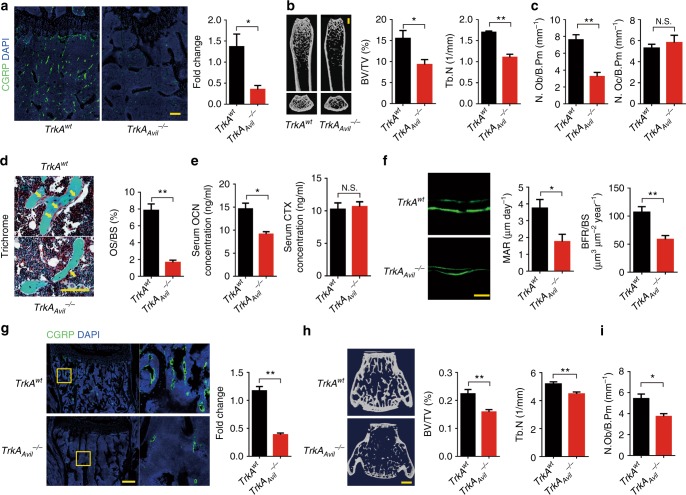
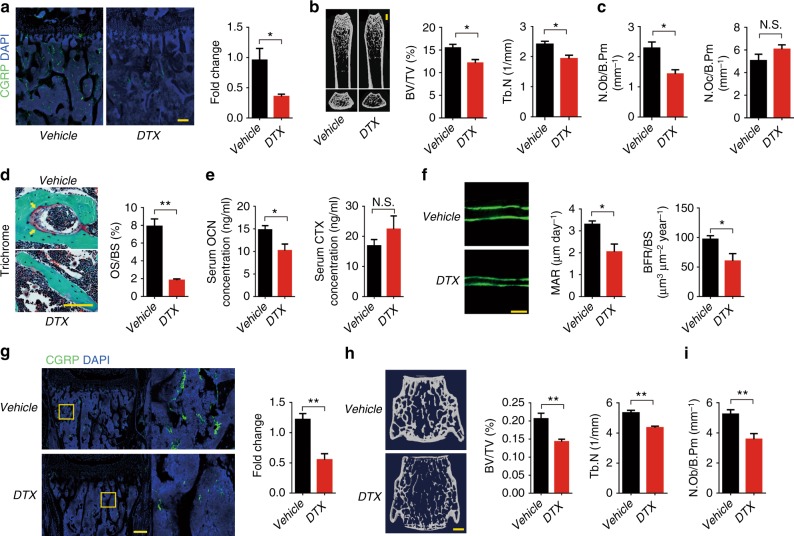
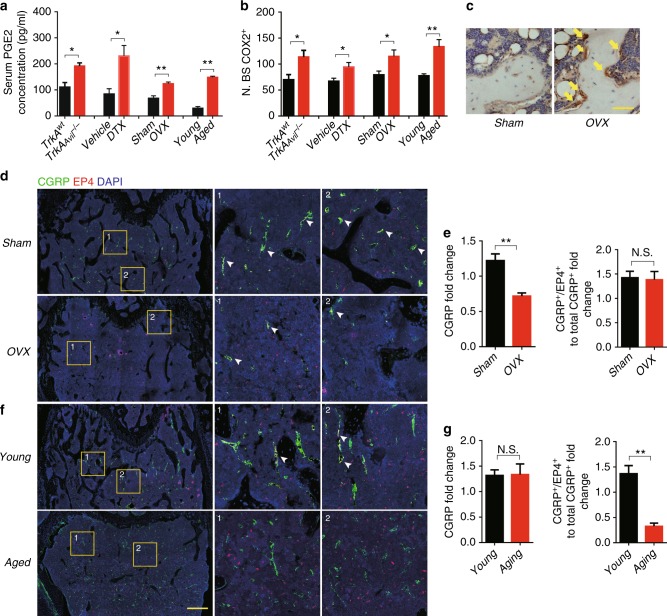
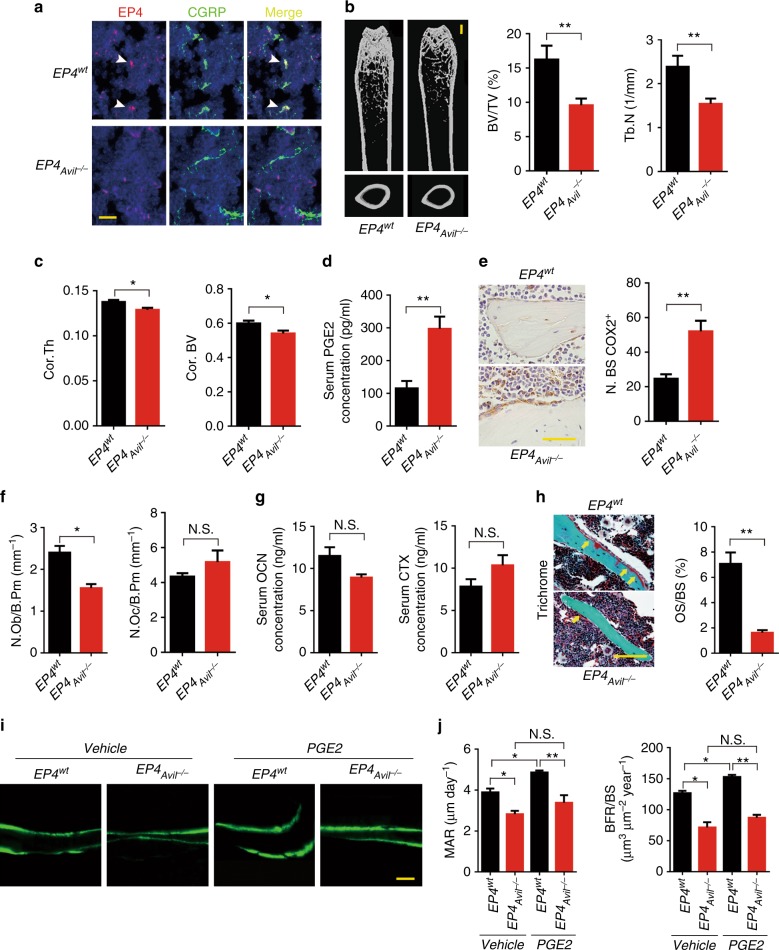
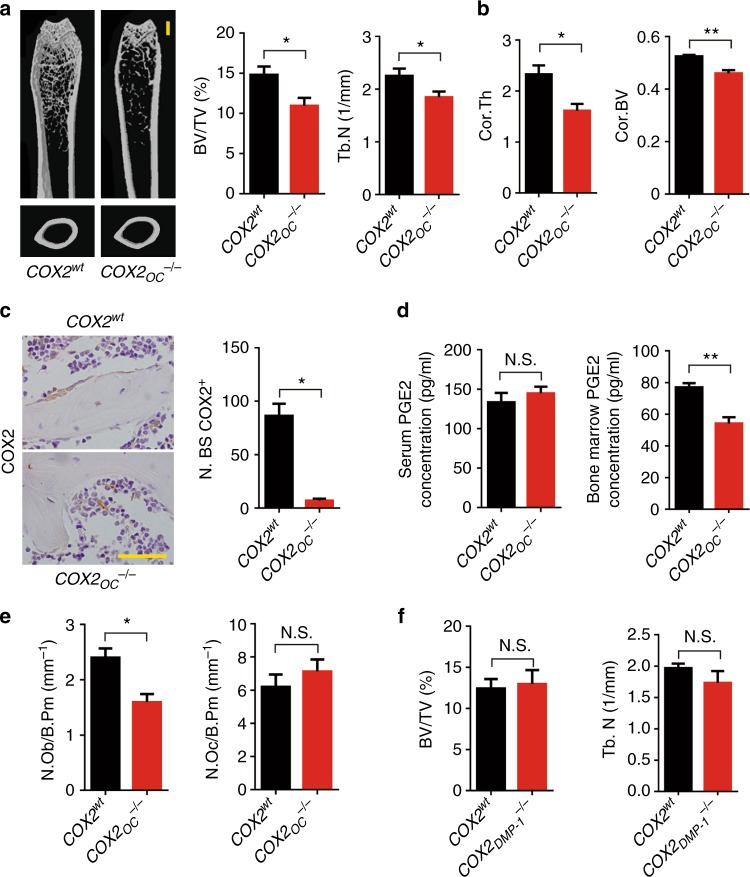
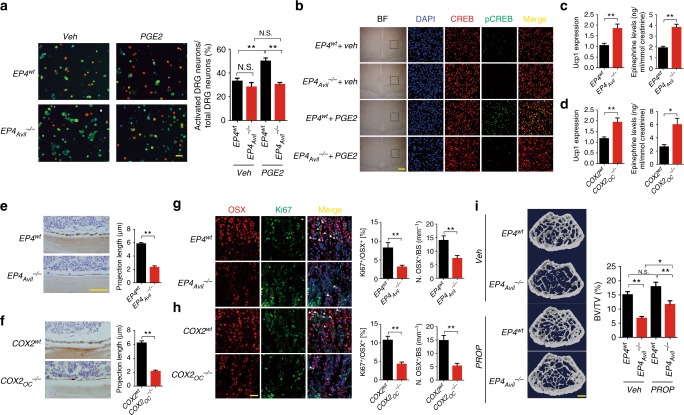
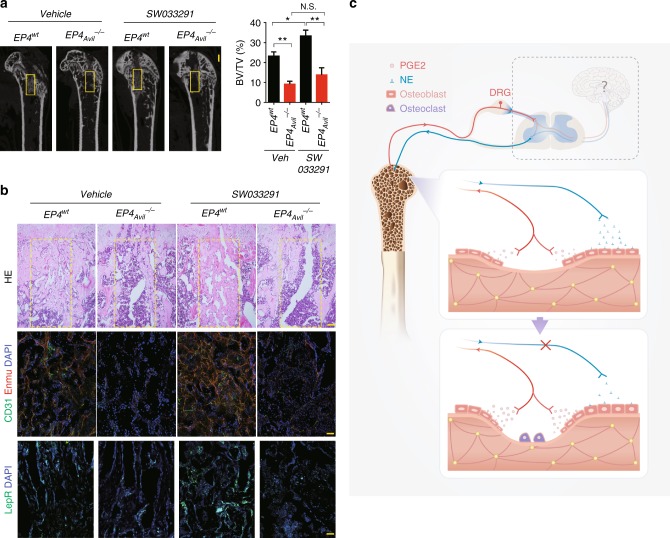
Whether sensory nerve can sense bone density or metabolic activity to control bone homeostasis is unknown. Here we found prostaglandin E2 (PGE2) secreted by osteoblastic cells activates PGE2 receptor 4 (EP4) in sensory nerves to regulate bone formation by inhibiting sympathetic activity through the central nervous system. PGE2 secreted by osteoblasts increases when bone density decreases as demonstrated in osteoporotic animal models. Ablation of sensory nerves erodes the skeletal integrity. Specifically, knockout of the EP4 gene in the sensory nerves or cyclooxygenase-2 (COX2) in the osteoblastic cells significantly reduces bone volume in adult mice. Sympathetic tone is increased in sensory denervation models, and propranolol, a β2-adrenergic antagonist, rescues bone loss. Furthermore, injection of SW033291, a small molecule to increase PGE2 level locally, significantly boostes bone formation, whereas the effect is obstructed in EP4 knockout mice. Thus, we show that PGE2 mediates sensory nerve to control bone homeostasis and promote regeneration.
Overview
The claims and statistics of this paper haven’t been checked yet.
Free: it reads the open-access text and checks the first 5 claims that cite a source we can check. Create a free account to check every claim.
Integrity signals
Registry
Cites
Statistics
Figures
Verification
Claims the paper makes
The claims and statistics of this paper haven’t been checked yet.
Free: it reads the open-access text and checks the first 5 claims that cite a source we can check. Create a free account to check every claim.
Claims other papers make about this one
Each is checked against this paper’s own text: does it say what the citing paper says it does?
The source backs part of the claim, not all of it — or backs it for a different population, condition or comparison.
In the citing paper
“osteoblast-derived prostaglandin E2 (PGE2) activates EP4 receptors on sensory nerves to relay bone mechanical status to the hypothalamus, where it suppresses sympathetic output and promotes bone formation [44]”
From Interorgan Communications in Skeletal Pathophysiology: From Molecular Pathways to Multidisciplinary Therapies (2026) · cites this paper as [44]
Experimental — accuracy not yet measured
Self-check
Percentages, sums and reported differences re-computed from the paper’s own numbers.
The self-check needs the paper’s full text.
Citations
Cites
Coupling of angiogenesis and osteogenesis by a specific vessel subtype in bone
Kusumbe, A. P., Ramasamy, S. K., & Adams, R. H. (2014) · Nature · doi:10.1038/nature13145 · Cited by 2,155
Leptin Inhibits Bone Formation through a Hypothalamic Relay
Ducy, P., Amling, M., Takeda, S., Priemel, M., Schilling, A. F., Beil, F. T., Shen, J., Vinson, C., Rueger, J. M., & Karsenty, G. (2000) · Cell · doi:10.1016/s0092-8674(00)81558-5 · Cited by 2,077
Nociceptor Sensory Neuron–Immune Interactions in Pain and Inflammation
Pinho-Ribeiro, F. A., Verri, W. A., & Chiu, I. M. (2017) · Trends in Immunology · doi:10.1016/j.it.2016.10.001 · Cited by 1,027
PDGF-BB secreted by preosteoclasts induces angiogenesis during coupling with osteogenesis
Xie, H., Cui, Z., Wang, L., Xia, Z., Hu, Y., Xian, L., Li, C., Xie, L., Crane, J., Wan, M., et al. (2014) · Nature Medicine · doi:10.1038/nm.3668 · Cited by 951
Self-citationCentral mechanisms of pathological pain
Kuner, R. (2010) · Nature Medicine · doi:10.1038/nm.2231 · Cited by 790
Origins of skeletal pain: sensory and sympathetic innervation of the mouse femur
Mach, D. B., Rogers, S. D., Sabino, M. C., Luger, N. M., Schwei, M. J., Pomonis, J. D., Keyser, C. P., Clohisy, D. R., Adams, D. J., O’Leary, P., et al. (2002) · Neuroscience · doi:10.1016/s0306-4522(02)00165-3 · Cited by 677
Yadav, V. K., Oury, F., Suda, N., Liu, Z.-W., Gao, X.-B., Confavreux, C., Klemenhagen, K. C., Tanaka, K. F., Gingrich, J. A., Guo, X. E., et al. (2009) · Cell · doi:10.1016/j.cell.2009.06.051 · Cited by 661
A reproducible and well-tolerated method for 2/3 partial hepatectomy in mice
Mitchell, C., & Willenbring, H. (2008) · Nature Protocols · doi:10.1038/nprot.2008.80 · Cited by 577
Sema3A regulates bone-mass accrual through sensory innervations
Fukuda, T., Takeda, S., Xu, R., Ochi, H., Sunamura, S., Sato, T., Shibata, S., Yoshida, Y., Gu, Z., Kimura, A., et al. (2013) · Nature · doi:10.1038/nature12115 · Cited by 415
Osteoblasts remotely supply lung tumors with cancer-promoting SiglecF high neutrophils
Engblom, C., Pfirschke, C., Zilionis, R., Da Silva Martins, J., Bos, S. A., Courties, G., Rickelt, S., Severe, N., Baryawno, N., Faget, J., et al. (2017) · Science · doi:10.1126/science.aal5081 · Cited by 389
Cited by
Items 101–200 of 331
Cellular and Molecular Effects of Microgravity on the Immune System: A Focus on Bioactive Lipids
Fava, M., Dominicis, N. D., Forte, G., Bari, M., Leuti, A., & Maccarrone, M. (2024) · Biomolecules · doi:10.3390/biom14040446 · Cited by 25
“…mechanical loading, or in conditions of low bone density, and controls bone density and fat metabolism by triggering hypothalamic expression of tyrosine hydroxylase (TH) and of neuropeptide Y (NPY) through the EP4-Biomolecules expressing sensory nerves of ascending interoceptive pathways [58–60].”
BackgroundMechanisms and treatment of bone pain in multiple myeloma
Davies, M. P., Fingas, S., & Chantry, A. (2019) · Current Opinion in Supportive and Palliative Care · doi:10.1097/spc.0000000000000467 · Cited by 24
“Ibuprofen NSAID Non-selective COX inhibitor The use of NSAIDs is contraindicated in MM patients due to their nephrotoxicity Decreased bone density in men [26]”
BackgroundEffects of disease-afflicted and aging neurons on the musculoskeletal system
Valdez, G. (2019) · Bone · doi:10.1016/j.bone.2019.01.023 · Cited by 25
“This question is particularly relevant given the evidence that sympathetic neurons potentially interact with sensory neurons in bones [89,103] and motor neurons and proprioceptive sensory neurons in skeletal muscles [22– 25].”
BackgroundZhao, D., Wu, J., Acosta, F. M., Xu, H., & Jiang, J. X. (2023) · Frontiers in Cell and Developmental Biology · doi:10.3389/fcell.2023.1151838 · Cited by 24
“Recently, PGE2 has been found to act on sensory neurons and affect sympathetic nerve activity, and regulate bone homeostasis (Chen et al., 2019; Lv et al., 2021).”
BackgroundWu, M., Lin, H. L., Ran, M., Li, M., Liu, C., Piao, J., Yu, P., Ning, C., Xiao, C., & Qi, S. (2025) · ACS Applied Materials & Interfaces · doi:10.1021/acsami.4c17162 · Cited by 21
Peripheral nerves in the tibial subchondral bone: the role of pain and homeostasis in osteoarthritis
Sun, Q., Li, G., Liu, D., Xie, W., Xiao, W., Li, Y., & Cai, M. (2022) · Bone and Joint Research · doi:10.1302/2046-3758.117.bjr-2021-0355.r1 · Cited by 21
Versatile application of magnesium-related bone implants in the treatment of bone defects
Tao, M., Cui, Y., Sun, S., Zhang, Y., Ge, J., Yin, W., Li, P., & Wang, Y. (2025) · Materials Today Bio · doi:10.1016/j.mtbio.2025.101635 · Cited by 37
“Bone metabolism and bone formation are monitored and regulated by sensory nerves, motor nerves, and various neurogenic factors (such as neuropeptide Y, SP, and CGRP) [264 – 266].”
Nociceptive Sensory Neurons Mediate Inflammation Induced by Bacillus Anthracis Edema Toxin
Yang, N. J., Neel, D. V., Deng, L., Heyang, M., Kennedy-Curran, A., Tong, V. S., Park, J. M., & Chiu, I. M. (2021) · Frontiers in Immunology · doi:10.3389/fimmu.2021.642373 · Cited by 22
“While DRG neurons mediate skin neurogenic inflammation, vagal ganglia neurons may also influence body fluid accumulation and sympathetic tone (20).”
BackgroundNeuronal regulation of bone and tendon injury repair: a focused review
Xu, M., Zhu, M., Qin, Q., Xing, X., Archer, M., Ramesh, S., Cherief, M., Li, Z., Lévi, B., Clemens, T. L., et al. (2024) · Journal of Bone and Mineral Research · doi:10.1093/jbmr/zjae087 · Cited by 24
Selective promotion of sensory innervation–mediated immunoregulation for tissue repair
Xu, K., Wu, K.-L., Chen, L., Zhao, Y., Li, H., Lin, N., Ye, Z., Xu, J., Huang, D., & Huang, X. (2025) · Science Advances · doi:10.1126/sciadv.ads9581 · Cited by 21
“Specific deletion of sensory nerves impairs bone mass accrual, and its malfunction or loss often leads to increased susceptibility to bone fracture and diminished bone regeneration after injury in patients ( 6 ).”
Bai, Q., Shi, M., Sun, X., Lou, Q., Peng, H., Qu, Z., Fan, J., & Dai, L. (2022) · Frontiers in Endocrinology · doi:10.3389/fendo.2022.957742 · Cited by 21
“Several molecules exert biological function during bone remodeling, such as 02 microRNA-241 (miR-241) and its target ATF4 (16), prostaglandin E2 (IGE2) (17), and semaphorin 3A (18).”
Hassan, M. G., Horenberg, A. L., Coler-Reilly, A. L. G., Grayson, W. L., & Scheller, E. L. (2023) · Current Osteoporosis Reports · doi:10.1007/s11914-023-00815-5 · Cited by 20
Engineering Innervated Musculoskeletal Tissues for Regenerative Orthopedics and Disease Modeling
Zhou, Z., Liu, J., Xiong, T., Liu, Y., Tuan, R. S., & Li, Z. A. (2024) · Small · doi:10.1002/smll.202310614 · Cited by 22
Lim, H. W., Kim, H. J., Jeon, C. Y., Lee, Y., Kim, M., Kim, J., Kim, S. R., Lee, S., Lim, D., Park, H. D., et al. (2024) · International Journal of Molecular Sciences · doi:10.3390/ijms25137485 · Cited by 22
The roles of the nerve-immune axis in modulating bone regeneration
Zhao, Y., Xu, K., Wu, K., Guo, Z., Li, H., Lin, N., Ye, Z., Huang, X., Xu, J., & Huang, D. (2026) · Bone Research · doi:10.1038/s41413-025-00476-3 · Cited by 23
“63 Hu and Chen et al. 64,65 comprehensively delineated a neural circuit connecting bone to the CNS and back to bone.”
Li, J., Liu, B., Wu, H., Zhang, S., Liang, Z., Guo, S., Jiang, H., Song, Y., Lei, X., Gao, Y. Q., et al. (2023) · Bone Research · doi:10.1038/s41413-023-00300-w · Cited by 19
“44 However, Hao et al. 8 found that the number of osteoclasts was not altered in the mouse models of sensory denervation (TrkA Avil-/- or adult iDTR Avil fl -/- mice injected with 1 μ g·kg − 1 diphtheria toxin).”
BackgroundSelf-citationNon-bone-derived exosomes: a new perspective on regulators of bone homeostasis
Wang, P., Shao, W., Li, Z., Wang, B., Lv, X., Huang, Y., & Feng, Y. (2024) · Cell Communication and Signaling · doi:10.1186/s12964-023-01431-7 · Cited by 19
“The relationship between the nervous system and bones has always been a hot spot that has attracted extensive attention from researchers, our past studies have also demonstrated the regulatory effect of nerves on bones [170, 171].”
ResultSelf-citationZhang, F., Qiao, W., Wei, J., Tao, Z., Chen, C., Wu, Y., Lin, M., Ng, K. M. C., Zhang, L., Yeung, K., et al. (2024) · Nature Communications · doi:10.1038/s41467-024-45436-3 · Cited by 21
“Since the control of bone homeostasis by VMH is known to be mediated by the regulation of sympathetic activity following the activation of CREB signaling 20,22 , we then examined the effects of SCT depletion on the phosphorylation of CREB in VMH using immuno-fl uorescent staining.”
Wang, Y., Zheng, G., Xie, X., Yu, W., Wang, J., Zang, F., Yang, C., Xiao, Q., Zhang, R., Wei, L., et al. (2023) · Journal of Nanobiotechnology · doi:10.1186/s12951-023-01823-4 · Cited by 19
“Bone formation was improved by low-dose celecoxib at a physiological PGE2 concentration may involve activation of skeletal interoception [37].”
BackgroundSelf-citationOsteosarcopenia and Pain: Do We Have a Way Out?
Bonanni, R., Grillo, S. G., Cariati, I., Tranquillo, L., Iundusi, R., Gasbarra, E., Tancredi, V., & Tarantino, U. (2023) · Biomedicines · doi:10.3390/biomedicines11051285 · Cited by 23
Zhang, X., Tian, L., Majumdar, A., & Scheller, E. L. (2024) · Comprehensive Physiology · doi:10.1002/j.2040-4603.2024.tb00300.x · Cited by 18
Zhang, Y., Wu, W., & Chen, Z. (2025) · Mediators of Inflammation · doi:10.1155/mi/8882429 · Cited by 19
“It has been reported that EP receptors are expressed in sensory nerves [40], osteoblasts [98], and osteoclasts.”
InfluentialThe Role of Prostaglandins as Major Inflammatory Mediators in Colorectal Cancer
Macia-Guardado, M., Lutz, V., Hengstschläger, M., & Dolznig, H. (2025) · International Journal of Molecular Sciences · doi:10.3390/ijms262412191 · Cited by 19
“PGE 2 is involved in the regulation of immune response, gastrointestinal integrity, modulation of blood pressure, fertility, tissue regeneration, inhibition of fibrosis and bone formation [35,117].”
Advances in the mechanism for steroid-induced osteonecrosis of the femoral head
Zhou, R., Bian, Y., Cai, X., Sun, H., Lv, Z., Xu, Y., Wang, Y., Wang, H., Zhu, W., Feng, B., et al. (2026) · Bone Research · doi:10.1038/s41413-025-00477-2 · Cited by 21
The Role of Sympathetic Nerves in Osteoporosis: A Narrative Review
Zhang, W., Liu, Y., Xu, J., Chen, F., Zhang, B., Feng, P., Wang, Y., & Kong, Q. (2022) · Biomedicines · doi:10.3390/biomedicines11010033 · Cited by 19
Pathogenesis and treatment of osteoporosis in patients with hemophilia
Lin, X., Gao, P., Zhang, Q., Jiang, Y., Wang, O., Xia, W., & Li, M. (2023) · Archives of Osteoporosis · doi:10.1007/s11657-022-01203-9 · Cited by 18
“PGE2 exerts osteogenic effects by activating PGE2 receptor 4 (EP4) in sensory nerves and inhibiting sympathetic nerve activity in the central nervous system [40].”
BackgroundUtagawa, K., Shin, T., Yamada, H., Ochi, H., Sunamura, S., Unno, A., Akazawa, C., Ema, M., Takeda, S., Okawa, A., et al. (2023) · Scientific Reports · doi:10.1038/s41598-023-30492-4 · Cited by 23
Cracking the Code: The Role of Peripheral Nervous System Signaling in Fracture Repair
Morris, A. J., Parker, R. S., Nazzal, M. K., Natoli, R. M., Fehrenbacher, J. C., Kacena, M. A., & White, F. A. (2024) · Current Osteoporosis Reports · doi:10.1007/s11914-023-00846-y · Cited by 19
Zhu, Z., Jiang, Y., Li, Z., Du, Y., Chen, Q., Guo, Q., Ban, Y., & Gong, P. (2024) · Frontiers in Bioengineering and Biotechnology · doi:10.3389/fbioe.2024.1338504 · Cited by 18
Liu, B., Ji, C., Shao, Y., Liang, T., He, J., Jiang, H., Chen, G., & Luo, Z. (2020) · Biomedicine & Pharmacotherapy · doi:10.1016/j.biopha.2020.110144 · Cited by 18
Role of specialized sensory neuron subtypes in modulating peripheral immune responses
Crosson, T., Bretaud, N., & Ugolini, S. (2025) · Immunity · doi:10.1016/j.immuni.2025.04.008 · Cited by 19
Zhang, R.-H., Zhang, X., Lu, Y., Hu, Y., Chen, X.-Y., Yu, D., Shi, J.-T., Yuan, W.-H., Wang, J., & Zhou, H. (2021) · Brain Research Bulletin · doi:10.1016/j.brainresbull.2021.08.007 · Cited by 18
Self-citationXu, Y., Li, K., Zhao, Y., Zhou, L., He, N., Qiao, H., Xu, Q., Zhang, H., Liu, Y., & Zhao, J. (2024) · MedComm · doi:10.1002/mco2.452 · Cited by 19
Wang, C., Liu, X., Zhou, J., & Zhang, Q. (2024) · International Journal of Molecular Sciences · doi:10.3390/ijms25021126 · Cited by 18
“For example, knocking out TrkA + sensory nerve fibers disrupts bone homeostasis, which exhibits diminished bone formation ability and the early onset of osteoporosis [9].”
BackgroundMa, Y., Hou, Z.-J., Li, Y., Zheng, B.-B., Wang, J., & Wang, W. (2020) · Frontiers in Pharmacology · doi:10.3389/fphar.2020.01316 · Cited by 16
“…protein receptor subtype, and then activate the downstream molecules of the signaling pathway to participate in the formation of new bone (Mirsaidi et al., 2017); and it can promote bone absorption by down-regulating the gene expression of bone protective proteinof osteoblasts (Chen et al., 2019).”
BackgroundOsteocyte Apoptosis Contributes to Cold Exposure-induced Bone Loss
Du, J., He, Z., Cui, J., Li, H., Xu, M., Zhang, S., Zhang, S., Yan, M., Qu, X., & Yu, Z. (2021) · Frontiers in Bioengineering and Biotechnology · doi:10.3389/fbioe.2021.733582 · Cited by 16
Kong, L., Zhao, H., Wang, F., Zhang, R., Yao, X., Zuo, R., Li, J., Xu, J., Qian, Y., Kang, Q., et al. (2023) · Molecular Therapy · doi:10.1016/j.ymthe.2023.02.004 · Cited by 16
Pulsed electromagnetic fields mediate sensory nerve regulation for bone formation in aging models
Wang, T., Liang, Z., Wang, C., Chen, J., Ma, Y., Chen, S., Zhou, D., & Hong, Z. (2025) · Nature Communications · doi:10.1038/s41467-025-63703-9 · Cited by 15
“First, sensory neurons are strategically positioned near osteogenic niches 14 , allowing for direct and ef fi cient signaling to LepR+ MSCs.”
Qi, X., Yang, G., Xu, Z., Zhou, M., Liu, T., Du, J., Lin, S., & Jiang, X. (2026) · Bone Research · doi:10.1038/s41413-025-00481-6 · Cited by 15
“8,96 Moreover, increased Cx3cr1 + in fl ammatory osteoclasts within the bone callus delayed the bone healing via suppressing CGRP + TrkA + sensory nerve – bone signaling exchange.”
Song, W., Zhao, D., Wang, J., Han, Z., Liu, Y., Wang, Y., & Yang, C. (2025) · Advanced Healthcare Materials · doi:10.1002/adhm.202404024 · Cited by 15
Effects of SW033291 on the myogenesis of muscle-derived stem cells and muscle regeneration
Dong, Y., Li, Y., Zhang, C., Chen, H., Liu, L., & Chen, S. (2020) · Stem Cell Research & Therapy · doi:10.1186/s13287-020-1574-5 · Cited by 15
Self-citationPi, H.-J., Huang, B., Yuan, Q., & Jing, J. (2024) · Frontiers in Physiology · doi:10.3389/fphys.2024.1423539 · Cited by 17
“The role of nervous system in bone homeostasis has been gradually realized in recent years (Chen et al., 2019; Meyers et al., 2020).”
BackgroundCYLD, a Mechanosensitive Deubiquitinase, Regulates TGFβ Signaling in Load-Induced Bone Formation
Nguyen, J., Massoumi, R., & Alliston, T. N. (2019) · Bone · doi:10.1016/j.bone.2019.115148 · Cited by 14
Chen, H., Zhou, Q., Pu, X., Wang, N., Wang, S., Feng, Z., Wang, B., Zhu, Z., Qiu, Y., & Sun, X. (2024) · The Spine Journal · doi:10.1016/j.spinee.2024.04.003 · Cited by 13
Self-citationZhu, H., Ren, J. Z., Wang, X., Qin, W., & Xie, Y. (2025) · Journal of Orthopaedic Surgery and Research · doi:10.1186/s13018-025-05577-7 · Cited by 14
“Research indicates that changes in the mechanical load can lead to significant fluctuations in prostaglandin E2 (PGE2) concentrations within the skeleton [9].”
Self-citationUnraveling the Bone–Brain Communication Network
Hansda, S., & Das, H. (2025) · Biology · doi:10.3390/biology14091279 · Cited by 16
“PGE 2 activates prostaglandin E2 receptor EP4 subtype (EP4) on sensory nerves, transmitting signals that influence bone remodeling (sympathetic activity) [23,24].”
Kostrzewa, M., Mahmoud, A. M., Verde, R., di Carlo, F. S., Gianfrancesco, F., Piscitelli, F., & Ligresti, A. (2021) · Cells · doi:10.3390/cells10051199 · Cited by 13
“reported that prostaglandin E2 (PGE2) secreted by osteoblastic cells within the bone niche of active bone remodeling areas facilitates sensory nerve-stimulated bone formation, thus promoting bone regeneration [65].”
BackgroundSong, Z., Yan, M., Zhang, S., Hu, B., Qing, X., Shao, Z., Chen, S., Lv, X., & Liu, H. (2024) · Ageing Research Reviews · doi:10.1016/j.arr.2024.102633 · Cited by 13
Self-citationJin, Z., Chen, Z., Liang, T., Liu, W., Shan, Z., Tan, D., Chen, J., Hu, J. X., Qin, L., & Xu, J. (2025) · Journal of Orthopaedic Translation · doi:10.1016/j.jot.2024.10.008 · Cited by 14
Denervation during mandibular distraction osteogenesis results in impaired bone formation
Tevlin, R., Griffin, M., Chen, K., Januszyk, M., Guardino, N., Spielman, A. F., Walters, S., Gold, G. E., Chan, C. K. F., Gurtner, G. C., et al. (2023) · Scientific Reports · doi:10.1038/s41598-023-27921-9 · Cited by 12
Lee, S., Shin, Y., Cho, J., Park, D., & Kim, C. (2022) · Frontiers in Physiology · doi:10.3389/fphys.2021.800301 · Cited by 13
“In contrast, a previous study demonstrated that sympathetic neuronal projections increase levels of receptor activator of nuclear factor kappa-B ligand (RANKL) and stimulate osteoclast activity, which regulates bone resorption and bone catabolism (Chen et al., 2019).”
BackgroundNetwork toxicological analysis of sodium dehydroacetate in food safety
Jin, J., Yan, X. R., & Tian, L. (2025) · Food and Chemical Toxicology · doi:10.1016/j.fct.2025.115469 · Cited by 12
Lin, W., Gu, S., Zhang, X., Li, K., Zhao, D., Ma, B., Pan, C., Xu, Z., Liu, T., Wang, H., et al. (2025) · Nature Communications · doi:10.1038/s41467-025-63376-4 · Cited by 12
Self-citationSu, Y., Wang, H., Liu, W., Chen, K., Min, Y., Zhu, J., Li, X., Su, A., Yang, H., Yang, L., et al. (2026) · Advanced Science · doi:10.1002/advs.202524181 · Cited by 11
Self-citationMaranda, V., Gaumond, M.-H., & Moffatt, P. (2022) · International Journal of Molecular Sciences · doi:10.3390/ijms23042148 · Cited by 15
“More recently, the systemic control of bone formation has convincingly been demonstrated to occur in part by expression of COX-2 and formation of PGE2 by osteoblasts through signaling to sensory nerves which in turn control sympathetic tone and bone formation [78,79].”
BackgroundRodent incisor as a model to study mesenchymal stem cells in tissue homeostasis and repair
Jing, J., Zhang, M., Guo, T., Pei, F., Yang, Y., & Chai, Y. (2022) · Frontiers in Dental Medicine · doi:10.3389/fdmed.2022.1068494 · Cited by 11
Self-citationZhao, R., Shen, Y., Deng, X., Tang, Y., Ge, Z., Wang, D., Xiong, Z., Fang, Q., Zhang, Z., Li, X., et al. (2023) · Composites Part B Engineering · doi:10.1016/j.compositesb.2023.110909 · Cited by 12
Wu, X., Xu, X., Liu, Q., Ding, J., Liu, J., Huang, Z., Huang, Z., Wu, X., Li, R., Zhou, Y., et al. (2021) · Journal of Orthopaedic Translation · doi:10.1016/j.jot.2021.03.006 · Cited by 11
“[43] demonstrated that knockout of the EP4 gene in the sensory nerves significantly reduces the number of osteocalcin positive osteoblasts as well as serum level of osteocalcin, whereas the number of tartaric acidic phosphatase (TRAP) positive osteoclasts and the level of osteoclast bone resorption marker carboxy-term…”
BackgroundStem cell-free therapy for glaucoma to preserve visionPreprint
Kumar, A., Xiong, S., Zhou, M., Chen, W., Yang, E., Price, A. J., Le, L., Zhang, Y., Florens, L. A., Washburn, M. P., et al. (2021) · bioRxiv (Cold Spring Harbor Laboratory) · doi:10.1101/2021.06.18.449038 · Cited by 13
Liu, X., Guo, Q., Wang, L., Gu, Y., Meng, S., Gu, Y., & Yu, B. (2023) · Frontiers in Cell and Developmental Biology · doi:10.3389/fcell.2023.1184524 · Cited by 11
“The COX2-PGE2 axis has been proved to be a vital pathway in bone homeostasis (Chen et al., 2019; Raisz, 1999).”
BackgroundSelf-citationNovel insights into osteocyte and inter-organ/tissue crosstalk
Zhang, Y., & Chen, Q. (2024) · Frontiers in Endocrinology · doi:10.3389/fendo.2023.1308408 · Cited by 11
Zeng, X., He, S., Yang, C., Yang, Y., Zheng, G., Wang, H., Liang, L., Xu, C., Cao, P., Wu, X., et al. (2025) · Pharmacological Research · doi:10.1016/j.phrs.2025.107850 · Cited by 11
Self-citationMeng, L., Feng, J., Guo, T., Zhang, M., Cha, S., Chen, P., Ziaei, H., Harouni, A., Ho, T., & Chai, Y. (2025) · Proceedings of the National Academy of Sciences · doi:10.1073/pnas.2504103122 · Cited by 10
Self-citationWang, Y., Yu, L., Wang, T., & Liu, S. (2023) · International Journal of Biological Macromolecules · doi:10.1016/j.ijbiomac.2023.123998 · Cited by 10
Self-citationEffects of small molecule inhibitor SW033291 on hepatic ischemia-reperfusion injury in mice
Xie, M., He, R., Wang, H., Zhao, S., Zheng, J., Wu, J., & Wen, H. Y. (2022) · Biochemical and Biophysical Research Communications · doi:10.1016/j.bbrc.2022.05.049 · Cited by 10
Mauro, D., Srinath, A., Guggino, G., Nicolaidou, V., Raimondo, S., Ellis, J. J., Whyte, J., Nicoletti, M. M., Romano, M., Kenna, T., et al. (2023) · Clinical Immunology · doi:10.1016/j.clim.2023.109332 · Cited by 10
Wang, Z., Han, X., Xu, J., Zhang, W., Patel, K., Zheng, J., Wan, M., Zheng, J., & Cao, X. (2025) · Advanced Science · doi:10.1002/advs.202501039 · Cited by 10
Self-citationChen, Z., Luo, Z., Greenblatt, M. B., Wu, Z., & Xu, R. (2026) · Bone Research · doi:10.1038/s41413-026-00534-4 · Cited by 12
“19 The cell bodies of primary sensory neurons reside in dorsal root ganglia (DRG) along the spinal cord and cranial nerve ganglia, and their axons project into bone to sense changes in bone density, mechanical loading, and metabolic activity, thereby modulating skeletal homeostasis.”
G Protein-Coupled Receptors in Osteoarthritis
Wang, F., Liu, M., Wang, N., & Luo, J. (2022) · Frontiers in Endocrinology · doi:10.3389/fendo.2021.808835 · Cited by 10
Wang, H., Zhao, Y., Liu, H., Zhang, X., Lv, S., Zhou, T., Cui, H., Zhao, J., & Li, X. (2024) · Journal of Pharmaceutical and Biomedical Analysis · doi:10.1016/j.jpba.2024.116273 · Cited by 10
Unraveling the peripheral nervous System's role in tumor: A Double-edged Sword
Wang, Y.-H., Xuan, Y., Liu, C., Wang, X., & Yu, K. (2025) · Cancer Letters · doi:10.1016/j.canlet.2025.217451 · Cited by 9
Self-citationThe yellow brick road to nuclear membrane mechanotransduction
Shen, Z., Lengyel, M., & Niethammer, P. (2022) · APL Bioengineering · doi:10.1063/5.0080371 · Cited by 9
Ding, Y., Liu, W., Zhang, X., Xue, B., Yang, X., Zhao, C., Li, C., Wang, S., Qiu, Z., Li, C., et al. (2025) · Nutrients · doi:10.3390/nu17060998 · Cited by 8
“Prostaglandin E2 (PGE2) secreted by osteoblastic cells activates PGE2 receptor 4 (EP4) in sensory nerves to regulate bone formation by inhibiting sympathetic activity through the central nervous system [60].”
The p75 neurotrophin receptor controls the skeletal stem cell niche through sensory innervation
Wu, Z., Li, N., Luo, Z., Chen, Z., He, X., Shi, F., Han, J., Huang, H., Shi, B., Zhang, L., et al. (2025) · Developmental Cell · doi:10.1016/j.devcel.2025.09.012 · Cited by 9
Self-citationSheng, N., Yang, R., Wang, J., Wu, W., Zhe, M., Zhang, Q., Nie, R., Chen, L., Xing, F., & Sun, L. J. (2025) · Materials Today Bio · doi:10.1016/j.mtbio.2025.102541 · Cited by 11
“Given that CGRP-positive nerve fibers are prevalent in bone tissue [50], we further examined the distribution of regenerating nerves by co-staining for CGRP and TUBB3.”
Li, Y., Pang, S., Zhang, X., Lu, M., Zhao, J., Wu, R., Hu, J., Jiang, J., Chen, H., Ling, Z., et al. (2025) · Nature Communications · doi:10.1038/s41467-025-67396-y · Cited by 8
“However, whether other signals trigger communication between tendons and the CNS, and how these signals guide the formation of tendon fi brosis via the CNS, are questions that require further investigation in our subsequent research.”
Self-citationMechanotransduction by nuclear envelope tension
Rajan, S. G., Roca‐Cusachs, P., & Niethammer, P. (2025) · Nucleus · doi:10.1080/19491034.2025.2600901 · Cited by 9
Wang, J., He, Y., Wang, B., Yin, R., Chen, B., & Wang, H. (2023) · Nanomedicine · doi:10.2217/nnm-2023-0201 · Cited by 8
Optimized piezoelectric bone regeneration through inhibiting sympathetic nerve-bone interaction
Li, A., Li, Z., Liang, Y., He, Y., & Jiang, X. (2024) · Surfaces and Interfaces · doi:10.1016/j.surfin.2024.104380 · Cited by 8
The specificities, influencing factors, and medical implications of bone circadian rhythms
Mei, G., Wang, J., Wang, J., Ye, L., Yi, M., Chen, G., Zhang, Y., Tang, Q., & Chen, L. (2024) · The FASEB Journal · doi:10.1096/fj.202302582rr · Cited by 9
“77 SNS can activate Rankl expression through β - AR signaling to promote osteoclast differentiation and bone resorption, 74,78,79 as well as negatively impact the proliferation and osteogenic differentiation of BMSCs. 80,81 82–84 In contrast, recent findings by Liu et al. demonstrated that increased SNS tone via β 2-A…”
InfluentialLiang, X., Jiang, S., Su, P., Yin, C., Jiang, W., Gao, J., Liu, Z., Li, Y., Wang, W., Qian, A., et al. (2024) · npj Microgravity · doi:10.1038/s41526-024-00433-0 · Cited by 8
“PreviousstudiesshowedthatPTGS2 isakeyenzymeinthesynthesisofprostaglandinE2(PGE2)fromarachi-donicacid,whichisregardedasapotentsyntheticmetabolicregulatorof bonegrowth 45,46 .”
Semaphorin 3A on Osteoporosis: An Overreview of the Literature
Zhang, Y., Shi, H., Dai, X., Shen, J., Yin, J., Xu, T., Yue, G., Guo, H., Liang, R., Chen, Q., et al. (2025) · Calcified Tissue International · doi:10.1007/s00223-025-01350-4 · Cited by 8
“Several observations suggest that sensory nerves could perceive the changes in BMD, mechanical stress, and metabolic activities [100–103].”
Self-citationBosiacki, M., Gutowska, I., Piotrowska, K., & Lubkowska, A. (2021) · Biomolecules · doi:10.3390/biom11050616 · Cited by 9
Synthesis of medicinally relevant oxalylamines via copper/Lewis acid synergistic catalysis
Wu, Z., Hu, M., Jin, Y., Li, J., Wu, W., & Jiang, H. (2021) · Science Advances · doi:10.1126/sciadv.abh4088 · Cited by 8
“Besides, cross-coupling reaction was achieved with E-4a and phenyl magnesium bromide, as C─C bond formation occurred at the position of alkenyl chloride, leading to the useful phenyl-substituted oxalylamine (6).”
BackgroundThe impact and mechanism of nerve injury on bone metabolism
Zhang, Y., Zhao, X. X., Ge, D., Huang, Y., & Yao, Q. (2024) · Biochemical and Biophysical Research Communications · doi:10.1016/j.bbrc.2024.149699 · Cited by 11
Schwann Cells Accelerate Osteogenesis via the Mif/CD74/FOXO1 Signaling Pathway In Vitro
Li, J., Jiang, H., Su, X., Li, F., Zhan, N.-Z., Li, S., Chen, Z.-J., Chang, B.-H., Cheng, P., Yang, L., et al. (2022) · Stem Cells International · doi:10.1155/2022/4363632 · Cited by 8
Xia, C., Zhu, H., Li, J., Jin, H., & Fu, D. (2023) · Journal of Orthopaedic Surgery and Research · doi:10.1186/s13018-023-03696-7 · Cited by 9
“Moreover, as the synthetic rate-limiting enzyme, COX2 can regulate bone formation by controlling synthesis of prostaglandin E2 [40].”
BackgroundHe, X., Yamada, M., Watanabe, J., Pengyu, Q., Chen, J., & Egusa, H. (2024) · Biomaterials Advances · doi:10.1016/j.bioadv.2024.213939 · Cited by 8
Myeloid Cells and Sensory Nerves Mediate Peritendinous Adhesion Formation via Prostaglandin E2
Zhang, X., Xiao, Y., Tao, Z., Zhang, Y., Cheng, X., Liu, X., Li, Y., Yin, W., Tian, J., Wang, S., et al. (2024) · Advanced Science · doi:10.1002/advs.202405367 · Cited by 7
Self-citationYan, M., Lv, X., Zhang, S., Song, Z., Hu, B., Qing, X., Kou, H., Chen, S., Shao, Z., & Liu, H. (2025) · International Immunopharmacology · doi:10.1016/j.intimp.2025.114213 · Cited by 7
Self-citationDeciphering the skeletal interoceptive circuitry to control bone homeostasis
Wu, Y., Guo, J., Chen, Z., Zhang, F., Chow, B., Chen, Z., Yeung, K., & Qiao, W. (2025) · BMEMat · doi:10.1002/bmm2.12138 · Cited by 8
Cystic fibrosis being a polyendocrine disease (Review)
Chagay, N. B., Хайт, Г. Я., Вдовина, Т. М., & Шафорост, А. А. (2021) · Problems of Endocrinology · doi:10.14341/probl12694 · Cited by 8
Osteoblasts pattern endothelium and somatosensory axons during zebrafish caudal fin organogenesis
Bump, R., Goo, C. E. A., Horton, E. C., & Rasmussen, J. P. (2022) · Development · doi:10.1242/dev.200172 · Cited by 7
Wójtowicz, J., Kołodziejczyk, B., Gazda, A., & Gietka, P. (2022) · Central European Journal of Immunology · doi:10.5114/ceji.2022.120171 · Cited by 7
“PGE2 has also been postulated to influence bone tissue by interacting with the nervous regulation of bone homeostasis [13].”
BackgroundKurz, M., Ulrich, M., Bittner, A., Scharf, M. M., Shao, J., Wallenstein, I., Lemoine, H., Wettschureck, N., Kolb, P., & Bünemann, M. (2023) · Molecular Pharmacology · doi:10.1124/molpharm.122.000648 · Cited by 7
Bernard, N. J. (2019) · Nature Reviews Rheumatology · doi:10.1038/s41584-019-0181-2 · Cited by 7
Xi, J., Fu, D., Xu, D., Shen, R., Zhao, Y., Dai, H., Xia, C., & Zhou, P. (2025) · Frontiers in Endocrinology · doi:10.3389/fendo.2025.1570685 · Cited by 6
Murphy, L. A., & Scanzello, C. R. (2025) · Connective Tissue Research · doi:10.1080/03008207.2025.2540950 · Cited by 6
“Further, using the ACL transection model of murine OA, Chen et al. demonstrated that osteoblasts secrete PGE2 in response to injury, which regulated pathological bone formation by binding to its receptor EP4 on sensory neurons in bone 19 .”
Ren, Z., Wu, Z., Wu, A., Zhang, H., Lu, J., Zhang, J., Weng, J., Zhang, J., Song, C., Tan, H., et al. (2025) · Advanced Science · doi:10.1002/advs.202518807 · Cited by 7
Osseous morphology differences in the foot and ankle associated with Charcot-Marie-Tooth disease
Requist, M. R., Peterson, A. C., Beals, T. C., Chrea, B., & Lenz, A. L. (2025) · JBMR Plus · doi:10.1093/jbmrpl/ziaf058 · Cited by 6
“26,55,56 Additional research is needed to describe the influence of impaired innervation secondary to CMT on bone remodeling and on development of the cavovarus foot deformity.”
Metadata
- Authors
- Chen, H., Hu, B., Lv, X., Zhu, S., Zhen, G., Wan, M., Jain, A., Gao, B., Chai, Y., Yang, M., Wang, X., Deng, R., Wang, L., Cao, Y., Ni, S., Liu, S., Yuan, W., Chen, H., Dong, X., Guan, Y., Yang, H., & Cao, X.
- Affiliations
- Johns Hopkins University (US)
- Second Military Medical University (CN)
- Howard Hughes Medical Institute (US)
- First Affiliated Hospital of Soochow University (CN)
- Corresponding author
- Yang, Huilin
- Cao, Xu
- ORCID
- Venue
- Nature Communications
- Published
- 2019-01-14
- Volume
- 10
- Issue
- 1
- Pages
- 181-181
- ISSN
- 2041-1723 (ISSN-L)
- PMC
- PMC6331599
- OpenAlex
- W2909717083
- Cited by
- 321
- References
- 55
- Citations by year
- 2026: 41 · 2025: 68 · 2024: 57 · 2023: 45 · 2022: 40 · 2021: 29 · 2020: 28 · 2019: 12
- FWCI
- 9.01
- Type
- journal article
- Language
- en
- Open access
- gold
- doi.org
- Licence
- cc-by
- creativecommons.org/licenses/by/4.0 (tdm)
- creativecommons.org/licenses/by/4.0 (vor)
- Locations
- Nature Communications (publishedVersion, cc-by)
- Europe PMC (PubMed Central) (publishedVersion, other-oa)
- PubMed Central (publishedVersion, cc-by)
- PubMed (publishedVersion)
- RePEc: Research Papers in Economics (submittedVersion)
- DOAJ (DOAJ: Directory of Open Access Journals) (submittedVersion)
- DOAJ (DOAJ: Directory of Open Access Journals) (submittedVersion, cc-by-sa)
- Funders
- Johns Hopkins University
- University of California, Los Angeles
- Topics
- Life Sciences › Biochemistry, Genetics and Molecular Biology › Molecular Biology › Bone Metabolism and Diseases
- Health Sciences › Medicine › Orthopedics and Sports Medicine › Bone health and osteoporosis research
- Health Sciences › Medicine › Pharmacology (medical) › Inflammatory mediators and NSAID effects
- Keywords
- prostaglandin E2, EP4 receptor, sensory nerves, bone homeostasis, osteoblasts, sympathetic nervous system, osteoporosis, bone formation, cyclooxygenase-2, sensory denervation, bone regeneration
- MeSH terms
- Adrenergic beta-Antagonists, Adrenergic Fibers, Animals, Bone and Bones, Bone Regeneration, Cells, Cultured, Disease Models, Animal, Female, Humans, Hydroxyprostaglandin Dehydrogenases, Male, Mice, Inbred C57BL, Osteoblasts, Osteoporosis, Propranolol, Pyridines, Sensory Receptor Cells, Thiophenes, Dinoprostone, Bone Density, Mice, Knockout, Feedback, Physiological, Mice, Cyclooxygenase 2, Receptors, Prostaglandin E, EP4 Subtype
About these checks
Registry, retraction, Cites and statistics results are computed, not judged, with one exception: a printed reference that no index lists is read once by a model before it counts as a citation error. Claims are extracted by a model and kept only when their quote appears verbatim in the text; each cited source is then checked, with a model’s help, for whether it says what the claim relies on. Those verdicts can be wrong — read the claim’s quote and the cited source before relying on one.
Statistics and arithmetic are recomputed, not judged.
Confidence bands are shown only for fields calibrated on our annotated test set. None is calibrated yet, so no band is shown.
What counts as a claim ›How we measure confidence ›How we check this ›
Are you an author, or do you see a problem with this page? Request a review
Data sources
Bibliographic data: Semantic Scholar, OpenAlex, Crossref.
Contains information from the Semantic Scholar Academic Graph Datasets, made available under the ODC Attribution License (ODC-BY 1.0).
Semantic Scholar’s data is described in: Kinney, R., et al. (2023). The Semantic Scholar Open Data Platform. arXiv:2301.10140.
