

Prostaglandin E2 mediates sensory nerve regulation of bone homeostasis
Open accessThe DOI matches its Crossref record; 55 of the 55 references it cites were found in a registry or an index.
Abstract
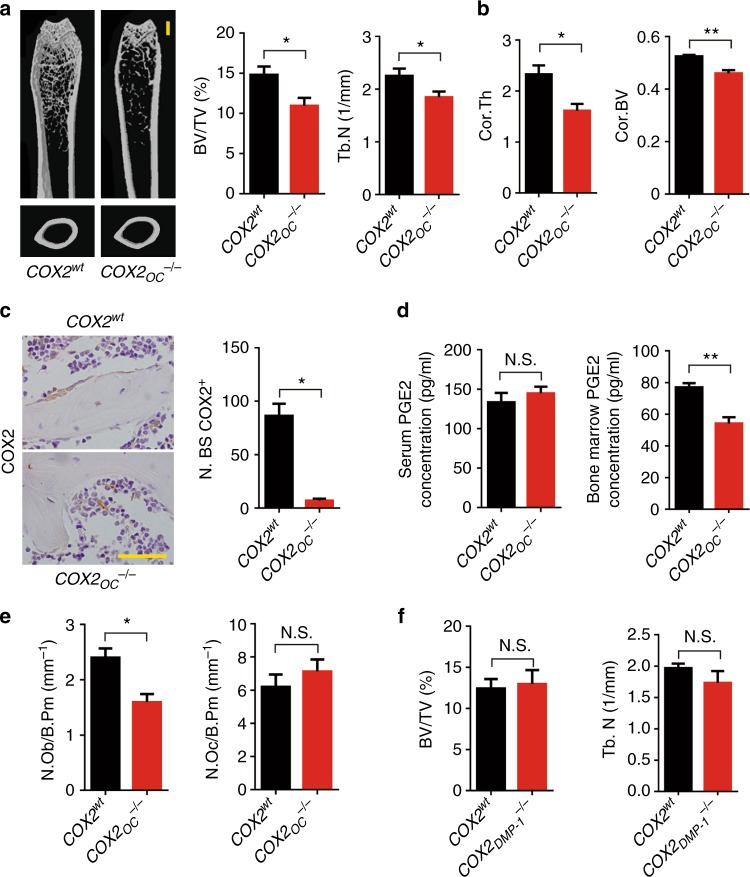
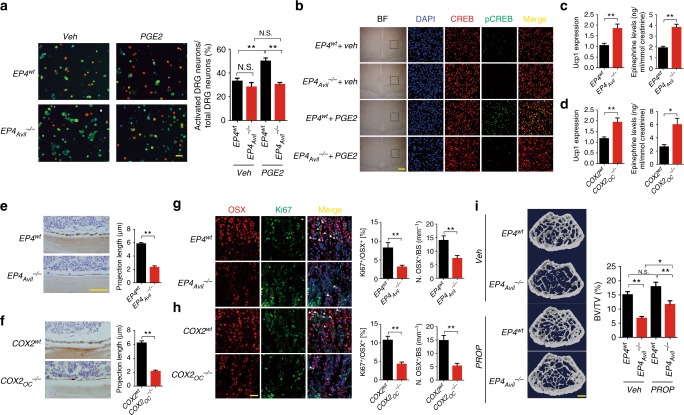
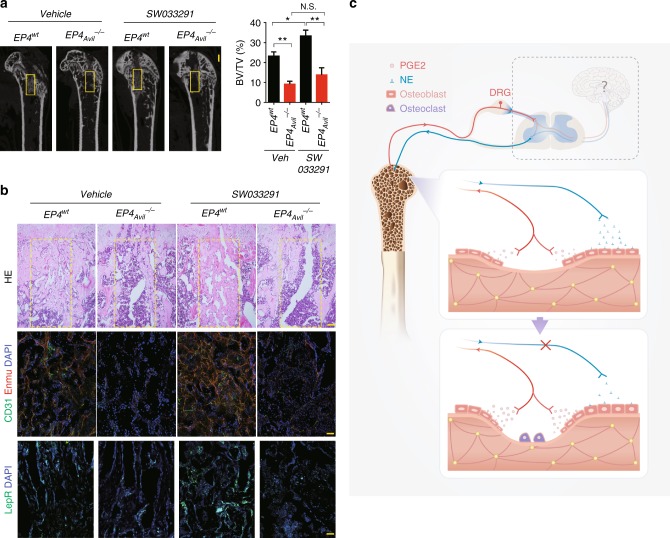
Whether sensory nerve can sense bone density or metabolic activity to control bone homeostasis is unknown. Here we found prostaglandin E2 (PGE2) secreted by osteoblastic cells activates PGE2 receptor 4 (EP4) in sensory nerves to regulate bone formation by inhibiting sympathetic activity through the central nervous system. PGE2 secreted by osteoblasts increases when bone density decreases as demonstrated in osteoporotic animal models. Ablation of sensory nerves erodes the skeletal integrity. Specifically, knockout of the EP4 gene in the sensory nerves or cyclooxygenase-2 (COX2) in the osteoblastic cells significantly reduces bone volume in adult mice. Sympathetic tone is increased in sensory denervation models, and propranolol, a β2-adrenergic antagonist, rescues bone loss. Furthermore, injection of SW033291, a small molecule to increase PGE2 level locally, significantly boostes bone formation, whereas the effect is obstructed in EP4 knockout mice. Thus, we show that PGE2 mediates sensory nerve to control bone homeostasis and promote regeneration.
Overview
The claims and statistics of this paper haven’t been checked yet.
Free: it reads the open-access text and checks the first 5 claims that cite a source we can check. Create a free account to check every claim.
Integrity signals
Registry
Cites
Statistics
Figures
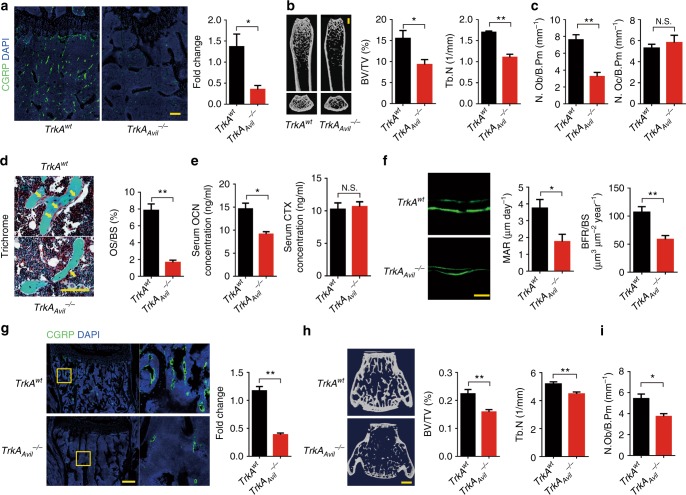
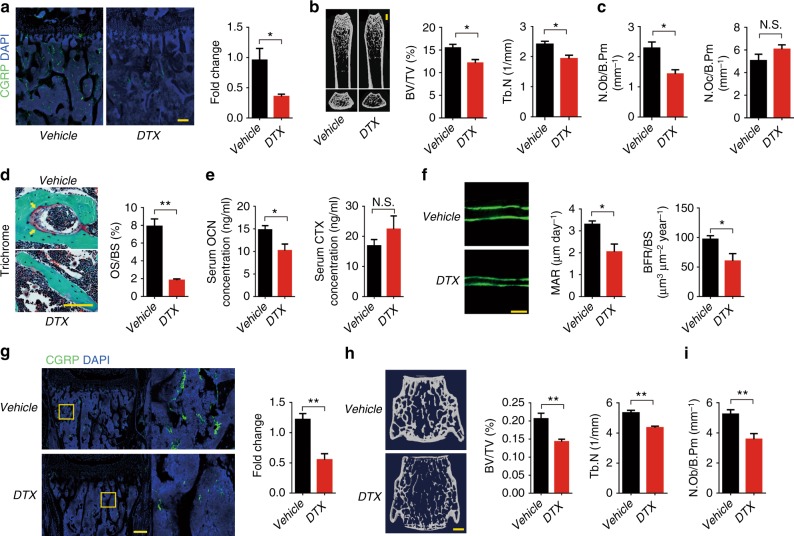
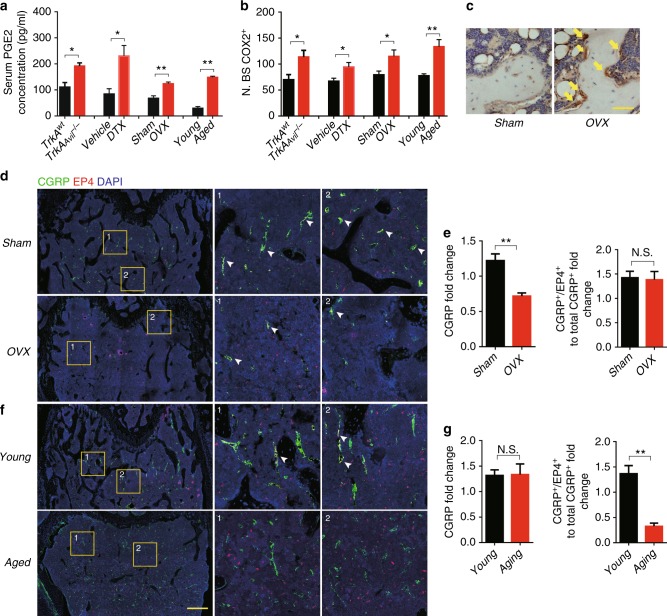
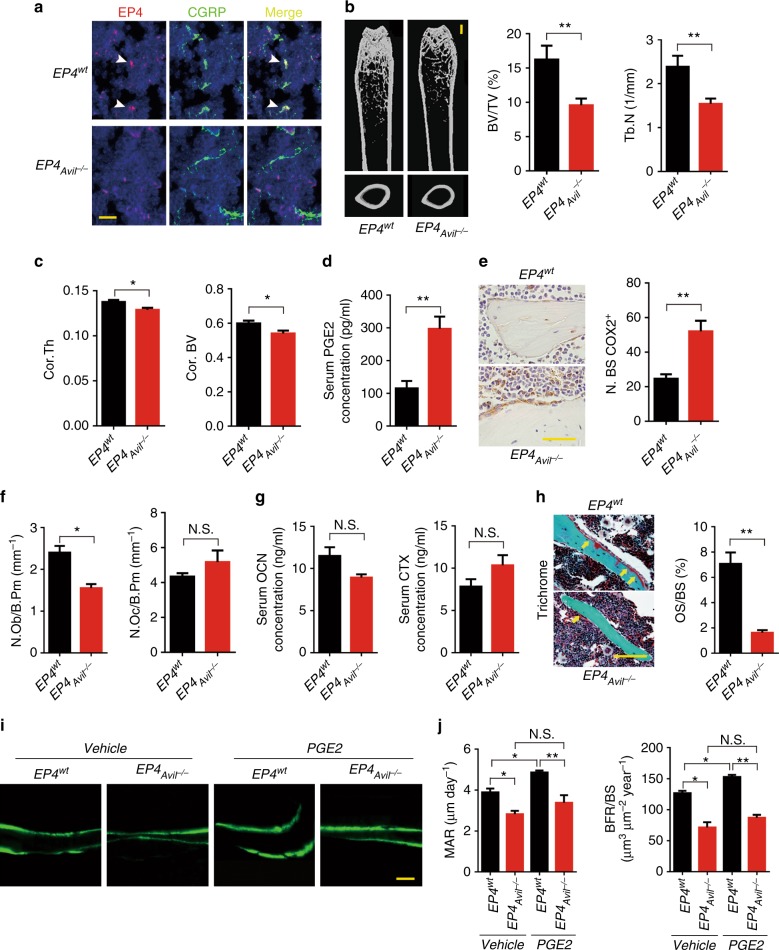
Verification
Claims the paper makes
The claims and statistics of this paper haven’t been checked yet.
Free: it reads the open-access text and checks the first 5 claims that cite a source we can check. Create a free account to check every claim.
Claims other papers make about this one
Each is checked against this paper’s own text: does it say what the citing paper says it does?
The source backs part of the claim, not all of it — or backs it for a different population, condition or comparison.
In the citing paper
“osteoblast-derived prostaglandin E2 (PGE2) activates EP4 receptors on sensory nerves to relay bone mechanical status to the hypothalamus, where it suppresses sympathetic output and promotes bone formation [44]”
From Interorgan Communications in Skeletal Pathophysiology: From Molecular Pathways to Multidisciplinary Therapies (2026) · cites this paper as [44]
Experimental — accuracy not yet measured
Self-check
Percentages, sums and reported differences re-computed from the paper’s own numbers.
The self-check needs the paper’s full text.
Citations
Cites
Coupling of angiogenesis and osteogenesis by a specific vessel subtype in bone
Kusumbe, A. P., Ramasamy, S. K., & Adams, R. H. (2014) · Nature · doi:10.1038/nature13145 · Cited by 2,155
Leptin Inhibits Bone Formation through a Hypothalamic Relay
Ducy, P., Amling, M., Takeda, S., Priemel, M., Schilling, A. F., Beil, F. T., Shen, J., Vinson, C., Rueger, J. M., & Karsenty, G. (2000) · Cell · doi:10.1016/s0092-8674(00)81558-5 · Cited by 2,077
Nociceptor Sensory Neuron–Immune Interactions in Pain and Inflammation
Pinho-Ribeiro, F. A., Verri, W. A., & Chiu, I. M. (2017) · Trends in Immunology · doi:10.1016/j.it.2016.10.001 · Cited by 1,027
PDGF-BB secreted by preosteoclasts induces angiogenesis during coupling with osteogenesis
Xie, H., Cui, Z., Wang, L., Xia, Z., Hu, Y., Xian, L., Li, C., Xie, L., Crane, J., Wan, M., et al. (2014) · Nature Medicine · doi:10.1038/nm.3668 · Cited by 951
Self-citationCentral mechanisms of pathological pain
Kuner, R. (2010) · Nature Medicine · doi:10.1038/nm.2231 · Cited by 790
Origins of skeletal pain: sensory and sympathetic innervation of the mouse femur
Mach, D. B., Rogers, S. D., Sabino, M. C., Luger, N. M., Schwei, M. J., Pomonis, J. D., Keyser, C. P., Clohisy, D. R., Adams, D. J., O’Leary, P., et al. (2002) · Neuroscience · doi:10.1016/s0306-4522(02)00165-3 · Cited by 677
Yadav, V. K., Oury, F., Suda, N., Liu, Z.-W., Gao, X.-B., Confavreux, C., Klemenhagen, K. C., Tanaka, K. F., Gingrich, J. A., Guo, X. E., et al. (2009) · Cell · doi:10.1016/j.cell.2009.06.051 · Cited by 661
A reproducible and well-tolerated method for 2/3 partial hepatectomy in mice
Mitchell, C., & Willenbring, H. (2008) · Nature Protocols · doi:10.1038/nprot.2008.80 · Cited by 577
Sema3A regulates bone-mass accrual through sensory innervations
Fukuda, T., Takeda, S., Xu, R., Ochi, H., Sunamura, S., Sato, T., Shibata, S., Yoshida, Y., Gu, Z., Kimura, A., et al. (2013) · Nature · doi:10.1038/nature12115 · Cited by 415
Osteoblasts remotely supply lung tumors with cancer-promoting SiglecF high neutrophils
Engblom, C., Pfirschke, C., Zilionis, R., Da Silva Martins, J., Bos, S. A., Courties, G., Rickelt, S., Severe, N., Baryawno, N., Faget, J., et al. (2017) · Science · doi:10.1126/science.aal5081 · Cited by 389
Cited by
Items 301–331 of 331
Mardelle, U. (2024) · theses.fr (ABES) · doi:10.70675/1e786d9ez8d0ez41b3z8ac1z367faf59ae53
Pang, Q., Zhou, R., Li, Y., Huang, L., Xu, J., Chi, Y., Qi, X., Li, M., Jiang, Y. C., Wang, O., et al. (2026) · Journal of Orthopaedic Translation · doi:10.1016/j.jot.2026.101096 · Cited by 1
“Recently, Chen et al. demonstrated that PGE2 secreted by osteoblastic cells activated EP4 in sensory nerves but not in osteoblasts in the regulation of bone formation [4].”
InfluentialHe, Y., Xi, J., Dai, H., Fang, L., Yu, Y., Ying, Y., Li, J., Fu, D., & Xia, C. (2026) · Journal of Orthopaedic Translation · doi:10.1016/j.jot.2026.101112
“Sympathetic tone is known to negatively regulate bone metabolism, such as impairing bone healing [62,63], promoting bone loss [18,64] and osteonecrosis [65].”
InfluentialA bibliometric analysis of the associations between Osteoporosis and Central Nervous System
Yu, G., Gao, Y., Song, H., Chen, X., Kuang, S., Su, C., Li, L., Manguang, L., & Chen, G. (2026) · Experimental Gerontology · doi:10.1016/j.exger.2026.113175
Mao, Y., He, Q., Li, T., Guo, J., Wu, Y., Yeung, K., 苏宇雄, Shen, J., Han, X., Wang, J., et al. (2026) · Journal of Nanobiotechnology · doi:10.1186/s12951-026-04570-4
“The activation of the sensory nerve during injury has been reported to be critical to tissue regeneration, as it contributes to inflammation resolution [55], revascularization [56], regulation of osteoblasts [57, 58], and central nervous system-mediated control of bone healing [18, 59].”
Regional heterogeneity in phenotypic and genetic associations between bone and brain in humans
Zhao, L., Tang, Y., Zhao, W., Li, S., Chen, J., Ge, T., & Tu, Y. (2026) · Nature Communications · doi:10.1038/s41467-026-73428-y · Cited by 1
G protein-coupled receptor signaling in osteogenic bone mesenchymal stem/stromal cells
Wolfe, T. J., & Weaver, S. R. (2026) · Frontiers in Cell and Developmental Biology · doi:10.3389/fcell.2026.1795445
“More recently, the PGE2/EP4 axis has been characterized as a critical neurosensory axis regulating bone mass. Osteoblast-derived PGE2 activates EP4 in sensory nerves to induce bone formation, with injection of small-molecule PGE2 agonists enhancing bone mass in rodent models (Chen et al., 2019).”
Neuro-skeletal units and Smart Analgesia: reprogramming sensory neurons for fracture repair
Bai, L., & Jia-can, S. U. (2026) · Military Medical Research · doi:10.1016/j.mmr.2026.100044
“At the same time, sensory nerve dysfunction, peripheral neuropathy, or denervation can impair bone regeneration and delay fracture repair [3].”
Redkar, A. S., Surendran, A., Rajdev, B., Prasad, N., Prakash, A. N., Hazarika, D., Bhavananthi, I., Kumar, N., Babu, G., Kumar, Y. R. S., et al. (2026) · Journal of Ethnopharmacology · doi:10.1016/j.jep.2026.122058
Neuronal Sensitization Drives Bone Regeneration via Energy Metabolism and BMP2‐ErbB1 Signaling
Dai, Q., Wang, Z., Li, Z. Y., Zhang, Y., Peng, H., Chen, H., Li, S., Gao, H., Li, Q., & Cao, X. (2026) · Advanced Functional Materials · doi:10.1002/adfm.76607
Self-citationLu, Q., Shen, L., Xu, Y., & Zhang, Z. (2026) · Biomedicines · doi:10.3390/biomedicines14071547
“Therefore, the observed pattern should be considered hypothesis-generating rather than evidence of a compensatory PGE 2 response to low bone formation [3,40,41].”
Ji, L., Zhu, F., Wang, X., Wang, J., & Liu, C. (2026) · Bioactive Materials · doi:10.1016/j.bioactmat.2026.07.008
Self-citationZhou, R., Li, Y., Qi, X., Chi, Y., Jiajue, R., Cui, L., Li, X., Zhang, L., Jiang, Y., Wang, O., et al. (2026) · Bone · doi:10.1016/j.bone.2026.118015
Huang, T., Wan, L., Du, R., Zeng, L., Li, W., Yuan, F., & Lü, H. (2026) · Journal of Neuroinflammation · doi:10.1186/s12974-026-03977-y
Huang, D., Guo, H., Guan, W., Zheng, F., Liu, C., & Shi, C. (2026) · Journal of Oral Rehabilitation · doi:10.1111/joor.70279
Chen, N., Kumar, S., Patel, K., Li, S., Wan, M., Crane, J. L., & Cao, X. (2026) · Nature Communications · doi:10.1038/s41467-026-76678-y
“…by prostaglandin E2 (PGE2) in bone to induce phosphorylation of cAMP-response element binding protein (CREB) in the hypothalamus as an ascending interoceptive signal, which tunes down sympathetic activity for osteoblastic bone formation as the descending interoceptive signal in the PVN 18 – 20 .”
Self-citationThe sixth sense of the brain: interoception in organoid study
Li, J., Wang, F., Gao, Q., Chen, X., Bai, L., & Su, J. (2026) · Bone Research · doi:10.1038/s41413-026-00569-7
Kim, G. E., Kim, H., Oh, C.-S., Lee, S. D., & Kim, M. Y. (2026) · Research Square · doi:10.21203/rs.3.rs-10595580/v1
The alpha and the omega (6 lipids): discovering dietary drivers of heterotopic ossification
Carpen, P. L., & Greenblatt, M. B. (2026) · Journal of Clinical Investigation · doi:10.1172/jci210090
“Consistent with past studies indicating that PGE 2 has osteoanabolic activity, this PGE 2 acted on local connective tissue progenitors to induce endochondral ossification (11).”
Piezo2 + Mechanosensory Neurons Orchestrate Heterotopic Ossification in Achilles Tendon
Cai, Z., Fu, W., Luo, Y., Feng, K., Zhang, X., Xu, B., Guo, Z., Yu, Z., Xu, J., Liu, B., et al. (2026) · The FASEB Journal · doi:10.1096/fj.202602038rr
Wang, T., Liang, Z., Zeng, W., Chen, J., Wang, C., Gong, X., Chen, S., Zhou, Y., Wu, H., Tang, L., et al. (2026) · Nature Communications · doi:10.1038/s41467-026-77654-2
Huang, Y., Liu, Y., Liu, Y., Liang, H., Tong, Y., Li, R., Zhang, X., Wang, Y., Deng, Y., Wu, J., et al. (2026) · Science Advances · doi:10.1126/sciadv.adt4995
“Evidence indicates that PGE2, acting through its receptors, can directly stimulate neuronal activation ( 60 , 86 , 87 ).”
Chen, Q., Zhang, H., Chen, Y., & Zhang, B. (2026) · Bone Research · doi:10.1038/s41413-026-00589-3
“16,18 Within this loop, 15-PGDH functions as the catabolic gate.”
InfluentialPulsed radiofrequency neuromodulation of subchondral bone in knee osteoarthritis
Lana, J. F., Jorge, D., Protásio, J., de Macedo, A. P., Pires, L., Costa, F., Mosaner, T., Sobreiro, P., Santos, D., Teixeira, A., et al. (2026) · Frontiers in Pain Research · doi:10.3389/fpain.2026.1968444
Zhao, X., Chen, K., Wang, B., Ma, J., Wang, Z., Gao, C., Zhang, T., Zang, F., Hu, B., & Chen, H. (2026) · Frontiers in Bioengineering and Biotechnology · doi:10.3389/fbioe.2026.1964470
“This regulation also involves a local interplay with the sympathetic system, where sensory nerves inhibit local sympathetic tone via the PGE2–EP4 pathway, preventing stem cell adipogenesis and thereby “locking in” an osteogenic fate (Figure 2a) (Hu et al., 2020; Chen et al., 2019).”
Self-citationAdvances in Bone-Brain Axis Research: Bidirectional Regulatory Mechanisms and Evidentiary Boundaries
熊, 昭. (2026) · Advances in Clinical Medicine · doi:10.12677/acm.2026.16103506
Wang, Z., & Cao, X. (2026) · Regenesis repair rehabilitation. · doi:10.1016/j.rerere.2026.10.005
Self-citationJiang, T., Zhao, Y., Guo, R., Li, Y., Yin, Z., Zhu, X., Li, J., Li, C., 朱晓娟, Meng, X., et al. (2026) · Phytomedicine · doi:10.1016/j.phymed.2026.158910
Spatial bridges of hierarchical scaffolds orchestrate MSCs/SCs interaction for bone regeneration
Zhao, Z., Zhang, H., Liao, Z., Huang, J., Chang, J., & Wu, C. (2026) · Biomaterials · doi:10.1016/j.biomaterials.2026.124756
Cui, X., Ma, J., Yang, Z., Luo, H., Dai, S., Tang, K., Niu, W., Chen, J., & Niu, L. (2026) · Bioactive Materials · doi:10.1016/j.bioactmat.2026.10.039
Metadata
- Authors
- Chen, H., Hu, B., Lv, X., Zhu, S., Zhen, G., Wan, M., Jain, A., Gao, B., Chai, Y., Yang, M., Wang, X., Deng, R., Wang, L., Cao, Y., Ni, S., Liu, S., Yuan, W., Chen, H., Dong, X., Guan, Y., Yang, H., & Cao, X.
- Affiliations
- Johns Hopkins University (US)
- Second Military Medical University (CN)
- Howard Hughes Medical Institute (US)
- First Affiliated Hospital of Soochow University (CN)
- Corresponding author
- Yang, Huilin
- Cao, Xu
- ORCID
- Venue
- Nature Communications
- Published
- 2019-01-14
- Volume
- 10
- Issue
- 1
- Pages
- 181-181
- ISSN
- 2041-1723 (ISSN-L)
- PMC
- PMC6331599
- OpenAlex
- W2909717083
- Cited by
- 321
- References
- 55
- Citations by year
- 2026: 41 · 2025: 68 · 2024: 57 · 2023: 45 · 2022: 40 · 2021: 29 · 2020: 28 · 2019: 12
- FWCI
- 9.01
- Type
- journal article
- Language
- en
- Open access
- gold
- doi.org
- Licence
- cc-by
- creativecommons.org/licenses/by/4.0 (tdm)
- creativecommons.org/licenses/by/4.0 (vor)
- Locations
- Nature Communications (publishedVersion, cc-by)
- Europe PMC (PubMed Central) (publishedVersion, other-oa)
- PubMed Central (publishedVersion, cc-by)
- PubMed (publishedVersion)
- RePEc: Research Papers in Economics (submittedVersion)
- DOAJ (DOAJ: Directory of Open Access Journals) (submittedVersion)
- DOAJ (DOAJ: Directory of Open Access Journals) (submittedVersion, cc-by-sa)
- Funders
- Johns Hopkins University
- University of California, Los Angeles
- Topics
- Life Sciences › Biochemistry, Genetics and Molecular Biology › Molecular Biology › Bone Metabolism and Diseases
- Health Sciences › Medicine › Orthopedics and Sports Medicine › Bone health and osteoporosis research
- Health Sciences › Medicine › Pharmacology (medical) › Inflammatory mediators and NSAID effects
- Keywords
- prostaglandin E2, EP4 receptor, sensory nerves, bone homeostasis, osteoblasts, sympathetic nervous system, osteoporosis, bone formation, cyclooxygenase-2, sensory denervation, bone regeneration
- MeSH terms
- Adrenergic beta-Antagonists, Adrenergic Fibers, Animals, Bone and Bones, Bone Regeneration, Cells, Cultured, Disease Models, Animal, Female, Humans, Hydroxyprostaglandin Dehydrogenases, Male, Mice, Inbred C57BL, Osteoblasts, Osteoporosis, Propranolol, Pyridines, Sensory Receptor Cells, Thiophenes, Dinoprostone, Bone Density, Mice, Knockout, Feedback, Physiological, Mice, Cyclooxygenase 2, Receptors, Prostaglandin E, EP4 Subtype
About these checks
Registry, retraction, Cites and statistics results are computed, not judged, with one exception: a printed reference that no index lists is read once by a model before it counts as a citation error. Claims are extracted by a model and kept only when their quote appears verbatim in the text; each cited source is then checked, with a model’s help, for whether it says what the claim relies on. Those verdicts can be wrong — read the claim’s quote and the cited source before relying on one.
Statistics and arithmetic are recomputed, not judged.
Confidence bands are shown only for fields calibrated on our annotated test set. None is calibrated yet, so no band is shown.
What counts as a claim ›How we measure confidence ›How we check this ›
Are you an author, or do you see a problem with this page? Request a review
Data sources
Bibliographic data: Semantic Scholar, OpenAlex, Crossref.
Contains information from the Semantic Scholar Academic Graph Datasets, made available under the ODC Attribution License (ODC-BY 1.0).
Semantic Scholar’s data is described in: Kinney, R., et al. (2023). The Semantic Scholar Open Data Platform. arXiv:2301.10140.
