

Prostaglandin E2 mediates sensory nerve regulation of bone homeostasis
Open accessThe DOI matches its Crossref record; 55 of the 55 references it cites were found in a registry or an index.
Abstract
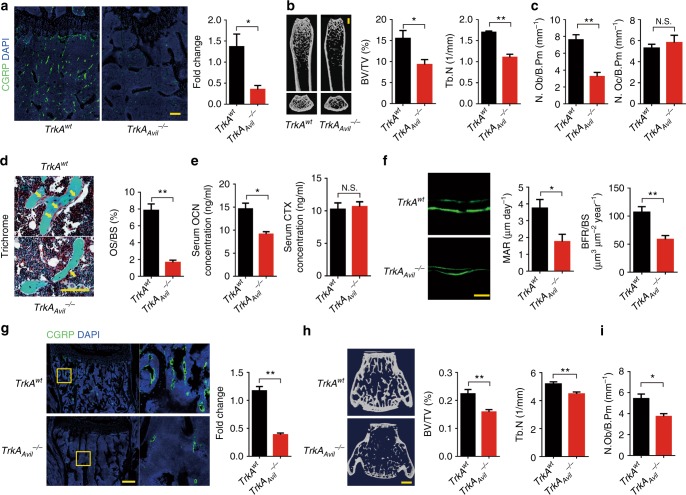
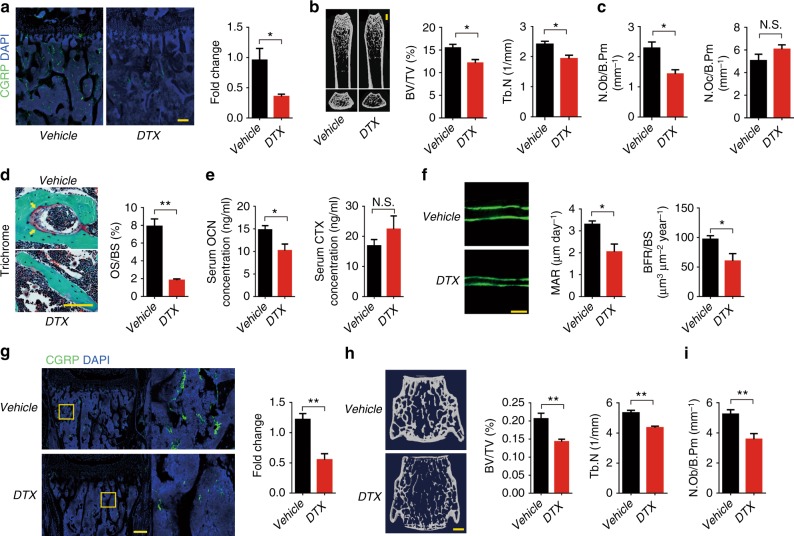
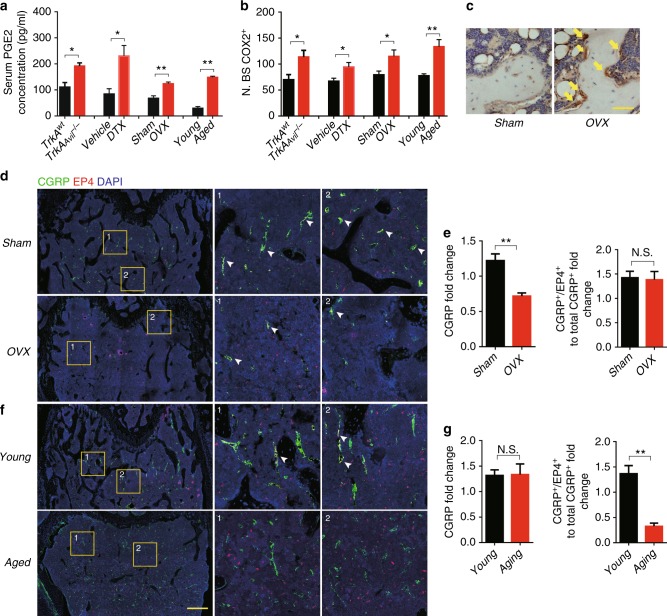
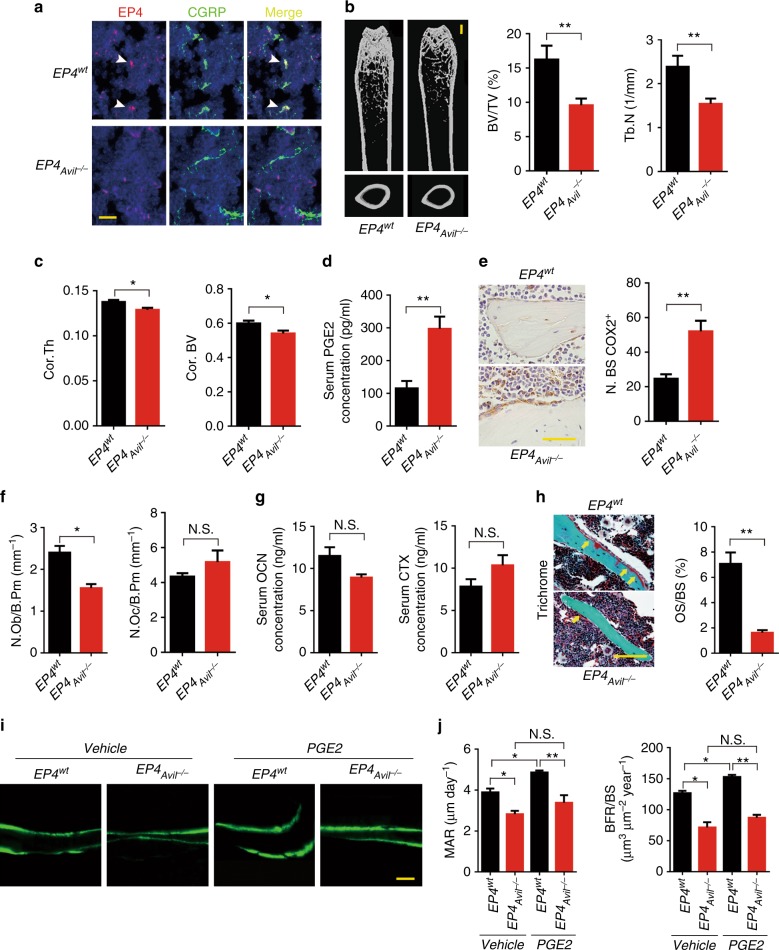
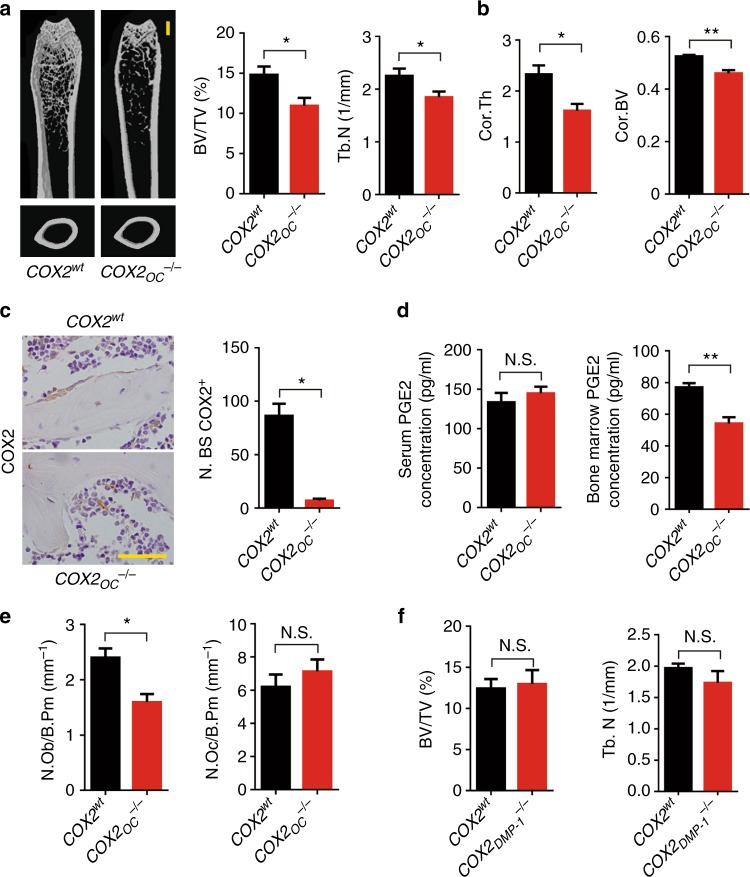
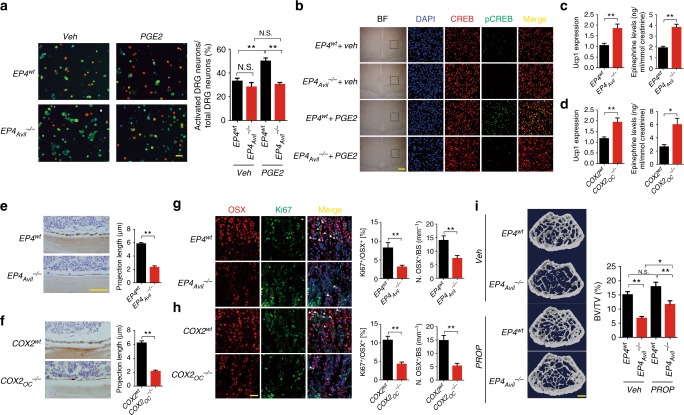
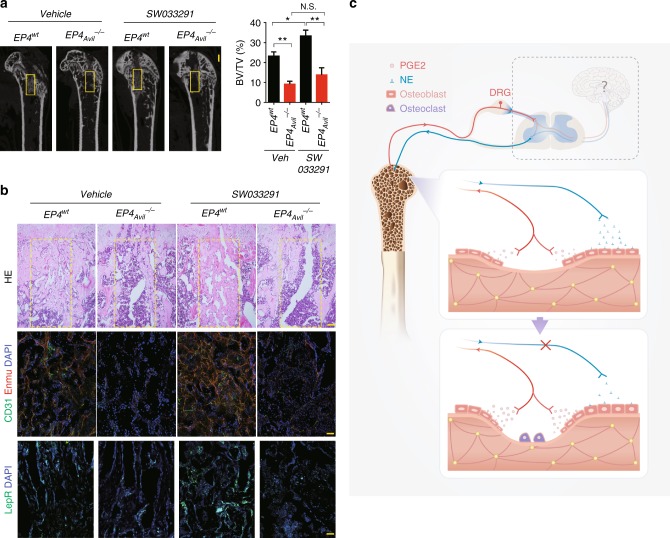
Whether sensory nerve can sense bone density or metabolic activity to control bone homeostasis is unknown. Here we found prostaglandin E2 (PGE2) secreted by osteoblastic cells activates PGE2 receptor 4 (EP4) in sensory nerves to regulate bone formation by inhibiting sympathetic activity through the central nervous system. PGE2 secreted by osteoblasts increases when bone density decreases as demonstrated in osteoporotic animal models. Ablation of sensory nerves erodes the skeletal integrity. Specifically, knockout of the EP4 gene in the sensory nerves or cyclooxygenase-2 (COX2) in the osteoblastic cells significantly reduces bone volume in adult mice. Sympathetic tone is increased in sensory denervation models, and propranolol, a β2-adrenergic antagonist, rescues bone loss. Furthermore, injection of SW033291, a small molecule to increase PGE2 level locally, significantly boostes bone formation, whereas the effect is obstructed in EP4 knockout mice. Thus, we show that PGE2 mediates sensory nerve to control bone homeostasis and promote regeneration.
Overview
The claims and statistics of this paper haven’t been checked yet.
Free: it reads the open-access text and checks the first 5 claims that cite a source we can check. Create a free account to check every claim.
Integrity signals
Registry
Cites
Statistics
Figures
Verification
Claims the paper makes
The claims and statistics of this paper haven’t been checked yet.
Free: it reads the open-access text and checks the first 5 claims that cite a source we can check. Create a free account to check every claim.
Claims other papers make about this one
Each is checked against this paper’s own text: does it say what the citing paper says it does?
The source backs part of the claim, not all of it — or backs it for a different population, condition or comparison.
In the citing paper
“osteoblast-derived prostaglandin E2 (PGE2) activates EP4 receptors on sensory nerves to relay bone mechanical status to the hypothalamus, where it suppresses sympathetic output and promotes bone formation [44]”
From Interorgan Communications in Skeletal Pathophysiology: From Molecular Pathways to Multidisciplinary Therapies (2026) · cites this paper as [44]
Experimental — accuracy not yet measured
Self-check
Percentages, sums and reported differences re-computed from the paper’s own numbers.
The self-check needs the paper’s full text.
Citations
Cites
Coupling of angiogenesis and osteogenesis by a specific vessel subtype in bone
Kusumbe, A. P., Ramasamy, S. K., & Adams, R. H. (2014) · Nature · doi:10.1038/nature13145 · Cited by 2,155
Leptin Inhibits Bone Formation through a Hypothalamic Relay
Ducy, P., Amling, M., Takeda, S., Priemel, M., Schilling, A. F., Beil, F. T., Shen, J., Vinson, C., Rueger, J. M., & Karsenty, G. (2000) · Cell · doi:10.1016/s0092-8674(00)81558-5 · Cited by 2,077
Nociceptor Sensory Neuron–Immune Interactions in Pain and Inflammation
Pinho-Ribeiro, F. A., Verri, W. A., & Chiu, I. M. (2017) · Trends in Immunology · doi:10.1016/j.it.2016.10.001 · Cited by 1,027
PDGF-BB secreted by preosteoclasts induces angiogenesis during coupling with osteogenesis
Xie, H., Cui, Z., Wang, L., Xia, Z., Hu, Y., Xian, L., Li, C., Xie, L., Crane, J., Wan, M., et al. (2014) · Nature Medicine · doi:10.1038/nm.3668 · Cited by 951
Self-citationCentral mechanisms of pathological pain
Kuner, R. (2010) · Nature Medicine · doi:10.1038/nm.2231 · Cited by 790
Origins of skeletal pain: sensory and sympathetic innervation of the mouse femur
Mach, D. B., Rogers, S. D., Sabino, M. C., Luger, N. M., Schwei, M. J., Pomonis, J. D., Keyser, C. P., Clohisy, D. R., Adams, D. J., O’Leary, P., et al. (2002) · Neuroscience · doi:10.1016/s0306-4522(02)00165-3 · Cited by 677
Yadav, V. K., Oury, F., Suda, N., Liu, Z.-W., Gao, X.-B., Confavreux, C., Klemenhagen, K. C., Tanaka, K. F., Gingrich, J. A., Guo, X. E., et al. (2009) · Cell · doi:10.1016/j.cell.2009.06.051 · Cited by 661
A reproducible and well-tolerated method for 2/3 partial hepatectomy in mice
Mitchell, C., & Willenbring, H. (2008) · Nature Protocols · doi:10.1038/nprot.2008.80 · Cited by 577
Sema3A regulates bone-mass accrual through sensory innervations
Fukuda, T., Takeda, S., Xu, R., Ochi, H., Sunamura, S., Sato, T., Shibata, S., Yoshida, Y., Gu, Z., Kimura, A., et al. (2013) · Nature · doi:10.1038/nature12115 · Cited by 415
Osteoblasts remotely supply lung tumors with cancer-promoting SiglecF high neutrophils
Engblom, C., Pfirschke, C., Zilionis, R., Da Silva Martins, J., Bos, S. A., Courties, G., Rickelt, S., Severe, N., Baryawno, N., Faget, J., et al. (2017) · Science · doi:10.1126/science.aal5081 · Cited by 389
Cited by
Subchondral bone microenvironment in osteoarthritis and pain
Hu, Y., Chen, X., Wang, S., Jing, Y., & Su, J. (2021) · Bone Research · doi:10.1038/s41413-021-00147-z · Cited by 577
“The peripheral sensory nerve detects the bone density by sensing the PGE2 concentration and stimulates the phosphorylation of CREB1 in the hypothalamus, thus maintaining the bone mass by regulating sympathetic nerve activity.(182) This evidence reveals the elaborate feedback loop involving subchondral bone remodeling,…”
Background3D printing of Haversian bone–mimicking scaffolds for multicellular delivery in bone regeneration
Zhang, M., Lin, R., Wang, X., Xue, J., Deng, C., Feng, C., Zhuang, H., Ma, J., Qin, C., Wan, L., et al. (2020) · Science Advances · doi:10.1126/sciadv.aaz6725 · Cited by 387
“Besides blood vessels, bone also contains a wealth of sensory nerves, which are important for bone formation and remodeling (34).”
Self-citationOsteoporosis pathogenesis and treatment: existing and emerging avenues
Liang, B., Burley, G., Lin, S., & Shi, Y.-C. (2022) · Cellular & Molecular Biology Letters · doi:10.1186/s11658-022-00371-3 · Cited by 238
Inhibition of prostaglandin-degrading enzyme 15-PGDH rejuvenates aged muscle mass and strength
Palla, A. R., Ravichandran, M., Wang, Y. X., Alexandrova, L., Yang, A. V., Kraft, P., Holbrook, C. A., Schürch, C. M., Ho, A. T. V., & Blau, H. M. (2021) · Science · doi:10.1126/science.abc8059 · Cited by 232
Crosstalk between Bone and Nerves within Bone
Wan, Q., Qin, W., Ma, Y., Shen, M., Li, J., Zhang, Z., Chen, J., Tay, F. R., Niu, L., & Jiao, K. (2021) · Advanced Science · doi:10.1002/advs.202003390 · Cited by 212
Nerves in Bone: Evolving Concepts in Pain and Anabolism
Brazill, J. M., Beeve, A. T., Craft, C. S., Ivanusic, J. J., & Scheller, E. L. (2019) · Journal of Bone and Mineral Research · doi:10.1002/jbmr.3822 · Cited by 205
“Loss of this signaling axis results in bone loss, whereas boosting PGE2 activation of advillin+ nerves enhances bone regeneration following surgical ablation.((64)) Taken together, PGE2 signaling is suggestive of a novel converging mechanism for”
BackgroundWu, J., Zhang, L., Shi, J., He, R., Yang, W., Habtezion, A., Niu, N., Lu, P., & Xue, J. (2020) · EBioMedicine · doi:10.1016/j.ebiom.2020.102920 · Cited by 189
“Several studies have documented the role of PGE2 in tissue regeneration [41-45].”
Gao, B., Deng, R., Chai, Y., Chen, H., Hu, B., Wang, X., Zhu, S., Cao, Y., Ni, S., Wan, M., et al. (2019) · Journal of Clinical Investigation · doi:10.1172/jci98857 · Cited by 181
“of the bone sections was performed as described previously (6, 44).”
MethodSelf-citationXu, Y., Xu, C., He, L., Zhou, J., Chen, T., Ouyang, L., Guo, X., Qu, Y., Luo, Z., & Duan, D. (2022) · Bioactive Materials · doi:10.1016/j.bioactmat.2022.02.024 · Cited by 162
Ni, S., Ling, Z., Wang, X., Cao, Y., Wu, T., Deng, R., Crane, J. L., Skolasky, R., Demehri, S., Zhen, G., et al. (2019) · Nature Communications · doi:10.1038/s41467-019-13476-9 · Cited by 149
Self-citationSensory nerves regulate mesenchymal stromal cell lineage commitment by tuning sympathetic tones
Hu, B., Lv, X., Chen, H., Xue, P., Gao, B., Wang, X., Zhen, G., Crane, J. L., Pan, D., Liu, S., et al. (2020) · Journal of Clinical Investigation · doi:10.1172/jci131554 · Cited by 141
“Osteogenesis in Adult Mice 139 We have shown that the EP4 receptor in sensory nerve is essential for maintaining normal bone 140 mass in adult mice (7).”
BackgroundMethodInfluentialSelf-citationNeuro–bone tissue engineering: emerging mechanisms, potential strategies, and current challenges
Sun, W., Ye, B., Chen, S., Zeng, L., Lu, H., Wan, Y., Gao, Q. H., Chen, K., Qu, Y., Wu, B., et al. (2023) · Bone Research · doi:10.1038/s41413-023-00302-8 · Cited by 149
“144 Reducing sympathetic tone through these neural circuits promotes mesenchymal stem cell transformation into osteoblasts and inhibits local adipogenic effects, which is crucial for maintaining bone mass. 156 In aging-related disc degeneration, vertebral endplates become porous.”
BackgroundSelf-citationMi, J., Xu, J., Yao, Z., Yao, H., Li, Y., He, X., Dai, B., Zou, L., Tong, W., Zhang, X., et al. (2022) · Advanced Science · doi:10.1002/advs.202103005 · Cited by 112
Zhu, Y., Yu, X., Liu, H., Li, J., Gholipourmalekabadi, M., Lin, K., Yuan, C., & Wang, P. (2024) · Bioactive Materials · doi:10.1016/j.bioactmat.2024.04.032 · Cited by 169
“The vascular network provides essential nutrients and growth factors for localized osteogenesis, whereas nerves activate and regulate the osteogenic process by sensing and transmitting changes in osteogenesis-related hormones (e.g., prostaglandin E2 and calcitonin, etc.) [124].”
BackgroundPolyhedron‐Like Biomaterials for Innervated and Vascularized Bone Regeneration
Zhang, H., Zhang, M., Zhai, D., Chen, Q., Wang, Y., Ma, J., Zhuang, H., Shi, Z., Wang, L., & Wu, C. (2023) · Advanced Materials · doi:10.1002/adma.202302716 · Cited by 131
Self-citationHallmarks of peripheral nerve function in bone regeneration
Tao, R., Mi, B., Hu, Y., Lin, S., Xiong, Y., Lu, X., Panayi, A. C., Li, G., & Liu, G. (2023) · Bone Research · doi:10.1038/s41413-022-00240-x · Cited by 110
“A β2-AR antagonist has been shown to rescue these changes, highlighting the negative effect of NE on osteoblastic differentiation.(171) NE may also inhibit the proliferation of hBMSCs through β2-AR-induced phosphorylation of ERK1/2 and Monocyte”
BackgroundQiao, W., Pan, D., Zheng, Y., Wu, S., Liu, X., Chen, Z., Wan, M., Feng, S., Cheung, K., Yeung, K., et al. (2022) · Nature Communications · doi:10.1038/s41467-022-28203-0 · Cited by 108
Self-citationSkeleton-vasculature chain reaction: a novel insight into the mystery of homeostasis
Chen, M., Li, Y., Huang, X., Gu, Y., Li, S., Yin, P., Zhang, L., & Tang, P. (2021) · Bone Research · doi:10.1038/s41413-021-00138-0 · Cited by 109
“PGE2 secreted by osteoblastic cells activates sensory nerve receptor EP4 to promote bone formation by inhibiting sympathetic activity through the central nervous system.(106,107) In addition to its role as the upstream “regulator” in the PGE2-EP4 sensory nerve axis, a newer role as a downstream “effector” was also exp…”
BackgroundCui, Z., Wu, H., Xiao, Y., Xu, T., Jia, J., Lin, H., Lin, R., Chen, K., Lin, Y., Li, K., et al. (2022) · Bone Research · doi:10.1038/s41413-022-00229-6 · Cited by 106
“Sensory nerves can sense a bone-forming “signal”, that is, prostaglandin E2 (PGE2), and PGE2 then binds with its EP4 receptor to activate the phosphorylation of CREB1 in the hypothalamus, thus maintaining bone mass by mediating sympathetic nerve activity.(60) Furthermore, sensory nerve EP4/PGE2 signaling can determine…”
BackgroundAccelerated Bone Healing via Electrical Stimulation
Sun, J., Xie, W., Wu, Y., Li, Z., & Li, Y. (2024) · Advanced Science · doi:10.1002/advs.202404190 · Cited by 132
Zhu, T., Jiang, M., Zhang, M., Cui, L., Yang, X., Wang, X., Liu, G., Ding, J., & Chen, X. (2021) · Bioactive Materials · doi:10.1016/j.bioactmat.2021.08.005 · Cited by 106
Self-citationThe Effects of Calcitonin Gene-Related Peptide on Bone Homeostasis and Regeneration
Xu, J., Wang, J., Chen, X., Li, Y., Mi, J., & Qin, L. (2020) · Current Osteoporosis Reports · doi:10.1007/s11914-020-00624-0 · Cited by 100
Skeletal interoception in bone homeostasis and pain
Lv, X., Gao, F., & Cao, X. (2022) · Cell Metabolism · doi:10.1016/j.cmet.2022.09.025 · Cited by 100
Self-citationLiu, W., Chen, W., Xie, M., Chen, C., Shao, Z., Zhang, Y., Zhao, H., Song, Q., Hu, H., Xing, X., et al. (2023) · Signal Transduction and Targeted Therapy · doi:10.1038/s41392-023-01457-w · Cited by 98
“In addition, sympathetic nerves were found to directly regulates the activities of bone marrow MSC in our previous studies.(29,55) As periosteal stem cell is crucial for fracture healing,(68) future studies will be required to investigate whether adrenergic signaling regulates periosteal stem cell during fracture.”
BackgroundResultSelf-citationBone/cartilage organoid on-chip: Construction strategy and application
Hu, Y., Zhang, H., Wang, S., Cao, L., Zhou, F., Jing, Y., & Su, J. (2023) · Bioactive Materials · doi:10.1016/j.bioactmat.2023.01.016 · Cited by 116
Osteoporosis treatment: current drugs and future developments
Chen, Y., Jia, L.-H., Han, T.-H., Zhao, Z., Yang, J. M., Xiao, J., Yang, H., & Yang, K. Q. (2024) · Frontiers in Pharmacology · doi:10.3389/fphar.2024.1456796 · Cited by 107
“Chen et al. (2019) showed that prostaglandin E2 (PGE2) secreted by osteoblasts can activate PGE2 receptor four in sensory nerves and regulate bone formation by inhibiting sympathetic nerve activity through the central nervous system.”
BackgroundSelf-citationNeuro-bone tissue engineering: Multiple potential translational strategies between nerve and bone
Zhang, Z., Hao, Z., Xian, C., Fang, Y., Cheng, B., Wu, J., & Xia, J. (2022) · Acta Biomaterialia · doi:10.1016/j.actbio.2022.09.023 · Cited by 86
Immunomodulatory multicellular scaffolds for tendon-to-bone regeneration
Du, L., Wu, J., Han, Y., & Wu, C. (2024) · Science Advances · doi:10.1126/sciadv.adk6610 · Cited by 90
“For osteogenic differentiation, PGE2 could stimulate PGE2 receptor 4 ( EP4 ) in sensory nerves, thus regulating bone formation by inhibiting sympathetic nerve activity through the central nervous system ( 70 ).”
Mechanistic Insights and Therapeutic Strategies in Osteoporosis: A Comprehensive Review
Elahmer, N. R., Wong, S. K., Mohamed, N., Alias, E., Chin, K., & Muhammad, N. (2024) · Biomedicines · doi:10.3390/biomedicines12081635 · Cited by 88
“Another study has claimed that treatment with infliximab for one year causes a significant decrease in CTX-1 level and a significant increase in osteocalcin level [140].”
BackgroundCrosstalk Between the Neuroendocrine System and Bone Homeostasis
Zhao, Y., Peng, X., Wang, Q., Zhang, Z., Wang, L., Xu, Y., Yang, H., Bai, J., & Geng, D. (2023) · Endocrine Reviews · doi:10.1210/endrev/bnad025 · Cited by 78
Self-citationSensory nerve niche regulates mesenchymal stem cell homeostasis via FGF/mTOR/autophagy axis
Pei, F., Ma, L., Jing, J., Feng, J., Yuan, Y., Guo, T., Han, X., Ho, T., Lei, J., He, J., et al. (2023) · Nature Communications · doi:10.1038/s41467-023-35977-4 · Cited by 76
Self-citationLi, W., Miao, W., Liu, Y., Wang, T., Zhang, Y., Wang, W., Lu, D., Zhou, X., Jiao, X., Jia, X., et al. (2021) · Advanced Functional Materials · doi:10.1002/adfm.202109871 · Cited by 73
Inhibition of cyclooxygenase-2 activity in subchondral bone modifies a subtype of osteoarthritis
Tu, M., Yang, M., Yu, N., Zhen, G., Wan, M., Liu, W., Ji, B., Ma, H., Guo, Q., Tong, P., et al. (2019) · Bone Research · doi:10.1038/s41413-019-0071-x · Cited by 76
Self-citationMechanisms of bone pain: Progress in research from bench to bedside
Zhen, G., Fu, Y., Zhang, C., Ford, N. C., Wu, X., Wu, Q., Yan, D., Chen, X., Cao, X., & Guan, Y. (2022) · Bone Research · doi:10.1038/s41413-022-00217-w · Cited by 76
Self-citationBiodegradable Mg-based alloys: biological implications and restorative opportunities
Lin, X. Y., Saijilafu, Wu, X., Wu, K., Chen, J., Tan, L., Witte, F., Yang, H., Mantovani, D., Zhou, H., et al. (2022) · International Materials Reviews · doi:10.1080/09506608.2022.2079367 · Cited by 75
Self-citationMild photothermal therapy assist in promoting bone repair: Related mechanism and materials
Yu, Z., Wang, H., Ying, B., Mei, X., Zeng, D., Liu, S., Qu, W., Pan, X., Pu, S., Li, R., et al. (2023) · Materials Today Bio · doi:10.1016/j.mtbio.2023.100834 · Cited by 71
“Besides, PEG2 activate its receptor 4 in the sensory nerve in this process, which inhibits central nervous system-mediated sympathetic activity, ultimately regulating osteogenesis [93].”
BackgroundSelf-citationAberrant subchondral osteoblastic metabolism modifies NaV1.8 for osteoarthritis
Zhu, J., Zhen, G., An, S., Wang, X., Wan, M., Li, Y., Chen, Z., Guan, Y., Dong, X., Hu, Y., et al. (2020) · eLife · doi:10.7554/elife.57656 · Cited by 71
“sity by responding to the concentration of PGE2 in bone (Chen et al., 2019).”
BackgroundInfluentialSelf-citationParathyroid hormone attenuates osteoarthritis pain by remodeling subchondral bone in mice
Sun, Q., Zhen, G., Li, T. P., Guo, Q., Li, Y., Su, W., Xue, P., Wang, X., Wan, M., Guan, Y., et al. (2021) · eLife · doi:10.7554/elife.66532 · Cited by 75
Self-citationWu, Z., Pu, P., Su, Z. G., Zhang, X., Nie, L., & Chang, Y. (2020) · Biochemical and Biophysical Research Communications · doi:10.1016/j.bbrc.2020.07.094 · Cited by 68
Xue, P., Wang, S., Lyu, X., Wan, M., Li, X., Ma, L., Ford, N. C., Li, Y., Guan, Y., Ding, W., et al. (2021) · Bone Research · doi:10.1038/s41413-021-00155-z · Cited by 64
“20 We have identified PGE2/EP4-mediated skeletal interoception, in which PGE2 secreted by osteoblasts activates EP4 in sensory nerves to induce phosphorylation of cAMP-response element binding protein (CREB) in the hypothalamus as an upstream interoceptive signaling pathway, where sympathetic activity is decreased to…”
BackgroundResultInfluentialSelf-citationEngineered Sensory Nerve Guides Self‐Adaptive Bone Healing via NGF‐TrkA Signaling Pathway
Zhang, Z., Wang, F., Huang, X., Sun, H., Xu, J., Qu, H., Yan, X., Shi, W., Teng, W., Jin, X., et al. (2023) · Advanced Science · doi:10.1002/advs.202206155 · Cited by 76
Interoceptive regulation of skeletal tissue homeostasis and repair
Xiao, Y., Han, C., Wang, Y., Zhang, X., Bao, R., Li, Y., Chen, H., Hu, B., & Liu, S. (2023) · Bone Research · doi:10.1038/s41413-023-00285-6 · Cited by 70
Self-citationFrom pain to tumor immunity: influence of peripheral sensory neurons in cancer
Mardelle, U., Bretaud, N., Daher, C., & Feuillet, V. (2024) · Frontiers in Immunology · doi:10.3389/fimmu.2024.1335387 · Cited by 68
“Finally, activation of PSNs can also attenuate sympathetic tone, as demonstrated in the bone marrow to regulate bone metabolism (186 – 188).”
BackgroundCellular senescence and other age-related mechanisms in skeletal diseases
Li, K., Hu, S., & Chen, H. (2025) · Bone Research · doi:10.1038/s41413-025-00448-7 · Cited by 75
“212 PGE2 receptor 4 in neuronal cells regulates bone homeostasis and promotes regeneration by sensing PGE2 secreted by OBs.”
Self-citationZhang, D., Ni, N., Su, Y., Miao, H., Tang, Z., Ji, Y., Wang, Y., Gao, H., Ju, Y., Sun, N., et al. (2020) · ACS Applied Materials & Interfaces · doi:10.1021/acsami.0c00553 · Cited by 61
Chemogenetic modulation of sensory neurons reveals their regulating role in melanoma progression
Costa, P. A. C., da Silva, W. N., Prazeres, P. H. D. M., Picoli, C. C., Guardia, G. D. A., Costa, A. C., Oliveira, M. D. A., Guimarães, P. P. G., Gonçalves, R., Pinto, M. C. X., et al. (2021) · Acta Neuropathologica Communications · doi:10.1186/s40478-021-01273-9 · Cited by 65
“These studies also revealed that sensory nerves may tune down sympathetic nerve activity [16, 62, 105].”
BackgroundWang, L., You, X., Ruan, D., Shao, R., Dai, H., Shen, W., Xu, G., Liu, W., & Zou, W. (2022) · Nature Communications · doi:10.1038/s41467-022-32138-x · Cited by 72
Self-citationBone-derived factors mediate crosstalk between skeletal and extra-skeletal organs
He, T., Qin, L., Chen, S., Huo, S., Li, J., Zhang, F., Yi, W., Mei, Y., & Xiao, G. (2025) · Bone Research · doi:10.1038/s41413-025-00424-1 · Cited by 58
“91 This interoceptive axis further enables biomaterial-driven osteogenesis potentiated by divalent metal cations that augment macrophage-derived PGE2 secretion.”
Norel, X., Sugimoto, Y., Özen, G., Abdelazeem, H., Amgoud, Y., Bouhadoun, A., Bassiouni, W., Goepp, M., Mani, S., Manikpurage, H. D., et al. (2020) · Pharmacological Reviews · doi:10.1124/pr.120.019331 · Cited by 67
“Furthermore, knockout of the EP4 gene specifically in the sensory nerves inhibited bone formation because of PGE2 produced by osteoblastic cells in mice, suggesting a crosstalk in which sensory nerves sense bone density (Chen et al., 2019).”
BackgroundPrimary hypertrophic osteoarthropathy: genetics, clinical features and management
Lu, Q., Xu, Y., Zhang, Z., Li, S., & Zhang, Z. (2023) · Frontiers in Endocrinology · doi:10.3389/fendo.2023.1235040 · Cited by 56
“For skeletal phenotypes, mice injected with sw033291 show increased bone volume (68).”
BackgroundHow faithfully does intramembranous bone regeneration recapitulate embryonic skeletal development?
Ko, F. C., & Sumner, D. R. (2020) · Developmental Dynamics · doi:10.1002/dvdy.240 · Cited by 59
“Studies have shown the interaction between craniofacial and nervous system,(202-204) with recent studies suggesting the importance of sensory nerves to fracture repair and marrow ablation-induced intramembranous bone regeneration, where its impairment leads to delayed bone regeneration.(205-207) 384 KO AND SUMNER”
BackgroundJin, Y., Liu, Q., Chen, P., Zhao, S., Jiang, W., Wang, F., Li, P., Zhang, Y., Lü, W., Zhong, T. P., et al. (2022) · Cell Discovery · doi:10.1038/s41421-022-00382-6 · Cited by 55
“It has been reported that sensory nerves perceive the concentration of PGE2 in response to changes in bone density, mechanical stress, and the metabolic activity that controls bone homeostasis 30 .”
Self-citationOphiopogonin D promotes bone regeneration by stimulating CD31hiEMCNhi vessel formation
Yang, M., Li, C., Xiao, Y., Guo, Q., Huang, Y. H., Su, T., Luo, X., & Jiang, T. (2020) · Cell Proliferation · doi:10.1111/cpr.12784 · Cited by 54
Self-citationChen, Y., Guo, B., Ma, G., & Cao, H. (2024) · Ageing Research Reviews · doi:10.1016/j.arr.2024.102372 · Cited by 53
An understanding of bone pain: A narrative review
Oostinga, D., Steverink, J. G., van Wijck, A. J. M., & Verlaan, J. (2020) · Bone · doi:10.1016/j.bone.2020.115272 · Cited by 58
Gao, F., Hu, Q., Chen, W., Li, J., Qi, C., Yan, Y., Qian, C., Wan, M., Ficke, J. R., Zheng, J., et al. (2024) · Bone Research · doi:10.1038/s41413-024-00316-w · Cited by 55
Self-citationSkeletal interoception in osteoarthritis
Yang, D., Xu, J., Xu, K., & Xu, P. (2024) · Bone Research · doi:10.1038/s41413-024-00328-6 · Cited by 54
“10 In DMM OA mice, EP4 exhibited a notable increase in the entire joint.”
BackgroundMethodInfluentialSympathetic Innervation Regulates Osteocyte‐Mediated Cortical Bone Resorption during Lactation
Guo, Q., Chen, N., Cheng, Q., Qi, C., Noller, K., Wan, M., Liu, X., Zhang, W., Cahan, P., & Cao, X. (2023) · Advanced Science · doi:10.1002/advs.202207602 · Cited by 56
Self-citationSkeleton interoception regulates bone and fat metabolism through hypothalamic neuroendocrine NPY
Lv, X., Gao, F., Li, T. P., Xue, P., Wang, X., Wan, M., Hu, B., Chen, H., Jain, A., Shao, Z., et al. (2021) · eLife · doi:10.7554/elife.70324 · Cited by 45
Self-citationPathophysiological mechanism of acute bone loss after fracture
Zheng, X.-Q., Huang, J., Lin, J., & Song, C. (2022) · Journal of Advanced Research · doi:10.1016/j.jare.2022.08.019 · Cited by 49
Magnesium-Based Whitlockite Bone Mineral Promotes Neural and Osteogenic Activities
Yang, Y., Wang, H., Yang, H., Zhao, Y., Guo, J., Yin, X. H., Ma, T., Liu, X., & Li, L. (2020) · ACS Biomaterials Science & Engineering · doi:10.1021/acsbiomaterials.0c00852 · Cited by 50
Self-citationWan, Q., Qin, W., Shen, M., Ma, Y., Li, B., Liu, S., Tay, F. R., Jiao, K., & Niu, L. (2020) · Advanced Functional Materials · doi:10.1002/adfm.202003542 · Cited by 47
Self-citationInter-organ communication is a critical machinery to regulate metabolism and aging
Tokizane, K., & Imai, S. (2024) · Trends in Endocrinology and Metabolism · doi:10.1016/j.tem.2024.11.013 · Cited by 54
“This stimulation then downregulates descending sympathetic tone from the VMH, promoting the differentiation of BMSCs into osteoblasts and inducing bone formation, thereby maintaining skeletal homeostasis [81,82].”
Li, K., Hu, S., Huang, J., Shi, Y., Lin, W., Liu, X., Mao, W., Wu, C., Pan, C., Xu, Z., et al. (2023) · Nano Today · doi:10.1016/j.nantod.2023.101839 · Cited by 45
Self-citationThe development of magnesium‐based biomaterials in bone tissue engineering: A review
Wu, J., Cheng, X., Wu, J., Chen, J., & Pei, X. (2023) · Journal of Biomedical Materials Research Part B Applied Biomaterials · doi:10.1002/jbm.b.35326 · Cited by 45
Sensory nerves: A driver of the vicious cycle in bone metastasis?
Yoneda, T., Hiasa, M., Okui, T., & Hata, K. (2021) · Journal of bone oncology · doi:10.1016/j.jbo.2021.100387 · Cited by 47
“[107] showed that PGE2 released from osteoblasts activates EP4 receptors of SNs to increase bone formation via inhibiting adrenergic sympathetic activity, proposing that SNs sense bone mass through local concentrations of PGE2.”
Sensory Nerve Maintains Intervertebral Disc Extracellular Matrix Homeostasis Via CGRP/CHSY1 Axis
Hu, B., Lv, X., Wei, L., Wang, Y., Zheng, G., Yang, C., Zang, F., Wang, J., Li, J., Wu, X., et al. (2022) · Advanced Science · doi:10.1002/advs.202202620 · Cited by 45
Self-citationInhibition of PGE2 in Subchondral Bone Attenuates Osteoarthritis
Sun, Q., Zhang, Y., Ding, Y., Xie, W., Li, H., Li, S., Li, Y., & Cai, M. (2022) · Cells · doi:10.3390/cells11172760 · Cited by 44
“Recent literature has indicated that PGE2 mediates the sensory regulation of bone homeostasis and promotes the osteoblastic differentiation of MSCs [22,23].”
BackgroundInfluentialZhang, H., Chen, Q., Shi, Z., Xue, J., Hao, J., Huang, J., Du, L., Lu, H., & Wu, C. (2024) · National Science Review · doi:10.1093/nsr/nwae035 · Cited by 40
“Peripheral nerves first collect the ‘tissue-repairing signals’ from the injured areas and then send them to the central nervous system, thus initiating the tissue-repair procedures [8 ].”
BackgroundRevisiting prostaglandin E2: A promising therapeutic target for osteoarthritis
Yang, D., Xu, K., Xu, X., & Xu, P. (2024) · Clinical Immunology · doi:10.1016/j.clim.2024.109904 · Cited by 42
Interaction between the nervous and skeletal systems
Xu, J., Zhang, Z., Zhao, J., Meyers, C. A., Lee, S., Qin, Q., & James, A. W. (2022) · Frontiers in Cell and Developmental Biology · doi:10.3389/fcell.2022.976736 · Cited by 42
“and have identified the contributions of sensory and sympathetic nerves to bone development, bone homeostasis, and bone remodeling (Grassel, 2014; Chen et al., 2019; Tomlinson et al., 2020; Wang et al., 2020).”
BackgroundSong, C., Cao, J., Lei, Y., Chi, H., Kong, P., Chen, G., Yu, T., Li, J., Prajapati, R. K., Xia, J., et al. (2020) · The FASEB Journal · doi:10.1096/fj.201902551r · Cited by 42
Ge, Q., Yang, S., Qian, Y., Chen, J., Yuan, W., Li, S., Wang, P., Li, R., Zhang, L., Chen, G., et al. (2023) · Environmental Health Perspectives · doi:10.1289/ehp11646 · Cited by 41
“Referring to the previous study, 38 in brief, the evaluated region of interest (ROI) for analysis was drawn beginning from the distal femoral metaphyseal growth plate and extending proximally for 100 CT slices.”
Self-citationGuo, Q., Chen, N., Patel, K., Wan, M., Zheng, J., & Cao, X. (2023) · Advanced Science · doi:10.1002/advs.202305042 · Cited by 44
Self-citationLing, Z., Crane, J. L., Hu, H., Chen, Y., Wan, M., Ni, S., Demehri, S., Mohajer, B., Peng, X., Zou, X., et al. (2023) · Science Translational Medicine · doi:10.1126/scitranslmed.adg8982 · Cited by 34
“In this study, aberrant sensory innervation of EPs was noted, and the protein expression of PGE 2 and COX-2 in the EP with osteosclerosis were increased, consistent with results in long bone ( 57 ).”
ResultSelf-citationMohammad, Z. B., Yudin, S. C. Y., Goldberg, B. J., Serra, K. L., & Klegeris, A. (2024) · Reviews in the Neurosciences · doi:10.1515/revneuro-2024-0081 · Cited by 36
Bone-brain interaction: mechanisms and potential intervention strategies of biomaterials
Yu, J., Ji, L., Liu, Y., Wang, X., Wang, J., & Liu, C. (2025) · Bone Research · doi:10.1038/s41413-025-00404-5 · Cited by 34
“150 The cAMP produced subsequently activates protein kinase A (PKA), which induces the phosphorylation of cAMP response element-binding (CREB) protein in the ventromedial hypothalamic (VMH) nucleus.”
Self-citationZhao, Y., Liu, J., Hu, L., Yao, X., Tu, R., Goto, T., Zhang, L., Wu, X., Liu, G., & Dai, H. (2025) · Biomaterials · doi:10.1016/j.biomaterials.2025.123191 · Cited by 33
Wang, Y., Mei, X., Bian, Y., Hu, T., Weng, X., Liang, R., & Wei, M. (2020) · Nanoscale · doi:10.1039/d0nr03387a · Cited by 33
Inhibition of 15-hydroxy prostaglandin dehydrogenase promotes cartilage regeneration
Singla, M., Wang, Y. X., Monti, E., Bedi, Y. S., Agarwal, P., Su, S., Ancel, S., Hermsmeier, M., Devisetti, N., Pandey, A., et al. (2025) · Science · doi:10.1126/science.adx6649 · Cited by 35
The Role of Extracellular Vesicles in Cancer–Nerve Crosstalk of the Peripheral Nervous System
Guo, Y., & Gil, Z. (2022) · Cells · doi:10.3390/cells11081294 · Cited by 34
“The neuroprotective and regenerative role of SC-derived EVs can also help in bone regeneration since bone marrow is highly innervated, and the PNS is necessarily involved in osteogenesis, bone metabolism remodeling, and wound healing [130,131].”
BackgroundmiR-188-3p targets skeletal endothelium coupling of angiogenesis and osteogenesis during ageing
He, W.-Z., Yang, M., Jiang, Y., He, C., Sun, Y.-C., Liu, L., Huang, M., Jiao, Y.-R., Chen, K.-X., Hou, J., et al. (2022) · Cell Death & Disease · doi:10.1038/s41419-022-04902-w · Cited by 30
“The bone regeneration animal model was established as reported previously [40, 41].”
ResultSelf-citationPilbeam, C. C. (2019) · Handbook of experimental pharmacology · doi:10.1007/164_2019_332 · Cited by 30
Sun, J.-L., Yan, J., Li, J., Wang, W.-R., Yu, S., Zhang, H., Huang, F., Niu, L., & Jiao, K. (2020) · Bone · doi:10.1016/j.bone.2020.115229 · Cited by 36
Sensory nerves in the spotlight of the stem cell niche
Picoli, C. C., Costa, A. C., Rocha, B. G. S., da Silva, W. N., Santos, G. S. P., Prazeres, P. H. D. M., Costa, P. A. C., Oropeza, A., da Silva, R. A., Azevedo, V., et al. (2020) · Stem Cells Translational Medicine · doi:10.1002/sctm.20-0284 · Cited by 31
“tion after hepatectomy, suggesting that sensory nerves compose the liver stem cell niche as well.(112) Notably, the mechanism by”
BackgroundInfluentialBrown Adipose Tissue Rescues Bone Loss Induced by Cold Exposure
Du, J., He, Z., Xu, M., Qu, X., Cui, J., Zhang, S., Zhang, S., Li, H., & Yu, Z. (2022) · Frontiers in Endocrinology · doi:10.3389/fendo.2021.778019 · Cited by 32
“As the regulator of bone remodeling, the sympathetic nervous system can be activated by exercise, cold, and emotion (19, 20).”
BackgroundInhibition of Eicosanoid Degradation Mitigates Fibrosis of the Heart
Rubino, M., Travers, J. G., Headrick, A. L., Enyart, B. T., Lemieux, M. E., Cavasin, M. A., Schwisow, J. A., Hardy, E. J., Kaltenbacher, K. J., Felisbino, M. B., et al. (2022) · Circulation Research · doi:10.1161/circresaha.122.321475 · Cited by 30
Ma, C., Zhang, Y., Cao, Y., Hu, C., Zheng, C. X., Jin, Y. J., & Sui, B. (2023) · QJM · doi:10.1093/qjmed/hcad108 · Cited by 31
Self-citationWang, S., Ko, C., & Chung, M. (2024) · Frontiers in Pain Research · doi:10.3389/fpain.2024.1365194 · Cited by 34
Zha, K., Hu, W., Xiong, Y., Zhang, S., Tan, M., Bu, P., Zhao, Y., Zhang, W., Lin, Z., Hu, Y., et al. (2024) · Advanced Science · doi:10.1002/advs.202406439 · Cited by 39
Prostaglandin signaling in ciliogenesis and development
Jin, D., & Zhong, T. P. (2021) · Journal of Cellular Physiology · doi:10.1002/jcp.30659 · Cited by 28
Liu, X., Xiao, H., Peng, X., Chai, Y., Wang, S., & Wen, G. (2023) · Frontiers in Immunology · doi:10.3389/fimmu.2022.1050743 · Cited by 26
“The axon guidance suggested the nerveregulated potential of bone metastasis, which is consistent with previous studies indicating that prostaglandin (PG) E2-mediated sensory nerve regulation has a role in bone homeostasis (31).”
ResultSelf-citationNeuronal TRPV1-CGRP axis regulates bone defect repair through Hippo signaling pathway
Jiang, Y., Zhu, Z., Wang, B., Yuan, Y., Zhang, Q., Li, Y., Du, Y., & Gong, P. (2023) · Cellular Signalling · doi:10.1016/j.cellsig.2023.110779 · Cited by 27
Rösch, G., Zaucke, F., & Jenei‐Lanzl, Z. (2023) · American Journal of Physiology-Cell Physiology · doi:10.1152/ajpcell.00039.2023 · Cited by 29
Shao, W., Wang, B., Wang, P., Zhang, S., Gong, S., Guo, X., Duan, D., Shao, Z., Liu, W., He, L., et al. (2024) · Bone Research · doi:10.1038/s41413-024-00371-3 · Cited by 25
Self-citationNeto, E., Leitão, L., Mateus, J. C., Sousa, D. M., Alves, C. J., Aroso, M., Monteiro, A. C., Conceição, F., Oreffo, R. O. C., West, J. J., et al. (2022) · Cell & Bioscience · doi:10.1186/s13578-022-00864-w · Cited by 28
Neuromodulation of bone: Role of different peptides and their interactions (Review)
Wang, X., Xu, J., & Kang, Q. (2020) · Molecular Medicine Reports · doi:10.3892/mmr.2020.11670 · Cited by 29
“Whether and how PGE2 precisely suppresses the activity of the sympathetic nerves at the hypothalamus level remains unclear (57).”
BackgroundSelf-citationCui, Y. F., Li, X., He, X., Zhou, X., Wang, X., Lin, K., & Mao, L. (2025) · Journal of Materials Chemistry B · doi:10.1039/d4tb02601b · Cited by 24
Self-citationNociceptor Neurons Magnify Host Responses to Aggravate Periodontitis
Wang, S., Nie, X., Siddiqui, Y. D., Wang, X., Arora, V. K., Fan, X., Thumbigere‐Math, V., & Chung, M. (2022) · Journal of Dental Research · doi:10.1177/00220345211069956 · Cited by 24
“For example, systemic genetic ablation of TrkA+ neurons, which mainly overlap with TRPV1+ neurons, in entire sensory neurons increases serum norepinephrine and bone resorption, which can be reversed by propranolol, suggesting the involvement of enhanced sympathetic activity (Chen et al. 2019).”
BackgroundSelf-citationParallel neural pathways control sodium consumption and taste valence
Zhang, Y., Pool, A., Wang, T., Liu, L., Kang, E., Zhang, B., Ding, L., Frieda, K. L., Palmiter, R. D., & Oka, Y. (2023) · Cell · doi:10.1016/j.cell.2023.10.020 · Cited by 24
Metadata
- Authors
- Chen, H., Hu, B., Lv, X., Zhu, S., Zhen, G., Wan, M., Jain, A., Gao, B., Chai, Y., Yang, M., Wang, X., Deng, R., Wang, L., Cao, Y., Ni, S., Liu, S., Yuan, W., Chen, H., Dong, X., Guan, Y., Yang, H., & Cao, X.
- Affiliations
- Johns Hopkins University (US)
- Second Military Medical University (CN)
- Howard Hughes Medical Institute (US)
- First Affiliated Hospital of Soochow University (CN)
- Corresponding author
- Yang, Huilin
- Cao, Xu
- ORCID
- Venue
- Nature Communications
- Published
- 2019-01-14
- Volume
- 10
- Issue
- 1
- Pages
- 181-181
- ISSN
- 2041-1723 (ISSN-L)
- PMC
- PMC6331599
- OpenAlex
- W2909717083
- Cited by
- 321
- References
- 55
- Citations by year
- 2026: 41 · 2025: 68 · 2024: 57 · 2023: 45 · 2022: 40 · 2021: 29 · 2020: 28 · 2019: 12
- FWCI
- 9.01
- Type
- journal article
- Language
- en
- Open access
- gold
- doi.org
- Licence
- cc-by
- creativecommons.org/licenses/by/4.0 (tdm)
- creativecommons.org/licenses/by/4.0 (vor)
- Locations
- Nature Communications (publishedVersion, cc-by)
- Europe PMC (PubMed Central) (publishedVersion, other-oa)
- PubMed Central (publishedVersion, cc-by)
- PubMed (publishedVersion)
- RePEc: Research Papers in Economics (submittedVersion)
- DOAJ (DOAJ: Directory of Open Access Journals) (submittedVersion)
- DOAJ (DOAJ: Directory of Open Access Journals) (submittedVersion, cc-by-sa)
- Funders
- Johns Hopkins University
- University of California, Los Angeles
- Topics
- Life Sciences › Biochemistry, Genetics and Molecular Biology › Molecular Biology › Bone Metabolism and Diseases
- Health Sciences › Medicine › Orthopedics and Sports Medicine › Bone health and osteoporosis research
- Health Sciences › Medicine › Pharmacology (medical) › Inflammatory mediators and NSAID effects
- Keywords
- prostaglandin E2, EP4 receptor, sensory nerves, bone homeostasis, osteoblasts, sympathetic nervous system, osteoporosis, bone formation, cyclooxygenase-2, sensory denervation, bone regeneration
- MeSH terms
- Adrenergic beta-Antagonists, Adrenergic Fibers, Animals, Bone and Bones, Bone Regeneration, Cells, Cultured, Disease Models, Animal, Female, Humans, Hydroxyprostaglandin Dehydrogenases, Male, Mice, Inbred C57BL, Osteoblasts, Osteoporosis, Propranolol, Pyridines, Sensory Receptor Cells, Thiophenes, Dinoprostone, Bone Density, Mice, Knockout, Feedback, Physiological, Mice, Cyclooxygenase 2, Receptors, Prostaglandin E, EP4 Subtype
About these checks
Registry, retraction, Cites and statistics results are computed, not judged, with one exception: a printed reference that no index lists is read once by a model before it counts as a citation error. Claims are extracted by a model and kept only when their quote appears verbatim in the text; each cited source is then checked, with a model’s help, for whether it says what the claim relies on. Those verdicts can be wrong — read the claim’s quote and the cited source before relying on one.
Statistics and arithmetic are recomputed, not judged.
Confidence bands are shown only for fields calibrated on our annotated test set. None is calibrated yet, so no band is shown.
What counts as a claim ›How we measure confidence ›How we check this ›
Are you an author, or do you see a problem with this page? Request a review
Data sources
Bibliographic data: Semantic Scholar, OpenAlex, Crossref.
Contains information from the Semantic Scholar Academic Graph Datasets, made available under the ODC Attribution License (ODC-BY 1.0).
Semantic Scholar’s data is described in: Kinney, R., et al. (2023). The Semantic Scholar Open Data Platform. arXiv:2301.10140.
