

Unmasking Clever Hans predictors and assessing what machines really learn
Open accessThe DOI matches its Crossref record; 65 of the 65 references it cites were found in a registry or an index.
Abstract
Current learning machines have successfully solved hard application problems, reaching high accuracy and displaying seemingly intelligent behavior. Here we apply recent techniques for explaining decisions of state-of-the-art learning machines and analyze various tasks from computer vision and arcade games. This showcases a spectrum of problem-solving behaviors ranging from naive and short-sighted, to well-informed and strategic. We observe that standard performance evaluation metrics can be oblivious to distinguishing these diverse problem solving behaviors. Furthermore, we propose our semi-automated Spectral Relevance Analysis that provides a practically effective way of characterizing and validating the behavior of nonlinear learning machines. This helps to assess whether a learned model indeed delivers reliably for the problem that it was conceived for. Furthermore, our work intends to add a voice of caution to the ongoing excitement about machine intelligence and pledges to evaluate and judge some of these recent successes in a more nuanced manner.
Overview
The claims and statistics of this paper haven’t been checked yet.
Free: it reads the open-access text and checks the first 5 claims that cite a source we can check. Create a free account to check every claim.
Integrity signals
Registry
Cites
Statistics
Figures
Verification
Claims the paper makes
The claims and statistics of this paper haven’t been checked yet.
Free: it reads the open-access text and checks the first 5 claims that cite a source we can check. Create a free account to check every claim.
Claims other papers make about this one
Each is checked against this paper’s own text: does it say what the citing paper says it does?
The cited source says what the claim attributes to it.
In the citing paper
“Thus, interpretability becomes fundamental to test against ' clever Hans ' models and to ensure that the model has learned relevant processes rather than spurious associations.”
From Artificial intelligence for climate prediction of extremes: State of the art, challenges, and future perspectives (2024) · cites this paper as Lapuschkin et al., 2019
The cited source says what the claim attributes to it.
In the citing paper
“There are examples of AI models predicting correctly for the wrong reasons (known as”
From Artificial intelligence for climate prediction of extremes: State of the art, challenges, and future perspectives (2024) · cites this paper as Lapuschkin et al., 2019
Self-check
Percentages, sums and reported differences re-computed from the paper’s own numbers.
The self-check needs the paper’s full text.
Citations
Cites
Deep Residual Learning for Image Recognition
He, K., Zhang, X., Ren, S., & Sun, J. (2016) · 2016 IEEE Conference on Computer Vision and Pattern Recognition (CVPR) · doi:10.1109/cvpr.2016.90 · Cited by 235,474
Hochreiter, S., & Schmidhuber, J. (1997) · Neural Computation · doi:10.1162/neco.1997.9.8.1735 · Cited by 102,318
LeCun, Y., Bengio, Y., & Hinton, G. (2015) · Nature · doi:10.1038/nature14539 · Cited by 84,126
Cortes, C., & Vapnik, V. (1995) · Machine Learning · doi:10.1007/bf00994018 · Cited by 59,421
Gradient-based learning applied to document recognition
Lecun, Y., Bottou, L., Bengio, Y., & Haffner, P. (1998) · Proceedings of the IEEE · doi:10.1109/5.726791 · Cited by 58,805
Going deeper with convolutions
Szegedy, C., Liu, W., Jia, Y., Sermanet, P., Reed, S., Anguelov, D., Erhan, D., Vanhoucke, V., & Rabinovich, A. (2015) · 2015 IEEE Conference on Computer Vision and Pattern Recognition (CVPR) · doi:10.1109/cvpr.2015.7298594 · Cited by 48,562
Human-level control through deep reinforcement learning
Mnih, V., Kavukcuoglu, K., Silver, D., Rusu, A. A., Veness, J., Bellemare, M. G., Graves, A., Riedmiller, M., Fidjeland, A. K., Ostrovski, G., et al. (2015) · Nature · doi:10.1038/nature14236 · Cited by 30,357
Multilayer feedforward networks are universal approximators
Hornik, K., Stinchcombe, M., & White, H. (1989) · Neural Networks · doi:10.1016/0893-6080(89)90020-8 · Cited by 21,728
The pascal visual object classes (VOC) challenge
Everingham, M., Van Gool, L., Williams, C. K. I., Winn, J., & Zisserman, A. (2010) · International Journal of Computer Vision · doi:10.1007/s11263-009-0275-4 · Cited by 19,599
"Why Should I Trust You?": Explaining the Predictions of Any Classifier
Ribeiro, M. T., Singh, S., & Guestrin, C. (2016) · Proceedings of the 22nd ACM SIGKDD International Conference on Knowledge Discovery and Data Mining · doi:10.1145/2939672.2939778 · Cited by 17,555
Visualizing and understanding convolutional networks
Zeiler, M. D., & Fergus, R. (2014) · Lecture Notes in Computer Science · doi:10.1007/978-3-319-10590-1_53 · Cited by 15,839
Mastering the game of Go with deep neural networks and tree search
Silver, D., Huang, A., Maddison, C. J., Guez, A., Sifre, L., van den Driessche, G., Schrittwieser, J., Antonoglou, I., Panneershelvam, V., Lanctot, M., et al. (2016) · Nature · doi:10.1038/nature16961 · Cited by 15,612
Approximation by superpositions of a sigmoidal function
Cybenko, G. (1989) · Mathematics of Control, Signals, and Systems · doi:10.1007/bf02551274 · Cited by 13,883
Learning Deep Features for Discriminative Localization
Zhou, B., Khosla, A., Lapedriza, A., Oliva, A., & Torralba, A. (2016) · 2016 IEEE Conference on Computer Vision and Pattern Recognition (CVPR) · doi:10.1109/cvpr.2016.319 · Cited by 11,428
Caffe: Convolutional Architecture for Fast Feature Embedding
Jia, Y., Shelhamer, E., Donahue, J., Karayev, S., Long, J., Girshick, R., Guadarrama, S., & Darrell, T. (2014) · Proceedings of the 22nd ACM international conference on Multimedia · doi:10.1145/2647868.2654889 · Cited by 11,077
A tutorial on spectral clustering
von Luxburg, U. (2007) · Statistics and Computing · doi:10.1007/s11222-007-9033-z · Cited by 10,349
I.—COMPUTING MACHINERY AND INTELLIGENCE
TURING, A. M. (1950) · Mind · doi:10.1093/mind/lix.236.433 · Cited by 10,290
Playing Atari with Deep Reinforcement Learning
Mnih, V., Kavukcuoglu, K., Silver, D., Graves, A., Antonoglou, I., Wierstra, D., & Riedmiller, M. (2013) · arXiv · doi:10.48550/arxiv.1312.5602 · Cited by 9,471 · cited 3×
“2 Varying Depth of Architecture In this section we compare the relevance responses of neural network agents with different model architectures, namely the architecture from [5] (denoted as Nature architecture), the architecture of its predecessor in [6], (denoted as NIPS architecture) and a third network with an archi…”
BackgroundMethodLearning Deep Architectures for AI
Bengio, Y. (2009) · Foundations and Trends® in Machine Learning · doi:10.1561/2200000006 · Cited by 9,239
Mastering the game of Go without human knowledge
Silver, D., Schrittwieser, J., Simonyan, K., Antonoglou, I., Huang, A., Guez, A., Hubert, T., Baker, L., Lai, M., Bolton, A., et al. (2017) · Nature · doi:10.1038/nature24270 · Cited by 9,084
Deep Inside Convolutional Networks: Visualising Image Classification Models and Saliency Maps
Simonyan, K., Vedaldi, A., & Zisserman, A. (2013) · arXiv · doi:10.48550/arxiv.1312.6034 · Cited by 5,370 · cited 2×
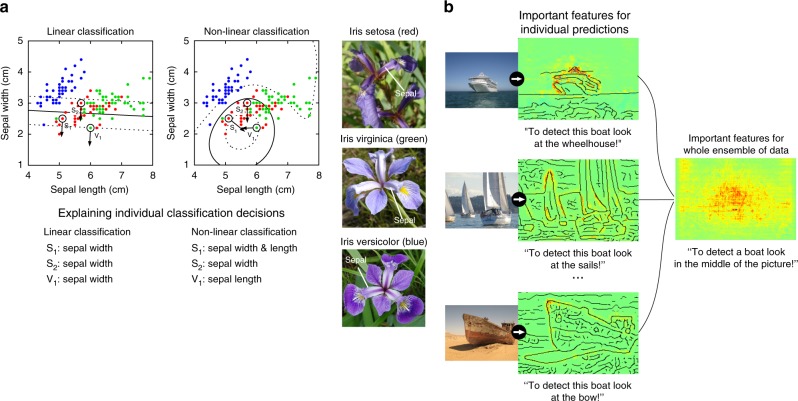
“…feature selection has traditionally explained the model by identifying features relevant for the whole ensemble of training data 12 or some class prototype 13 – 16 , it is often necessary, especially for nonlinear models, to focus the explanation on the predictions of individual examples (see Fig.”
BackgroundOn Pixel-Wise Explanations for Non-Linear Classifier Decisions by Layer-Wise Relevance Propagation
Bach, S., Binder, A., Montavon, G., Klauschen, F., Müller, K.-R., & Samek, W. (2015) · PLOS ONE · doi:10.1371/journal.pone.0130140 · Cited by 4,524 · cited 1×
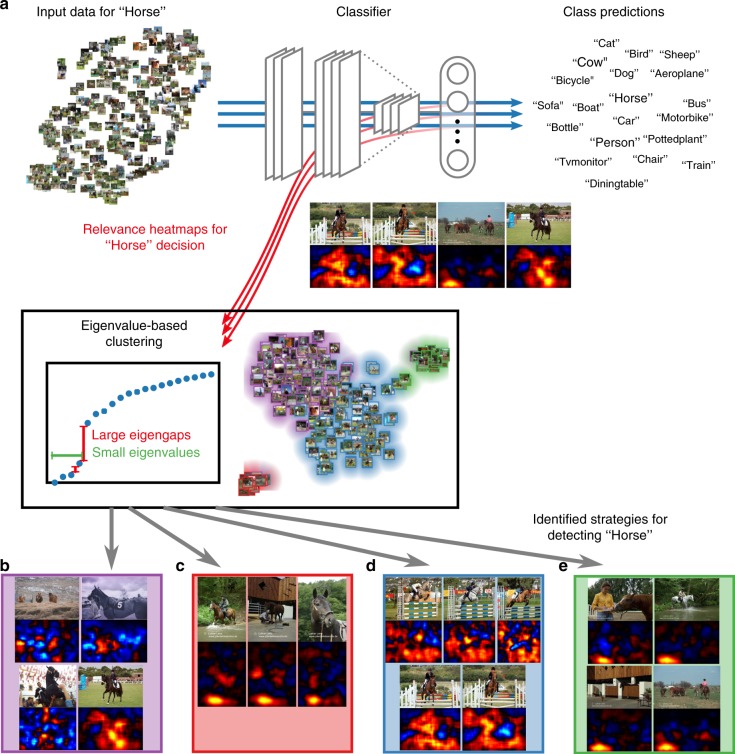
“This step fi nds structure in the distribution of relevance maps, more speci fi cally it groups classi fi er behaviors into fi nitely many clusters (see Supplementary Figure 18 for an example).”
BackgroundSelf-citationOn the approximate realization of continuous mappings by neural networks
Funahashi, K.-I. (1989) · Neural Networks · doi:10.1016/0893-6080(89)90003-8 · Cited by 4,206
A general reinforcement learning algorithm that masters chess, shogi, and Go through self-play
Silver, D., Hubert, T., Schrittwieser, J., Antonoglou, I., Lai, M., Guez, A., Lanctot, M., Sifre, L., Kumaran, D., Graepel, T., et al. (2018) · Science · doi:10.1126/science.aar6404 · Cited by 3,562
Striving for Simplicity: The All Convolutional Net
Springenberg, J. T., Dosovitskiy, A., Brox, T., & Riedmiller, M. (2014) · arXiv · doi:10.48550/arxiv.1412.6806 · Cited by 3,447
Human-level concept learning through probabilistic program induction
Lake, B. M., Salakhutdinov, R., & Tenenbaum, J. B. (2015) · Science · doi:10.1126/science.aab3050 · Cited by 2,817
Methods for interpreting and understanding deep neural networks
Montavon, G., Samek, W., & Müller, K.-R. (2018) · Digital Signal Processing · doi:10.1016/j.dsp.2017.10.011 · Cited by 2,665
Self-citationImproving the Fisher Kernel for Large-Scale Image Classification
Perronnin, F., Sánchez, J., & Mensink, T. (2010) · Lecture Notes in Computer Science · doi:10.1007/978-3-642-15561-1_11 · Cited by 2,588
Building machines that learn and think like people
Lake, B. M., Ullman, T. D., Tenenbaum, J. B., & Gershman, S. J. (2017) · Behavioral and Brain Sciences · doi:10.1017/s0140525x16001837 · Cited by 2,550
Building Machines That Learn and Think Like People
Lake, B. M., Ullman, T. D., Tenenbaum, J. B., & Gershman, S. J. (2016) · arXiv · doi:10.48550/arxiv.1604.00289 · Cited by 2,550
The Arcade Learning Environment: An Evaluation Platform for General Agents
Bellemare, M. G., Naddaf, Y., Veness, J., & Bowling, M. (2013) · Journal of Artificial Intelligence Research · doi:10.1613/jair.3912 · Cited by 2,161 · cited 1×
“the Arcade Learning Environment [114] that takes an action as input, advances the game and returns a visual representation of the game and a game score,”
BackgroundEuropean Union Regulations on Algorithmic Decision Making and a “Right to Explanation”
Goodman, B., & Flaxman, S. (2017) · AI Magazine · doi:10.1609/aimag.v38i3.2741 · Cited by 2,131
MXNet: A Flexible and Efficient Machine Learning Library for Heterogeneous Distributed Systems
Chen, T., Li, M., Li, Y., Lin, M., Wang, N., Wang, M., Xiao, T., Xu, B., Zhang, C., & Zhang, Z. (2015) · arXiv · doi:10.48550/arxiv.1512.01274 · Cited by 1,819
Robust Object Recognition with Cortex-Like Mechanisms
Serre, T., Wolf, L., Bileschi, S., Riesenhuber, M., & Poggio, T. (2007) · IEEE Transactions on Pattern Analysis and Machine Intelligence · doi:10.1109/tpami.2007.56 · Cited by 1,667
Image Classification with the Fisher Vector: Theory and Practice
Sánchez, J., Perronnin, F., Mensink, T., & Verbeek, J. (2013) · International Journal of Computer Vision · doi:10.1007/s11263-013-0636-x · Cited by 1,498
Quantum-chemical insights from deep tensor neural networks
Schütt, K. T., Arbabzadah, F., Chmiela, S., Müller, K. R., & Tkatchenko, A. (2017) · Nature Communications · doi:10.1038/ncomms13890 · Cited by 1,445
Self-citationHybrid computing using a neural network with dynamic external memory
Graves, A., Wayne, G., Reynolds, M., Harley, T., Danihelka, I., Grabska-Barwińska, A., Colmenarejo, S. G., Grefenstette, E., Ramalho, T., Agapiou, J., et al. (2016) · Nature · doi:10.1038/nature20101 · Cited by 1,412 · cited 3×
“Recently, researchers started to bring these aspects to deep learning by incorporating mechanism such as attention [70] or memory [56] into neural network models.”
BackgroundOn the interpretation of weight vectors of linear models in multivariate neuroimaging
Haufe, S., Meinecke, F., Görgen, K., Dähne, S., Haynes, J.-D., Blankertz, B., & Bießmann, F. (2014) · NeuroImage · doi:10.1016/j.neuroimage.2013.10.067 · Cited by 1,389
Computing Machinery and Intelligence
Turing, A. M. (2009) · Parsing the Turing Test · doi:10.1007/978-1-4020-6710-5_3 · Cited by 1,367
Understanding Neural Networks Through Deep Visualization
Yosinski, J., Clune, J., Nguyen, A. M., Fuchs, T. J., & Lipson, H. (2015) · arXiv (Cornell University) · doi:10.48550/arxiv.1506.06579 · Cited by 1,358
Explaining nonlinear classification decisions with deep taylor decomposition
Montavon, G., Lapuschkin, S., Binder, A., Samek, W., & Müller, K.-R. (2017) · Pattern Recognition · doi:10.1016/j.patcog.2016.11.008 · Cited by 1,357 · cited 3×
“A recent series of work 13,17 – 22 has now begun to explain the predictions of non-linear ML methods in a wide set of complex real-world problems (e.g. 26 ).”
BackgroundResultSelf-citationGevrey, M., Dimopoulos, I., & Lek, S. (2003) · Ecological Modelling · doi:10.1016/s0304-3800(02)00257-0 · Cited by 1,248
Machine learning of accurate energy-conserving molecular force fields
Chmiela, S., Tkatchenko, A., Sauceda, H. E., Poltavsky, I., Schütt, K. T., & Müller, K.-R. (2017) · Science Advances · doi:10.1126/sciadv.1603015 · Cited by 1,175
Self-citationSpelke, E. S., & Kinzler, K. D. (2007) · Developmental Science · doi:10.1111/j.1467-7687.2007.00569.x · Cited by 1,089
On the theory of dynamic programming
Bellman, R. (1952) · Proceedings of the National Academy of Sciences · doi:10.1073/pnas.38.8.716 · Cited by 998
The devil is in the details: an evaluation of recent feature encoding methods
Chatfield, K., Lempitsky, V., Vedaldi, A., & Zisserman, A. (2011) · Procedings of the British Machine Vision Conference 2011 · doi:10.5244/c.25.76 · Cited by 834 · cited 4×
“1 The Fisher Vector Classifier The FV model evaluated in this section follows the configuration and implementation from [31, 142] and can easily be replicated by using the Encoding Evaluation Toolkit [142].”
MethodInfluentialUniversal intelligence: a definition of machine intelligence
Legg, S., & Hutter, M. (2007) · Minds and Machines · doi:10.1007/s11023-007-9079-x · Cited by 803
DeepStack: Expert-level artificial intelligence in heads-up no-limit poker
Moravčík, M., Schmid, M., Burch, N., Lisý, V., Morrill, D., Bard, N., Davis, T., Waugh, K., Johanson, M., & Bowling, M. (2017) · Science · doi:10.1126/science.aam6960 · Cited by 786
Socially aware motion planning with deep reinforcement learning
Chen, Y. F., Everett, M., Liu, M., & How, J. P. (2017) · 2017 IEEE/RSJ International Conference on Intelligent Robots and Systems (IROS) · doi:10.1109/iros.2017.8202312 · Cited by 719
Towards exact molecular dynamics simulations with machine-learned force fields
Chmiela, S., Sauceda, H. E., Müller, K.-R., & Tkatchenko, A. (2018) · Nature Communications · doi:10.1038/s41467-018-06169-2 · Cited by 700
Self-citationObject name Learning Provides On-the-Job Training for Attention
Smith, L. B., Jones, S. S., Landau, B., Gershkoff-Stowe, L., & Samuelson, L. (2002) · Psychological Science · doi:10.1111/1467-9280.00403 · Cited by 632
Nonnegative Matrix Factorization: An Analytical and Interpretive Tool in Computational Biology
Devarajan, K. (2008) · PLoS Computational Biology · doi:10.1371/journal.pcbi.1000029 · Cited by 454
Interpretable deep neural networks for single-trial EEG classification
Sturm, I., Lapuschkin, S., Samek, W., & Müller, K.-R. (2016) · Journal of Neuroscience Methods · doi:10.1016/j.jneumeth.2016.10.008 · Cited by 374
Self-citationRajalingham, R., Issa, E. B., Bashivan, P., Kar, K., Schmidt, K., & DiCarlo, J. J. (2018) · The Journal of Neuroscience · doi:10.1523/jneurosci.0388-18.2018 · Cited by 358
"What is relevant in a text document?": An interpretable machine learning approach
Arras, L., Horn, F., Montavon, G., Müller, K.-R., & Samek, W. (2017) · PLOS ONE · doi:10.1371/journal.pone.0181142 · Cited by 257
Self-citationExplaining the unique nature of individual gait patterns with deep learning
Horst, F., Lapuschkin, S., Samek, W., Müller, K.-R., & Schöllhorn, W. I. (2019) · Scientific Reports · doi:10.1038/s41598-019-38748-8 · Cited by 256
Self-citationLeike, J., Martic, M., Krakovna, V., Ortega, P. A., Everitt, T., Lefrancq, A., Orseau, L., & Legg, S. (2017) · arXiv · doi:10.48550/arxiv.1711.09883 · Cited by 240
Supervised group Lasso with applications to microarray data analysis
Ma, S., Song, X., & Huang, J. (2007) · BMC Bioinformatics · doi:10.1186/1471-2105-8-60 · Cited by 238
Evaluation in artificial intelligence: from task-oriented to ability-oriented measurement
Hernández-Orallo, J. (2017) · Artificial Intelligence Review · doi:10.1007/s10462-016-9505-7 · Cited by 202
Analyzing Classifiers: Fisher Vectors and Deep Neural Networks
Lapuschkin, S., Binder, A., Montavon, G., Muller, K.-R., & Samek, W. (2016) · 2016 IEEE Conference on Computer Vision and Pattern Recognition (CVPR) · doi:10.1109/cvpr.2016.318 · Cited by 201
Self-citationComparing Statistical Methods for Constructing Large Scale Gene Networks
Allen, J. D., Xie, Y., Chen, M., Girard, L., & Xiao, G. (2012) · PLoS ONE · doi:10.1371/journal.pone.0029348 · Cited by 186
Nguyen, A. M., Yosinski, J., & Clune, J. (2016) · arXiv (Cornell University) · doi:10.48550/arxiv.1602.03616 · Cited by 152
Unsupervised learning of invariant representations
Anselmi, F., Leibo, J. Z., Rosasco, L., Mutch, J., Tacchetti, A., & Poggio, T. (2016) · Theoretical Computer Science · doi:10.1016/j.tcs.2015.06.048 · Cited by 88
Explaining Therapy Predictions with Layer-Wise Relevance Propagation in Neural Networks
Yang, Y., Tresp, V., Wunderle, M., & Fasching, P. A. (2018) · 2018 IEEE International Conference on Healthcare Informatics (ICHI) · doi:10.1109/ichi.2018.00025 · Cited by 82
How to Explain Individual Classification Decisions
(2010) · Journal of Machine Learning Research · doi:10.5555/1756006.1859912 · Cited by 54 · cited 2×
“The first approaches to extract interpretable visual patterns from a classifier’s decision were based on Sensitivity Analysis [13,19,51].”
Method
Research works printed but not linked: 9
- Pfungst O Clever Hans (the Horse of Mr. Von Osten): contribution to experimental animal and human psychology J. Philos. Psychol. Sci. Method 1911 8 663 666
- Guyon I Elisseeff A An introduction to variable and feature selection J. Mach. Learn. Res. 2003 3 1157 1182
- Nguyen, A., Dosovitskiy, A., Yosinski, J., Brox, T. & Clune, J. Synthesizing the preferred inputs for neurons in neural networks via deep generator networks. (D. D. Lee, M. Sugiyama, U. von Luxburg, I. Guyon, R. Garnett eds.) In Proc. Advances in Neural Information Processing Systems, 3387–3395 (Curran Associates, Inc., Red Hook, NY) (2016).
- Greydanus, S., Koul, A., Dodge, J. & Fern, A. Visualizing and understanding Atari agents. (J. Dy, A. Krause eds.) In Proc. International Conference on Machine Learning, 1787–1796 (JMLR.org, Brookline, MA) (2018).
- Zahavy, T., Ben-Zrihem, N. & Mannor, S. Graying the black box: Understanding DQNs. (M.-F. Balcan, K. Q. Weinberger eds.) In Proc. International Conference on Machine Learning, 1899–1908 (JMLR.org, Brookline, MA) (2016).
- Tsividis, P. A., Pouncy, T., Xu, J. L., Tenenbaum, J. B. & Gershman, S. J. Human learning in Atari. (G. Sukthankar, C. Geib eds.) In Proc. AAAI Spring Symposium Series, 643–646 (AAAI Press, Palo Alto, CA) (2017).
- Winston PH Horn B The Psychology of Computer Vision 1975 New York McGraw-Hill
- The European Parliament and the Council of the European Union.. Regulation (EU) 2016/679 of the European Parliament and of the Council of 27 April 2016 on the protection of natural persons with regard to the processing of personal data and on the free movement of such data, and repealing Directive 95/46/EC (General Data Protection Regulation) Off. J. Eur. Union 2016 L119 1 88
- Thomas, A. W., Heekeren, H. R., Müller, K.-R. & Samek, W. Interpretable LSTMs for whole-brain neuroimaging analyses. Preprint at https://arxiv.org/abs/1810.09945 (2018). · arXiv
Cited by
From local explanations to global understanding with explainable AI for trees
Lundberg, S. M., Erion, G., Chen, H., DeGrave, A., Prutkin, J. M., Nair, B., Katz, R., Himmelfarb, J., Bansal, N., & Lee, S.-I. (2020) · Nature Machine Intelligence · doi:10.1038/s42256-019-0138-9 · Cited by 10,551
On the Opportunities and Risks of Foundation Models
Bommasani, R., Hudson, D. A., Adeli, E., Altman, R., Arora, S., von Arx, S., Bernstein, M. S., Bohg, J., Bosselut, A., Brunskill, E., et al. (2021) · arXiv · doi:10.48550/arxiv.2108.07258 · Cited by 2,676
A Survey on Explainable Artificial Intelligence (XAI): Toward Medical XAI
Tjoa, E., & Guan, C. (2021) · IEEE Transactions on Neural Networks and Learning Systems · doi:10.1109/tnnls.2020.3027314 · Cited by 2,524
Interpreting Black-Box Models: A Review on Explainable Artificial Intelligence
Hassija, V., Chamola, V., Mahapatra, A., Singal, A., Goel, D., Huang, K., Scardapane, S., Spinelli, I., Mahmud, M., & Hussain, A. (2024) · Cognitive Computation · doi:10.1007/s12559-023-10179-8 · Cited by 2,495
“To date, numerous frameworks have been proposed for achieving interpretability which justifies their work through one criterion or another [36–38].”
BackgroundShortcut learning in deep neural networks
Geirhos, R., Jacobsen, J.-H., Michaelis, C., Zemel, R., Brendel, W., Bethge, M., & Wichmann, F. A. (2020) · Nature Machine Intelligence · doi:10.1038/s42256-020-00257-z · Cited by 2,224
Metadata
- Authors
- Lapuschkin, S., Wäldchen, S., Binder, A., Montavon, G., Samek, W., & Müller, K.-R.
- Affiliations
- Fraunhofer Institute for Telecommunications, Heinrich Hertz Institute (DE)
- Technische Universität Berlin (DE)
- Singapore University of Technology and Design (SG)
- Korea University (KR)
- Corresponding author
- Samek, Wojciech
- Müller, Klaus-Robert
- Venue
- Nature Communications
- Published
- 2019-03-11
- Volume
- 10
- Issue
- 1
- Pages
- 1096-1096
- ISSN
- 2041-1723 (ISSN-L)
- PMC
- PMC6411769
- OpenAlex
- W2921802966
- Cited by
- 1,047
- References
- 41
- Citations by year
- 2026: 129 · 2025: 178 · 2024: 142 · 2023: 178 · 2022: 159 · 2021: 140 · 2020: 86 · 2019: 34
- FWCI
- 47.80
- Type
- journal article
- Language
- en
- Open access
- gold
- doi.org
- Licence
- cc-by
- creativecommons.org/licenses/by/4.0 (tdm)
- creativecommons.org/licenses/by/4.0 (vor)
- Locations
- Nature Communications (publishedVersion, cc-by)
- Europe PMC (PubMed Central) (publishedVersion, cc-by)
- PubMed Central (publishedVersion, cc-by)
- PubMed (publishedVersion)
- arXiv (Cornell University) (submittedVersion)
- DOAJ (DOAJ: Directory of Open Access Journals) (submittedVersion)
- DOAJ (DOAJ: Directory of Open Access Journals) (submittedVersion, cc-by-sa)
- Publikationsdatenbank der Fraunhofer-Gesellschaft (Fraunhofer-Gesellschaft) (submittedVersion, other-oa)
- Fraunhofer-Publica (Fraunhofer-Gesellschaft) (submittedVersion)
- arXiv (Cornell University)
- Funders
- Deutsche Forschungsgemeinschaft (EXC-2046, EXC‐2046/1, 01IS18037I, 390685689)
- Institute for Information and Communications Technology Promotion (2017-0-00451)
- Topics
- Physical Sciences › Computer Science › Artificial Intelligence › Explainable Artificial Intelligence (XAI)
- Physical Sciences › Computer Science › Software › Software Testing and Debugging Techniques
- Physical Sciences › Computer Science › Artificial Intelligence › Adversarial Robustness in Machine Learning
- Keywords
- Clever Hans effect, explainable AI, decision explanation, problem-solving behavior, model evaluation metrics, computer vision, arcade games, model validation, machine intelligence
About these checks
Registry, retraction, Cites and statistics results are computed, not judged, with one exception: a printed reference that no index lists is read once by a model before it counts as a citation error. Claims are extracted by a model and kept only when their quote appears verbatim in the text; each cited source is then checked, with a model’s help, for whether it says what the claim relies on. Those verdicts can be wrong — read the claim’s quote and the cited source before relying on one.
Statistics and arithmetic are recomputed, not judged.
Confidence bands are shown only for fields calibrated on our annotated test set. None is calibrated yet, so no band is shown.
What counts as a claim ›How we measure confidence ›How we check this ›
Are you an author, or do you see a problem with this page? Request a review
Data sources
Bibliographic data: Semantic Scholar, OpenAlex, Crossref.
Contains information from the Semantic Scholar Academic Graph Datasets, made available under the ODC Attribution License (ODC-BY 1.0).
Semantic Scholar’s data is described in: Kinney, R., et al. (2023). The Semantic Scholar Open Data Platform. arXiv:2301.10140.
