

Unmasking Clever Hans predictors and assessing what machines really learn
Open accessThe DOI matches its Crossref record; 65 of the 65 references it cites were found in a registry or an index.
Abstract
Current learning machines have successfully solved hard application problems, reaching high accuracy and displaying seemingly intelligent behavior. Here we apply recent techniques for explaining decisions of state-of-the-art learning machines and analyze various tasks from computer vision and arcade games. This showcases a spectrum of problem-solving behaviors ranging from naive and short-sighted, to well-informed and strategic. We observe that standard performance evaluation metrics can be oblivious to distinguishing these diverse problem solving behaviors. Furthermore, we propose our semi-automated Spectral Relevance Analysis that provides a practically effective way of characterizing and validating the behavior of nonlinear learning machines. This helps to assess whether a learned model indeed delivers reliably for the problem that it was conceived for. Furthermore, our work intends to add a voice of caution to the ongoing excitement about machine intelligence and pledges to evaluate and judge some of these recent successes in a more nuanced manner.
Overview
The claims and statistics of this paper haven’t been checked yet.
Free: it reads the open-access text and checks the first 5 claims that cite a source we can check. Create a free account to check every claim.
Integrity signals
Registry
Cites
Statistics
Figures
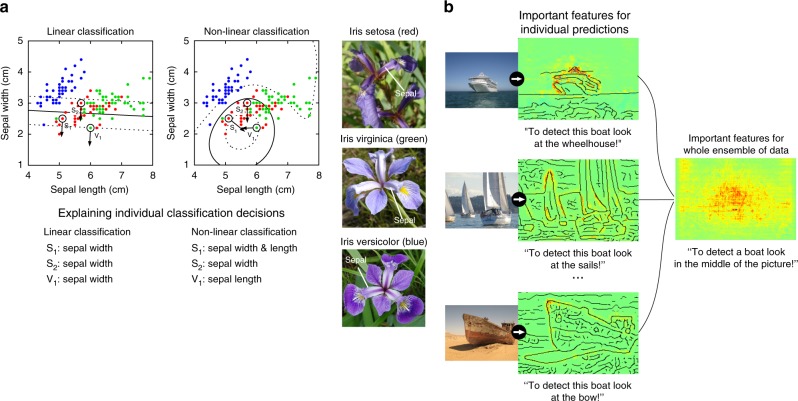
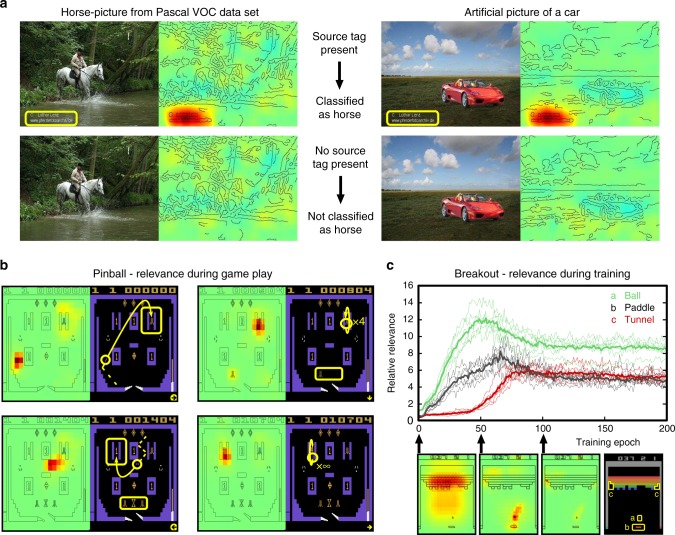
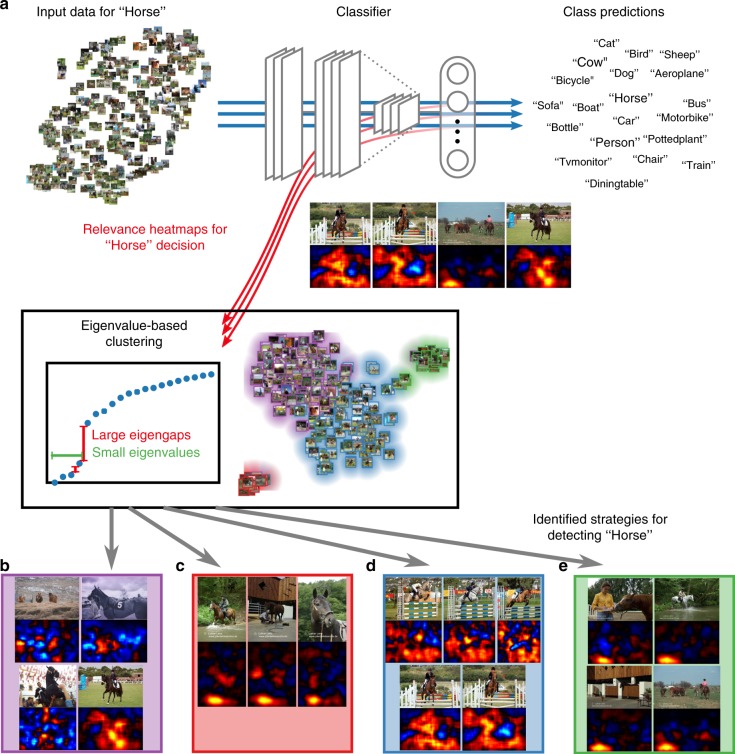
Verification
Claims the paper makes
The claims and statistics of this paper haven’t been checked yet.
Free: it reads the open-access text and checks the first 5 claims that cite a source we can check. Create a free account to check every claim.
Claims other papers make about this one
Each is checked against this paper’s own text: does it say what the citing paper says it does?
The cited source says what the claim attributes to it.
In the citing paper
“Thus, interpretability becomes fundamental to test against ' clever Hans ' models and to ensure that the model has learned relevant processes rather than spurious associations.”
From Artificial intelligence for climate prediction of extremes: State of the art, challenges, and future perspectives (2024) · cites this paper as Lapuschkin et al., 2019
The cited source says what the claim attributes to it.
In the citing paper
“There are examples of AI models predicting correctly for the wrong reasons (known as”
From Artificial intelligence for climate prediction of extremes: State of the art, challenges, and future perspectives (2024) · cites this paper as Lapuschkin et al., 2019
Self-check
Percentages, sums and reported differences re-computed from the paper’s own numbers.
The self-check needs the paper’s full text.
Citations
Cites
Deep Residual Learning for Image Recognition
He, K., Zhang, X., Ren, S., & Sun, J. (2016) · 2016 IEEE Conference on Computer Vision and Pattern Recognition (CVPR) · doi:10.1109/cvpr.2016.90 · Cited by 235,474
Hochreiter, S., & Schmidhuber, J. (1997) · Neural Computation · doi:10.1162/neco.1997.9.8.1735 · Cited by 102,318
LeCun, Y., Bengio, Y., & Hinton, G. (2015) · Nature · doi:10.1038/nature14539 · Cited by 84,126
Cortes, C., & Vapnik, V. (1995) · Machine Learning · doi:10.1007/bf00994018 · Cited by 59,421
Gradient-based learning applied to document recognition
Lecun, Y., Bottou, L., Bengio, Y., & Haffner, P. (1998) · Proceedings of the IEEE · doi:10.1109/5.726791 · Cited by 58,805
Going deeper with convolutions
Szegedy, C., Liu, W., Jia, Y., Sermanet, P., Reed, S., Anguelov, D., Erhan, D., Vanhoucke, V., & Rabinovich, A. (2015) · 2015 IEEE Conference on Computer Vision and Pattern Recognition (CVPR) · doi:10.1109/cvpr.2015.7298594 · Cited by 48,562
Human-level control through deep reinforcement learning
Mnih, V., Kavukcuoglu, K., Silver, D., Rusu, A. A., Veness, J., Bellemare, M. G., Graves, A., Riedmiller, M., Fidjeland, A. K., Ostrovski, G., et al. (2015) · Nature · doi:10.1038/nature14236 · Cited by 30,357
Multilayer feedforward networks are universal approximators
Hornik, K., Stinchcombe, M., & White, H. (1989) · Neural Networks · doi:10.1016/0893-6080(89)90020-8 · Cited by 21,728
The pascal visual object classes (VOC) challenge
Everingham, M., Van Gool, L., Williams, C. K. I., Winn, J., & Zisserman, A. (2010) · International Journal of Computer Vision · doi:10.1007/s11263-009-0275-4 · Cited by 19,599
"Why Should I Trust You?": Explaining the Predictions of Any Classifier
Ribeiro, M. T., Singh, S., & Guestrin, C. (2016) · Proceedings of the 22nd ACM SIGKDD International Conference on Knowledge Discovery and Data Mining · doi:10.1145/2939672.2939778 · Cited by 17,555
Research works printed but not linked: 9
- Pfungst O Clever Hans (the Horse of Mr. Von Osten): contribution to experimental animal and human psychology J. Philos. Psychol. Sci. Method 1911 8 663 666
- Guyon I Elisseeff A An introduction to variable and feature selection J. Mach. Learn. Res. 2003 3 1157 1182
- Nguyen, A., Dosovitskiy, A., Yosinski, J., Brox, T. & Clune, J. Synthesizing the preferred inputs for neurons in neural networks via deep generator networks. (D. D. Lee, M. Sugiyama, U. von Luxburg, I. Guyon, R. Garnett eds.) In Proc. Advances in Neural Information Processing Systems, 3387–3395 (Curran Associates, Inc., Red Hook, NY) (2016).
- Greydanus, S., Koul, A., Dodge, J. & Fern, A. Visualizing and understanding Atari agents. (J. Dy, A. Krause eds.) In Proc. International Conference on Machine Learning, 1787–1796 (JMLR.org, Brookline, MA) (2018).
- Zahavy, T., Ben-Zrihem, N. & Mannor, S. Graying the black box: Understanding DQNs. (M.-F. Balcan, K. Q. Weinberger eds.) In Proc. International Conference on Machine Learning, 1899–1908 (JMLR.org, Brookline, MA) (2016).
- Tsividis, P. A., Pouncy, T., Xu, J. L., Tenenbaum, J. B. & Gershman, S. J. Human learning in Atari. (G. Sukthankar, C. Geib eds.) In Proc. AAAI Spring Symposium Series, 643–646 (AAAI Press, Palo Alto, CA) (2017).
- Winston PH Horn B The Psychology of Computer Vision 1975 New York McGraw-Hill
- The European Parliament and the Council of the European Union.. Regulation (EU) 2016/679 of the European Parliament and of the Council of 27 April 2016 on the protection of natural persons with regard to the processing of personal data and on the free movement of such data, and repealing Directive 95/46/EC (General Data Protection Regulation) Off. J. Eur. Union 2016 L119 1 88
- Thomas, A. W., Heekeren, H. R., Müller, K.-R. & Samek, W. Interpretable LSTMs for whole-brain neuroimaging analyses. Preprint at https://arxiv.org/abs/1810.09945 (2018). · arXiv
Cited by
From local explanations to global understanding with explainable AI for trees
Lundberg, S. M., Erion, G., Chen, H., DeGrave, A., Prutkin, J. M., Nair, B., Katz, R., Himmelfarb, J., Bansal, N., & Lee, S.-I. (2020) · Nature Machine Intelligence · doi:10.1038/s42256-019-0138-9 · Cited by 10,551
On the Opportunities and Risks of Foundation Models
Bommasani, R., Hudson, D. A., Adeli, E., Altman, R., Arora, S., von Arx, S., Bernstein, M. S., Bohg, J., Bosselut, A., Brunskill, E., et al. (2021) · arXiv · doi:10.48550/arxiv.2108.07258 · Cited by 2,676
A Survey on Explainable Artificial Intelligence (XAI): Toward Medical XAI
Tjoa, E., & Guan, C. (2021) · IEEE Transactions on Neural Networks and Learning Systems · doi:10.1109/tnnls.2020.3027314 · Cited by 2,524
Interpreting Black-Box Models: A Review on Explainable Artificial Intelligence
Hassija, V., Chamola, V., Mahapatra, A., Singal, A., Goel, D., Huang, K., Scardapane, S., Spinelli, I., Mahmud, M., & Hussain, A. (2024) · Cognitive Computation · doi:10.1007/s12559-023-10179-8 · Cited by 2,495
“To date, numerous frameworks have been proposed for achieving interpretability which justifies their work through one criterion or another [36–38].”
BackgroundShortcut learning in deep neural networks
Geirhos, R., Jacobsen, J.-H., Michaelis, C., Zemel, R., Brendel, W., Bethge, M., & Wichmann, F. A. (2020) · Nature Machine Intelligence · doi:10.1038/s42256-020-00257-z · Cited by 2,224
Explainability for artificial intelligence in healthcare: a multidisciplinary perspective
the Precise4Q consortium, Amann, J., Blasimme, A., Vayena, E., Frey, D., & Madai, V. I. (2020) · BMC Medical Informatics and Decision Making · doi:10.1186/s12911-020-01332-6 · Cited by 2,203
Ali, S., Abuhmed, T., El-Sappagh, S., Muhammad, K., Alonso-Moral, J. M., Confalonieri, R., Guidotti, R., Del Ser, J., Díaz-Rodríguez, N., & Herrera, F. (2023) · Information Fusion · doi:10.1016/j.inffus.2023.101805 · Cited by 1,762
Unke, O. T., Chmiela, S., Sauceda, H. E., Gastegger, M., Poltavsky, I., Schütt, K. T., Tkatchenko, A., & Müller, K.-R. (2021) · Chemical Reviews · doi:10.1021/acs.chemrev.0c01111 · Cited by 1,647
Self-citationExplaining Deep Neural Networks and Beyond: A Review of Methods and Applications
Samek, W., Montavon, G., Lapuschkin, S., Anders, C. J., & Muller, K.-R. (2021) · Proceedings of the IEEE · doi:10.1109/jproc.2021.3060483 · Cited by 1,477
“In ML, the term “Clever Hans” can be used to designate strategies that mimic the expected behavior but are based on unexpected correlations or artifacts in the data [104].”
BackgroundMethodInfluentialSelf-citationArtificial Intelligence in Dentistry: Chances and Challenges
Schwendicke, F., Samek, W., & Krois, J. (2020) · Journal of Dental Research · doi:10.1177/0022034520915714 · Cited by 1,446
Self-citationExplainable AI: Interpreting, Explaining and Visualizing Deep Learning
(2019) · Lecture Notes in Computer Science · doi:10.1007/978-3-030-28954-6 · Cited by 1,377
“Under restrictive assumptions, [5] famously proved the existence of a general equilibrium for a competitive economy.”
BackgroundMethodInfluentialSattler, F., Muller, K.-R., & Samek, W. (2021) · IEEE Transactions on Neural Networks and Learning Systems · doi:10.1109/tnnls.2020.3015958 · Cited by 1,355
Self-citationHendrycks, D., Zhao, K., Basart, S., Steinhardt, J., & Song, D. (2021) · 2021 IEEE/CVF Conference on Computer Vision and Pattern Recognition (CVPR) · doi:10.1109/cvpr46437.2021.01501 · Cited by 1,090
“Models may learn spurious cues and obtain high accuracy, but for the wrong reasons [38, 16].”
BackgroundDrug discovery with explainable artificial intelligence
Jiménez-Luna, J., Grisoni, F., & Schneider, G. (2020) · Nature Machine Intelligence · doi:10.1038/s42256-020-00236-4 · Cited by 1,063
Hendrycks, D., Zhao, K., Basart, S., Steinhardt, J., & Song, D. (2019) · arXiv · doi:10.48550/arxiv.1907.07174 · Cited by 1,058
Explainable machine learning for scientific insights and discoveries
Roscher, R., Bohn, B., Duarte, M. F., & Garcke, J. (2020) · IEEE Access · doi:10.1109/access.2020.2976199 · Cited by 1,040
“While the methods for interpretation allow the inspection of a single datum, [27] observes that it quickly becomes very time consuming to investigate large numbers of individual interpretations.”
MethodHuman-computer collaboration for skin cancer recognition
Tschandl, P., Rinner, C., Apalla, Z., Argenziano, G., Codella, N., Halpern, A., Janda, M., Lallas, A., Longo, C., Malvehy, J., et al. (2020) · Nature Medicine · doi:10.1038/s41591-020-0942-0 · Cited by 1,024
Interpretable machine learning: Fundamental principles and 10 grand challenges
Rudin, C., Chen, C., Chen, Z., Huang, H., Semenova, L., & Zhong, C. (2022) · Statistics Surveys · doi:10.1214/21-ss133 · Cited by 958
Machine Learning for Molecular Simulation
Noé, F., Tkatchenko, A., Müller, K.-R., & Clementi, C. (2020) · Annual Review of Physical Chemistry · doi:10.1146/annurev-physchem-042018-052331 · Cited by 956
“This allows for example to detect so-called ‘clever Hans’ solutions [143], i.”
BackgroundMethodSelf-citationA Survey on Neural Network Interpretability
Zhang, Y., Tino, P., Leonardis, A., & Tang, K. (2021) · IEEE Transactions on Emerging Topics in Computational Intelligence · doi:10.1109/tetci.2021.3100641 · Cited by 923
A Unifying Review of Deep and Shallow Anomaly Detection
Ruff, L., Kauffmann, J. R., Vandermeulen, R. A., Montavon, G., Samek, W., Kloft, M., Dietterich, T. G., & Muller, K.-R. (2021) · Proceedings of the IEEE · doi:10.1109/jproc.2021.3052449 · Cited by 914
Self-citationCombining Machine Learning and Computational Chemistry for Predictive Insights Into Chemical Systems
Keith, J. A., Vassilev-Galindo, V., Cheng, B., Chmiela, S., Gastegger, M., Müller, K.-R., & Tkatchenko, A. (2021) · Chemical Reviews · doi:10.1021/acs.chemrev.1c00107 · Cited by 849
Self-citationLayer-Wise Relevance Propagation: An Overview
Montavon, G., Binder, A., Lapuschkin, S., Samek, W., & Müller, K.-R. (2019) · Lecture Notes in Computer Science · doi:10.1007/978-3-030-28954-6_10 · Cited by 750
Self-citationMachine learning for digital soil mapping: Applications, challenges and suggested solutions
Wadoux, A. M. J.-C., Minasny, B., & McBratney, A. B. (2020) · Earth-Science Reviews · doi:10.1016/j.earscirev.2020.103359 · Cited by 731
Hart, G. L. W., Mueller, T., Toher, C., & Curtarolo, S. (2021) · Nature Reviews Materials · doi:10.1038/s41578-021-00340-w · Cited by 703
“An interpretable representation informs the user of the reasons behind the algorithm’s predictions 2,16–18 .”
BackgroundPhysics-informed machine learning: case studies for weather and climate modelling
Kashinath, K., Mustafa, M., Albert, A., Wu, J.-L., Jiang, C., Esmaeilzadeh, S., Azizzadenesheli, K., Wang, R., Chattopadhyay, A., Singh, A., et al. (2021) · Philosophical Transactions of the Royal Society A: Mathematical, Physical and Engineering Sciences · doi:10.1098/rsta.2020.0093 · Cited by 662
Insights into geospatial heterogeneity of landslide susceptibility based on the SHAP-XGBoost model
Zhang, J., Ma, X., Zhang, J., Sun, D., Zhou, X., Mi, C., & Wen, H. (2023) · Journal of Environmental Management · doi:10.1016/j.jenvman.2023.117357 · Cited by 661
Longo, L., Brcic, M., Cabitza, F., Choi, J., Confalonieri, R., Ser, J. D., Guidotti, R., Hayashi, Y., Herrera, F., Holzinger, A., et al. (2024) · Information Fusion · doi:10.1016/j.inffus.2024.102301 · Cited by 626
Self-citationBig-Data Science in Porous Materials: Materials Genomics and Machine Learning
Jablonka, K. M., Ongari, D., Moosavi, S. M., & Smit, B. (2020) · Chemical Reviews · doi:10.1021/acs.chemrev.0c00004 · Cited by 599
Notions of explainability and evaluation approaches for explainable artificial intelligence
Vilone, G., & Longo, L. (2021) · Information Fusion · doi:10.1016/j.inffus.2021.05.009 · Cited by 598
Towards Explainable Artificial Intelligence
Samek, W., & Müller, K.-R. (2019) · Lecture Notes in Computer Science · doi:10.1007/978-3-030-28954-6_1 · Cited by 580
Self-citationCan deep learning beat numerical weather prediction?
Schultz, M. G., Betancourt, C., Gong, B., Kleinert, F., Langguth, M., Leufen, L. H., Mozaffari, A., & Stadtler, S. (2021) · Philosophical Transactions of the Royal Society A: Mathematical, Physical and Engineering Sciences · doi:10.1098/rsta.2020.0097 · Cited by 562
Artificial intelligence and big data in entrepreneurship: a new era has begun
Obschonka, M., & Audretsch, D. B. (2020) · Small Business Economics · doi:10.1007/s11187-019-00202-4 · Cited by 527
Opportunities and Challenges in Explainable Artificial Intelligence (XAI): A Survey
Das, A., & Rad, P. (2020) · arXiv · doi:10.48550/arxiv.2006.11371 · Cited by 504
Towards CRISP-ML(Q): A Machine Learning Process Model with Quality Assurance Methodology
Studer, S., Bui, T. B., Drescher, C., Hanuschkin, A., Winkler, L., Peters, S., & Müller, K. (2021) · Machine Learning and Knowledge Extraction · doi:10.3390/make3020020 · Cited by 491
Self-citationSchütt, K. T., Gastegger, M., Tkatchenko, A., Müller, K.-R., & Maurer, R. J. (2019) · Nature Communications · doi:10.1038/s41467-019-12875-2 · Cited by 476
Self-citationArtificial intelligence in drug discovery: recent advances and future perspectives
Jiménez-Luna, J., Grisoni, F., Weskamp, N., & Schneider, G. (2021) · Expert Opinion on Drug Discovery · doi:10.1080/17460441.2021.1909567 · Cited by 464
Comparison of feature importance measures as explanations for classification models
Saarela, M., & Jauhiainen, S. (2021) · SN Applied Sciences · doi:10.1007/s42452-021-04148-9 · Cited by 456
Transparency and trust in artificial intelligence systems
Schmidt, P., Biessmann, F., & Teubner, T. (2020) · Journal of Decision Systems · doi:10.1080/12460125.2020.1819094 · Cited by 440
“An algorithm may in fact learn some flawed sample-specific feature such as a horse website imprint or recognise boats based on the presence of water (Lapuschkin et al., 2019).”
BackgroundDeep learning in drug discovery: an integrative review and future challenges
Askr, H., Elgeldawi, E., Aboul Ella, H., Elshaier, Y. A. M. M., Gomaa, M. M., & Hassanien, A. E. (2023) · Artificial Intelligence Review · doi:10.1007/s10462-022-10306-1 · Cited by 390
Deep Semi-Supervised Anomaly Detection
Ruff, L., Vandermeulen, R. A., Görnitz, N., Binder, A., Müller, E., Müller, K.-R., & Kloft, M. (2019) · arXiv · doi:10.48550/arxiv.1906.02694 · Cited by 388
“The study of the theoretical foundations of deep learning is an active and ongoing research effort (Montavon et al., 2011; Tishby & Zaslavsky, 2015; Cohen et al., 2016; Eldan & Shamir, 2016; Neyshabur et al., 2017; Raghu et al., 2017; Zhang et al., 2017; Achille & Soatto, 2018; Arora et al., 2018; Belkin et al., 2018;…”
BackgroundSelf-citationDeep learning methods in network intrusion detection: A survey and an objective comparison
Gamage, S., & Samarabandu, J. (2020) · Journal of Network and Computer Applications · doi:10.1016/j.jnca.2020.102767 · Cited by 382
Explainable AI Methods - A Brief Overview
Holzinger, A., Saranti, A., Molnar, C., Biecek, P., & Samek, W. (2022) · Lecture Notes in Computer Science · doi:10.1007/978-3-031-04083-2_2 · Cited by 379
Self-citationExploring chemical compound space with quantum-based machine learning
von Lilienfeld, O. A., Müller, K.-R., & Tkatchenko, A. (2020) · Nature Reviews Chemistry · doi:10.1038/s41570-020-0189-9 · Cited by 369
Self-citationExplainable artificial intelligence: Objectives, stakeholders, and future research opportunities
Meske, C., Bunde, E., Schneider, J., & Gersch, M. (2022) · Information Systems Management · doi:10.1080/10580530.2020.1849465 · Cited by 365
Explanations in Autonomous Driving: A Survey
Omeiza, D., Webb, H., Jirotka, M., & Kunze, L. (2022) · IEEE Transactions on Intelligent Transportation Systems · doi:10.1109/tits.2021.3122865 · Cited by 355
Survey of Low-Resource Machine Translation
Haddow, B., Bawden, R., Barone, A. V. M., Helcl, J., & Birch, A. (2022) · Computational Linguistics · doi:10.1162/coli_a_00446 · Cited by 360
Use HiResCAM instead of Grad-CAM for faithful explanations of convolutional neural networksPreprint
Draelos, R. L., & Carin, L. (2020) · arXiv (Cornell University) · doi:10.48550/arxiv.2011.08891 · Cited by 385
SpookyNet: Learning force fields with electronic degrees of freedom and nonlocal effects
Unke, O. T., Chmiela, S., Gastegger, M., Schütt, K. T., Sauceda, H. E., & Müller, K.-R. (2021) · Nature Communications · doi:10.1038/s41467-021-27504-0 · Cited by 344
Self-citationThe debate over understanding in AI’s large language models
Mitchell, M., & Krakauer, D. C. (2023) · Proceedings of the National Academy of Sciences · doi:10.1073/pnas.2215907120 · Cited by 340
“This is a straightforward example of “shortcut learning”—a commonly cited phenomenon in machine learning in which a learning system relies on spurious correlations in the data, rather than humanlike understanding, in order to perform well on a particular benchmark [25, 35, 47, 56].”
BackgroundAtakishiyev, S., Salameh, M., Yao, H., & Goebel, R. (2021) · arXiv · doi:10.48550/arxiv.2112.11561 · Cited by 336
Schwalbe, G., & Finzel, B. (2024) · Data Mining and Knowledge Discovery · doi:10.1007/s10618-022-00867-8 · Cited by 328
Atakishiyev, S., Salameh, M., Yao, H., & Goebel, R. (2024) · IEEE Access · doi:10.1109/access.2024.3431437 · Cited by 323
Toms, B. A., Barnes, E. A., & Ebert‐Uphoff, I. (2020) · Journal of Advances in Modeling Earth Systems · doi:10.1029/2019ms002002 · Cited by 311
AI and the Future of Skills, Volume 1: Capabilities and Assessments
OECD (2021) · Educational research and innovation · doi:10.1787/5ee71f34-en · Cited by 316
Chou, Y.-L., Moreira, C., Bruza, P., Ouyang, C., & Jorge, J. (2022) · Information Fusion · doi:10.1016/j.inffus.2021.11.003 · Cited by 302
Pitfalls in Machine Learning for Computer Security
Arp, D., Quiring, E., Pendlebury, F., Warnecke, A., Pierazzi, F., Wressnegger, C., Cavallaro, L., & Rieck, K. (2024) · Communications of the ACM · doi:10.1145/3643456 · Cited by 300
A closer look at the explainability of Contrastive language-image pre-training
Li, Y., Wang, H., Duan, Y., Zhang, J., & Li, X. (2025) · Pattern Recognition · doi:10.1016/j.patcog.2025.111409 · Cited by 290
Explainable Artificial Intelligence: a Systematic Review
Vilone, G., & Longo, L. (2020) · arXiv · doi:10.48550/arxiv.2006.00093 · Cited by 269
Benchmarking and survey of explanation methods for black box models
Bodria, F., Giannotti, F., Guidotti, R., Naretto, F., Pedreschi, D., & Rinzivillo, S. (2023) · Data Mining and Knowledge Discovery · doi:10.1007/s10618-023-00933-9 · Cited by 264
Pruning by explaining: A novel criterion for deep neural network pruning
Yeom, S.-K., Seegerer, P., Lapuschkin, S., Binder, A., Wiedemann, S., Müller, K.-R., & Samek, W. (2021) · Pattern Recognition · doi:10.1016/j.patcog.2021.107899 · Cited by 263
Self-citationWhy AI is harder than we think
Mitchell, M. (2021) · Proceedings of the Genetic and Evolutionary Computation Conference · doi:10.1145/3449639.3465421 · Cited by 129
Higher-Order Explanations of Graph Neural Networks via Relevant Walks
Schnake, T., Eberle, O., Lederer, J., Nakajima, S., Schutt, K. T., Muller, K.-R., & Montavon, G. (2022) · IEEE Transactions on Pattern Analysis and Machine Intelligence · doi:10.1109/tpami.2021.3115452 · Cited by 259
Self-citationSchulte-Sasse, R., Budach, S., Hnisz, D., & Marsico, A. (2021) · Nature Machine Intelligence · doi:10.1038/s42256-021-00325-y · Cited by 256
Explainable AI: current status and future directionsPreprint
Gohel, P., Singh, P., & Mohanty, M. (2021) · arXiv (Cornell University) · doi:10.48550/arxiv.2107.07045 · Cited by 249
Black-box Explanation of Object Detectors via Saliency Maps
Petsiuk, V., Jain, R., Manjunatha, V., Morariu, V. I., Mehra, A., Ordóñez, V., & Saenko, K. (2021) · IEEE Computer Society Conference on Computer Vision and Pattern Recognition/Proceedings - IEEE Computer Society Conference on Computer Vision and Pattern Recognition/Proceedings · doi:10.1109/cvpr46437.2021.01128 · Cited by 247
Sparse Binary Compression: Towards Distributed Deep Learning with minimal Communication
Sattler, F., Wiedemann, S., Muller, K.-R., & Samek, W. (2019) · 2019 International Joint Conference on Neural Networks (IJCNN) · doi:10.1109/ijcnn.2019.8852172 · Cited by 240
“[39]) and to investigate the learning process and the changes in representation with explanation methods [40], [41].”
BackgroundSelf-citationThe Pragmatic Turn in Explainable Artificial Intelligence (XAI)
Páez, A. (2019) · Minds and Machines · doi:10.1007/s11023-019-09502-w · Cited by 230
“A network is repeatedly tested with portions of the input occluded to create a map showing which parts of the data actually have influence on the network output (Zeiler and Fergus 2014; Lapuschkin et al. 2019).”
BackgroundMethodTowards Best Practice in Explaining Neural Network Decisions with LRP
Kohlbrenner, M., Bauer, A., Nakajima, S., Binder, A., Samek, W., & Lapuschkin, S. (2020) · 2020 International Joint Conference on Neural Networks (IJCNN) · doi:10.1109/ijcnn48605.2020.9206975 · Cited by 145
Self-citationExplaining deep neural networks: A survey on the global interpretation methods
Saleem, R., Yuan, B., Kurugöllü, F., Anjum, A., & Liu, L. (2022) · Neurocomputing · doi:10.1016/j.neucom.2022.09.129 · Cited by 222
Machine Learning Meets Quantum Physics
Schütt, K. T., Chmiela, S., von Lilienfeld, O. A., Tkatchenko, A., Tsuda, K., & Müller, K. (2020) · Lecture notes in physics · doi:10.1007/978-3-030-40245-7 · Cited by 221
Self-citationDon’t push the button! Exploring data leakage risks in machine learning and transfer learning
Apicella, A., Isgrò, F., & Prevete, R. (2025) · Artificial Intelligence Review · doi:10.1007/s10462-025-11326-3 · Cited by 223
MC-LSTM: Mass-Conserving LSTMPreprint
Hoedt, P.-J., Kratzert, F., Klotz, D., Halmich, C., Holzleitner, M., Nearing, G., Hochreiter, S., & Klambauer, G. (2021) · arXiv · doi:10.48550/arxiv.2101.05186 · Cited by 226
Classification of Explainable Artificial Intelligence Methods through Their Output Formats
Vilone, G., & Longo, L. (2021) · Machine Learning and Knowledge Extraction · doi:10.3390/make3030032 · Cited by 152
Holzinger, A., Dehmer, M., Emmert-Streib, F., Cucchiara, R., Augenstein, I., Ser, J. D., Samek, W., Jurisica, I., & Díaz-Rodríguez, N. (2022) · Information Fusion · doi:10.1016/j.inffus.2021.10.007 · Cited by 213
“In this context, in addition to local explainable models of a single sample, approaches to test global explanations such as TCAV (Testing with Concept Activation Vector) [202] or SpRAy (Spectral Relevance Analysis) [187] are desired in order to explain beyond a single data point example.”
BackgroundSelf-citationToMBench: Benchmarking Theory of Mind in Large Language Models
Chen, Z., Wu, J., Zhou, J., Wen, B., Bi, G., Jiang, G., Cao, Y., Hu, M., Lai, Y., Xiong, Z., et al. (2024) · Proceedings of the conference - Association for Computational Linguistics. Meeting · doi:10.18653/v1/2024.acl-long.847 · Cited by 216
Criteria for classifying forecasting methods
Januschowski, T., Gasthaus, J., Wang, Y., Salinas, D., Flunkert, V., Bohlke-Schneider, M., & Callot, L. (2020) · International Journal of Forecasting · doi:10.1016/j.ijforecast.2019.05.008 · Cited by 208
Schramowski, P., Stammer, W., Teso, S., Brugger, A., Herbert, F., Shao, X., Luigs, H.-G., Mahlein, A.-K., & Kersting, K. (2020) · Nature Machine Intelligence · doi:10.1038/s42256-020-0212-3 · Cited by 207
Perturbation-based methods for explaining deep neural networks: A survey
Ivanovs, M., Kadikis, R., & Ozols, K. (2021) · Pattern Recognition Letters · doi:10.1016/j.patrec.2021.06.030 · Cited by 204
Beyond explaining: Opportunities and challenges of XAI-based model improvement
Weber, L., Lapuschkin, S., Binder, A., & Samek, W. (2023) · Information Fusion · doi:10.1016/j.inffus.2022.11.013 · Cited by 143
Self-citationA survey on the interpretability of deep learning in medical diagnosis
Teng, Q., Liu, Z., Song, Y., Han, K., & Lu, Y. (2022) · Multimedia Systems · doi:10.1007/s00530-022-00960-4 · Cited by 198
“In general, it starts from the output layer of the network, moves to the opposite direction, and redistributes the relevant score until it reaches the input layer [22, 23].”
BackgroundExplainable AI for Bioinformatics: Methods, Tools and Applications
Karim, M. R., Islam, T., Shajalal, M., Beyan, O., Lange, C., Cochez, M., Rebholz-Schuhmann, D., & Decker, S. (2023) · Briefings in Bioinformatics · doi:10.1093/bib/bbad236 · Cited by 196
Toward Explainable Artificial Intelligence for Precision Pathology
Klauschen, F., Dippel, J., Keyl, P., Jurmeister, P., Bockmayr, M., Mock, A., Buchstab, O., Alber, M., Ruff, L., Montavon, G., et al. (2024) · Annual Review of Pathology: Mechanisms of Disease · doi:10.1146/annurev-pathmechdis-051222-113147 · Cited by 139
Self-citationHolzinger, A., Saranti, A., Angerschmid, A., Retzlaff, C. O., Gronauer, A., Pejakovic, V., Medel-Jimenez, F., Krexner, T., Gollob, C., & Stampfer, K. (2022) · Sensors · doi:10.3390/s22083043 · Cited by 192
Finding and removing Clever Hans: Using explanation methods to debug and improve deep models
Anders, C. J., Weber, L., Neumann, D., Samek, W., Müller, K.-R., & Lapuschkin, S. (2022) · Information Fusion · doi:10.1016/j.inffus.2021.07.015 · Cited by 119
Self-citationGradient Starvation: A Learning Proclivity in Neural Networks
Pezeshki, M., Kaba, S.-O., Bengio, Y., Courville, A. C., Precup, D., & Lajoie, G. (2021) · neural information processing systems · doi:10.48550/arxiv.2011.09468 · Cited by 187
The Clever Hans Mirage: A Comprehensive Survey on Spurious Correlations in Machine Learning
Ye, W., Jiang, L., Xie, E., Zheng, G., Ma, Y., Cao, X., Guo, D., Qi, D., He, Z., Tian, Y., et al. (2026) · Transactions on machine learning research · doi:10.48550/arxiv.2402.12715 · Cited by 196
Explainable AI under contract and tort law: legal incentives and technical challenges
Hacker, P., Krestel, R., Grundmann, S., & Naumann, F. (2020) · Artificial Intelligence and Law · doi:10.1007/s10506-020-09260-6 · Cited by 186
“…doctor, for example, to determine whether the algorithmic output is likely based on an “accurate understanding” of the training data; this helps to evaluate whether the performance of the model translates to real-world examples, or not (Ribeiro et al. 2016; Kim et al. 2018; Lapuschkin et al. 2019).”
BackgroundInfluentialExplainable Deep One-Class Classification
Liznerski, P., Ruff, L., Vandermeulen, R. A., Franks, B. J., Kloft, M., & Müller, K.-R. (2020) · arXiv · doi:10.48550/arxiv.2007.01760 · Cited by 185
Self-citationHow Interpretable Machine Learning Can Benefit Process Understanding in the Geosciences
Jiang, S., Sweet, L., Blougouras, G., Brenning, A., Li, W., Reichstein, M., Denzler, J., Shangguan, W., Yu, G., Huang, F., et al. (2024) · Earth's Future · doi:10.1029/2024ef004540 · Cited by 182
“While IML by itself does not confirm causality, because ML models may predict the right outcome for the wrong reasons (Lapuschkin et al., 2019), the correlations, statistical dependencies, and patterns it uncovers can still be informative.”
From attribution maps to human-understandable explanations through Concept Relevance Propagation
Achtibat, R., Dreyer, M., Eisenbraun, I., Bosse, S., Wiegand, T., Samek, W., & Lapuschkin, S. (2023) · Nature Machine Intelligence · doi:10.1038/s42256-023-00711-8 · Cited by 181
“In the first step, we uncover a Clever Hans artefact 8 , and suppress it by selectively eliminating the most relevant concepts to assess its decisiveness for the recognition of the correct class of a particular data sample.”
BackgroundMethodSelf-citationCLEVR-XAI: A benchmark dataset for the ground truth evaluation of neural network explanations
Arras, L., Osman, A., & Samek, W. (2022) · Information Fusion · doi:10.1016/j.inffus.2021.11.008 · Cited by 179
“However, as previously mentioned, such type of classification decision using real-world images can be based on various confounding features such as the object’s texture, the image’s background, dataset biases or image generation artifacts [4, 7].”
BackgroundSelf-citationPursuing Impactful Entrepreneurship Research Using Artificial Intelligence
Lévesque, M., Obschonka, M., & Nambisan, S. (2020) · Entrepreneurship Theory and Practice · doi:10.1177/1042258720927369 · Cited by 181
Explainable AI for earth observation: A review including societal and regulatory perspectives
Gevaert, C. M. (2022) · International Journal of Applied Earth Observation and Geoinformation · doi:10.1016/j.jag.2022.102869 · Cited by 179
Hatt, M., Krizsan, A. K., Rahmim, A., Bradshaw, T., Costa, P. F., Forgács, A., Seifert, R., Zwanenburg, A., Naqa, I. E., Kinahan, P. E., et al. (2022) · European Journal of Nuclear Medicine and Molecular Imaging · doi:10.1007/s00259-022-06001-6 · Cited by 177
Augmented Ultrasonic Data for Machine Learning
Virkkunen, I., Koskinen, T., Jessen-Juhler, O., & Rinta-aho, J. (2021) · Journal of Nondestructive Evaluation · doi:10.1007/s10921-020-00739-5 · Cited by 175
High-resolution downscaling with interpretable deep learning: Rainfall extremes over New Zealand
Rampal, N., Gibson, P. B., Sood, A., Stuart, S. J., Fauchereau, N., Brandolino, C., Noll, B., & Meyers, T. (2022) · Weather and Climate Extremes · doi:10.1016/j.wace.2022.100525 · Cited by 175
Eitel, F., Soehler, E., Bellmann-Strobl, J., Brandt, A. U., Ruprecht, K., Giess, R. M., Kuchling, J., Asseyer, S., Weygandt, M., Haynes, J.-D., et al. (2019) · NeuroImage: Clinical · doi:10.1016/j.nicl.2019.102003 · Cited by 171
“matching domain knowledge) or just spotted biases or artifacts in the data (see also (Springenberg et al., 2015; Lapuschkin et al., 2019)).”
BackgroundMethodInfluentialExplanations can be manipulated and geometry is to blame
Dombrowski, A.-K., Alber, M., Anders, C. J., Ackermann, M., Müller, K.-R., & Kessel, P. (2019) · arXiv · doi:10.48550/arxiv.1906.07983 · Cited by 171
Self-citationMachine learning for collective variable discovery and enhanced sampling in biomolecular simulation
Sidky, H., Chen, W., & Ferguson, A. L. (2020) · Molecular Physics · doi:10.1080/00268976.2020.1737742 · Cited by 148
Metadata
- Authors
- Lapuschkin, S., Wäldchen, S., Binder, A., Montavon, G., Samek, W., & Müller, K.-R.
- Affiliations
- Fraunhofer Institute for Telecommunications, Heinrich Hertz Institute (DE)
- Technische Universität Berlin (DE)
- Singapore University of Technology and Design (SG)
- Korea University (KR)
- Corresponding author
- Samek, Wojciech
- Müller, Klaus-Robert
- Venue
- Nature Communications
- Published
- 2019-03-11
- Volume
- 10
- Issue
- 1
- Pages
- 1096-1096
- ISSN
- 2041-1723 (ISSN-L)
- PMC
- PMC6411769
- OpenAlex
- W2921802966
- Semantic Scholar
- 4f51a64793d3b2a60e9e5846c31dae023cf5c69a
- Cited by
- 1,047
- References
- 41
- Citations by year
- 2026: 129 · 2025: 178 · 2024: 142 · 2023: 178 · 2022: 159 · 2021: 140 · 2020: 86 · 2019: 34
- FWCI
- 47.80
- Type
- journal article
- Language
- en
- Open access
- gold
- doi.org
- Licence
- cc-by
- creativecommons.org/licenses/by/4.0 (tdm)
- creativecommons.org/licenses/by/4.0 (vor)
- Locations
- Nature Communications (publishedVersion, cc-by)
- Europe PMC (PubMed Central) (publishedVersion, cc-by)
- PubMed Central (publishedVersion, cc-by)
- PubMed (publishedVersion)
- arXiv (Cornell University) (submittedVersion)
- DOAJ (DOAJ: Directory of Open Access Journals) (submittedVersion)
- DOAJ (DOAJ: Directory of Open Access Journals) (submittedVersion, cc-by-sa)
- Publikationsdatenbank der Fraunhofer-Gesellschaft (Fraunhofer-Gesellschaft) (submittedVersion, other-oa)
- Fraunhofer-Publica (Fraunhofer-Gesellschaft) (submittedVersion)
- arXiv (Cornell University)
- Funders
- Deutsche Forschungsgemeinschaft (EXC-2046, EXC‐2046/1, 01IS18037I, 390685689)
- Institute for Information and Communications Technology Promotion (2017-0-00451)
- Topics
- Physical Sciences › Computer Science › Artificial Intelligence › Explainable Artificial Intelligence (XAI)
- Physical Sciences › Computer Science › Software › Software Testing and Debugging Techniques
- Physical Sciences › Computer Science › Artificial Intelligence › Adversarial Robustness in Machine Learning
- Keywords
- Clever Hans effect, explainable AI, decision explanation, problem-solving behavior, model evaluation metrics, computer vision, arcade games, model validation, machine intelligence
About these checks
Registry, retraction, Cites and statistics results are computed, not judged, with one exception: a printed reference that no index lists is read once by a model before it counts as a citation error. Claims are extracted by a model and kept only when their quote appears verbatim in the text; each cited source is then checked, with a model’s help, for whether it says what the claim relies on. Those verdicts can be wrong — read the claim’s quote and the cited source before relying on one.
Statistics and arithmetic are recomputed, not judged.
Confidence bands are shown only for fields calibrated on our annotated test set. None is calibrated yet, so no band is shown.
What counts as a claim ›How we measure confidence ›How we check this ›
Are you an author, or do you see a problem with this page? Request a review
Data sources
Bibliographic data: Semantic Scholar, OpenAlex, Crossref.
Contains information from the Semantic Scholar Academic Graph Datasets, made available under the ODC Attribution License (ODC-BY 1.0).
Semantic Scholar’s data is described in: Kinney, R., et al. (2023). The Semantic Scholar Open Data Platform. arXiv:2301.10140.
