

The class 3 PI3K coordinates autophagy and mitochondrial lipid catabolism by controlling nuclear receptor PPARα
Open accessThe DOI matches its Crossref record; 70 of the 70 references it cites were found in a registry or an index.
Abstract
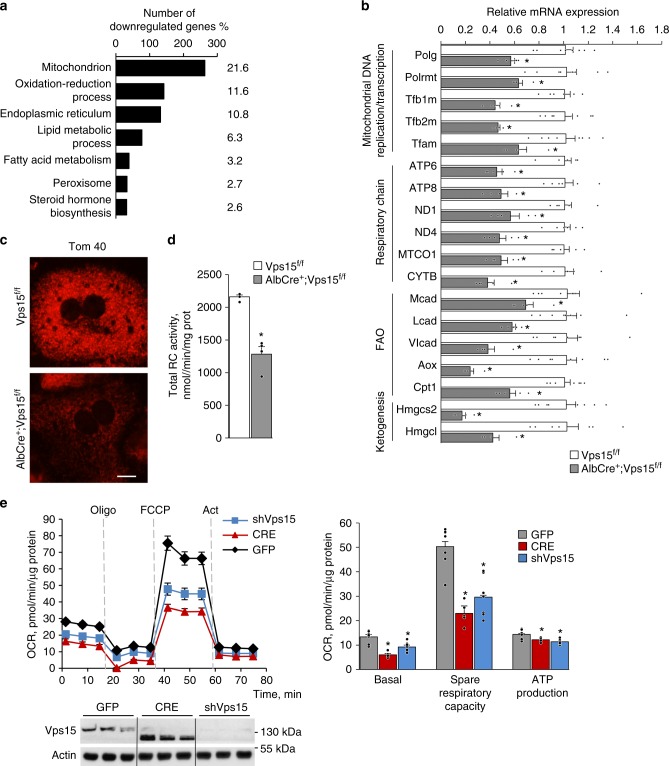
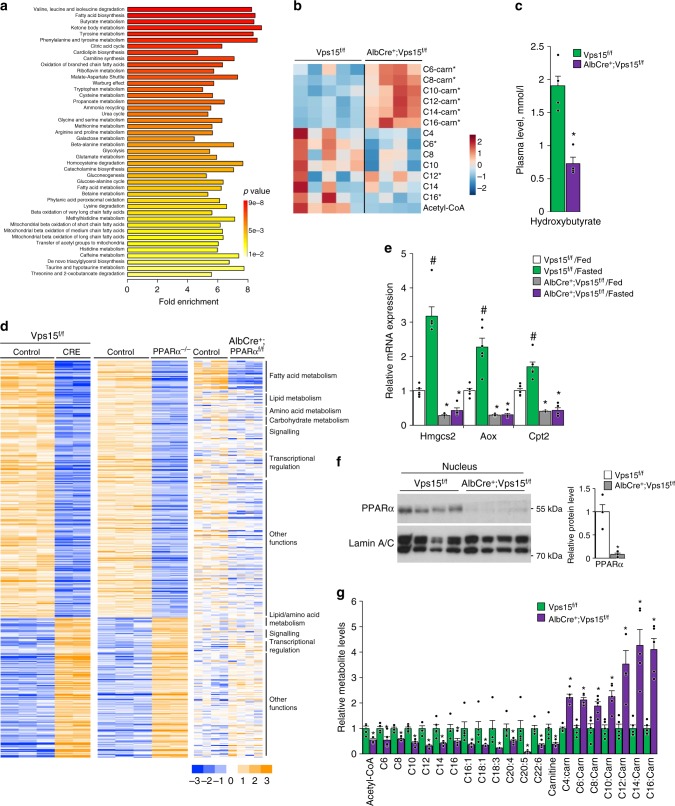
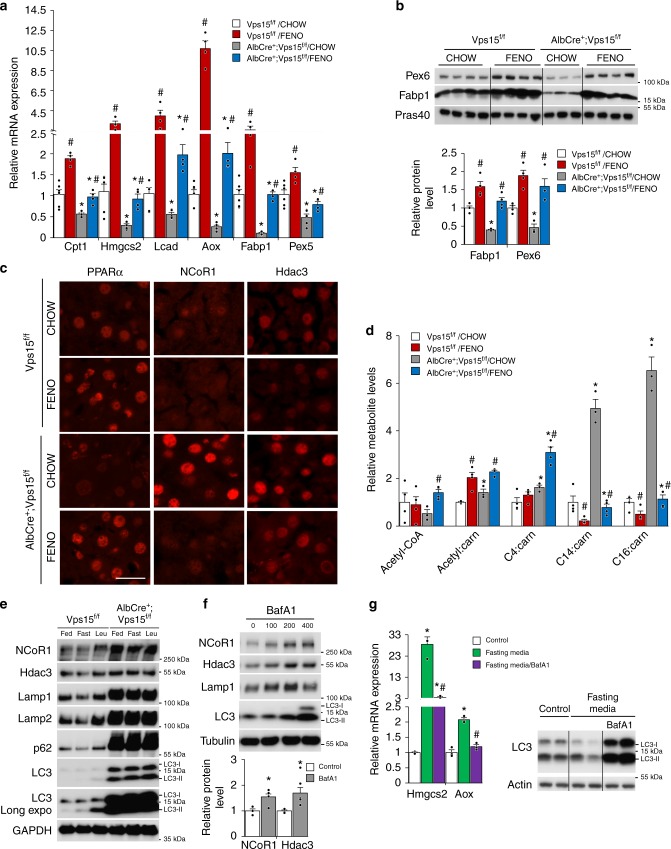
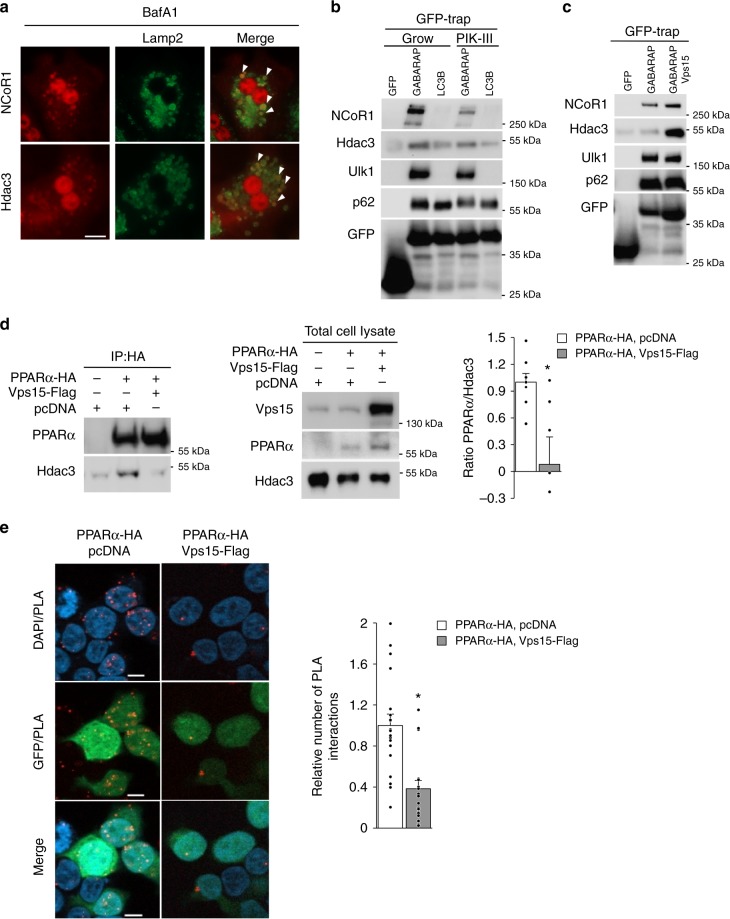
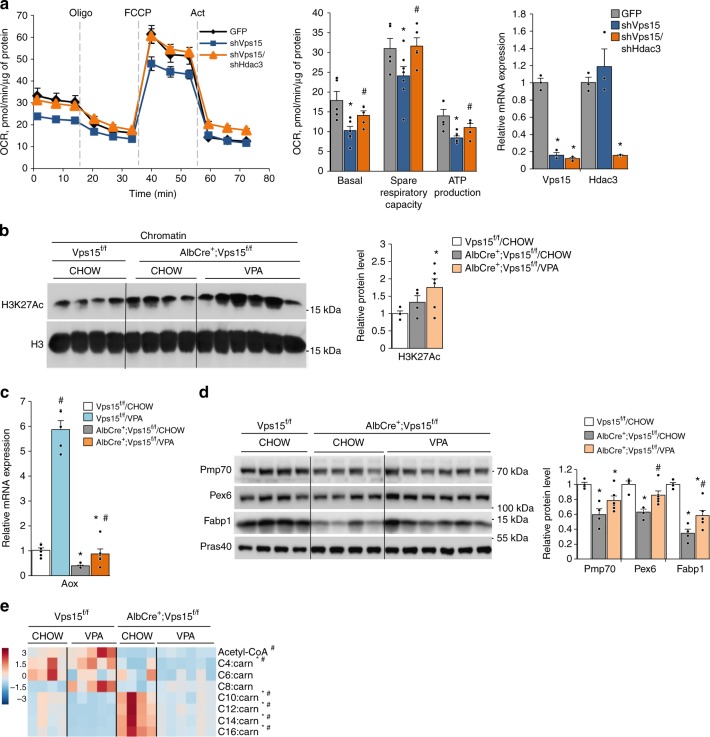
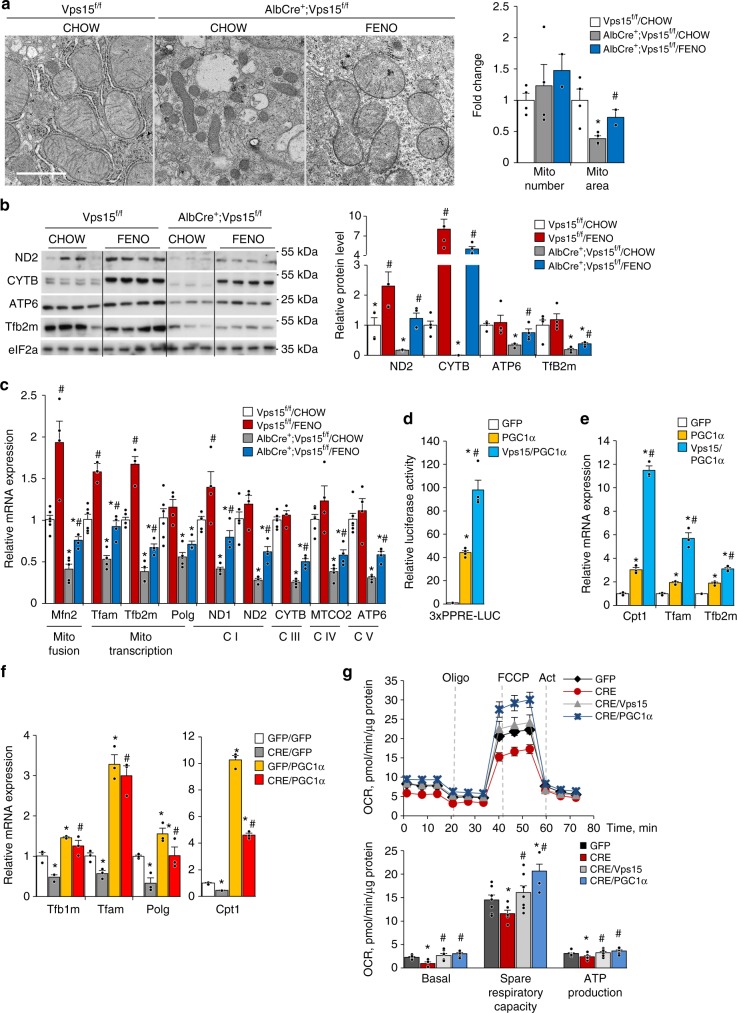
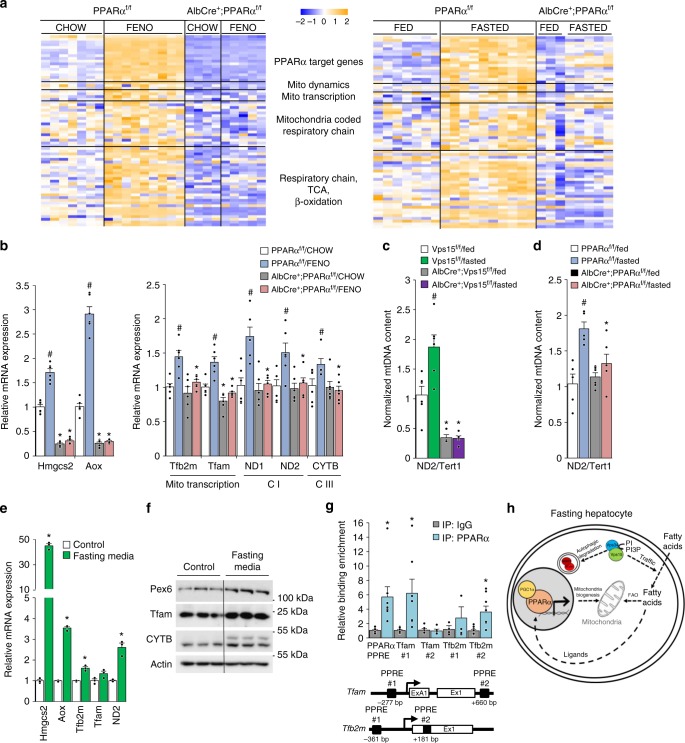
The class 3 phosphoinositide 3-kinase (PI3K) is required for lysosomal degradation by autophagy and vesicular trafficking, assuring nutrient availability. Mitochondrial lipid catabolism is another energy source. Autophagy and mitochondrial metabolism are transcriptionally controlled by nutrient sensing nuclear receptors. However, the class 3 PI3K contribution to this regulation is unknown. We show that liver-specific inactivation of Vps15, the essential regulatory subunit of the class 3 PI3K, elicits mitochondrial depletion and failure to oxidize fatty acids. Mechanistically, transcriptional activity of Peroxisome Proliferator Activated Receptor alpha (PPARα), a nuclear receptor orchestrating lipid catabolism, is blunted in Vps15-deficient livers. We find PPARα repressors Histone Deacetylase 3 (Hdac3) and Nuclear receptor co-repressor 1 (NCoR1) accumulated in Vps15-deficient livers due to defective autophagy. Activation of PPARα or inhibition of Hdac3 restored mitochondrial biogenesis and lipid oxidation in Vps15-deficient hepatocytes. These findings reveal roles for the class 3 PI3K and autophagy in transcriptional coordination of mitochondrial metabolism.
Overview
The claims and statistics of this paper haven’t been checked yet.
Free: it reads the open-access text and checks the first 5 claims that cite a source we can check. Create a free account to check every claim.
Integrity signals
Registry
Cites
Statistics
Figures
Verification
Claims the paper makes
The claims and statistics of this paper haven’t been checked yet.
Free: it reads the open-access text and checks the first 5 claims that cite a source we can check. Create a free account to check every claim.
Claims other papers make about this one
Each is checked against this paper’s own text: does it say what the citing paper says it does?
The cited source says what the claim attributes to it.
In the citing paper
“and the suppression of hepatic autophagy correlates with defective ketogenesis linked to the accumulation of the autophagy substrate NCOR1 (nuclear receptor co‐repressor 1), which suppresses the PPARA‐dependent transcriptional program of free FA oxidation (Iershov et al, 2019; Saito et al, 2019).”
From Autophagy in major human diseases (2021) · cites this paper as Iershov et al, 2019
In the citing paper
“Hepatocyte‐specific deletion of Vsp15 | Exacerbation of liver steatosis due to mitochondrial depletion and impaired FA oxidation | Iershov et al (2019)”
From Autophagy in major human diseases (2021) · cites this paper as Iershov et al (2019)
Self-check
Percentages, sums and reported differences re-computed from the paper’s own numbers.
The self-check needs the paper’s full text.
Citations
Cites
Repertoires of Autophagy in the Pathogenesis of Ocular Diseases
Li, Y.-J., Jiang, Q., Cao, G.-F., Yao, J., & Yan, B. (2015) · Cellular Physiology and Biochemistry · doi:10.1159/000373980 · Cited by 16,304
Insulin signalling and the regulation of glucose and lipid metabolism
Saltiel, A. R., & Kahn, C. R. (2001) · Nature · doi:10.1038/414799a · Cited by 5,326
Cui, C., Cui, J., Jin, F., Cui, Y., Li, R., Jiang, X., Tian, Y., Wang, K., Jiang, P., & Gao, J. (2017) · Cellular Physiology and Biochemistry · doi:10.1159/000479571 · Cited by 5,203
Pankiv, S., Clausen, T. H., Lamark, T., Brech, A., Bruun, J.-A., Outzen, H., Øvervatn, A., Bjørkøy, G., & Johansen, T. (2007) · Journal of Biological Chemistry · doi:10.1074/jbc.m702824200 · Cited by 4,578
Parkin is recruited selectively to impaired mitochondria and promotes their autophagy
Narendra, D., Tanaka, A., Suen, D.-F., & Youle, R. J. (2008) · The Journal of Cell Biology · doi:10.1083/jcb.200809125 · Cited by 4,026
TFEB Links Autophagy to Lysosomal Biogenesis
Settembre, C., Di Malta, C., Polito, V. A., Arencibia, M. G., Vetrini, F., Erdin, S., Erdin, S. U., Huynh, T., Medina, D., Colella, P., et al. (2011) · Science · doi:10.1126/science.1204592 · Cited by 3,365
Youle, R. J., & Narendra, D. P. (2011) · Nature Reviews Molecular Cell Biology · doi:10.1038/nrm3028 · Cited by 3,273
The role of autophagy during the early neonatal starvation period
Kuma, A., Hatano, M., Matsui, M., Yamamoto, A., Nakaya, H., Yoshimori, T., Ohsumi, Y., Tokuhisa, T., & Mizushima, N. (2004) · Nature · doi:10.1038/nature03029 · Cited by 2,865
A Gene Network Regulating Lysosomal Biogenesis and Function
Sardiello, M., Palmieri, M., di Ronza, A., Medina, D. L., Valenza, M., Gennarino, V. A., Di Malta, C., Donaudy, F., Embrione, V., Polishchuk, R. S., et al. (2009) · Science · doi:10.1126/science.1174447 · Cited by 2,543
Impairment of starvation-induced and constitutive autophagy in Atg7 -deficient mice
Komatsu, M., Waguri, S., Ueno, T., Iwata, J., Murata, S., Tanida, I., Ezaki, J., Mizushima, N., Ohsumi, Y., Uchiyama, Y., et al. (2005) · The Journal of Cell Biology · doi:10.1083/jcb.200412022 · Cited by 2,331
Kliewer, S. A., Sundseth, S. S., Jones, S. A., Brown, P. J., Wisely, G. B., Koble, C. S., Devchand, P., Wahli, W., Willson, T. M., Lenhard, J. M., et al. (1997) · Proceedings of the National Academy of Sciences · doi:10.1073/pnas.94.9.4318 · Cited by 2,164
Forman, B. M., Chen, J., & Evans, R. M. (1997) · Proceedings of the National Academy of Sciences · doi:10.1073/pnas.94.9.4312 · Cited by 2,116
A lysosome‐to‐nucleus signalling mechanism senses and regulates the lysosome via mTOR and TFEB
Settembre, C., Zoncu, R., Medina, D. L., Vetrini, F., Erdin, S., Erdin, S., Huynh, T., Ferron, M., Karsenty, G., Vellard, M. C., et al. (2012) · The EMBO Journal · doi:10.1038/emboj.2012.32 · Cited by 1,920
Valproic acid defines a novel class of HDAC inhibitors inducing differentiation of transformed cells
Gottlicher, M. (2001) · The EMBO Journal · doi:10.1093/emboj/20.24.6969 · Cited by 1,887
Peroxisome proliferator–activated receptor α mediates the adaptive response to fasting
Kersten, S., Seydoux, J., Peters, J. M., Gonzalez, F. J., Desvergne, B., & Wahli, W. (1999) · Journal of Clinical Investigation · doi:10.1172/jci6223 · Cited by 1,649
Mitochondria Supply Membranes for Autophagosome Biogenesis during Starvation
Hailey, D. W., Rambold, A. S., Satpute-Krishnan, P., Mitra, K., Sougrat, R., Kim, P. K., & Lippincott-Schwartz, J. (2010) · Cell · doi:10.1016/j.cell.2010.04.009 · Cited by 1,429
Autophagy is required to maintain muscle mass.
Masiero, E., Agatea, L., Mammucari, C., Blaauw, B., Loro, E., Komatsu, M., Metzger, D., Reggiani, C., Schiaffino, S., & Sandri, M. (2009) · Cell Metabolism · doi:10.1016/j.cmet.2009.10.008 · Cited by 1,282
Matsunaga, K., Saitoh, T., Tabata, K., Omori, H., Satoh, T., Kurotori, N., Maejima, I., Shirahama-Noda, K., Ichimura, T., Isobe, T., et al. (2009) · Nature Cell Biology · doi:10.1038/ncb1846 · Cited by 1,235
Vega, R. B., Huss, J. M., & Kelly, D. P. (2000) · Molecular and Cellular Biology · doi:10.1128/mcb.20.5.1868-1876.2000 · Cited by 1,195
Organelle isolation: functional mitochondria from mouse liver, muscle and cultured filroblasts
Frezza, C., Cipolat, S., & Scorrano, L. (2007) · Nature Protocols · doi:10.1038/nprot.2006.478 · Cited by 1,188
Rambold, A. S., Cohen, S., & Lippincott-Schwartz, J. (2015) · Developmental Cell · doi:10.1016/j.devcel.2015.01.029 · Cited by 1,038
TFEB controls cellular lipid metabolism through a starvation-induced autoregulatory loop
Settembre, C., De Cegli, R., Mansueto, G., Saha, P. K., Vetrini, F., Visvikis, O., Huynh, T., Carissimo, A., Palmer, D., Jürgen Klisch, T., et al. (2013) · Nature Cell Biology · doi:10.1038/ncb2718 · Cited by 1,022
Characterization of the CLEAR network reveals an integrated control of cellular clearance pathways
Palmieri, M., Impey, S., Kang, H., di Ronza, A., Pelz, C., Sardiello, M., & Ballabio, A. (2011) · Human Molecular Genetics · doi:10.1093/hmg/ddr306 · Cited by 1,022
Zhong, Y., Wang, Q. J., Li, X., Yan, Y., Backer, J. M., Chait, B. T., Heintz, N., & Yue, Z. (2009) · Nature Cell Biology · doi:10.1038/ncb1854 · Cited by 1,005
Leone, T. C., Weinheimer, C. J., & Kelly, D. P. (1999) · Proceedings of the National Academy of Sciences · doi:10.1073/pnas.96.13.7473 · Cited by 943
Transcriptional integration of mitochondrial biogenesis
Scarpulla, R. C., Vega, R. B., & Kelly, D. P. (2012) · Trends in Endocrinology & Metabolism · doi:10.1016/j.tem.2012.06.006 · Cited by 798
Kim, K. H., Jeong, Y. T., Oh, H., Kim, S. H., Cho, J. M., Kim, Y.-N., Kim, S. S., Kim, D. H., Hur, K. Y., Kim, H. K., et al. (2013) · Nature Medicine · doi:10.1038/nm.3014 · Cited by 774
Liver PPARα is crucial for whole-body fatty acid homeostasis and is protective against NAFLD
Montagner, A., Polizzi, A., Fouché, E., Ducheix, S., Lippi, Y., Lasserre, F., Barquissau, V., Régnier, M., Lukowicz, C., Benhamed, F., et al. (2016) · Gut · doi:10.1136/gutjnl-2015-310798 · Cited by 736
Self-citationmTORC1 controls fasting-induced ketogenesis and its modulation by ageing
Sengupta, S., Peterson, T. R., Laplante, M., Oh, S., & Sabatini, D. M. (2010) · Nature · doi:10.1038/nature09584 · Cited by 646
Therapeutic roles of peroxisome proliferator-activated receptor agonists
Staels, B., & Fruchart, J.-C. (2005) · Diabetes · doi:10.2337/diabetes.54.8.2460 · Cited by 646
Kundu, M., Lindsten, T., Yang, C.-Y., Wu, J., Zhao, F., Zhang, J., Selak, M. A., Ney, P. A., & Thompson, C. B. (2008) · Blood · doi:10.1182/blood-2008-02-137398 · Cited by 569
PGC-1 promotes insulin resistance in liver through PPAR-α-dependent induction of TRB-3
Koo, S.-H., Satoh, H., Herzig, S., Lee, C.-H., Hedrick, S., Kulkarni, R., Evans, R. M., Olefsky, J., & Montminy, M. (2004) · Nature Medicine · doi:10.1038/nm1044 · Cited by 550
“New” hepatic fat activates PPARα to maintain glucose, lipid, and cholesterol homeostasis
Chakravarthy, M. V., Pan, Z., Zhu, Y., Tordjman, K., Schneider, J. G., Coleman, T., Turk, J., & Semenkovich, C. F. (2005) · Cell Metabolism · doi:10.1016/j.cmet.2005.04.002 · Cited by 545
Nutrient-sensing nuclear receptors coordinate autophagy
Lee, J. M., Wagner, M., Xiao, R., Kim, K. H., Feng, D., Lazar, M. A., & Moore, D. D. (2014) · Nature · doi:10.1038/nature13961 · Cited by 518
Autophagy in the liver: functions in health and disease
Ueno, T., & Komatsu, M. (2017) · Nature Reviews Gastroenterology & Hepatology · doi:10.1038/nrgastro.2016.185 · Cited by 500
Regulation of mTORC1 by the Rag GTPases is necessary for neonatal autophagy and survival
Efeyan, A., Zoncu, R., Chang, S., Gumper, I., Snitkin, H., Wolfson, R. L., Kirak, O., Sabatini, D. D., & Sabatini, D. M. (2013) · Nature · doi:10.1038/nature11745 · Cited by 455
Systems survey of endocytosis by multiparametric image analysis
Collinet, C., Stöter, M., Bradshaw, C. R., Samusik, N., Rink, J. C., Kenski, D., Habermann, B., Buchholz, F., Henschel, R., Mueller, M. S., et al. (2010) · Nature · doi:10.1038/nature08779 · Cited by 446
Transcriptional regulation of autophagy by an FXR–CREB axis
Seok, S., Fu, T., Choi, S.-E., Li, Y., Zhu, R., Kumar, S., Sun, X., Yoon, G., Kang, Y., Zhong, W., et al. (2014) · Nature · doi:10.1038/nature13949 · Cited by 429
Class III PI3K Vps34 plays an essential role in autophagy and in heart and liver function
Jaber, N., Dou, Z., Chen, J.-S., Catanzaro, J., Jiang, Y.-P., Ballou, L. M., Selinger, E., Ouyang, X., Lin, R. Z., Zhang, J., et al. (2012) · Proceedings of the National Academy of Sciences · doi:10.1073/pnas.1112848109 · Cited by 385
Emerging roles of the corepressors NCoR1 and SMRT in homeostasis
Mottis, A., Mouchiroud, L., & Auwerx, J. (2013) · Genes & Development · doi:10.1101/gad.214023.113 · Cited by 297
ATG8 Family Proteins Act as Scaffolds for Assembly of the ULK Complex
Alemu, E. A., Lamark, T., Torgersen, K. M., Birgisdottir, A. B., Larsen, K. B., Jain, A., Olsvik, H., Øvervatn, A., Kirkin, V., & Johansen, T. (2012) · Journal of Biological Chemistry · doi:10.1074/jbc.m112.378109 · Cited by 288
Liver autophagy contributes to the maintenance of blood glucose and amino acid levels
Ezaki, J., Matsumoto, N., Takeda-Ezaki, M., Komatsu, M., Takahashi, K., Hiraoka, Y., Taka, H., Fujimura, T., Takehana, K., Yoshida, M., et al. (2011) · Autophagy · doi:10.4161/auto.7.7.15371 · Cited by 281 · cited 1×
“The most significant conclusions of our work are: (1) mitochondrial biogenesis and fatty acid oxidation in hepatocytes require functional class 3 PI3K; (2) liver-specific deletion of the regulatory subunit Vps15 phenocopies the loss of PPARα, suggesting that both genes functionally interact; (3) mechanistically, loss…”
Phosphatidylethanolamine positively regulates autophagy and longevity
Rockenfeller, P., Koska, M., Pietrocola, F., Minois, N., Knittelfelder, O., Sica, V, Franz, J., Carmona-Gutierrez, D., Kroemer, G., & Madeo, F. (2015) · Cell Death & Differentiation · doi:10.1038/cdd.2014.219 · Cited by 274
Finck, B. N., Bernal-Mizrachi, C., Han, D. H., Coleman, T., Sambandam, N., LaRiviere, L. L., Holloszy, J. O., Semenkovich, C. F., & Kelly, D. P. (2005) · Cell Metabolism · doi:10.1016/j.cmet.2005.01.006 · Cited by 270
Translation of the phosphoinositide code by PI effectors
Kutateladze, T. G. (2010) · Nature Chemical Biology · doi:10.1038/nchembio.390 · Cited by 251
Zhou, X., Wang, L., Hasegawa, H., Amin, P., Han, B.-X., Kaneko, S., He, Y., & Wang, F. (2010) · Proceedings of the National Academy of Sciences · doi:10.1073/pnas.0914725107 · Cited by 247
The intricate regulation and complex functions of the Class III phosphoinositide 3-kinase Vps34
Backer, J. M. (2016) · Biochemical Journal · doi:10.1042/bcj20160170 · Cited by 238
Characterization of p150, an Adaptor Protein for the Human Phosphatidylinositol (PtdIns) 3-Kinase
Panaretou, C., Domin, J., Cockcroft, S., & Waterfield, M. D. (1997) · Journal of Biological Chemistry · doi:10.1074/jbc.272.4.2477 · Cited by 228
Zhang, Y., Qi, H., Taylor, R., Xu, W., Liu, L. F., & Jin, S. V. (2007) · Autophagy · doi:10.4161/auto.4127 · Cited by 211
Oka, S., Alcendor, R., Zhai, P., Park, J. Y., Shao, D., Cho, J., Yamamoto, T., Tian, B., & Sadoshima, J. (2011) · Cell Metabolism · doi:10.1016/j.cmet.2011.10.001 · Cited by 202
Nuclear receptor/microRNA circuitry links muscle fiber type to energy metabolism
Gan, Z., Rumsey, J., Hazen, B. C., Lai, L., Leone, T. C., Vega, R. B., Xie, H., Conley, K. E., Auwerx, J., Smith, S. R., et al. (2013) · Journal of Clinical Investigation · doi:10.1172/jci67652 · Cited by 198
Analysis of Cell Metabolism Using LC-MS and Isotope Tracers
Mackay, G. M., Zheng, L., van den Broek, N. J. F., & Gottlieb, E. (2015) · Methods in Enzymology · doi:10.1016/bs.mie.2015.05.016 · Cited by 197
Endogenous Ligands for Nuclear Receptors: Digging Deeper
Schupp, M., & Lazar, M. A. (2010) · Journal of Biological Chemistry · doi:10.1074/jbc.r110.182451 · Cited by 182
Regulation of mammalian autophagy by class II and III PI 3-kinases through PI3P synthesis
Devereaux, K., Dall’Armi, C., Alcazar-Roman, A., Ogasawara, Y., Zhou, X., Wang, F., Yamamoto, A., De Camilli, P., & Di Paolo, G. (2013) · PLoS ONE · doi:10.1371/journal.pone.0076405 · Cited by 182
Blanquart, C., Barbier, O., Fruchart, J.-C., Staels, B., & Glineur, C. (2002) · Journal of Biological Chemistry · doi:10.1074/jbc.m110598200 · Cited by 150
PPARγ contributes to PKM2 and HK2 expression in fatty liver
Panasyuk, G., Espeillac, C., Chauvin, C., Pradelli, L. A., Horie, Y., Suzuki, A., Annicotte, J.-S., Fajas, L., Foretz, M., Verdeguer, F., et al. (2012) · Nature Communications · doi:10.1038/ncomms1667 · Cited by 140
Self-citationMitochondrial Complex I Activity Is Required for Maximal Autophagy
Thomas, H. E., Zhang, Y., Stefely, J. A., Veiga, S. R., Thomas, G., Kozma, S. C., & Mercer, C. A. (2018) · Cell Reports · doi:10.1016/j.celrep.2018.07.101 · Cited by 132
Defects of Vps15 in skeletal muscles lead to autophagic vacuolar myopathy and lysosomal disease
Nemazanyy, I., Blaauw, B., Paolini, C., Caillaud, C., Protasi, F., Mueller, A., Proikas‐Cezanne, T., Russell, R. C., Guan, K., Nishino, I., et al. (2013) · EMBO Molecular Medicine · doi:10.1002/emmm.201202057 · Cited by 126
Self-citationAutophagy Deficiency by Hepatic FIP200 Deletion Uncouples Steatosis From Liver Injury in NAFLD
Ma, D., Molusky, M. M., Song, J., Hu, C.-R., Fang, F., Rui, C., Mathew, A. V., Pennathur, S., Liu, F., Cheng, J.-X., et al. (2013) · Molecular Endocrinology · doi:10.1210/me.2013-1153 · Cited by 113
Bénit, P., Gonçalves, S., Dassa, E. P., Brière, J.-J., Martin, G. R., & Rustin, P. (2006) · Clinica Chimica Acta · doi:10.1016/j.cca.2006.05.034 · Cited by 113
CLUH regulates mitochondrial metabolism by controlling translation and decay of target mRNAs
Schatton, D., Pla‐Martín, D., Marx, M., Hansen, H., Mourier, A., Nemazanyy, I., Pessia, A., Zentis, P., Corona, T., Kondylis, V., et al. (2017) · The Journal of Cell Biology · doi:10.1083/jcb.201607019 · Cited by 104
Self-citationThe Mammalian Class 3 PI3K (PIK3C3) Is Required for Early Embryogenesis and Cell Proliferation
Zhou, X., Takatoh, J., & Wang, F. (2011) · PLoS ONE · doi:10.1371/journal.pone.0016358 · Cited by 101
Bilanges, B., Alliouachene, S., Pearce, W., Morelli, D., Szabadkai, G., Chung, Y.-L., Chicanne, G., Valet, C., Hill, J. M., Voshol, P. J., et al. (2017) · Nature Communications · doi:10.1038/s41467-017-01969-4 · Cited by 82
Patitucci, C., Couchy, G., Bagattin, A., Cañeque, T., de Reyniès, A., Scoazec, J., Rodriguez, R., Pontoglio, M., Zucman‐Rossi, J., Pende, M., et al. (2017) · Journal of Clinical Investigation · doi:10.1172/jci90327 · Cited by 79
Self-citationMammalian autophagy is essential for hepatic and renal ketogenesis during starvation
Takagi, A., Kume, S., Kondo, M., Nakazawa, J., Chin-Kanasaki, M., Araki, H., Araki, S.-I., Koya, D., Haneda, M., Chano, T., et al. (2016) · Scientific Reports · doi:10.1038/srep18944 · Cited by 75
Zhao, Z., Xu, D., Wang, Z., Wang, L., Han, R., Wang, Z., Liao, L., & Chen, Y. (2018) · Hepatology · doi:10.1002/hep.29786 · Cited by 65
Nemazanyy, I., Montagnac, G., Russell, R. C., Morzyglod, L., Burnol, A.-F., Guan, K.-L., Pende, M., & Panasyuk, G. (2015) · Nature Communications · doi:10.1038/ncomms9283 · Cited by 64
Self-citationJo, Y. S., Ryu, D., Maida, A., Wang, X., Evans, R. M., Schoonjans, K., & Auwerx, J. (2015) · Hepatology · doi:10.1002/hep.27907 · Cited by 58
Bechtel, W., Helmstädter, M., Balica, J., Hartleben, B., Schell, C., & Huber, T. B. (2013) · Autophagy · doi:10.4161/auto.24634 · Cited by 31
Stabilization of Peroxisome Proliferator-Activated Receptor α by the Ligand
Hirotani, M., Tsukamoto, T., Bourdeaux, J., Sadano, H., & Osumi, T. (2001) · Biochemical and Biophysical Research Communications · doi:10.1006/bbrc.2001.5739 · Cited by 28
Cited by
Autophagy in major human diseases
Klionsky, D. J., Petroni, G., Amaravadi, R. K., Baehrecke, E. H., Ballabio, A., Boya, P., Bravo‐San Pedro, J. M., Cadwell, K., Cecconi, F., Choi, A. M. K., et al. (2021) · The EMBO Journal · doi:10.15252/embj.2021108863 · Cited by 1,585
PPAR control of metabolism and cardiovascular functions
Montaigne, D., Butruille, L., & Staels, B. (2021) · Nature Reviews Cardiology · doi:10.1038/s41569-021-00569-6 · Cited by 942
Diverse Cellular Roles of Autophagy
Morishita, H., & Mizushima, N. (2019) · Annual Review of Cell and Developmental Biology · doi:10.1146/annurev-cellbio-100818-125300 · Cited by 376
Mechanisms Mediating the Regulation of Peroxisomal Fatty Acid Beta-Oxidation by PPARα
Tahri-Joutey, M., Andreoletti, P., Surapureddi, S., Nasser, B., Cherkaoui-Malki, M., & Latruffe, N. (2021) · International Journal of Molecular Sciences · doi:10.3390/ijms22168969 · Cited by 253
“modifications of PPARα regulate its activity [172,173].”
Interplay Between Lipid Metabolism and Autophagy
Xie, Y., Li, J., Kang, R., & Tang, D. (2020) · Frontiers in Cell and Developmental Biology · doi:10.3389/fcell.2020.00431 · Cited by 203
“The loss of PIK3R4 inhibits autophagy and lipid catabolism through the accumulation of PPARA repressors, such as histone deacetylase 3 (HDAC3) and nuclear receptor corepressor 1 (NCOR1) (Iershov et al., 2019).”
Background
Metadata
- Authors
- Iershov, A., Nemazanyy, I., Alkhoury, C., Girard, M., Barth, E., Cagnard, N., Montagner, A., Chretien, D., Rugarli, E. I., Guillou, H., Pende, M., & Panasyuk, G.
- Affiliations
- Centre National de la Recherche Scientifique (FR)
- Hôpital Necker-Enfants Malades (FR)
- University of Cologne (DE)
- Université Toulouse III - Paul Sabatier (FR)
- Corresponding author
- Panasyuk, Ganna
- ORCID
- Venue
- Nature Communications
- Published
- 2019-04-05
- Volume
- 10
- Issue
- 1
- Pages
- 1566-1566
- ISSN
- 2041-1723 (ISSN-L)
- PMC
- PMC6451001
- OpenAlex
- W2927935720
- Cited by
- 109
- References
- 70
- Citations by year
- 2026: 8 · 2025: 10 · 2024: 12 · 2023: 16 · 2022: 22 · 2021: 21 · 2020: 14 · 2019: 6
- FWCI
- 12.18
- Type
- journal article
- Language
- en
- Open access
- gold
- doi.org
- Licence
- cc-by
- creativecommons.org/licenses/by/4.0 (tdm)
- creativecommons.org/licenses/by/4.0 (vor)
- Locations
- Nature Communications (publishedVersion, cc-by)
- Europe PMC (PubMed Central) (publishedVersion, cc-by)
- PubMed Central (publishedVersion, cc-by)
- PubMed (publishedVersion)
- HAL (submittedVersion, cc-by)
- RePEc: Research Papers in Economics (submittedVersion)
- DOAJ (DOAJ: Directory of Open Access Journals) (submittedVersion)
- DOAJ (DOAJ: Directory of Open Access Journals) (submittedVersion, cc-by-sa)
- Funders
- European Commission (2007–2013, FP7 2007-2013, 609102, FP7/2007)
- Deutsche Forschungsgemeinschaft (SFB-1218, A05, SFB 1218, FP7/2007–2013)
- Agence Nationale de la Recherche (CE14-0029, ANR-16-CE14-0029)
- Institut National de la Santé et de la Recherche Médicale (U1151)
- Campus France (PCOFUND‐GA‐2013‐609102, FP7/2007-2013)
- Topics
- Life Sciences › Biochemistry, Genetics and Molecular Biology › Cell Biology › Autophagy in Disease and Therapy
- Life Sciences › Biochemistry, Genetics and Molecular Biology › Molecular Biology › Peroxisome Proliferator-Activated Receptors
- Life Sciences › Biochemistry, Genetics and Molecular Biology › Molecular Biology › Metabolism, Diabetes, and Cancer
- Keywords
- VPS15, autophagy, PPARα, nuclear receptors, HDAC3, NCOR1, mitochondrial biogenesis, fatty acid oxidation, liver, nutrient sensing, transcriptional regulation
- MeSH terms
- Histone Deacetylase 3, Animals, Autophagy, Gene Expression Regulation, Histone Deacetylases, Humans, Male, Mitochondria, Fenofibrate, Transcription, Genetic, Mice, Knockout, Phosphatidylinositol 3-Kinases, Hepatocytes, PPAR alpha, Lipid Metabolism, Mice, Nuclear Receptor Co-Repressor 1, HEK293 Cells, Vacuolar Sorting Protein VPS15
About these checks
Registry, retraction, Cites and statistics results are computed, not judged, with one exception: a printed reference that no index lists is read once by a model before it counts as a citation error. Claims are extracted by a model and kept only when their quote appears verbatim in the text; each cited source is then checked, with a model’s help, for whether it says what the claim relies on. Those verdicts can be wrong — read the claim’s quote and the cited source before relying on one.
Statistics and arithmetic are recomputed, not judged.
Confidence bands are shown only for fields calibrated on our annotated test set. None is calibrated yet, so no band is shown.
What counts as a claim ›How we measure confidence ›How we check this ›
Are you an author, or do you see a problem with this page? Request a review
Data sources
Bibliographic data: Semantic Scholar, OpenAlex, Crossref.
Contains information from the Semantic Scholar Academic Graph Datasets, made available under the ODC Attribution License (ODC-BY 1.0).
Semantic Scholar’s data is described in: Kinney, R., et al. (2023). The Semantic Scholar Open Data Platform. arXiv:2301.10140.
