

The DOI matches its Crossref record; 95 of the 95 references it cites were found in a registry or an index.
International meta-analysis of PTSD genome-wide association studies identifies sex- and ancestry-specific genetic risk loci
Open accessAbstract
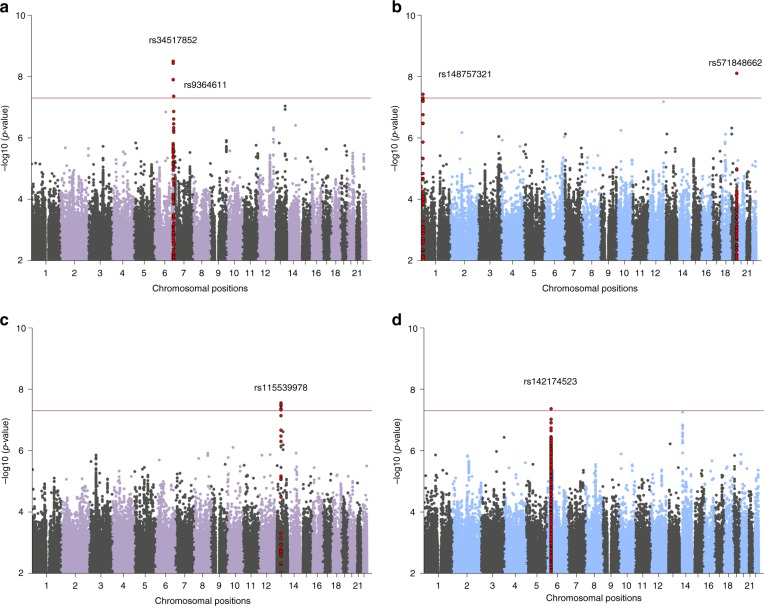
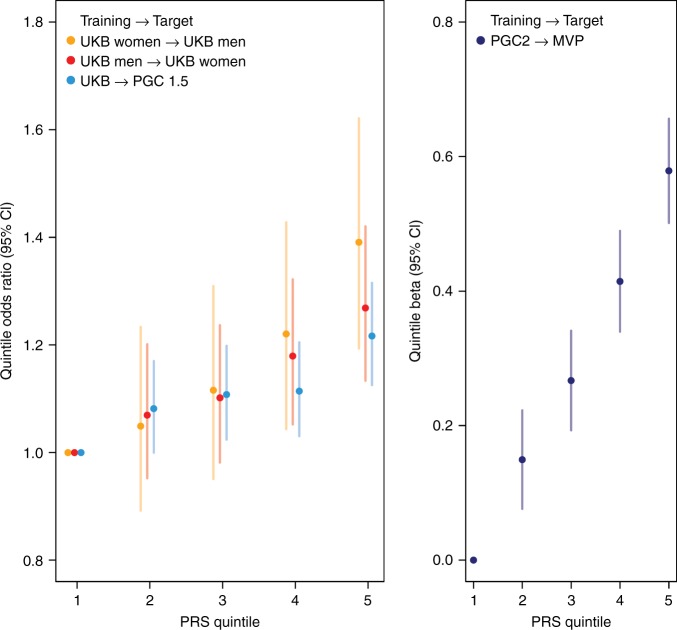
The risk of posttraumatic stress disorder (PTSD) following trauma is heritable, but robust common variants have yet to be identified. In a multi-ethnic cohort including over 30,000 PTSD cases and 170,000 controls we conduct a genome-wide association study of PTSD. We demonstrate SNP-based heritability estimates of 5–20%, varying by sex. Three genome-wide significant loci are identified, 2 in European and 1 in African-ancestry analyses. Analyses stratified by sex implicate 3 additional loci in men. Along with other novel genes and non-coding RNAs, a Parkinson’s disease gene involved in dopamine regulation, PARK2 , is associated with PTSD. Finally, we demonstrate that polygenic risk for PTSD is significantly predictive of re-experiencing symptoms in the Million Veteran Program dataset, although specific loci did not replicate. These results demonstrate the role of genetic variation in the biology of risk for PTSD and highlight the necessity of conducting sex-stratified analyses and expanding GWAS beyond European ancestry populations.
Overview
The claims and statistics of this paper haven’t been checked yet.
Run the check — free, no account needed. It reads the open-access text and checks the sources it cites.
Integrity signals
Registry
Cites
Statistics
Figures
Verification
Claims the paper makes
The claims and statistics of this paper haven’t been checked yet.
Run the check — free, no account needed. It reads the open-access text and checks the sources it cites.
Claims other papers make about this one
Each is checked against this paper’s own text: does it say what the citing paper says it does?
The cited source says what the claim attributes to it.
In the citing paper
“The negative impact of stress and trauma on physical and mental health, however, has been shown to vary across individuals. This is likely to depend on the severity of the exposure, the subsequent lifestyle and behavioral choices [17], and differing genetic vulnerability [18,19,20].”
Self-check
Percentages, sums and reported differences re-computed from the paper’s own numbers.
The self-check needs the paper’s full text.
Citations
Cites
Analysis of Relative Gene Expression Data Using Real-Time Quantitative PCR and the 2−ΔΔCT Method
Livak, K. J., & Schmittgen, T. D. (2001) · Methods · doi:10.1006/meth.2001.1262 · Cited by 180,860
A global reference for human genetic variation
The 1000 Genomes Project Consortium, authors, C., Auton, A., Abecasis, G. R., Steering committee, Altshuler, D. M., Durbin, R. M., Abecasis, G. R., Bentley, D. R., Chakravarti, A., et al. (2015) · Nature · doi:10.1038/nature15393 · Cited by 18,247
Tissue-based map of the human proteome
Uhlén, M., Fagerberg, L., Hallström, B. M., Lindskog, C., Oksvold, P., Mardinoglu, A., Sivertsson, Å., Kampf, C., Sjöstedt, E., Asplund, A., et al. (2015) · Science · doi:10.1126/science.1260419 · Cited by 15,286
Second-generation PLINK: rising to the challenge of larger and richer datasets
Chang, C. C., Chow, C. C., Tellier, L. C., Vattikuti, S., Purcell, S. M., & Lee, J. J. (2015) · Gigascience · doi:10.1186/s13742-015-0047-8 · Cited by 12,709
Principal components analysis corrects for stratification in genome-wide association studies
Price, A. L., Patterson, N. J., Plenge, R. M., Weinblatt, M. E., Shadick, N. A., & Reich, D. (2006) · Nature Genetics · doi:10.1038/ng1847 · Cited by 10,248
Biological insights from 108 schizophrenia-associated genetic loci
Schizophrenia Working Group of the Psychiatric Genomics Consortium (2014) · Nature · doi:10.1038/nature13595 · Cited by 7,577
Self-citationA haplotype map of the human genome
The International HapMap Consortium (2005) · Nature · doi:10.1038/nature04226 · Cited by 5,858
LD Score regression distinguishes confounding from polygenicity in genome-wide association studies
Schizophrenia Working Group of the Psychiatric Genomics Consortium, Bulik-Sullivan, B. K., Loh, P.-R., Finucane, H. K., Ripke, S., Yang, J., Patterson, N., Daly, M. J., Price, A. L., & Neale, B. M. (2015) · Nature Genetics · doi:10.1038/ng.3211 · Cited by 5,559
Self-citationMETAL: fast and efficient meta-analysis of genomewide association scans
Willer, C. J., Li, Y., & Abecasis, G. R. (2010) · Bioinformatics · doi:10.1093/bioinformatics/btq340 · Cited by 5,205
Common SNPs explain a large proportion of the heritability for human height
Yang, J., Benyamin, B., McEvoy, B. P., Gordon, S., Henders, A. K., Nyholt, D. R., Madden, P. A., Heath, A. C., Martin, N. G., Montgomery, G. W., et al. (2010) · Nature Genetics · doi:10.1038/ng.608 · Cited by 4,446
Self-citation
Research works printed but not linked: 2
- Anttila, V. et al. Analysis of shared heritability in common disorders of the brain. Science 360, eaap8757 (2018). · DOI · Paper page
- Genomes Project, C. et al. A global reference for human genetic variation. Nature 526, 68–74 (2015). · DOI · Paper page
Cited by
Sorted by citations
Mullins, N., Forstner, A. J., O’Connell, K. S., Coombes, B., Coleman, J. R. I., Qiao, Z., Als, T. D., Bigdeli, T. B., Børte, S., Bryois, J., et al. (2021) · Nature Genetics · doi:10.1038/s41588-021-00857-4 · Cited by 1,517
Self-citationvan Rheenen, W., van der Spek, R. A. A., Bakker, M. K., van Vugt, J. J. F. A., Hop, P. J., Zwamborn, R. A. J., de Klein, N., Westra, H.-J., Bakker, O. B., Deelen, P., et al. (2021) · Nature Genetics · doi:10.1038/s41588-021-00973-1 · Cited by 542
Self-citationPost-traumatic stress disorder: clinical and translational neuroscience from cells to circuits
Ressler, K. J., Berretta, S., Bolshakov, V. Y., Rosso, I. M., Meloni, E. G., Rauch, S. L., & Carlezon, W. A. (2022) · Nature Reviews Neurology · doi:10.1038/s41582-022-00635-8 · Cited by 572
Self-citationPrefrontal cortex, amygdala, and threat processing: implications for PTSD
Alexandra Kredlow, M., Fenster, R. J., Laurent, E. S., Ressler, K. J., & Phelps, E. A. (2022) · Neuropsychopharmacology · doi:10.1038/s41386-021-01155-7 · Cited by 346
Self-citationGrotzinger, A. D., Mallard, T. T., Akingbuwa, W. A., Ip, H. F., Adams, M. J., Lewis, C. M., McIntosh, A. M., Grove, J., Dalsgaard, S., Lesch, K., et al. (2022) · Nature Genetics · doi:10.1038/s41588-022-01057-4 · Cited by 340
Self-citationWeissbrod, O., Kanai, M., Shi, H., Gazal, S., Peyrot, W. J., Khera, A. V., Okada, Y., The Biobank Japan Project, Matsuda, K., Yamanashi, Y., et al. (2022) · Nature Genetics · doi:10.1038/s41588-022-01036-9 · Cited by 262
Self-citationStein, M. B., Levey, D. F., Cheng, Z., Wendt, F. R., Harrington, K. M., Pathak, G. A., Cho, K., Quaden, R. M., Radhakrishnan, K., Girgenti, M. J., et al. (2021) · Nature Genetics · doi:10.1038/s41588-020-00767-x · Cited by 239
Self-citationGong, W., Guo, P., Li, Y., Liu, L., Yan, R., Liu, S., Wang, S., Xue, F., Zhou, X., & Yuan, Z. (2023) · JAMA Psychiatry · doi:10.1001/jamapsychiatry.2022.4974 · Cited by 225
Tran, M. N., Maynard, K. R., Spangler, A., Huuki, L. A., Montgomery, K. D., Sadashivaiah, V., Tippani, M., Barry, B. K., Hancock, D. B., Hicks, S. C., et al. (2021) · Neuron · doi:10.1016/j.neuron.2021.09.001 · Cited by 219
Nievergelt, C. M., Maihofer, A. X., Atkinson, E. G., Chen, C., Choi, K. W., Coleman, J. R. I., Daskalakis, N. P., Duncan, L. E., Polimanti, R. A., Aaronson, C. J., et al. (2024) · Nature Genetics · doi:10.1038/s41588-024-01707-9 · Cited by 234
Self-citationColeman, J. R. I., Gaspar, H. A., Bryois, J., Byrne, E. M., Forstner, A. J., Holmans, P. A., de Leeuw, C. A., Mattheisen, M., McQuillin, A., Whitehead Pavlides, J. M., et al. (2020) · Biological Psychiatry · doi:10.1016/j.biopsych.2019.10.015 · Cited by 199
Self-citationCerebrospinal fluid metabolomics identifies 19 brain-related phenotype associations
Panyard, D. J., Kim, K. M., Darst, B. F., Deming, Y. K., Zhong, X., Wu, Y., Kang, H., Carlsson, C. M., Johnson, S. C., Asthana, S., et al. (2021) · Communications Biology · doi:10.1038/s42003-020-01583-z · Cited by 185
Gut Microbiota and Psychiatric Disorders: A Two-Sample Mendelian Randomization Study
Ni, J., Xu, Q., Yan, S., Han, B., Zhang, H., Wei, X., Feng, G.-J., Zhao, M., Pei, Y., & Zhang, L. (2022) · Frontiers in Microbiology · doi:10.3389/fmicb.2021.737197 · Cited by 184
The role of the immune system in posttraumatic stress disorder
Katrinli, Ş., Oliveira, N. C. D. S., Felger, J. C., Michopoulos, V., & Smith, A. K. (2022) · Translational Psychiatry · doi:10.1038/s41398-022-02094-7 · Cited by 201
Self-citationTranscriptomic organization of the human brain in post-traumatic stress disorder
Girgenti, M. J., Wang, J., Ji, D., Cruz, D. A., Program, T. M. V., Stein, M. B., Gelernter, J. E., Young, K., Huber, B. R., Williamson, D. E., et al. (2020) · Nature Neuroscience · doi:10.1038/s41593-020-00748-7 · Cited by 176
Self-citationA concerted neuron–astrocyte program declines in ageing and schizophrenia
Ling, E., Nemesh, J. C., Goldman, M., Kamitaki, N., Reed, N. M., Handsaker, R. E., Genovese, G., Vogelgsang, J. S., Gerges, S., Kashin, S., et al. (2024) · Nature · doi:10.1038/s41586-024-07109-5 · Cited by 170
Docherty, A. R., Mullins, N., Ashley-Koch, A. E., Qin, X., Coleman, J. R. I., Shabalin, A., Kang, J., Murnyak, B., Wendt, F., Adams, M., et al. (2023) · American Journal of Psychiatry · doi:10.1176/appi.ajp.21121266 · Cited by 160
Self-citationPosttraumatic Stress Disorder and Cardiovascular Disease
O’Donnell, C. J., Longacre, L. S., Cohen, B. E., Fayad, Z. A., Gillespie, C. F., Liberzon, I., Pathak, G. A., Polimanti, R. A., Risbrough, V. B., Ursano, R. J., et al. (2021) · JAMA Cardiology · doi:10.1001/jamacardio.2021.2530 · Cited by 154
Self-citationSex-Dependent Shared and Non-Shared Genetic Architecture Across Mood and Psychotic Disorders
Blokland, G. A. M., Grove, J., Chen, C., Cotsapas, C. J., Tobet, S. A., Handa, R. J., Ripke, S., Neale, B. M., Corvin, A., Walters, J., et al. (2020) · Biological Psychiatry · doi:10.1016/j.biopsych.2021.02.972 · Cited by 127
Self-citationPosttraumatic Stress Disorder and Inflammation: Untangling Issues of Bidirectionality
Sumner, J. A., Nishimi, K. M., Koenen, K. C., Roberts, A. L., & Kubzansky, L. D. (2020) · Biological Psychiatry · doi:10.1016/j.biopsych.2019.11.005 · Cited by 131
Self-citationMapping the genetic landscape across 14 psychiatric disorders
Grotzinger, A. D., Werme, J., Peyrot, W. J., Frei, O., de Leeuw, C., Bicks, L. K., Guo, Q., Margolis, M. P., Coombes, B. J., Batzler, A. J., et al. (2025) · Nature · doi:10.1038/s41586-025-09820-3 · Cited by 195
Self-citationQuach, B. C., Bray, M. A., Gaddis, N., Liu, M., Palviainen, T., Minică, C. C., Zellers, S. M., Sherva, R., Alıev, F., Nothnagel, M., et al. (2020) · Nature Communications · doi:10.1038/s41467-020-19265-z · Cited by 113
Self-citationGrotzinger, A. D., de la Fuente, J., Privé, F., Nivard, M. G., & Tucker–Drob, E. M. (2021) · Biological Psychiatry · doi:10.1016/j.biopsych.2022.05.029 · Cited by 103
Genetics of substance use disorders in the era of big data
Gelernter, J. E., & Polimanti, R. A. (2021) · Nature Reviews Genetics · doi:10.1038/s41576-021-00377-1 · Cited by 107
Self-citationTranslating Across Circuits and Genetics Toward Progress in Fear- and Anxiety-Related Disorders
Ressler, K. J. (2020) · American Journal of Psychiatry · doi:10.1176/appi.ajp.2020.20010055 · Cited by 104
Self-citationthe Traumatic Stress Brain Study Group, Logue, M. W., Miller, M. W., Wolf, E. J., Huber, B. R., Morrison, F. G., Zhou, Z., Zheng, Y., Smith, A. K., Daskalakis, N. P., et al. (2020) · Clinical Epigenetics · doi:10.1186/s13148-020-0820-0 · Cited by 105
Self-citationBrewin, C. R., Atwoli, L., Bisson, J. I., Galea, S., Koenen, K. C., & Lewis‐Fernández, R. (2025) · World Psychiatry · doi:10.1002/wps.21269 · Cited by 121
Self-citationSystems biology dissection of PTSD and MDD across brain regions, cell types, and blood
Daskalakis, N. P., Iatrou, A., Chatzinakos, C., Jajoo, A., Snijders, C., Wylie, D., DiPietro, C. P., Tsatsani, I., Chen, C.-Y., Pernia, C. D., et al. (2024) · Science · doi:10.1126/science.adh3707 · Cited by 109
Self-citationA principal component approach to improve association testing with polygenic risk scores
Coombes, B. J., Ploner, A., Bergen, S. E., & Biernacka, J. M. (2020) · Genetic Epidemiology · doi:10.1002/gepi.22339 · Cited by 98
Yuan, S., Yao, H., & Larsson, S. C. (2020) · Scientific Reports · doi:10.1038/s41598-020-70458-4 · Cited by 95
Laboratory models of post-traumatic stress disorder: The elusive bridge to translation
Dunsmoor, J. E., Cisler, J. M., Fonzo, G. A., Creech, S. K., & Nemeroff, C. B. (2022) · Neuron · doi:10.1016/j.neuron.2022.03.001 · Cited by 101
Reay, W. R., Kiltschewskij, D. J., Geaghan, M. P., Atkins, J., Carr, V. J., Green, M. J., & Cairns, M. J. (2022) · Science Advances · doi:10.1126/sciadv.abj8969 · Cited by 91
Snijders, C., Maihofer, A. X., Ratanatharathorn, A. D., Baker, D. G., Boks, M. P., Geuze, E., Jain, S., Kessler, R. C., Pishva, E., Risbrough, V. B., et al. (2020) · Clinical Epigenetics · doi:10.1186/s13148-019-0798-7 · Cited by 94
Self-citationGenomic influences on self-reported childhood maltreatment
Dalvie, S., Maihofer, A. X., Coleman, J. R. I., Bradley, B., Breen, G. D., Brick, L. A. D., Chen, C., Choi, K. W., Duncan, L. E., Guffanti, G., et al. (2020) · Translational Psychiatry · doi:10.1038/s41398-020-0706-0 · Cited by 83
Self-citationGenetic evidence suggests posttraumatic stress disorder as a subtype of major depressive disorder
Zhang, F., Rao, S., Cao, H., Zhang, X., Wang, Q., Xu, Y., Sun, J., Wang, C., Chen, J., Xu, X., et al. (2021) · Journal of Clinical Investigation · doi:10.1172/jci145942 · Cited by 93
The Psychedelic Future of Post-Traumatic Stress Disorder Treatment
Zaretsky, T. G., Jagodnik, K. M., Barsic, R., Antonio, J. H., Bonanno, P. A., MacLeod, C., Pierce, C., Carney, H., Morrison, M. T., Saylor, C. F., et al. (2024) · Current Neuropharmacology · doi:10.2174/1570159x22666231027111147 · Cited by 92
Self-citationA decennial review of psychotraumatology: what did we learn and where are we going?
Olff, M., Amstadter, A. B., Armour, C., Birkeland, M. S., Bui, É., Cloître, M., Ehlers, A., Ford, J. D., Greene, T., Hansen, M., et al. (2019) · European Journal of Psychotraumatology · doi:10.1080/20008198.2019.1672948 · Cited by 89
Self-citationTitle: “Labels Matter: Is it stress or is it Trauma?”
Richter‐Levin, G., & Sandi, C. (2021) · Translational Psychiatry · doi:10.1038/s41398-021-01514-4 · Cited by 88
Meta-Analyses of Genome-Wide Association Studies for Postpartum Depression
Guintivano, J., Byrne, E. M., Kiewa, J., Yao, S., Bauer, A. E., Åberg, K. A., Adams, M. J., Campbell, A., Campbell, M. L., Choi, K. W., et al. (2023) · American Journal of Psychiatry · doi:10.1176/appi.ajp.20230053 · Cited by 80
Self-citationDiscovery of genomic loci of the human cerebral cortex using genetically informed brain atlases
Makowski, C., van der Meer, D., Dong, W., Wang, H., Wu, Y., Zou, J., Liu, C., Rosenthal, S. B., Hagler, D. J., Fan, C. C., et al. (2022) · Science · doi:10.1126/science.abe8457 · Cited by 70
Self-citationKimbrel, N. A., Ashley‐Koch, A. E., Qin, X., Lindquist, J. H., Garrett, M. E., Dennis, M. F., Hair, L. P., Huffman, J. E., Jacobson, D., Madduri, R., et al. (2022) · Molecular Psychiatry · doi:10.1038/s41380-022-01472-3 · Cited by 70
Self-citationBrown, L. C., Murphy, A. R., Lalonde, C. S., Subhedar, P. D., Miller, A. H., & Stevens, J. S. (2020) · Cancer · doi:10.1002/cncr.32934 · Cited by 73
Self-citationHuckins, L. M., Chatzinakos, C., Breen, M. S., Hartmann, J., Klengel, T., Almeida, A. C. D. S., Dobbyn, A. L., Girdhar, K., Hoffman, G. E., Klengel, C., et al. (2020) · Cell Reports · doi:10.1016/j.celrep.2020.107716 · Cited by 68
Self-citationGenetically predicted education attainment in relation to somatic and mental health
Yuan, S., Xiong, Y., Michaëlsson, M., Michaëlsson, K., & Larsson, S. C. (2021) · Scientific Reports · doi:10.1038/s41598-021-83801-0 · Cited by 69
Mapping the cellular etiology of schizophrenia and complex brain phenotypes
Duncan, L. E., Li, T., Salem, M., Li, W., Mortazavi, L., Senturk, H., Shahverdizadeh, N., Vesuna, S. S., Shen, H., Yoon, J. H., et al. (2025) · Nature Neuroscience · doi:10.1038/s41593-024-01834-w · Cited by 69
Self-citationLu, H., Qiao, J., Shao, Z., Wang, T., Huang, S., & Zeng, P. (2021) · BMC Medicine · doi:10.1186/s12916-021-02186-z · Cited by 67
Seah, C., Breen, M. S., Rusielewicz, T., Bader, H. N., Xu, C., Hunter, C. J., McCarthy, B., Deans, P. J. M., Chattopadhyay, M., Goldberg, J., et al. (2022) · Nature Neuroscience · doi:10.1038/s41593-022-01161-y · Cited by 69
Self-citationMaihofer, A. X., Choi, K. W., Coleman, J. R. I., Daskalakis, N. P., Denckla, C. A., Ketema, E., Morey, R. A., Polimanti, R. A., Ratanatharathorn, A. D., Torres, K., et al. (2021) · Biological Psychiatry · doi:10.1016/j.biopsych.2021.09.020 · Cited by 61
Self-citationGenetic evidence suggests posttraumatic stress disorder as a subtype of major depressive disorder
Zhang, F., Rao, S., Cao, H., Zhang, X., Wang, Q., Xu, Y. J., Sun, J., Wang, C., Chen, J., Xu, X., et al. (2022) · DOAJ (DOAJ: Directory of Open Access Journals) · Cited by 61
Neurobiology and Treatment of Posttraumatic Stress Disorder
Shalev, A. Y., Cho, D., & Marmar, C. R. (2024) · American Journal of Psychiatry · doi:10.1176/appi.ajp.20240536 · Cited by 67
Self-citationHeterogeneity and Polygenicity in Psychiatric Disorders: A Genome-Wide Perspective
Wendt, F. R., Pathak, G. A., Tylee, D. S., Goswami, A., & Polimanti, R. A. (2020) · Chronic Stress · doi:10.1177/2470547020924844 · Cited by 65
Self-citationSex-Based Contributors to and Consequences of Post-traumatic Stress Disorder
Hiscox, L. V., Sharp, T. H., Olff, M., Seedat, S., & Halligan, S. L. (2023) · Current Psychiatry Reports · doi:10.1007/s11920-023-01421-z · Cited by 60
Self-citationBhattacharya, A., Vo, D., Jops, C. T., Kim, M., Wen, C. H., Hervoso, J. L., Paşaniuc, B., & Gandal, M. J. (2023) · Nature Genetics · doi:10.1038/s41588-023-01560-2 · Cited by 61
Clements, C. C., Karlsson, R., Lu, Y., Juréus, A., Rück, C., Andersson, E., Boberg, J., Pedersen, N. L., Bulik, C. M., Nordenskjöld, A., et al. (2021) · Molecular Psychiatry · doi:10.1038/s41380-020-00984-0 · Cited by 62
Kimbrel, N. A., Ashley‐Koch, A. E., Qin, X., Lindquist, J. H., Garrett, M. E., Dennis, M. F., Hair, L. P., Huffman, J. E., Jacobson, D., Madduri, R., et al. (2022) · JAMA Psychiatry · doi:10.1001/jamapsychiatry.2022.3896 · Cited by 59
Self-citationZhou, A., & Ryan, J. (2023) · Genes · doi:10.3390/genes14081639 · Cited by 57
Polygenic risk score as clinical utility in psychiatry: a clinical viewpoint
Ikeda, M., Saito, T., Kanazawa, T., & Iwata, N. (2020) · Journal of Human Genetics · doi:10.1038/s10038-020-0814-y · Cited by 53
Circulating Proteins Influencing Psychiatric Disease: A Mendelian Randomization Study
Lu, T., Forgetta, V., Greenwood, C. M. T., Zhou, S., & Richards, J. B. (2022) · Biological Psychiatry · doi:10.1016/j.biopsych.2022.08.015 · Cited by 54
Liu, Y., Xiao, X., Yang, Y., Yao, R., Yang, Q., Zhu, Y., Yang, X., Zhang, S., Shen, L. H., & Jiao, B. (2024) · Alzheimer s & Dementia · doi:10.1002/alz.14049 · Cited by 54
Sex differences in post-traumatic stress disorder risk: autonomic control and inflammation
Fonkoue, I. T., Michopoulos, V., & Park, J. (2020) · Clinical Autonomic Research · doi:10.1007/s10286-020-00729-7 · Cited by 53
Olff, M., Hein, I. M., Amstadter, A. B., Armour, C., Birkeland, M. S., Bui, É., Cloître, M., Ehlers, A., Ford, J. D., Greene, T., et al. (2025) · European Journal of Psychotraumatology · doi:10.1080/20008066.2025.2458406 · Cited by 68
Self-citationChen, W., Feng, J., Jiang, S., Guo, J., Zhang, X., Zhang, X., Wang, C., Ma, Y., & Dong, Z. (2023) · Journal of Affective Disorders · doi:10.1016/j.jad.2023.07.044 · Cited by 52
Molecular genetic overlap between posttraumatic stress disorder and sleep phenotypes
Lind, M. J., Brick, L. A. D., Gehrman, P., Duncan, L. E., Gelaye, B., Maihofer, A. X., Nievergelt, C. M., Nugent, N. R., Stein, M. B., Amstadter, A. B., et al. (2019) · SLEEP · doi:10.1093/sleep/zsz257 · Cited by 49
Self-citationYang, R., Gautam, A., Getnet, D., Daigle, B. J., Miller, S., Misganaw, B., Dean, K. R., Kumar, R., Muhie, S., Wang, K., et al. (2021) · Molecular Psychiatry · doi:10.1038/s41380-020-00966-2 · Cited by 48
Self-citationJowf, G. I. A., Snijders, C., Rutten, B. P. F., de Nijs, L., & Eijssen, L. (2021) · International Journal of Molecular Sciences · doi:10.3390/ijms221910743 · Cited by 52
Self-citationXiao, L., Liu, S., Wu, Y., Huang, Y., Tao, S., Liu, Y., Tang, Y., Xie, M., Ma, Q., Yin, Y., et al. (2023) · Brain Behavior and Immunity · doi:10.1016/j.bbi.2023.08.003 · Cited by 46
Carvalho, C. M., Wendt, F. R., Maihofer, A. X., Stein, D. J., Stein, M. B., Sumner, J. A., Hemmings, S. M. J., Nievergelt, C. M., Koenen, K. C., Gelernter, J. E., et al. (2020) · Neuropsychopharmacology · doi:10.1038/s41386-020-0655-6 · Cited by 46
Self-citationPACAP-PAC1R modulates fear extinction via the ventromedial hypothalamus
Velasco, E. R., Florido, A., Flores, Á., Senabre, E., Gomez‐Gómez, À., Torres, A., Roca, A., Norrholm, S. D., Newman, E. L., Das, P., et al. (2022) · Nature Communications · doi:10.1038/s41467-022-31442-w · Cited by 44
Self-citationShen, H., Gelaye, B., Huang, H., Rondón, M. B., Sánchez, S. E., & Duncan, L. E. (2020) · Neuropsychopharmacology · doi:10.1038/s41386-020-0603-5 · Cited by 47
Self-citationSeligowski, A. V., Misganaw, B., Duffy, L., Ressler, K. J., & Guffanti, G. (2022) · American Journal of Psychiatry · doi:10.1176/appi.ajp.21111113 · Cited by 42
Self-citationAssessment of Posttraumatic Stress Disorder and Educational Achievement in Sweden
Vilaplana-Pérez, A., Sidorchuk, A., Pérez-Vigil, A., Brander, G., Isoumura, K., Hesselmark, E., Sevilla‐Cermeño, L., Valdimarsdóttir, U. A., Song, H., Jangmo, A., et al. (2020) · JAMA Network Open · doi:10.1001/jamanetworkopen.2020.28477 · Cited by 40
Stability of polygenic scores across discovery genome-wide association studies
Schultz, L. M., Merikangas, A. K., Ruparel, K., Jacquemont, S., Glahn, D. C., Gur, R. E., Barzilay, R., & Almasy, L. A. (2022) · Human Genetics and Genomics Advances · doi:10.1016/j.xhgg.2022.100091 · Cited by 42
Gerraty, R. T., Provost, A. C., Li, L., Wagner, E. A., Haas, M., & Lancashire, L. (2023) · Frontiers in Aging Neuroscience · doi:10.3389/fnagi.2023.1076657 · Cited by 43
Self-citationAshley‐Koch, A. E., Kimbrel, N. A., Qin, X., Lindquist, J. H., Garrett, M. E., Dennis, M. F., Hair, L. P., Huffman, J. E., Jacobson, D., Madduri, R., et al. (2023) · PLoS Genetics · doi:10.1371/journal.pgen.1010623 · Cited by 40
Self-citationMarchi, M., Alkema, A., Xia, C., Thio, C. H. L., Chen, L.-Y., Schalkwijk, W., Galeazzi, G. M., Ferrari, S., Pingani, L., Kweon, H., et al. (2024) · Nature Human Behaviour · doi:10.1038/s41562-024-01919-3 · Cited by 47
Self-citationPTSD: Past, present and future implications for China
Zhou, Y., Shang, Z., Zhang, F., Wu, L., Sun, L., Jia, Y., Yu, H., & Liu, W. (2021) · Chinese Journal of Traumatology · doi:10.1016/j.cjtee.2021.04.011 · Cited by 43
Wuchty, S., Myers, A., Ramirez‐Restrepo, M., Huentelman, M. J., Richolt, R., Gould, F., Harvey, P. D., Michopolous, V., Steven, J. S., Wingo, A. P., et al. (2021) · Molecular Psychiatry · doi:10.1038/s41380-021-01084-3 · Cited by 39
Self-citationWaszczuk, M. A., Miao, J., Docherty, A. R., Shabalin, A. A., Jonas, K. G., Michelini, G., & Kotov, R. (2021) · Psychological Medicine · doi:10.1017/s0033291721003639 · Cited by 42
Shared molecular genetic risk of alcohol dependence and posttraumatic stress disorder (PTSD).
Sheerin, C. M., Bountress, K. E., Meyers, J. L., de Viteri, S. S., Shen, H., Maihofer, A. X., Duncan, L. E., & Amstadter, A. B. (2020) · Psychology of Addictive Behaviors · doi:10.1037/adb0000568 · Cited by 42
Self-citationWingo, T. S., Gerasimov, E. S., Liu, Y., Duong, D. M., Vattathil, S., Lori, A., Gockley, J., Breen, M. S., Maihofer, A. X., Nievergelt, C. M., et al. (2022) · Molecular Psychiatry · doi:10.1038/s41380-022-01544-4 · Cited by 38
Self-citationGenetic architecture distinguishes tinnitus from hearing loss
Clifford, R. E., Maihofer, A. X., Chatzinakos, C., Coleman, J. R. I., Daskalakis, N. P., Gasperi, M., Hogan, K., Mikita, E. A., Stein, M. B., Tcheandjieu, C., et al. (2024) · Nature Communications · doi:10.1038/s41467-024-44842-x · Cited by 40
Self-citationGoes, F. S., Collado‐Torres, L., Zandi, P. P., Huuki-Myers, L. A., Tao, R., Jaffe, A. E., Pertea, G. M., Shin, J. H., Weinberger, D. R., Kleinman, J. E., et al. (2025) · Nature Communications · doi:10.1038/s41467-025-59115-4 · Cited by 40
Posttraumatic Stress Disorder and Chronic Pain Conditions in Men: A Twin Study
Gasperi, M., Panizzon, M. S., Goldberg, J. H., Buchwald, D., & Afari, N. (2020) · Psychosomatic Medicine · doi:10.1097/psy.0000000000000899 · Cited by 38
Self-citationWendt, F. R., Pathak, G. A., Deak, J. D., Angelis, F. D., Koller, D., Cabrera‐Mendoza, B., Lebovitch, D. S., Levey, D. F., Stein, M. B., Kranzler, H. R., et al. (2022) · Molecular Psychiatry · doi:10.1038/s41380-022-01469-y · Cited by 35
Self-citationAsthma and posttraumatic stress disorder (PTSD): Emerging links, potential models and mechanisms
Allgire, E., McAlees, J. W., Lewkowich, I. P., & Sah, R. (2021) · Brain Behavior and Immunity · doi:10.1016/j.bbi.2021.06.001 · Cited by 36
Lori, A., Schultebraucks, K., Galatzer‐Levy, I. R., Daskalakis, N. P., Katrinli, Ş., Smith, A. K., Myers, A., Richholt, R., Huentelman, M. J., Guffanti, G., et al. (2021) · Neuropsychopharmacology · doi:10.1038/s41386-021-01073-8 · Cited by 38
Self-citationPTSD is associated with increased DNA methylation across regions of HLA-DPB1 and SPATC1L
Katrinli, Ş., Zheng, Y., Gautam, A., Hammamieh, R., Yang, R., Venkateswaran, S., Kilaru, V., Lori, A., Hinrichs, R. C., Powers, A. D., et al. (2020) · Brain Behavior and Immunity · doi:10.1016/j.bbi.2020.10.023 · Cited by 37
Self-citationCausal influences of neuropsychiatric disorders on Alzheimer’s disease
Baranova, A. V., Zhao, Q., Cao, H., Chandhoke, V., & Zhang, F. (2024) · Translational Psychiatry · doi:10.1038/s41398-024-02822-1 · Cited by 36
Rab, S. L., & Admon, R. (2020) · Neuroscience & Biobehavioral Reviews · doi:10.1016/j.neubiorev.2020.09.007 · Cited by 36
Gardoki-Souto, I., Redolar-Ripoll, D., Fontana, M., Hogg, B., Castro, M. J., Blanch, J. M., Ojeda, F., Solanes, A., Radua, J., Valiente-Gómez, A., et al. (2022) · Pain Research and Management · doi:10.1155/2022/2114451 · Cited by 36
Chronic overlapping pain conditions and nociplastic pain
Johnston, K. J. A., Signer, R., & Huckins, L. M. (2025) · Human Genetics and Genomics Advances · doi:10.1016/j.xhgg.2024.100381 · Cited by 35
Kiewa, J., Meltzer-Brody, S. E., Milgrom, J., Guintivano, J., Hickie, I. B., Whiteman, D. C., Olsen, C. M., Colodro‐Conde, L., Medland, S. E., Martin, N. G., et al. (2022) · Depression and Anxiety · doi:10.1002/da.23232 · Cited by 38
Self-citationDimensional and transdiagnostic phenotypes in psychiatric genome-wide association studies
Waszczuk, M. A., Jonas, K. G., Bornovalova, M. A., Breen, G. D., Bulik, C. M., Docherty, A. R., Eley, T. C., Hettema, J. M., Kotov, R., Krueger, R. F., et al. (2023) · Molecular Psychiatry · doi:10.1038/s41380-023-02142-8 · Cited by 35
Self-citationLewkowich, I. P., Ahlbrand, R., Johnson, E., McAlees, J. W., Nawreen, N., Raman, R., Lingel, I., Hargis, J. M., Hoover, C., & Sah, R. (2020) · Brain Behavior and Immunity · doi:10.1016/j.bbi.2020.04.084 · Cited by 35
Self-citationShaw, D. M., Polikowsky, H. P., Pruett, D. G., Chen, H., Petty, L. E., Viljoen, K. Z., Beilby, J. M., Jones, R. M., Kraft, S. J., & Below, J. E. (2021) · The American Journal of Human Genetics · doi:10.1016/j.ajhg.2021.11.004 · Cited by 34
Muhie, S. Y., Gautam, A., Yang, R., Misganaw, B., Daigle, B. J., Mellon, S. H., Flory, J. D., Amara, D. A., Lee, I., Wang, K., et al. (2022) · Cell Reports Medicine · doi:10.1016/j.xcrm.2023.101045 · Cited by 36
Self-citationZeamer, A. L., Salive, M.-C., An, X., Beaudoin, F. L., House, S. L., Stevens, J. S., Zeng, D., Neylan, T. C., Clifford, G. D., Linnstaedt, S. D., et al. (2023) · Translational Psychiatry · doi:10.1038/s41398-023-02643-8 · Cited by 34
Self-citationOkhuijsen‐Pfeifer, C., van der Horst, M. Z., Bousman, C., Lin, B. D., van Eijk, K. R., Ripke, S., Ayhan, Y., Babaoglu, M. O., Bak, M., Alink, W., et al. (2022) · Translational Psychiatry · doi:10.1038/s41398-022-01884-3 · Cited by 33
Self-citationMapping the cortico-striatal transcriptome in attention deficit hyperactivity disorder
Sudre, G. P., Gildea, D. E., Shastri, G. G., Sharp, W. S., Jung, B., Xu, Q., Auluck, P. K., Elnitski, L. L., Baxevanis, A. D., Marenco, S., et al. (2022) · Molecular Psychiatry · doi:10.1038/s41380-022-01844-9 · Cited by 33
Polygenic prediction of PTSD trajectories in 9/11 responders
Waszczuk, M. A., Docherty, A. R., Shabalin, A. A., Miao, J., Yang, X., Kuan, P. F., Bromet, E. J., Kotov, R., & Luft, B. J. (2020) · Psychological Medicine · doi:10.1017/s0033291720003839 · Cited by 36
Metadata
- Authors
- Nievergelt, C. M., Maihofer, A. X., Klengel, T., Atkinson, E. G., Chen, C.-Y., Choi, K. W., Coleman, J. R. I., Dalvie, S., Duncan, L. E., Gelernter, J., Levey, D. F., Logue, M. W., Polimanti, R., Provost, A. C., Ratanatharathorn, A., Stein, M. B., Torres, K., Aiello, A. E., Almli, L. M., Amstadter, A. B., Andersen, S. B., Andreassen, O. A., Arbisi, P. A., Ashley-Koch, A. E., Austin, S. B., Avdibegovic, E., Babić, D., Bækvad-Hansen, M., Baker, D. G., Beckham, J. C., Bierut, L. J., Bisson, J. I., Boks, M. P., Bolger, E. A., Børglum, A. D., Bradley, B., Brashear, M., Breen, G., Bryant, R. A., Bustamante, A. C., Bybjerg-Grauholm, J., Calabrese, J. R., Caldas- de- Almeida, J. M., Dale, A. M., Daly, M. J., Daskalakis, N. P., Deckert, J., Delahanty, D. L., Dennis, M. F., Disner, S. G., Domschke, K., Dzubur-Kulenovic, A., Erbes, C. R., Evans, A., Farrer, L. A., Feeny, N. C., Flory, J. D., Forbes, D., Franz, C. E., Galea, S., Garrett, M. E., Gelaye, B., Geuze, E., Gillespie, C., Uka, A. G., Gordon, S. D., Guffanti, G., Hammamieh, R., Harnal, S., Hauser, M. A., Heath, A. C., Hemmings, S. M. J., Hougaard, D. M., Jakovljevic, M., Jett, M., Johnson, E. O., Jones, I., Jovanovic, T., Qin, X.-J., Junglen, A. G., Karstoft, K.-I., Kaufman, M. L., Kessler, R. C., Khan, A., Kimbrel, N. A., King, A. P., Koen, N., Kranzler, H. R., Kremen, W. S., Lawford, B. R., Lebois, L. A. M., Lewis, C. E., Linnstaedt, S. D., Lori, A., Lugonja, B., Luykx, J. J., Lyons, M. J., Maples-Keller, J., Marmar, C., Martin, A. R., Martin, N. G., Maurer, D., Mavissakalian, M. R., McFarlane, A., McGlinchey, R. E., McLaughlin, K. A., McLean, S. A., McLeay, S., Mehta, D., Milberg, W. P., Miller, M. W., Morey, R. A., Morris, C. P., Mors, O., Mortensen, P. B., Neale, B. M., Nelson, E. C., Nordentoft, M., Norman, S. B., O’Donnell, M., Orcutt, H. K., Panizzon, M. S., Peters, E. S., Peterson, A. L., Peverill, M., Pietrzak, R. H., Polusny, M. A., Rice, J. P., Ripke, S., Risbrough, V. B., Roberts, A. L., Rothbaum, A. O., Rothbaum, B. O., Roy-Byrne, P., Ruggiero, K., Rung, A., Rutten, B. P. F., Saccone, N. L., Sanchez, S. E., Schijven, D., Seedat, S., Seligowski, A. V., Seng, J. S., Sheerin, C. M., Silove, D., Smith, A. K., Smoller, J. W., Sponheim, S. R., Stein, D. J., Stevens, J. S., Sumner, J. A., Teicher, M. H., Thompson, W. K., Trapido, E., Uddin, M., Ursano, R. J., van den Heuvel, L. L., Van Hooff, M., Vermetten, E., Vinkers, C. H., Voisey, J., Wang, Y., Wang, Z., Werge, T., Williams, M. A., Williamson, D. E., Winternitz, S., Wolf, C., Wolf, E. J., Wolff, J. D., Yehuda, R., Young, R. M., Young, K. A., Zhao, H., Zoellner, L. A., Liberzon, I., Ressler, K. J., Haas, M., & Koenen, K. C.
- Affiliations
- University of California San Diego (US)
- Harvard University (US)
- Broad Institute (US)
- King's College London (GB)
- University of Cape Town (ZA)
- Stanford University (US)
- United States Department of Veterans Affairs (US)
- Yale University (US)
- VA Boston Healthcare System (US)
- Cohen Veterans Bioscience (US)
- University of North Carolina at Chapel Hill (US)
- Emory University (US)
- The Danish Veteran Centre (DK)
- University of Oslo (NO)
- Minneapolis VA Health Care System (US)
- Brigham and Women's Hospital (US)
- Duke University (US)
- Washington University in St. Louis (US)
- Cardiff University (GB)
- University Medical Center Utrecht (NL)
- Aarhus University (DK)
- Louisiana State University (US)
- UNSW Sydney (AU)
- University of Michigan (US)
- University Hospitals of Cleveland (US)
- Massachusetts General Hospital (US)
- Universitätsklinikum Würzburg (DE)
- Kent State University (US)
- University of Freiburg (DE)
- University of Minnesota (US)
- Boston University (US)
- Case Western Reserve University (US)
- Icahn School of Medicine at Mount Sinai (US)
- The University of Melbourne (AU)
- University Clinical Center of Kosovo (XK)
- QIMR Berghofer Medical Research Institute (AU)
- United States Army Medical Research and Development Command (US)
- Stellenbosch University (ZA)
- Statens Serum Institut (DK)
- RTI International (US)
- University of Copenhagen (DK)
- Philadelphia VA Medical Center (US)
- Queensland University of Technology (AU)
- New York University (US)
- United States Army (US)
- The University of Adelaide (AU)
- Gallipoli Medical Research Foundation (AU)
- Aarhus University Hospital (DK)
- Northern Illinois University (US)
- The University of Texas at San Antonio Health Science Center (US)
- University of Washington (US)
- Medical University of South Carolina (US)
- Maastricht University Medical Centre (NL)
- Columbia University Irving Medical Center (US)
- Oslo University Hospital (NO)
- University of South Florida (US)
- Uniformed Services University of the Health Sciences (US)
- Leiden University Medical Center (NL)
- Amsterdam UMC Location Vrije Universiteit Amsterdam (NL)
- McLean Hospital (US)
- James J. Peters VA Medical Center (US)
- Central Texas Veterans Health Care System (US)
- Corresponding author
- Nievergelt, Caroline M.
- ORCID
- Nievergelt, Caroline M.
- Maihofer, Adam X.
- Klengel, Torsten
- Atkinson, Elizabeth G.
- Chen, Chia-Yen
- Choi, Karmel W.
- Coleman, Jonathan R. I.
- Dalvie, Shareefa
- Duncan, Laramie E.
- Gelernter, Joel
- Levey, Daniel F.
- Logue, Mark W.
- Polimanti, Renato
- Provost, Allison C.
- Ratanatharathorn, Andrew
- Stein, Murray B.
- Torres, Katy
- Aiello, Allison E.
- Almli, Lynn M.
- Amstadter, Ananda B.
- Andersen, Søren B.
- Andreassen, Ole A.
- Arbisi, Paul A.
- Ashley-Koch, Allison E.
- Austin, S. Bryn
- Baker, Dewleen G.
- Beckham, Jean C.
- Bierut, Laura J.
- Bisson, Jonathan I.
- Boks, Marco P.
- Bolger, Elizabeth A.
- Børglum, Anders D.
- Bradley, Bekh
- Brashear, Megan
- Breen, Gerome
- Bryant, Richard A.
- Bustamante, Angela C.
- Bybjerg-Grauholm, Jonas
- Calabrese, Joseph R.
- Caldas- de- Almeida, José M.
- Dale, Anders M.
- Daly, Mark J.
- Daskalakis, Nikolaos P.
- Deckert, Jürgen
- Delahanty, Douglas L.
- Dennis, Michelle F.
- Disner, Seth G.
- Domschke, Katharina
- Dzubur-Kulenovic, Alma
- Farrer, Lindsay A.
- Feeny, Norah C.
- Flory, Janine D.
- Forbes, David
- Franz, Carol E.
- Galea, Sandro
- Gelaye, Bizu
- Geuze, Elbert
- Gillespie, Charles
- Gordon, Scott D.
- Hammamieh, Rasha
- Hauser, Michael A.
- Heath, Andrew C.
- Hemmings, Sian M. J.
- Hougaard, David Michael
- Jett, Marti
- Johnson, Eric Otto
- Jones, Ian
- Qin, Xue-Jun
- Junglen, Angela G.
- Karstoft, Karen-Inge
- Kaufman, Milissa L.
- Kessler, Ronald C.
- Khan, Alaptagin
- Kimbrel, Nathan A.
- King, Anthony P.
- Koen, Nastassja
- Kranzler, Henry R.
- Kremen, William S.
- Lebois, Lauren A. M.
- Linnstaedt, Sarah D.
- Lori, Adriana
- Luykx, Jurjen J.
- Lyons, Michael J.
- Marmar, Charles
- Martin, Alicia R.
- Martin, Nicholas G.
- Maurer, Douglas
- McFarlane, Alexander
- McGlinchey, Regina E.
- McLaughlin, Katie A.
- McLean, Samuel A.
- McLeay, Sarah
- Mehta, Divya
- Milberg, William P.
- Miller, Mark W.
- Morey, Rajendra A.
- Morris, Charles Phillip
- Mors, Ole
- Mortensen, Preben B.
- Neale, Benjamin M.
- Nelson, Elliot C.
- Nordentoft, Merete
- Norman, Sonya B.
- O’Donnell, Meaghan
- Orcutt, Holly K.
- Panizzon, Matthew S.
- Peters, Edward S.
- Peterson, Alan L.
- Peverill, Matthew
- Pietrzak, Robert H.
- Polusny, Melissa A.
- Rice, John P.
- Ripke, Stephan
- Risbrough, Victoria B.
- Roberts, Andrea L.
- Rothbaum, Alex O.
- Rothbaum, Barbara O.
- Rung, Ariane
- Rutten, Bart P. F.
- Saccone, Nancy L.
- Schijven, Dick
- Seedat, Soraya
- Seligowski, Antonia V.
- Seng, Julia S.
- Sheerin, Christina M.
- Silove, Derrick
- Smith, Alicia K.
- Smoller, Jordan W.
- Sponheim, Scott R.
- Stein, Dan J.
- Stevens, Jennifer S.
- Sumner, Jennifer A.
- Teicher, Martin H.
- Thompson, Wesley K.
- Trapido, Edward
- Uddin, Monica
- Ursano, Robert J.
- van den Heuvel, Leigh Luella
- Vermetten, Eric
- Vinkers, Christiaan H.
- Voisey, Joanne
- Wang, Yunpeng
- Wang, Zhewu
- Werge, Thomas
- Williams, Michelle A.
- Williamson, Douglas E.
- Winternitz, Sherry
- Wolf, Christiane
- Wolf, Erika J.
- Wolff, Jonathan D.
- Yehuda, Rachel
- Young, Ross McD.
- Young, Keith A.
- Zhao, Hongyu
- Zoellner, Lori A.
- Liberzon, Israel
- Ressler, Kerry J.
- Haas, Magali
- Koenen, Karestan C.
- Venue
- Nature Communications
- Published
- 2019-10-08
- Volume
- 10
- Issue
- 1
- Pages
- 4558-4558
- ISSN
- 2041-1723 (ISSN-L)
- PMC
- PMC6783435
- OpenAlex
- W2979994192
- Cited by
- 635
- References
- 88
- Citations by year
- 2026: 58 · 2025: 107 · 2024: 128 · 2023: 105 · 2022: 111 · 2021: 82 · 2020: 35 · 2019: 7
- FWCI
- 9.42
- Type
- journal article
- Language
- en
- Open access
- gold
- doi.org
- Locations
- Nature Communications (publishedVersion, cc-by)
- Europe PMC (PubMed Central) (publishedVersion, cc-by)
- PubMed Central (publishedVersion, cc-by)
- PubMed (publishedVersion)
- Research Publications (Maastricht University) (publishedVersion, cc-by)
- Amsterdam UMC (VU Amsterdam) - Institutional Repository (publishedVersion, other-oa)
- Research at the University of Copenhagen (University of Copenhagen) (publishedVersion, cc-by)
- ORCA Online Research @Cardiff (Cardiff University) (acceptedVersion)
- Digital Commons@Becker (Washington University School of Medicine) (submittedVersion)
- QUT ePrints (Queensland University of Technology) (submittedVersion, cc-by)
- Pure Amsterdam UMC (submittedVersion, other-oa)
- Utrecht University Repository (Utrecht University) (submittedVersion, other-oa)
- Data Archiving and Networked Services (DANS) (submittedVersion)
- RePEc: Research Papers in Economics (submittedVersion)
- Leiden Repository (Leiden University) (submittedVersion)
- DOAJ (DOAJ: Directory of Open Access Journals) (submittedVersion)
- DOAJ (DOAJ: Directory of Open Access Journals) (submittedVersion, cc-by-sa)
- eScholarship (California Digital Library) (submittedVersion)
- eScholarship (California Digital Library) (submittedVersion, cc-by)
- GoeScholar The Publication Server of the Georg-August-Universität Göttingen (Georg-August-Universität Göttingen) (submittedVersion, cc-by)
- Minerva Access (University of Melbourne) (submittedVersion, cc-by)
- MPG.PuRe (Max Planck Society) (submittedVersion, cc-by)
- Portuguese National Funding Agency for Science, Research and Technology (RCAAP Project by FCT) (submittedVersion, other-oa)
- SUNScholar (Stellenbosch University) (submittedVersion)
- NORA - Norwegian Open Research Archives (submittedVersion, cc-by)
- Research Publications (Maastricht University) (submittedVersion, other-oa)
- Data Archiving and Networked Services (DANS) (submittedVersion, other-oa)
- Funders
- Broad Institute
- Cohen Veterans Bioscience
- One Mind
- Lundbeckfonden (R248‐2017‐2003)
- Stanley Center for Psychiatric Research, Broad Institute
- Medical Research Council (MR/L010305/1)
- National Institute of Mental Health (U01MH109539, R21MH112956, T32MH017119, U01MH109536, K01MH118467, F32MH109274, R01MH103291, R01MH106595)
- National Institute on Minority Health and Health Disparities (R01MD011728)
- Medical Research and Materiel Command (R01MH106595)
- Topics
- Social Sciences › Psychology › Clinical Psychology › Posttraumatic Stress Disorder Research
- Life Sciences › Biochemistry, Genetics and Molecular Biology › Genetics › Genetic Associations and Epidemiology
- Life Sciences › Neuroscience › Cellular and Molecular Neuroscience › Neurotransmitter Receptor Influence on Behavior
- Keywords
- post-traumatic stress disorder, genetic susceptibility loci, sex differences, heritability, polygenic risk, re-experiencing symptoms, PARK2, dopaminergic modulation, non-coding RNA, Million Veteran Program, multi-ethnic cohort
- MeSH terms
- Female, Humans, Male, Sex Factors, Stress Disorders, Post-Traumatic, Veterans, Genetic Predisposition to Disease, Black People, White People, Ubiquitin-Protein Ligases, Genome-Wide Association Study, Genetic Loci, Datasets as Topic
About these checks
Registry, retraction, Cites and statistics results are computed, not judged, with one exception: a printed reference that no index lists is read once by a model before it counts as a citation error. Claims are extracted by a model and kept only when their quote appears verbatim in the text; each cited source is then checked, with a model’s help, for whether it says what the claim relies on. Those verdicts can be wrong — read the claim’s quote and the cited source before relying on one.
Statistics and arithmetic are recomputed, not judged.
Confidence bands are shown only for fields calibrated on our annotated test set. None is calibrated yet, so no band is shown.
What counts as a claim ›How we measure confidence ›How we check this ›
Are you an author, or do you see a problem with this page? Request a review
