

Ketamine disinhibits dendrites and enhances calcium signals in prefrontal dendritic spines
Open accessPublished version of a preprint
The DOI matches its Crossref record; 74 of the 74 references it cites were found in a registry or an index.
Abstract
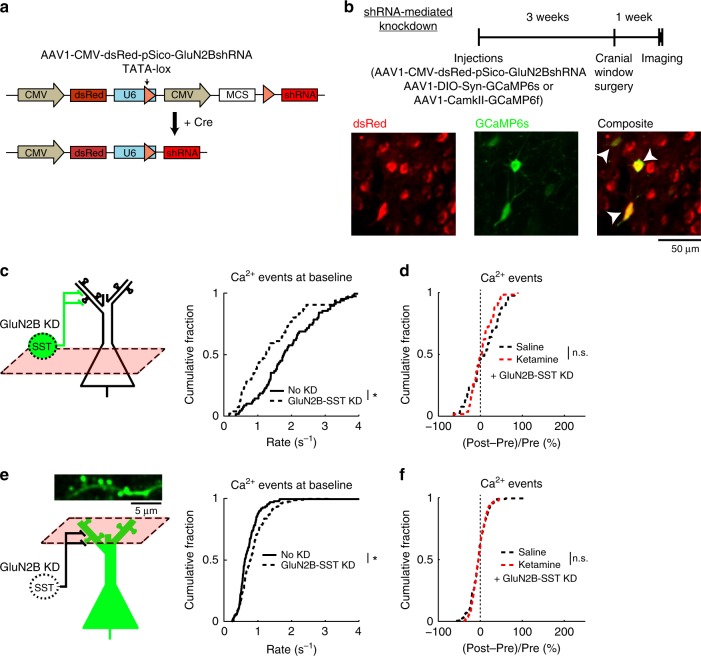
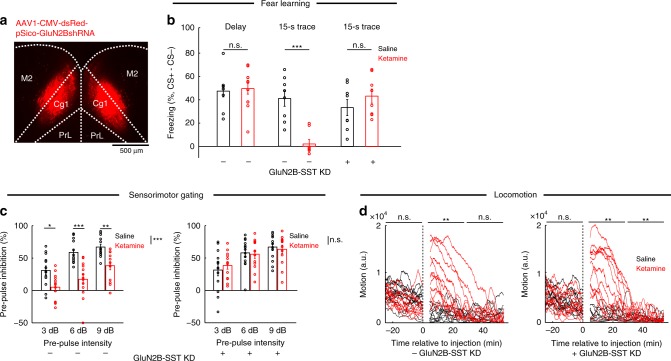
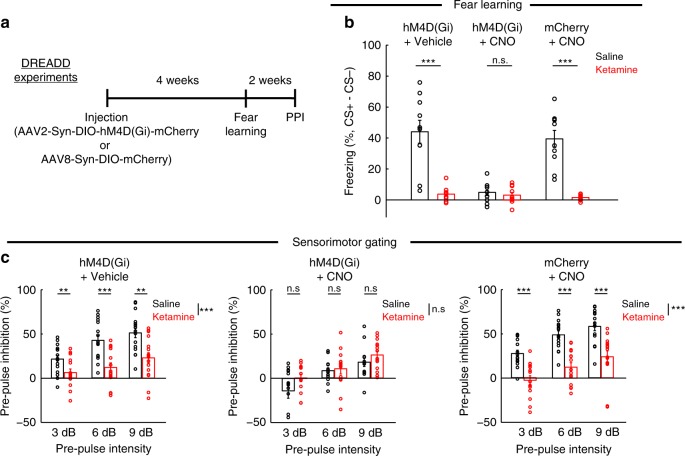
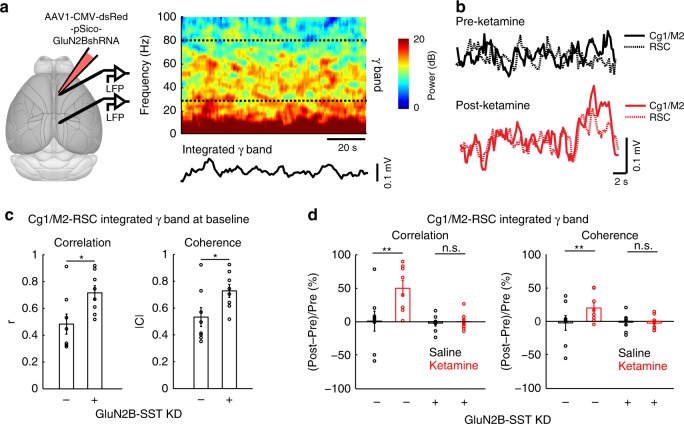
A subanesthetic dose of ketamine causes acute psychotomimetic symptoms and sustained antidepressant effects. In prefrontal cortex, the prevailing disinhibition hypothesis posits that N-methyl-d-aspartate receptor (NMDAR) antagonists such as ketamine act preferentially on GABAergic neurons. However, cortical interneurons are heterogeneous. In particular, somatostatin-expressing (SST) interneurons selectively inhibit dendrites and regulate synaptic inputs, yet their response to systemic NMDAR antagonism is unknown. Here, we report that ketamine acutely suppresses the activity of SST interneurons in the medial prefrontal cortex of the awake mouse. The deficient dendritic inhibition leads to greater synaptically evoked calcium transients in the apical dendritic spines of pyramidal neurons. By manipulating NMDAR signaling via GluN2B knockdown, we show that ketamine’s actions on the dendritic inhibitory mechanism has ramifications for frontal cortex-dependent behaviors and cortico-cortical connectivity. Collectively, these results demonstrate dendritic disinhibition and elevated calcium levels in dendritic spines as important local-circuit alterations driven by the administration of subanesthetic ketamine.
Overview
The claims and statistics of this paper haven’t been checked yet.
Free: it reads the open-access text and checks the first 5 claims that cite a source we can check. Create a free account to check every claim.
Integrity signals
Registry
Cites
Statistics
Figures
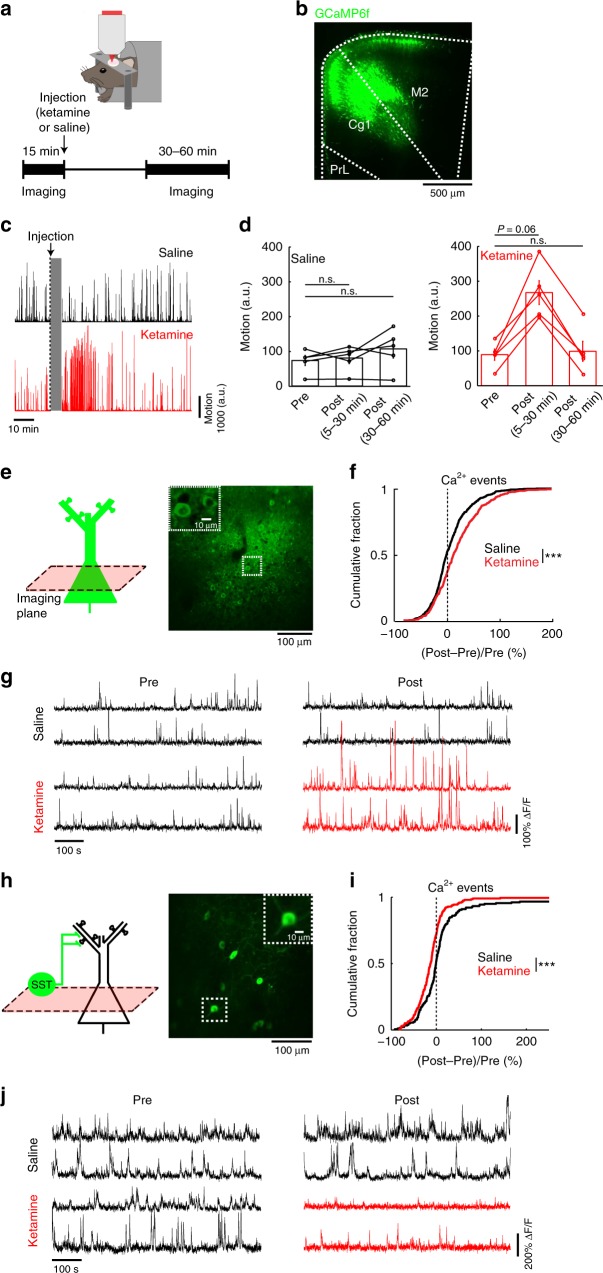
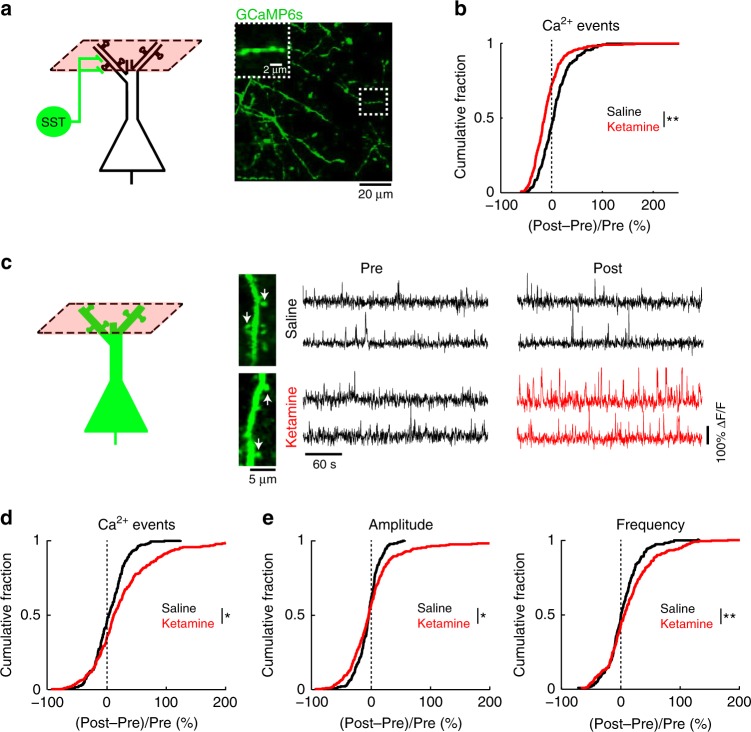
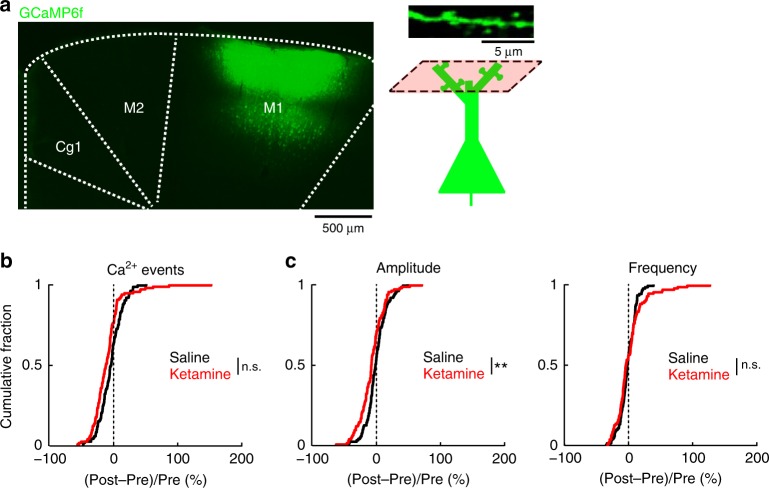
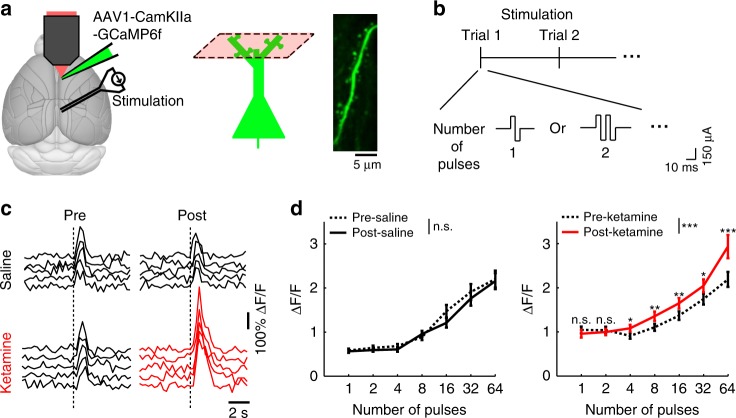
Verification
Claims the paper makes
The claims and statistics of this paper haven’t been checked yet.
Free: it reads the open-access text and checks the first 5 claims that cite a source we can check. Create a free account to check every claim.
Claims other papers make about this one
Each is checked against this paper’s own text: does it say what the citing paper says it does?
The cited source says what the claim attributes to it.
In the citing paper
“pyramidal neurons in the cingulate and secondary motor cortex were found to respond to ketamine (10 mg/kg) through an increase in Ca2+ event rate, particularly in dendritic spines, indicative of a hyperactive state which was facilitated by a reduction in Ca2+ events in SST interneurons (Ali et al., 2020).”
From Mechanisms of ketamine and its metabolites as antidepressants (2022) · cites this paper as Ali et al., 2020
The cited source says what the claim attributes to it.
In the citing paper
“knockdown of GluN2B in SST interneurons mimicked the effects of ketamine on SST Ca2+ dynamics and pyramidal neuron dendrites.”
From Mechanisms of ketamine and its metabolites as antidepressants (2022) · cites this paper as Ali et al., 2020
Self-check
Percentages, sums and reported differences re-computed from the paper’s own numbers.
The self-check needs the paper’s full text.
Citations
Cites
Ultrasensitive fluorescent proteins for imaging neuronal activity
Chen, T.-W., Wardill, T. J., Sun, Y., Pulver, S. R., Renninger, S. L., Baohan, A., Schreiter, E. R., Kerr, R. A., Orger, M. B., Jayaraman, V., et al. (2013) · Nature · doi:10.1038/nature12354 · Cited by 6,474
Antidepressant effects of ketamine in depressed patients
Berman, R. M., Cappiello, A., Anand, A., Oren, D. A., Heninger, G. R., Charney, D. S., & Krystal, J. H. (2000) · Biological Psychiatry · doi:10.1016/s0006-3223(99)00230-9 · Cited by 3,856 · cited 1×
“A three-way mixed ANOVA was performed with drug (saline, ketamine) as a between-subjects factor, and stimulation levels (1, 2, 4, 8, 16, 32, 64) and epoch (pre-injection, post-injection) as within-subjects factors.”
MethodA randomized trial of an N-methyl-D-aspartate antagonist in treatment-resistant major depression.
Zarate, C. A., Singh, J. B., Carlson, P. J., Brutsche, N. E., Ameli, R., Luckenbaugh, D. A., Charney, D. S., & Manji, H. K. (2006) · Archives of General Psychiatry · doi:10.1001/archpsyc.63.8.856 · Cited by 3,766
Krystal, J. H. (1994) · Archives of General Psychiatry · doi:10.1001/archpsyc.1994.03950030035004 · Cited by 3,330 · cited 6×
“The interaction effect was significant (F(1,14)= 6.”
BackgroundMethodInfluentialmTOR-Dependent Synapse Formation Underlies the Rapid Antidepressant Effects of NMDA Antagonists
Li, N., Lee, B., Liu, R.-J., Banasr, M., Dwyer, J. M., Iwata, M., Li, X.-Y., Aghajanian, G., & Duman, R. S. (2010) · Science · doi:10.1126/science.1190287 · Cited by 2,881
Self-citationArmbruster, B. N., Li, X., Pausch, M. H., Herlitze, S., & Roth, B. L. (2007) · Proceedings of the National Academy of Sciences · doi:10.1073/pnas.0700293104 · Cited by 2,046 · cited 2×
“9, P= 3 × 10⁻⁴), and a significant interaction (F(2,30)= 4.”
MethodA resource of Cre driver lines for genetic targeting of GABAergic neurons in cerebral cortex
Taniguchi, H., He, M., Wu, P., Kim, S., Paik, R., Sugino, K., Kvitsani, D., Fu, Y., Lu, J., Lin, Y., et al. (2011) · Neuron · doi:10.1016/j.neuron.2011.07.026 · Cited by 1,828
Moghaddam, B., Adams, B., Verma, A., & Daly, D. (1997) · The Journal of Neuroscience · doi:10.1523/jneurosci.17-08-02921.1997 · Cited by 1,793
Adult mouse cortical cell taxonomy revealed by single cell transcriptomics
Tasic, B., Menon, V., Nguyen, T. N., Kim, T. K., Jarsky, T., Yao, Z., Levi, B., Gray, L. T., Sorensen, S. A., Dolbeare, T., et al. (2016) · Nature Neuroscience · doi:10.1038/nn.4216 · Cited by 1,714
Whitfield-Gabrieli, S., Thermenos, H. W., Milanovic, S., Tsuang, M. T., Faraone, S. V., McCarley, R. W., Shenton, M. E., Green, A. I., Nieto-Castanon, A., LaViolette, P., et al. (2009) · Proceedings of the National Academy of Sciences · doi:10.1073/pnas.0809141106 · Cited by 1,435
Research works printed but not linked: 1
- Franklin, K. B. J. & Paxinos, G. The Mouse Brain In Stereotaxic Coordinates (Academic Press, 2007).
Cited by
Psilocybin induces rapid and persistent growth of dendritic spines in frontal cortex in vivo
Shao, L.-X., Liao, C., Gregg, I., Davoudian, P. A., Savalia, N. K., Delagarza, K., & Kwan, A. C. (2021) · doi:10.1101/2021.02.17.431629 · Cited by 628
Self-citationPsilocybin induces rapid and persistent growth of dendritic spines in frontal cortex in vivo
Shao, L.-X., Liao, C., Gregg, I., Davoudian, P. A., Savalia, N. K., Delagarza, K., & Kwan, A. C. (2021) · Neuron · doi:10.1016/j.neuron.2021.06.008 · Cited by 626
Self-citationPsychedelics reopen the social reward learning critical period
Nardou, R., Sawyer, E., Song, Y. J., Wilkinson, M., Padovan-Hernandez, Y., de Deus, J. L., Wright, N., Lama, C., Faltin, S., Goff, L. A., et al. (2023) · Nature · doi:10.1038/s41586-023-06204-3 · Cited by 358
The neural basis of psychedelic action
Kwan, A. C., Olson, D. E., Preller, K. H., & Roth, B. L. (2022) · Nature Neuroscience · doi:10.1038/s41593-022-01177-4 · Cited by 302
Self-citationToward Circuit Mechanisms of Pathophysiology in Depression
Spellman, T., & Liston, C. (2020) · American Journal of Psychiatry · doi:10.1176/appi.ajp.2020.20030280 · Cited by 165
“In contrast, rapid effects on other functional properties of prefrontal cortical circuits—including inhibition of somatostatin interneurons and restoration of multicell ensemble events (98, 99)—may be involved in initiating ketamine’s antidepressant effects acutely.”
BackgroundThe Neural Circuits Underlying General Anesthesia and Sleep
Moody, O. A., Zhang, E. R., Vincent, K. F., Kato, R., Melonakos, E. D., Nehs, C. J., & Solt, K. (2021) · Anesthesia & Analgesia · doi:10.1213/ane.0000000000005361 · Cited by 162
Mechanisms of ketamine and its metabolites as antidepressants
Hess, E. M., Riggs, L. M., Michaelides, M., & Gould, T. D. (2022) · Biochemical Pharmacology · doi:10.1016/j.bcp.2021.114892 · Cited by 175
Interpreting in vivo calcium signals from neuronal cell bodies, axons, and dendrites: a review
Ali, F., & Kwan, A. C. (2019) · Neurophotonics · doi:10.1117/1.nph.7.1.011402 · Cited by 144
“These are unpublished data from the Kwan lab, related to a recent study.(59)”
MethodSelf-citationKohtala, S. (2021) · Pharmacological Reports · doi:10.1007/s43440-021-00232-4 · Cited by 142
“1 3 hypothesis [147, 148] as the mechanism for subanesthetic ketamine-induced neuronal activation.”
BackgroundDavoudian, P. A., Shao, L.-X., & Kwan, A. C. (2023) · ACS Chemical Neuroscience · doi:10.1021/acschemneuro.2c00637 · Cited by 129
Self-citationPsilocybin’s lasting action requires pyramidal cell types and 5-HT2A receptors
Shao, L.-X., Liao, C., Davoudian, P. A., Savalia, N. K., Jiang, Q., Wojtasiewicz, C., Tan, D., Nothnagel, J. D., Liu, R., Woodburn, S. C., et al. (2025) · Nature · doi:10.1038/s41586-025-08813-6 · Cited by 141
“For dendritic spines, we analysed fluorescence signals after subtracting the contribution from adjoining dendritic branch using a regression procedure 38,39 and 7).”
Self-citationA Dendrite-Focused Framework for Understanding the Actions of Ketamine and Psychedelics
Savalia, N. K., Shao, L.-X., & Kwan, A. C. (2021) · Trends in Neurosciences · doi:10.1016/j.tins.2020.11.008 · Cited by 104
“Extending the disinhibition framework, a recent study demonstrated that ketamine has a substantial impact on inhibition mediated by the dendrite-targeting, somatostatin-expressing (SST) GABAergic interneurons [35].”
BackgroundResultSelf-citationSynaptic Mechanisms Regulating Mood State Transitions in Depression
Parekh, P. K., Johnson, S. B., & Liston, C. (2022) · Annual Review of Neuroscience · doi:10.1146/annurev-neuro-110920-040422 · Cited by 101
A Synaptic Locus for TrkB Signaling Underlying Ketamine Rapid Antidepressant Action
Lin, P.-Y., Ma, Z. Z., Mahgoub, M., Kavalali, E. T., & Monteggia, L. M. (2021) · Cell Reports · doi:10.1016/j.celrep.2021.109513 · Cited by 99
“…that ketamine-induced disinhibition of somatostatin interneurons in the prefrontal cortex and short hairpin RNA (shRNA)-mediated GluN2B knockdown in these types of interneurons impaired ketamine-induced dendritic disinhibition and antidepressant effects (Ali et al., 2020; Gerhard et al., 2020).”
Dopamine pathways mediating affective state transitions after sleep loss
Wu, M., Zhang, X., Feng, S., Freda, S. N., Kumari, P., Dumrongprechachan, V., & Kozorovitskiy, Y. (2023) · Neuron · doi:10.1016/j.neuron.2023.10.002 · Cited by 98
Dual action of ketamine confines addiction liability
Simmler, L. D., Li, Y., Hadjas, L. C., Hiver, A., van Zessen, R., & Lüscher, C. (2022) · Nature · doi:10.1038/s41586-022-04993-7 · Cited by 95
Ketamine triggers a switch in excitatory neuronal activity across neocortex
Cichon, J., Wasilczuk, A. Z., Looger, L. L., Contreras, D., Kelz, M. B., & Proekt, A. (2023) · Nature Neuroscience · doi:10.1038/s41593-022-01203-5 · Cited by 85
Ketamine exerts its sustained antidepressant effects via cell-type-specific regulation of Kcnq2
Lopez, J. P., Lücken, M. D., Brivio, E., Karamihalev, S., Kos, A., De Donno, C., Benjamin, A., Yang, H., Dick, A. L. W., Stoffel, R., et al. (2022) · Neuron · doi:10.1016/j.neuron.2022.05.001 · Cited by 79
“Among these known mechanisms, Ca 2+ signaling seems to be an upstream common denominator and might be an intermediate mechanism to induce fast-acting and sustained antidepressant effects (Figure 6E, left) (Ali et al., 2020; Kim et al., 2021).”
BackgroundKrystal, J. H., Kaye, A. P., Jefferson, S., Girgenti, M. J., Wilkinson, S. T., Sanacora, G., & Esterlis, I. (2023) · Proceedings of the National Academy of Sciences · doi:10.1073/pnas.2305772120 · Cited by 91
Physical Exercise Prevented Stress‐Induced Anxiety via Improving Brain RNA Methylation
Yan, L., Wei, J., Yang, F., Wang, M., Wang, S., Cheng, T., Liu, X., Jia, Y., So, K., & Zhang, L. (2022) · Advanced Science · doi:10.1002/advs.202105731 · Cited by 83
Psychedelics and Neural Plasticity: Therapeutic Implications
Grieco, S. F., Castrén, E., Knudsen, G. M., Kwan, A. C., Olson, D. E., Zuo, Y., Holmes, T. C., & Xu, X. (2022) · The Journal of Neuroscience · doi:10.1523/jneurosci.1121-22.2022 · Cited by 82
“This highlights the role of BDNF as a point of convergence for psychedelics and ketamine effects on dendrites (Ali et al., 2020; Savalia et al., 2021), BDNF signaling pathways (Li et al., 2010; Wang et al., 2022), and structural neural plasticity (Li et al., 2010; Phoumthipphavong et al., 2016).”
Self-citationChemobrain: A review on mechanistic insight, targets and treatments
Rao, V., Bhushan, R., Kumari, P., Cheruku, S. P., Ravichandiran, V., & Kumar, N. (2022) · Advances in cancer research · doi:10.1016/bs.acr.2022.04.001 · Cited by 87
Structural neural plasticity evoked by rapid-acting antidepressant interventions
Liao, C., Dua, A. N., Wojtasiewicz, C., Liston, C. M., & Kwan, A. C. (2024) · Nature reviews. Neuroscience · doi:10.1038/s41583-024-00876-0 · Cited by 87
“The spinogenesis occurs after the acute action of ketamine to increase calcium influx at dendritic spines 114 and the induction of synchronous neuronal firing 8 in the medial prefrontal cortex 8 , which could be potential pre-requisites to the structural plasticity.”
Self-citationImaging the effect of ketamine on synaptic density (SV2A) in the living brain
Holmes, S. E., Finnema, S. J., Naganawa, M., DellaGioia, N., Holden, D., Fowles, K., Davis, M., Ropchan, J., Emory, P., Ye, Y., et al. (2022) · Molecular Psychiatry · doi:10.1038/s41380-022-01465-2 · Cited by 78
Self-citationKang, M. J. Y., Hawken, E., & Vazquez, G. H. (2022) · Frontiers in Psychiatry · doi:10.3389/fpsyt.2022.860882 · Cited by 77
Joffe, M. E., Maksymetz, J., Luchsinger, J. R., Dogra, S., Ferranti, A. S., Luessen, D. J., Gallinger, I. M., Xiang, Z., Branthwaite, H. E., Melugin, P. R., et al. (2022) · Neuron · doi:10.1016/j.neuron.2021.12.027 · Cited by 75
“Furthermore, many studies suggest that stress-induced potentiation of SST-IN function is likely to inhibit calcium mobilization and long-term plasticity on PFC pyramidal cells (Ali et al., 2020; Gentet et al., 2012; Marlin and Carter, 2014).”
BackgroundImaging Synaptic Density: The Next Holy Grail of Neuroscience?
Serrano, M. E., Kim, E., Petrinovic, M. M., Turkheimer, F., & Cash, D. (2022) · Frontiers in Neuroscience · doi:10.3389/fnins.2022.796129 · Cited by 67
“Importantly, some of these alterations could be rescued by treatments with antidepressants such as ketamine (Krzystyniak et al., 2019; Ali et al., 2020).”
Background5-MeO-DMT modifies innate behaviors and promotes structural neural plasticity in mice
Jefferson, S. J., Gregg, I., Dibbs, M., Liao, C., Wu, H., Davoudian, P. A., Woodburn, S. C., Wehrle, P. H., Sprouse, J. S., Sherwood, A. M., et al. (2023) · Neuropsychopharmacology · doi:10.1038/s41386-023-01572-w · Cited by 65
“These doses were selected because our prior studies showed that 1 mg/kg of psilocybin promotes neural plasticity [39, 61], and 10mg/kg of ketamine elevates postsynaptic calcium signaling and promotes neural plasticity [36, 61, 62].”
BackgroundSelf-citationLv, S., Yao, K., Zhang, Y., & Zhu, S. (2022) · Neuropharmacology · doi:10.1016/j.neuropharm.2022.109378 · Cited by 61
Chen, T., Cheng, L., Ma, J., Yuan, J., Pi, C., Xiong, L., Chen, J., Liu, H., Tang, J., Zhong, Y., et al. (2023) · Pharmacological Research · doi:10.1016/j.phrs.2023.106837 · Cited by 52
The iPSC perspective on schizophrenia
Räsänen, N., Tiihonen, J., Koskuvi, M., Lehtonen, Š., & Koıstınaho, J. (2021) · Trends in Neurosciences · doi:10.1016/j.tins.2021.11.002 · Cited by 62
“Postmortem and animal models of psychiatric disorders have detected comparable abnormalities in the PFC and somatosensory cortices of affected individuals [10,105].”
InfluentialExploring DMT: Endogenous role and therapeutic potential
Schimmelpfennig, J., & Jankowiak-Siuda, K. (2025) · Neuropharmacology · doi:10.1016/j.neuropharm.2025.110314 · Cited by 58
Neurobiology of the rapid-acting antidepressant effects of ketamine: impact and opportunities
Shinohara, R., Aghajanian, G. K., & Abdallah, C. G. (2021) · Biological Psychiatry · doi:10.1016/j.biopsych.2020.12.006 · Cited by 54
Uncovering the Underlying Mechanisms of Ketamine as a Novel Antidepressant
Xu, S., Yao, X., Li, B., Cui, R., Zhu, C., Wang, Y., & Yang, W. (2022) · Frontiers in Pharmacology · doi:10.3389/fphar.2021.740996 · Cited by 56
Wu, M., Minkowicz, S., Dumrongprechachan, V., Hamilton, P., Xiao, L., & Kozorovitskiy, Y. (2021) · eLife · doi:10.7554/elife.64041 · Cited by 51
“While ketamine acutely changes locomotion, this effect normally occurs within tens of minutes following administration ( Ali et al., 2020 ), and resolves by the time clinically relevant changes in affective behavior are observed ( Berman et al., 2000 ; Peltoniemi et al., 2016 ).”
InfluentialDissecting the neurobiology of linguistic disorganisation and impoverishment in schizophrenia
Palaniyappan, L. K. (2021) · Seminars in Cell and Developmental Biology · doi:10.1016/j.semcdb.2021.08.015 · Cited by 61
Ketamine for a Boost of Neural Plasticity: How, but Also When?
Wu, H., Savalia, N. K., & Kwan, A. C. (2021) · Biological Psychiatry · doi:10.1016/j.biopsych.2021.03.014 · Cited by 45
“For instance, ketamine antagonizes NMDA receptors in dendritetargeting GABAergic interneurons to increase dendritic excitability of pyramidal neurons (6).”
BackgroundSelf-citationDuan, W., Peng, K., Qin, H.-M., Li, B.-M., Xu, Y.-X., Wang, D.-J., Yu, L., Wang, H., Hu, J., & Wang, Q. (2023) · British Journal of Anaesthesia · doi:10.1016/j.bja.2023.10.038 · Cited by 51
Ketamine’s rapid antidepressant effects are mediated by Ca2+-permeable AMPA receptors
Zaytseva, A., Bouckova, E., Wiles, M. J., Wustrau, M. H., Schmidt, I. G., Mendez-Vazquez, H., Khatri, L., & Kim, S. (2023) · eLife · doi:10.7554/elife.86022 · Cited by 48
“86022 15 of 28 excitatory neurons and a resultant rapid increase in glutamatergic synaptic activity to activate Ca signaling pathway in the prefrontal cortex (Ali et al., 2020; Deyama and Duman, 2020; Gerhard et al., 2020).”
BackgroundInfluentialLu, J.-J., Wu, P., He, J., Li, Y.-K., Long, L., Yao, X.-P., Yang, J.-H., Chen, H.-S., Zhang, X., Hu, Z., et al. (2023) · Molecular Psychiatry · doi:10.1038/s41380-023-02008-z · Cited by 49
Kohtala, S., Alitalo, O., Rosenholm, M., Rozov, S. V., & Rantamäki, T. (2020) · Pharmacology & Therapeutics · doi:10.1016/j.pharmthera.2020.107741 · Cited by 50
You, T., Im, G. H., & Kim, S. (2021) · Scientific Reports · doi:10.1038/s41598-021-92582-5 · Cited by 51
Purohit, M. P., Yu, B. J., Roy, K. S., Xiang, Y., Ewbank, S. N., Azadian, M. M., Hart, A. R., Muwanga, G. P. B., Martinez, P. J., Wang, J. B., et al. (2025) · Nature Nanotechnology · doi:10.1038/s41565-025-01990-5 · Cited by 49
Self-citationAntidepressant mechanisms of ketamine: Focus on GABAergic inhibition
Lüscher, B., Feng, M., & Jefferson, S. J. (2020) · Advances in pharmacology · doi:10.1016/bs.apha.2020.03.002 · Cited by 45
Ali, F., Baringer, S. L., Neal, A., Choi, E. Y., & Kwan, A. C. (2019) · Journal of Alzheimer s Disease · doi:10.3233/jad-181190 · Cited by 43
Self-citationAdam, E. M., Kowalski, M., Akeju, O., Miller, E. K., Brown, E. N., McCarthy, M. M., & Kopell, N. (2024) · Proceedings of the National Academy of Sciences · doi:10.1073/pnas.2402732121 · Cited by 46
Plasticity of synapses and reward circuit function in the genesis and treatment of depression
Thompson, S. M. (2023) · Neuropsychopharmacology · doi:10.1038/s41386-022-01422-1 · Cited by 40
“Ketamine’s disinhibitory action in dendrites also promotes dendritic Ca influx [214], providing an additional mechanism to drive endogenous activitydependent synaptic strengthening mechanisms.”
BackgroundKetamine and Calcium Signaling—A Crosstalk for Neuronal Physiology and Pathology
Lisek, M., Żylińska, L., & Boczek, T. (2020) · International Journal of Molecular Sciences · doi:10.3390/ijms21218410 · Cited by 44
“In another study, Ali and coworkers, using two-photon calcium imaging, found that ketamine suppressed the activity of somatostatin-expressing interneurons, which are a fraction of GABAergic interneurons, in the medial prefrontal cortex but not in primary motor cortex, suggesting regionally specific effect [30].”
BackgroundMaksymetz, J., Byun, N. E., Luessen, D. J., Li, B., Barry, R. L., Gore, J. C., Niswender, C. M., Lindsley, C. W., Joffe, M. E., & Conn, P. J. (2021) · Cell Reports · doi:10.1016/j.celrep.2021.109950 · Cited by 41
“Consistent with this, a recent study found that acute systemic ketamine reduced SST-IN activity and increased pyramidal neuron activity in vivo in the cingulate cortex (Ali et al., 2020).”
InfluentialSala, N., Paoli, C., Bonifacino, T., Mingardi, J., Schiavon, E., Via, L. L., Milanese, M., Tornese, P., Datusalia, A. K., Rosa, J., et al. (2022) · Frontiers in Pharmacology · doi:10.3389/fphar.2022.759626 · Cited by 43
“This effect has been explained with disinhibition of presynaptic release of glutamate in the hippocampus and PFC (through the reduced activation of GABAergic neurons), thus leading to the activation of postsynaptic AMPA receptors and neurotrophic pathways (Lener et al., 2017; Zanos and Gould, 2018; Duman et al., 2019;…”
BackgroundKetamine rescues anhedonia by cell-type- and input-specific adaptations in the nucleus accumbens
Lucantonio, F., Roeglin, J., Li, S., Lu, J., Shi, A., Czerpaniak, K., Fiocchi, F. R., Bontempi, L., Shields, B. C., Zarate, C. A., et al. (2025) · Neuron · doi:10.1016/j.neuron.2025.02.021 · Cited by 39
“…this rapid neuroadaptation within the NAc coincides withabehavioraltransitioninketamine-treatedmice,duringwhich dopamine-dependent acute hyperlocomotor effects subside and affective behaviors start to improve, 50 suggesting that dopamine may be involved in establishing such synaptic adaptations.”
InfluentialSecondary motor cortex: Broadcasting and biasing animal's decisions through long-range circuits
Yang, J.-H., & Kwan, A. C. (2020) · International review of neurobiology · doi:10.1016/bs.irn.2020.11.008 · Cited by 43
Self-citationDendritic spine remodeling and plasticity under general anesthesia
Granak, S., Höschl, C., & Ovsepian, S. V. (2021) · Brain Structure and Function · doi:10.1007/s00429-021-02308-6 · Cited by 38
Izumi, Y., Hsu, F., Conway, C. R., Nägele, P., Mennerick, S. J., & Zorumski, C. F. (2022) · Biological Psychiatry · doi:10.1016/j.biopsych.2022.06.016 · Cited by 40
Ketamine for post-traumatic stress disorders and it's possible therapeutic mechanism
Asim, M., Wang, B., Hao, B., & Wang, X. (2021) · Neurochemistry International · doi:10.1016/j.neuint.2021.105044 · Cited by 37
Sex dependence of opioid-mediated responses to subanesthetic ketamine in rats
Ianni, T. D., Ewbank, S. N., Levinstein, M. R., Azadian, M. M., Budinich, R. C., Michaelides, M., & Airan, R. D. (2024) · Nature Communications · doi:10.1038/s41467-024-45157-7 · Cited by 39
“NMDAR-independent pathways have also been reported 9 , along with inhibition of different types of cortical interneurons 47 .”
BackgroundLi, B., Sumera, A., Booker, S. A., & McCullagh, E. A. (2023) · ACS Chemical Neuroscience · doi:10.1021/acschemneuro.3c00062 · Cited by 38
How do serotonergic psychedelics treat depression: The potential role of neuroplasticity
Artin, H., Zisook, S., & Ramanathan, D. (2021) · World Journal of Psychiatry · doi:10.5498/wjp.v11.i6.201 · Cited by 33
Jin, Y., Pang, H., Zhao, L., Zhao, F., Cheng, Z., Liu, Q., Cui, R., Yang, W., & Li, B. (2022) · Phytomedicine · doi:10.1016/j.phymed.2022.154425 · Cited by 33
Storm on predictive brain: A neurocomputational account of ketamine antidepressant effect
Bottemanne, H., Berkovitch, L., Gauld, C., Balcerac, A., Schmidt, L., Mouchabac, S., & Fossati, P. (2023) · Neuroscience & Biobehavioral Reviews · doi:10.1016/j.neubiorev.2023.105410 · Cited by 33
“Indeed, empirical data show that ketamine reduces the signal conduction along the apical dendrites of cortical pyramidal neurons and interferes with top-down signals from pyramidal dendrites (Savalia et al., 2021; Ali et al., 2020).”
An integrative view on the cell-type-specific mechanisms of ketamine's antidepressant actions
Lewis, V., Rurak, G. M., Salmaso, N., & Aguilar‐Valles, A. (2024) · Trends in Neurosciences · doi:10.1016/j.tins.2023.12.004 · Cited by 33
Effects of Ketamine on Rodent Fear Memory
Choi, K. H., Berman, R. Y., Zhang, M., Spencer, H. F., & Radford, K. D. (2020) · International Journal of Molecular Sciences · doi:10.3390/ijms21197173 · Cited by 33
“, 2020 [18] Male, mice, C57BL/6J, 10 w 10 mg/kg SC 15 min before trace and delay FC Decreased trace fear memory No effect in delay fear memory GluN2B knockdown in somatostatin-expressing (SST) interneurons abolished ketamine reduction of trace fear memory”
BackgroundResultSomatostatin and the pathophysiology of Alzheimer’s disease
Almeida, V. N. (2024) · Ageing Research Reviews · doi:10.1016/j.arr.2024.102270 · Cited by 33
Benefits of animal models to understand the pathophysiology of depressive disorders
Czéh, B., & Simon, M. (2020) · Progress in Neuro-Psychopharmacology and Biological Psychiatry · doi:10.1016/j.pnpbp.2020.110049 · Cited by 30
“19 in the medial PFC and by that it modulates synaptically evoked calcium transients in the apical dendritic spines of pyramidal neurons (Ali et al., 2020).”
BackgroundTroppoli, T. A., Zanos, P., Georgiou, P., Gould, T. D., Rudolph, U., & Thompson, S. M. (2022) · Biological Psychiatry · doi:10.1016/j.biopsych.2021.11.024 · Cited by 29
The neural hierarchy of consciousness: A theoretical model and review on neurophysiology and NCCs
Almeida, V. N. (2022) · Neuropsychologia · doi:10.1016/j.neuropsychologia.2022.108202 · Cited by 27
Epigenetic Mechanisms of Rapid-Acting Antidepressants
Inserra, A., Campanale, A., Rezai, T., Romualdi, P., & Rubino, T. (2024) · Translational Psychiatry · doi:10.1038/s41398-024-03055-y · Cited by 27
“This process might play a role in the epigenetic effects observed following ketamine administration through altered calcium signaling, leading to increased activity-dependent synaptic plasticity [171 – 173].”
BackgroundReyes-Lizaola, S., Luna-Zarate, U., Tendilla‐Beltrán, H., Morales‐Medina, J. C., & Flores, G. (2023) · Progress in Neuro-Psychopharmacology and Biological Psychiatry · doi:10.1016/j.pnpbp.2023.110876 · Cited by 28
Aboharb, F., Davoudian, P. A., Shao, L.-X., Liao, C., Rzepka, G. N., Wojtasiewicz, C., Indajang, J., Dibbs, M., Rondeau, J. A., Sherwood, A. M., et al. (2025) · Nature Communications · doi:10.1038/s41467-025-56850-6 · Cited by 28
“The doses and route of administration for psilocybin and ketamine were chosen based on prior studies showing behavioral effects in mice 29, 61 .”
Self-citationCumulative Effects of Social Stress on Reward-Guided Actions and Prefrontal Cortical Activity
Barthas, F., Hu, M. Y., Siniscalchi, M. J., Ali, F., Mineur, Y. S., Picciotto, M. R., & Kwan, A. C. (2019) · Biological Psychiatry · doi:10.1016/j.biopsych.2020.02.008 · Cited by 28
Self-citationAli, F., Shao, L.-X., Gerhard, D. M., Sweasy, K., Pothula, S., Pittenger, C., Duman, R. S., & Kwan, A. C. (2020) · Molecular Psychiatry · doi:10.1038/s41380-020-0708-6 · Cited by 26
Self-citationKetamine's schizophrenia-like effects are prevented by targeting PTP1B
Qin, Z., Zhang, L., ZASLOFF, M. A., Stewart, A. F. R., & Chen, H. (2021) · Neurobiology of Disease · doi:10.1016/j.nbd.2021.105397 · Cited by 25
Nogueira, M., Golbert, D. C. F., de Menezes, R. S. T., de Almeida, R. N., Coelho, N. L. G., Siroky, A. N., Lima, T. Z., Maia, H., Leão, K. E., & Leão, R. N. (2024) · Molecular Psychiatry · doi:10.1038/s41380-024-02655-w · Cited by 26
Grieco, S. F., Qiao, X., Johnston, K. G., Chen, L., Nelson, R. R., Lai, C., Holmes, T. C., & Xu, X. (2021) · Translational Psychiatry · doi:10.1038/s41398-021-01255-4 · Cited by 24
Impact of stress on inhibitory neuronal circuits, our tribute to Bruce McEwen
Pérez-Rando, M., Carceller, H., Castillo-Gómez, E., Bueno-Fernández, C., García-Mompó, C., Gilabert-Juan, J., Guirado, R., Pesarico, A., & Nacher, J. (2022) · Neurobiology of Stress · doi:10.1016/j.ynstr.2022.100460 · Cited by 19
“, 2020), but also suppressed the activity of SST expressing interneurons, leading to greater synaptically evoked calcium transients in the apical dendritic spines of pyramidal neurons in the PFC (Ali et al., 2020).”
Semantic priming and neurobiology in schizophrenia: A theoretical review
Almeida, V. N., & Radanovic, M. (2021) · Neuropsychologia · doi:10.1016/j.neuropsychologia.2021.108058 · Cited by 27
Eavesdropping wires: Recording activity in axons using genetically encoded calcium indicators
Broussard, G. J., & Petreanu, L. (2021) · Journal of Neuroscience Methods · doi:10.1016/j.jneumeth.2021.109251 · Cited by 23
GABAergic microcircuitry of fear memory encoding
Cummings, K. A., Lacagnina, A. F., & Clem, R. L. (2021) · Neurobiology of Learning and Memory · doi:10.1016/j.nlm.2021.107504 · Cited by 24
“Dendritic bias similarly characterizes SST-IN populations in the frontal cortex (Ali et al. 2020), hippocampus (Katona et al. 1999) and basolateral amygdala complex (Muller et al. 2007).”
BackgroundThe effect of ketamine and D-cycloserine on the high frequency resting EEG spectrum in humans
Nottage, J. F., Gabay, A. S., Meyer, K. D., Herrik, K. F., Bastlund, J. F., Christensen, S. R., Gijsen, S., & Mehta, M. A. (2022) · Psychopharmacology · doi:10.1007/s00213-022-06272-9 · Cited by 23
Wan, J., Ma, L., Jiao, X., Dong, W., Lin, J.-T., Qiu, Y., Wu, W.-F., Liu, Q., Chen, C., Huang, H., et al. (2024) · CNS Neuroscience & Therapeutics · doi:10.1111/cns.14604 · Cited by 23
“4,5 In terms of functional plasticity, it can affect neuronal excitability by inhibiting excitatory neurotransmission mediated by NMDA receptors.”
BackgroundNew investigational agents for the treatment of major depressive disorder
Pochwat, B., Krupa, A. J., Siwek, M., & Szewczyk, B. (2022) · Expert Opinion on Investigational Drugs · doi:10.1080/13543784.2022.2113376 · Cited by 23
Ruggiero, A., Heim, L. R., Susman, L., Hreaky, D., Shapira, I., Katsenelson, M., Rosenblum, K., & Slutsky, I. (2024) · Neuron · doi:10.1016/j.neuron.2024.10.014 · Cited by 23
Identification of Neurensin-2 as a novel modulator of emotional behavior
Umschweif, G., Medrihan, L., Guillén-Samander, A., Wang, W., Sagi, Y., & Greengard, P. (2021) · Molecular Psychiatry · doi:10.1038/s41380-021-01058-5 · Cited by 22
Sohal, V. S. (2023) · Current Opinion in Neurobiology · doi:10.1016/j.conb.2023.102820 · Cited by 22
Targeting prefrontal cortex GABAergic microcircuits for the treatment of alcohol use disorder
Fish, K. N., & Joffe, M. E. (2022) · Frontiers in Synaptic Neuroscience · doi:10.3389/fnsyn.2022.936911 · Cited by 22
“Consistent with these molecular studies, the SST-IN regulation of principal cell dendrites is critical for spine reorganization to support skill acquisition (Chen et al., 2015) and rapid antidepressant response (Ali et al., 2020).”
BackgroundInfluentialSpeigel, I. A., & Hemmings, H. C. (2022) · Frontiers in Synaptic Neuroscience · doi:10.3389/fnsyn.2021.812905 · Cited by 22
“Recordings in vivo show that ketamine depression of SST+ interneuron activity allows pyramidal neuron disinhibition, with even subanesthetic doses enabling increased pyramidal neuron dendritic Ca2+ influx (Ali et al., 2020).”
BackgroundAlmeida, V. N. (2021) · International Journal of Psychophysiology · doi:10.1016/j.ijpsycho.2021.06.001 · Cited by 18
Mahadevan, V., Mitra, A., Zhang, Y., Yuan, X. Q., Peltekian, A., Chittajallu, R., Esnault, C., Maric, D., Rhodes, C. T., Pelkey, K. A., et al. (2021) · Frontiers in Molecular Neuroscience · doi:10.3389/fnmol.2021.712609 · Cited by 21
“Lastly, NMDA signaling in non-PV interneuron subtypes are also known to drive robust dendritic inhibition in pyramidal neurons (Chittajallu et al., 2017; Ali et al., 2020).”
Decoupling of motor cortex to movement in Parkinson’s dyskinesia rescued by sub-anaesthetic ketamine
Vishwanath, A., Bartlett, M. J., Falk, T., & Cowen, S. L. (2024) · Brain · doi:10.1093/brain/awae386 · Cited by 17
Mahalakshmi, A. M., Ray, B., Tuladhar, S., Hediyal, T. A., Raj, P., Rathipriya, A. G., Qoronfleh, M. W., Essa, M. M., & Chidambaram, S. B. (2021) · Cells · doi:10.3390/cells10123405 · Cited by 18
“Ketamine, an NMDA receptor antagonist, improved dendritic spine numbers by enhancing Ca2+ levels in dendritic spines of prefrontal cortex [72].”
BackgroundOpioid modulation of prefrontal cortex cells and circuits
Cole, R. H., Moussawi, K., & Joffe, M. E. (2024) · Neuropharmacology · doi:10.1016/j.neuropharm.2024.109891 · Cited by 19
Cichon, J., Joseph, T. T., Lu, X., Wasilczuk, A. Z., Kelz, M. B., Mennerick, S. J., Zorumski, C. F., & Nägele, P. (2025) · Nature Communications · doi:10.1038/s41467-025-57951-y · Cited by 17
Strong, C. E., & Kabbaj, M. (2020) · Frontiers in Behavioral Neuroscience · doi:10.3389/fnbeh.2020.593860 · Cited by 18
Antidepressant Actions of Ketamine: Potential Role of L-Type Calcium Channels
Robinson, B. L., Gu, Q., & Kanungo, J. (2021) · Chemical Research in Toxicology · doi:10.1021/acs.chemrestox.0c00411 · Cited by 18
Semantic processing and neurobiology in Alzheimer's disease and Mild Cognitive Impairment
Almeida, V. N., & Radanovic, M. (2022) · Neuropsychologia · doi:10.1016/j.neuropsychologia.2022.108337 · Cited by 18
The Consciousness of Pain: A Thalamocortical Perspective
Sgourdou, P. (2022) · NeuroSci · doi:10.3390/neurosci3020022 · Cited by 18
“These effects include the suppression of excitatory action potentials [29,30] and the inhibition of GABAergic interneurons, thereby disinhibiting pyramidal cortical neurons [31,32].”
BackgroundDistinct oxytocin signaling pathways synergistically mediate rescue-like behavior in mice
Zhang, F., Liu, J., Wen, J., Zhang, Z.-Y., Li, Y., Song, E., Hu, L., & Chen, Z. (2025) · Proceedings of the National Academy of Sciences · doi:10.1073/pnas.2423374122 · Cited by 20
Existence of multiple transitions of the critical state due to anesthetics
Curic, D., Ashby, D. M., McGirr, A., & Davidsen, J. (2024) · Nature Communications · doi:10.1038/s41467-024-51399-2 · Cited by 16
“The dis-inhibition of inhibitory interneurons 38 may result in greater neuronal activity and, therefore, calcium transients.”
Liu, X., Wei, Z., Li, L., Li, J., Deng, Y., Liu, Y., Li, H., Peng, D., Wan, X., & Wu, G. (2024) · Journal of Affective Disorders · doi:10.1016/j.jad.2024.12.002 · Cited by 16
Zhornitsky, S., Oliva, H. N. P., Jayne, L. A., Allsop, A. S., Kaye, A. P., Potenza, M. N., & Angarita, G. A. (2023) · Frontiers in Psychiatry · doi:10.3389/fpsyt.2023.1197890 · Cited by 18
Metadata
- Authors
- Ali, F., Gerhard, D. M., Sweasy, K., Pothula, S., Pittenger, C., Duman, R. S., & Kwan, A. C.
- Affiliations
- Yale University (US)
- Corresponding author
- Kwan, Alex C.
- ORCID
- Venue
- Nature Communications
- Published
- 2020-01-07
- Volume
- 11
- Issue
- 1
- Pages
- 72-72
- ISSN
- 2041-1723 (ISSN-L)
- PMC
- PMC6946708
- OpenAlex
- W2999679415
- Cited by
- 196
- References
- 73
- Citations by year
- 2026: 15 · 2025: 30 · 2024: 32 · 2023: 26 · 2022: 35 · 2021: 35 · 2020: 19
- FWCI
- 13.18
- Type
- journal article
- Language
- en
- Update notices
- correction (2021-01-08)
- Open access
- gold
- doi.org
- Licence
- cc-by
- creativecommons.org/licenses/by/4.0 (tdm)
- creativecommons.org/licenses/by/4.0 (vor)
- Locations
- Nature Communications (publishedVersion, cc-by)
- bioRxiv (Cold Spring Harbor Laboratory) (acceptedVersion, cc-by-nc-nd)
- PubMed Central (publishedVersion, cc-by)
- PubMed (publishedVersion)
- RePEc: Research Papers in Economics (submittedVersion)
- DOAJ (DOAJ: Directory of Open Access Journals) (submittedVersion)
- DOAJ (DOAJ: Directory of Open Access Journals) (submittedVersion, cc-by-sa)
- Funders
- Alzheimer's Association (AARF-17-504924)
- National Alliance for Research on Schizophrenia and Depression
- National Institutes of Health (UL1TR001863)
- National Institute of Mental Health (R01MH112750, R21MH110712)
- National Center for Advancing Translational Sciences
- Topics
- Life Sciences › Neuroscience › Cellular and Molecular Neuroscience › Neuroscience and Neuropharmacology Research
- Health Sciences › Medicine › Pharmacology (medical) › Treatment of Major Depression
- Life Sciences › Neuroscience › Cellular and Molecular Neuroscience › Neurotransmitter Receptor Influence on Behavior
- Keywords
- ketamine, somatostatin interneurons, dendritic spines, calcium signaling, NMDA receptor antagonism, GluN2B, medial prefrontal cortex, pyramidal neurons, subanesthetic ketamine, antidepressant effects, psychotomimetic effects, corticocortical connections
- MeSH terms
- Animals, Calcium, Interneurons, Ketamine, Male, Mice, Inbred C57BL, Receptors, N-Methyl-D-Aspartate, Prefrontal Cortex, Dendritic Spines, Mice
About these checks
Registry, retraction, Cites and statistics results are computed, not judged, with one exception: a printed reference that no index lists is read once by a model before it counts as a citation error. Claims are extracted by a model and kept only when their quote appears verbatim in the text; each cited source is then checked, with a model’s help, for whether it says what the claim relies on. Those verdicts can be wrong — read the claim’s quote and the cited source before relying on one.
Statistics and arithmetic are recomputed, not judged.
Confidence bands are shown only for fields calibrated on our annotated test set. None is calibrated yet, so no band is shown.
What counts as a claim ›How we measure confidence ›How we check this ›
Are you an author, or do you see a problem with this page? Request a review
Data sources
Bibliographic data: Semantic Scholar, OpenAlex, Crossref.
Contains information from the Semantic Scholar Academic Graph Datasets, made available under the ODC Attribution License (ODC-BY 1.0).
Semantic Scholar’s data is described in: Kinney, R., et al. (2023). The Semantic Scholar Open Data Platform. arXiv:2301.10140.
