

Dual microglia effects on blood brain barrier permeability induced by systemic inflammation
Open accessThe DOI matches its Crossref record; 72 of the 72 references it cites were found in a registry or an index.
Abstract
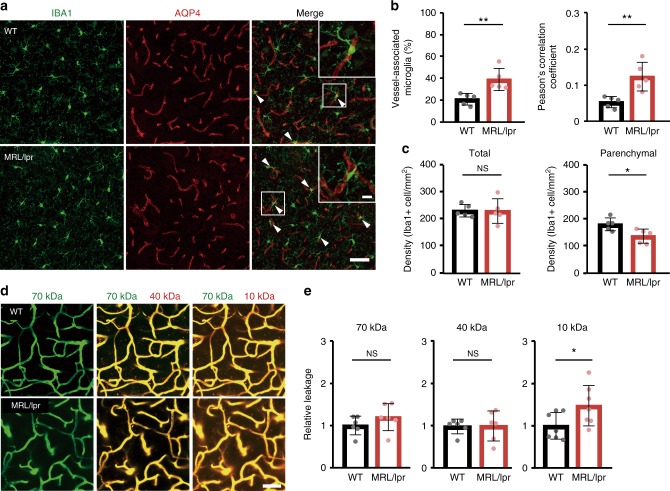
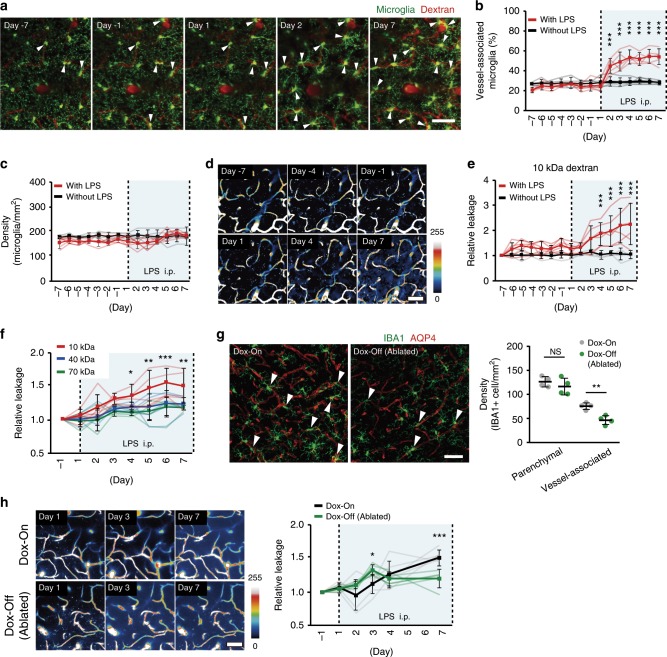
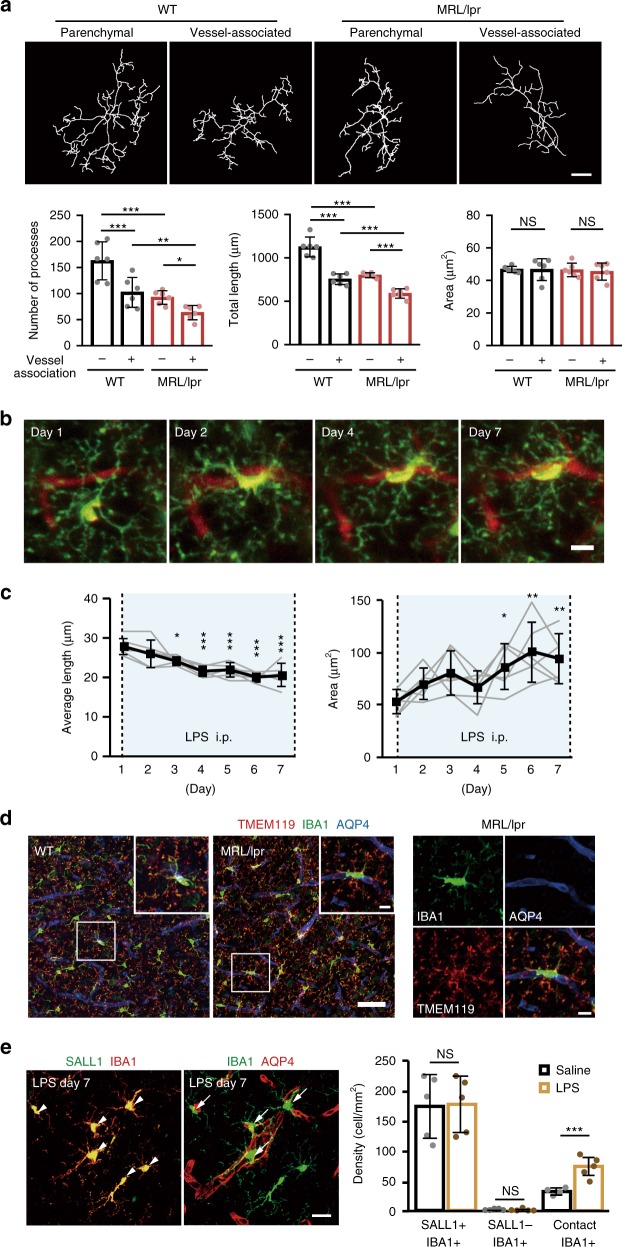
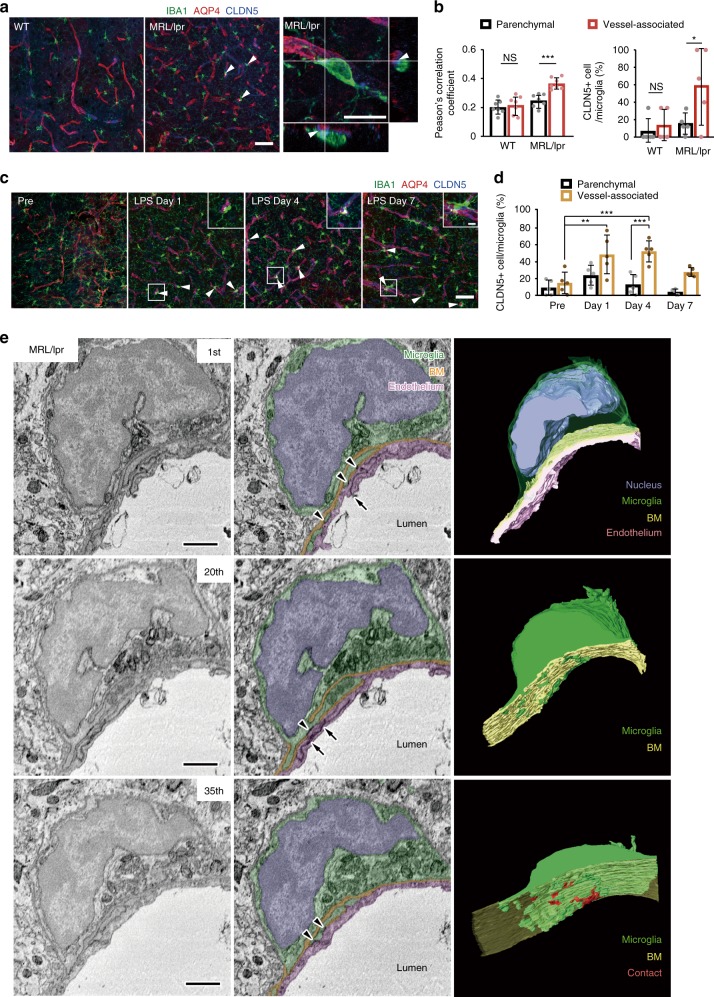
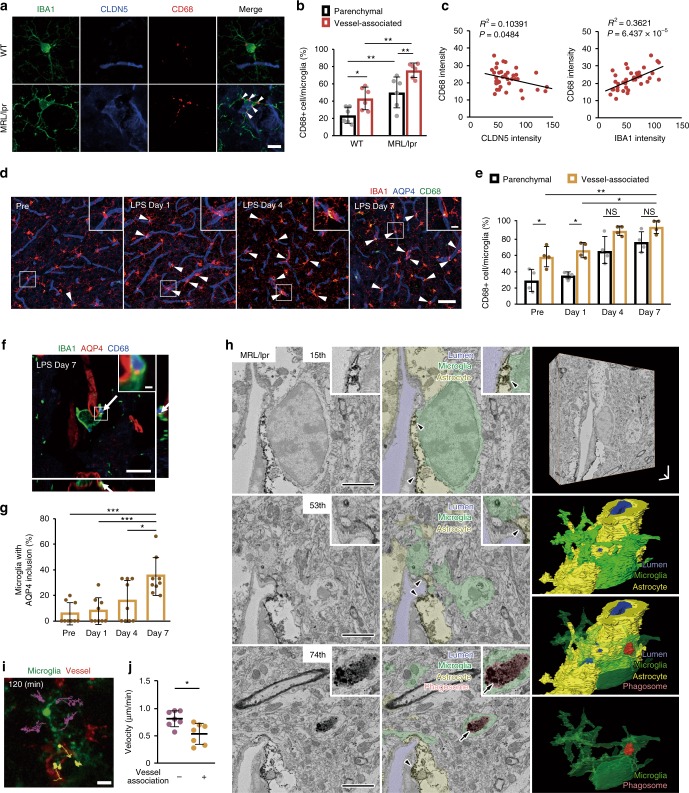
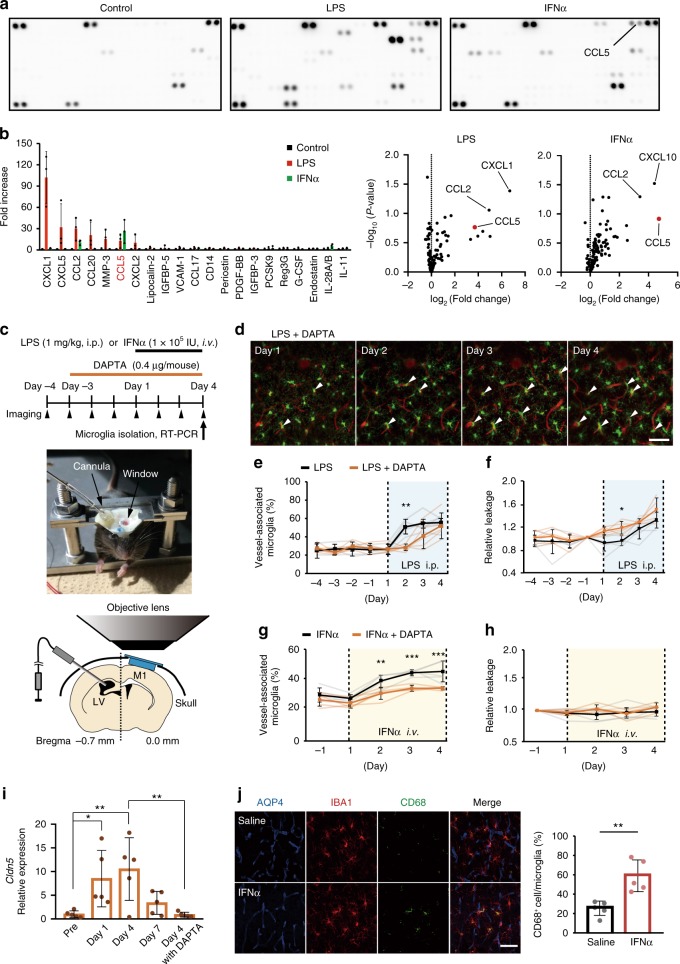
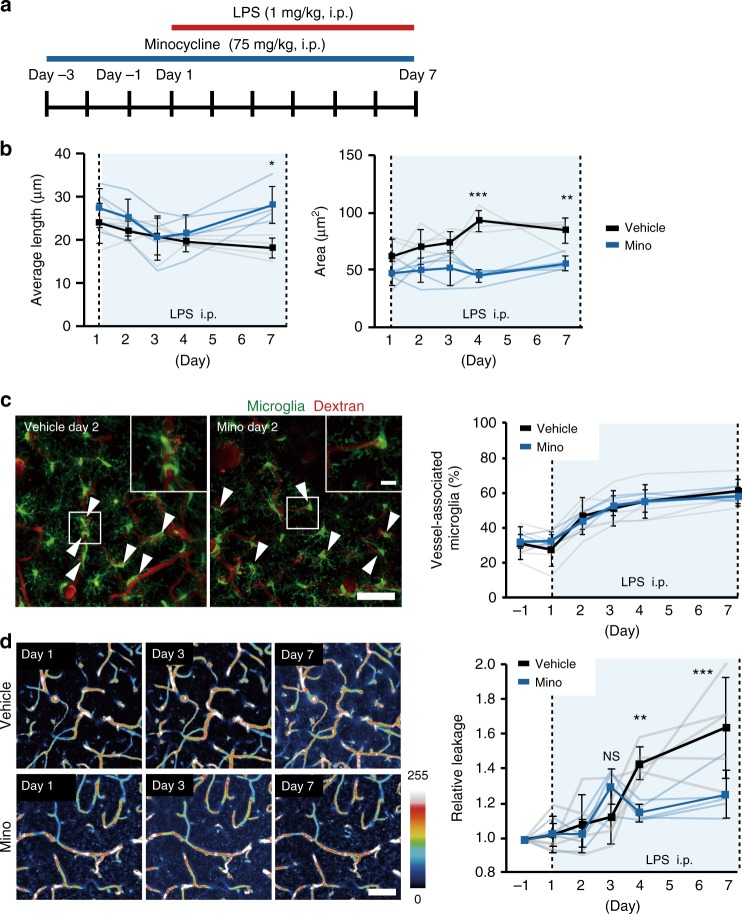
Microglia survey brain parenchyma, responding to injury and infections. Microglia also respond to systemic disease, but the role of blood–brain barrier (BBB) integrity in this process remains unclear. Using simultaneous in vivo imaging, we demonstrated that systemic inflammation induces CCR5-dependent migration of brain resident microglia to the cerebral vasculature. Vessel-associated microglia initially maintain BBB integrity via expression of the tight-junction protein Claudin-5 and make physical contact with endothelial cells. During sustained inflammation, microglia phagocytose astrocytic end-feet and impair BBB function. Our results show microglia play a dual role in maintaining BBB integrity with implications for elucidating how systemic immune-activation impacts neural functions.
Overview
The claims and statistics of this paper haven’t been checked yet.
Free: it reads the open-access text and checks the first 5 claims that cite a source we can check. Create a free account to check every claim.
Integrity signals
Registry
Cites
Statistics
Figures
Verification
Claims the paper makes
The claims and statistics of this paper haven’t been checked yet.
Free: it reads the open-access text and checks the first 5 claims that cite a source we can check. Create a free account to check every claim.
Claims other papers make about this one
Each is checked against this paper’s own text: does it say what the citing paper says it does?
The source backs part of the claim, not all of it — or backs it for a different population, condition or comparison.
In the citing paper
“sustained activation triggered by the RAGE ligand S100B exacerbates abnormal BBB permeability [17,18].”
From Research Advances in the Pathogenesis of Sepsis-Associated Encephalopathy (2026) · cites this paper as [18]
Experimental — accuracy not yet measuredThe source backs part of the claim, not all of it — or backs it for a different population, condition or comparison.
In the citing paper
“According to previous studies, systemic inflammation may disrupt the BBB, allowing pro-inflammatory molecules (such as cytokines and LPS) to enter the CNS [60,61,62].”
From Neuroprotective Effects of Bifidobacterium breve CCFM1067 in MPTP-Induced Mouse Models of Parkinson’s Disease (2022) · cites this paper as [61]
Experimental — accuracy not yet measuredThe cited source says what the claim attributes to it.
In the citing paper
“An in vivo study showed that LPS injection induced 10 kDa dextran translocation across the BBB in mice”
From The modulatory effects of gut microbes and metabolites on blood-brain barrier integrity and brain function in sepsis-associated encephalopathy (2023) · cites this paper as Haruwaka et al., 2019
The check wasn’t confident either way, so it gives no verdict — never disputed.
In the citing paper
“Furthermore, species differences in microglial density, BBB tight junction composition, and cholinergic system organization between rodents and humans likely restrict direct extrapolation of preclinical findings to human patients [15,16,18].”
From Research Advances in the Pathogenesis of Sepsis-Associated Encephalopathy (2026) · cites this paper as [18]
Experimental — accuracy not yet measured
Self-check
Percentages, sums and reported differences re-computed from the paper’s own numbers.
The self-check needs the paper’s full text.
Citations
Cites
1 retracted
Microglia-dependent synapse loss in type I interferon-mediated lupus
Bialas, A. R., Presumey, J., Das, A., van der Poel, C. E., Lapchak, P. H., Mesin, L., Victora, G., Tsokos, G. C., Mawrin, C., Herbst, R., et al. (2017) · Nature · doi:10.1038/nature22821 · Cited by 197
RetractedMetascape provides a biologist-oriented resource for the analysis of systems-level datasets
Zhou, Y., Zhou, B., Pache, L., Chang, M., Khodabakhshi, A. H., Tanaseichuk, O., Benner, C., & Chanda, S. K. (2019) · Nature Communications · doi:10.1038/s41467-019-09234-6 · Cited by 14,611
Resting microglial cells are highly dynamic surveillants of brain parenchyma in vivo
Nimmerjahn, A., Kirchhoff, F., & Helmchen, F. (2005) · Science · doi:10.1126/science.1110647 · Cited by 5,827
Astrocyte-endothelial interactions at the blood-brain barrier
Abbott, N. J., Rönnbäck, L., & Hansson, E. (2006) · Nature Reviews Neuroscience · doi:10.1038/nrn1824 · Cited by 5,595
Structure and function of the blood–brain barrier
Abbott, N. J., Patabendige, A. A. K., Dolman, D. E. M., Yusof, S. R., & Begley, D. J. (2010) · Neurobiology of Disease · doi:10.1016/j.nbd.2009.07.030 · Cited by 5,185
Zhang, Y., Chen, K., Sloan, S. A., Bennett, M. L., Scholze, A. R., O'Keeffe, S., Phatnani, H. P., Guarnieri, P., Caneda, C., Ruderisch, N., et al. (2014) · The Journal of Neuroscience · doi:10.1523/jneurosci.1860-14.2014 · Cited by 4,875
Microglia Sculpt Postnatal Neural Circuits in an Activity and Complement-Dependent Manner
Schafer, D. P., Lehrman, E. K., Kautzman, A. G., Koyama, R., Mardinly, A. R., Yamasaki, R., Ransohoff, R. M., Greenberg, M. E., Barres, B. A., & Stevens, B. (2012) · Neuron · doi:10.1016/j.neuron.2012.03.026 · Cited by 4,089
ATP mediates rapid microglial response to local brain injury in vivo
Davalos, D., Grutzendler, J., Yang, G., Kim, J. V., Zuo, Y., Jung, S., Littman, D. R., Dustin, M. L., & Gan, W.-B. (2005) · Nature Neuroscience · doi:10.1038/nn1472 · Cited by 3,913
Microglia: Active sensor and versatile effector cells in the normal and pathologic brain
Hanisch, U.-K., & Kettenmann, H. (2007) · Nature Neuroscience · doi:10.1038/nn1997 · Cited by 3,676
Kettenmann, H., Hanisch, U.-K., Noda, M., & Verkhratsky, A. (2011) · Physiological Reviews · doi:10.1152/physrev.00011.2010 · Cited by 3,547
Research works printed but not linked: 2
- Yang Y Attenuation of acute stroke injury in rat brain by minocycline promotes blood-brain barrier remodeling and alternative microglia/macrophage activation during recovery J. Neuroinflammation 2015 12 26 10.1186/s12974-015-0245-4 25889169 PMC4340283 · DOI · Paper page
- McKim DB Microglial recruitment of IL-1beta-producing monocytes to brain endothelium causes stress-induced anxiety Mol. Psychiatry 2018 23 1421 1431 10.1038/mp.2017.64 28373688 PMC5628107 · DOI · Paper page
Cited by
Items 501–600 of 930
Midazolam Ameliorates Impairment of the Blood–Brain Barrier (BBB) Against LPS
Zheng, J., Zhang, W., Kang, P., Zheng, X., He, K., Bai, H., & Yu, X. (2022) · Neurotoxicity Research · doi:10.1007/s12640-022-00508-4 · Cited by 12
“As a consequence, a vicious cycle is formed to induce persistent CNS dysfunction (Yang et al. 2019; Haruwaka et al. 2019).”
BackgroundCui, Y., Xu, L., Wang, F., Wang, Z., Tong, X., & Yan, H. (2022) · Frontiers in Immunology · doi:10.3389/fimmu.2022.928343 · Cited by 13
“Orally Administered Brain Protein Combined With Probiotics Promotes ZO-1 and Occludin Expression, Thereby, Facilitating Blood-Brain Barrier Repair Following Craniocerebral Injury In a previous study, we demonstrated that astrocytes and microglia significantly were activated and secondary inflammatory damage aggravated…”
BackgroundWang, C., Wang, J., Shi, H., Zhao, Y., Yang, J., Wang, Y., Yanagita, T., Xue, C., & Zhang, T. (2022) · Molecular Nutrition & Food Research · doi:10.1002/mnfr.202200089 · Cited by 13
Peinado, P. J., & Urbach, A. (2023) · Cells · doi:10.3390/cells12162086 · Cited by 15
Chen, Q., Wu, B., Shi, Z., Wang, Y., Yuan, Y., Chen, X., Wang, Y., Hu, J., Mao, L., Gao, Y., et al. (2024) · CNS Neuroscience & Therapeutics · doi:10.1111/cns.14870 · Cited by 13
Marino, A., Baronio, M., Buratti, U., Mele, E., & Ciofani, G. (2021) · Frontiers in Bioengineering and Biotechnology · doi:10.3389/fbioe.2021.630063 · Cited by 14
Salmina, A. B., Komleva, Y. K., Malinovskaya, N. A., Morgun, A. V., Тепляшина, Е. А., Lopatina, O. L., Gorina, Y. V., Kharitonova, E. V., Хилажева, Е. Д., & Shuvaev, А. N. (2021) · Biochemistry (Moscow) · doi:10.1134/s0006297921060122 · Cited by 13
Wang, Y.-J., Downey, M. A., Choi, S., Shoup, T. M., & Elmaleh, D. R. (2021) · Scientific Reports · doi:10.1038/s41598-021-00465-6 · Cited by 16
Amyloid-β-driven Alzheimer’s disease reshapes the colonic immune system in mice
Makhijani, P., Valentino, T. R., Manwaring-Mueller, M., Emani, R., Mu, W., Aguirre, C. G., Tan, C. R., Rane, A., Wilson, K. A., Kifle, A., et al. (2025) · Cell Reports · doi:10.1016/j.celrep.2025.116109 · Cited by 16
Lin, L.-S., Huang, Y.-Q., Xu, J.-Y., Han, J.-M., Wu, S., Jin, Y.-Z., Han, C., Hu, W., Xu, Z.-X., Sasaki, T., et al. (2025) · Journal of Integrative Neuroscience · doi:10.31083/jin40091 · Cited by 12
“During acute vascular injury, endothelial-derived chemokines recruit microglia to perivascular regions, where they transiently support BBB integrity [39].”
The link between gut microbiota and multiple sclerosis from the perspective of barrier function
Ren, J., Niu, Z., Wang, J., Guo, J., Hao, H.-J., Gao, F., Liu, R., & Wang, Z. (2025) · Frontiers in Immunology · doi:10.3389/fimmu.2025.1652796 · Cited by 15
Acute neuroinflammation induces prolonged transcriptional reprogramming in microglia
Moon, S., Kim, C. G., Kim, Y.-K., Yun, C., Shin, M., & Seo, H. (2025) · Journal of Neuroinflammation · doi:10.1186/s12974-025-03572-7 · Cited by 11
Palmitic Acid Modulates Microglial Cell Response to Metabolic Endotoxemia in an In Vitro Study
Chmielarz, M., Sobieszczańska, B., Teisseyre, A., Wawrzyńska, M., Bożemska, E., & Środa-Pomianek, K. (2023) · Nutrients · doi:10.3390/nu15153463 · Cited by 12
Microglia contribute to cognitive decline in hypercholesterolemic LDLr−/− mice
Rodrigues, M. S., do Nascimento, N. B., Farias, H. R., Schons, T., Machado, A. G., Behenck, E., Mesquita, A., Krolow Bast, R., Budni, J., Engblom, D., et al. (2024) · Journal of Neurochemistry · doi:10.1111/jnc.15952 · Cited by 18
“However, in pathological situations where microglial reactivity is increased, the presence of microglia in the perivascular area can be detrimental in the sense of enhancing BBB dysfunction (Haruwaka et al., 2019; Zhao et al., 2018 ).”
Ravula, A. R., Murray, K. E., Rao, K. V. R., Pfister, B. J., Citron, B. A., & Chandra, N. (2024) · Journal of Neurotrauma · doi:10.1089/neu.2023.0444 · Cited by 13
“111 112-114 Alternatively, acute microglial activation could be a direct result of physical manipulation of the cell membrane due to primary injury.”
Sun, M., Li, M., Cui, X., Lin, Y., Pei, Y., Wang, C., Guan, C., & Zhang, X. (2024) · Heliyon · doi:10.1016/j.heliyon.2024.e26979 · Cited by 12
“Particularly during sleep deprivation, endothelial cells can activate microglia and further result in neuronal damage through oxidative stress mechanisms [76].”
BackgroundAssociations of the immune system in aggression traits and the role of microglia as mediators
Takahashi, A. (2024) · Neuropharmacology · doi:10.1016/j.neuropharm.2024.110021 · Cited by 14
Microglia-mediated endothelial protection: the role of SHPL-49 in ischemic stroke
Zhao, Y., Zhang, P., & Zhang, J. (2024) · Biomedicine & Pharmacotherapy · doi:10.1016/j.biopha.2024.117530 · Cited by 11
Kim, H., Le, B., Goshi, N., Zhu, K., Grodzki, A. C., Lein, P. J., Zhao, M., & Şeker, E. (2024) · Journal of Alzheimer s Disease · doi:10.1177/13872877241291142 · Cited by 13
“25 Other studies reported that IP-10 (CXCL10), 77 RANTES (CCL5), 78 and MIP-1 α (CCL3) 79,80 also in fl uenced microglial motility via interactions between neurons and astrocytes.”
Deciphering the Blood–Brain Barrier Paradox in Brain Metastasis Development and Therapy
Peters, J. J., Teng, C., Peng, K., & Li, X. (2025) · Cancers · doi:10.3390/cancers17020298 · Cited by 16
Propagation of neuronal micronuclei regulates microglial characteristics
Yano, S., Asami, N., Kishi, Y., Takeda, I., Kubotani, H., Hattori, Y., Kitazawa, A., Hayashi, K., Kubo, K., Saeki, M., et al. (2025) · Nature Neuroscience · doi:10.1038/s41593-024-01863-5 · Cited by 17
“Two-photon imaging analysis was conducted using Cx3cr1-EGFP +/ − ;H2B-mCherry +/ − mice (P9–P14) according to a previous procedure 102,103 .”
Self-citationZheng, J., Wang, H., Wu, W., Wang, L., Qin, M., Zhu, L., Liu, Z., Chen, Y., & Yu, Y. (2025) · Journal of Neuroinflammation · doi:10.1186/s12974-025-03408-4 · Cited by 12
“Microglia, the brain’s resident immune cells, play a dual role in modulating BBB permeability following systemic inflammation [28].”
Radiation-Induced Brain Injury with Special Reference to Astrocytes as a Therapeutic Target
Wang, C., Fan, X., Shi, Y., & Tang, F. R. (2025) · Journal of Integrative Neuroscience · doi:10.31083/jin25907 · Cited by 12
Wang, X., Wen, Q., Li, Y., Zhu, H., Zhang, F., Li, S., Lin, Z., & Li, J. (2025) · Frontiers in Neurology · doi:10.3389/fneur.2025.1527302 · Cited by 12
“Such inflammation has been shown to compromise the blood–brain barrier, triggering neuroinflammation that leads to synaptic dysfunction and neuronal loss, ultimately resulting in cognitive impairment (31, 32).”
Farias, H. R., Beber, L. C. C., Guma, F. T. C. R., & de Oliveira, J. (2025) · Metabolic Brain Disease · doi:10.1007/s11011-025-01620-y · Cited by 13
“Discrepancies in the redox and inflammatory milieu can differently affect glial behavior and, therefore, tight junc - tion protein expression (Niu et al. 2019; Haruwaka et al. 2019).”
InfluentialDelahaye‐Duriez, A., Dufour, A., Bokobza, C., Gressèns, P., & Steenwinckel, J. V. (2021) · Journal of Neuropathology & Experimental Neurology · doi:10.1093/jnen/nlab049 · Cited by 14
Fu, L., Yu, B., Zhang, Y., Cao, S., lv, B., Tian, Y., Chen, H., Yang, S., Hu, Y., Hua, J., et al. (2023) · Aging · doi:10.18632/aging.204804 · Cited by 15
A Destruction Model of the Vascular and Lymphatic Systems in the Emergence of Psychiatric Symptoms
Segawa, K., Blumenthal, Y., Yamawaki, Y., & Ohtsuki, G. (2021) · Biology · doi:10.3390/biology10010034 · Cited by 13
“In fact, in a number of neurological diseases, including AD, prion diseases, and Acquired Immunodeficiency Syndrome (AIDS)-related dementia, it had been postulated that leukocytes trespass on the brain parenchyma without the BBB breaking down [173].”
BackgroundEmerging Concepts in Vector Development for Glial Gene Therapy: Implications for Leukodystrophies
von Jonquières, G., Rae, C. D., & Housley, G. D. (2021) · Frontiers in Cellular Neuroscience · doi:10.3389/fncel.2021.661857 · Cited by 12
“Aside from optimizing capsids to navigate through the BBB and successfully transduce the target cells, CNS targeting following IV administration of therapeutic AAV requires protecting the capsid from deleterious interaction with the host immune system.”
BackgroundInfluentialWang, C., Yang, Y. F., Cong, L., Jiang, Y., Du, N., & Zhang, H. (2021) · Microvascular Research · doi:10.1016/j.mvr.2021.104225 · Cited by 11
Microglial STING is a central safeguard against neurological decline with age
Sulka, K. B., Carroll, K. A., Sawden, M., Hopkins, J. W., Smolgovsky, S. A., Bayer, A. L., Reed, E. R., Tai, A., Alcaide, P., Haydon, P. G., et al. (2025) · Cell Reports · doi:10.1016/j.celrep.2025.115749 · Cited by 15
Oriá, R. B., Freitas, R. S., Roque, C. R., Nascimento, J. C. R., Silva, A. P., Malva, J. O., Guerrant, R. L., & Vitek, M. P. (2023) · Pharmaceutics · doi:10.3390/pharmaceutics15041086 · Cited by 12
“Intraperitoneal injections of LPS activated microglia in mice and impaired their capacity to synchronize local neural circuits and increased microglia traffic toward cerebral blood vessels, causing an increase in BBB permeability [82].”
BackgroundTowards an Understanding of Microglia and Border-Associated Macrophages
Taketomi, T., & Tsuruta, F. (2023) · Biology · doi:10.3390/biology12081091 · Cited by 13
“Brain perivascular macrophages are thought to regulate the BBB through their contribution to blood permeability.”
BackgroundInfluentialLi, R., Zhang, S., Song, M., Yu, W., & Fan, X. (2024) · Journal of Agricultural and Food Chemistry · doi:10.1021/acs.jafc.4c06985 · Cited by 11
Tsuboi, H., Sakakibara, H., Minamida, Y., Tsujiguchi, H., Hara, A., Suzuki, K., Miyagi, S., Nakamura, M., Takazawa, C., Kannon, T., et al. (2024) · BioPsychoSocial Medicine · doi:10.1186/s13030-024-00317-5 · Cited by 13
“Although it was recently discovered that microglia play a role in BBB permeability during systemic inflammation [60], the precise factor remains unclear.”
BackgroundCerebral Small Vessel Disease: Current and Emerging Therapeutic Strategies
Sun, Y., Song, X., Jin, C. J., Peng, Y., Zhou, J., & Zheng, X. (2025) · Aging and Disease · doi:10.14336/ad.2024.1515 · Cited by 17
“The triggering of systemic inflammation can induce microglia to migrate to cerebrovascular regions, a behavior that may potentially undermine the BBB [67].”
Repulsive Guidance Molecule-A as a Therapeutic Target Across Neurological Disorders: An Update
Tseriotis, V., Liampas, A., Lazaridou, I.-Z., Karachrysafi, S., Vavougios, G. D., Hadjigeorgiou, G. M., Papamitsou, T., Kouvelas, D., Arnaoutoglou, M., Pourzitaki, C., et al. (2025) · International Journal of Molecular Sciences · doi:10.3390/ijms26073221 · Cited by 11
Cerebrovascular Involvement in Systemic Sclerosis
Cutolo, M., Vojinovic, T., Paolino, S., Campitiello, R., & Smith, V. M. (2025) · ACR Open Rheumatology · doi:10.1002/acr2.70032 · Cited by 10
“28 At the beginning of the in fl ammatory process, the vessel-associated microglia keep the BBB integrity and make physical contact with ECs, whereas during sustained in fl ammation, microglia phagocytose astrocytic end-feet, impairing the function of the BBB.”
Hammed, O. S., Afolabi, O. A., Ajike, R. A., Hezekiah, O. S., Alabi, B. A., Ajao, D., Saka, W. A., Oyekunle, O. S., & Olusola, B. O. (2025) · Frontiers in Neuroscience · doi:10.3389/fnins.2025.1597170 · Cited by 14
“For instance, lipopolysaccharide (LPS)-induced inflammation or inflammation owing to protracted ischemia–reperfusion injury can generate extensive systemic inflammation (Haruwaka et al., 2019).”
InfluentialKatsumoto, A., Kokiko‐Cochran, O. N., Bemiller, S. M., Xu, G., Ransohoff, R. M., & Lamb, B. T. (2022) · Frontiers in Immunology · doi:10.3389/fimmu.2022.978423 · Cited by 12
“Microglia migrate to vessels in a CCR5-dependent manner to maintain BBB integrity after systemic inflammation (52).”
BackgroundBrown, F. N., Iwasawa, E., Shula, C., Fugate, E. M., Lindquist, D. M., Mangano, F. T., & Goto, J. (2023) · Fluids and Barriers of the CNS · doi:10.1186/s12987-023-00433-4 · Cited by 11
“As shown in two recent studies, subtypes of microglia also have roles in brain vascular function; inflammation can recruit vesselassociated microglia that disrupts blood–brain barrier [100], and capillary-associated microglia are important for the reactivity of capillary control of cerebral blood flow [101].”
Defective phagocytosis leads to neurodegeneration through systemic increased innate immune signaling
Elguero, J., Liu, G., Tiemeyer, K. H., Bandyadka, S., Gandevia, H., Duro, L., Yan, Z., & McCall, K. (2023) · iScience · doi:10.1016/j.isci.2023.108052 · Cited by 10
Tian, M., Zhan, Y., Cao, J., Gao, J., Sun, J., & Zhang, L. (2024) · Brain Research Bulletin · doi:10.1016/j.brainresbull.2024.110922 · Cited by 12
“The activation of microglia represented one of the earliest changes observed in SAE (Haruwaka et al., 2019).”
BackgroundTan, L., Liang, J., Wang, X., Wang, Y., & Xiong, T. (2024) · Regenerative medicine reports . · doi:10.4103/rmr.regenmed-d-24-00001 · Cited by 16
Lin, Y., Lang, H., Gao, P., Miao, X., Guo, Q., Hao, Y., Ai, T., Li, J., Zhang, J., & Guo, G. (2025) · Ecotoxicology and Environmental Safety · doi:10.1016/j.ecoenv.2025.117972 · Cited by 11
Xie, Z.-F., Wang, S., Gao, Y., Zhang, Y.-D., Han, Y., Huang, J., Gao, M.-N., & Wang, C.-G. (2024) · Molecular and Cellular Biochemistry · doi:10.1007/s11010-024-05091-0 · Cited by 12
Ultrastructural features of psychological stress resilience in the brain: a microglial perspective
Ibáñez, F. G., VanderZwaag, J., Deslauriers, J., & Tremblay, M. (2024) · Open Biology · doi:10.1098/rsob.240079 · Cited by 12
Arosio, B., Rossi, P. D., Ferri, E., Consorti, E., Ciccone, S., Lucchi, T. A., & Montano, N. (2025) · Experimental Gerontology · doi:10.1016/j.exger.2025.112692 · Cited by 9
“…2016; Shaftel et al., 2007), supporting the dual role of activated microglia in the pathogenesis of AD, namely the beneficial one consisting of phagocytosis and the detrimental one inducing a chronic increase in cytokine levels (Haruwaka et al., 2019; Hong et al., 2016; Schafer and Stevens, 2015).”
MgSO4 alleviates hippocampal neuroinflammation and BBB damage to resist CMS-induced depression
Wang, Q., Hu, Y., Li, F., Hu, L., Zhang, Y., Qiao, Y., Tang, C., & Wang, R. (2025) · Frontiers in Nutrition · doi:10.3389/fnut.2025.1470505 · Cited by 10
Repairing blood-CNS barriers: Future therapeutic approaches for neuropsychiatric disorders
Bicker, J., Alves, G., Fonseca, C., Falcão, A. C., & Fortuna, A. C. (2020) · Pharmacological Research · doi:10.1016/j.phrs.2020.105226 · Cited by 11
Le, Y.-P., Saito, K., Parajuli, B., Sakai, K., Kubota, Y., Miyakawa, M., Shinozaki, Y., Shigetomi, E., & Koizumi, S. (2023) · International Journal of Molecular Sciences · doi:10.3390/ijms242417597 · Cited by 11
“Microglia can also sense systemic peripheral inflammatory conditions via the blood-brain barrier, and communicate them to the brain [6].”
BackgroundNeuronal and Cerebrovascular Complications in Coronavirus Disease 2019
Andrabi, M. S., & Andrabi, S. A. (2020) · Frontiers in Pharmacology · doi:10.3389/fphar.2020.570031 · Cited by 9
“Alterations in BBB and endothelial cells can complicate the brain damage in stroke and cerebrovascular diseases (Venkat et al., 2017; Haruwaka et al., 2019).”
BackgroundMinamisawa, M., Sato, Y., Ishiguro, E., Taniai, T., Sakamoto, T., Kawai, G., Saito, T., & Saido, T. C. (2021) · Life · doi:10.3390/life12010034 · Cited by 10
Grabowski, G. A., & Mistry, P. K. (2022) · Molecular Genetics and Metabolism · doi:10.1016/j.ymgme.2022.07.014 · Cited by 11
The Role of Endothelial Barrier Function in the Fibrosis of Salivary Gland
Mao, X., Min, S., Zhu, M., He, L., Zhang, Y., Li, J. W., Tian, Y., Yu, G., Wu, L., & Cong, X. (2022) · Journal of Dental Research · doi:10.1177/00220345221118508 · Cited by 9
“In the blood-brain barrier, vessel-associated microglia initially maintain barrier integrity via the expression of claudin-5 and make physical contact with endothelial cells, whereas chronic social stress impairs the integrity of the blood-brain barrier through the induction of claudin-5 loss (Menard et al. 2017; Haru…”
BackgroundNi, J., & Wu, Z. (2021) · Frontiers in Cellular Neuroscience · doi:10.3389/fncel.2021.638686 · Cited by 10
Ultrastructure of the brain waste-clearance pathwayPreprint
Grubb, S. (2023) · bioRxiv (Cold Spring Harbor Laboratory) · doi:10.1101/2023.04.14.536712 · Cited by 9
Wen, S., Liu, M., Pan, C., Zhang, L., Yan, R., & Xu, Z. (2025) · Frontiers in Neuroscience · doi:10.3389/fnins.2025.1622349 · Cited by 9
“…growth factor and Wnt growth factors to help preserve BBB integrity; Microglia, as resident immune cells of the central nervous system, can directly phagocytose or kill pathogenic microorganisms that enter the brain parenchyma (Haruwaka et al., 2019; Guérit et al., 2021; Proia et al., 2008).”
Li, J., Xu, X., Zhao, Y., Wu, X., Chen, S., Xu, J., Xiao, R., Tang, J. P., Hong, X., Chen, S., et al. (2025) · Advanced Healthcare Materials · doi:10.1002/adhm.202502808 · Cited by 16
Evolution of neutrophil extracellular traps in the pathology of stroke
Ning, W., Wang, Q., & Xu, Y. (2025) · Neural Regeneration Research · doi:10.4103/nrr.nrr-d-25-00364 · Cited by 13
“NETs not only exacerbate ischemic neuronal death by releasing toxic components such as histones and proteases (Lee et al., 2017), but they may also persistently activate microglial cells (Au and Ma, 2022) and disrupt the integrity of the BBB (Haruwaka et al., 2019; Chou et al., 2023).”
Sotani, N., Kusuhara, S., Nishisho, R., Kuno, H., Shima, H., Haruwaka, K., Mori, Y., Kishi, M., Furuyashiki, T., Kobayashi, K., et al. (2025) · Proceedings of the National Academy of Sciences · doi:10.1073/pnas.2426241122 · Cited by 10
“However, under diabetic conditions, chronic activation of microglia can drive perivascular microglia to phagocytose astrocytic end - feet and release cytokines, leading to BBB breakdown ( 16 ).”
Self-citationZheng, Y., Xu, W., Suo, Z., Qu, Y., Lin, L., Zhang, E., Han, D., Wu, M., Hongyi, L. I., Zheng, H., et al. (2025) · Journal of Neuroinflammation · doi:10.1186/s12974-025-03566-5 · Cited by 10
“Bidirectional interactions between microglia and astrocytes, along with endothelial dysfunction, form a pathological loop that sustains neuroinflammation [63–65].”
Wang, W., Cui, J., Guo, Y., Kang, X., Liu, H., & Hao, Z. (2025) · Lab on a Chip · doi:10.1039/d5lc00937e · Cited by 9
Li, Y., Qiu, Y., Yang, Y., Wei, Y., Peng, H., Zeng, L., Li, P., Bi, R., & Hu, B. (2025) · Advanced Science · doi:10.1002/advs.202512499 · Cited by 11
Chemical exchange saturation transfer for detection of antiretroviral drugs in brain tissue
Bade, A. N., Gendelman, H. E., McMillan, J., & Liu, Y. (2021) · AIDS · doi:10.1097/qad.0000000000002960 · Cited by 8
Li, H., Zhang, C., Zhou, Y., Deng, Y., Zheng, X., & Xue, X. (2023) · Aging · doi:10.18632/aging.205151 · Cited by 13
Microglial Inflammatory Mechanisms in Stroke: The Jury Is Still Out
Benkő, S., & Dénes, Á. (2024) · Neuroscience · doi:10.1016/j.neuroscience.2024.02.007 · Cited by 9
“…of inflammatory mediators, changes in phygocytic activity, migration and several other features (del Zoppo et al., 2000, Anrather and Iadecola, 2016, Zhao et al., 2017, Haruwaka et al., 2019, Jayaraj et al., 2019, Iadecola et al., 2020, Cserep et al., 2021, Lenart et al., 2023, Xingi et al., 2023).”
Wang, K., Hou, X., Lu, H., Han, N., Xie, M., Xi, A., & Xu, Z. (2024) · Journal of Autoimmunity · doi:10.1016/j.jaut.2024.103199 · Cited by 9
Li, T., Zhang, C., Wang, Q., Shuan, W., Yu, L., Zhai, Q., & Tian, F. (2024) · eFood · doi:10.1002/efd2.156 · Cited by 9
Arndt, P., Morton, L., Briese, M., Lämmlin, N., Mattern, H., Hasanuzzaman, M., Westhues, M., Khoshneviszadeh, M., Appenzeller, S., Gündel, D., et al. (2025) · Journal of the American Heart Association · doi:10.1161/jaha.125.040710 · Cited by 9
Chunchai, T., Keawtep, P., Arinno, A., Saiyasit, N., Prus, D., Apaijai, N., Pratchayasakul, W., Chattipakorn, N., & Chattipakorn, S. C. (2020) · Metabolic Brain Disease · doi:10.1007/s11011-020-00603-5 · Cited by 8
“The dysmorphology of glial cells has also been shown to result in BBB dysfunction (Chunchai et al. 2018a; Chunchai et al. 2019; Haruwaka et al. 2019).”
BackgroundImmunology and microbiology: how do they affect social cognition and emotion recognition?
Barcik, W., Chiacchierini, G., Bimpisidis, Z., & Papaleo, F. (2021) · Current Opinion in Immunology · doi:10.1016/j.coi.2021.05.001 · Cited by 10
Ono, K., Gotoh, H., Nomura, T., Morita, T., Baba, O., Matsumoto, M., Saitoh, S., & Ohno, N. (2022) · PLoS ONE · doi:10.1371/journal.pone.0278118 · Cited by 8
“Microglia somas were identified using established criteria, including lysosomes, lipofuscin, and a long ER (Fig 1D) [19,30,31].”
MethodSelf-citationInvestigation of microglial diversity in a LRRK2 G2019S mouse model of Parkinson's disease
Iovino, L., VanderZwaag, J., Kaur, G., Khakpour, M., Giusti, V., Donadon, M., Chiavegato, A., Lopes, L. T., Greggio, E., Tremblay, M., et al. (2024) · Neurobiology of Disease · doi:10.1016/j.nbd.2024.106481 · Cited by 7
“In fact, as previously described, in the presence of dangerous stimuli, microglia generally increase their migration toward the site of inflammation (Haruwaka et al., 2019).”
BackgroundMicroglia-mediated neuron death requires TNF and is exacerbated by mutant Huntingtin
Young, A. P., & Denovan‐Wright, E. M. (2024) · Pharmacological Research · doi:10.1016/j.phrs.2024.107443 · Cited by 9
Automated identification of soil functional components based on NanoSIMS data
Hu, Y., Zollner, J. M., Höschen, C., Werner, M., & Schweizer, S. A. (2024) · Ecological Informatics · doi:10.1016/j.ecoinf.2024.102891 · Cited by 7
Zhang, J., Du, Y., Jin, L., Yang, W., Cao, D., Luo, N., Yang, Z., Tang, K., Chu, C., Xiao, X., et al. (2025) · Biological Psychiatry · doi:10.1016/j.biopsych.2025.05.010 · Cited by 8
Rademacher, D. J., Exline, J. E., & Foecking, E. M. (2025) · Biomedicines · doi:10.3390/biomedicines13061400 · Cited by 10
“Chronic inflammation causes reactive microglia to phagocytose astrocytic end-feet, which compromises the function of the BBB [188].”
Stress-induced regional characteristics of the blood-brain barrier
Zhou, M.-Y., Xie, F., Zhao, Y. F., Wang, X., Sun, Z., & Qian, L. (2025) · Brain Research Bulletin · doi:10.1016/j.brainresbull.2025.111548 · Cited by 9
Rapid adaptive optics enabling near noninvasive high-resolution brain imaging in awake behaving mice
She, Z., Fu, Y., He, Y., Yan, G., Wu, W., Qin, Z., & Qu, J. Y. (2025) · Nature Communications · doi:10.1038/s41467-025-64251-y · Cited by 8
Role of transforming growth factorβ in neurovascular unit during cerebral small vessel disease
Li, Y., Cai, Y., Xie, K., Hu, F., Li, J., Li, C., Zhang, R., & Zhong, Z. (2025) · Fluids and Barriers of the CNS · doi:10.1186/s12987-025-00713-1 · Cited by 8
“…release, astrocytic endfoot phagocytosis, and BBB disruption and the anti-inflammatory M2 phenotype, which preserves barrier integrity via tight junction protein expression (e.g. clau-din5), physical interactions with endothelial cells, and secretion of anti-inflammatory mediators [120, 121].”
Targeting neuroinflammation in neurodegenerative disorders: the emerging potential of semaglutide
Evola, V., & Parmar, M. S. (2026) · Inflammation Research · doi:10.1007/s00011-025-02166-6 · Cited by 8
Cui, J.-G., Zhang, H., Chen, M., Wang, J.-X., Li, X., & Li, J. (2026) · Journal of Agricultural and Food Chemistry · doi:10.1021/acs.jafc.5c08862 · Cited by 7
Ichinose, M., Iriyama, T., & Hirota, Y. (2026) · Journal of obstetrics and gynaecology research · doi:10.1111/jog.70202 · Cited by 8
“In turn, activated microglia amplify neurovascular unit disruption by generating a pro-inflammatory milieu that further destabilizes endothelial–pericyte interactions and blood–brain barrier function [62].”
Bykova, K. M., Savvina, I. A., Валерьевна, Б. Н., & Zabrodskaya, Y. M. (2022) · Russian Journal of Anesthesiology and Reanimatology · doi:10.17116/anaesthesiology202204192 · Cited by 8
Olvera‐Rojas, M., Plaza‐Florido, A., Solis‐Urra, P., Rodríguez‐Ayllón, M., Toval, Á., Esteban‐Cornejo, I., & Ortega, F. B. (2023) · Scandinavian Journal of Medicine and Science in Sports · doi:10.1111/sms.14387 · Cited by 8
Crosstalk between peripheral immunity and central nervous system in Alzheimer’s disease
Yang, H.-C., Qin, Q., Wang, M., Yin, Y., Li, R., & Tang, Y. (2023) · Cellular Immunology · doi:10.1016/j.cellimm.2023.104743 · Cited by 12
Naphade, O., Barham, K., Spencer, R., Baker, N., Zurlinden, T. J., Saili, K. S., Carstens, K. E., Silvin, A., Ginhoux, F., & Knudsen, T. B. (2023) · Current Opinion in Toxicology · doi:10.1016/j.cotox.2023.100419 · Cited by 10
Shibata, M., Makioka, K., Nakamura, T., Kasahara, H., Yamazaki, T., Takatama, M., Okamoto, K., & Ikeda, Y. (2024) · Neuroscience Letters · doi:10.1016/j.neulet.2024.137642 · Cited by 7
Ke, X., Xia, S., Yu, W., Mabry, S. M., Fu, Q., Menden, H. L., Sampath, V., & Lane, R. H. (2024) · The Journal of Physiology · doi:10.1113/jp285716 · Cited by 9
“Tight junction proteins are important regulators of BBB integrity, and a decrease in the expression of tight junction protein CLDN5 in brain EC associates with BBB dysfunction (Greene et al., 2019; Haruwaka et al., 2019).”
BackgroundRamli, S. M. A. Z., Hamid, H. A., Nassir, C. M. N. C. M., Rahaman, S. N. A., Mehat, M. Z., Kumar, J., Lee, S., & Mustapha, M. (2024) · Vessel Plus · doi:10.20517/2574-1209.2024.22 · Cited by 13
Varia, J. C., Herbert, M. R., & Hooker, B. S. (2025) · Molecular Neurobiology · doi:10.1007/s12035-025-05589-8 · Cited by 10
“[204] demonstrate that microglia play a dual role in maintaining BBB integrity.”
Emerging Targets for the Diagnosis of Parkinson’S Disease: Examination of Systemic Biomarkers
Cheslow, L., Snook, A. E., & Waldman, S. A. (2021) · Biomarkers in Medicine · doi:10.2217/bmm-2020-0654 · Cited by 8
Microenvironment and the progress of immunotherapy in clinical practice of NSCLC brain metastasis
Xie, M., & Su, C. (2023) · Frontiers in Oncology · doi:10.3389/fonc.2022.1006284 · Cited by 7
“Astrocytic end-feet are engulfed by activated microglia, which also promote persistent inflammation and BBB damage (38).”
BackgroundDepletion of microglia mitigates cerebrovascular dysfunction in diet-induced obesity mice
Shen, Q. X., & Zhang, G. (2021) · American Journal of Physiology-Endocrinology and Metabolism · doi:10.1152/ajpendo.00086.2021 · Cited by 7
Wu, Y., Hu, Q., Wu, X., Cai, Y., Zhang, Y.-Z., Wu, Y., Zhu, G., Luo, J., Cheng, H.-B., Yu, J., et al. (2023) · Oxidative Medicine and Cellular Longevity · doi:10.1155/2023/7857760 · Cited by 8
Glutamatergic argonaute2 promotes the formation of the neurovascular unit in mice
Sona, C., Yeh, Y., Li, Y., Liu, X., Ghosh, A., Hinte, L. C., Ku, M., Rathjen, T., Niendorf, T., Yu, G., et al. (2025) · Science Signaling · doi:10.1126/scisignal.adl6745 · Cited by 7
Ohtonen, S., Jäntti, H., Giudice, L., Mohamed, A. Y., Shakirzyanova, A., Závodná, T., Belevich, I. N., Yan, H., Sabogal-Guáqueta, A. M., Saveleva, L., et al. (2025) · Environment International · doi:10.1016/j.envint.2025.109467 · Cited by 9
Repopulating Microglia Suppress Peripheral Immune Cell Infiltration to Promote Poststroke Recovery
Shi, L., Lu, L., Hu, J., Chen, J., Zhang, Q., Jin, Z., Wang, Z., Zheng, Z., & Zhang, J. (2025) · CNS Neuroscience & Therapeutics · doi:10.1111/cns.70565 · Cited by 6
“In our study, we focus on the interaction between microglia and BBB, as microglia exhibited the greatest increase in interaction weight and have been shown to play a key role in regulating BBB integrity [45, 75].”
Saito, K., Kinoshita, H., Takekawa, D., Oyama, T., Noto, K., Ichikawa, S., Kudo, R., Kushikata, T., Hirota, K., & Saito, J. (2025) · Journal of Anesthesia · doi:10.1007/s00540-025-03629-0 · Cited by 6
“Microglial cells migrate to cerebral vessels during systemic inflammation, leading to blood–brain barrier dysfunction and microglial transformation, specifically into a “reactive” phenotype [28, 29].”
Metadata
- Authors
- Haruwaka, K., Ikegami, A., Tachibana, Y., Ohno, N., Konishi, H., Hashimoto, A., Matsumoto, M., Kato, D., Ono, R., Kiyama, H., Moorhouse, A. J., Nabekura, J., & Wake, H.
- Affiliations
- National Institutes of Natural Sciences (JP)
- Kobe University (JP)
- Jichi Medical University (JP)
- Nagoya University (JP)
- Nagoya City University (JP)
- UNSW Sydney (AU)
- Japan Science and Technology Agency (JP)
- Corresponding author
- Wake, Hiroaki
- ORCID
- Venue
- Nature Communications
- Published
- 2019-12-20
- Volume
- 10
- Issue
- 1
- Pages
- 5816-5816
- ISSN
- 2041-1723 (ISSN-L)
- PMC
- PMC6925219
- OpenAlex
- W2994871395
- Semantic Scholar
- c3f552b178950359c479d733c849b698185fc437
- Cited by
- 923
- References
- 72
- Citations by year
- 2026: 106 · 2025: 157 · 2024: 180 · 2023: 149 · 2022: 147 · 2021: 124 · 2020: 59
- FWCI
- 36.32
- Type
- journal article
- Language
- en
- Open access
- gold
- doi.org
- Licence
- cc-by
- creativecommons.org/licenses/by/4.0 (tdm)
- creativecommons.org/licenses/by/4.0 (vor)
- Locations
- Nature Communications (publishedVersion, cc-by)
- Europe PMC (PubMed Central) (publishedVersion, cc-by)
- PubMed Central (publishedVersion, cc-by)
- PubMed (publishedVersion)
- Institutional Repositories DataBase (IRDB) (submittedVersion, cc-by)
- RePEc: Research Papers in Economics (submittedVersion)
- Kobe University Repository Kernel (Kobe University) (submittedVersion, cc-by)
- DOAJ (DOAJ: Directory of Open Access Journals) (submittedVersion)
- DOAJ (DOAJ: Directory of Open Access Journals) (submittedVersion, cc-by-sa)
- Funders
- Japan Society for the Promotion of Science (18H02598, 18K06852, 16H06280, 19H05219, 17H01530, 26710004, 19H04753, 19K06904)
- Topics
- Life Sciences › Neuroscience › Neurology › Barrier Structure and Function Studies
- Life Sciences › Neuroscience › Neurology › Neuroinflammation and Neurodegeneration Mechanisms
- Health Sciences › Medicine › Clinical Neurology › Traumatic Brain Injury and Neurovascular Disturbances
- Keywords
- microglia, blood-brain barrier permeability, systemic inflammation, CCR5, microglial migration, claudin-5, tight junctions, neuroinflammation
- MeSH terms
- Intravital Microscopy, Animals, Astrocytes, Blood-Brain Barrier, Cerebrovascular Circulation, Disease Models, Animal, Humans, Lupus Erythematosus, Systemic, Male, Permeability, Phagocytosis, Stereotaxic Techniques, Microglia, Tight Junctions, Receptors, CCR5, Endothelial Cells, Mice, Claudin-5
About these checks
Registry, retraction, Cites and statistics results are computed, not judged, with one exception: a printed reference that no index lists is read once by a model before it counts as a citation error. Claims are extracted by a model and kept only when their quote appears verbatim in the text; each cited source is then checked, with a model’s help, for whether it says what the claim relies on. Those verdicts can be wrong — read the claim’s quote and the cited source before relying on one.
Statistics and arithmetic are recomputed, not judged.
Confidence bands are shown only for fields calibrated on our annotated test set. None is calibrated yet, so no band is shown.
What counts as a claim ›How we measure confidence ›How we check this ›
Are you an author, or do you see a problem with this page? Request a review
Data sources
Bibliographic data: Semantic Scholar, OpenAlex, Crossref.
Contains information from the Semantic Scholar Academic Graph Datasets, made available under the ODC Attribution License (ODC-BY 1.0).
Semantic Scholar’s data is described in: Kinney, R., et al. (2023). The Semantic Scholar Open Data Platform. arXiv:2301.10140.
